John Kormendy: Kenya 2026
This web site contains the pictures from my 2026 August birding trip to Kenya with Victor Emanuel Nature Tours (VENT).
A preliminary check of my records suggests that I got 136 new bird species. I hoped for 150-200, but birding was surprisingly slow. For example, we saw few seedeaters such as waxbills. We missed several birds that are normally associated with this tour, e. g., Golden pipit. My guess is that this was partly due to drought: in fact, we had only one afternoon during the tour when birding was prevented (at least for me) by rain. Similarly during my most recent trip -- to Borneo -- no birding time was lost to rain. Meanwhile, we appeared to have unusually good luck with mammals. From close up, we saw a lioness kill a wildebeest; she even dragged the carcass into the shade of our safari vehicle on the way to taking in to more sheltered bushes. We saw a (vanishingly rare) Caracal and a Serval with playful kittens. We repeatedly saw lions up close, plus cheetahs and leopards. And of course, herds of antelope, elephants, even close to our camp, graceful giraffes, and the small scavengers that prey on them -- hyenas, jackals, and vultures -- were as rich as expected. The magic of East Africa and especially of the Masai Mara was endlessly impressive and deeply appreciated by us all.
This web site is under construction. This web site is completely
finished through the end of August 8th, our day at Nairobi National Park. I will now work
steadily through the pictures for the coming 2 months at least. A first iteration will
concentrate on my life birds and on enough scenery and mammal pictures so that (I hope)
I don't forget what happened.
This iteraton is finished into August 18th, i. e., after our time at Lake Baringo and
just to the time when we arrived at Aberdare National Park.
A second iteration on all other pictures will follow but will take a long time.
Calendar
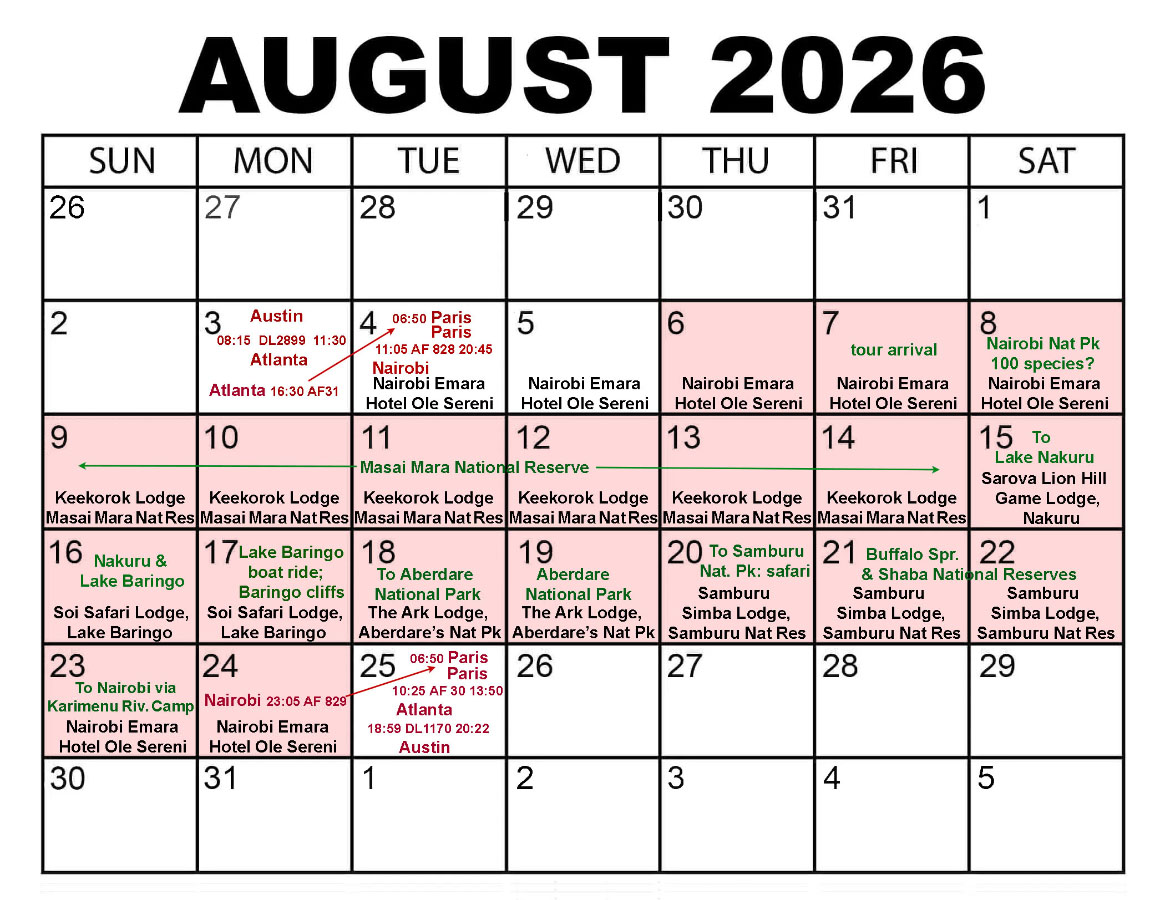
Itinerary and Bird Richness
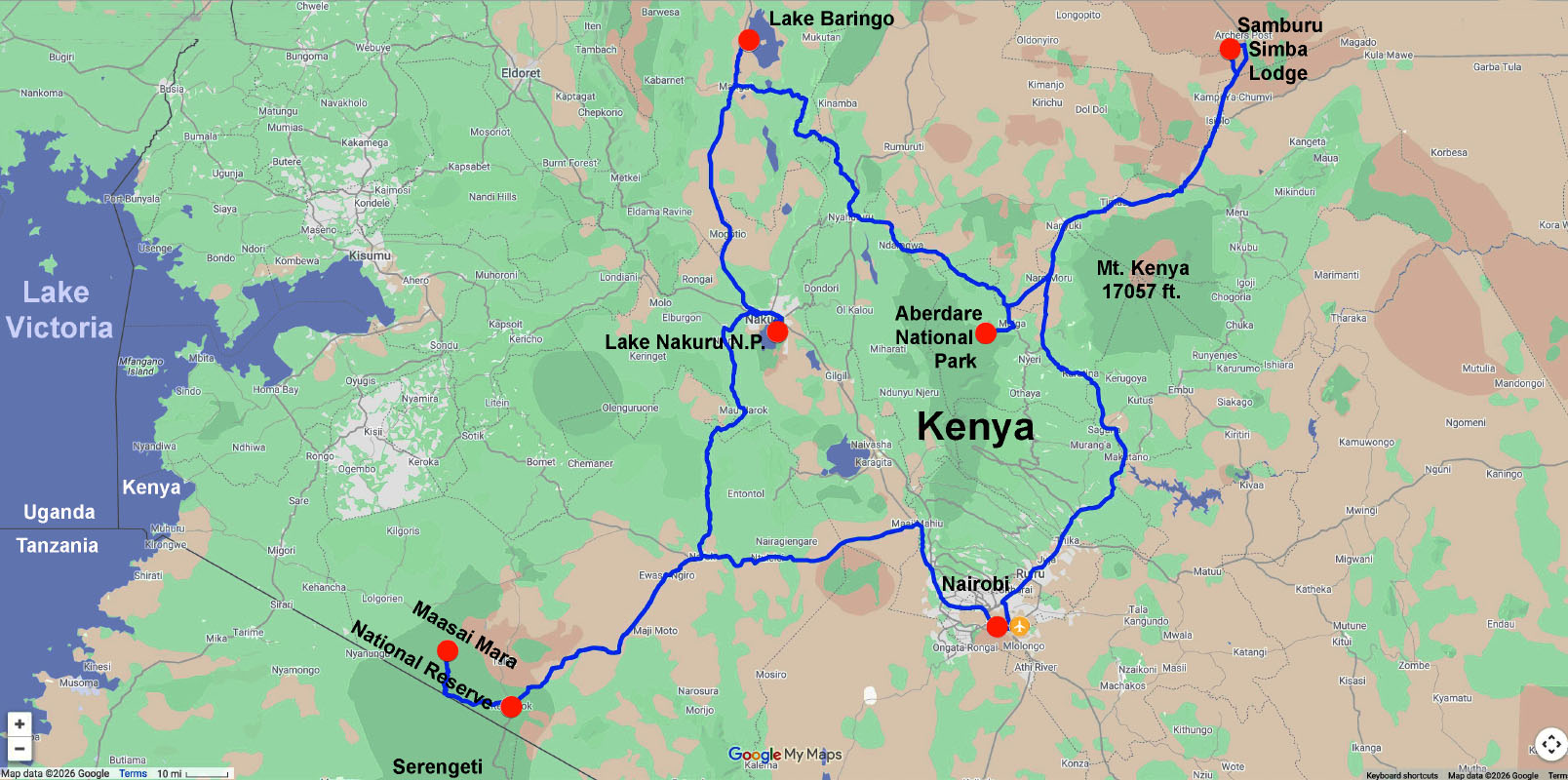
This is VENT's map of our itinerary, annotated by me. Red filled circles mark overnight stops.
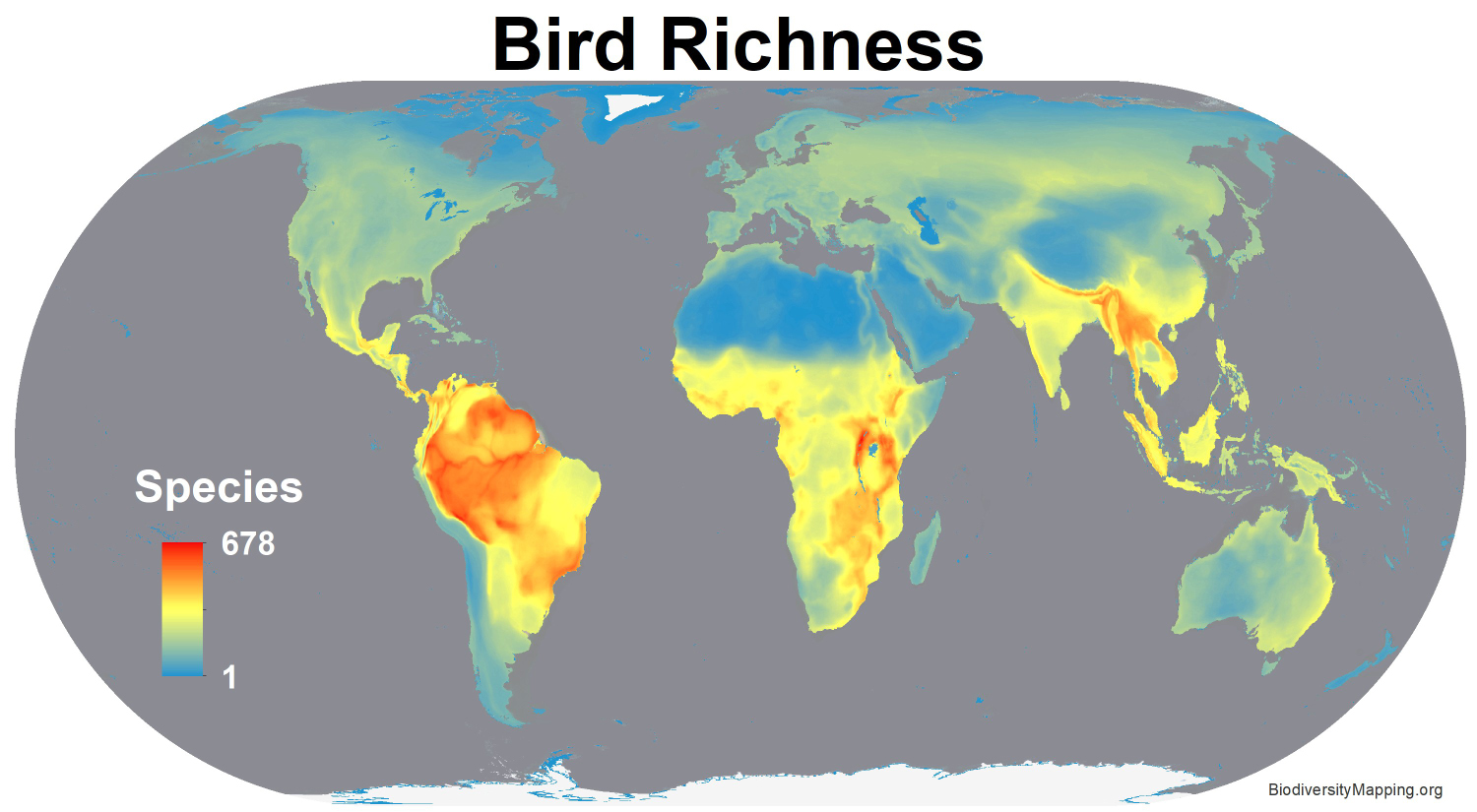
This world map encodes the number of bird species per unit area as published here. The resolution of the original image is 10 x 10 km. Taxonomy is vintage 2018 and maps represent native, extant species only. It is clear why birding is so productive in South America along the Andes mountains and in the Amazon basin, in south-east Asia, where we have birded the foothills of the Himalayas in India and China, and in two crescents that surround Lake Victoria in Africa. This is my first trip to the wonderfully rich area of Kenya just to the east of Lake Victoria.
Trip Birds
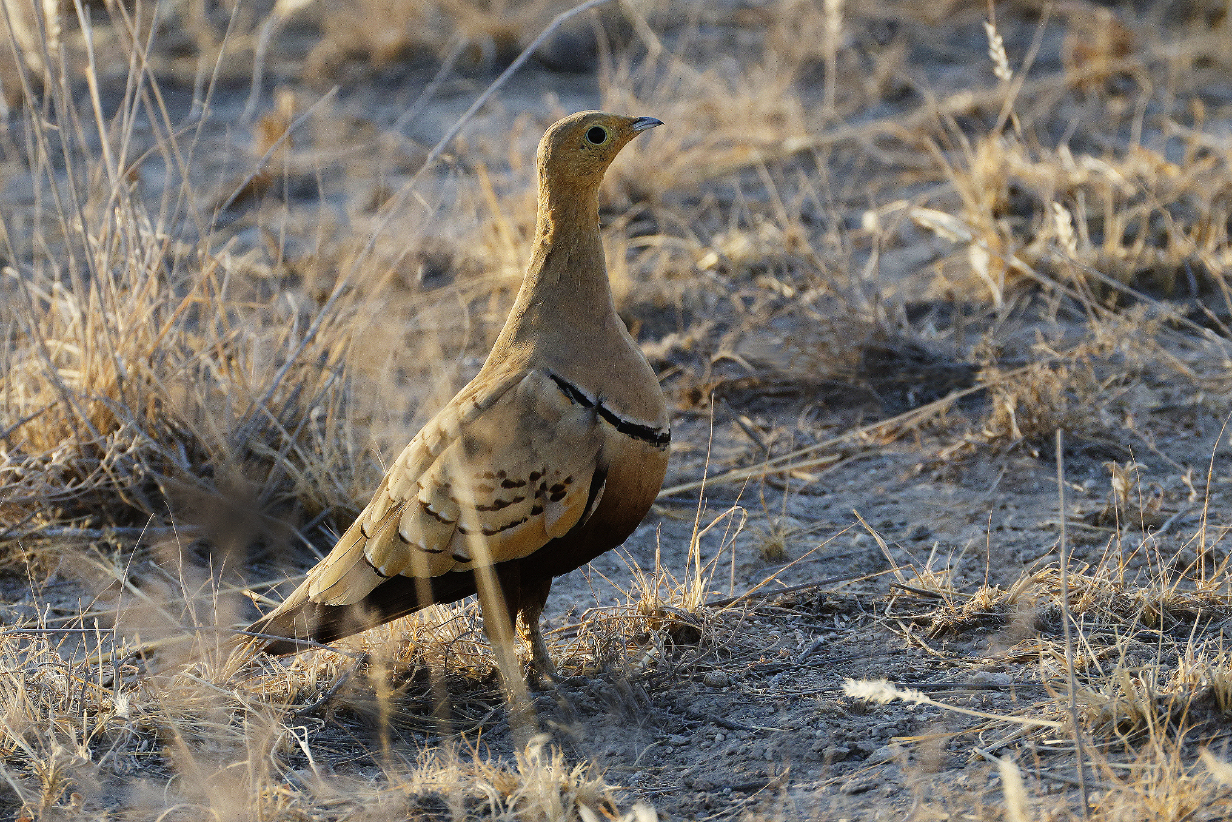
Chestnut-bellied sandgrouse (I always love to see sandgrouse, but see the August 11 description for more detail.)
If the concept of "royalty" means anything in the bird world, turacos score high. My second and third trip birds are the two turacos that we saw during the trip.
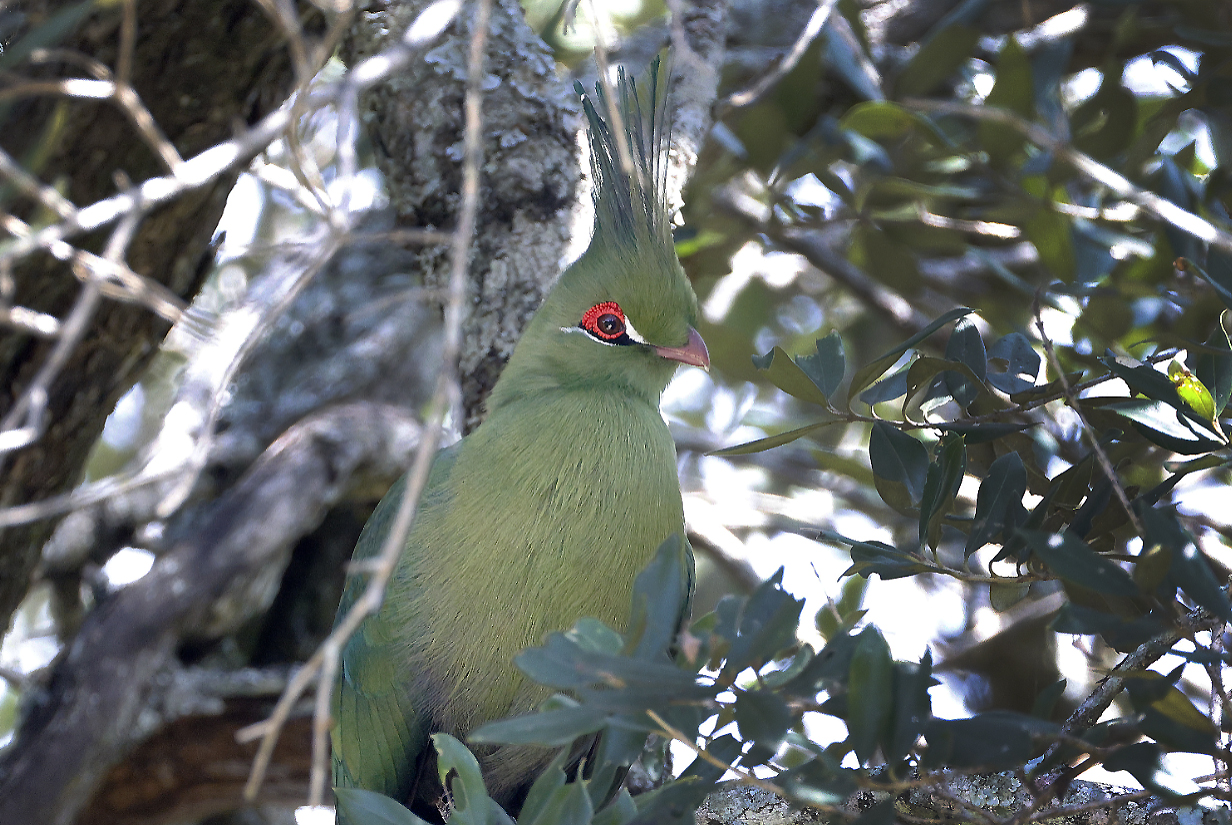
Schalow's turaco in our tent camp in the Mara
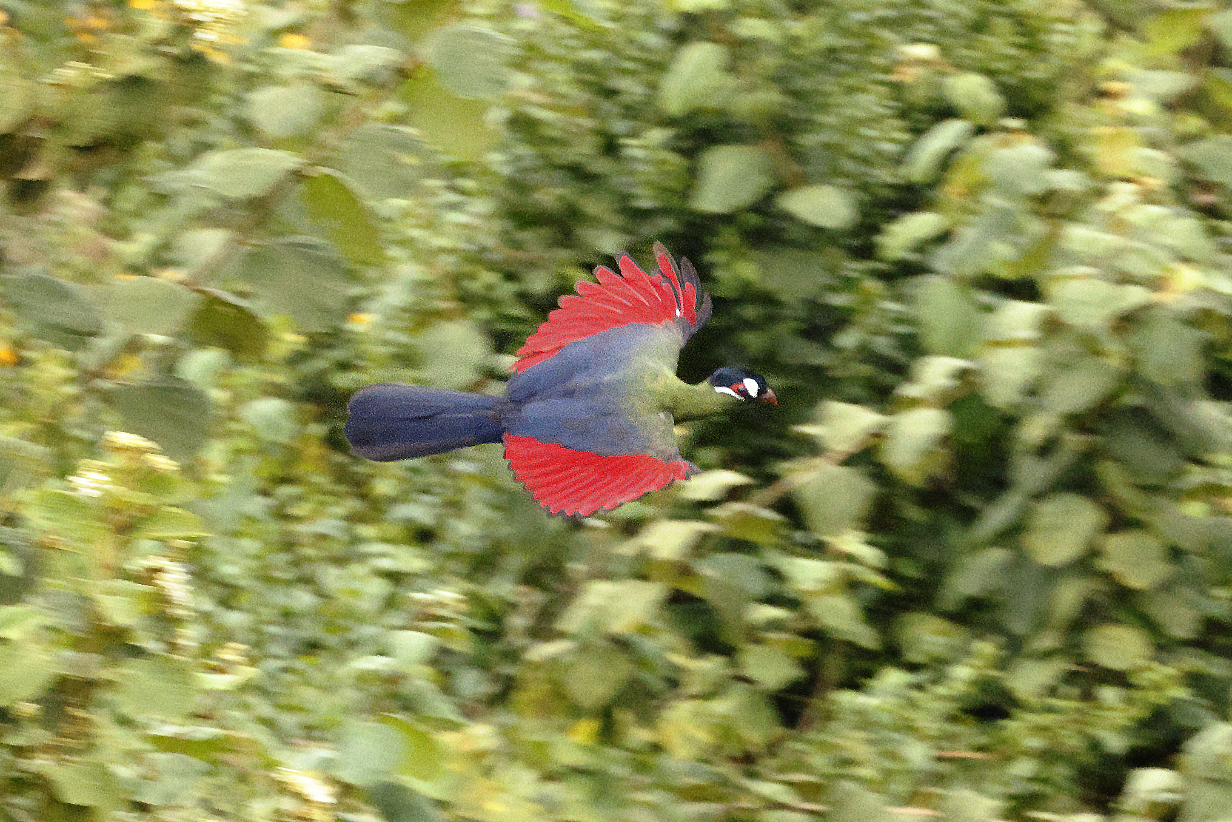
Hartlaub's turaco flyby at the Ark in Aberdare National Park
Travelog and Bird Pictures
I arrived 3 days before the start of the VENT tour to give me time to rest before the birding schedule got hard. This gave me time to bird the grounds of the Hotel Ole Sereni, which was promising to get a few new birds before seeing new birds got rushed.
August 5 - 7: Pre-tour Birding at Nairobi Emara Hotel Ole Sereni
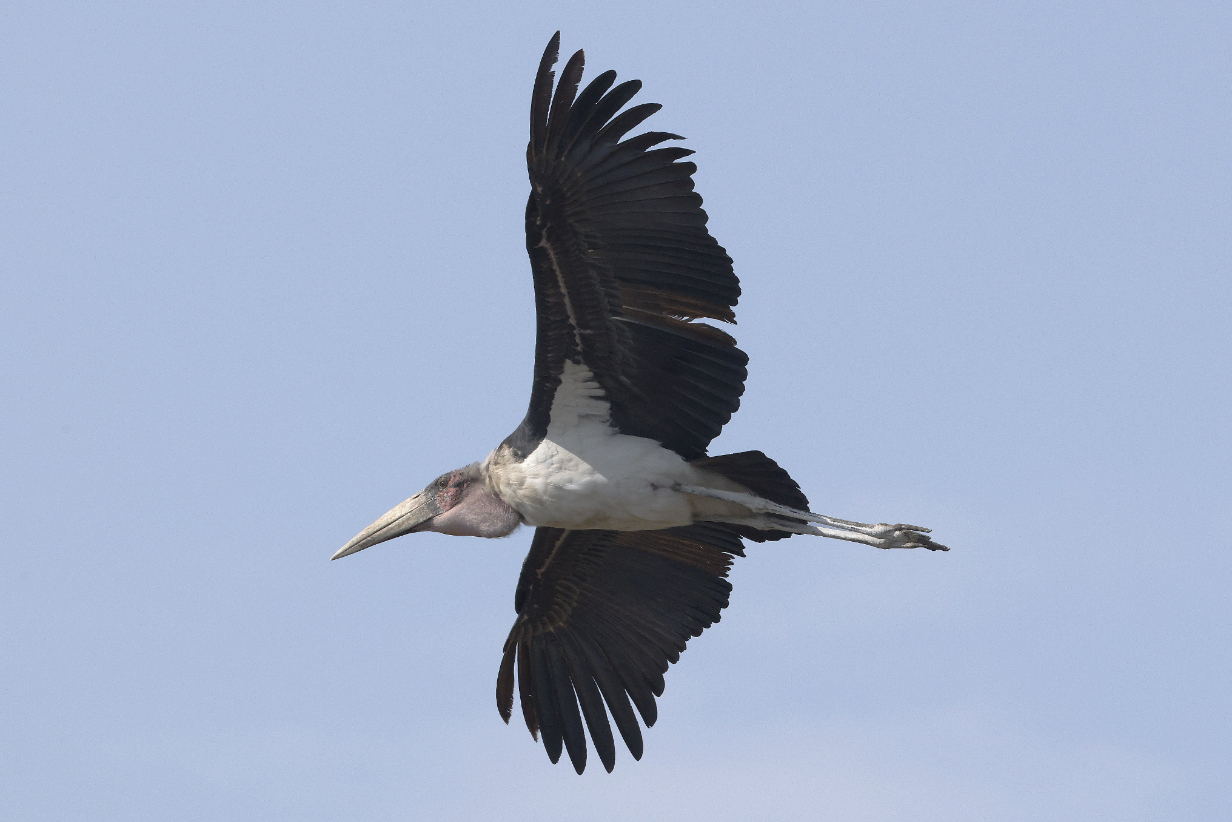
Marabou storks often soared by my hotel room window.
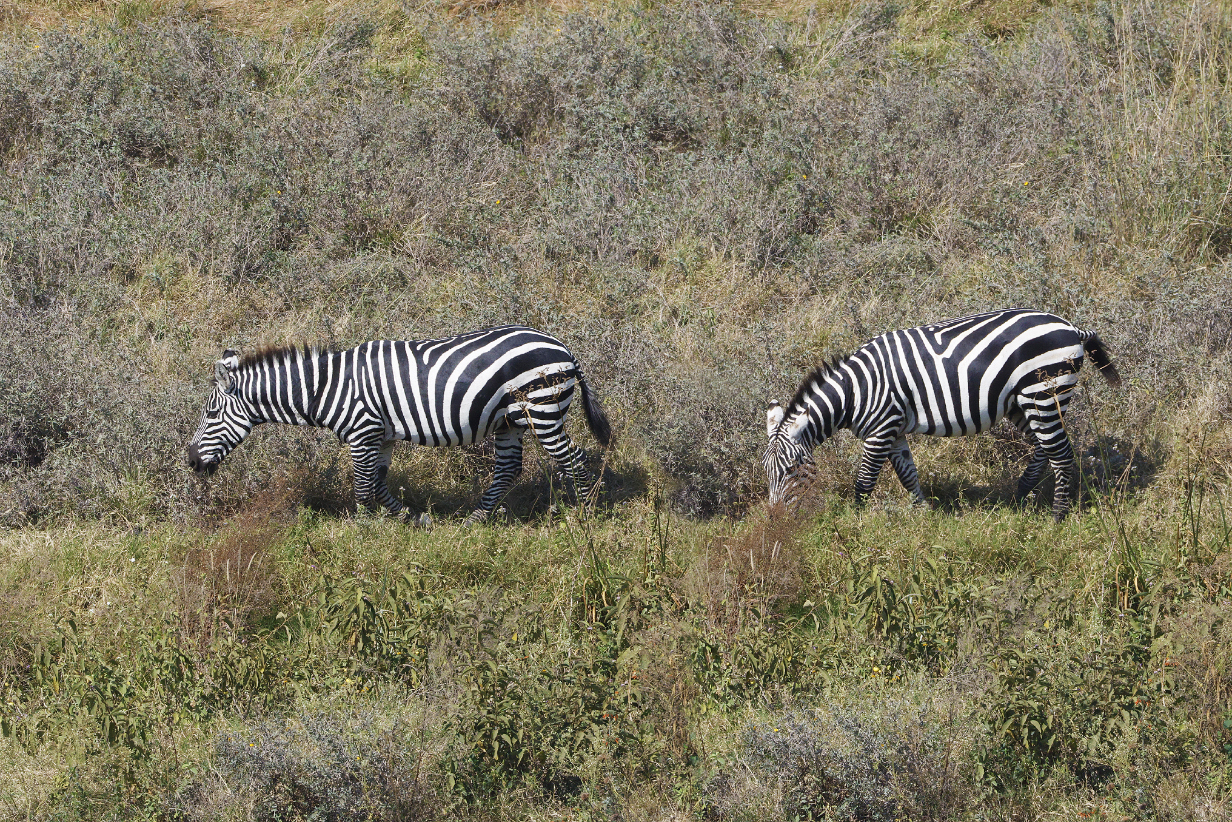
From my window, I looked out on the dry scrub plains of Nairobi National Park. The most common sight was these two zebras, which foraged here quietly every day that I stayed at the hotel.
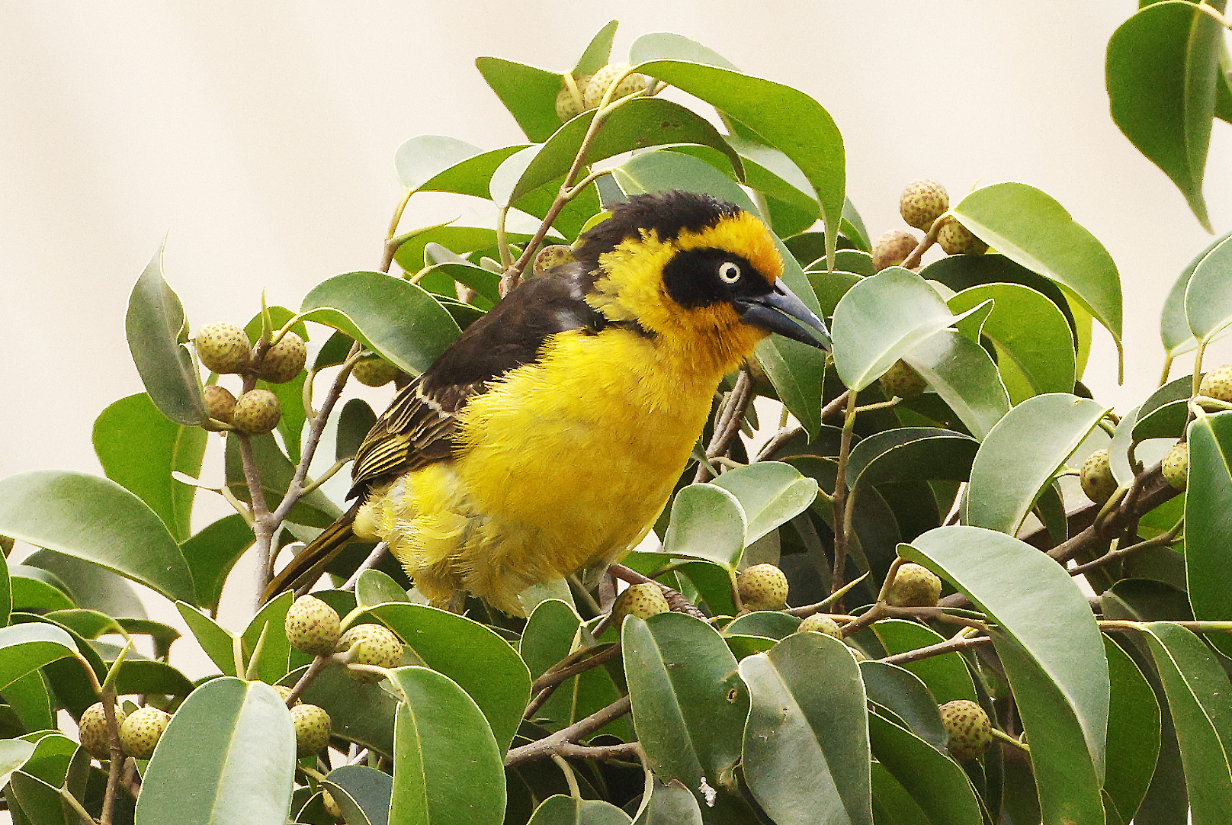
Baglafecht weaver was -- appropriately enough -- my first life bird of the trip. This is a male. The birds were foraging in fruiting bushes all around the 3rd-floor balcony of the breakfast area of the Ole Sereni Hotel.
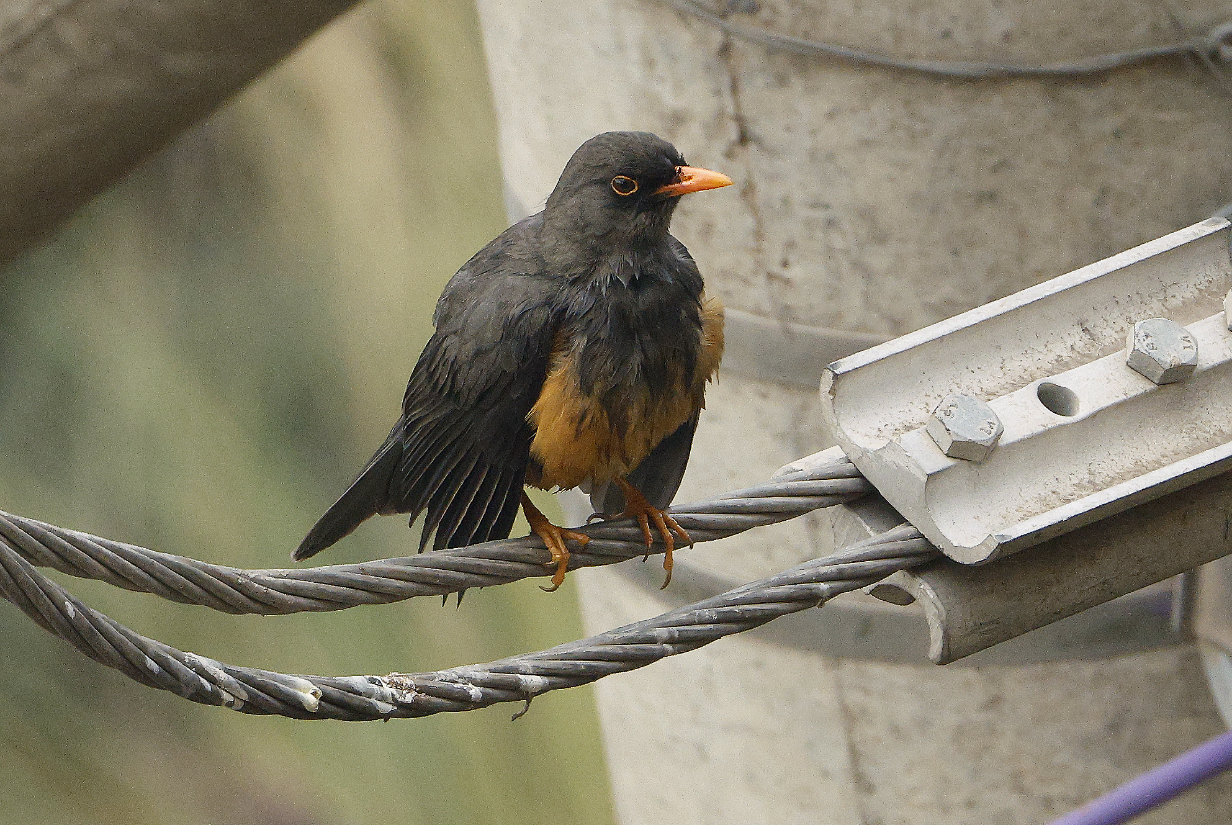
Abyssinian thrush, also from the breakfast balcony. This bird is a bit unkempt ... but it is my life bird.
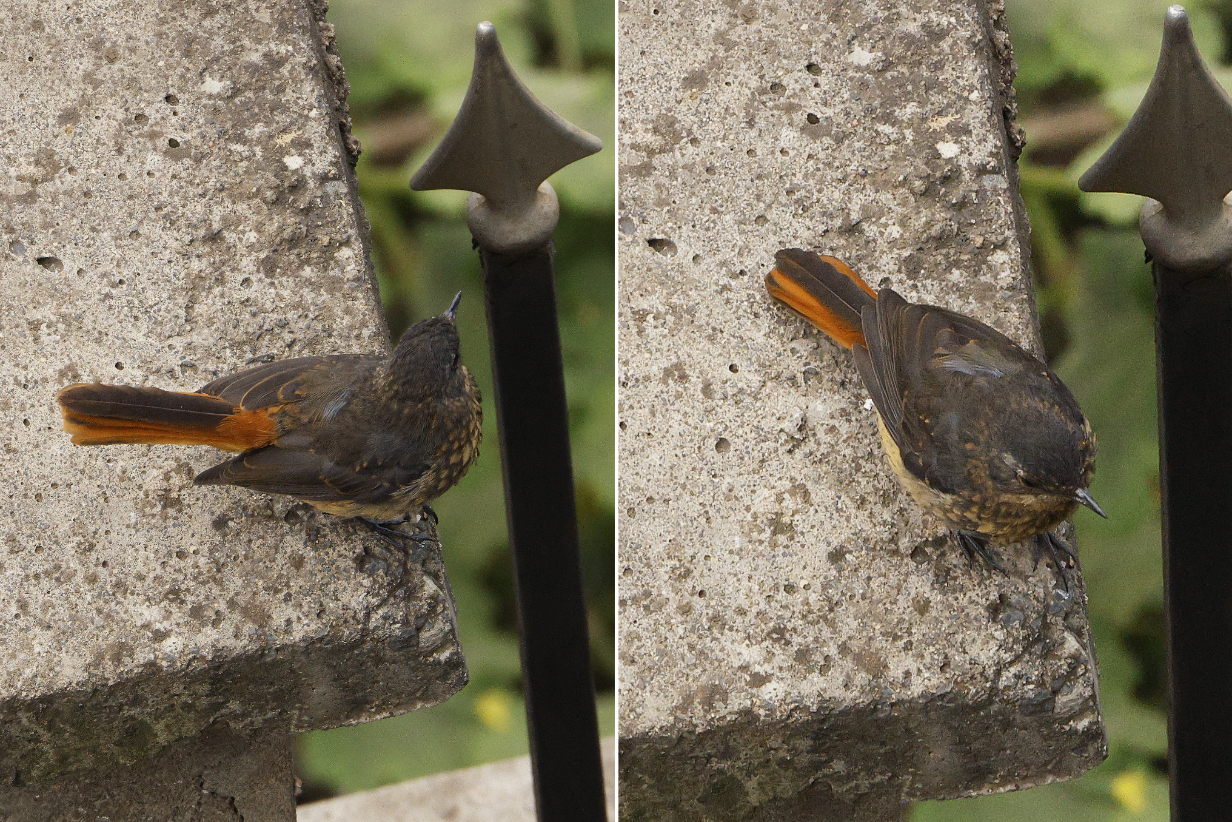
Cape robin-chat (juvenile) It was not new -- I'd seen it in South Africa.
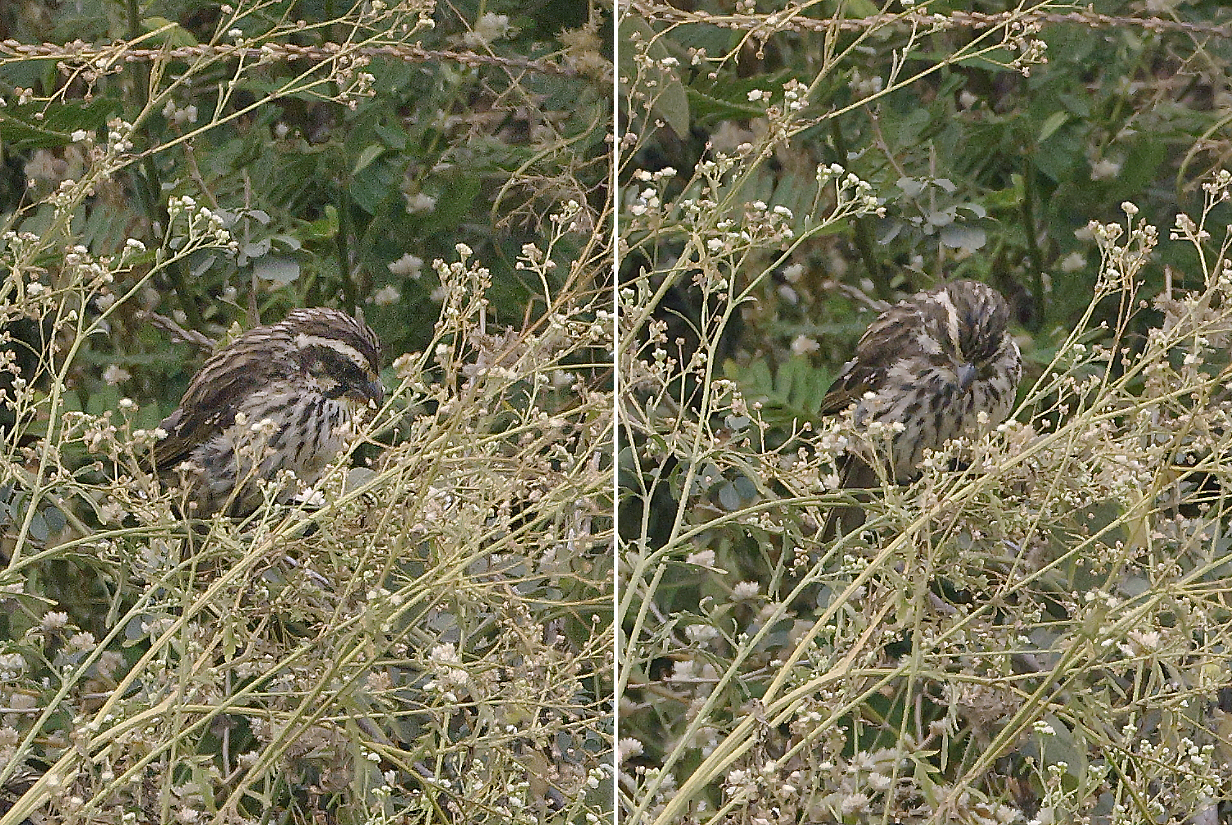
Streaky seedeater in overgrown gully at edge of Nairobi National Park, across the street from the hotel and still seen from the breakfast balcony. Note the strong dark eye and gular stripes, the strong white stripe above the eye, and the generally stripy look. This is my life bird.
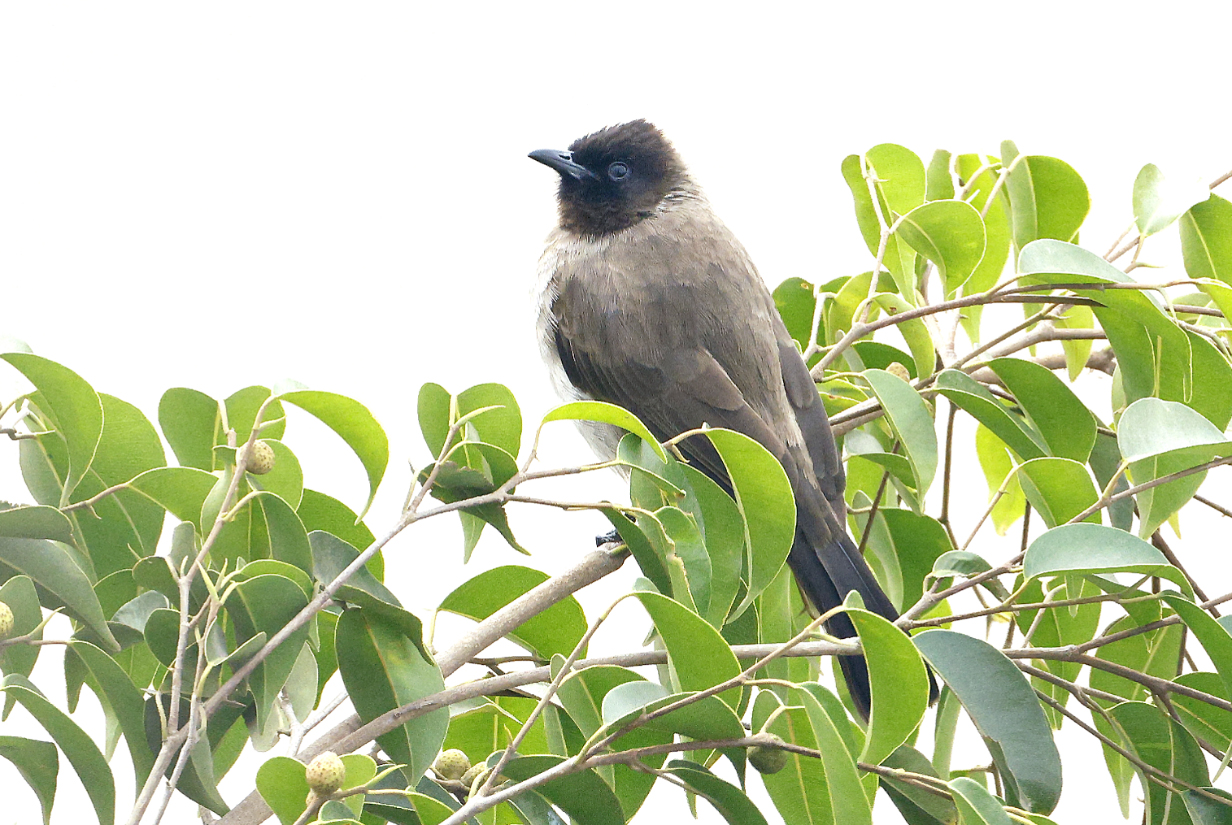
Common bulbul
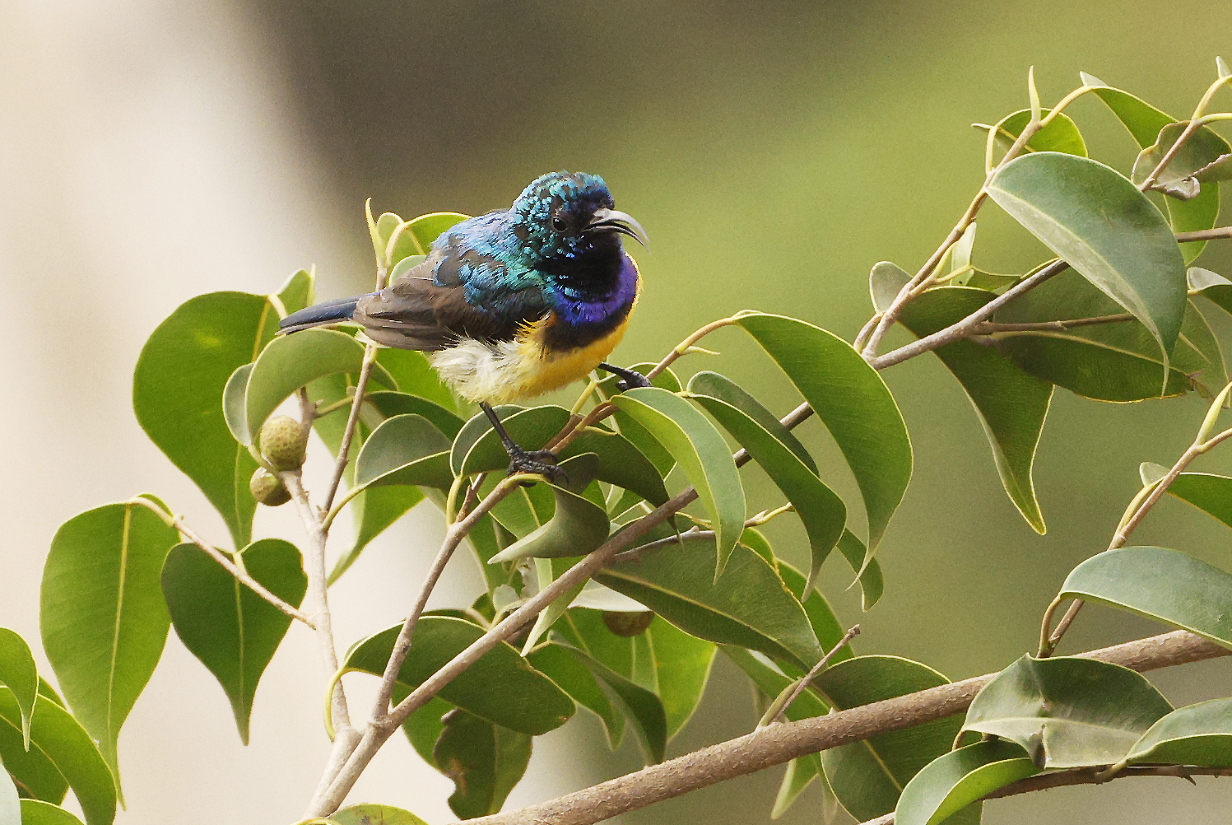
Variable sunbird (immature male)
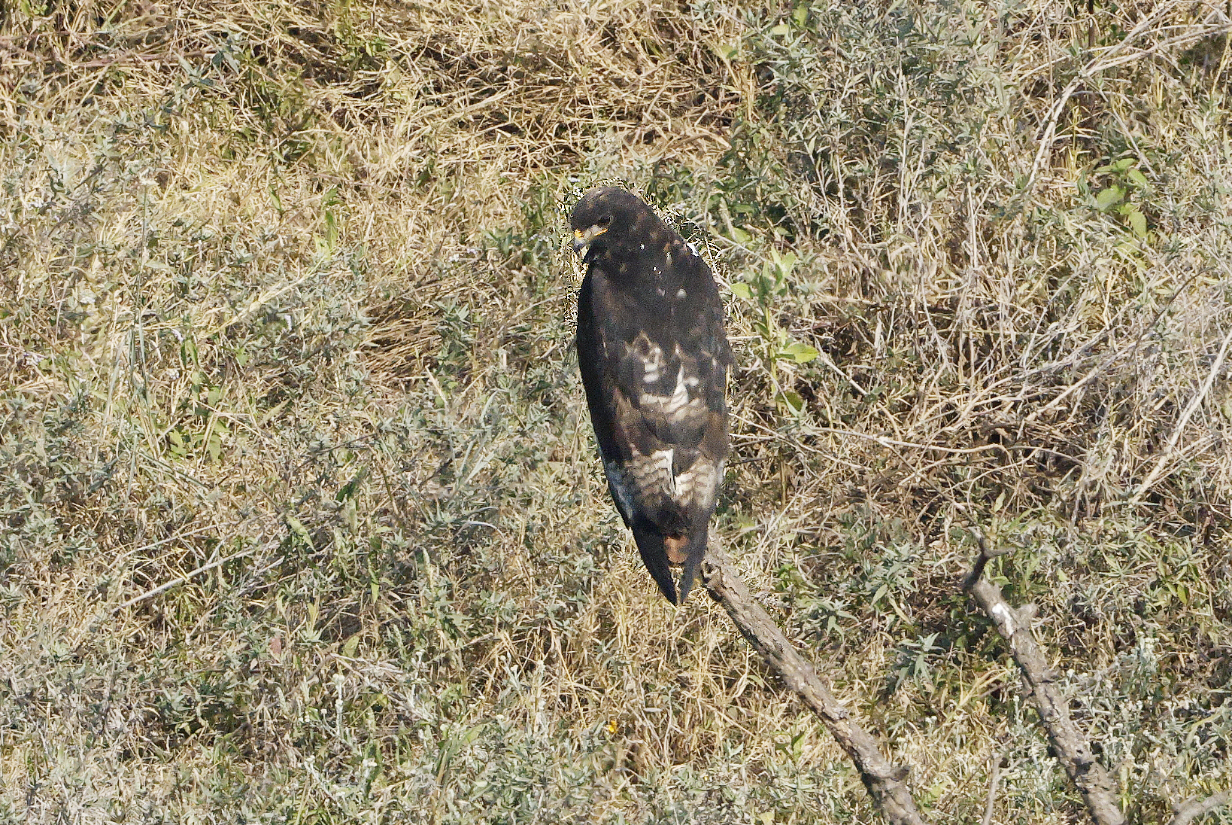
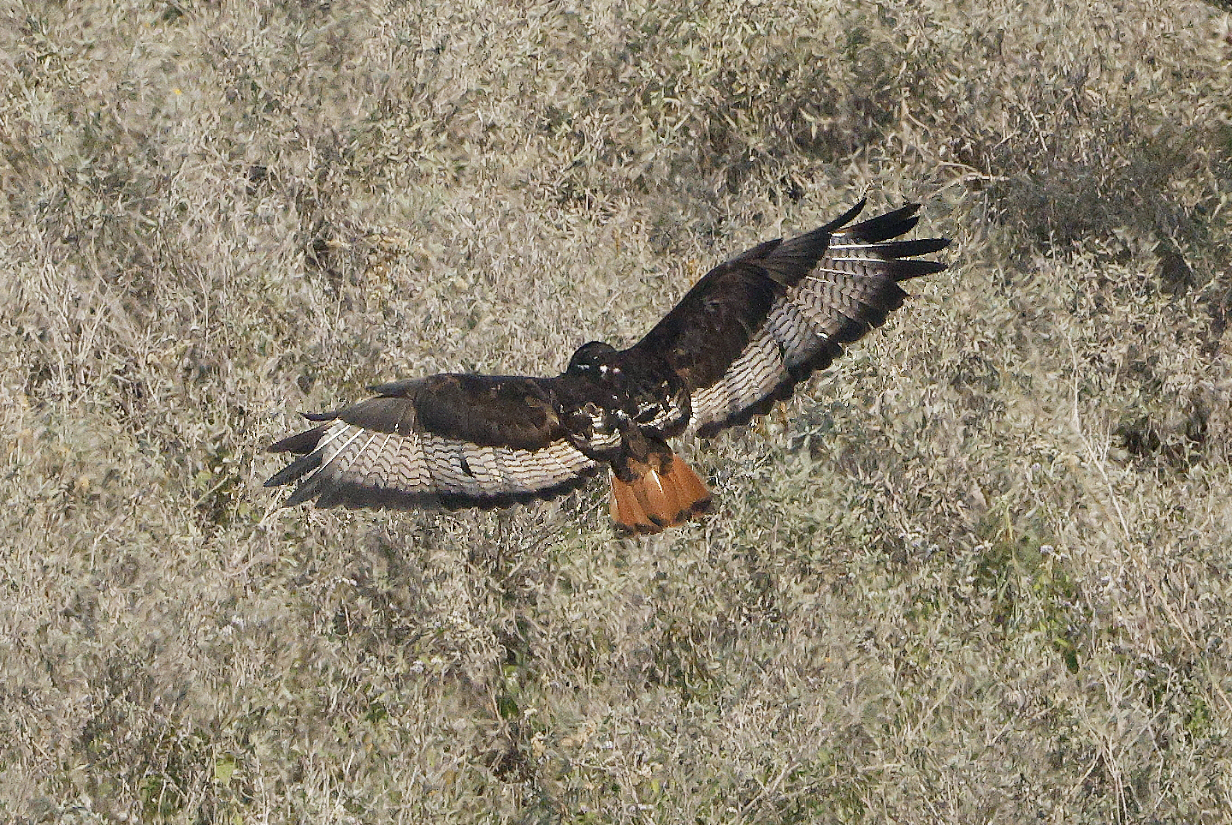
Augur buzzard, out in Nairobi National Park about as far away as the zebras, above. This is my life bird, the last of 4 new birds on August 5 + 6.
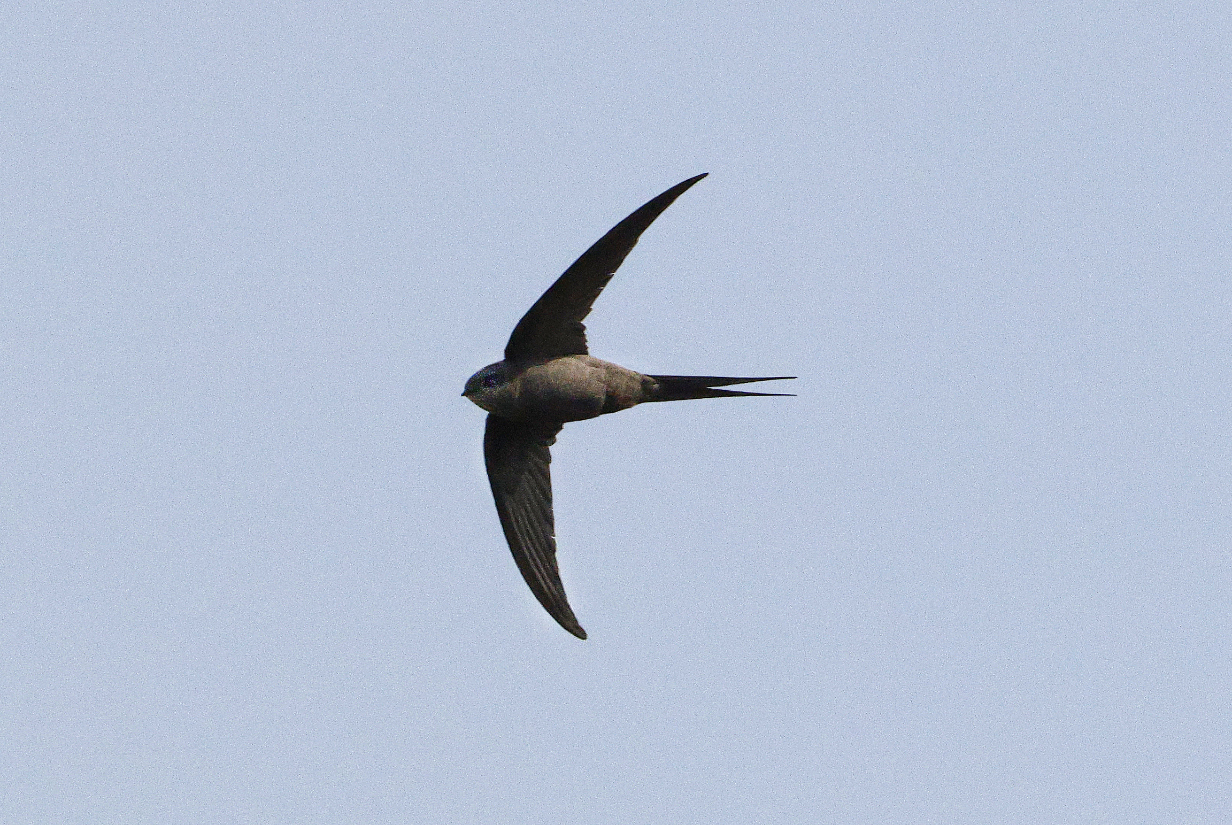
African palm swifts often flew around the hotel and as far into Nairobi National Park as I could see. It is not often that I get even a so-so picture.
I continued to bird on my own on August 7th. Happily, I discoveried early that the part of the Hotel Ole Sereni in which I was staying was only half of the property. An older part of the hotel is located on the other side of our entry way, and the birding there was better than the birding in the new part of the hotel. I could get closer to greenery and flowers. And there was a swimming pool that acted as a magnet to attract birds. So I got 3 more life birds today from closer up than were yesterday's birds.
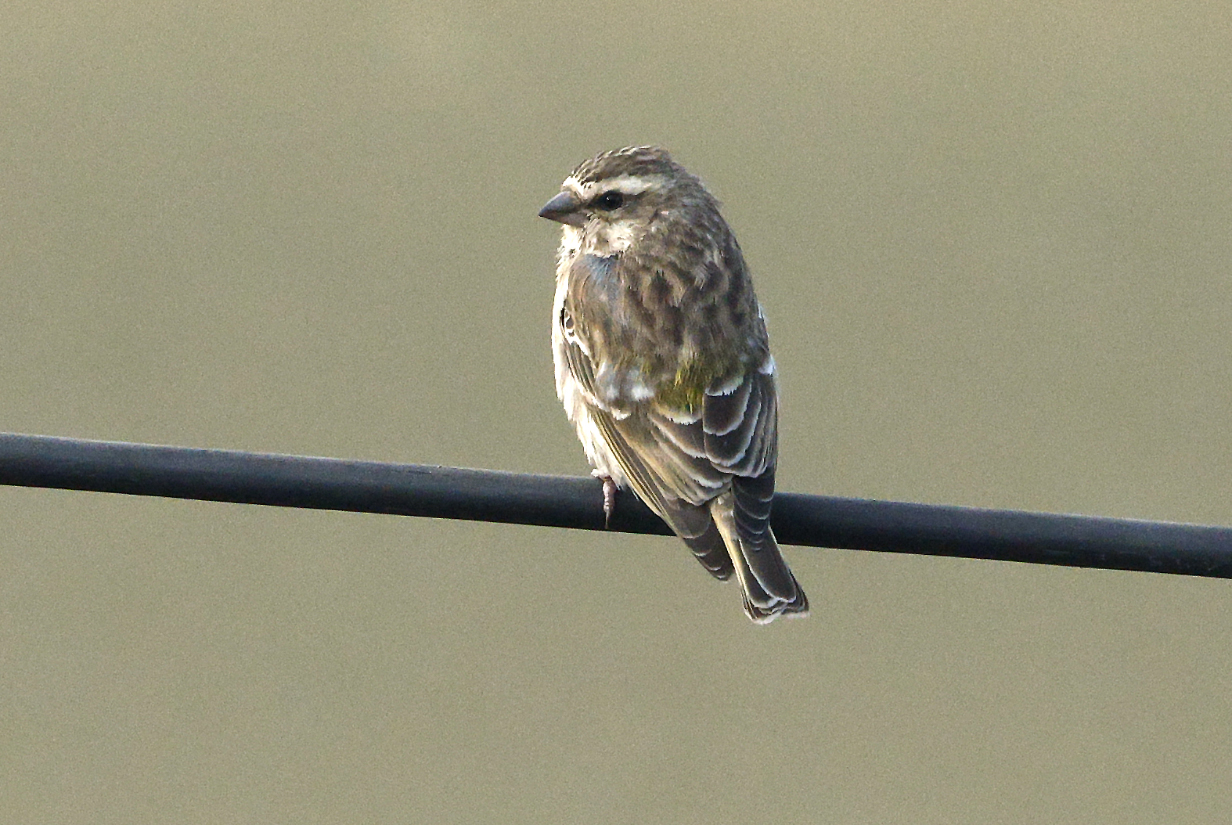
This juvenile Reichenau's seedeater confidently identified later by our local guide, Chege wa Kariuki III. What is not obvious here is the spectacularly yellow rump, seen much better in adults a few minutes later. This is my life bird.
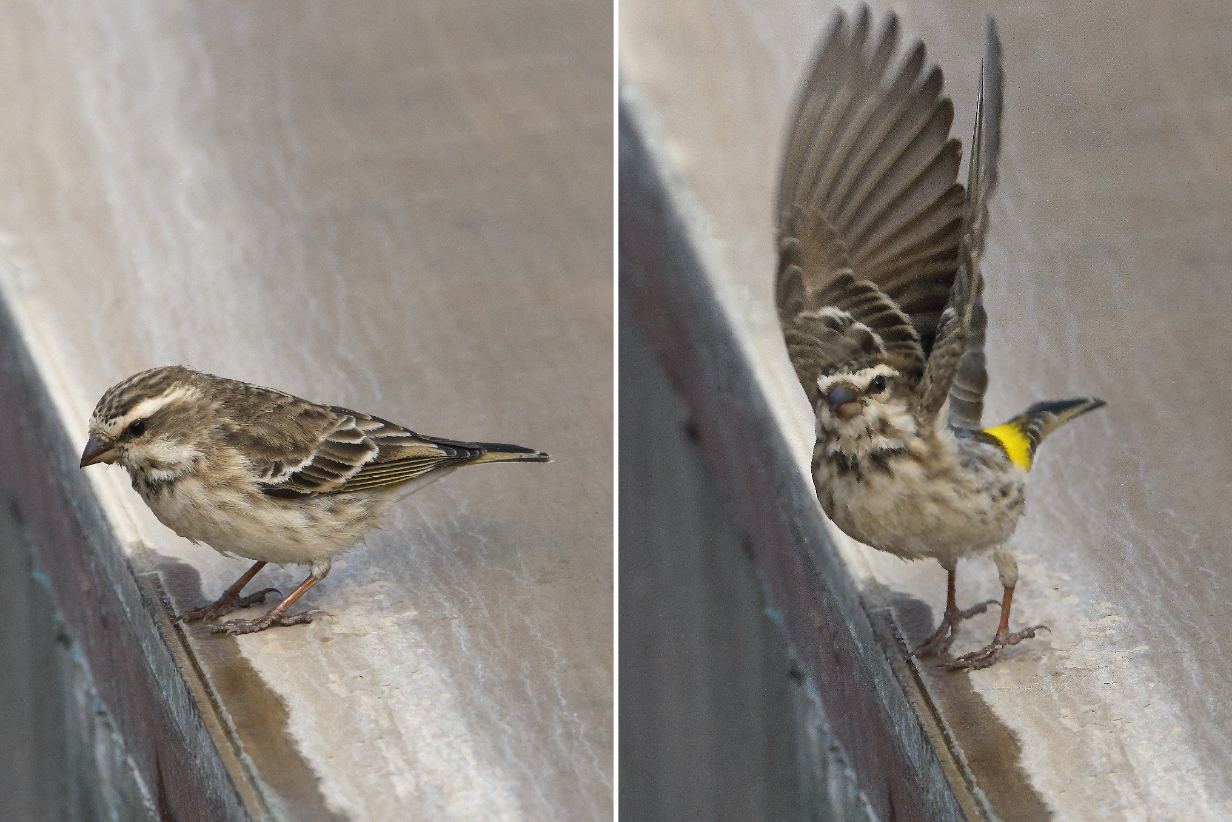
A little later, an adult Reichenau's seedeater put on for me a definitive display of his yellow rump. As did several other birds who did not come as close.
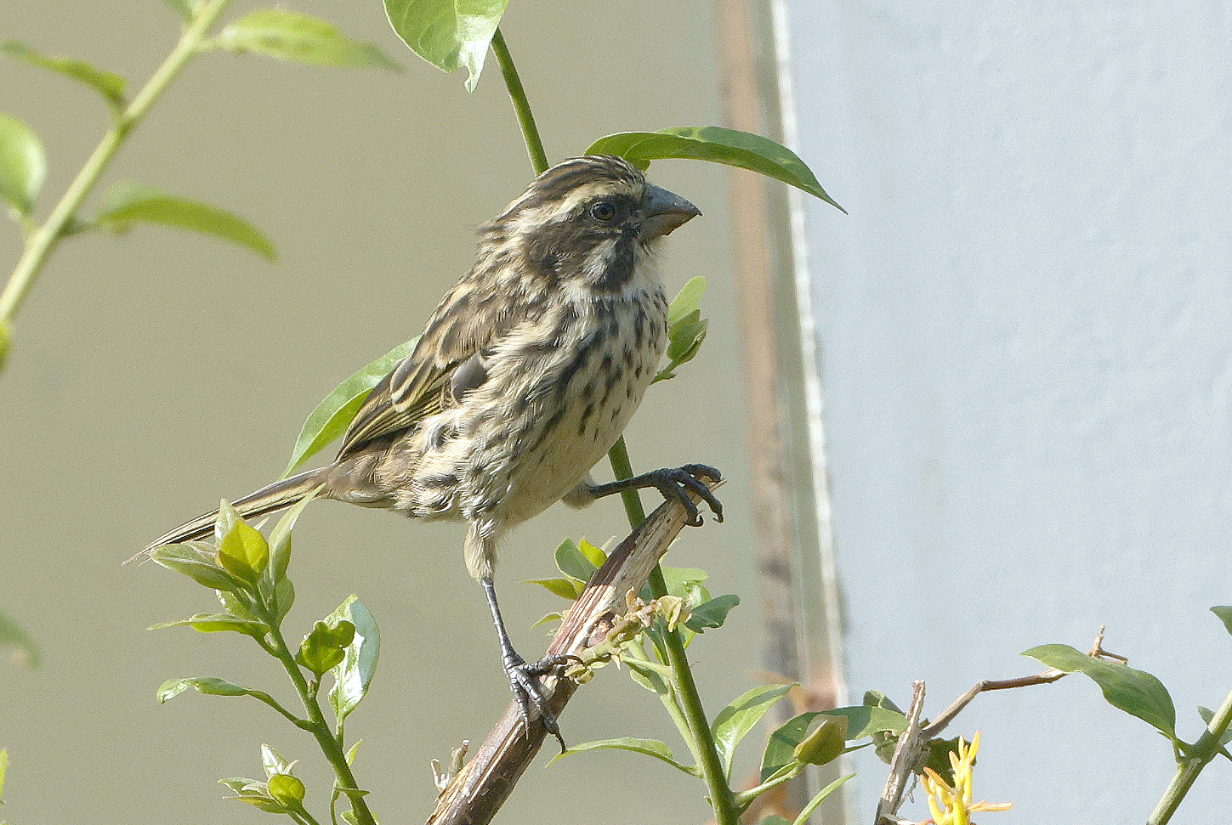
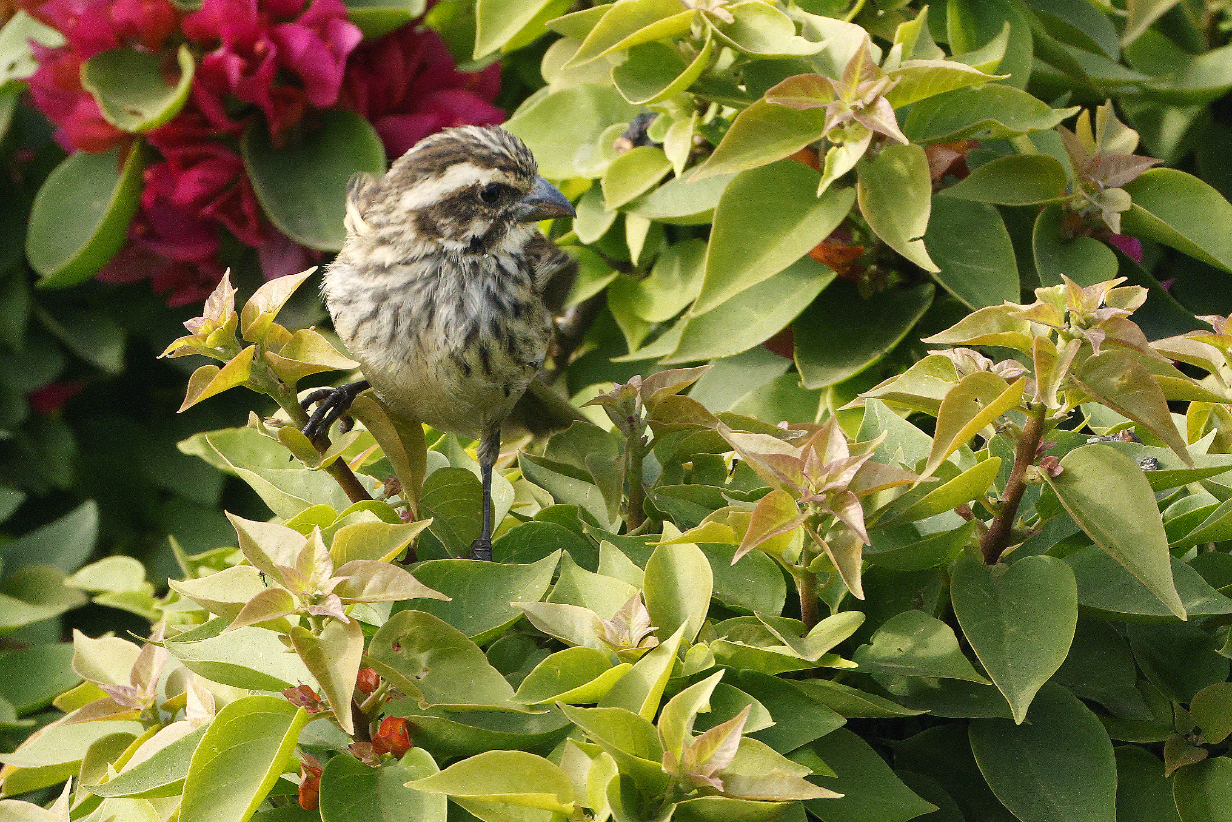
Streaky seedeater -- much better than yesterday's view
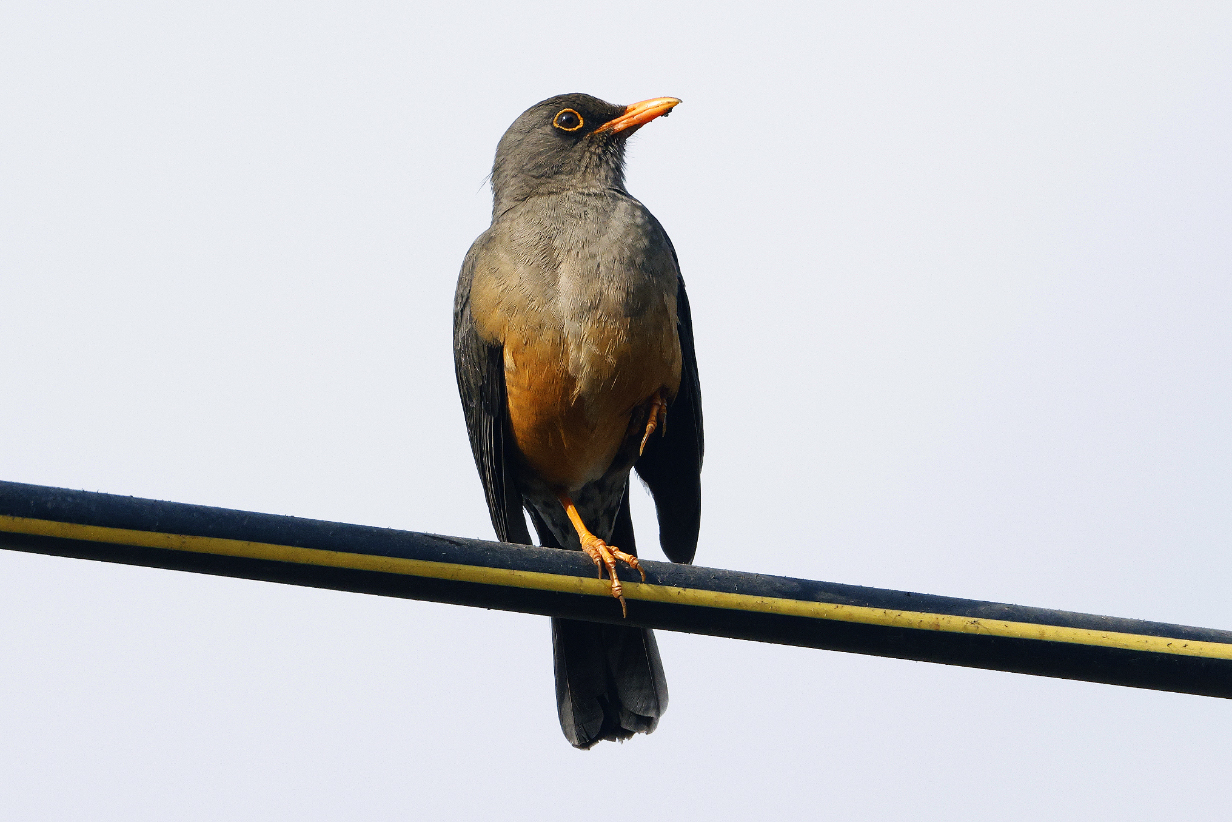
Abyssinian thrush, also much better than yesterday's view
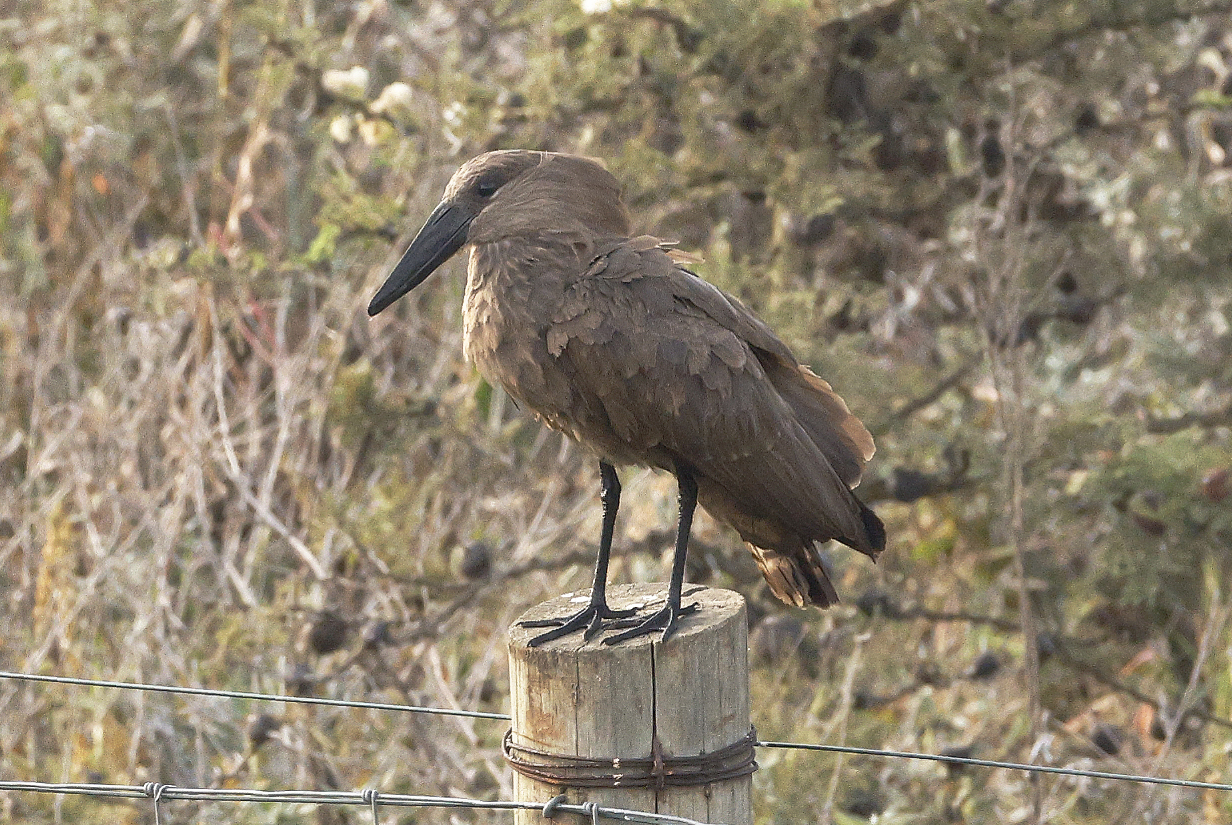
Hamerkop atop the fence around Nairobi National Park, across the street from our hotel
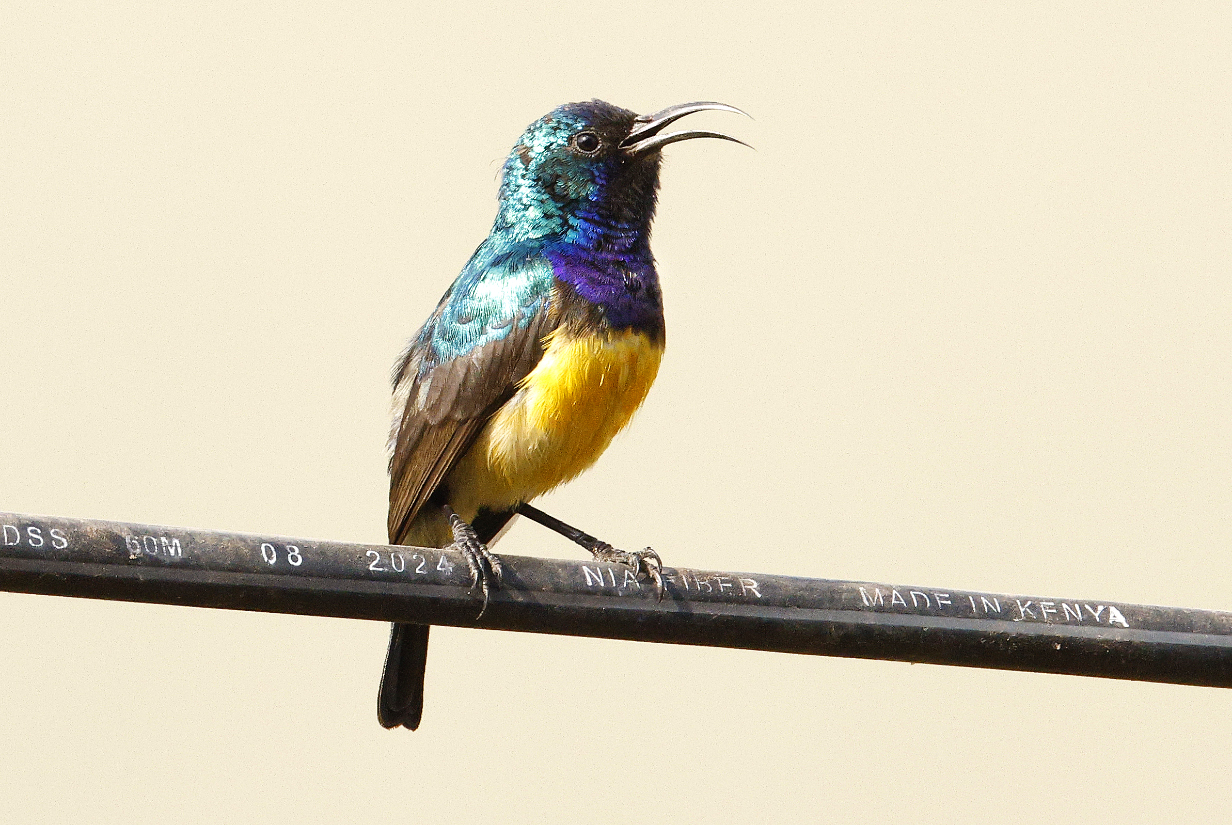
Variable sunbird -- busy in the flower birds especially around the old part of the hotel
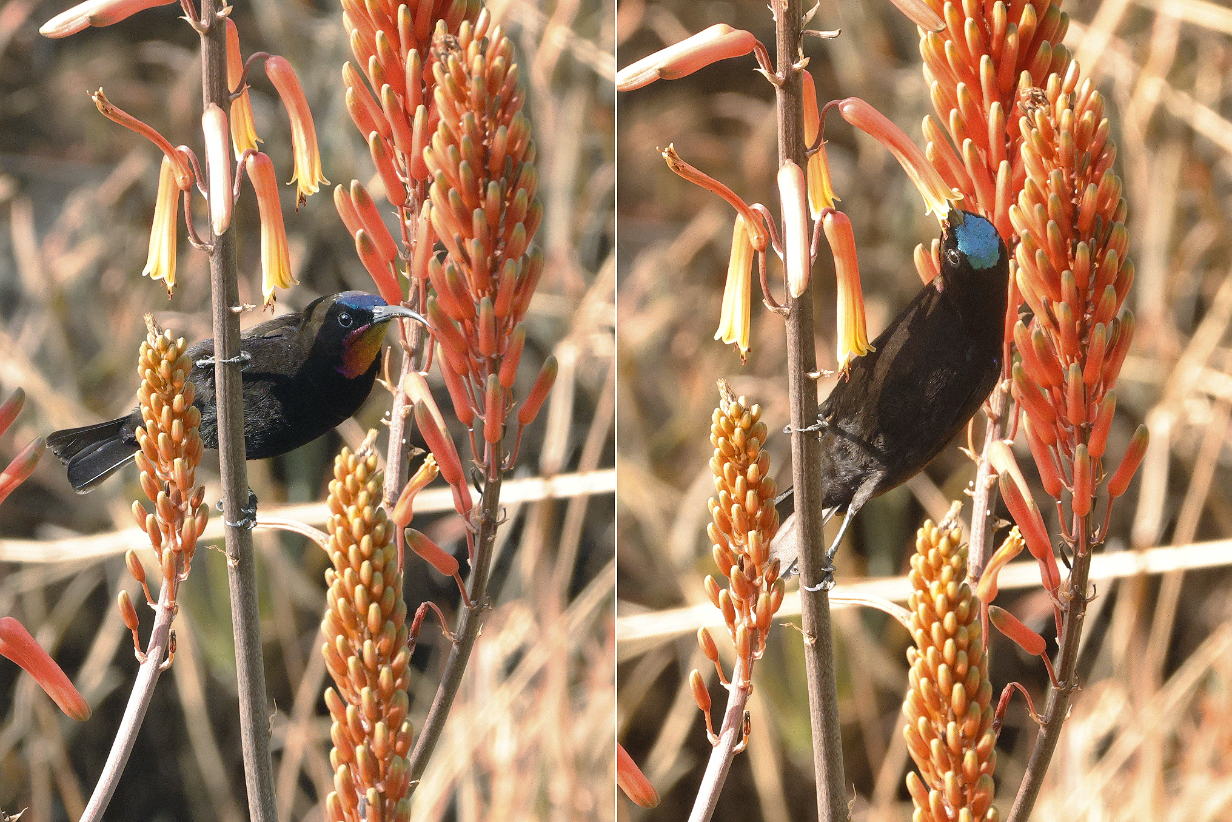
Amethyst sunbird (Thanks to Andrew Whittaker for confirming the ID.)
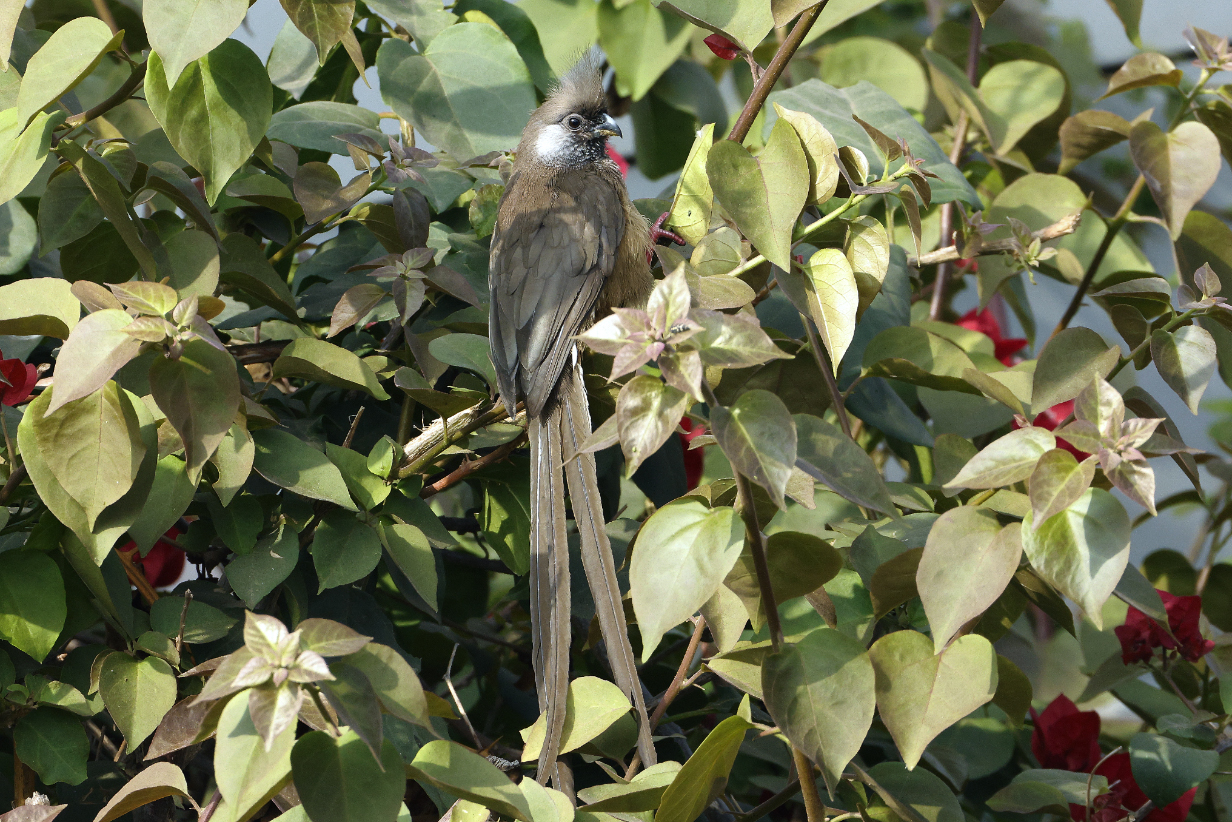
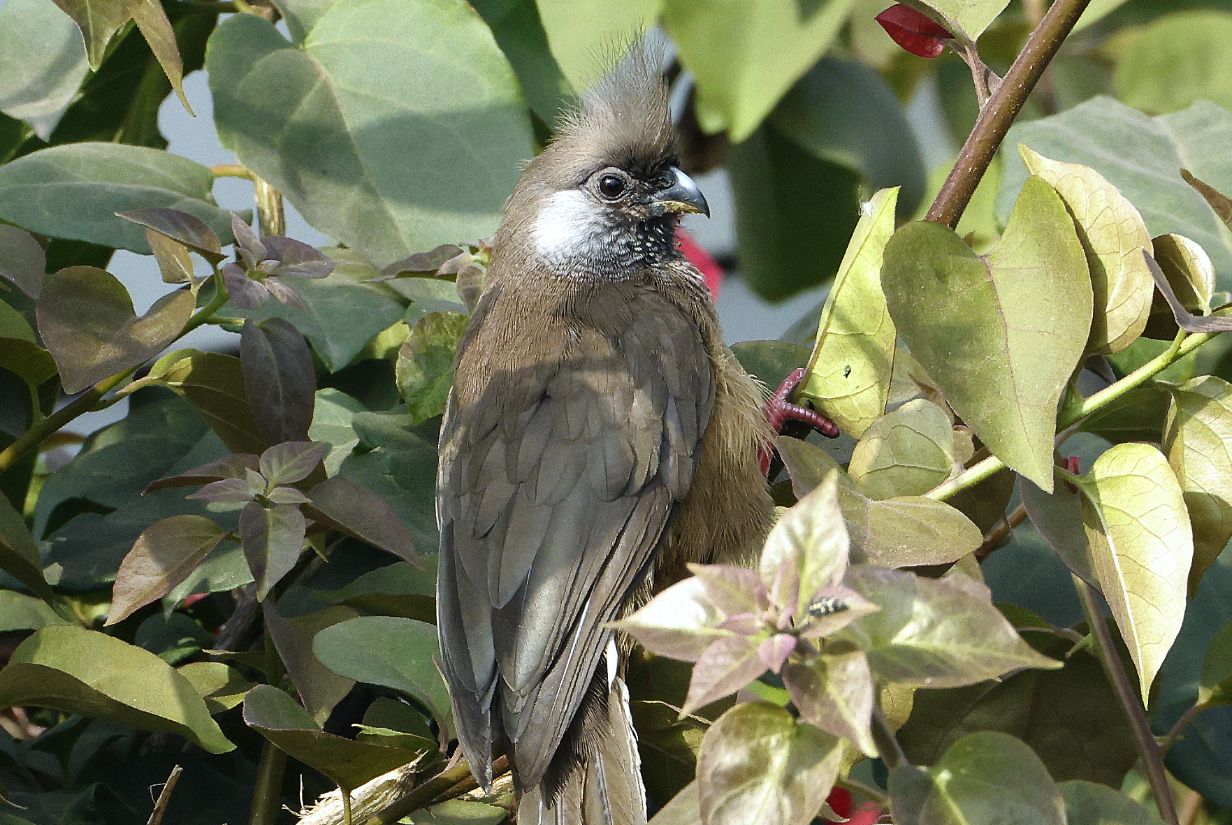
Speckled mousebird (This is my life bird.)
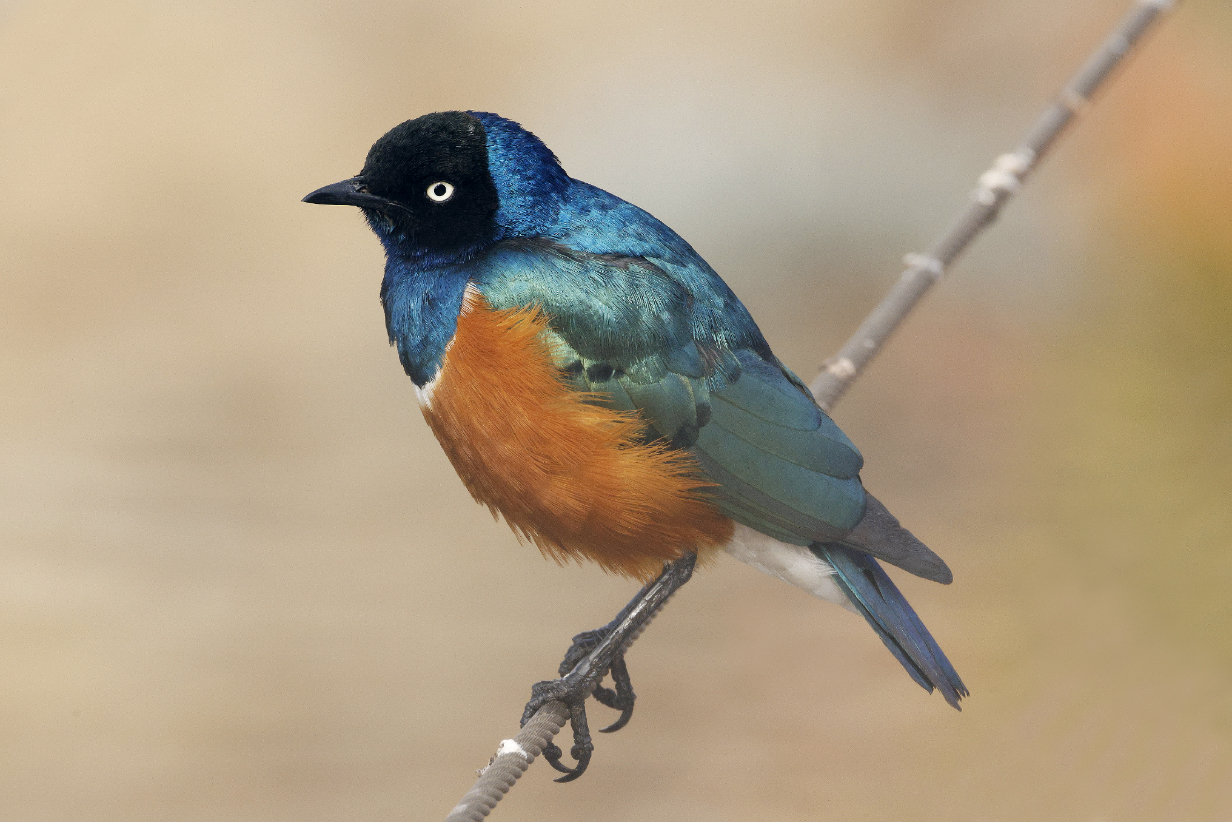
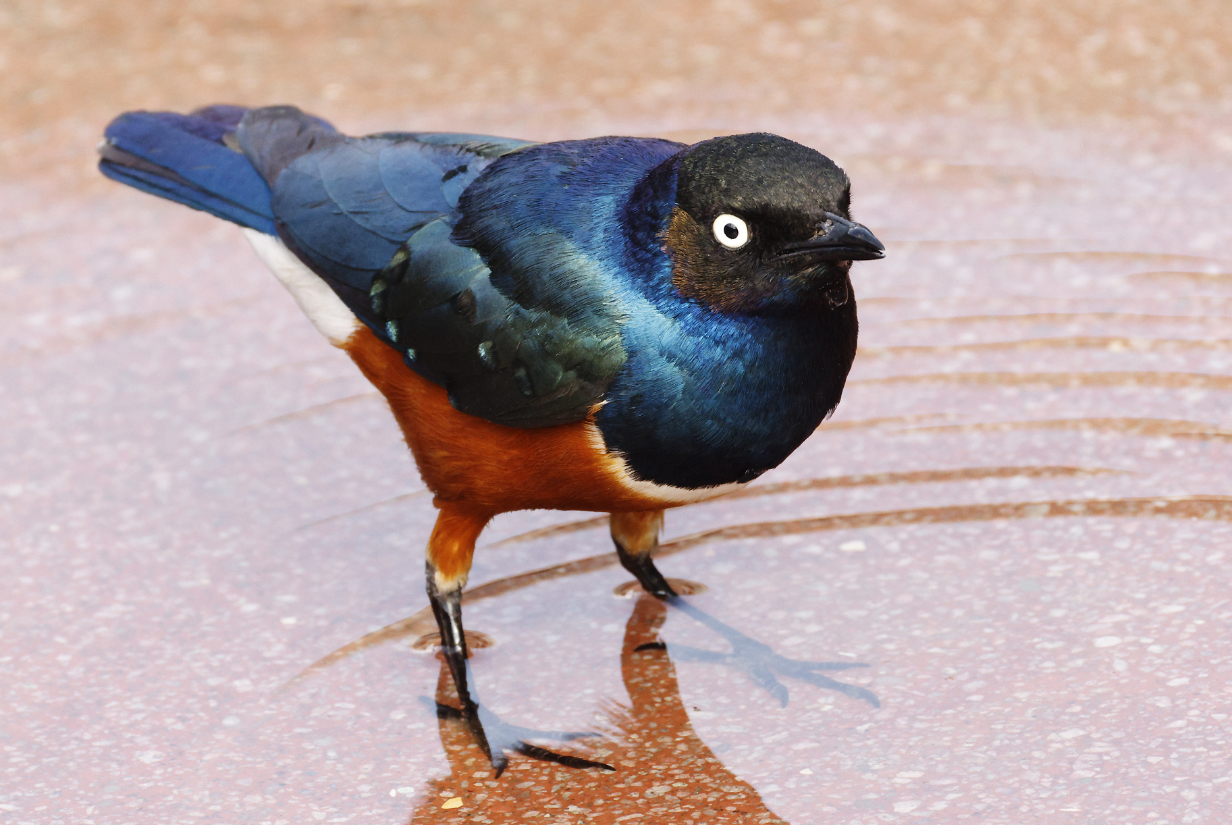
Superb starling frequent the hotel grounds, according to the trip itinerary. Until late morning on August 7th, I had not seen them. But by the time of the most recent several sightings and pictures, above, I had wandered along the hotel grounds to the swimming pool at its east end. Suddenly, a noisy flock of half-a-dozen Superb starlings arrived. Spectacular, as advertised. They are my life birds.
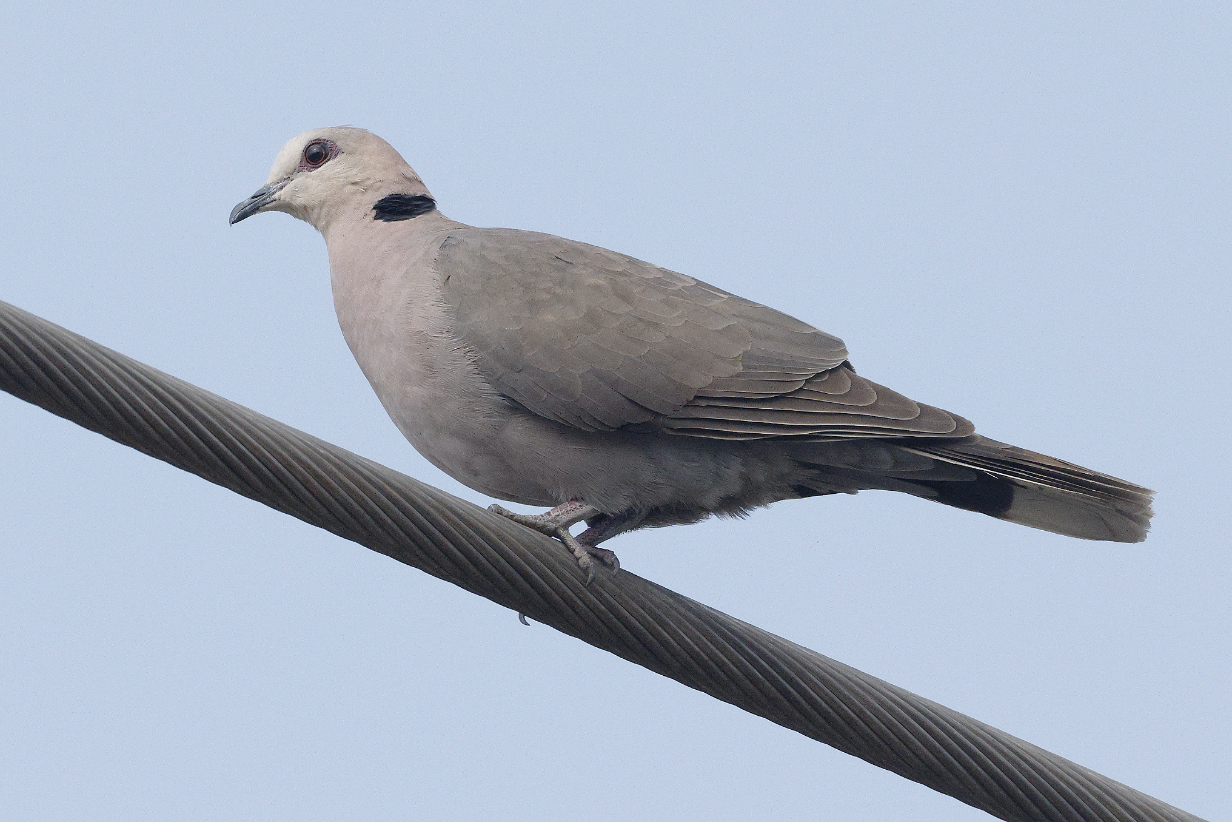
Ring-necked dove
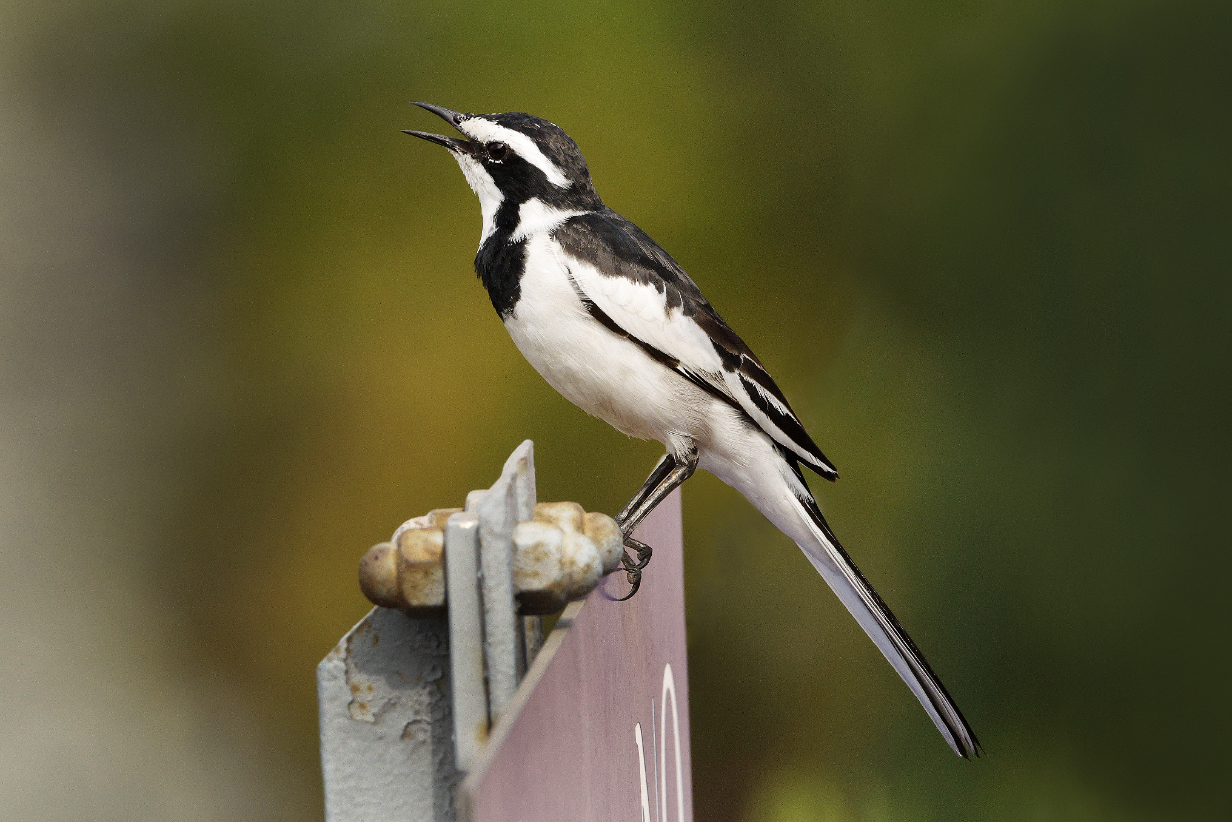
African pied wagtail
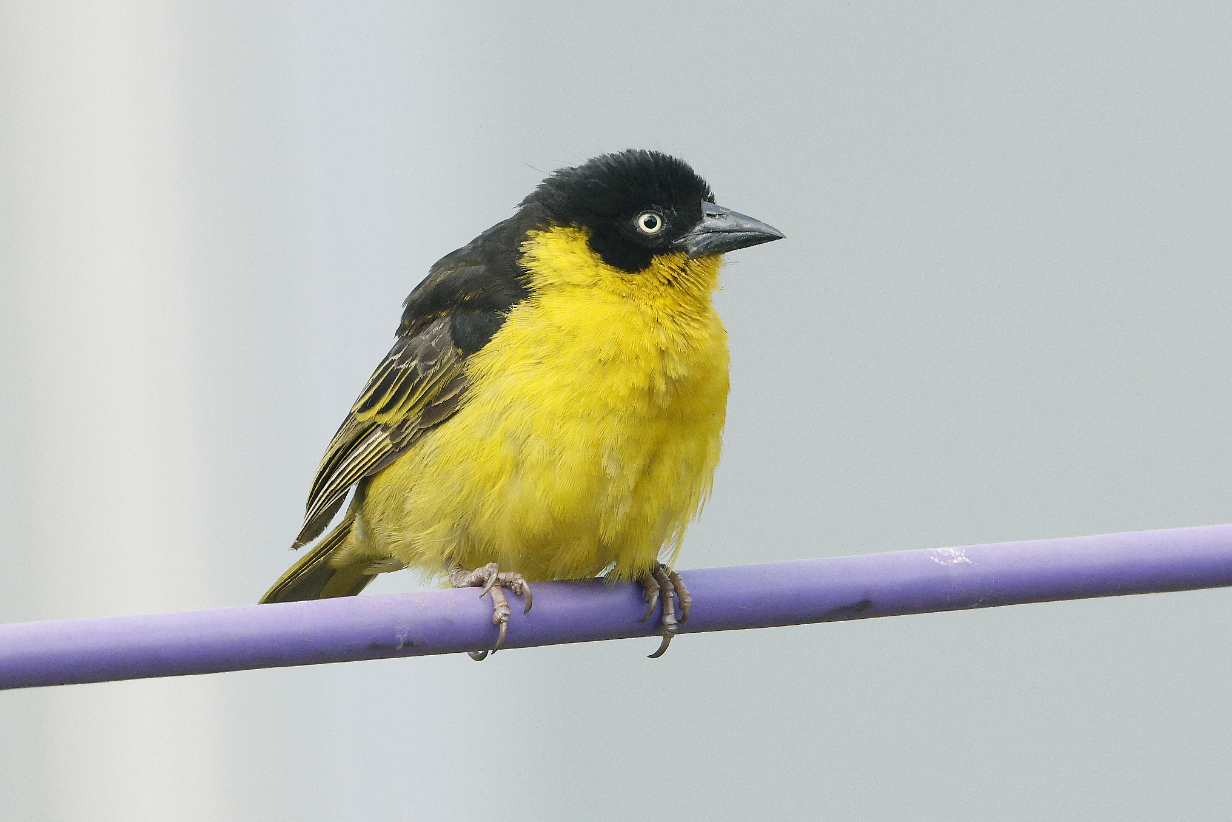
Baglafecht weaver (female)
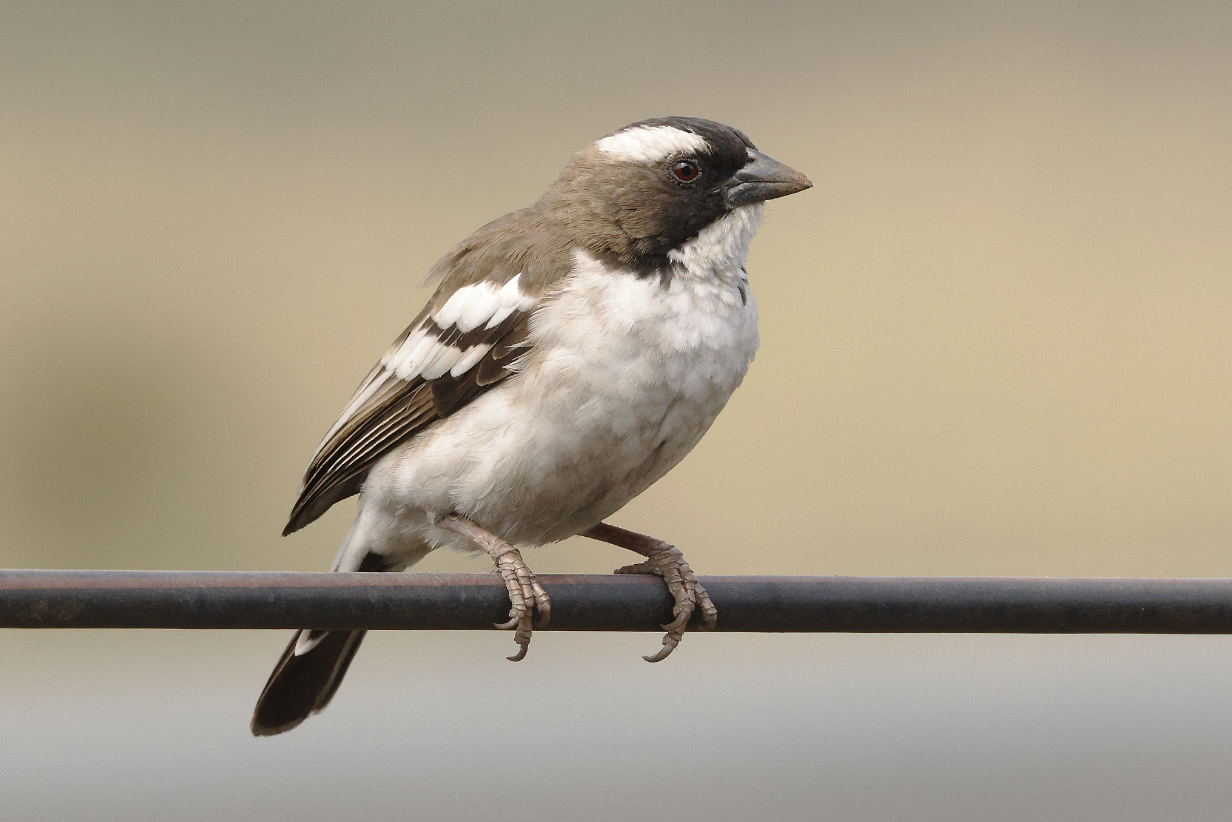
White-browed sparrow-weaver (Beautiful bird, not new: I'd seen it in South Africa)
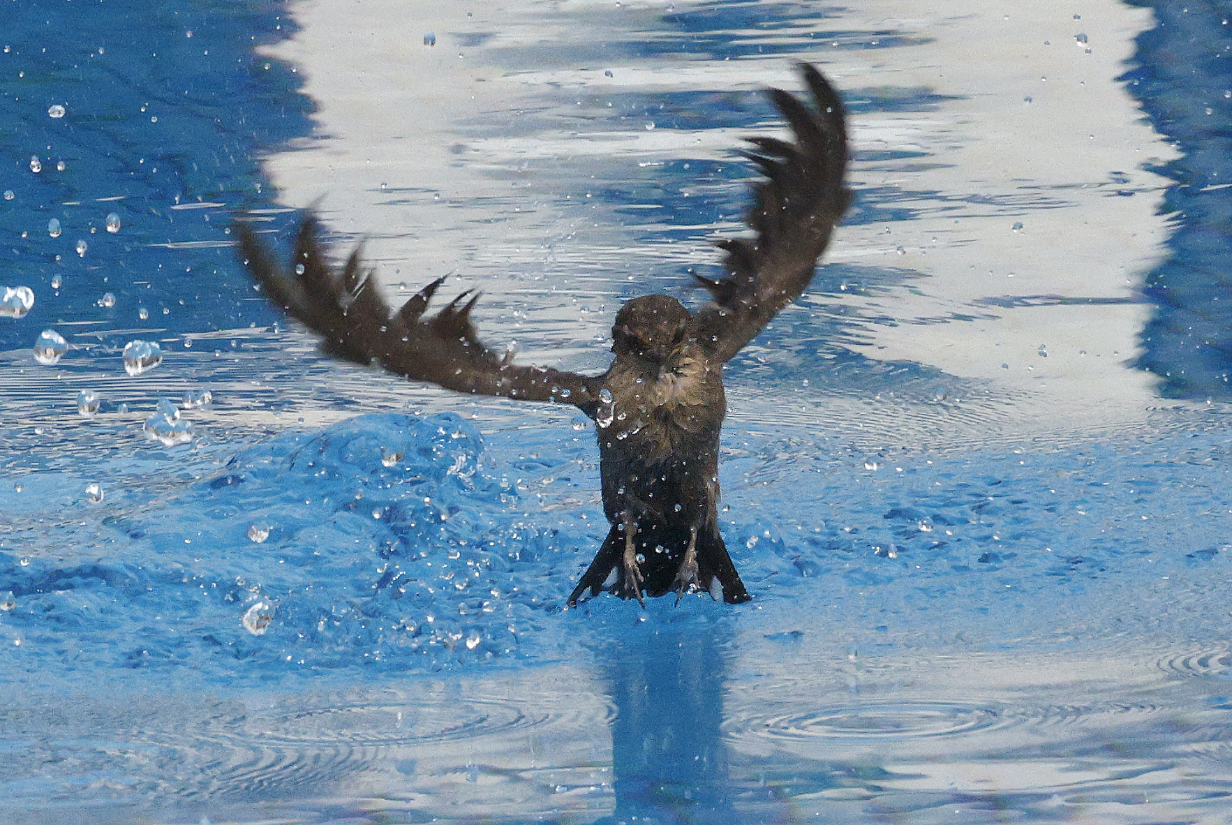
Red-throated crag martins zoomed by, each touching down in the swimming pool for a split-second. This bird is flying up and away; you can see two rings of waves where his wings touched water during the swoop in to snatch a drink. Many thanks to Chege for identifying this bird.
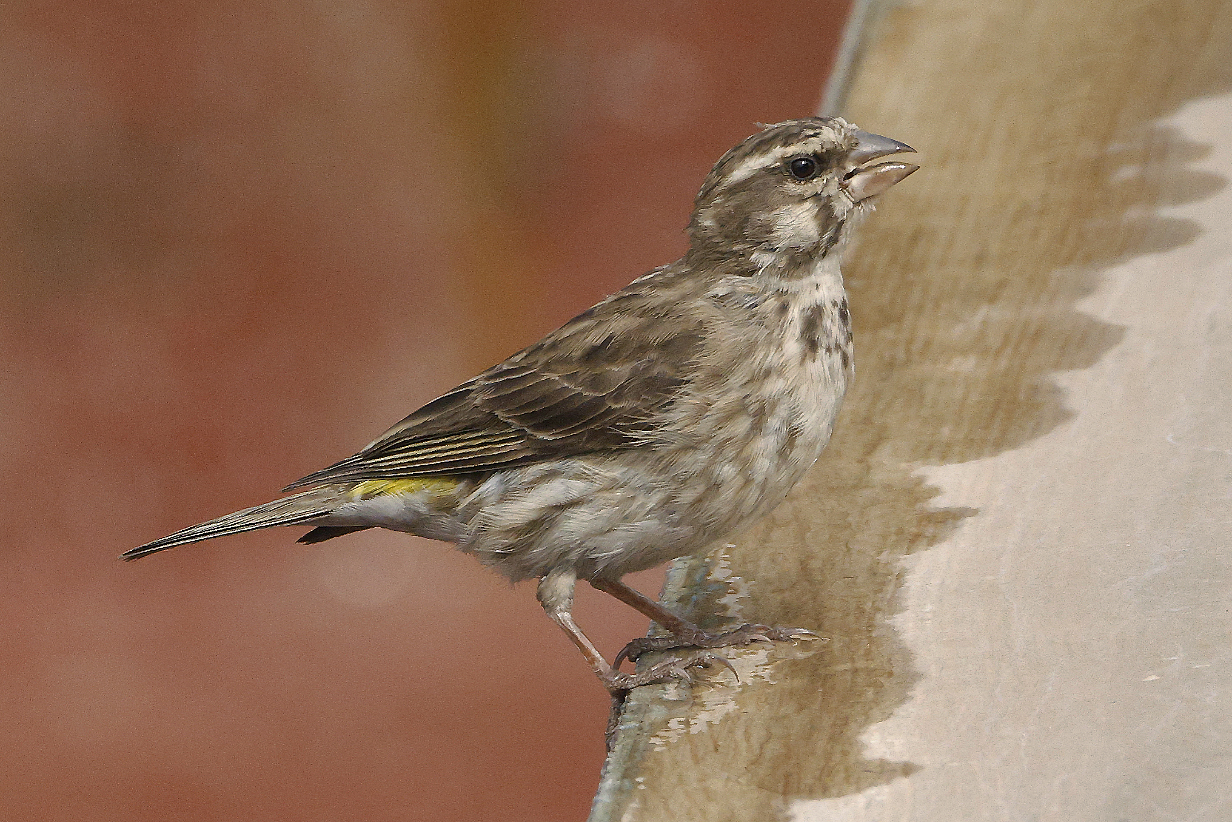
Reichenau's seedeater and other birds came in to drink, often in the shallows: water is a reliable bird magnet in this dry climate.
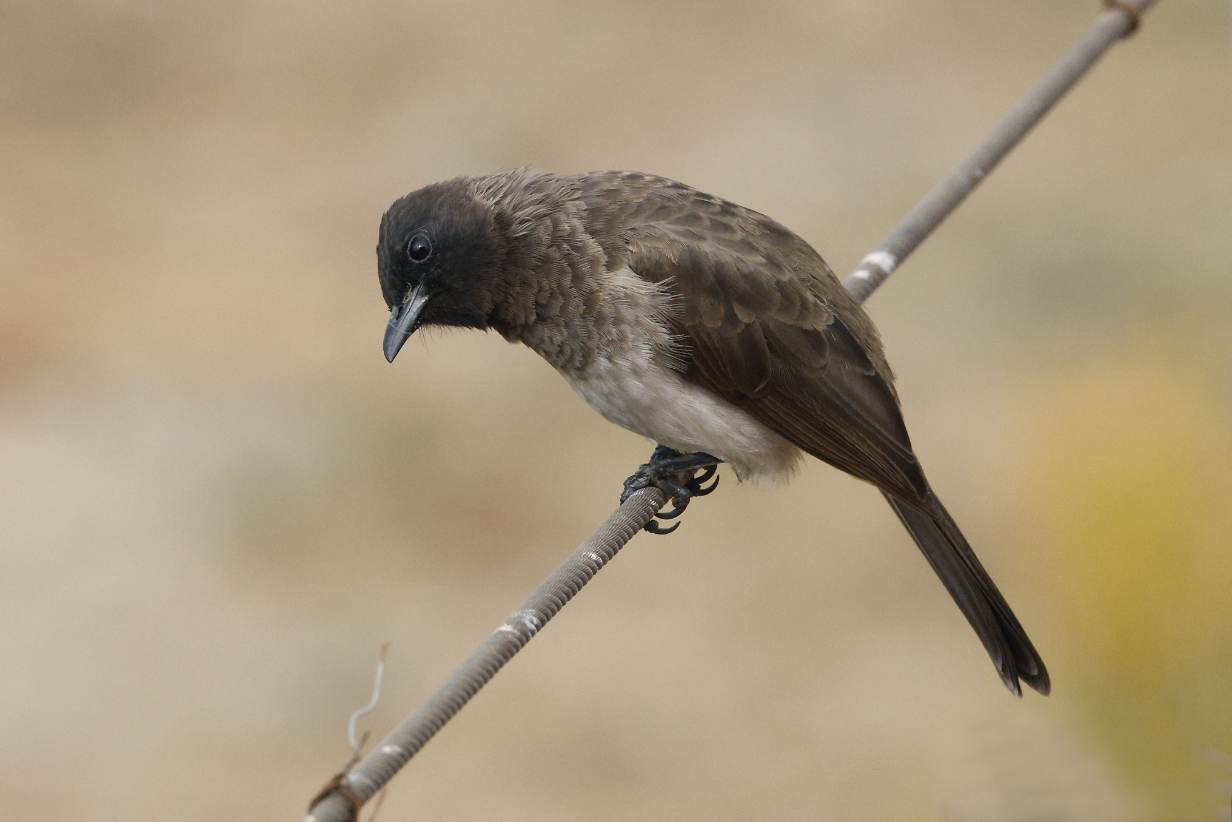
Even Common bulbul showed up to check on the fuss around the pool.
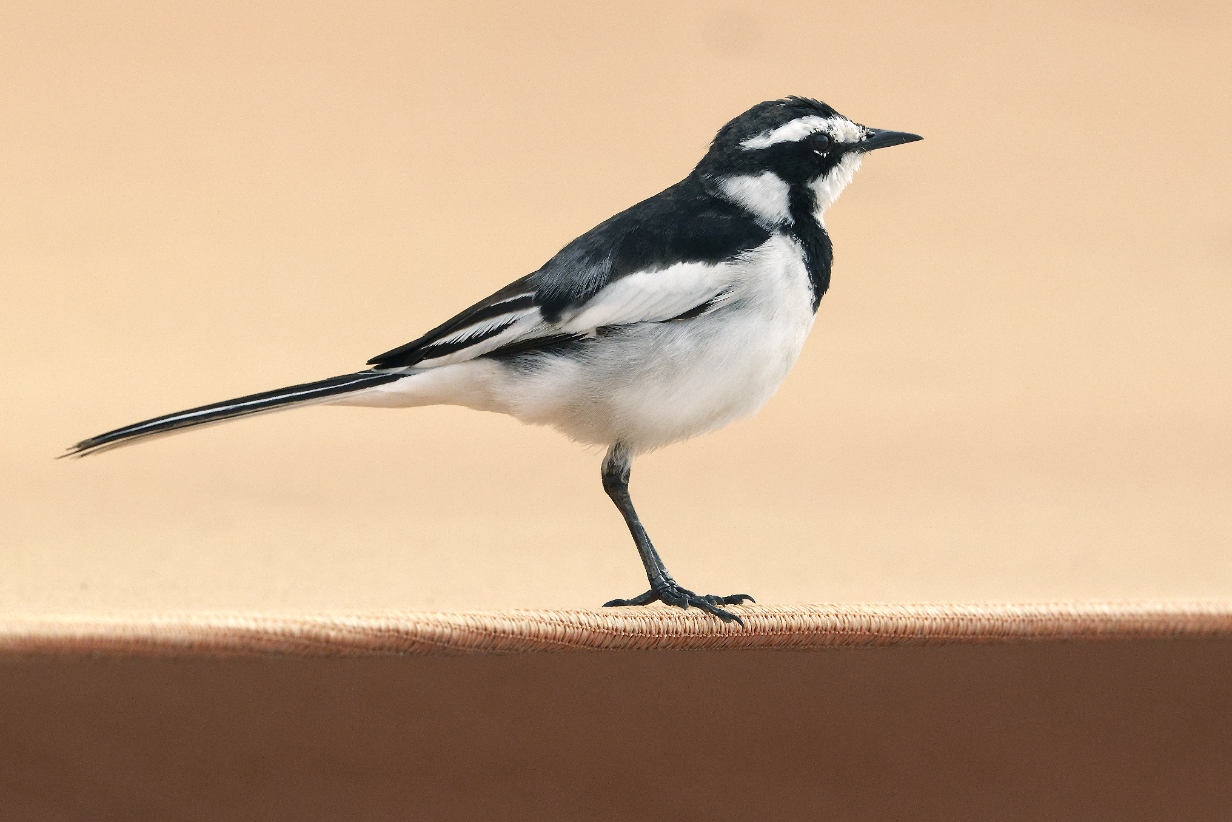
African pied wagtail again -- classy bird
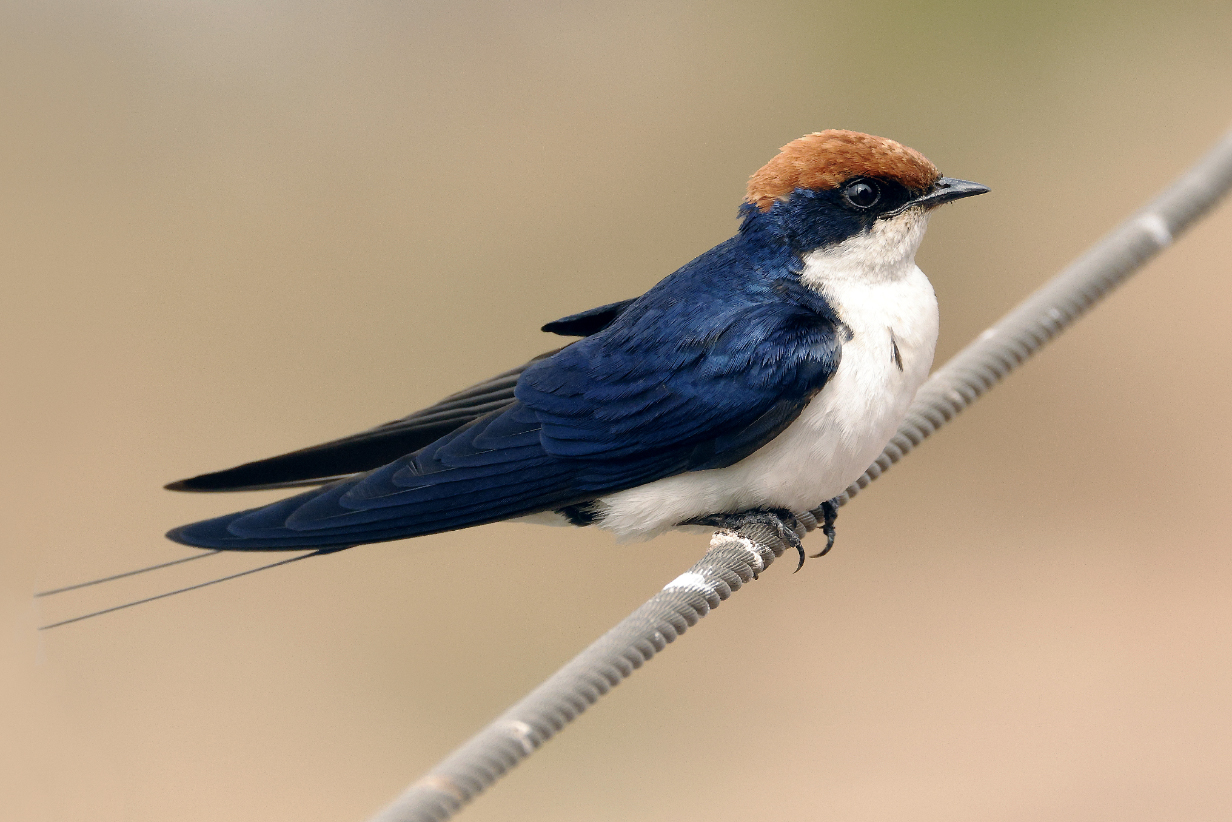
Wire-tailed swallow also came, attracted by the pool.
I got 7 new birds in the three days before the VENT tour started. Moreover, there was time to try to get good pictures. Once the tour started, sightings got hectic and brief, so -- except for some cooperative ground birds -- pictures starting tomorrow tend to be less good.
August 8: Nairobi National Park
The VENT tour started with an all-day safari drive in Nairobi National Park.
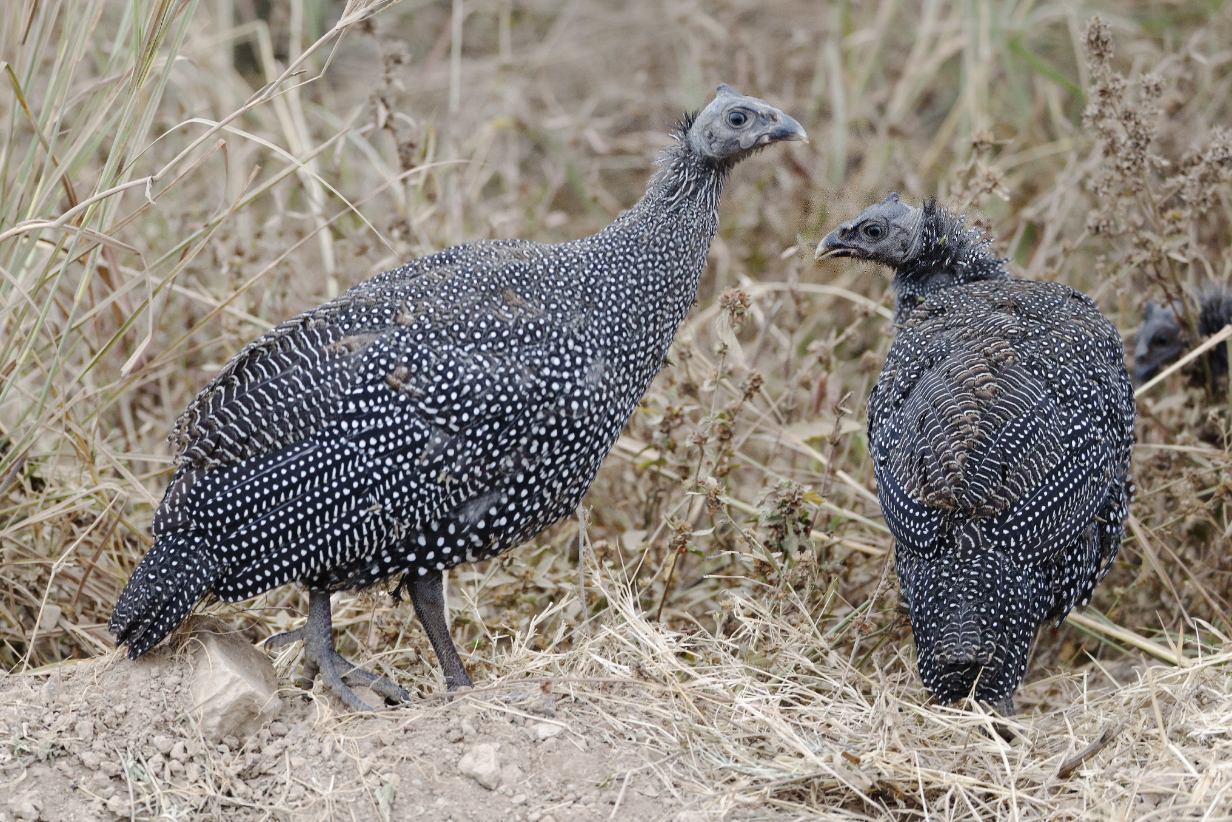
Helmeted guineafowl (These two birds are unusually drab.)
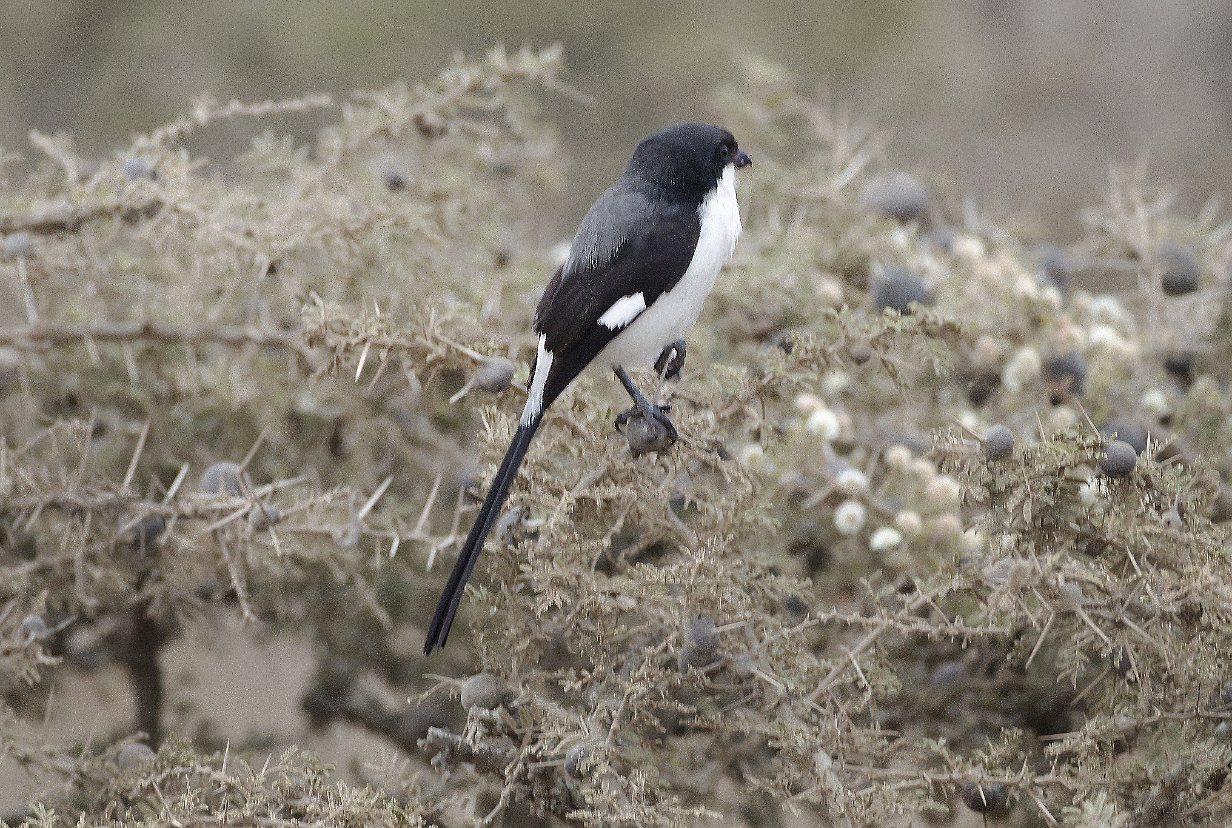
Long-tailed fiscal (This is my life bird -- brief view; bad angle.)
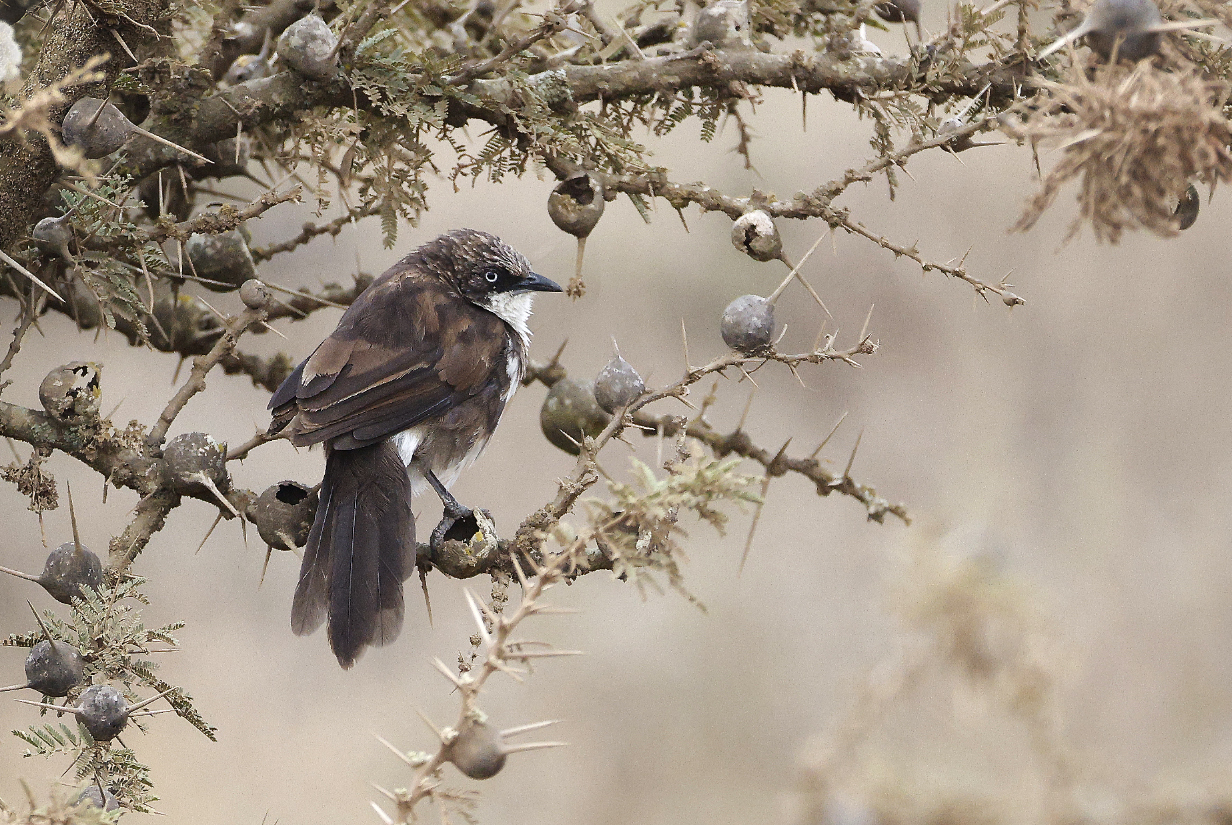
Northern pied-babbler (This is my life bird.)
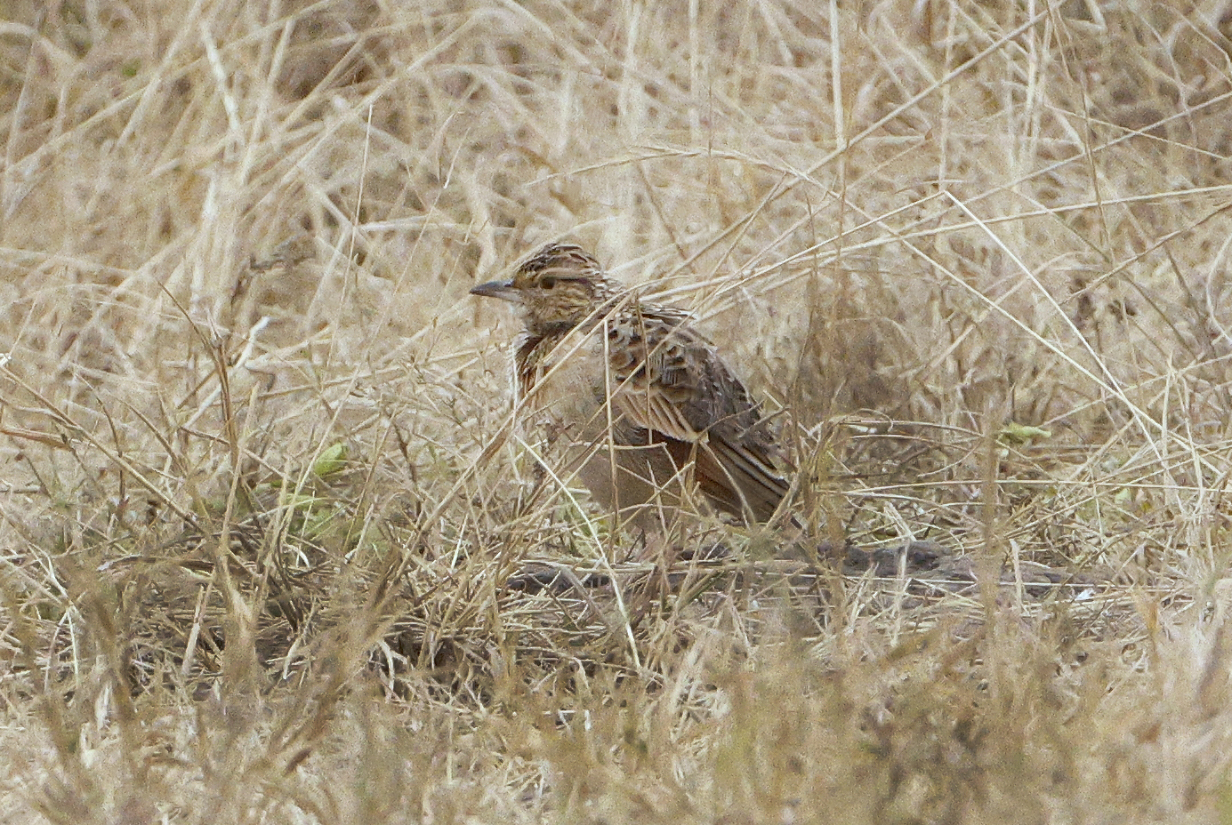
Sentinel lark (This is my life bird. I never got a great look, but the generally rufous look especially in the wings, is reasonably clear.)
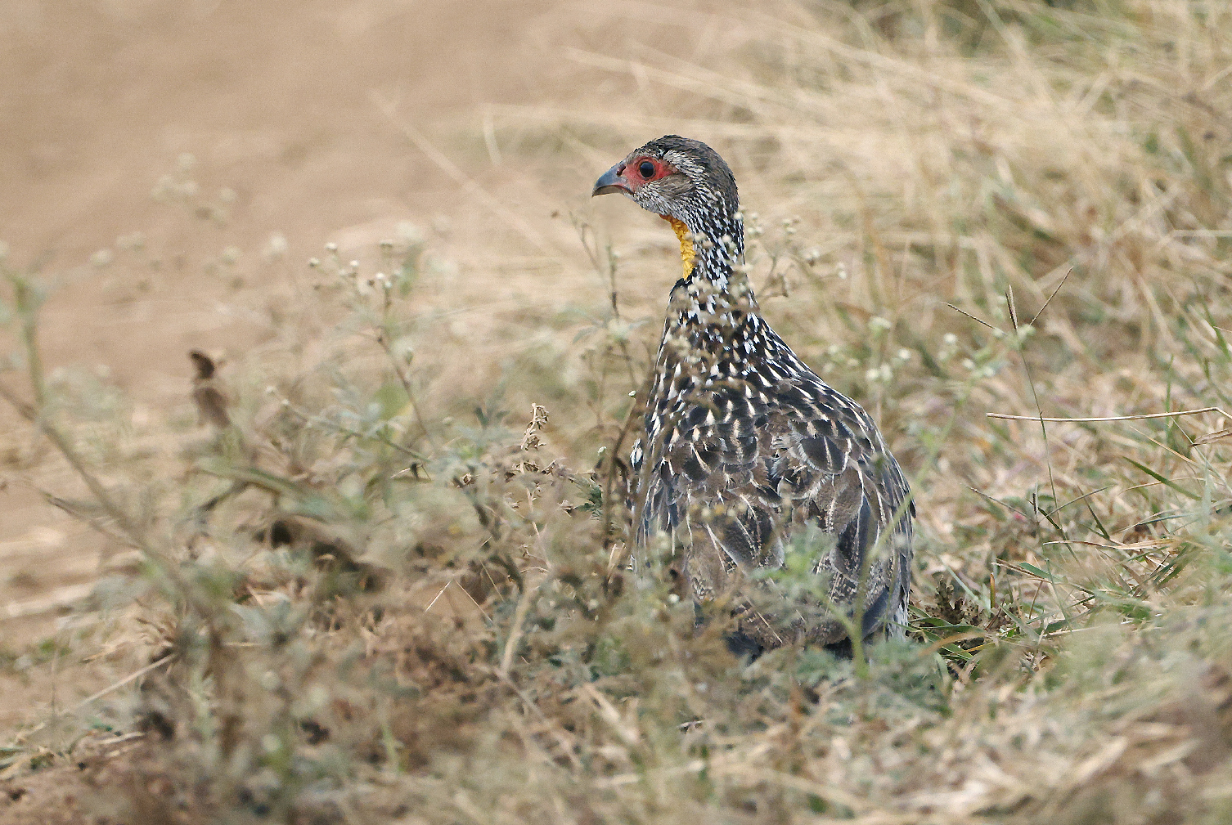
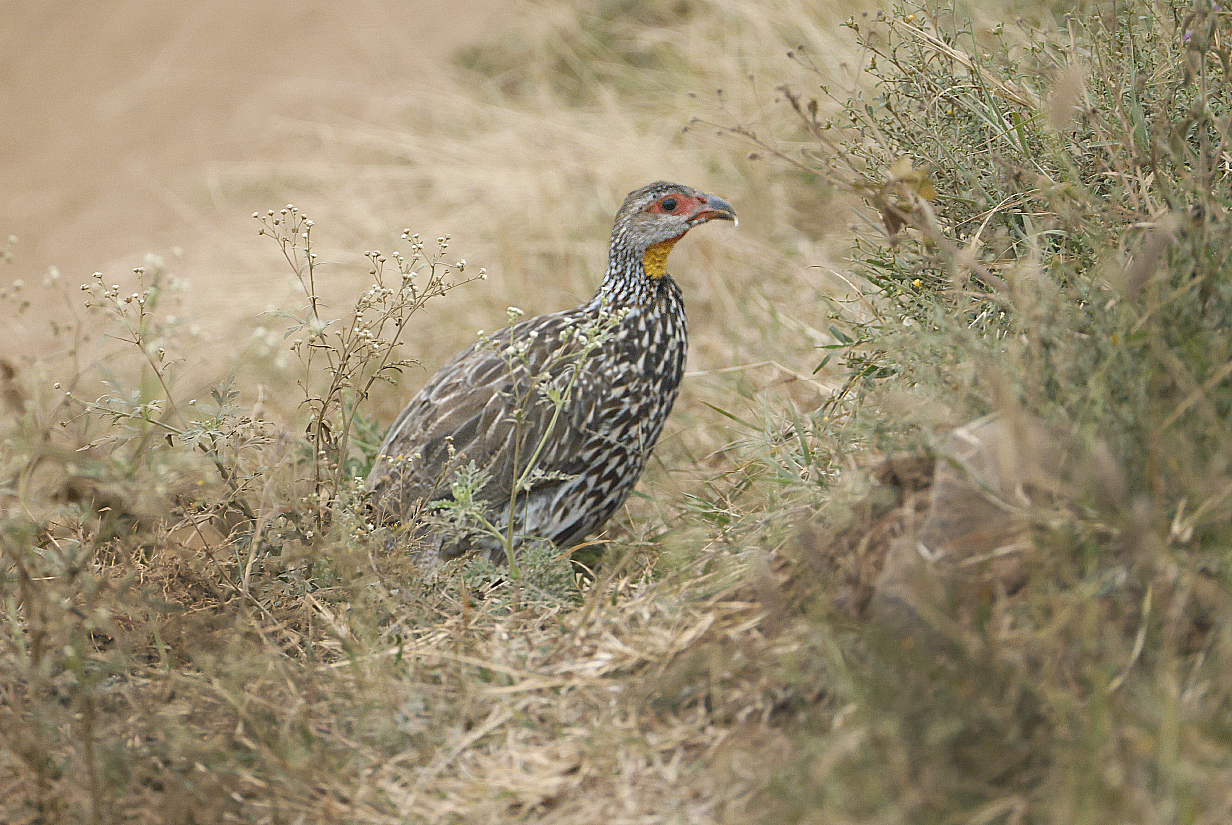
Yellow-necked spurfowl (This is my life bird.)
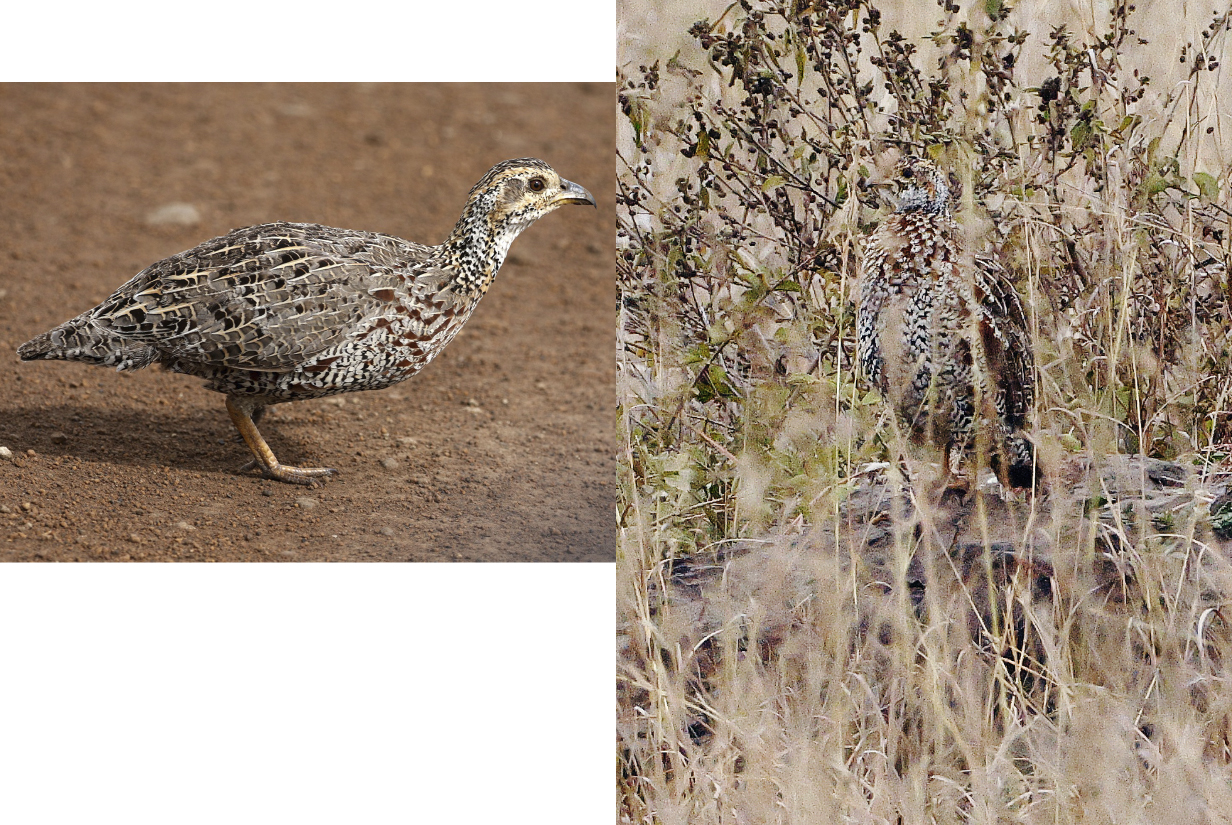
Shelley's francolin is at right, supremely well camouflaged. At left is the title page picture posted at ebird. It's clear that we saw it -- this is my life bird -- even though our view was far from satisfying.
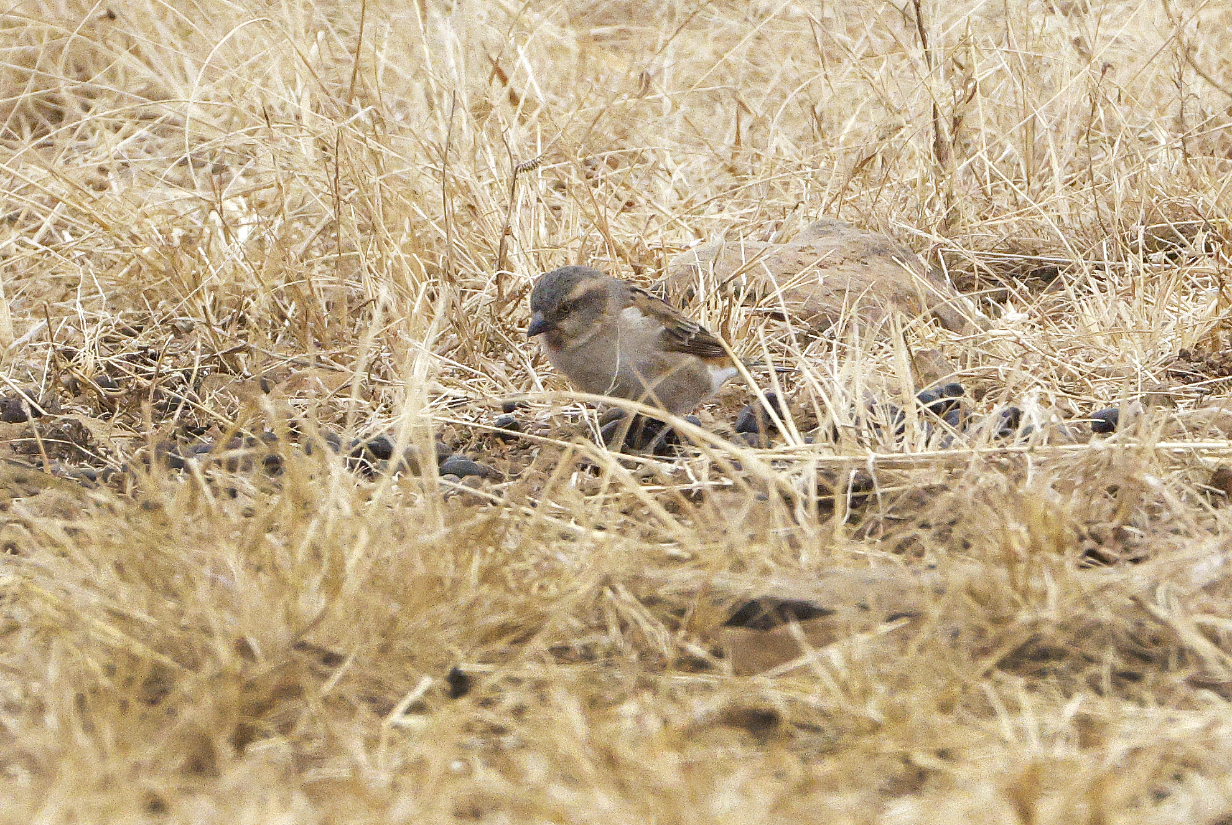
Kenya rufous sparrow (This female is my life bird.)
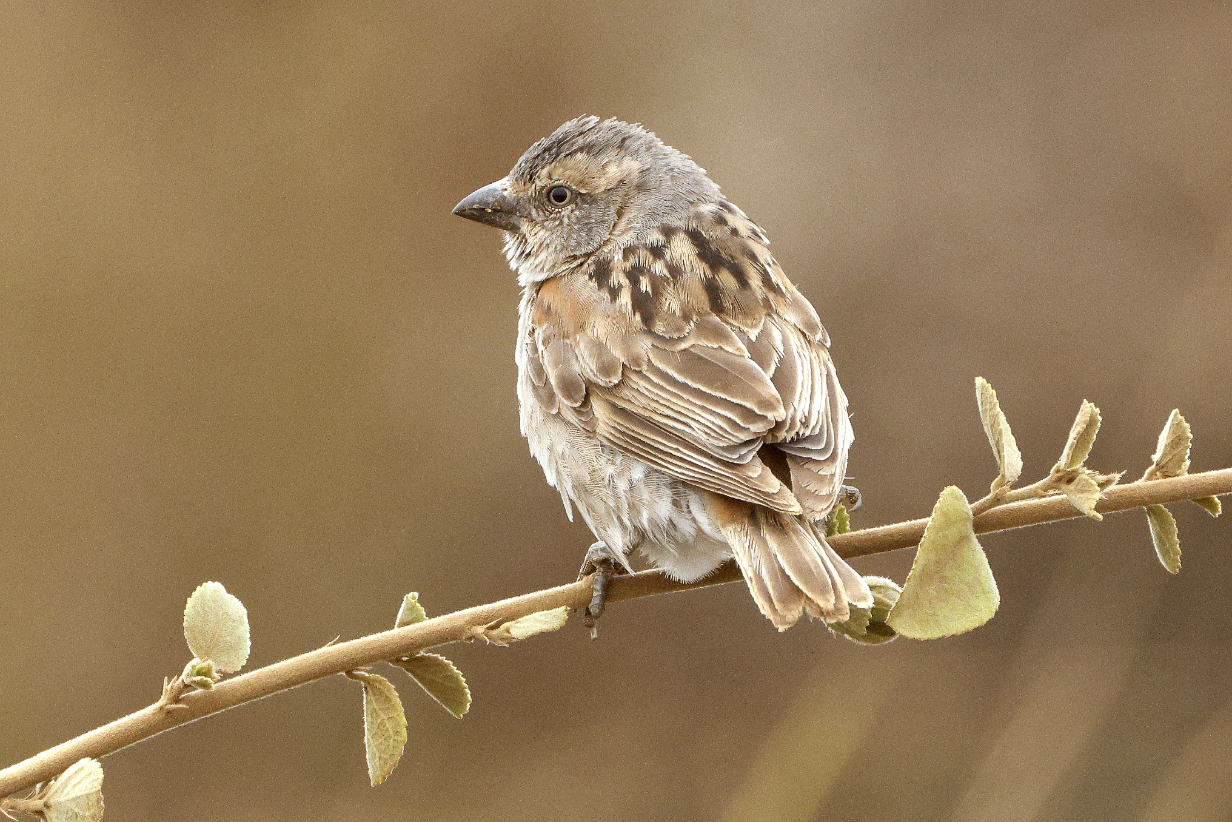
Kenya rufous sparrow (This is a juvenile.)
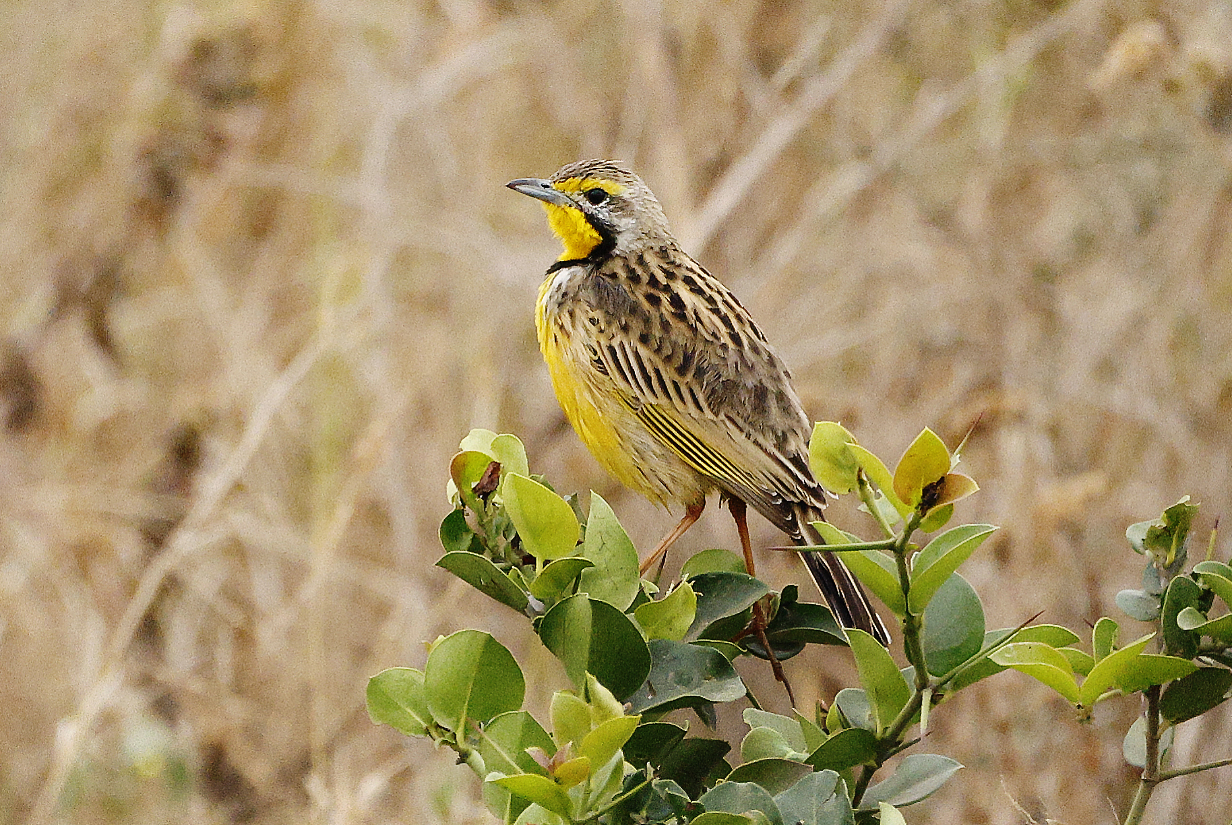
Yellow-throated longclaw (I had seen this species in South Africa.)
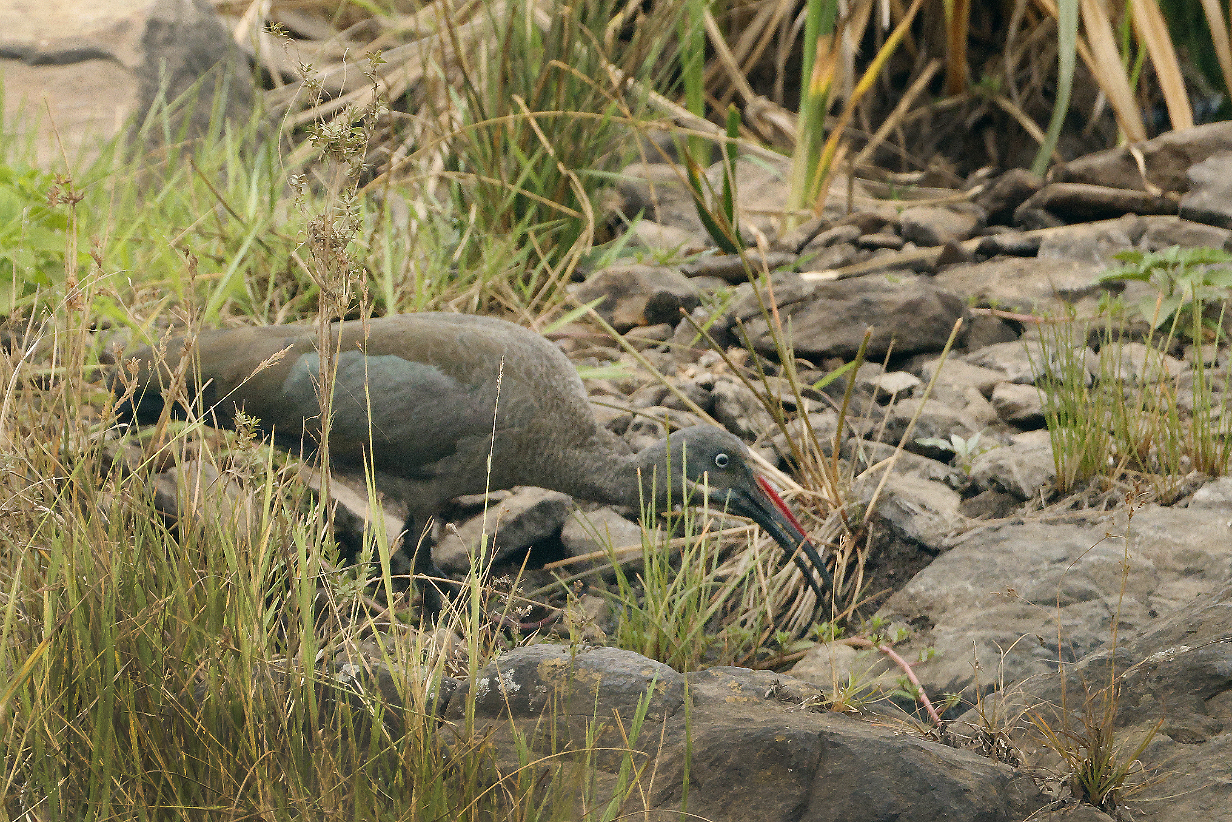
Hadada ibis
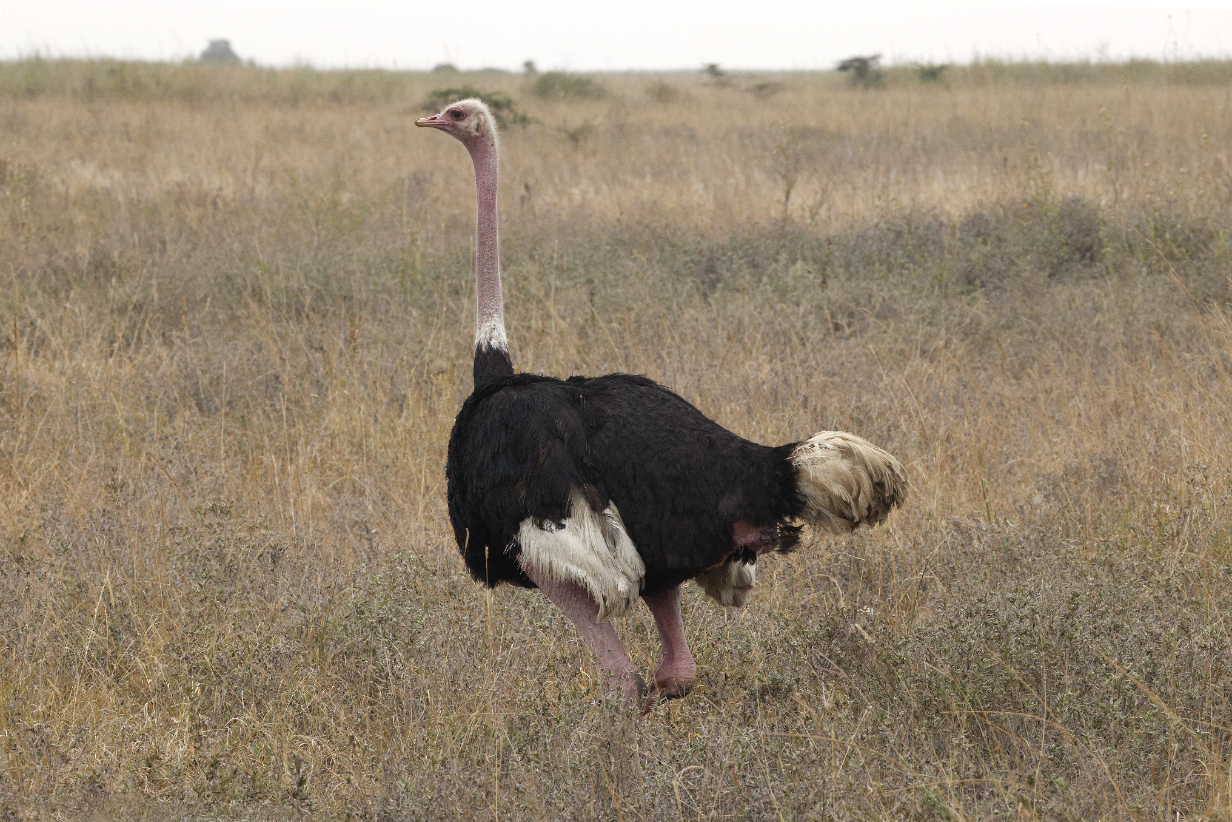
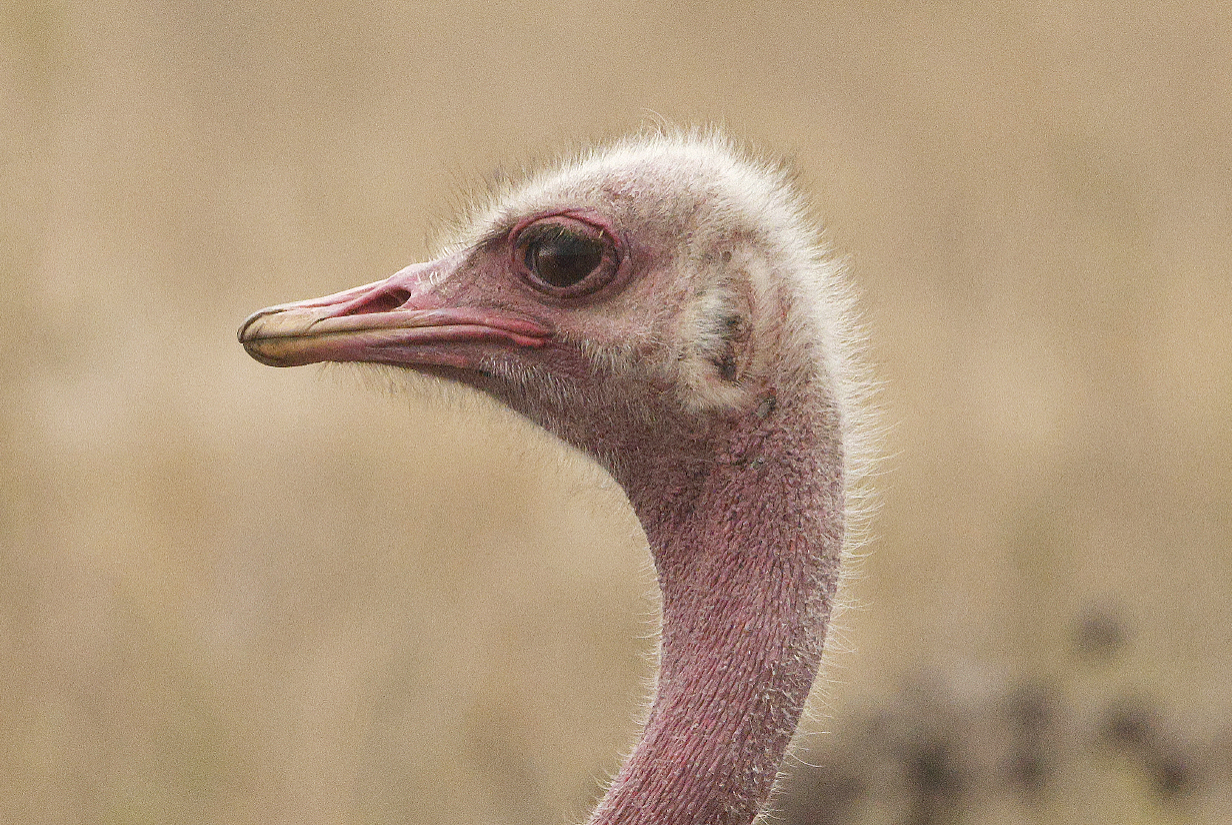
Common ostrich male in breeding plumage
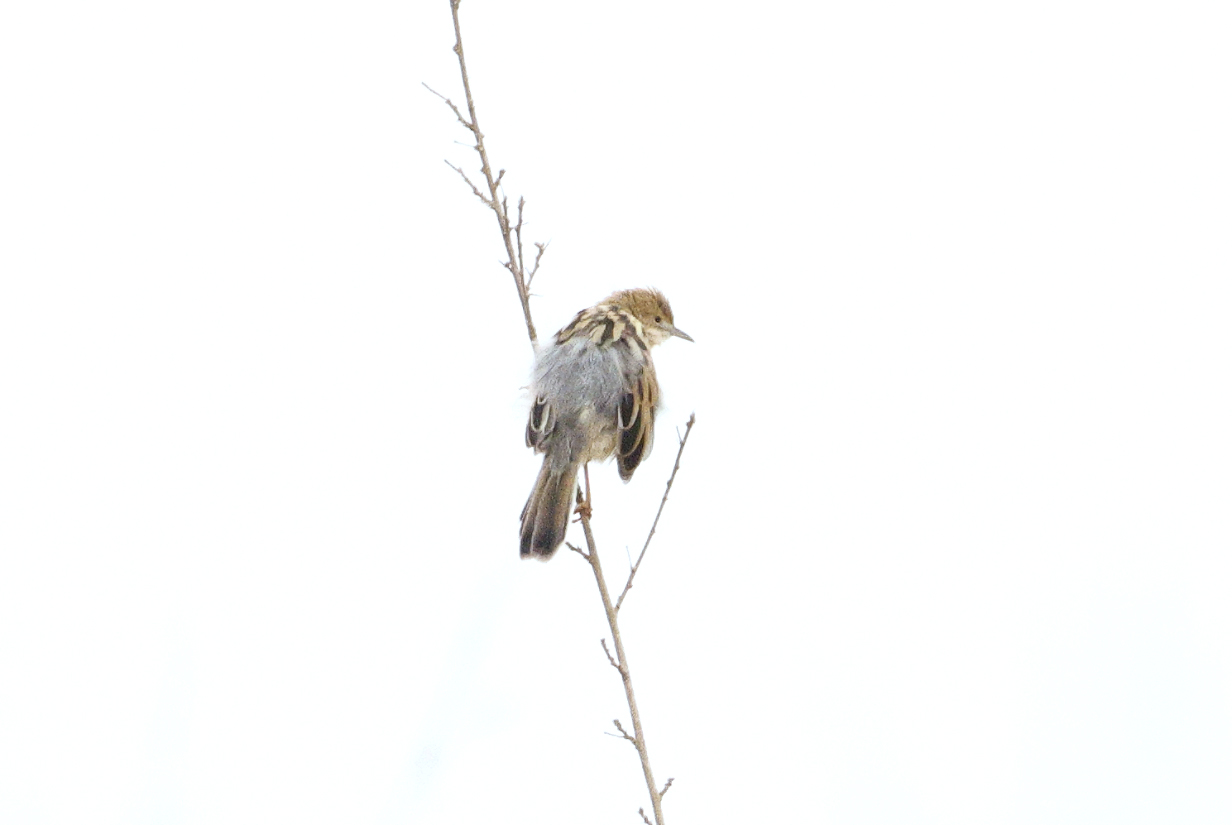
Stout cisticola (This bird was "called" by our guides based partly on morphology but mostly on its song. That's the reliable way to ID cisticolas. But when I first saw this picture -- back in Austin -- I was not entirely convinced; e. g., sometimes guides correctly call one bird among many, but I accidentally point the camera at the wrong bird. Here, the beak does not look right -- too thin compared to the more robust bill of Stout cisticola. The coloration is correct, but the bird is fluffing up its back feathers in a way that I don't see in published pictures. So I decided to take this formally as a "check", not a life bird -- i. e., "I am almost sure that it is correct, but I don't see ID features well enough to take this as a life bird." Luckily, we saw more Stout cisticolas than any other cisticola species, often by the dozens. Later in the trip, I got several more secure sightings and pictures. So I take the bird that I saw on August 11th as my life bird. And I got confirmation pictures on other days, too. In the end, Stout cisticola turns out to be the most reliably seen, identified, and photographed cisticola of the trip.)
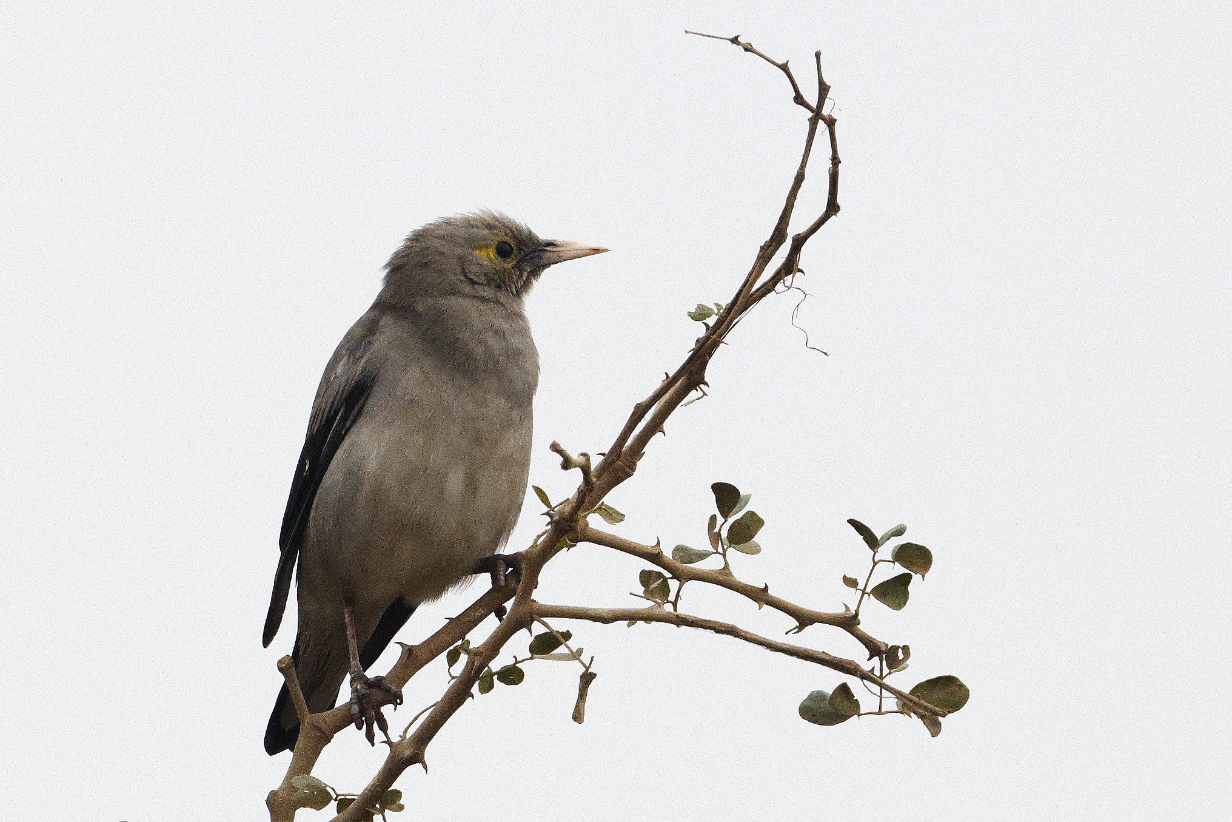
Wattled starling (Immature: The yellow spot behind the eye gives the barest hint of the spectacular yellow wattle that this bird gets in breeding plumage.)
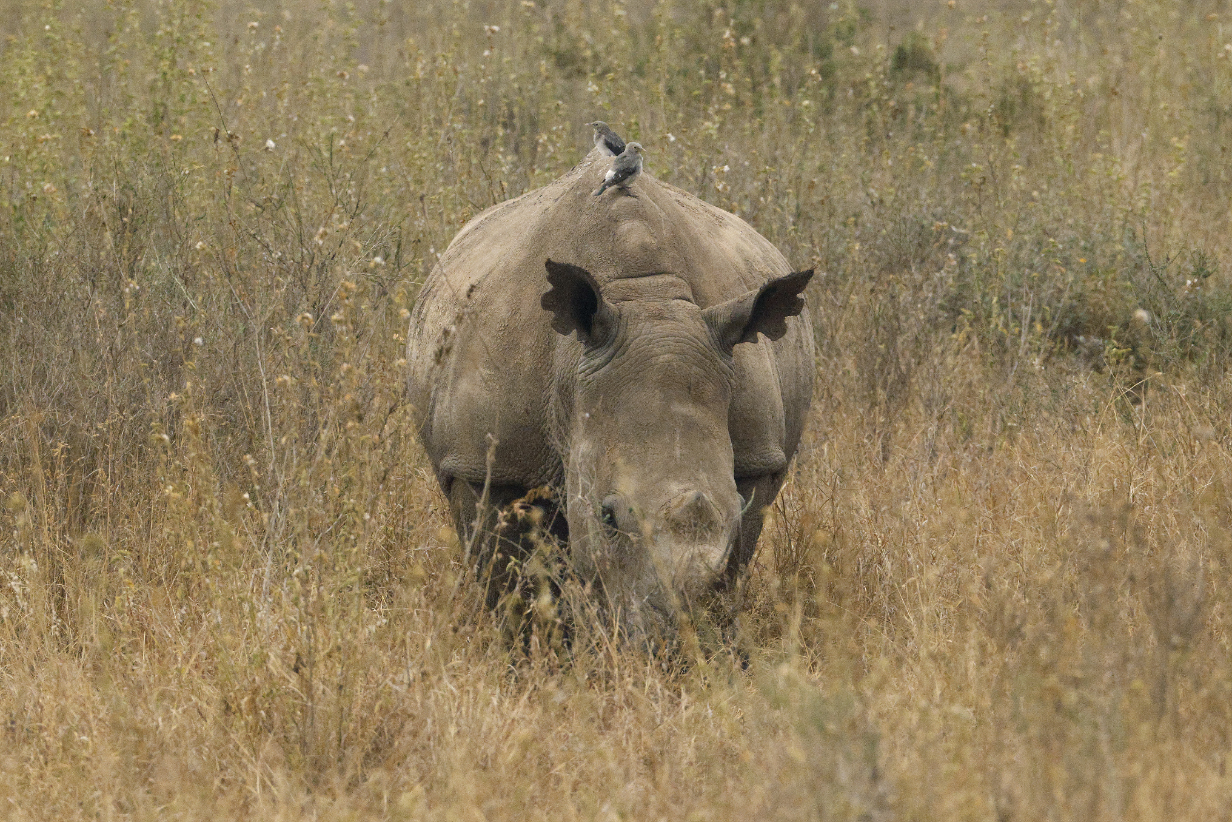
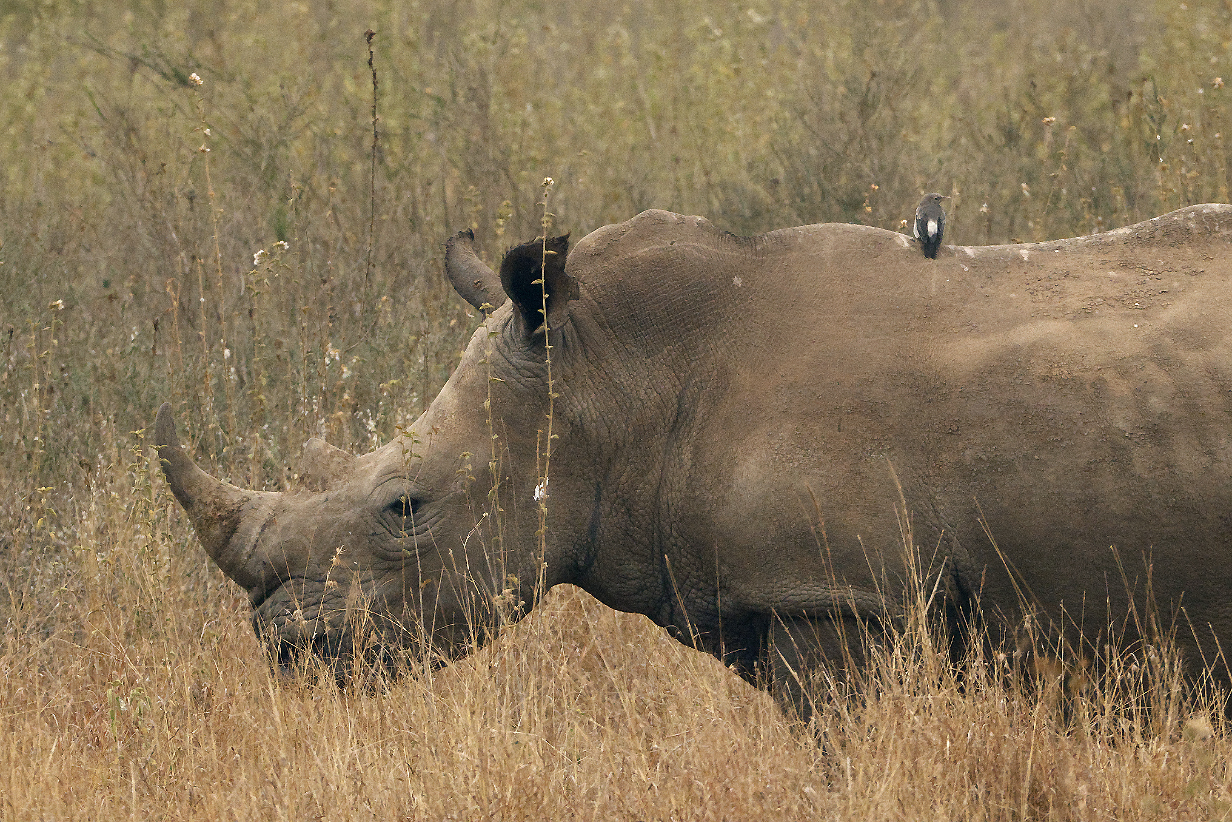
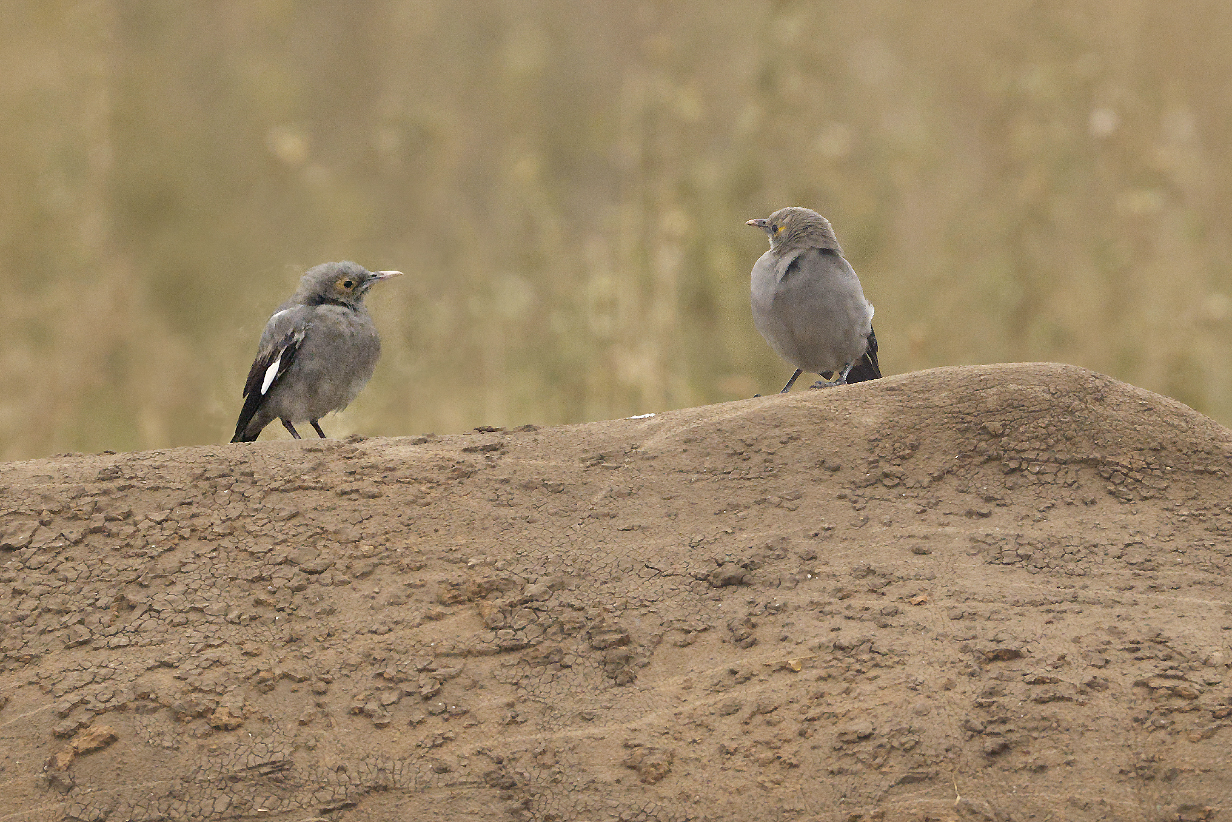
White rhino and wattled starlings
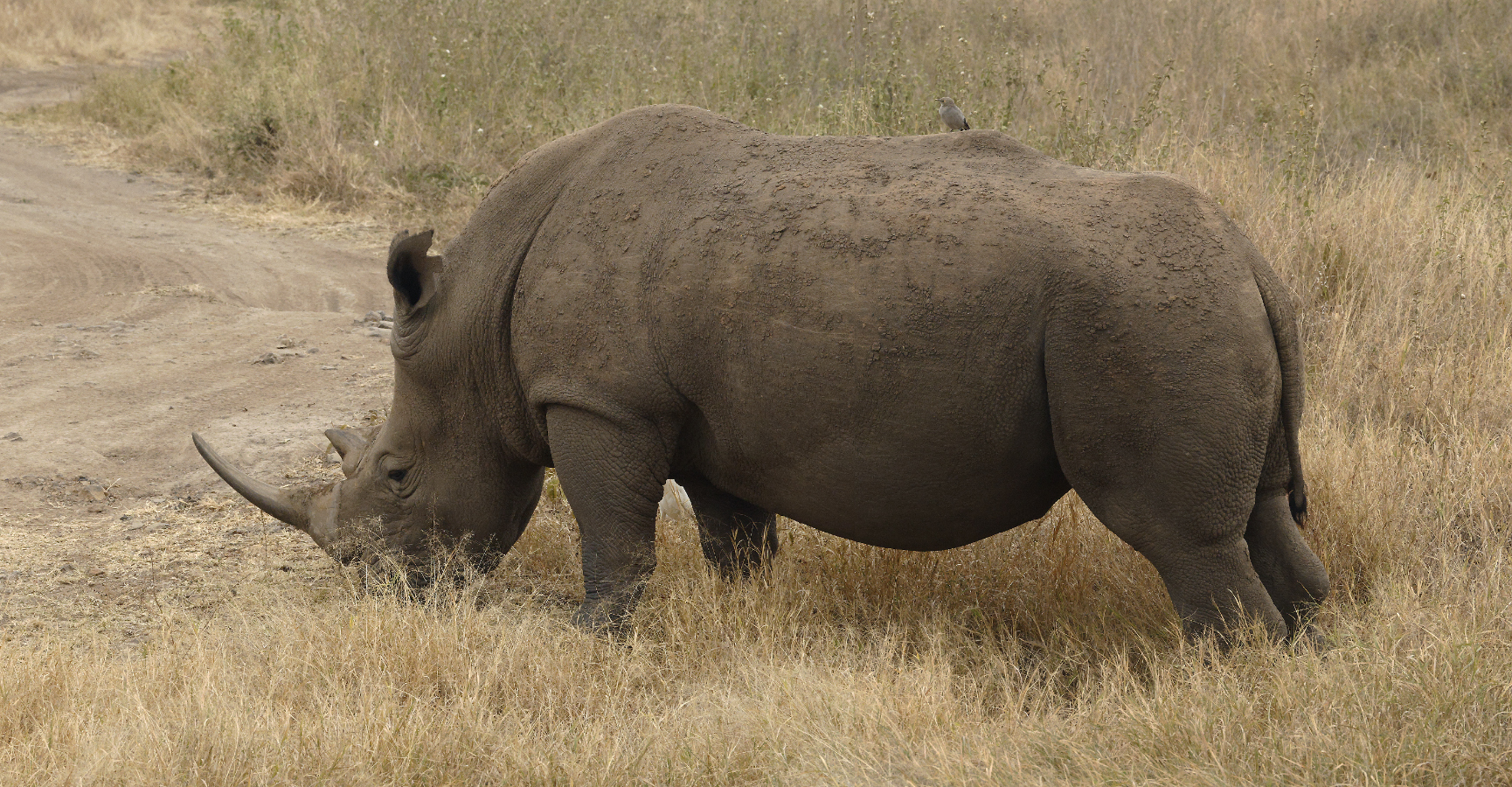
White rhinoceros (The first time I went to South Africa, in 2004, I remarked in this web page: "The first time I traveled south of the equator - it was for an astronomical observing run in Chile in the early 1980s - nothing so strongly drove home the fact that I was in the southern hemisphere as seeing the constellation Orion upside-down. During the present trip, nothing so strongly drove home the fact that we were in Africa as seeing White rhinocerous." I still feel that way. Rhinos are, to me, the most impressive "living fossils" of past times of megafauna -- dinosaurs first and mammals more recently. Fortunately, Kenya takes care of its (southern) white rhinos: Wikipedia estimates that there are ~ 100 in Nairobi National Park, out of more than 800 in the country and more than 15,000 world-wide. This of course requires active policing against rhino horn poaching.
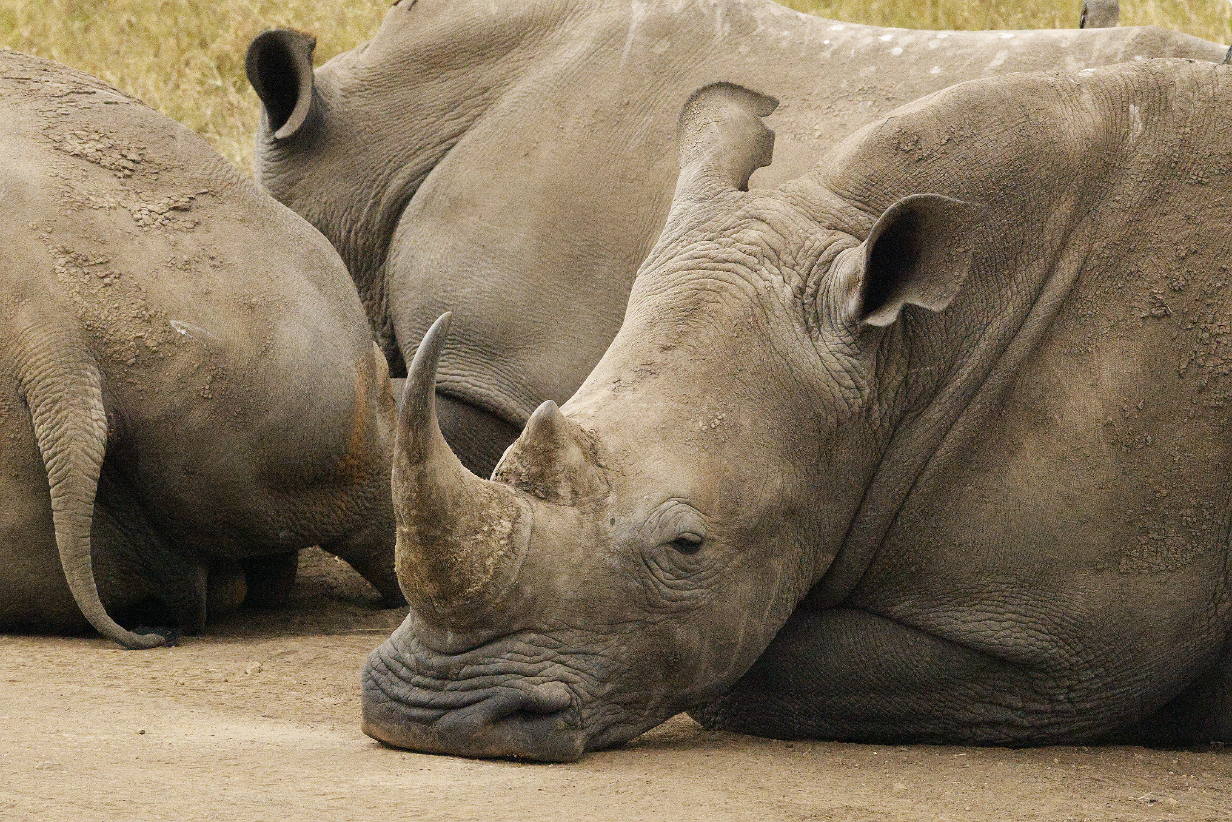
Rhino at rest evoke an unexpected, curiously dainty and fragile feel ...
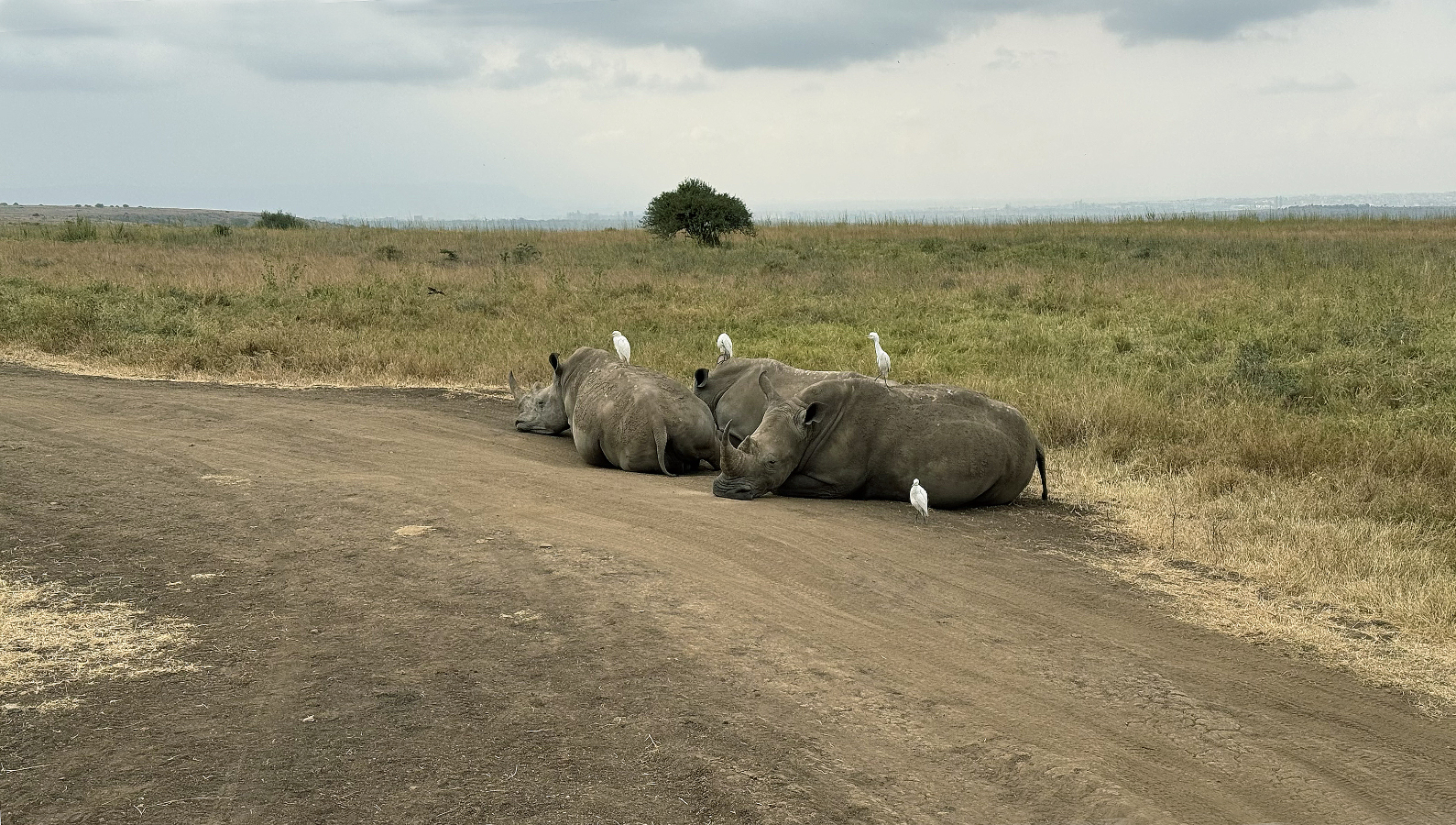
Rhinos and Western cattle egrets in a wider, iphone perspective
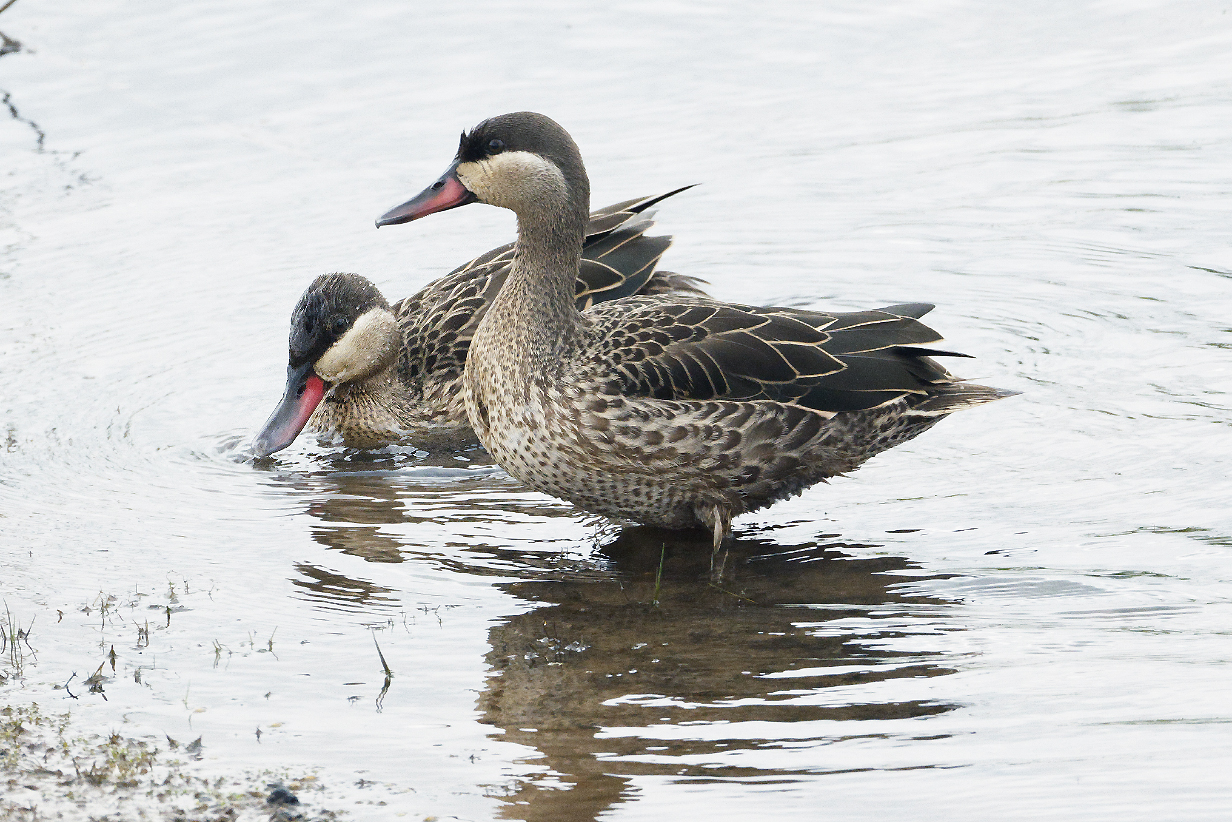
Red-billed teal (These are my life birds.)
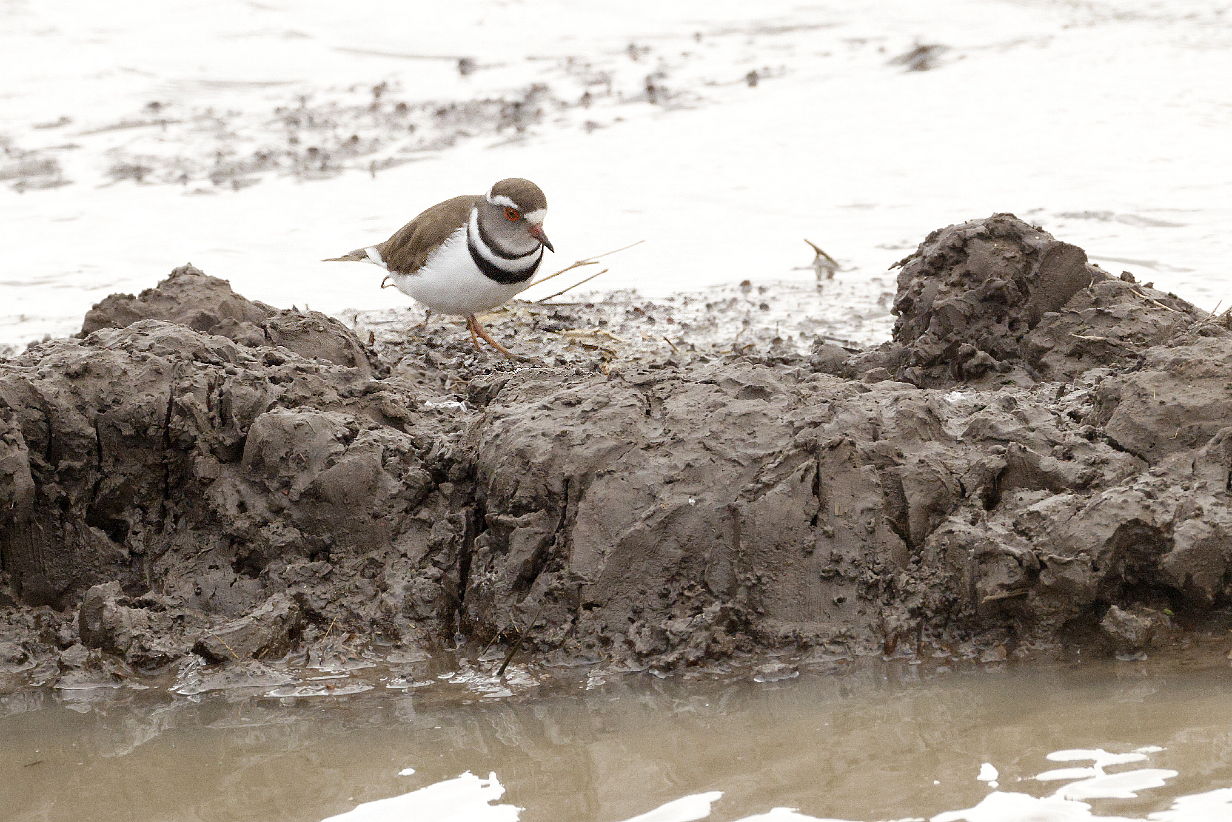
Three-banded plover
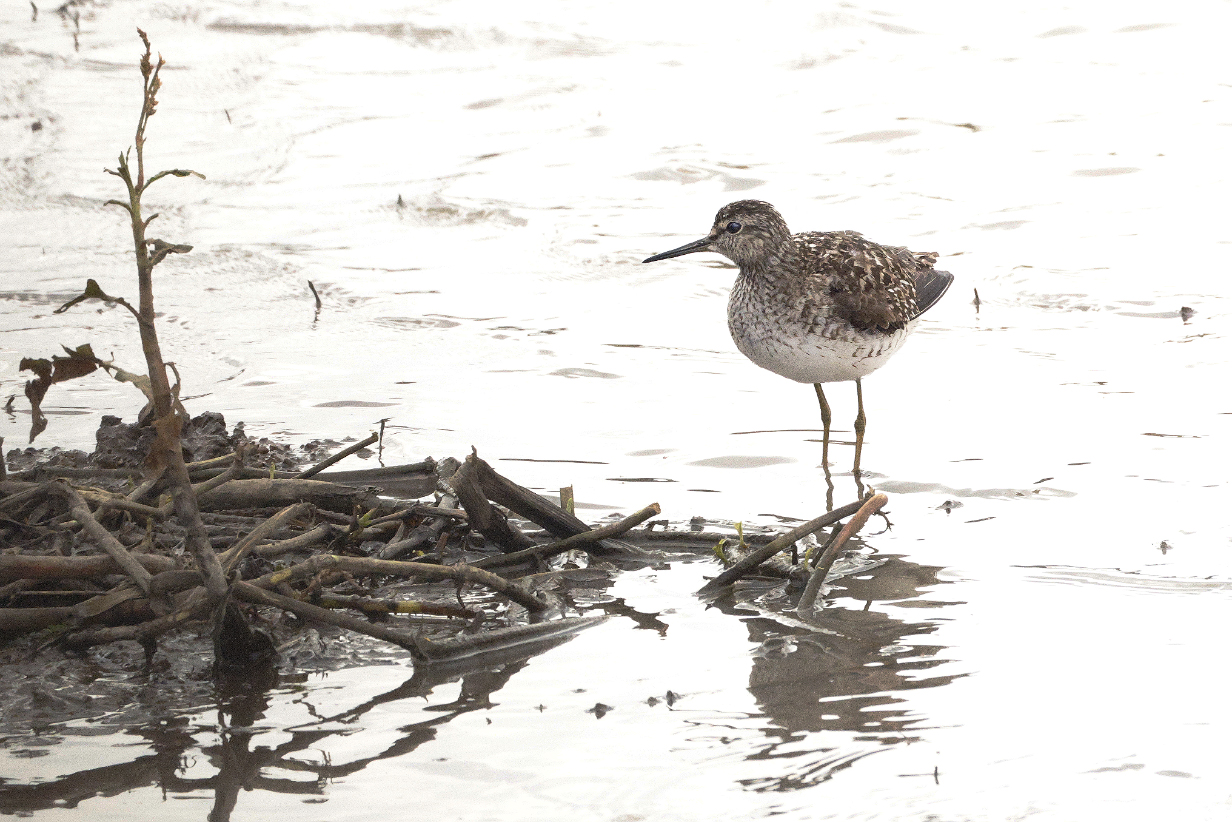
Wood sandpiper
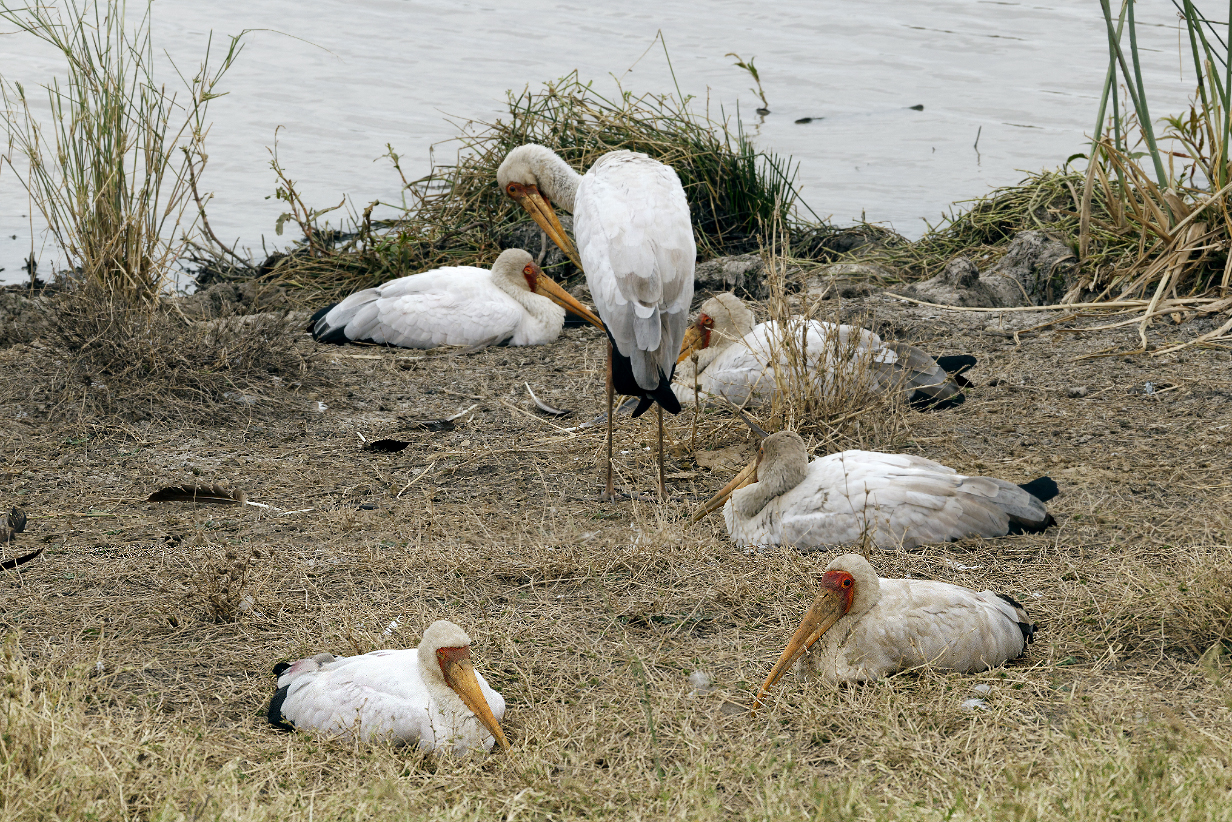
Yellow-billed storks congregated around ponds.
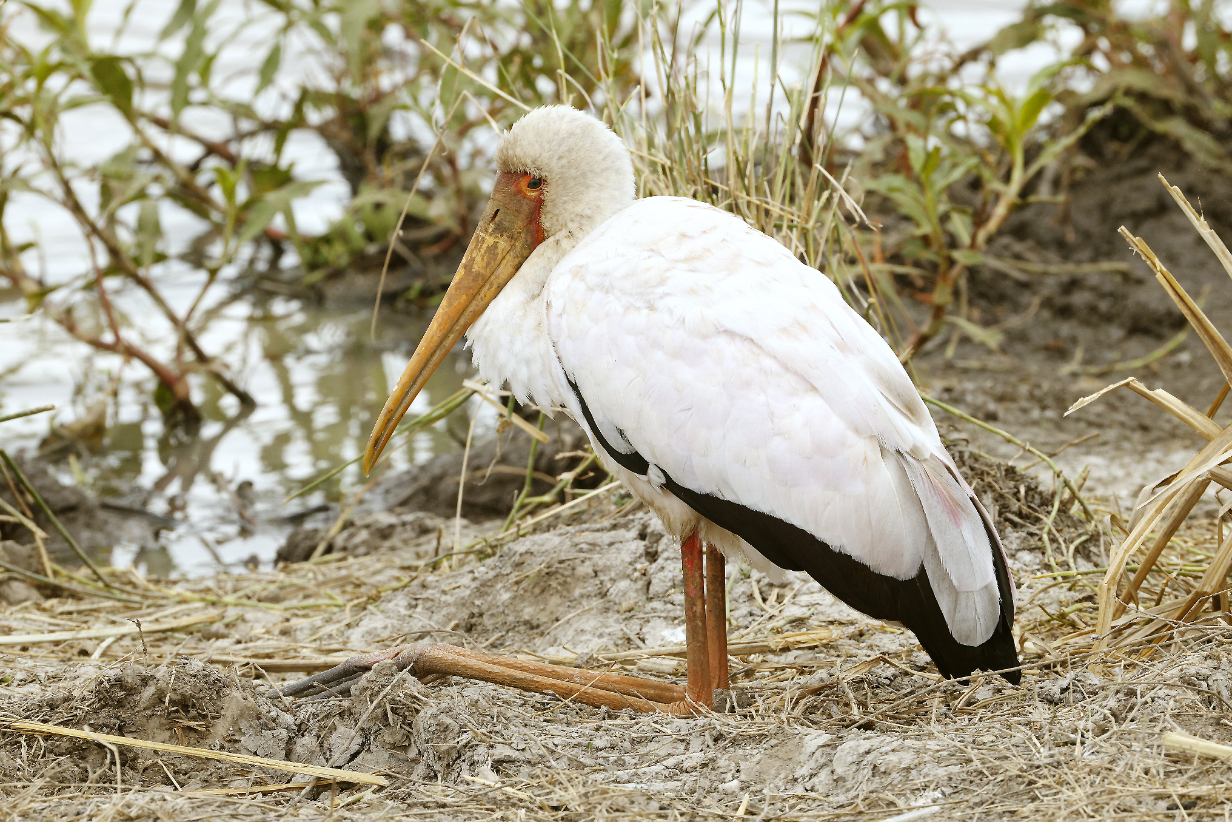
It looks incongruous -- although it should be no surprise -- to see storks resting this way on their "knees".
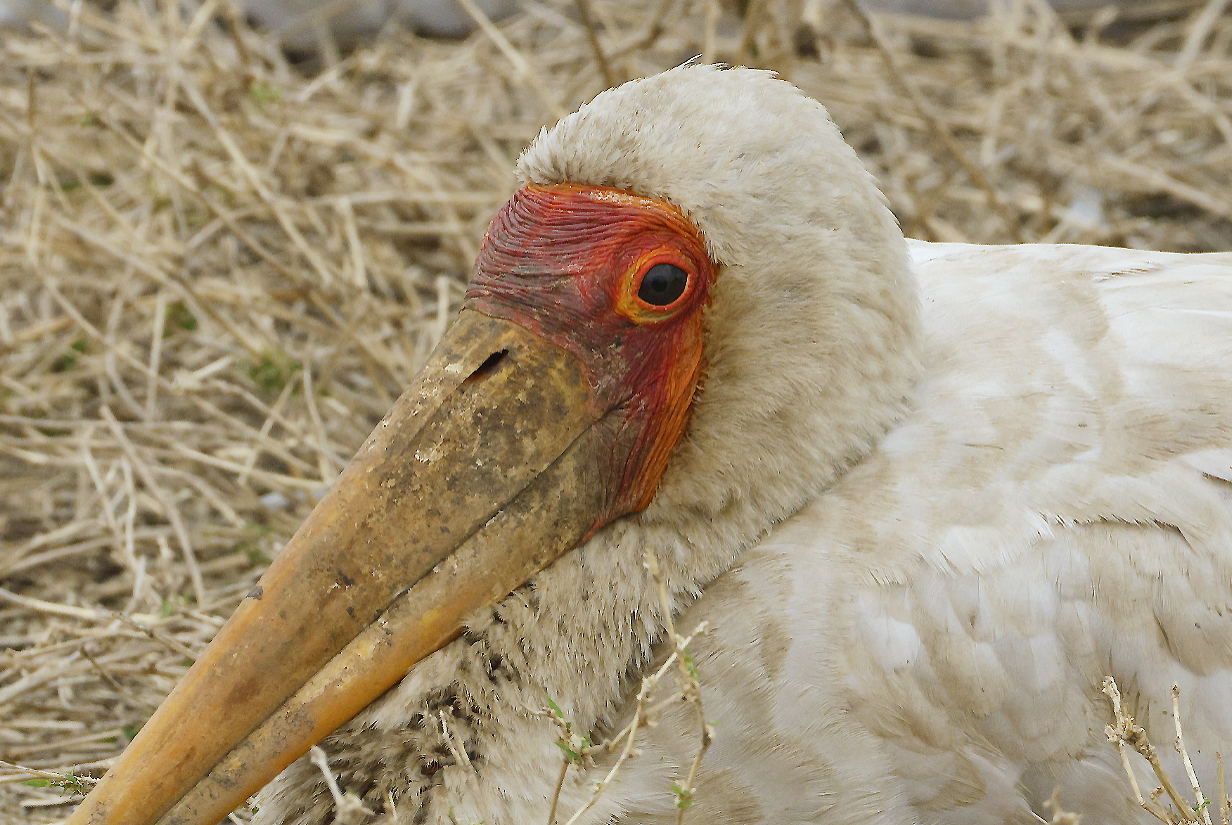
We don't often get this close and personal with Yellow-billed -- or, indeed, any -- stork.
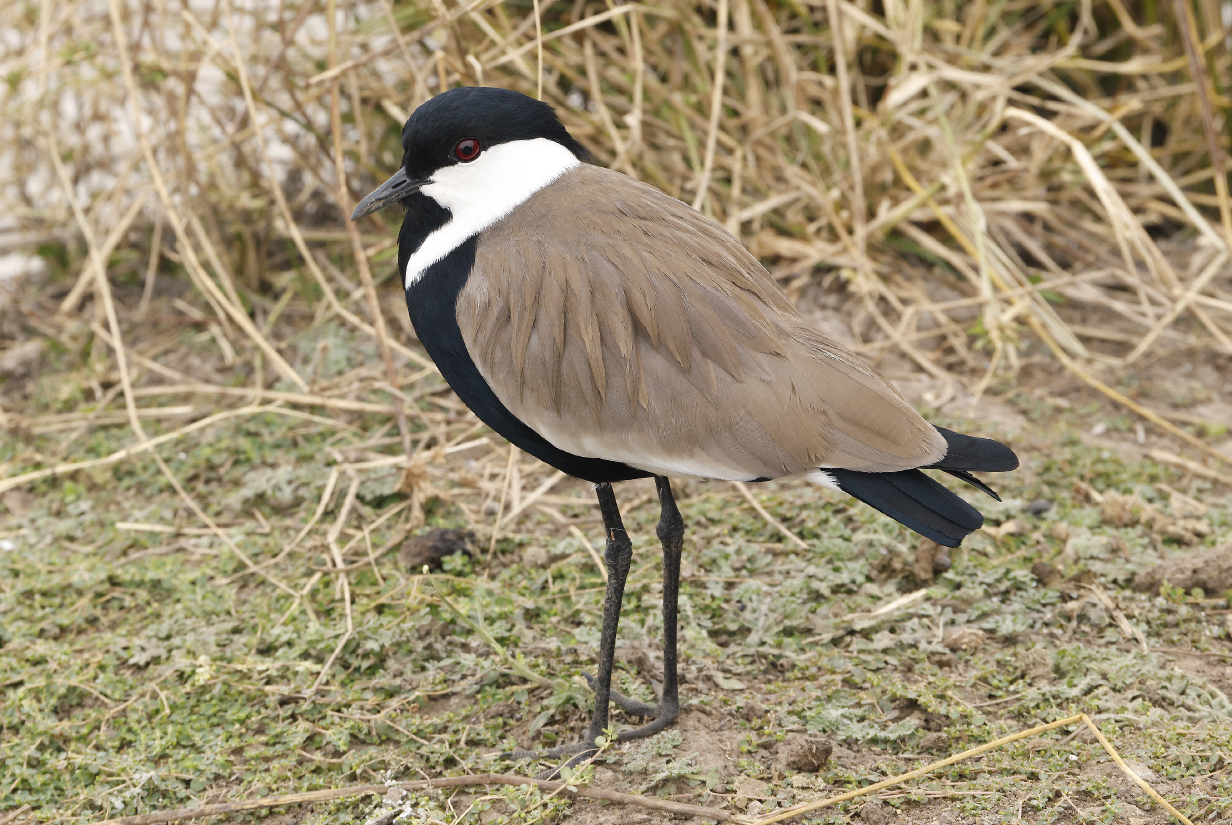
Spur-winged lapwing (Also in Israel.)
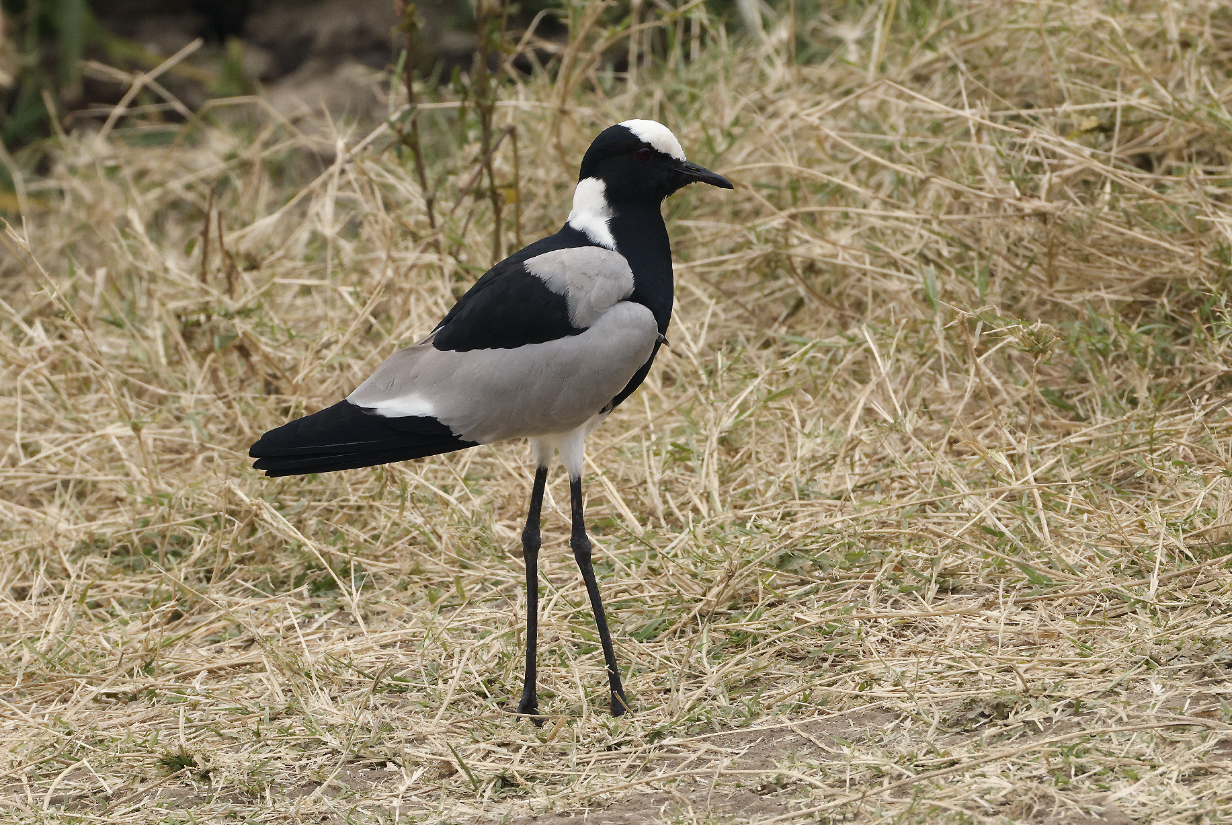
Blacksmith lapwing (Also in South Africa.)
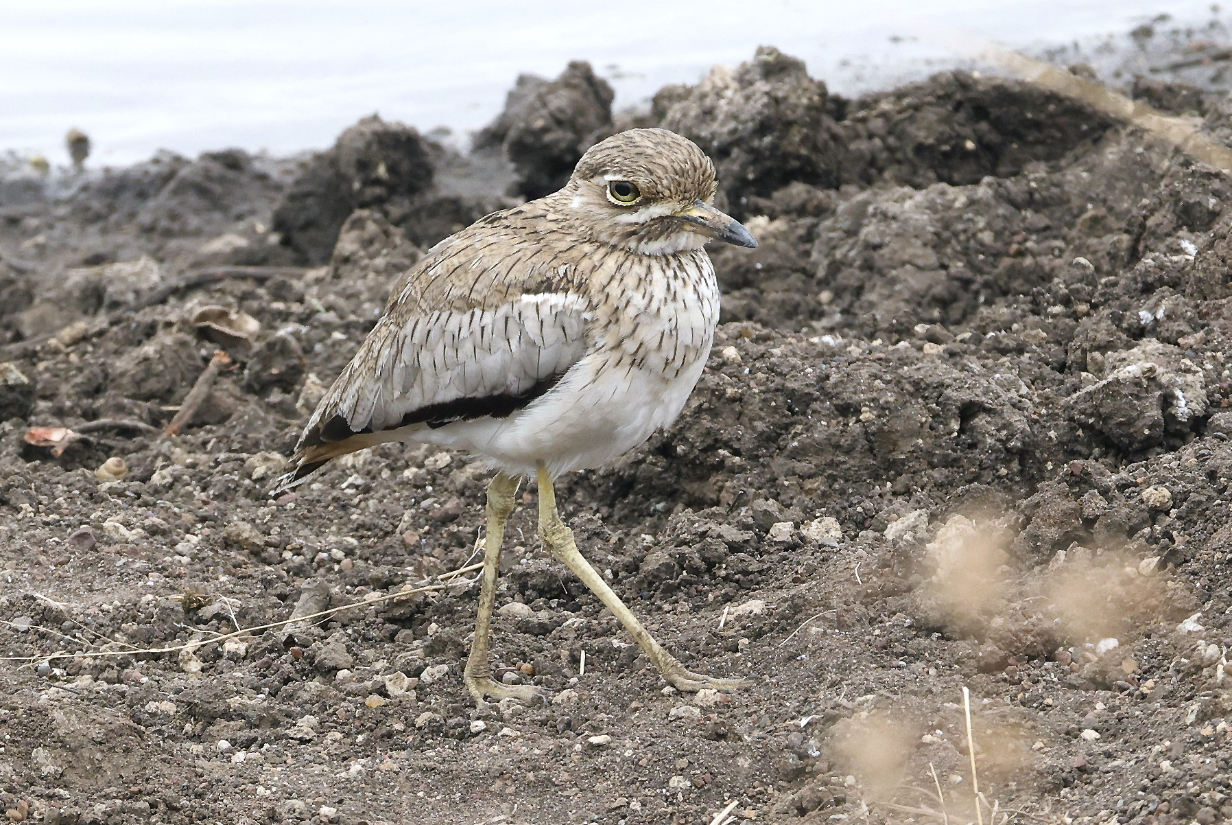
Water thick-knee (Also in South Africa.)
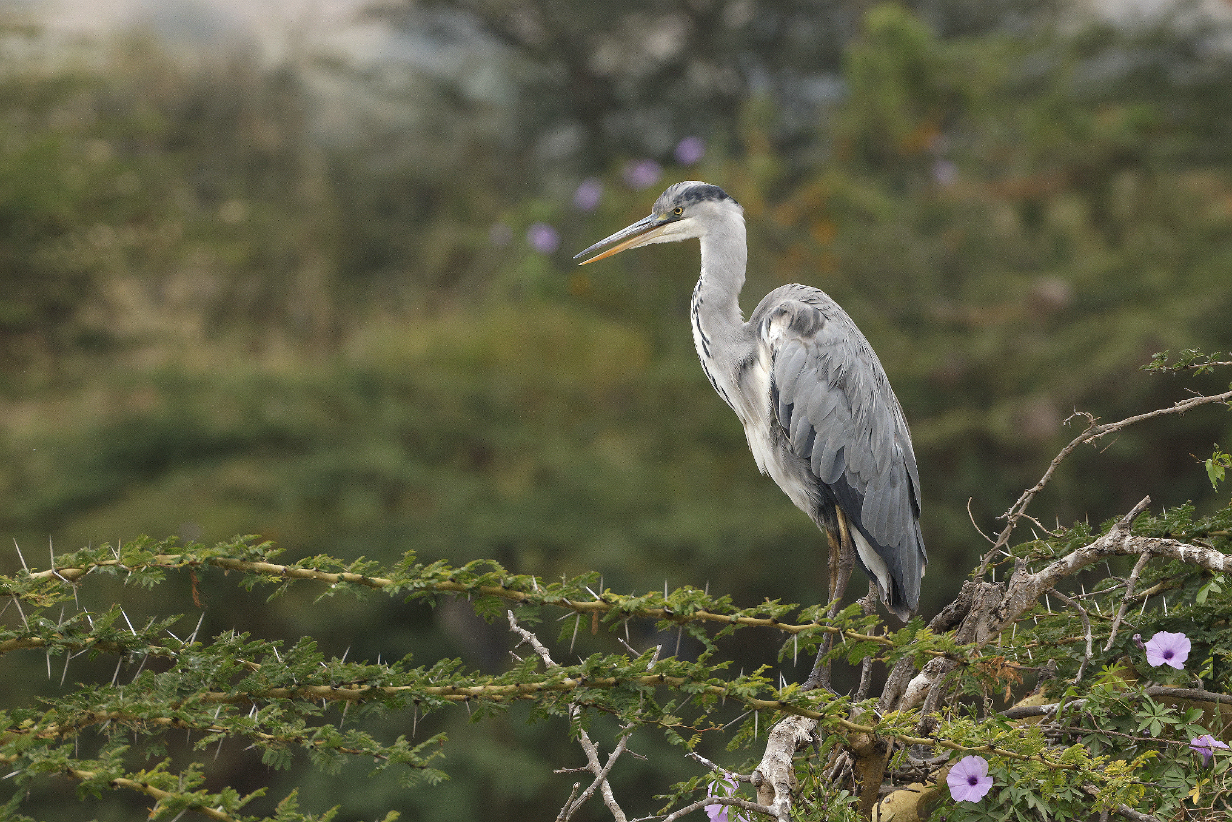
Gray heron
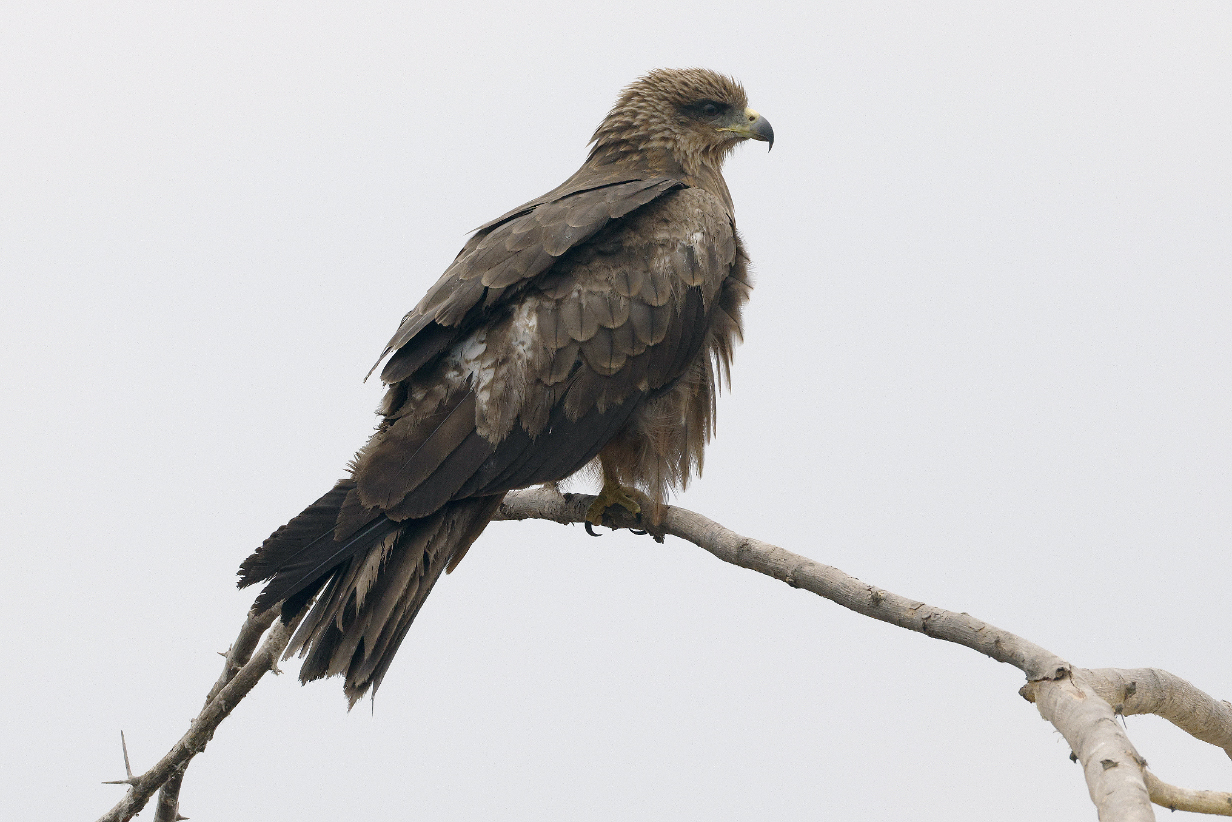
Yellow-billed subspecies of Black kite (Juvenile) (Milvus migrans parasitus)
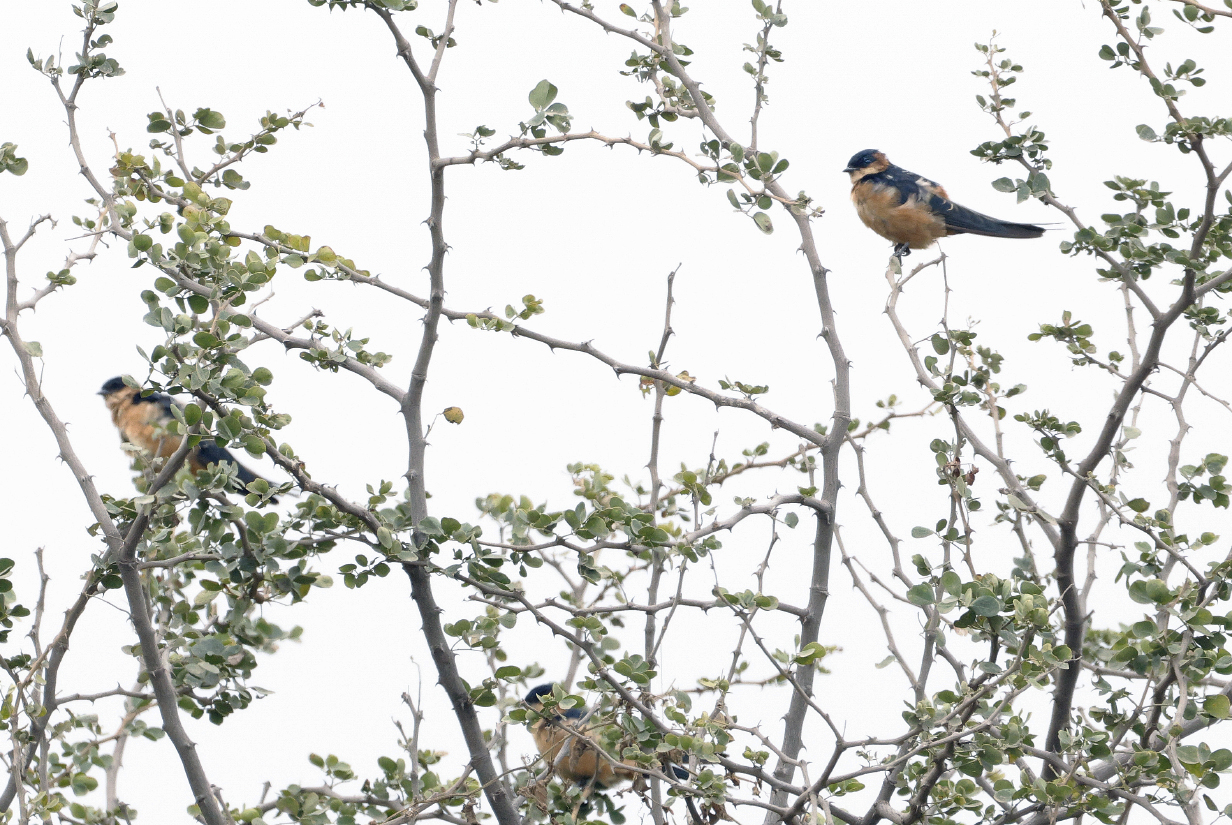
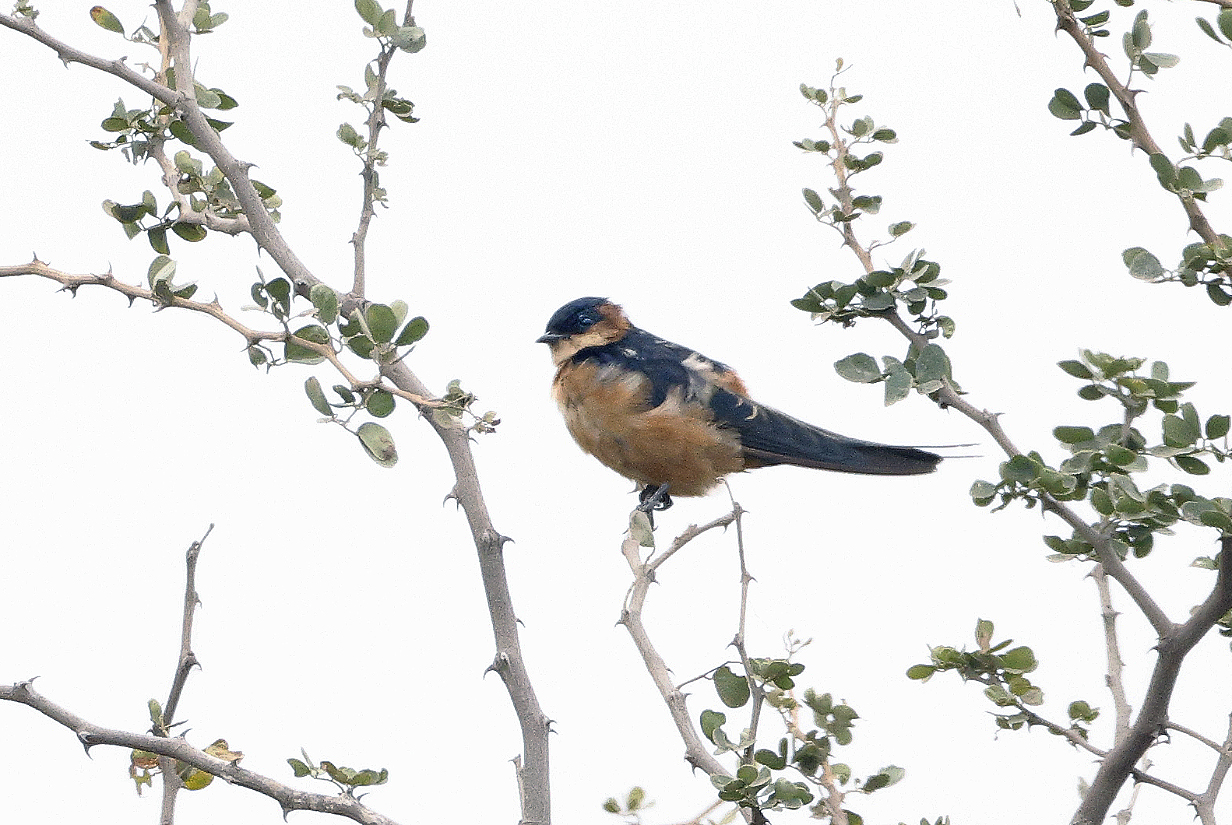
African red-rumped swallow (These are my life birds.)
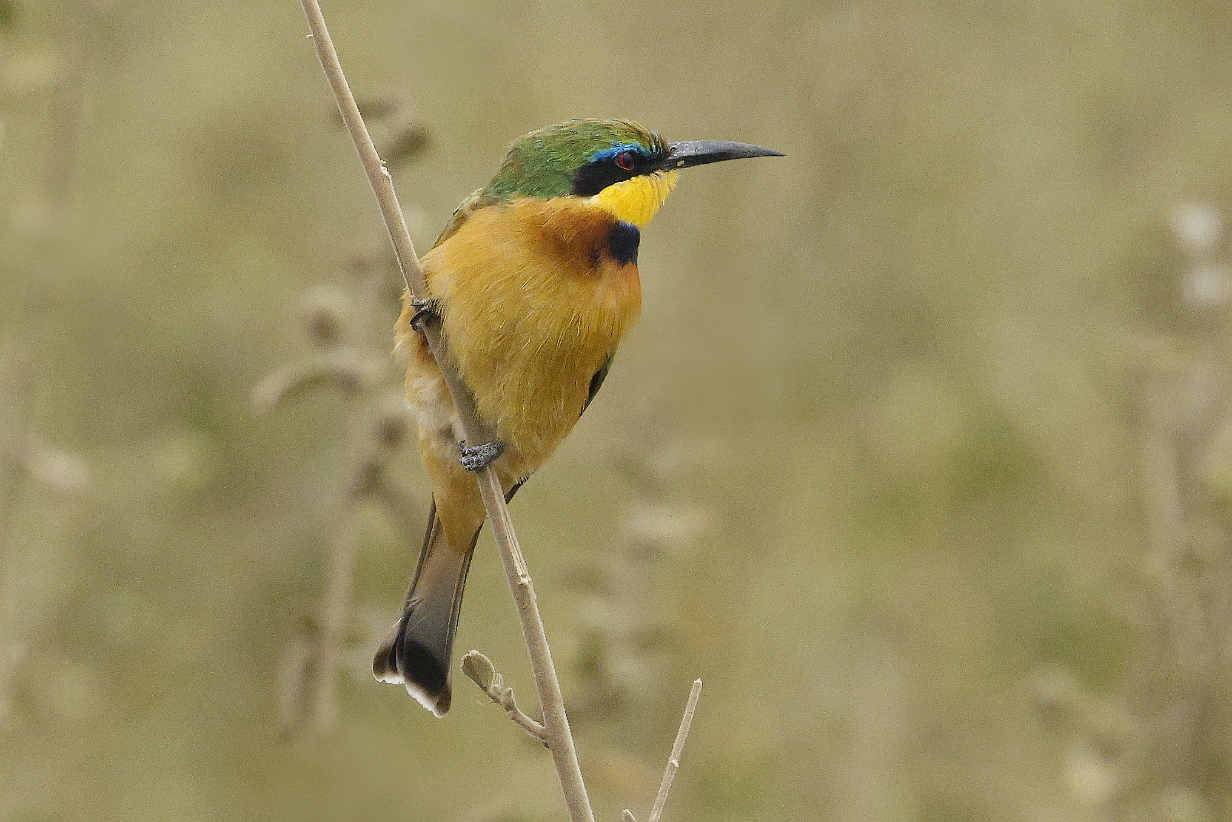
Little bee-eater
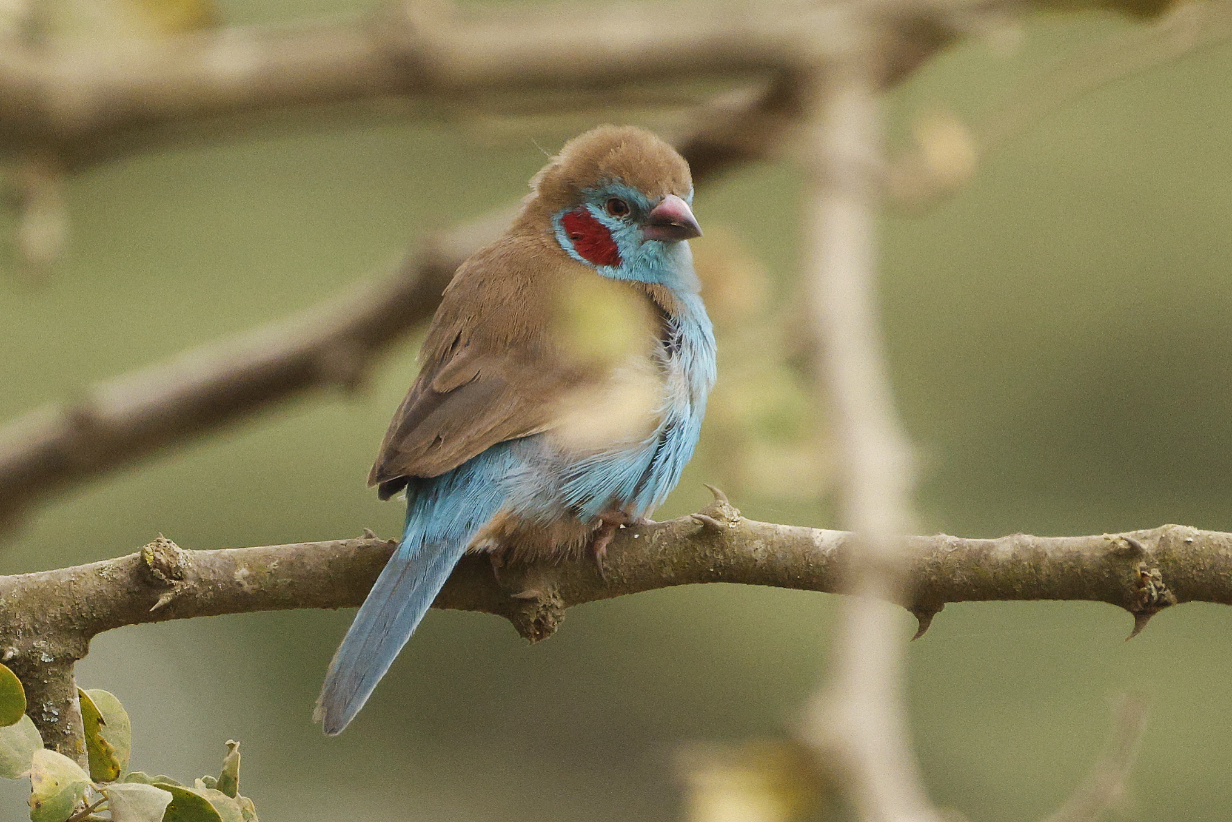
Red-cheeked cordonbleu (Beautiful bird; unlucky angle. In a hurried group tour, you generally don't get a second chance.)
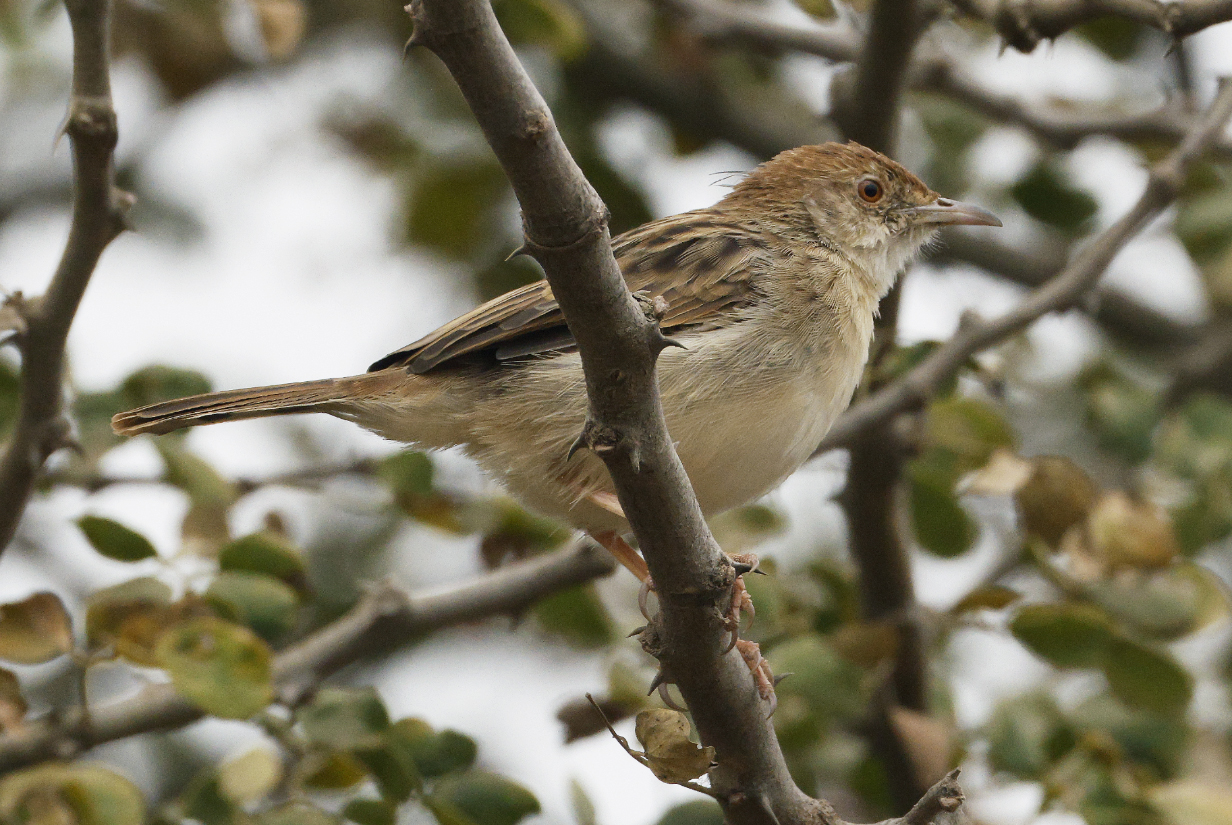
Rattling cisticola (Not new -- I've seen it in South Africa)
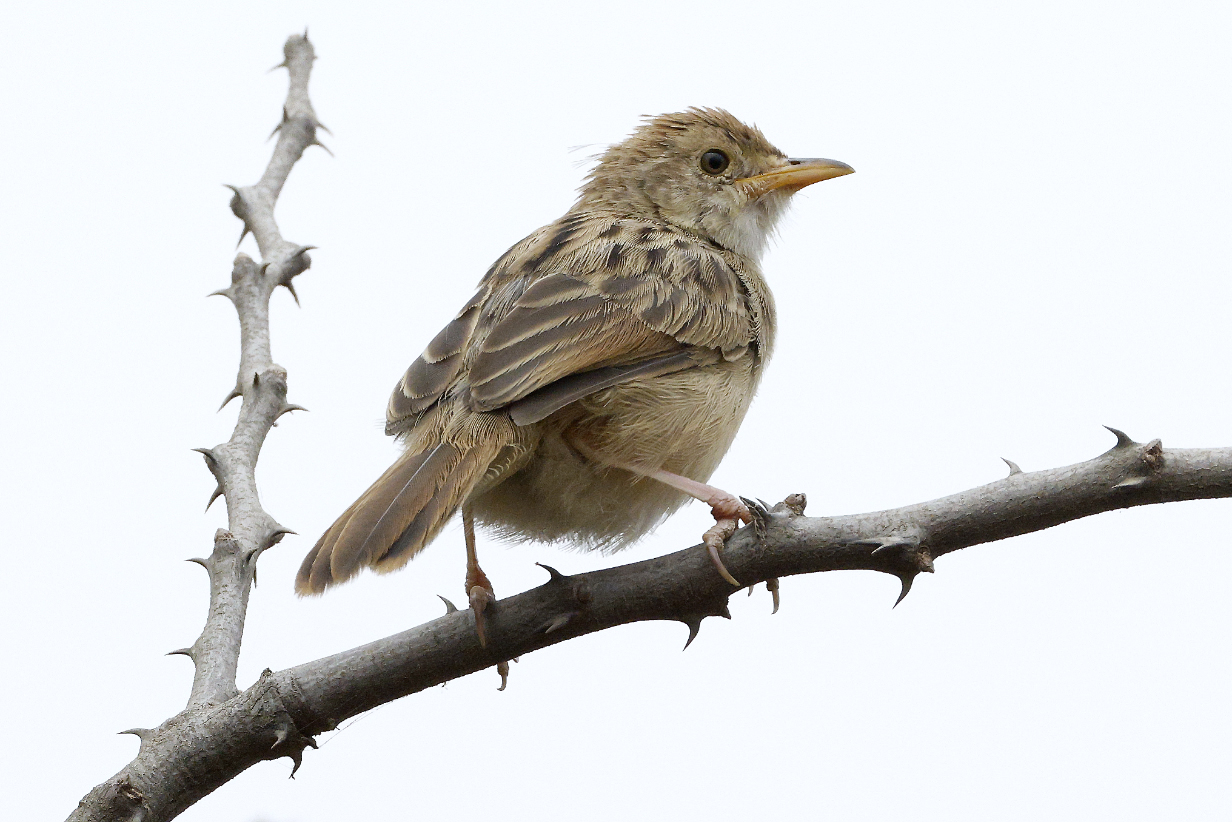
Rattling cisticola (juvenile) (Thanks to Andrew Whittaker for confirmation.)
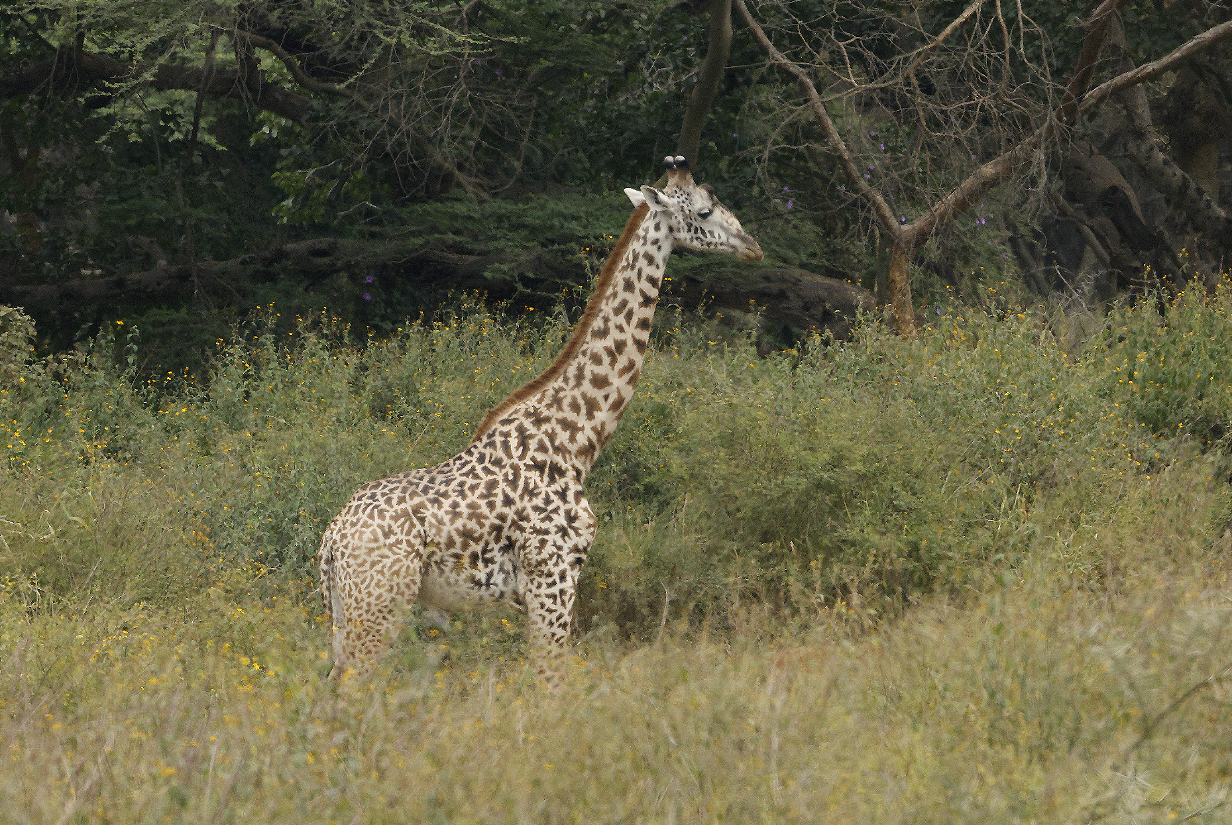
Masai giraffe (Giraffa tippelskirchi) is a different species from southern giraffe (Giraffa giraffa) which we saw in South Africa. Later in the trip, we also saw Reticulated giraffe (Giraffa reticulata), the biggest and -- to me -- the most regal of the 4 giraffe species. As far as I know, I have not seen Northern giraffe (Giraffa camelopardalis).
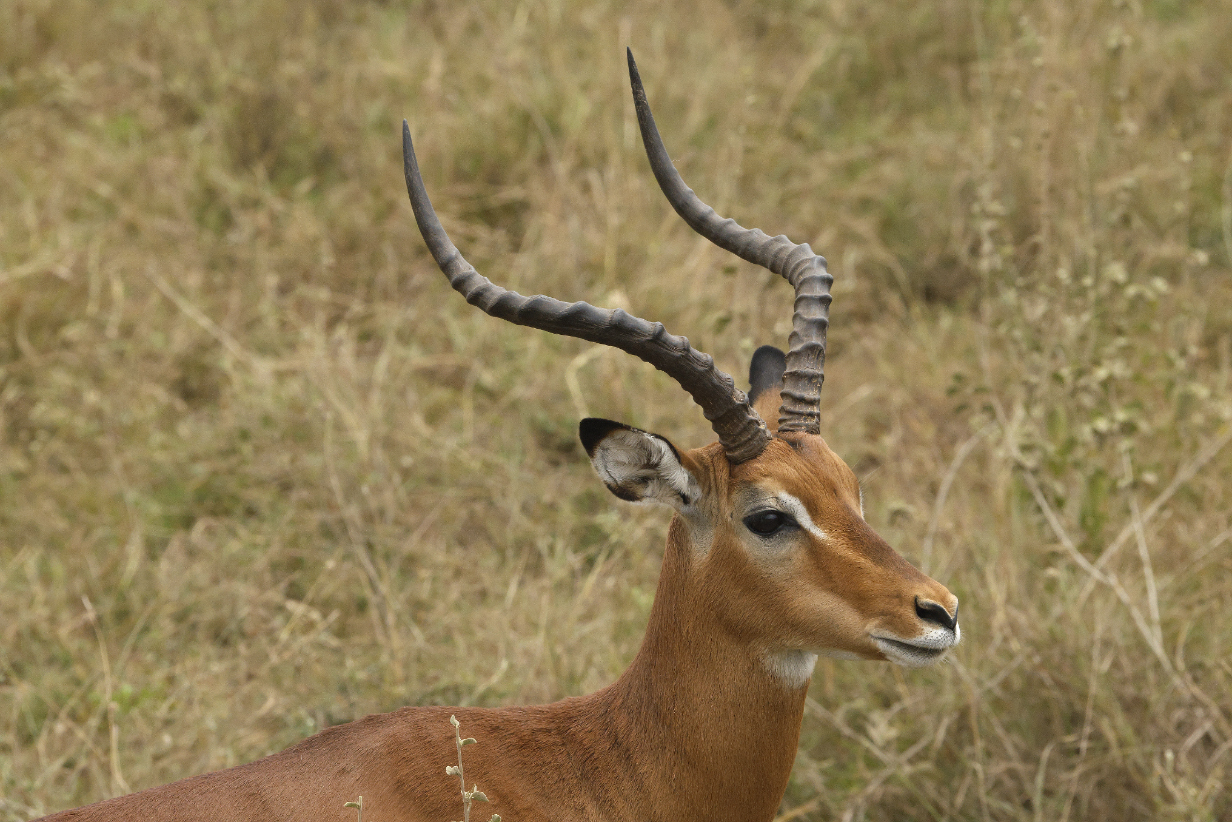
Male impala is to me, the epitomy of grace among antelopes. I concentrated on birds during this trip, but we also focused on the spectacular array of other animals of East Africa ... especially on lions, leopards, and cheetahs.
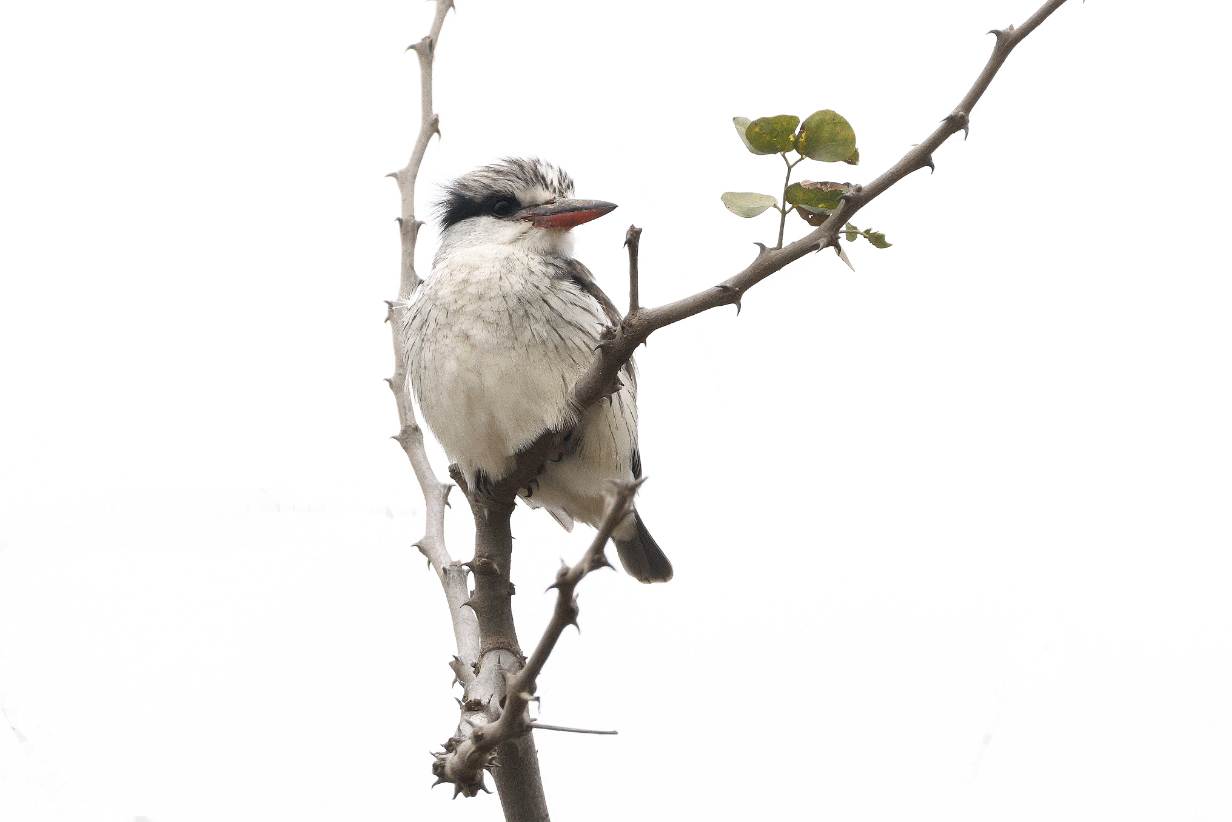
Striped kingfisher
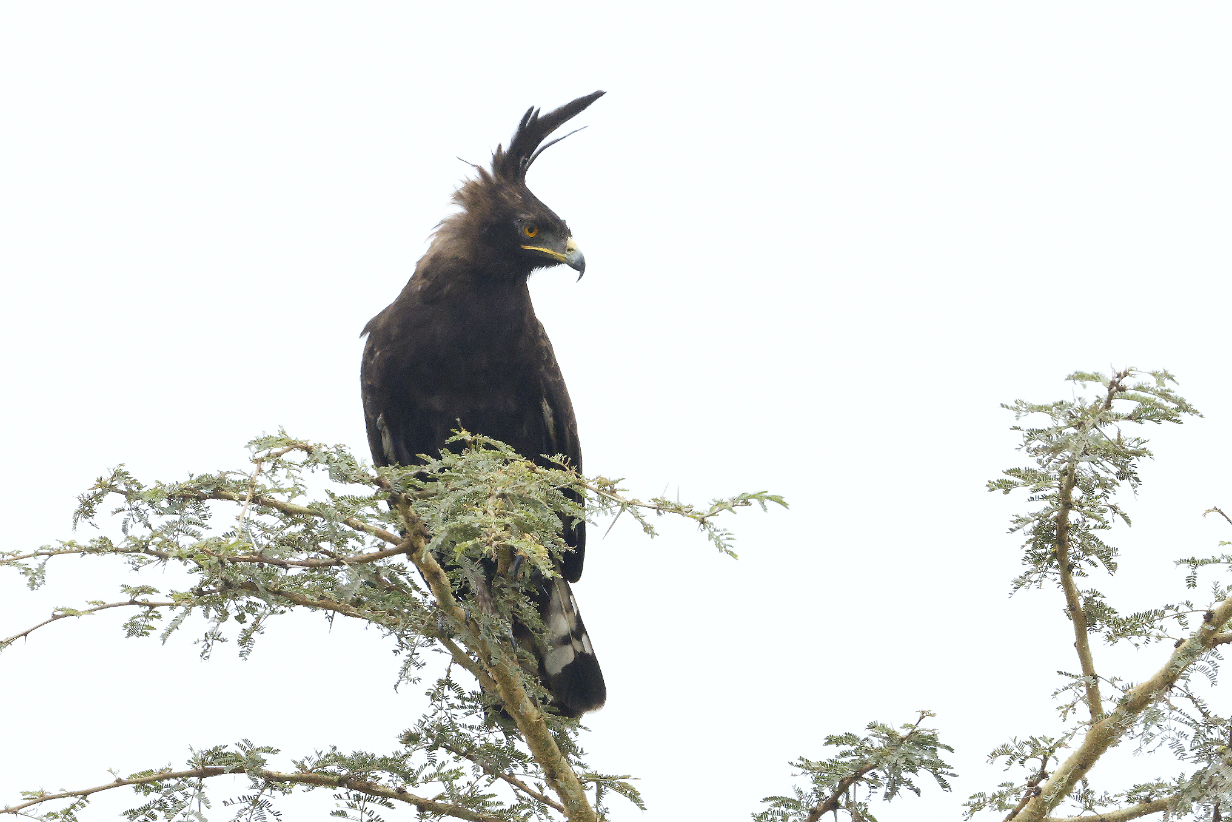
Long-crested eagle (This is my life bird.)
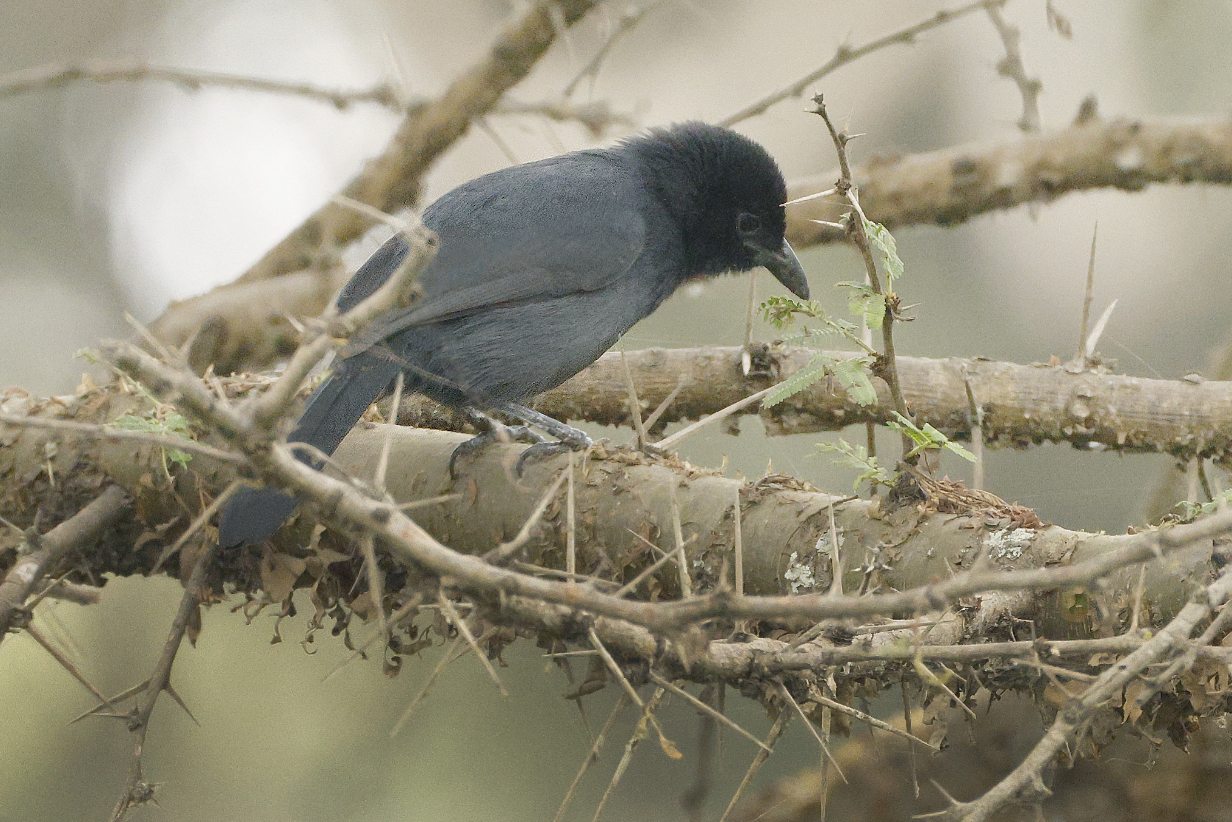
Slate-colored boubou (This is my life bird.)
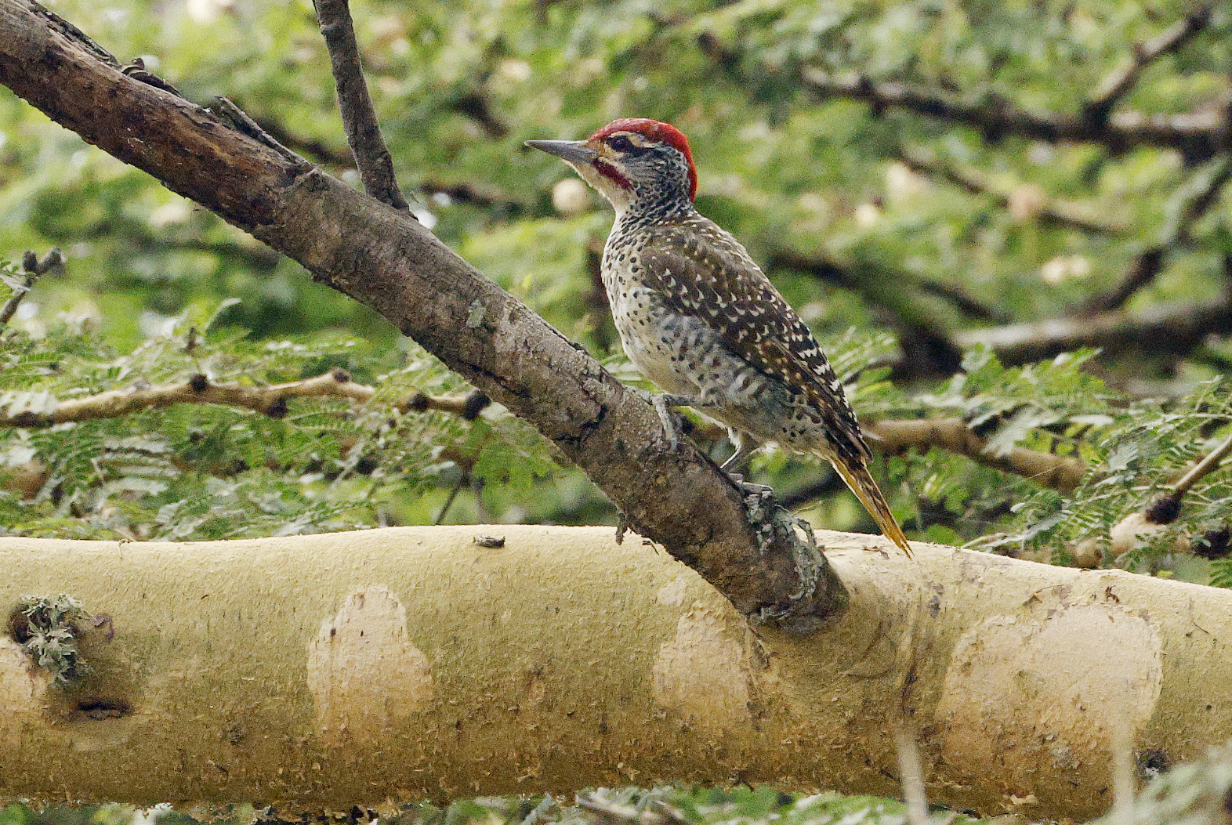
Nubian woodpecker (This is my life bird.)
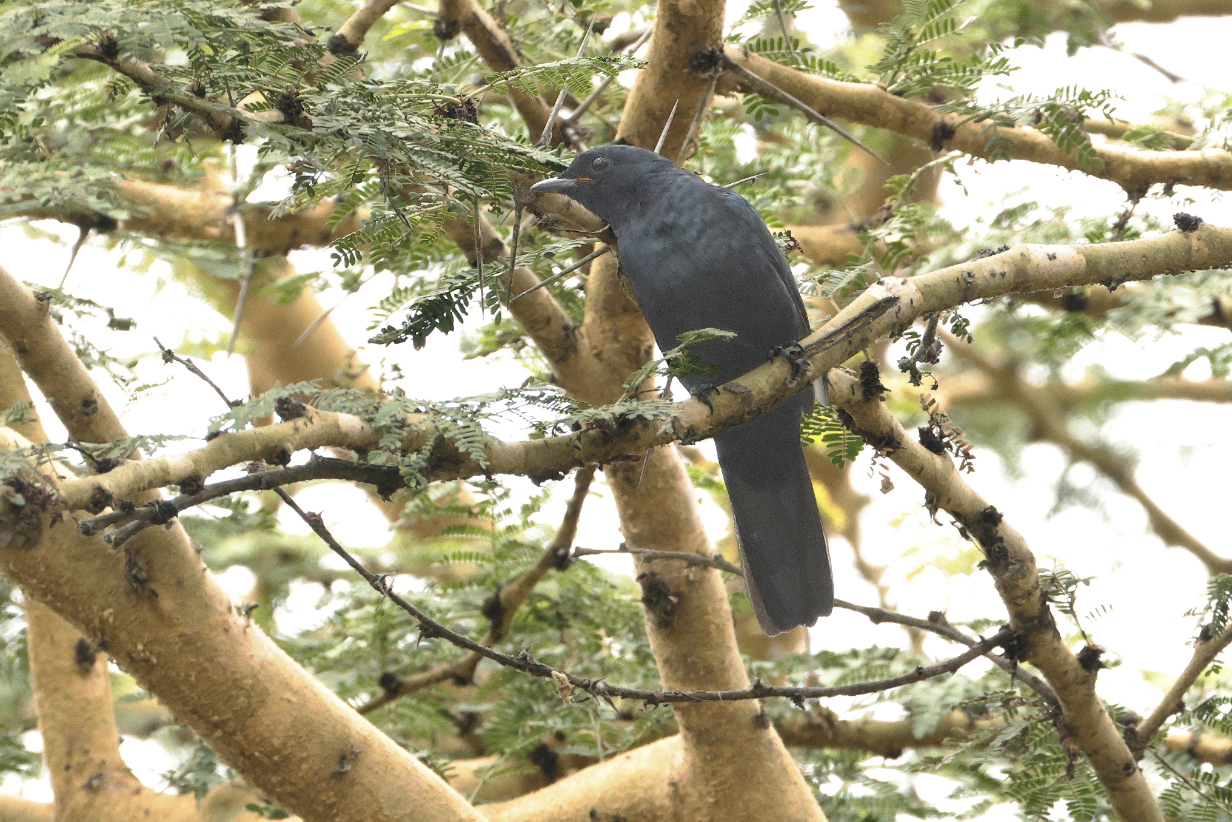
Black cuckooshrike (We also saw a female, which looks completely different -- heavily barred in green and with lots of yellow -- but I never got a good picture.)
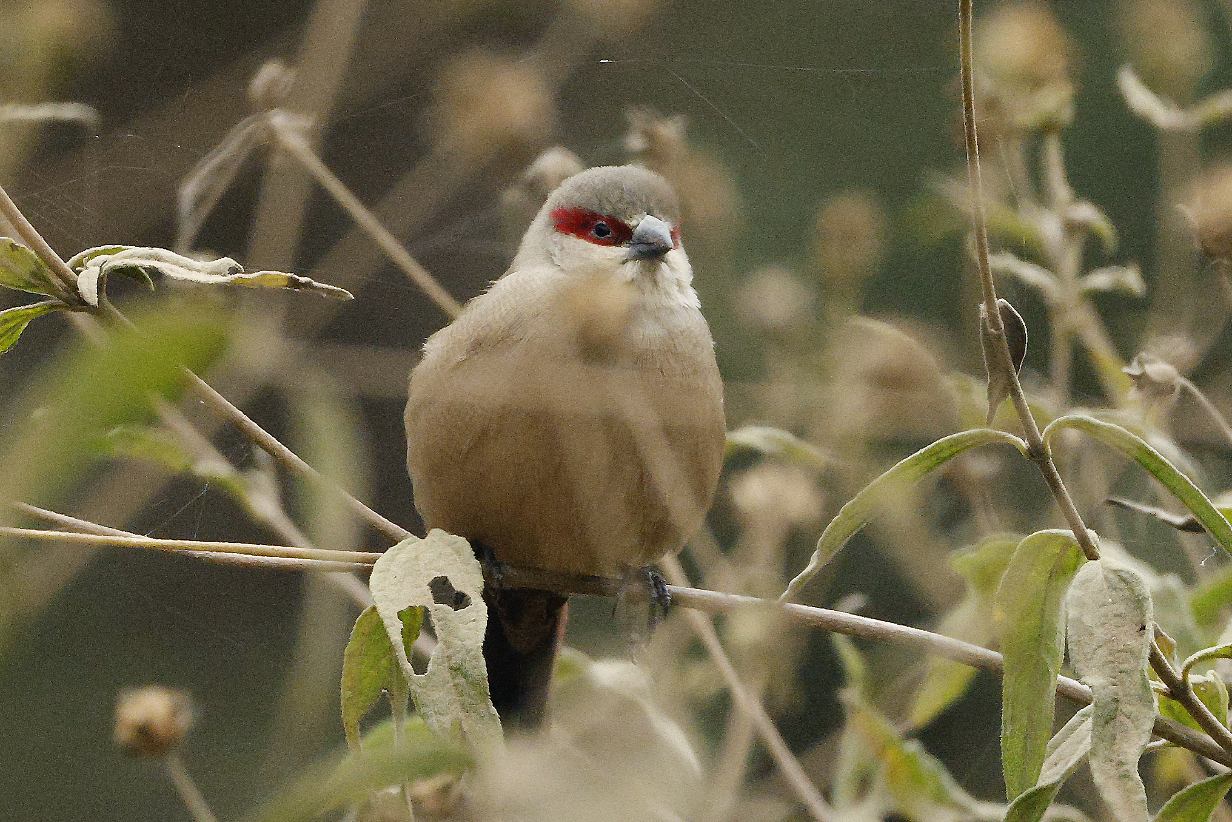
Crimson-rumped waxbill (This is my life bird -- again, not from an ideal point of view.)
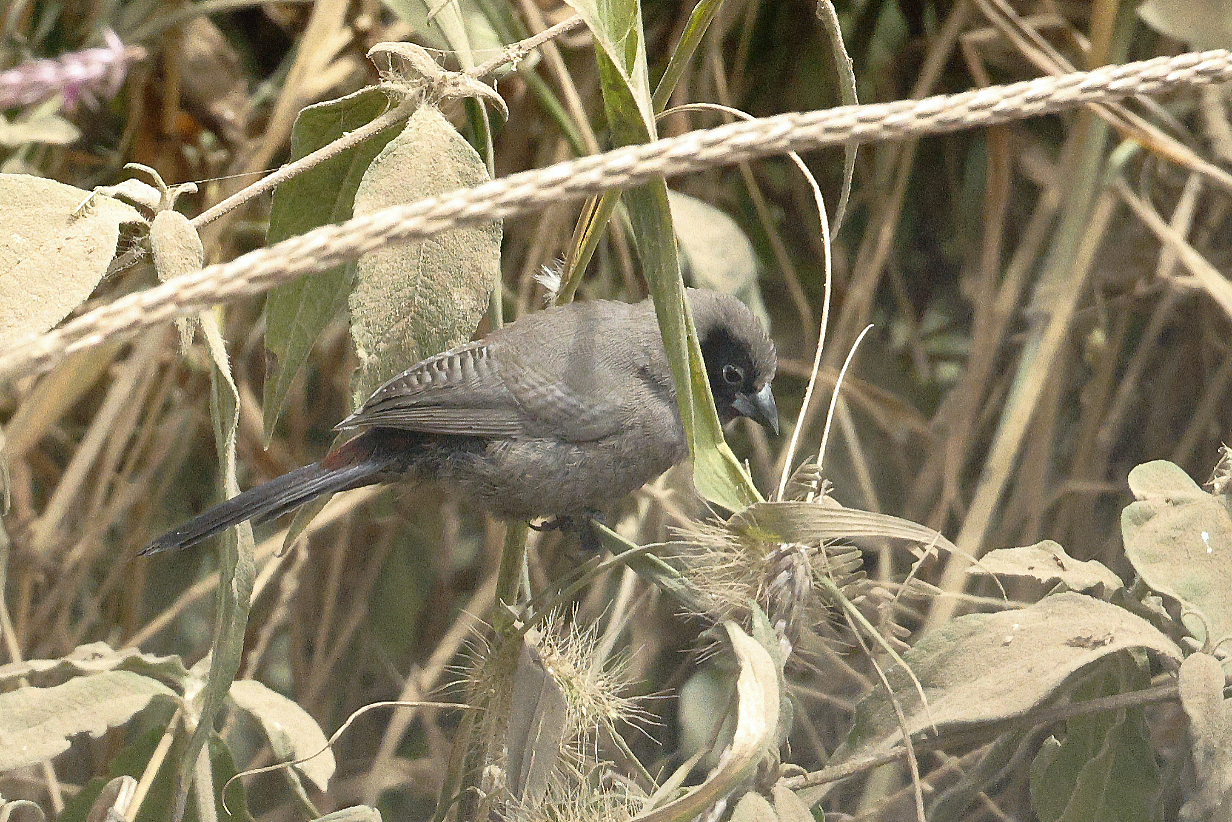
Black-faced waxbill (This species was not new, but I think that we here saw the East African subspecies, which is less colorful than the nominate South African species. Moreover, this looks like a female with all-gray belly. We did also see a male -- pale red underneath -- but I never got a good picture.)
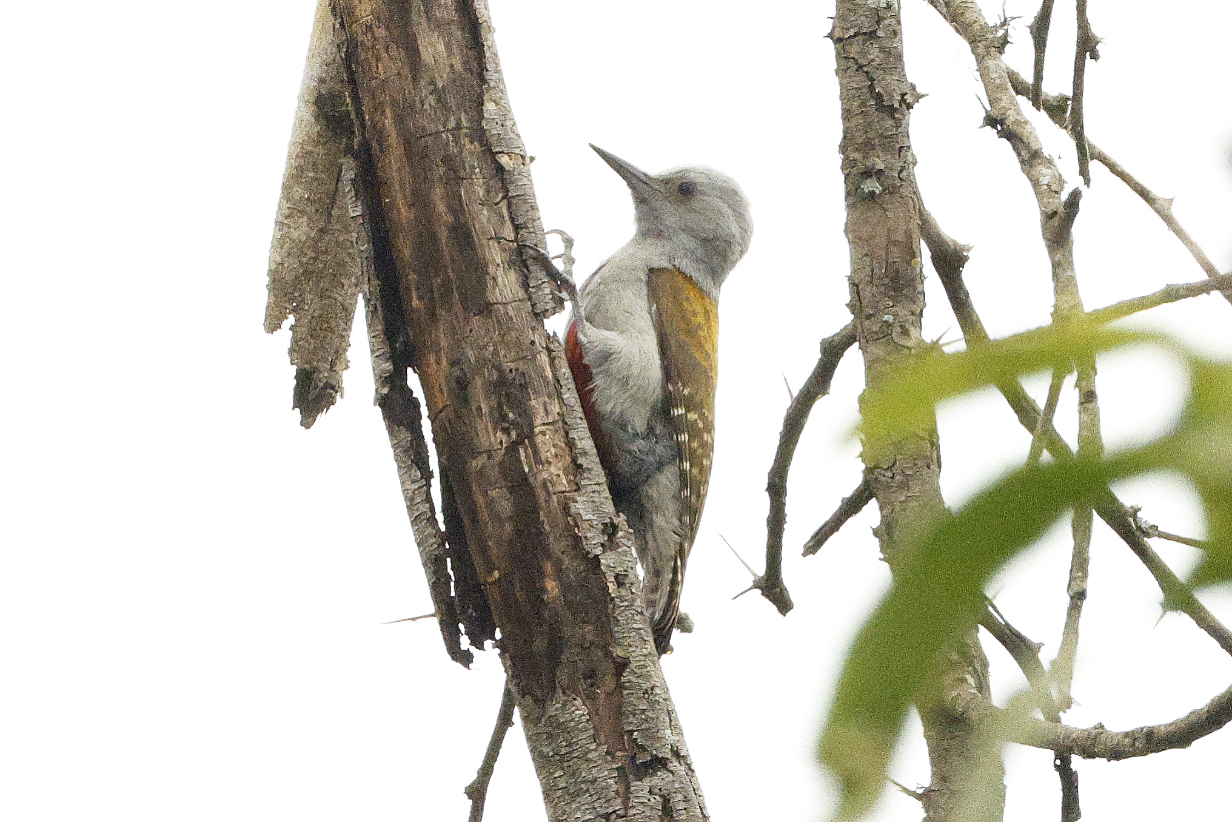
Mountain gray woodpecker (This female is my life bird.)
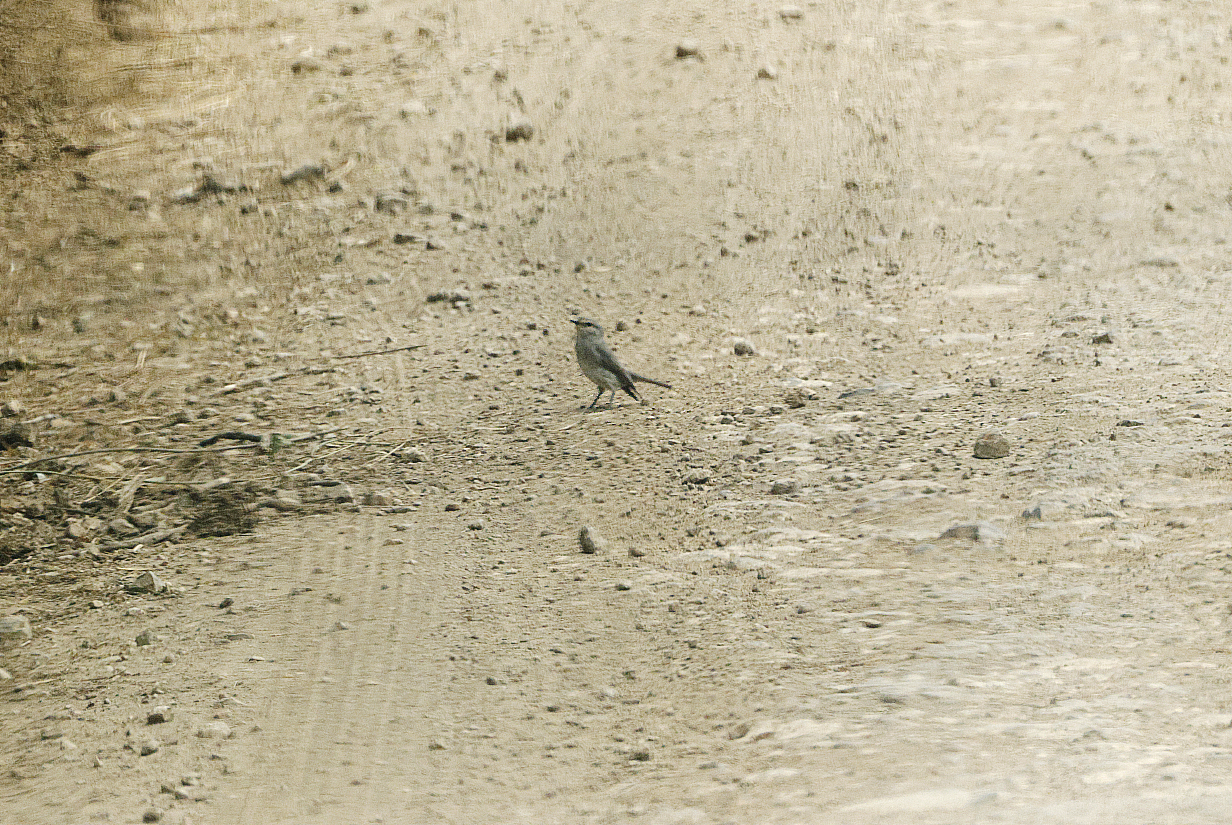
African gray flycatcher (This was a very bad look ... but it is my life bird.)
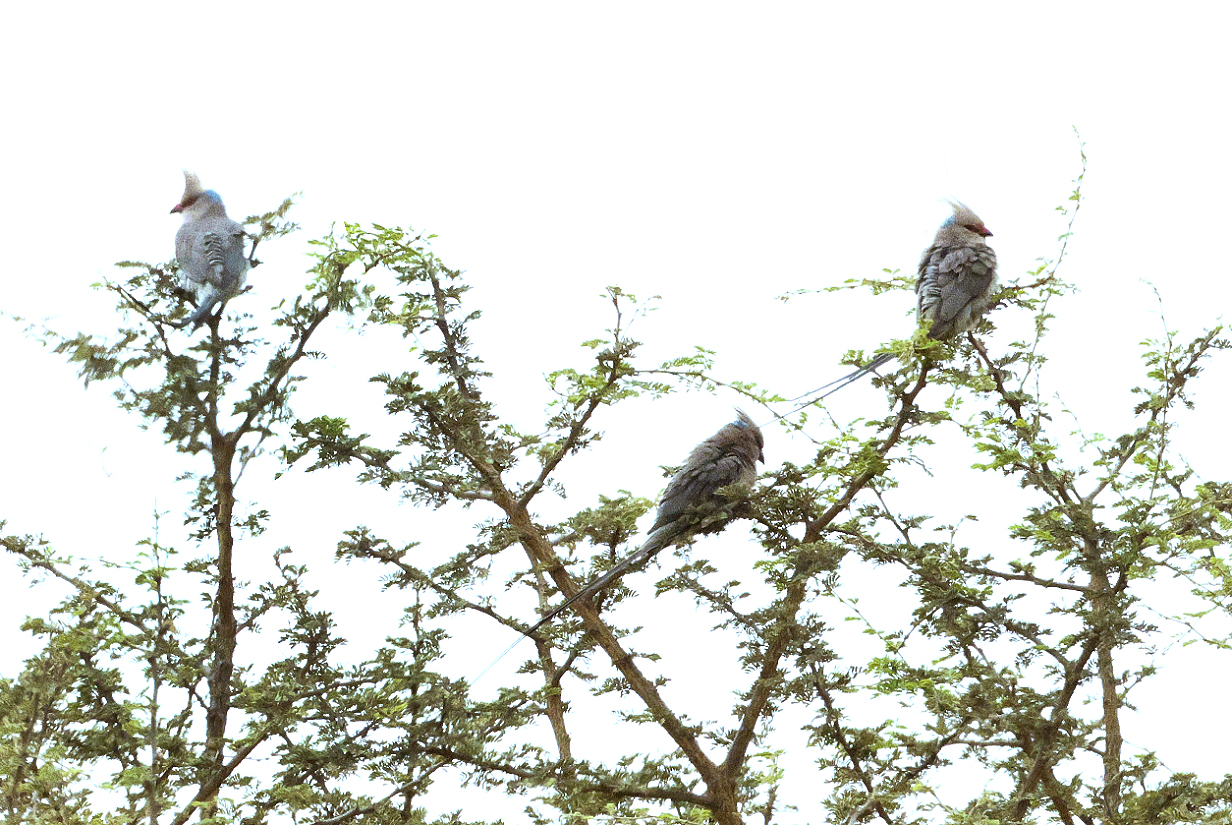
Blue-naped mousebird (These are my life birds -- far away but unmistakeable.
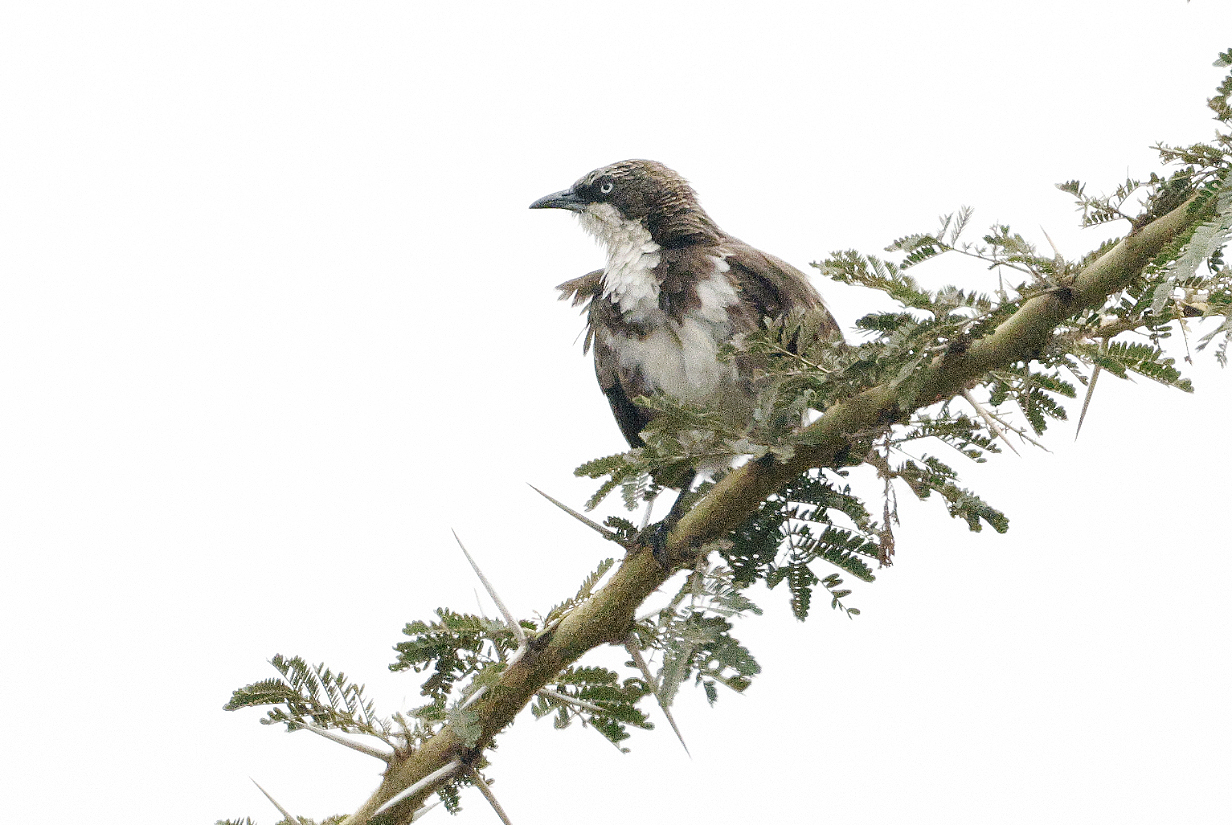
Northern pied-babbler again
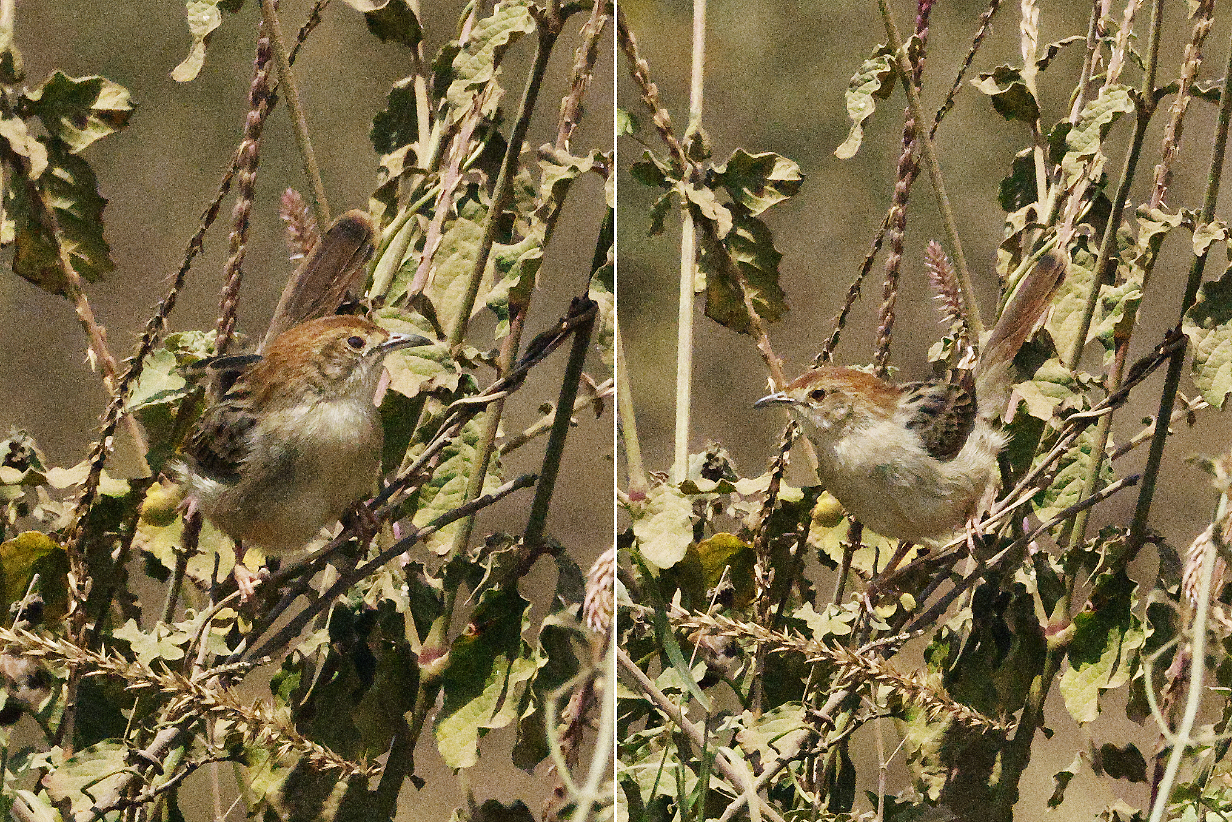
Rattling cisticola again (Like the previous bird, this is a stripe-backed subspecies, presumably Cisticola chiniana ukamba. I assume that the primary ID as Rattling was made more via the birds call than by the bird's morphology.)
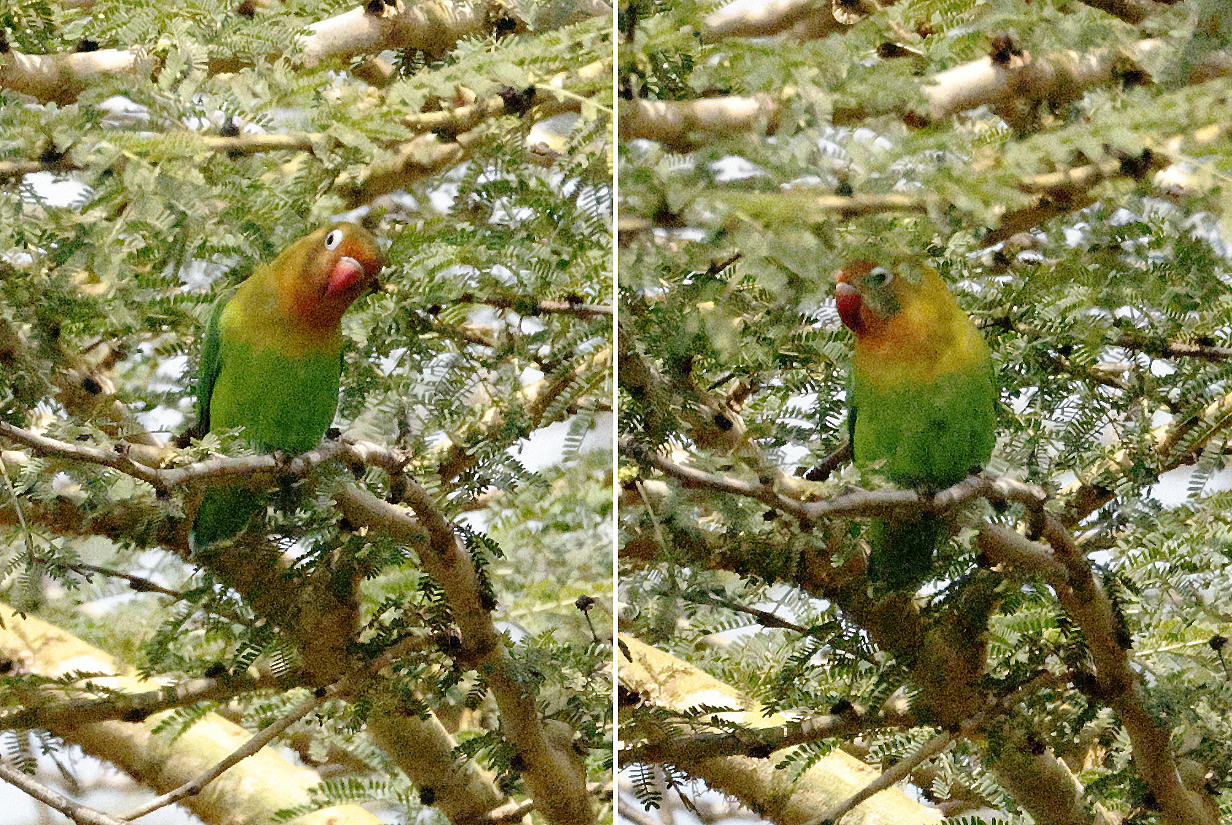
Fischer's lovebird (This is my life bird ... which never came close.)
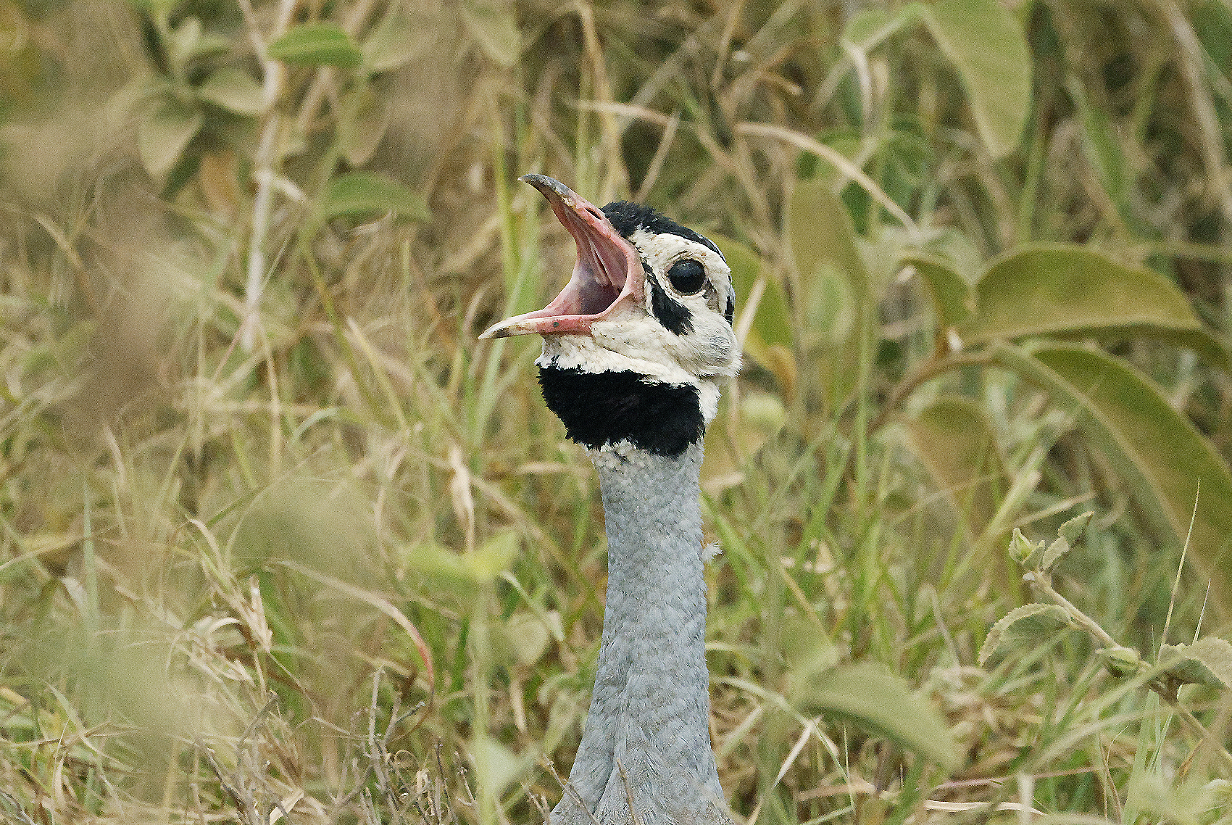
White-bellied bustard (This is my life bird. It was very territorial and seriously perturbed by our presence, as shown by this movie. We left quickly after this so as to not further disturb the bird.)
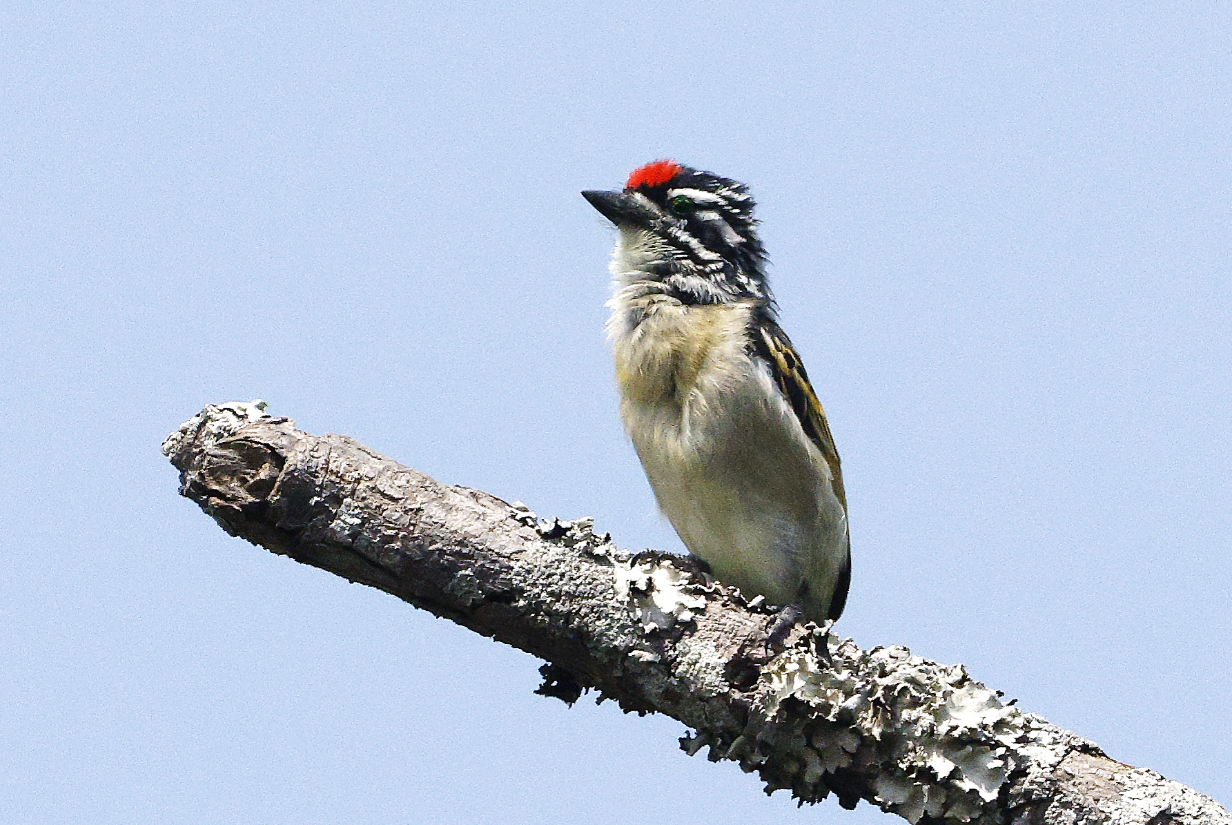
Northern Red-fronted tinkerbird (This is my 19th and last life bird of the day. Today was my most productive day since our boat ride on the Fly River in Papua New Guinea in July 2022.)
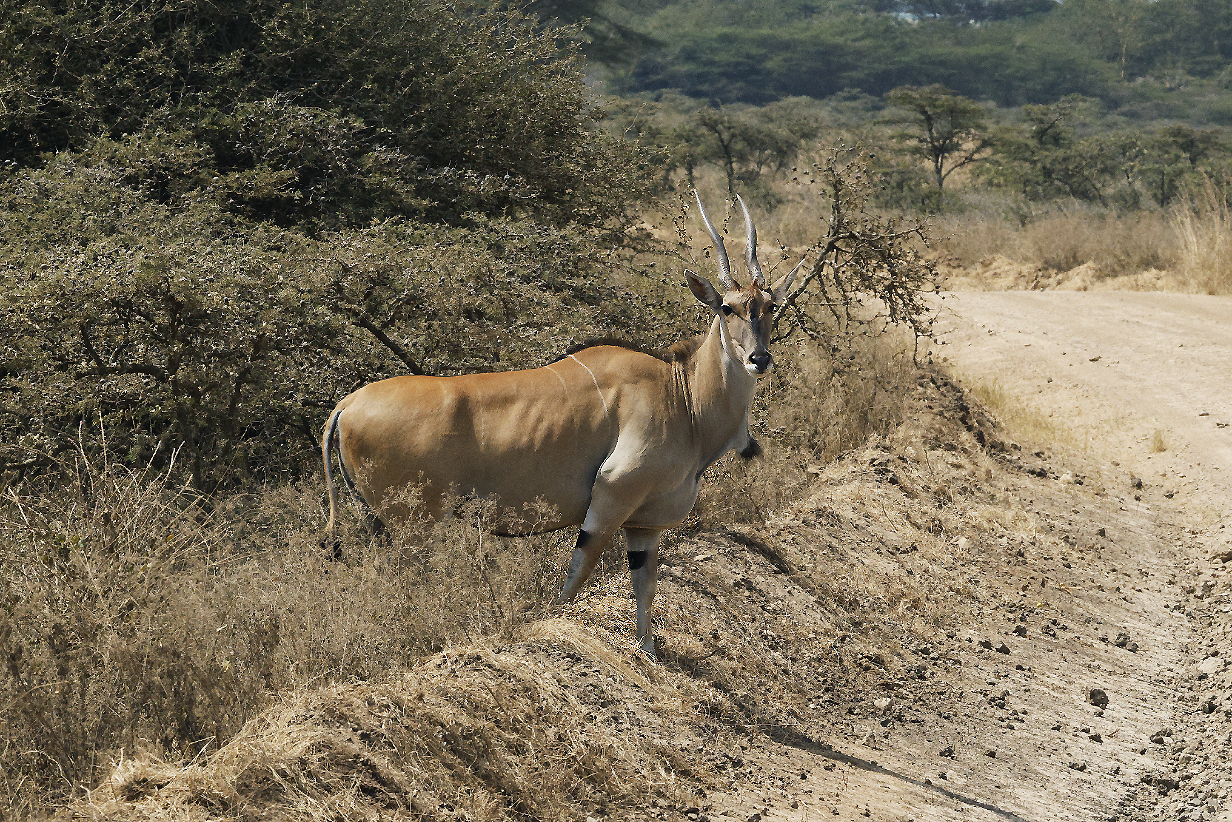
Eland
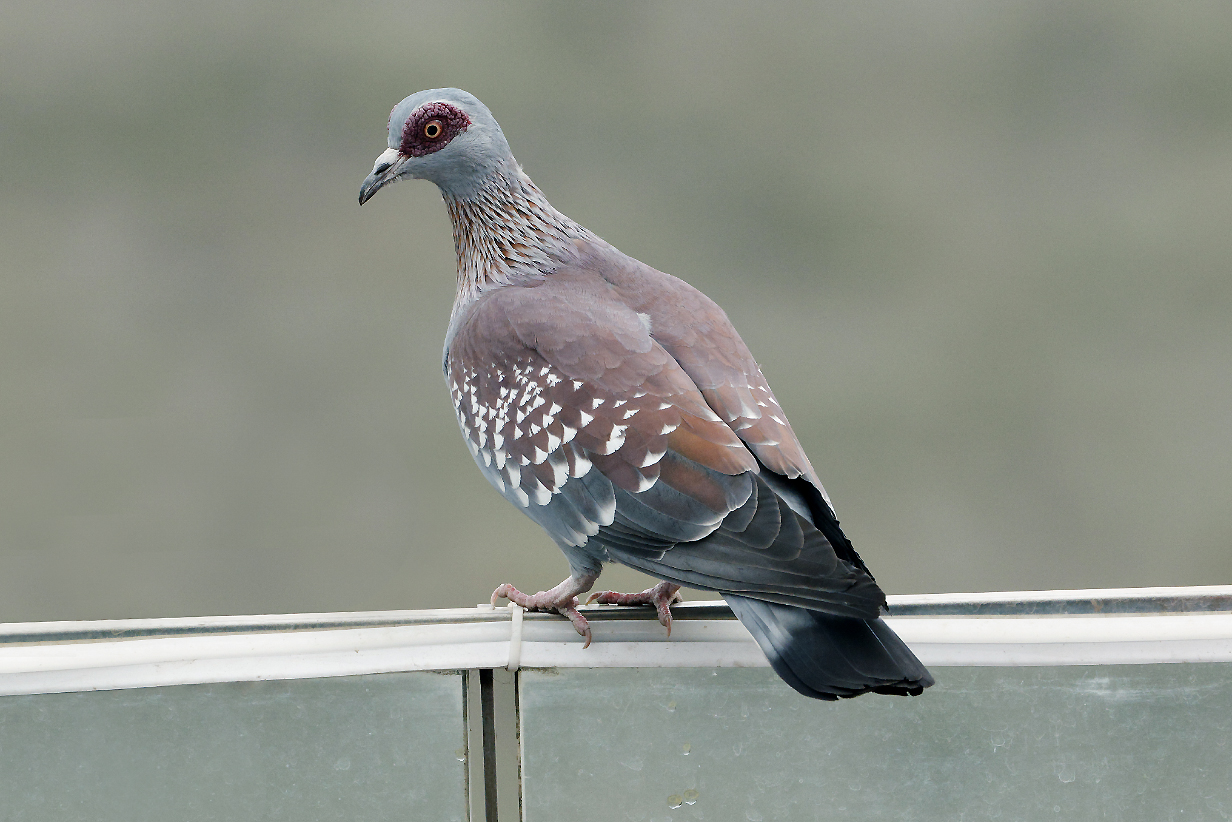
Speckled pigeon in the roof lounge and (it turns out) swimming pool area on the roof of our part of the Hotel Ole Sereni
August 9: Nairobi to Lake Nakuru
This morning we left early for the long drive to Lake Nakuru, birding along the way. A lunch stop at Manguo ("Place of Happiness") is not documented with pictures here -- that was essentially an elegant work of art consisting of local foods. After we checked into Sarova Lodge, we had lunch. Then birding in the afternoon was clobbered by rain.
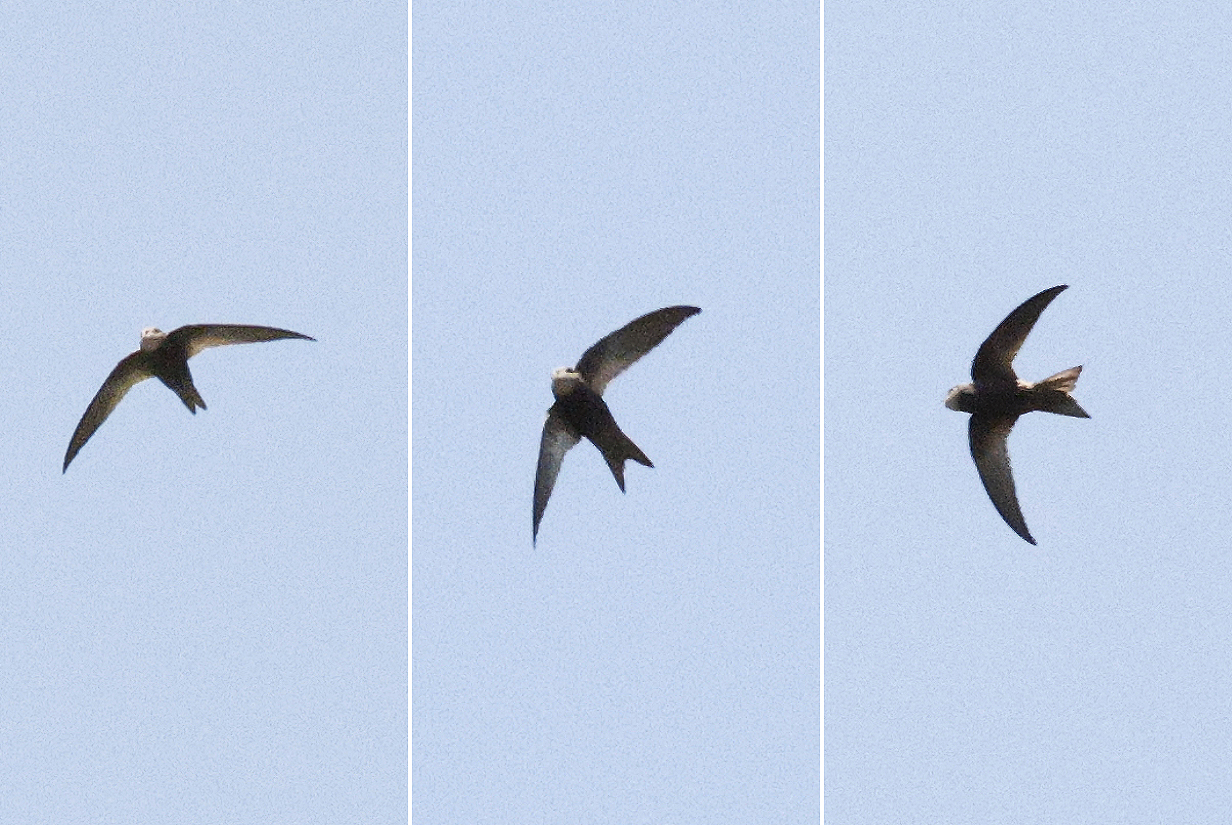
Nyanza swift (This is my life bird. Diagnostic features include the short fork in the tail, the brown color, and especially the paler trailing side of the wings. Unfortunately, the bird did not come close ... or else I just failed to get a picture when it zoomed by more closely.)
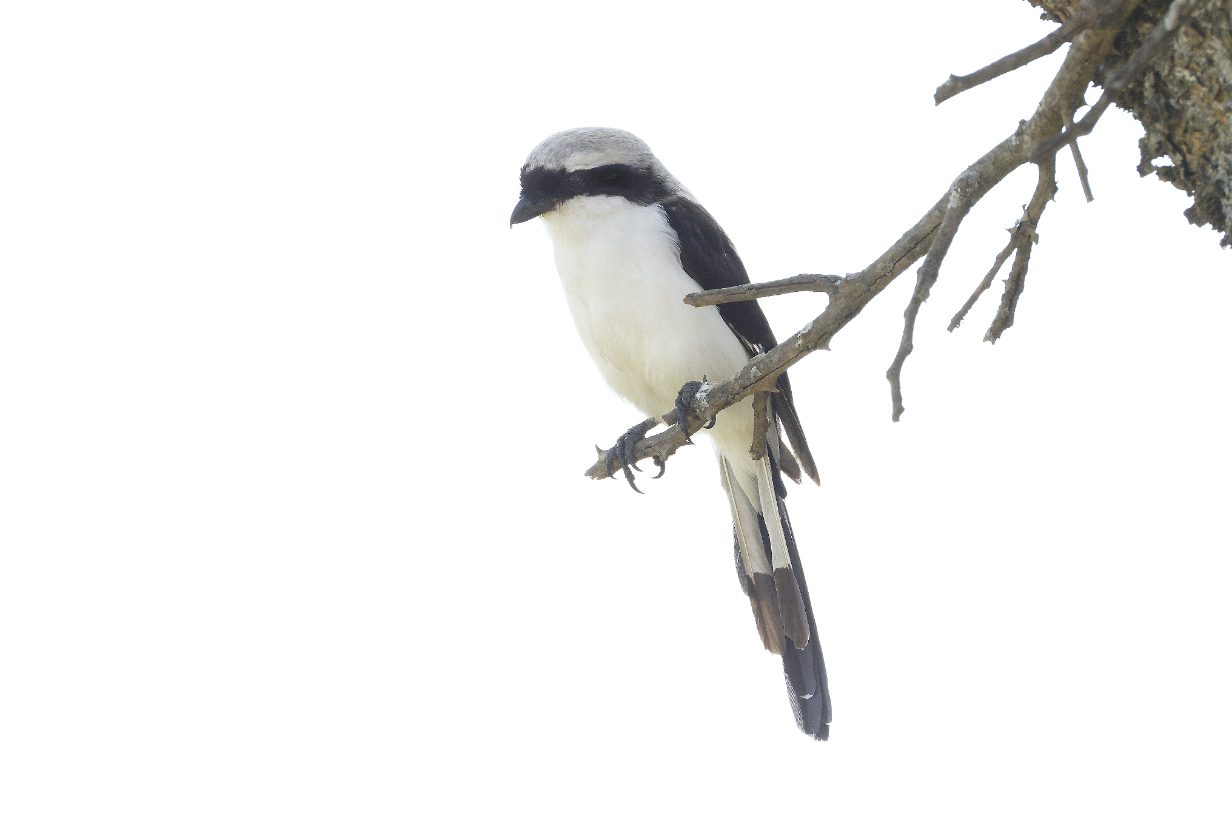
Gray-backed fiscal (This is my life bird.)
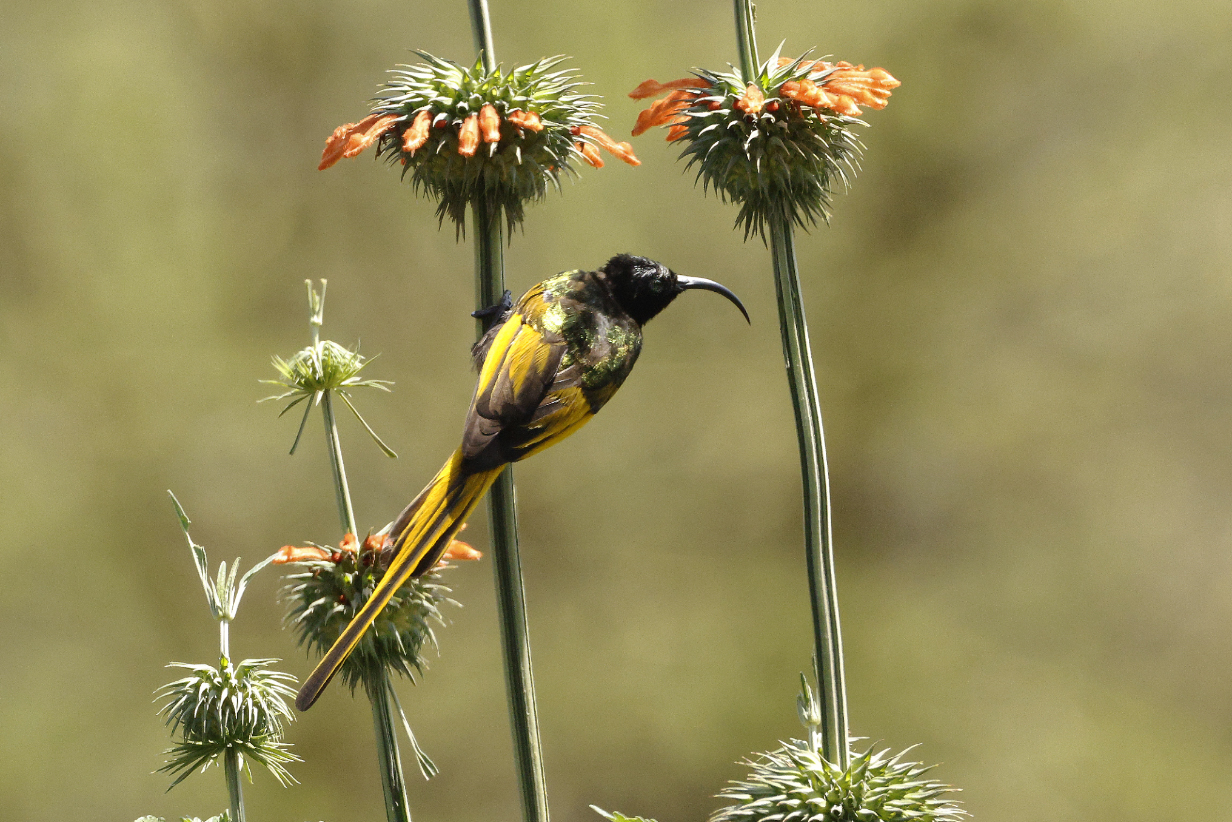
Golden-winged sunbird (This is my life bird.)
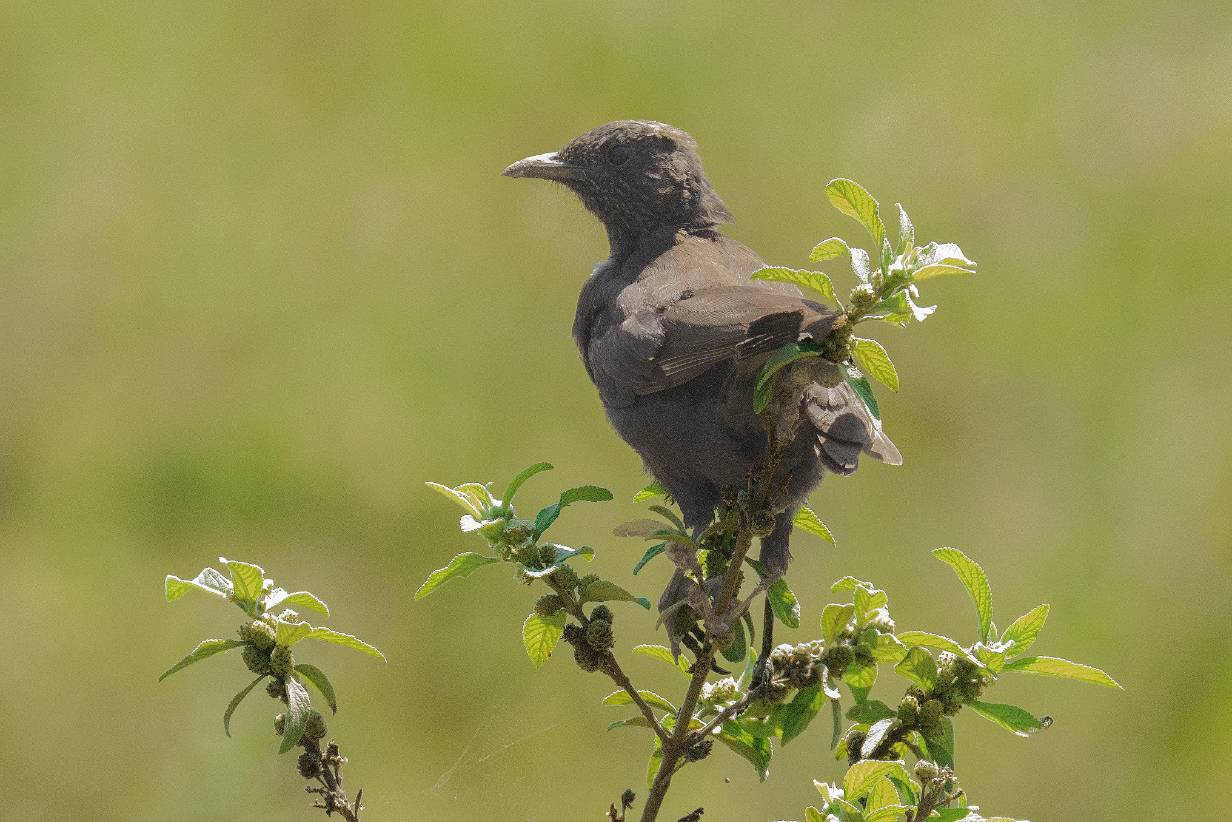
Northern anteater-chat (This is my life bird. You can see a hint of the white patches in the wings.)
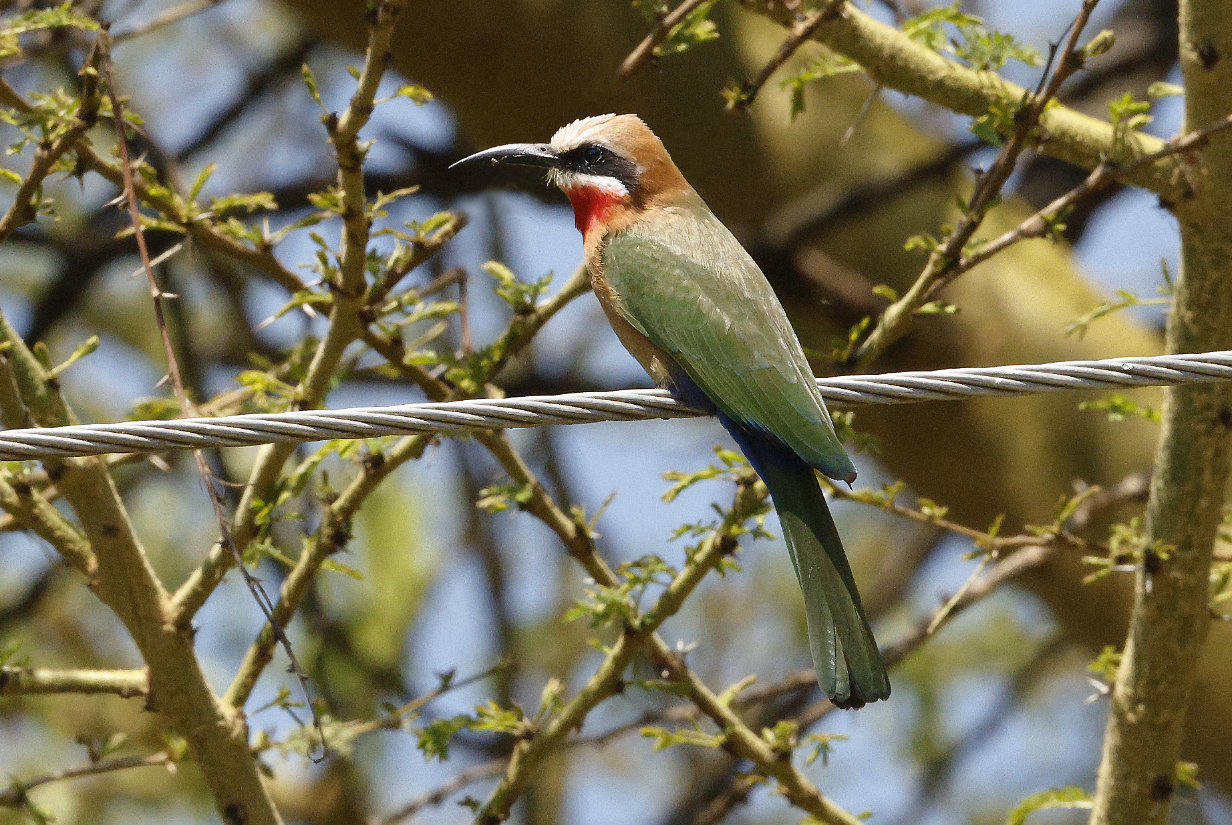
White-fronted bee-eater
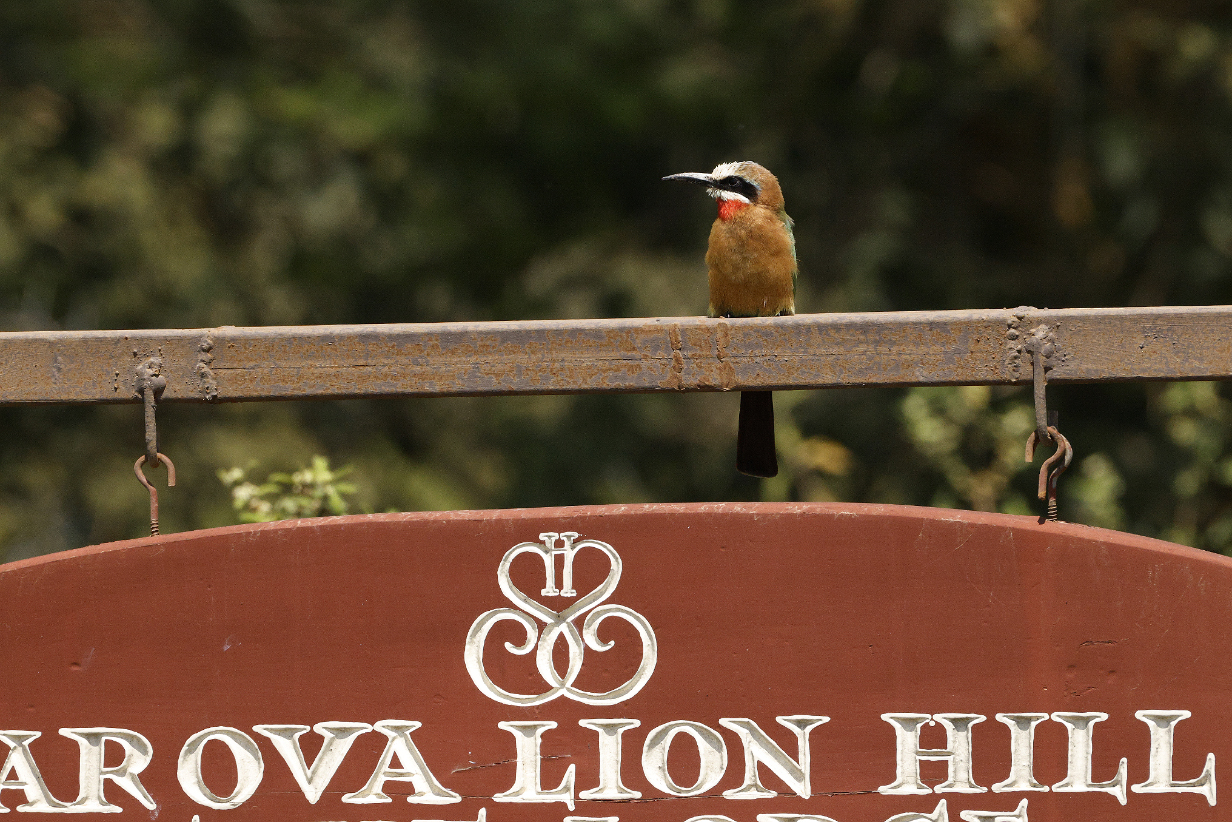
White-fronted bee-eater sitting on the sign of the Sarova Lion Hill Lodge at Lake Nakuru
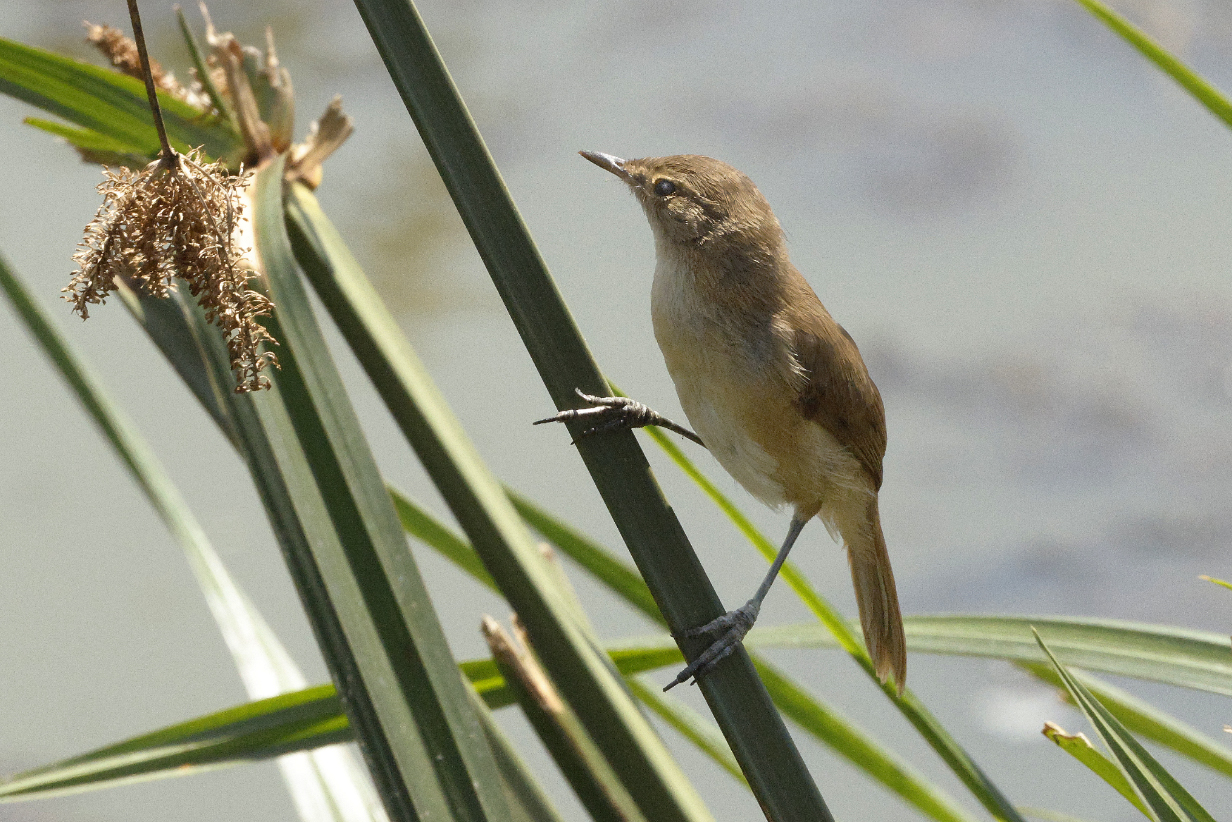
Lesser swamp warbler (Acrocephalus gracilirostris -- always happy to get a warbler)
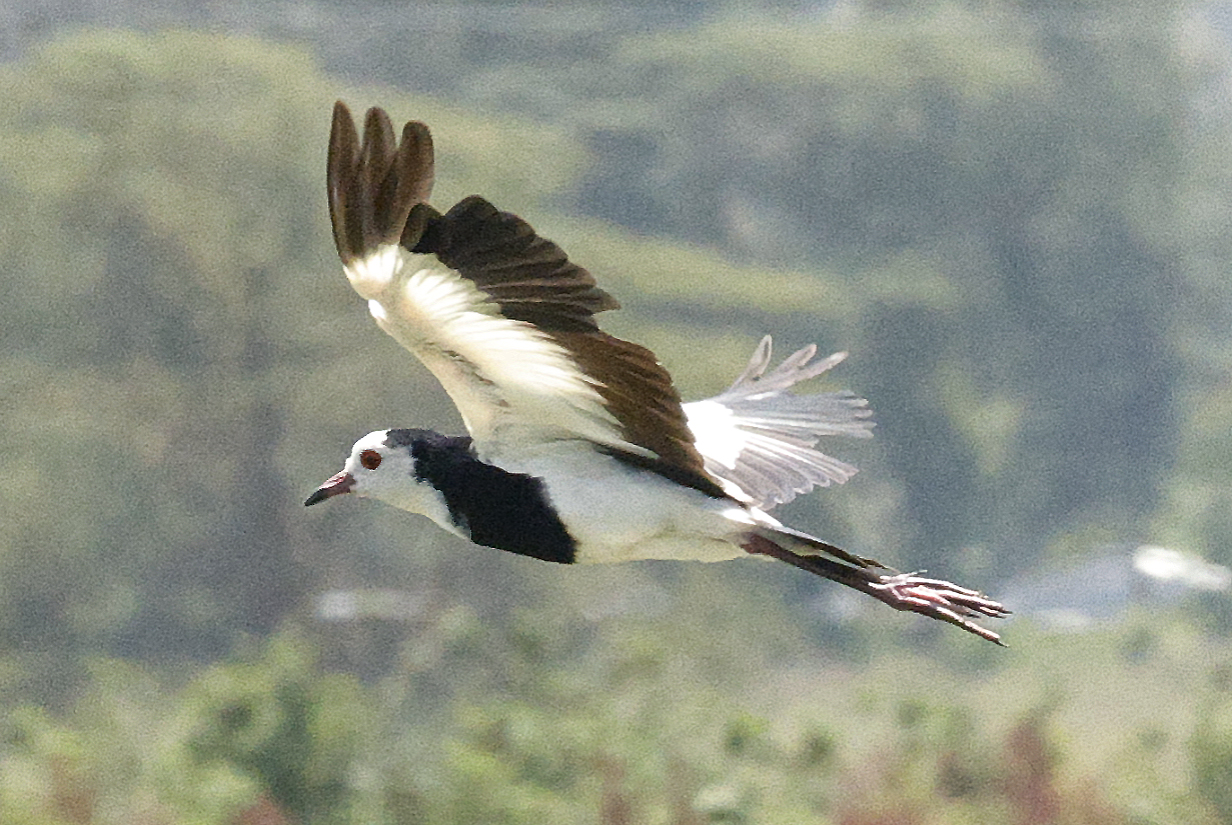
Long-toed lapwing (This is my life bird.)
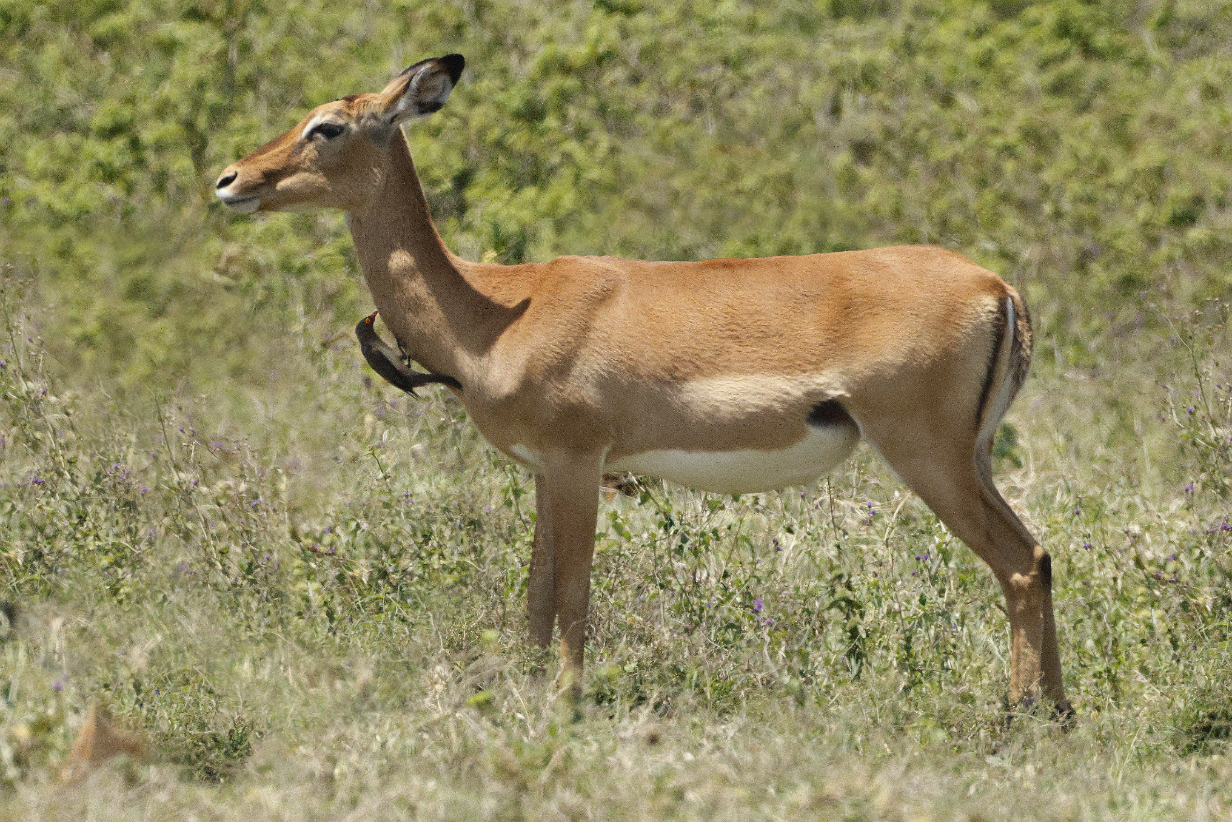
Red-billed oxpecker and impala
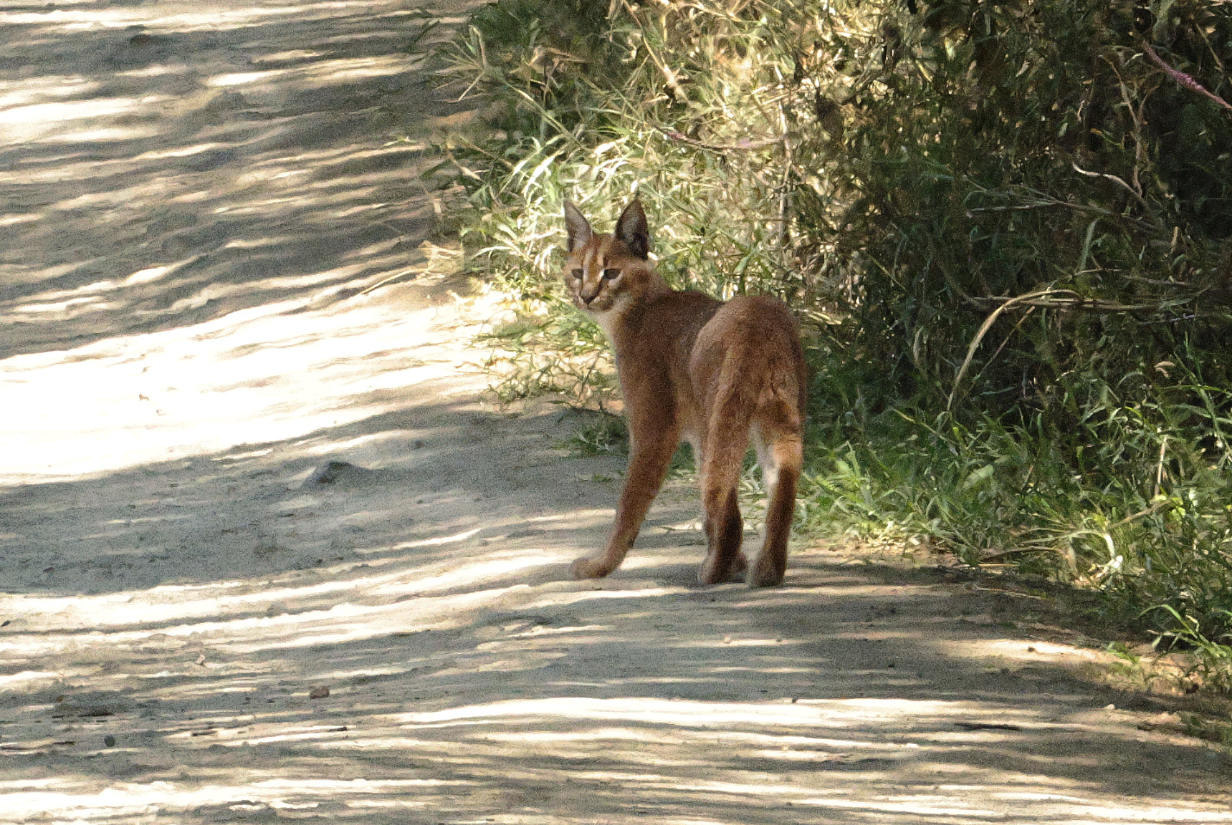
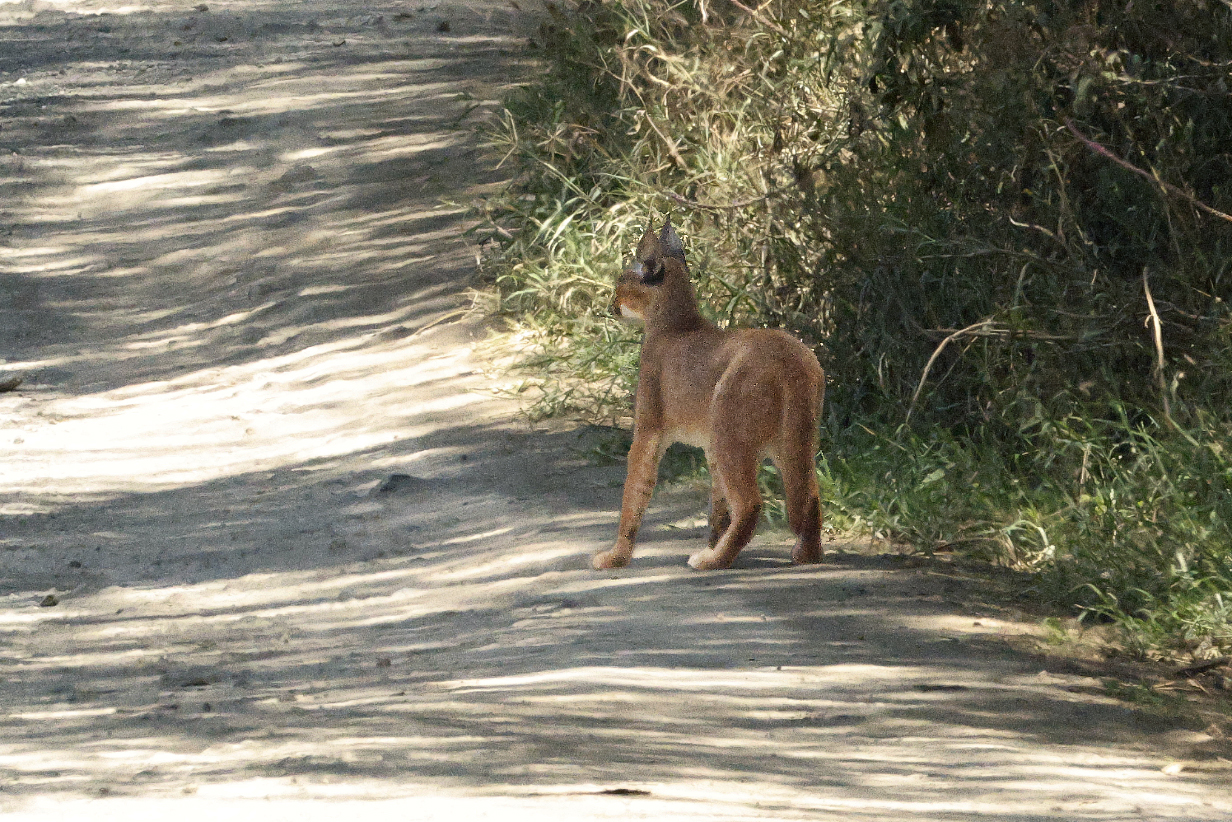
Caracal (Spectacular good luck to see this enormously shy and reclusive cat!)
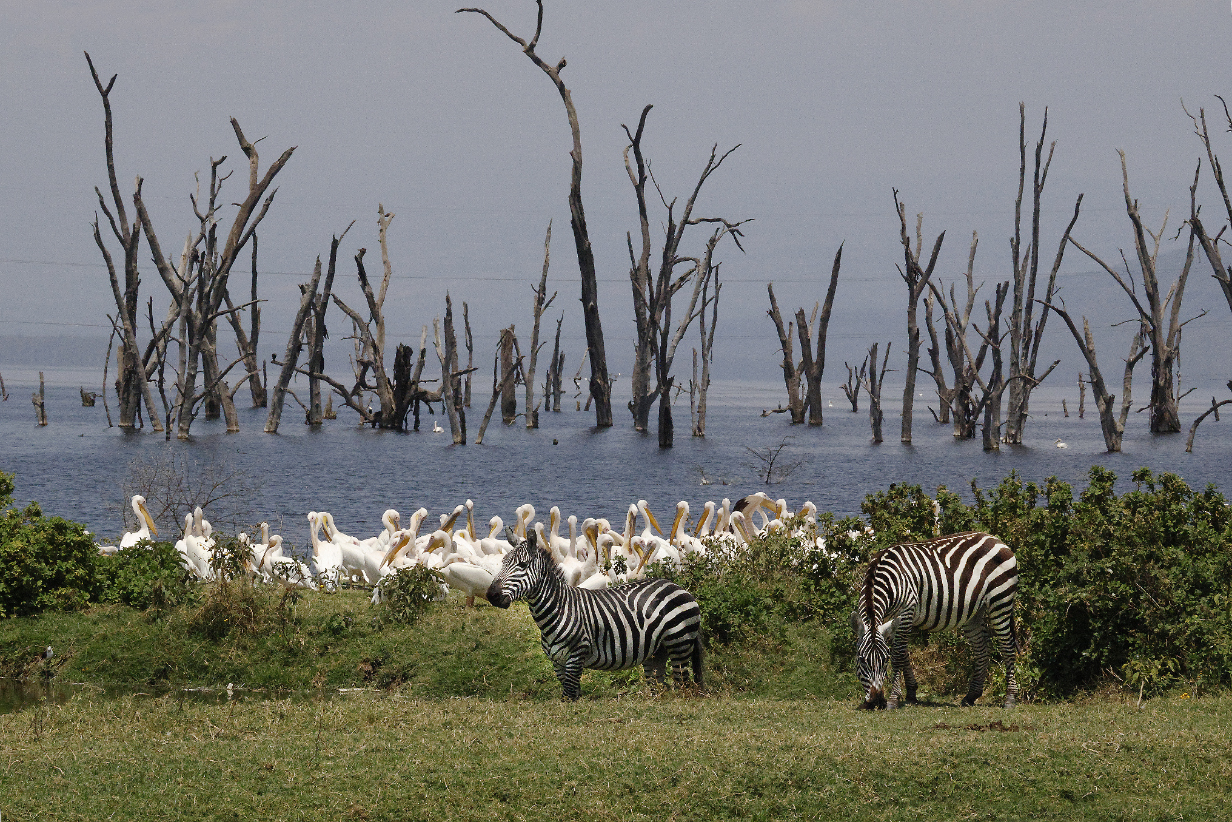
Lake Nakuru typical view. The pelicans are Great White. The water level has risen alarmingly in recent years as a result of (1) increased rainfall as a consequence of climate change; (2) Indian Ocean moisture shifts toward the African Rift Valley, also a consequence of climate change, and (3) deforestation as a result of urban growth, with the result that more water runs into this closed basin instead of soaking into the soil. The situation is even worse at Lake Baringo (see August 16 and 17). Here at Lake Nakuru, birding is somewhat inconvenienced but not yet too bad. But the lodges at both lakes are threatened. The change is enormous and is illustrated further tomorrow.
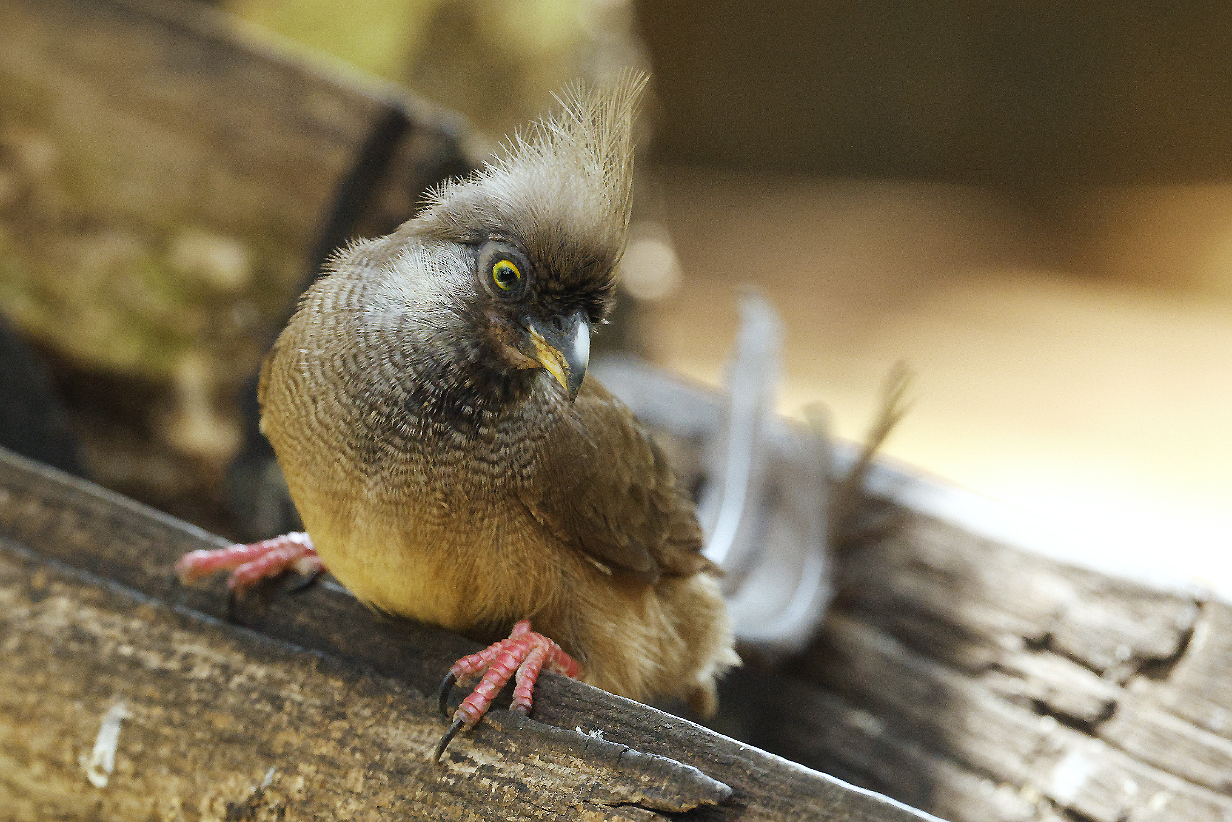
Speckled mousebird at feeders near the lodge's restaurant ... fortunately, well above lake level. After lunch and a rest during the hottest part of the day, rain clobbered afternoon birding. This was the only time during the trip that rain directly affected our schedule.
August 10: AM at Lake Nakuru; PM at Masai Mara National Reserve
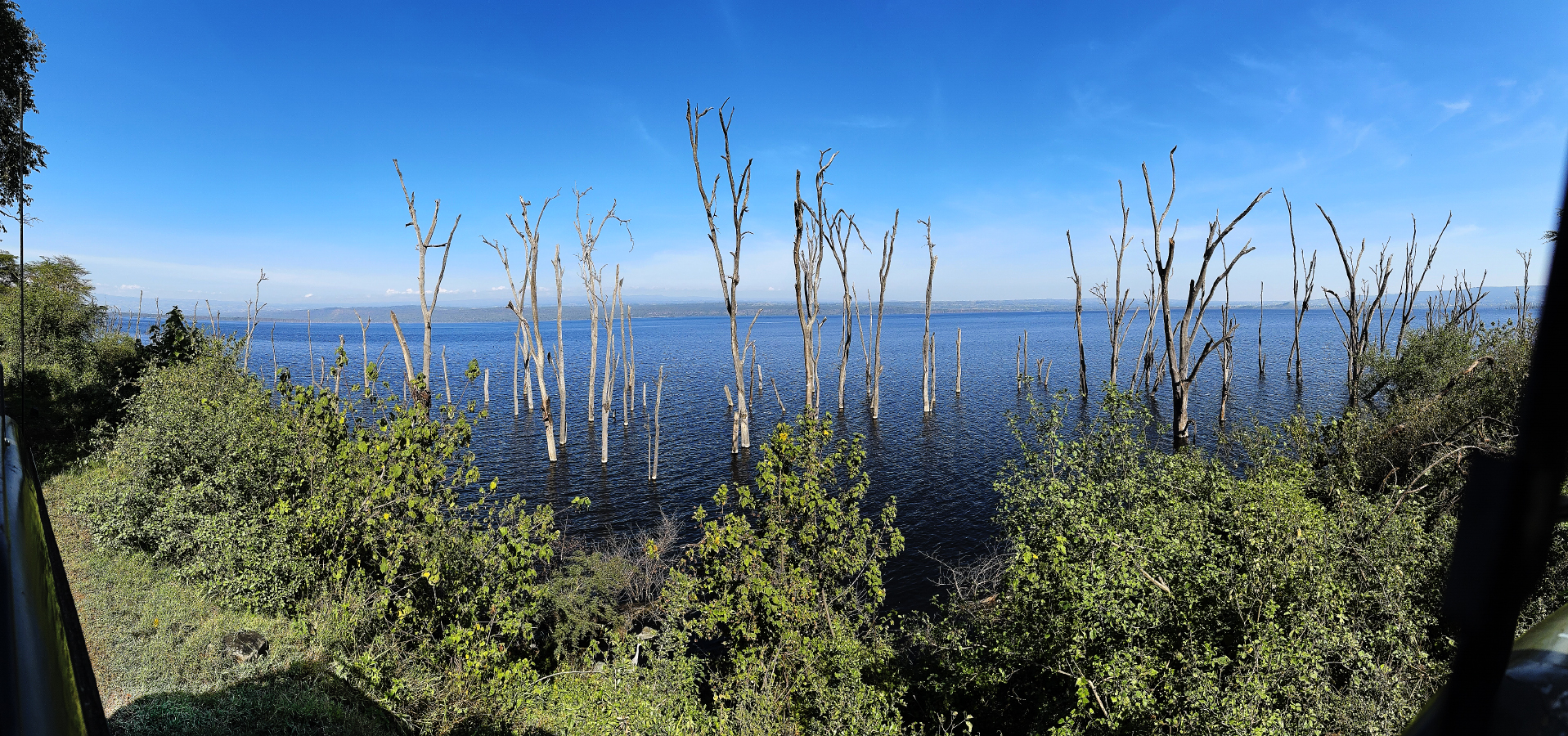
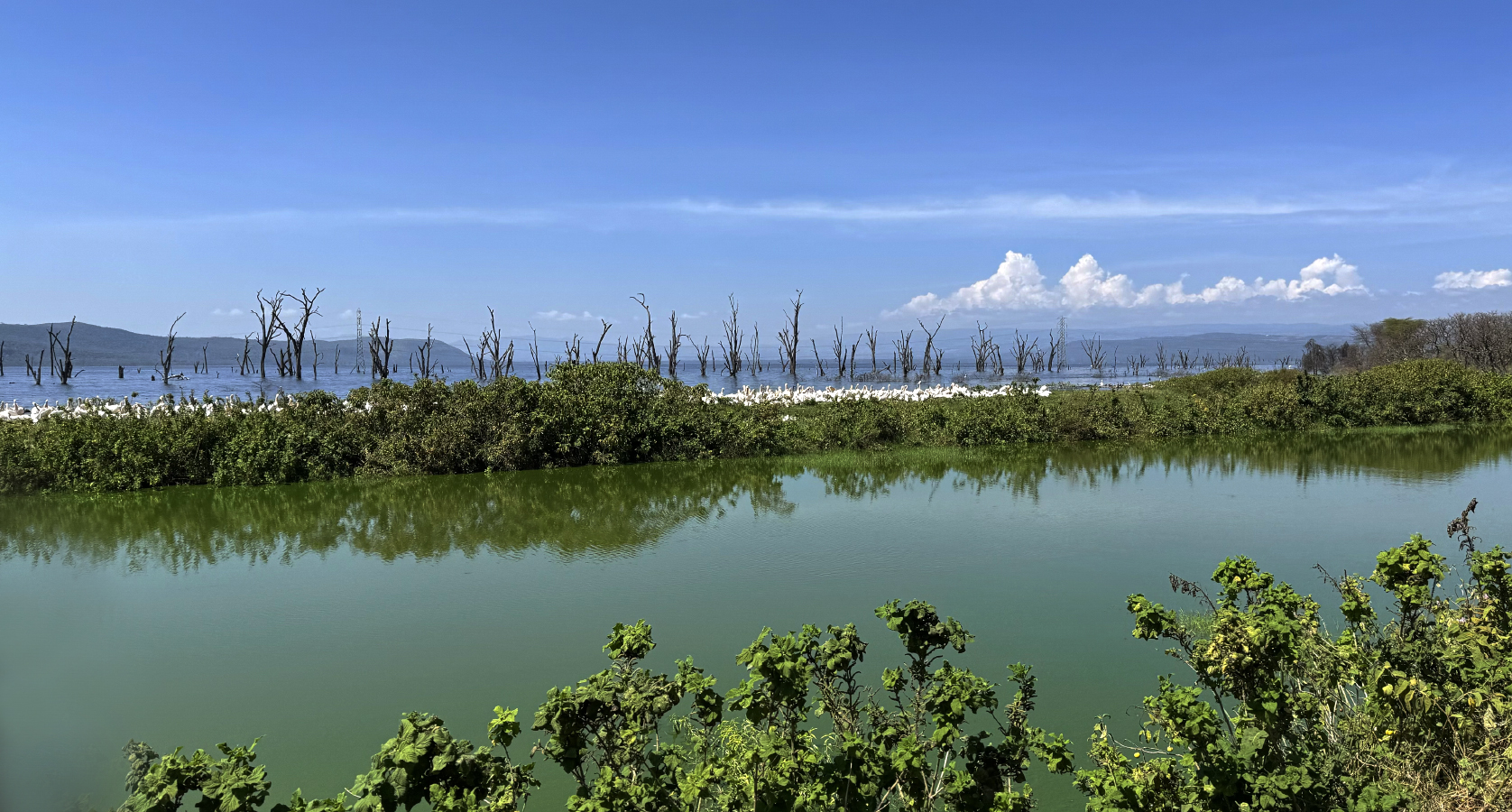
Almost-180-degree panoramas of typical views of Lake Nakuru. The shore is outlined in drowned forests. Great white pelicans congregate in large numbers. In the morning, we drove part way around the lake, birding. Sites that were better in the past were somewhat affected, but birding here was still good.
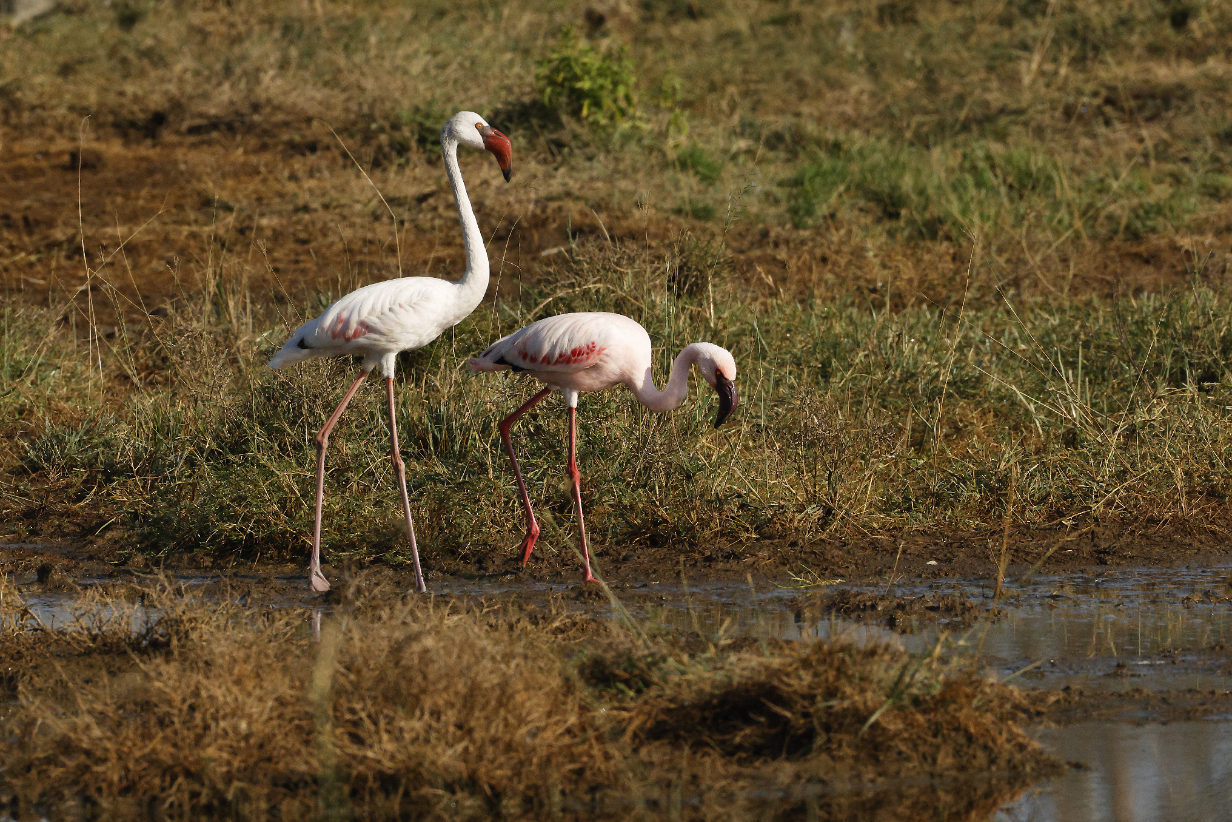
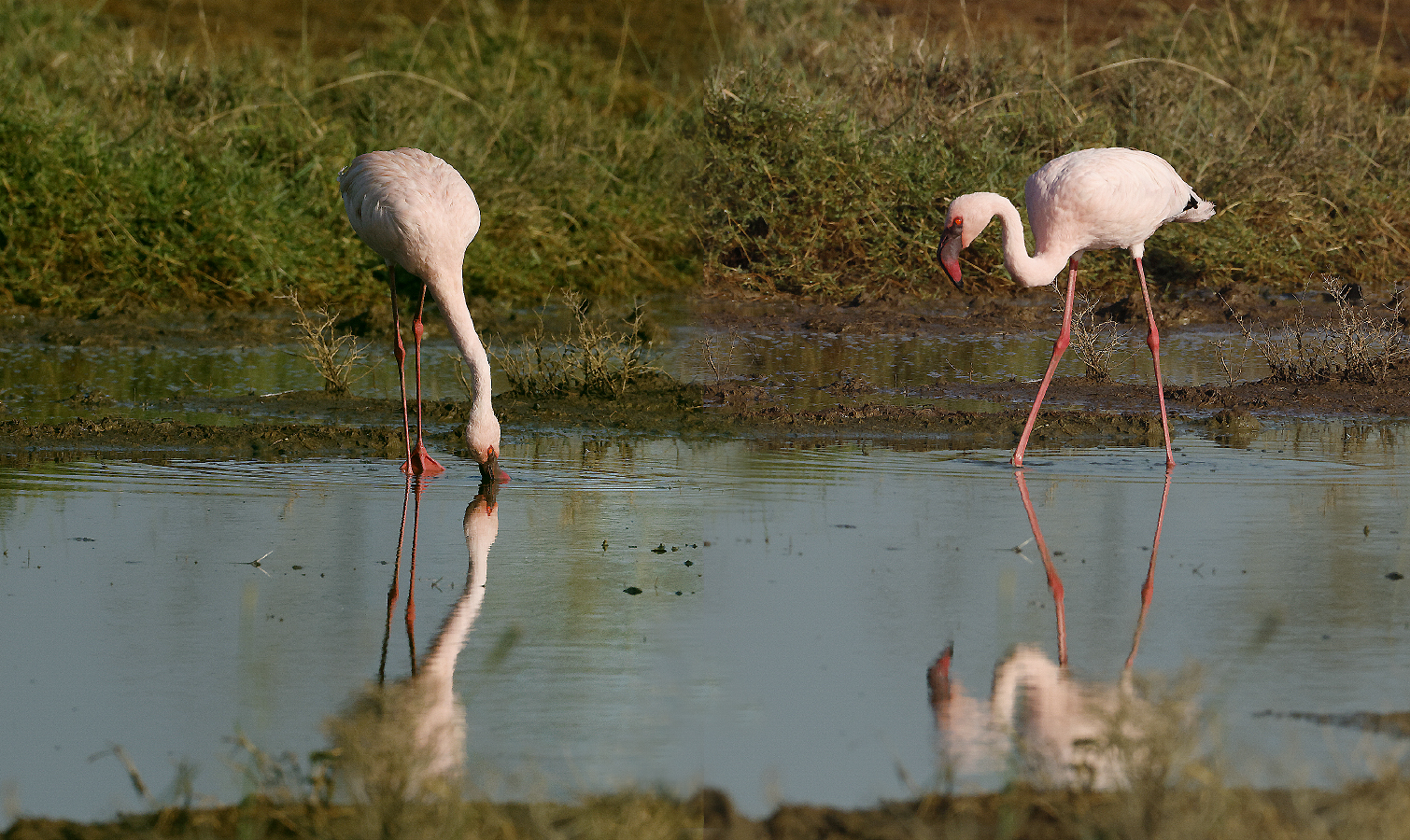
Lesser flamingo
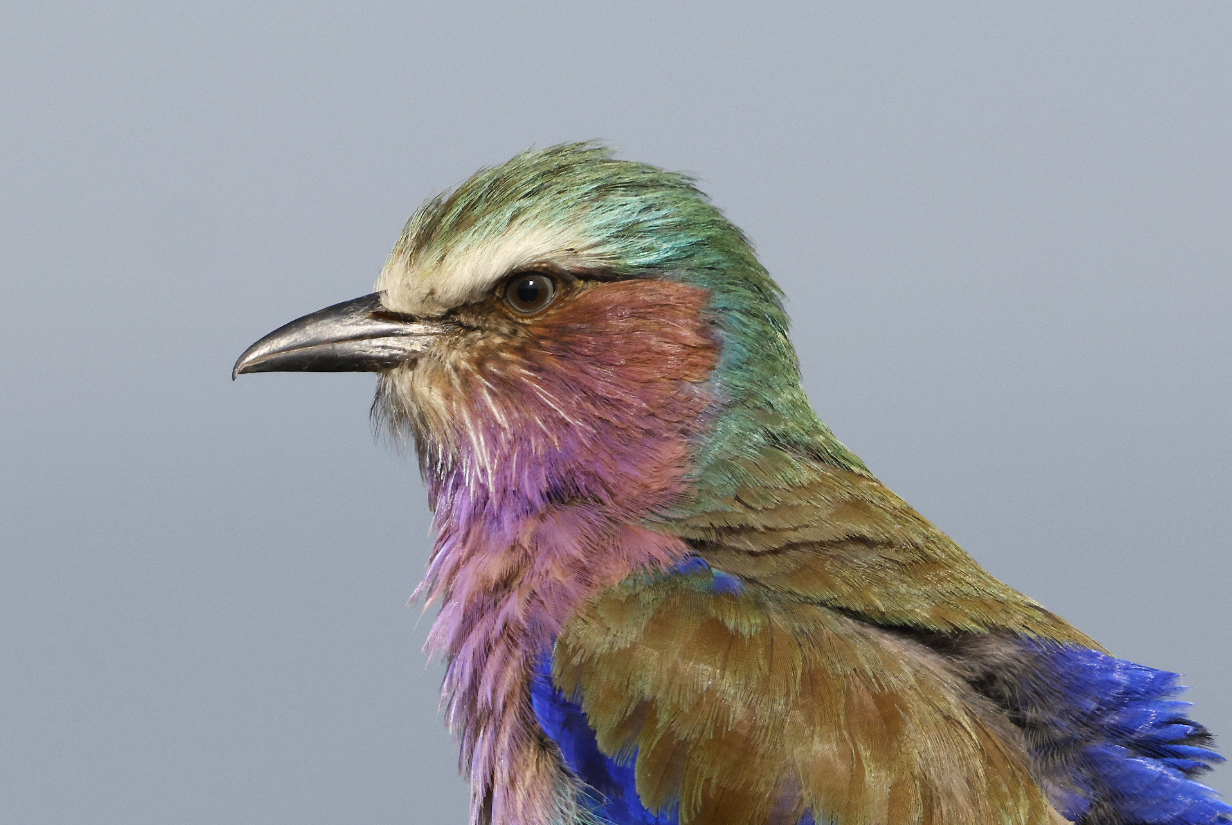
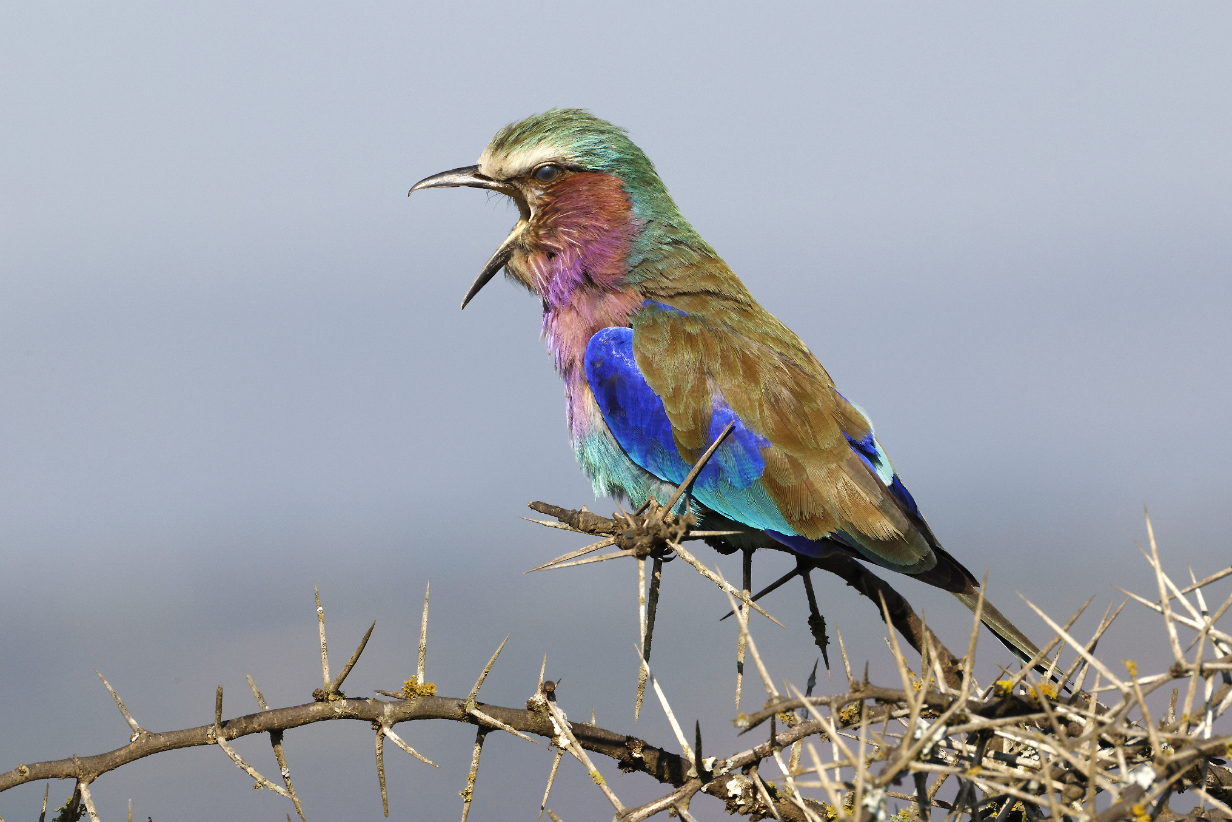
Lilac-breasted roller
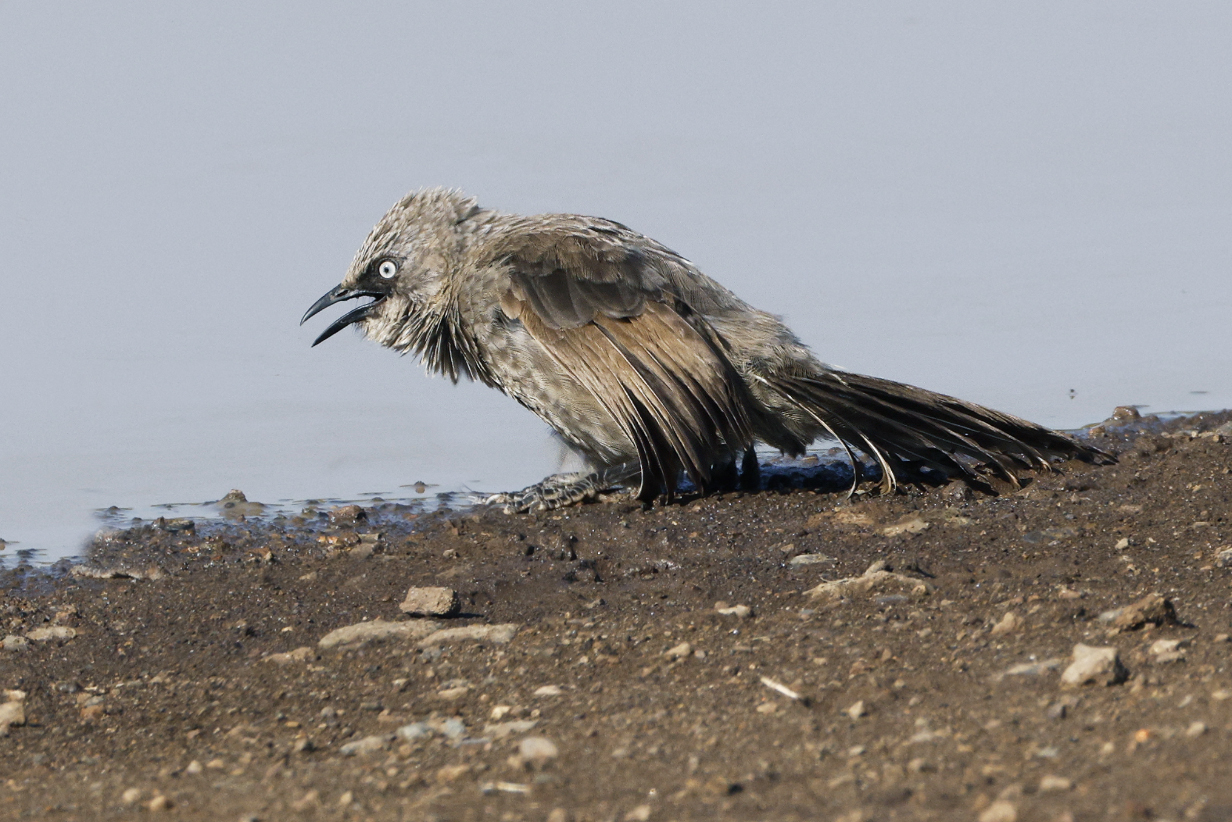
Black-lored babbler (This is my life bird.)
Some little time after this, we started the long drive to Masai Mara Reserve. The picture of Double-banded courser was taken 6.5 hours after the above picture of the babbler. Once we got into the Mara, we still had a substantial drive to get to our tent camp (see tomorrow's pictures); we birded extensively all the way.
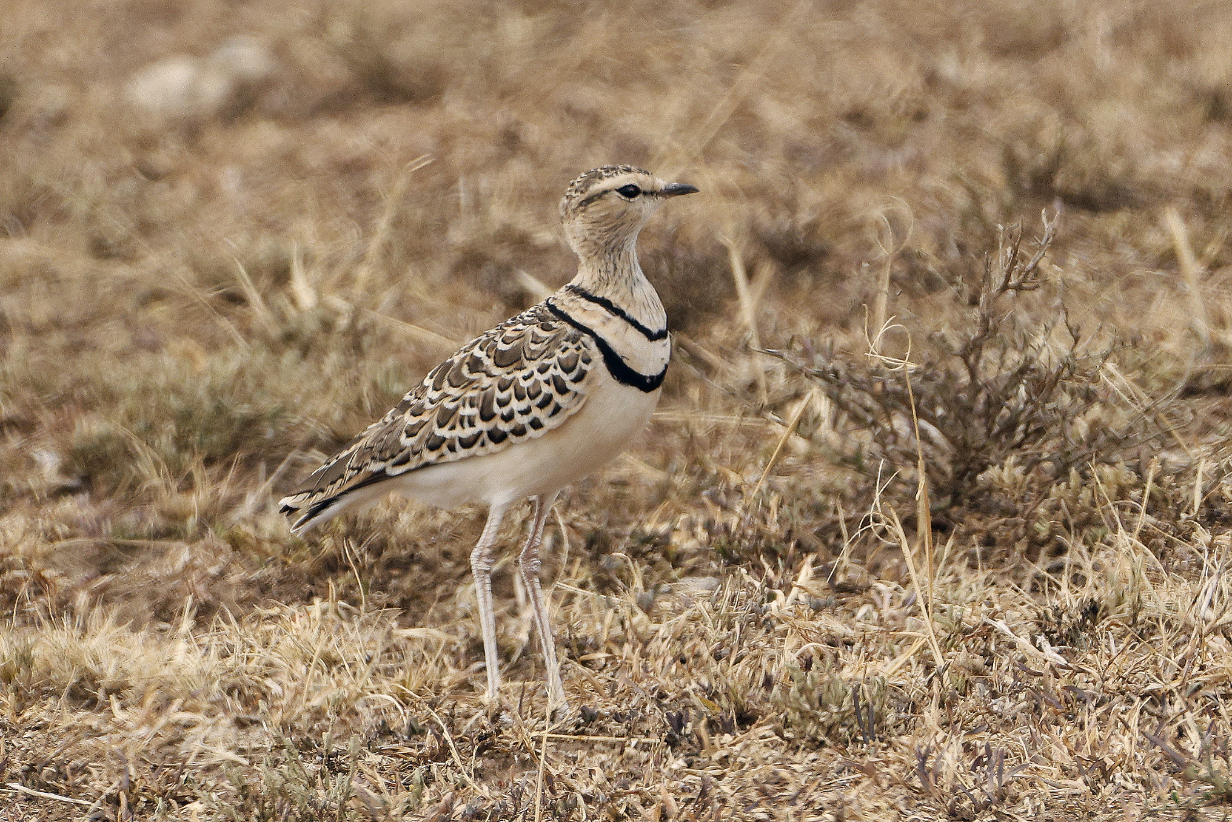
Double-banded courser (This is my life bird.)
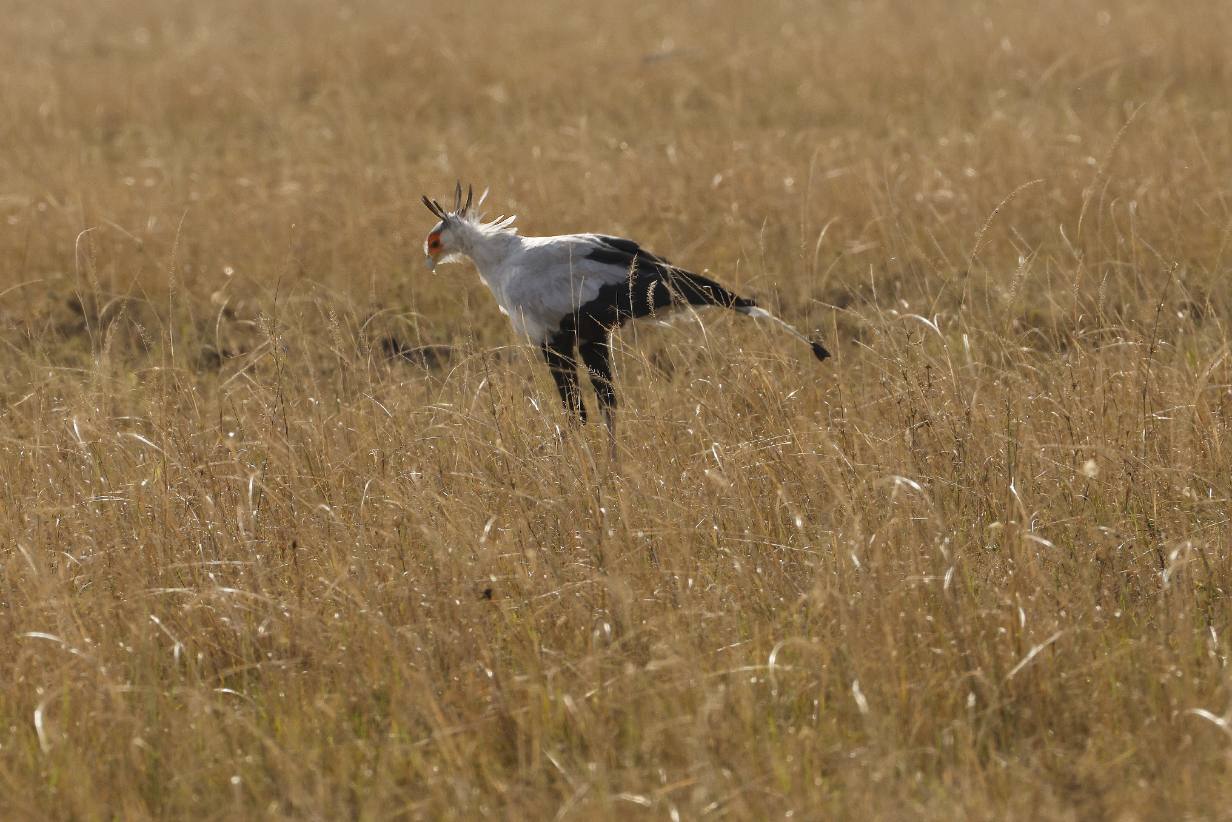
Secretary bird -- poor picture of an important bird ... which we never saw better than here
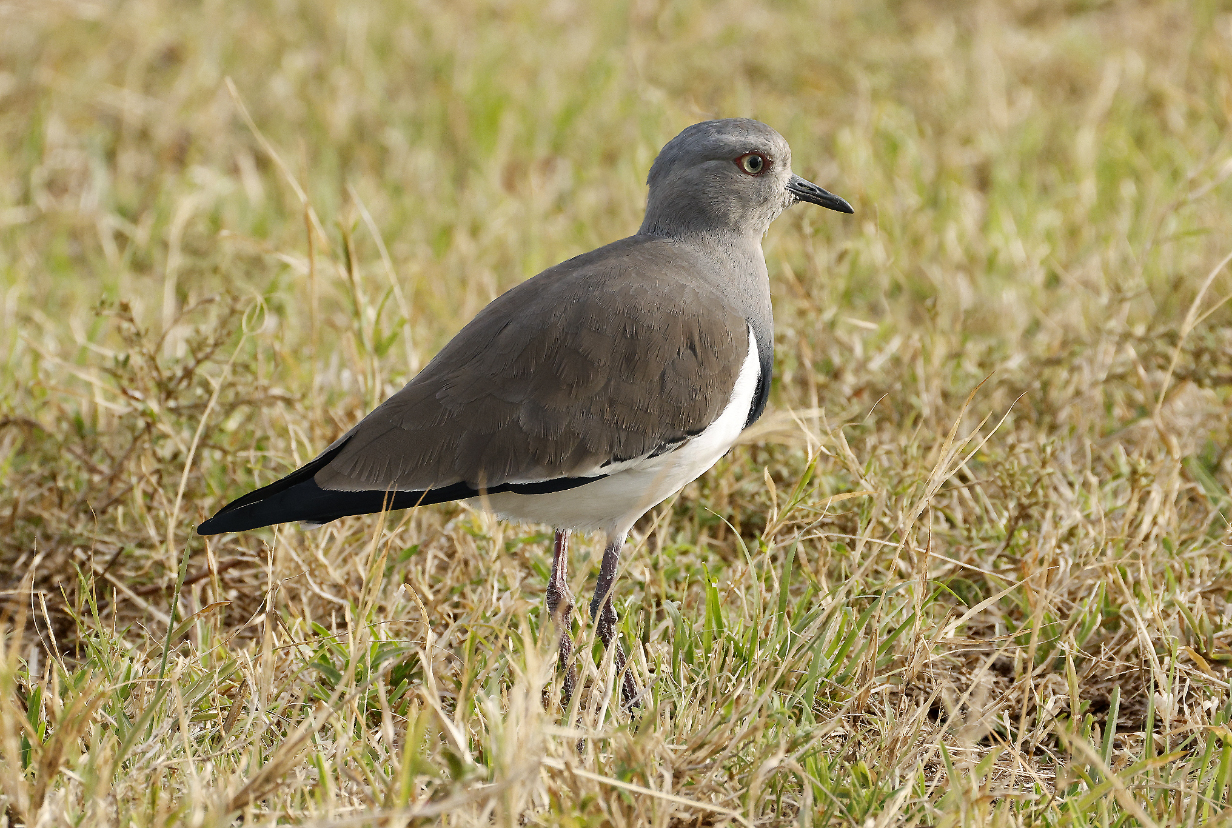
Black-winged lapwing (This is my life bird.)
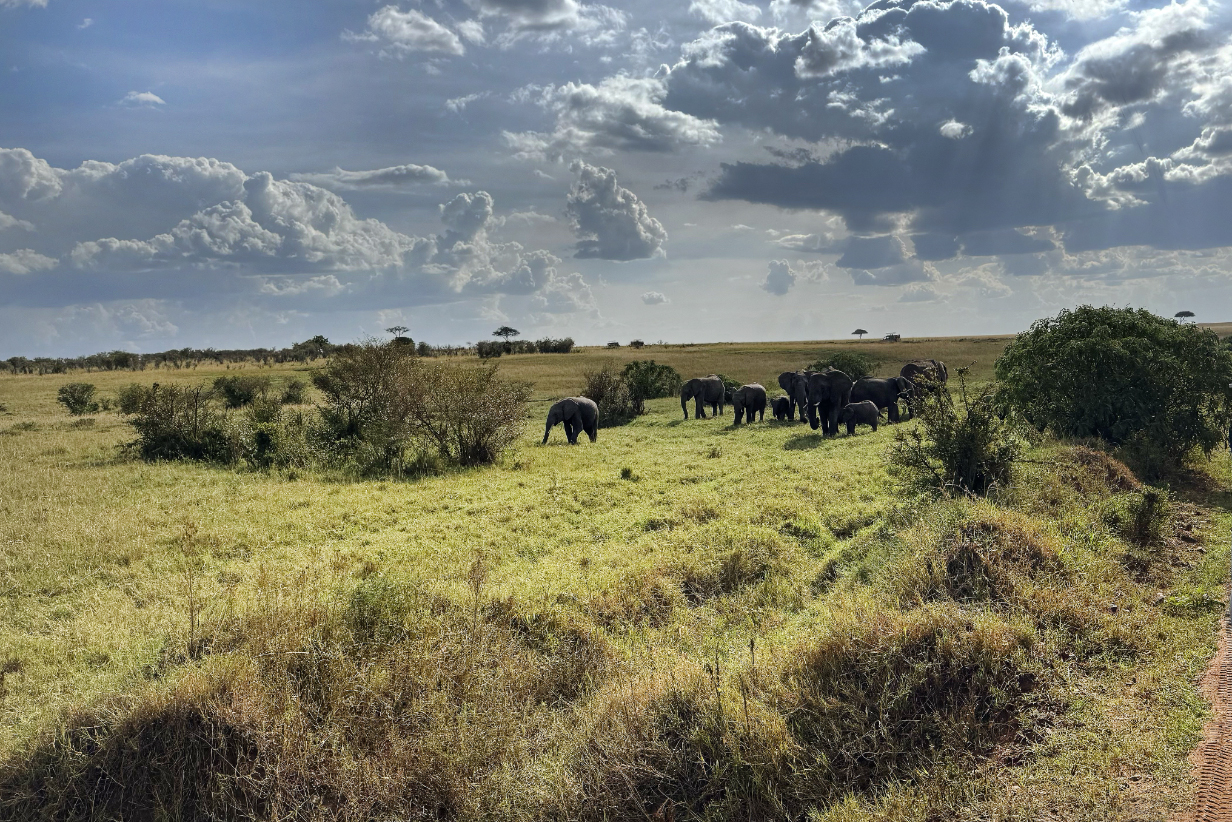
Once into Masai Mara Reserve, we started to see herds of mammals, especially zebra and wildebeest, antelope, giraffe, the occasional jackal or hyena or warthog, and -- here -- elephant. The richness of life in the Mara stokes our feelings that there are still wonderful places on this planet.
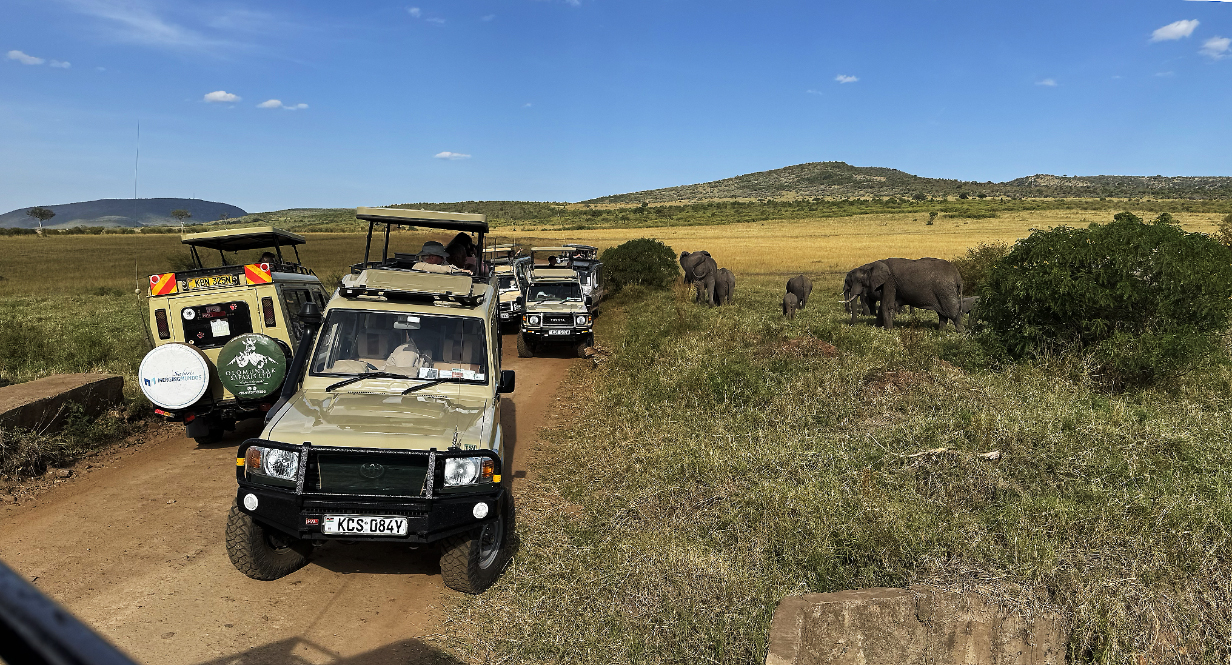
At the same time, "feeding frenzies" of safari vehicles crowding to see animals were surely the least charming aspect of touring the Mara. This is unavoidable; it happens in all such places that I have visited (e. g. in India, for tiger). The vehicles are useful in telling us from far away where interesting animals are trying to live their normal lives. Usually these are big cats. The crowding is obnoxious, and the behavior of aggressive drivers often "crosses the line" of civilized behavior. Sometimes by a lot! Still, a consequence is that the big cats have learned to ignore safari vehicles. It is shockingly how much people -- even very exposed people -- just don't exist as potential food in cats' eyes. But ... if you get out of your vehicle, you instantly turn into food. So rules are very strict, and people are not allowed out of vehicles except in very special circumstances where guides are able to check that nobody dangerous is near. All this means that, e. g., toilet stops have to be carefully managed and planned. Our guides were very sensitive to this problem and always handled it well. In this web site, I will avoid mentioning or illustrating crushes of safari vehicles. If you see pictures of interesting cats, you can assume that we were in a "pinball machine" of safari vehicles, trying to find good viewing spots without getting hit and without hitting anybody. Our driver-guide Chege was excellent at this while never sacrificing civilized behavior.

Late in the day as we approached our tent camp, we saw this resting cheetah -- my first ... and as it turned out, my best view.
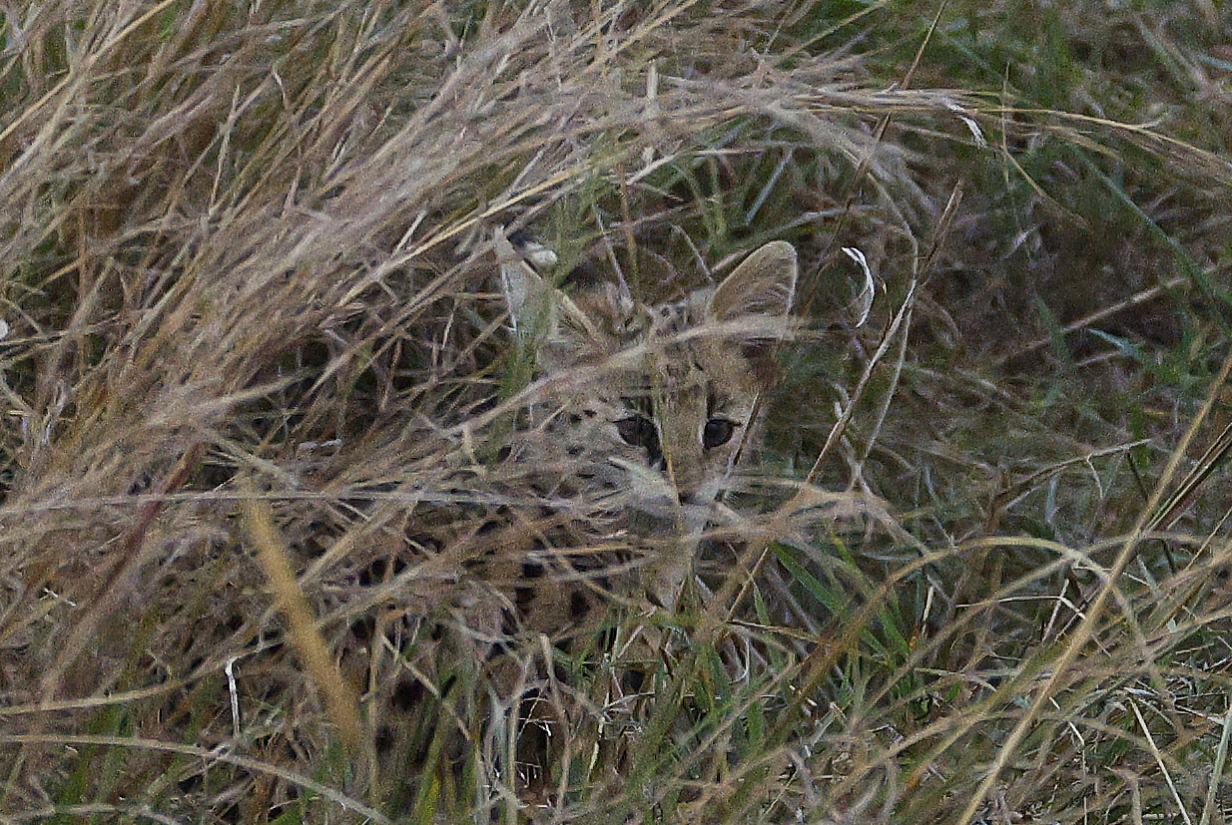
More spectacular good luck: We saw -- briefly and not well -- a Serval cat and kittens. Tomorrow, our first stop would be to come back to get better looks!
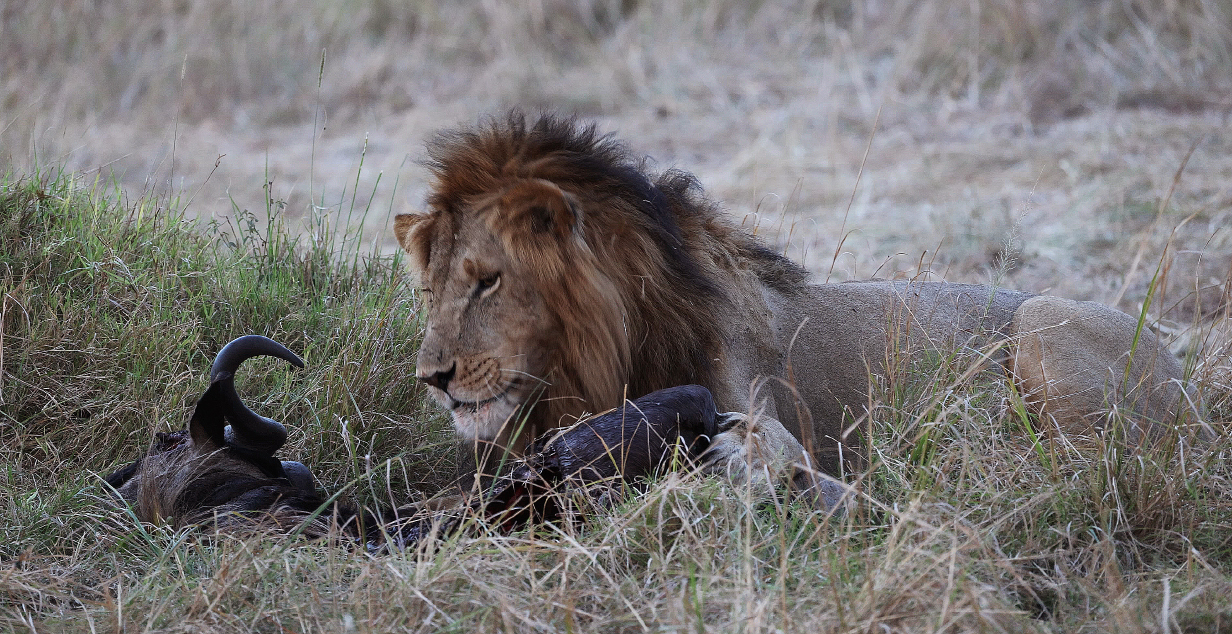
Already in deep twilight, we came upon a male lion -- one of a trio that dominate the region -- in relaxed enjoyment of a wildebeest kill (see this movie).
Soon after this, we got to our camp and moved into our tents. Most people had supper in the dining tent, but I went to bed ASAP after a long but good day.
August 11: Masai Mara National Reserve
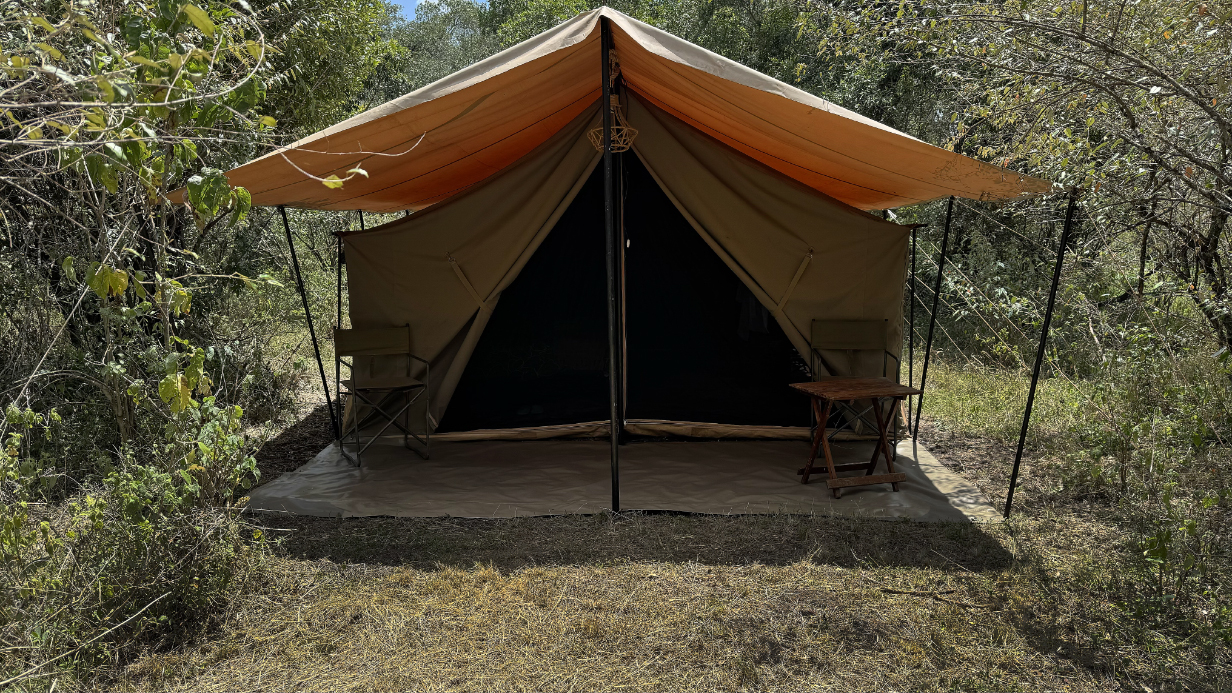
Out of sequence (this was taken around noon on August 12th), this was my tent in the Masai Mara camp.
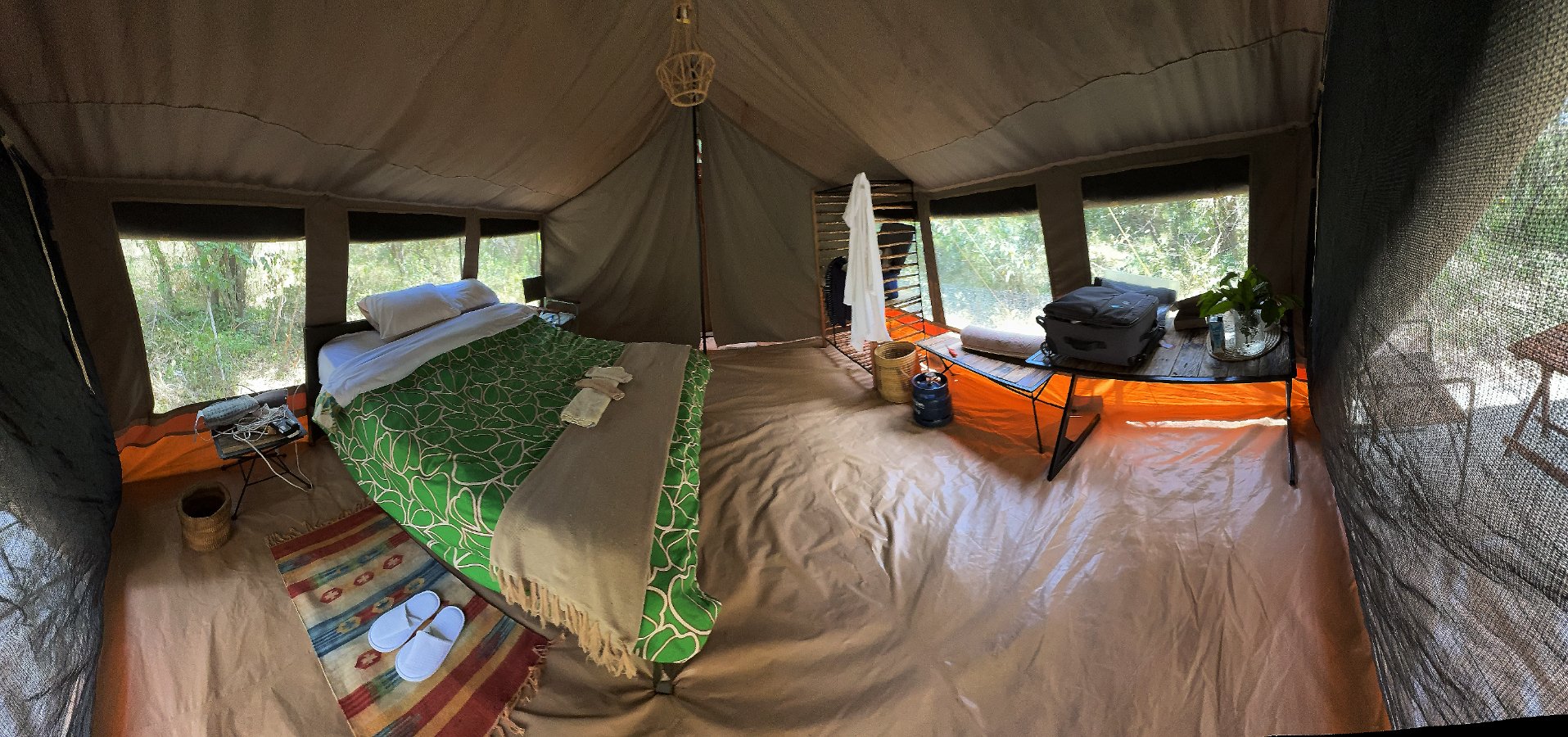
More-than-180-degree panorama of the inside of my tent. Like everything at camp, it was exceedingly well outfitted. Here, the screen walls are open for daytime air circulation. The tangle of wires at left provides electrical power 24 hours per day, arranged especially for me (thank you very much!) because I needed to operate heating pads at night to keep me warm enough. Electrical power also allowed me to charge camera batteries: In a typical day of this trip, I used up about 3 battery charges. I had 7 batteries with me to ensure that I never got into trouble, especally because, before the trip, I was not sure that I would have power every night. Going clockwise, next is my (I think: King-sized) bed with head raised to minimize stomach acid reflux. The curtained area at the back contains a sink at left, a shower in the center, and a toilet at right. To take a warm shower, it was necessary to request hot water about 1/2 hour in advance; this was then brought to a local tank that fed the shower. Farther to the right is a rack for hanging clothes; it was never this neat again, as the week progressed. During my first night, it was dangerously cold for me, with temperatures as low as ~ 54 degrees F. With my heating pads, I survived ... but this was risky. The camp staff were wonderfully helpful, and by the time this picture was taken, I had a small globular gas heater that burned all night and kept me essentially in my comfort zone. It is just next to the low table. Finally, farther to the right are my two suitcases. The floor is a canvas cover on the ground; it proved to be entirely adequate. During the nights, we often heard lions "coughing", sometimes very close, plausibly even within the small copse of trees that constituted our camp.
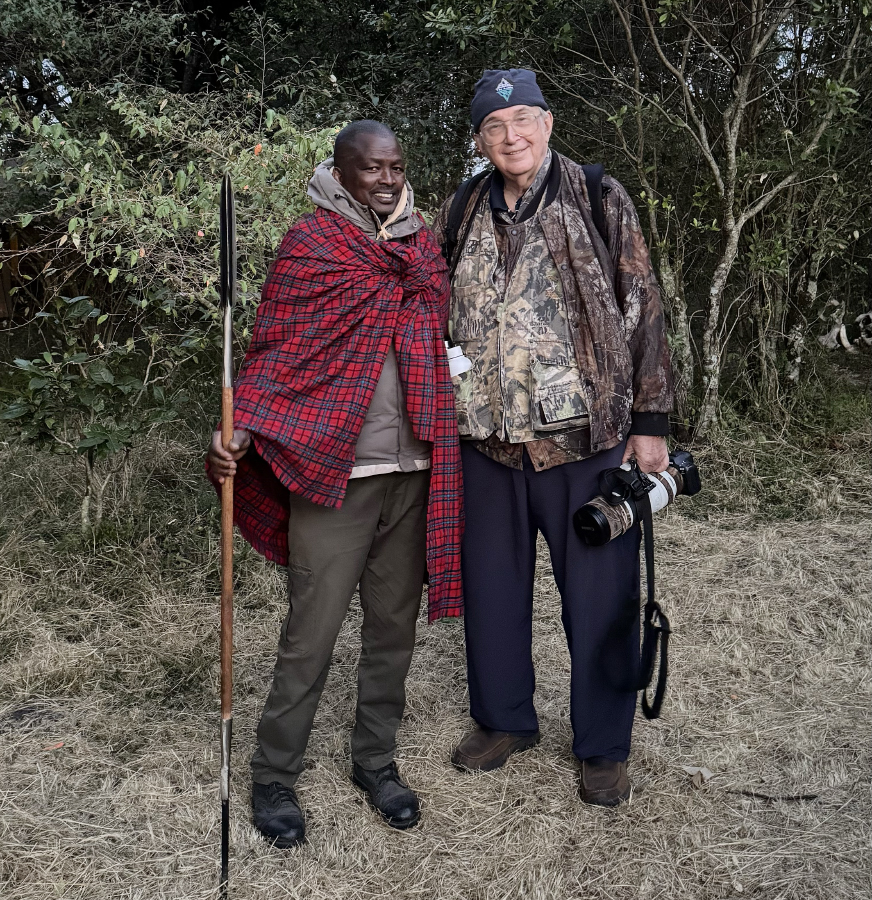
The night-time escort between our tents and the breakfast tent was Masai warrior Joshua Masaiibi. This picture was taken on the morning of August 16, just before we left camp for the long drive to Lake Baringo.
The daily routine was to get up at 4:45 AM and be escorted to breakfast by a spear-armed Masai warrior at 5:30 AM. After breakfast, we headed out around 6 AM and toured -- on gravel roads, deeply rutted tracks, and when necessary, cross-country -- until lunch time. Camp "breakfast" was little more than coffee, so we had an early morning stop somewhere for a more detailed field breakfast. Lunch was back in camp, at an airy table under the trees. We then had a 1-2-hour "siesta" during which it was essentially always too hot to stand our tents. Some people slept on their tent's floor. I usually relaxed in a lounge tent with comfortable couches. Surprisingly, we had pretty good internet, and so I had lots of time to stay in good contact with Mary, back home in Austin. In mid-afternoon, we then headed out to tour again, once mid-day high temperatures had dropped. Usually, we came back to camp for a dinner in the dining tent; on several days, we had an evening stop on a hill to immerse ourselves in the immensity of the Masai Mara and enjoy a spectacularly scenic sunset. Service at the camp was always superb. The staff were the nicest and most eagerly helpful people that I have met in any country that I have visited. And it must be said: The food at the camp was the best that we had in the whole trip -- much better, e. g., than at the supposedly luxurious Hotel Ole Sereni in Nairobi.
Staying at this tent camp was a last-minute, hurried solution to a problem raised when our pre-planned and long-ago-booked lodge ran into legal trouble and could not accept guests. Lodges in Kenya are typically booked 2 years in advance, so no "backup" lodge accommodation was remotely feasible. VENT had to resort to emergency measures to find a tent camp company that could set up a tent camp where there was NOTHING just a few days before. This was done marvellously well. The camp functioned smoothly, with superb service. In fact, we were much closer to nature as a result. On August 13, we spent the morning birding in the forest around the camp; this was one of the most productive days of the trip. So as it turns out,VENT was surely thrown into an unpleasant panic, but we birders were lucky that we ended up in a tent camp, not at Keekorok Lodge.
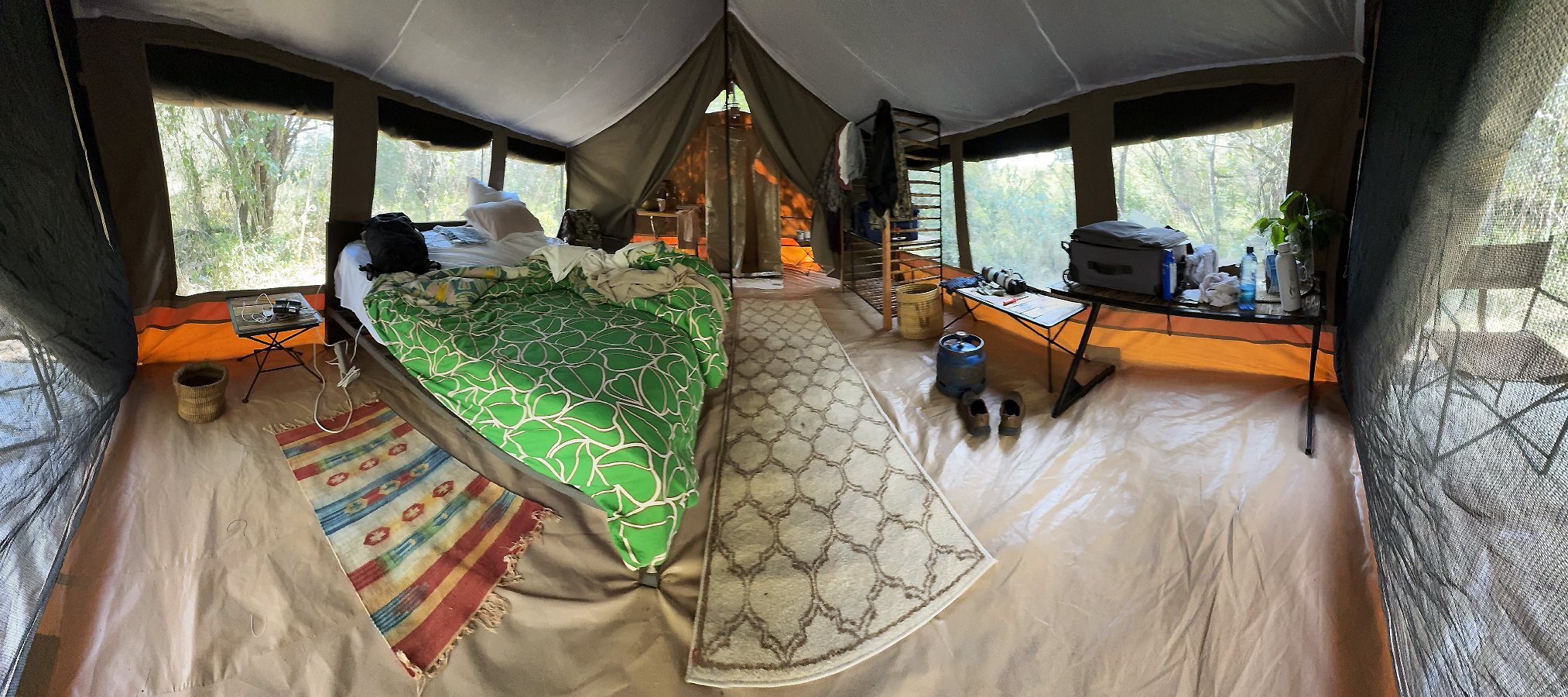
This is another ~200-degree panorama of my tent, looking more lived-in on August 15, our 6th and last day at Masai Mara. From left to right: two camera batteries are charging; the bed is set up for sleeping but also has a backpack thrown on it; the bathroom area is now open with sink visible at left, shower still curtained, and toilet area at right; the clothes rack is now well in use; the low table at right has my camera and orange lighter for the black gas heater in front of the table; and the suitcase table prominently features bottles of drinking water. We had to drink A LOT of water in the hot, dry climate of the Mara.
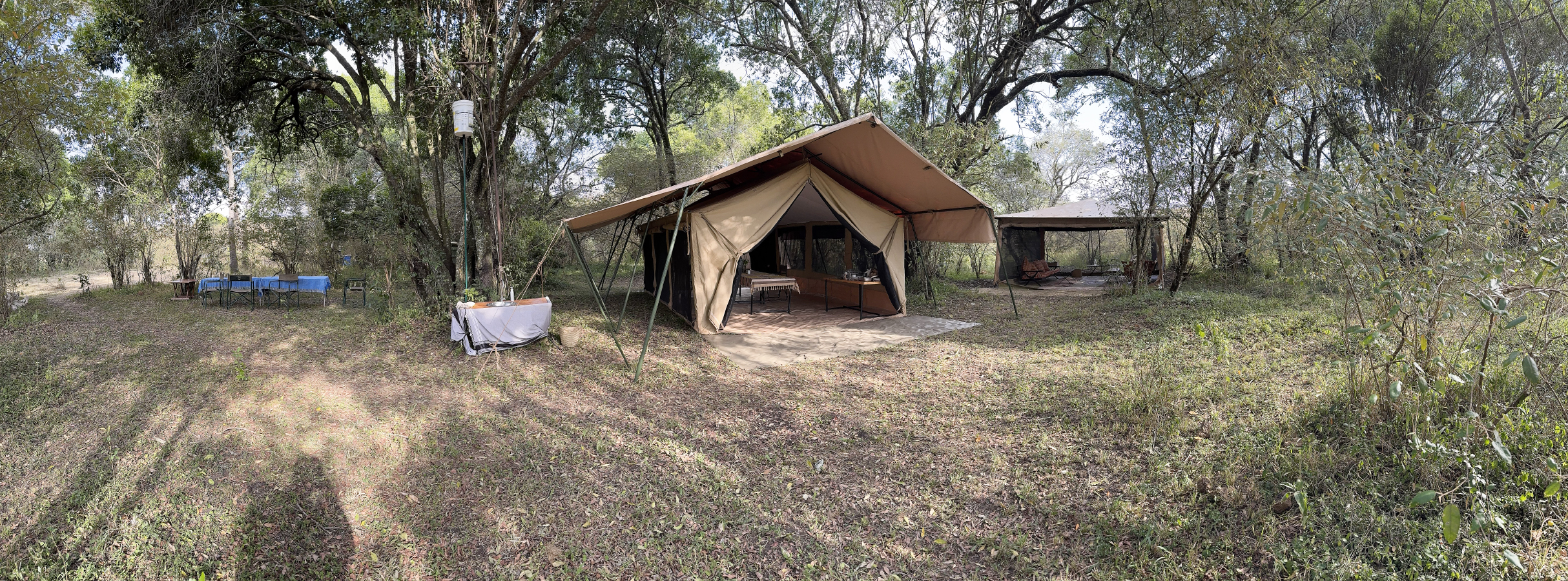
Panorama of the commons area of the camp. Our vehicle was generally parked out of sight at left, and other people's tents are out of sight even more to the left. Our lunch table (with blue cover) was generally moved a bit forward toward the photographer. The main tent is the breakfast and dinner tent; I went to all the breakfast snacks but skipped dinner and went to bed early on every evening except the last one. With a generous field breakfast and a full and excellent lunch, getting a bit more sleep was a lot more important to me than a third substantial meal. At right in the distance is the lounge tent where I spent afternoon siestas. All very comfortable. All very well managed.
This morning after 5:30 AM coffee, we cruised the Mara, heading first for the Serval cat and kittens that we glimpsed yesterday. As on almost all days, we were told and I know essentially nothing about the directions that we traveled or any special sites or landmarks that were our target. When I know something, this web site will say so. Often, we exploited hints when clusters of vehicles localized big game ... but big cats were not our main targets, so this happened only a few times per day. It is a big advantage to be birders: We were alone most of the time, enjoying the freedom of a vast grassland plain with no sign of humans -- no fences, no buildings, and only occasional vehicles off in the distance. I also record here but not in following days our field breakfast, which we enjoyed after the first few hours of touring.
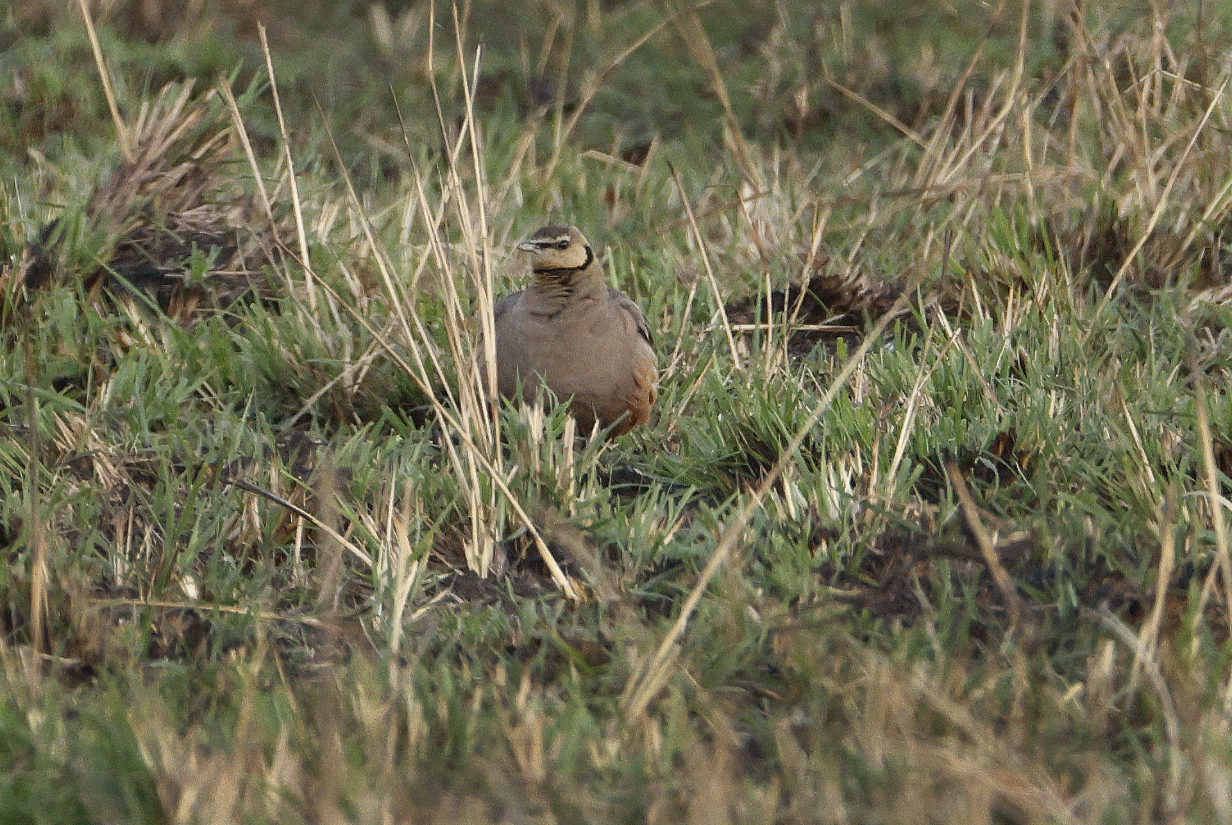
Yellow-throated sandgrouse (This is my life bird, not super well seen.)
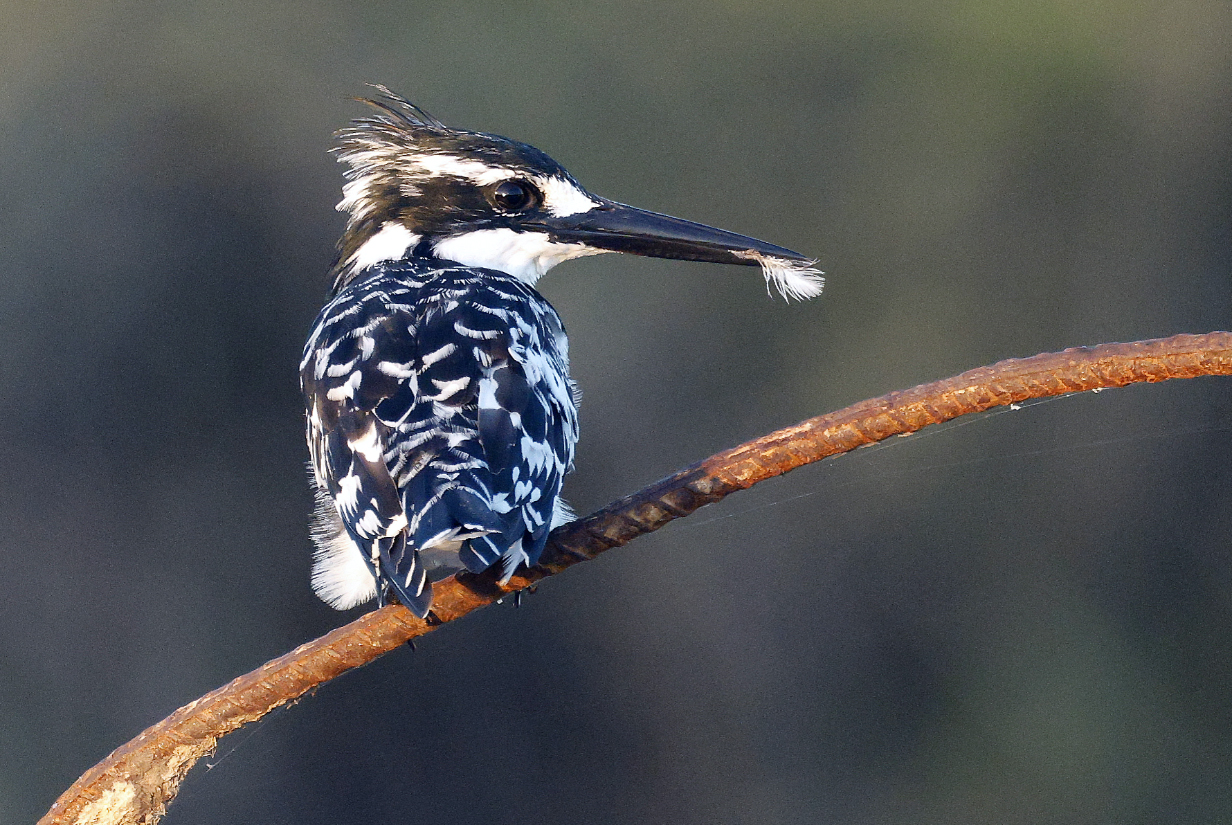
Pied kingfisher in early-morning sunlight, color-corrected as well as possible (Looks like his last encounter was not with a fish. A rival, perhaps? Or just preening.)
Serval Cat and Kittens
Last night, we had the extraordinary good luck to see an adult Serval cat with playful kittens. This morning, we went back for better looks.
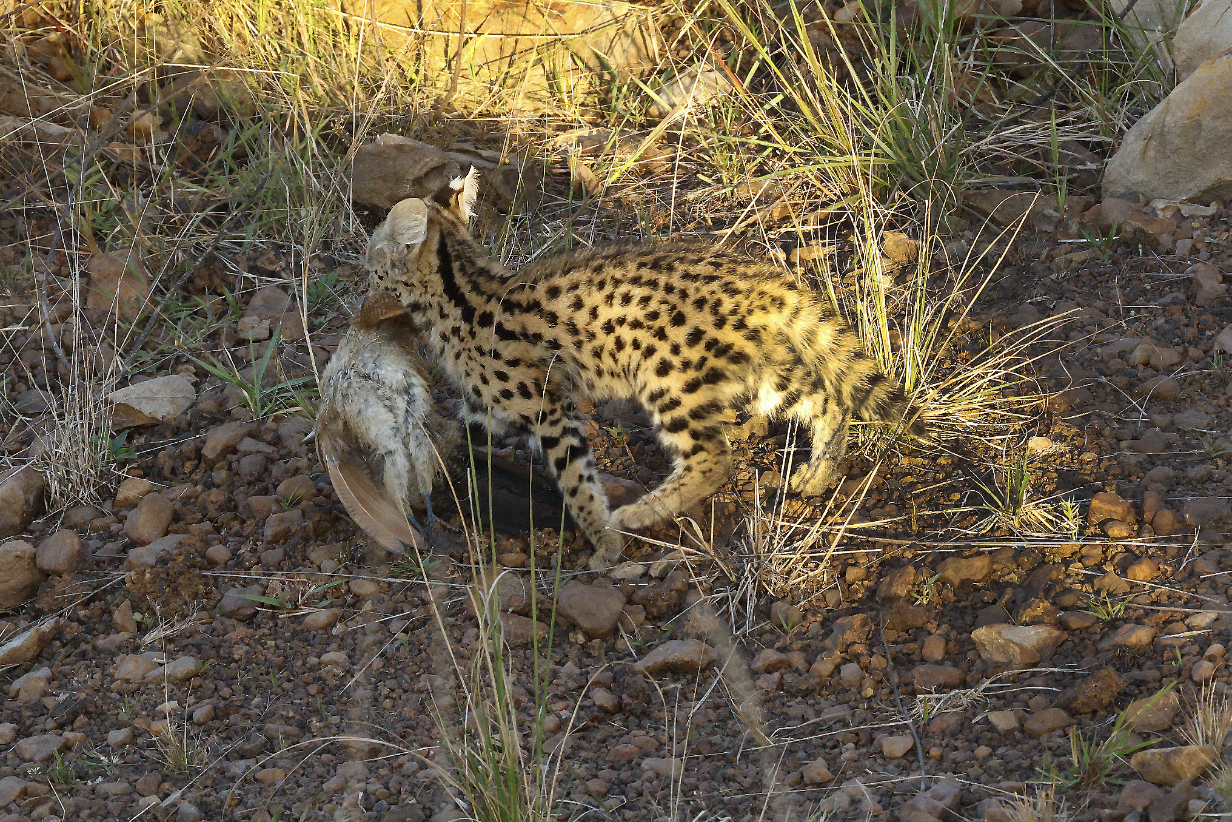
Serval cat with sandgrouse prey
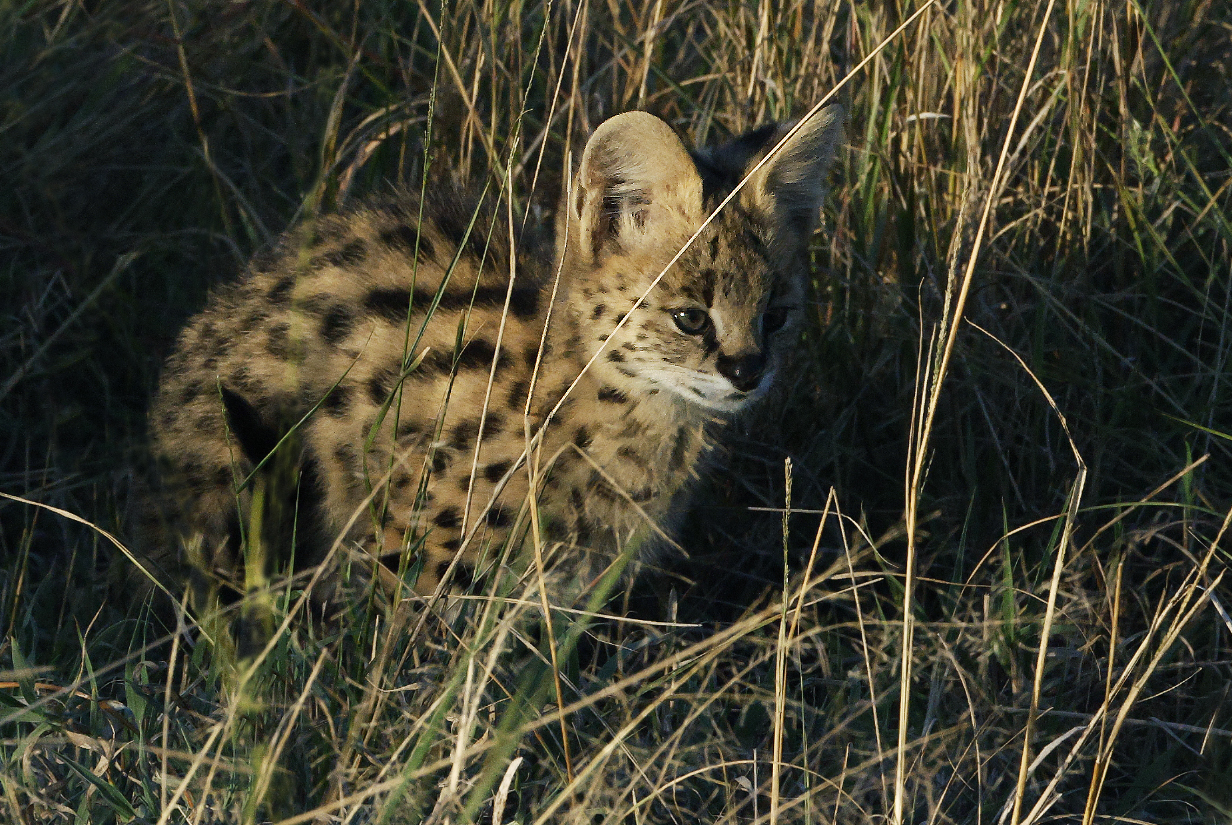
Serval kitten
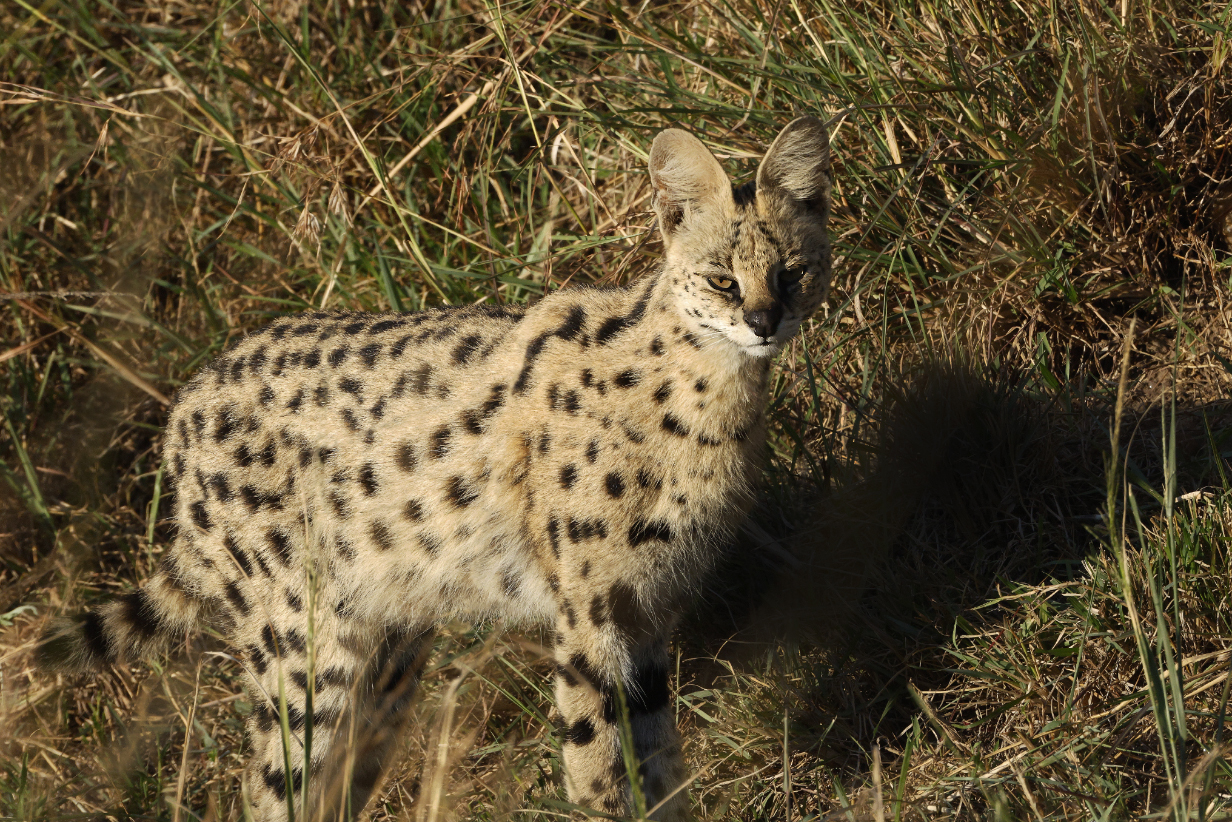
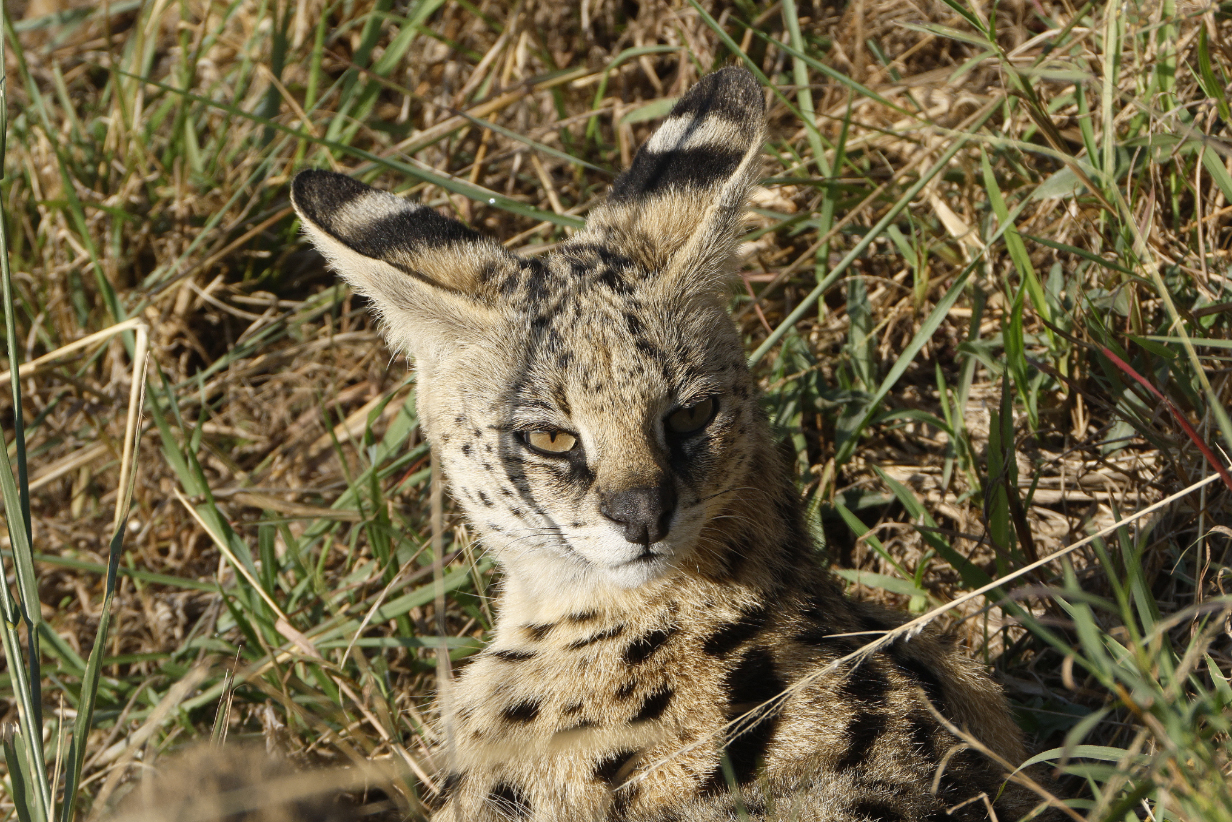
Adult serval mother of the kittens (They were at just the stage when they already ate meat but still suckled milk. We saw them do both.)
End of Serval Cat Interlude
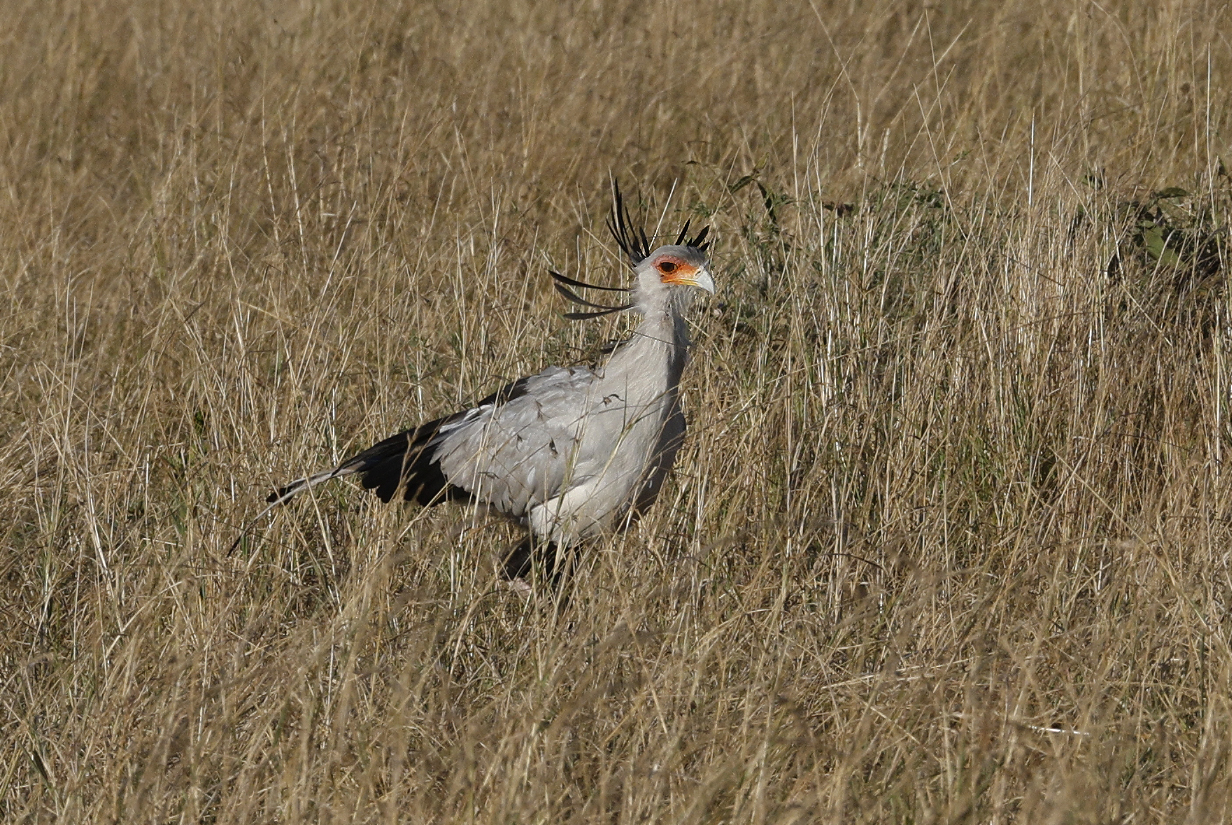
Secretary bird -- again did not come close
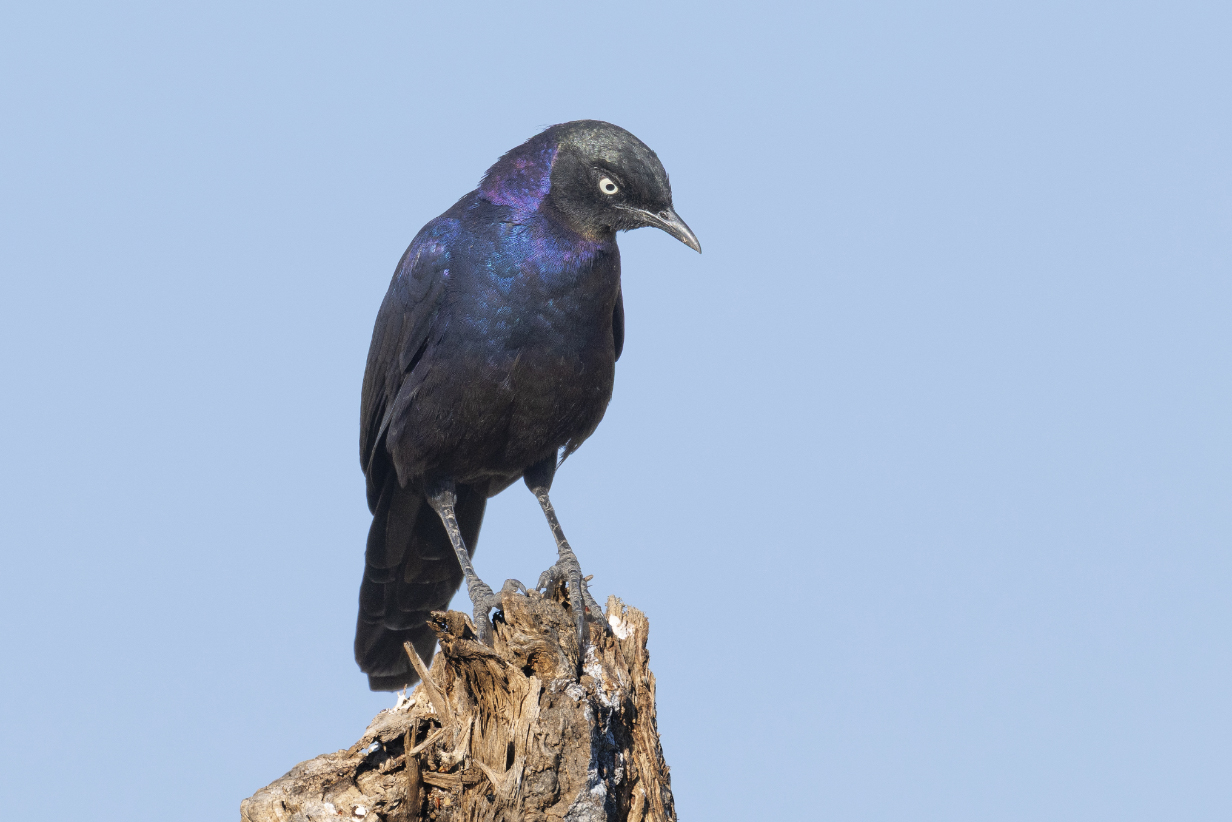
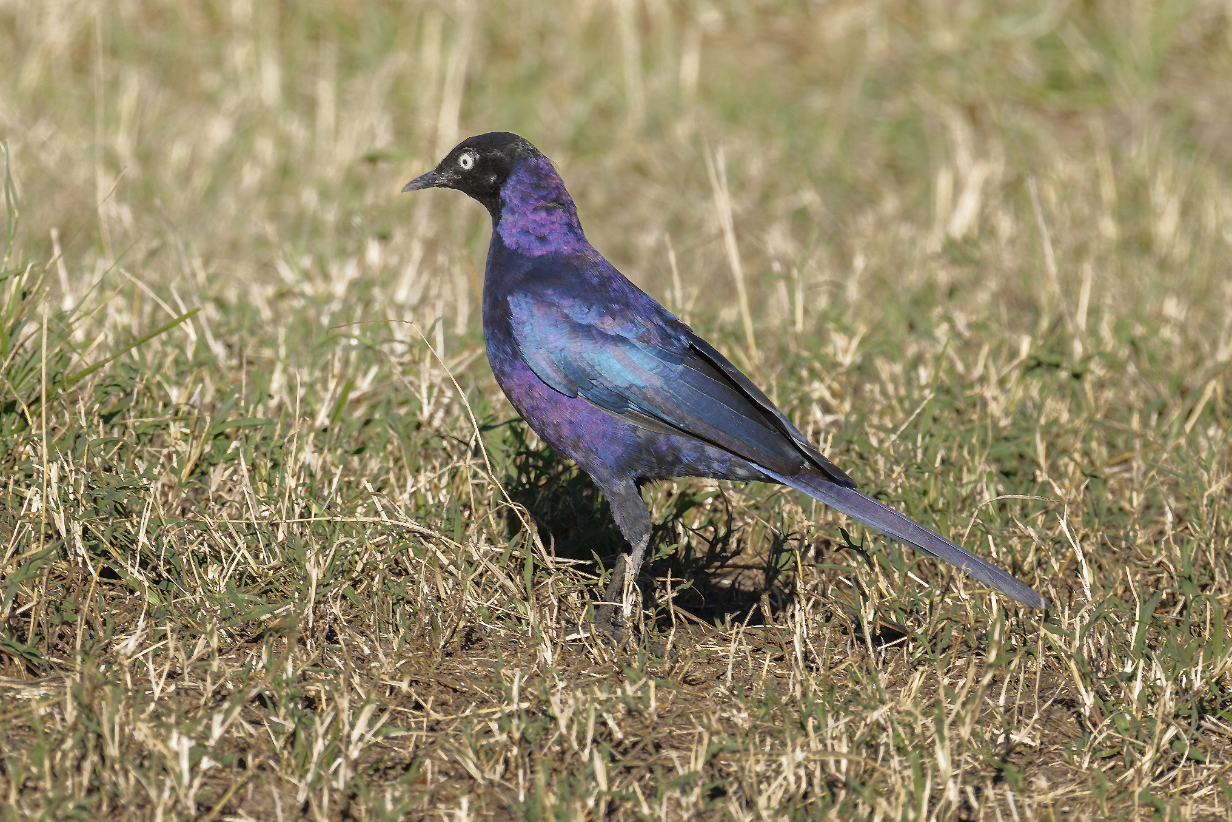
Ruppell's starling (This is my life bird.)
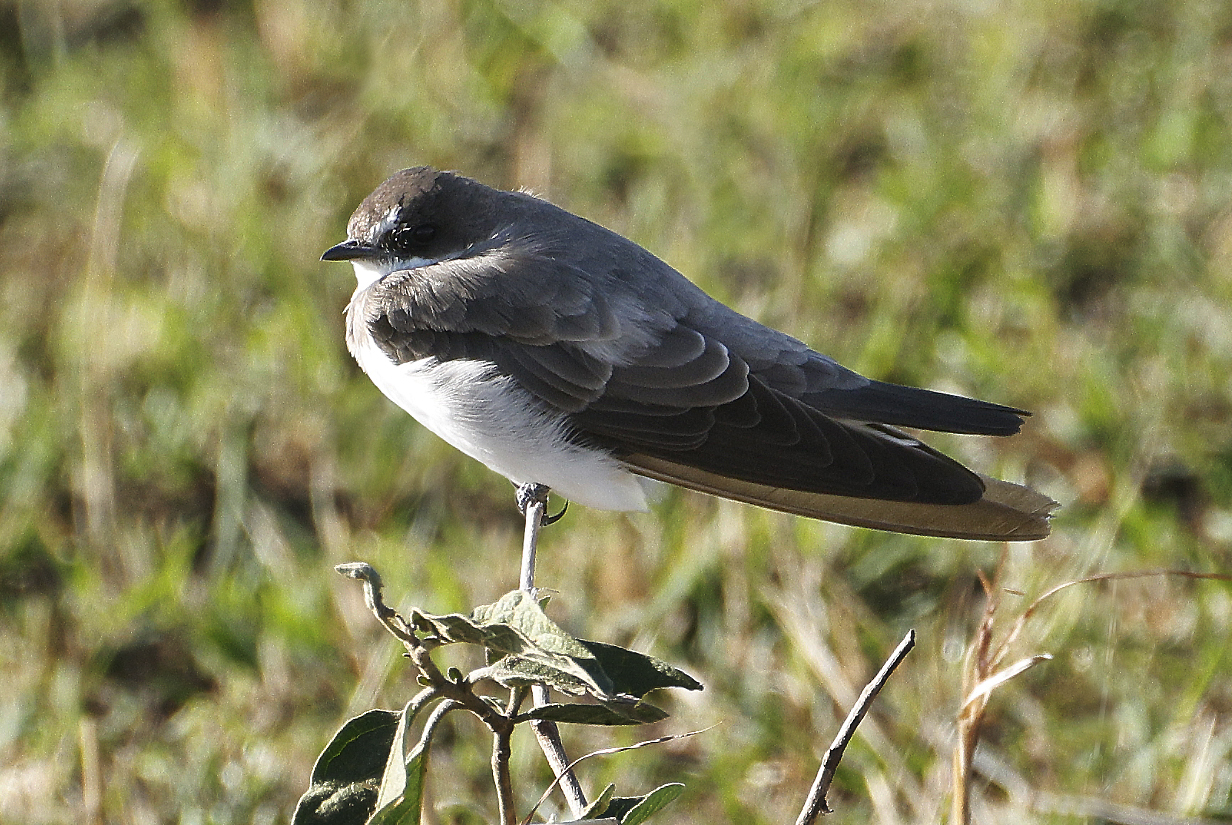
Banded martin (This is my life bird. The white mark above the eye shows well, but at this angle, it is hard to see the dark band across the upper chest.)
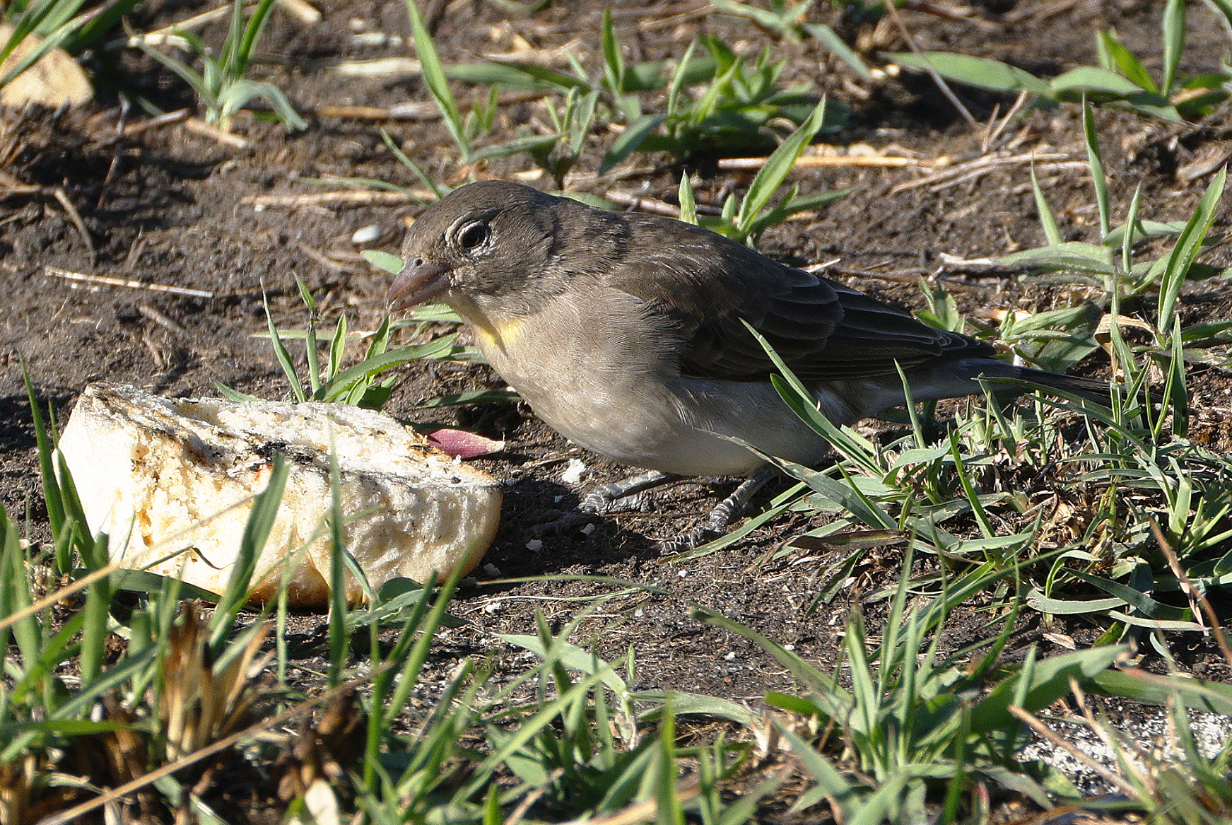
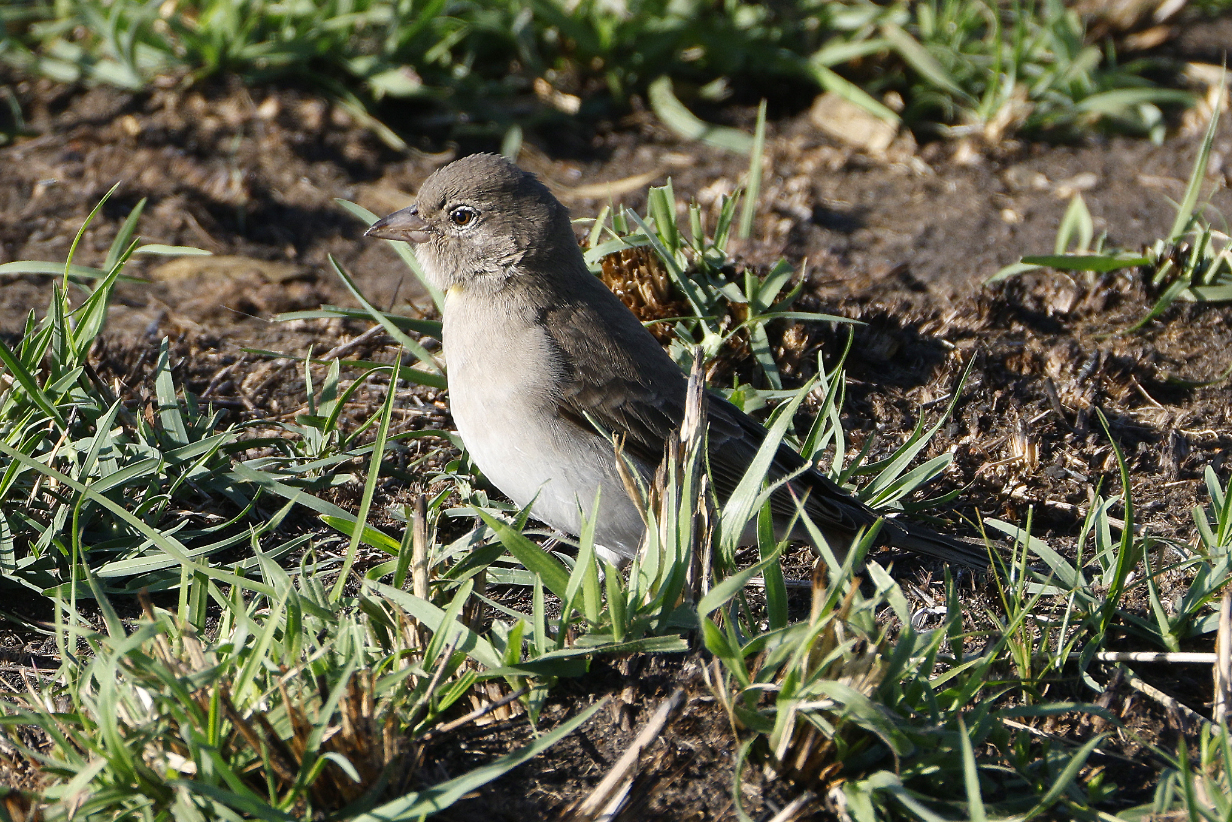
Yellow-spotted bush sparrow (This is my life bird.)
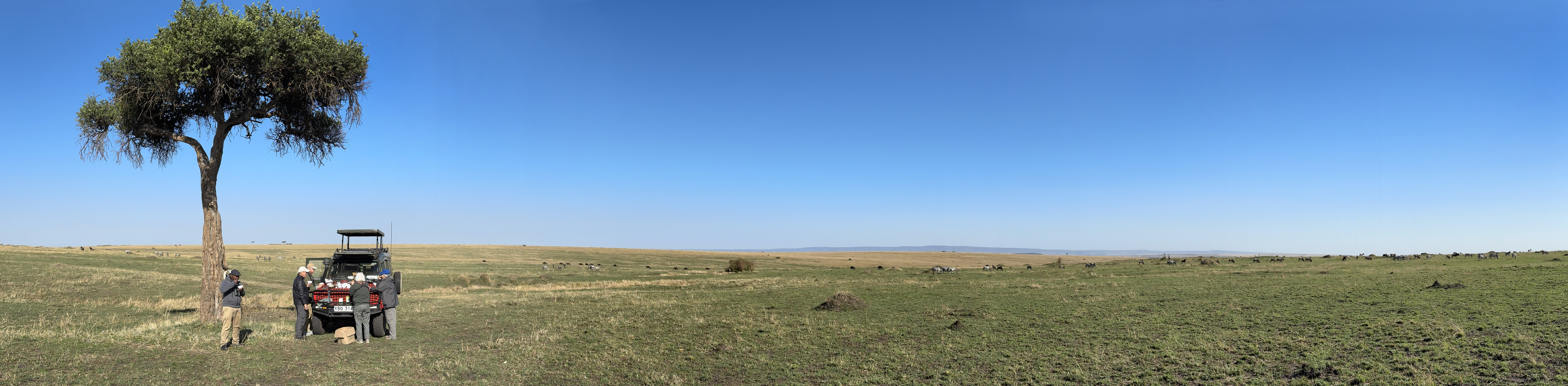
At 9 AM, we had a satisfyingly rich field breakfast. Prescription for the Mara: Find a hill top with decorative tree and grass that is so short and bushless that you can confidenly see that no lion, leopard, cheetah, buffalo, elephant, or anything else that's dangerous lurks nearby. This gives you a wonderfully visceral feel for the vastness of the Mara and the special delight in seeing no signs of humanity -- no fences, no buildings, and normally no other vehicles. Then break out the food, which was always plentiful enough and varied enough to satisfy. Scroll right to see this 180-degree panorama.
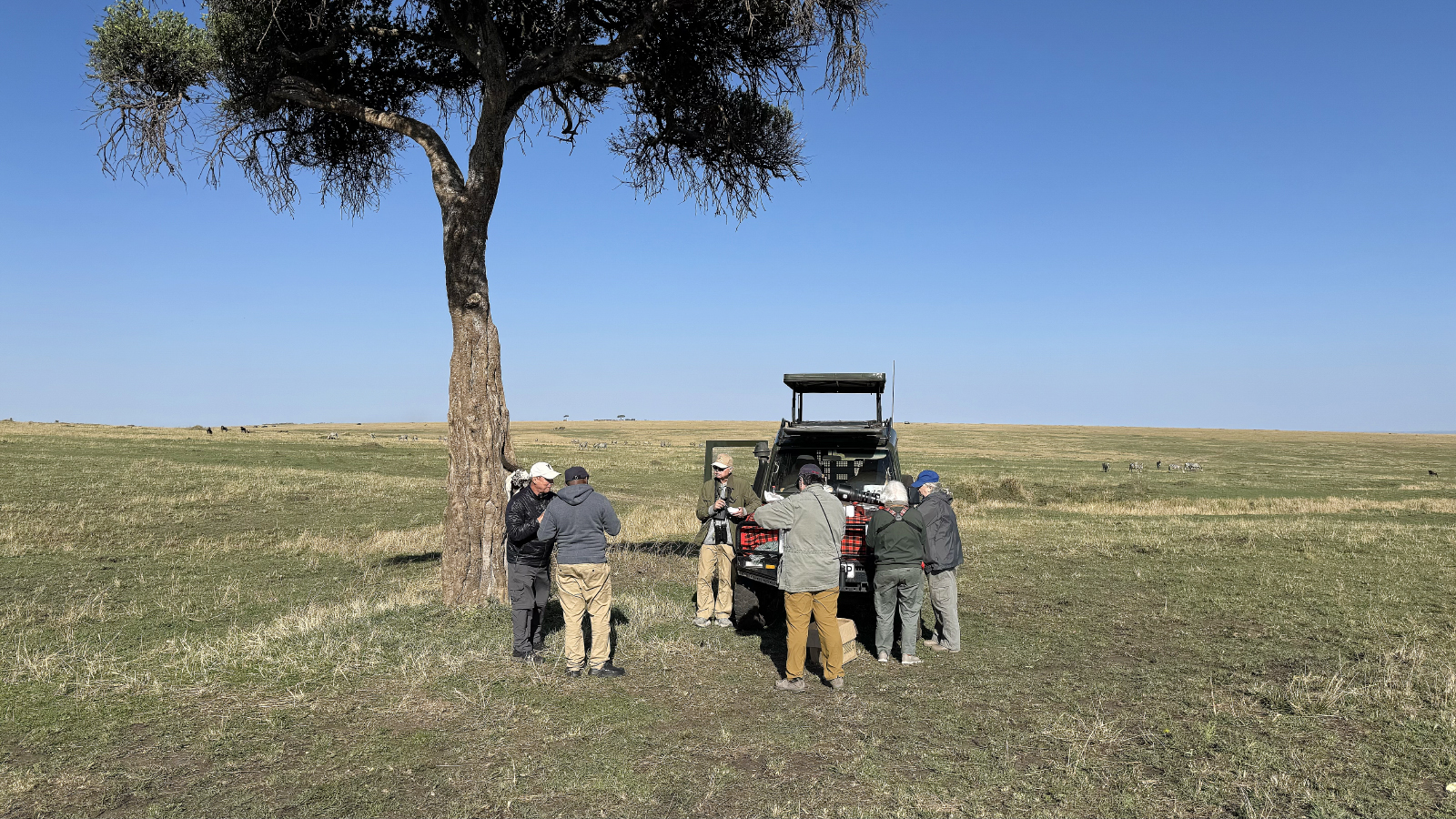
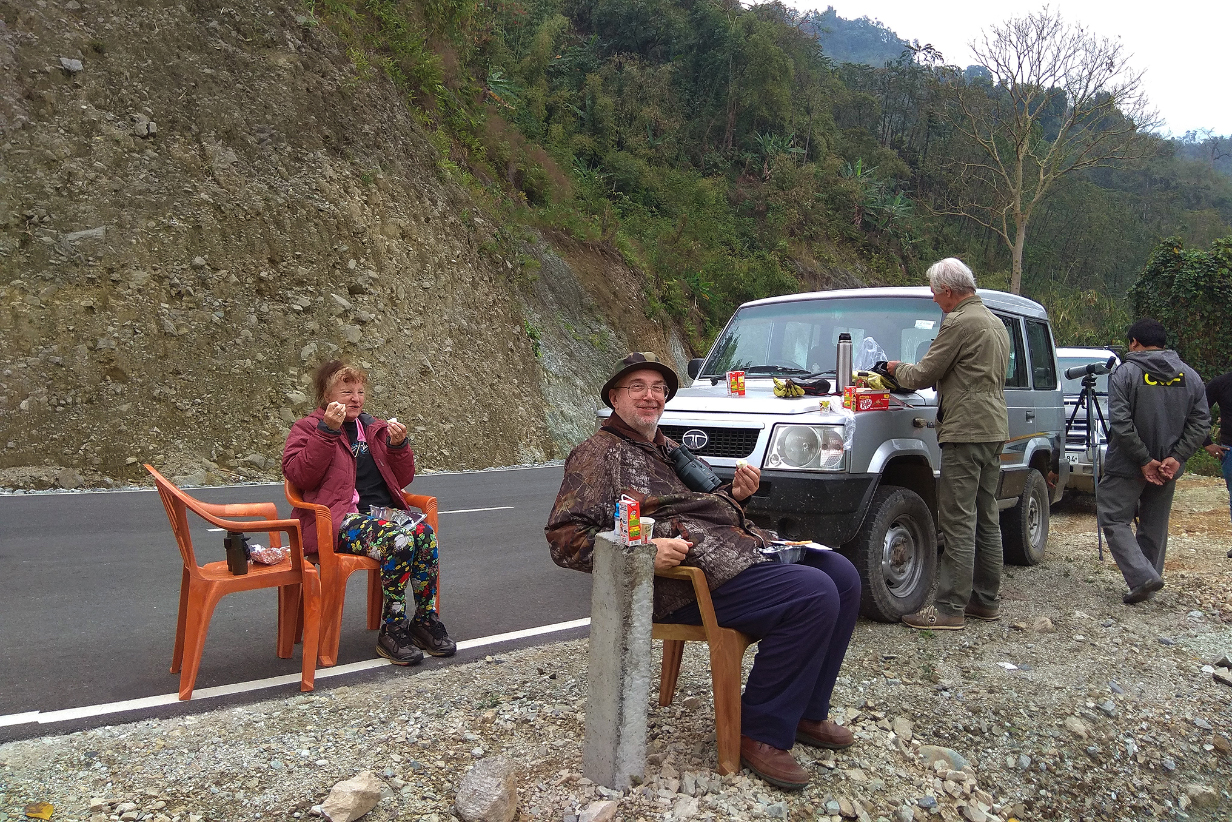
Birding essentially always starts early, often still in the dark, usually before hotels serve breakfast. Also, a full morning is long -- it lasts until the day gets so hot that sightings are not cost-effective. For these reasons among others, a mid-morning break for a field breakfast is common and welcome during birding trips. Here is one from a 2018 trip to India. In Kenya, what was missing and would have been appreciated -- at least by me -- was chairs.
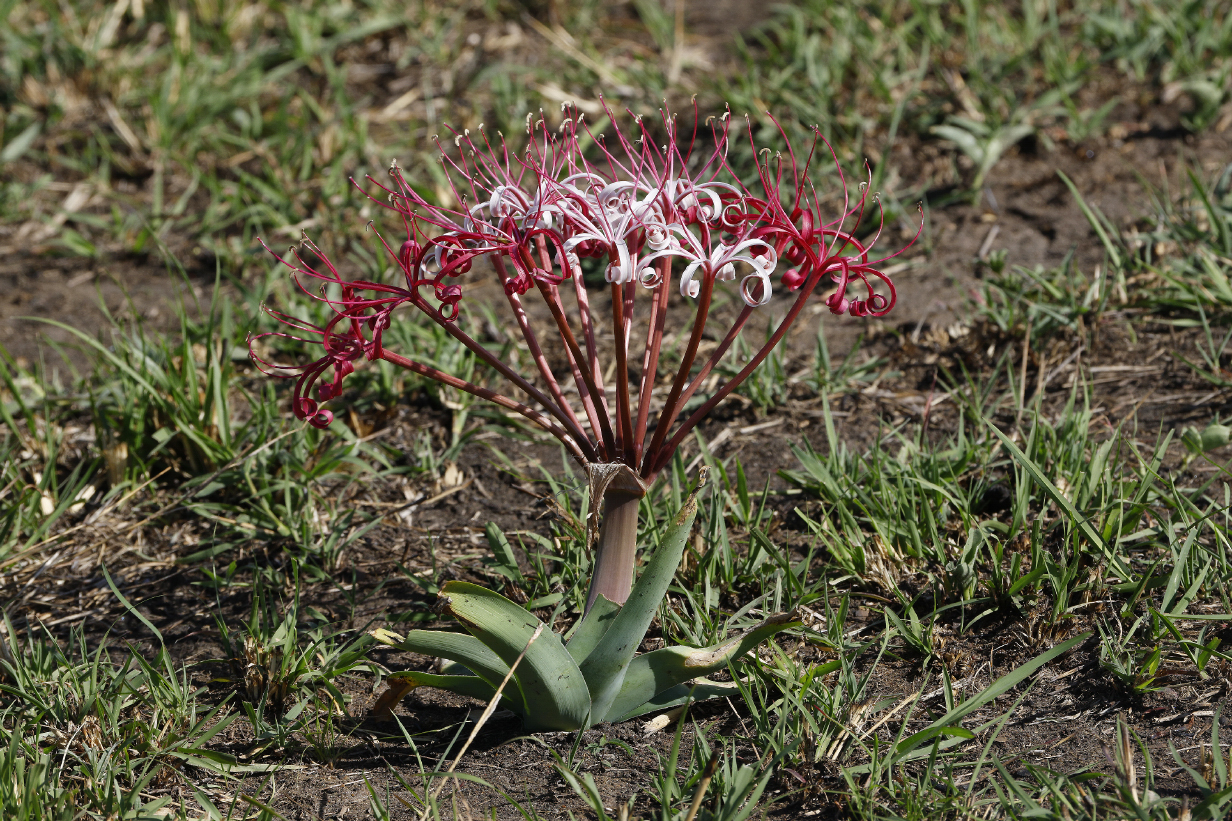
Startling splash of color: Ammocharis lily (Ammocharis coranica), seen several times
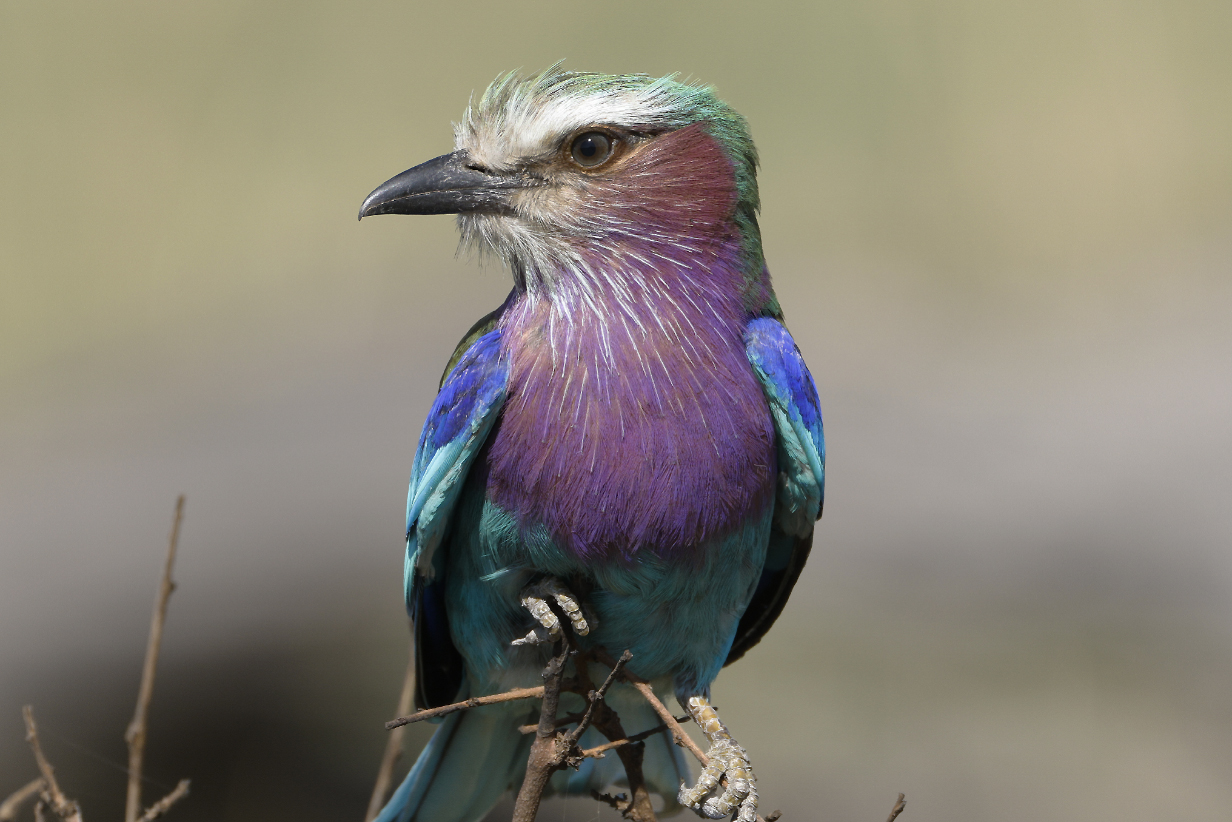
Lilac-breasted roller
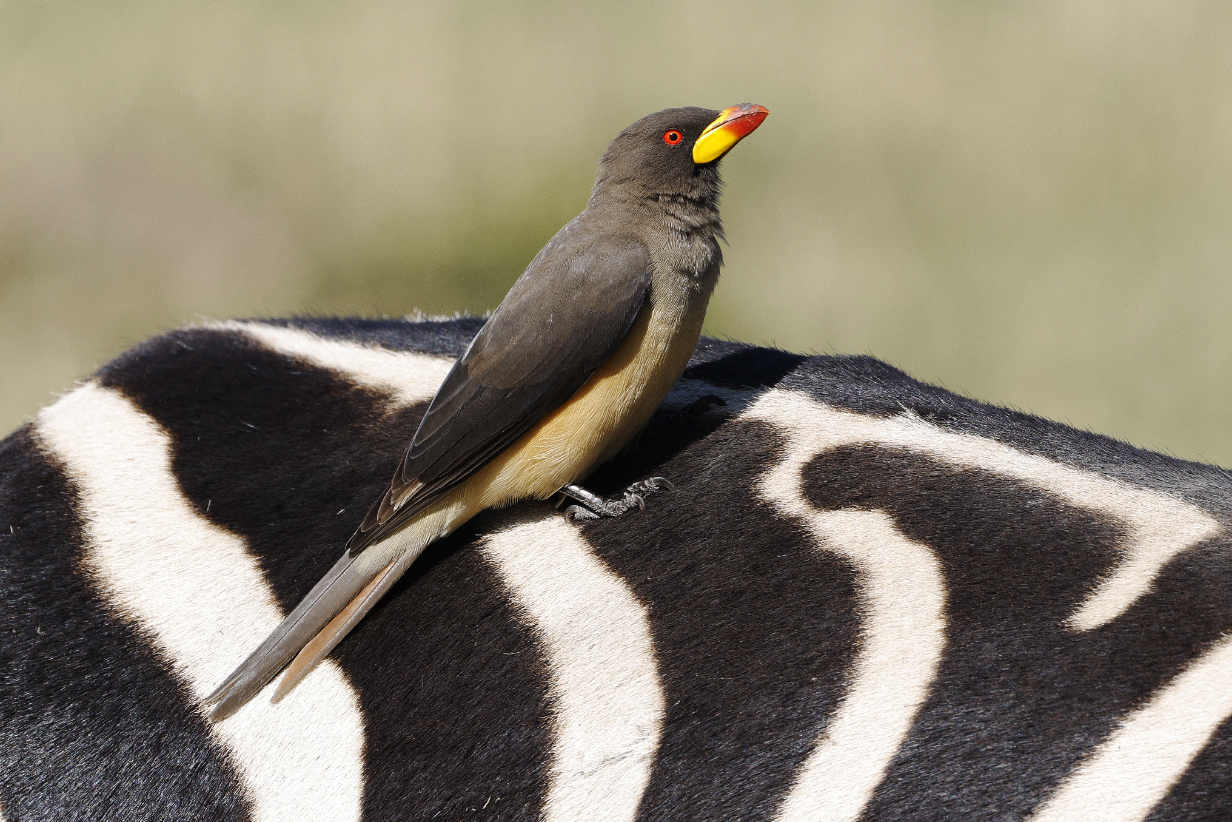
Yellow-billed oxpecker in a zebra field
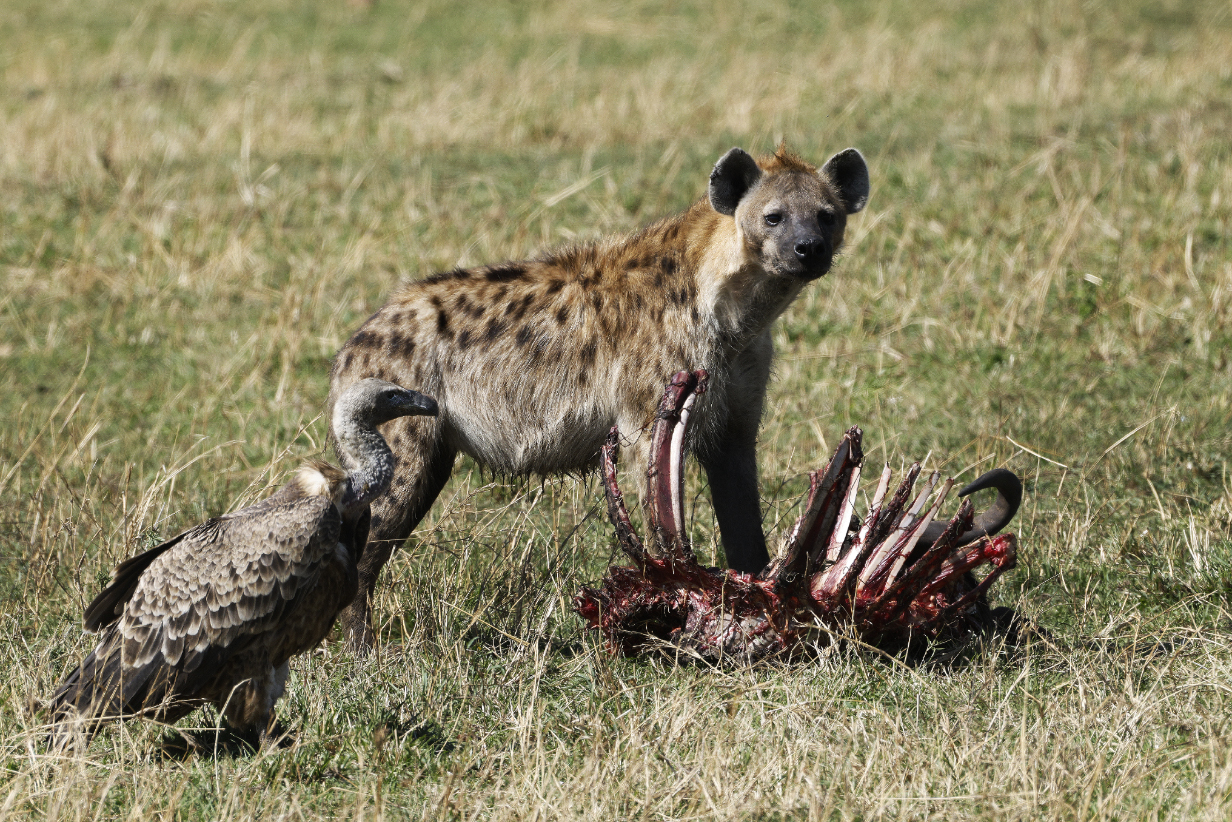
Hyena, White-backed vulture and wildebeest carcass -- a typical sight in the Mara
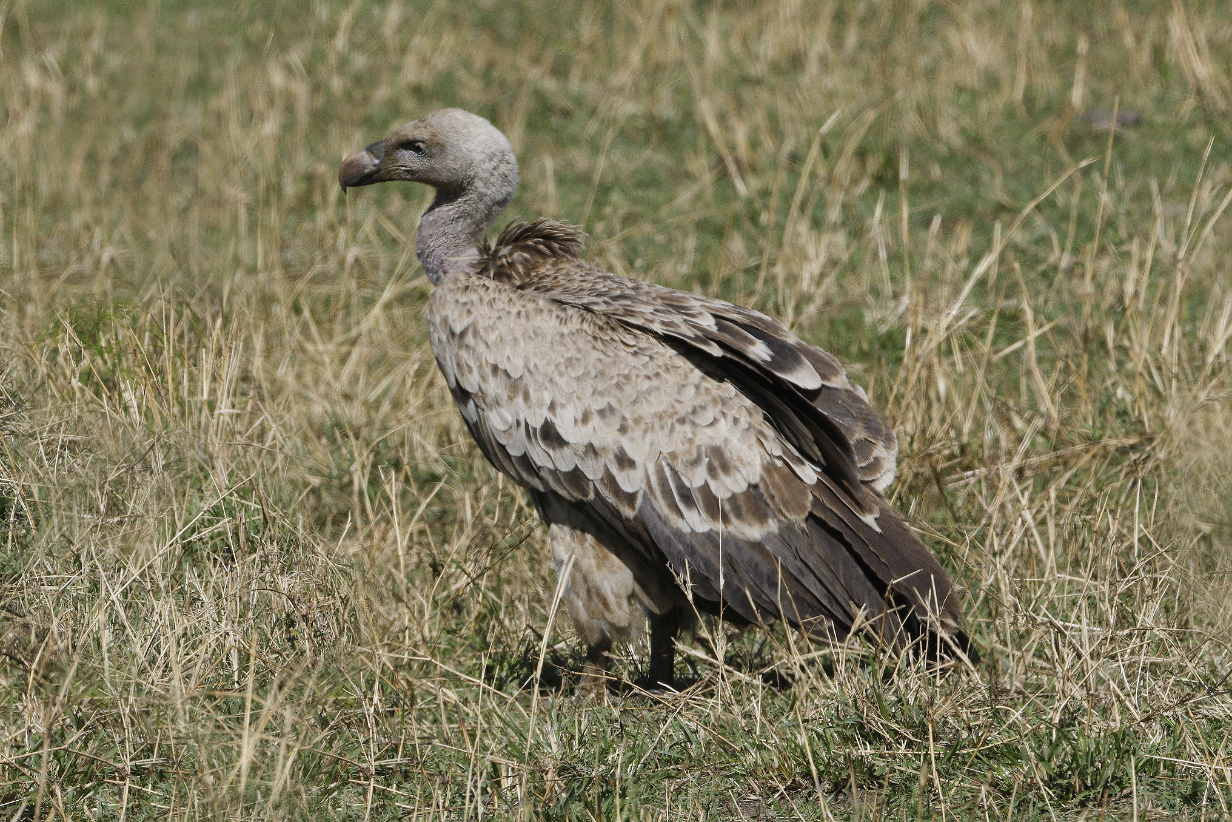
Rüppell's Griffon (Gyps rueppelli) (In the melee of 3 species of vultures, it was hard at the time to know who I saw in what order. This is the earliest clear picture that I got of Rüppell's Griffon, so I take this as my life bird. Note the "scalloped"-looking wings -- dark feathers outlined in light color. And the lighter, not all-black bill.)
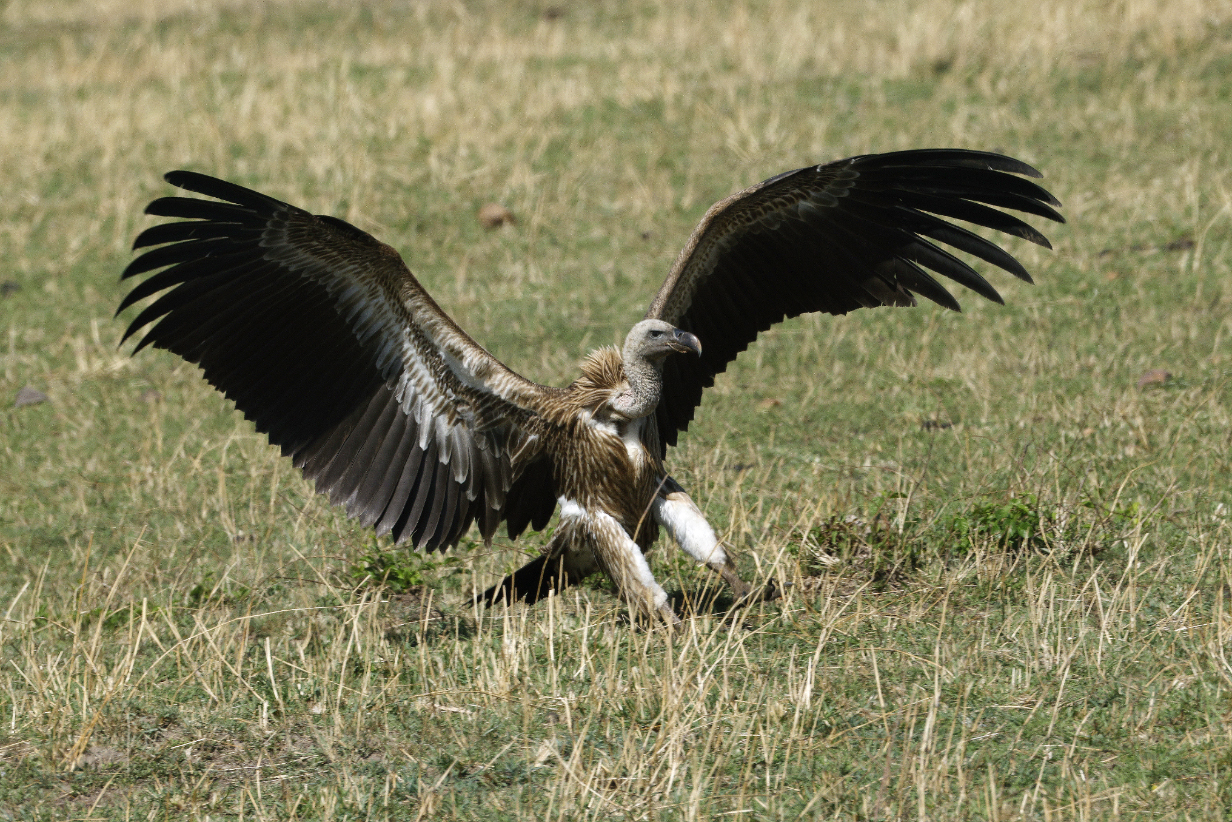
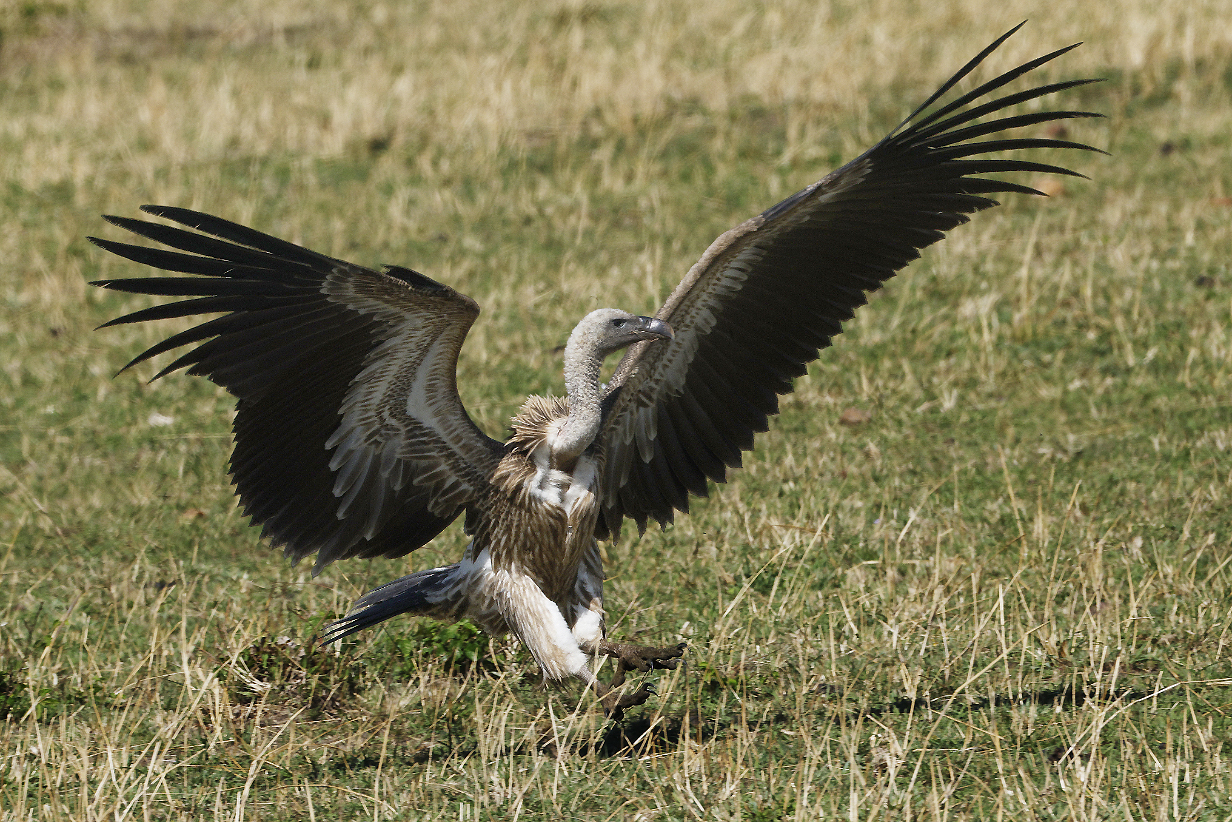
White-backed vulture (Based on extensive white in the underwings. Please email me if I am wrong -- kormendy at astro dot as dot utexas dot edu . Thank you!)
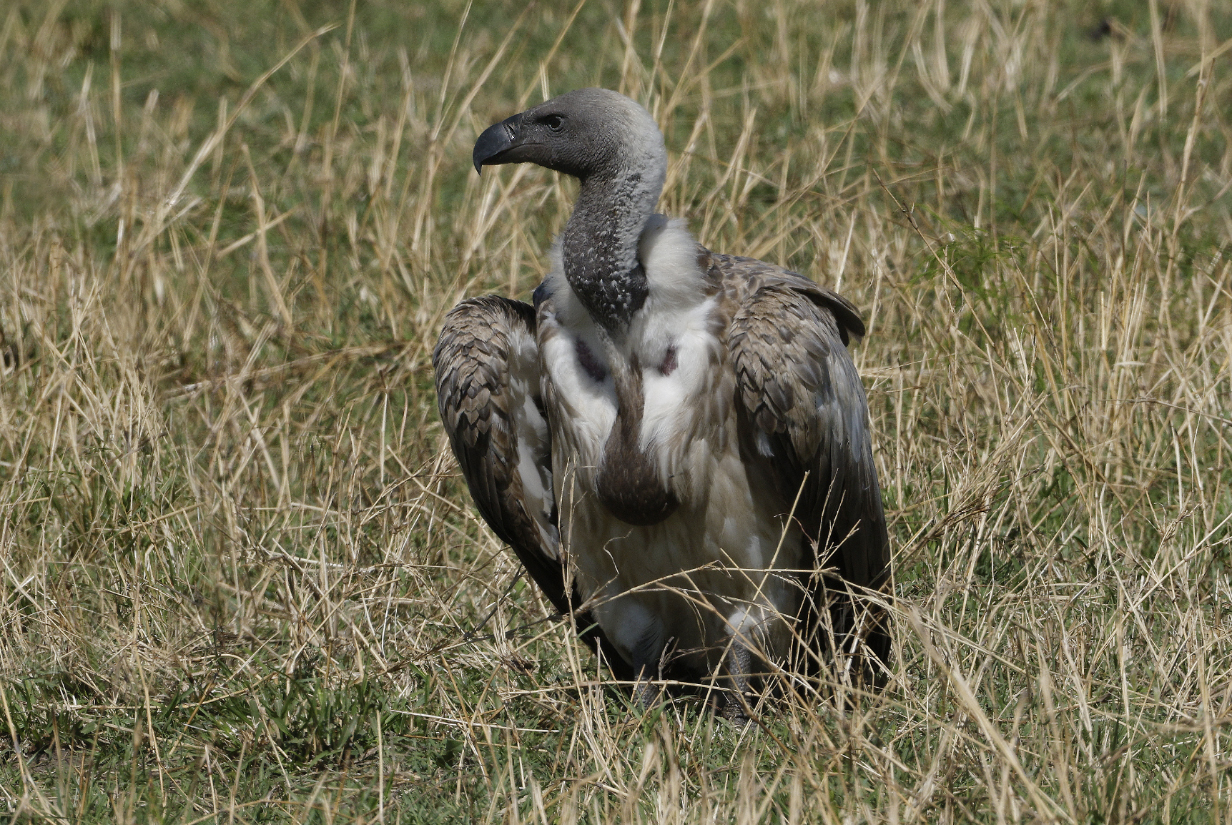
White-backed vulture
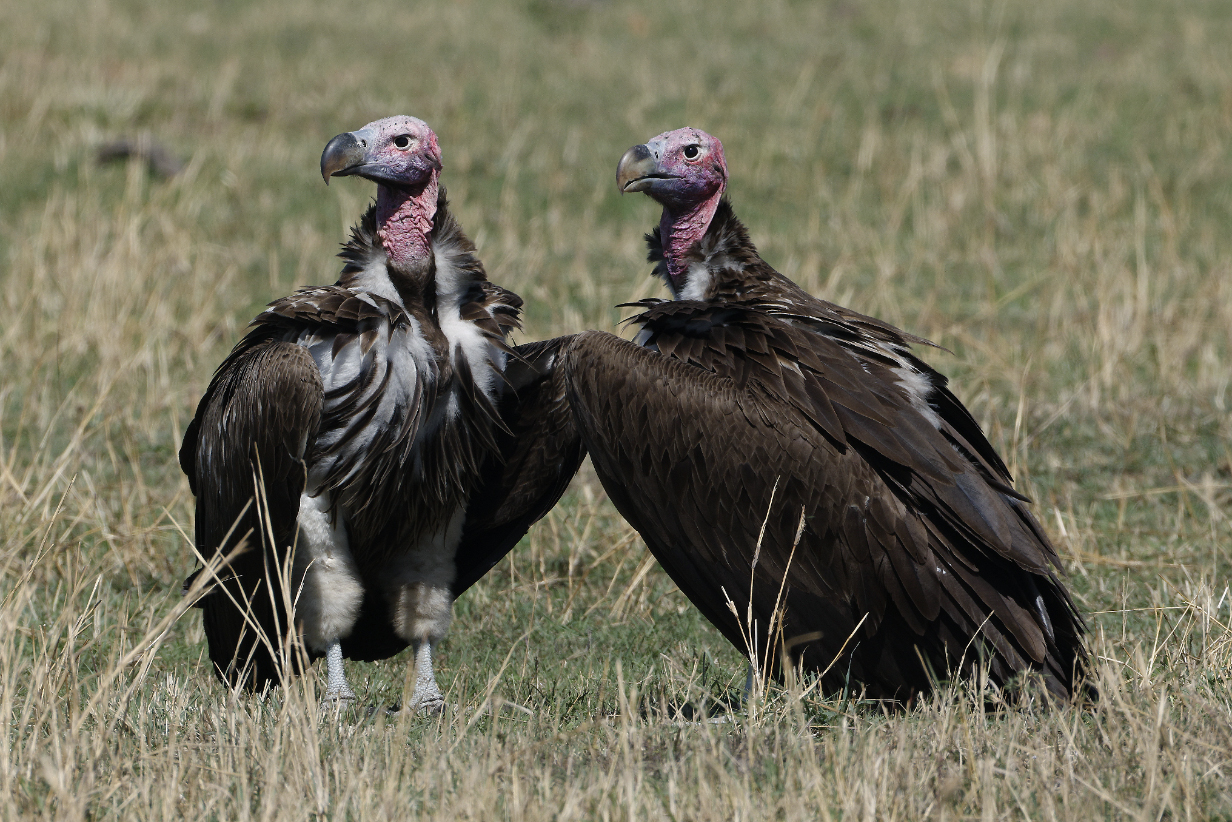
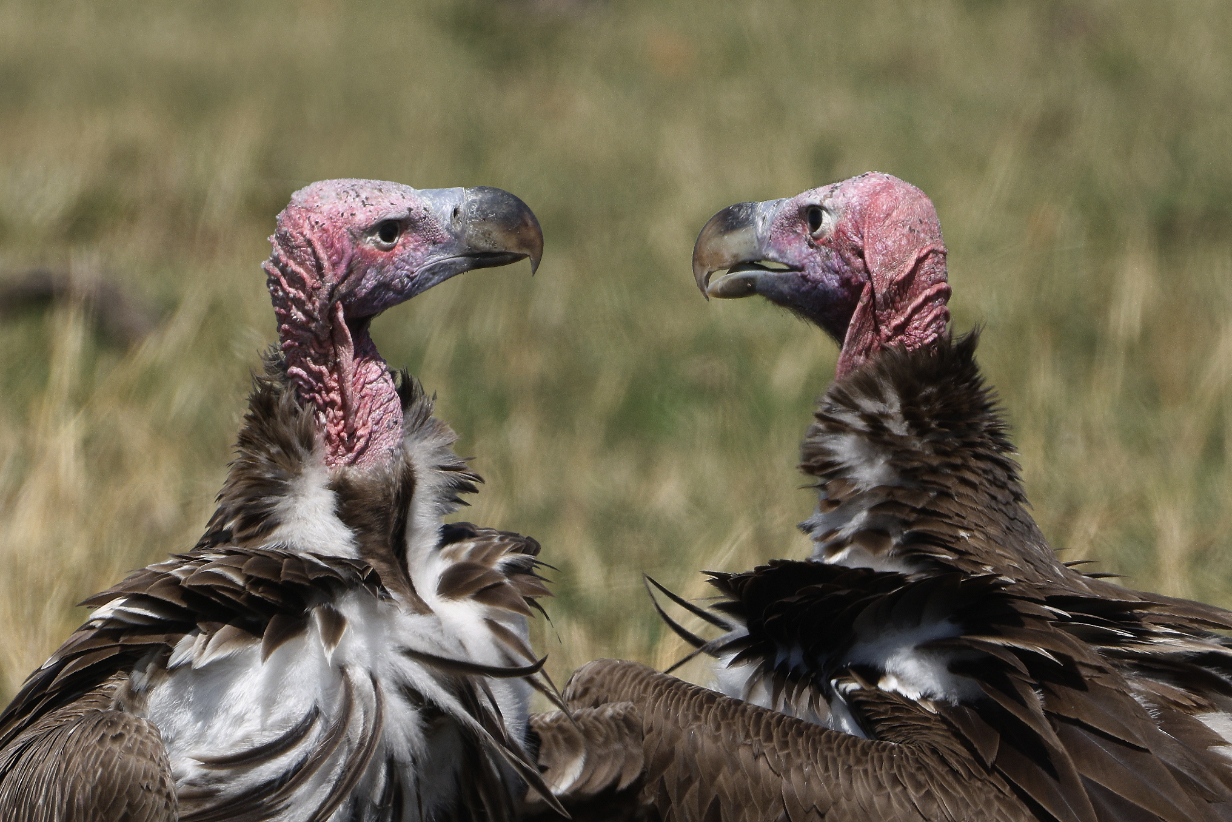
Lappet-faced vultures
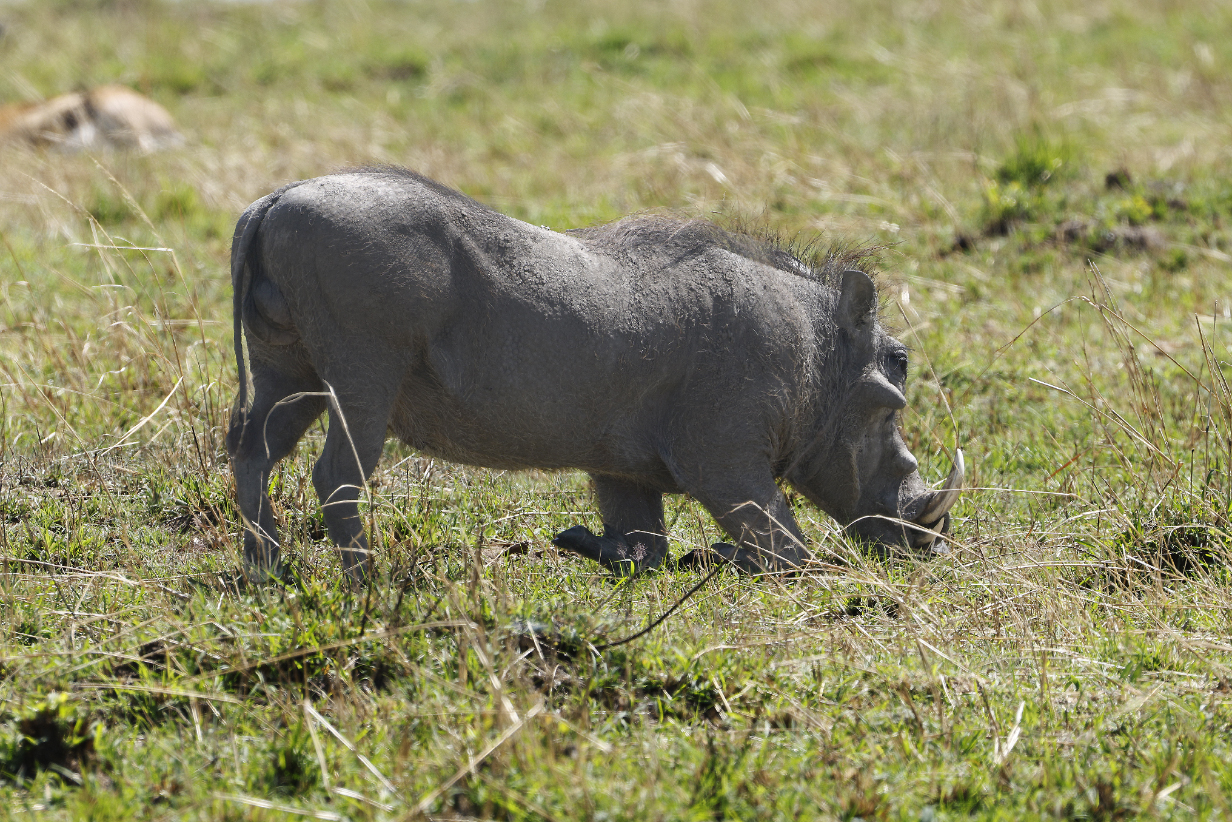
Warthogs usually feed "on their knees".
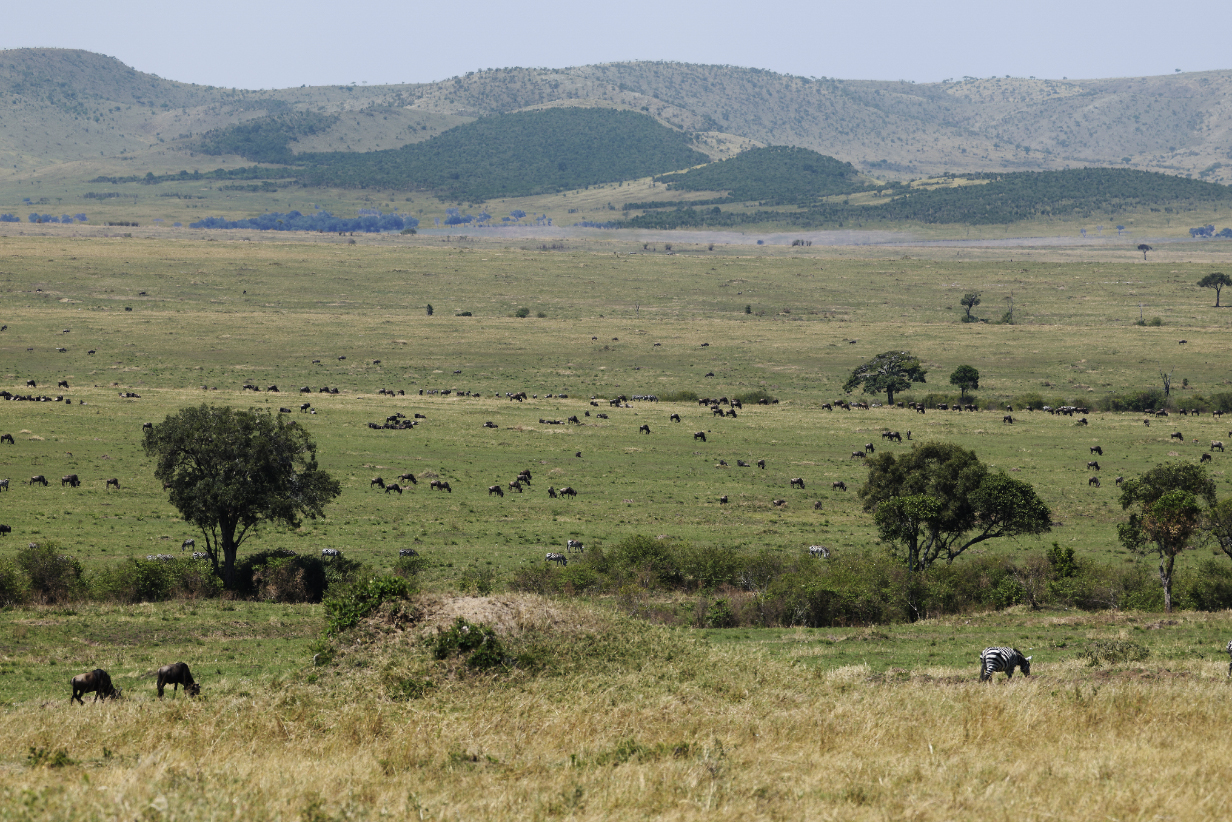
Typical scene in the Masai Mara -- vast plains and rolling hills, no sign of humanity, and scatterings of animals, all in freedom, all around
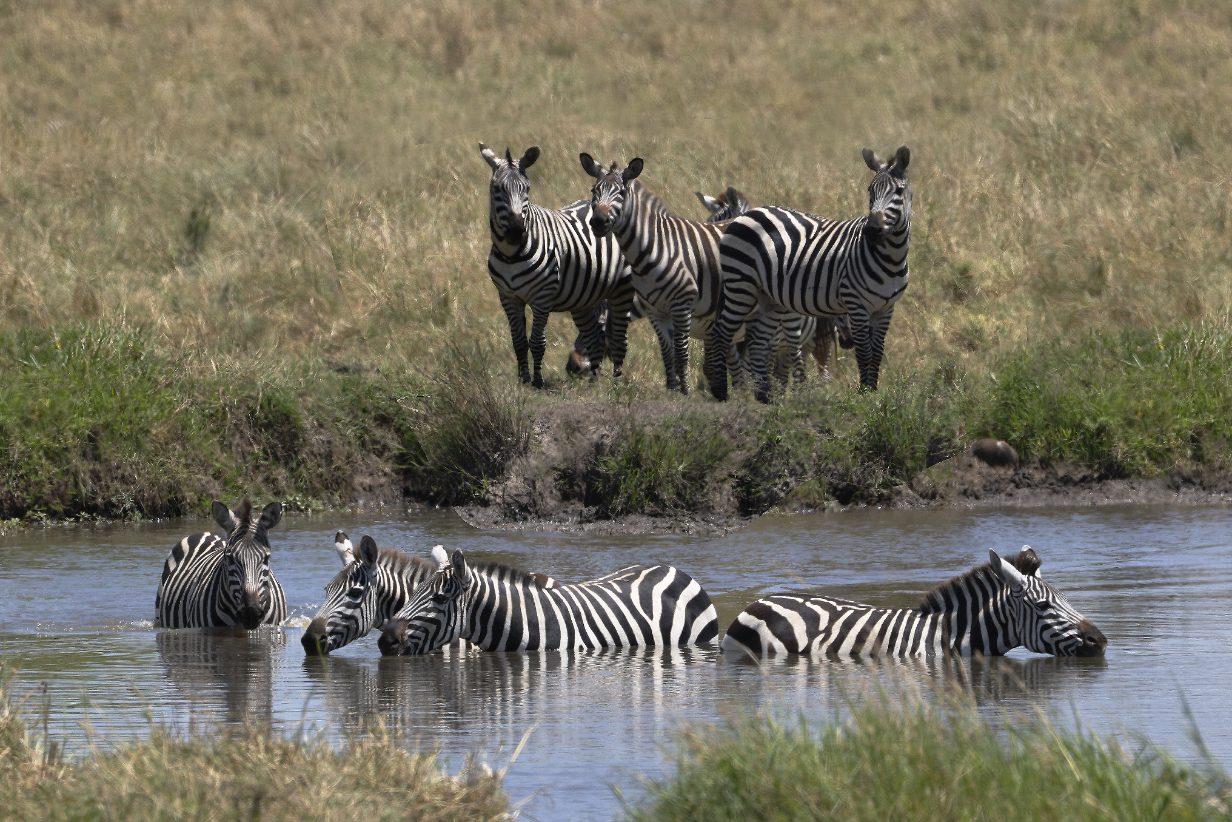
Zebras are -- along with wildebeest -- the most common big mammals in the Mara. Safe, predator-free, and refreshingly deep water is not common.
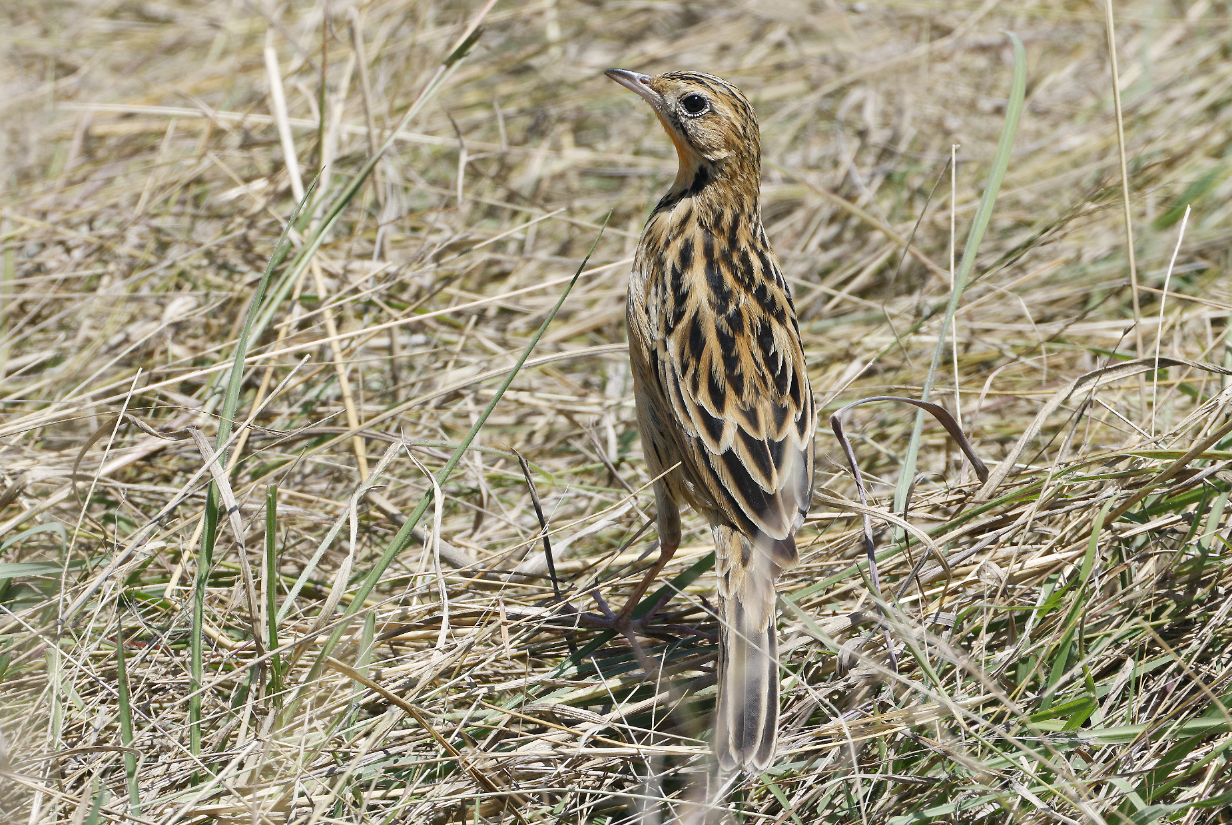
Rosy-throated longclaw (This juvenile male is my life bird.)
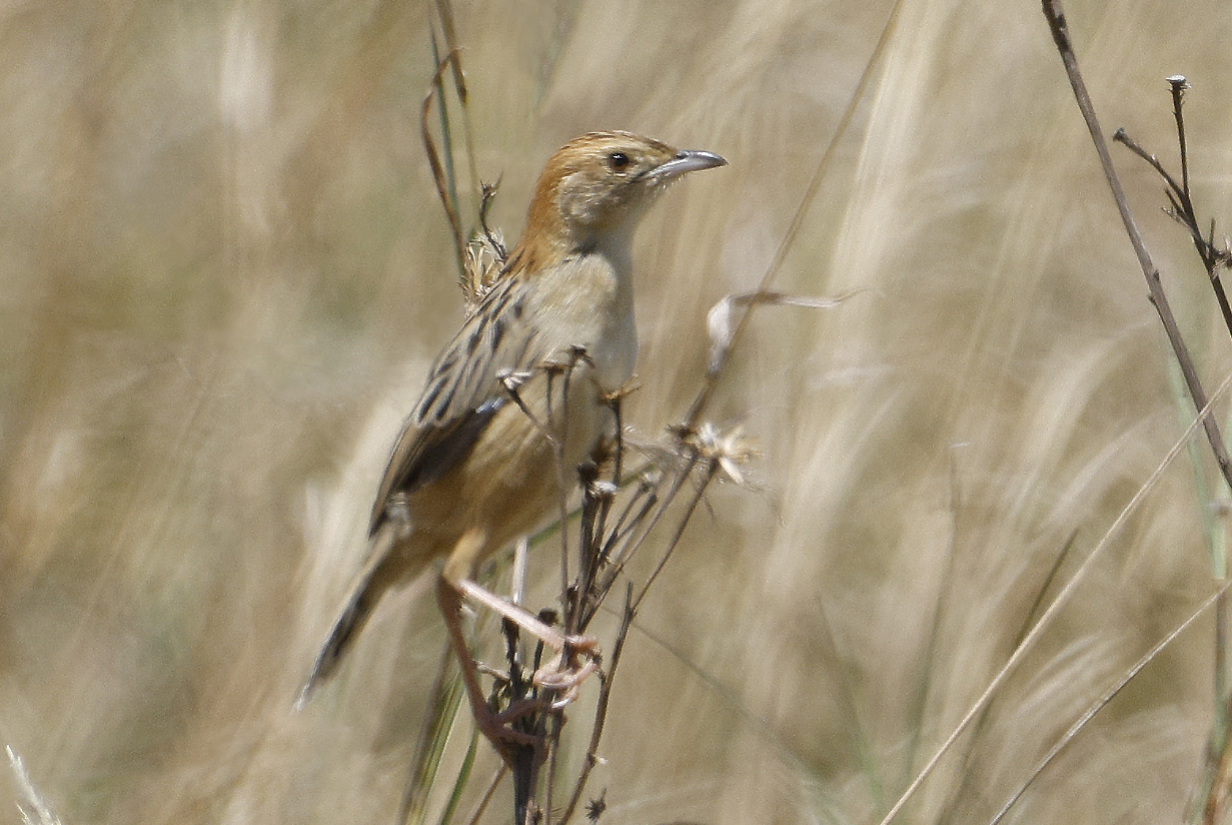
Stout cisticola (This is my life bird. We saw and I photographed it again on August 12th.)
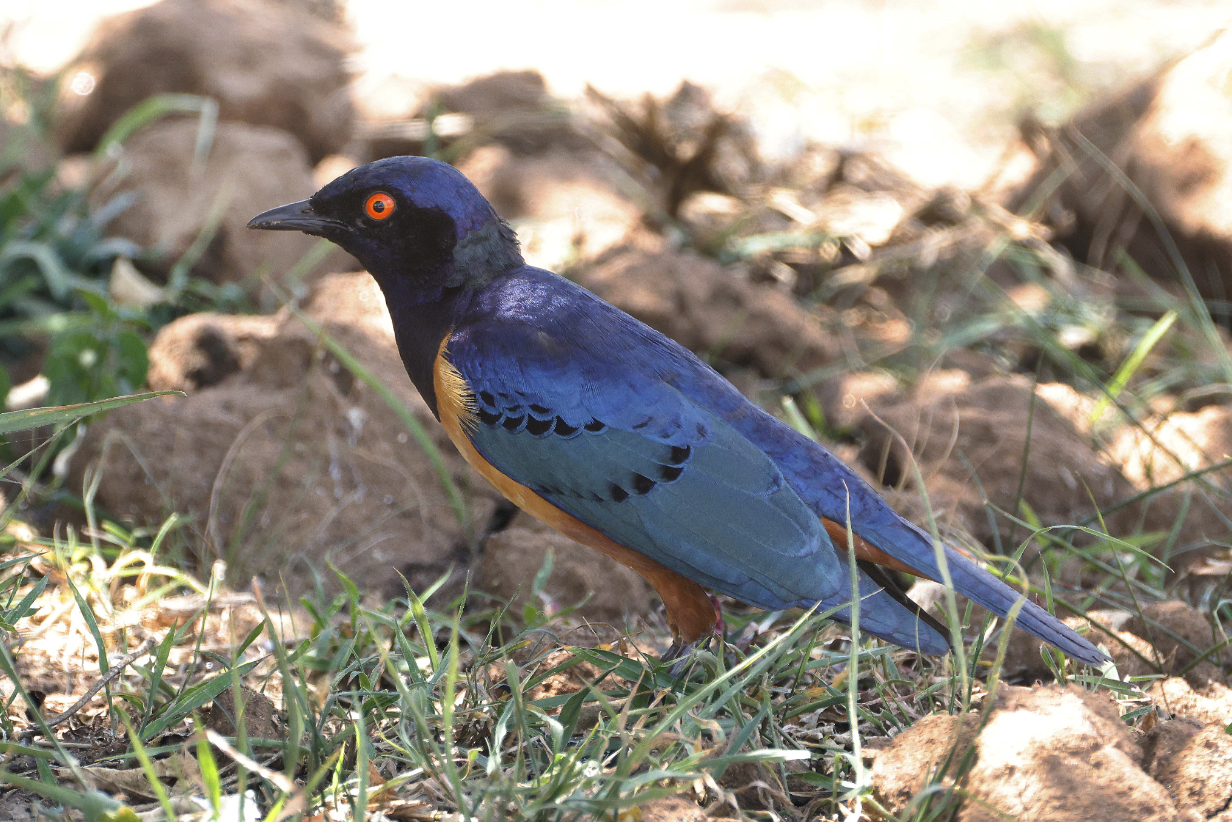
Hildebrandt's starling (gorgeous last life bird of the morning of August 11th)
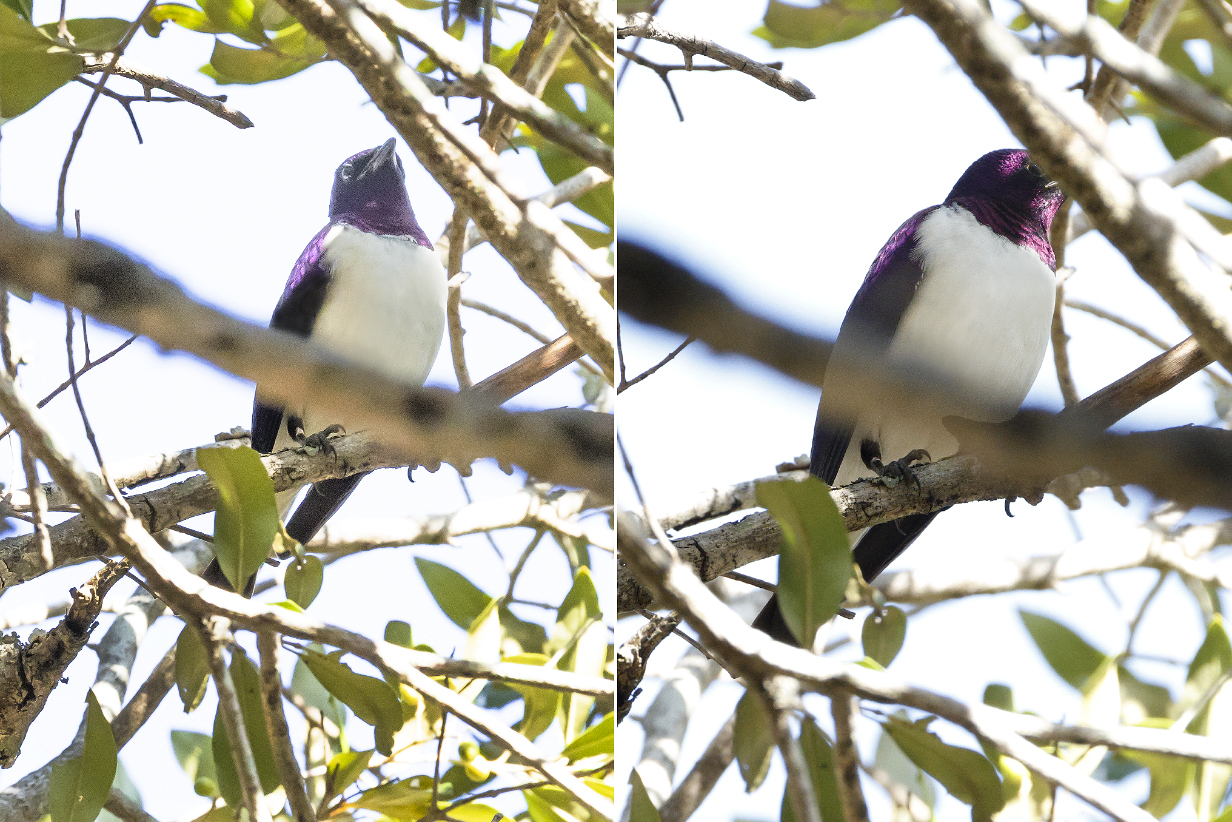
Violet-backed starling (This is my life bird -- poorly seen: Does not remotely do justice to a spectacular bird.)
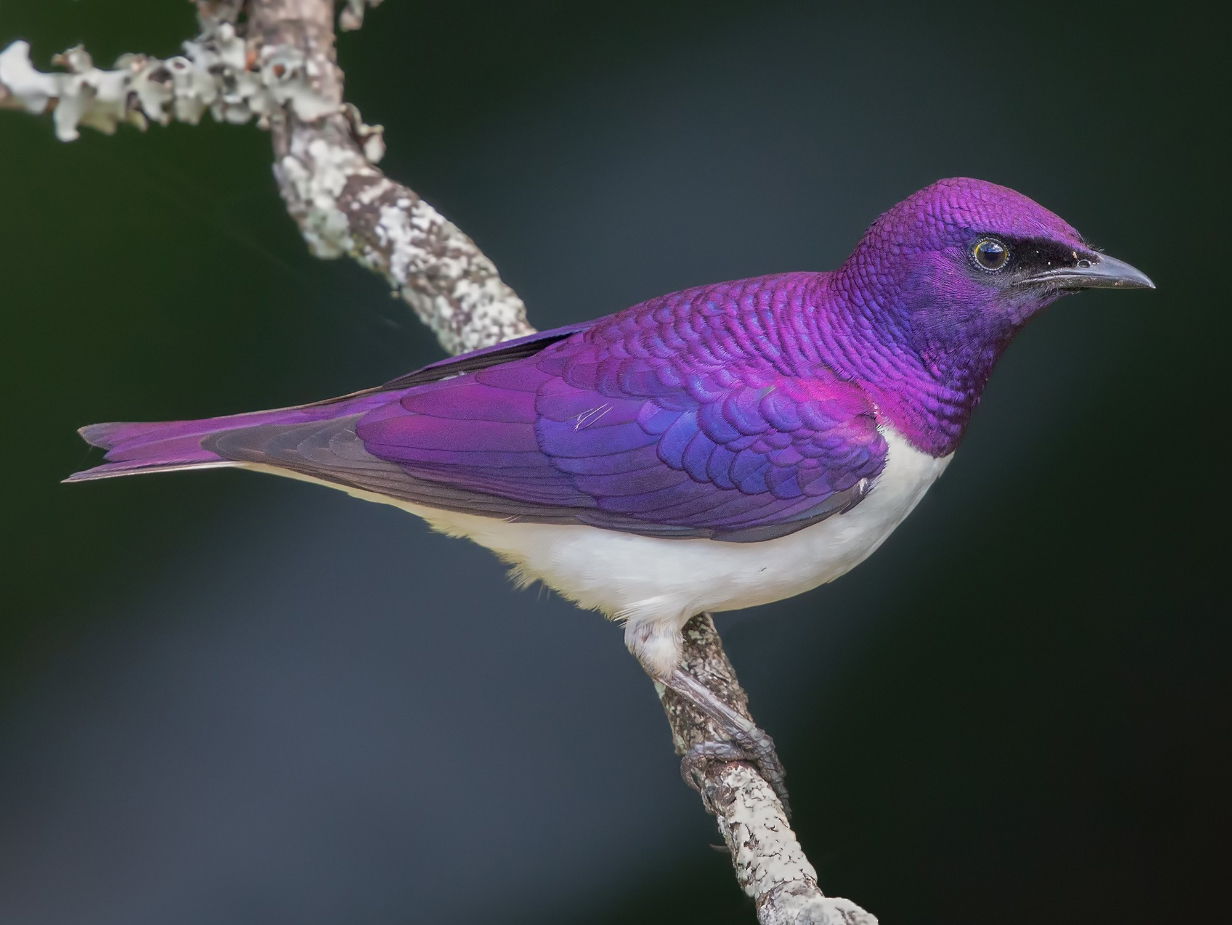
I can't resist showing what we missed: This is Violet-backed starling as illustrated on ebird.
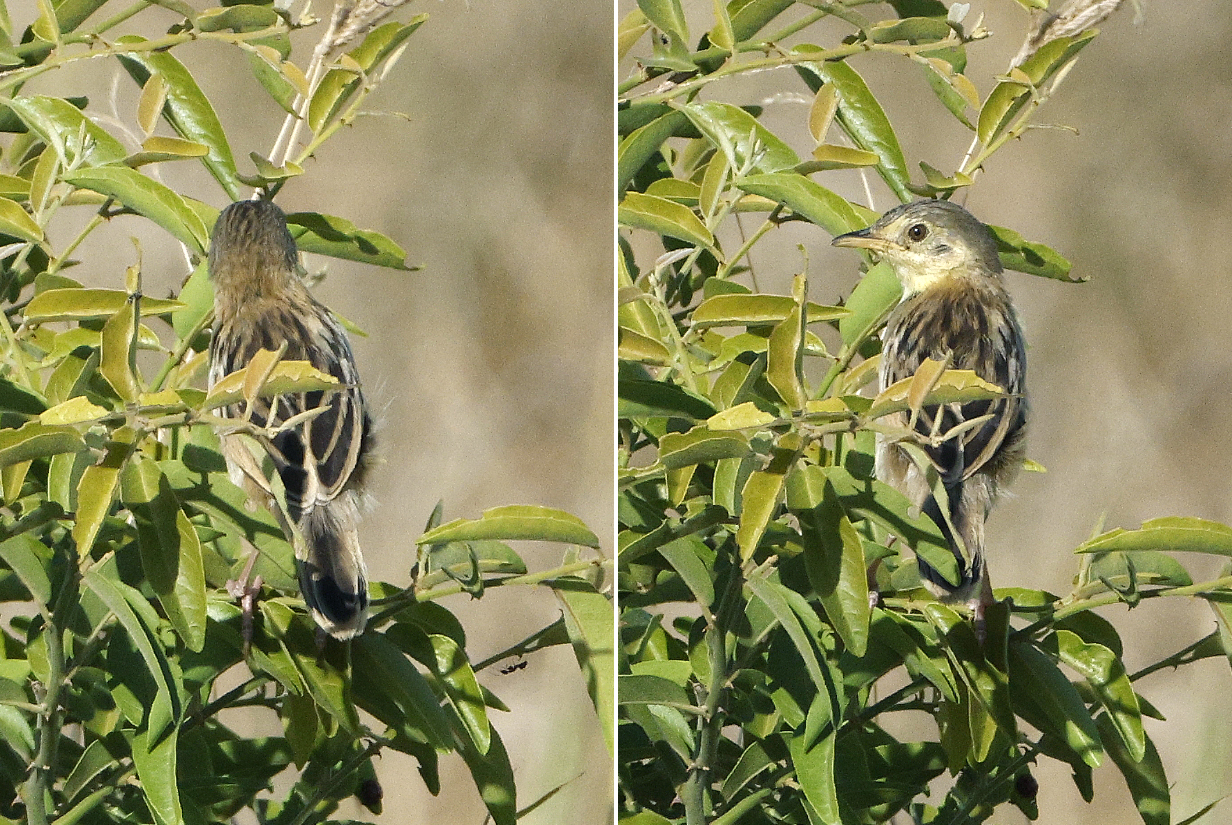
Black-backed cisticola (This is my life bird.)
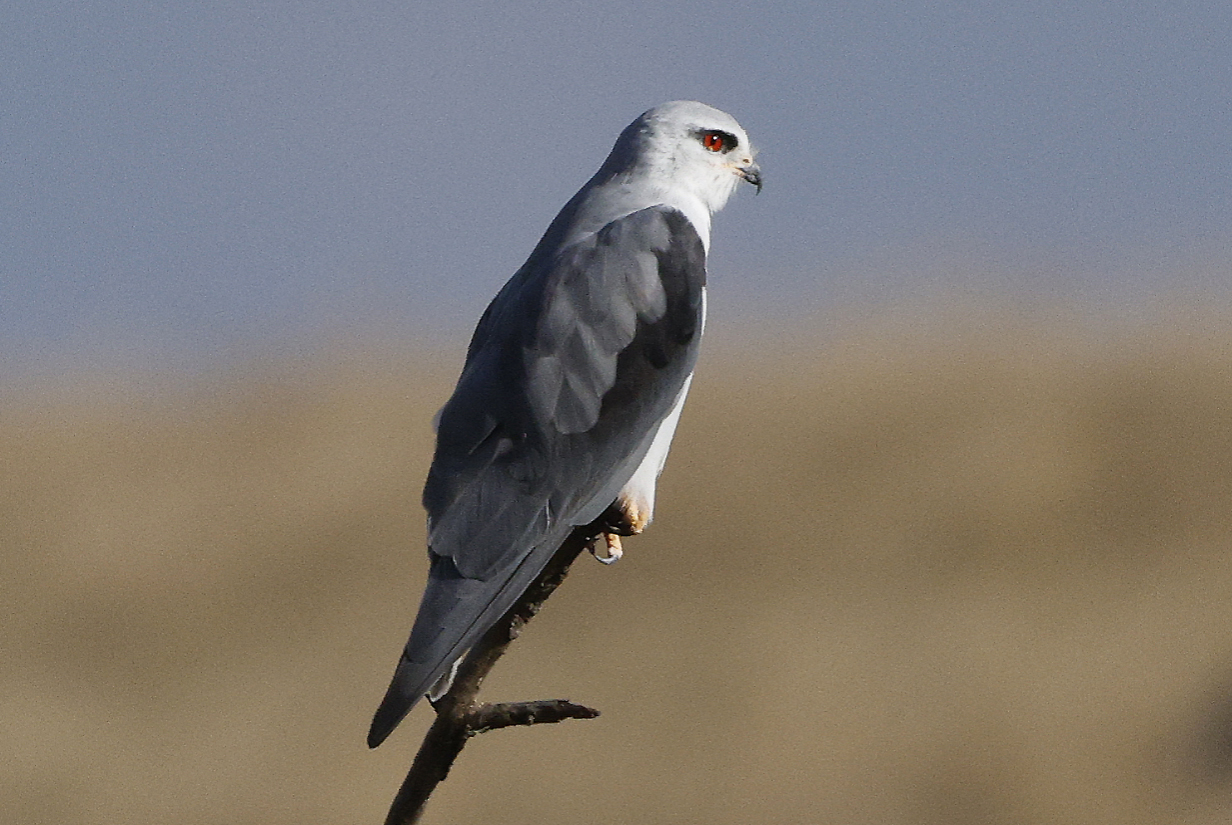
Black-winged kite
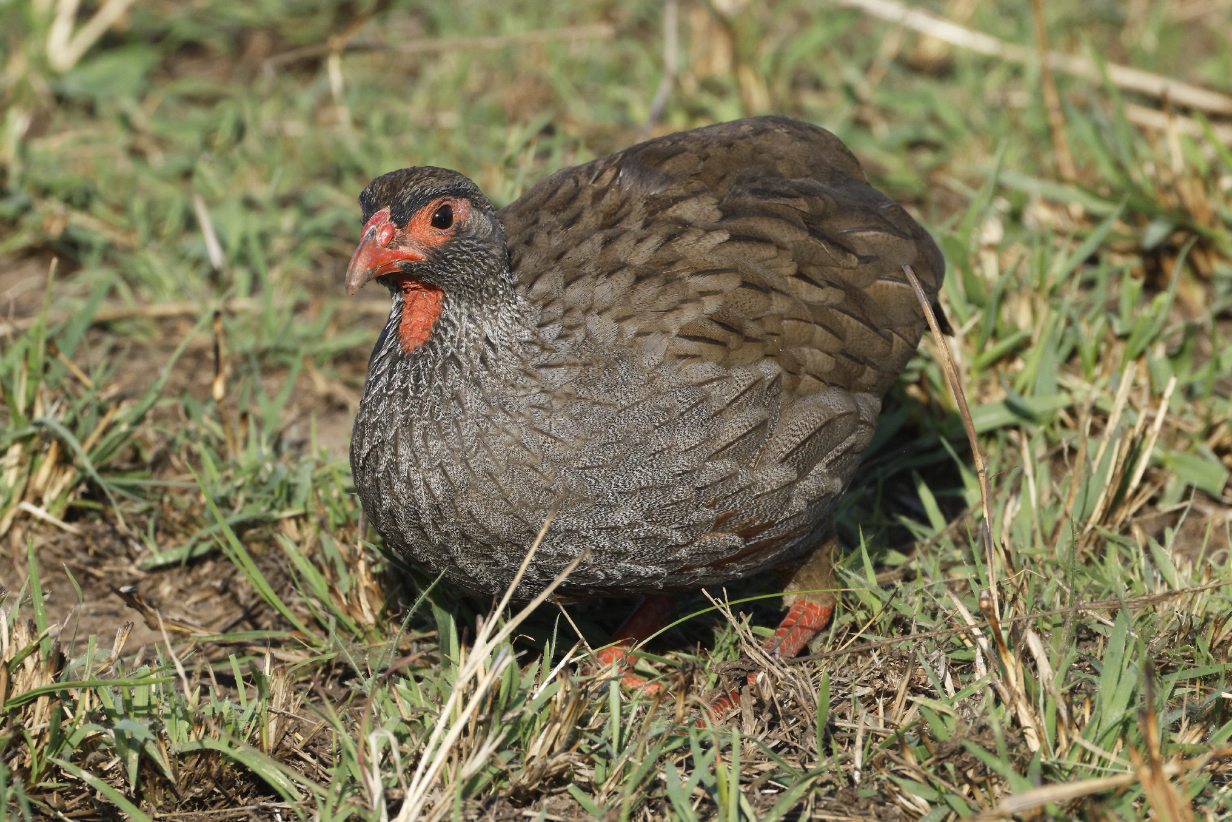
Red-necked spurfowl (This is my life bird.)
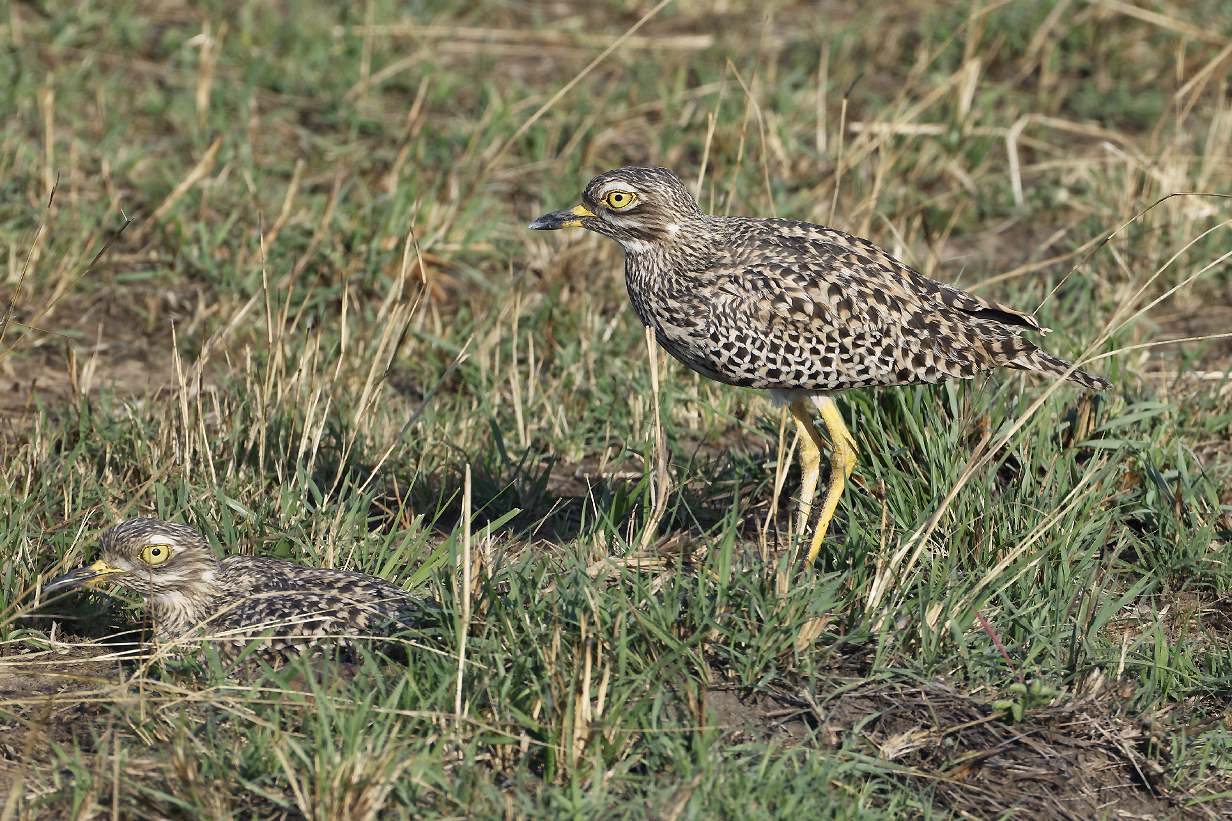
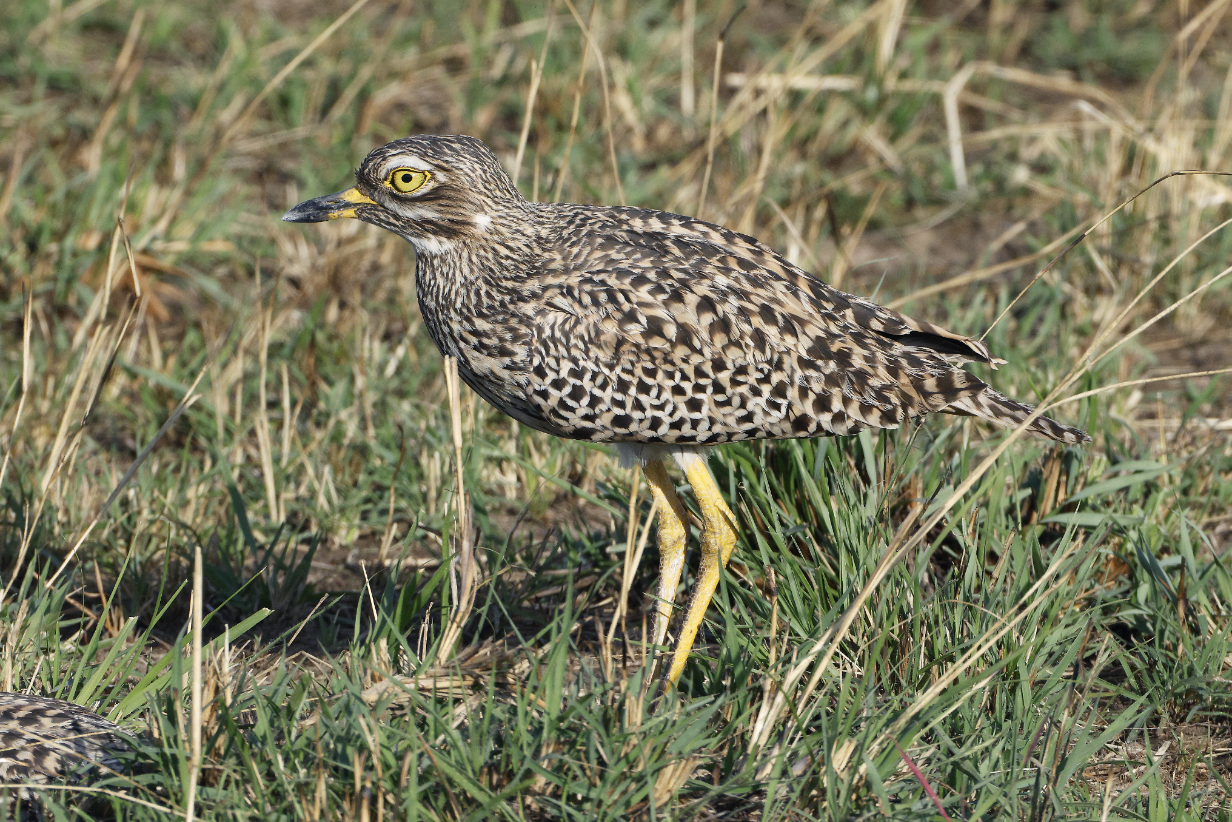
Spotted thick-knee
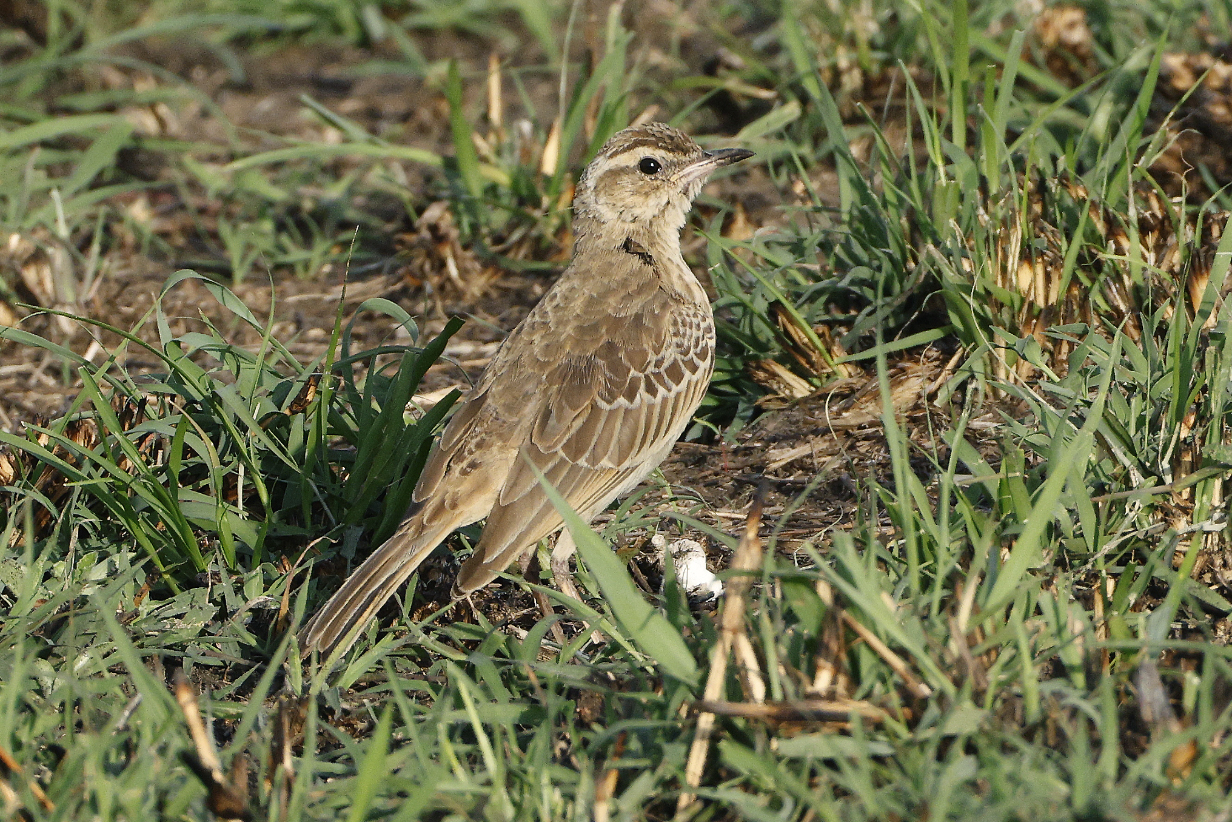
Plain-backed pipit
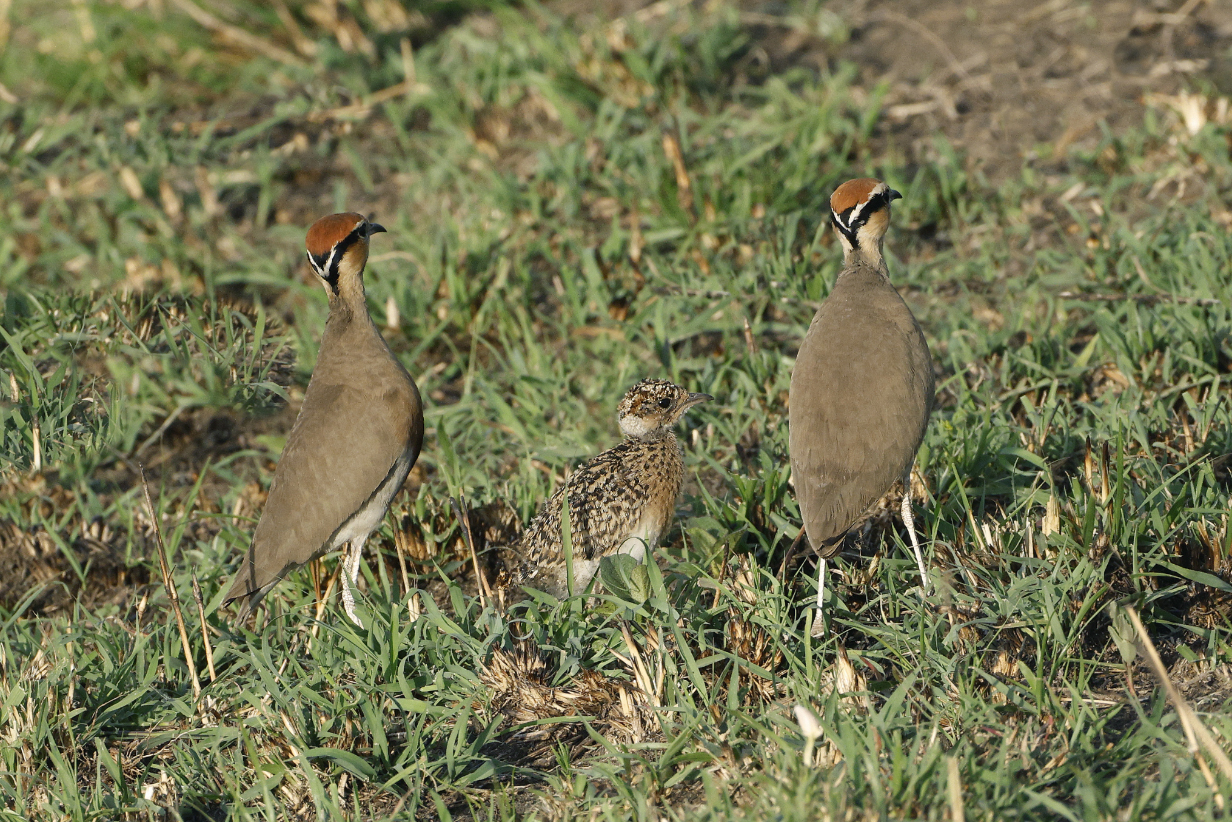
Temminck's courser (male, chick, and female)
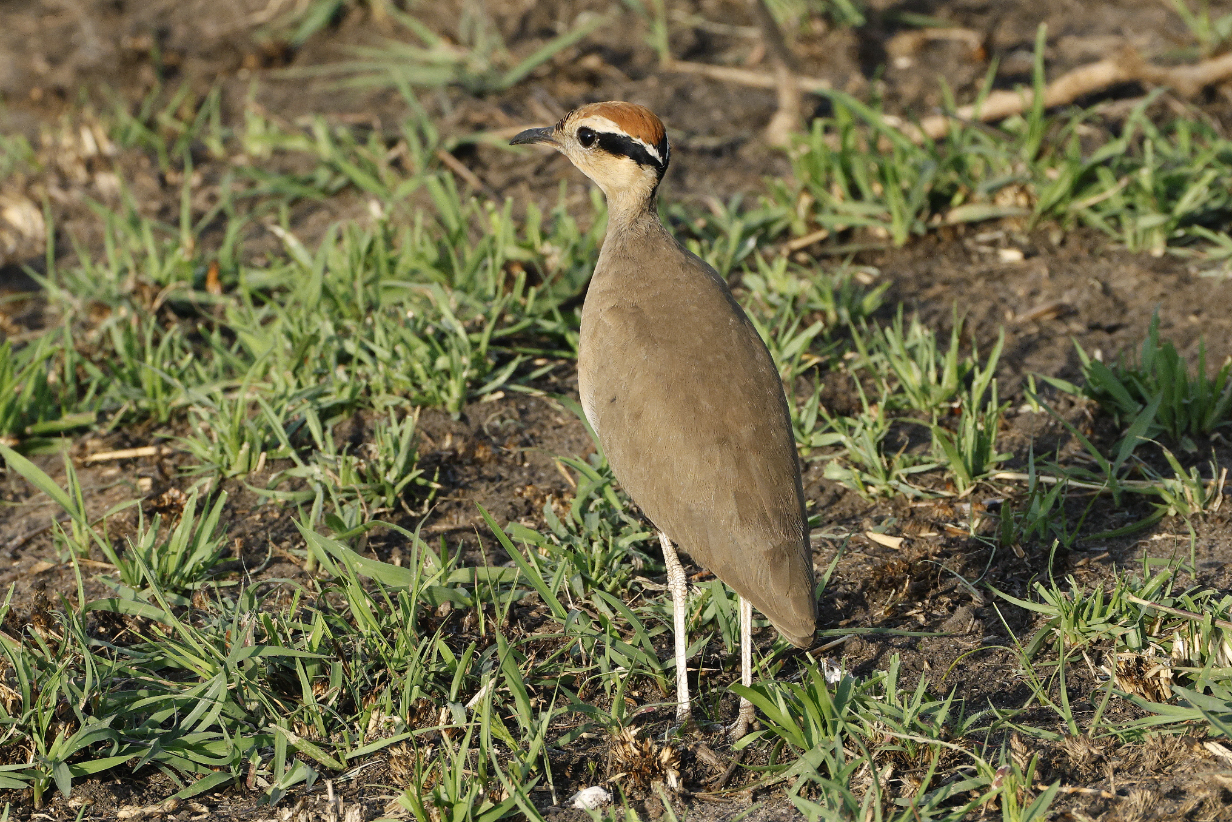
Temminck's courser (female)
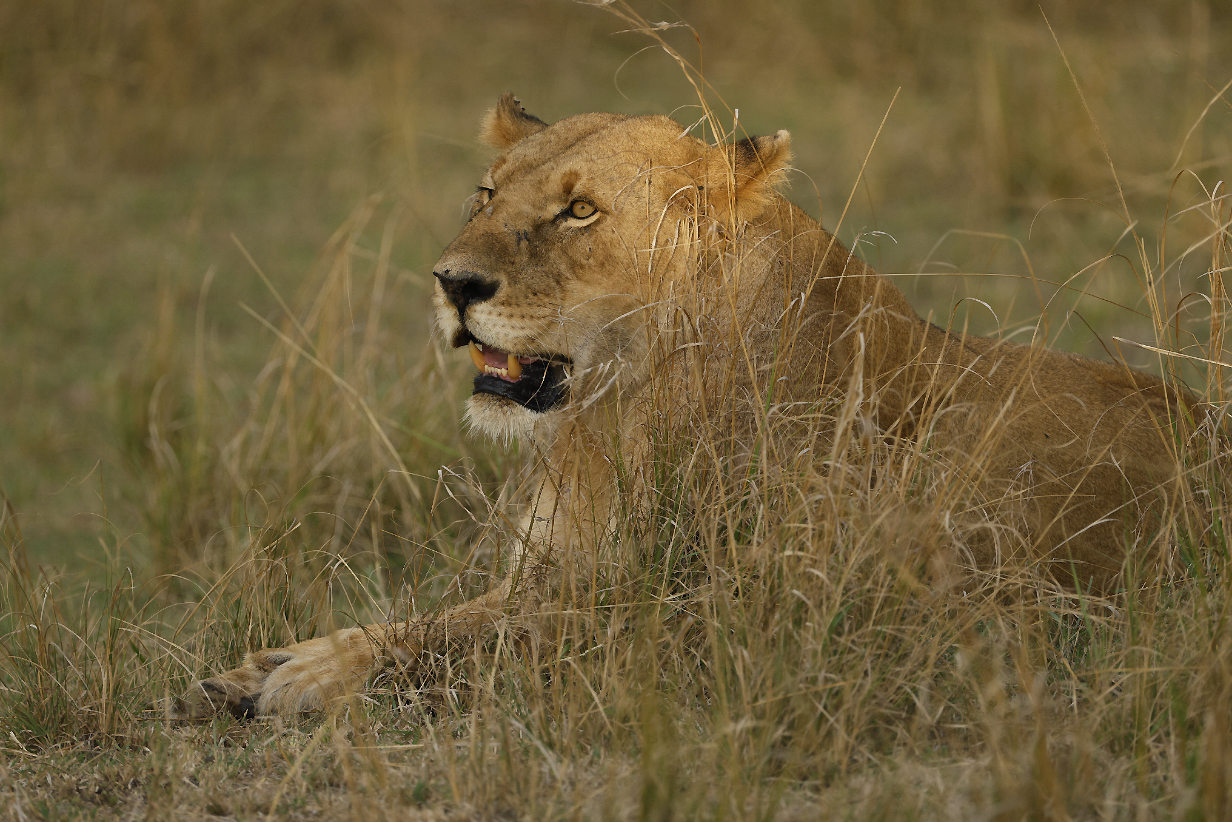
Lioness resting in evening twilight before the ideal time for the hunt
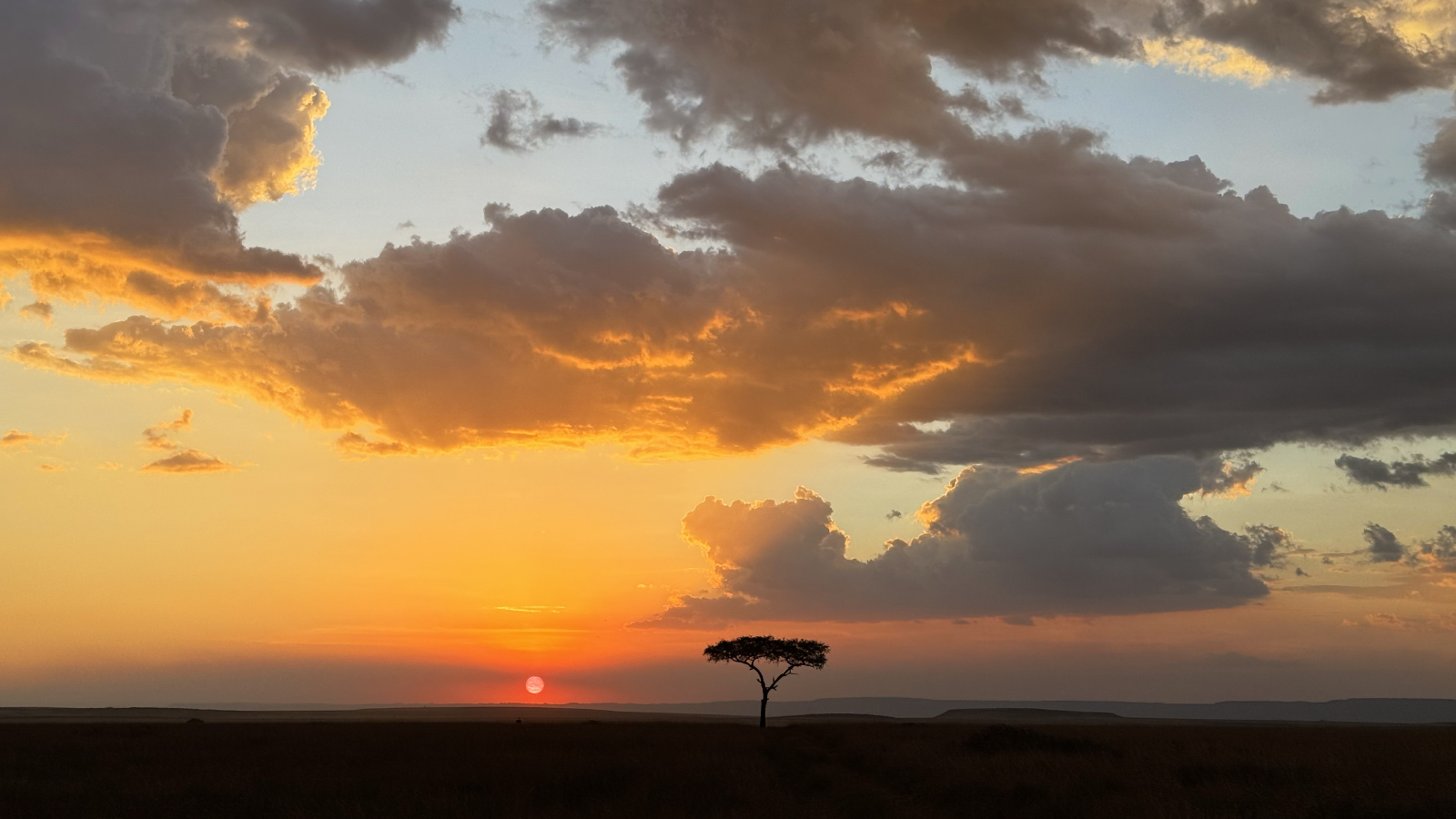
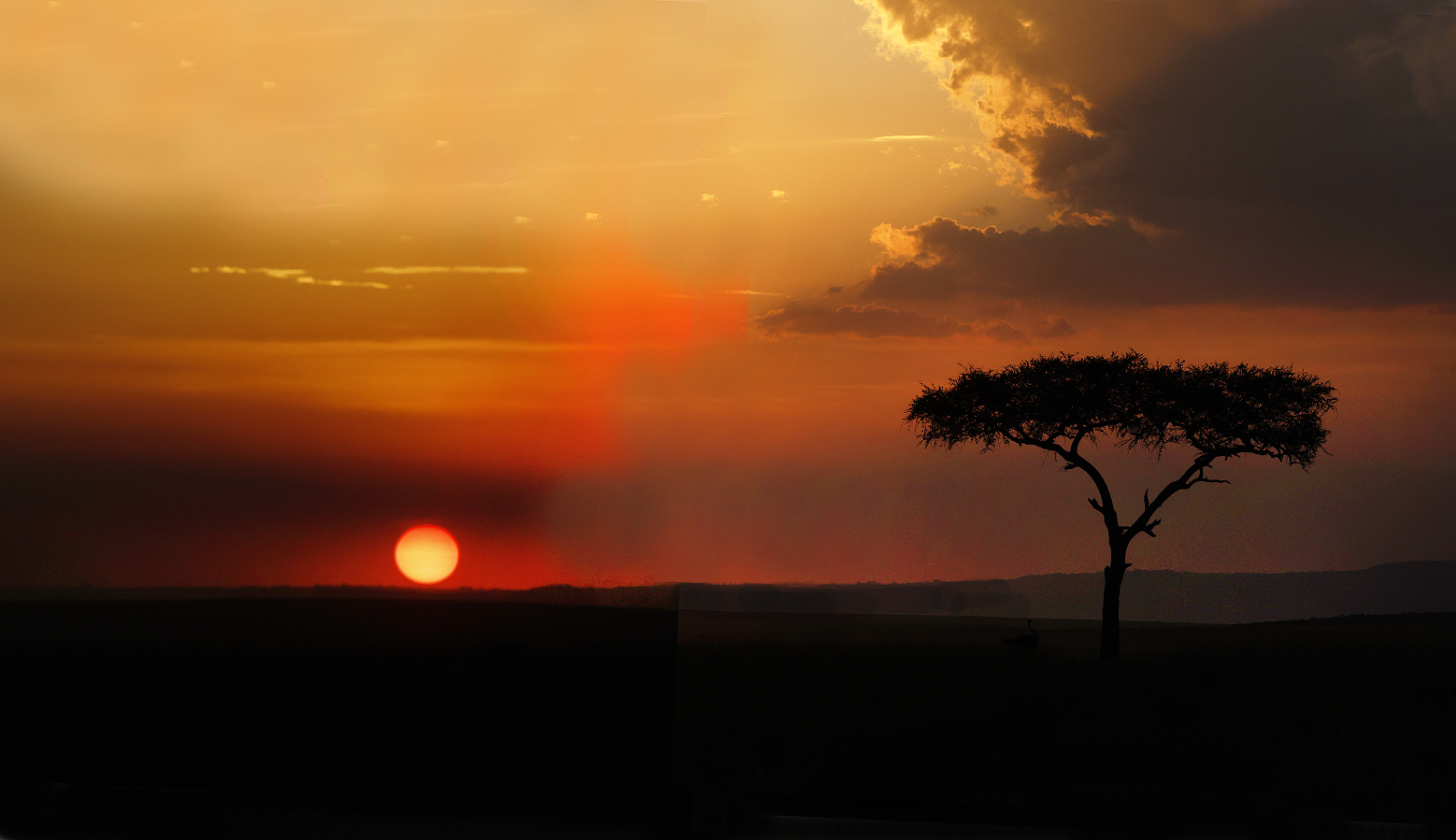
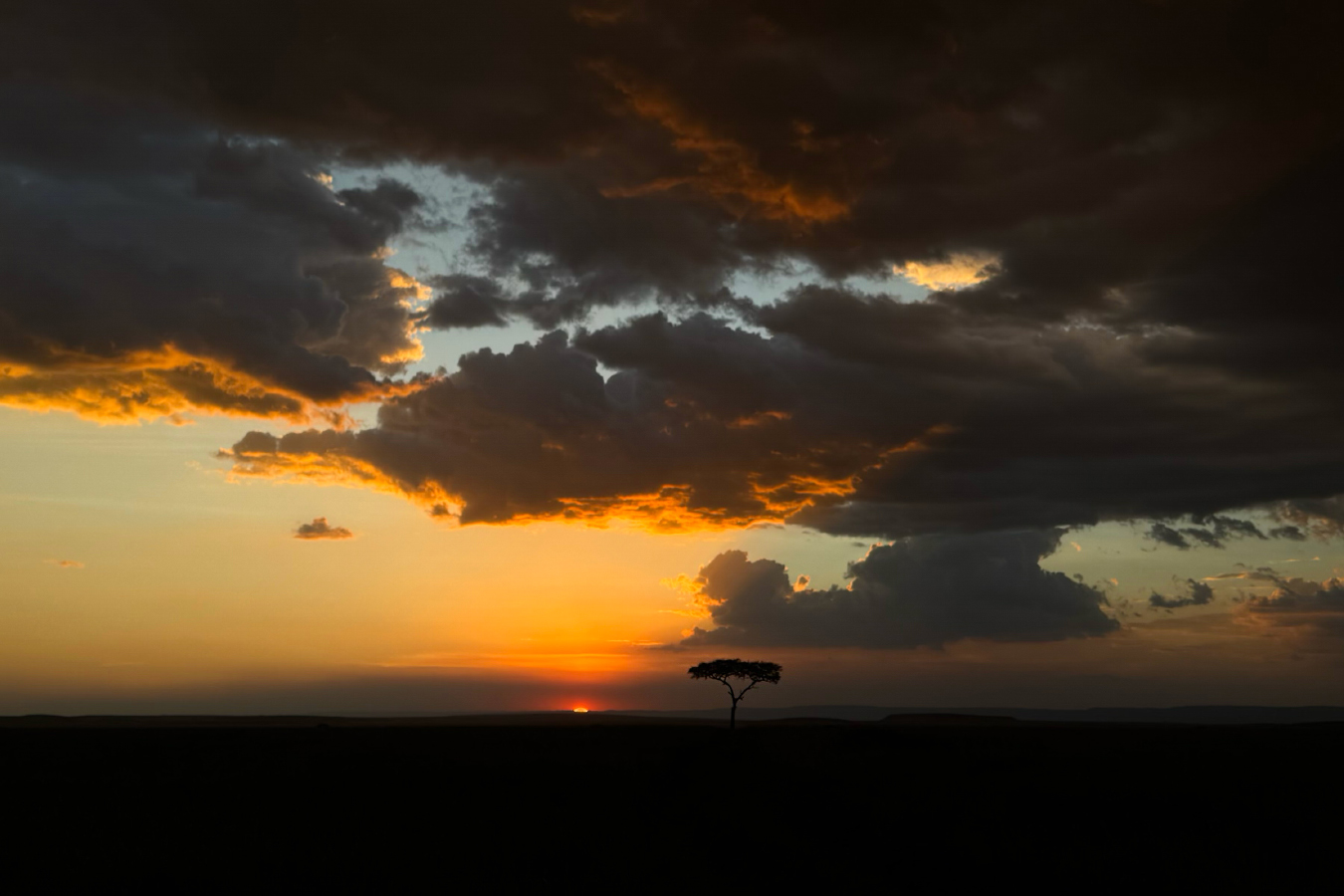
Sunset on the Masai Mara, August 11, 2026
August 12: Masai Mara National Reserve
After cruising around in the early AM, including a "hippo stop" at a substantial river, we drove (quite a long way) to Keekorok Lodge, where we had originally been booked to stay while in the Mara. We were not allowed into the Lodge grounds, but birding outside the gate was productive ... using the local Glaucidium owl call to rile up the small birds.
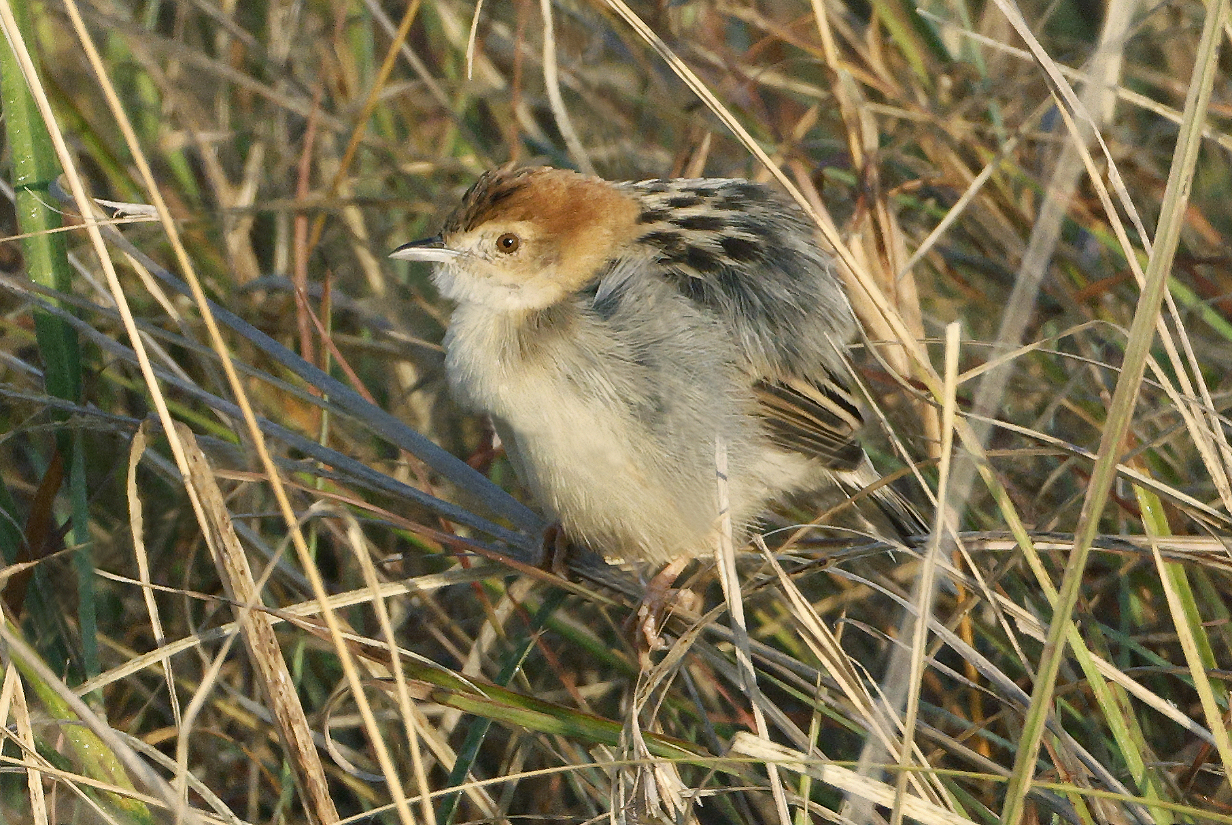
Stout cisticola (This picture and the following two are the best view of a bird that we saw essentially every day at the Mara. Note here again that the bird has fluffed up its back feathers, like the bird did that we saw -- but that I did not take as new -- on August 8th in Nairobi National Park. I don't know why they do this, but it increases the probability that that really was Stout cisticola, too, as "called" by our guides.)
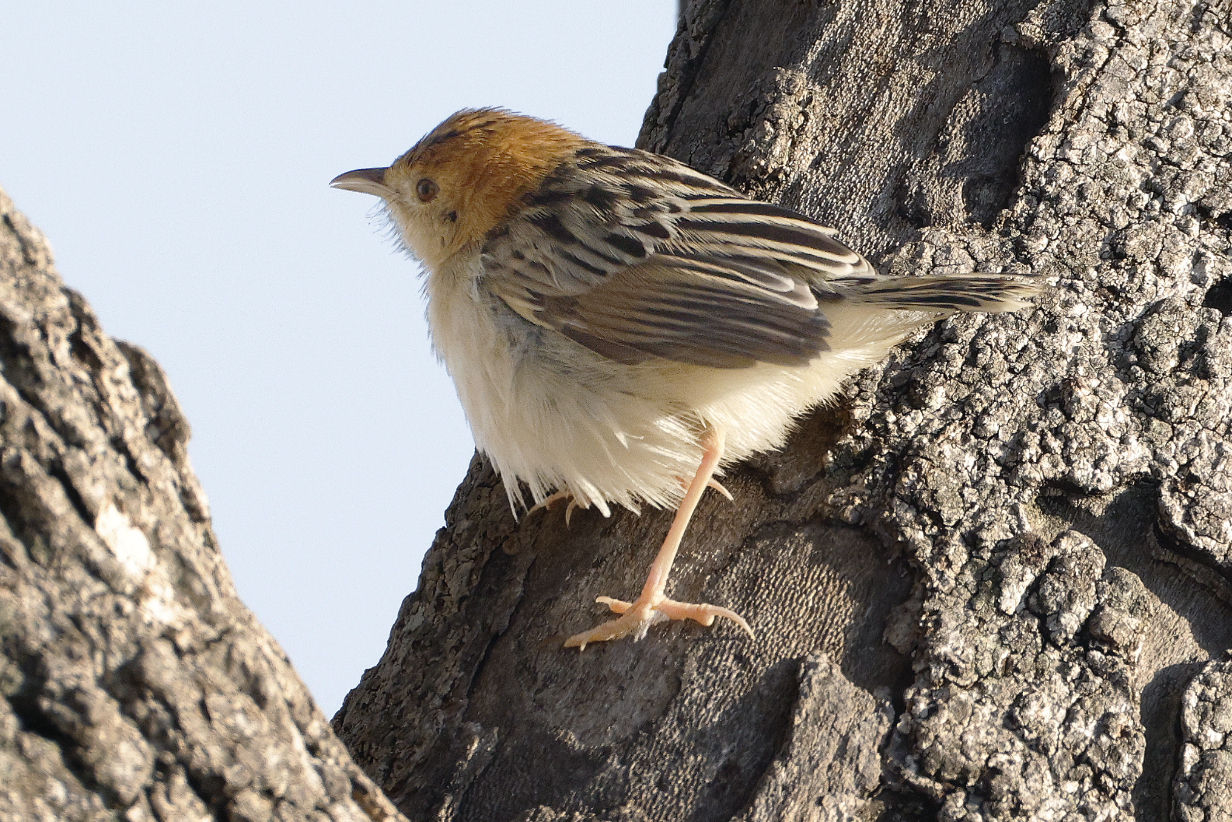
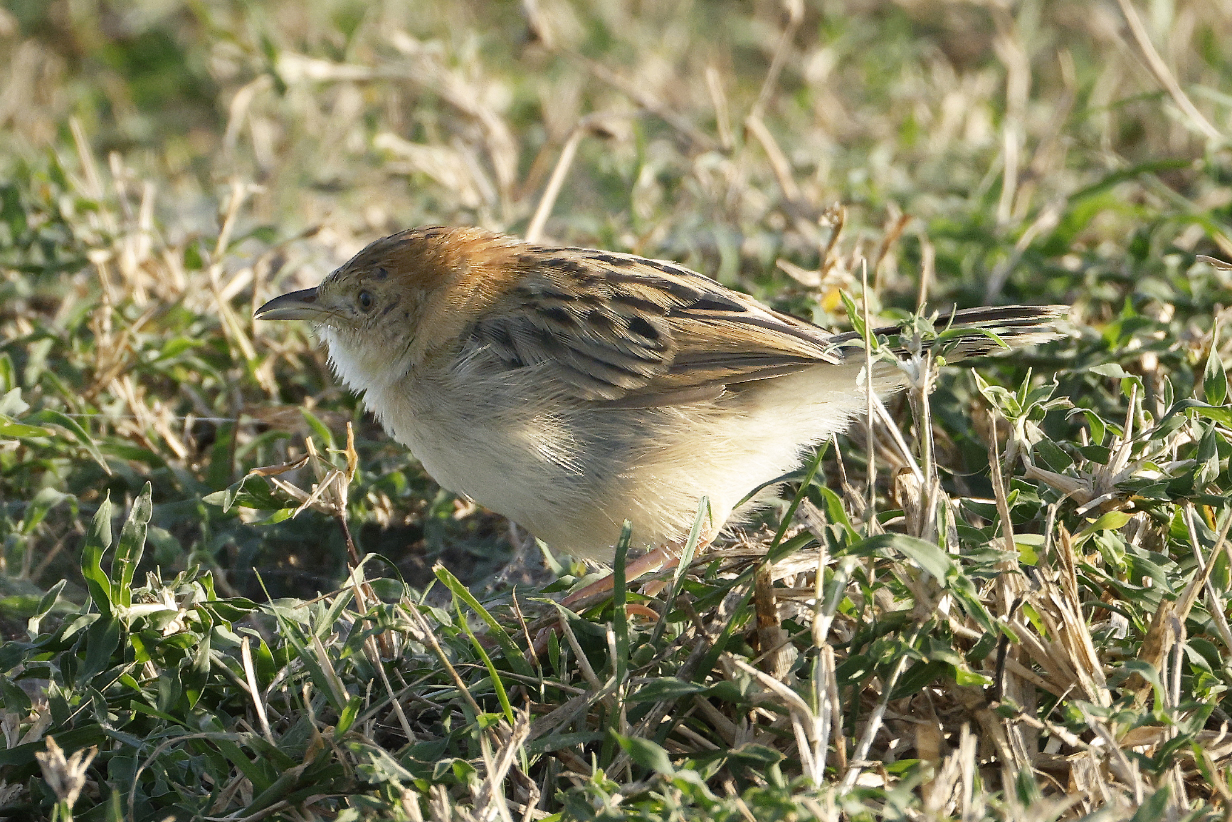
Stout cisticola
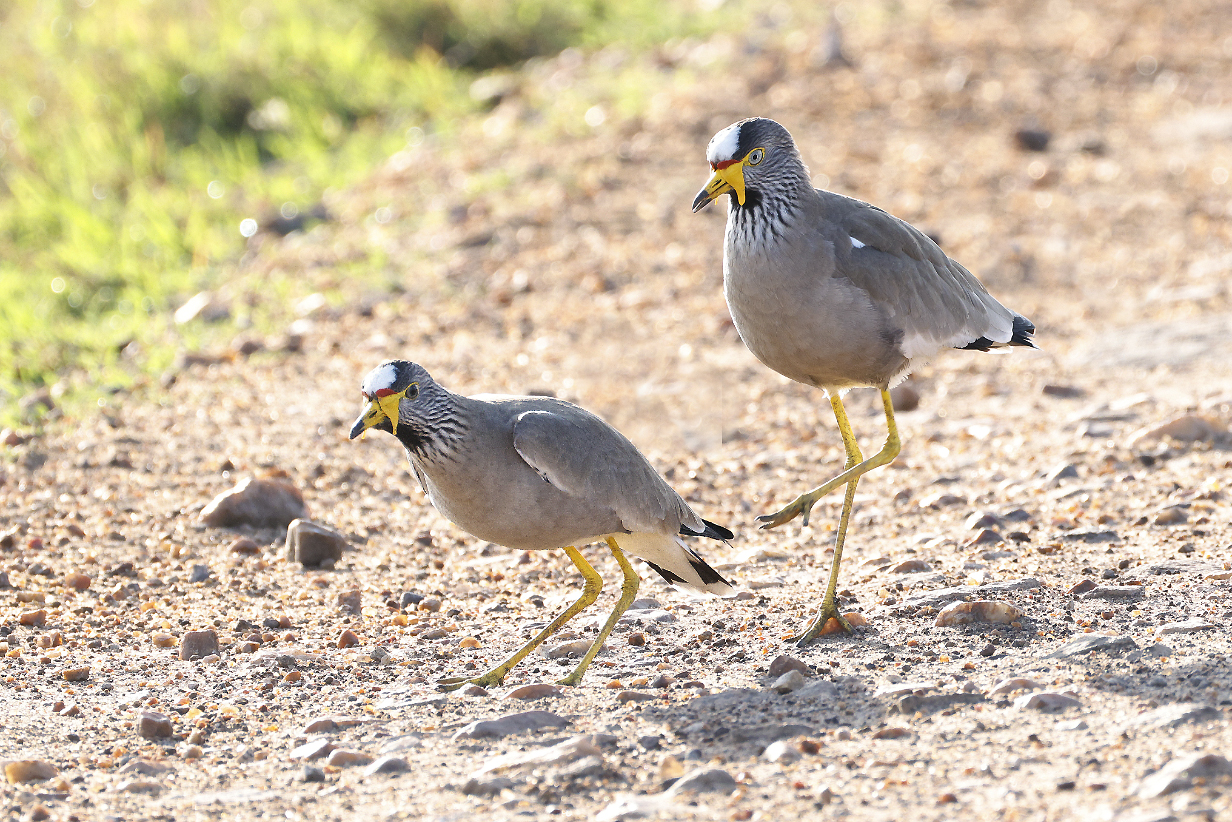
Wattled lapwing ... with intent
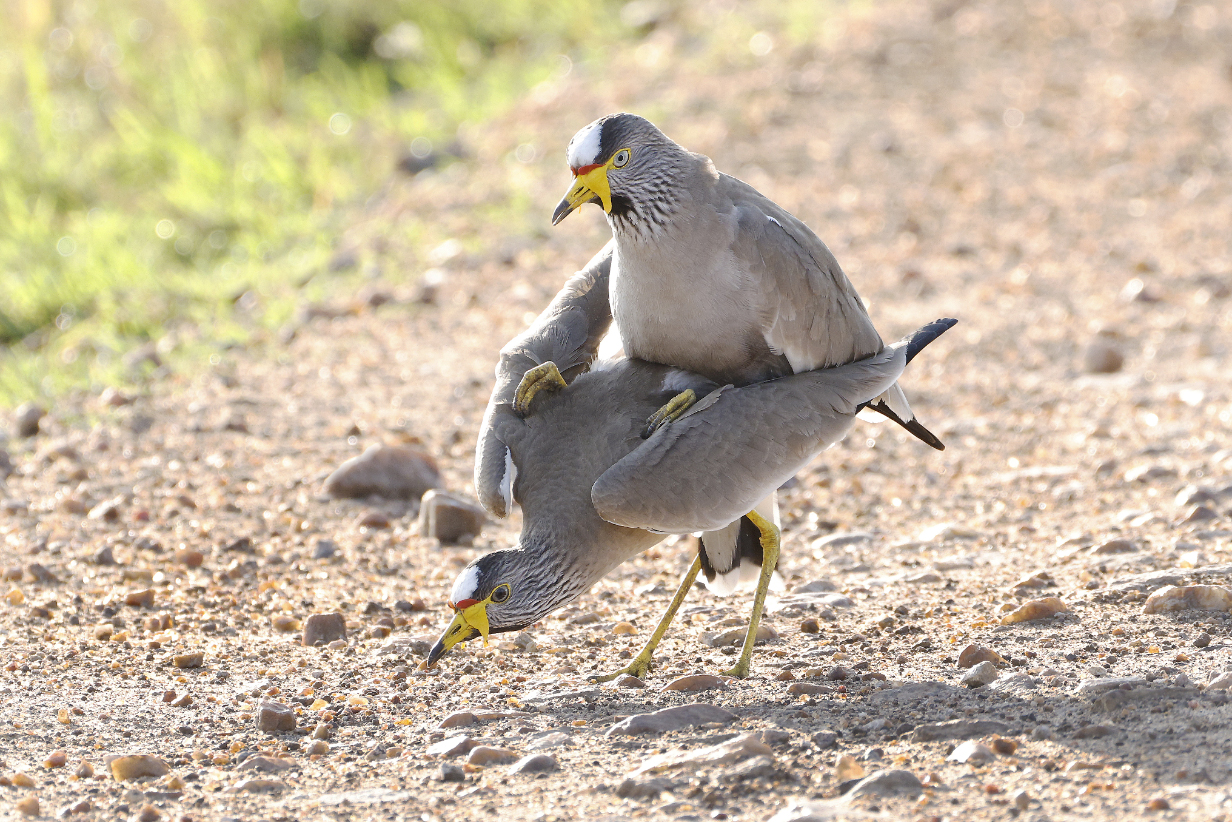
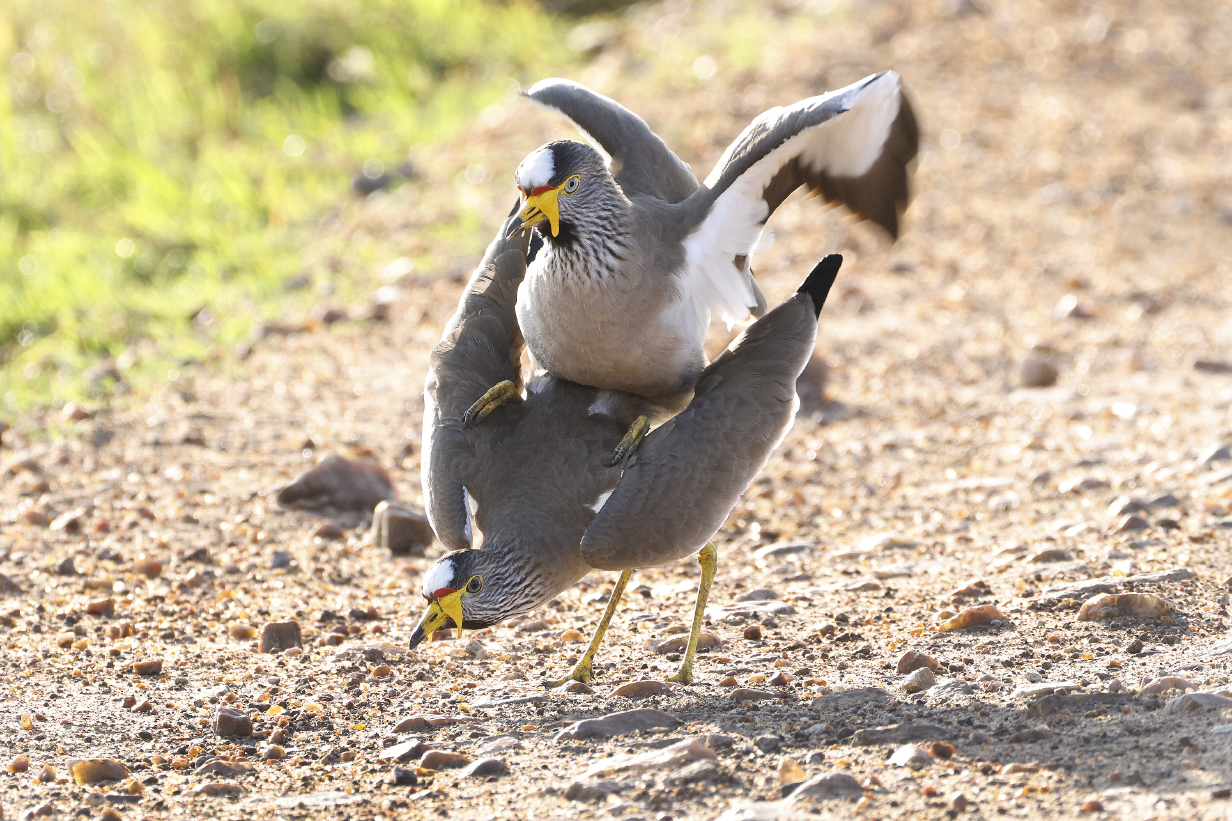
Wattled lapwing ... the moment of truth
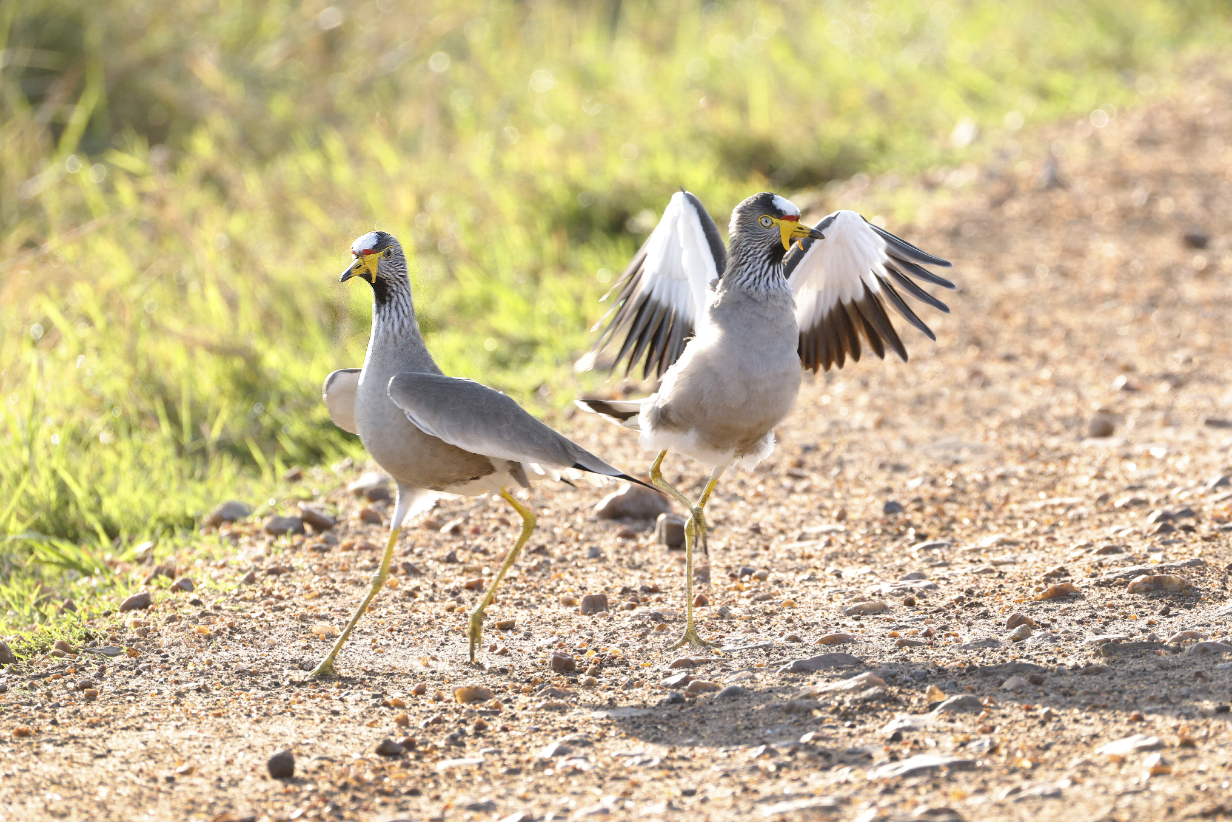
Wattled lapwing ... yowza
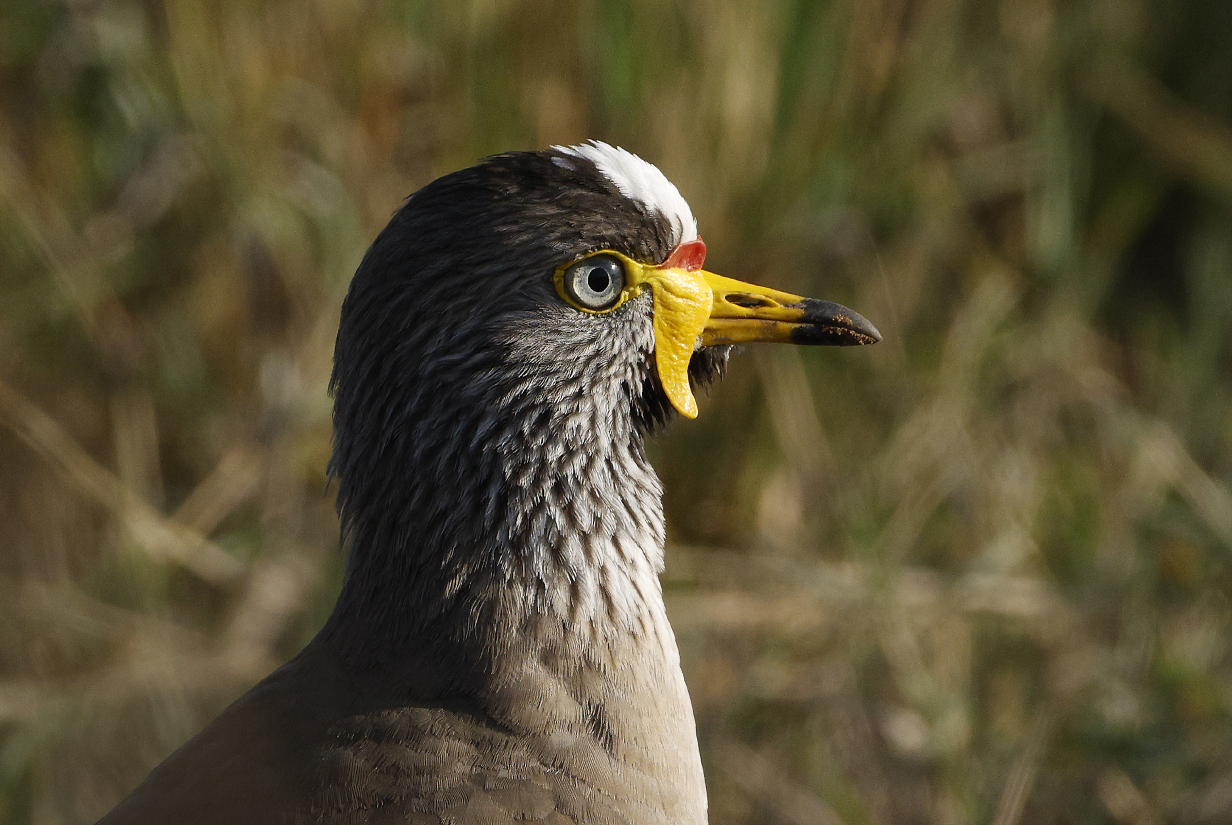
Wattled lapwing
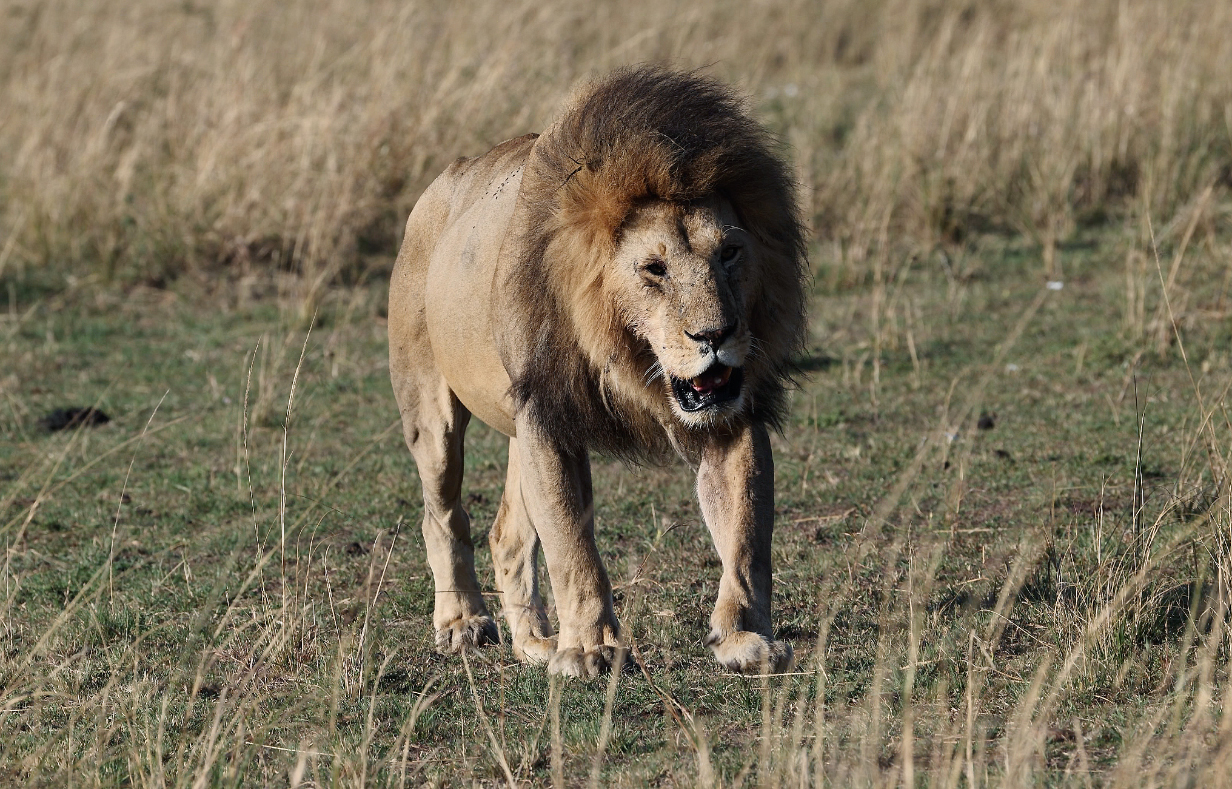
There were three dominant male "brothers" (allied, whether or not they were siblings) in the area. This movie shows one of them walking almost straight toward our safari vehicle. Seconds after the end of the movie, he passed within a meter in front of us. Predators are very used to safari vehicles. This one ignored us completely. We do however understand why nobody is allowed to get out of a vehicle without a careful check that no predators are nearby: As soon as we alight, we look like food.
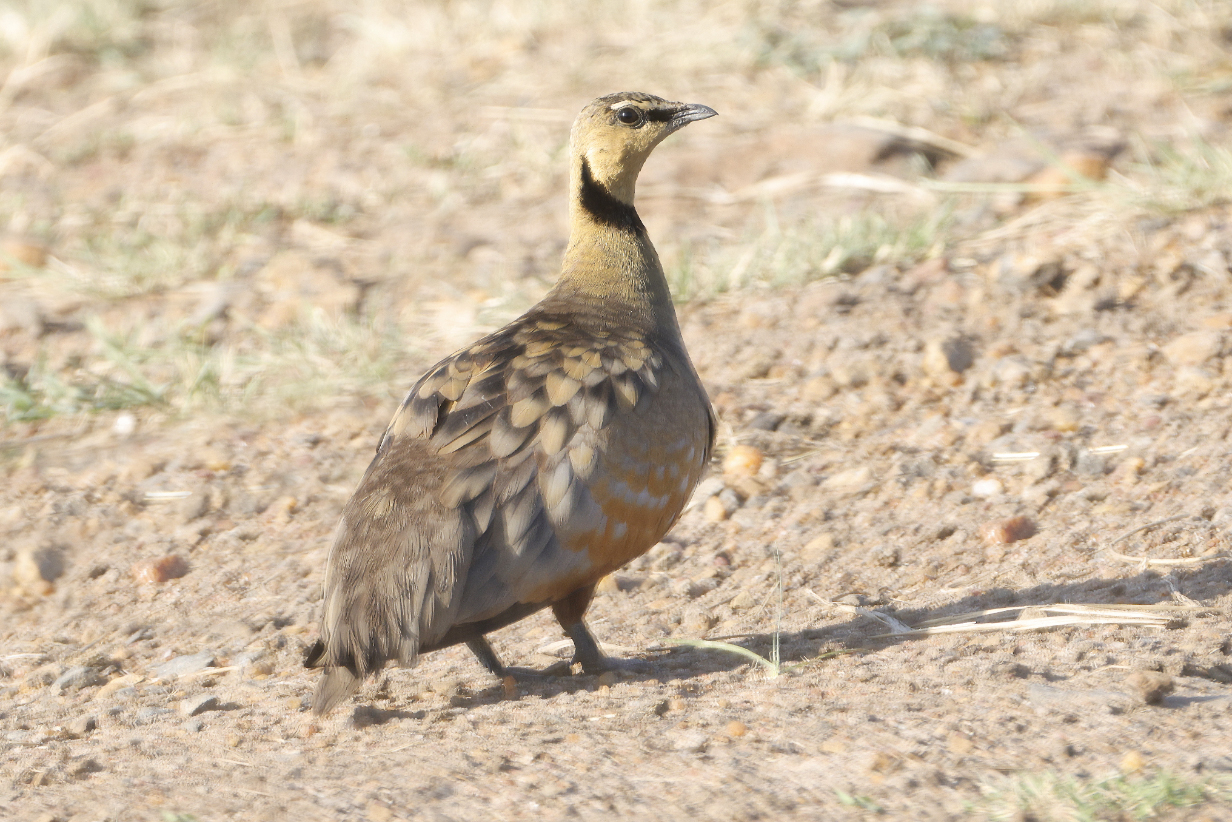
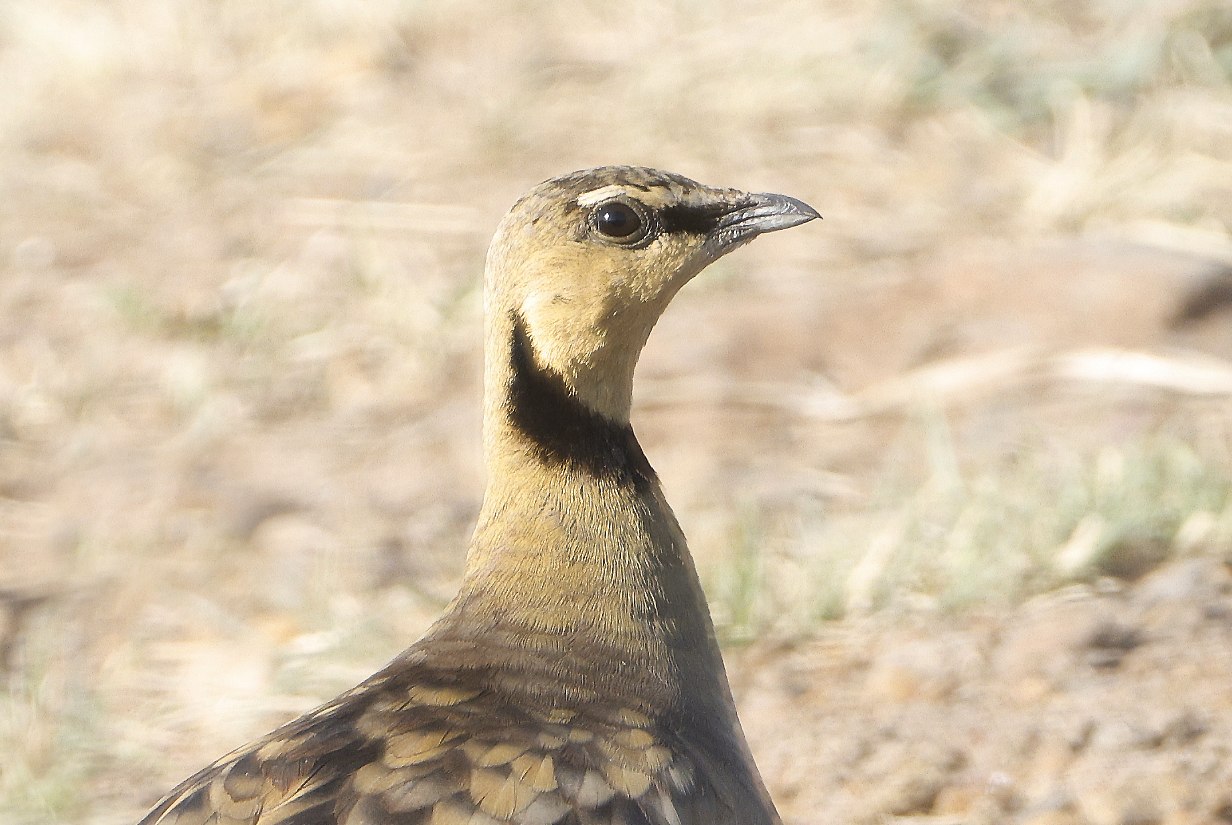
Yellow-throated sandgrouse (male)
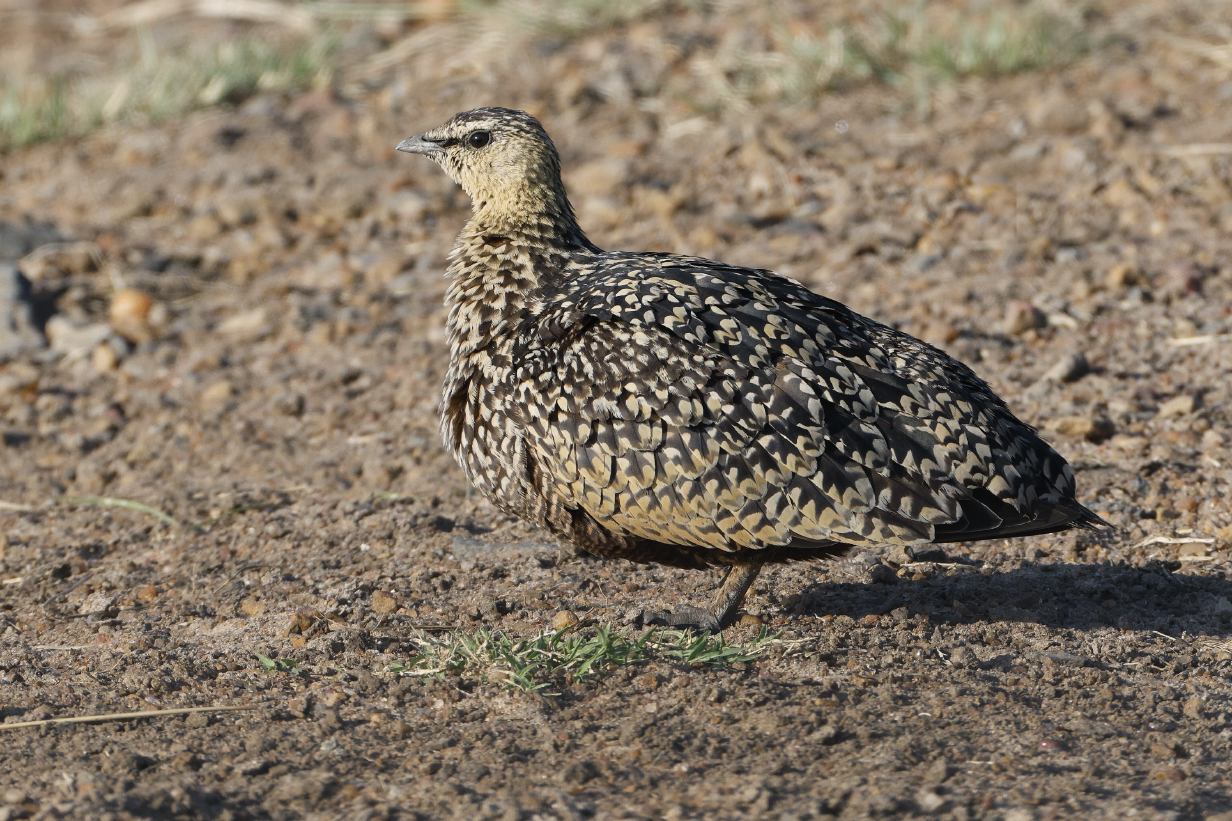
Yellow-throated sandgrouse (female)
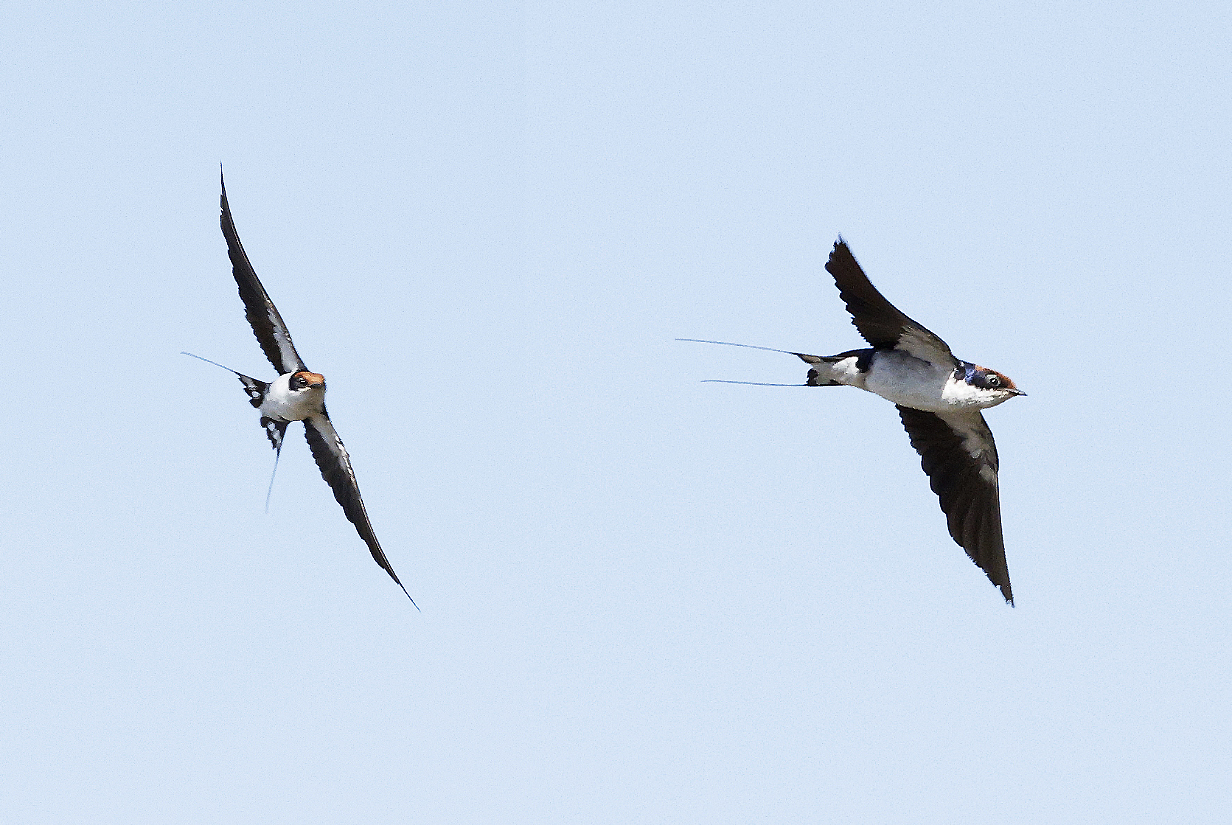
Wire-tailed swallow (It's not often that you get a chance to photograph swallows in flight, so I could not resist including these fairly good attempts.)
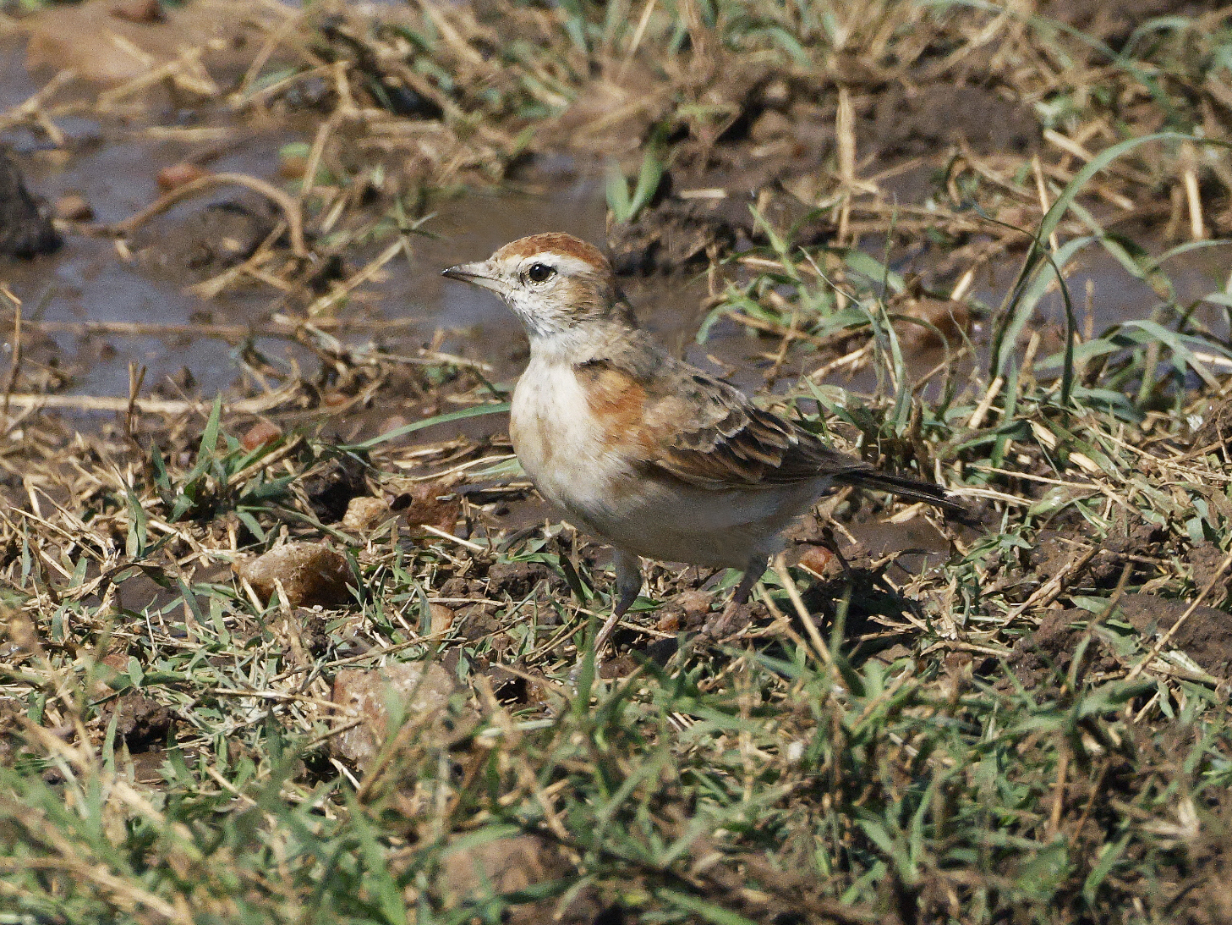
Red-capped lark
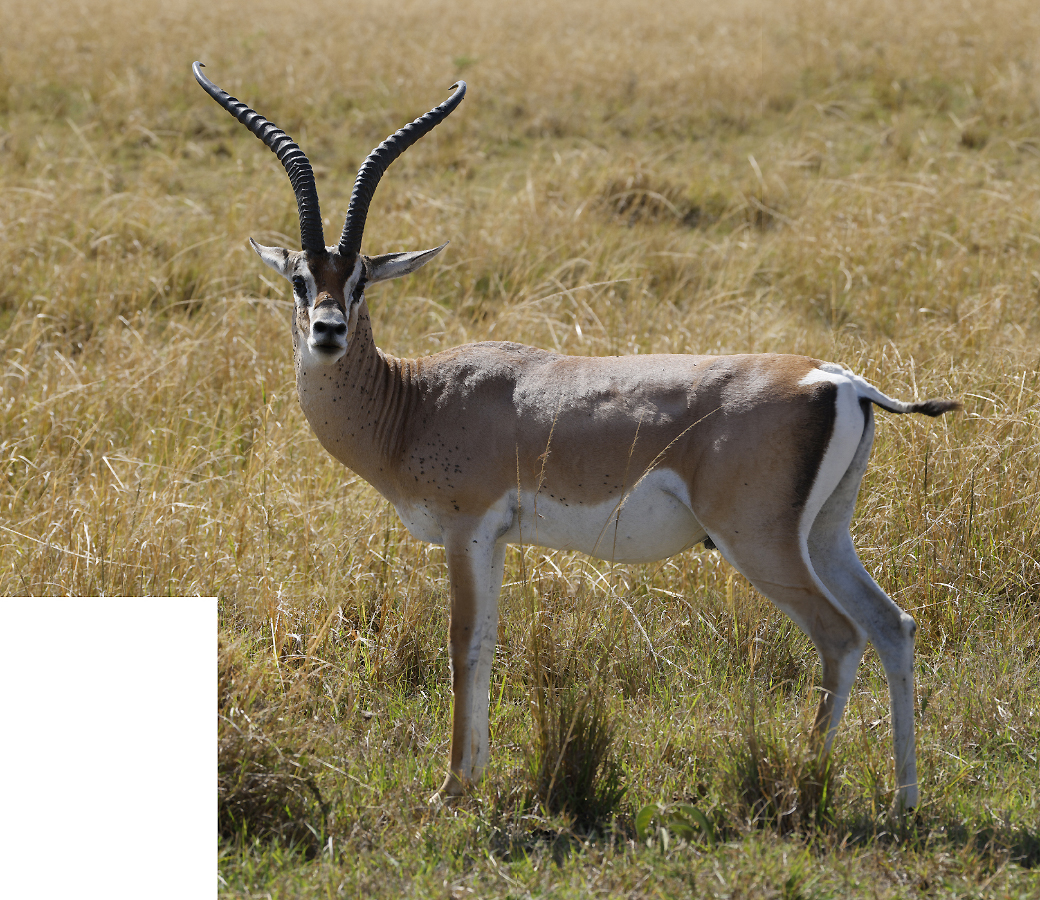
Grant's gazelle
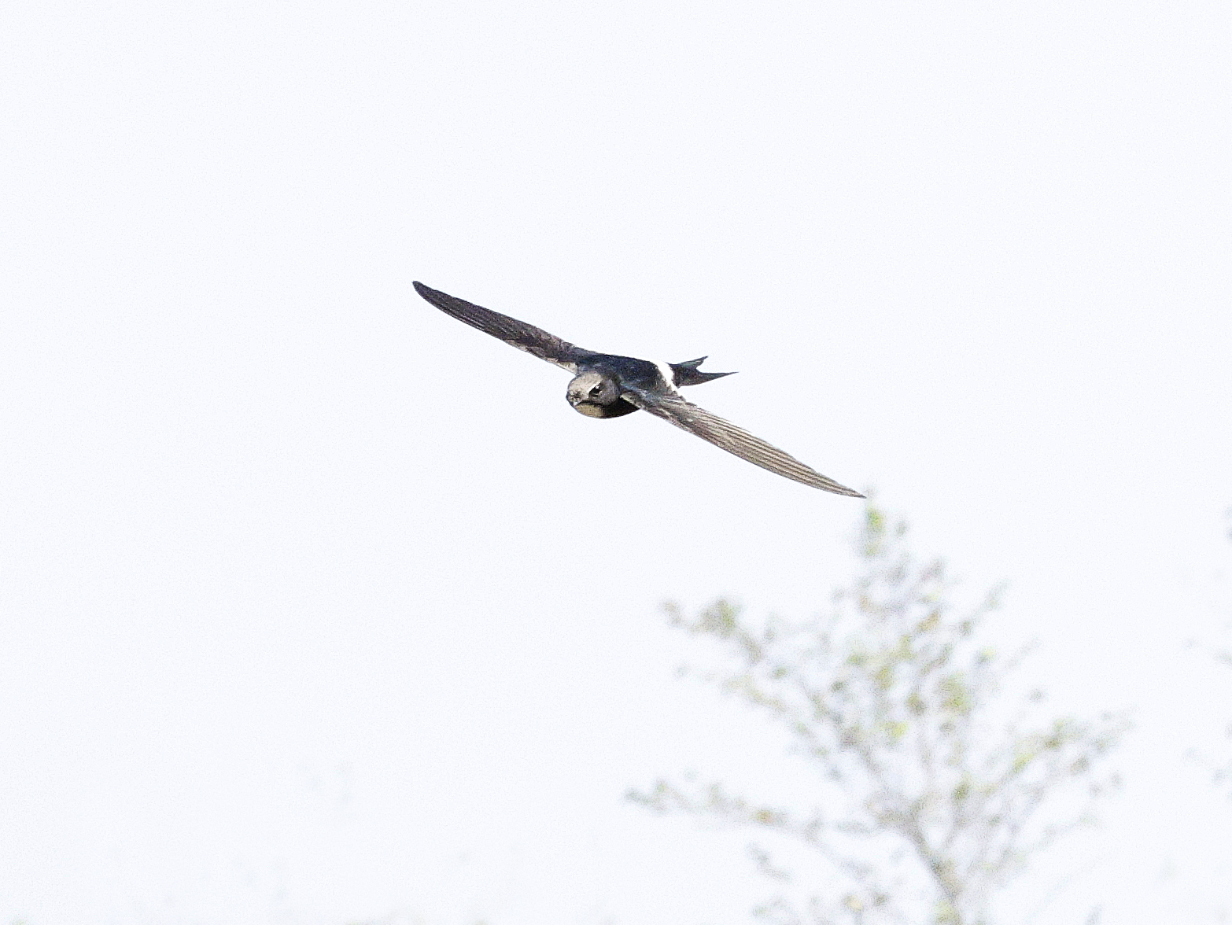
White-rumped swift (not a great picture, but definitive)
At this point, we made the long and bumpy drive to Muthu Keekorok Lodge, where we were originally booked to stay before labor disputes closed it temporarily and made our emergency tent camp necessary. We were not allowed into the lodge grounds, but we birded successfully just outside the gate.
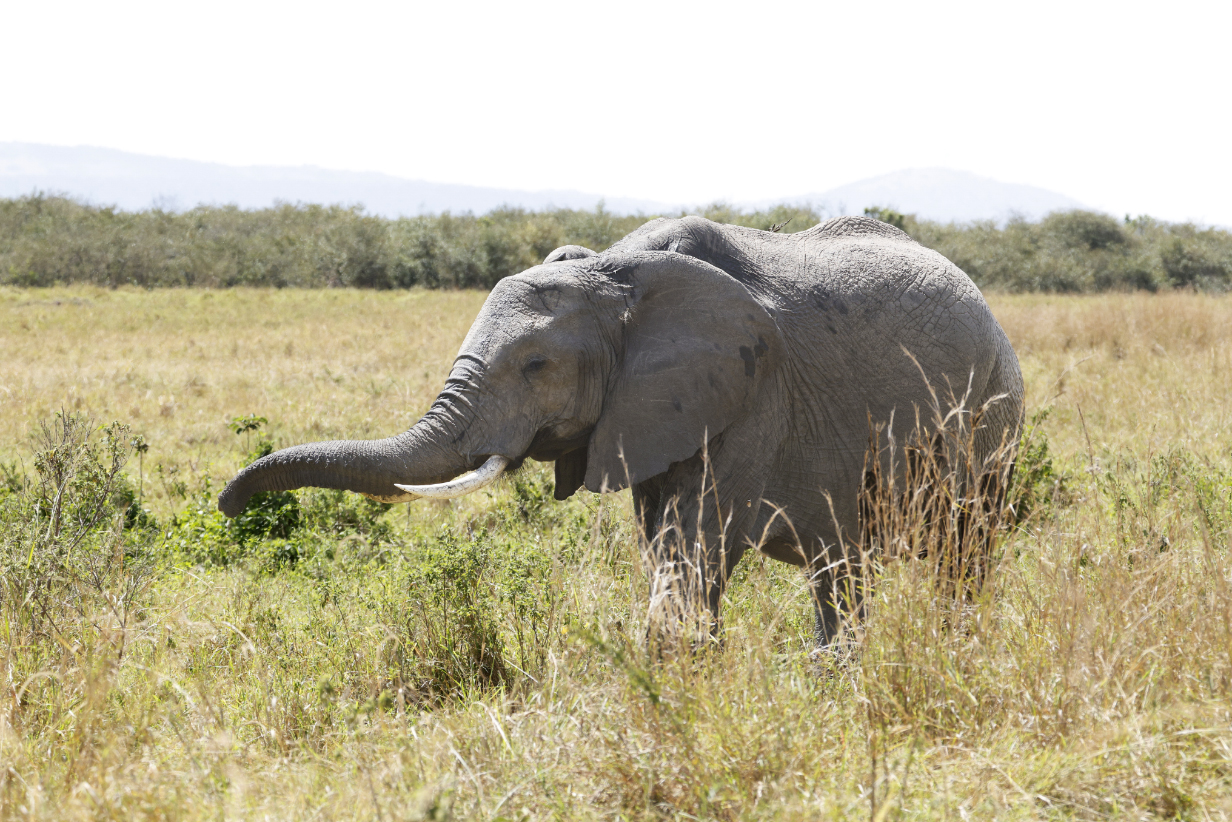
We saw elephants intermittently ... but this matriarch came unusually close to us as we neared the lodge.
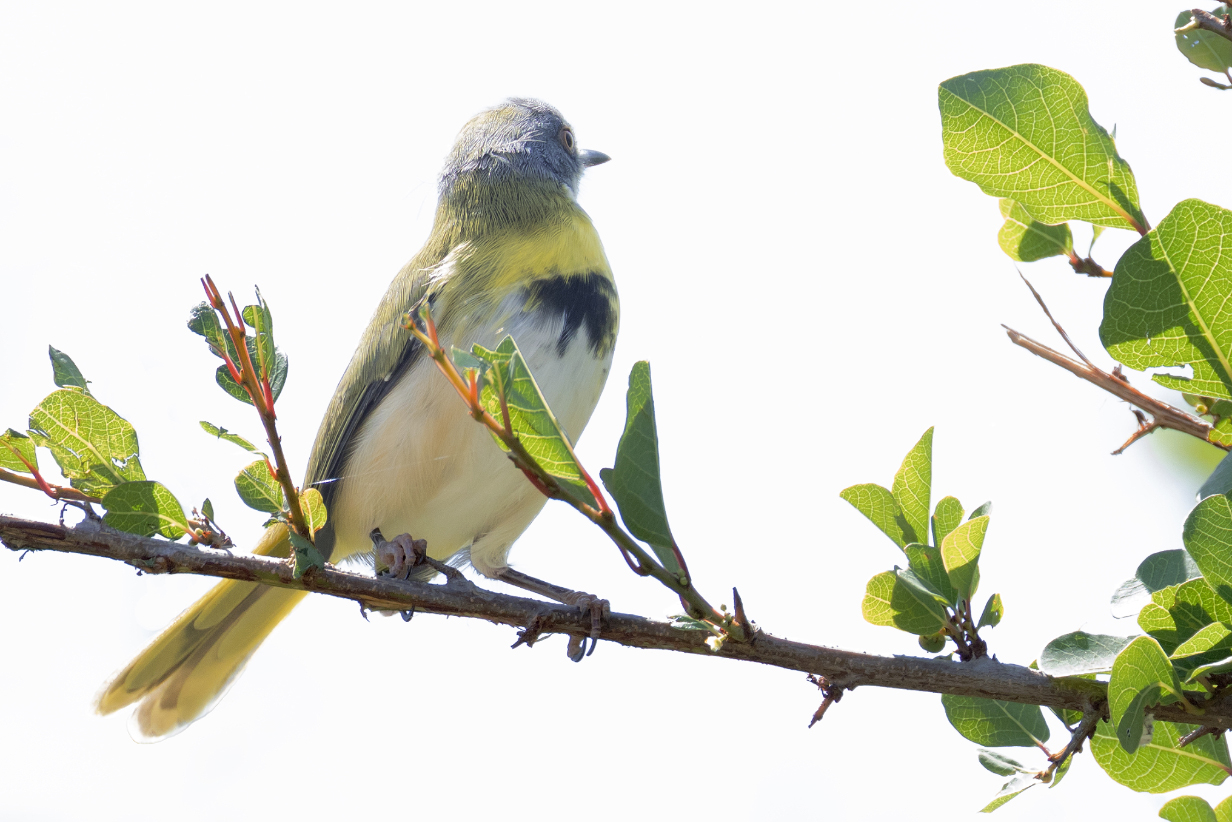
Yellow-breasted apalis
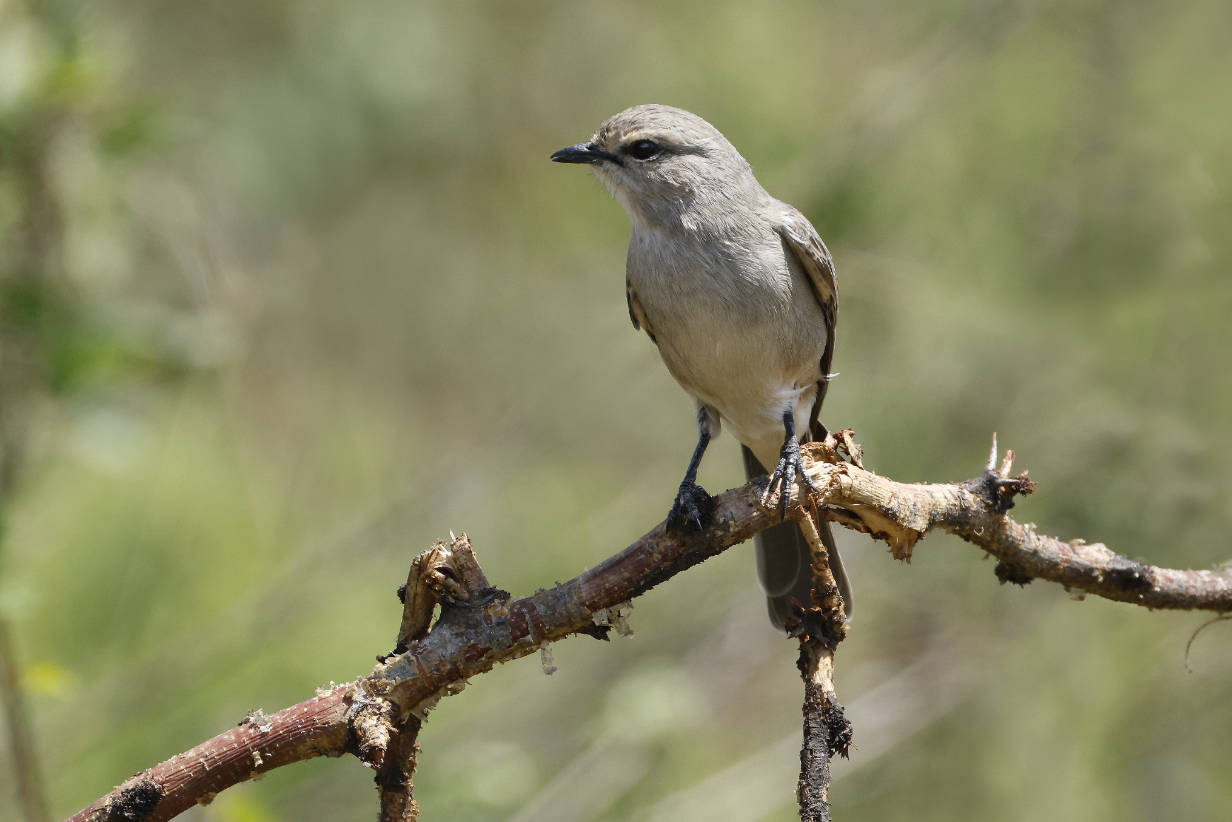
African gray flycatcher much better seen than my life bird on August 8th in Nairobi National Park
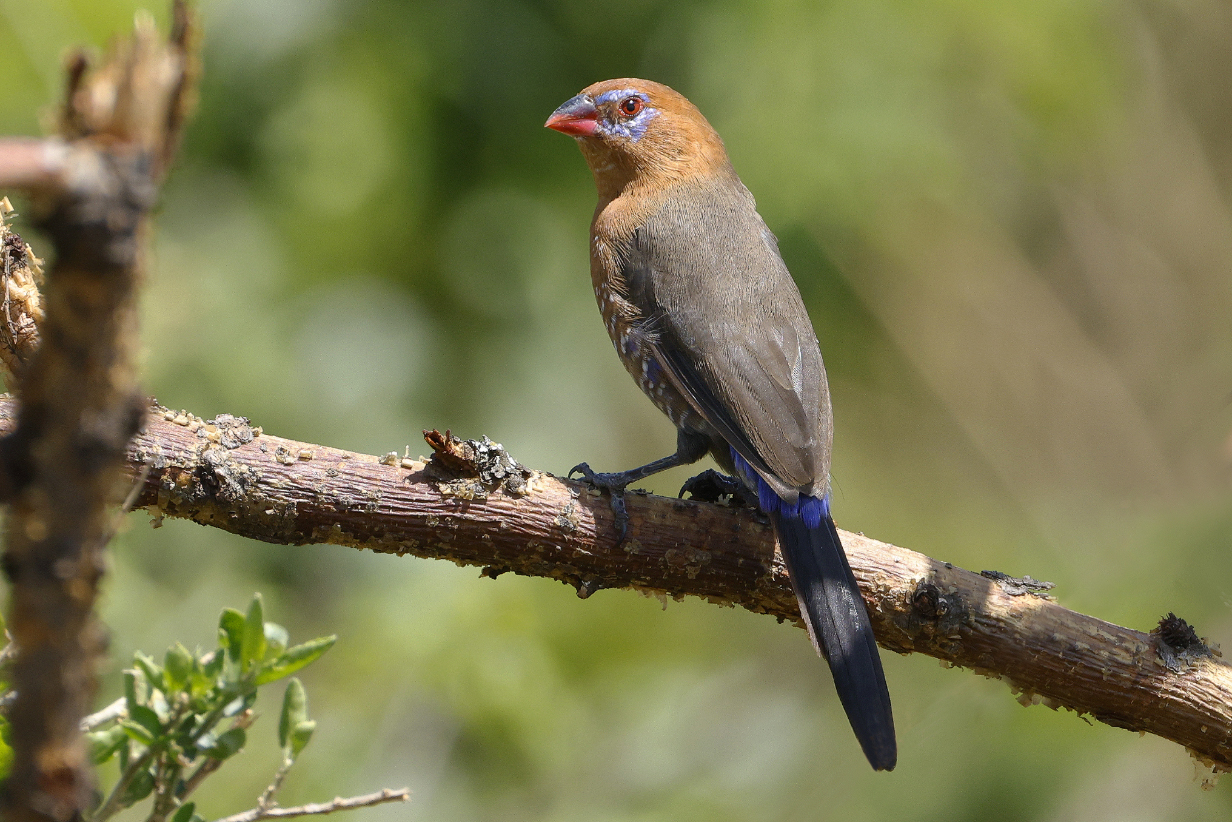
Purple grenadier (This female is my life bird. I saw a male a little later: below.)
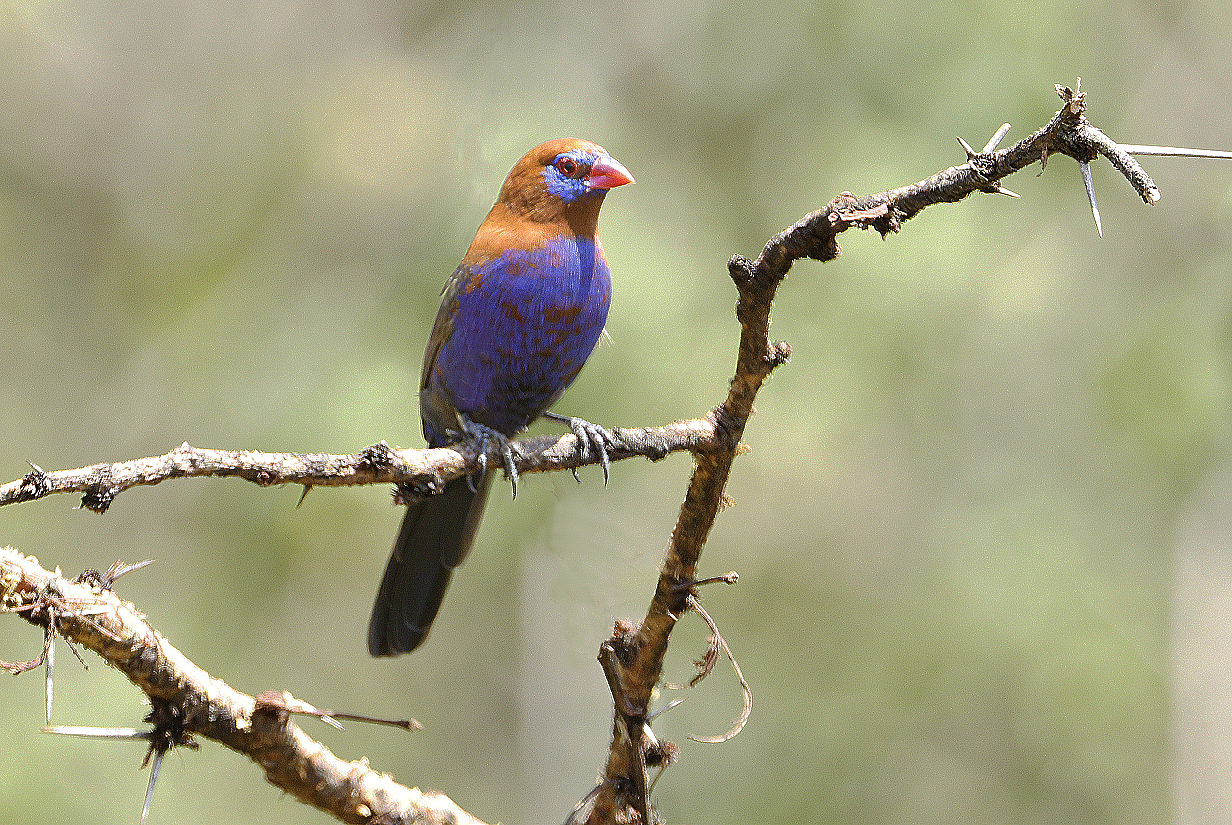
Purple grenadier (Male: Full disclosure: My luck with this bird was bad, and a branch covered his right shoulder, lower belly, and part of his right foot. I removed these as well as possible via Photoshop. But this picture is heavily enough doctored so that it should be viewed as giving a good impression of the bird with no guarantee that it is fully accurate.)
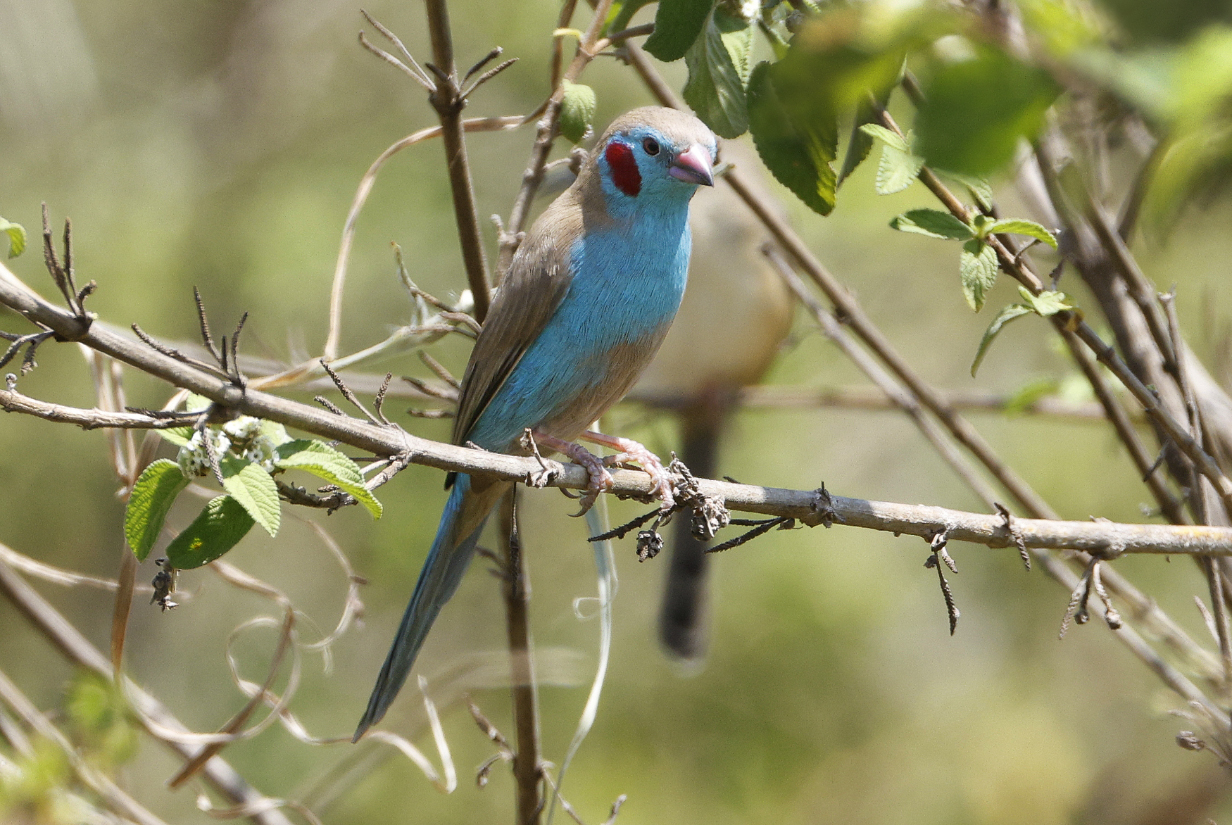
Red-cheeked cordonbleu
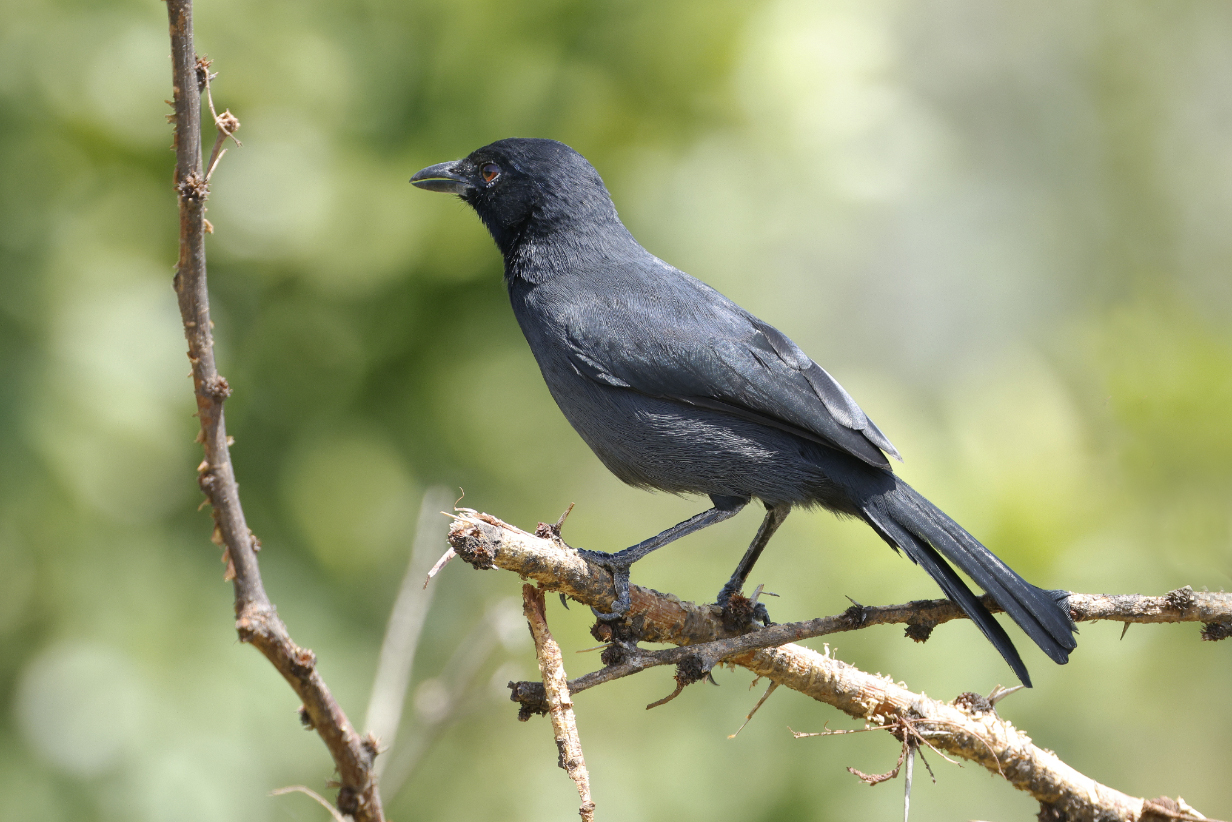
Slate-colored boubou
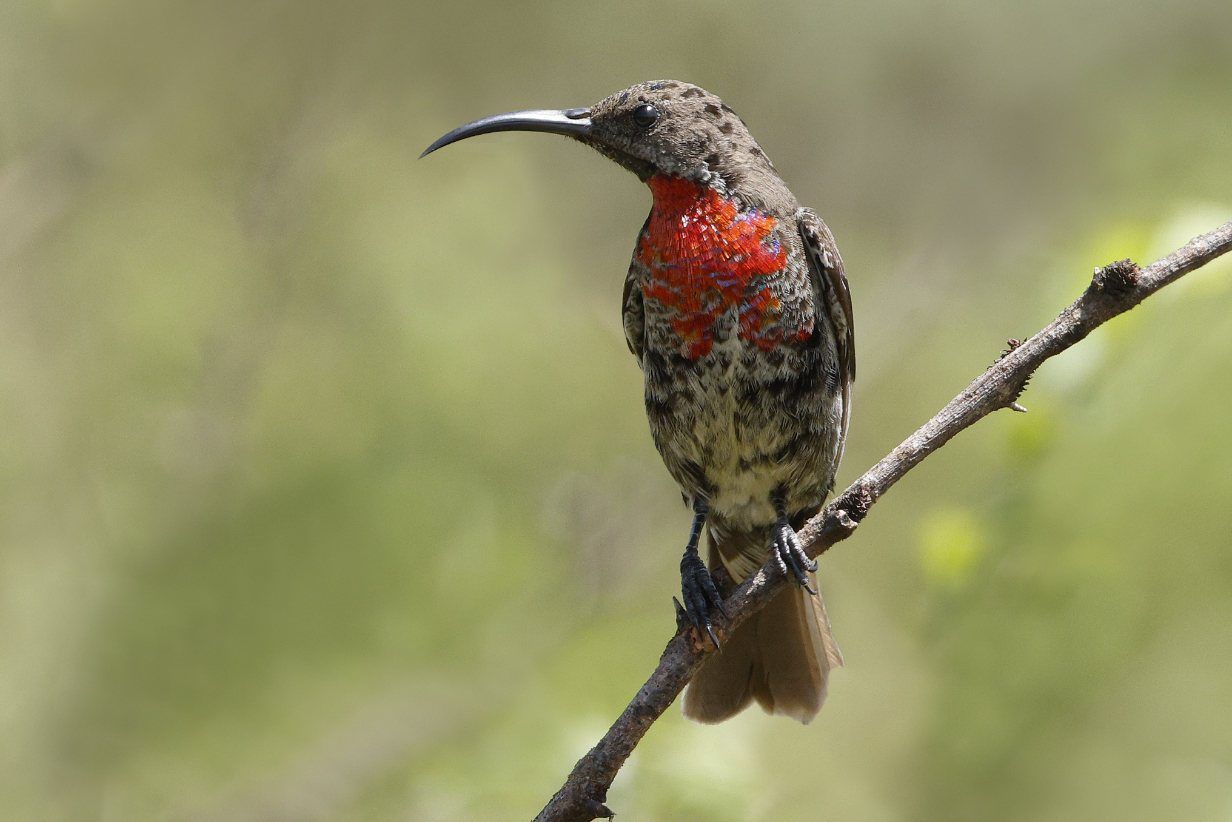
Scarlet-chested sunbird (juvenile male)
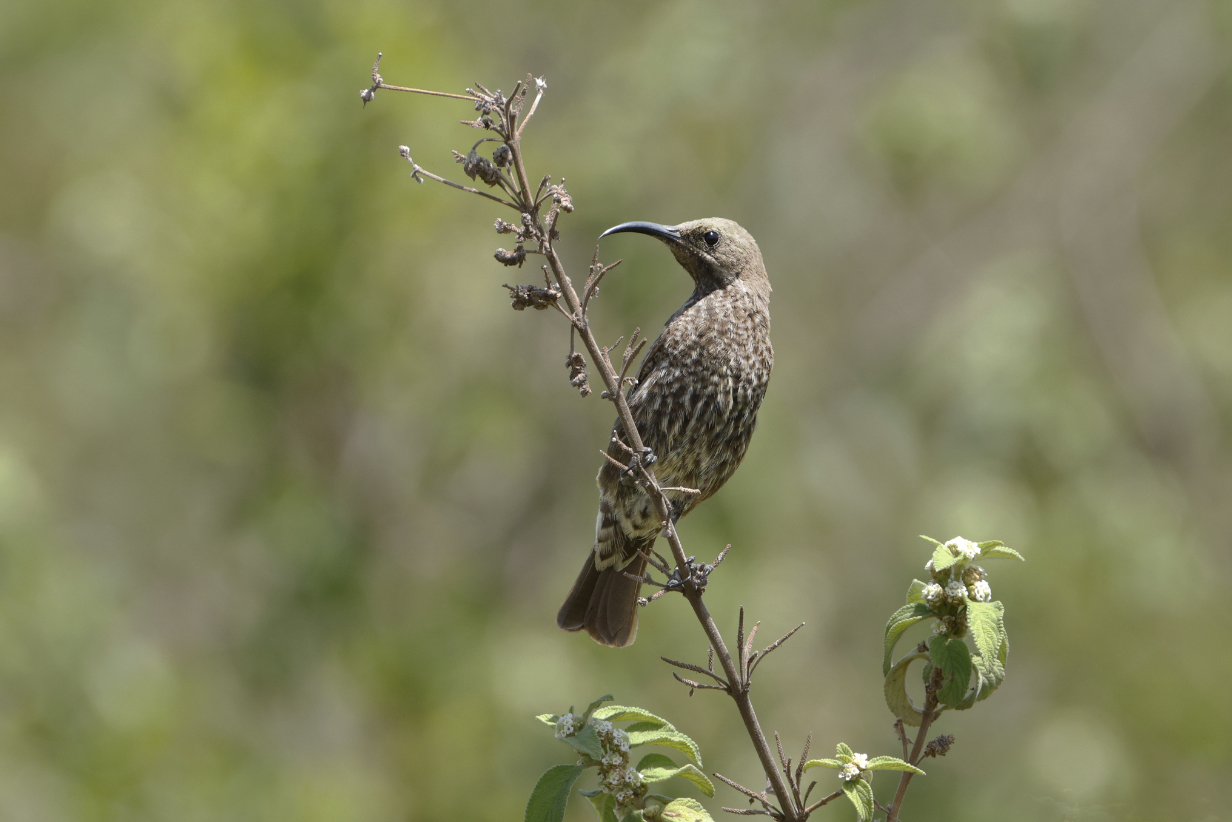
Scarlet-chested sunbird (female)
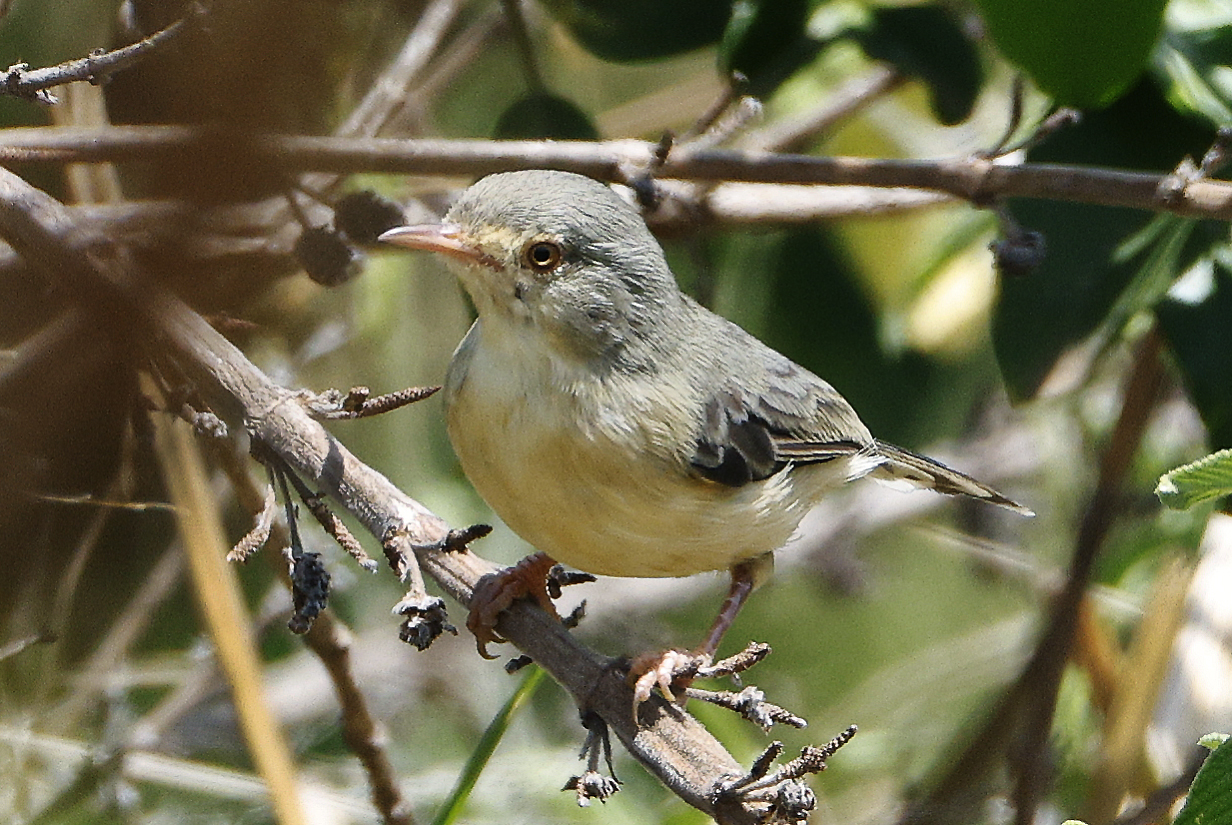
Buff-bellied warbler (This is my life bird.)
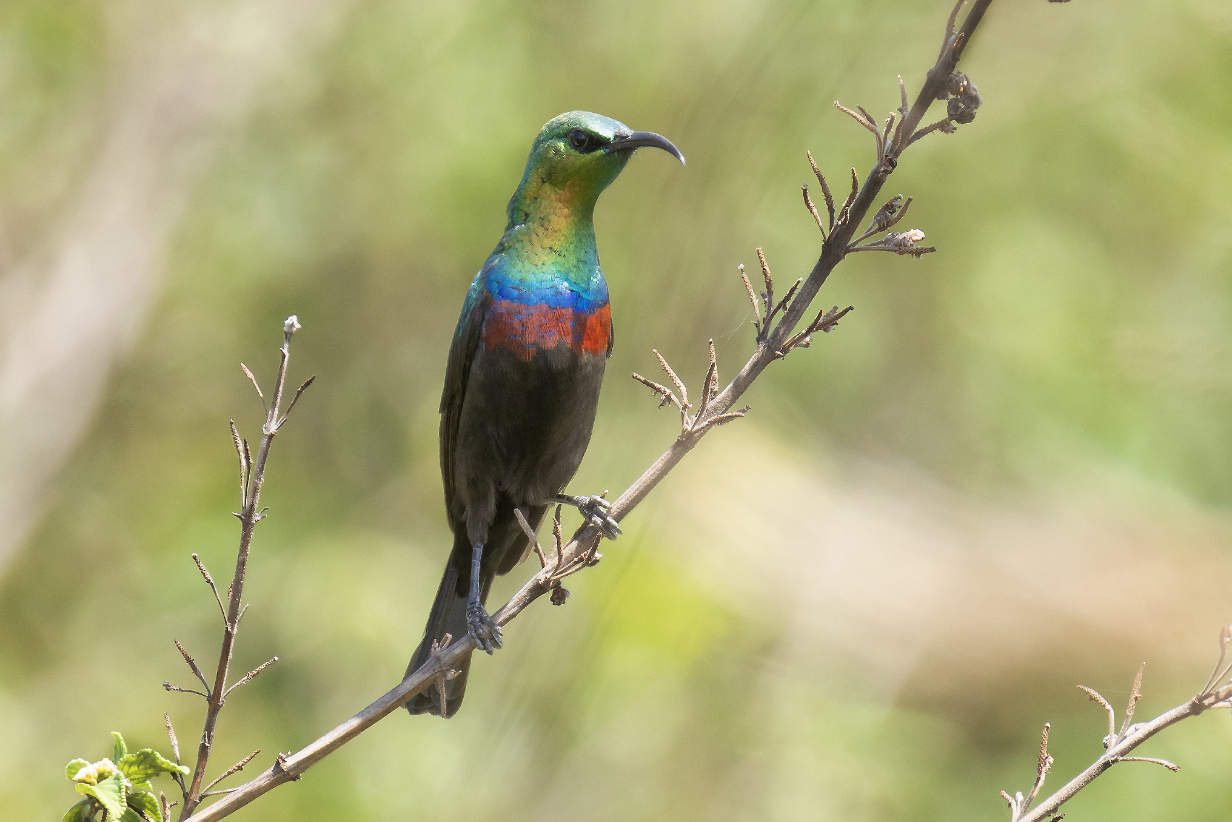
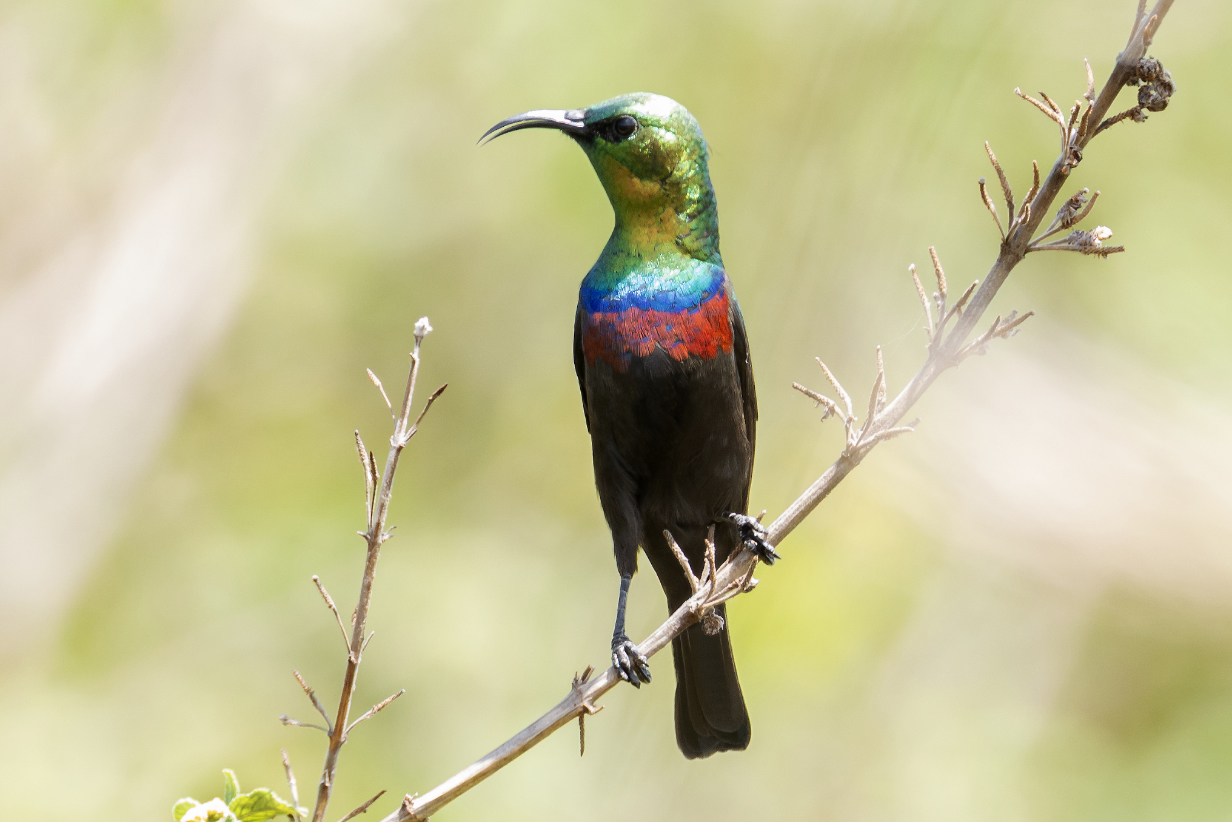
Marico sunbird (male)
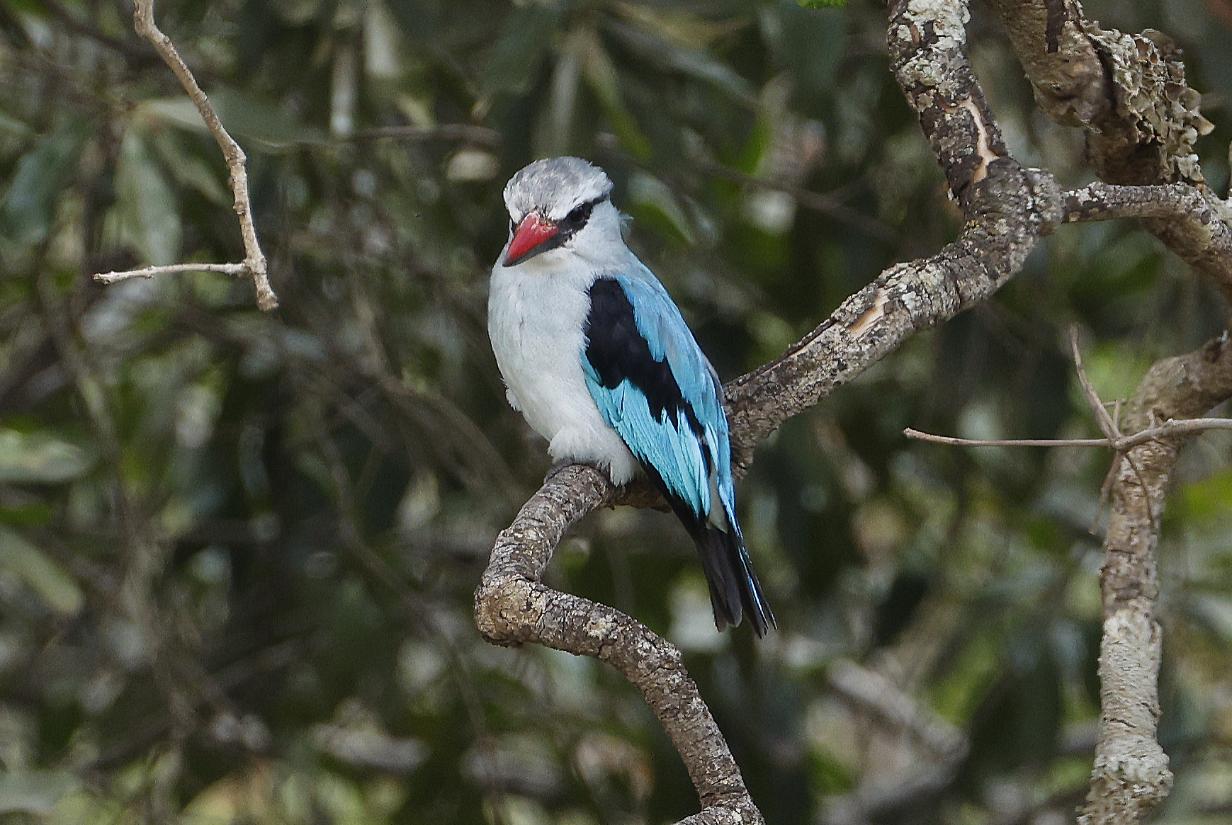
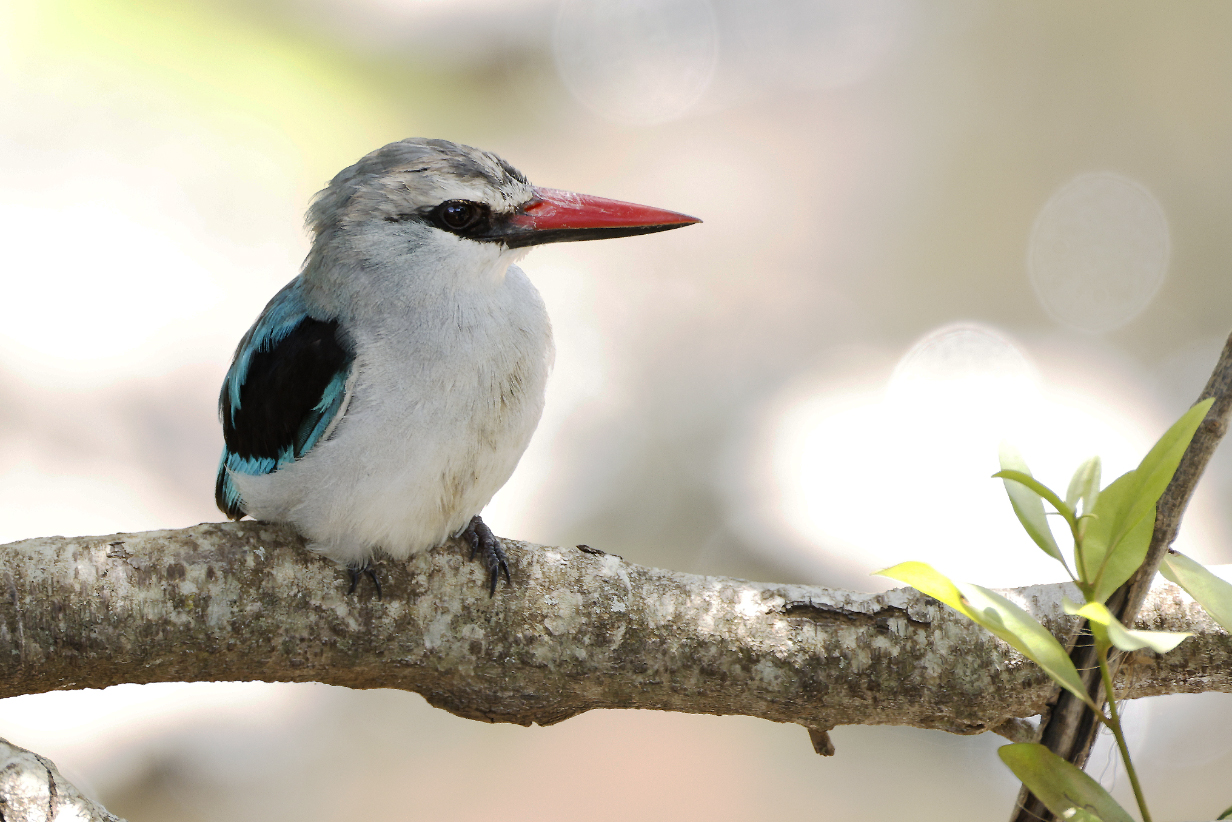
Woodland kingfisher
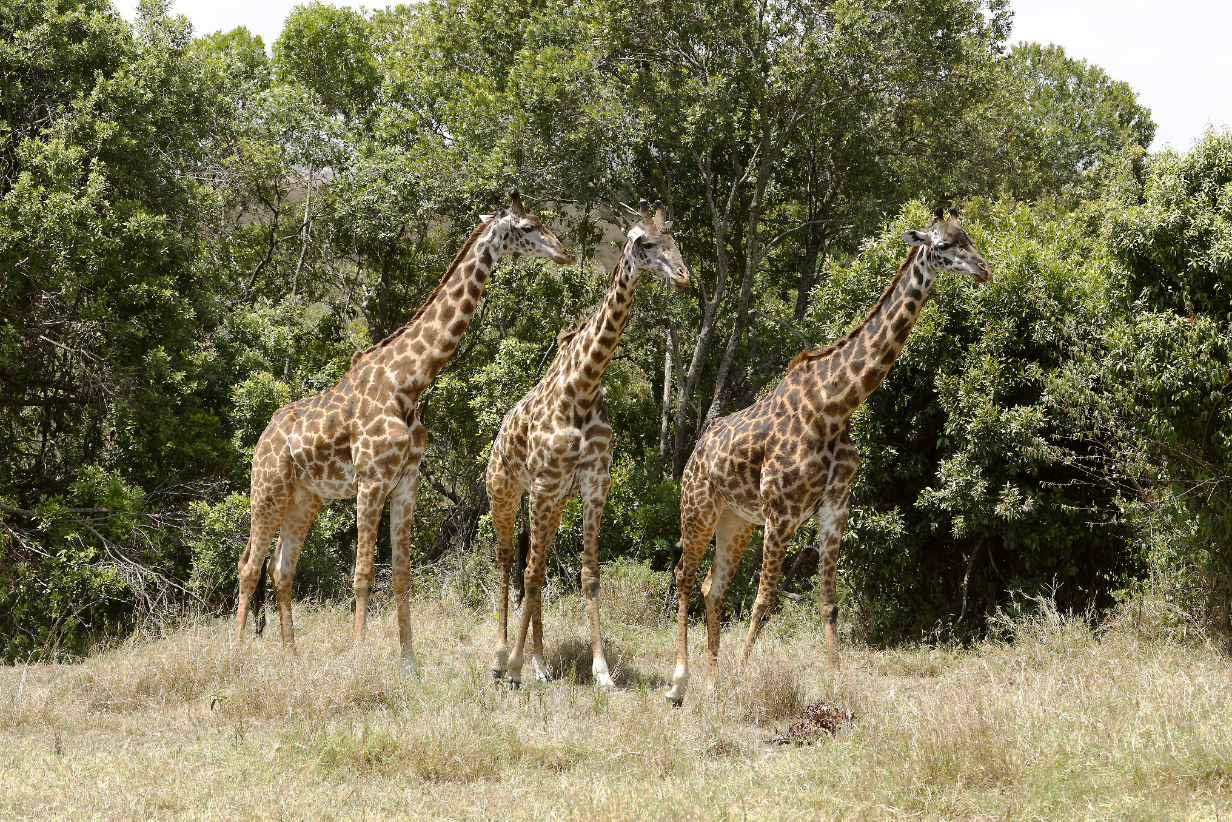
Always-graceful Masai giraffes near Keekorok Lodge Here is a movie taken around noon on August 12th.
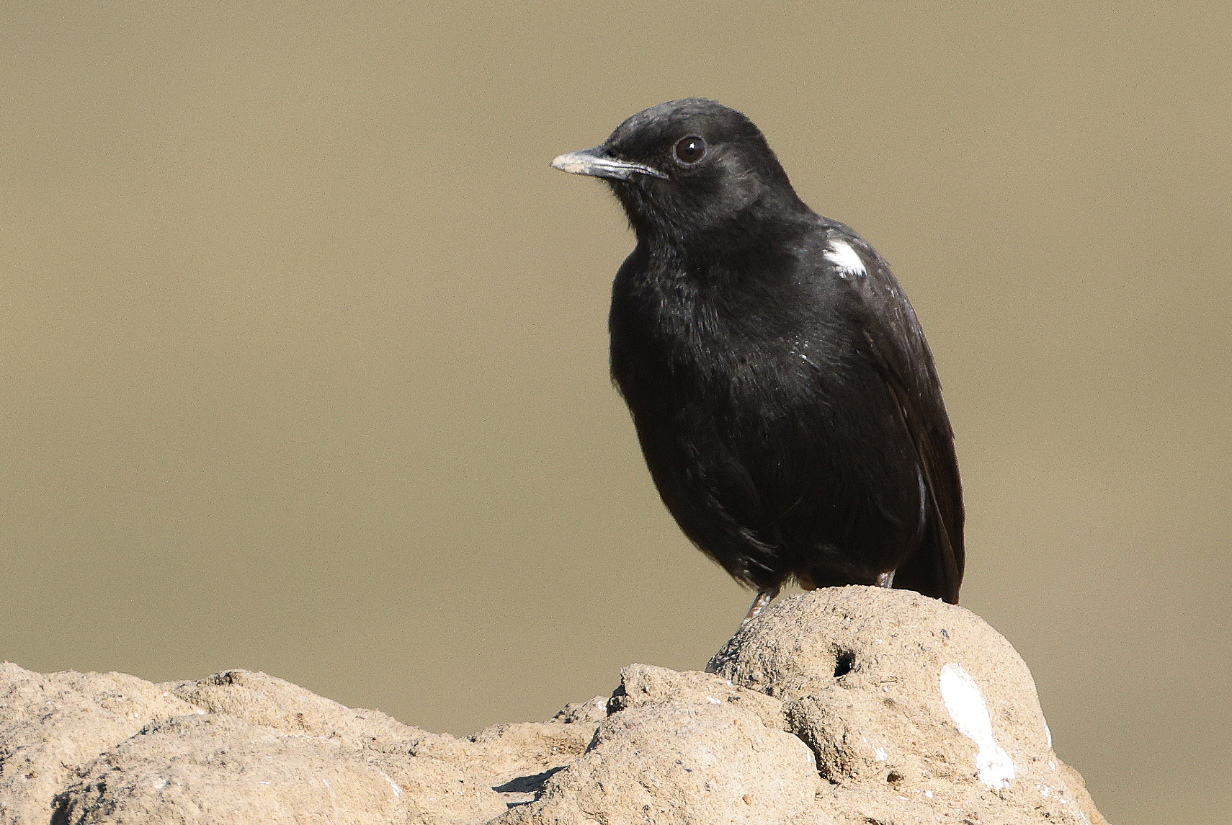
Sooty chat (This is my life bird, during late PM safari drive)
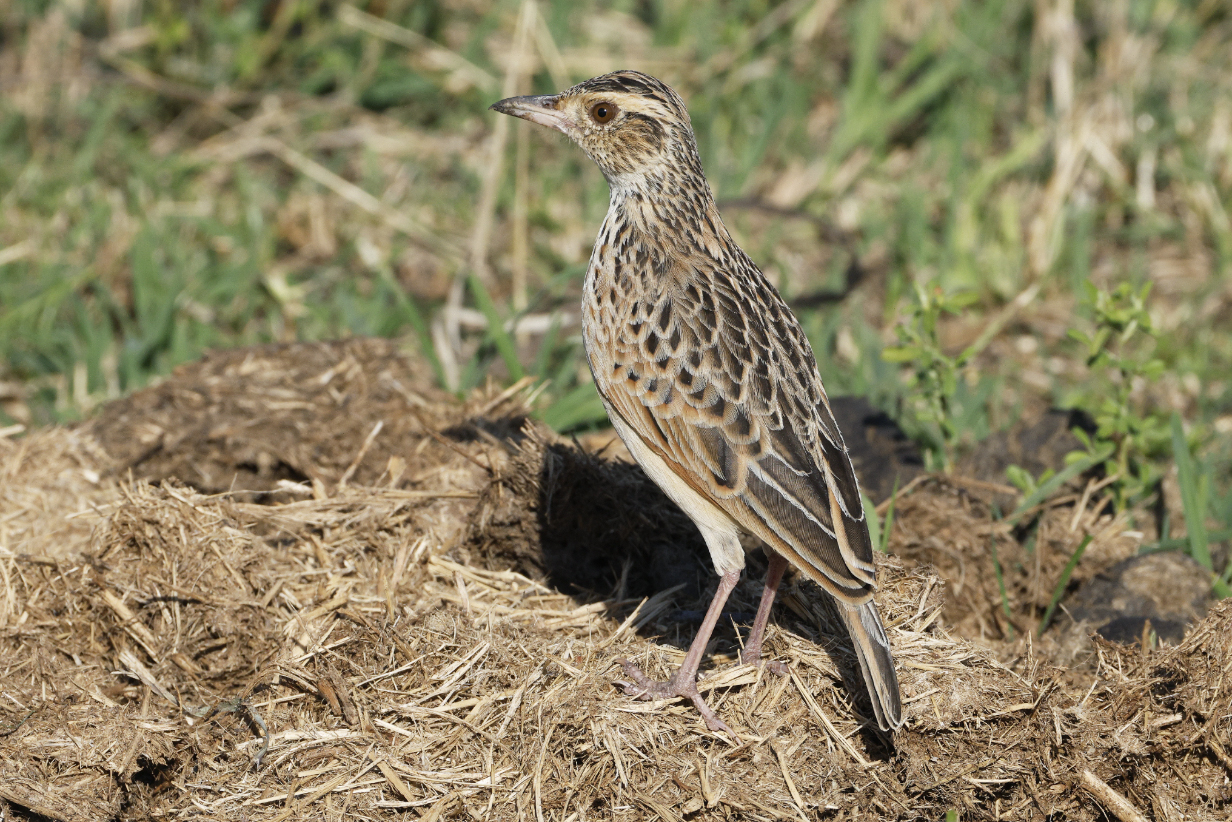
Rufous-naped lark
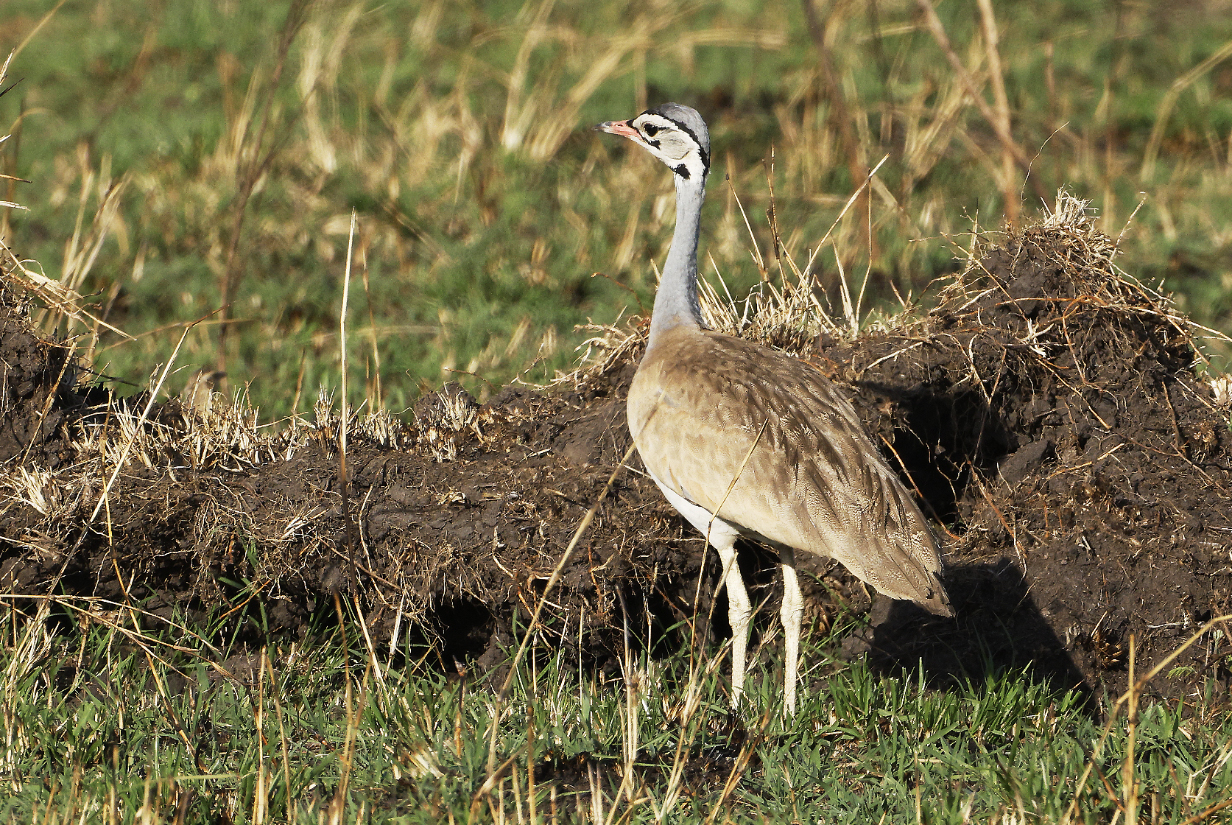
White-bellied bustard
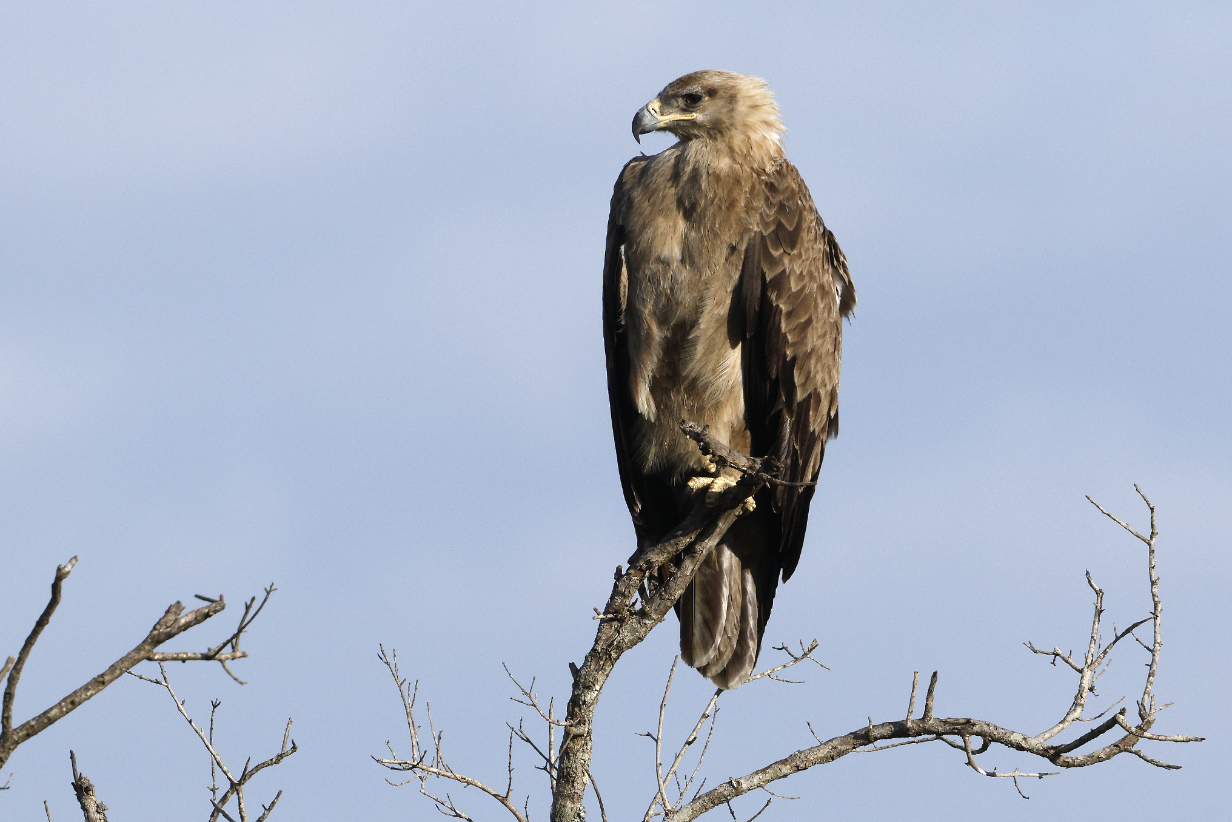
Tawny eagle (Young adult dark morph)
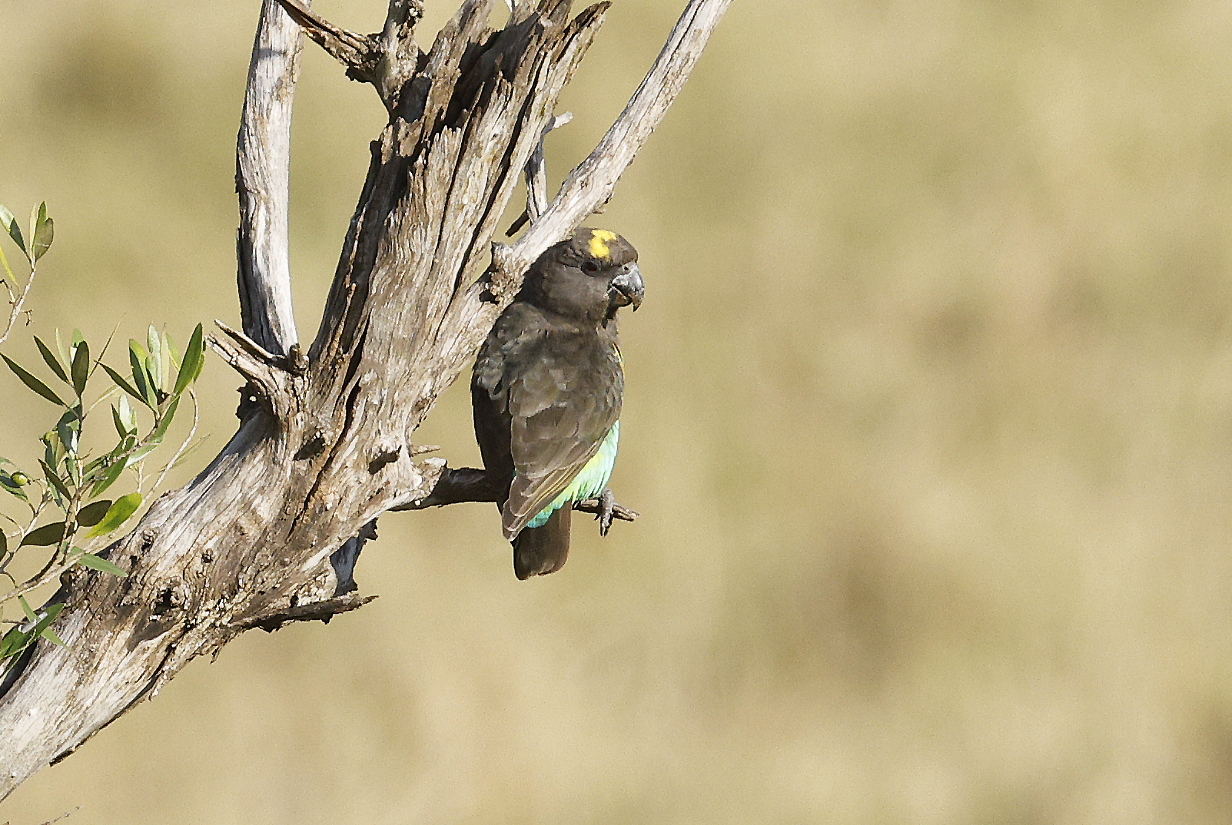
Meyer's parrot (This is my life bird.)
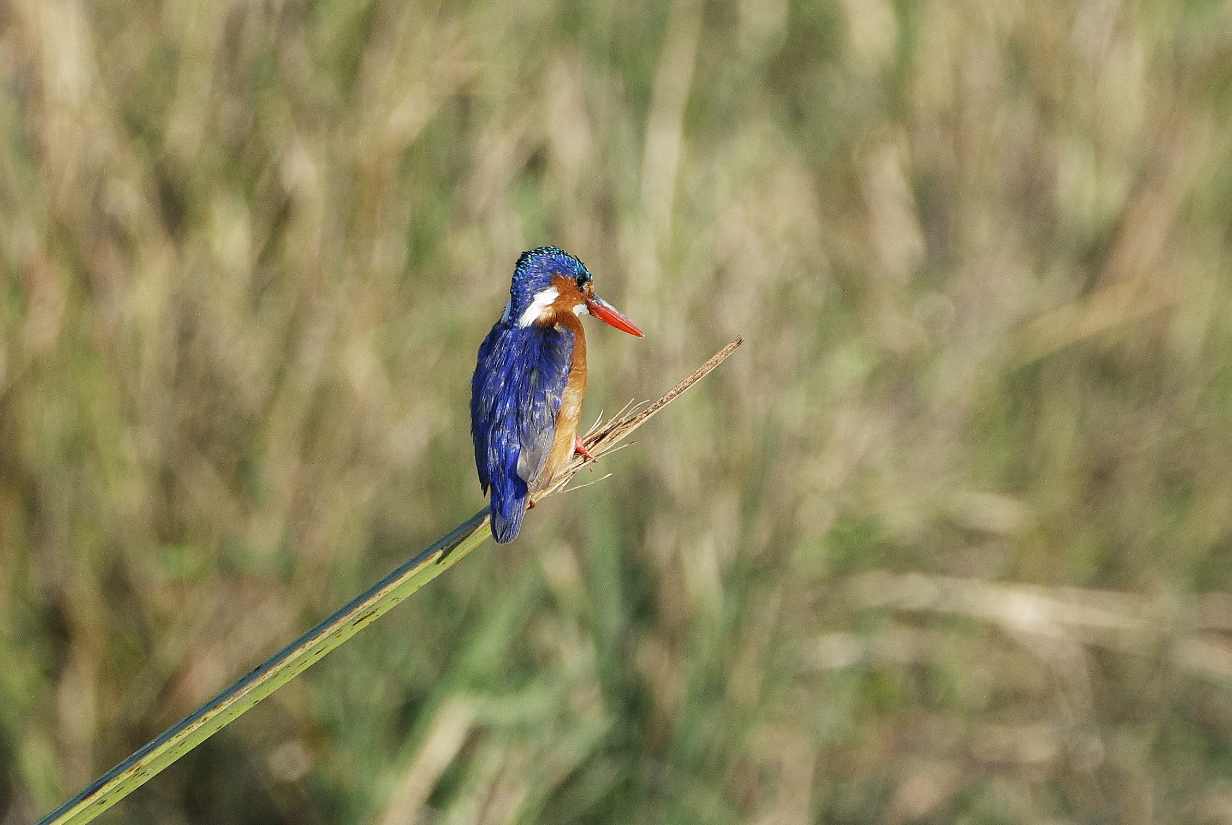
Malachite kingfisher (Wonderful jewel of a bird ... but did not come close, today)
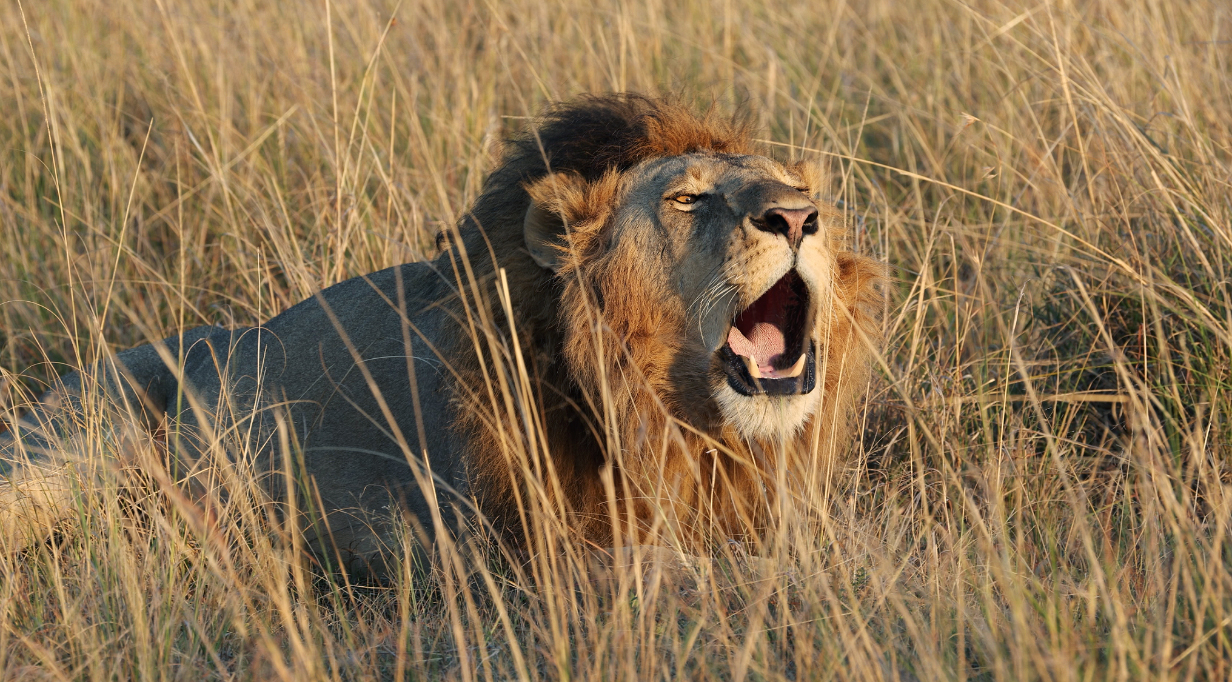
Lions were a constant presence in the Mara. We needed to be escorted by an armed Masai warrior between our tents and the dining area at night, because lions could wander into camp. This movie shows one of the dominant males in the region proclaiming that this is his territory: "Stay away!"
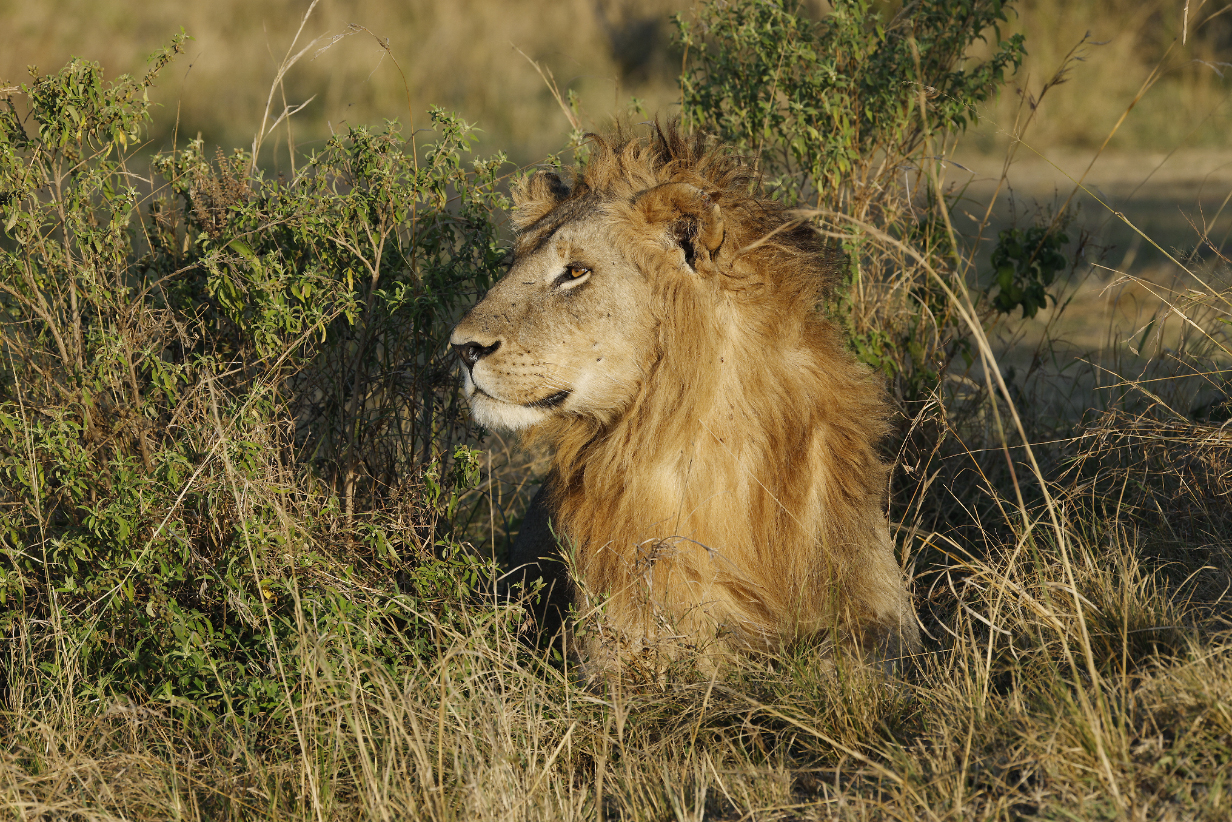
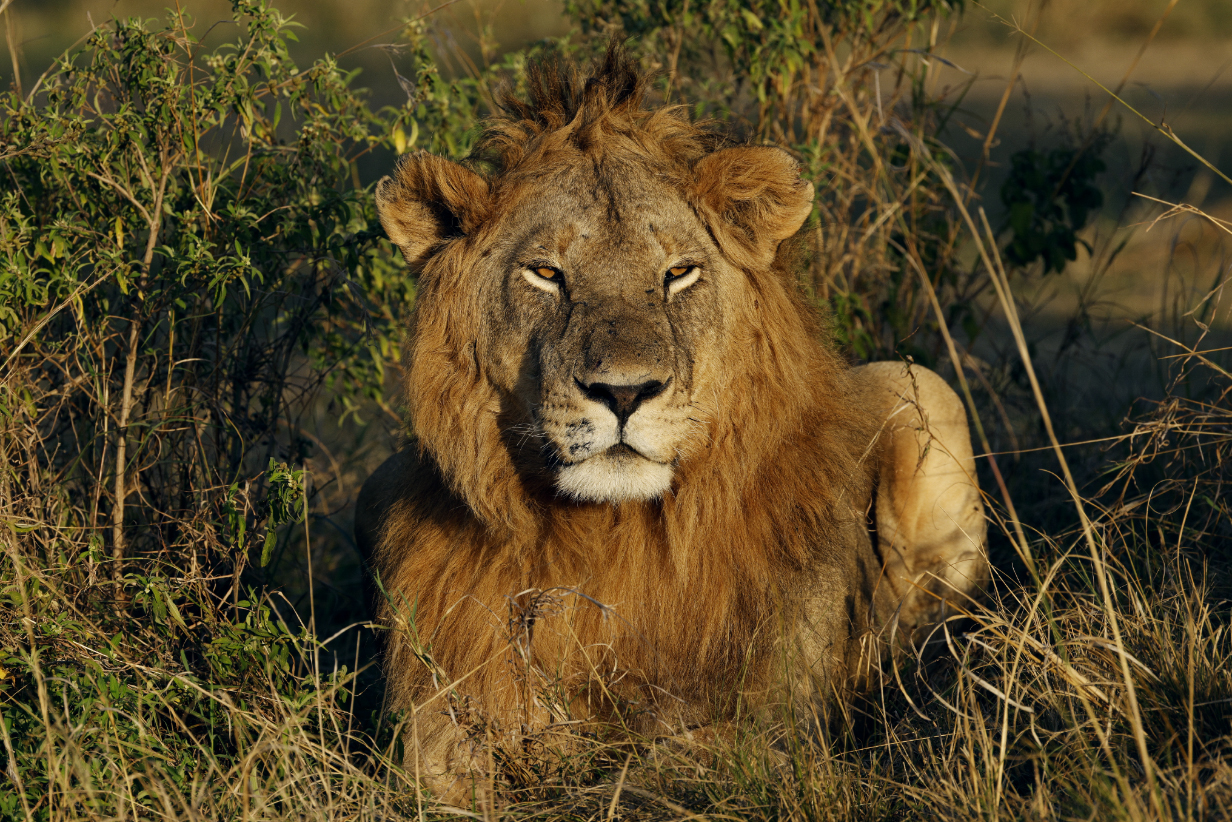
Lion resting in evening twilight
August 13: Masai Mara National Reserve
Today in the morning, we took a short safari drive during which lions again were especially prominent. Then we stayed in camp and birded the scrub forest around our sleeping and dining tents. This was actually very productive and contributed to our feeling that we were lucky to have been accommodated in an emergency (but very well run!) tent camp instead of in a formal lodge.
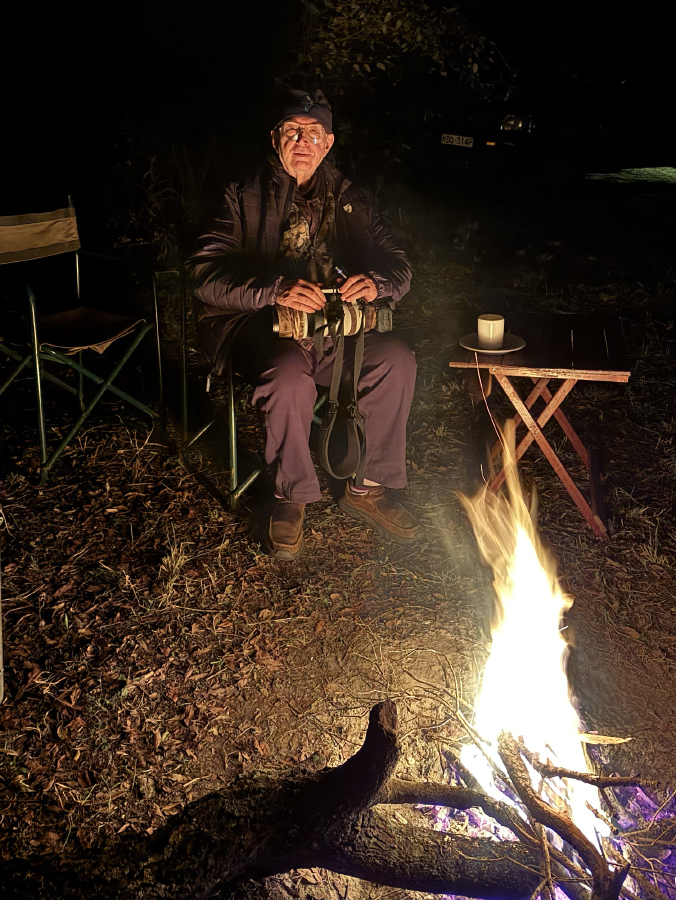
The day got off to a somewhat slow start. Here I am having coffee at 05:45, keeping warm with a fire kindly started for me by the camp crew.
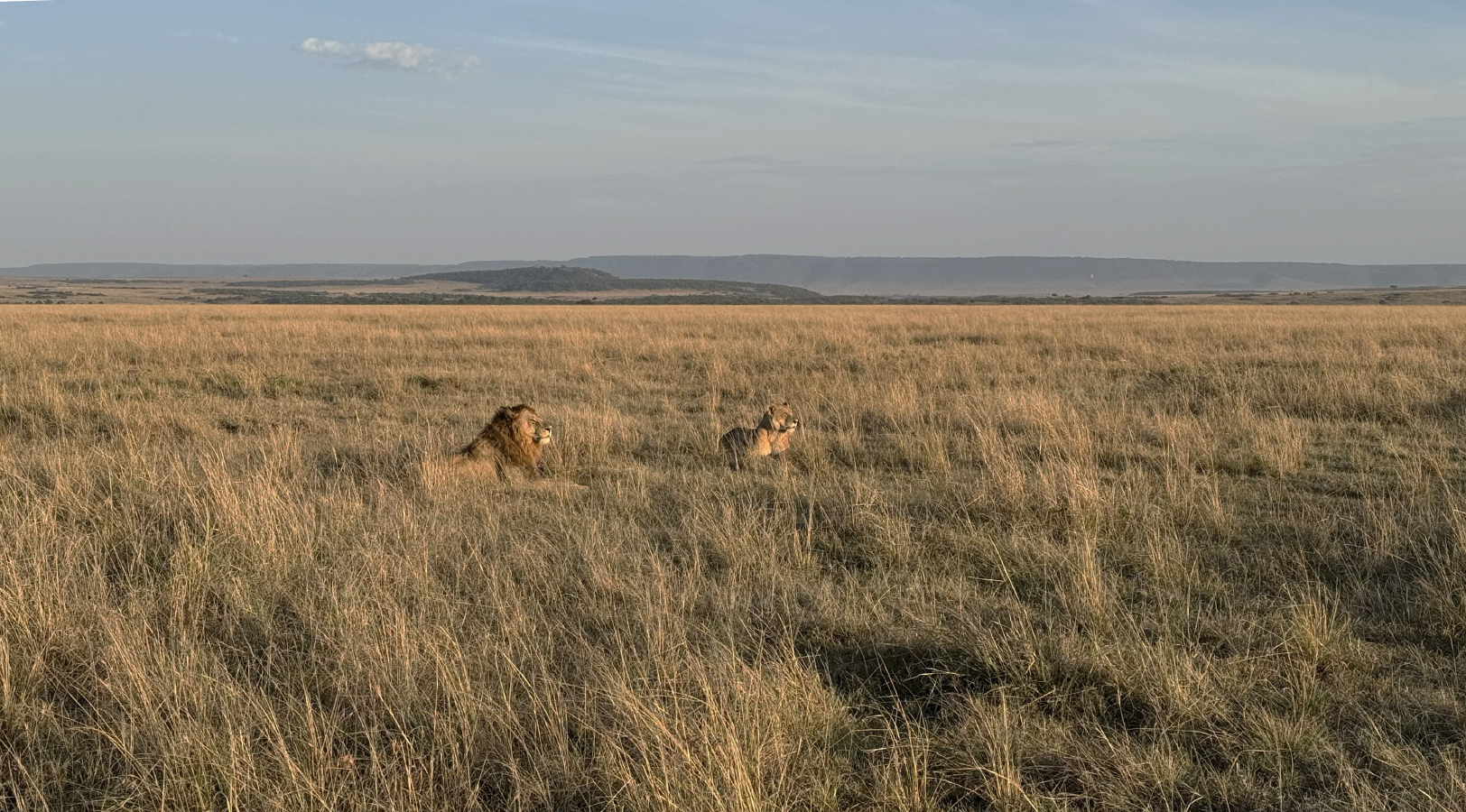
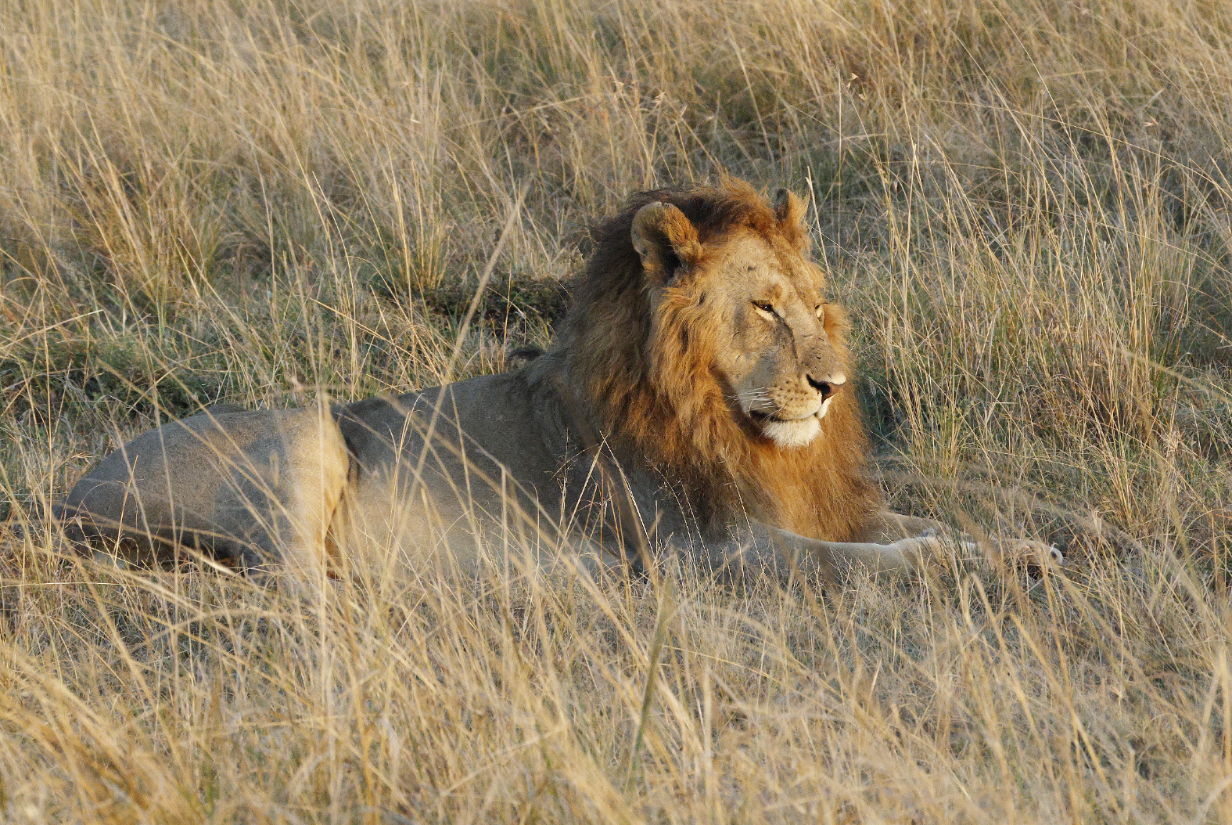
Lion in morning sunlight, guarding his mate. Our visit to the Mara appeared to coincide with a time when several (at least 2) of the 3 adult males that dominate the region were consorting with females. We saw only one actual pride, with more than half-a-dozen females plus cubs. That was late in the trip, not at Masai Mara. Here, we came upon single males keeping company with single females, clearly in the period when, over the course of several days, they mate many times.
This movie shows both of the pair, lounging, not quite ready to resume mating.
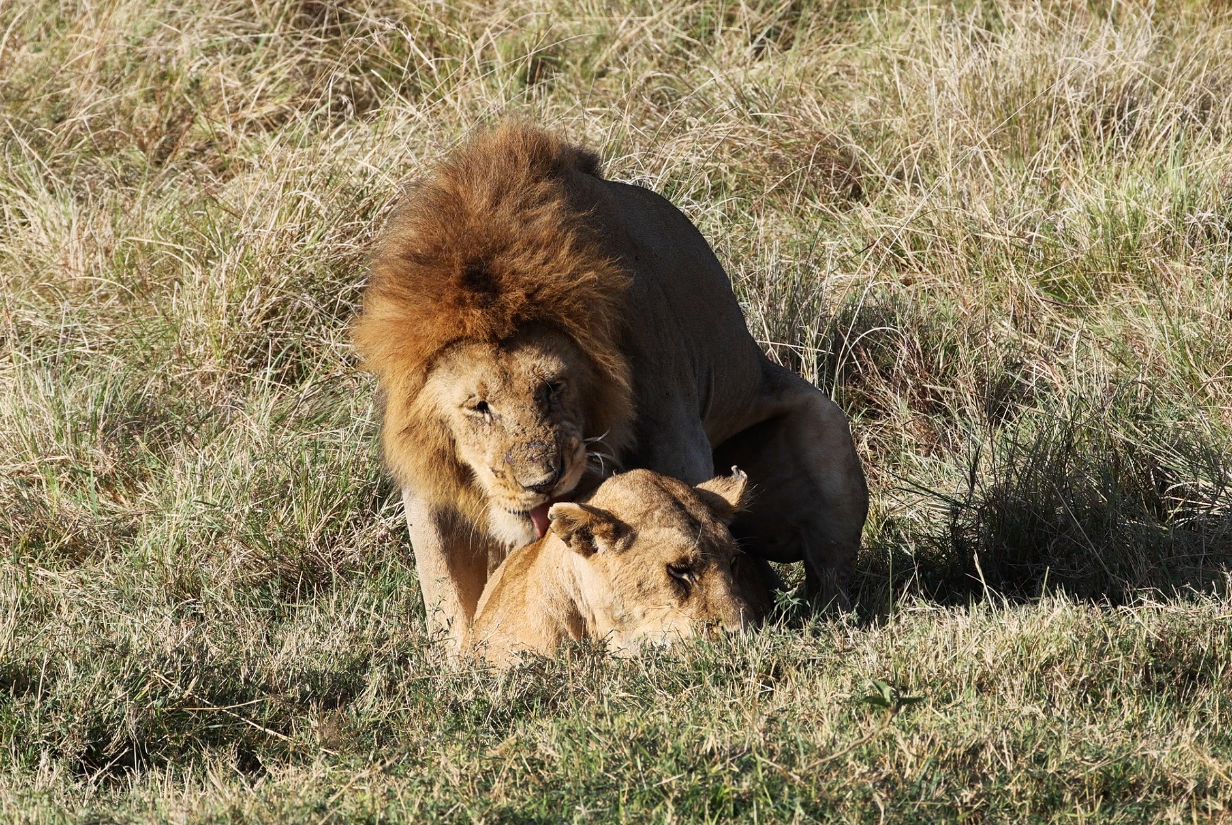
This movie shows an actual mating from August 14, i. e., tomorrow. It's not quite without tenderness: the male licks the female's back. This happens many dozens of times per day for several days. Note the obvious satisfaction in the last frames of the movie.
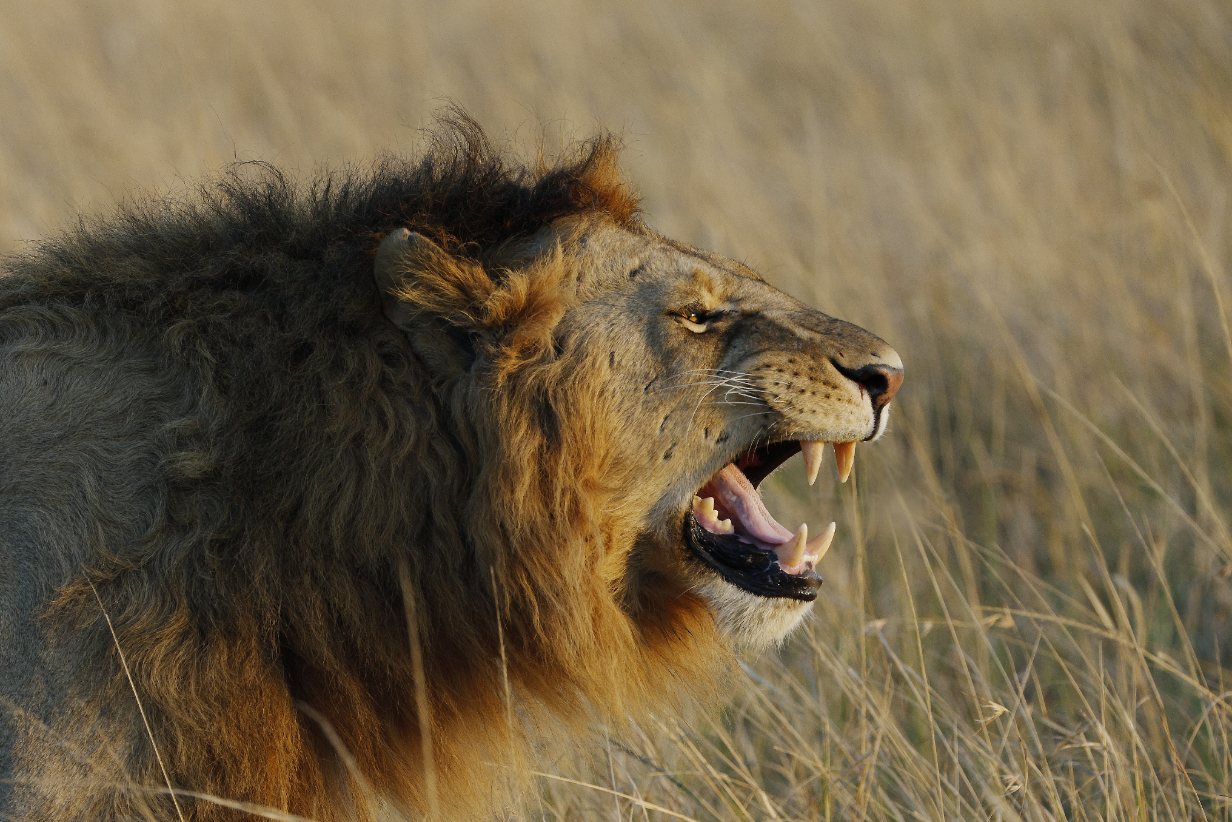
I can't resist including one more ferocious view.
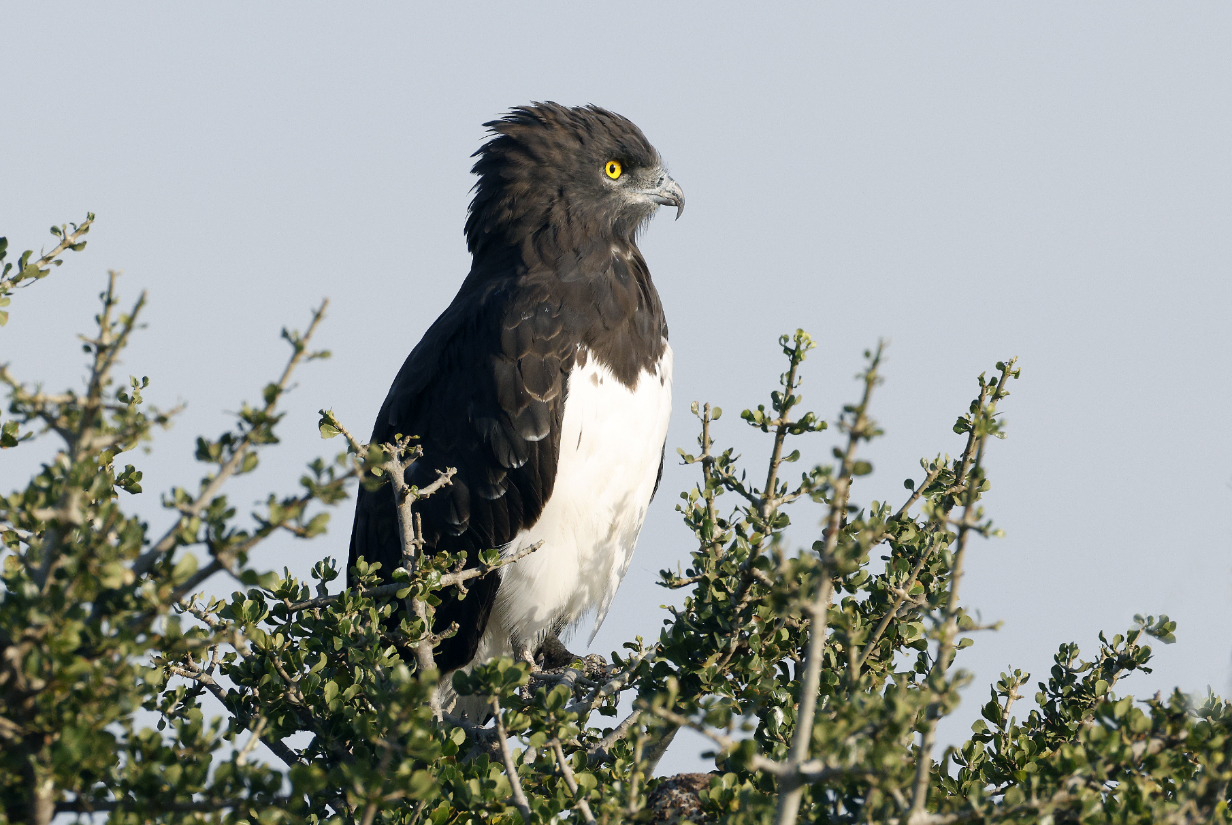
Black-chested snake-eagle
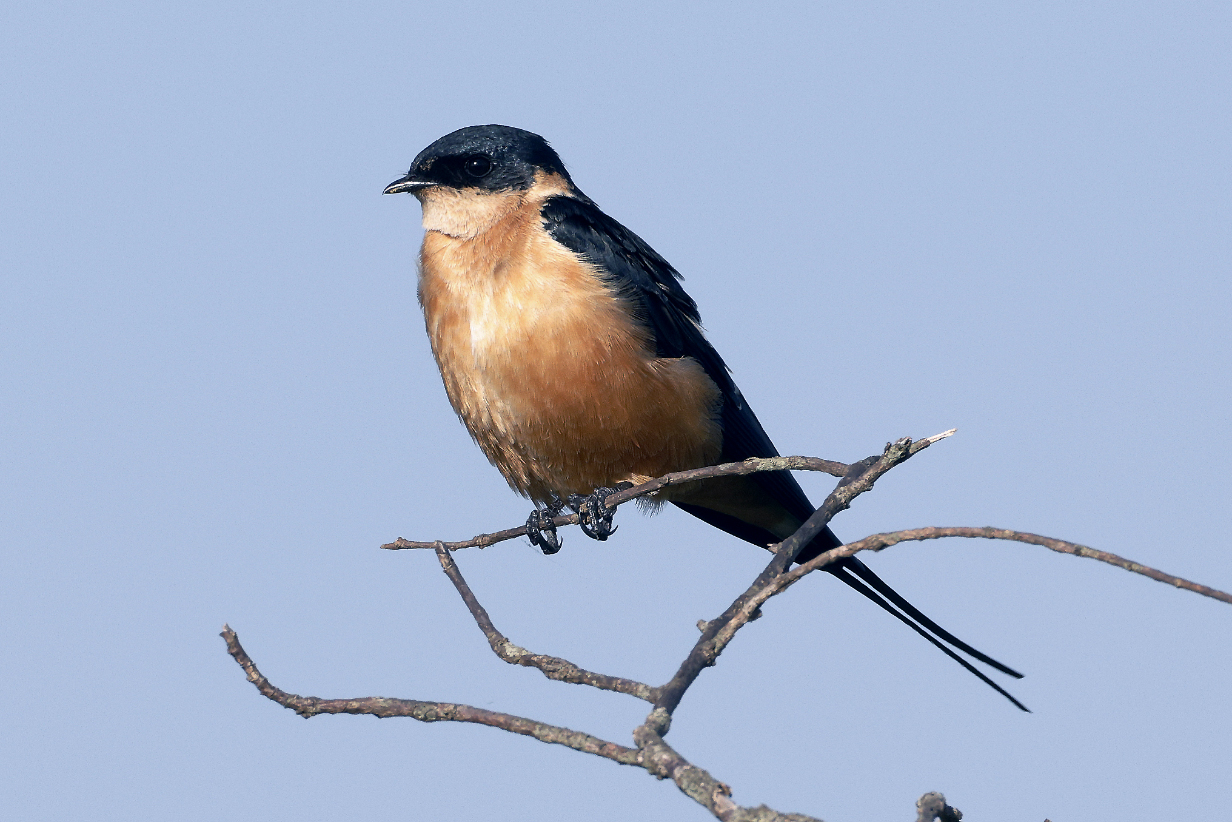
Rufous-chested swallow (This is my life bird.)
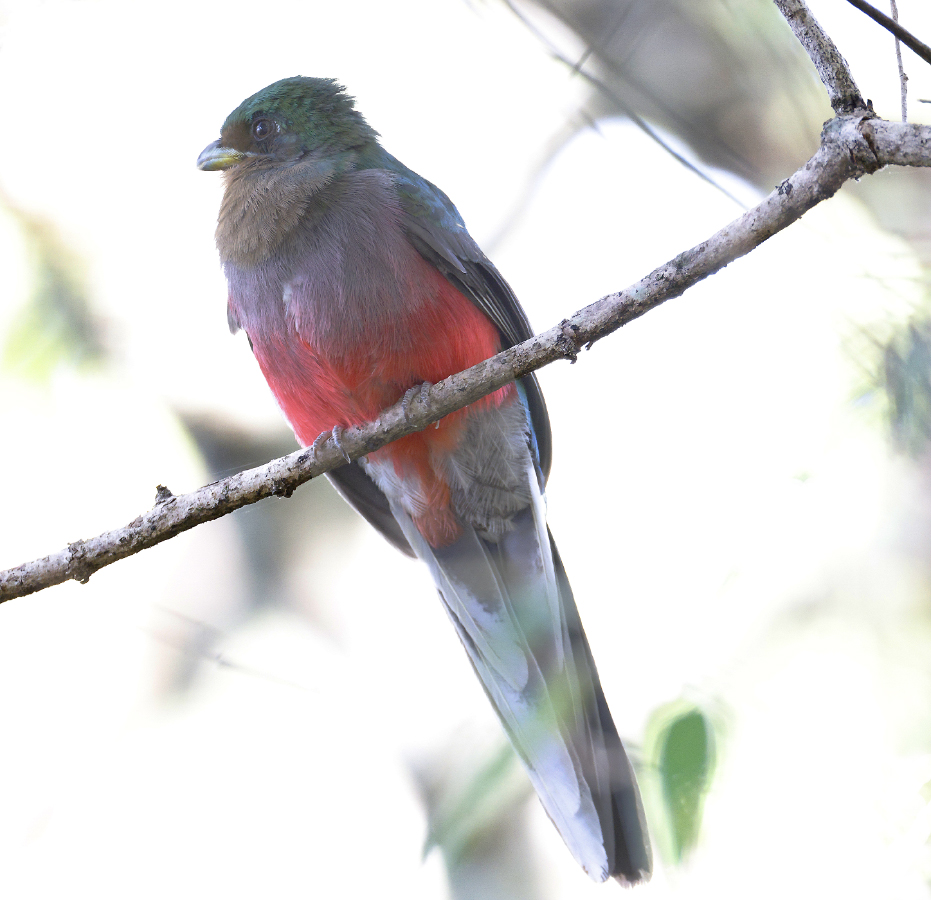
Narina trogon (This female is my life bird, now back at camp.)
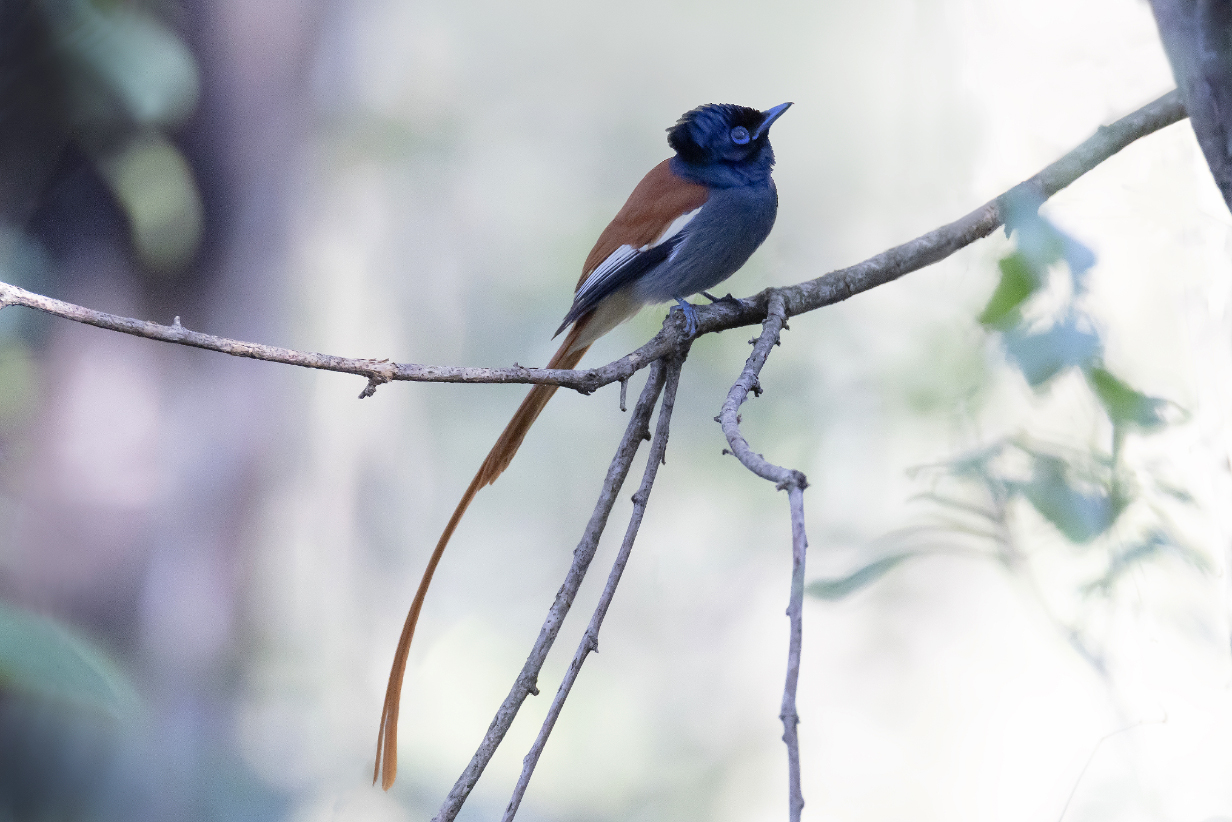
African paradise flycatcher
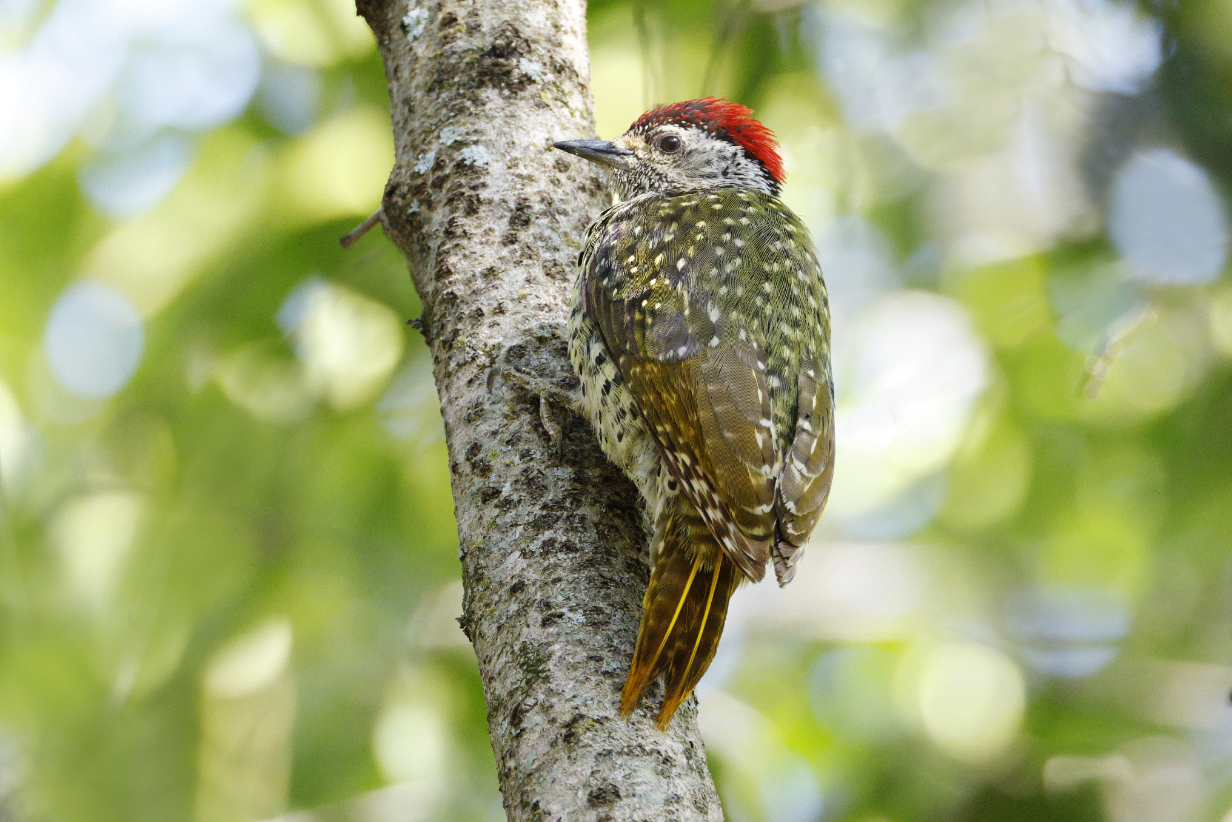
Green-backed woodpecker (This is my life bird.)
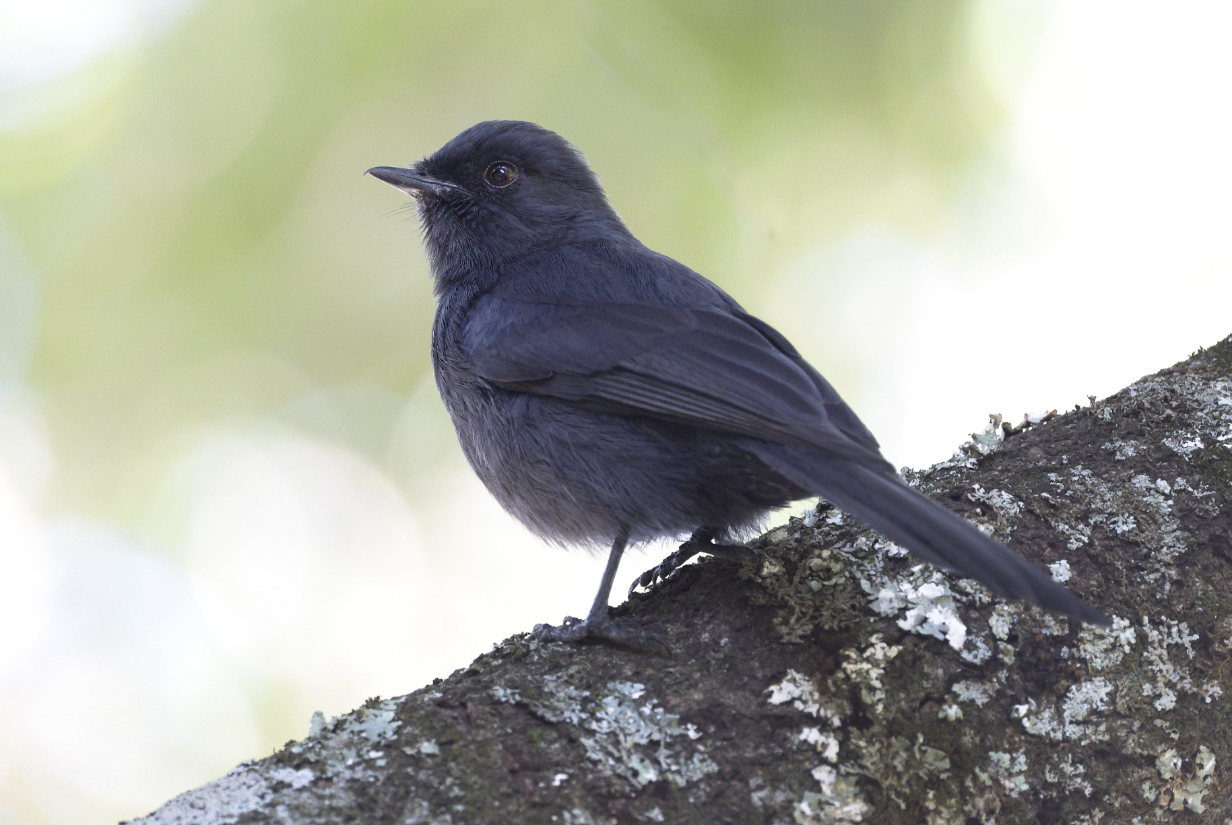
Northern black-flycatcher
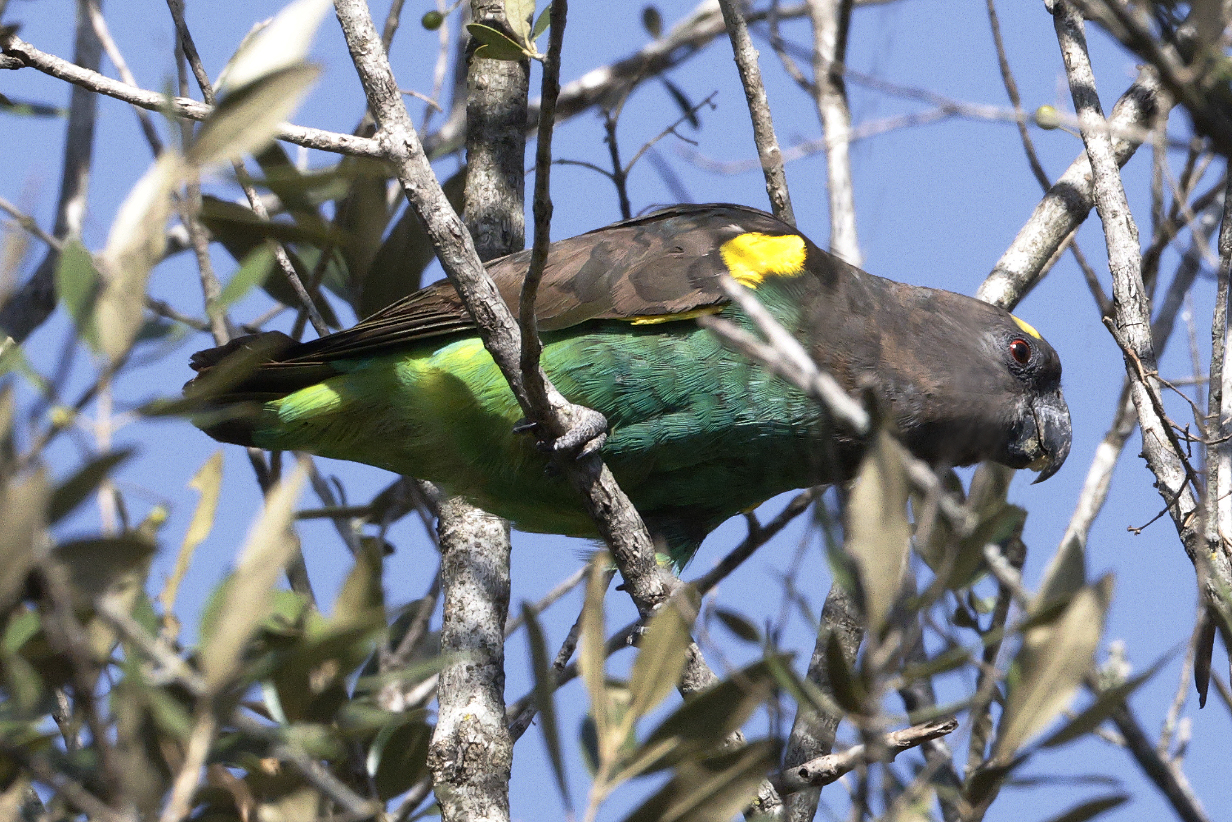
Meyer's parrot (New yesterday but far away. Closer today but always in thickets around our camp.)
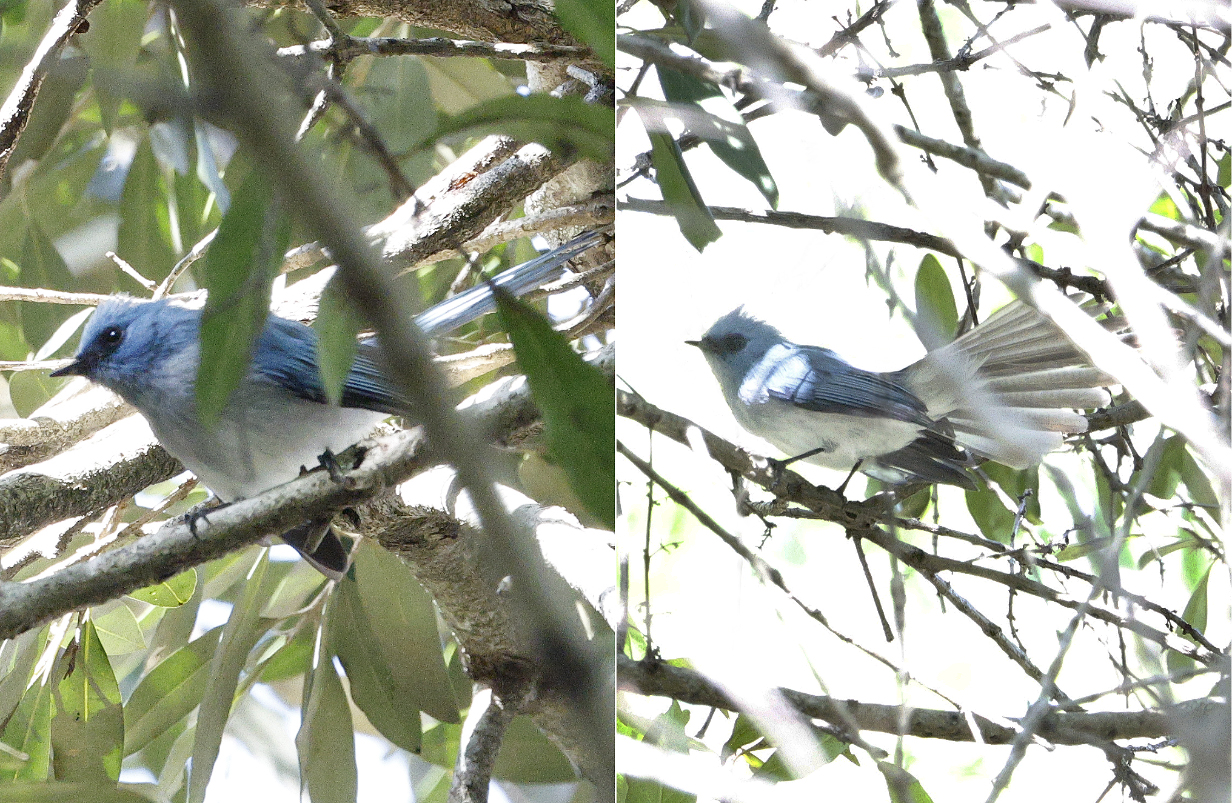
African blue flycatcher (This is my life bird. Even more than Meyer's parrot, it never came close, and it always stayed mostly hidden in thickets.)
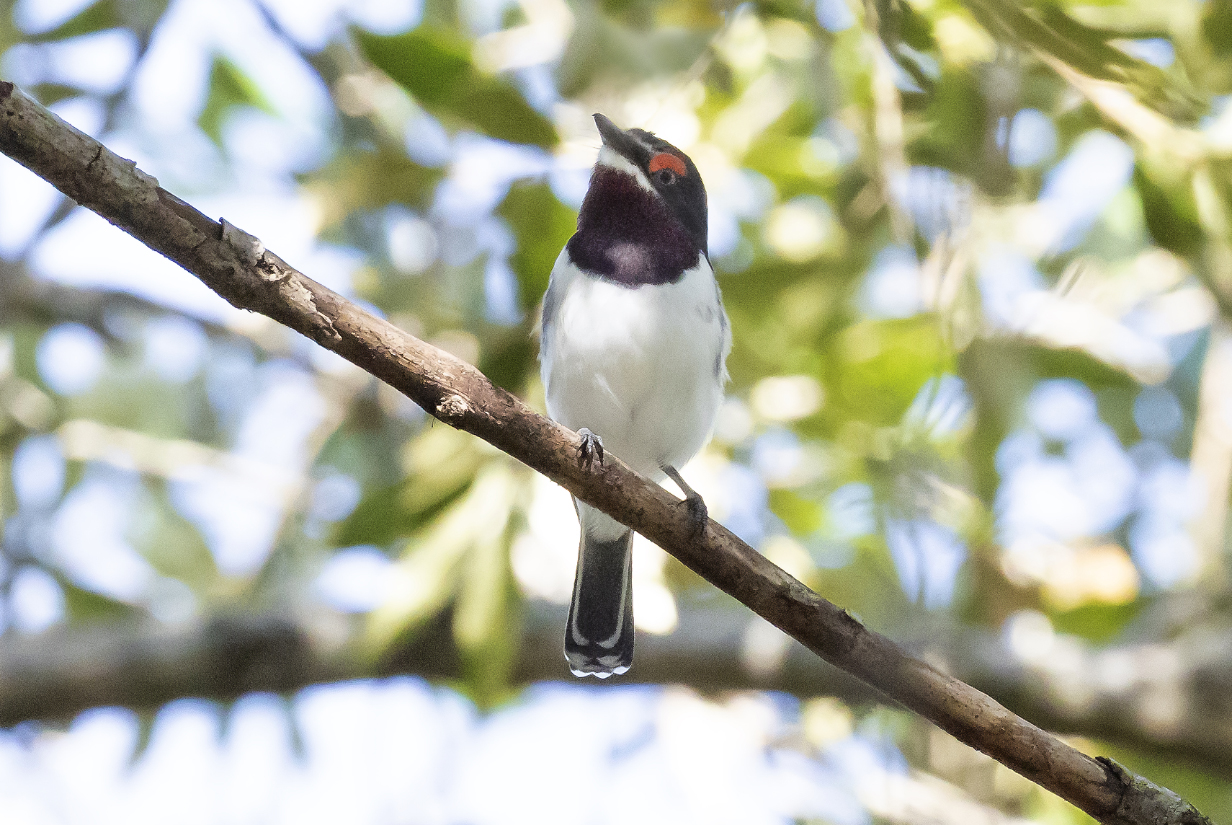
Brown-throated wattle-eye (The throat is brown, so this is a female.)
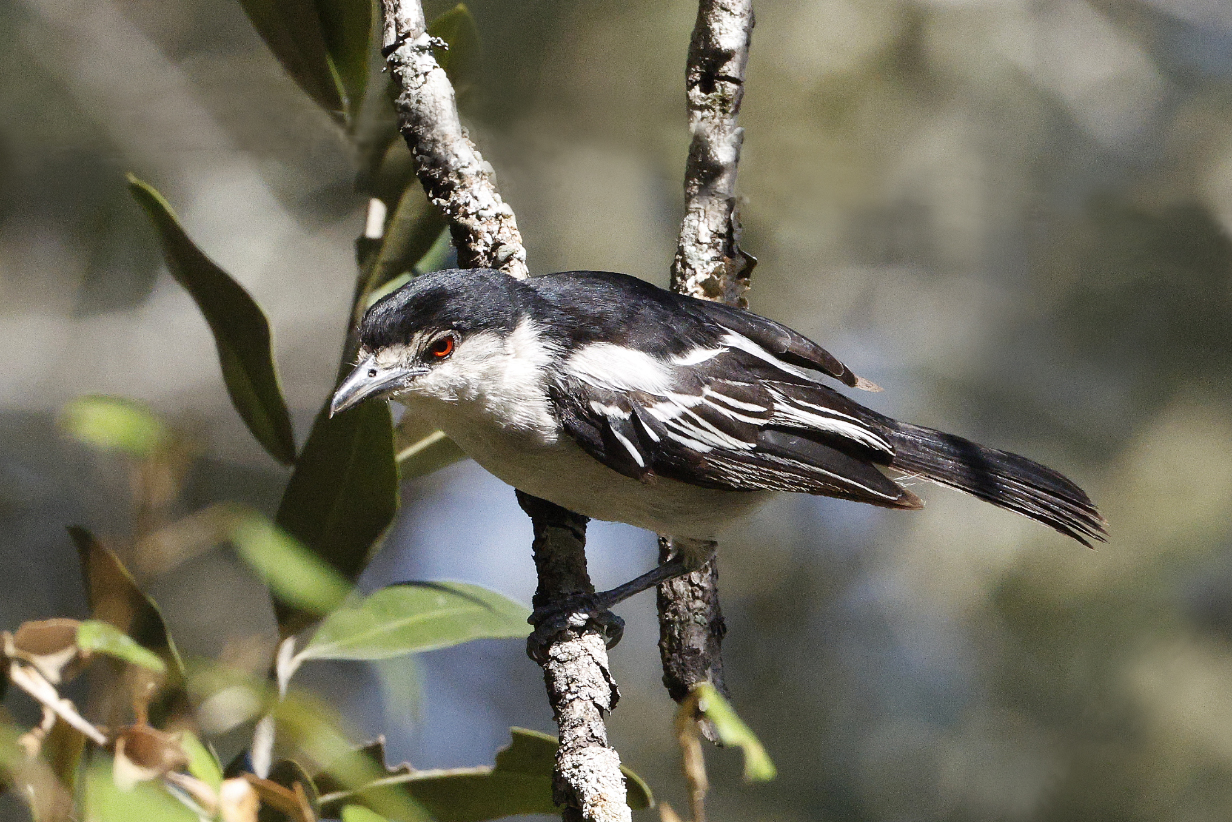
Black-backed puffback
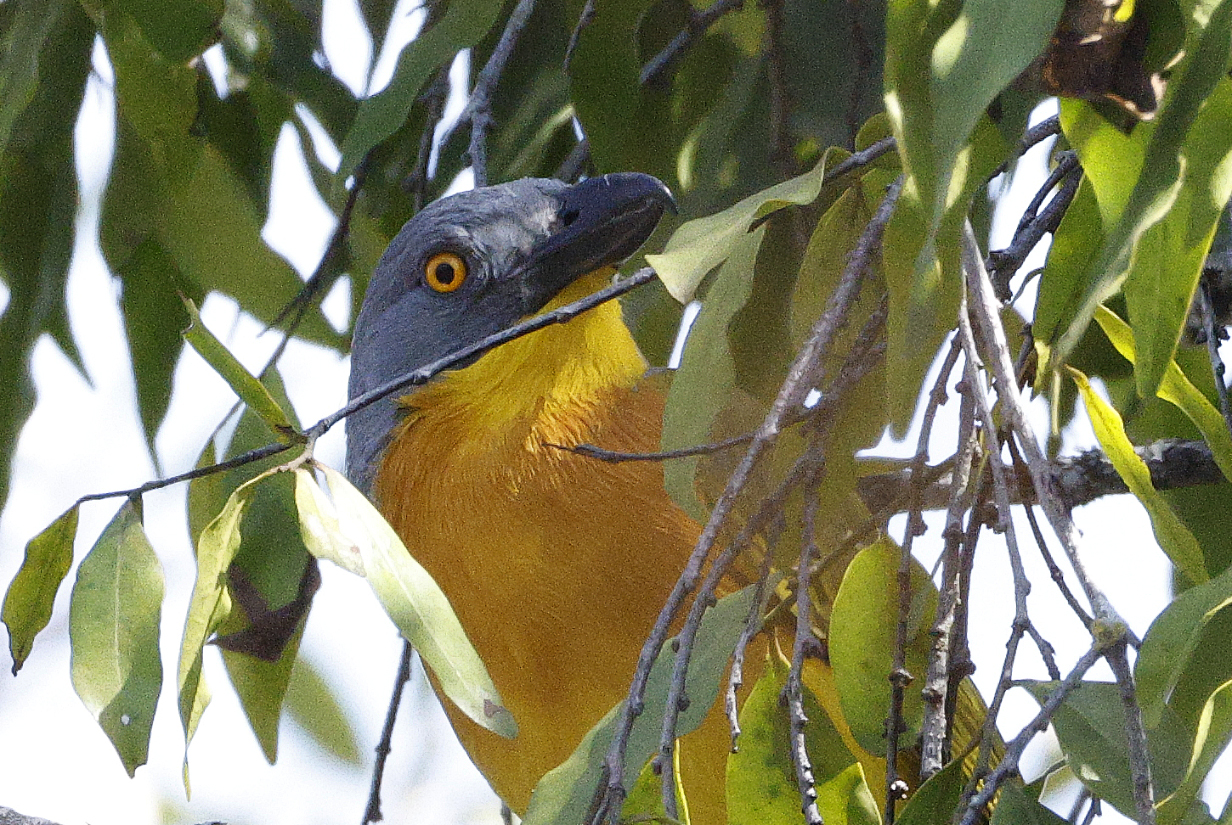
Gray-headed bushshrike
Gray-headed bushshrike (The trouble with birding the bushes around camp is that you get bush-loving birds, and then they don't like to show themselves out in the open.)
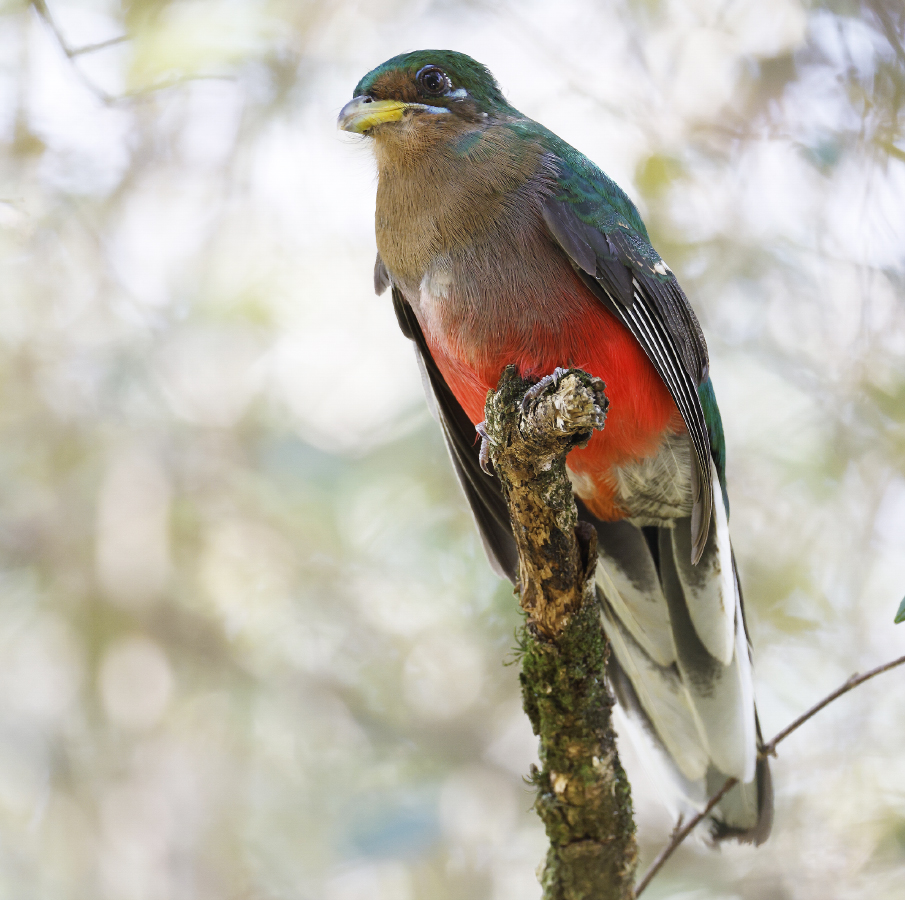
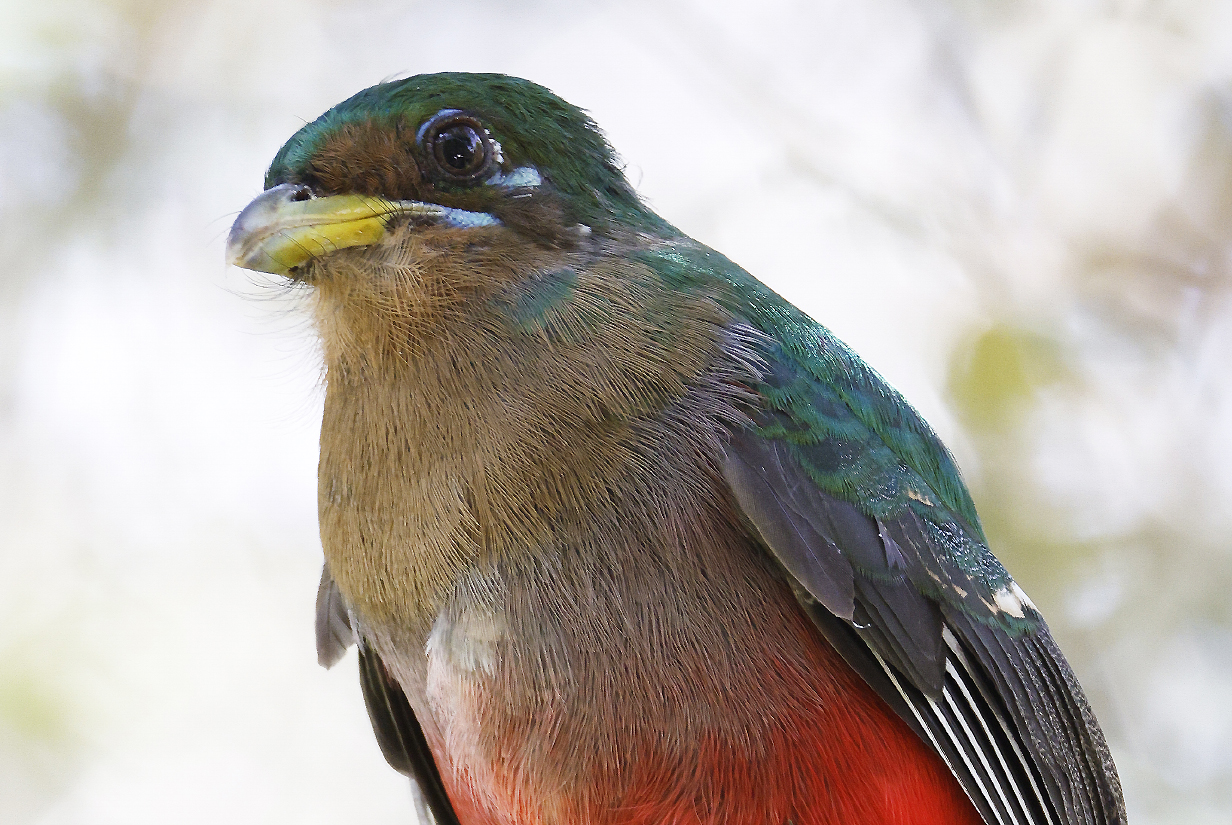
Late in the afternoon, the female Narina trogon came by again and this time perched conveniently out in the open.
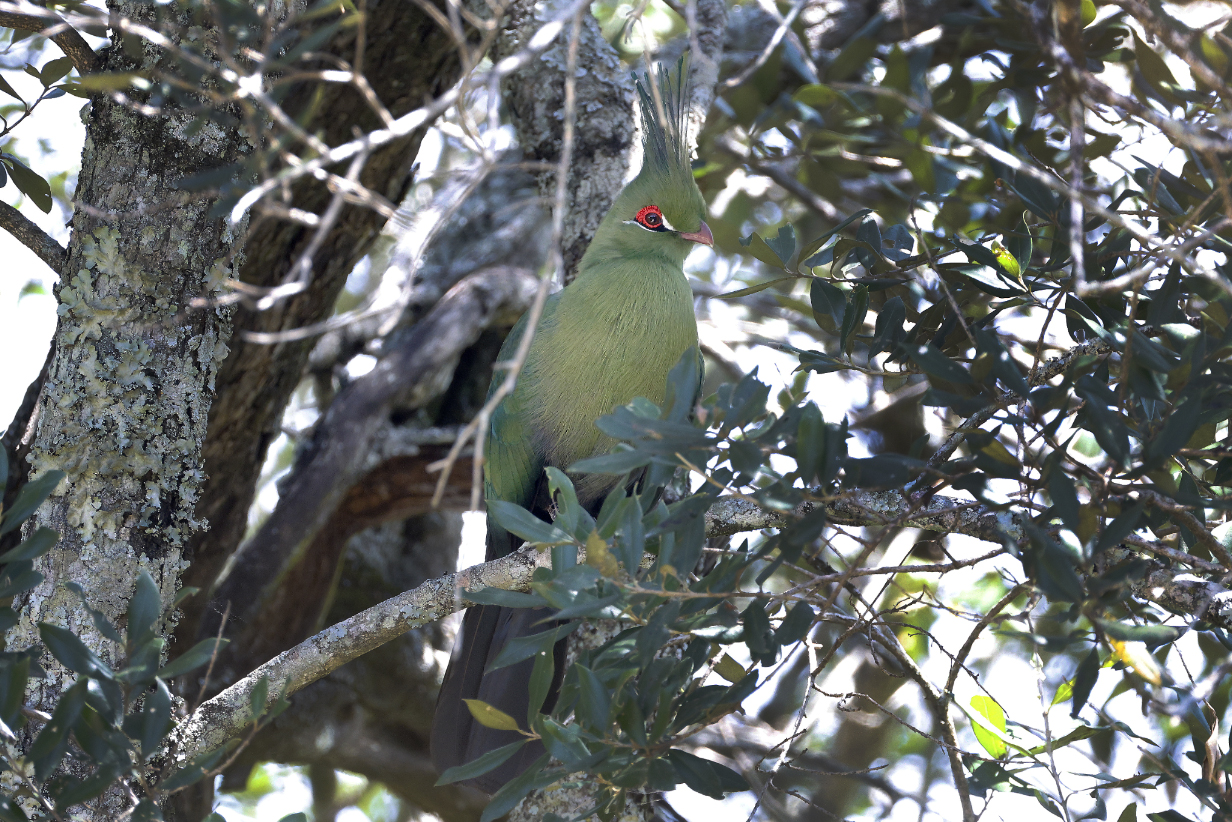
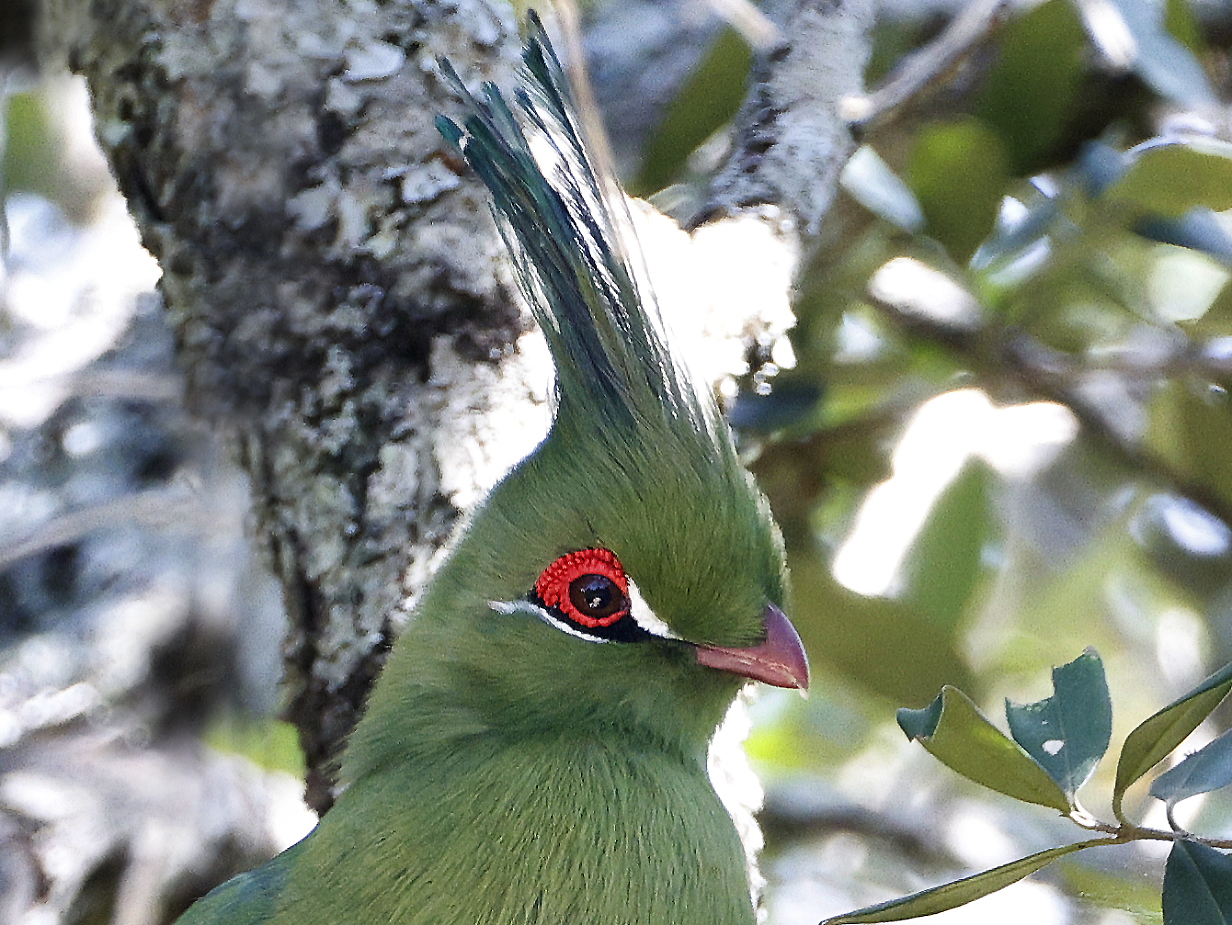
Schalow's turaco was -- for me -- the most gorgeous bird that we saw during the trip. And we saw it from within our tent camp in the Mara. This is my life bird.
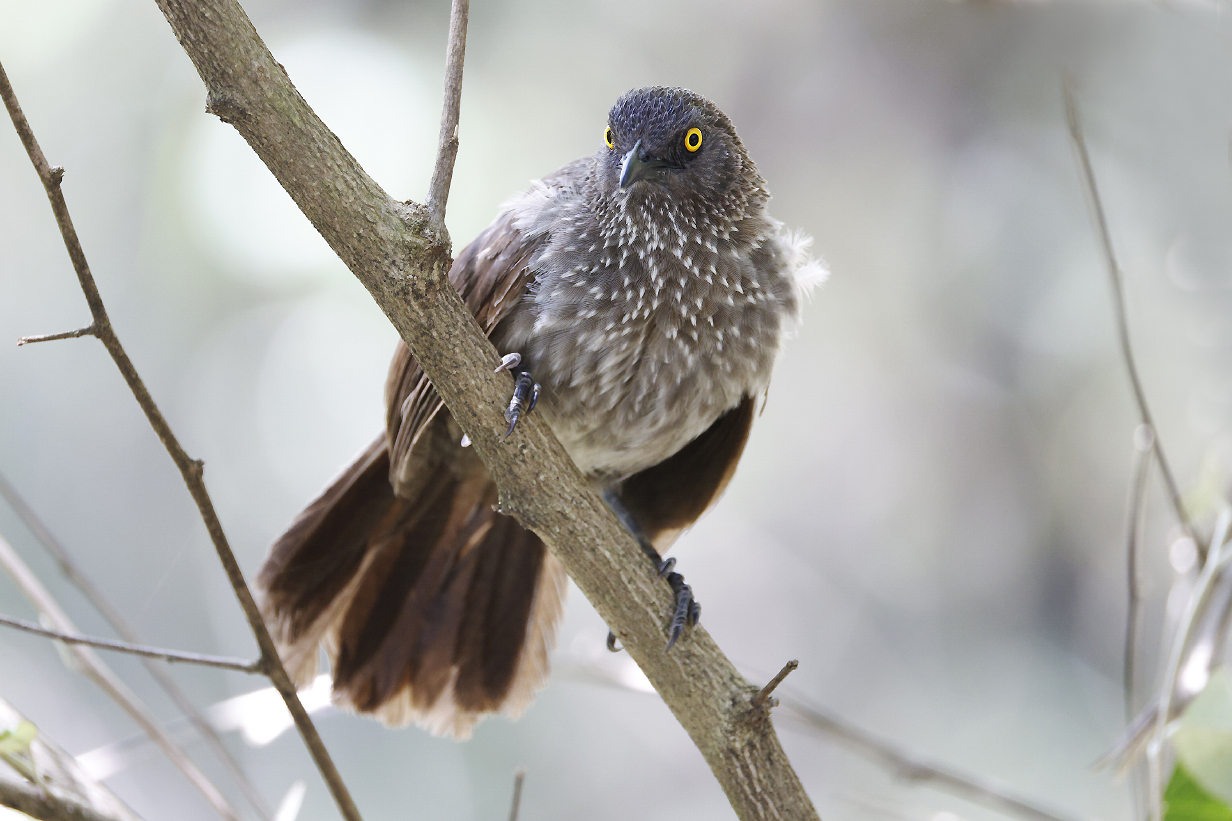
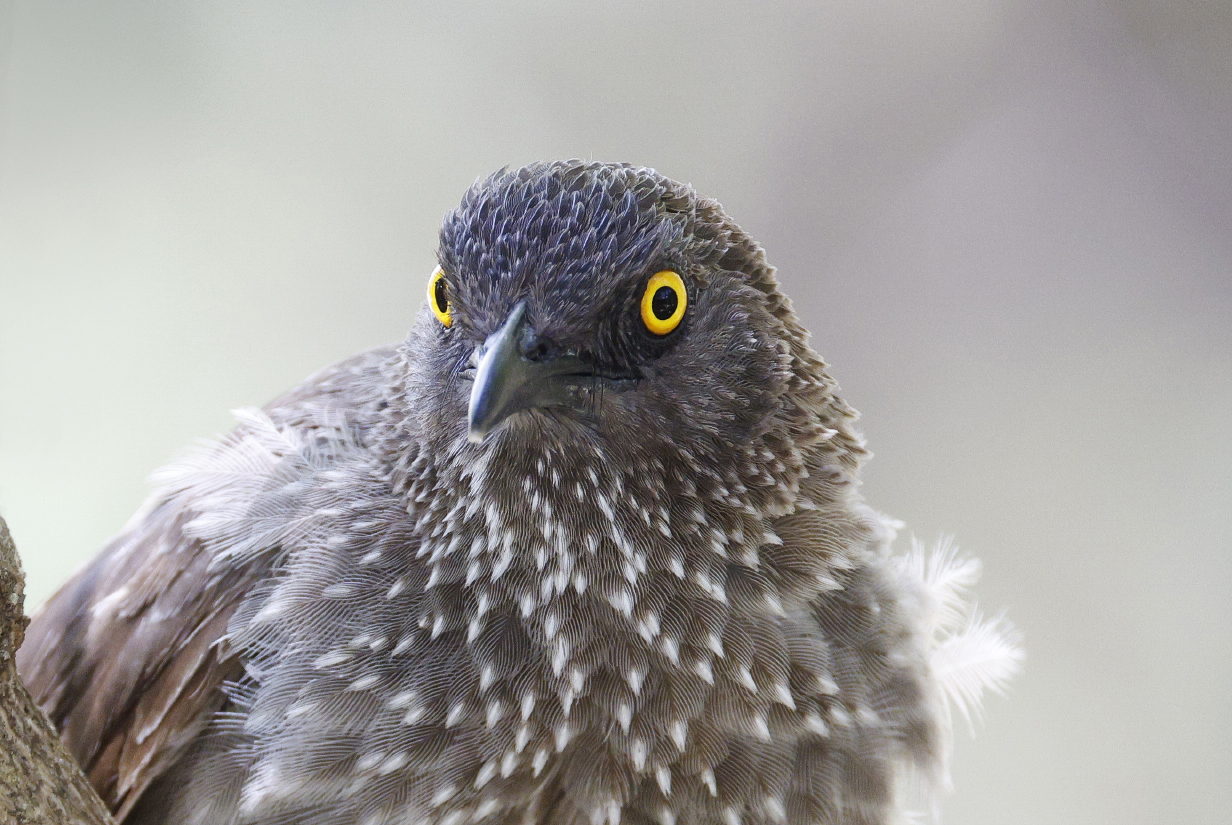
Arrow-marked babbler (last bird of the morning at camp)
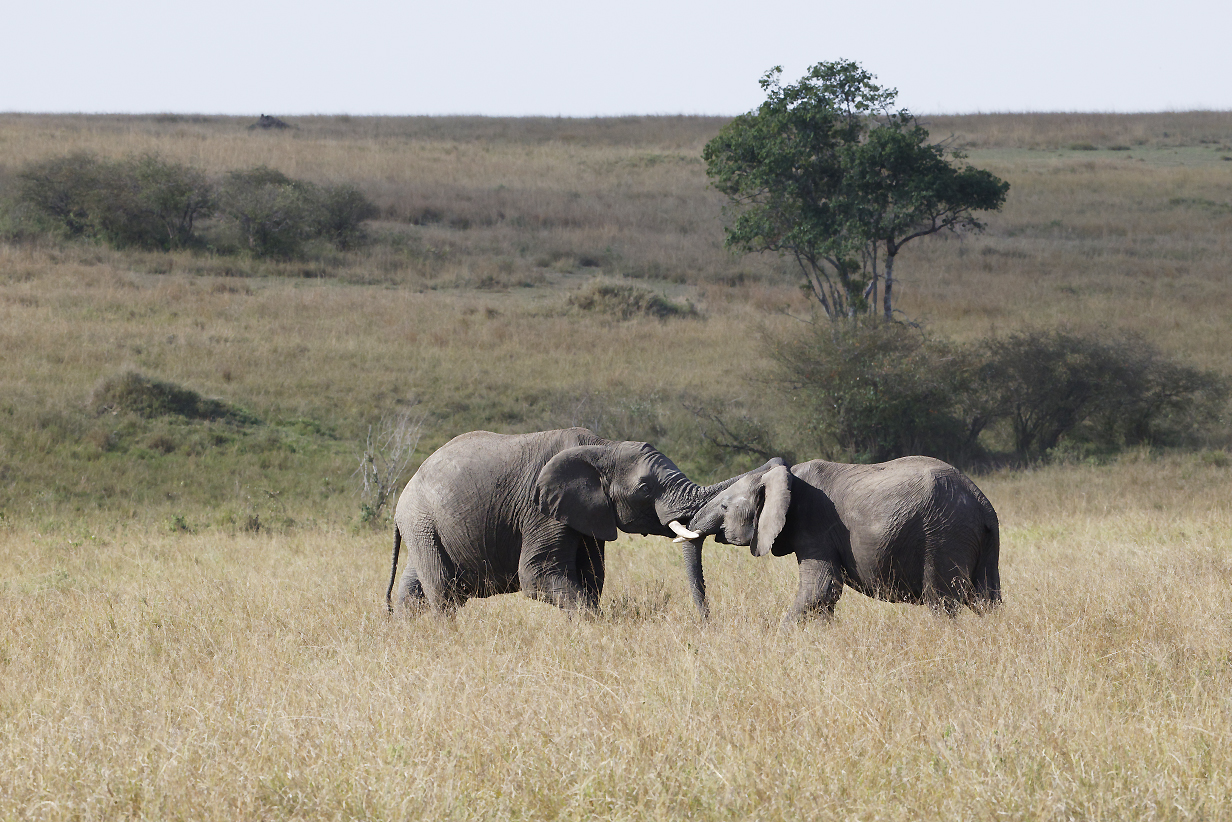
Elephants near camp indulging in some friendly pushing and shoving
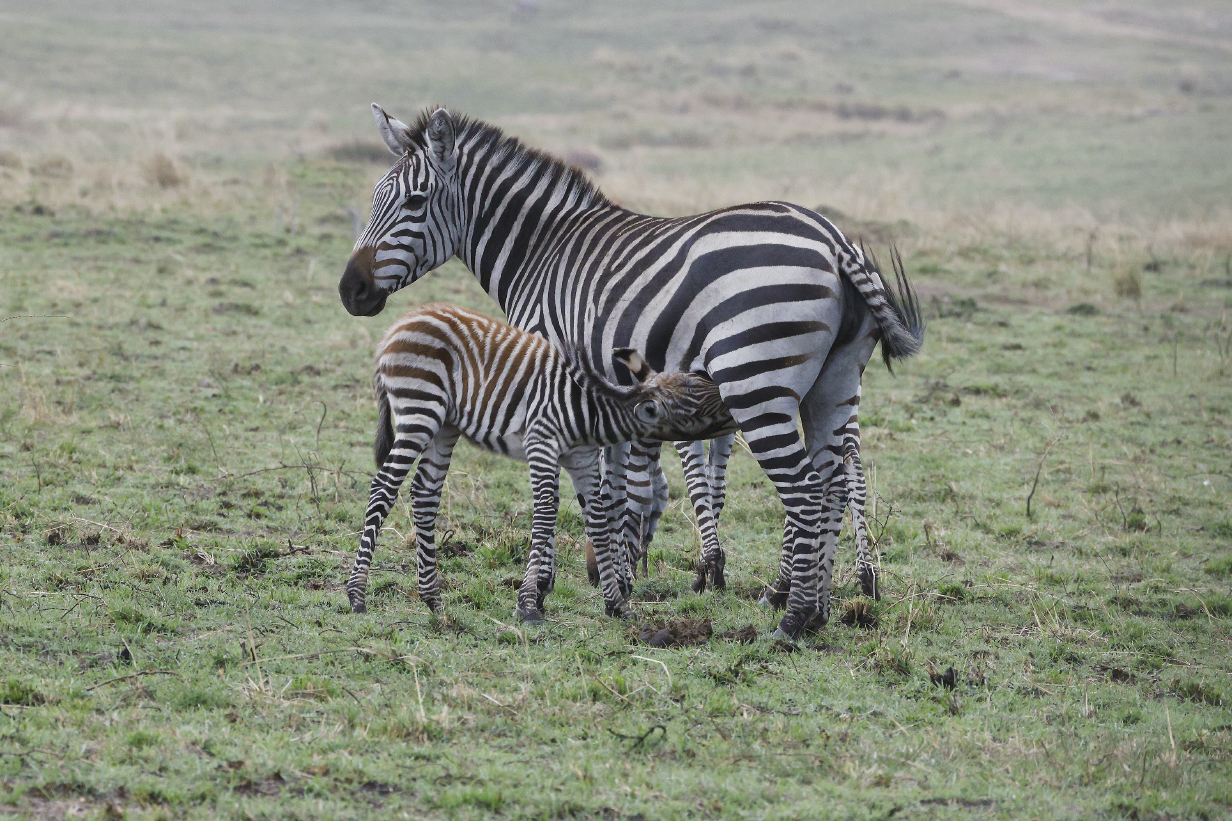
Zebra were plentiful, but at this time of year, few were as young as this foal.
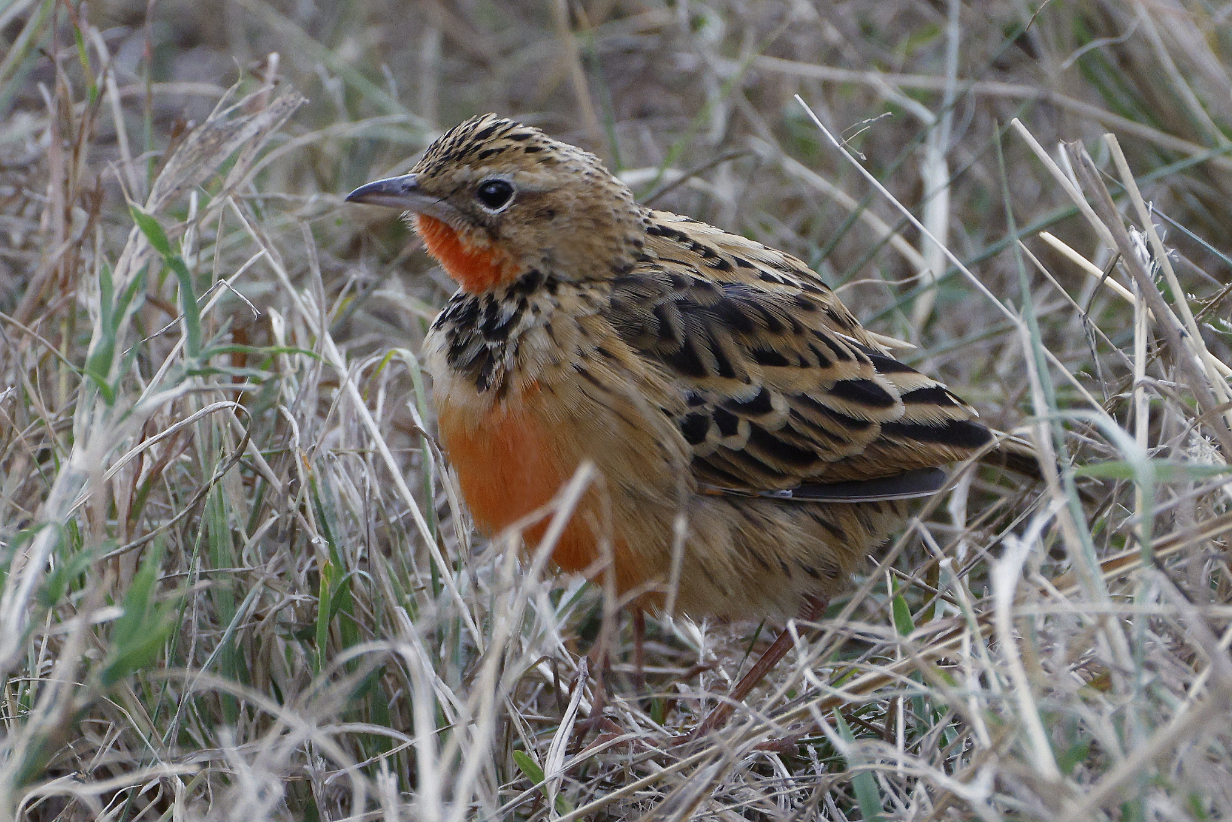
Rosy-throated longclaw (This is the only bird that I recorded during the PM safari drive.)
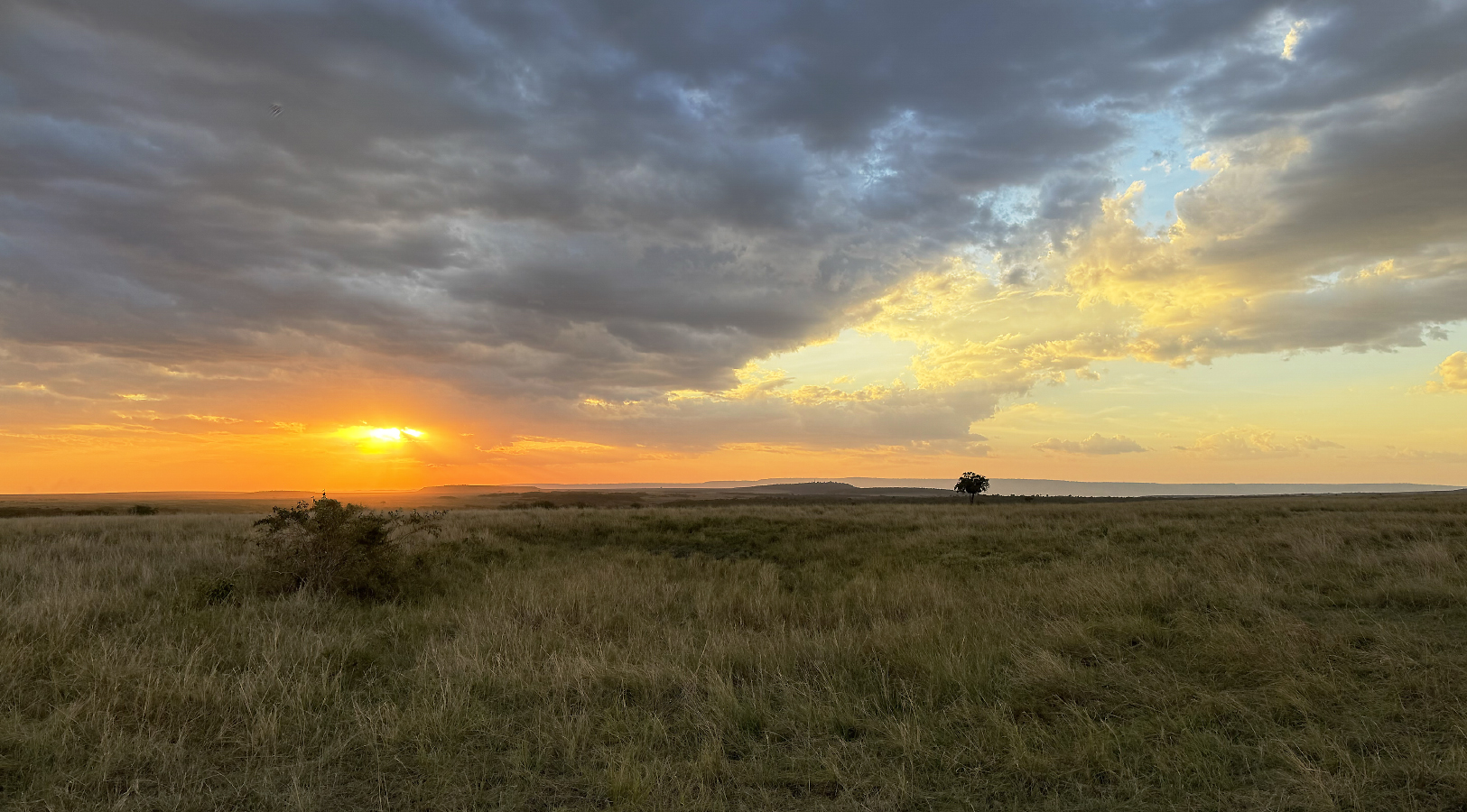
We toasted another glorious Masai Mara sunset atop a hill, with champagne and fruit juice.

I took this selfie while Chege and Andrew were setting up the refreshments.
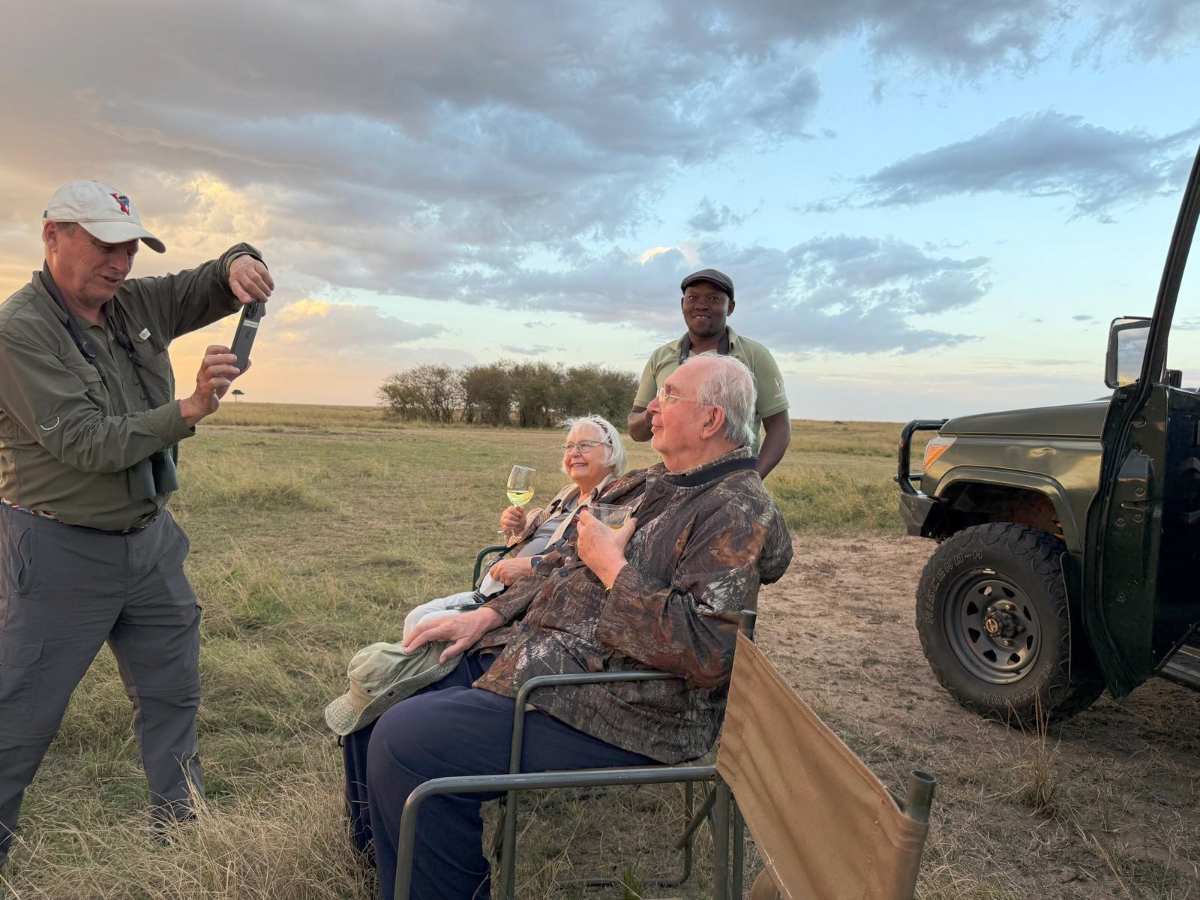
VENT guide Andrew Whittaker takes the photo that follows below during sunset festivities. Many thanks to Larry Sall for this picture. Kenya guide Chege Wa Kariuki III and Larry's sister Mary Ann watch.
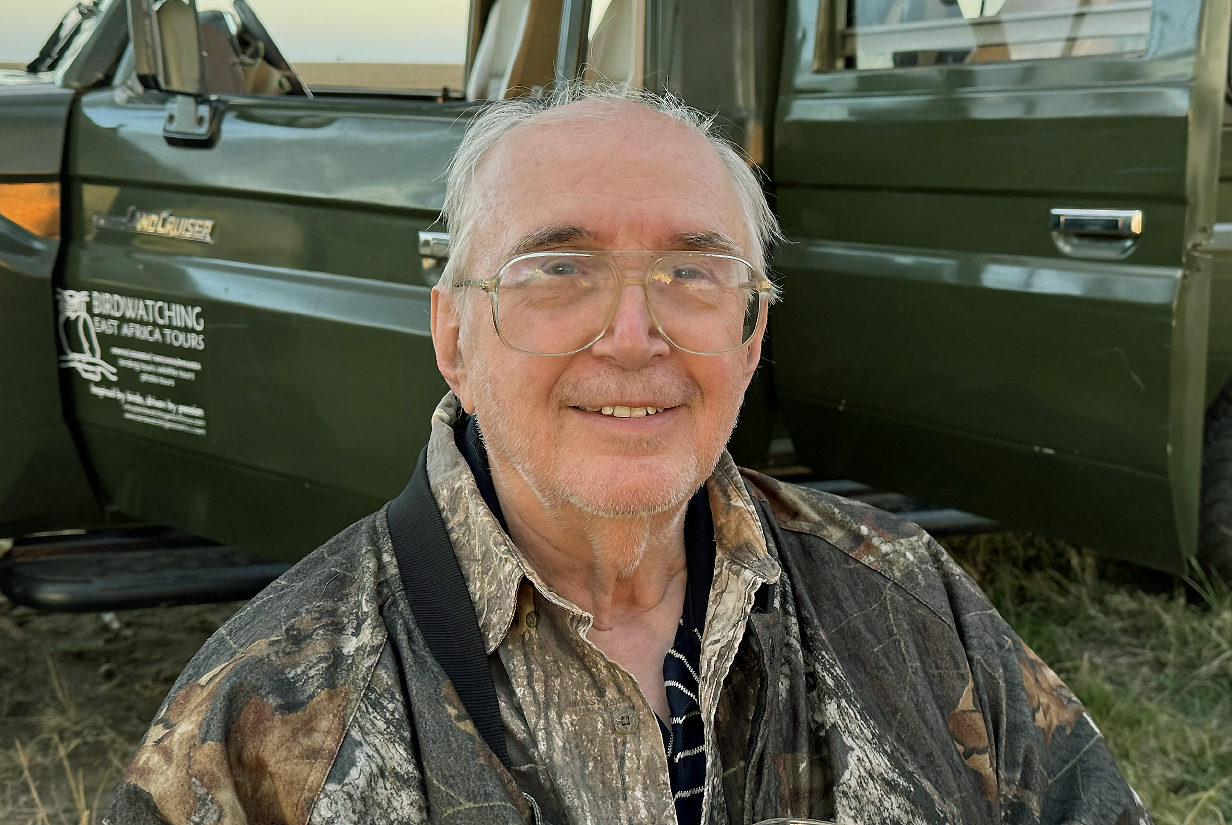
Our champagne celebration of a Mara sunset was a wonderfully elegant touch appreciated by all.
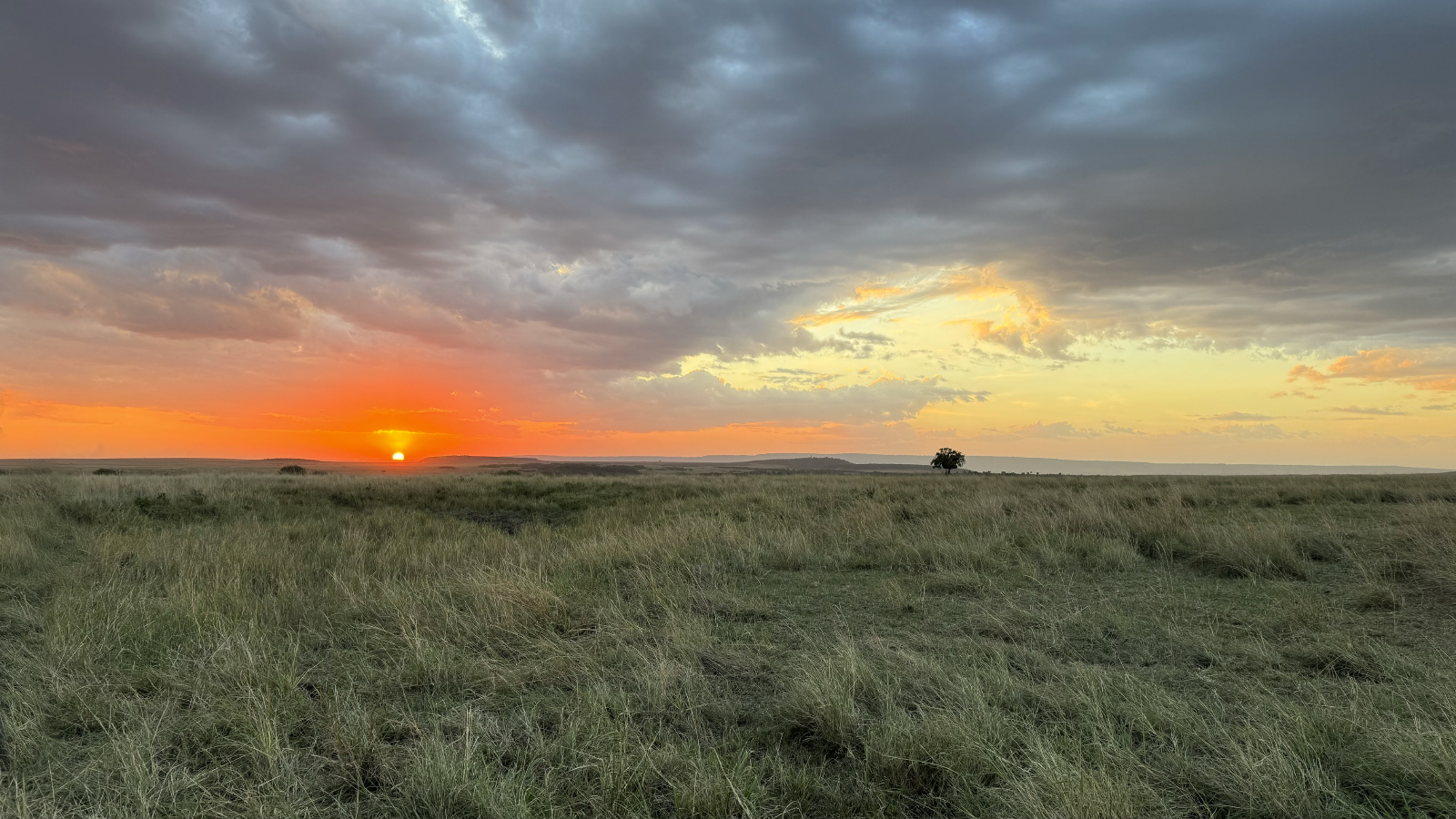
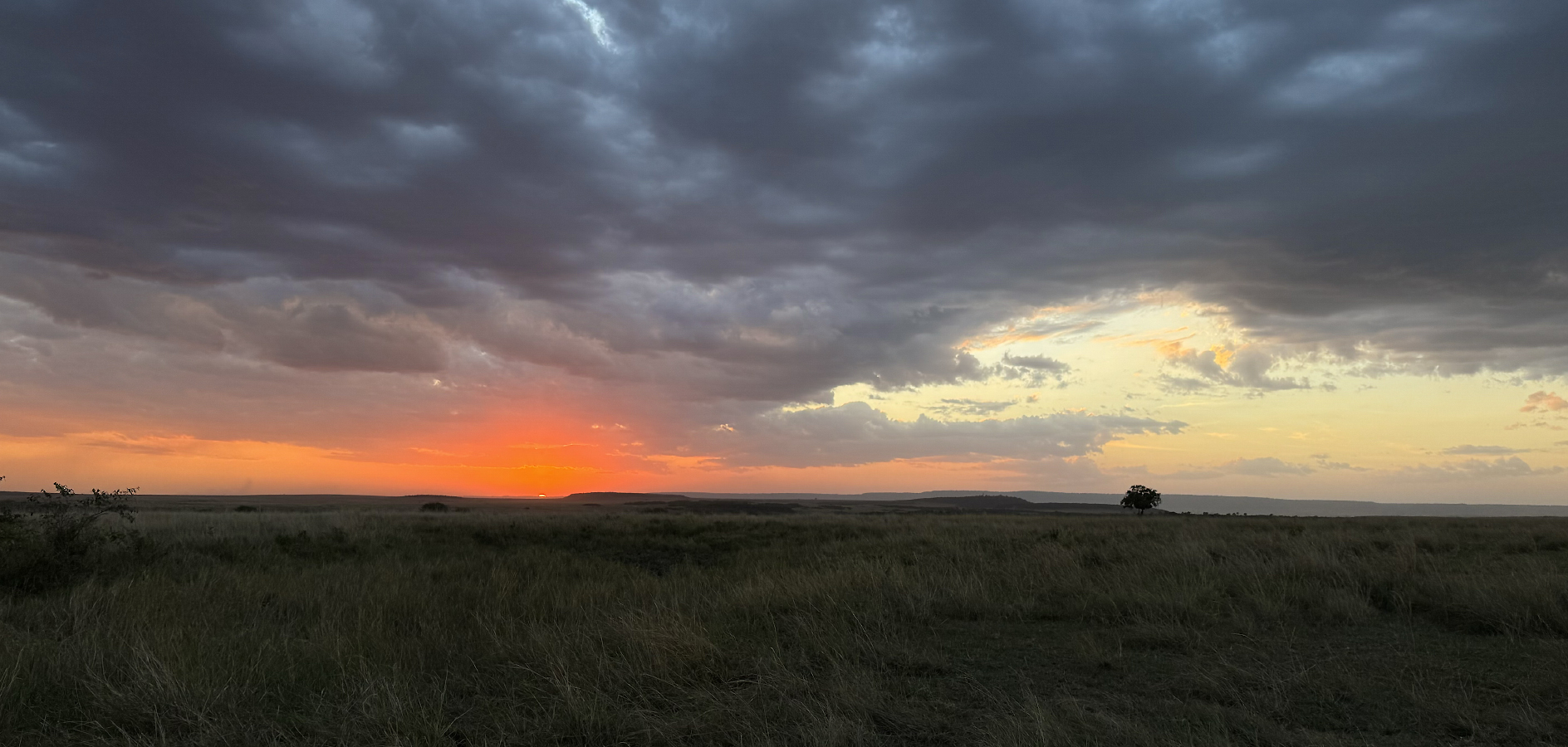
Masai Mara sunset, August 13, 2026
August 14: Masai Mara National Reserve
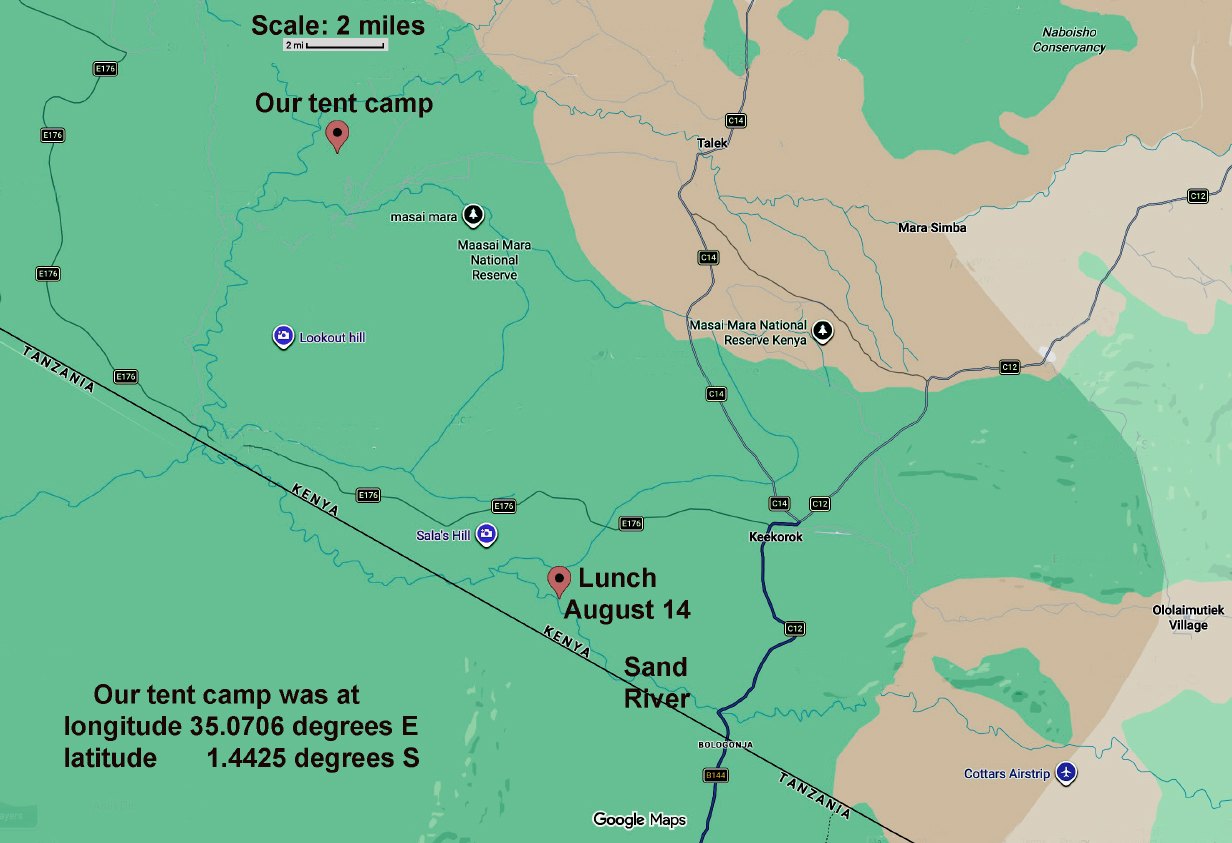
Today was our longest drive, from our tent camp past Keekorok Lodge to and across the border into Tanzania. The above map shows our camp site and our lunch site at a picturesque spot overlooking the Sand River. We were on safari all day -- 13 hours, with slightly more than 1 hour (including a short rest) for lunch. It was a good day, although by the end, I was almost tired enough to collapse. As on all evenings, I skipped supper and went to bed as soon as possible after getting back to camp.
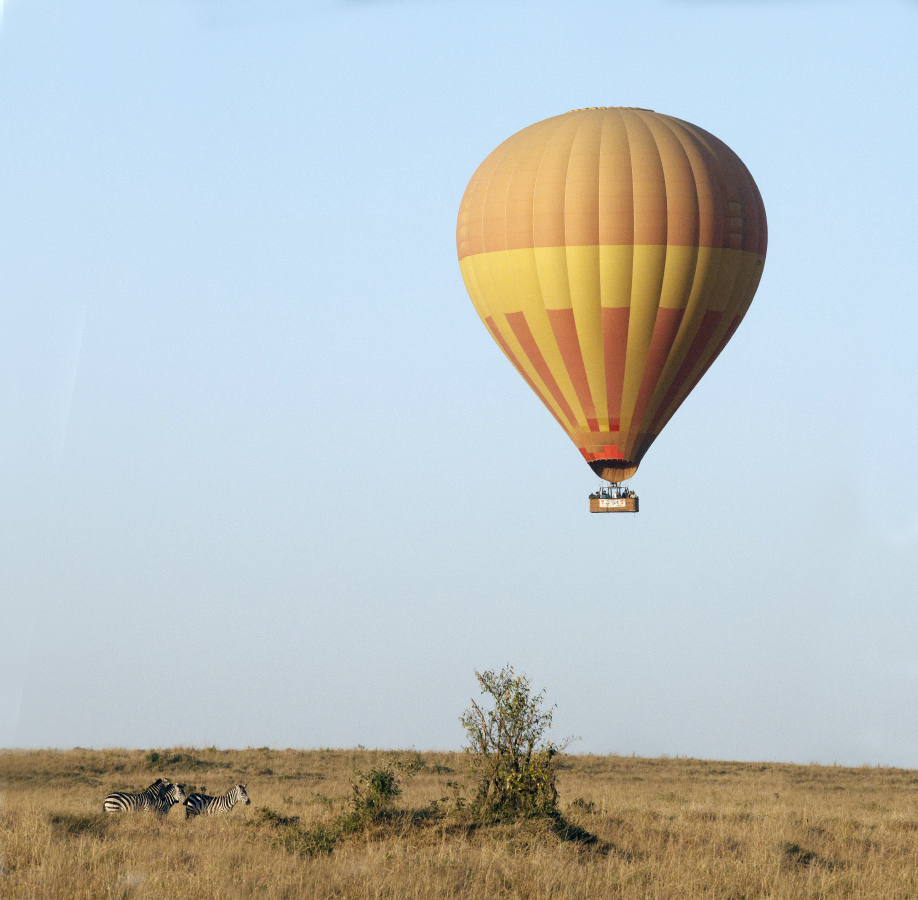
Around sunrise on every morning in the Mara, dozens of hot-air balloons took off several miles away from our camp on sightseeing flights. I had often wished to go on such a flight -- silently drifting above vast plains with endless herds of wildlife seemed a charming prospect. But looking at reality made it clear that this has turned into a big business: All balloons have large gondolas that take 10 or more passengers each. So I realized that we would not enjoy Kenya balloon rides.
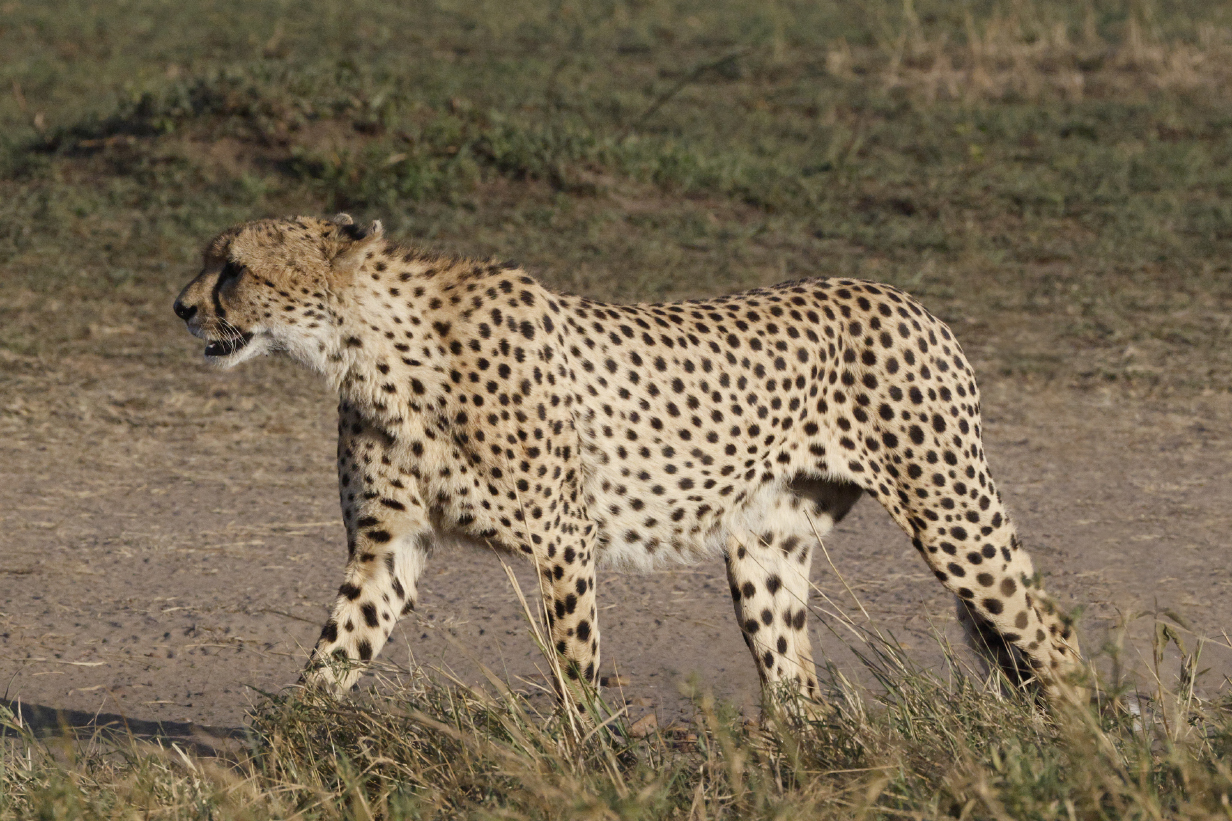
This morning we were treated to our best view of a cheetah, walking along the road very close to us.
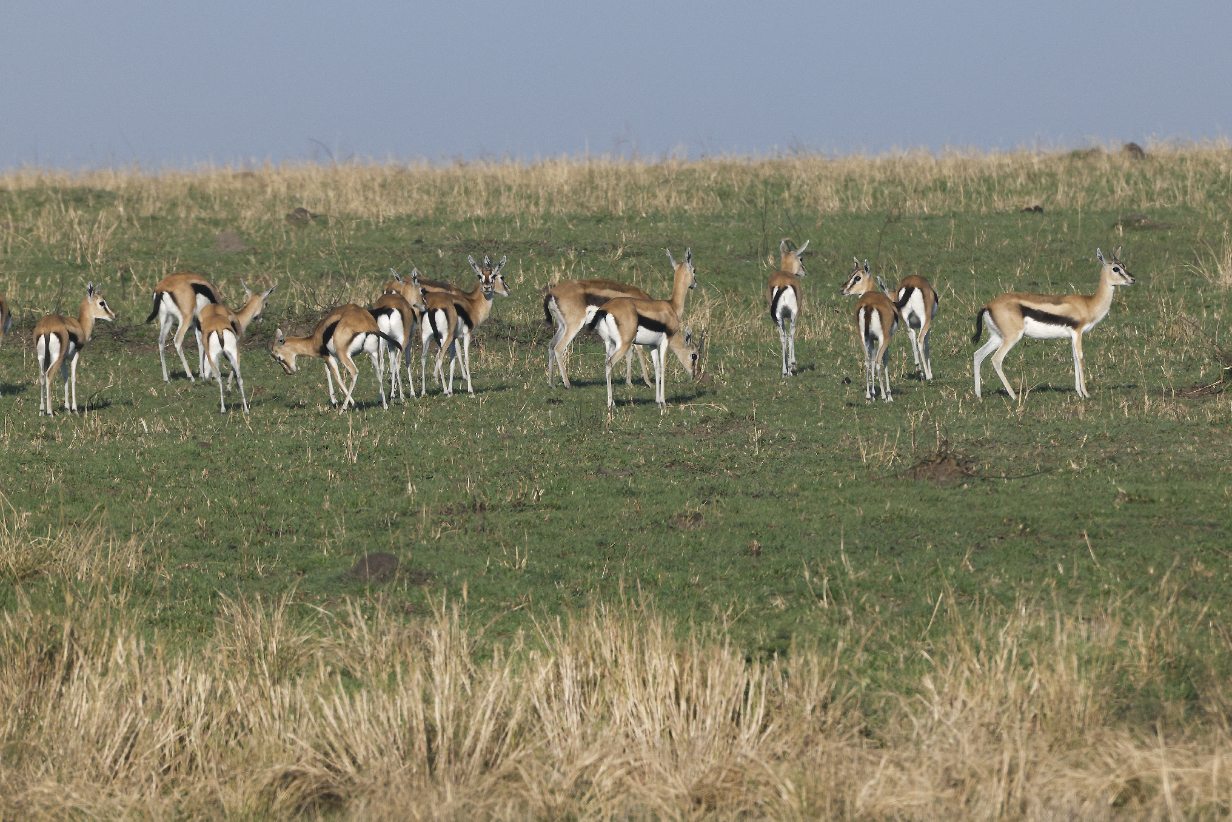
Thompson's gazelle are essentially every big cat's favorite food, so they keep watch carefully in all directions.
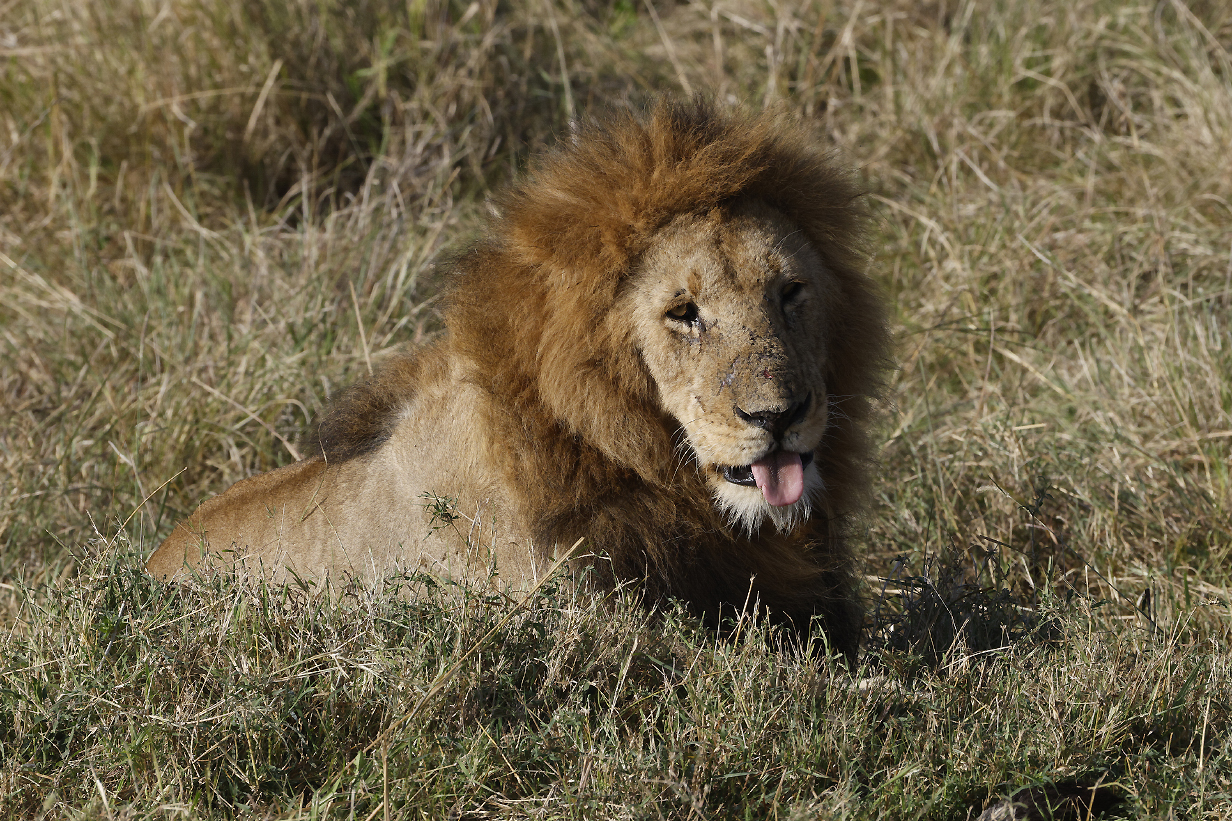
And ... here's why. Although in truth, this lion was more interested in the lady he was guarding than in food.
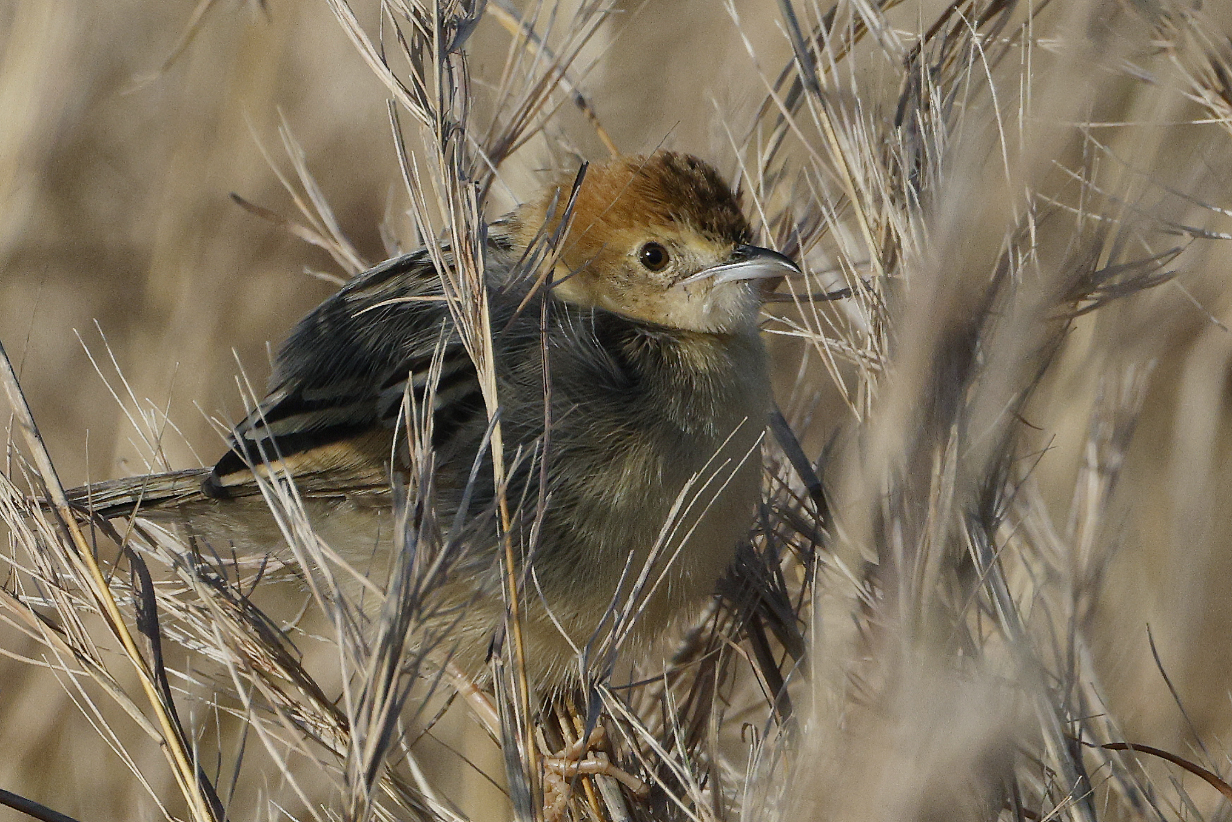
Stout cisticola (ubiquitous in the Masai Mara, at least on our trip)
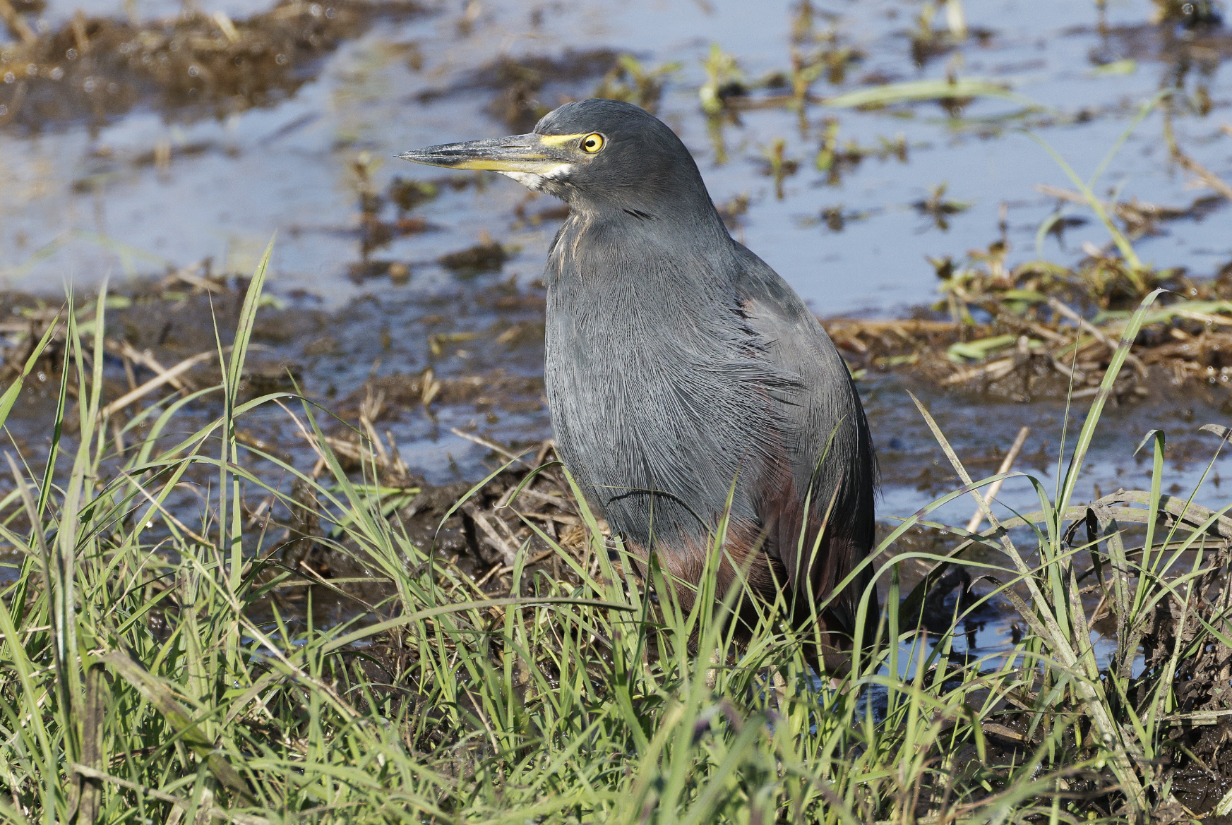
Rufous-bellied heron (This is my life bird.)
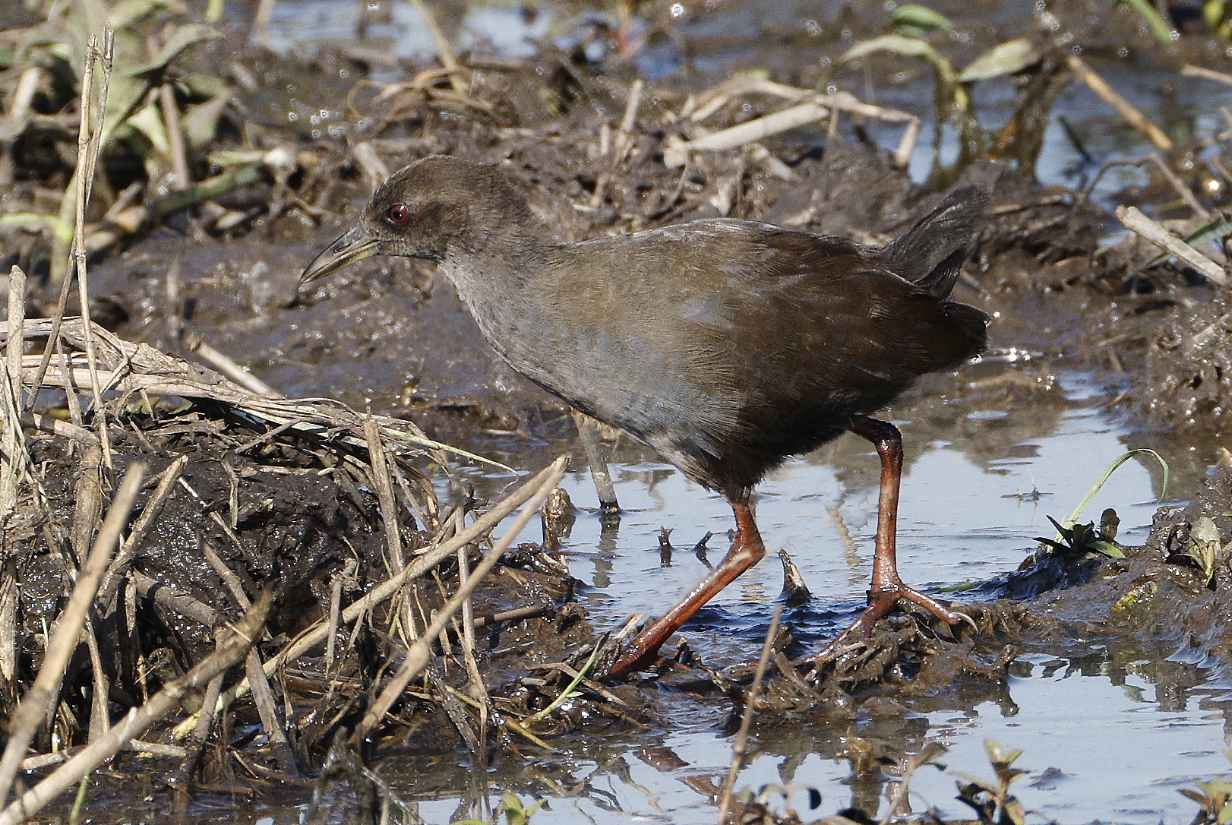
Black crake (It's not often that you get a good look at a crake out in the open -- not even a juvenile such as this one.)
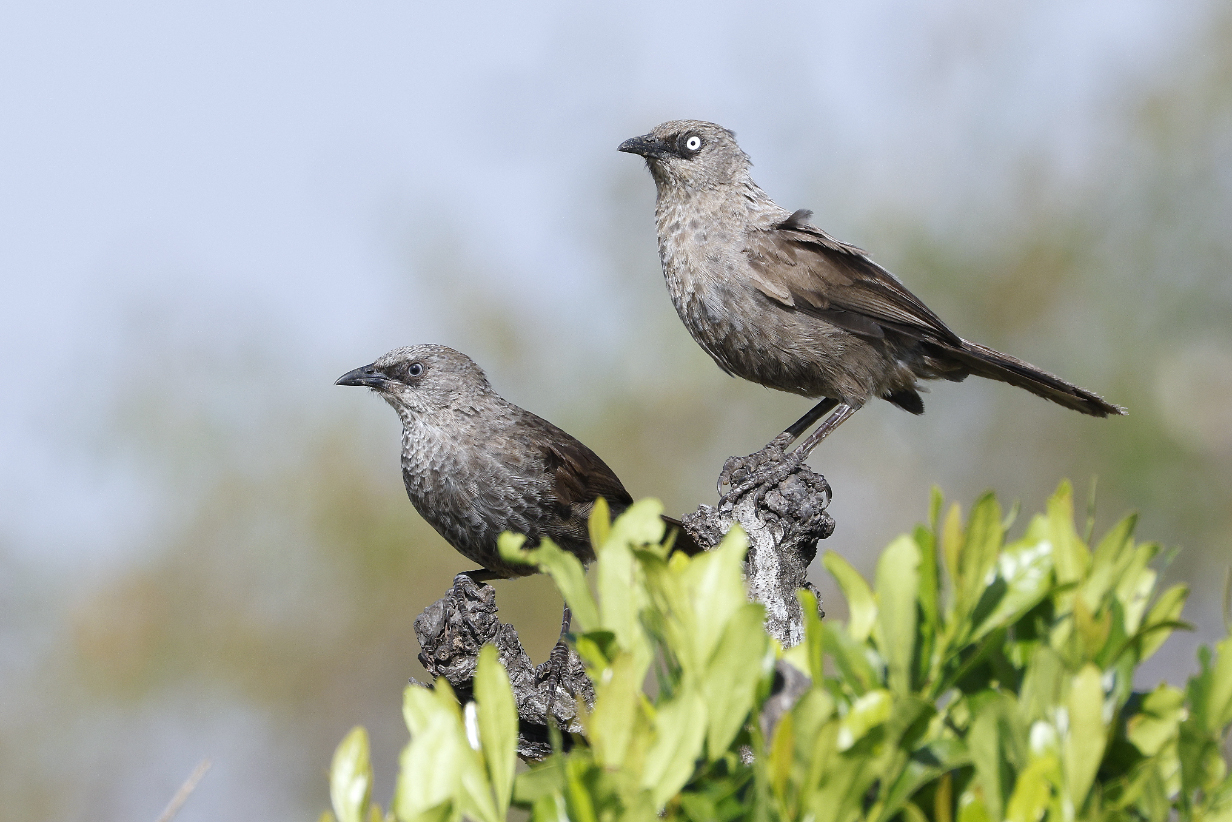
Black-lored babbler (new on August 10th)
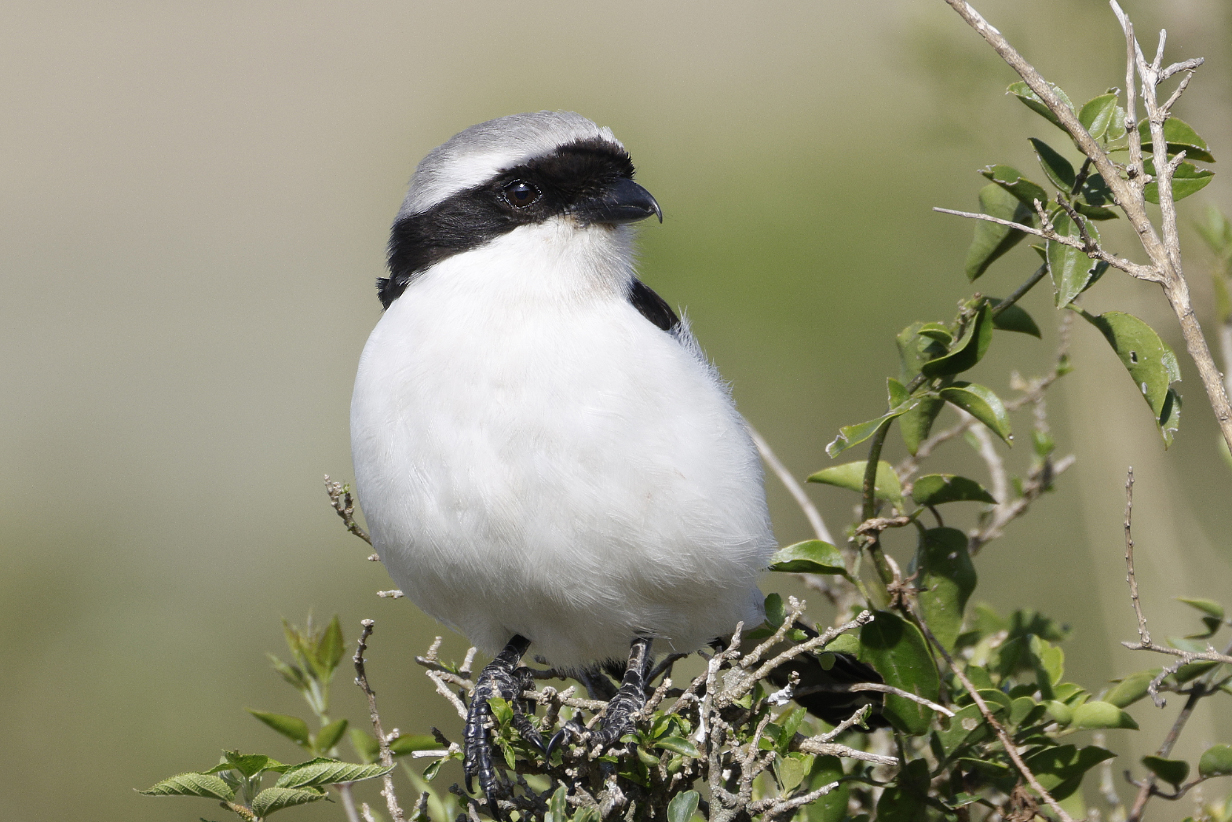
Gray-backed fiscal
Lioness Kills a Wildebeest
Continuing our superb luck with East African big cats, this morning, we saw a lioness stalk and kill a wildebeest. We saw the lioness -- with safari vehicles in attendance ... but not too close -- obviously stalking a herd of wildebeest. We then missed the moment of the kill: unfortunately, our vehicle was being repositioned for a better view. Moments later:
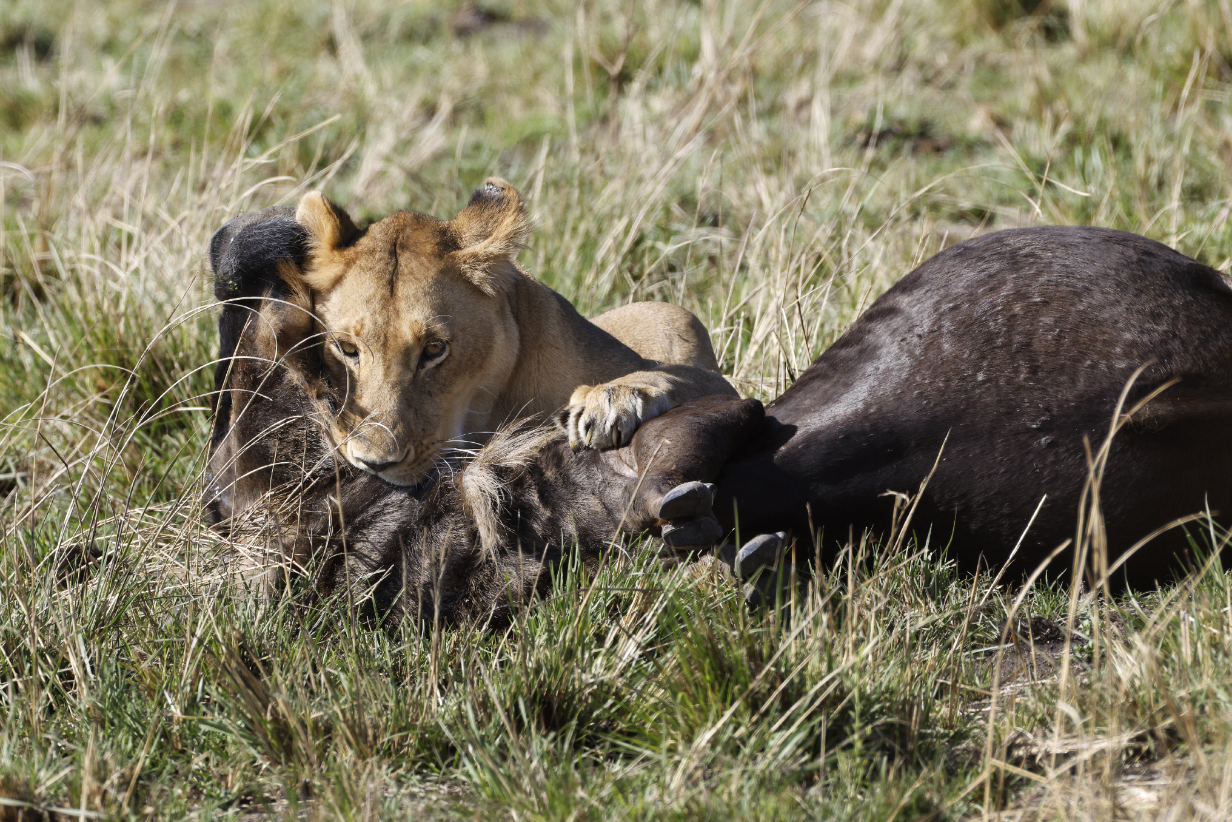
This shows the lioness with a classic throat bite to suffocate the still-living wildebeest. She needed to hang on tightly for several minutes while the animal died. It is hard to estimate in retrospect, but this must have happened about 100 feet away from us and from other surrounding vehicles.
Here are two movies of the kill in progress: Here the lioness is choking the still-living wildebeest and here it is dead but the lioness bites its face to be sure. Apologies that the movies are shaky -- you can hear that there was a brisk and gusty wind.
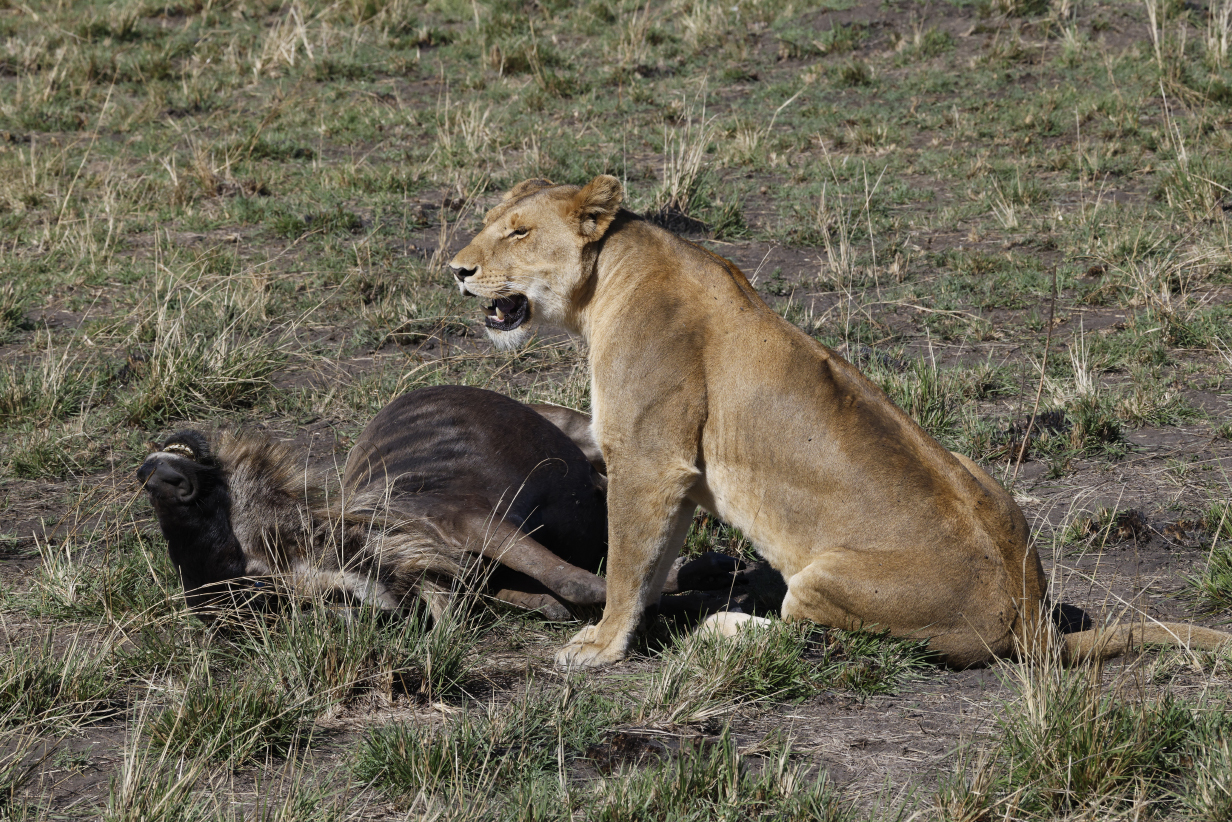
Hunting is hard work. The lioness was panting hard after the kill. In truth, whenever we saw big cats -- leopards and cheetahs as well as lions -- at rest, I was impressed by how quickly they breathe. My impression always was that they take a breath rather more often than once per two seconds, although google AI claims otherwise. Google AI agrees completely with our experience here, which is that, immediately after the kill, this lioness panted faster than once per second. Hunting is exhausting.
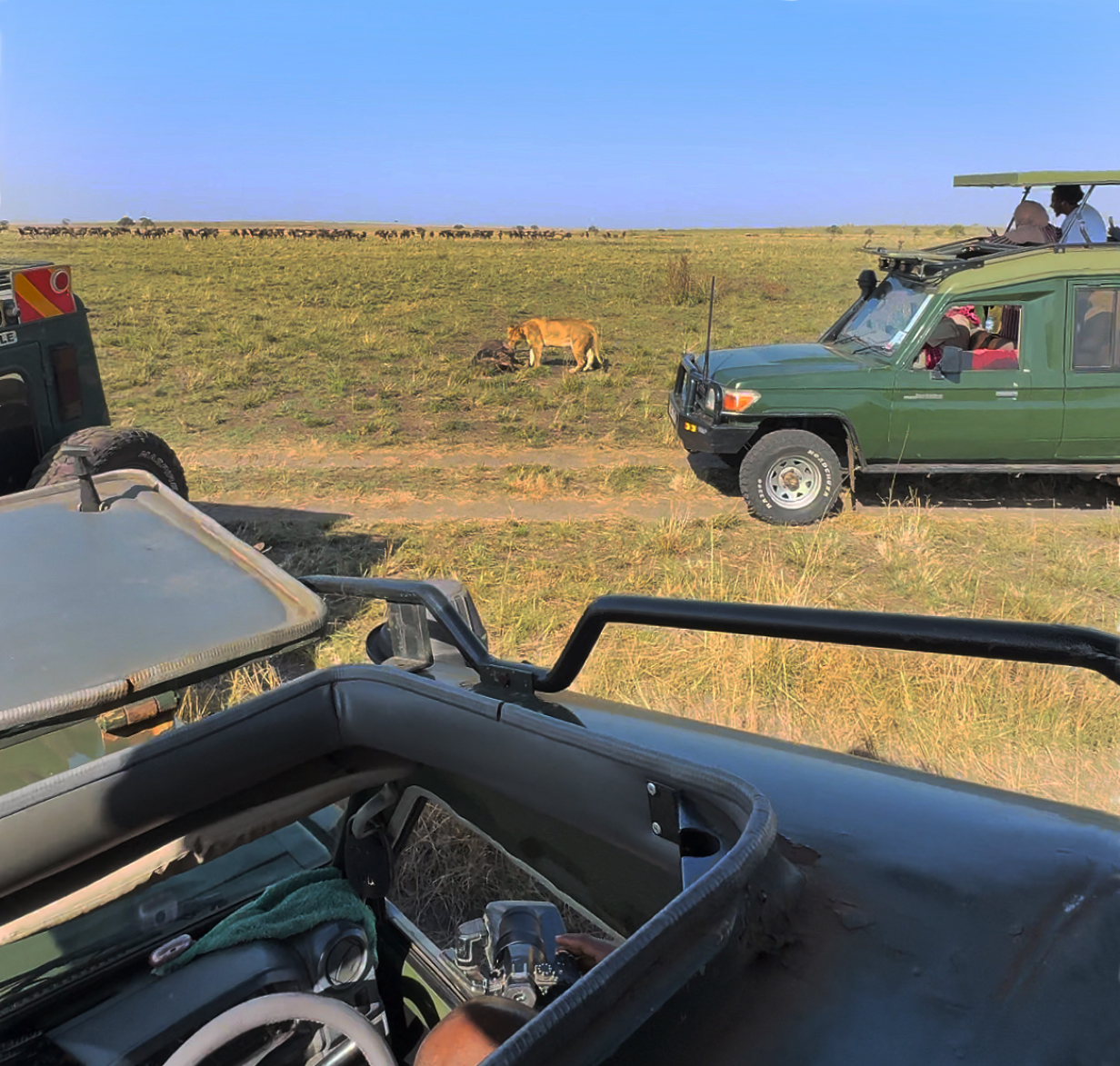
Not to spoil any illusions ... but as usual, safari vehicles -- including ours in the foreground -- were close by (see this movie).
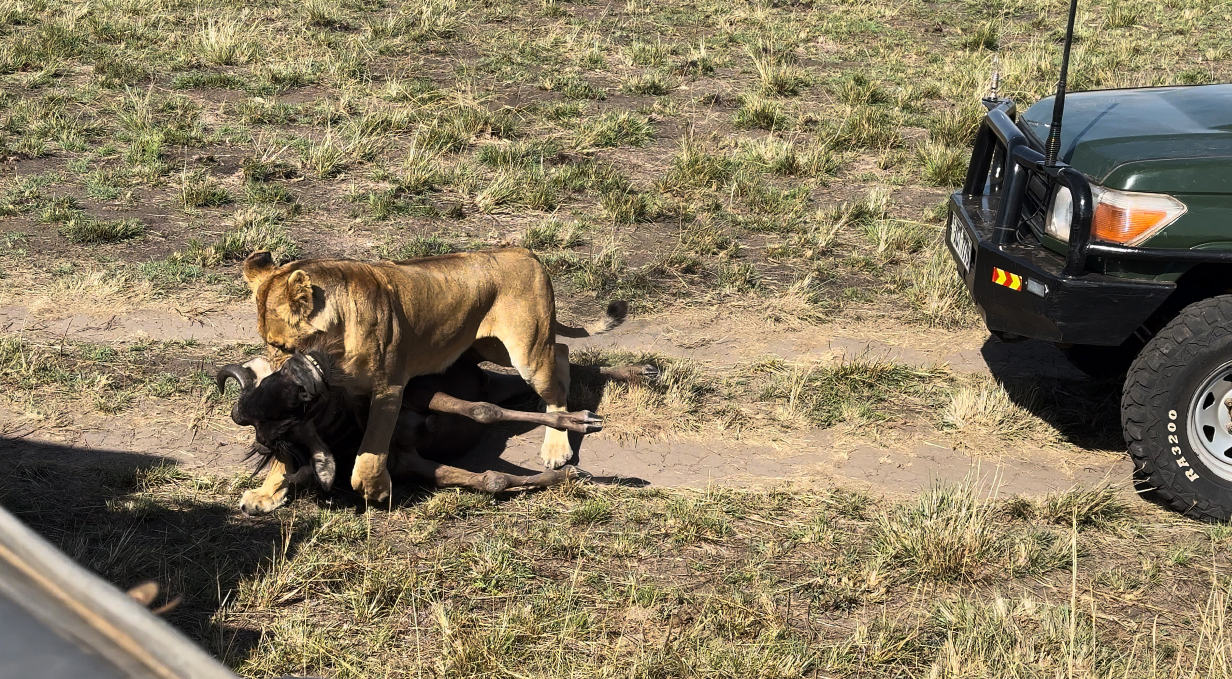
Feeding on a kill out in the open invites scavengers and anyway is uncomfortable in the hot sun. So the lioness next dragged her kill first into the shade of our vehicle (in the left foreground) and eventually into the bush. This movie shows her as she drags the wildebeest to within a few feet of us. Dragging is hard work, too.
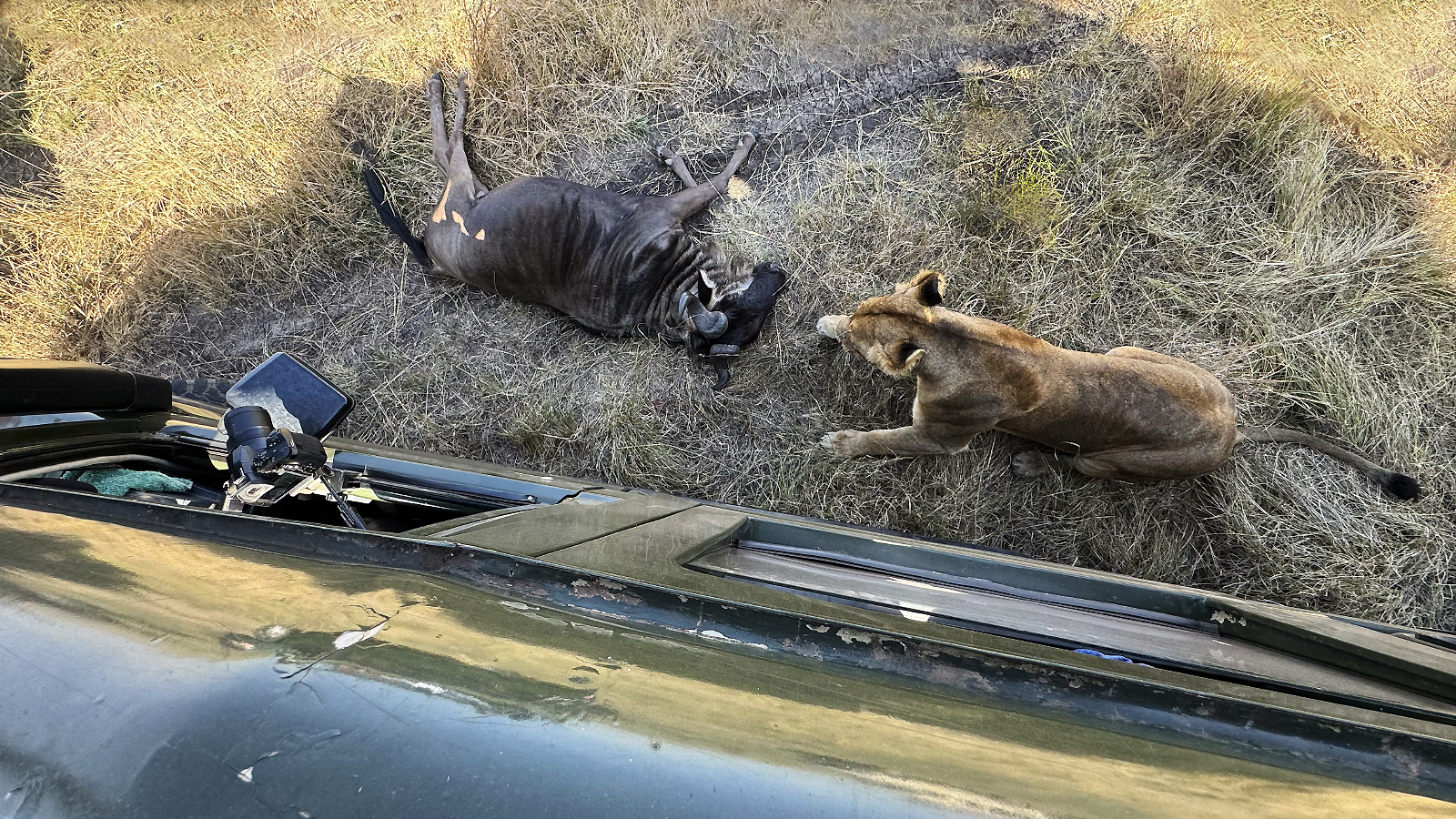
As we looked straight downward at the lioness and kill directly beside our vehicle, both were almost close enough to be touched from up were I was standing. We kept very still and watched as she continued to drag her prey into the shelter of nearby bushes.
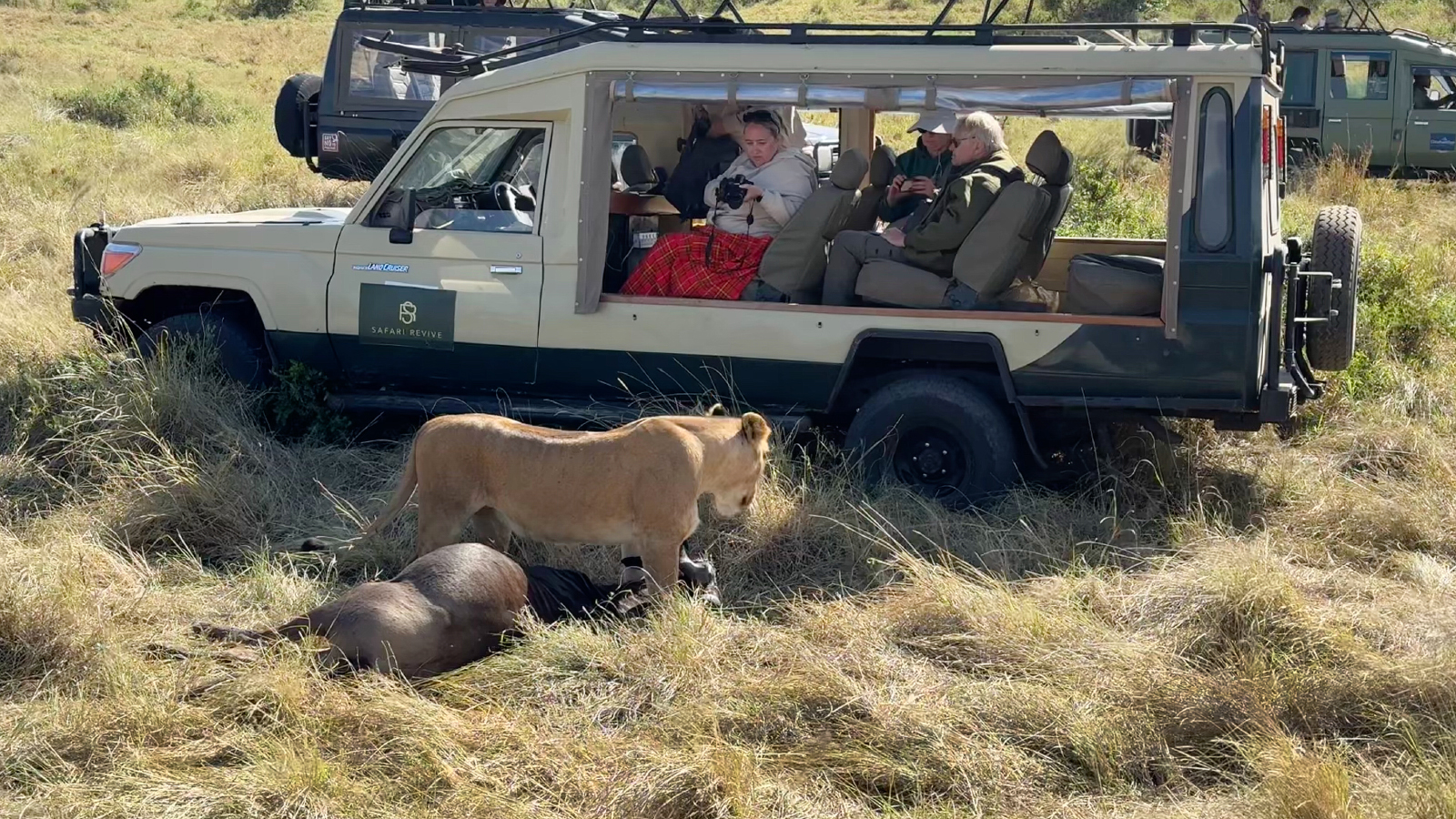
On the way to more hidden shelter, she passed close to this surprisingly open safari vehicle. This view is a remarkable testament to how thoroughly predators such as lions here and tigers in India do not view vehicle passengers as food or danger.
End of Lioness Kill
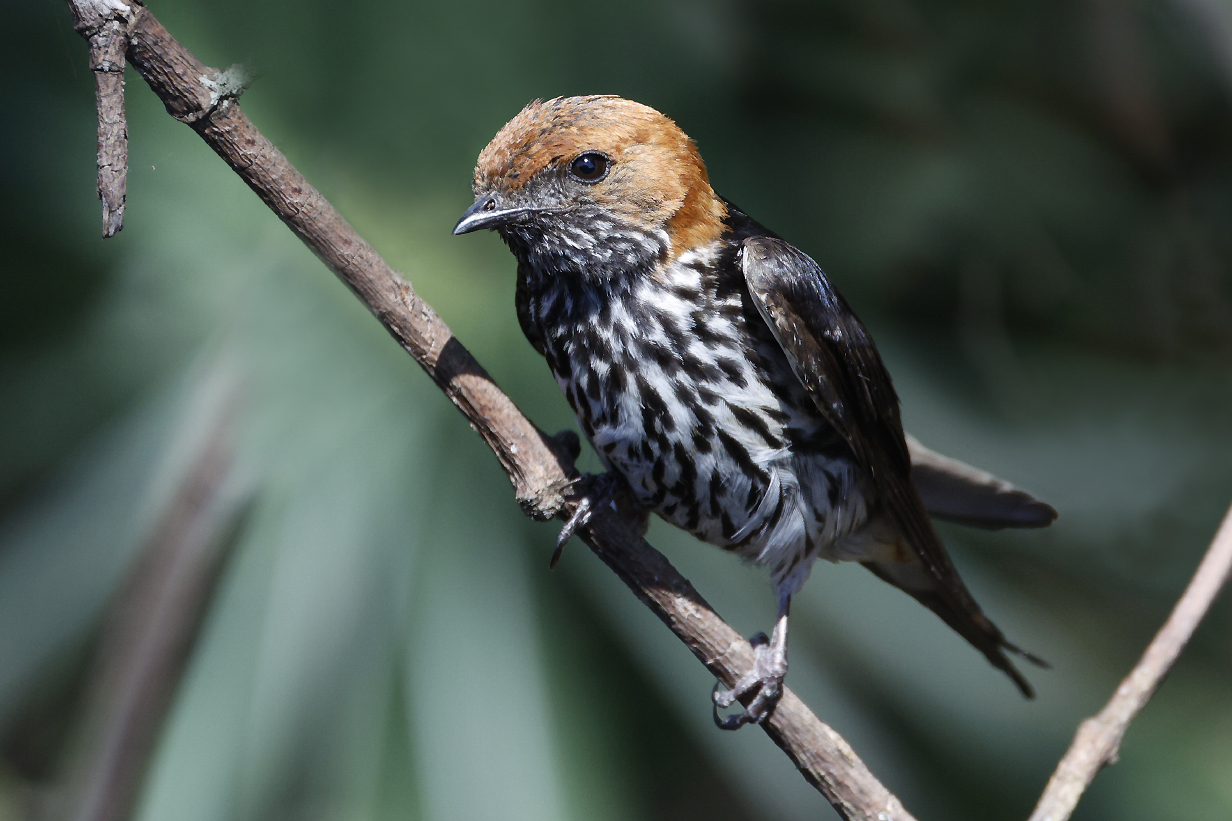
Lesser striped swallow
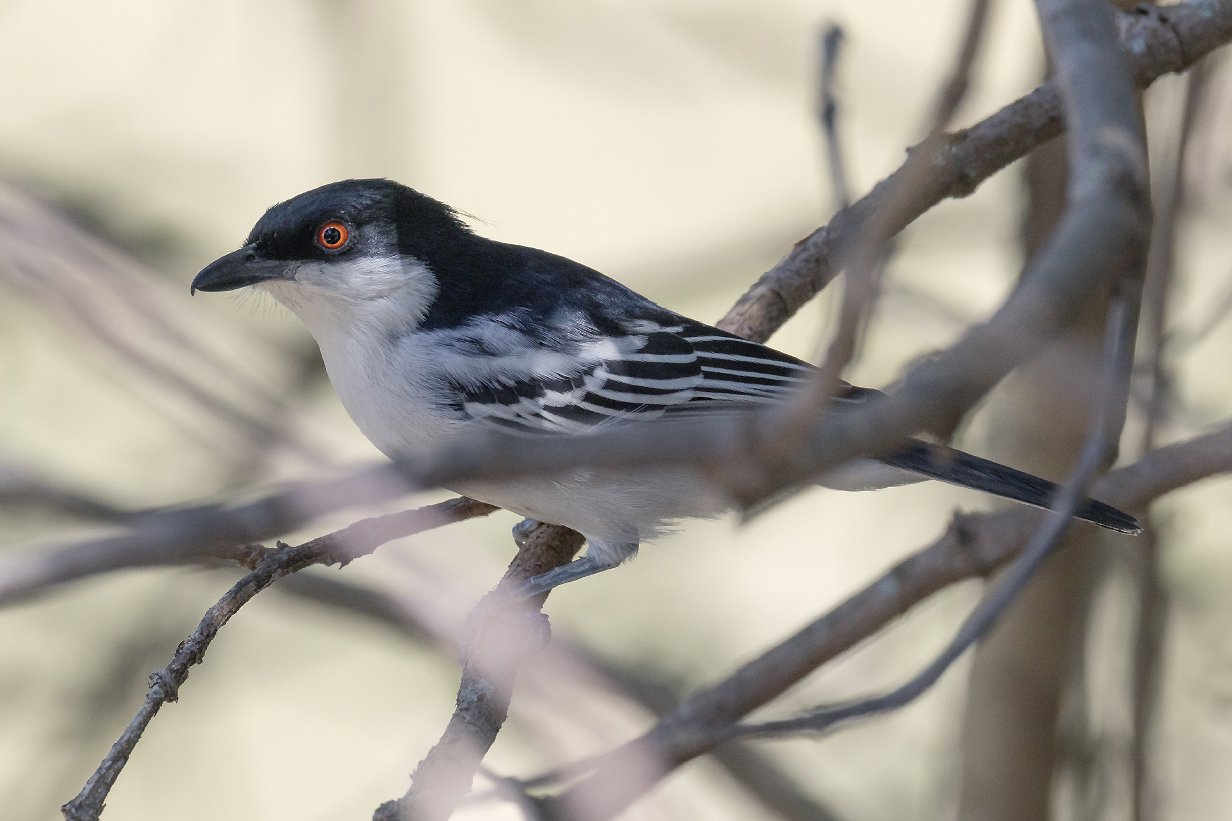
Black-backed puffback (bad luck with foreground branches but still a good look at the bird)
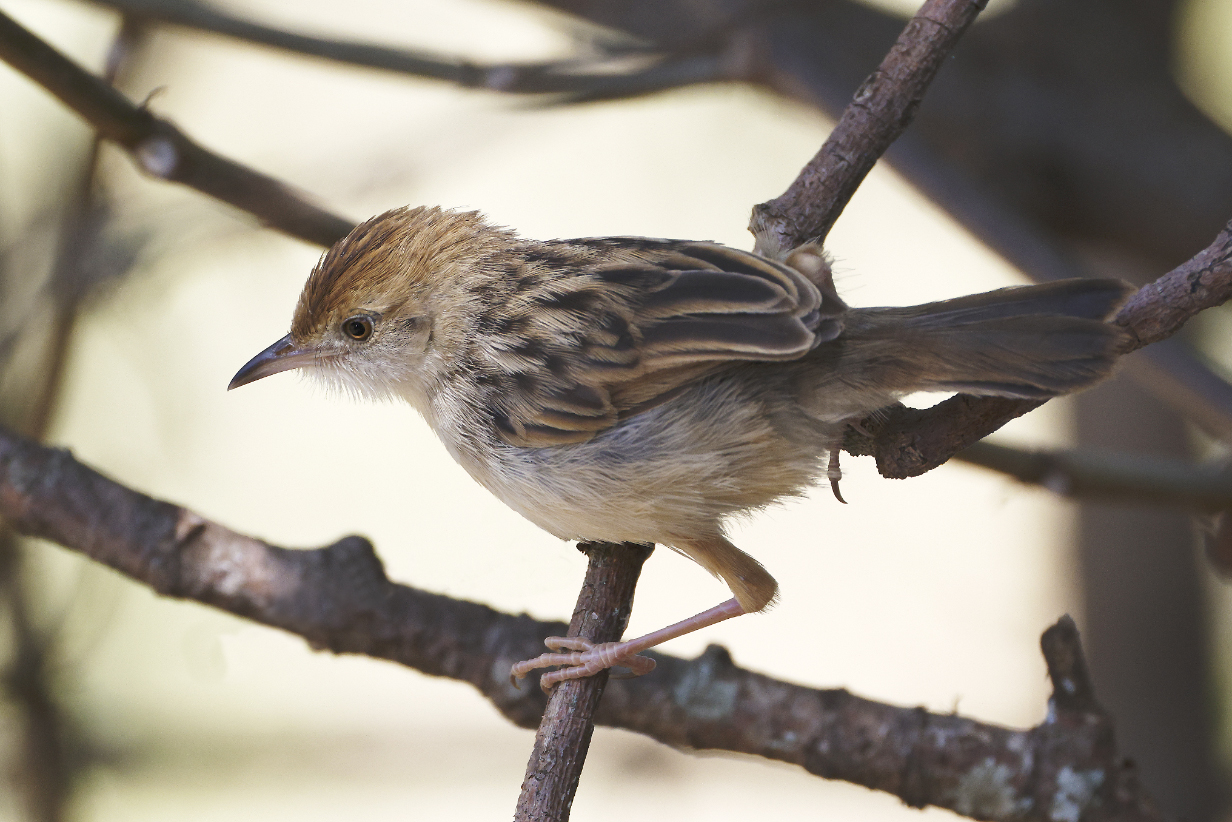
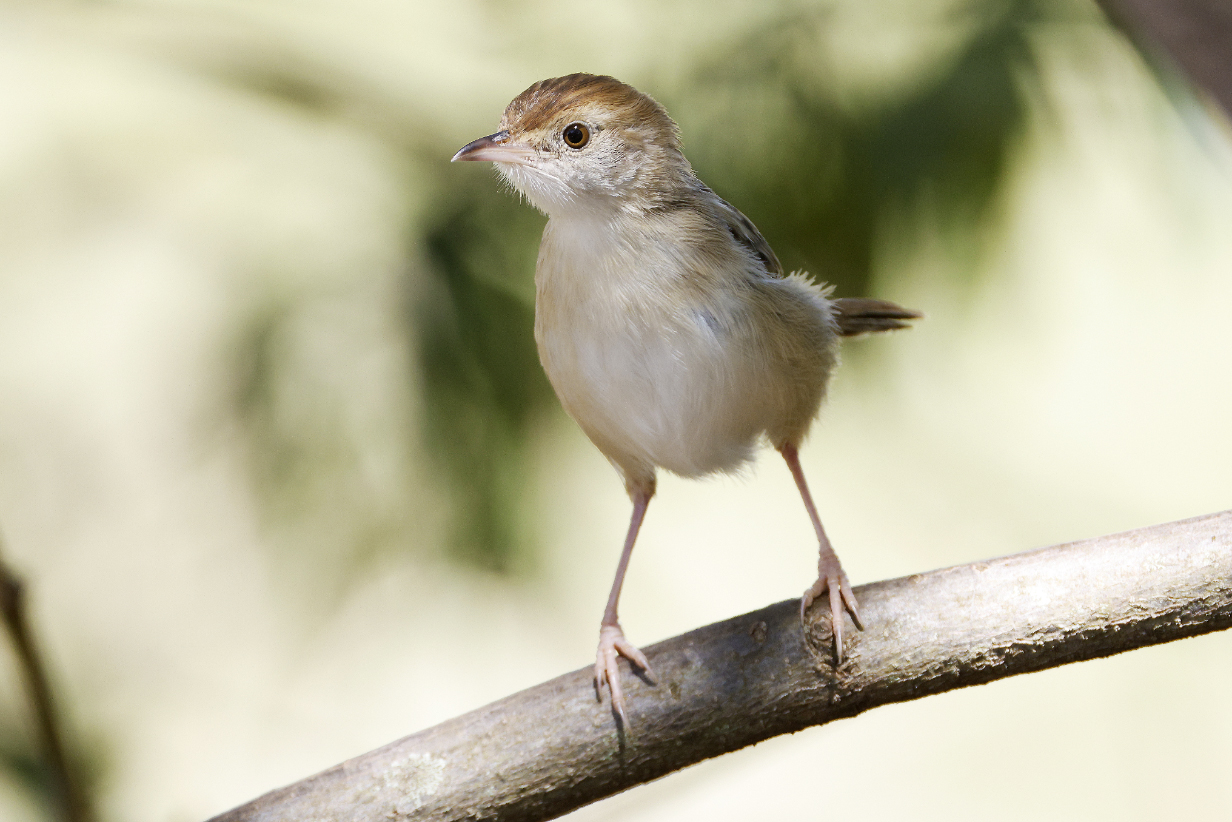
Rattling cisticola
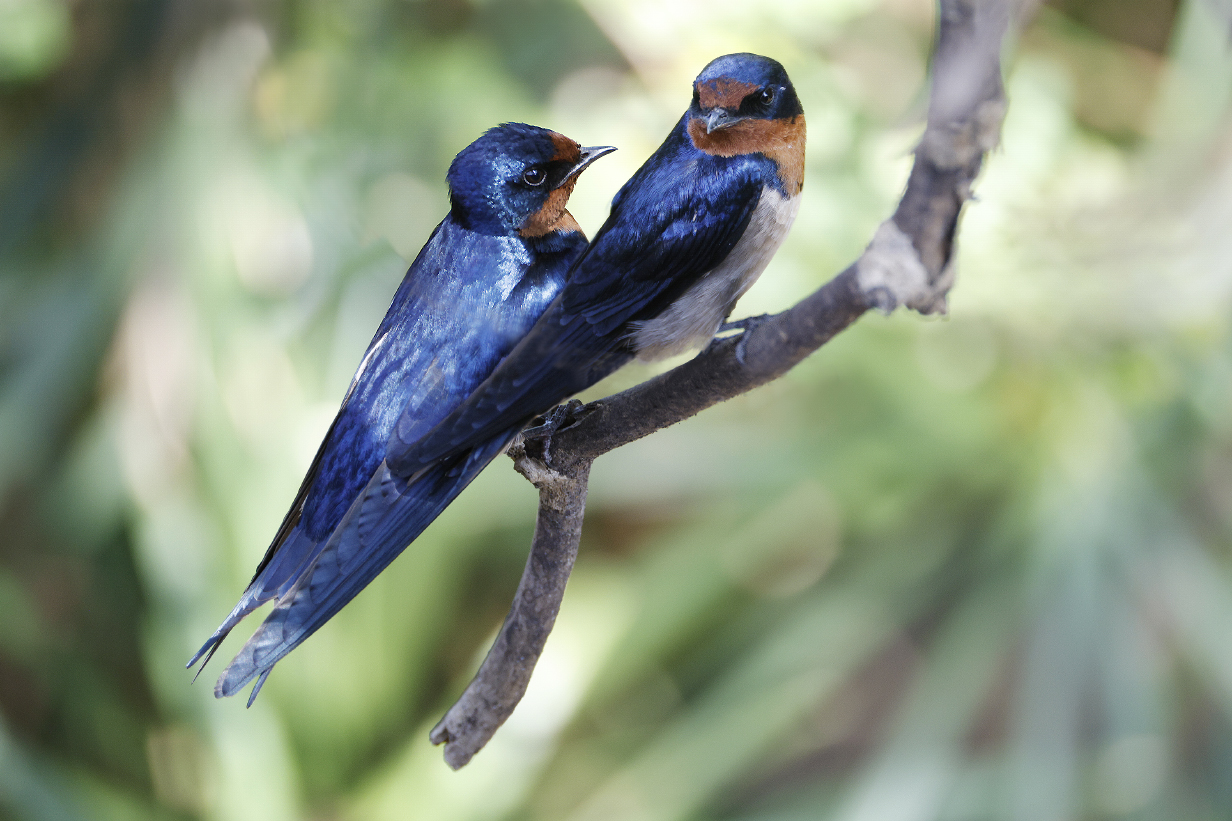
Angola swallow (These are my life birds.)
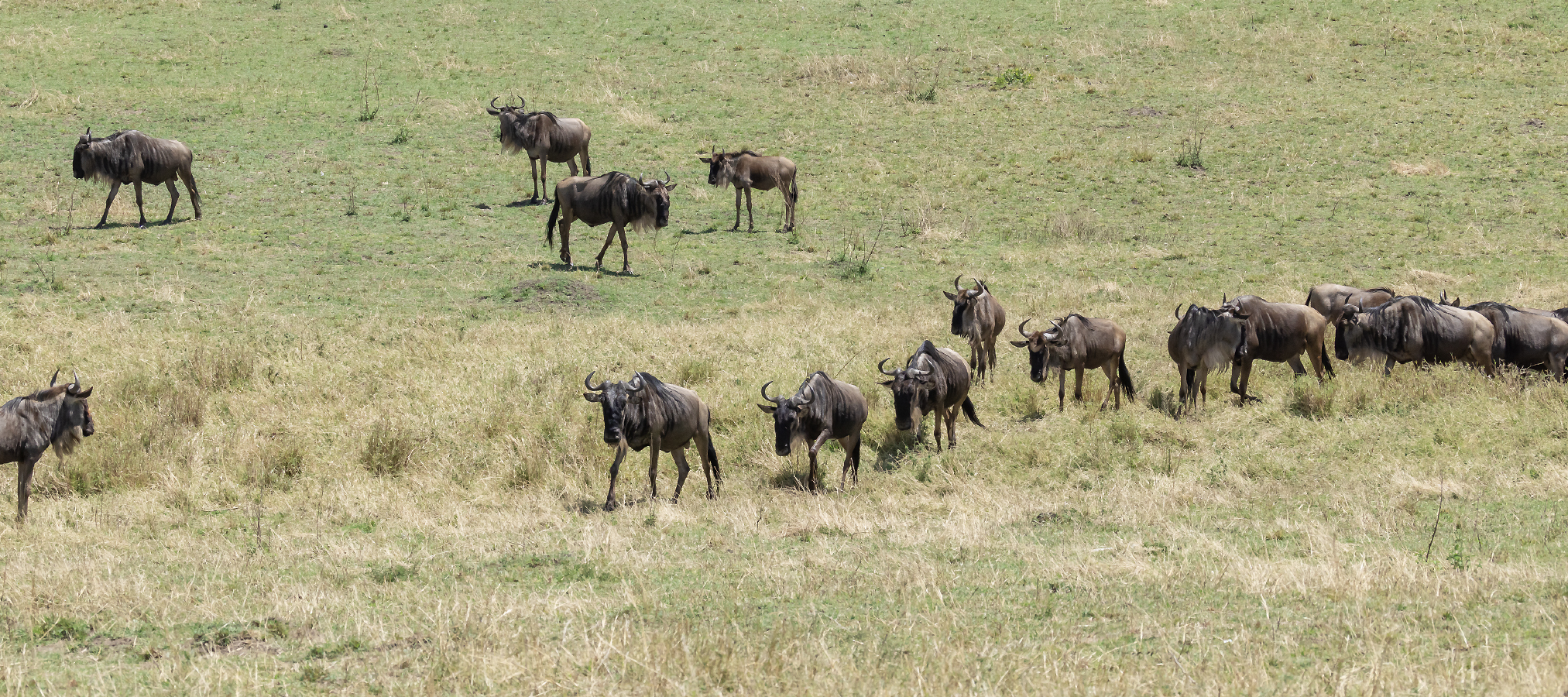
Herd of wildebeest (scroll right to see the complete panorama)
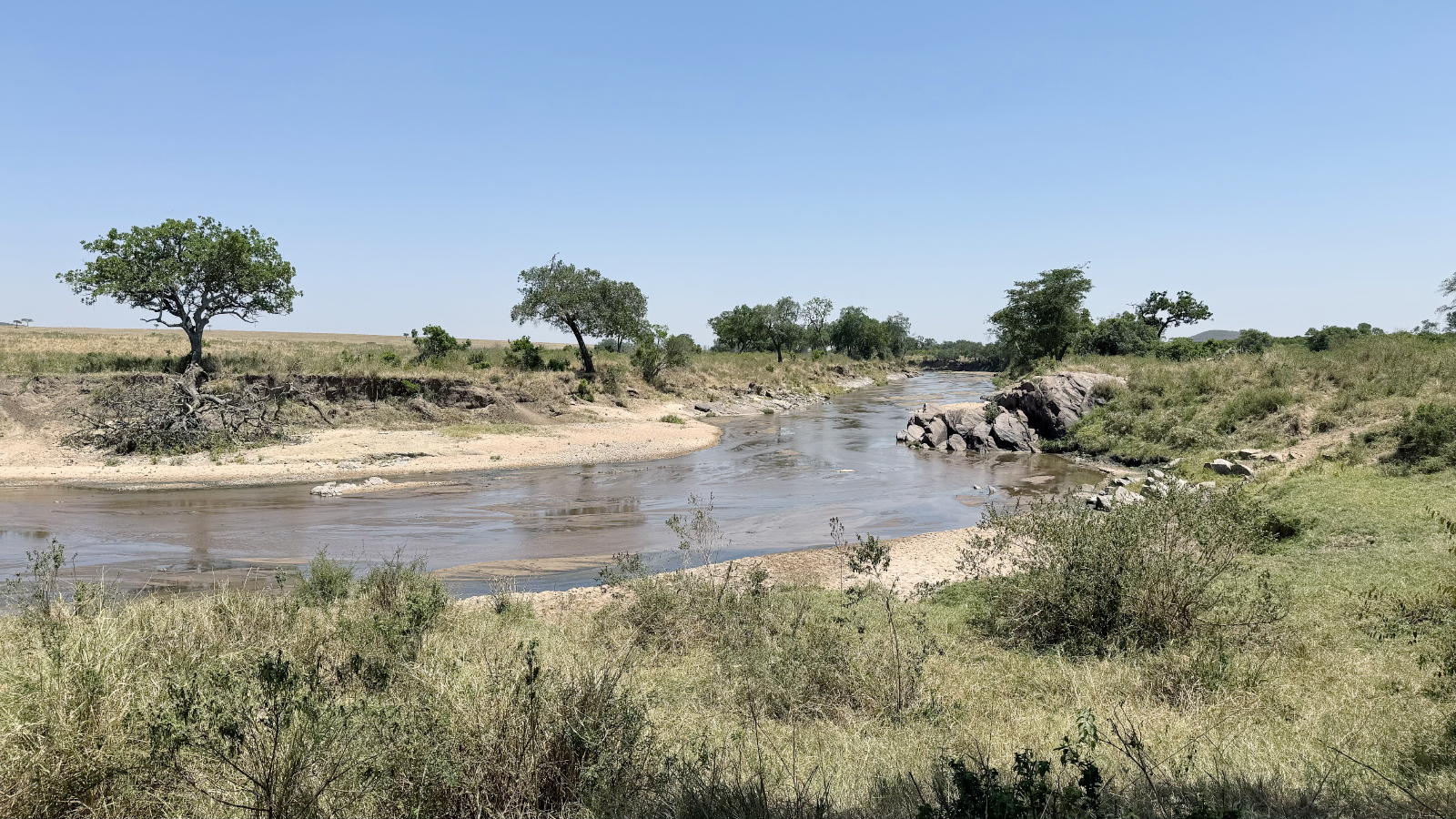
Panorama of the site of our field lunch at the Sand River. The background is in Tanzania.
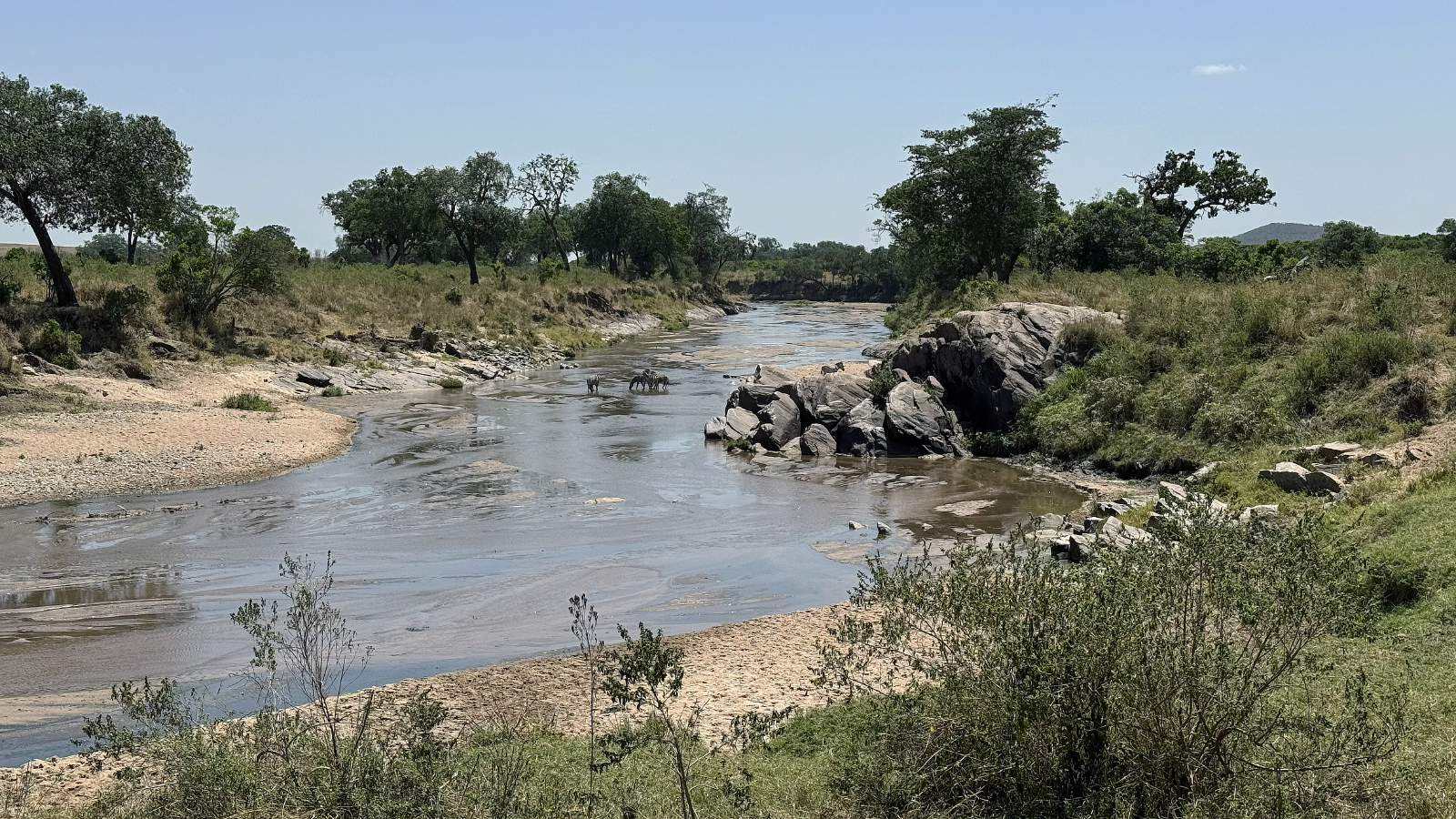
Sand River with zebras (Anticipating that this safari drive would eventually be 13 hours long -- from dark to dark -- we took a short rest here after lunch.)
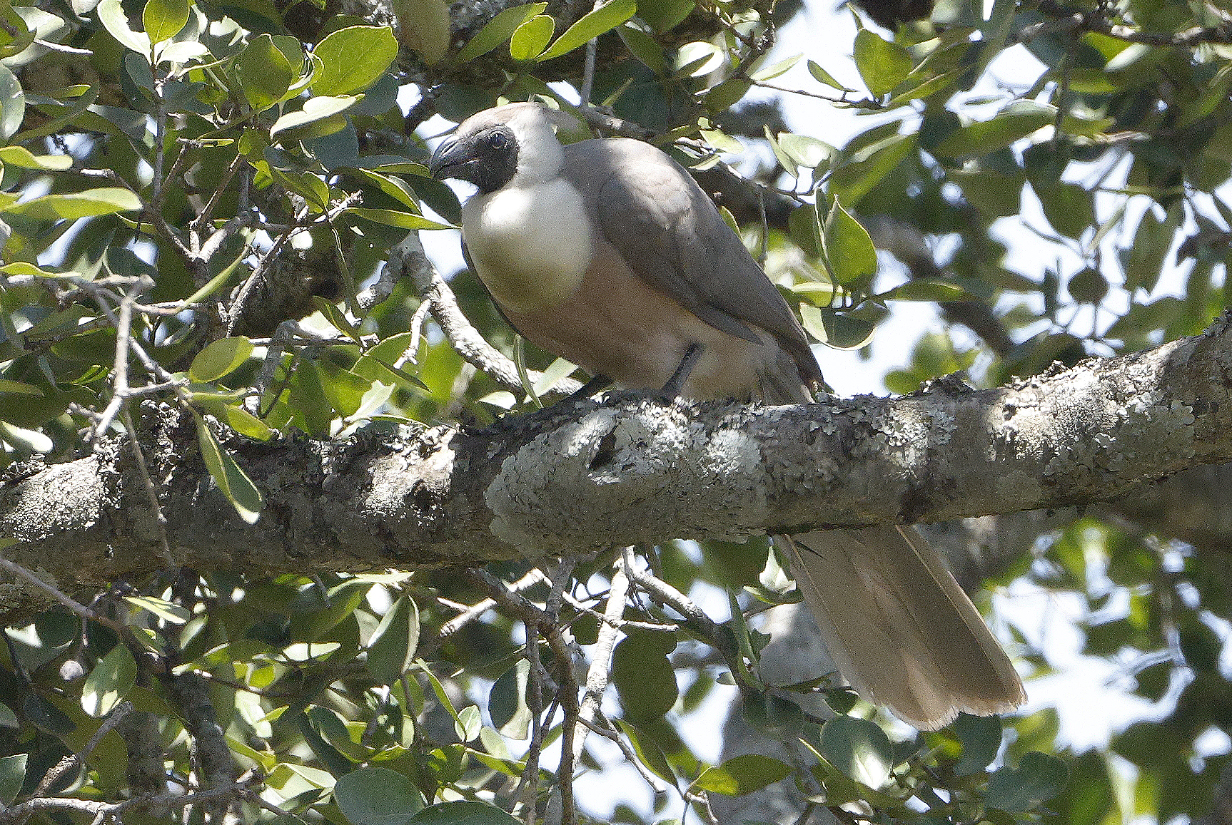
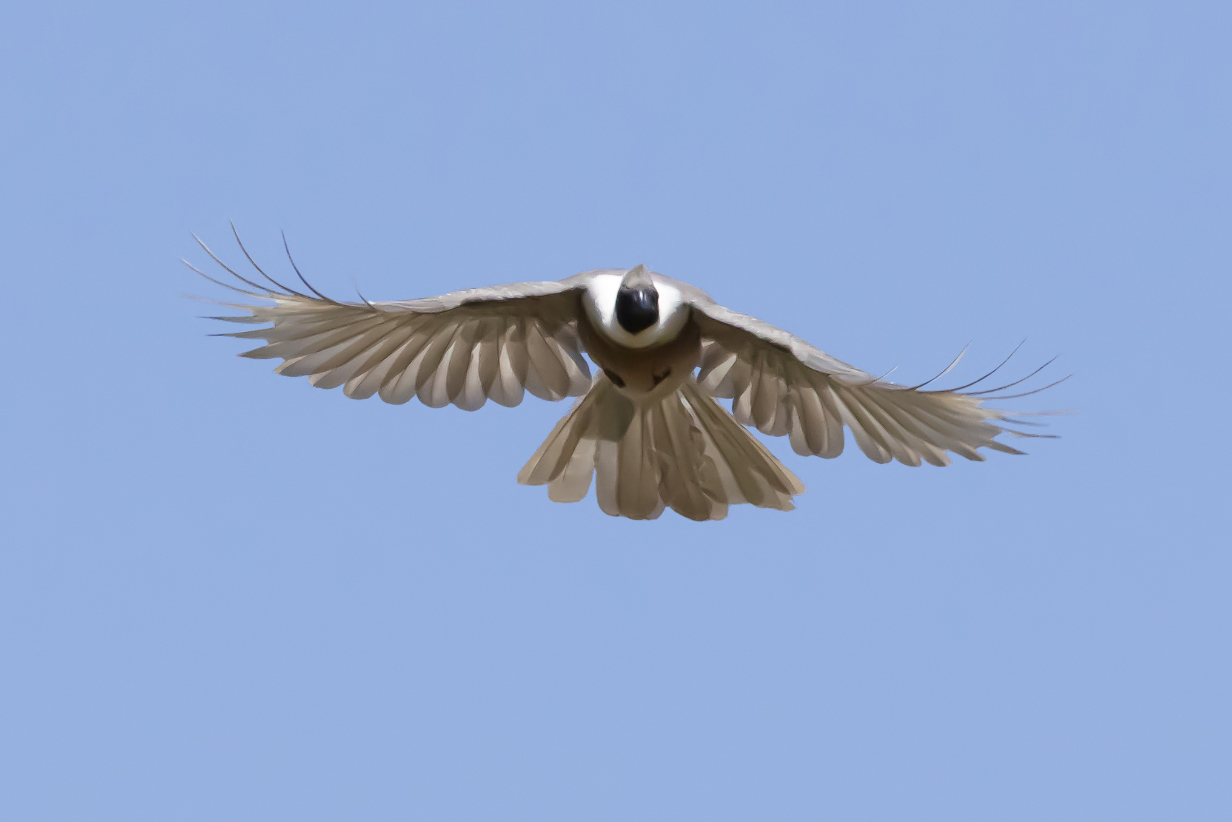
Bare-faced go-away-bird (This is my life bird.)
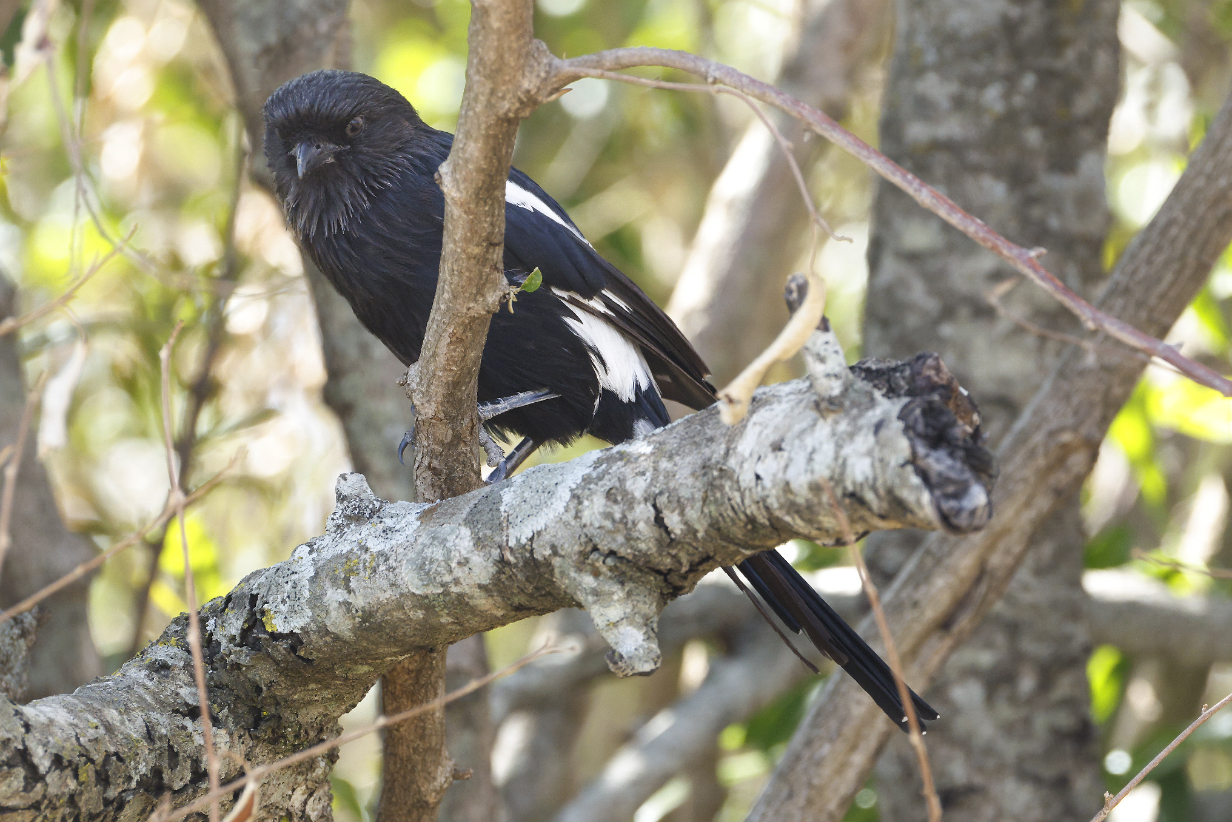
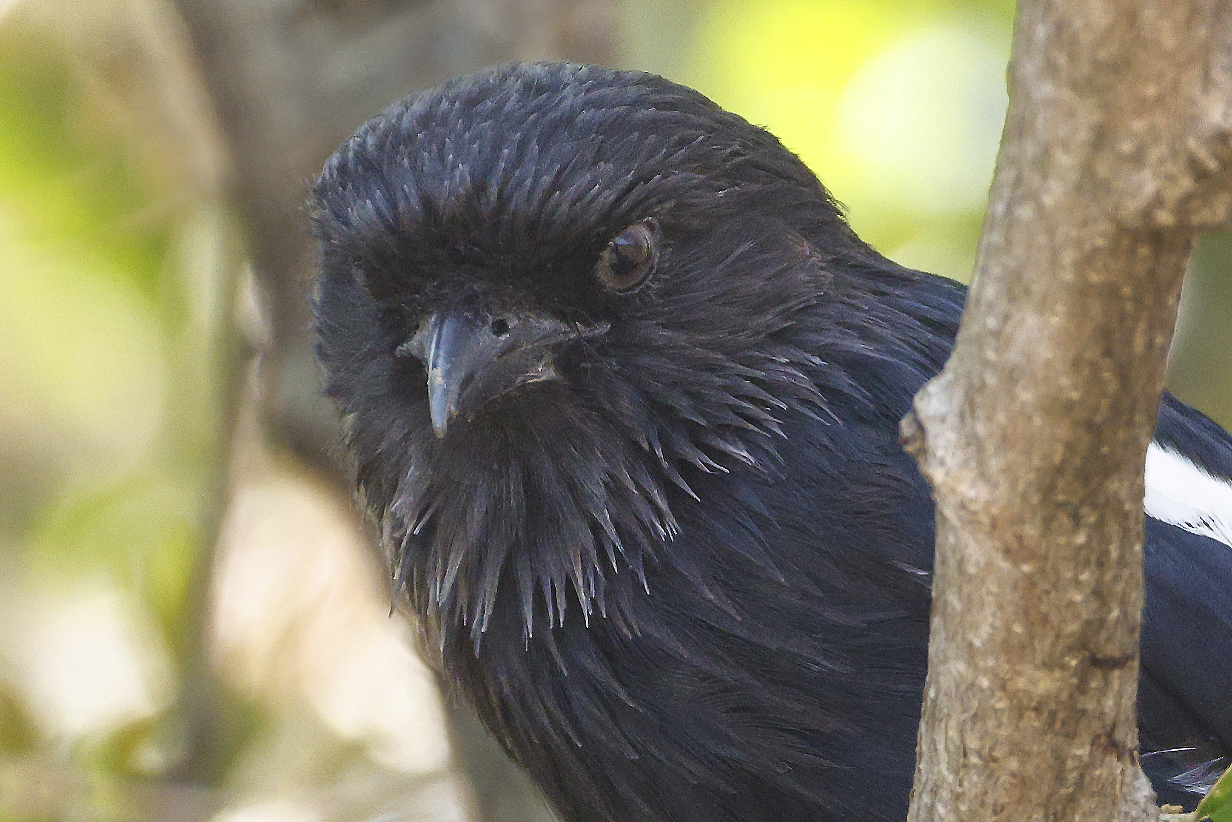
Magpie shrike
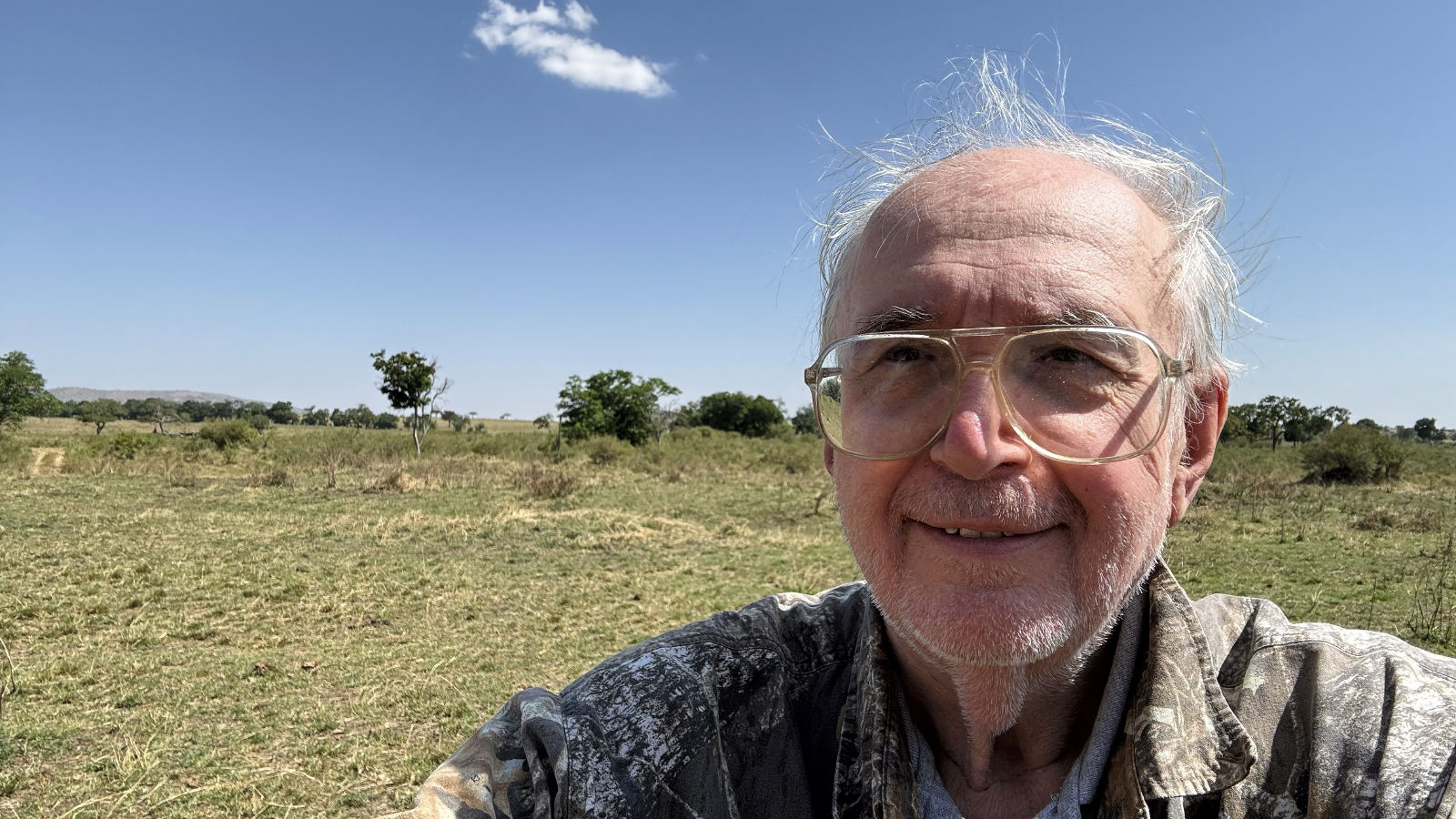
We crossed the border briefly into Tanzania, my 63rd country: Documented by this selfie.
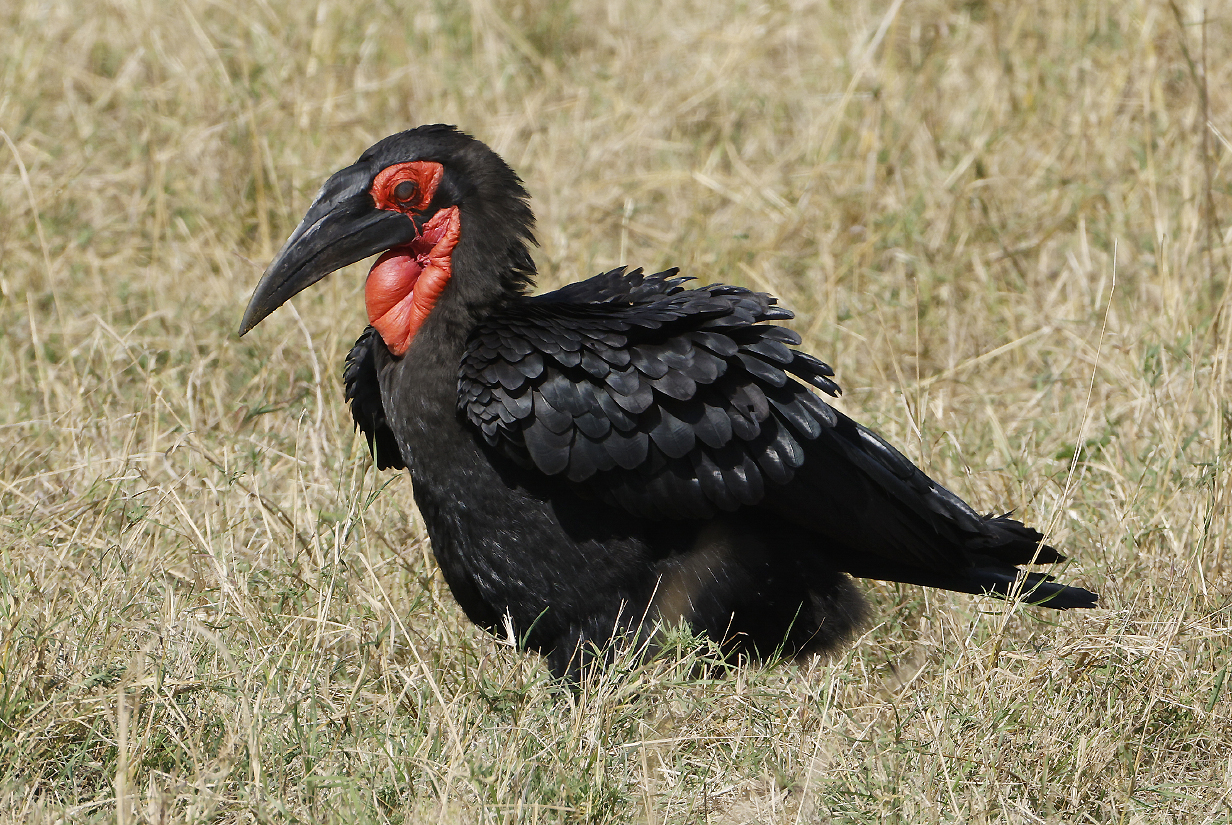
Southern ground-hornbill (Also in South Africa, with snake.)
Unique experience this afternoon: At one point, we stopped the vehicle to see Southern ground-hornbills -- a small flock -- in the distance. And then, they walked steadily closer and closer, foraging, until they were only a few 10s of feet away. They are gigantic birds, so we got superb looks. You can see why I have always thought of them as "witch birds":
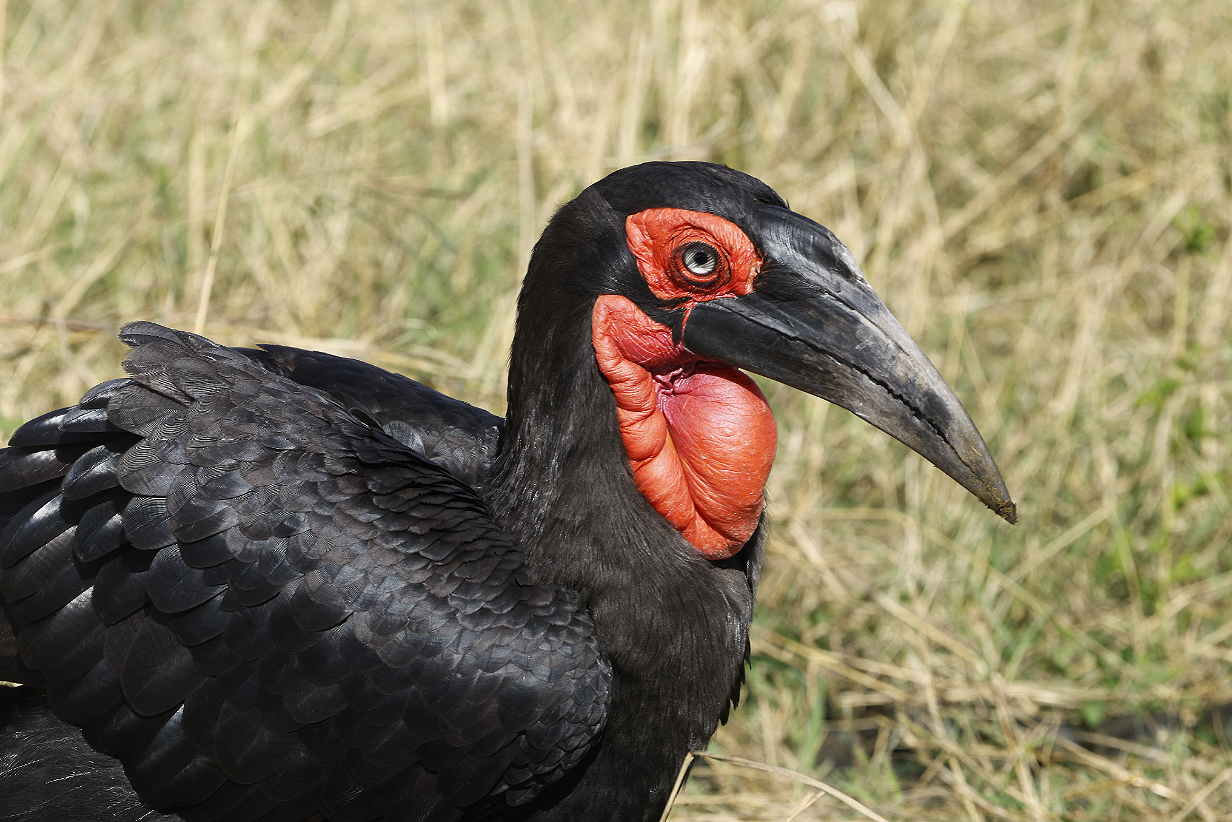
Southern ground-hornbill
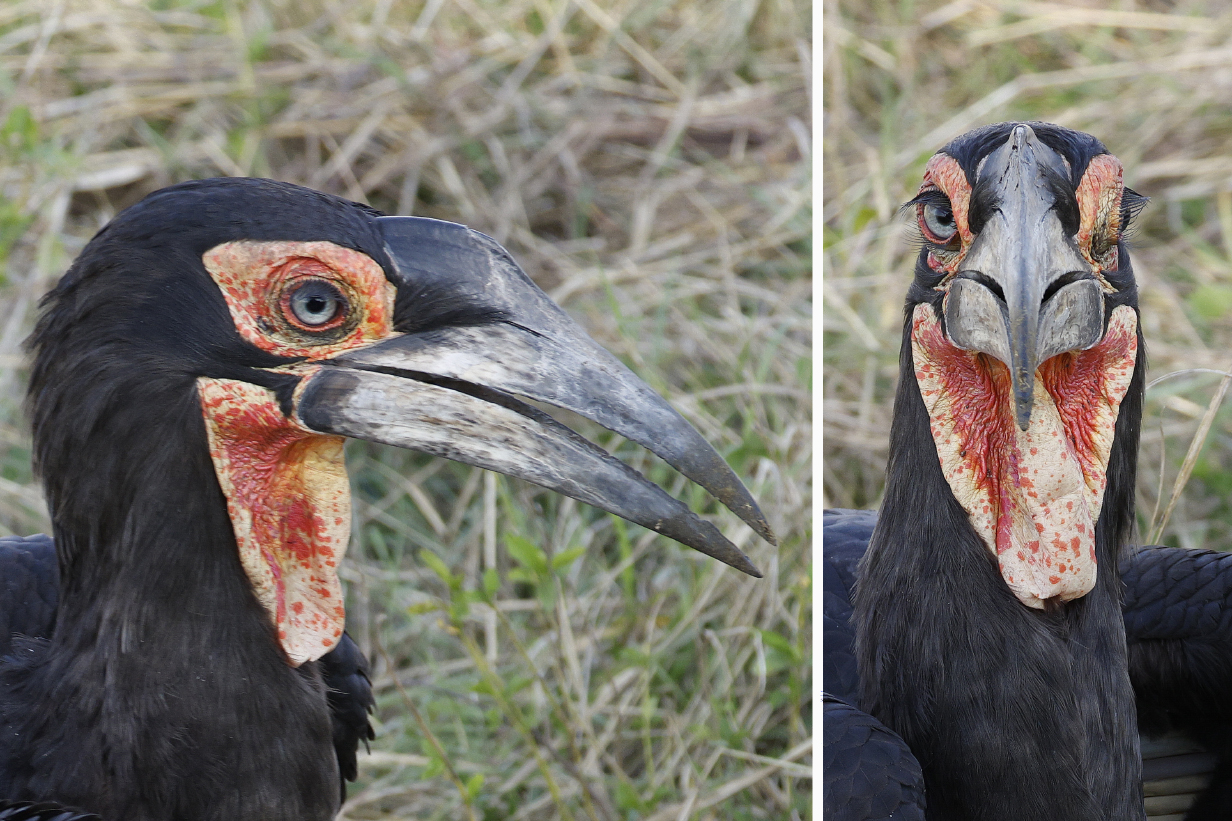
Southern ground-hornbill (I could not resist.)
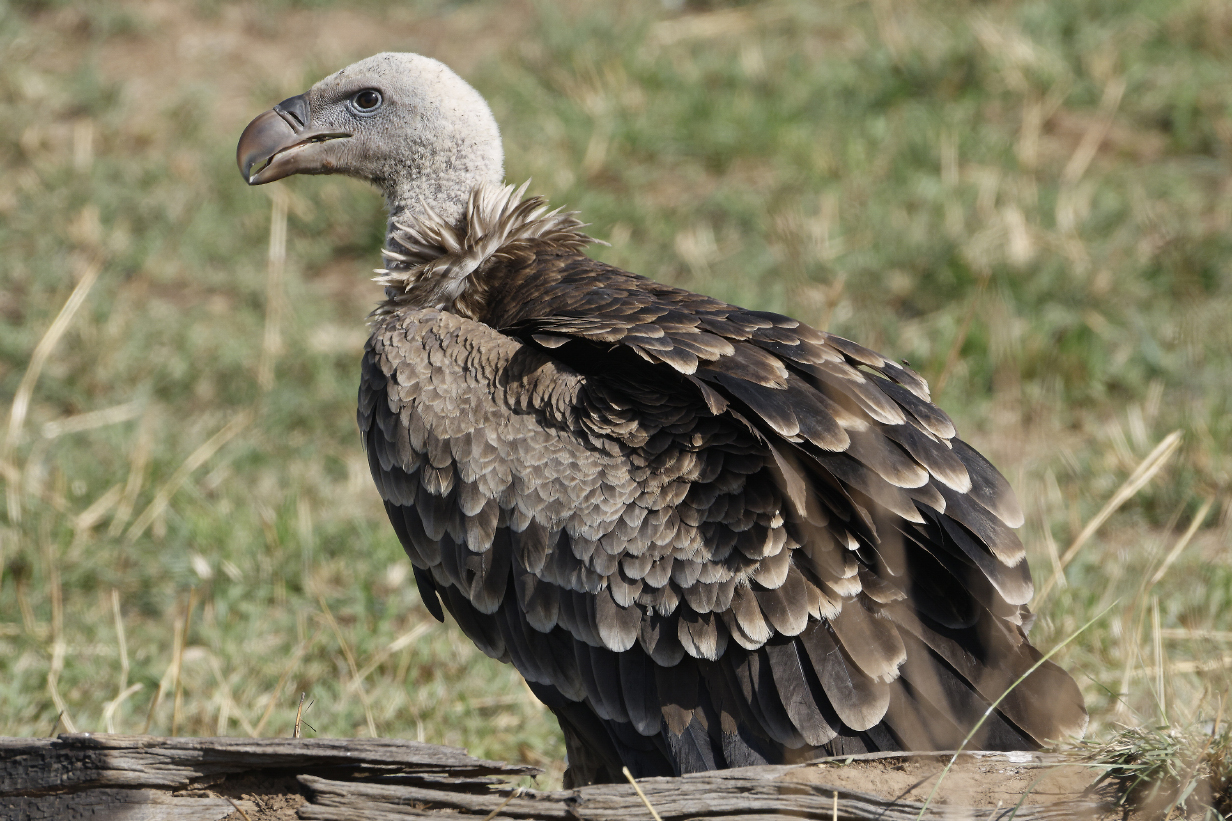
Rüppell's griffon
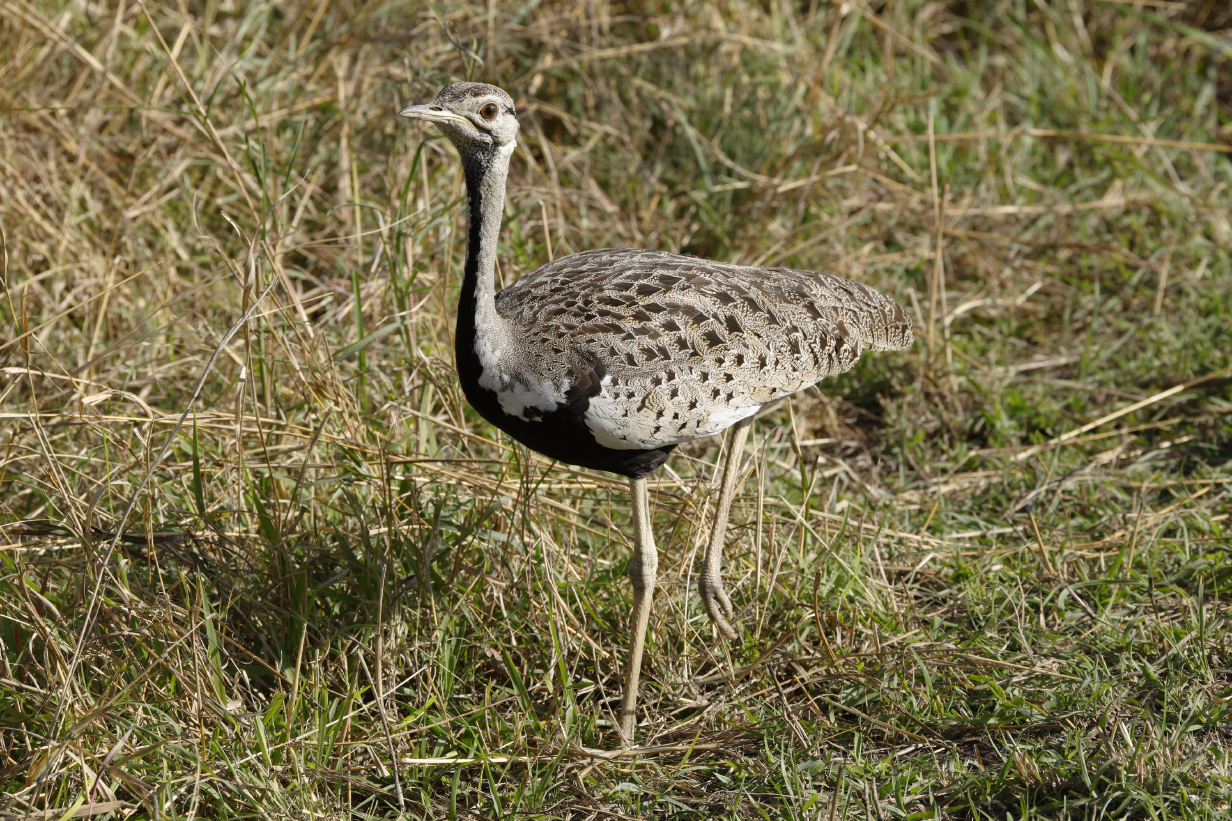
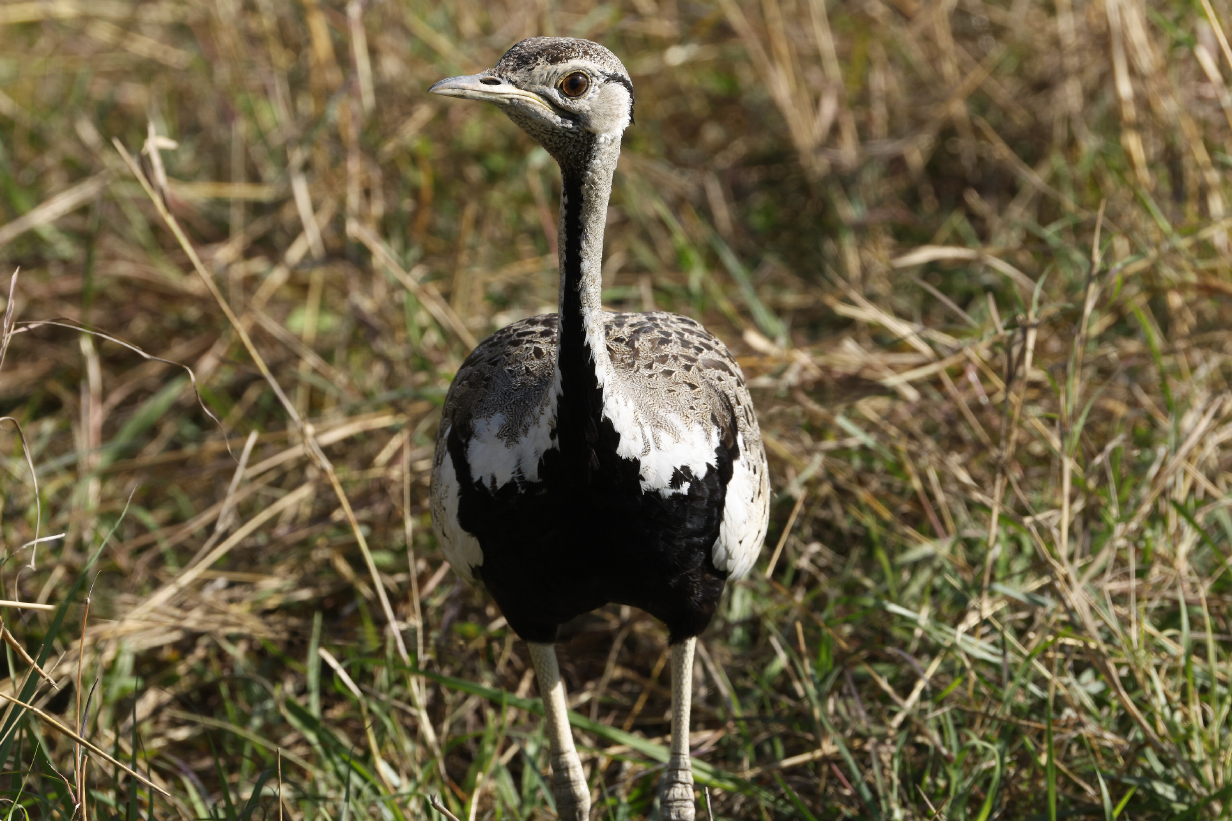
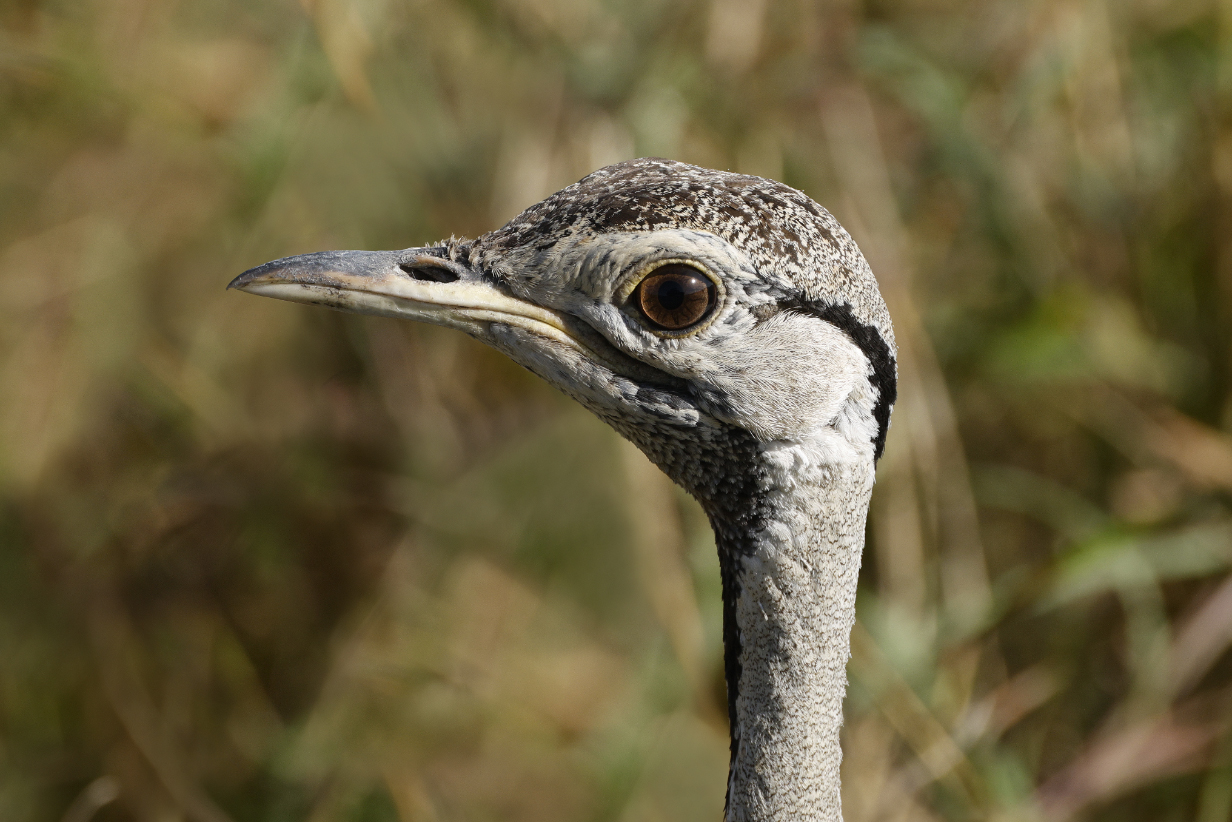
Black-bellied bustard (This is my life bird.)
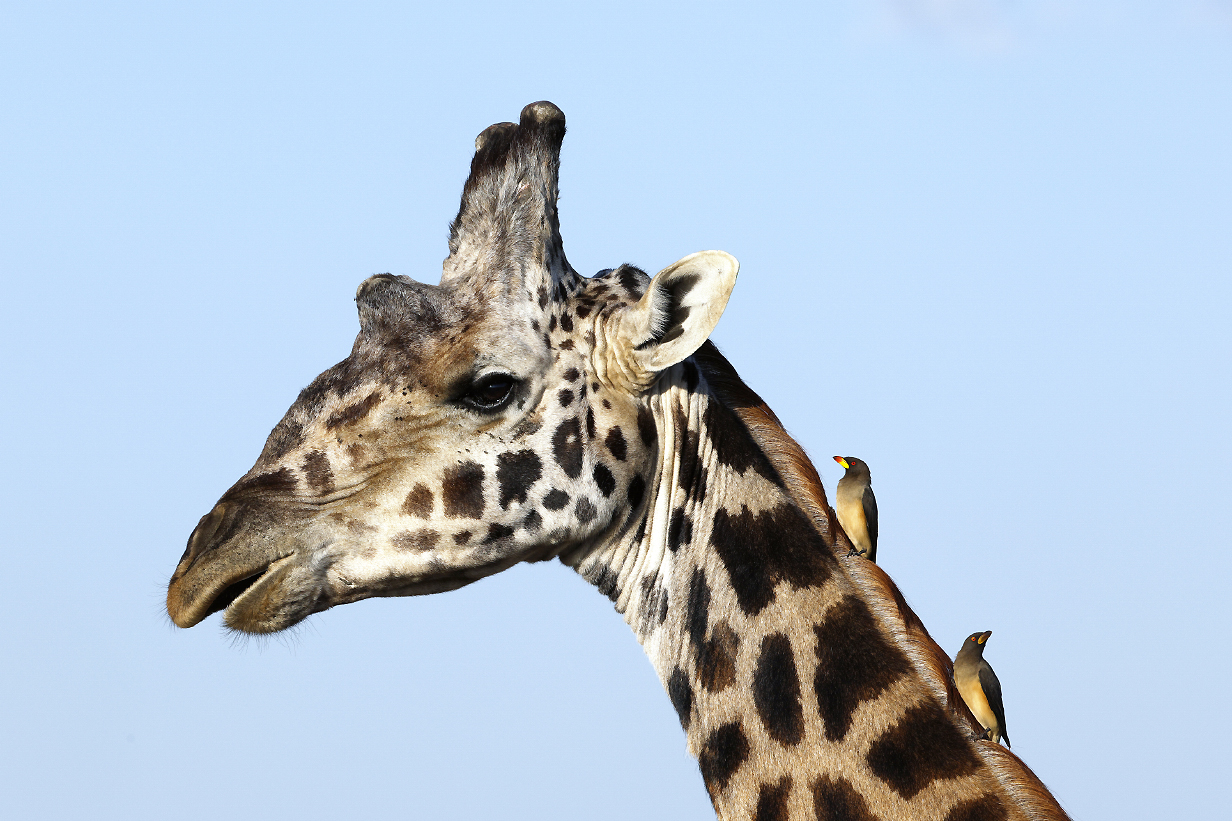
Masai giraffe and Yellow-billed oxpeckers
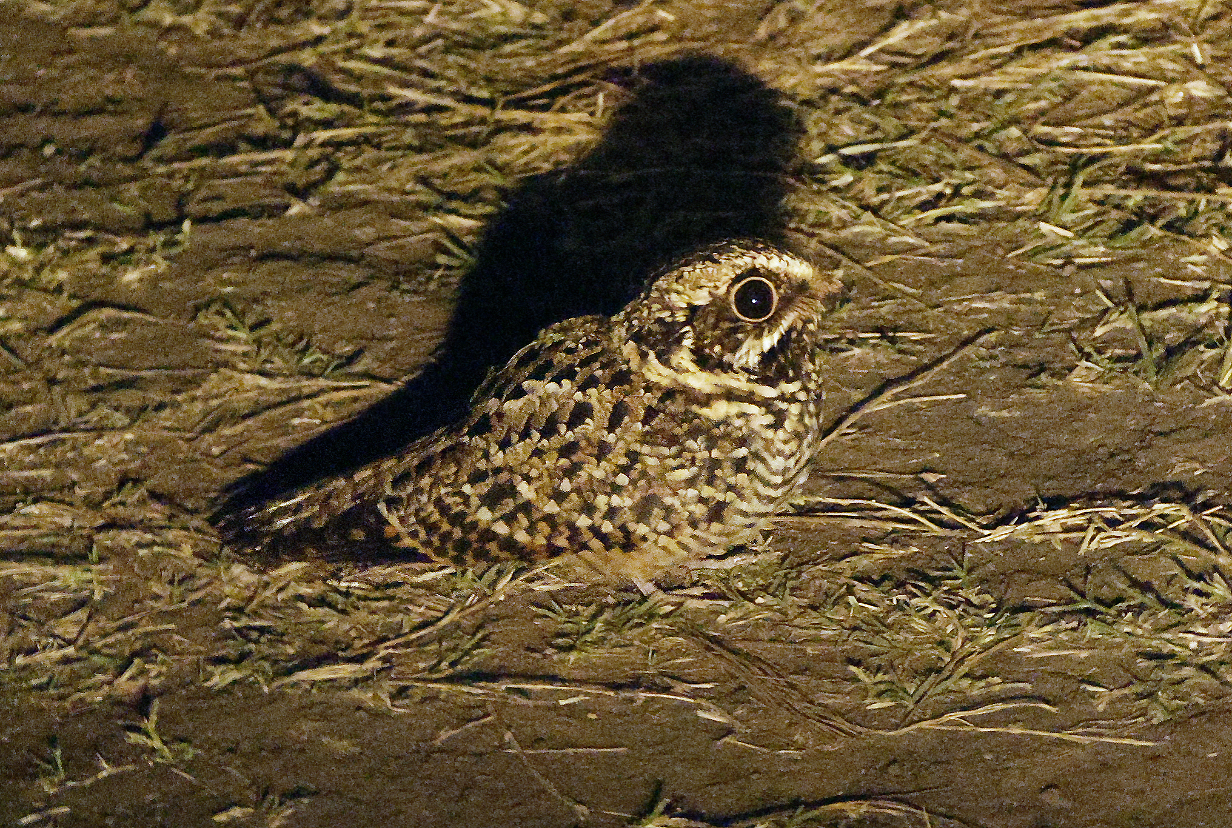
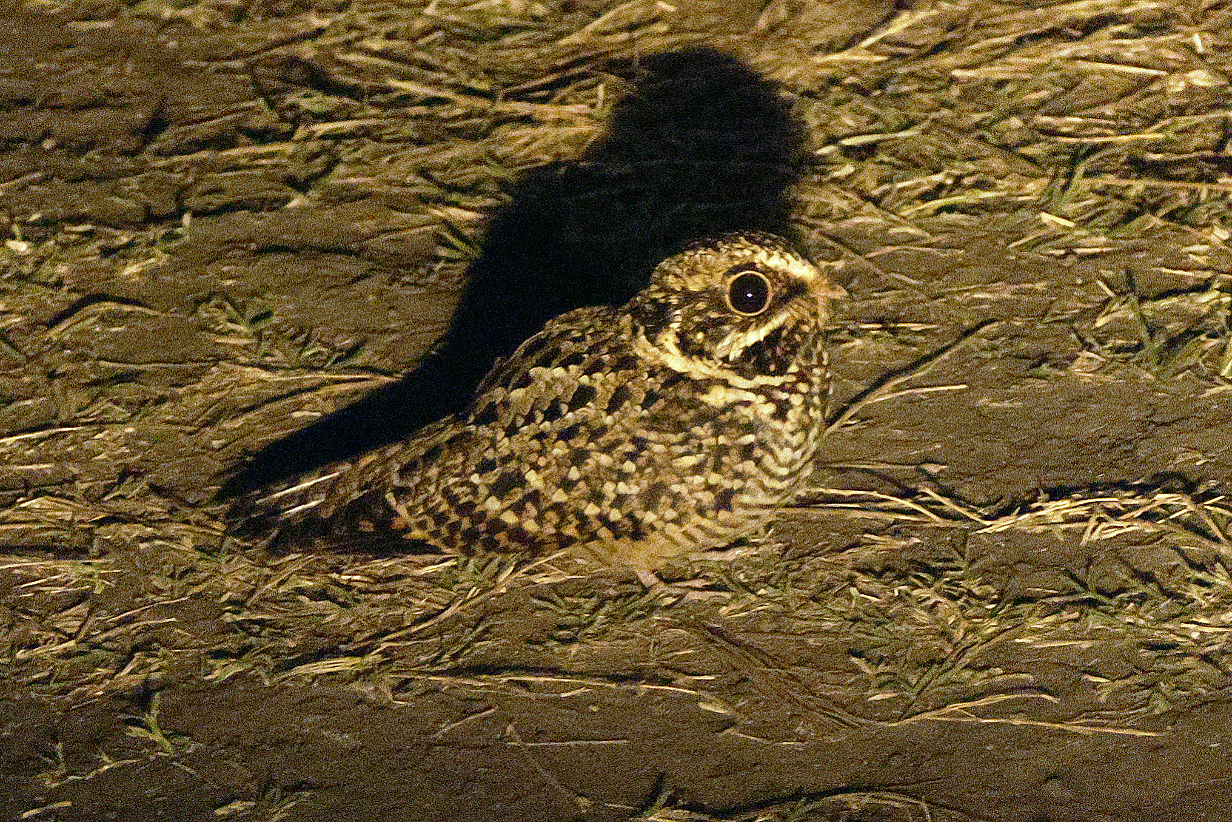
Swamp nightjar (This is my life bird. Individual pictures were taken at ISO 25,600 with exposures of ~ 1/25 second at f/6.3 and lens focal length 200 mm. The first picture above is a mean of 3 well-aligned exposures taken in rapid succession. The second picture above is a median of 4 different and slightly better-aligned exposures taken in rapid succession. Individual exposures were aligned on the bird's eye, but their overall alignment is not perfect, so some blurring results -- more blurring farther from the eye. Still, with modern camera and image software technology, it is possible to do remarkably well even with a very low level of spotlighting.)
By this time, it was completely dark after a 13-hour safari drive. When we got back to camp, I crashed ASAP.
August 15: Masai Mara National Reserve
We spent most of today looking for leopard with little success. So I recorded few birds and only 2 life birds.
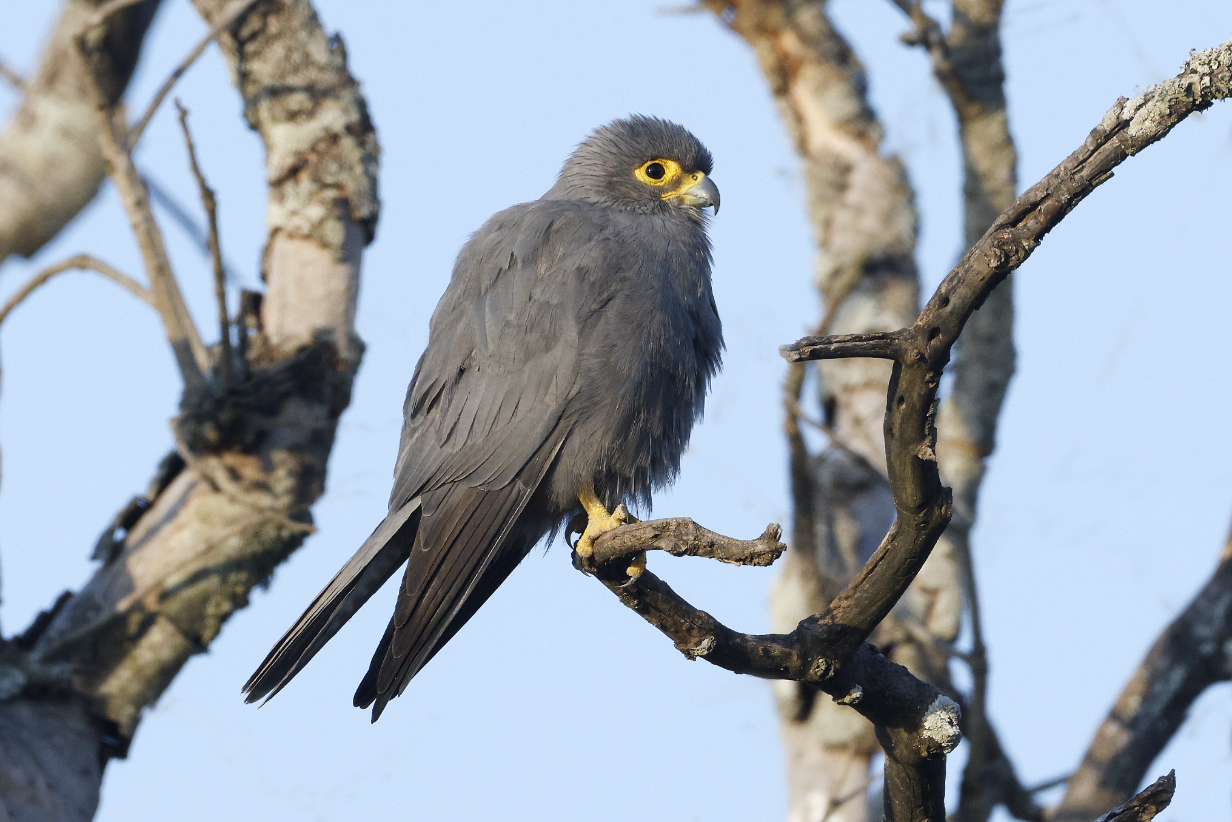
Gray kestrel
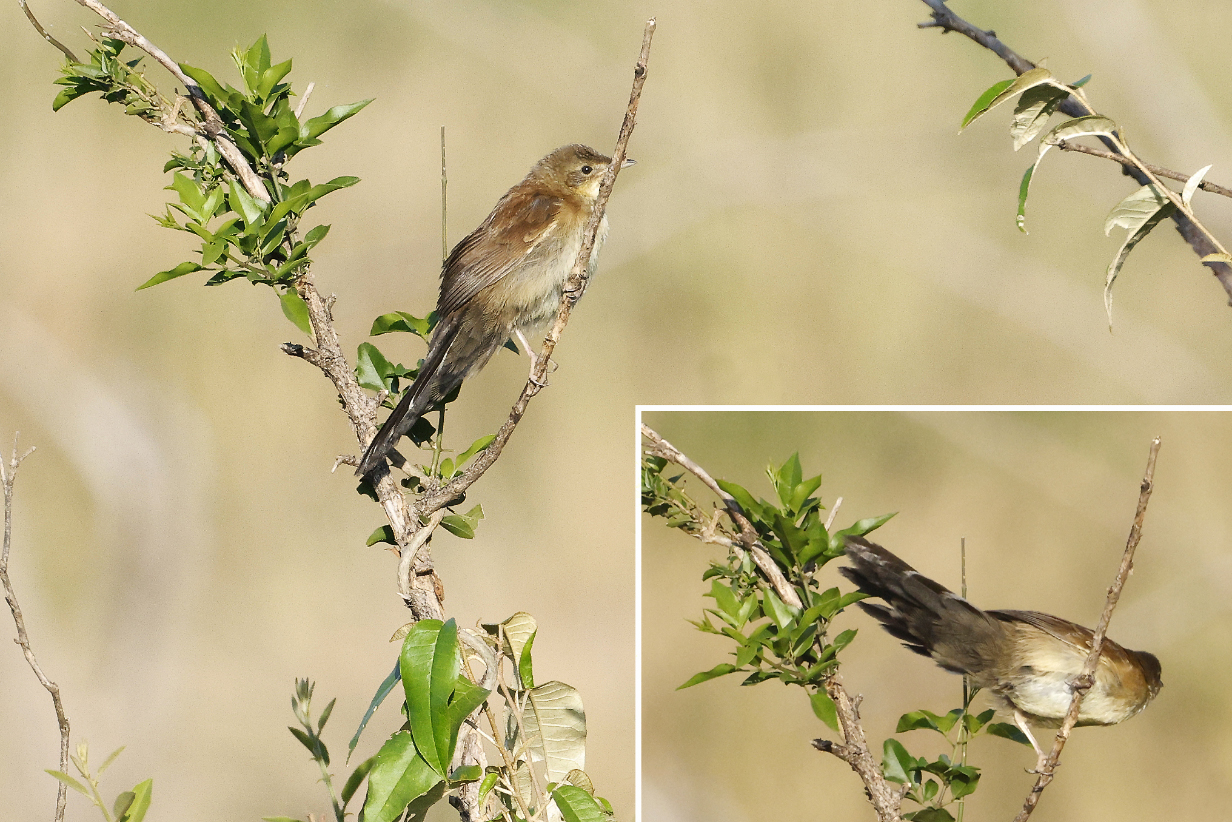
Fan-tailed grassbird (Catriscus brevirostris) Formerly Broad-tailed warbler; this is my life bird.
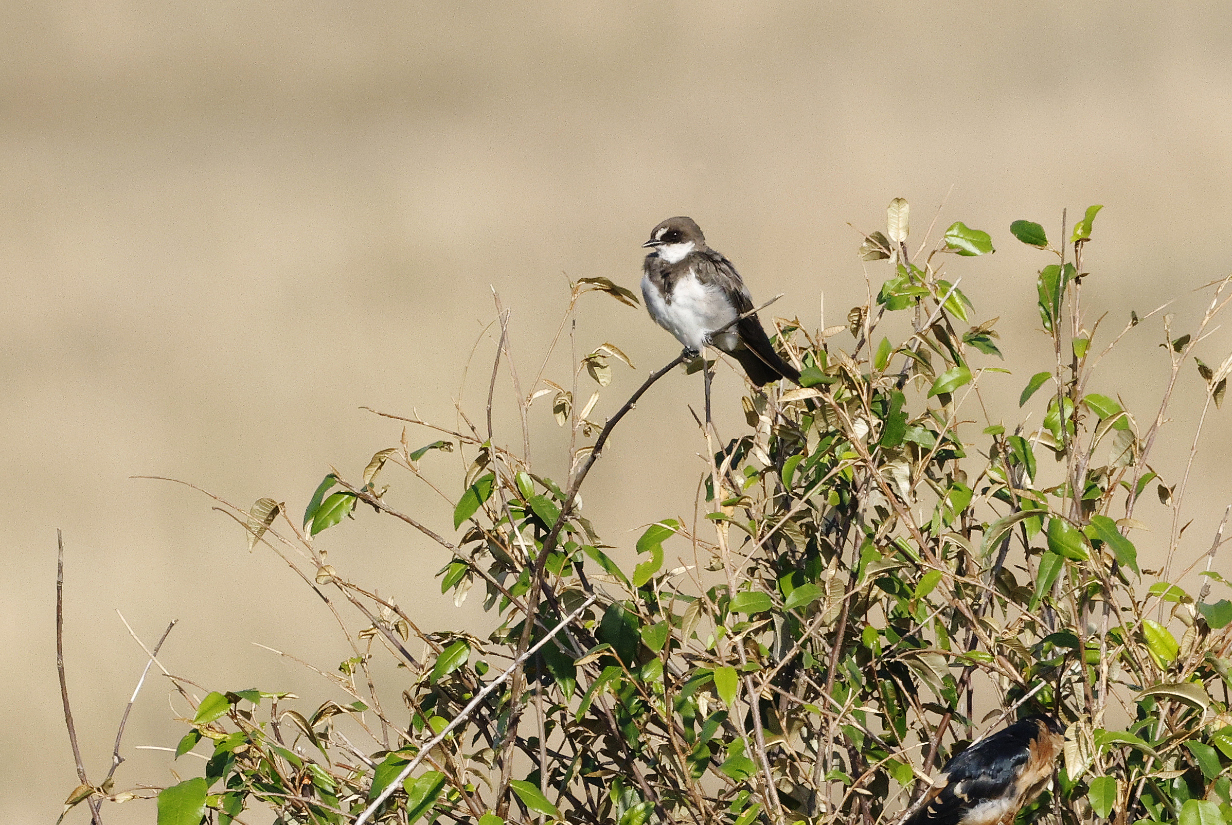
Banded martin (This bird was new on August 11th and seen then from relatively close up but from an angle that did not show its field marks very well. Today's view is from much farther away, but the angle is perfect to see exactly the field marks that identify the bird, e. g., on ebird.)
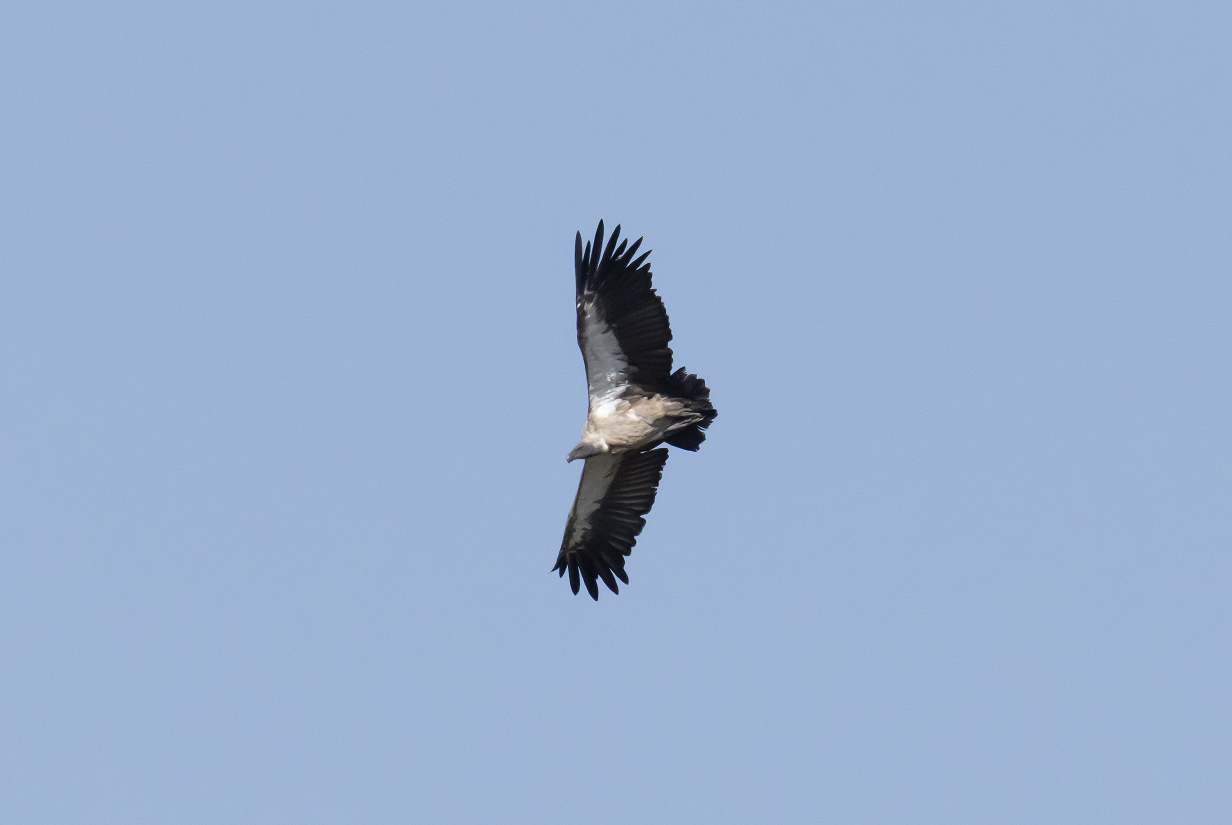
White-backed vulture
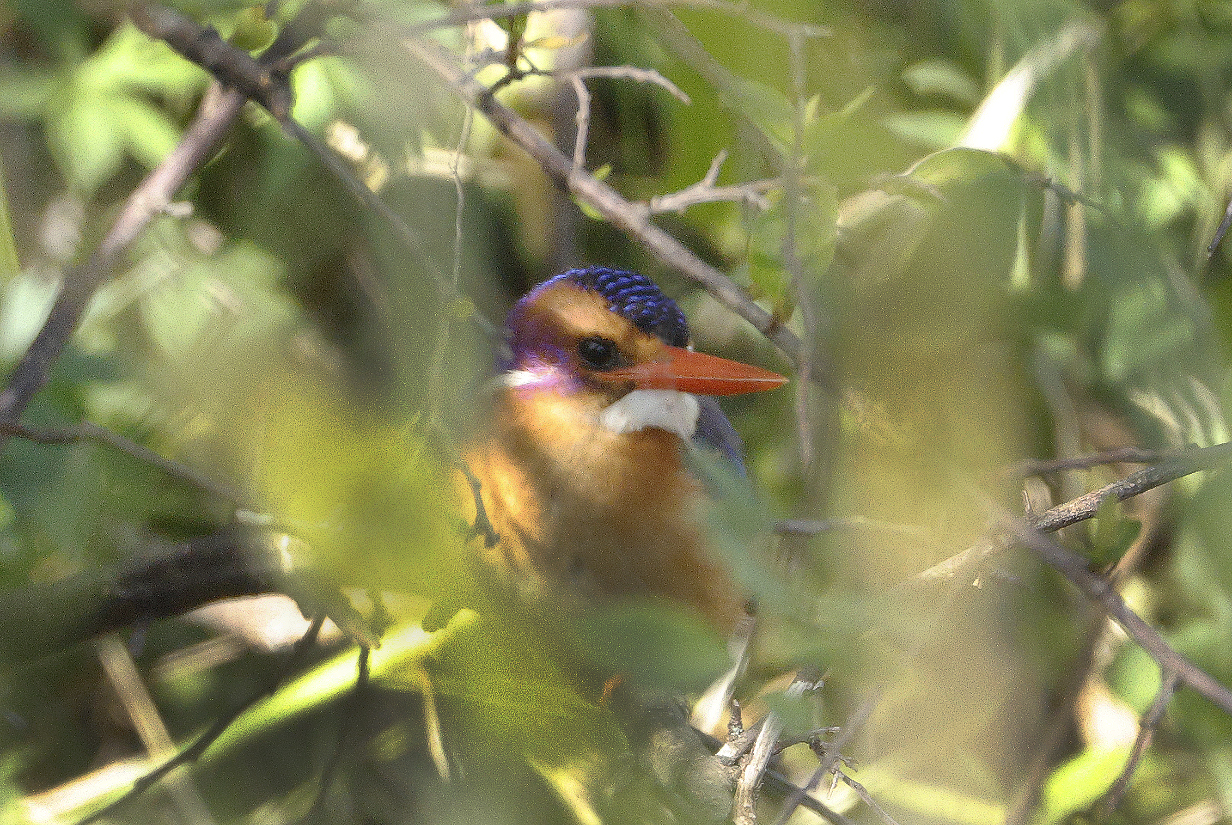
African pygmy kingfisher, seen -- just barely -- in a tiny "window" through thick foliage. This is often an elusive bird. I got my life bird in The Gambia in 2013, where I was lucky enough to get a pretty clear view.
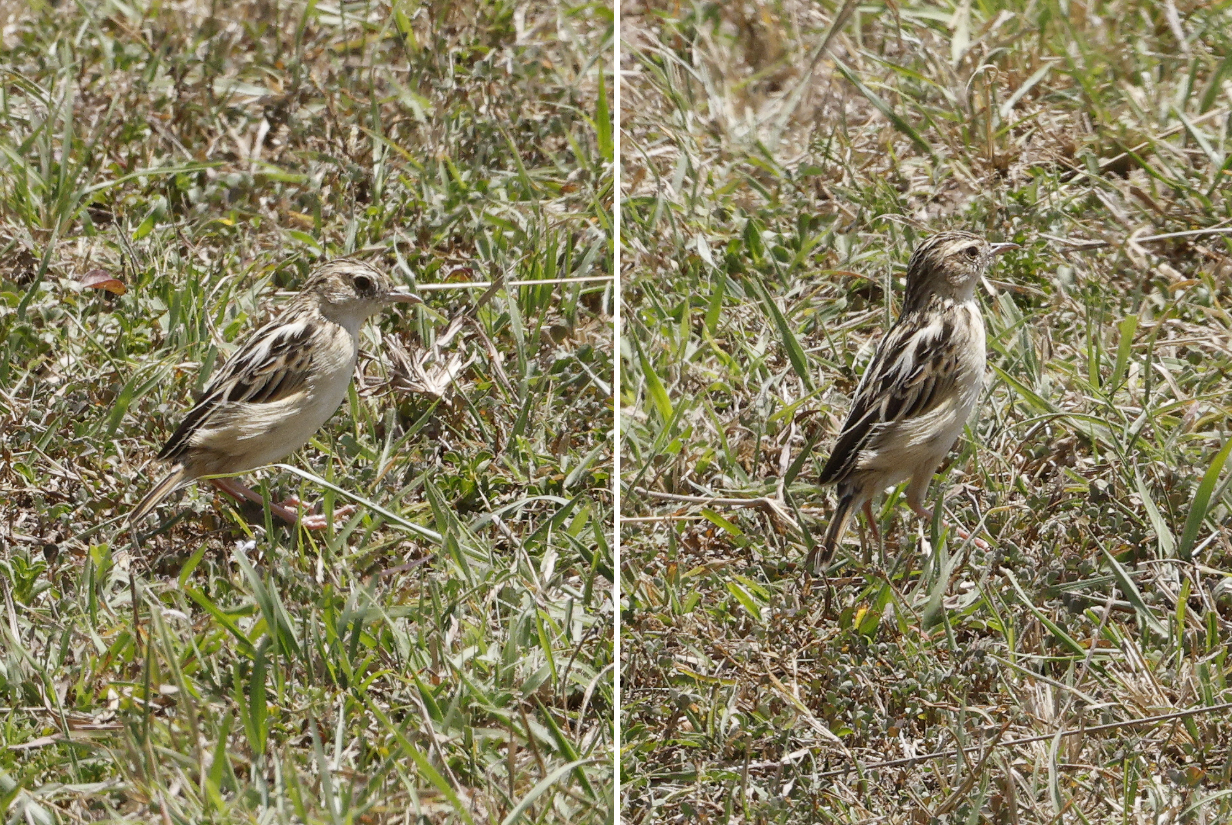
Pectoral-patch cisticola (This -- presumably female -- is my life bird. It was difficult to get this bird: it was not common; it was elusive, tiny, and hard to see, and it was hard to persuade our guides to focus on this species.)
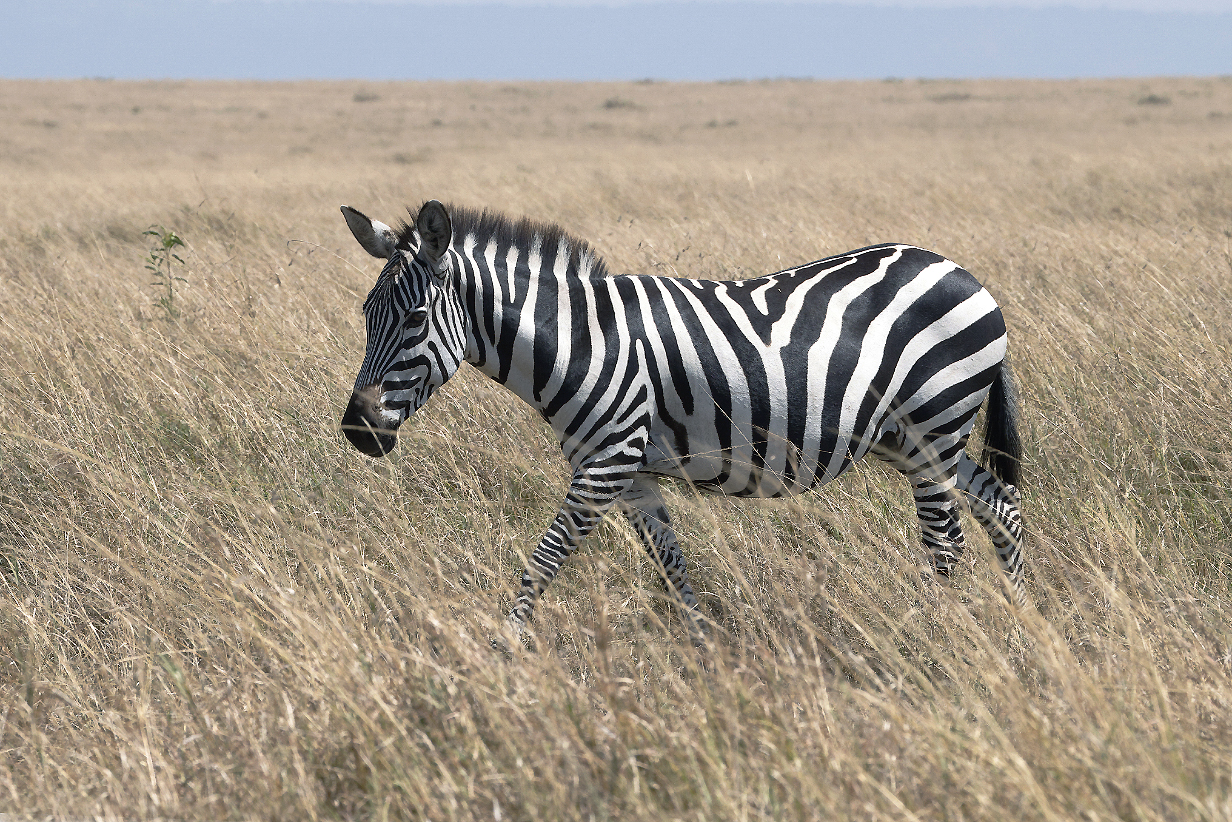
Zebras migrating slowly as they fed were constant companions -- see this movie.
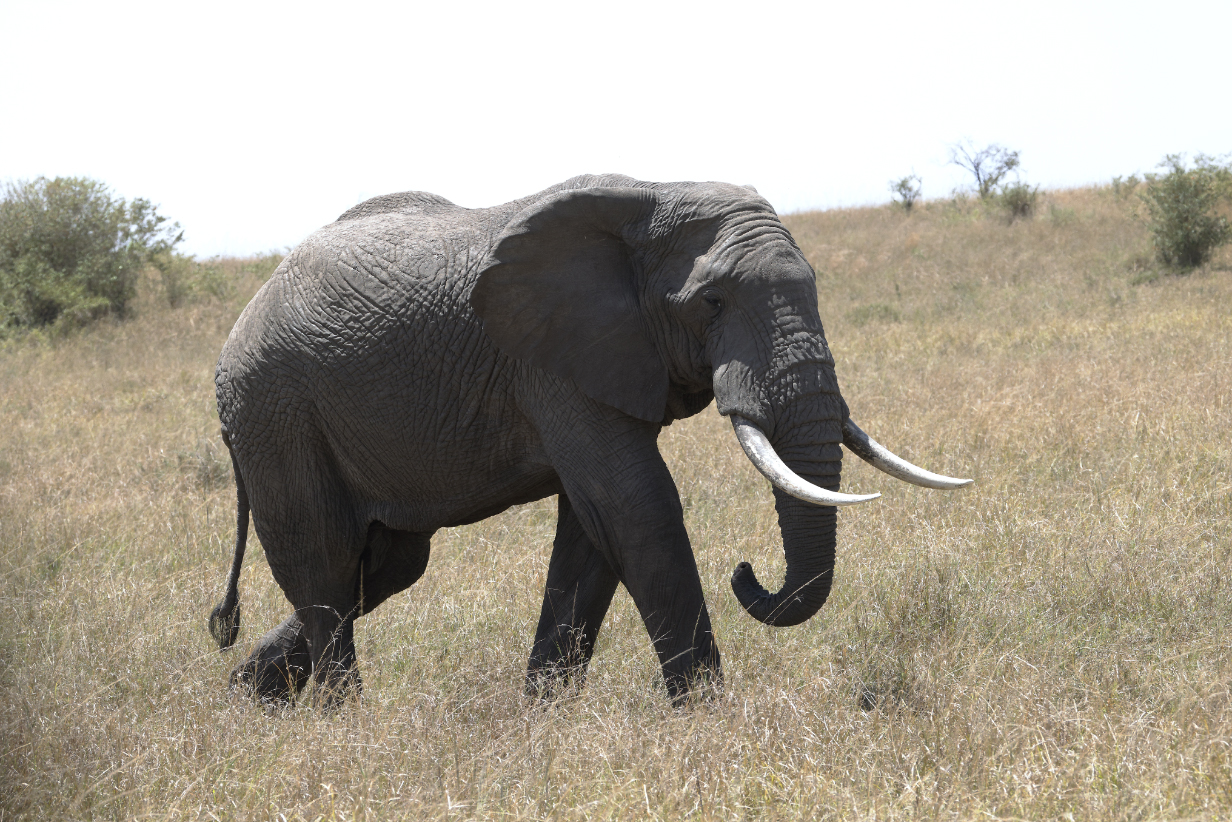
Unusually big elephant unusually close to our camp
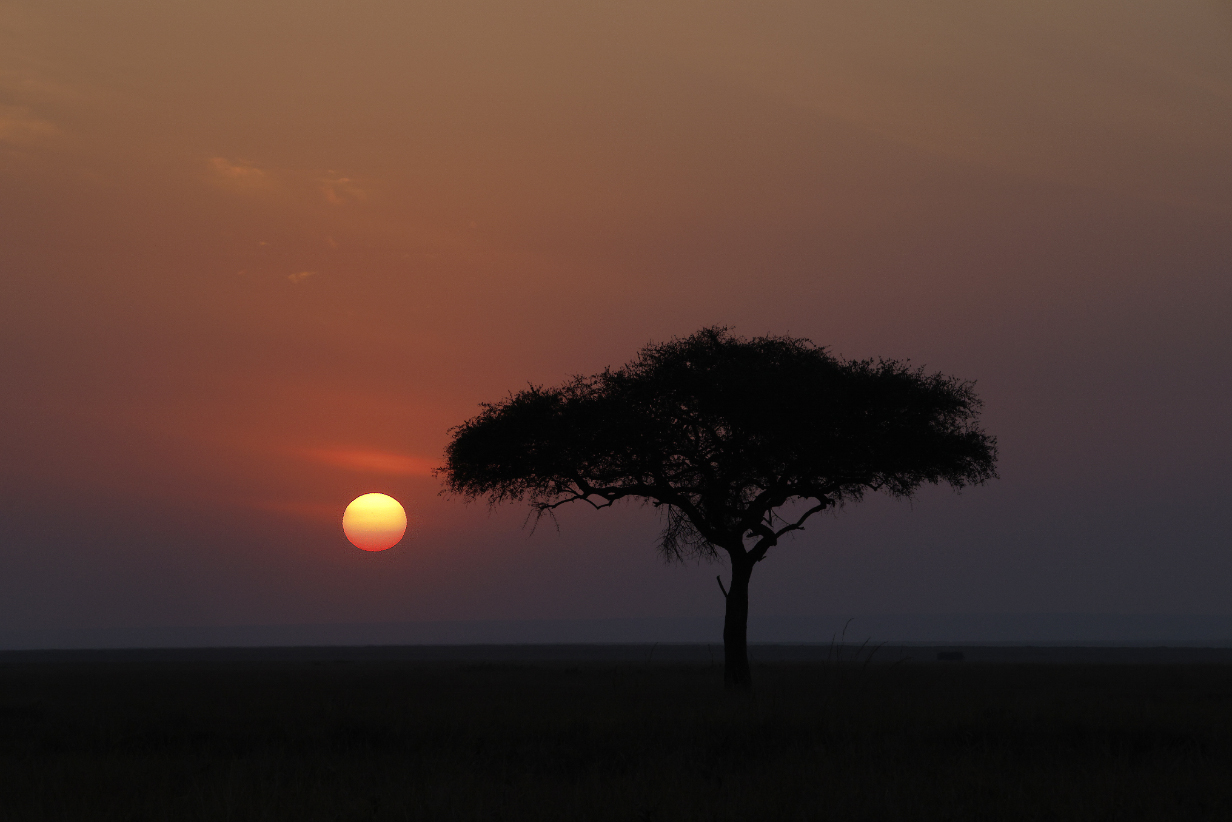
This was our last sunset at Masai Mara National Reserve. It was superb to spend 6 days here, immersed in the immensity of east Africa, surrounded by vast herds of wildlife, with no fences, no buildings, nothing to constrain the magical freedom of the wild and spiced with the the realization that lions -- we thought we heard them -- could wander through our camp in the night. The emergency replacement of our original lodge with a tent camp was, in the end, a blessing. We lived much closer to nature. And we were superbly taken care of by the nicest and most helpful staff -- whether armed with a cold beer or a protective spear -- that I have had the pleasure of meeting anywhere in the world.
August 16: Drive to Lake Baringo
This morning after breakfast, we started the long drive back out of Masai Mara Reserve, back to Lake Nakuru, and on to Lake Baringo. Our guides knew several promising sites along the way, and we birded when we could. The first birds that we saw were still in the reserve, but mostly I do not know exactly where we saw them.
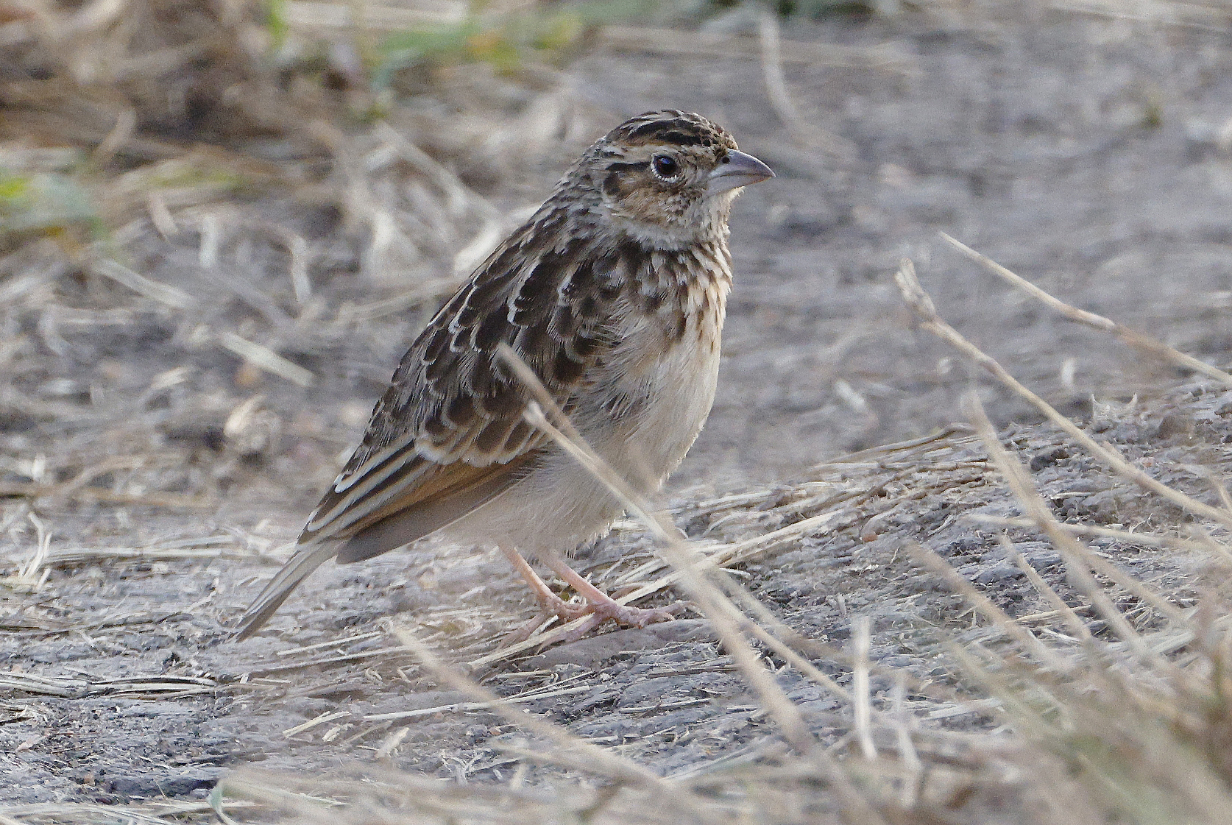
Melodious lark (This is my life bird. Mostly, the bird occurs in South Africa and nearby environs, although I did not see it there. There is an isolated small patch of its range in southern Kenya. I could imagine that this bird is a candidate for a species split, some time in the future.)
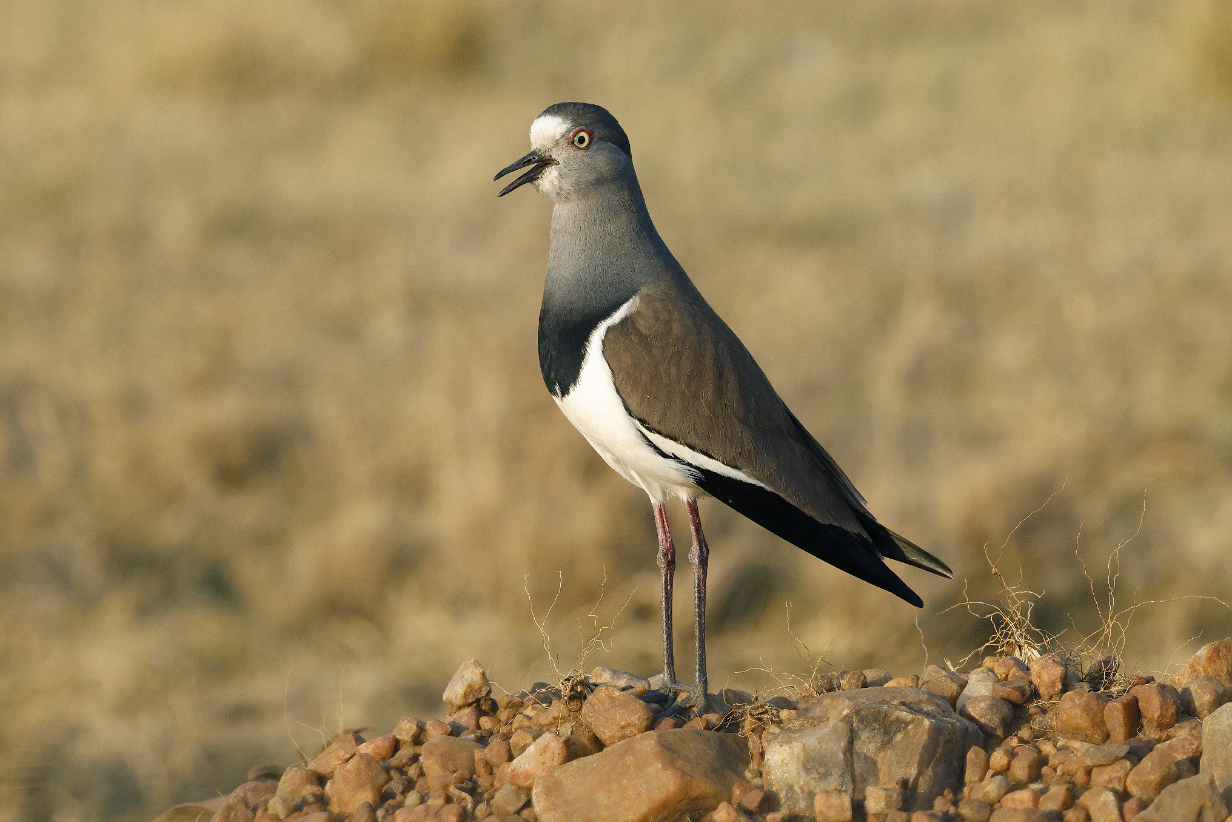
Black-winged lapwing
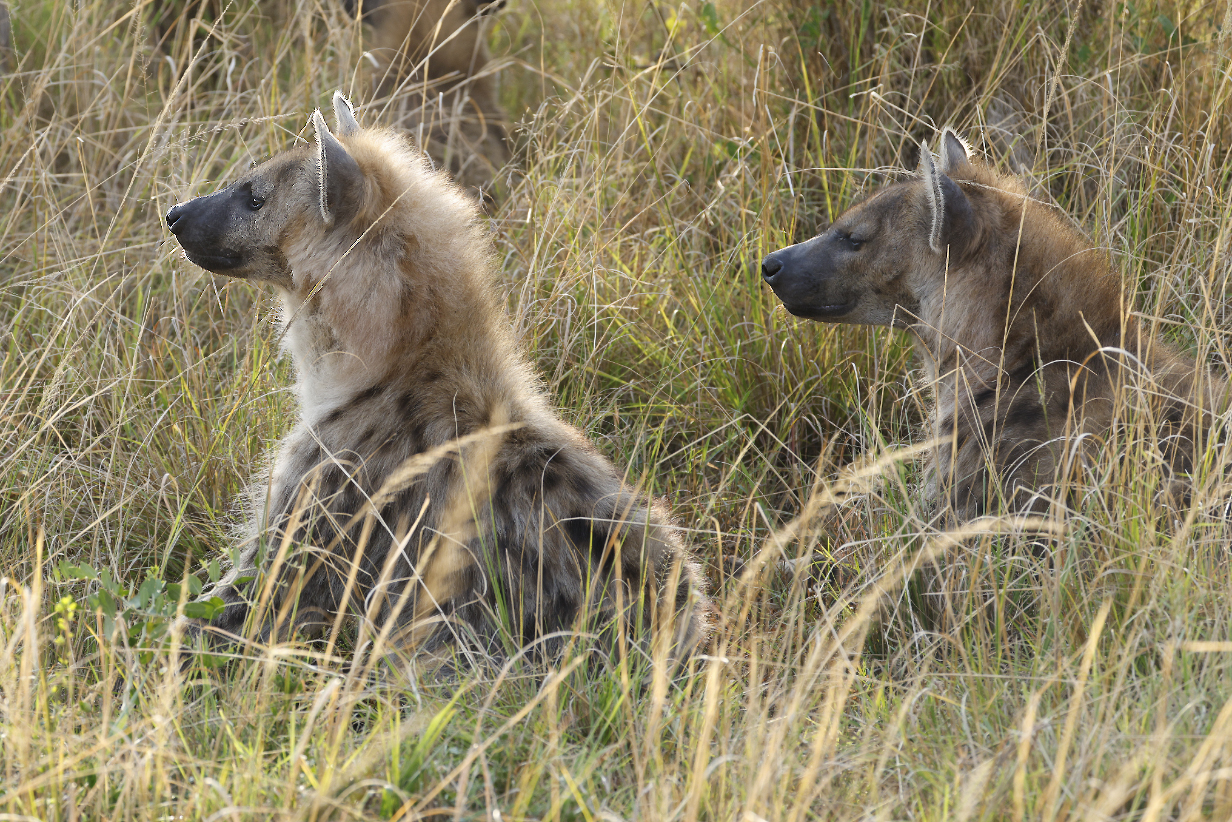
African wild dogs are handsome animals, greatly -- I think -- under-appreciated. They are loyal and affectionate to their pack, much like domestic dogs are loyal and affectionate to their human pack. But they do not have the "mystique" of the big cats, and hordes of vehicles do not follow them around. They are severely threatened by habitat fragmentation, human persecution, and disease. There are only a few thousand left, in highly fragmented patches of habitat. This is the only time we saw them.
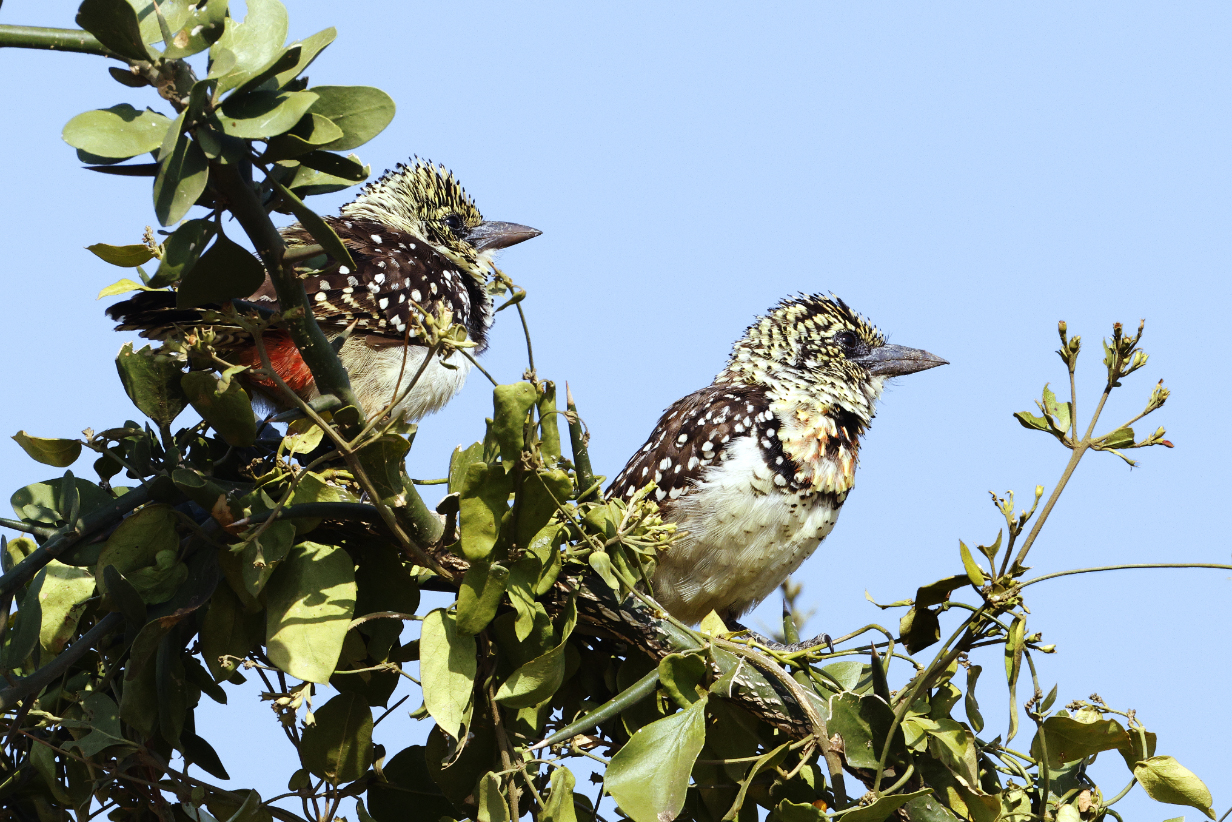
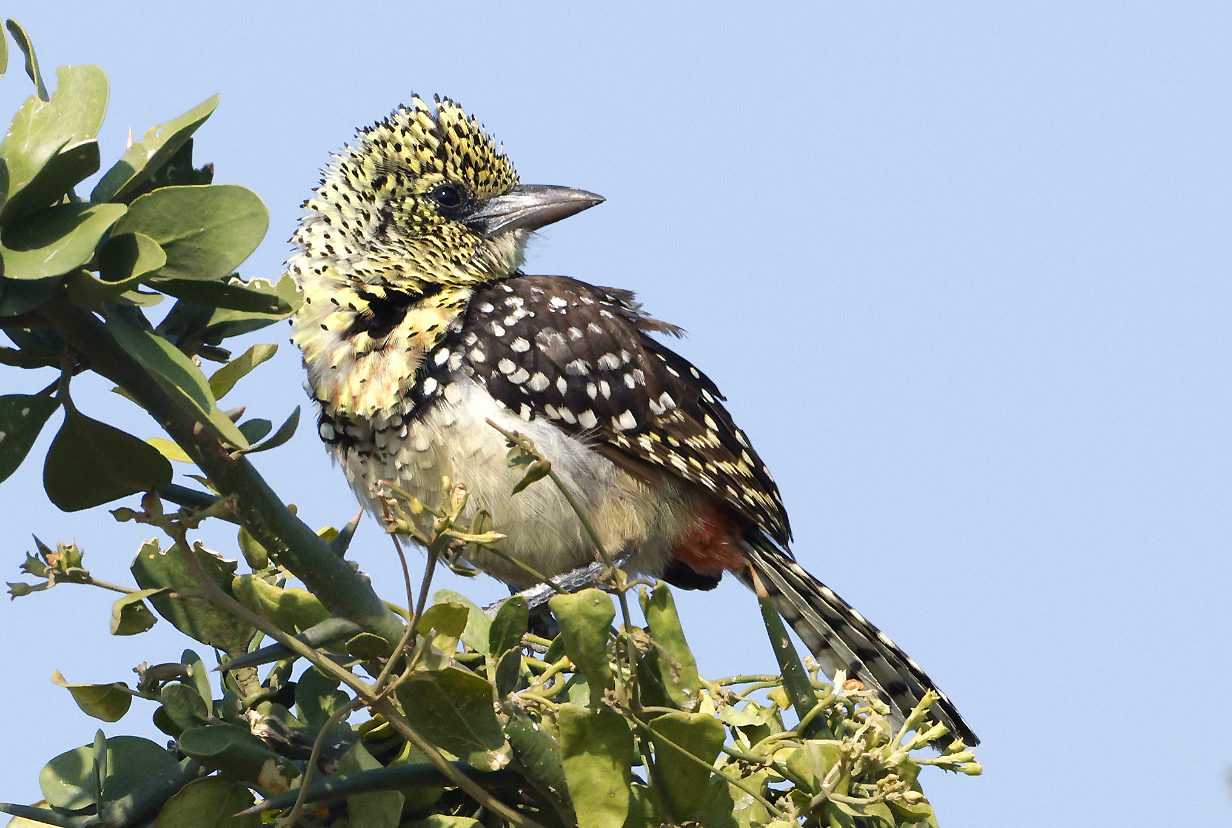
D'Arnaud's barbet (These are my life birds.)
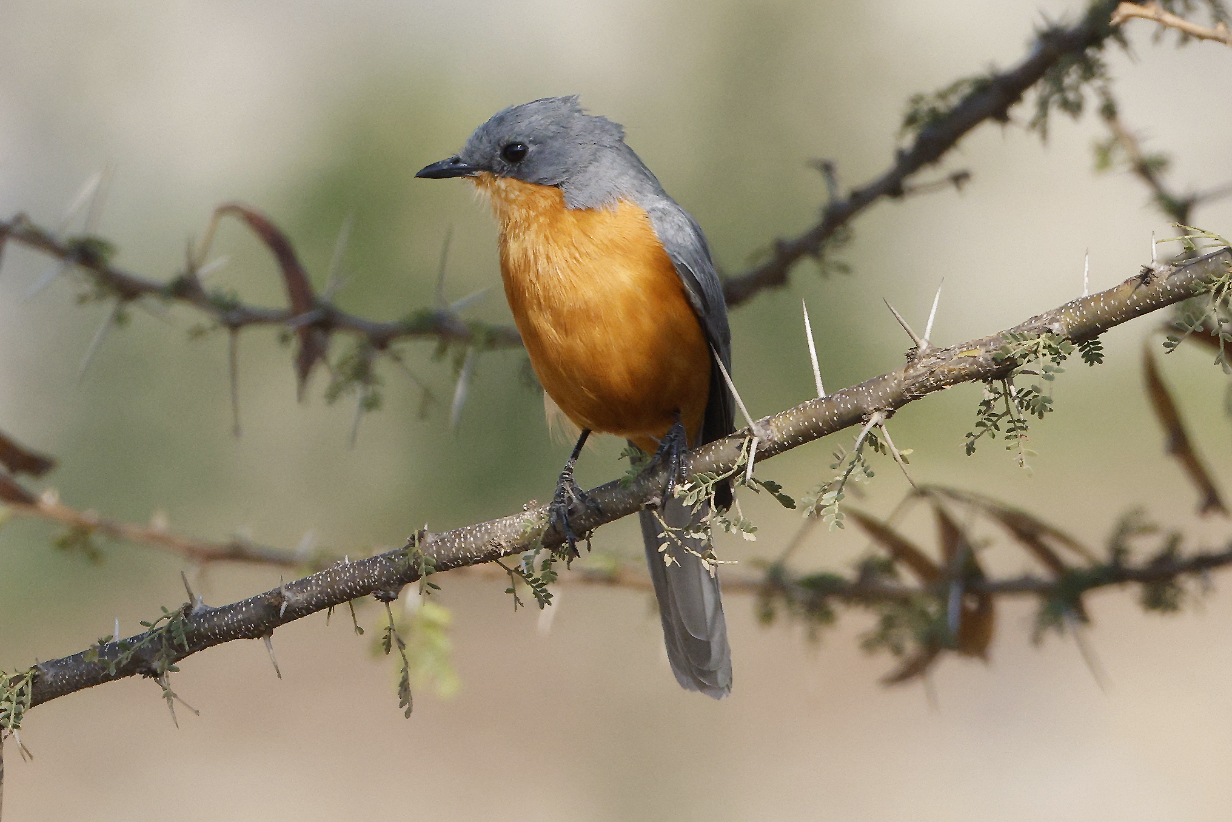
Silverbird (This is my life bird.)
The next new bird was Gray-capped social-weaver, in company with the Speckle-fronted weaver. This is one of the very few life birds that I was not able to photograph.
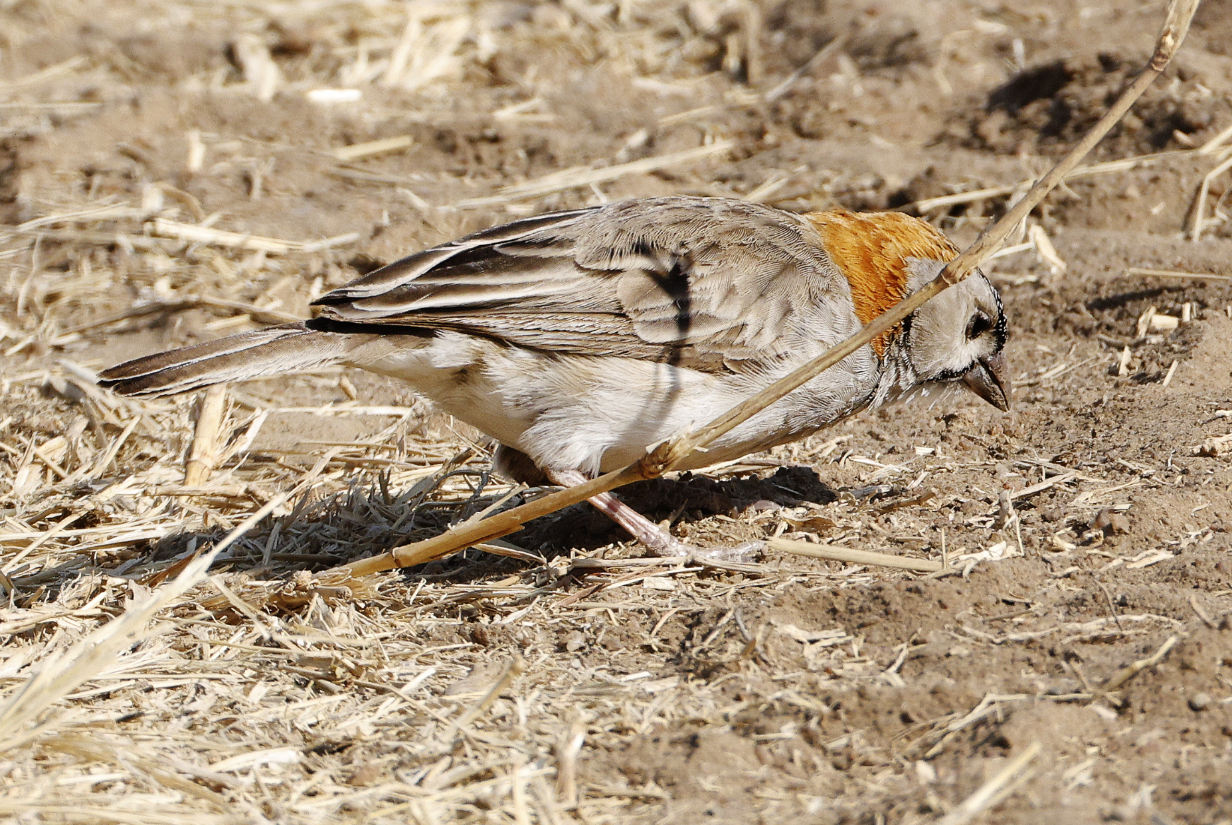
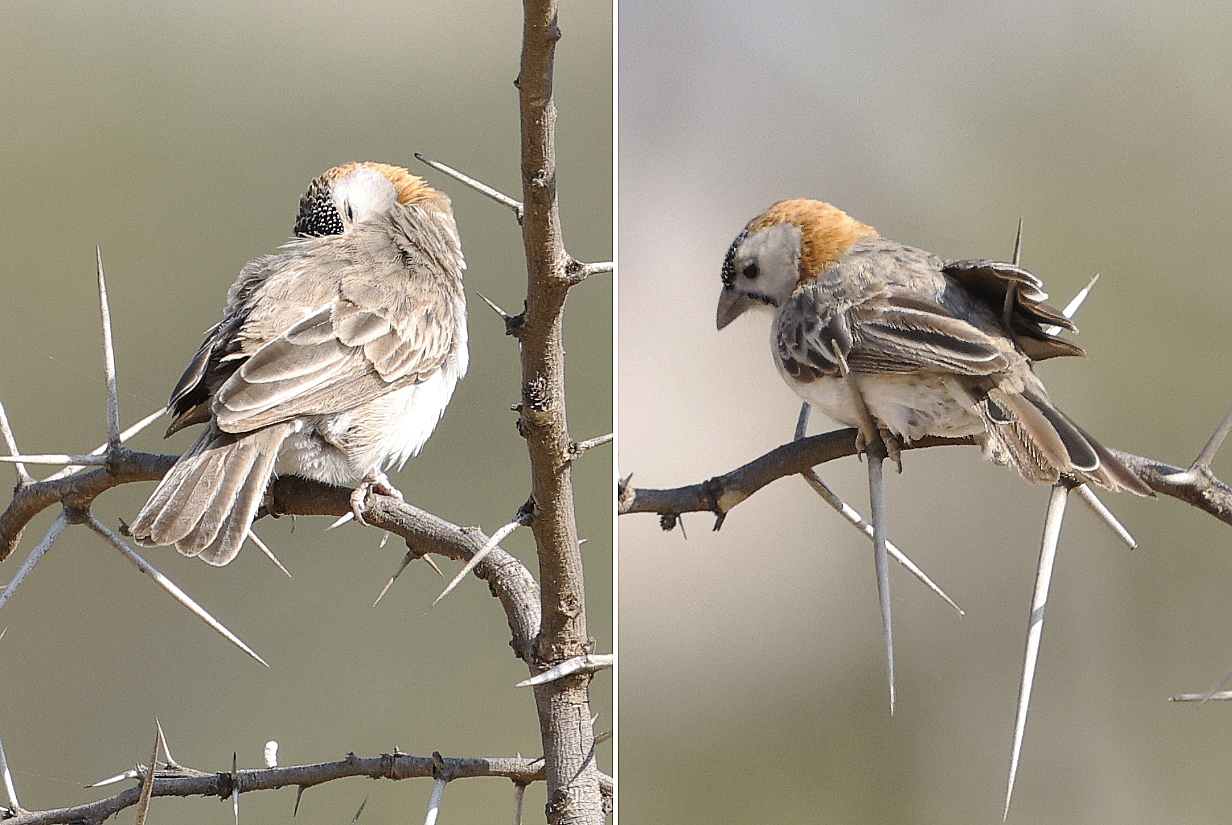
Speckle-fronted weaver (These not very good pictures show my life birds.)
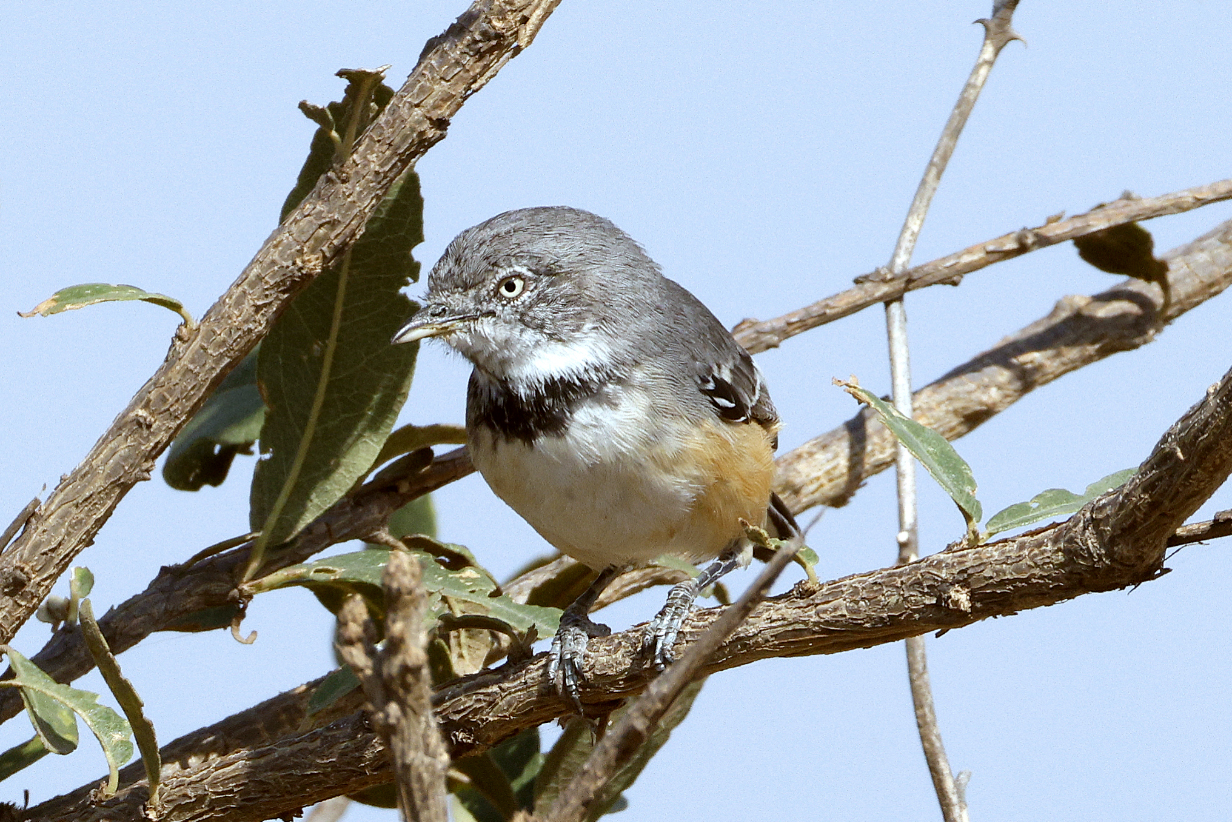
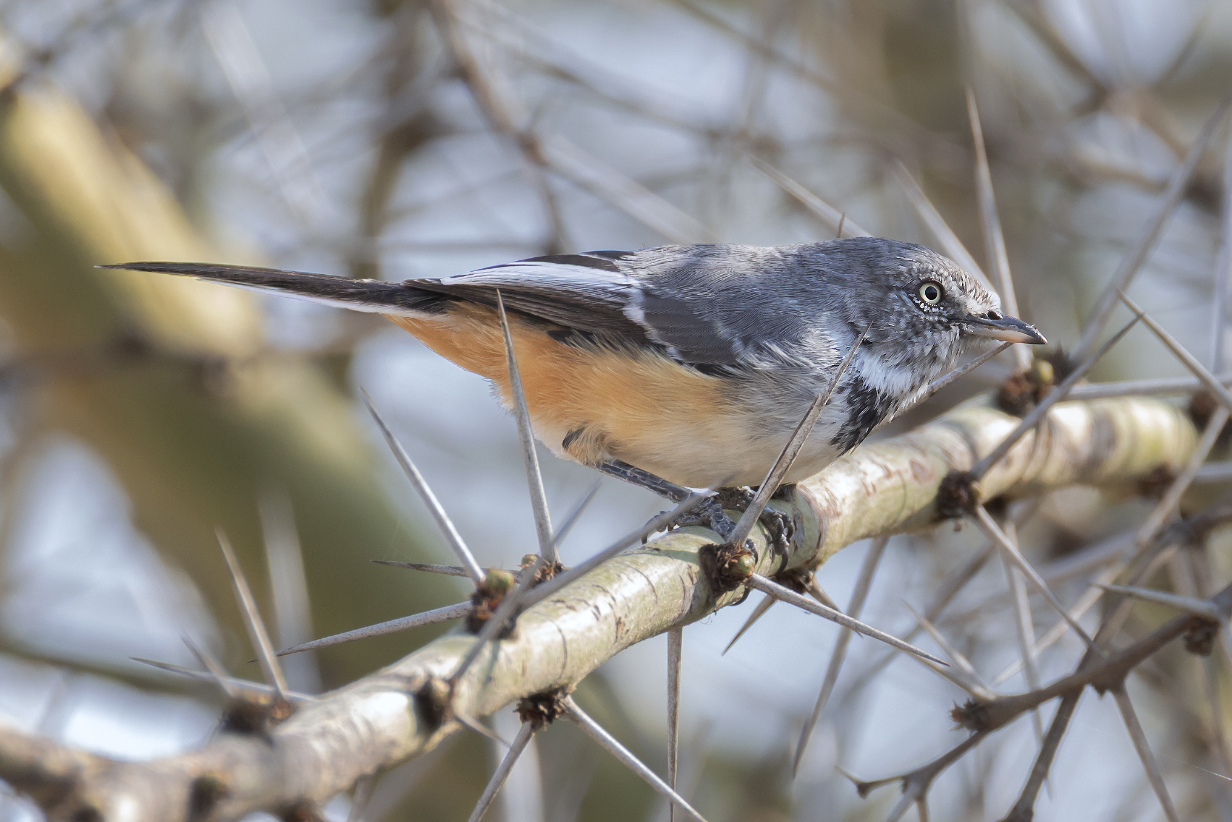
Banded parisoma (This is my life bird.)
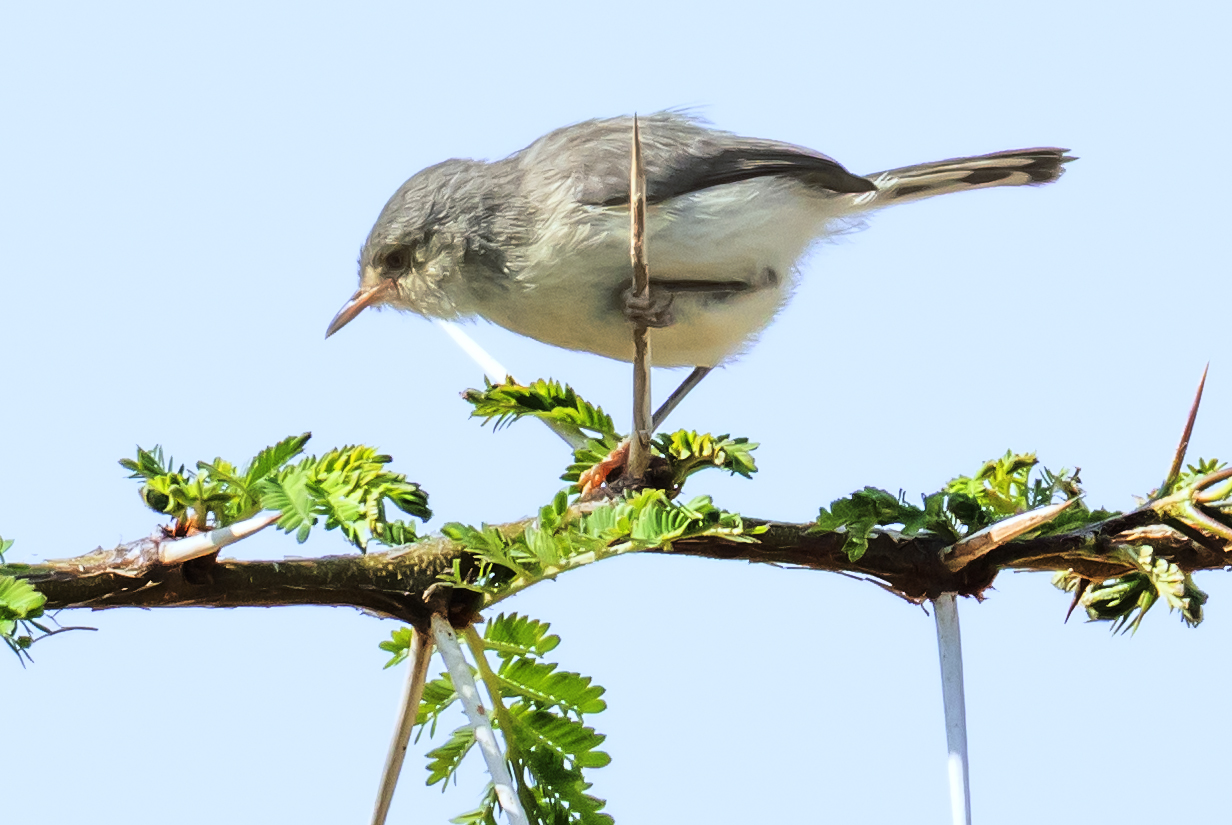
Yellow-breasted apalis
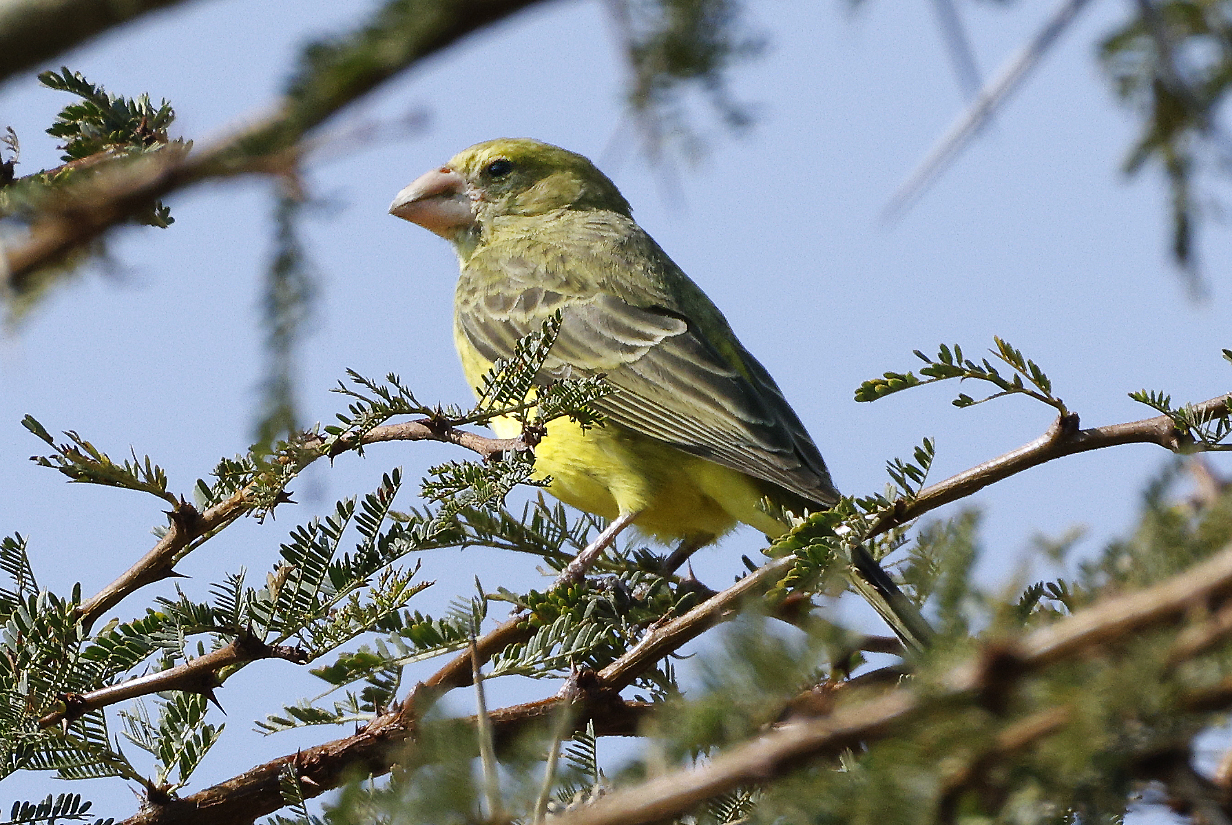
Southern grosbeak-canary (This is my life bird -- relatively rare and hard to see.)
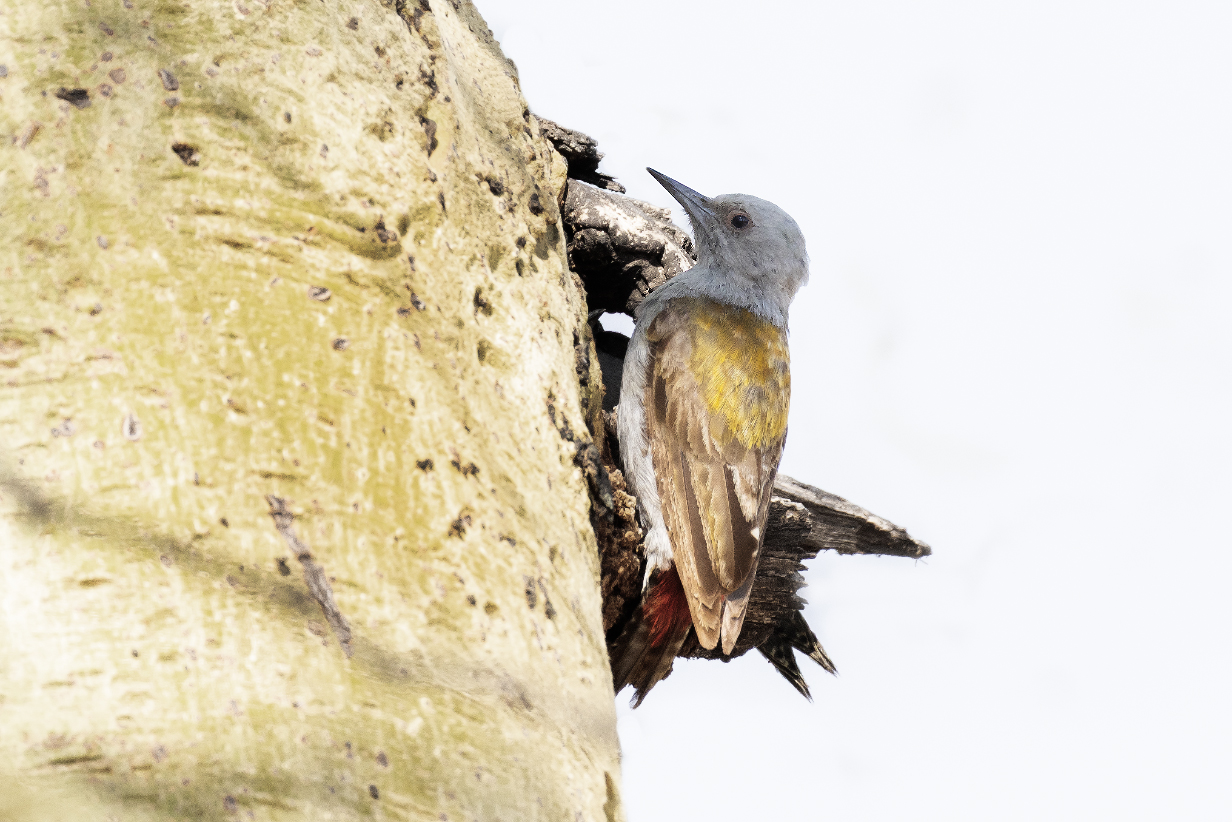
Mountain gray woodpecker (This was new in Nairobi National Park, where my life bird was also female.)
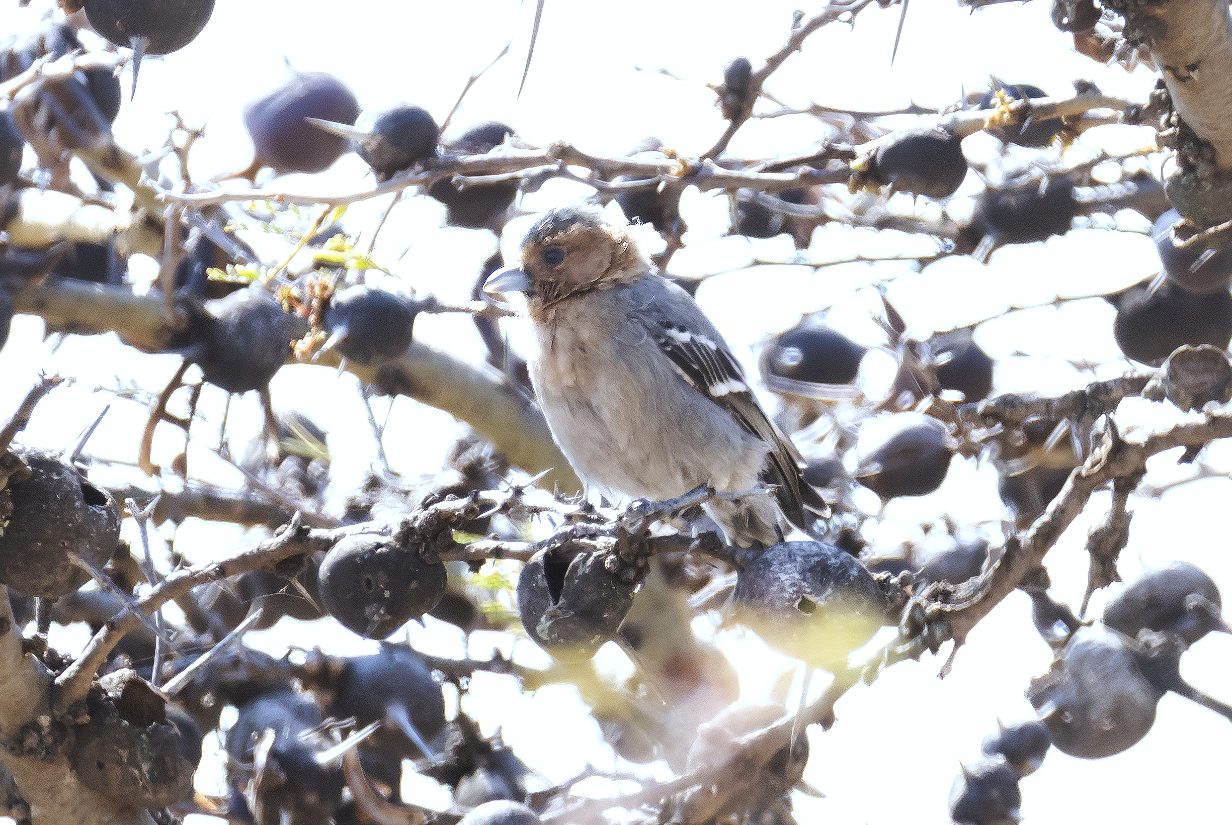
Red-throated tit (I managed to get only this very poor picture of my life bird.)
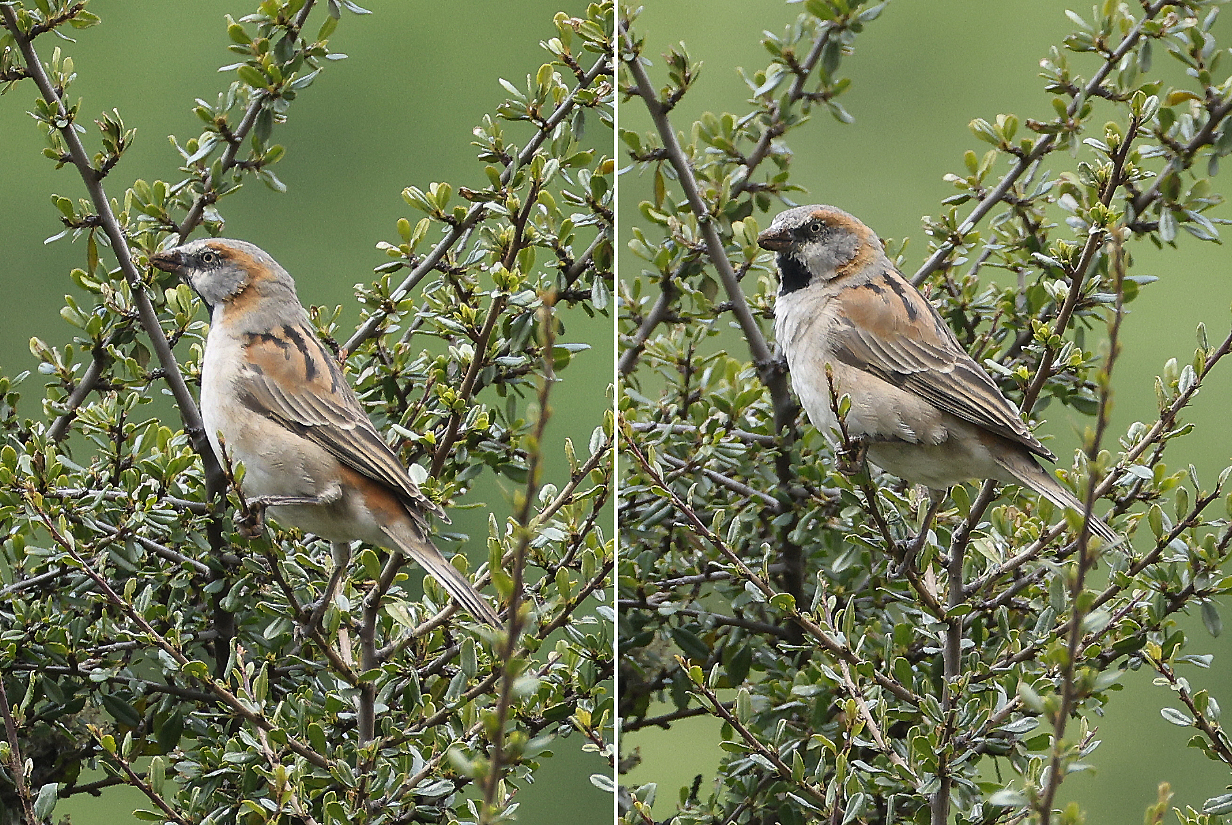
Kenya rufous sparrow (Unlike the two birds that I saw in Nairobi National Park, this is a well marked adult male -- note the black throat, red shoulder, and red rump.)
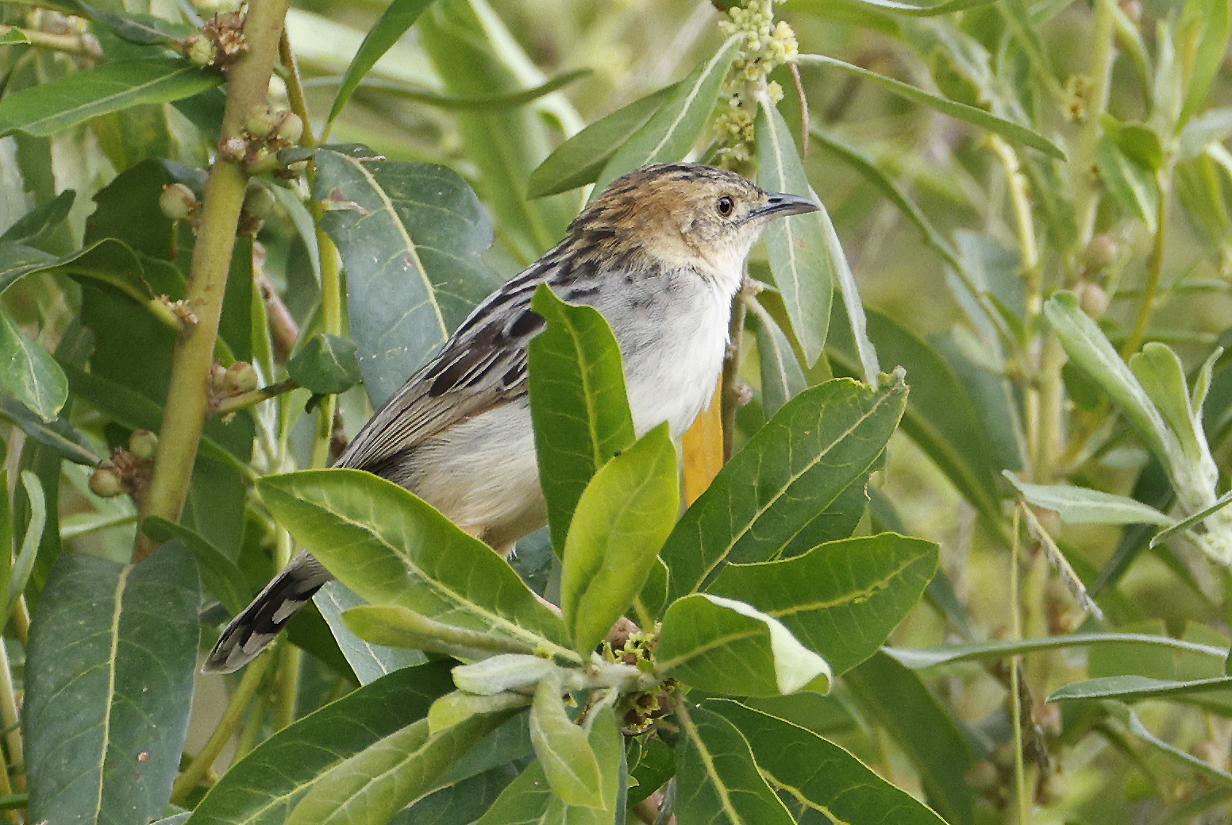
Aberdare cistocola (This is my life bird. Note the rufous panel in the wings.)
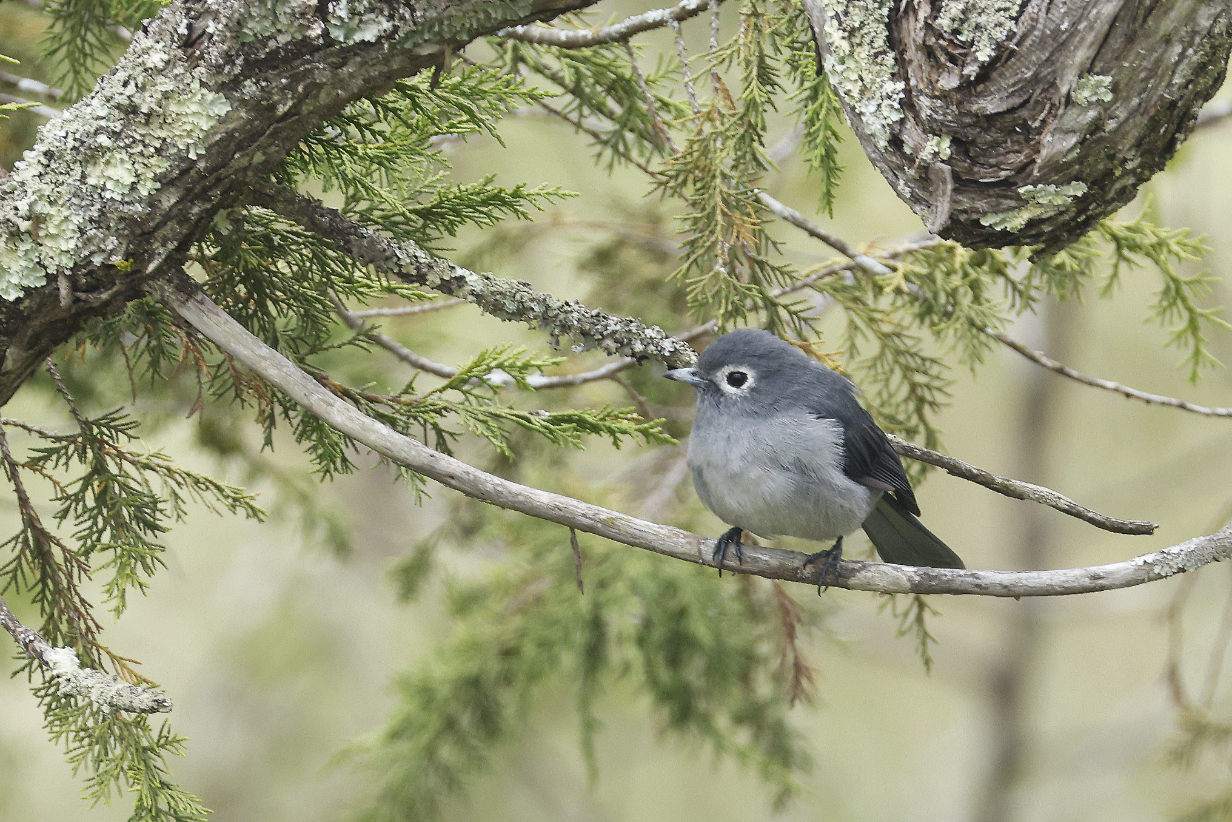
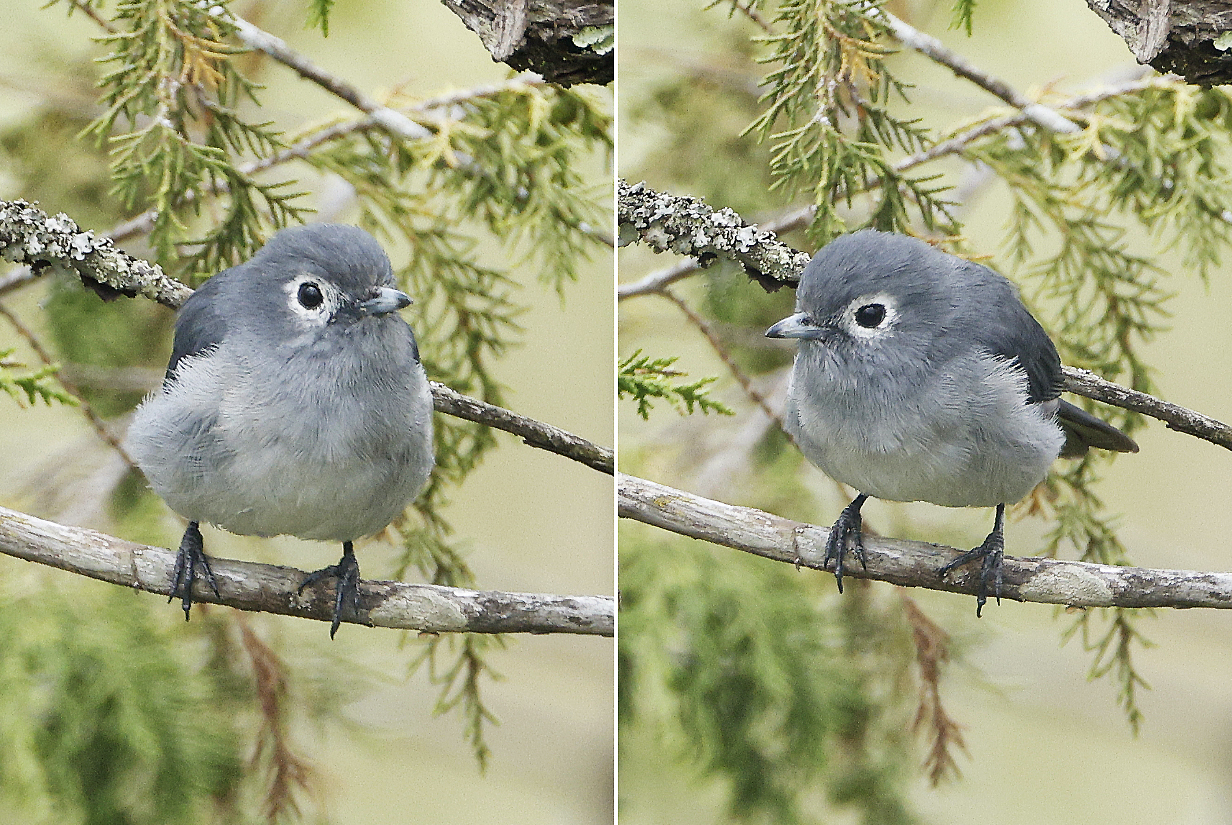
White-eyed slaty-flycatcher (This is my life bird.)
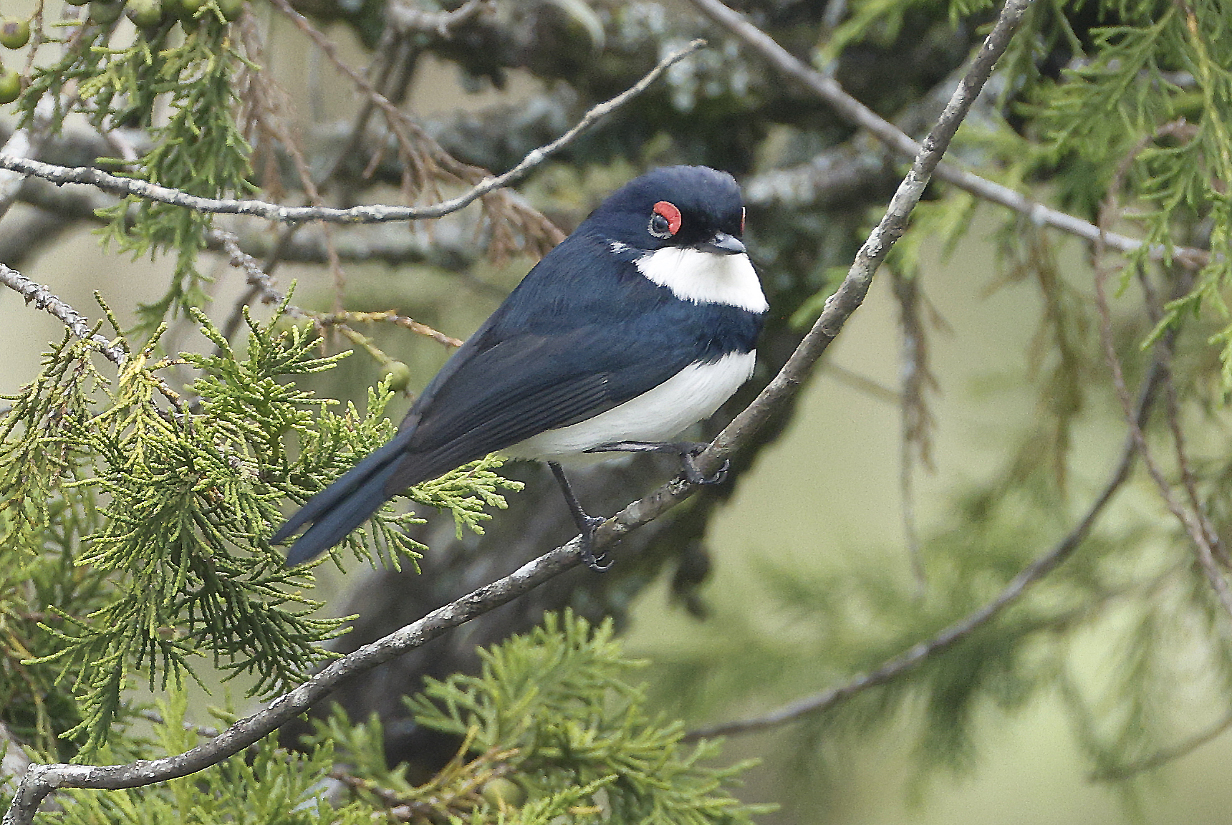
Black-throated wattle-eye (Contrast Brown-throated wattle-eye on August 13 ... although that was a female. Female Black-throated wattle-eye would look similar but would have a black throat. Neither bird was new: I've seen Black-throated in South Africa and Brown-throated in The Gambia.)
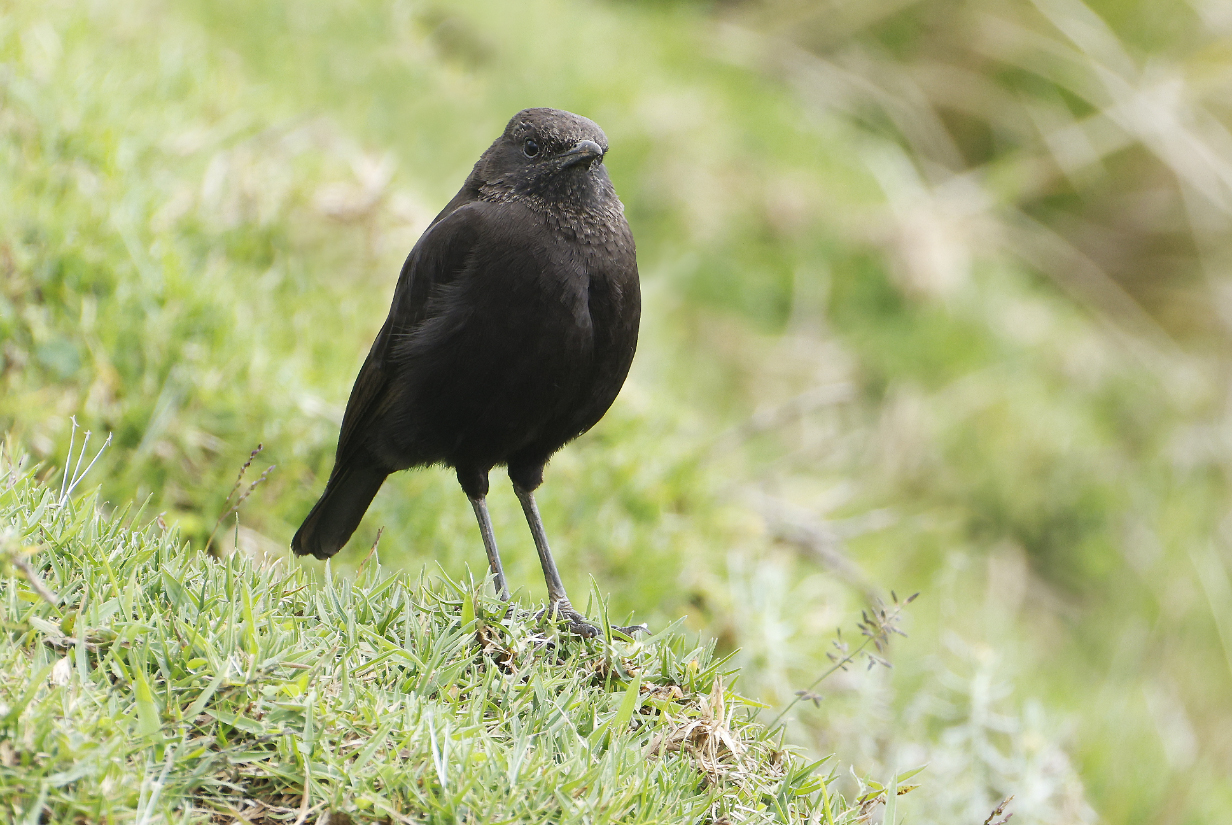
Northern anteater-chat (New on August 9th; better view today. I tried hard to get the correct color balance.)
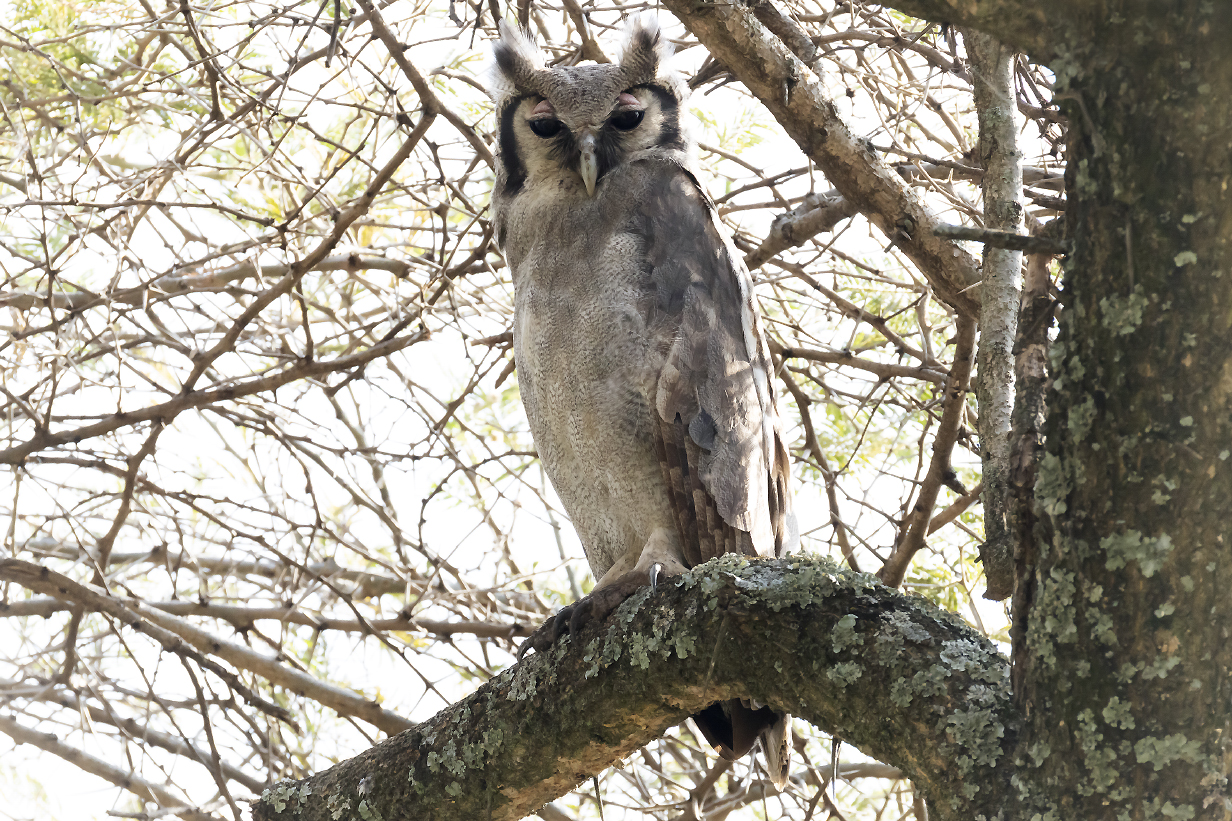
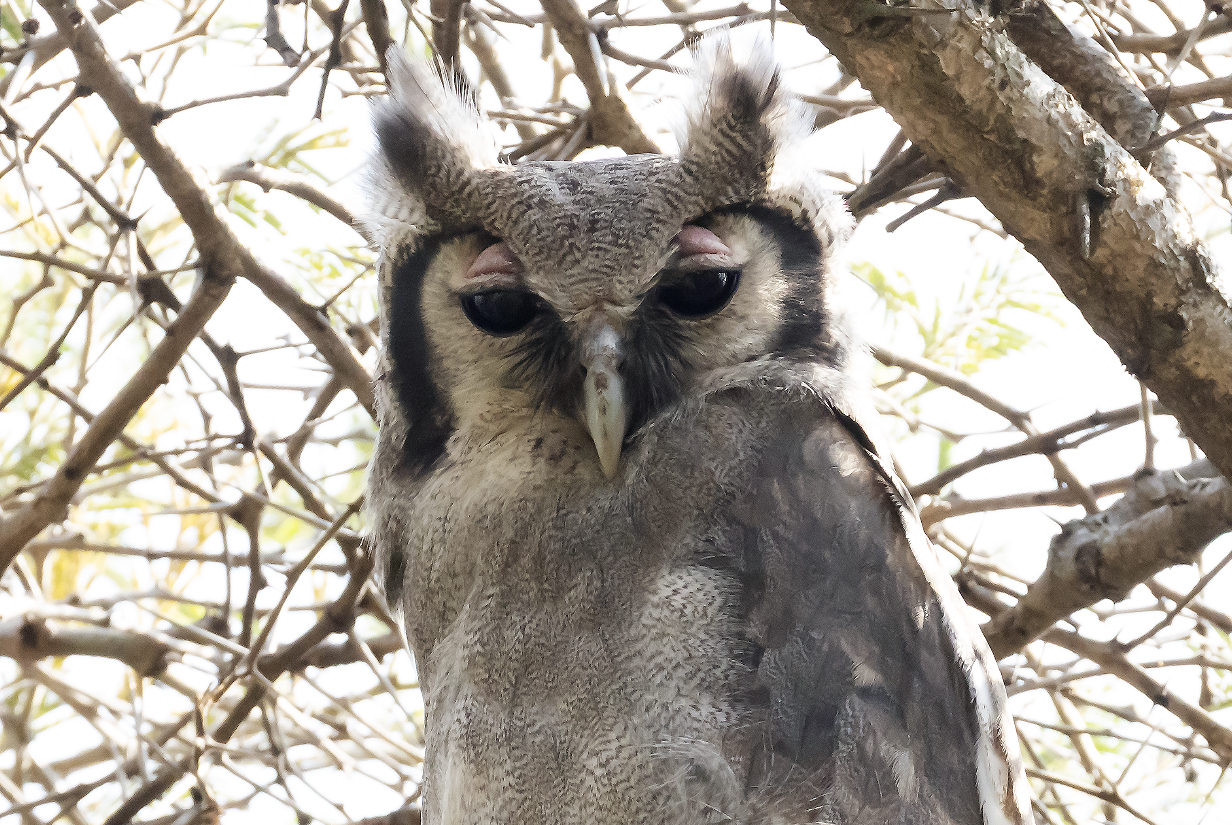
Verreaux's eagle-owl
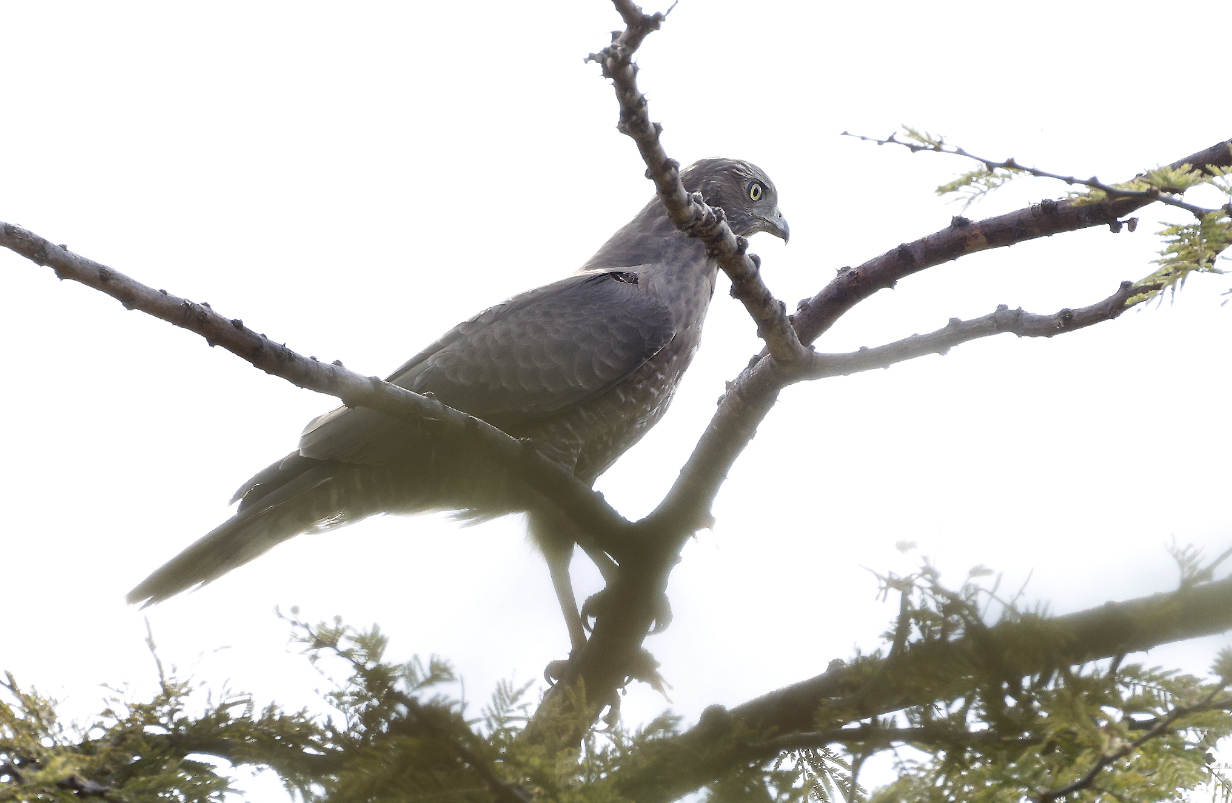
Eastern chanting goshawk (This juvenile is my life bird. Unfortunately, we saw it through nearby foliage, so the body and legs are blurred. )
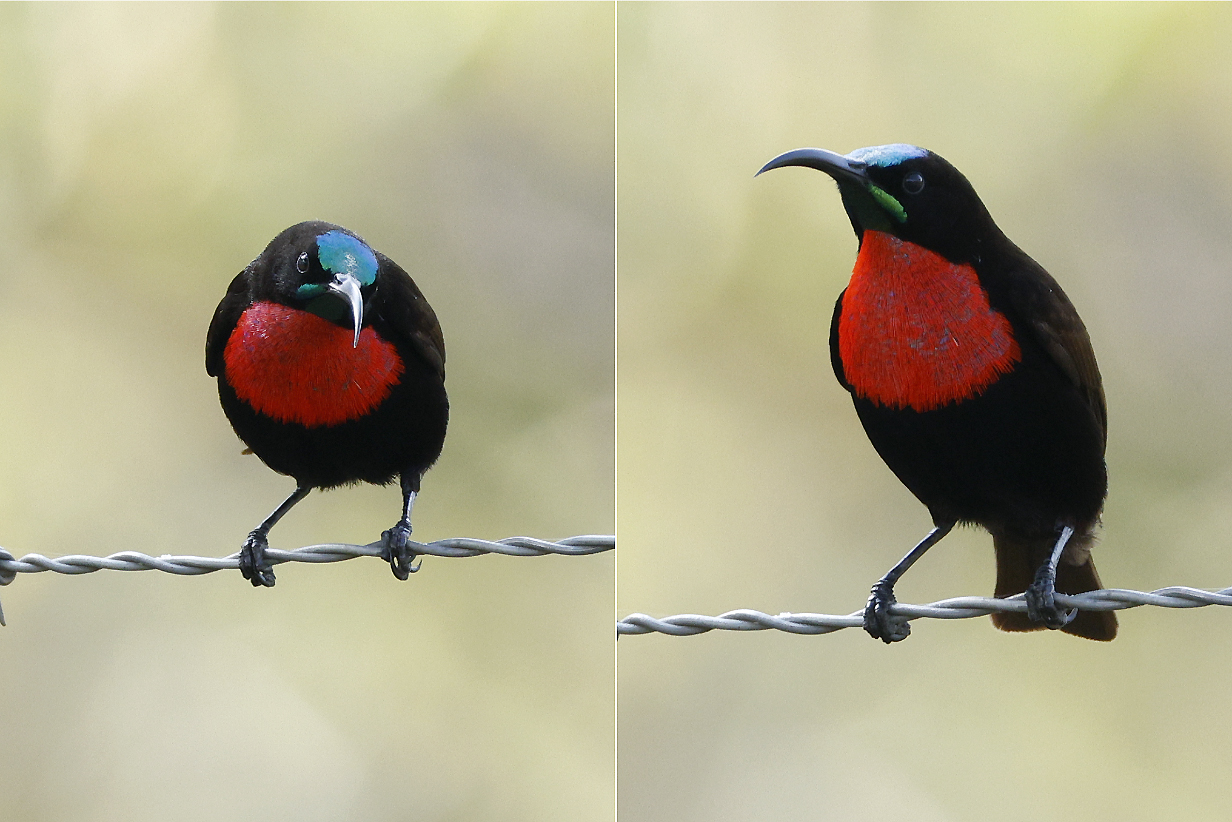
Scarlet-chested sunbird (male)
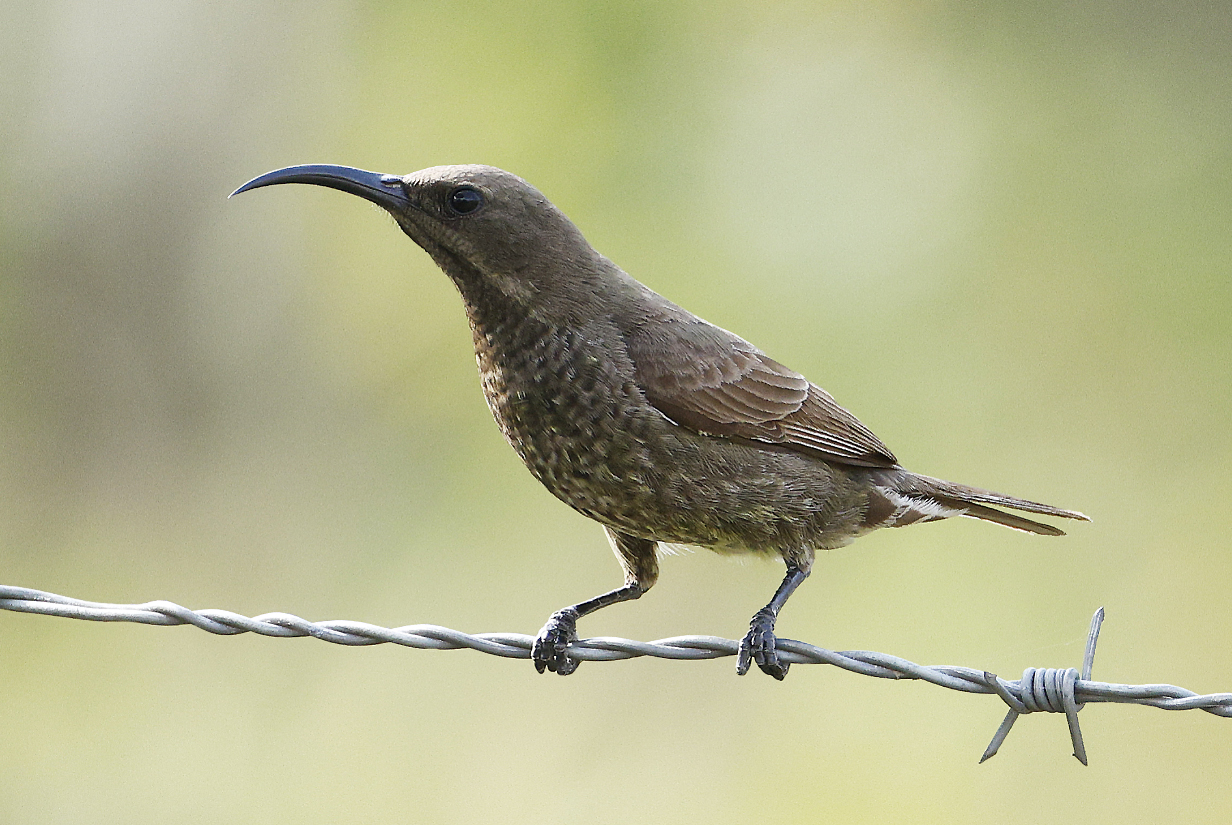
Scarlet-chested sunbird (female)
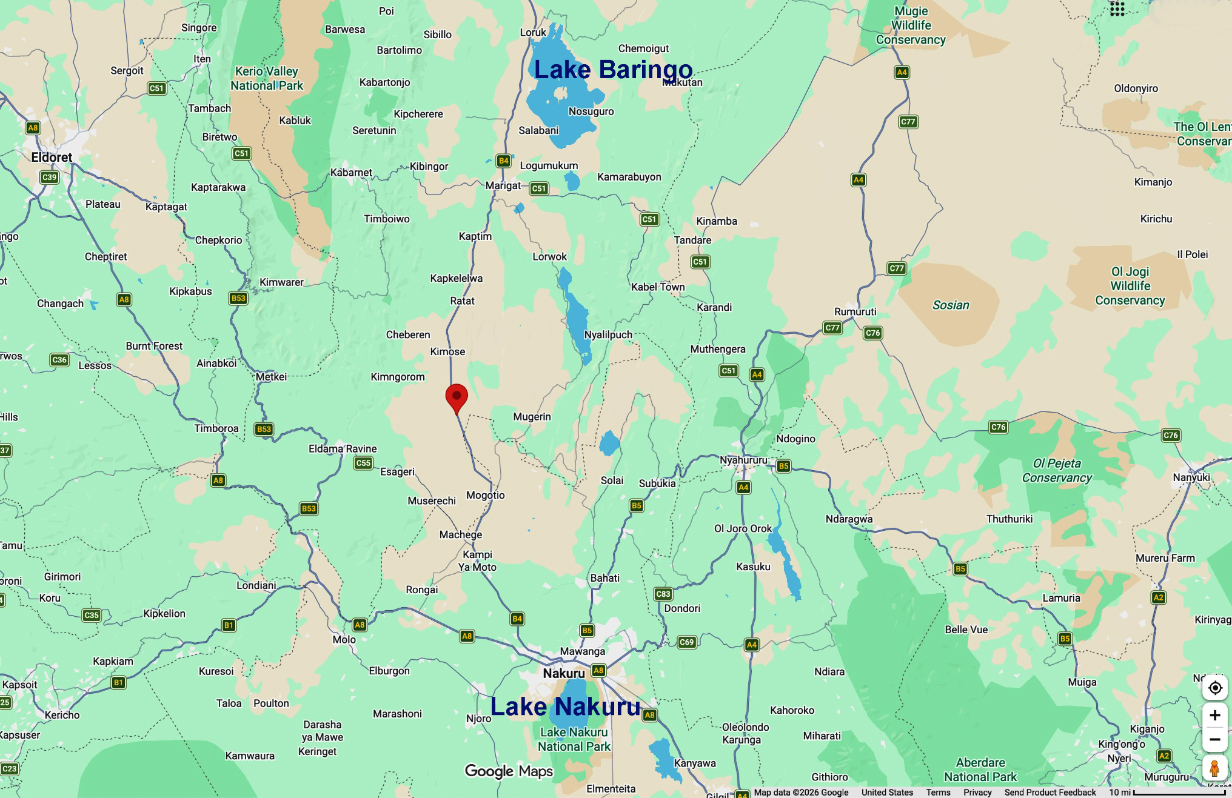
The birds from Northern anteater-chat to Scarlet-chested sunbird, above, were seen at latitude 0.107500 N, longitude 35.910000 E (0°06'27"N, 35°54'36"E).
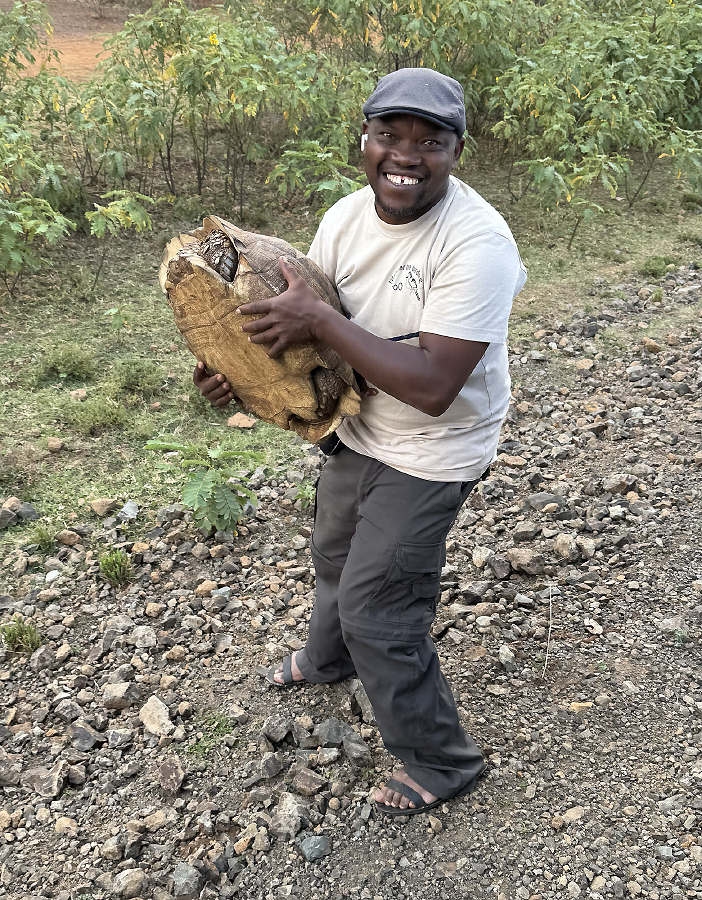
Chege here saves a (heavy!) leopard tortoise who was crossing in the middle of the road.
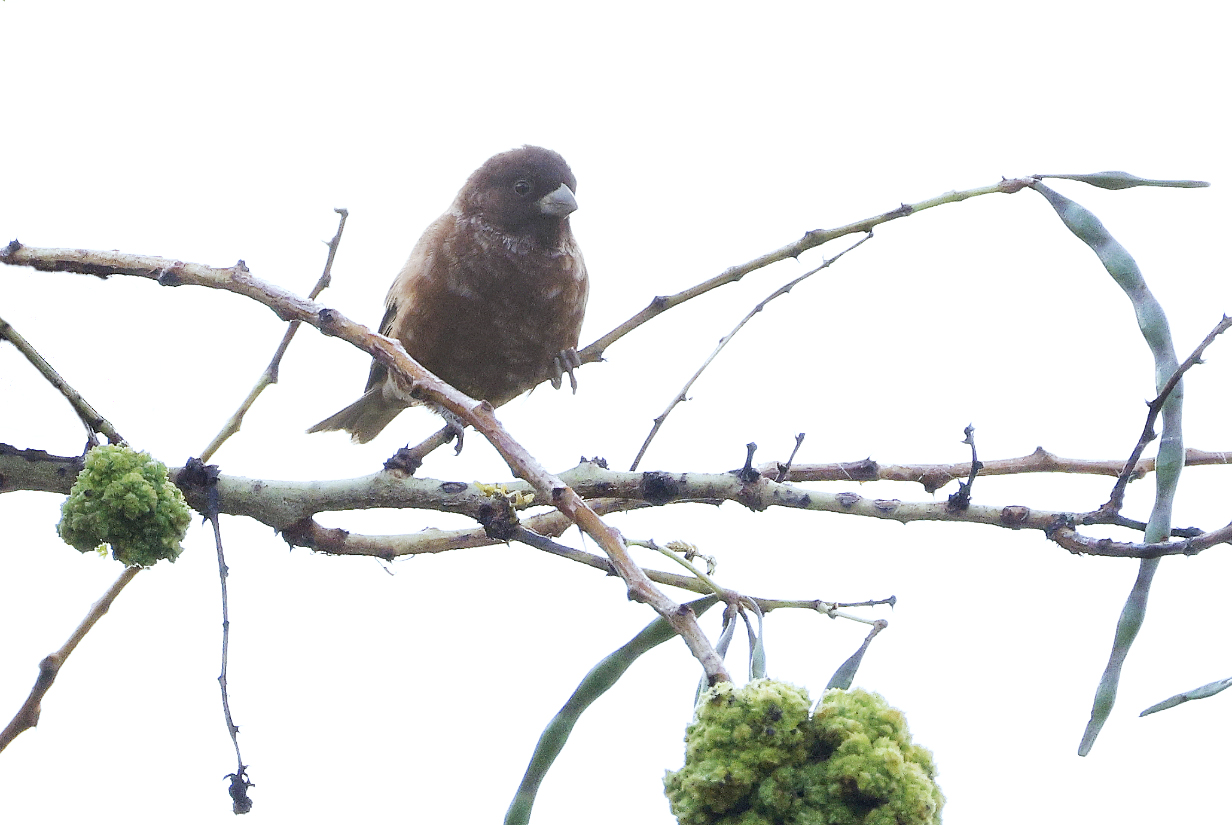
Chestnut sparrow (This is my life bird, one that I did not know I had until I processed pictures back home. I did not record the bird in real time in my day list. This can happen easily when we see many birds in quick succession: My priority is always to see each bird and to take pictures, and then I sometimes forget to note it in my day list. In this case, I did get several pictures, including the rest of this bird's substantial flock. Which includes immature birds. Thanks to Merlin for the ID.)
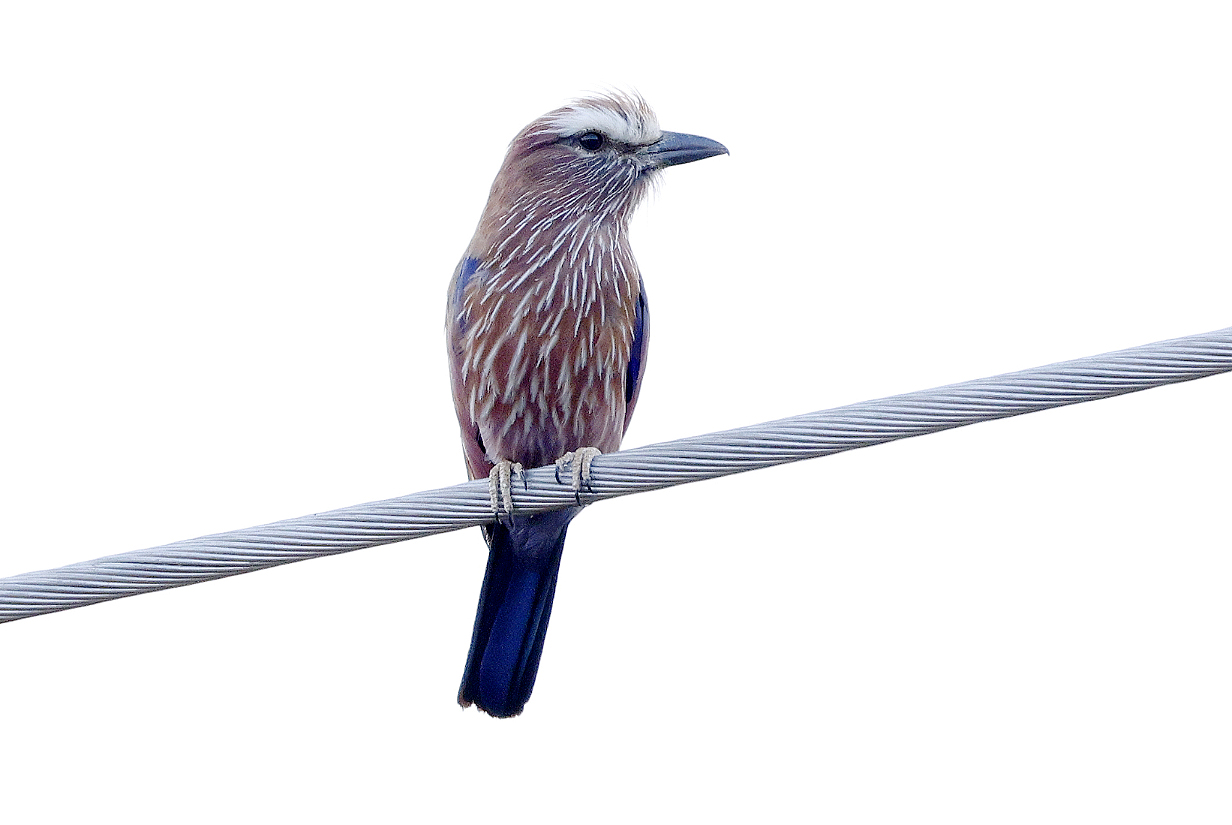
Purple roller
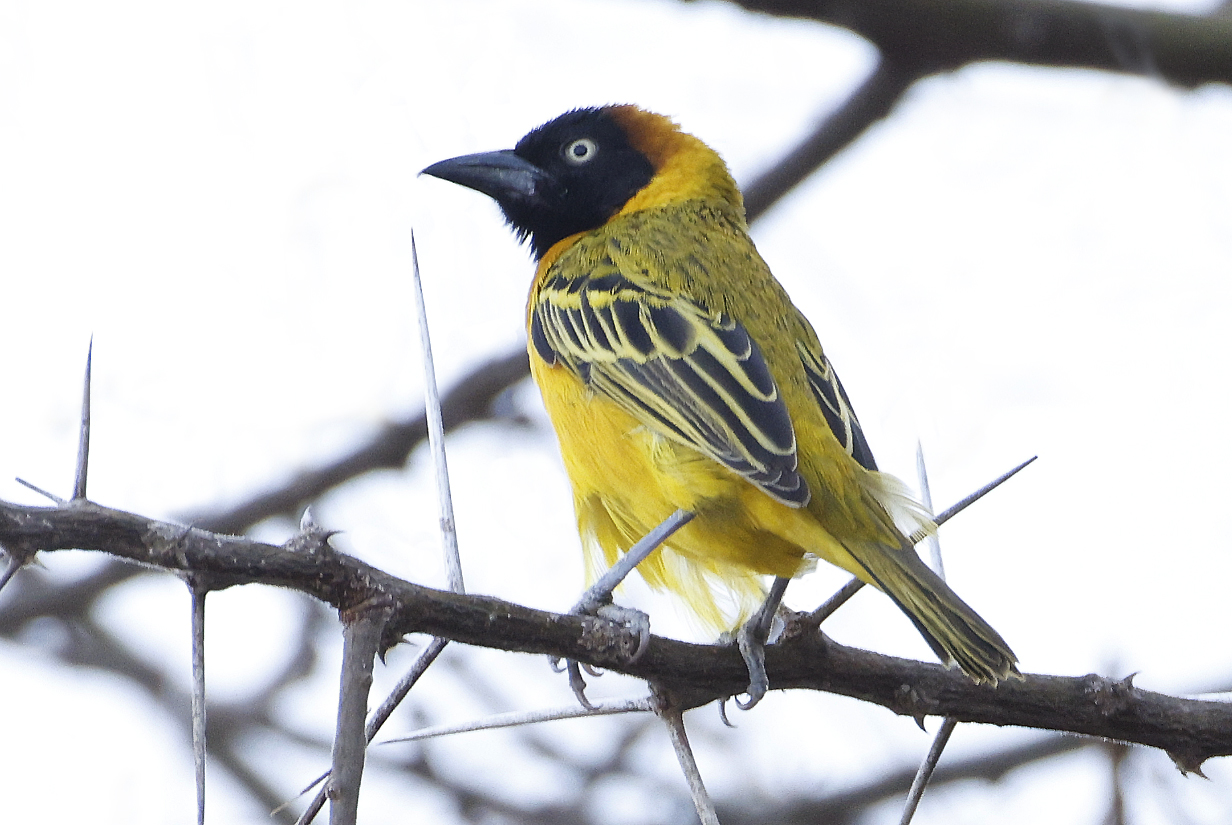
Speke's weaver (This is my life bird.)
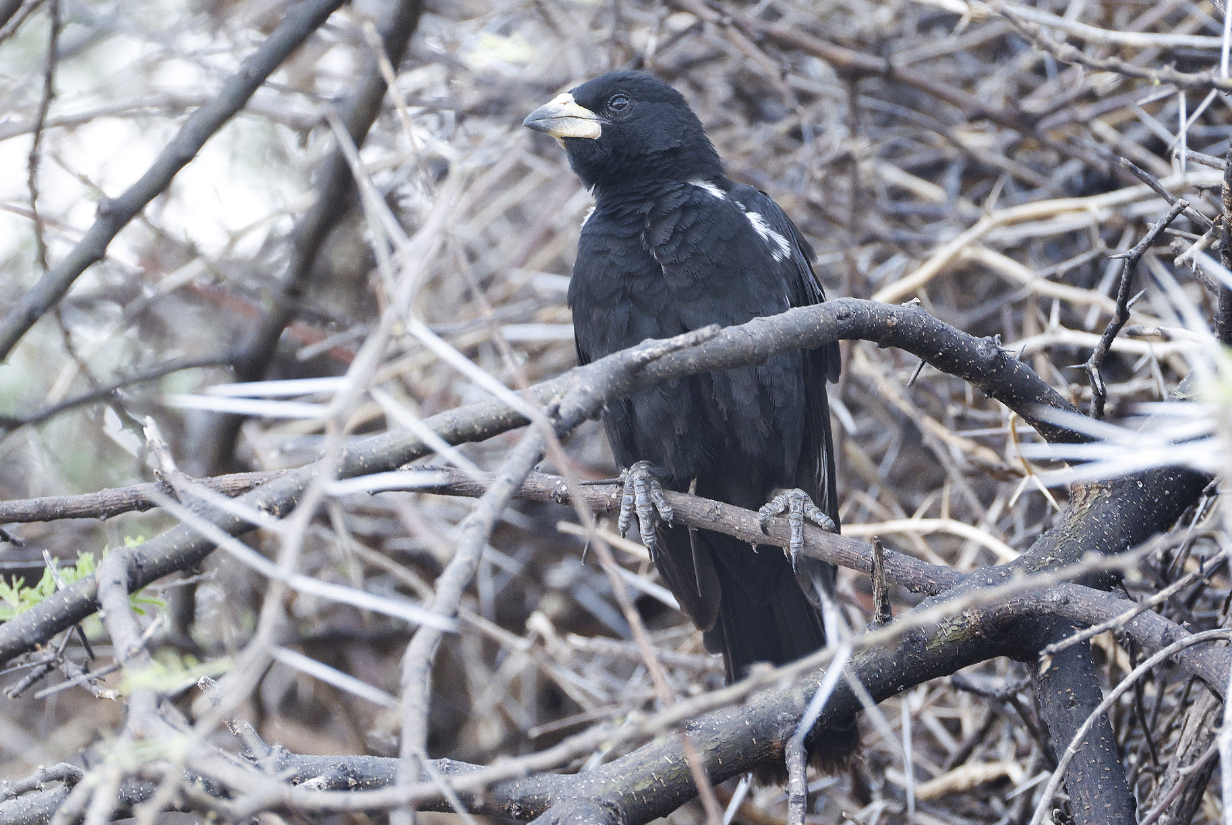
White-billed buffalo weaver
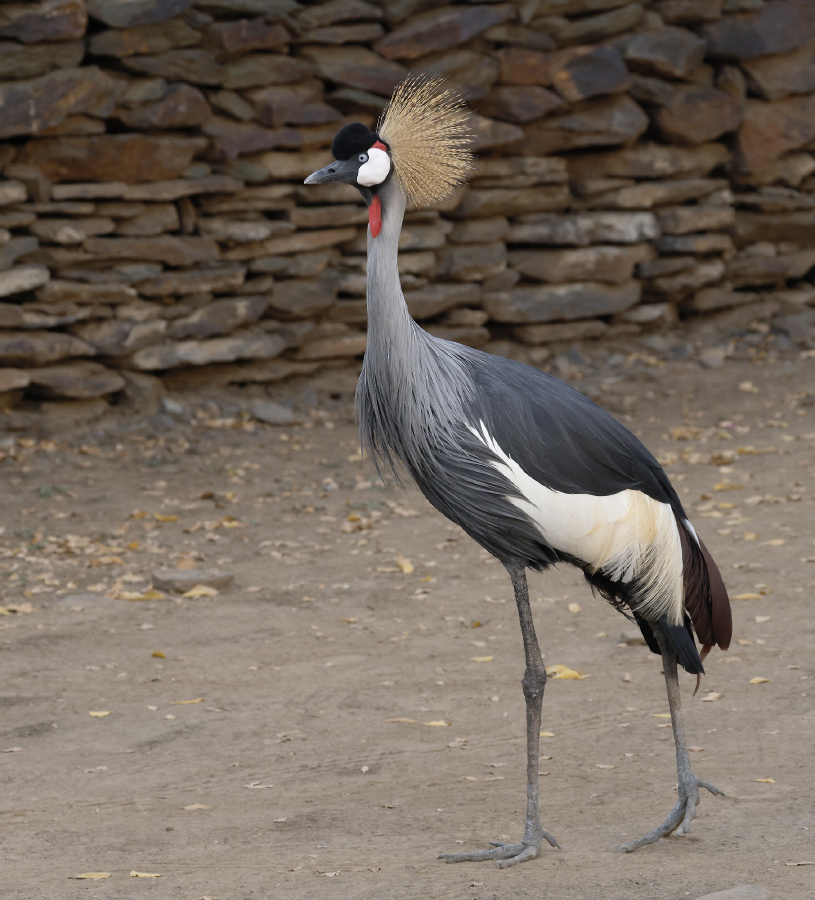
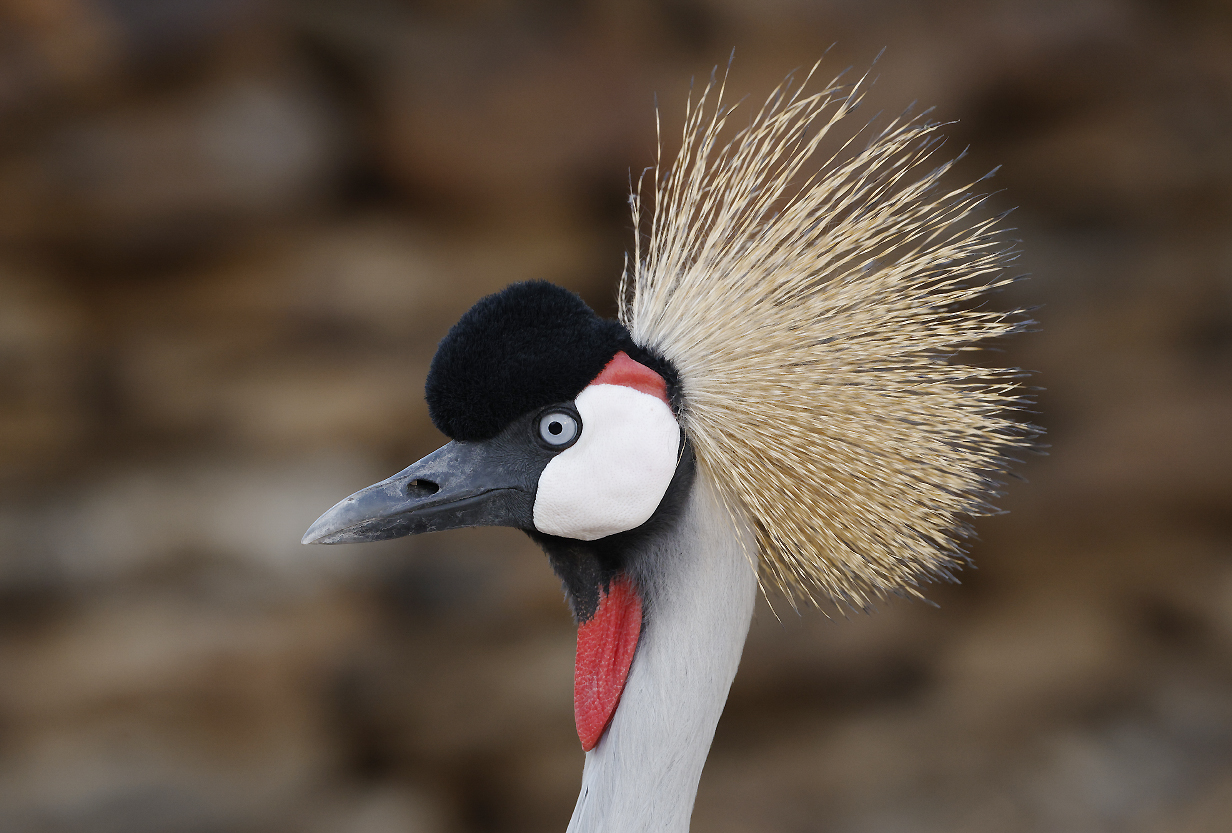
Gray crowned-crane (This bird lives in the courtyard of Soi Safar Lodge at Lake Baringo. It is used to people -- I almost bumped into it in the dark, more than once. But it has its flight wings clipped. Dammit: that angered us a lot. And so I did not count this as my life bird. Still, it photographs wonderfully. So I got good pictures here, and I got my life bird -- much farther away -- at The Ark Lodge at Aberdare National Park, on August 19th.)
Soi Safari Lodge threatens to be submerged by the drastically rising waters of Lake Baringo. This is documented tomorrow. Tonight, we checked into our still completely comfortable rooms on the second floor, not far above water level. We had dinner and crashed after a long but excellent day.
August 16: Lake Baringo
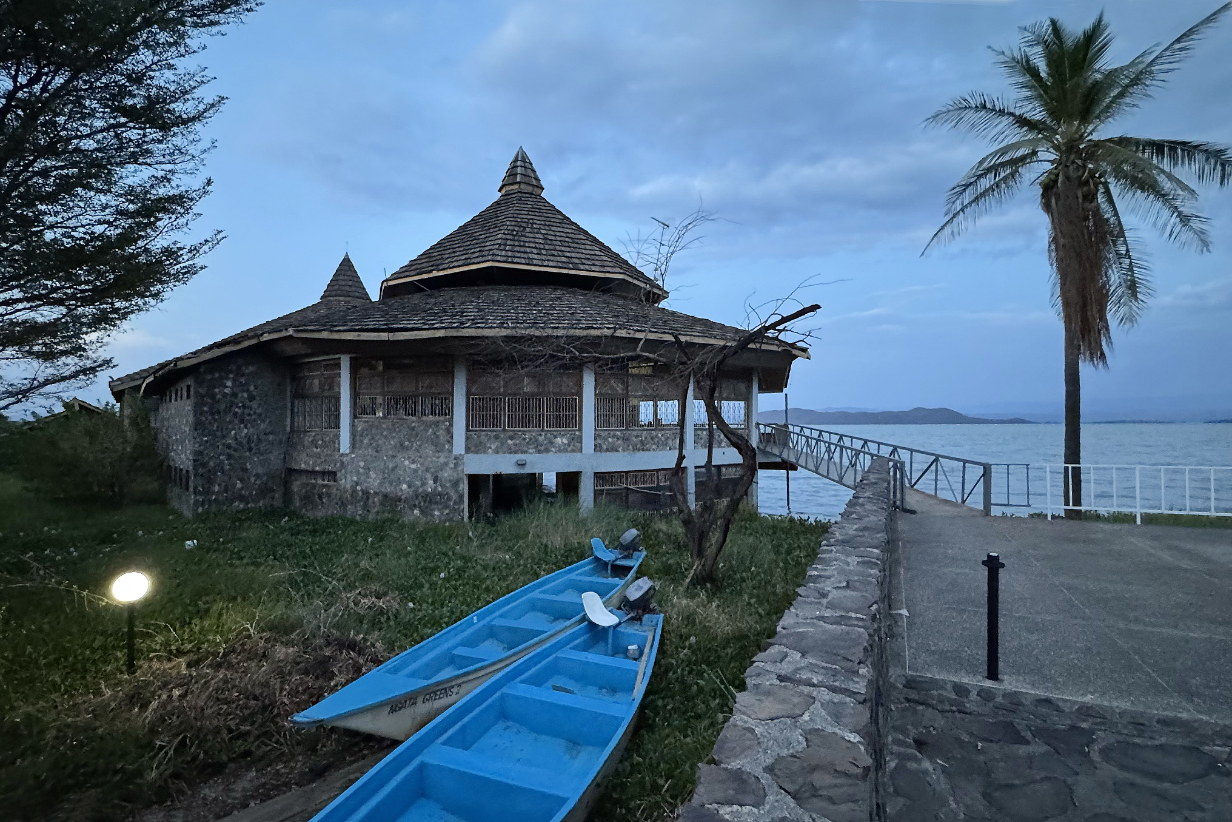
Our first morning at Lake Baringo began with a boat ride. This picture shows the setting. The lodge is half submerged under the rising waters of the lake. The ground floor of the main building is 2/3 under water. A gazebo illustrated below is submerged to its roof. Fortunately, the second-floor kitchen and dining room are still comfortably usable, and we were not inconvenienced. The danger -- which must be starkly worrying to the people who own and run the lodge -- is that futher rising water will make it unusable. Ours may be the last VENT tour that gets to stay here. This picture was taken in evening twilight on August 16, so the sun is behind the camera. Our rooms are behind me, and the dining room is reachable via the raised walkway shown here. The boats that we used for our morning ride on the lake are shown in the foreground.
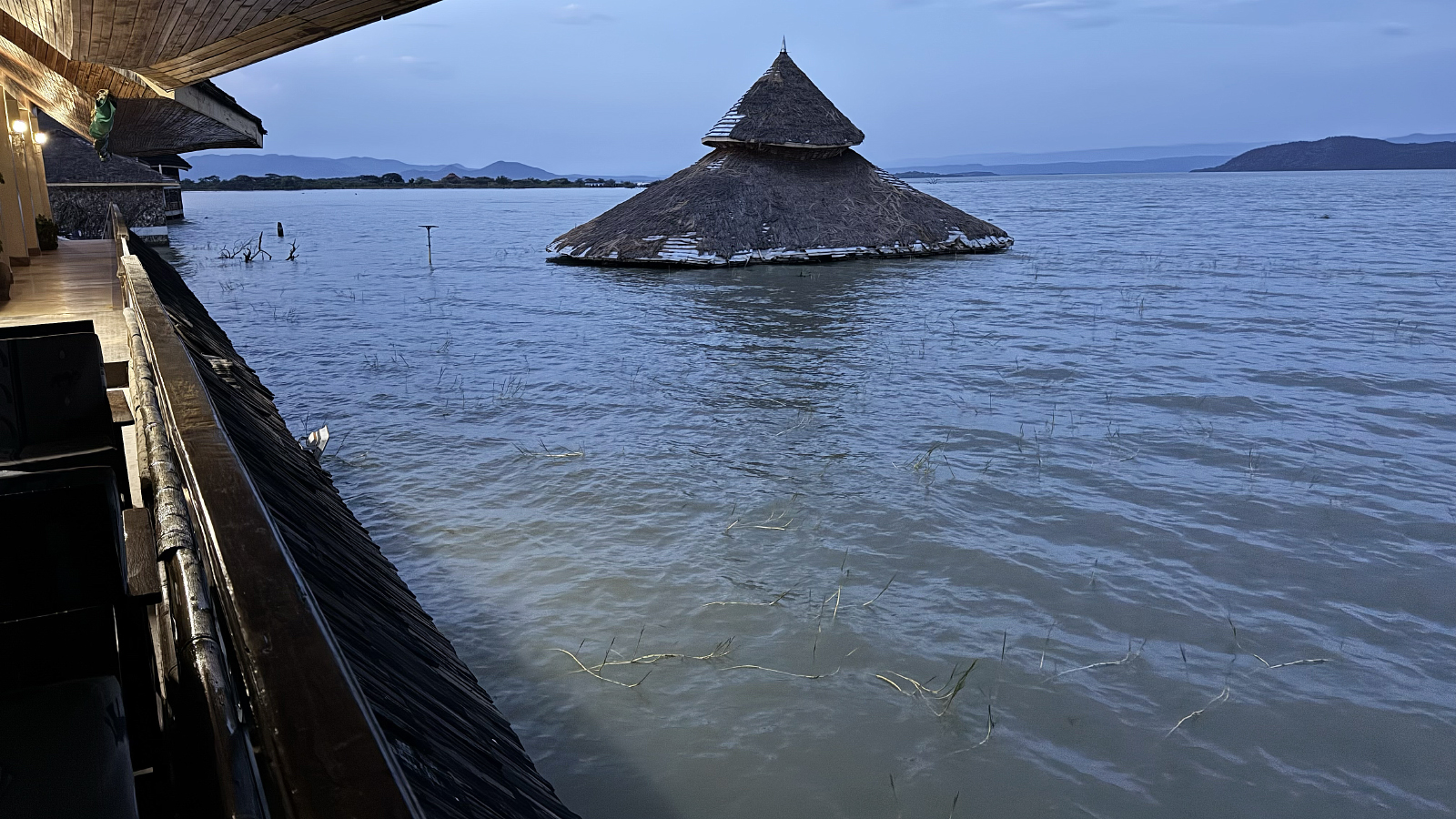
At left is the continuation of the raised walkway toward the restaurant. Looking out over the lake, we see the stark remnant of a pavilion that is now drowned right up to its roof. More pictures of the drowning lodge are shown from our boat ride below.
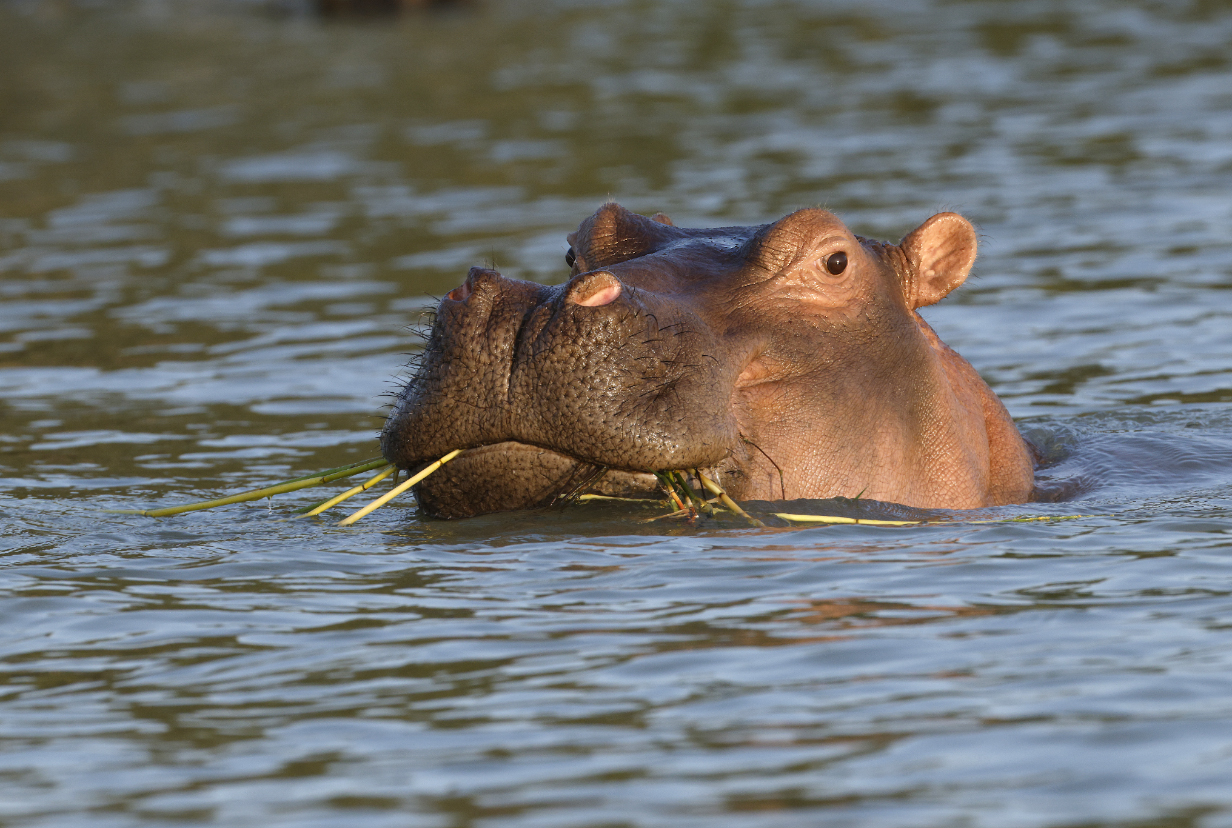
This was the only time we got close to a hippopotamus. You don't want to get close ... unless you can -- here, in a boat with a powerful engine -- get far away quickly.
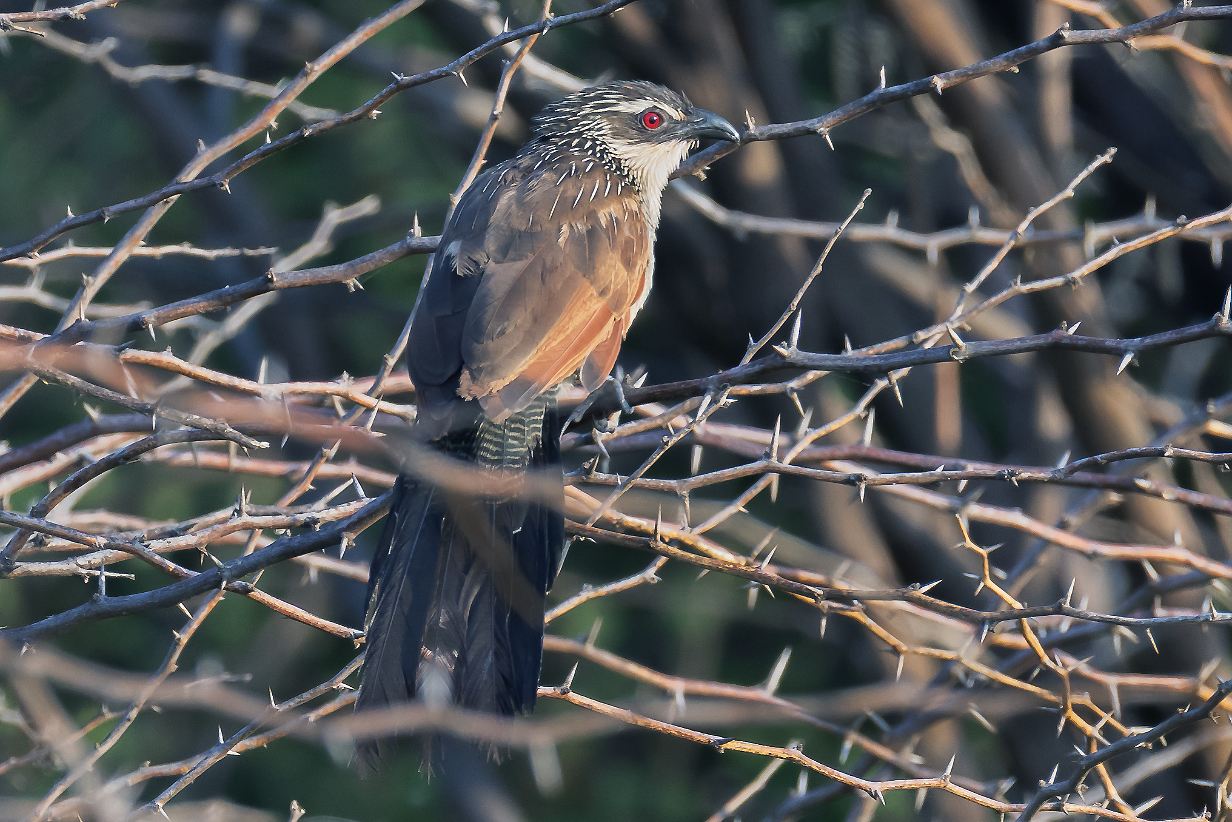
White-browed coucal in morning sunlight (This is my life bird.)
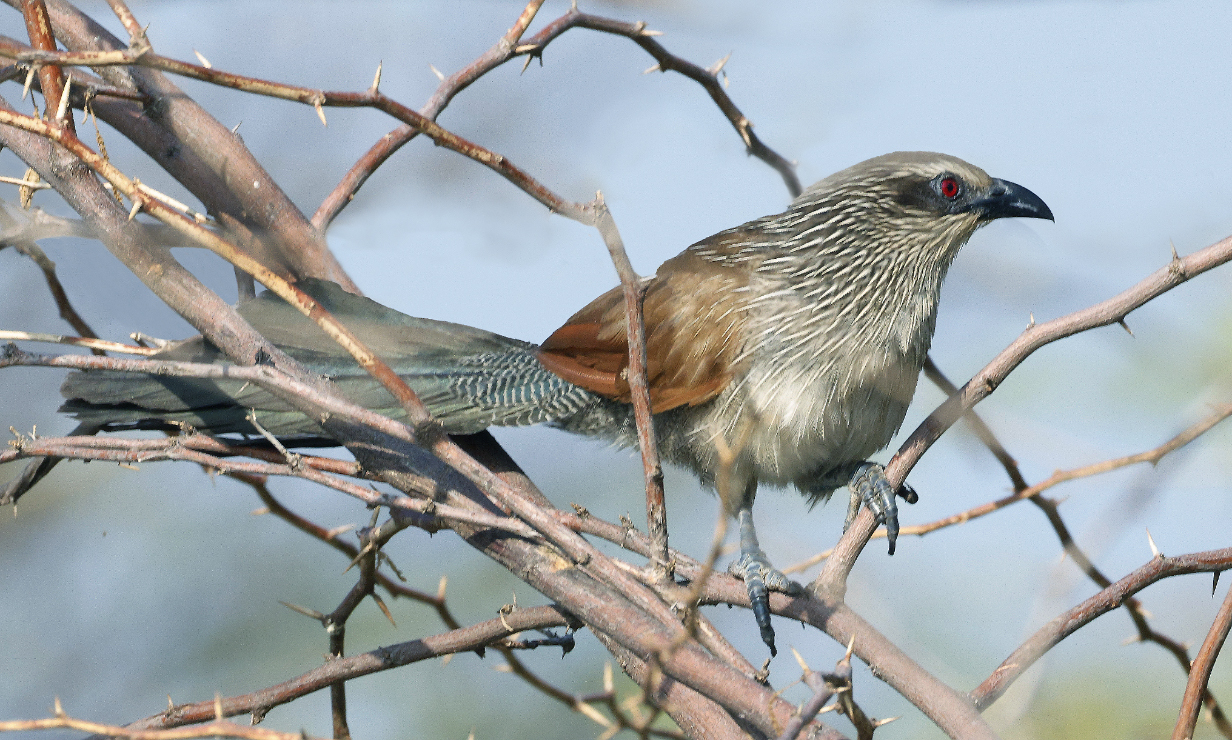
White-browed coucal out of sequence later in the morning
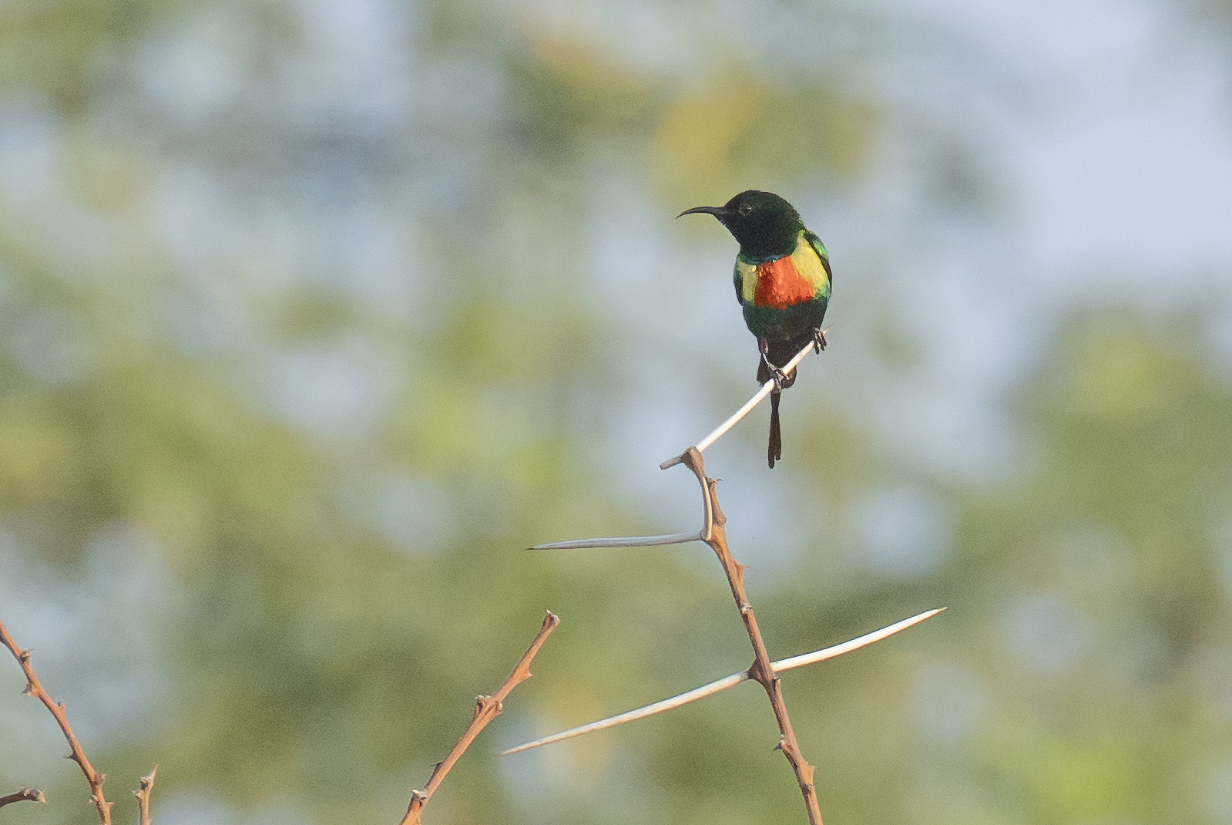
Beautiful sunbird
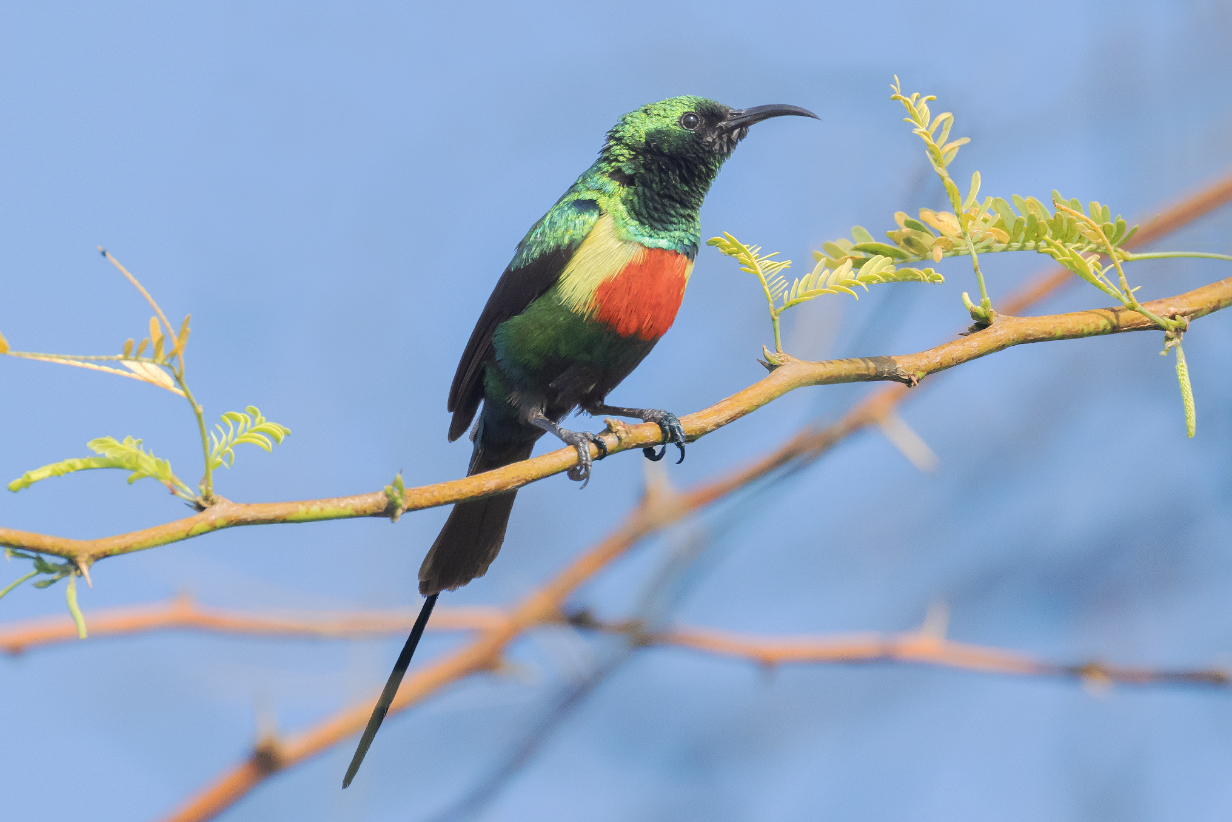
Beautiful sunbird out of sequene later in the morning
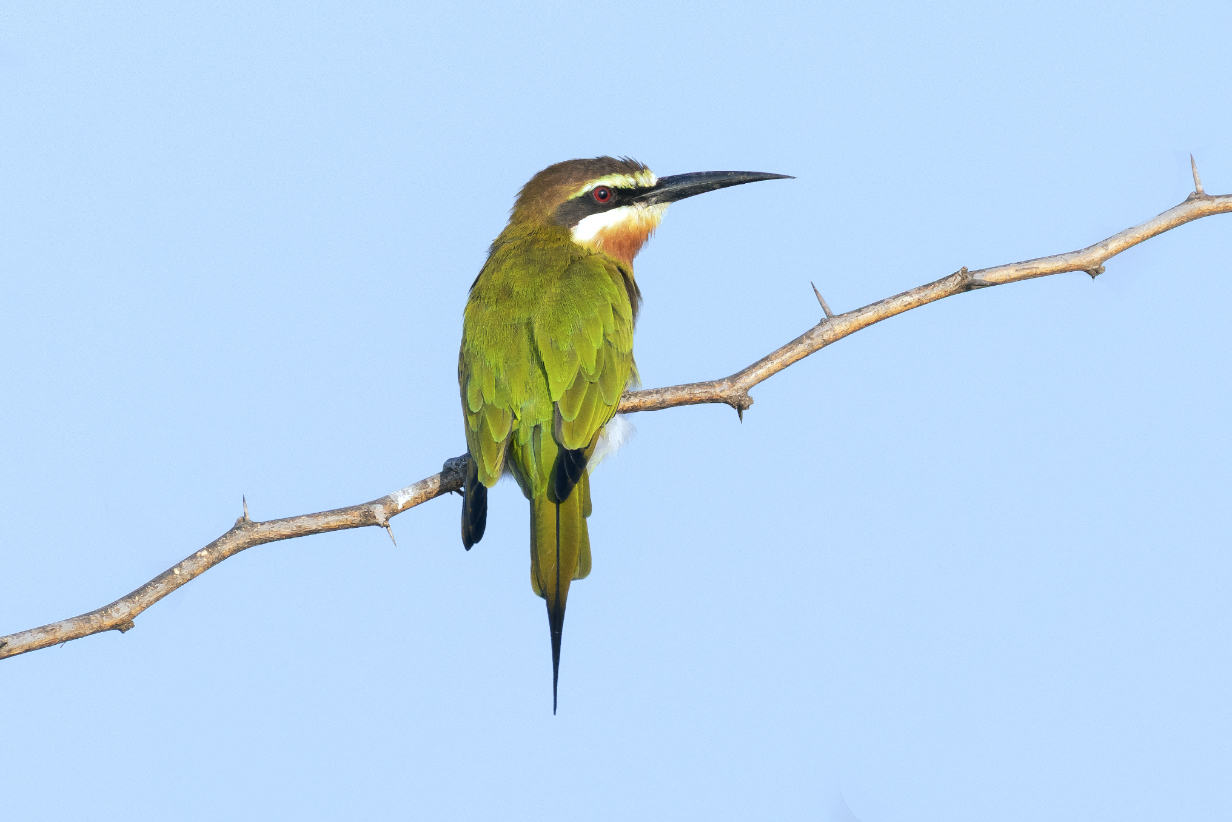
Olive bee-eater (This is my life bird.)
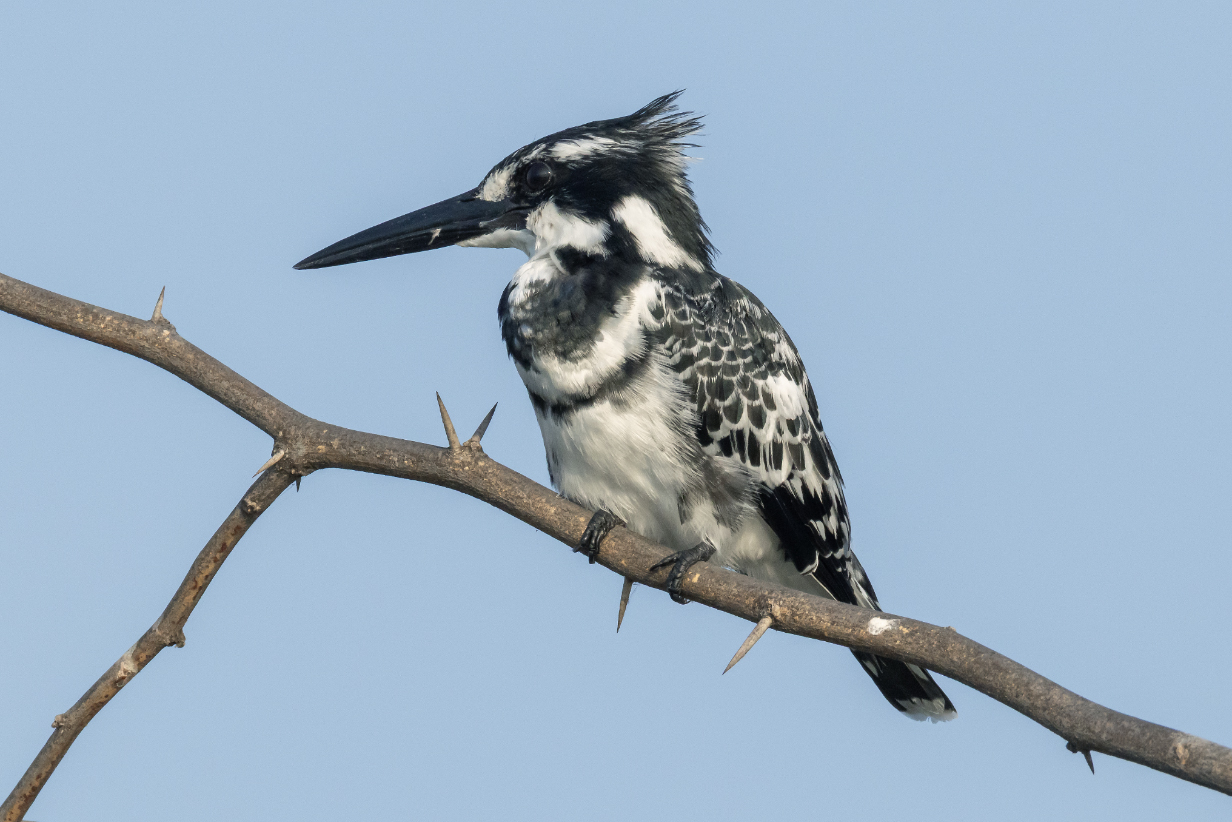
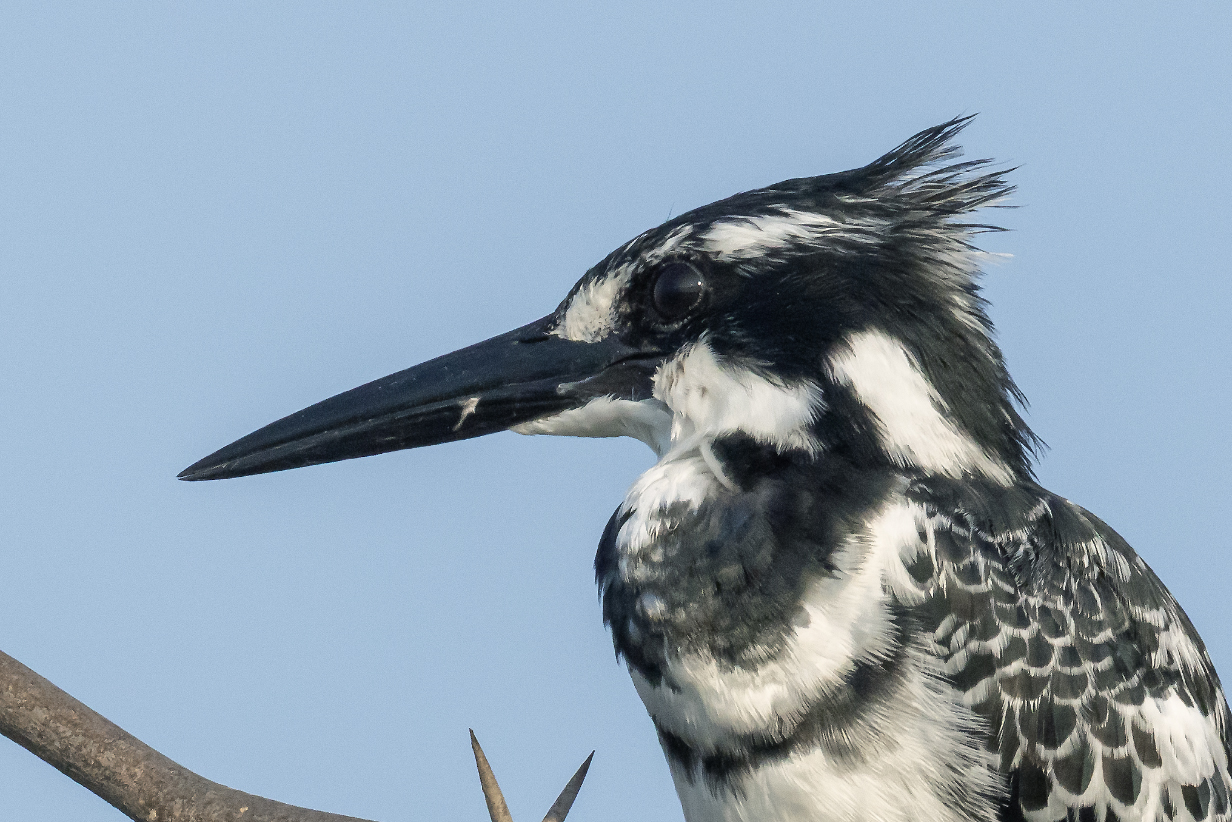
Pied kingfisher
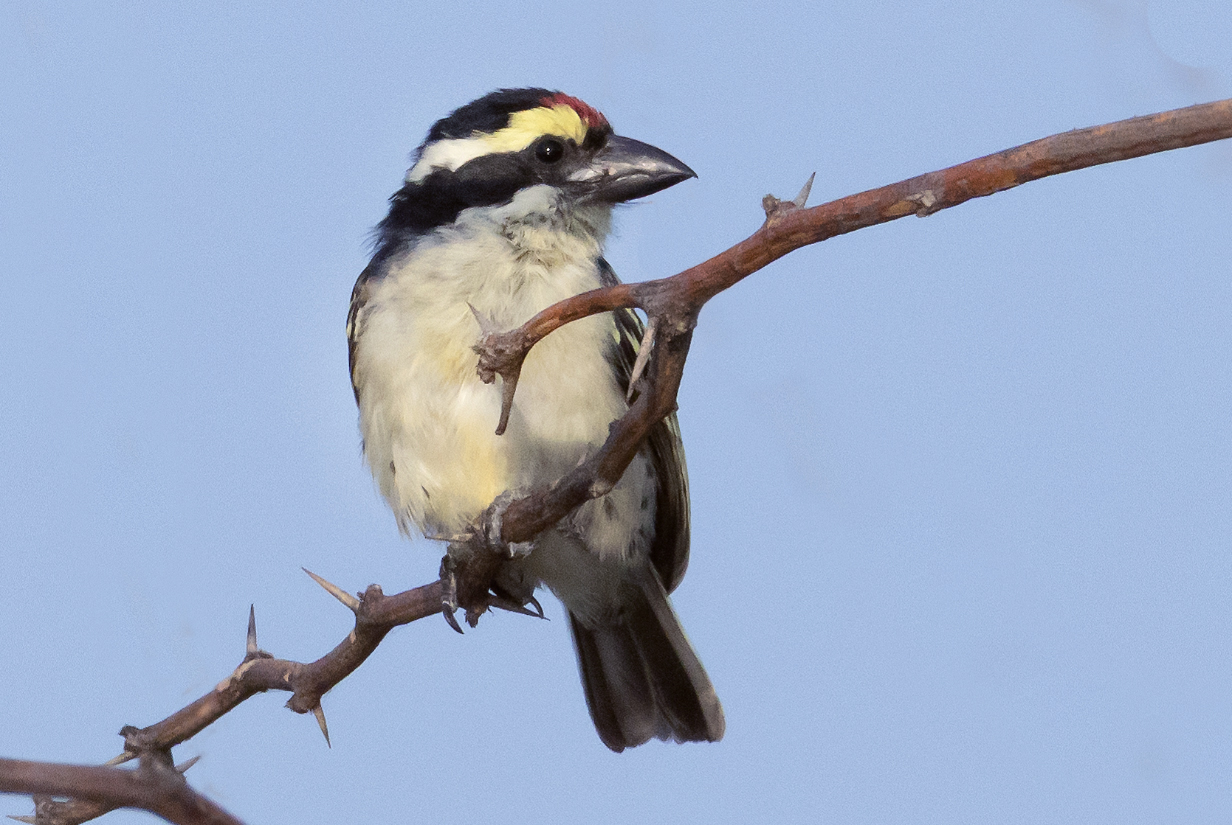
Red-fronted barbet (This is my life bird.)
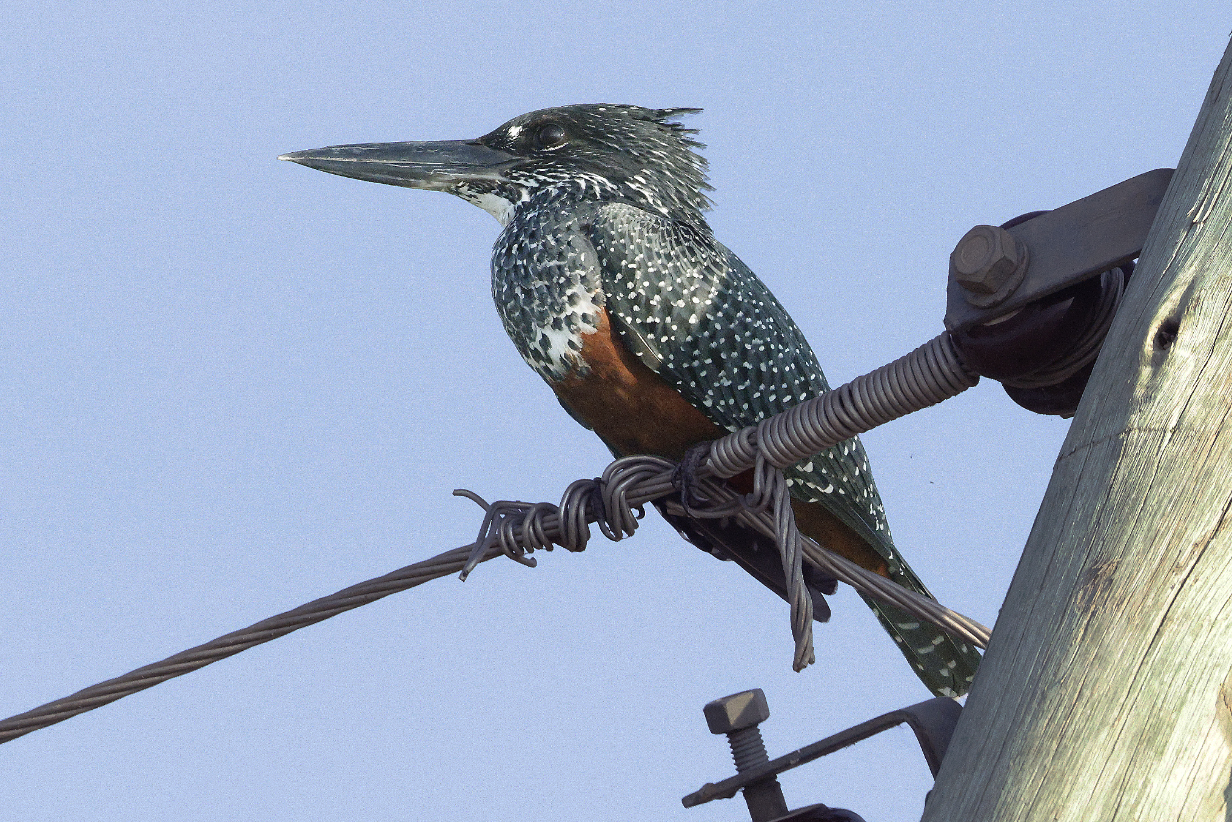
Giant kingfisher
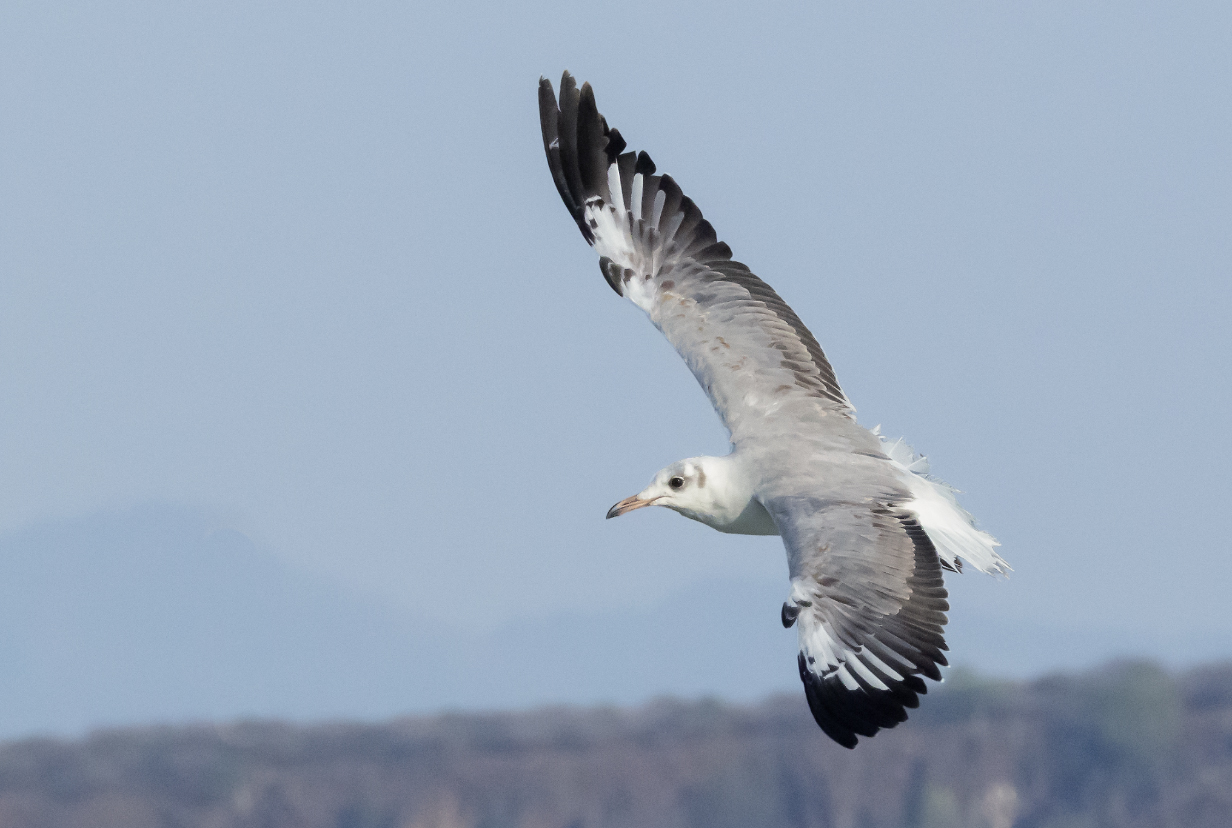
Gray-hooded gull (not in breeding plumage)
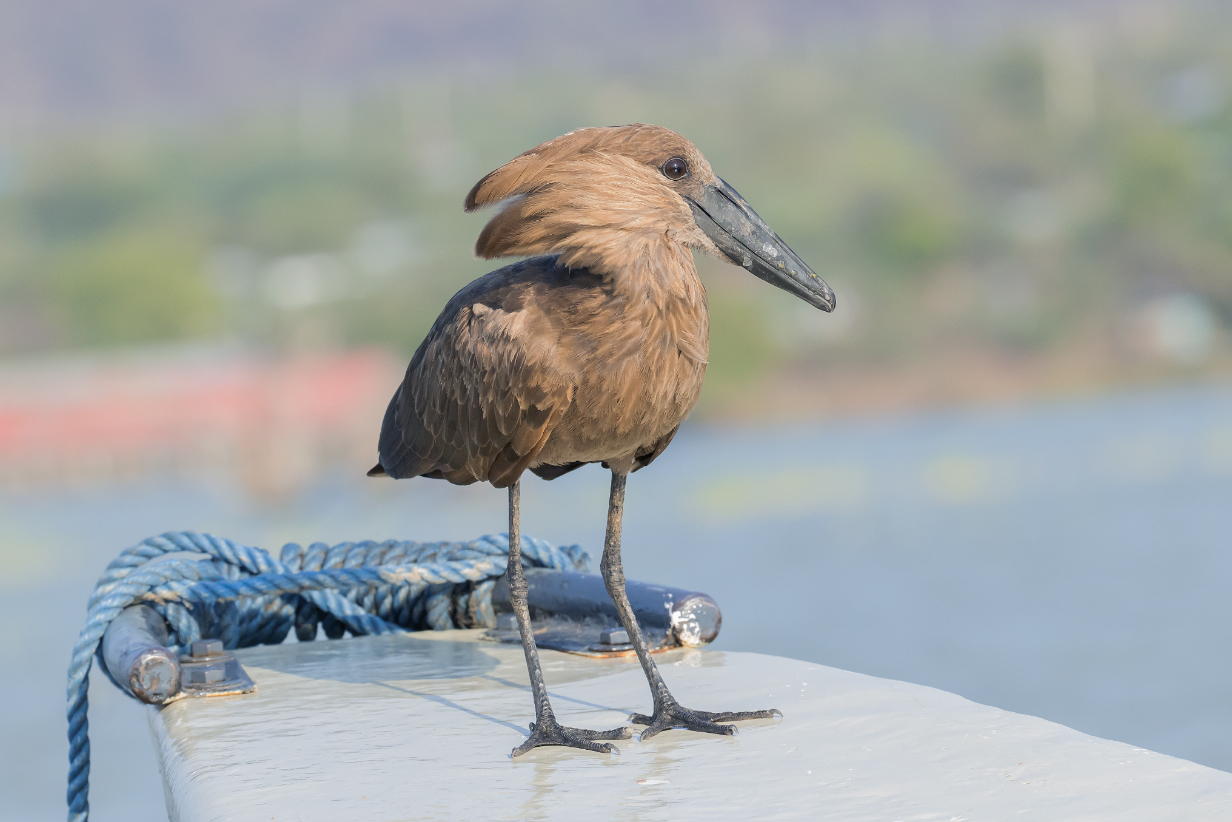
Hamerkop
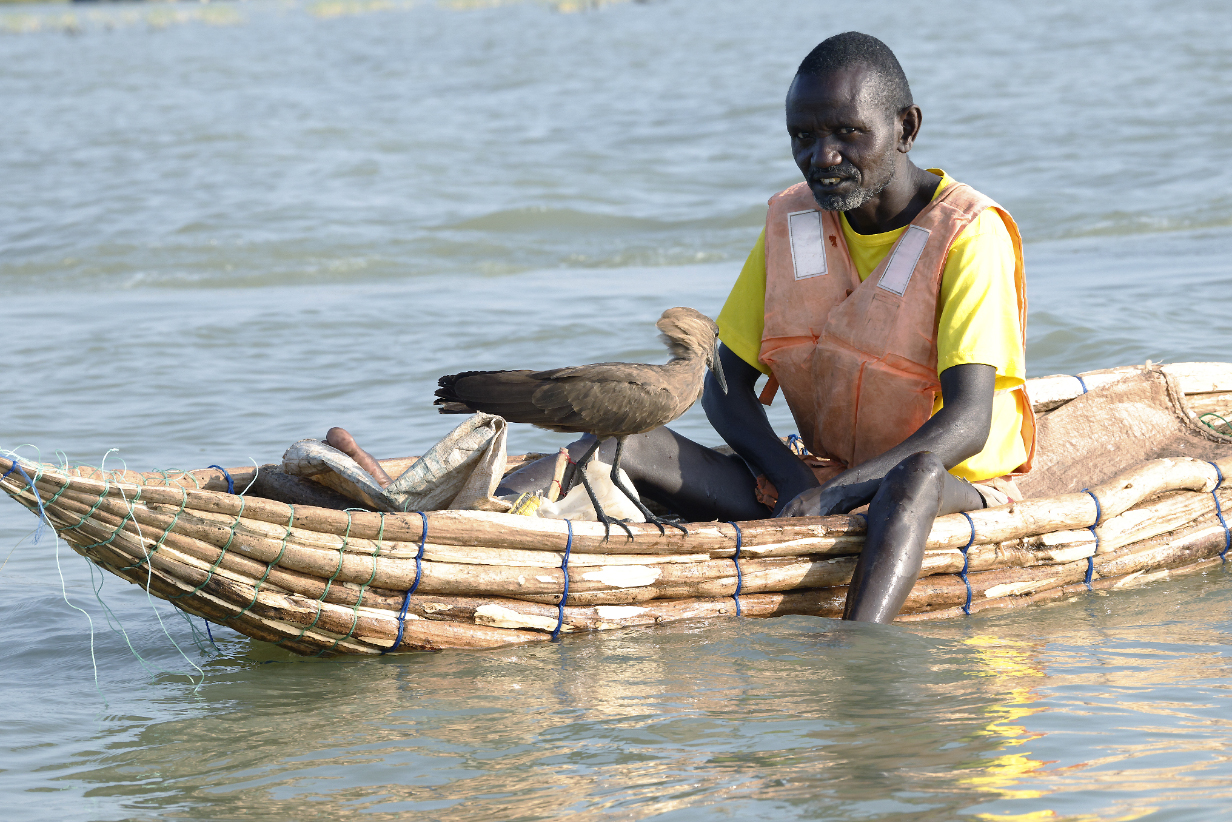
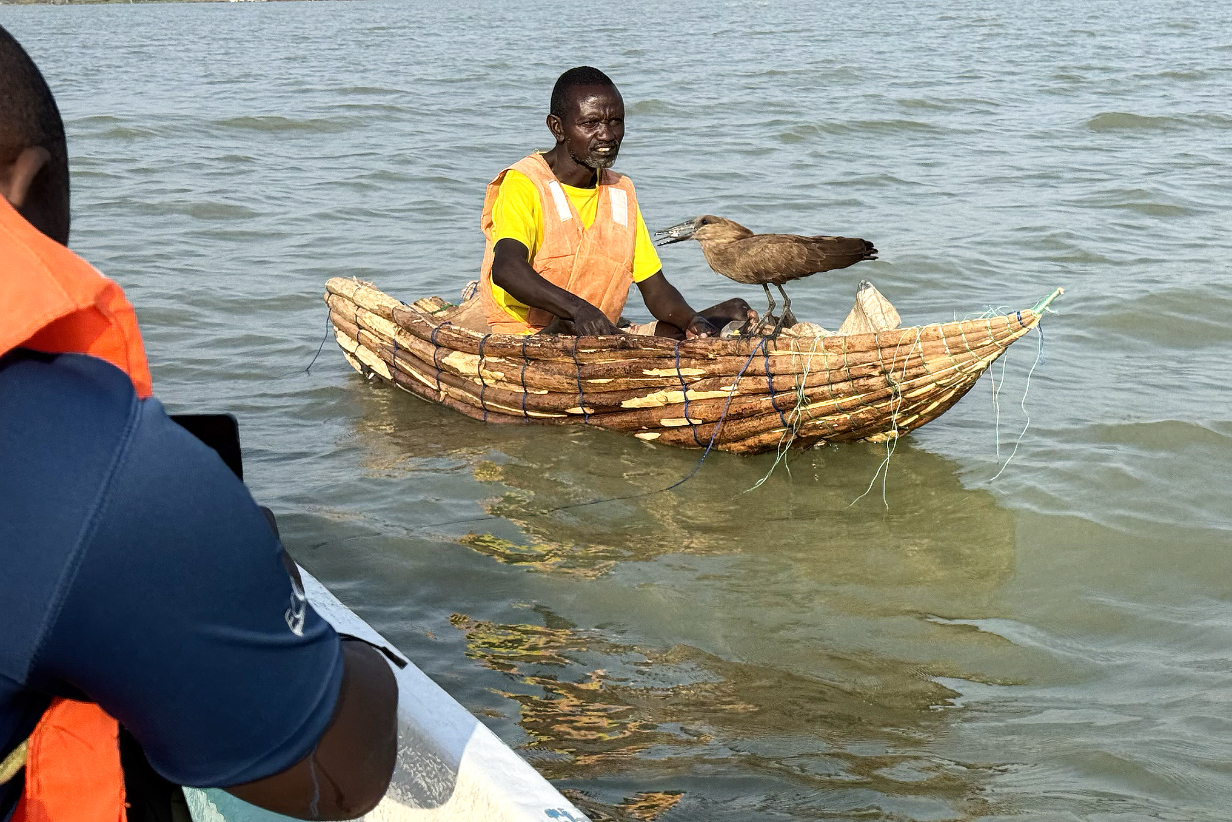
Hammerkop (Well away from shore, we came upon a well-know fixture of this place -- the many-year friendships and trust between hamerkops and local fishermen. We saw one such pair close-up, but apparently this "symbiosis" has been going on, with various birds and various fishermen, for decades.)
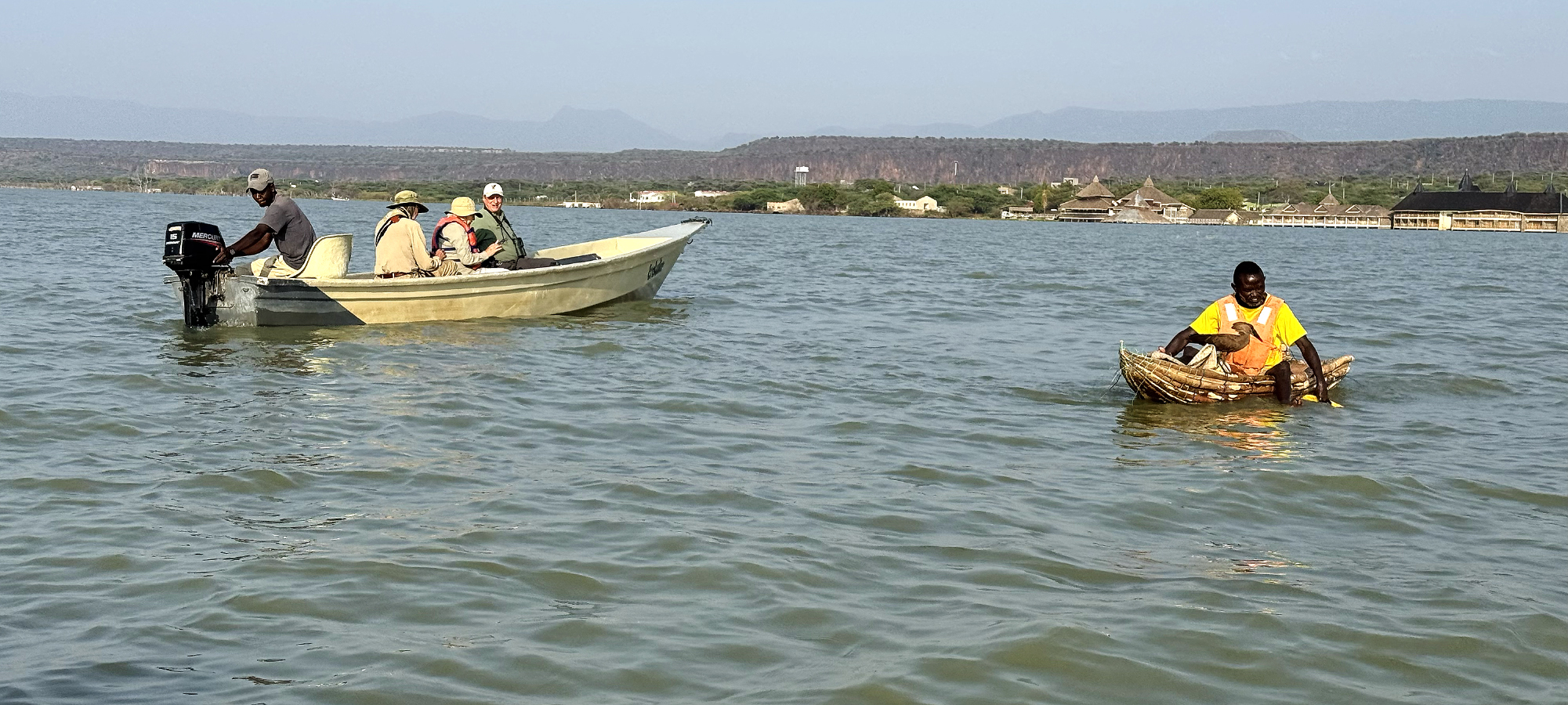
During our boat tour, we were divided into two boats. This shows the other boat -- not mine -- with VENT guide Andrew Whittaker plus the fisherman and his hamerkop. In the background is the partly drowned Soi Safari Lodge. Scroll right to see the whole panorama.
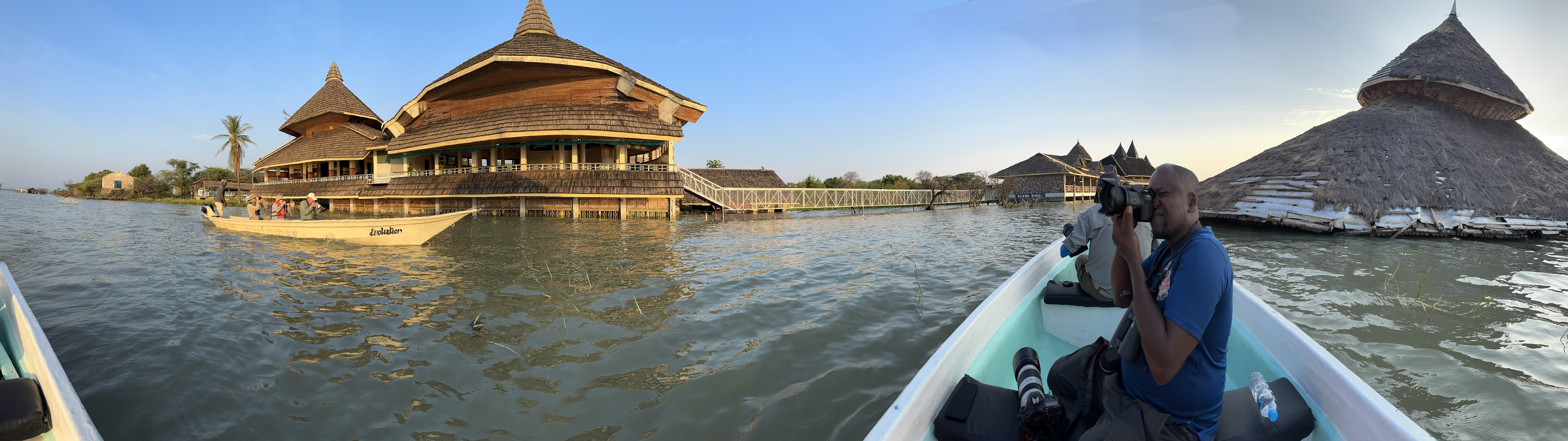
Wide-angle panorama of Soi Safari Lodge, taken in early morning sunlight, soon after we set out on our morning boat ride. Scroll right to see the complete panorama. Andrew Whittaker's boat is in the foreground. Its driver stands in front of the raised walkway shown earlier: it leads to the second-floor dining room -- the biggest building just to the right of the boat. The former ground floor of the restaurant building is flooded most of the way to its ceiling. Further rooms -- not those used by our tour birders -- are at the end of the walkway that continues to the right. At far right is the roof of the drowned pavilion illustrated earlier. That drowned pavilion indicates that there were extensive grounds in front of the restaurant complex that are now completely gone. There is every reason to expect that the waters of Lake Baringo will continue to rise.
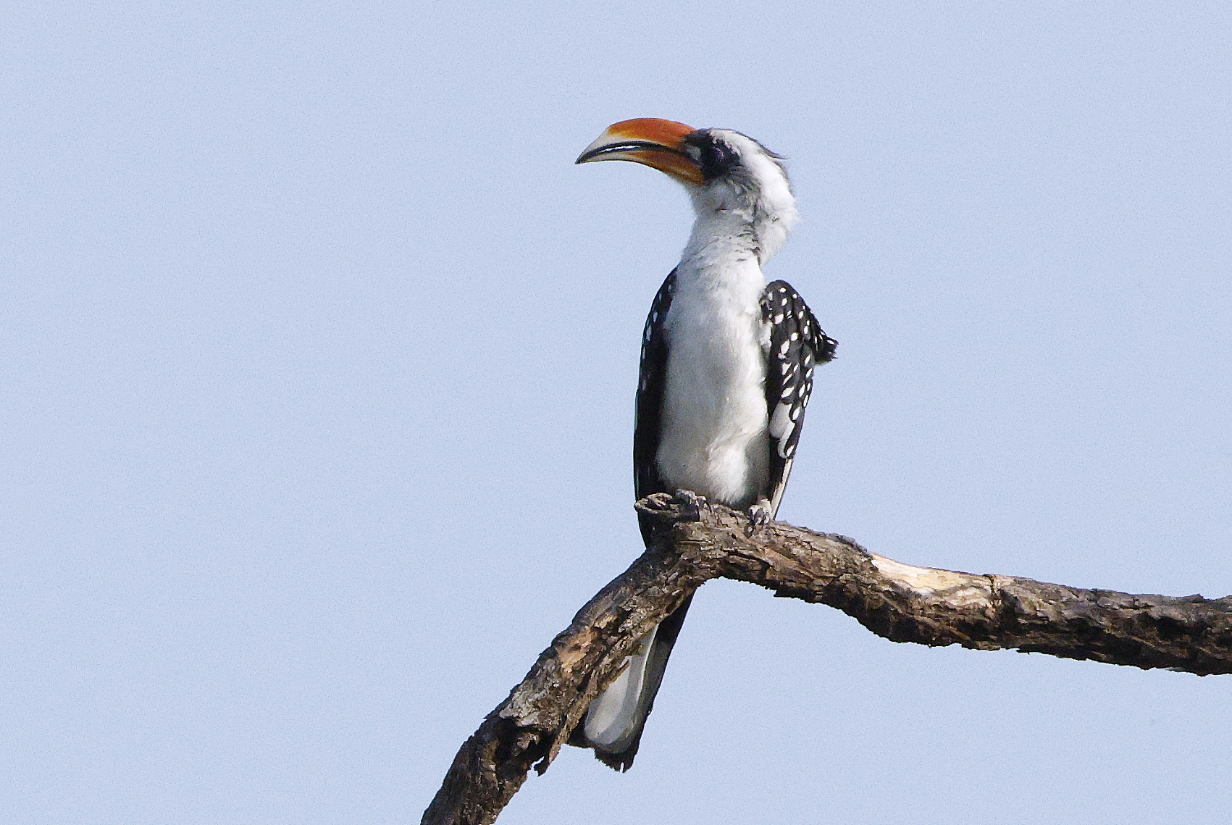
Jackson's hornbill (This is my life bird.)
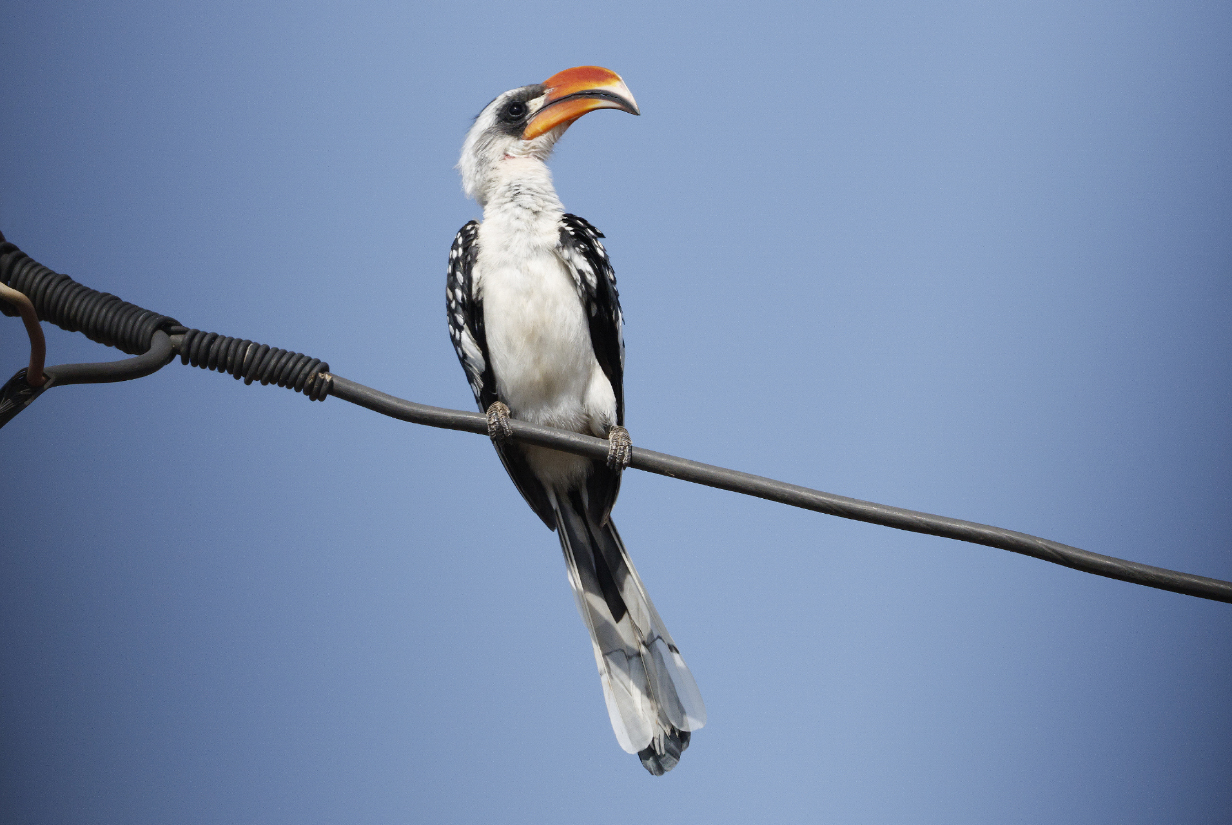
Jackson's hornbill out of sequence later in the morning
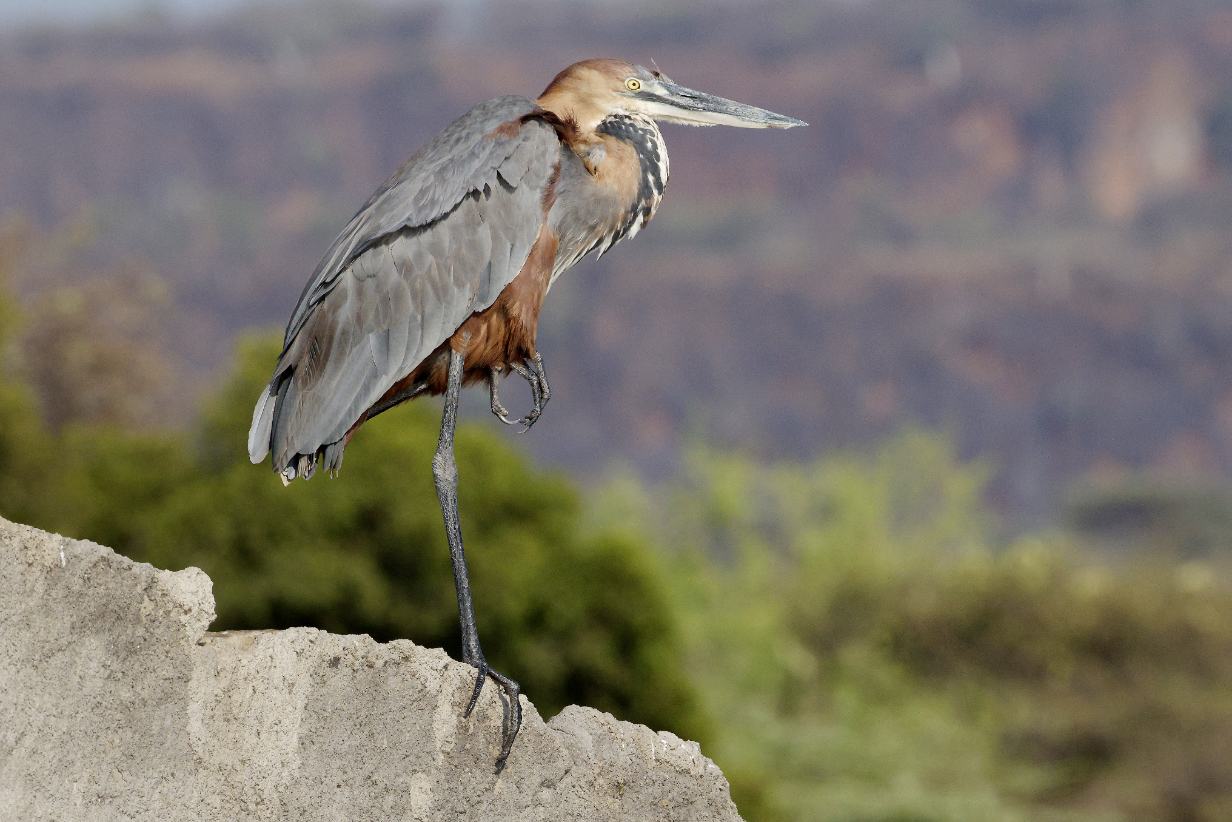
Goliath heron
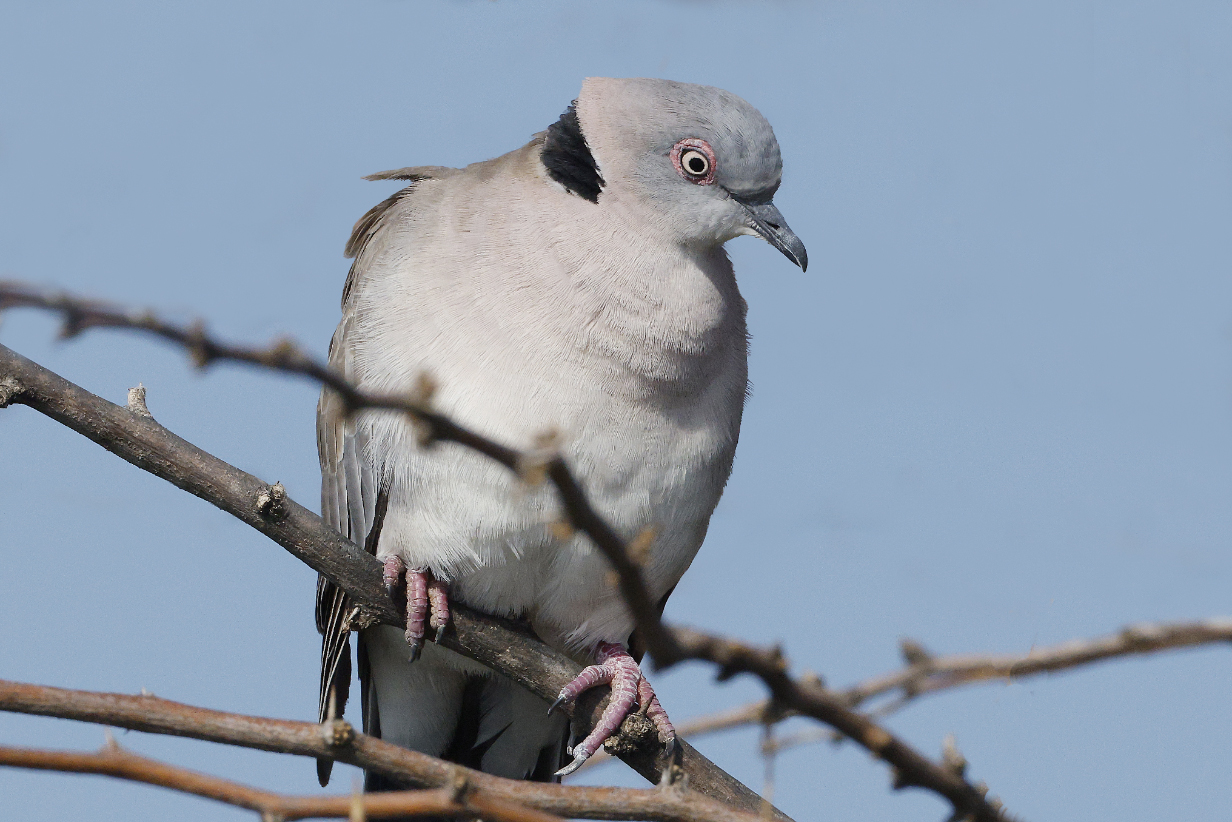
African mourning dove
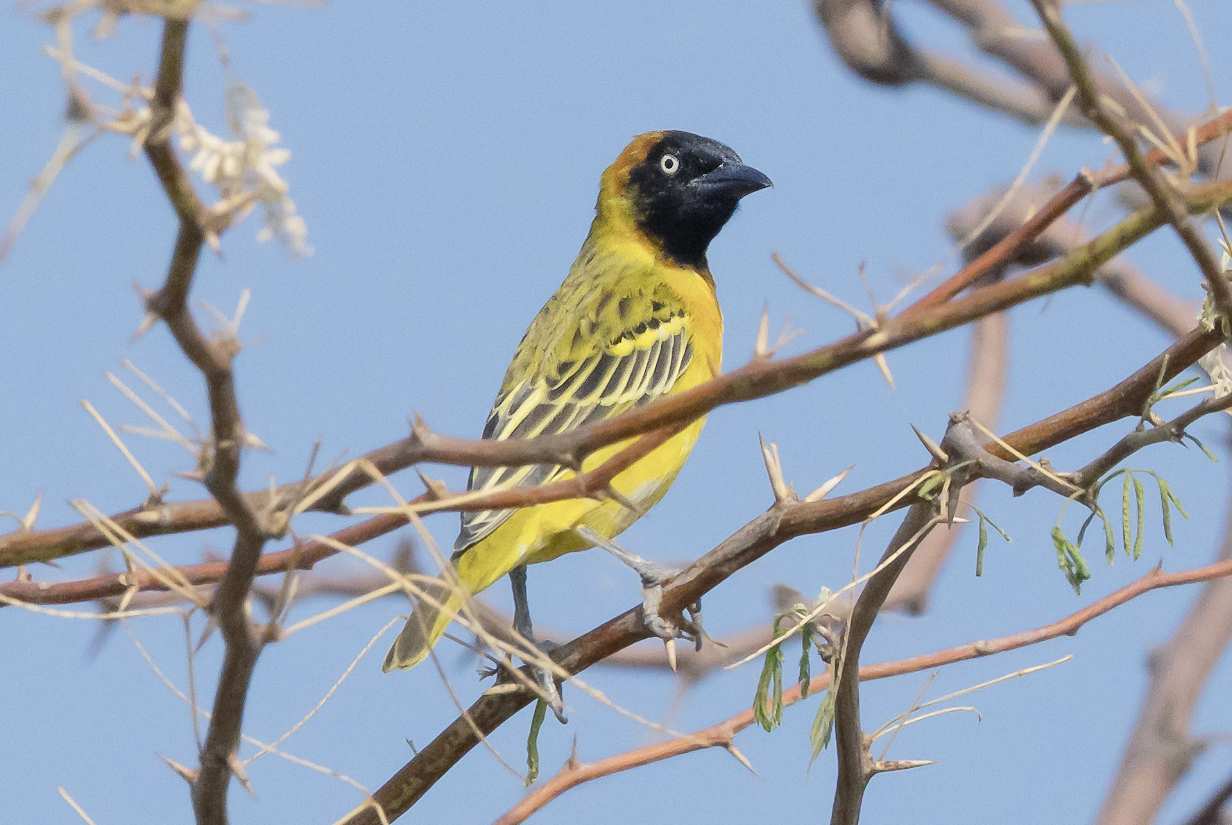
Lesser masked weaver (This male is my life bird. Earlier, I recorded and photograped a female whose field marks were insecure. Here, the ID is definitive; e. g., the eye is bright white and the legs are gray.)
Here ends the morning boat ride. Next, we went on a morning walk.
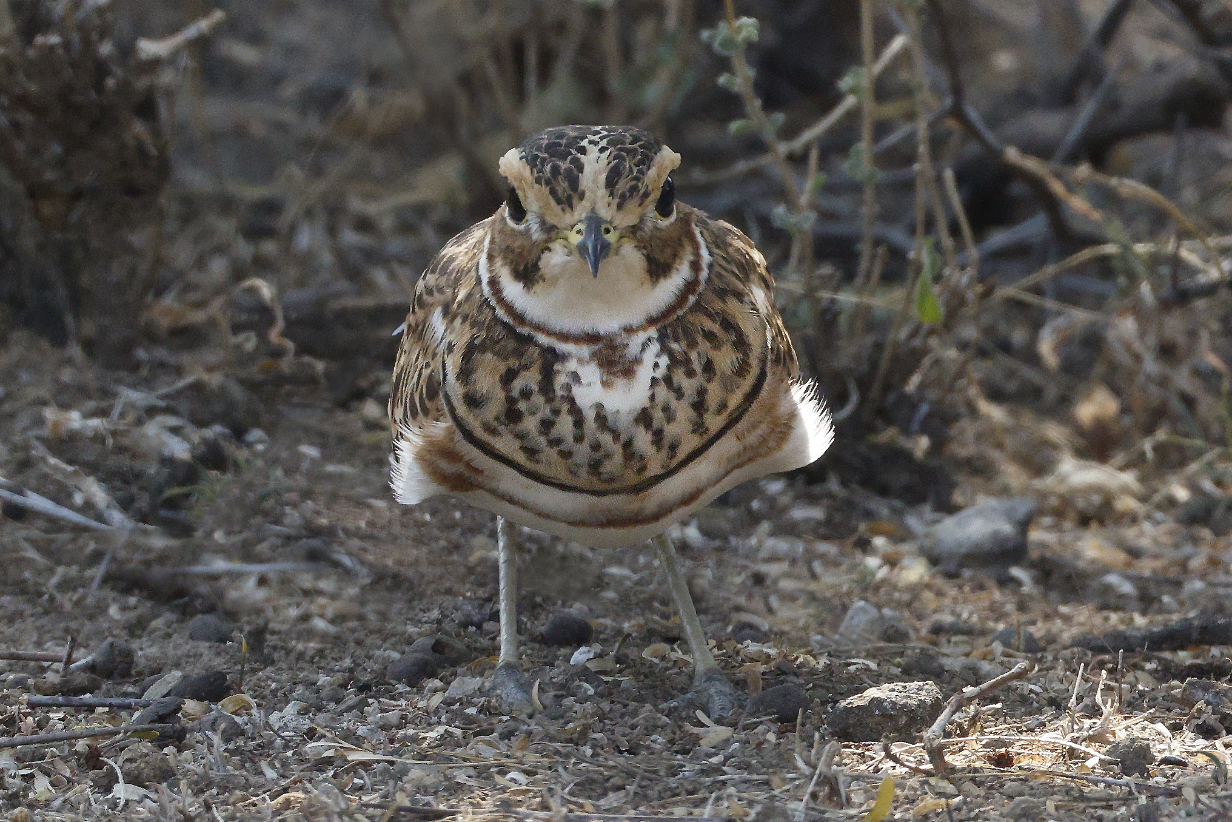
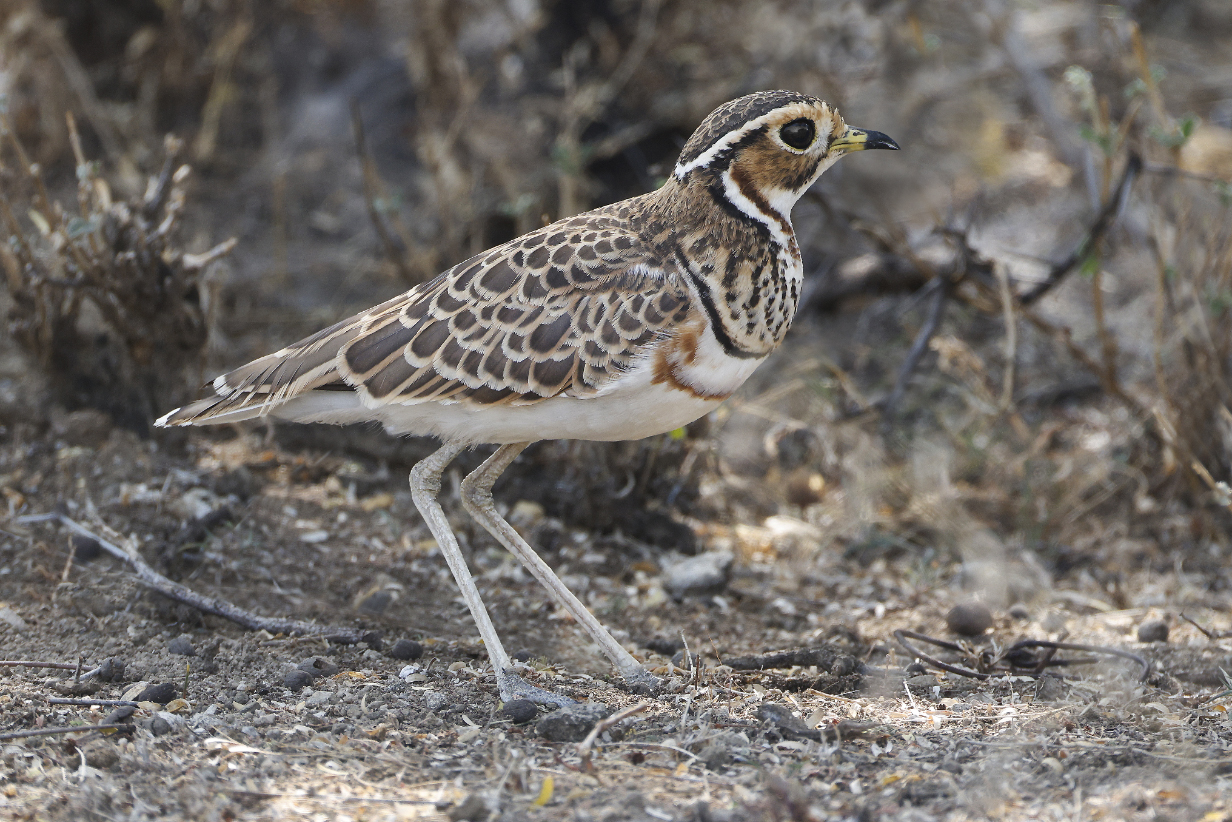
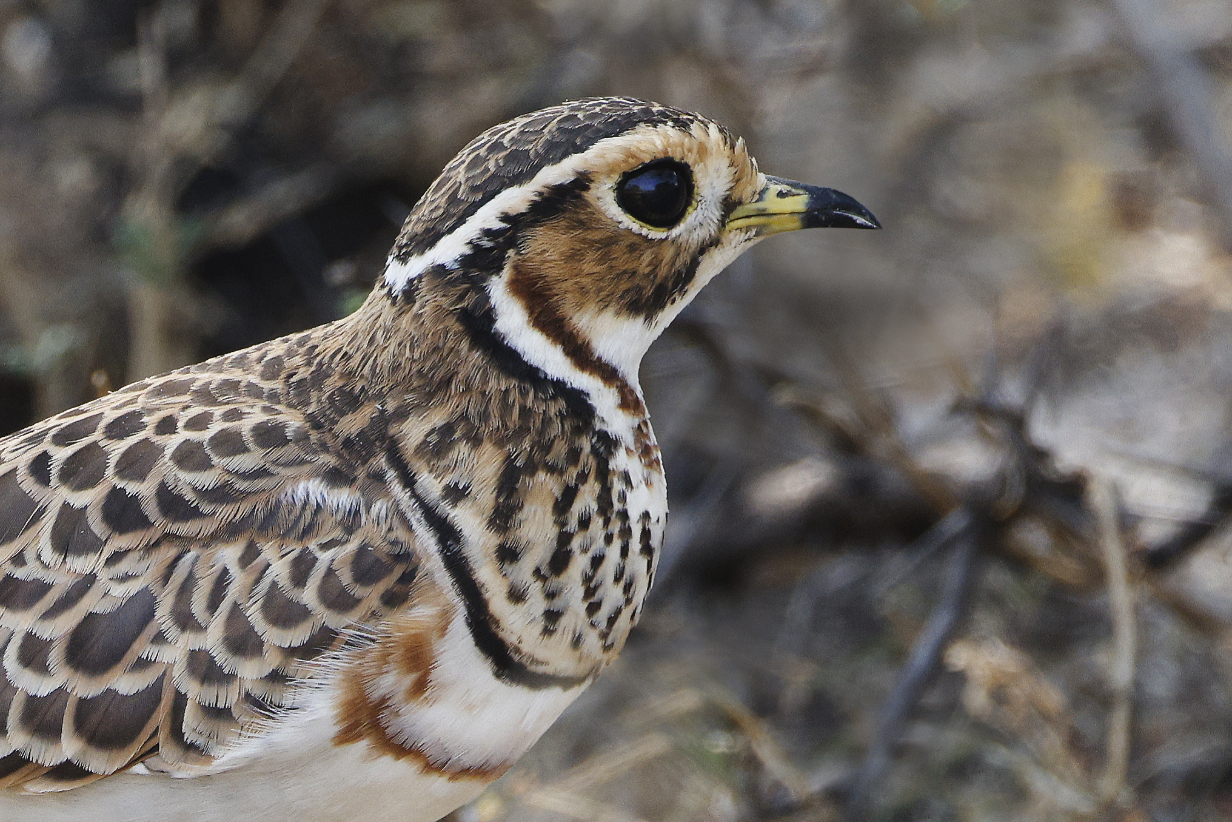
Three-banded courser (This is my life bird -- wonderfully elegant!)
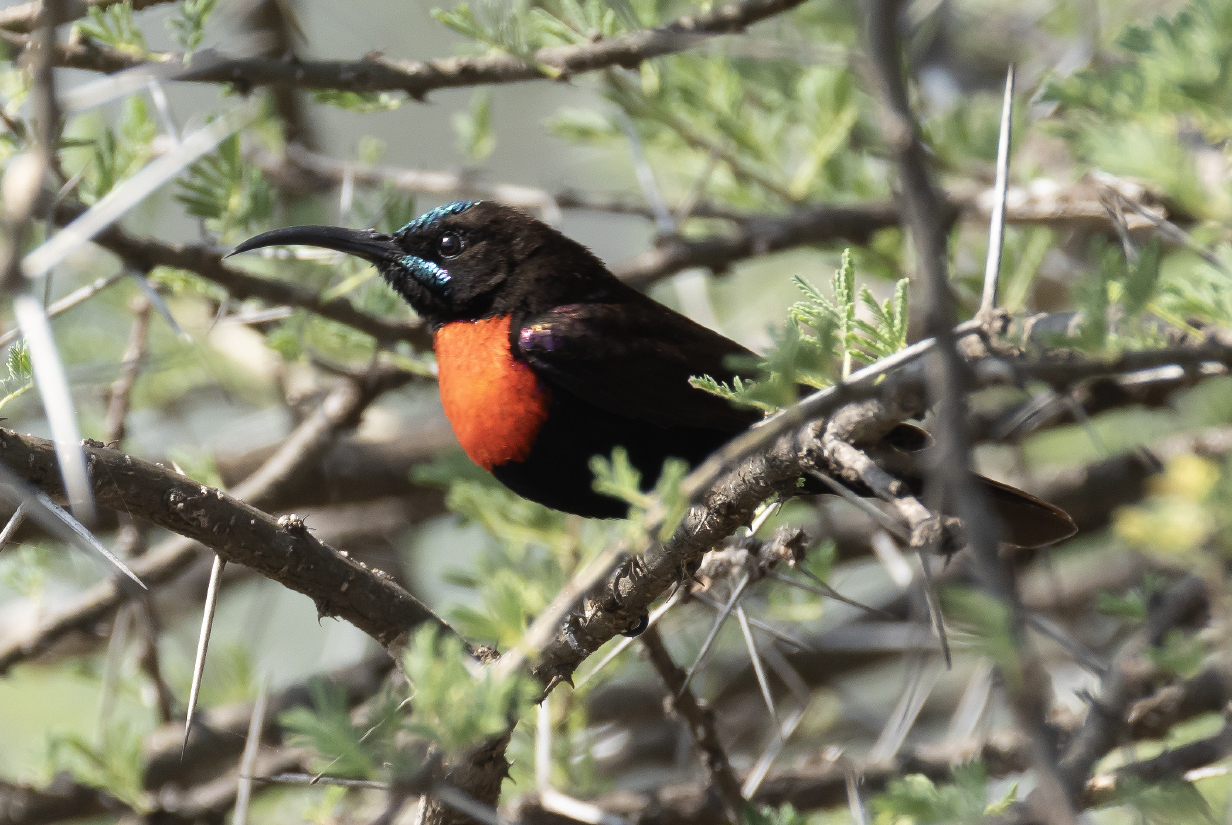
Hunter's sunbird (This is my life bird. The purple shoulder patch is diagnostic.)
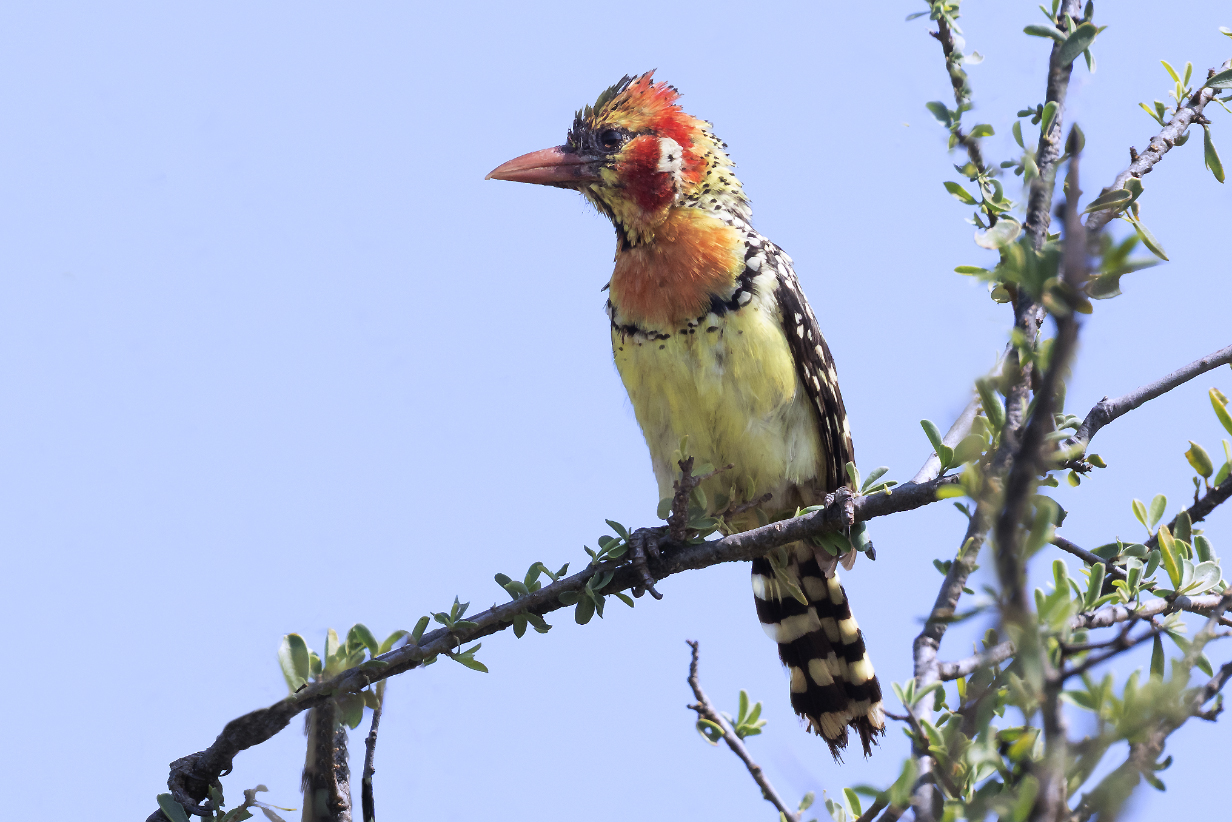
Red and yellow barbet (This is my life bird.)
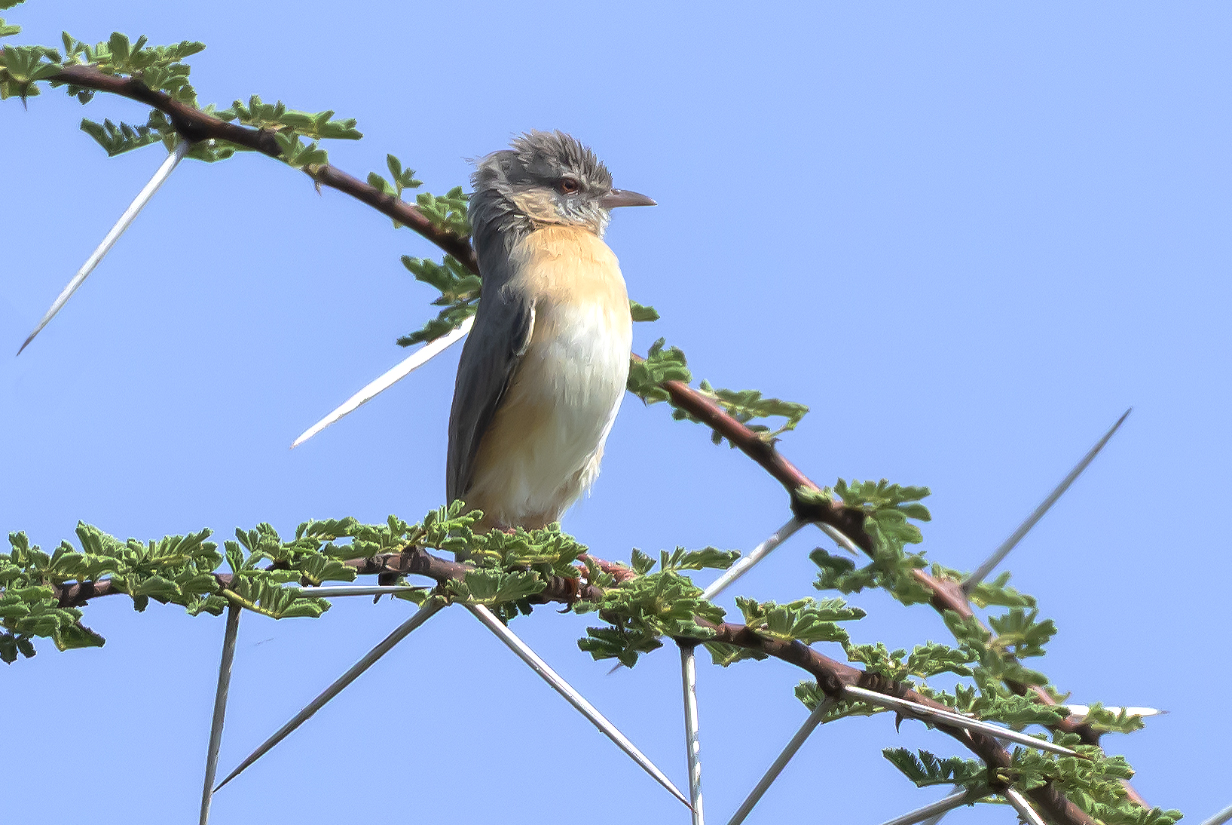
Northern crombec (This is my life bird.)
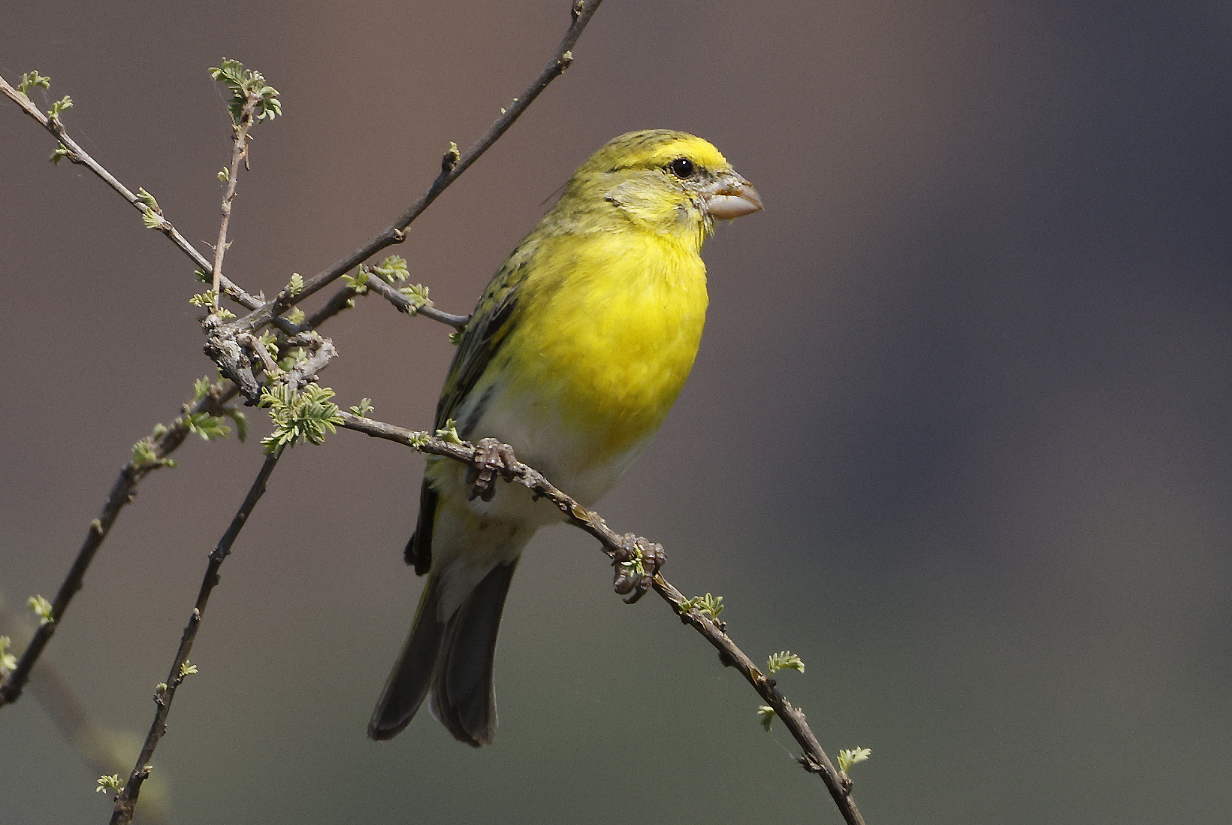
White-bellied canary (This is my life bird.)
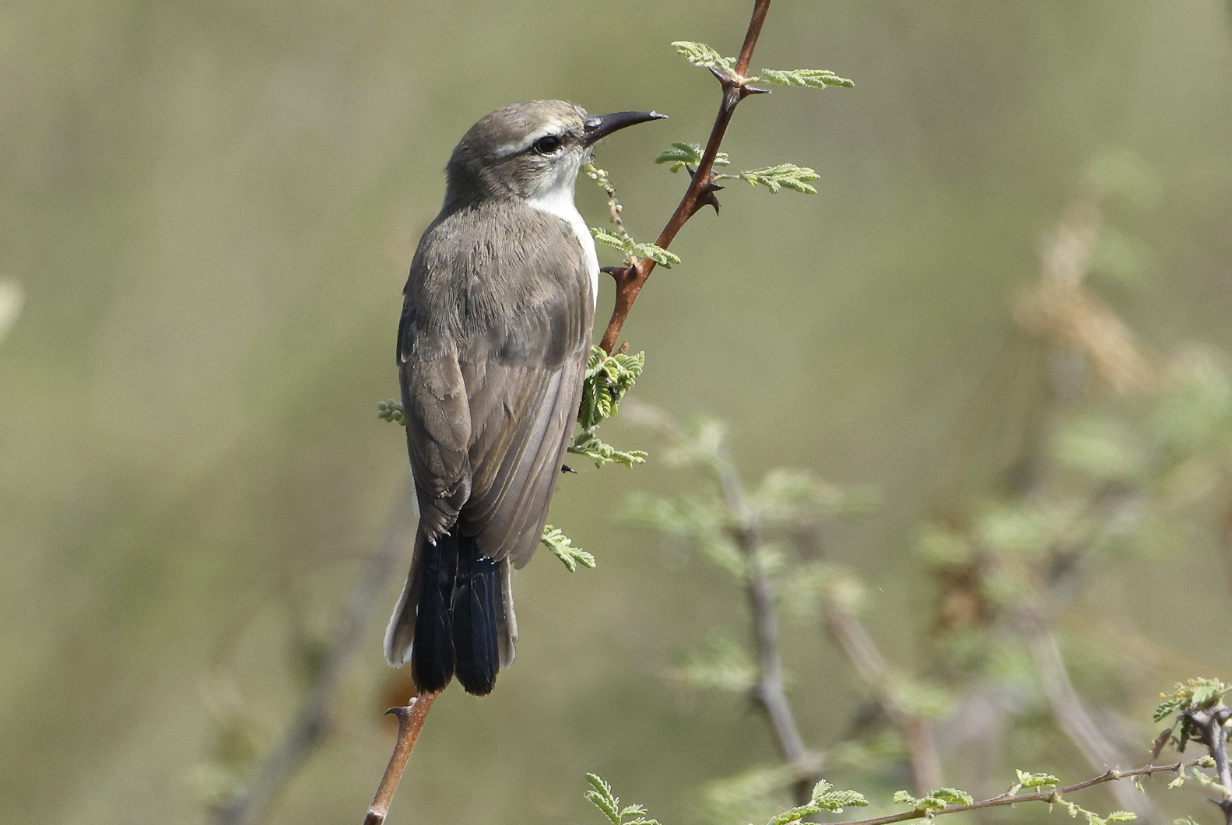
Eastern violet-backed sunbird (This female is my life bird.)
At 4 PM, we began an afternoon outing, with several stops and a short hike up a hill to get roosting Grayish eagle-owl. A nice thing about birding a new habitat -- here: more northern Kenya in very dry country -- is that an unusually large fraction of the birds that we saw were new. The first new bird of the afternoon was White-bellied go-away-bird. I saw it well but unfortunately got pictures only from behind. They are not worth posting.
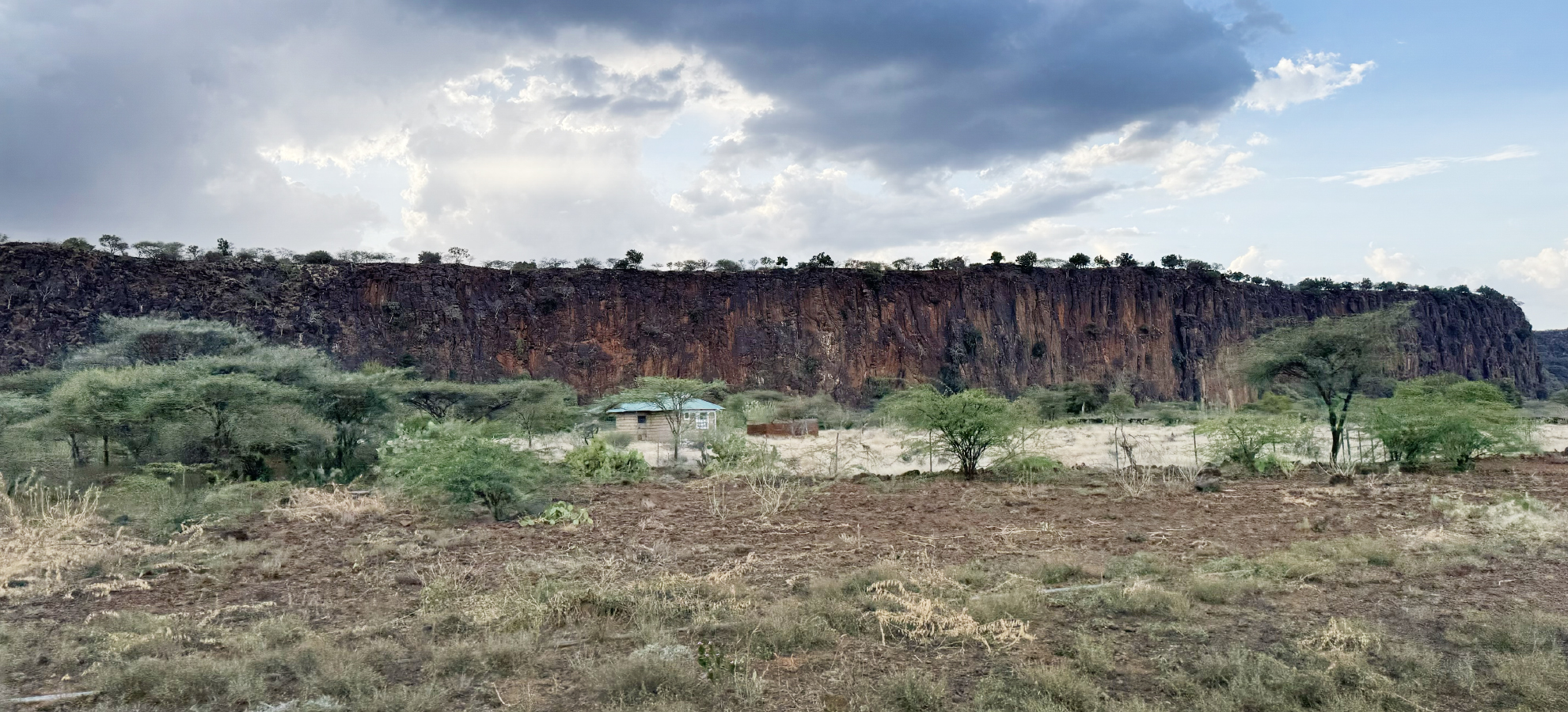
Panorama of the region of cliffs where we birded during the afternoon
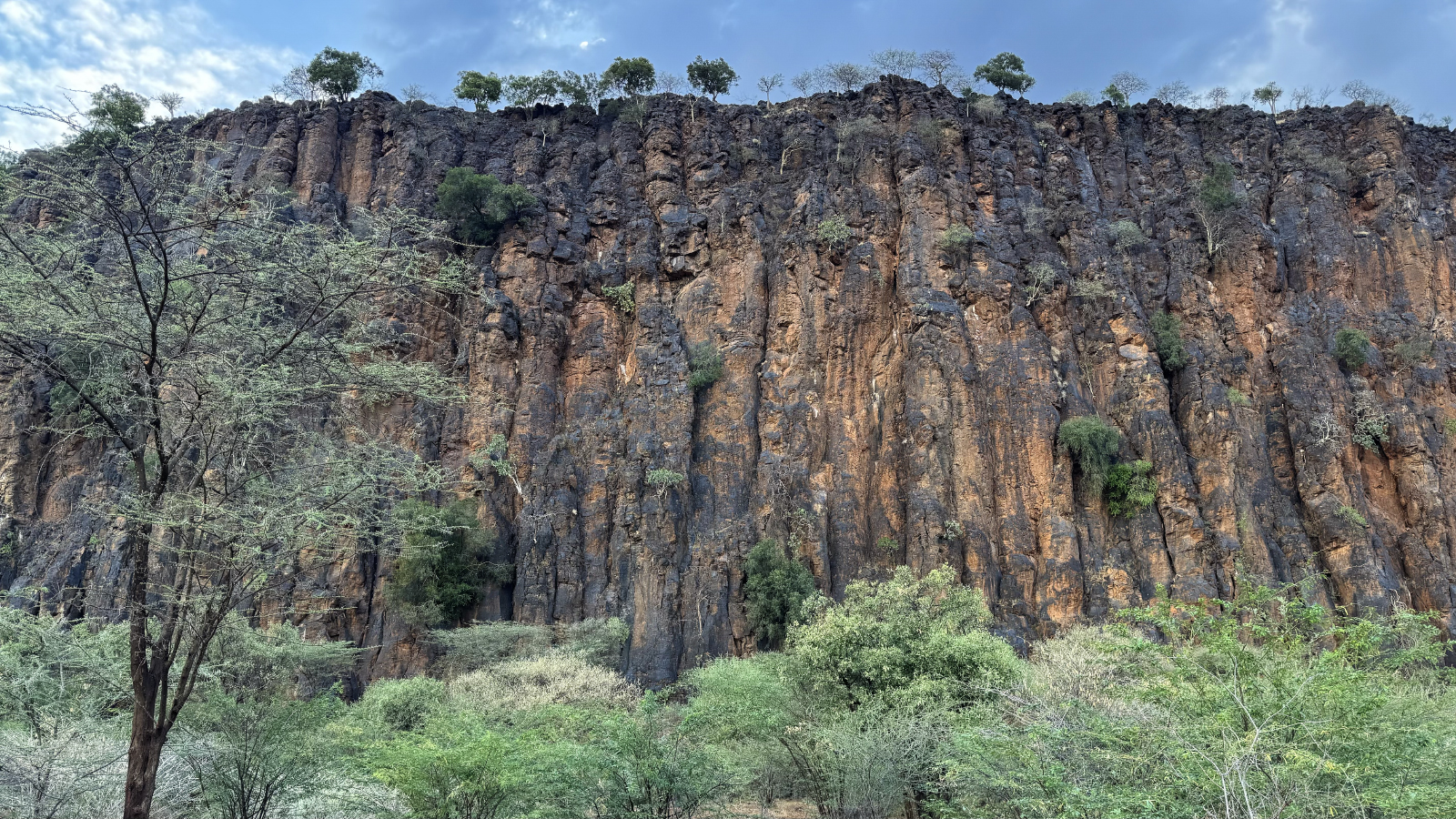
Cliffs in more detail
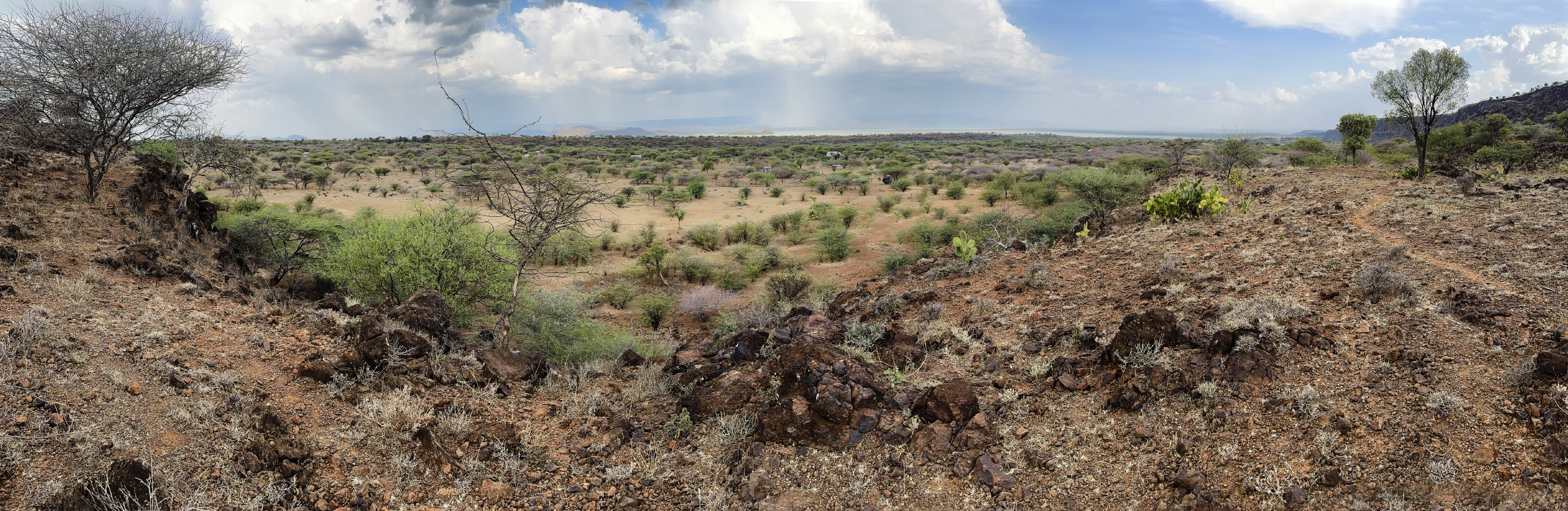
Panorama of the very dry and thorny habitat between Lake Baringo in the distance and the cliffs behind me. This picture was taken part way up the trail -- visible at right -- to the view point for the Grayish eagle-owl roost, below. Scroll right to see the complete panorama.
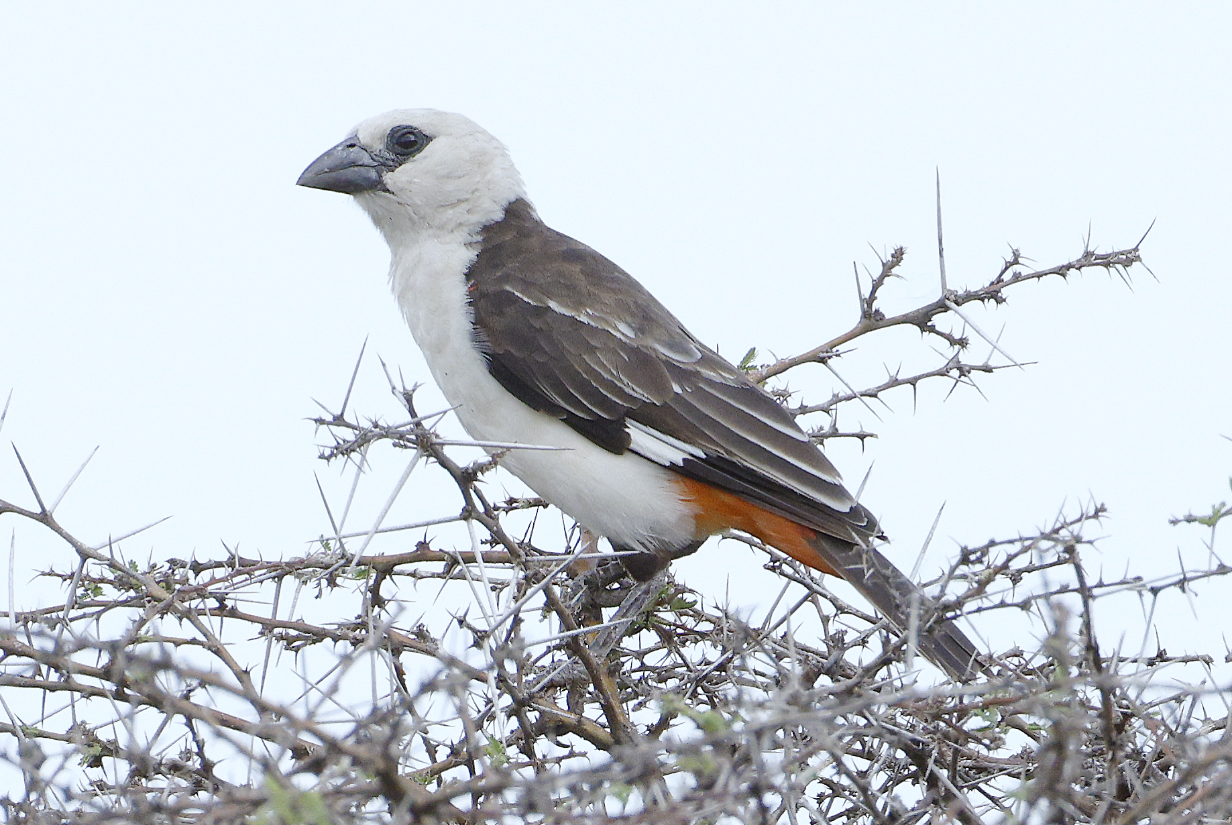
White-headed buffalo-weaver (This is my life bird.)
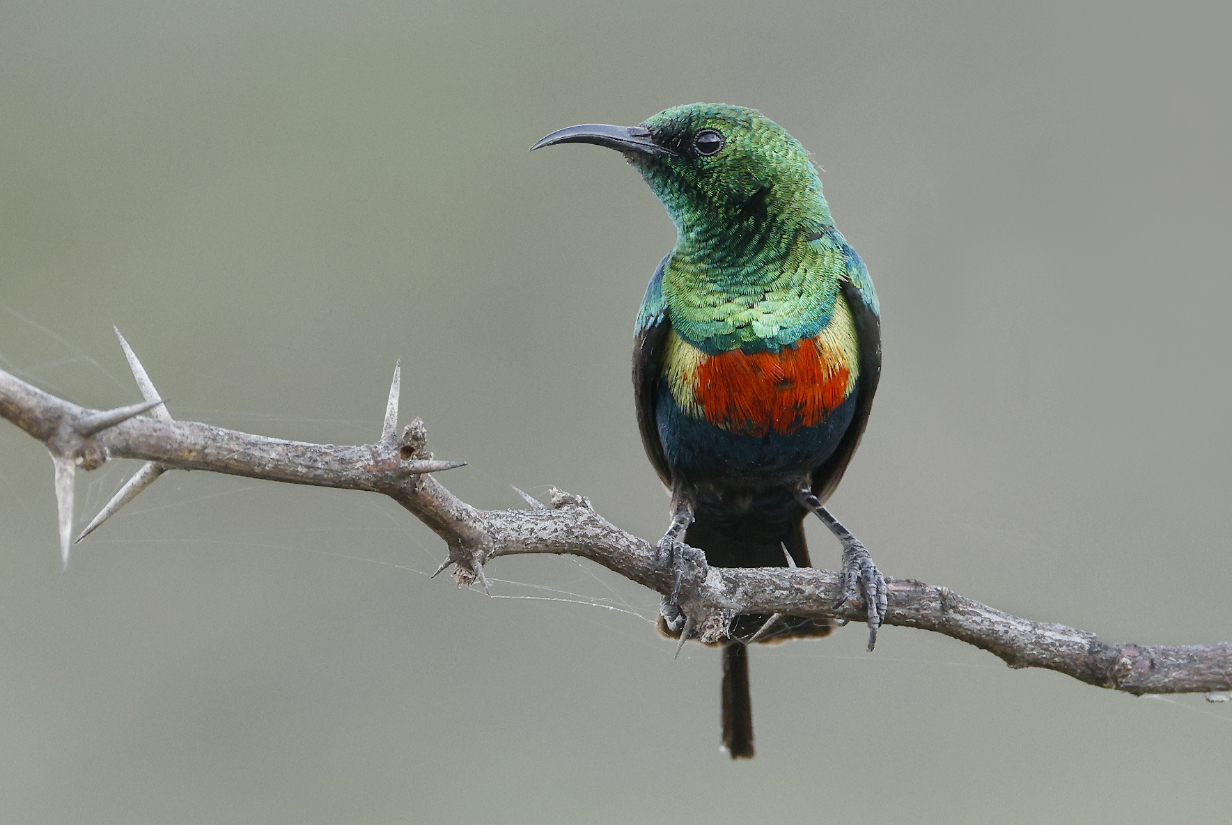
Beautiful sunbird (I can't resist adding one more picture. Also, it is good to see a new bird repeatedly and this well. This gives you the feeling that you "own" the sighting of a new species, much more so than one fleeting look that you are confident is good enough ... but just barely.)
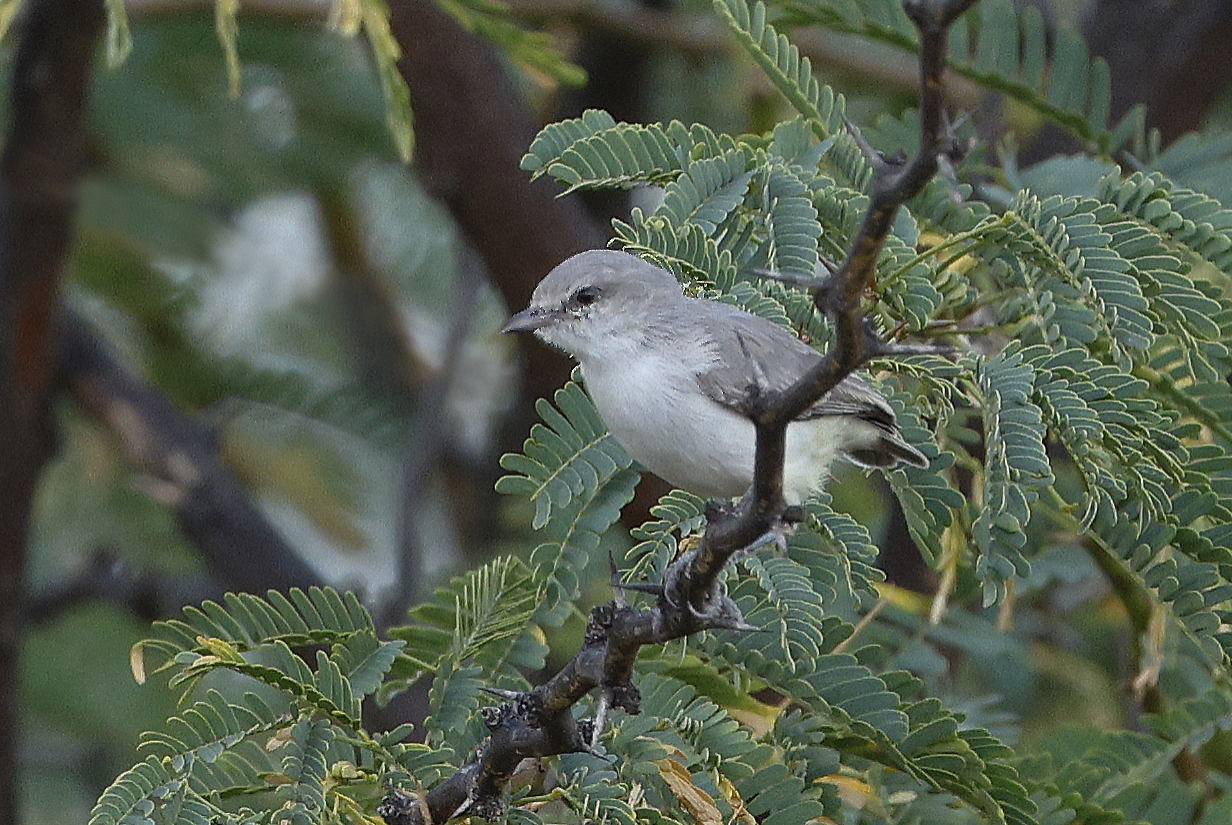
Yellow-bellied eremomela
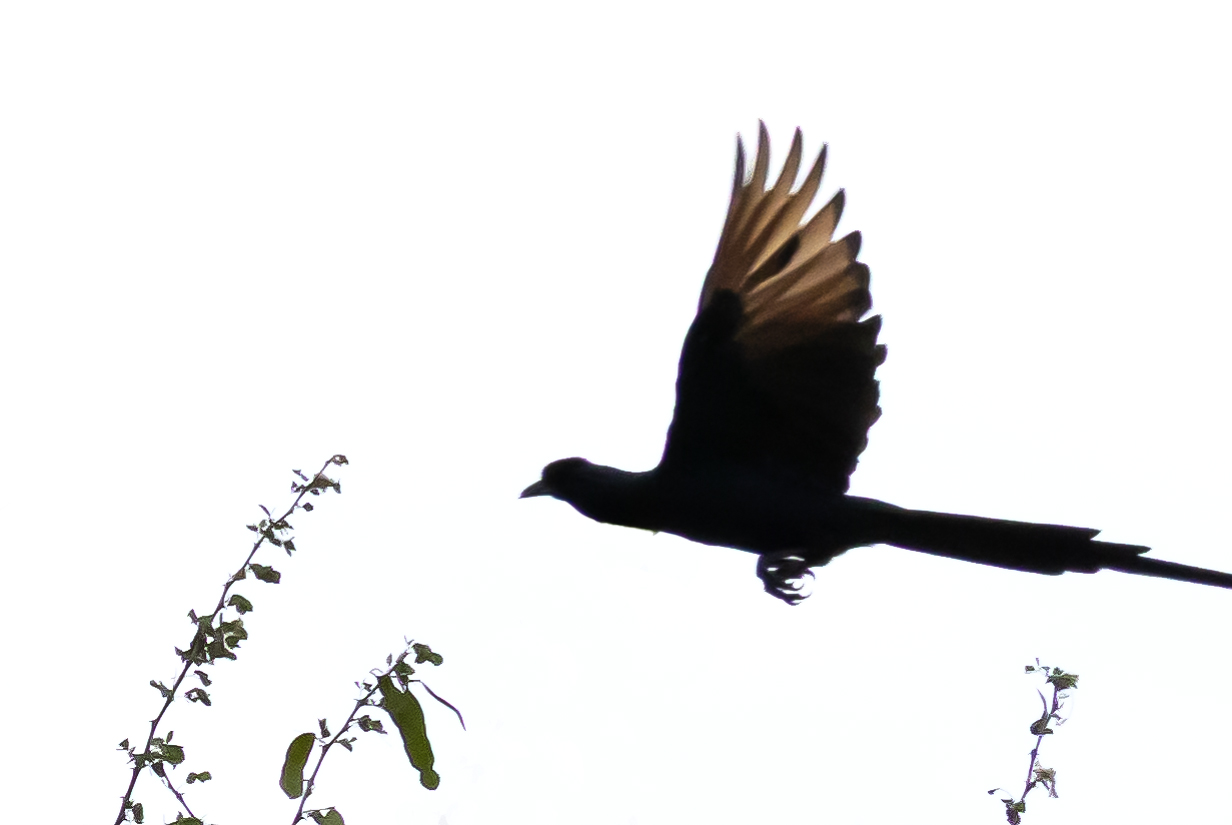
Bristle-crowned starling (This is my life bird, seen only in a silhouetted flyover. Still, the reddish-brown, black-tipped color in the primaries is clear, as is the very long tail.)
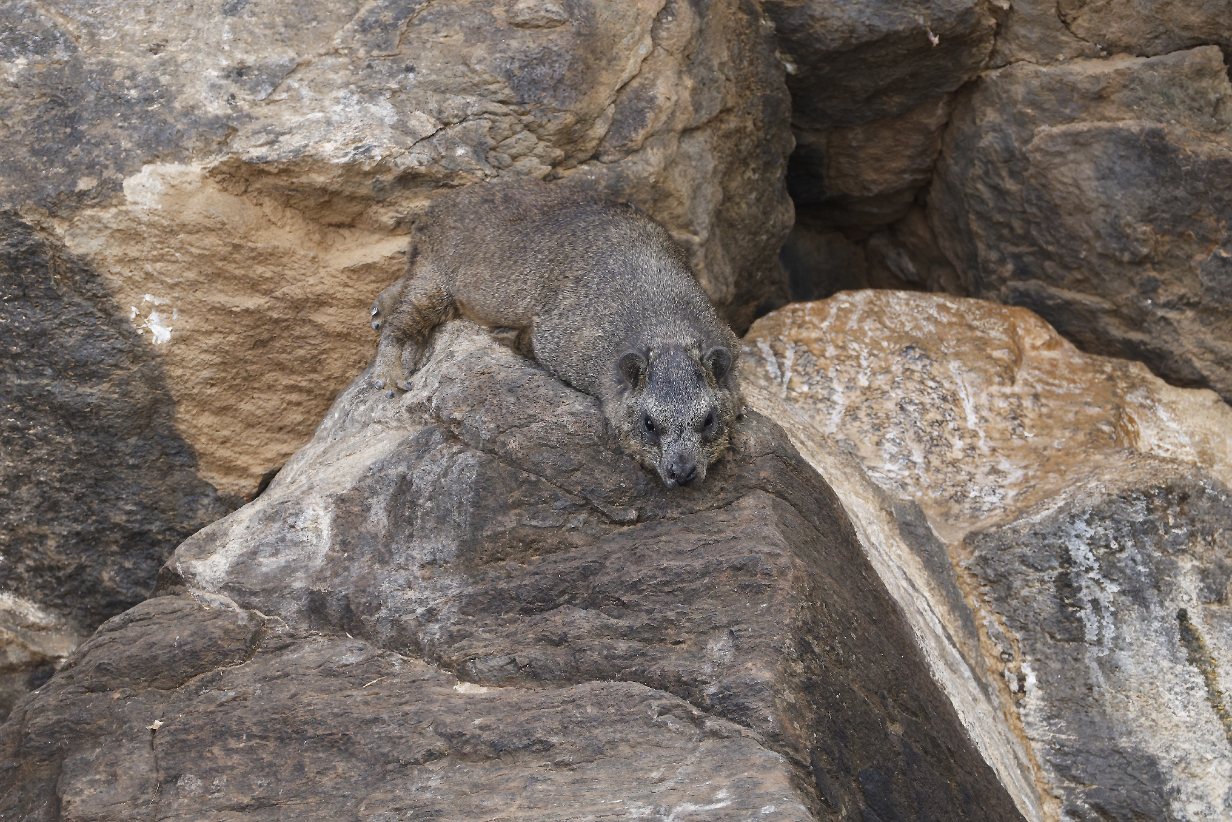
Rock hyrax finds an ideal home in the cliffs.
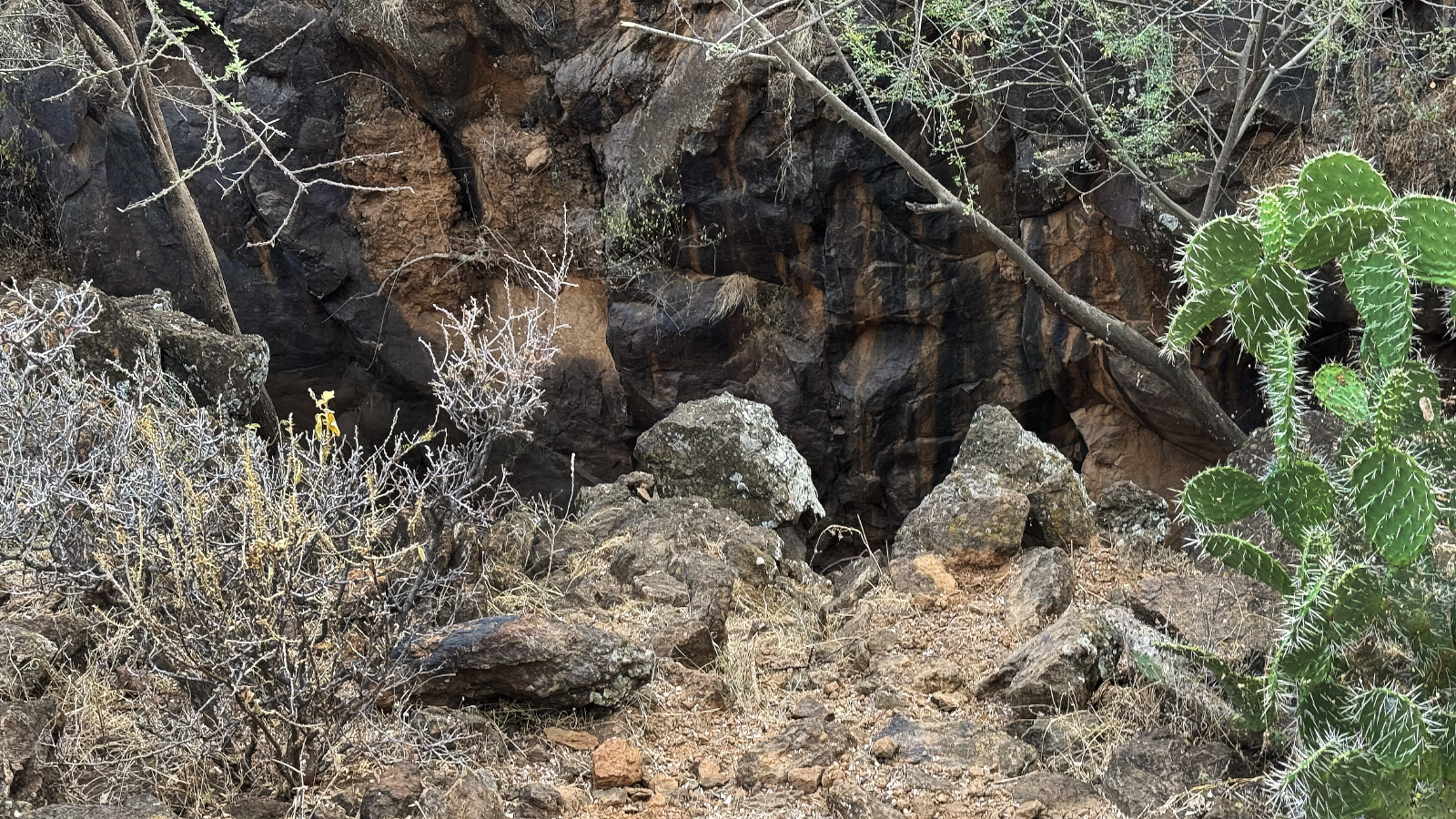
Approaching the roost of Grayish eagle-owl: The bird is well protected by the formidable gulch in the foreground. Just left of center and near the top of this picture is a prominent light-brown oval boulder lodged in the cliff. The bird is just above the boulder.
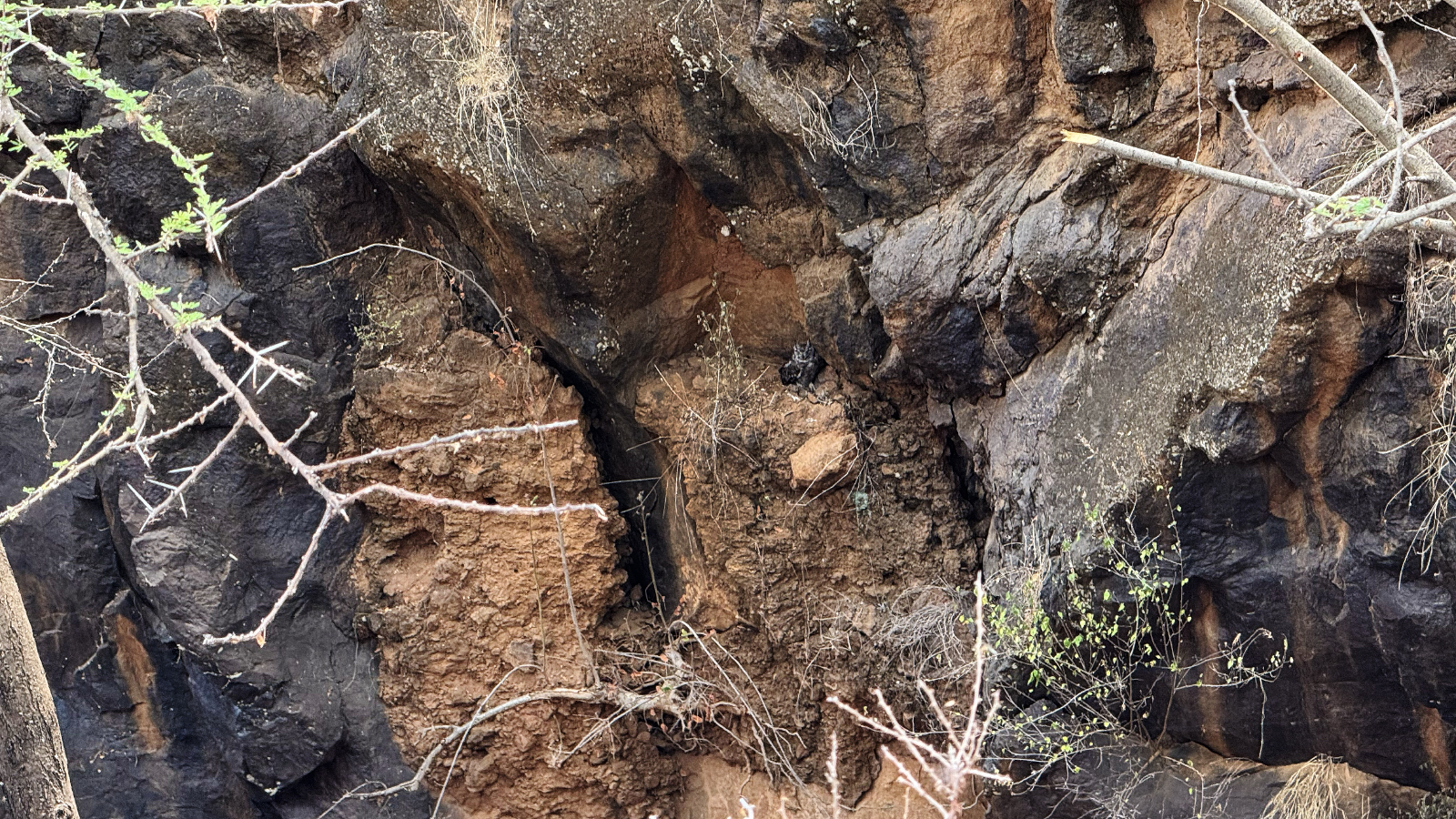
At this magnification, the boulder and bird are near the center. Compare the picture below.
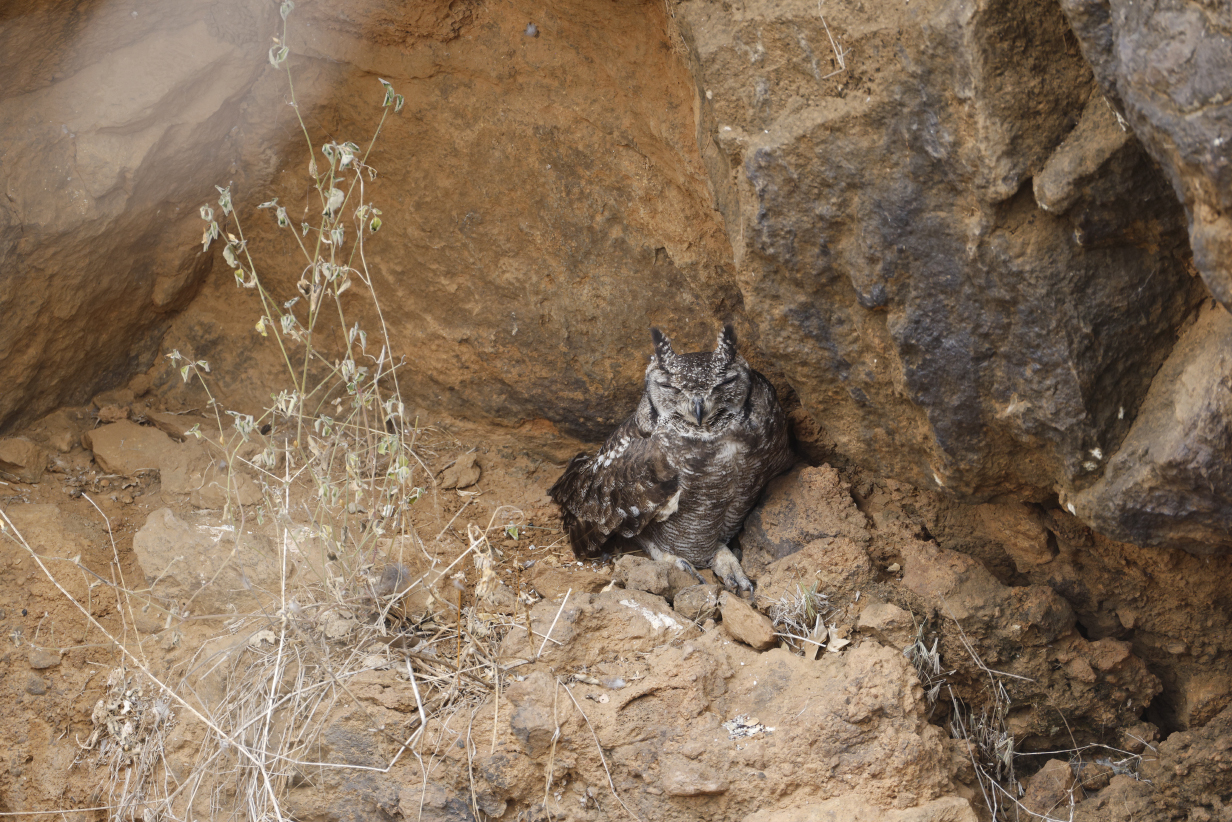
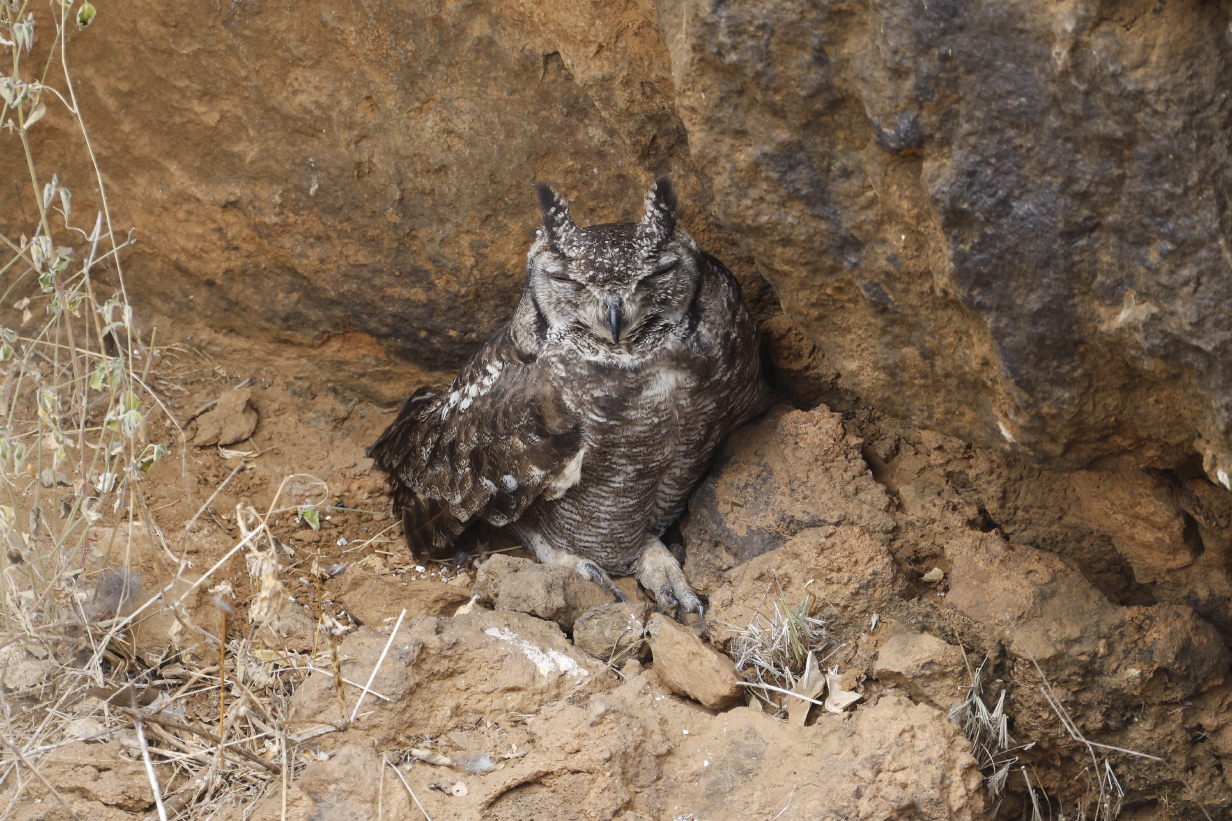
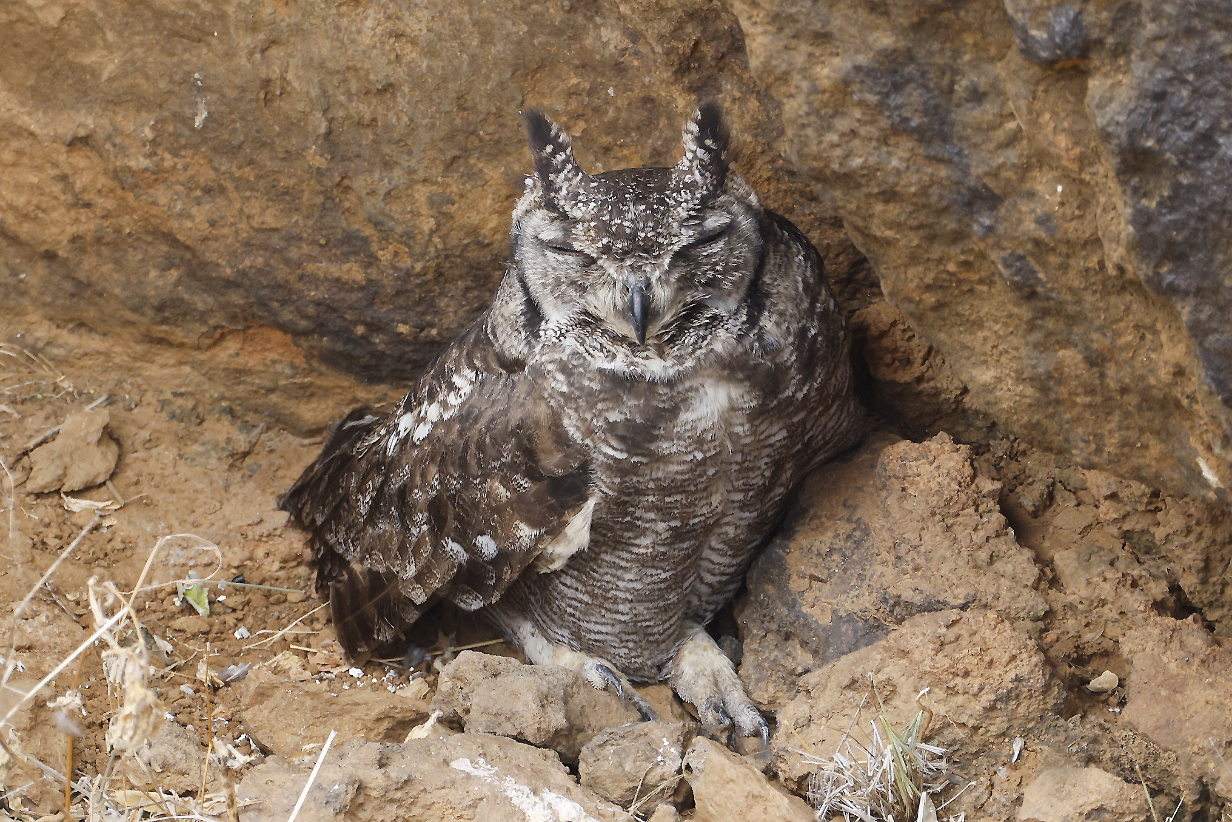
Grayish eagle-owl (also in The Gambia) (It has a wonderfully safe home, here, on the cliffs.)
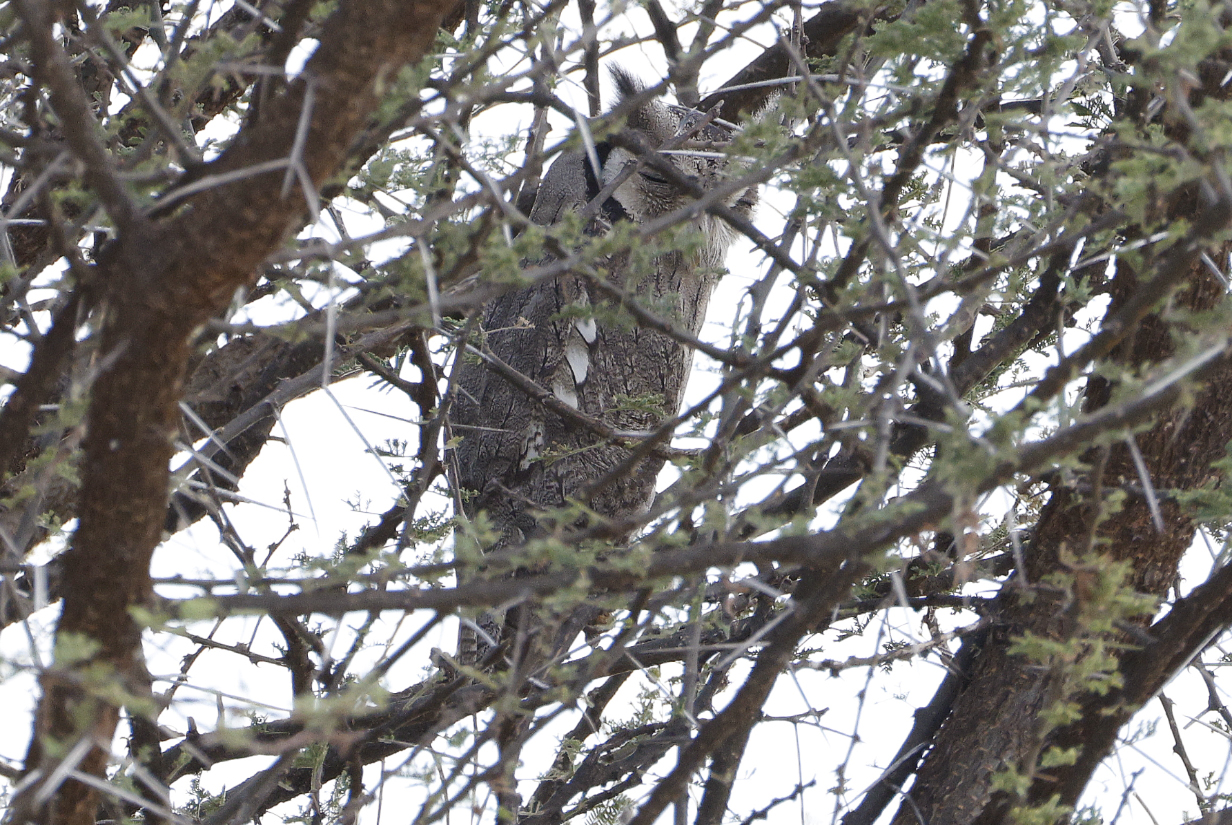
Northern white-faced owl (We got only bad views of this bird, although the whiskers and ear tufts are unmistakeable. Look closely and you can see the eyes, squinted almost shut. I saw the bird much better in The Gambia.)
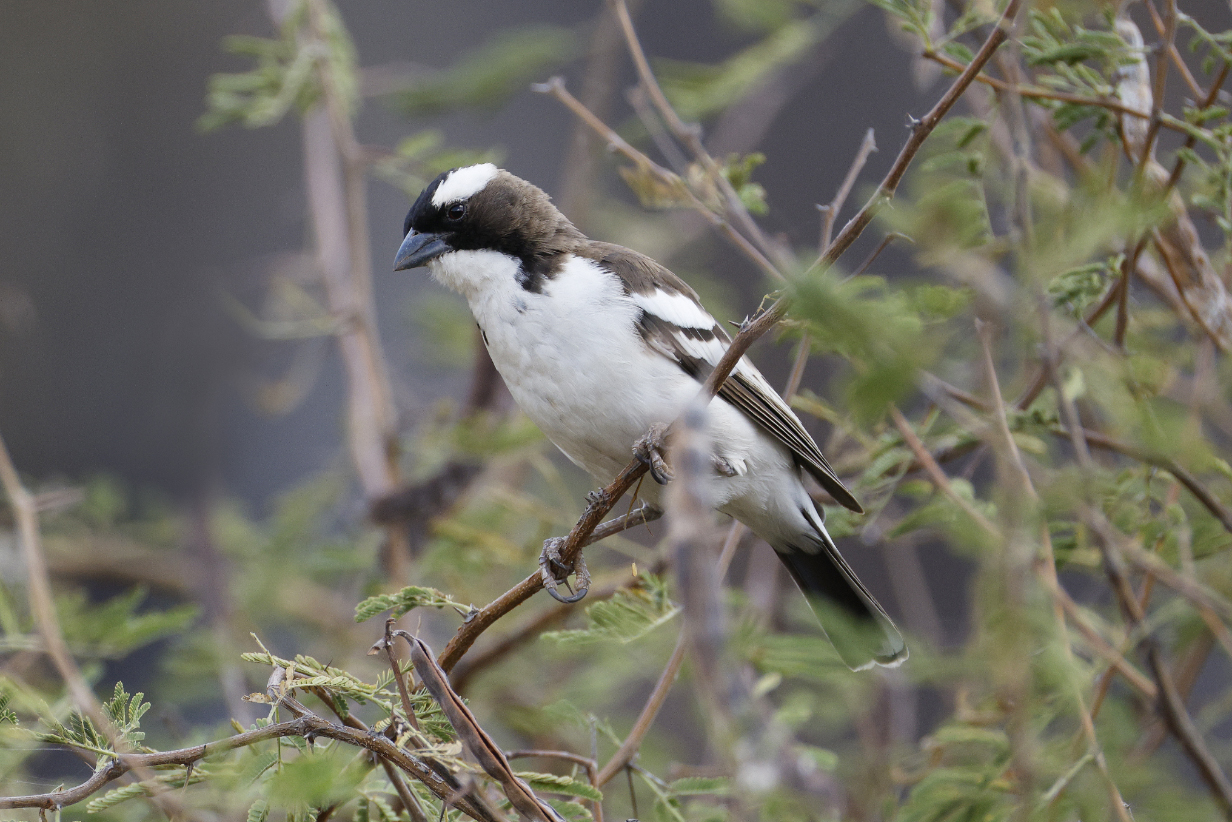
White-browed sparrow-weaver, now an old friend
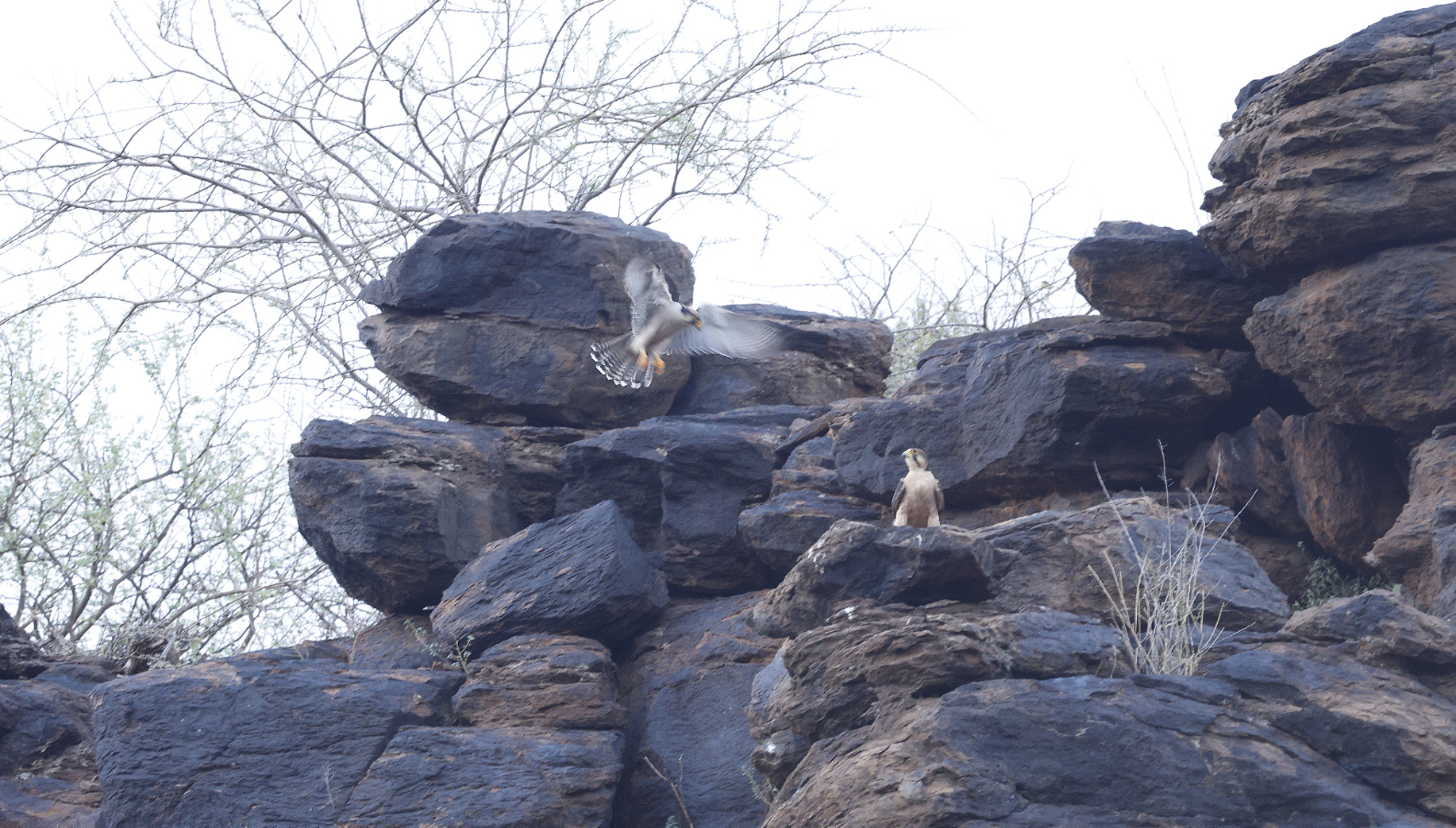
Lanner falcon couple, high on the cliffs
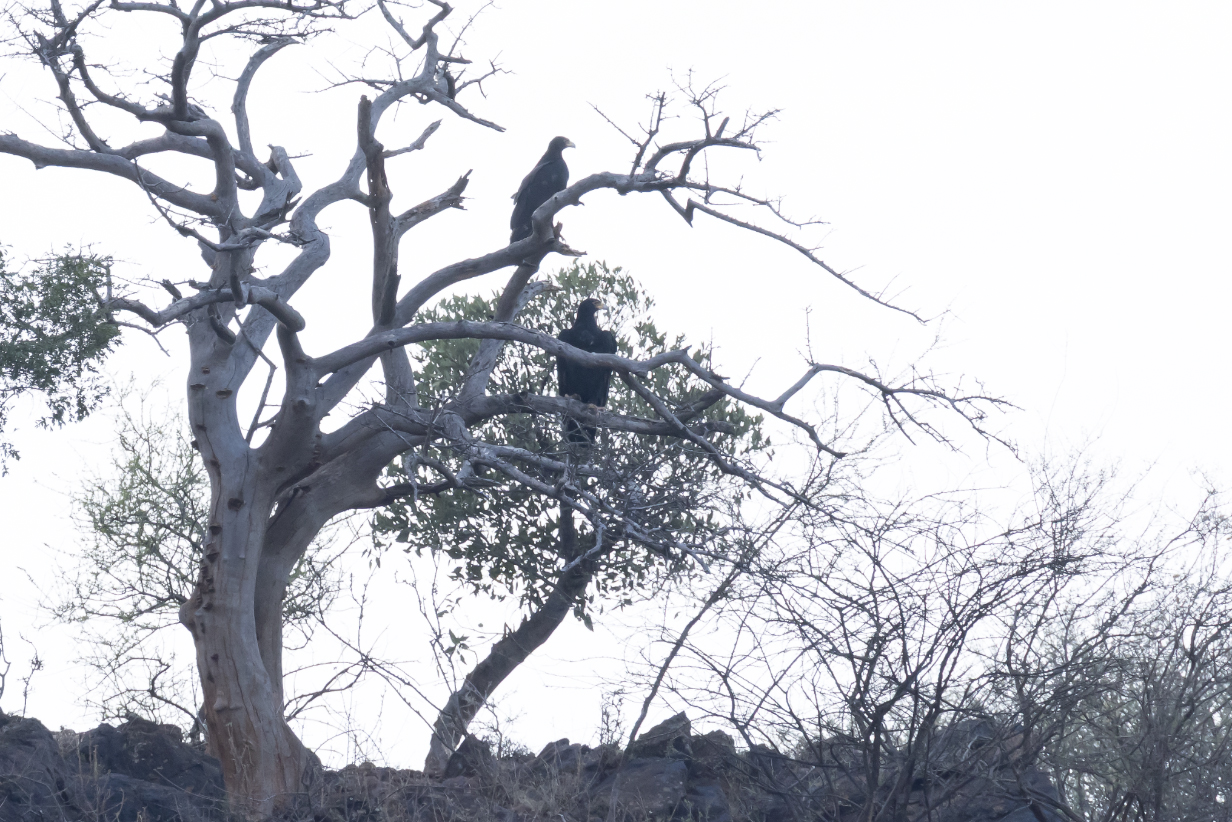
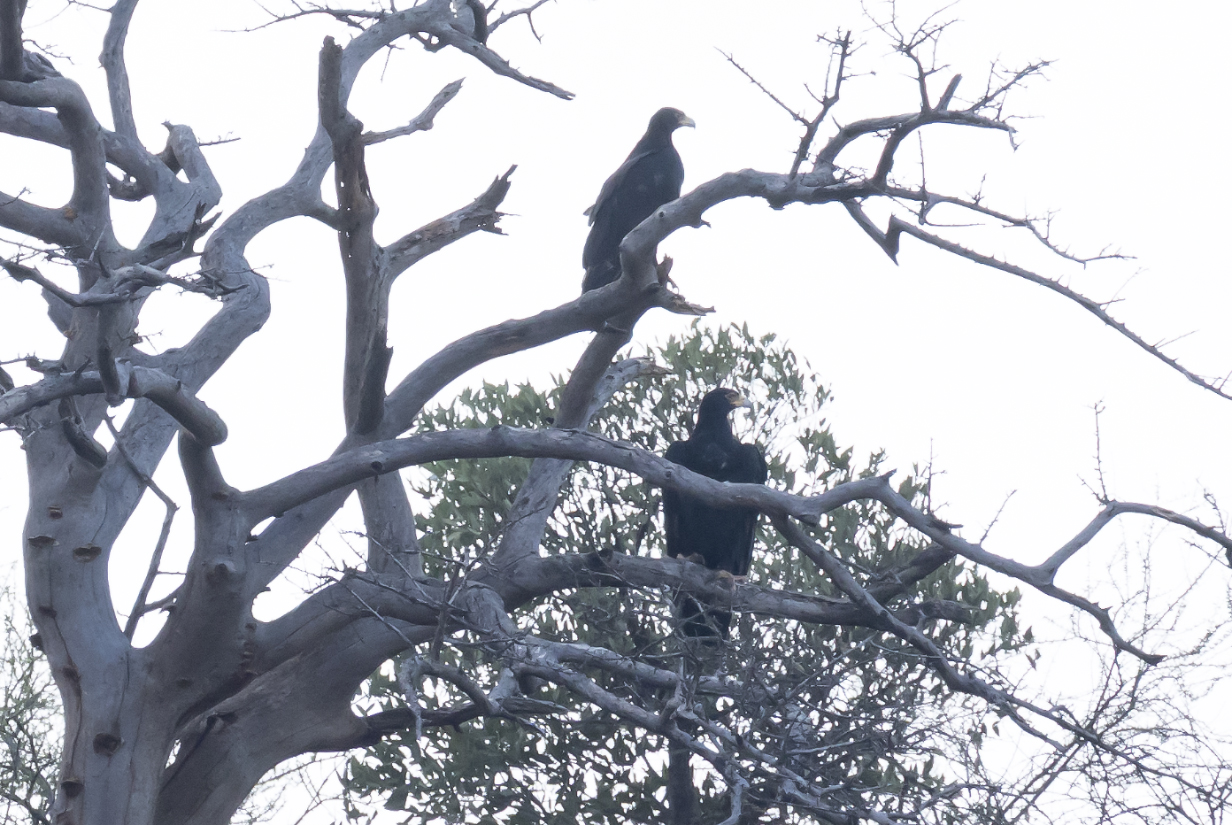
Verreaux's eagles, far away
August 18: Lake Baringo to Aberdare National Park
This morning, we left early to drive to Aberdare National Park, birding on the way.
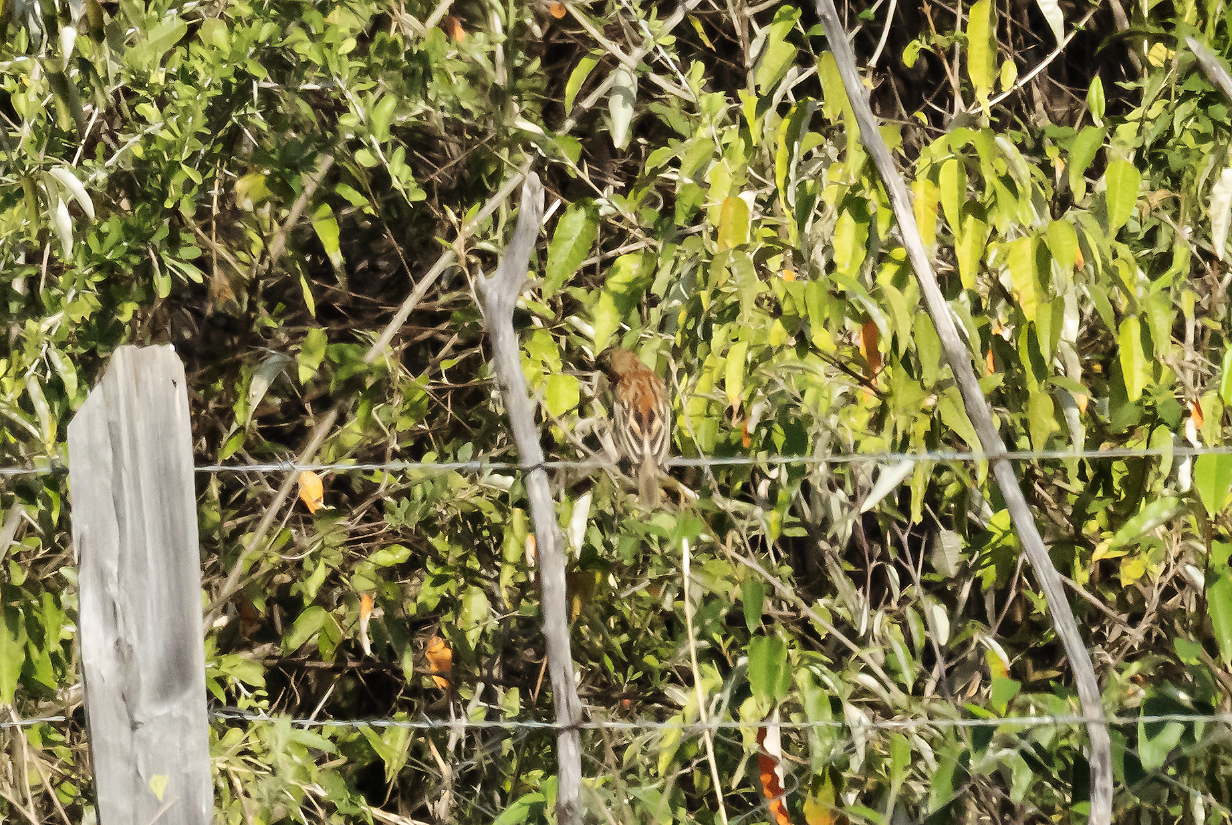
Chestnut weaver in eclipse plumage -- still substantially chestnut colored on the nape and back but very stripy. I got only this very bad picture of my life bird.
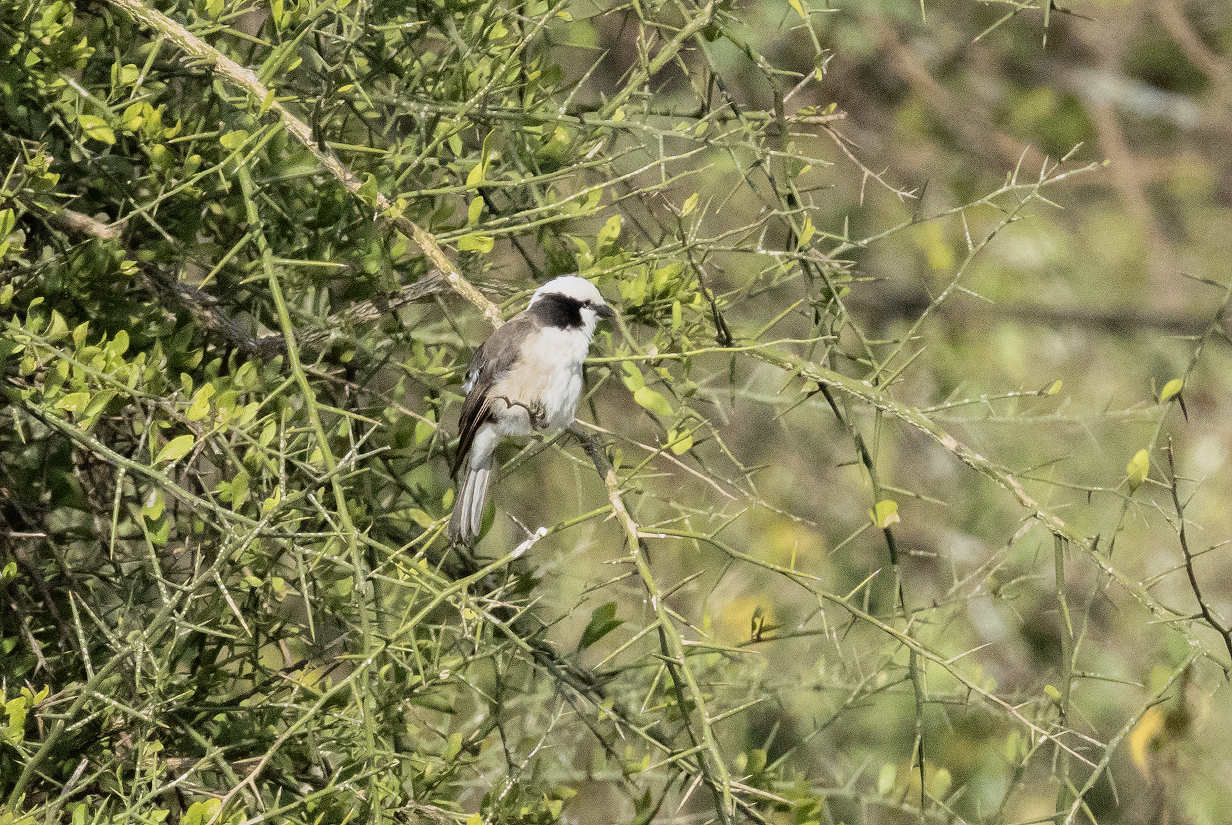
White-rumped shrike (This is my life bird. Clements 2025 calls it White-rumped shrike, Eurocephalus ruppelli. When you ask ebird about White-rumped shrike, it gives the same latin name but calls the bird Northern white-crowned shrike. In ebird, Northern and Southern white-crowned shrike look very similar, and the latter is Eurocephalus anguitimens. That is just called White-crowned shrike in Clements 2025. The two species' ranges do not overlap. It is possible that a name change is brewing. In any case, I follow Clements and take White-rumped shrike as a new bird.)
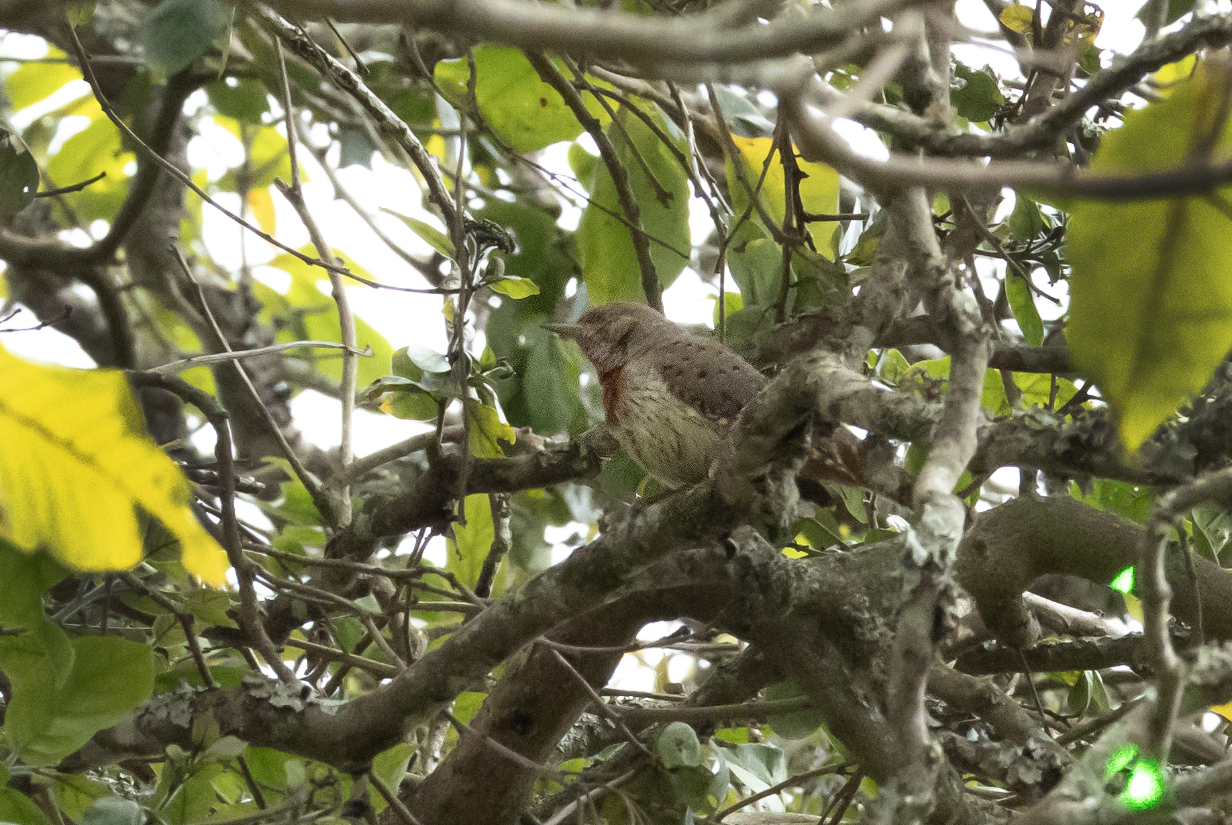
Red-throated wryneck (It was hard to find this bird. I took a picture in the direction identified by our guide via the green laser ... and I got the bird. Fortunately, I have no difficult decision to make, because I have seen the bird in South Africa. Also, it turned out that we saw it again -- and better -- on August 20th. Still, I am glad I got this not-very-good picture.)
August 19: Aberdare National Park
Hartlaub's turaco (This is my life bird. Two birds flew by when I was barely ready for them: these were my only looks.)
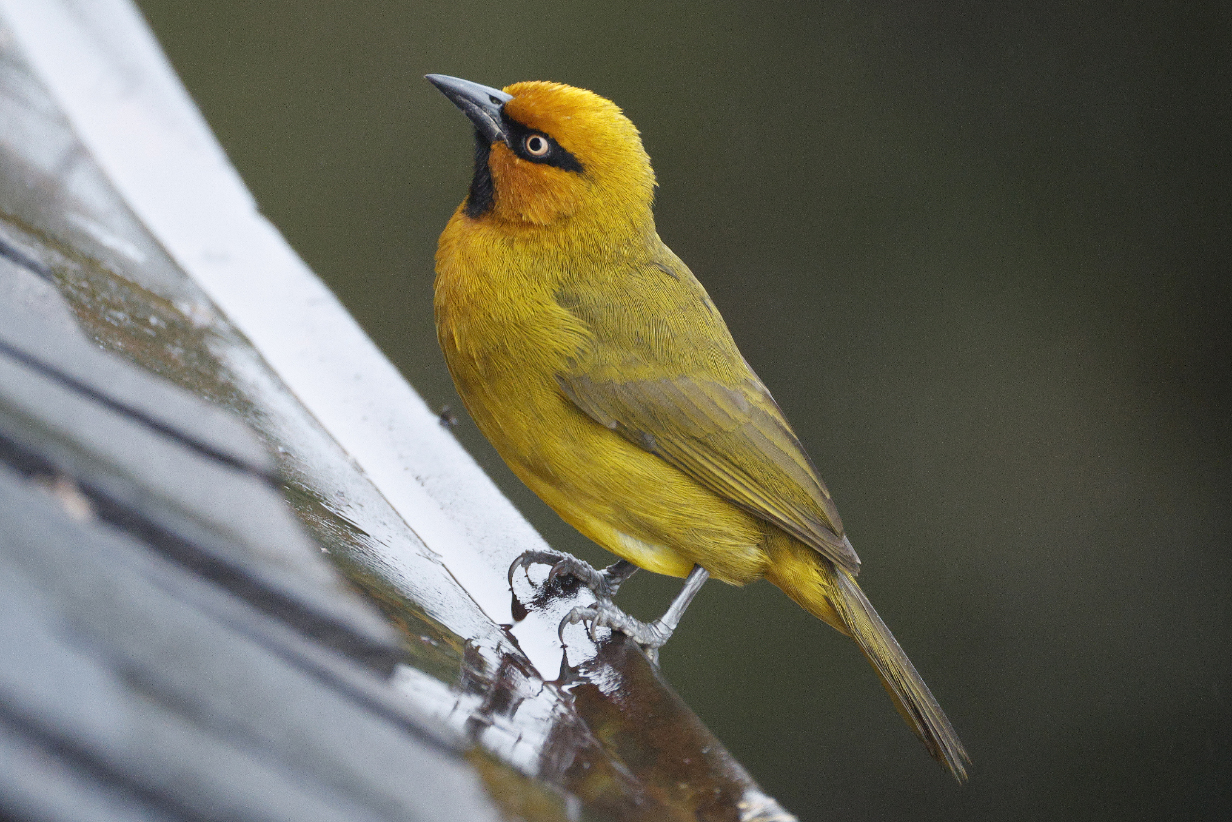
Spectacled weaver (This is my life bird.)
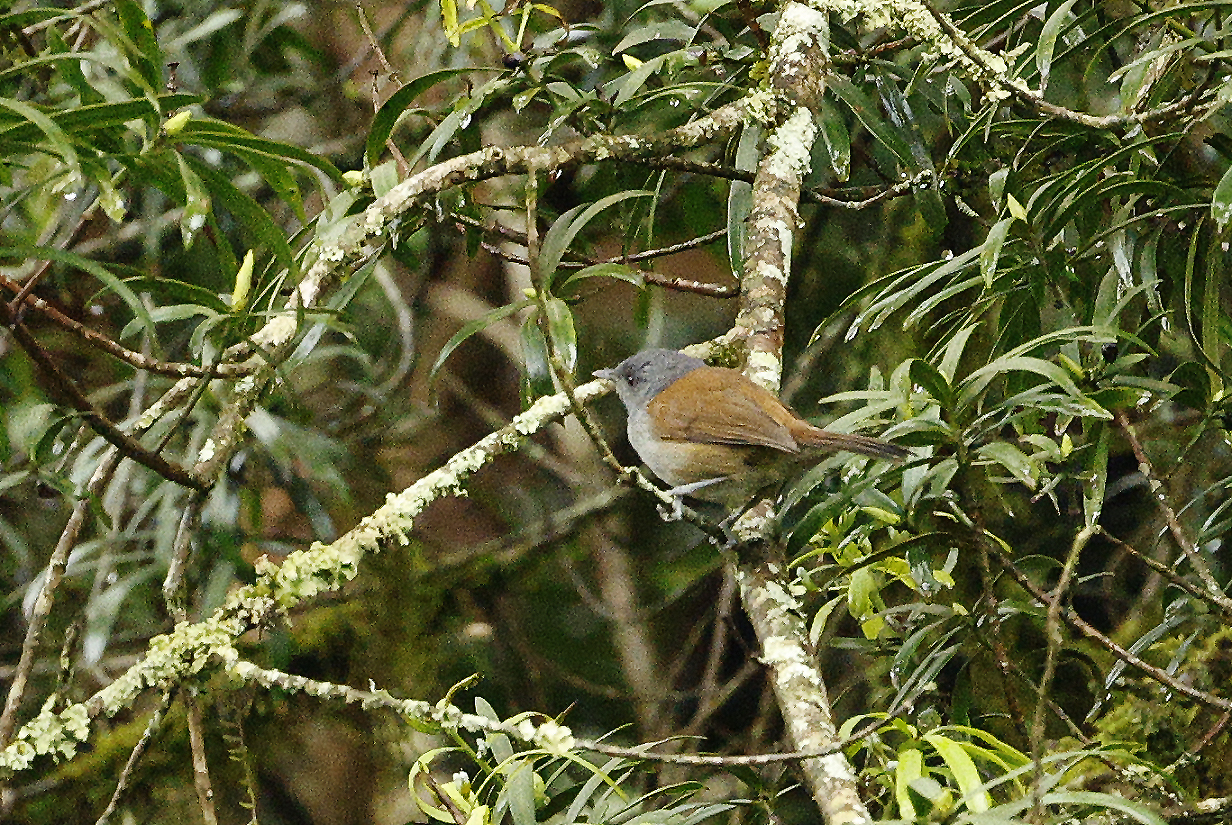
African hill babbler (Despite the name, this is a warbler, Sylvia abyssinica. It is typical of my tiny life birds seen only briefly and far away.)
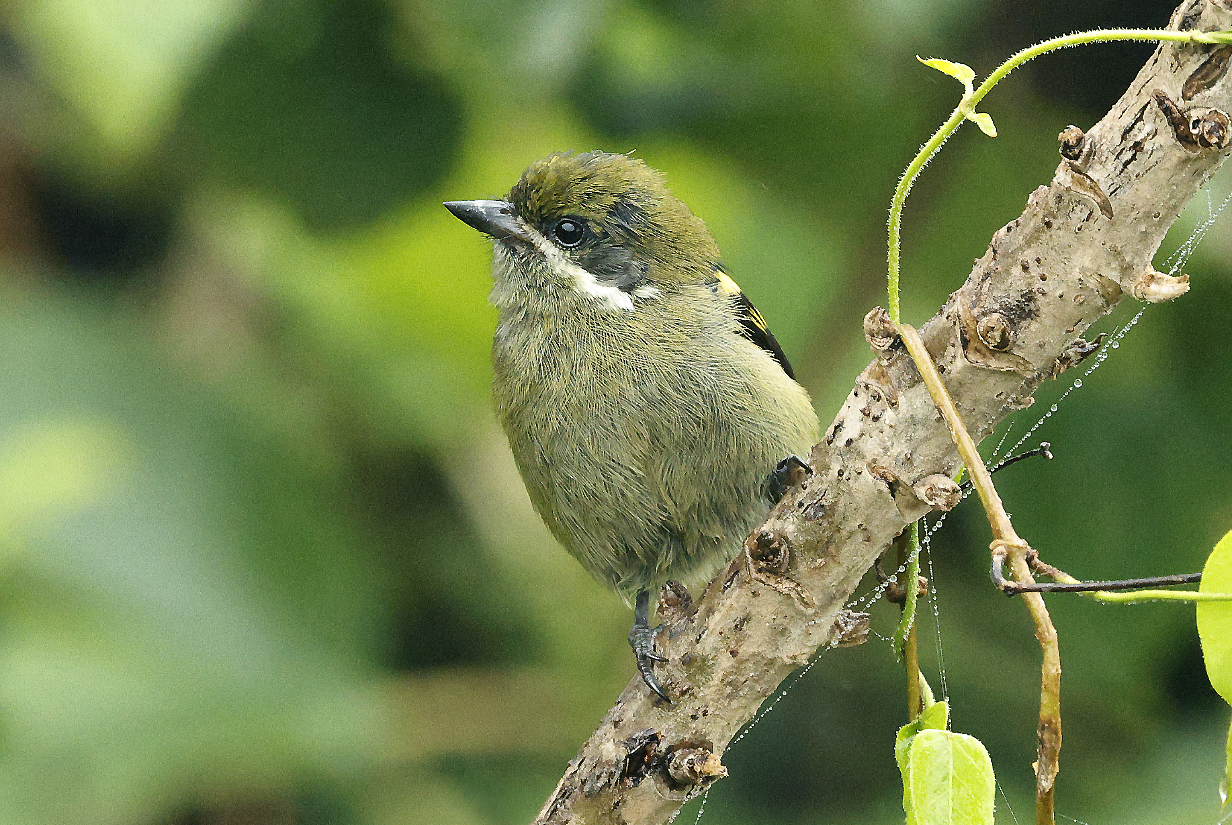
Moustached tinkerbird (This is my life bird.)
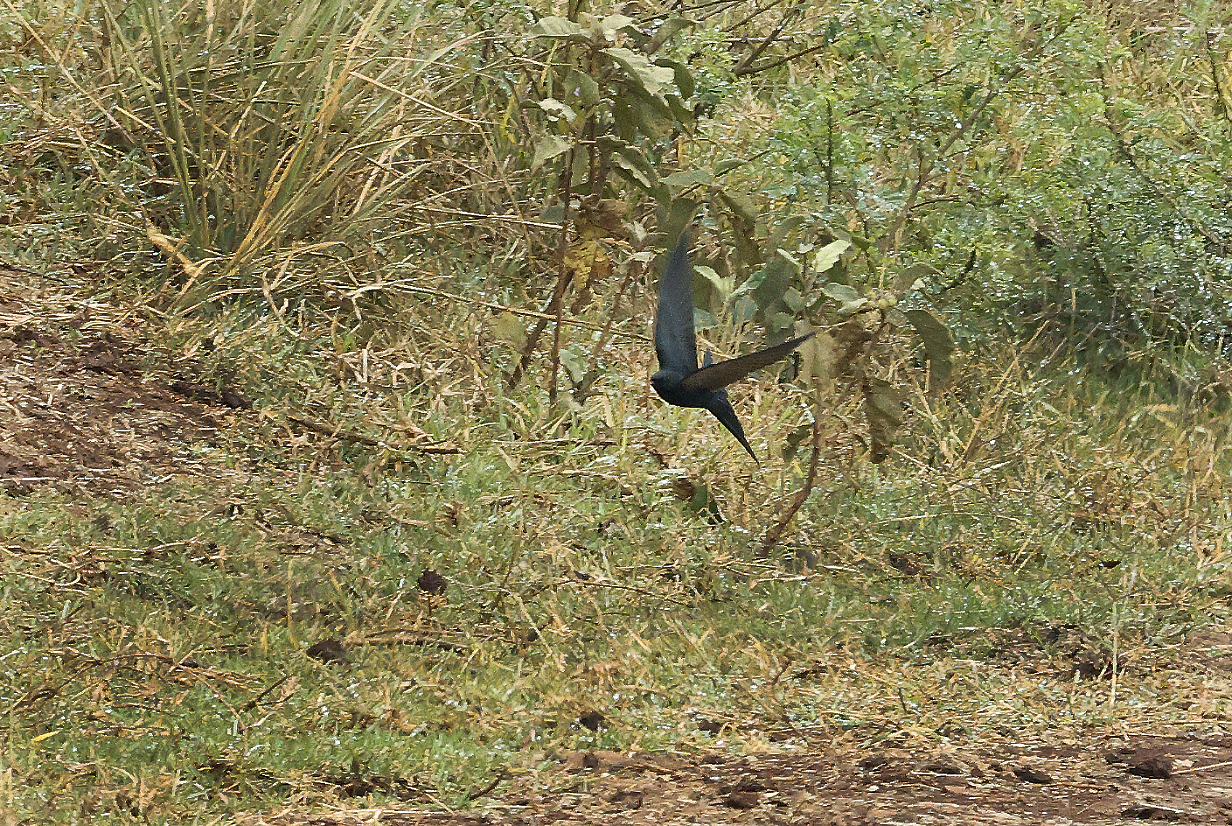
Black sawwing -- a mostly black swallow with long forked tail. I mostly get such birds only if the tour gives me time to photograph them. This bird was not new -- I'd seen it in South Africa. Not surprisingly, I did not remember that when I saw it here, two decades later.
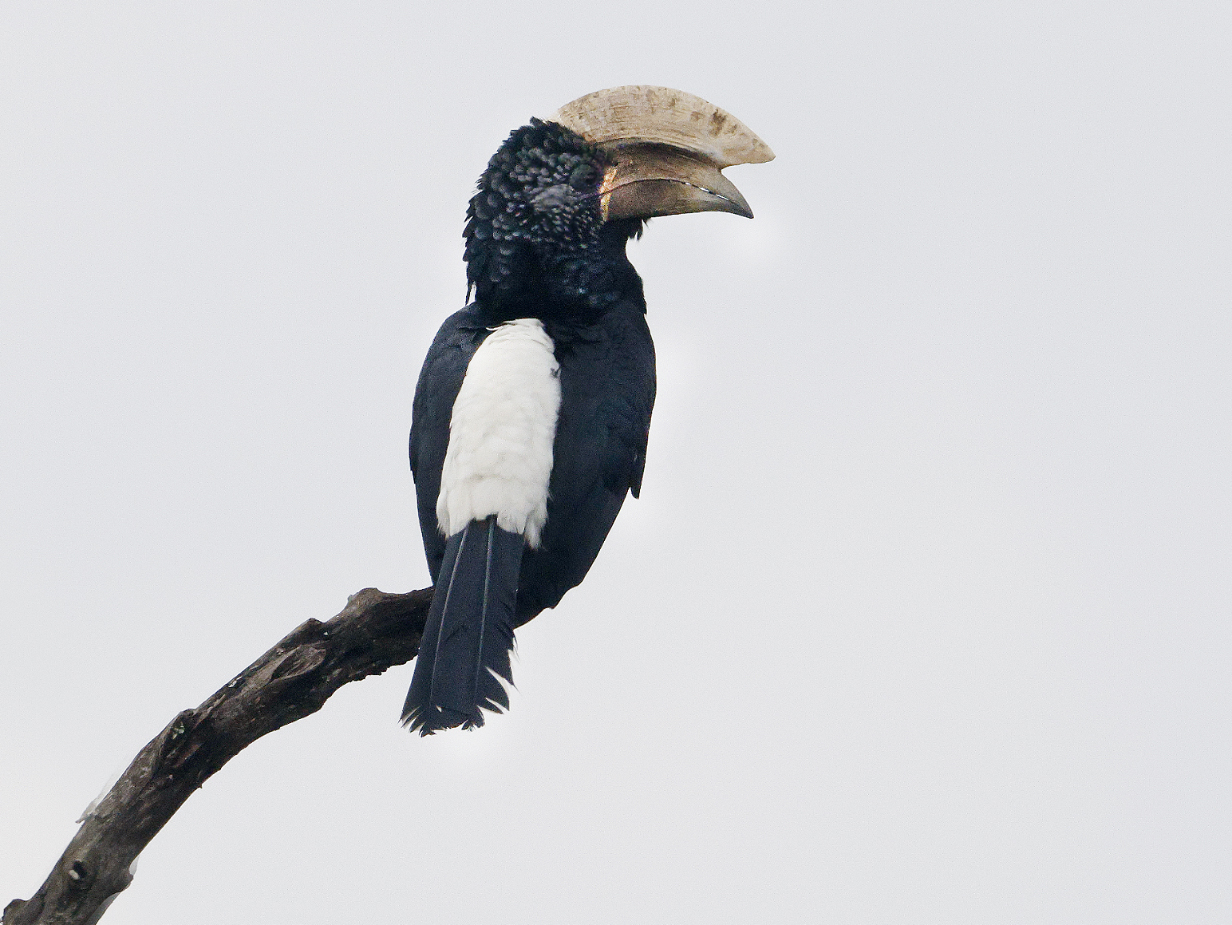
Silvery-cheeked hornbill (This is my life bird.)
August 20 - 22: Samburu: Buffalo Springs and Shaba National Reserves
Chestnut-bellied sandgrouse (This is my life bird. I have never seen a sandgrouse that was not beautiful, but this one has a special reason to be my top "trip bird". Many bird species have been introduced to Hawaii for various reasons -- in this case for hunters. Most are well establishd and "ebird countable". But this is the principal such bird that I never managed to see in Hawaii -- not in the 1990s, when we lived there, and not since then, when we have gone back for visits. So this has been a "nemesis bird" for me for 30 years. It was therefore a special pleasure to see it ... and to see it here, in Kenya, where it is native.)
August 23: Drive Back to Nairobi
Our bird pictures from around the world follow standard ecozones approximately but not exactly:
Birds from the USA and Canada: our house, Hornsby Bend and greater Austin, Texas, California, Hawaii, Canada,
Neotropic birds from Central America and the Caribbean: Honduras, Costa Rica, Panama, Trinidad and Tobago
Neotropic birds from South America: Ecuador, Ecuador 2017, Brazil.
Western palearctic birds: Europe: Germany, Finland, Norway, Europe: United Kingdom, Europe: Spain, the Canary Islands, Europe: Lesbos, Greece, Israel
Eastern palearctic birds: China
Birds from Africa: The Gambia, South Africa
Indo-Malayan birds from India: North-west (Delhi, Uttar Pradesh, Uttarakhand) India: North-east (Assam, Arunachal Pradesh, Meghalaya) India: Central (Maharashtra, Madhya Pradesh)
Birds from Australia, New Zealand.
For our 2014 December trip to India, see this travelog.
For our 2016 May-June trip to India, see this travelog.
For our 2017 April trip to High Island, Texas, see this web site.
For our 2018 March trip to India, see this travelog.
For our 2018 May trip to China, see this travelog.
For our 2018 October trip from Munich to Budapest, Hungary see this travelog.
For our 2018 November trip to China, see this travelog.
For our 2019 April trip to High Island, Texas, see this web site.
For our 2019 July trip to China, see this travelog.
For our 2021 April trip to High Island, Texas, see this web site.
For the 2021 August 3 & 4 migration of Purple martins through Austin, see this web site.
For our 2021 December trip to Ecuador, see this web site.
For our 2022 January-February trip to Peru, see this web site.
For our 2022 July/August trip to Australia and Papua New Guinea, see this web site.
For our 2022 September trip to Bolivia, see this web site.
For our 2022 November-December pre-trip to Argentina (before our Antarctic cruise), see this web site.
For our 2022 November-December cruise to Antarctica, see this web site.
For our 2023 January birding in Chile, see this web site.
For our 2023 January-March cruise from Chile to Antarctica and around South America to Miami, FL, see this web site.
For our 2023 March-April birding in south Florida (after the Seabourn cruise), see this web site.
For our 2023 November-December birding to Sri Lanka, the Andaman Islands, and South India, see this web site.
For John's 2024 February-March birding in Colombia, see this web site.
For our 2024 May-June cruise from Iceland to Jan Mayen Island to and around the Svalbard Archipelago, see this web site.
For our 2024 June 25-30 stay in Paris, see this web site.
For our 2025 April 21 - May 3 trip to High Island, Texas, see this web site.
For our 2025 July vacation and birding in Singapore, see this web site.
For our 2025 August birding in north-west Australia, see this web site.
For our 2025 August-October Seabourn cruise from Australia to Chile, see this web site.
For our 2026 January-February trip to New Zealand and 3rd cruise to Antarctica, see this web site.
For my 2026 March-April trip to Borneo and Singapore, see this web site.
For my 2026 August trip to Kenya, see the present web site.