John Kormendy: Borneo and Singapore 2026
This web site contains the pictures from my 2026 March-April trip to Borneo with Victor Emanuel Nature Tours (VENT). Afterwards, I again birded in Singapore for 5 days on the way home. For my previous, 2025 birding in Singapore, see this web site.
With usually many hours of (often uphill) walking per day, this trip was very strenuous for me. I am most sincerely grateful to tour guides Scott Baker and Hazwan Suban and to the other participants for all their help and understanding. Scott helped me to minimize walking, e. g. by arranging that my lodging was among the closest to infrastructure areas such as restaurants. Tour participant Andrew Allen carried my camera on many (especially uphill) walking stretches: thank you very much. Amy Sheldon kindly offered to switch cabins with me when mine required long walks and hers was closer to the restaurant. Many thanks to you, too. Throughout the trip, everybody was understanding when I had to depart from VENT's daily schedule or walking itinerary. I still had a hard time, and I missed perhaps half of the possible new birds. But without the above help, I would have had a much harder time.
This web site is finished.
Calendar

Trip Birds
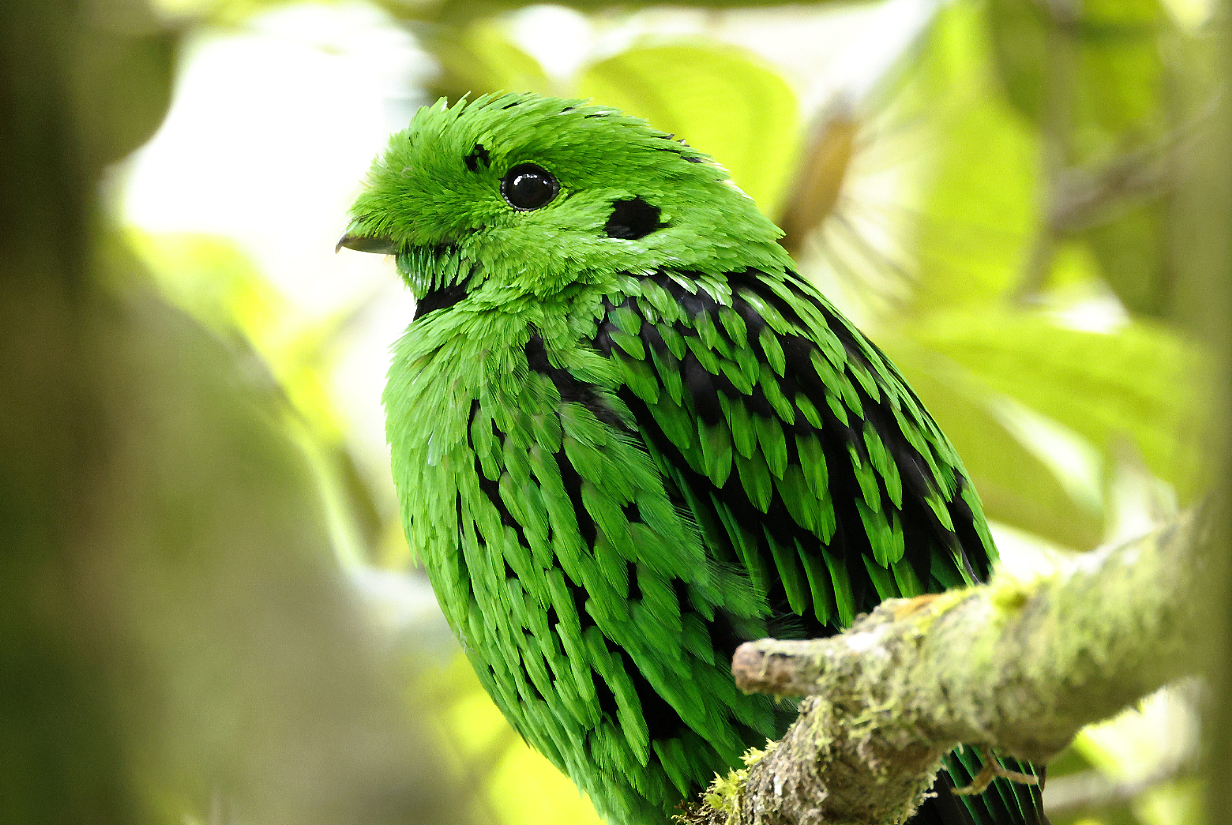
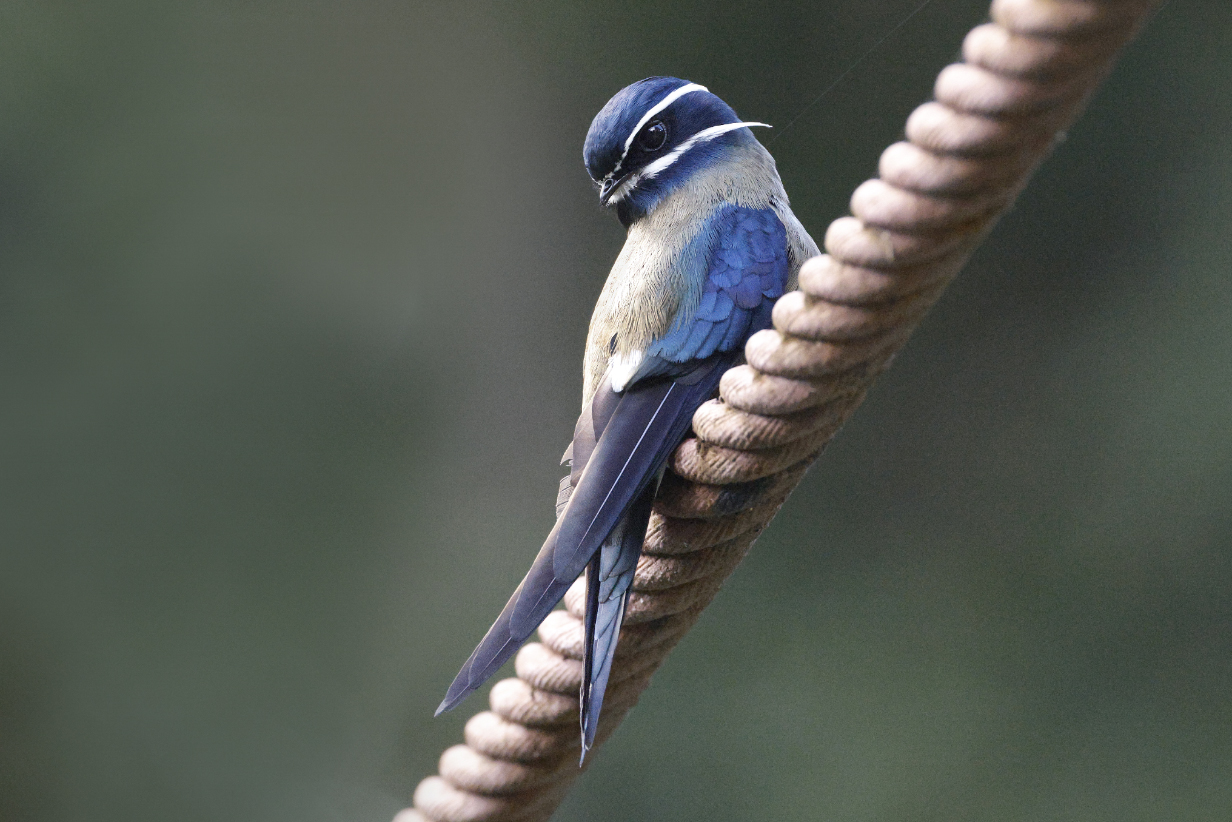
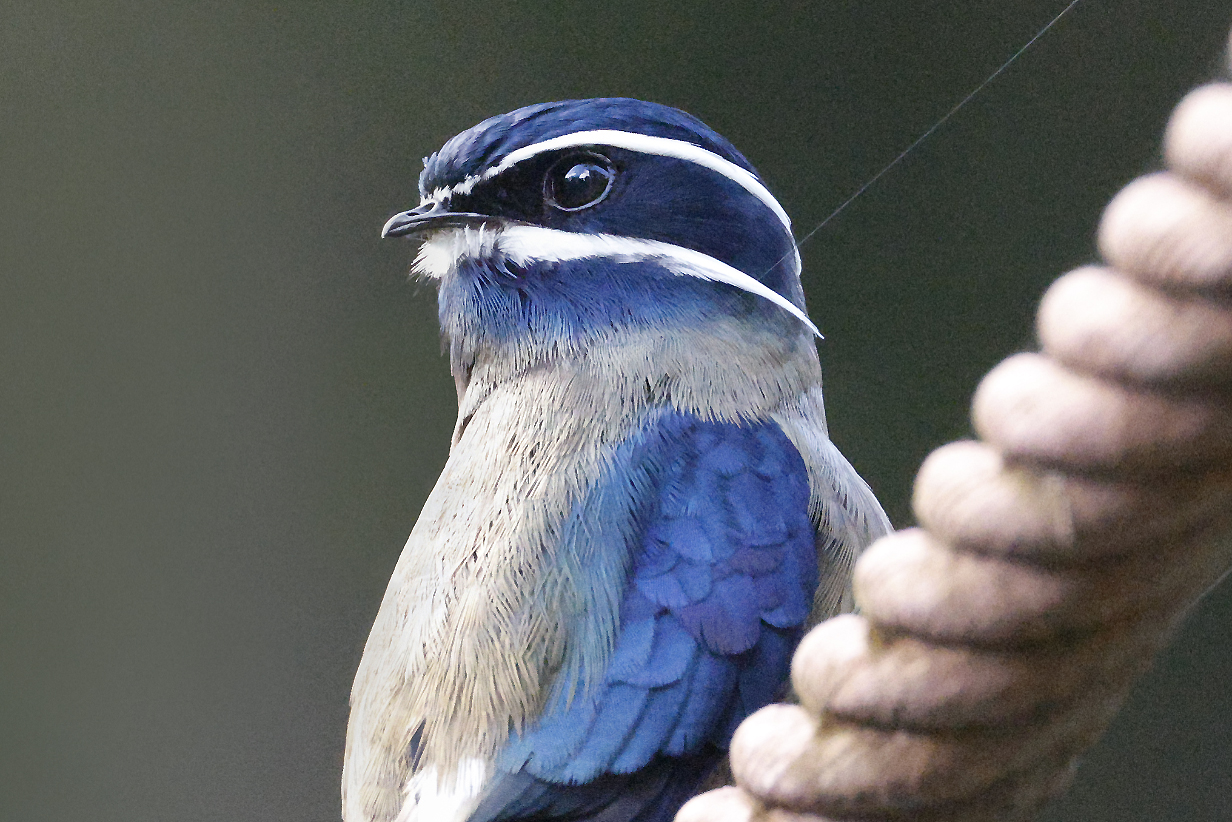
Whitehead's broadbill -- unique and beautiful -- has to be my top-ranked trip bird.
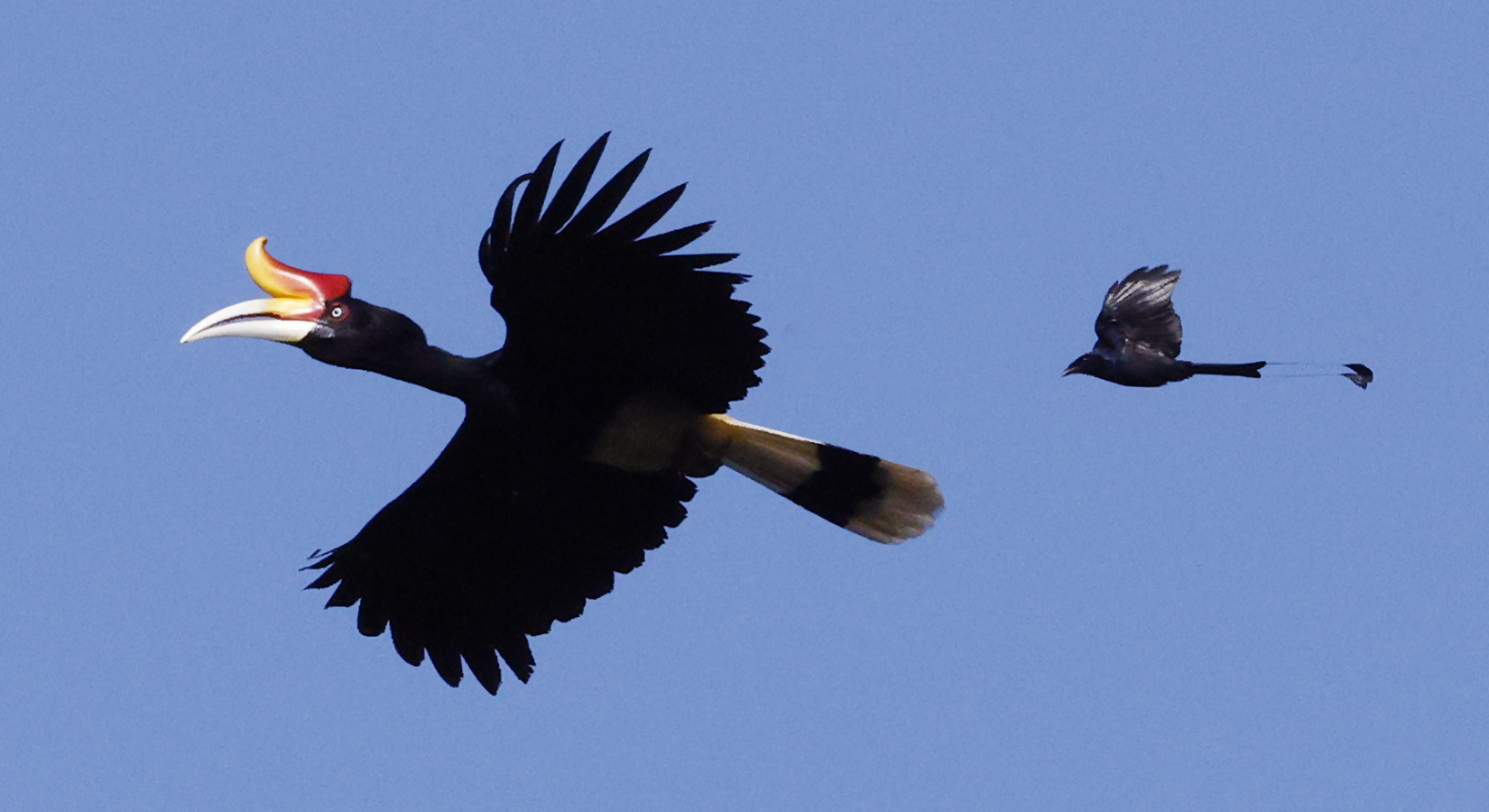
Rhinoceros hornbill, harassed here by a Greater racket-tailed drongo. How can I not pick such an "over-the-top" giant?
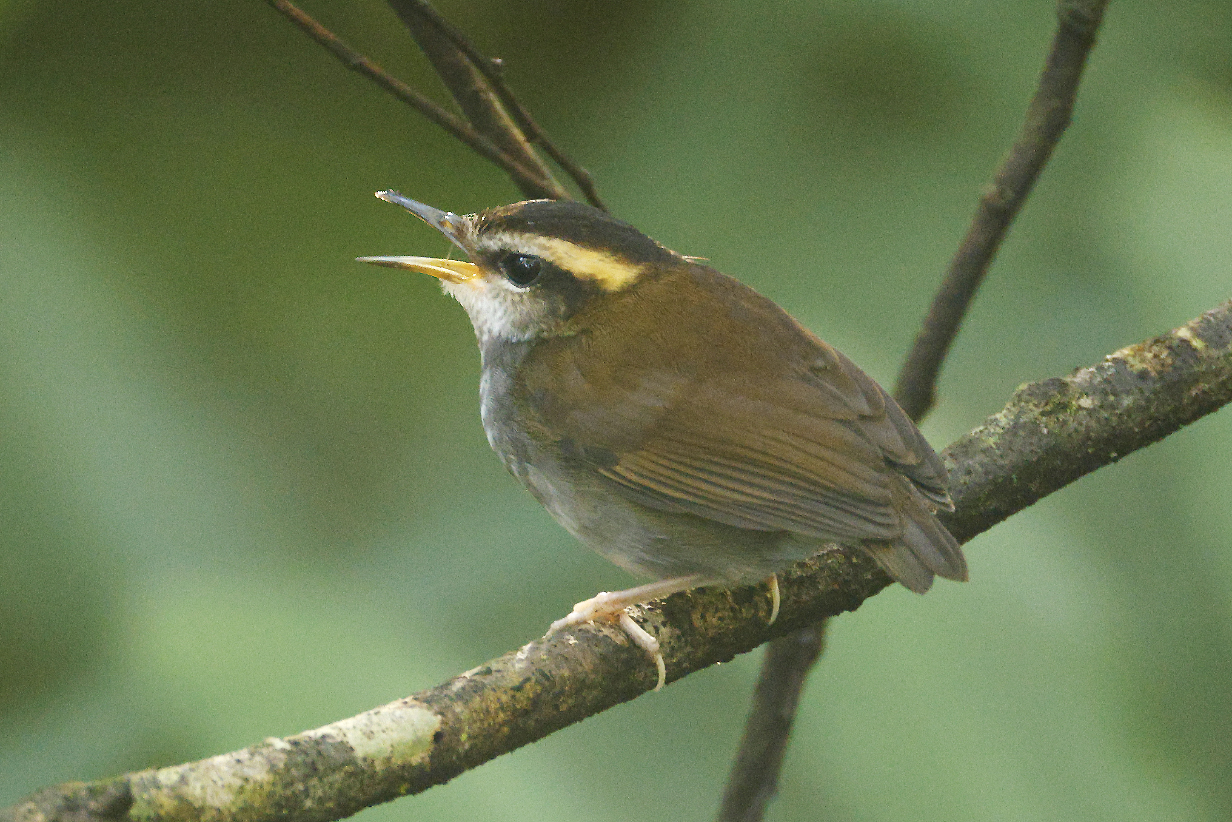
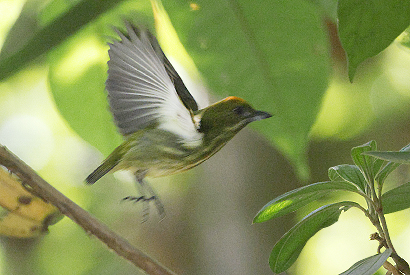
In contrast, Bornean stubtail is a tiny and irresistably cute warbler.
It was exceedingly difficult to pick trip birds -- so many were so remarkable.
Travelog and Bird Pictures
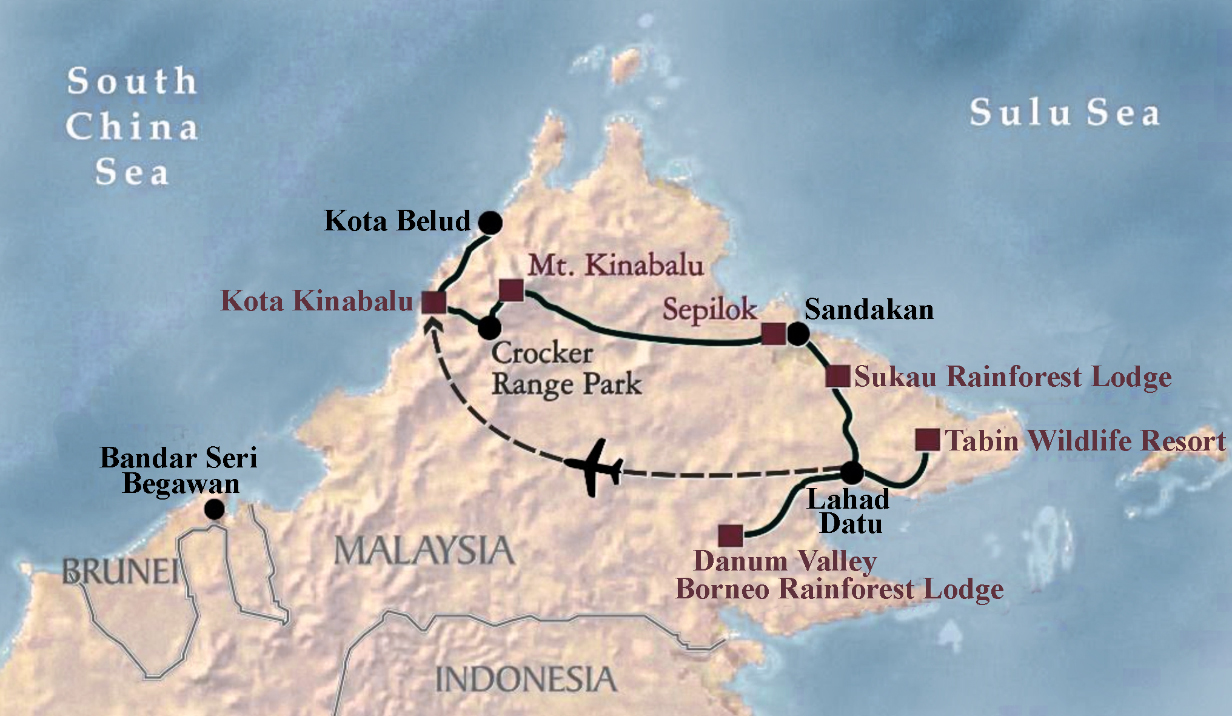
Itinerary of the VENT tour of Borneo, from their published summary
March 14 and 15: Pre-tour Birding at Shangri-La Tanjung Aru Hotel, Kota Kinabalu, Borneo
Before the VENT tour, I birded the grounds of the Shangri-La Hotel. Our wing of the hotel consisted of 4 spokes of rooms radiating from an enclosed wild area of trees, grass, and a pool of water -- excellent birding just outside my room.
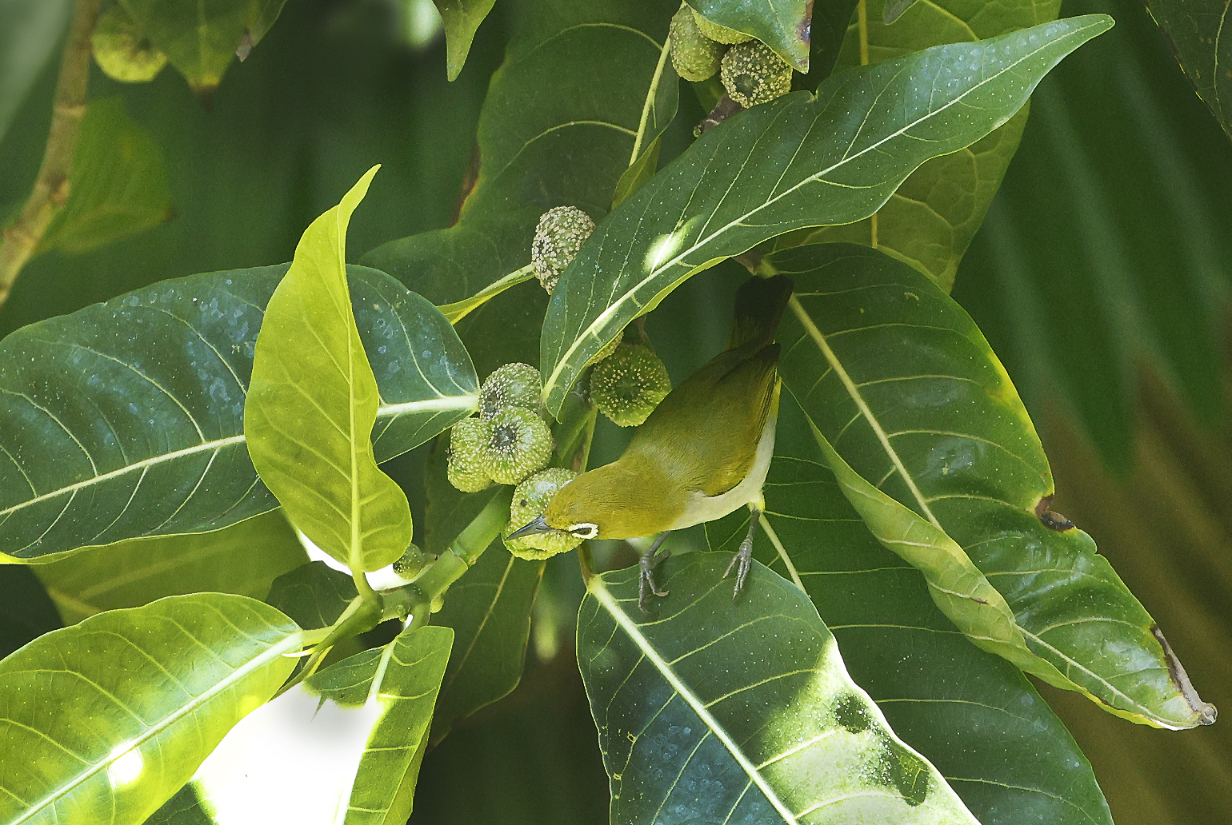
Hume's white-eye was my first life bird of the trip, seen at the Shangri-La Hotel on March 14, before other tour participants arrived. Note the black tail. With ID confirmed later by local guide Hazwan Suban, it is the common lowland white-eye of NE Borneo. At times (but when I did not have my camera with me), it came as close as 5 feet. We did not see it during the tour.
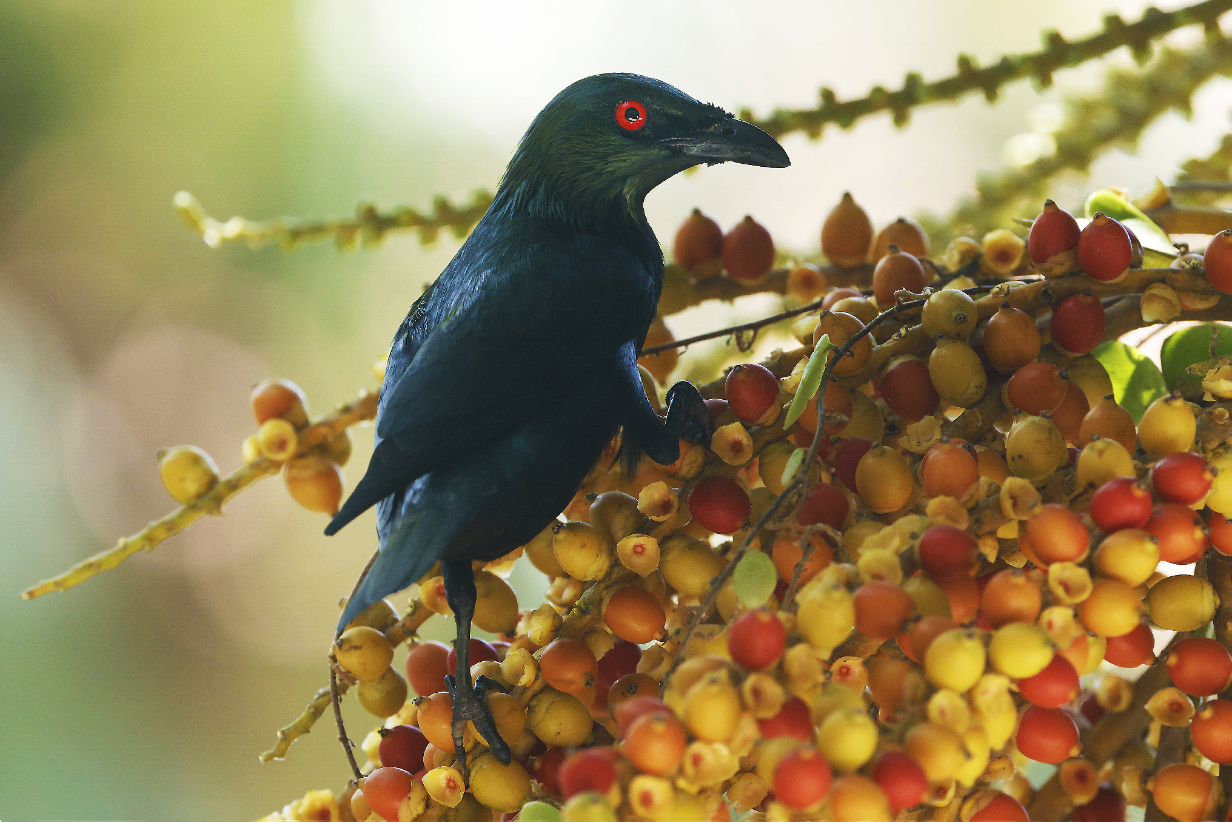
Asian glossy starling in the arbor surrounded by the Shangri-La Hotel
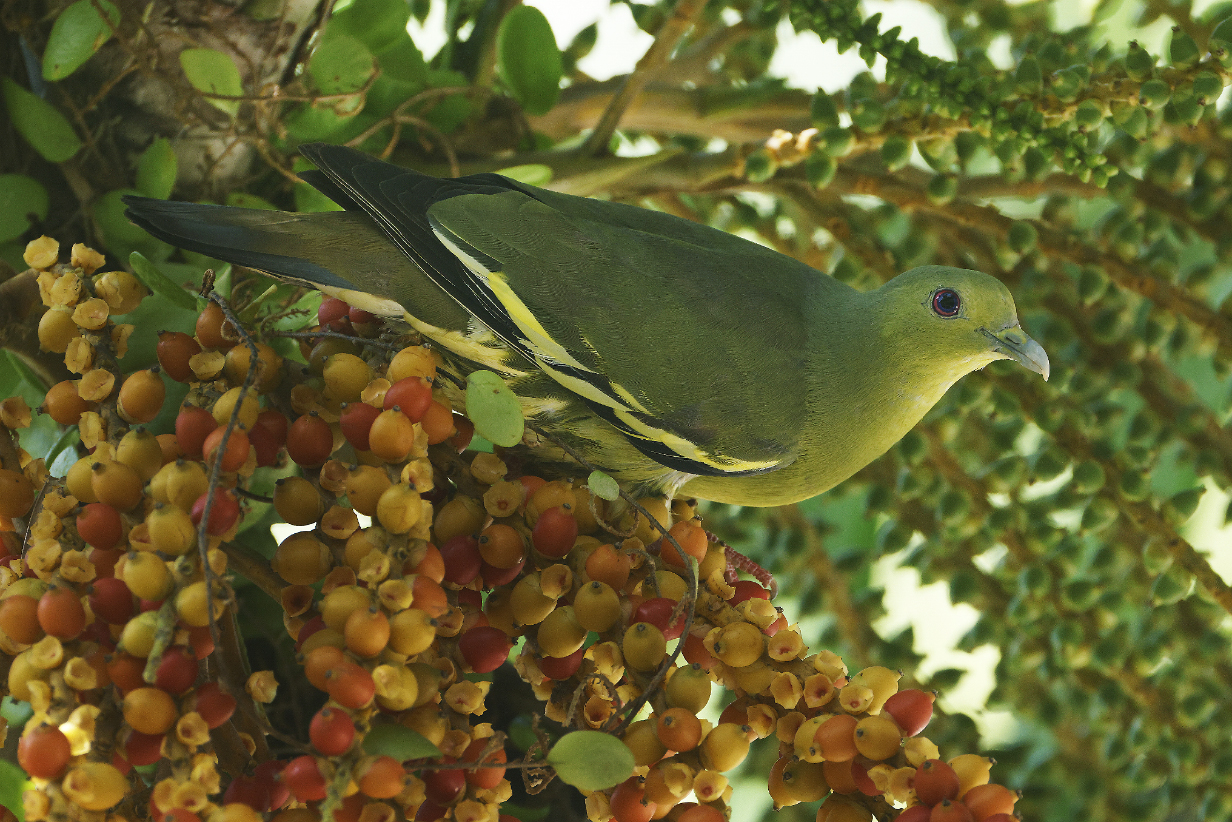
Female Pink-necked green pigeon in the arbor surrounded by the Shangri-La Hotel
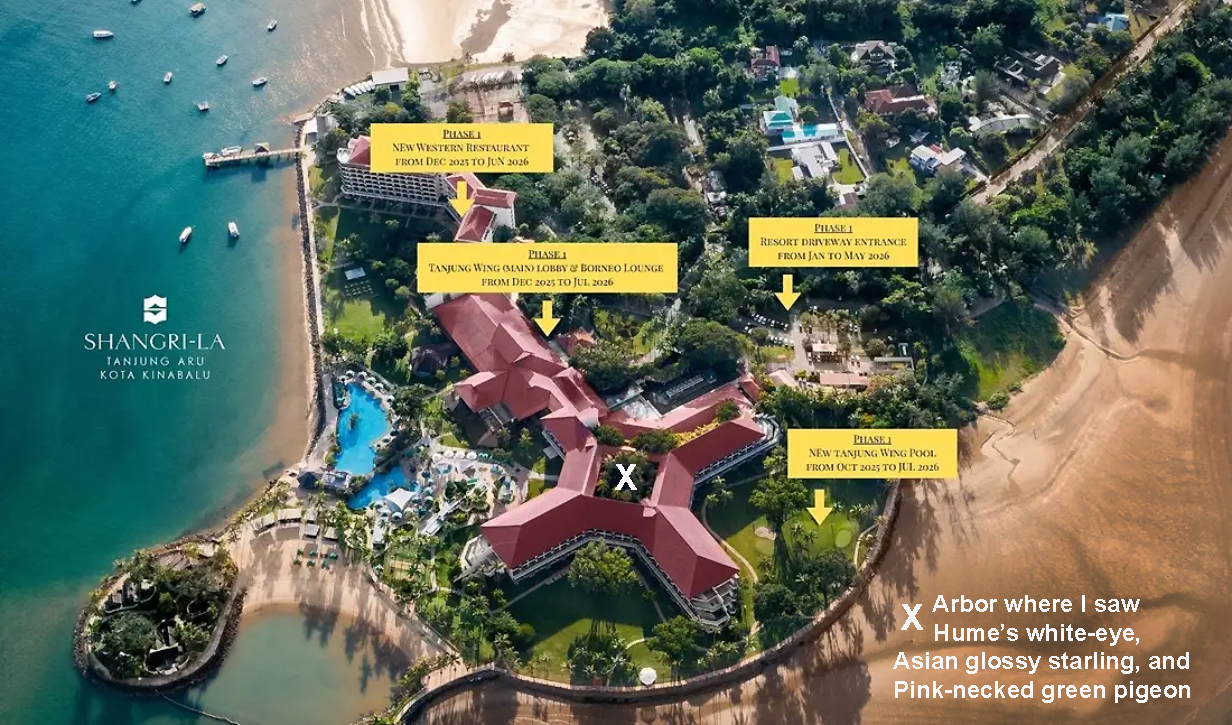
Shangri-La Hotel from their web site, noting upgrades in progress. The X marks the remarkably productive arbor, with fruiting trees and pond, where I saw the above 3 birds and several others before the start of the tour.
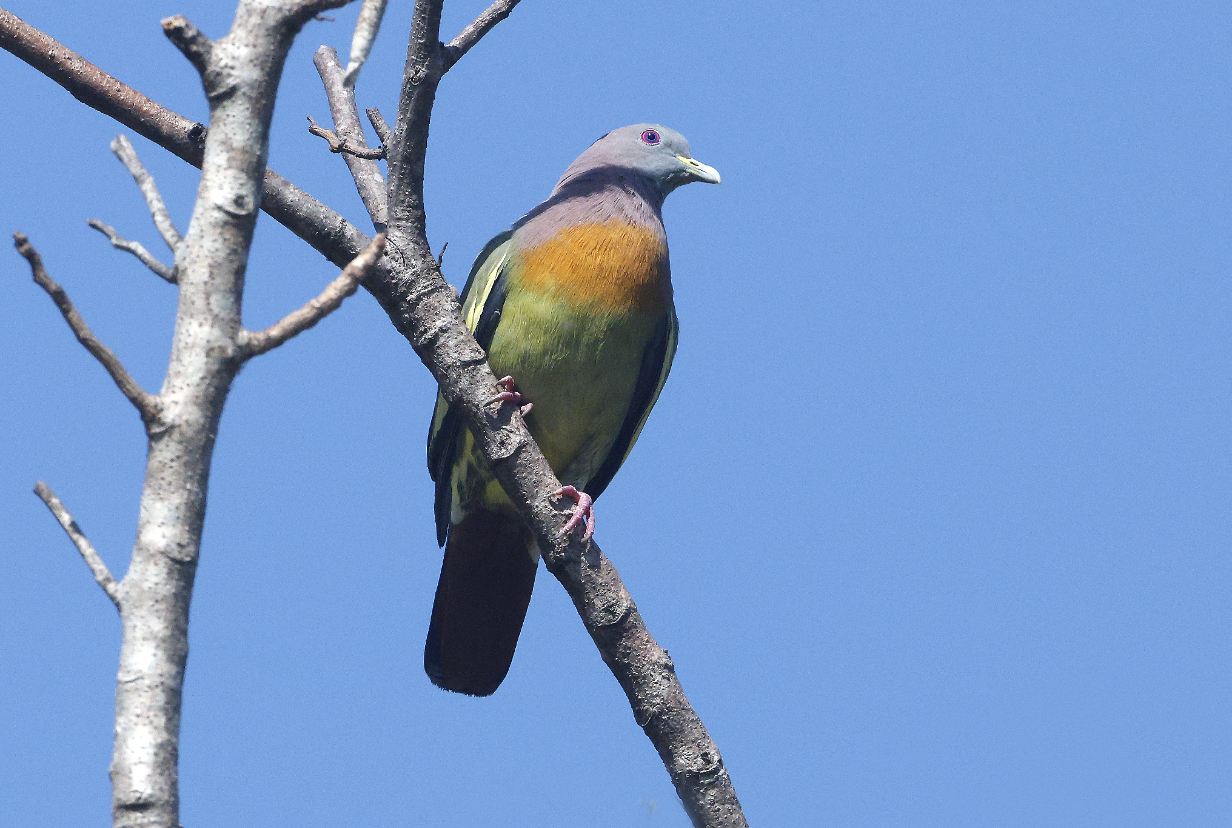
Male Pink-necked green pigeon near the beach of the Shangri-La Hotel (unfortunately with the shadow of a branch on his neck)
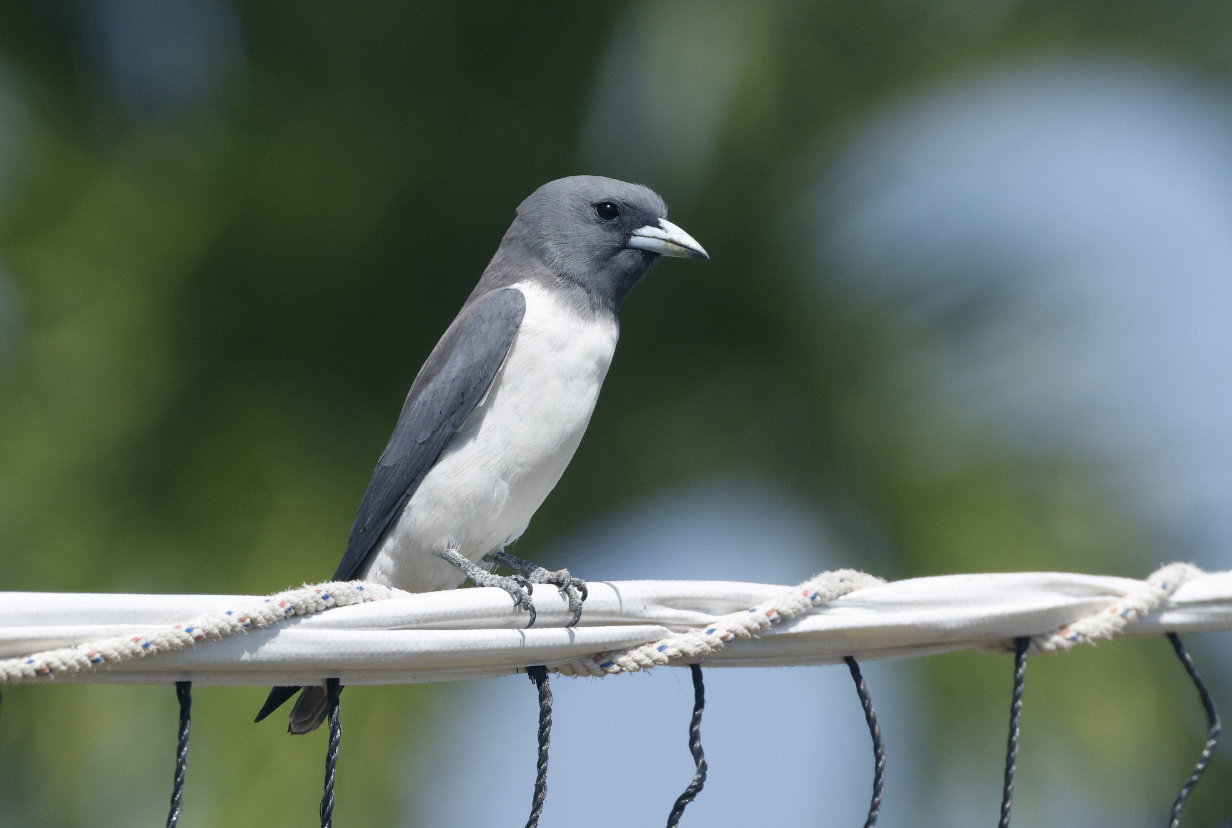
White-breasted woodswallow
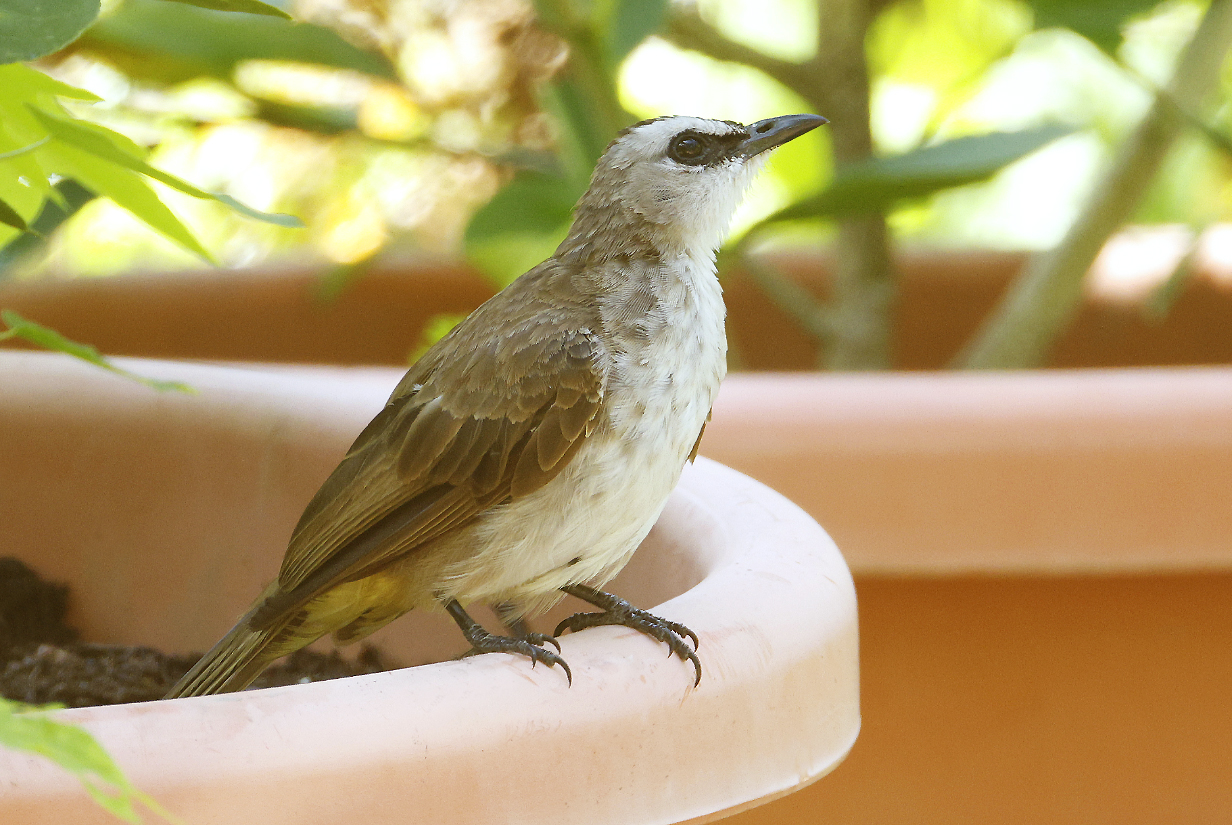
Yellow-vented bulbul in the herb garden of the Shangri-La Hotel
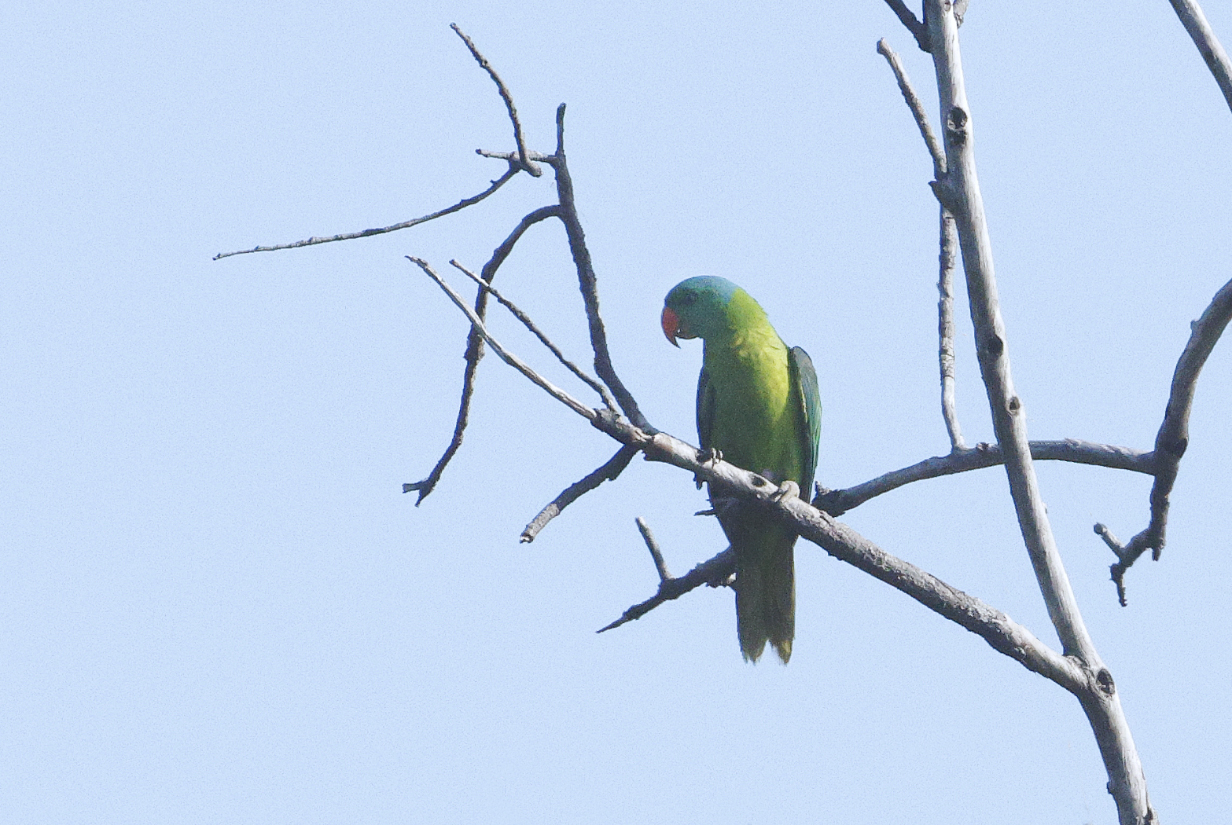
Blue-naped parrot ... far away. This is my second life bird of the trip and the first one gotten during the VENT tour.
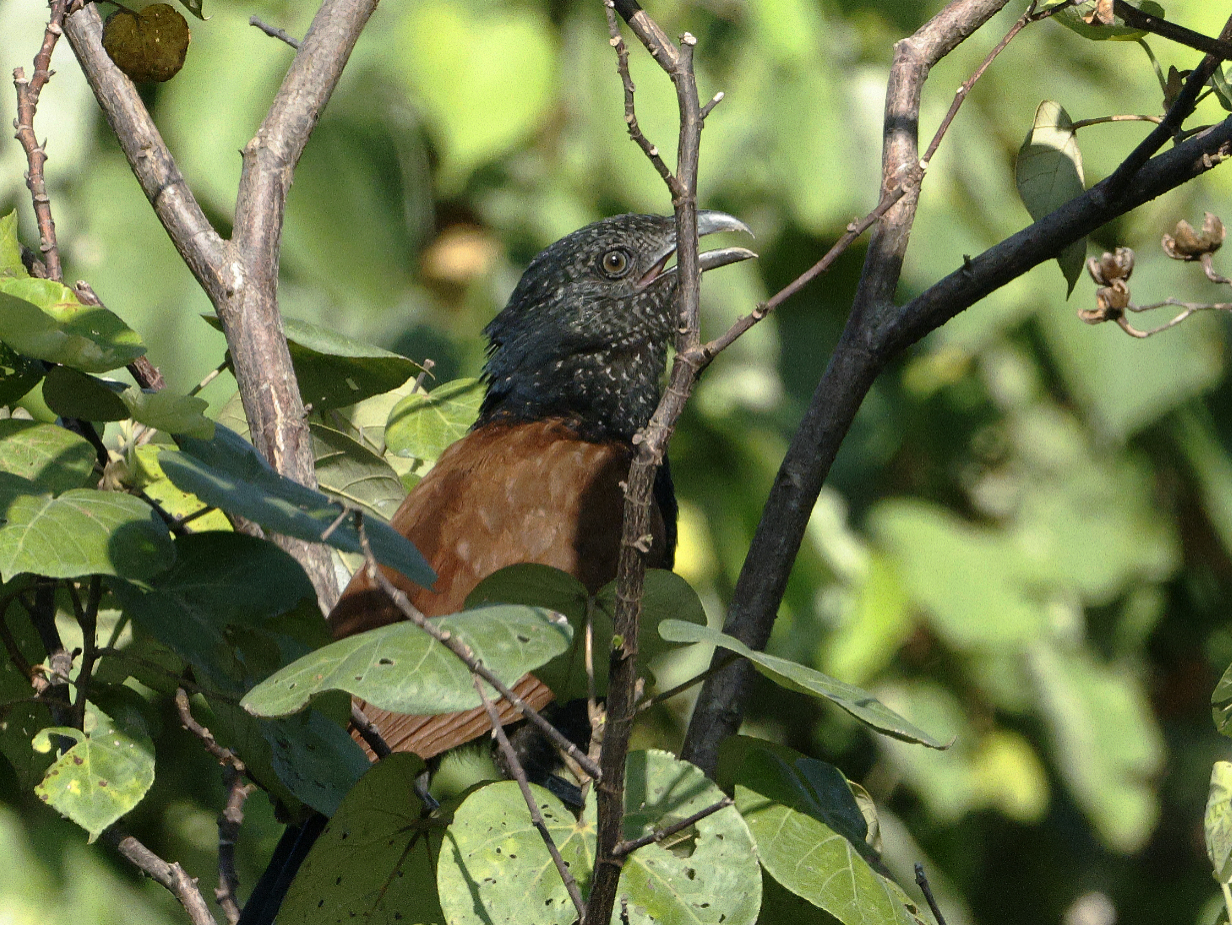
Lesser coucal
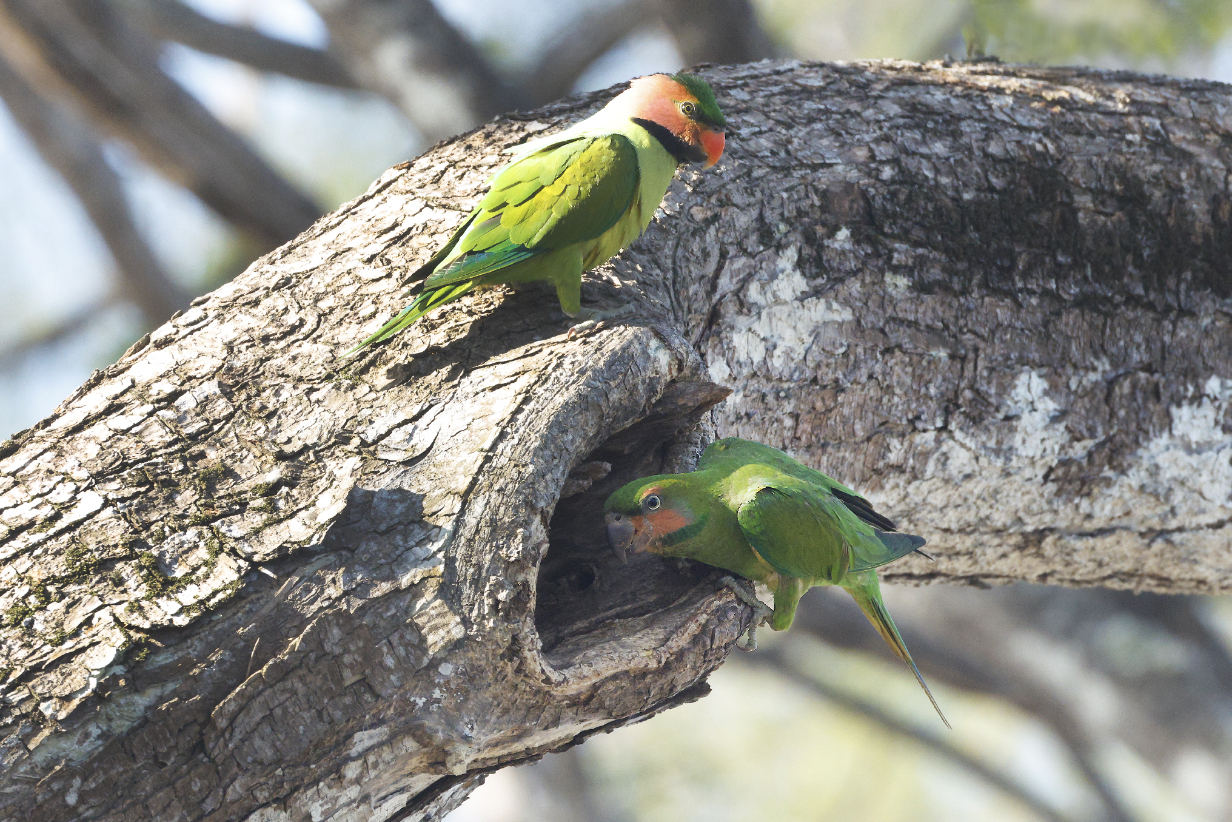
Long-tailed parakeets checking out nesting real estate
March 16: VENT Day 1 at coastal wetlands of Kota Belud & Tempasuk Plain North of Kota Kinabalu
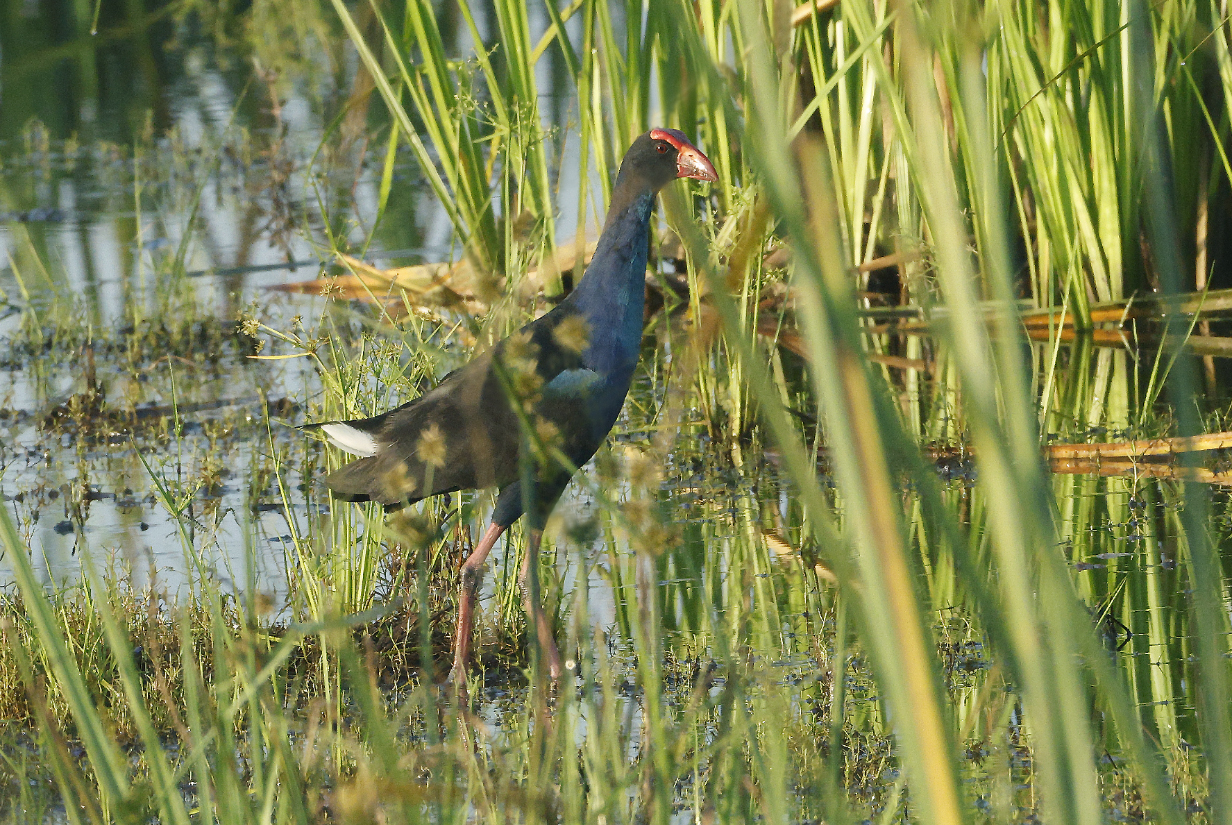
Black-backed swamphen was common in the wetlands ... usually in crowded reed habitats. This is my life bird.
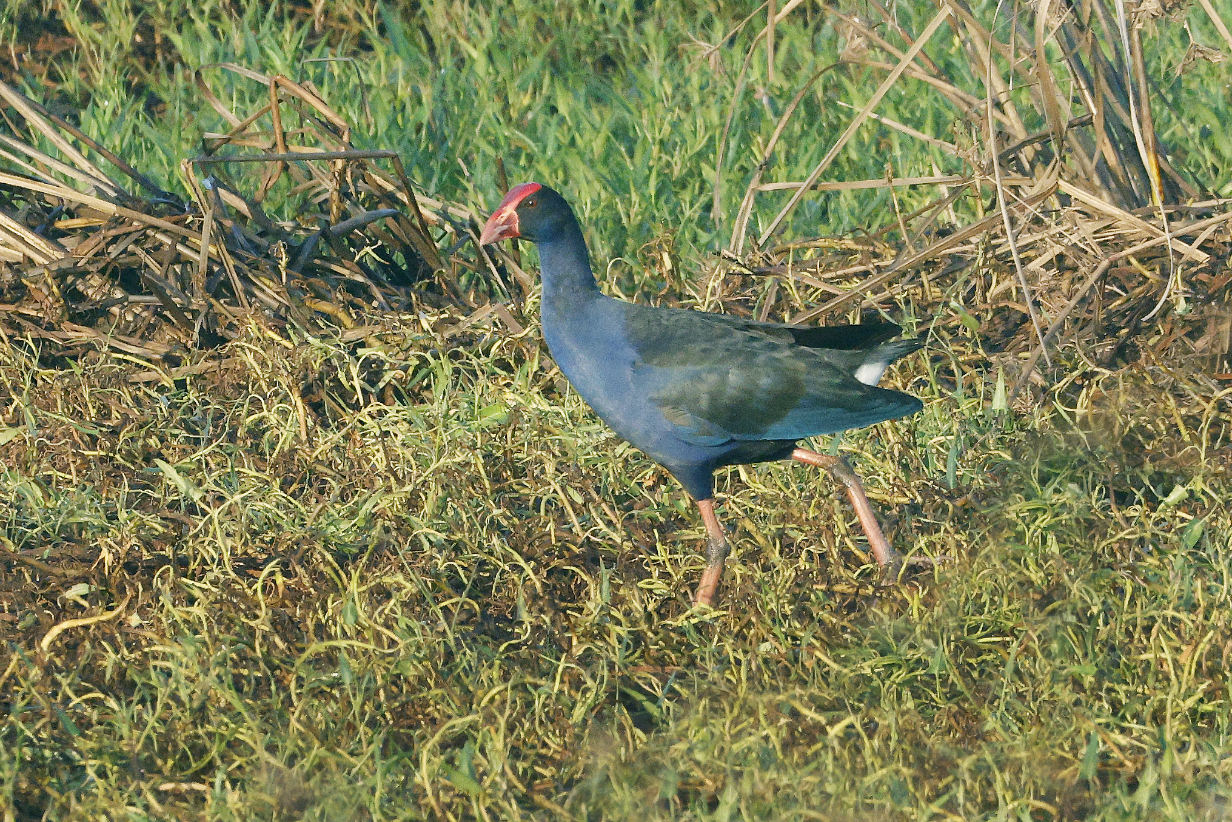
Black-backed swamphen
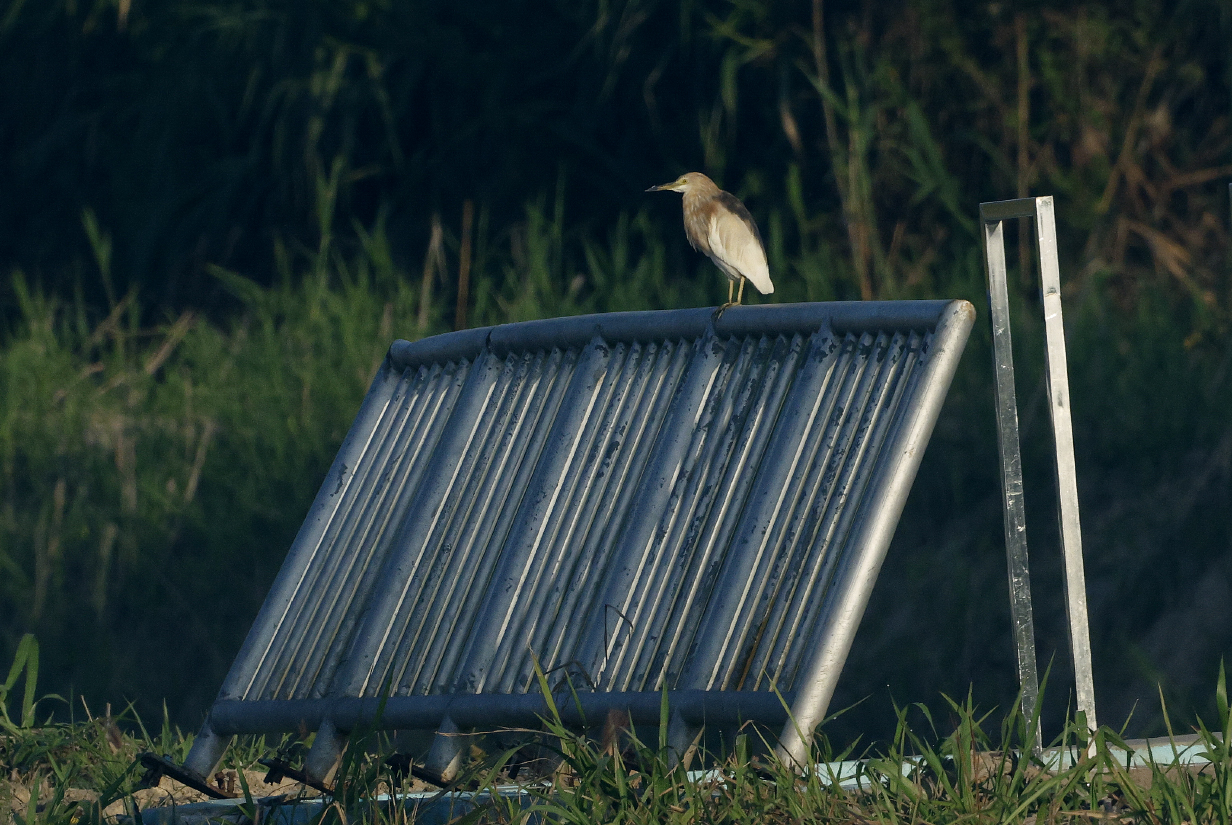
Javan pond-heron (This is my life bird -- a poor picture of a handsome bird, far away.)
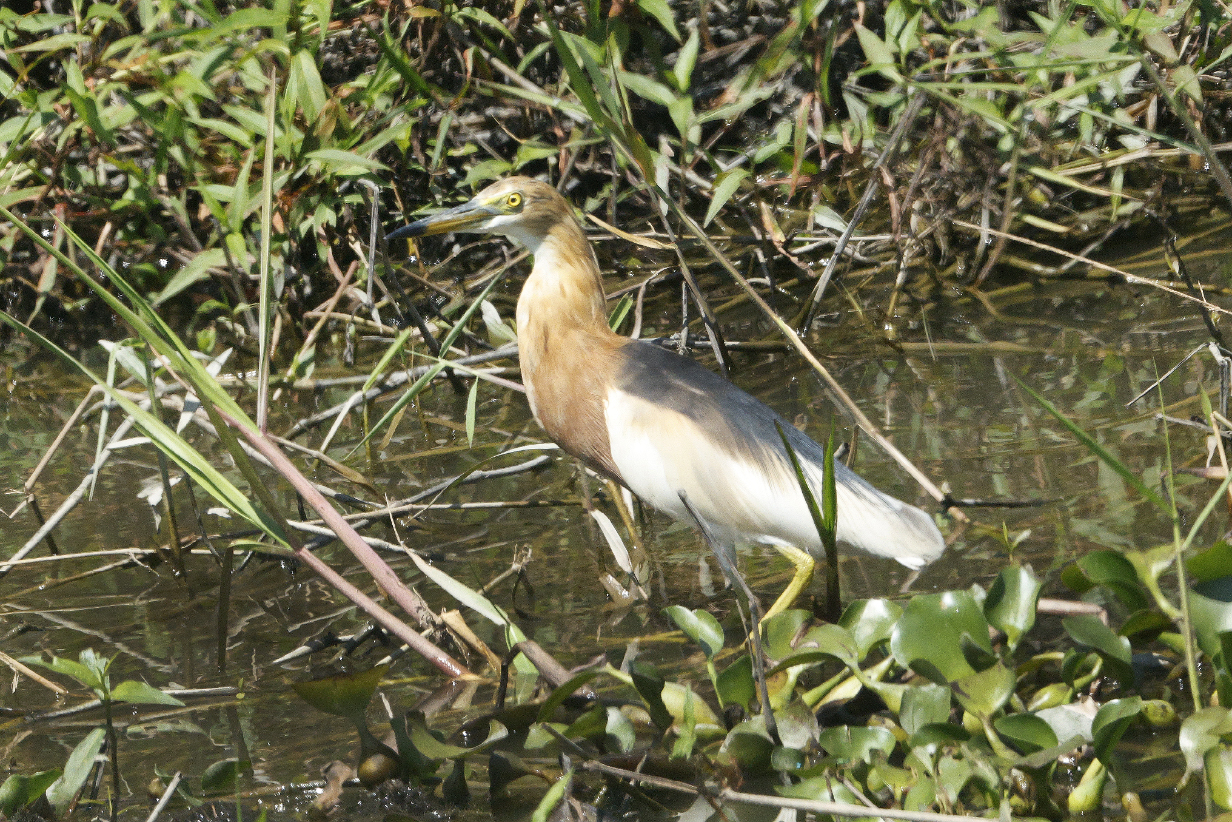
Javan pond-heron (Poor but slightly better picture of another bird, later in the day.)
March 17: Crocker Range National Park; Trusmadi Hide 1; Drive to Tambunan
Today, we checked out of the Shangri-La Hotel and were driven to Crocker Range National Park, with mountains of 1200--1800 m altitude. We stopped first at a roadside area with a spectacular array of moths covering wooden walls. Birding here was excellent and easy.
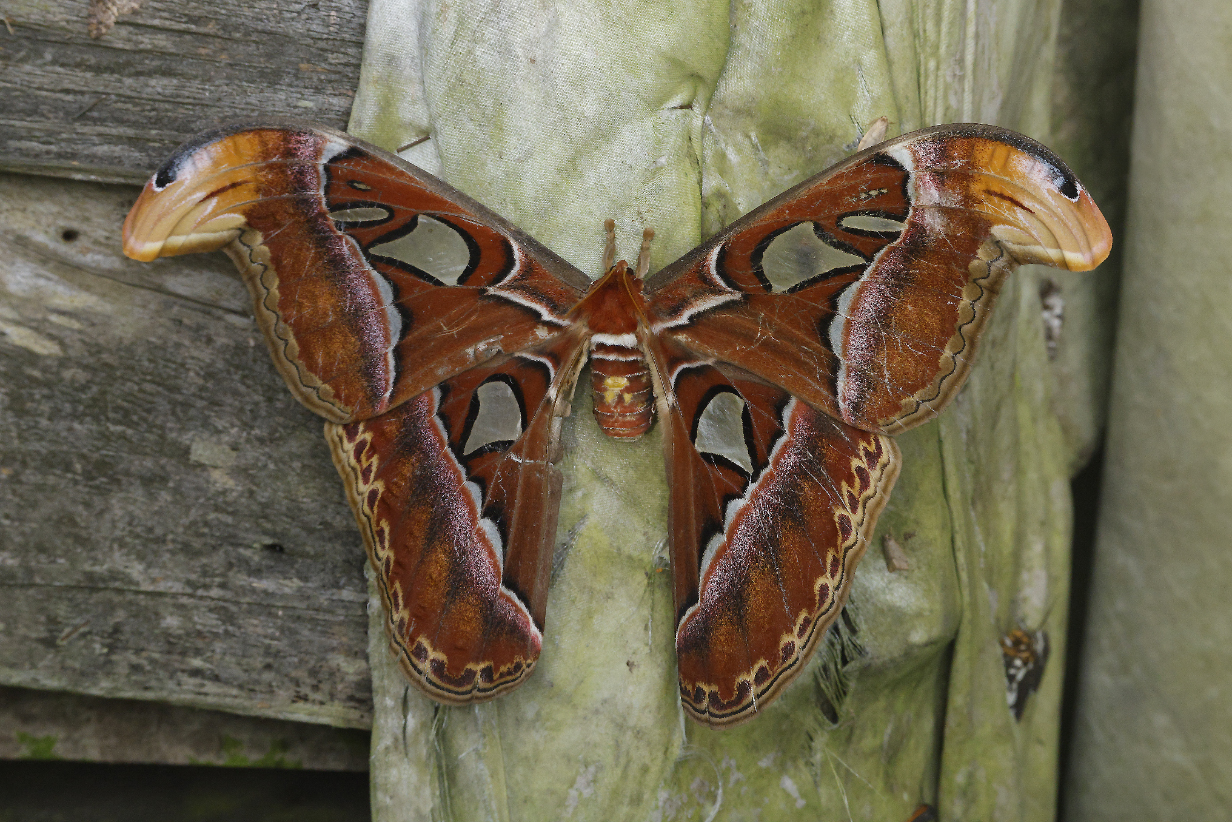
This Atlas moth (Attacus atlas) with wing span of about 10 inches was the most most impressive. Quoting the the California Academy of Sciences, "An Atlas moth rests on a tree trunk with its wings closed. A bird, hoping for a snack, creeps closer, until it's within striking distance. Just as it’s about to pounce, the moth’s wings spring open—and bam! Instead of a moth, the bird suddenly sees not one, but two snake heads. Confused and startled, the bird flies away —- and the moth gets to live another day. ... Atlas moths are most famous for the markings on the upper corner of their wings, which bear an uncanny resemblance to cobra heads in profile. While not all entomologists are convinced of that visual mimicry, there is some convincing evidence. Cobras live in the same part of the world as these moths, and the moth’s main predators —- birds and lizards —- are visual hunters. Plus, species related to the Atlas moth have similar but less defined versions of the snake’s head, showing a pattern that could have been fine-tuned by natural selection."
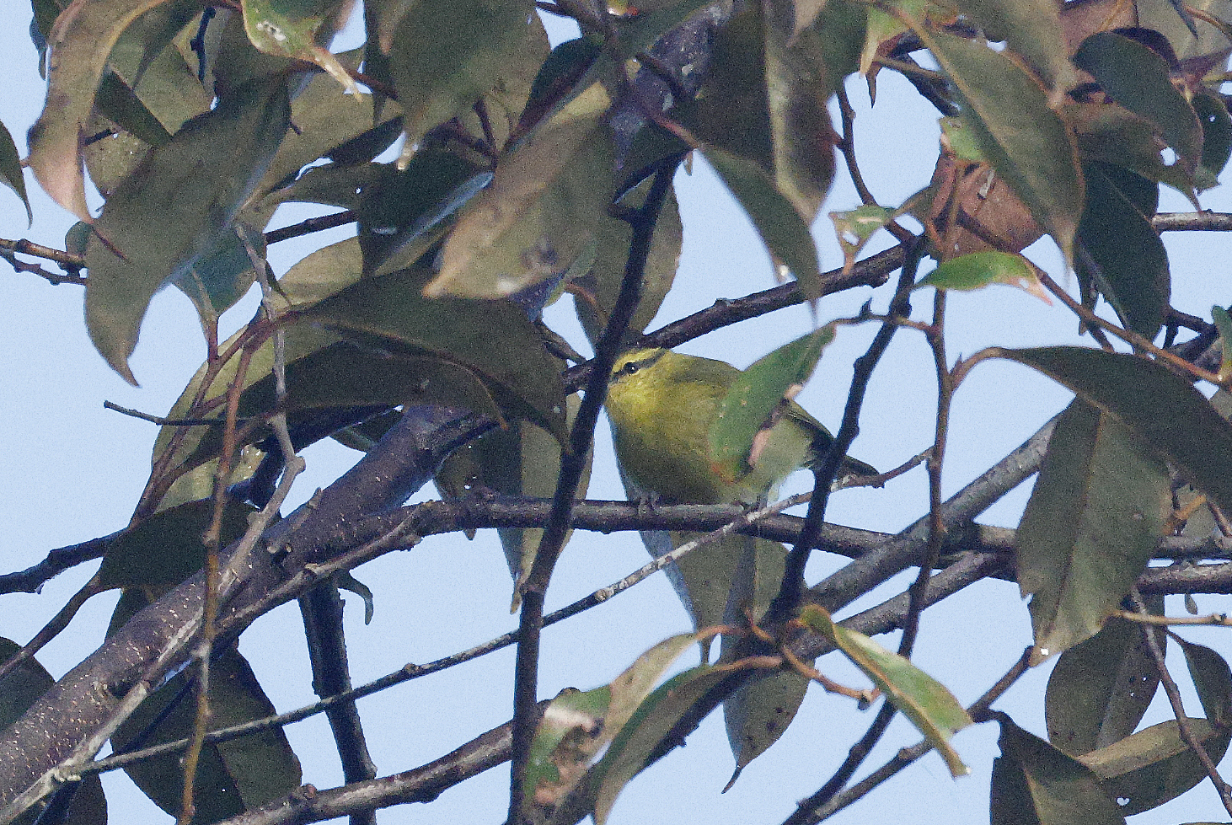
Mountain leaf warbler (Warblers are virtually always hard to photograph, and this one is no exception. I did not quite catch the whole face, but the ID is unmistakeable. This web site will include pictures of my life birds as often as possible, even when they are poor in quality. They cement my memory of what I saw.)
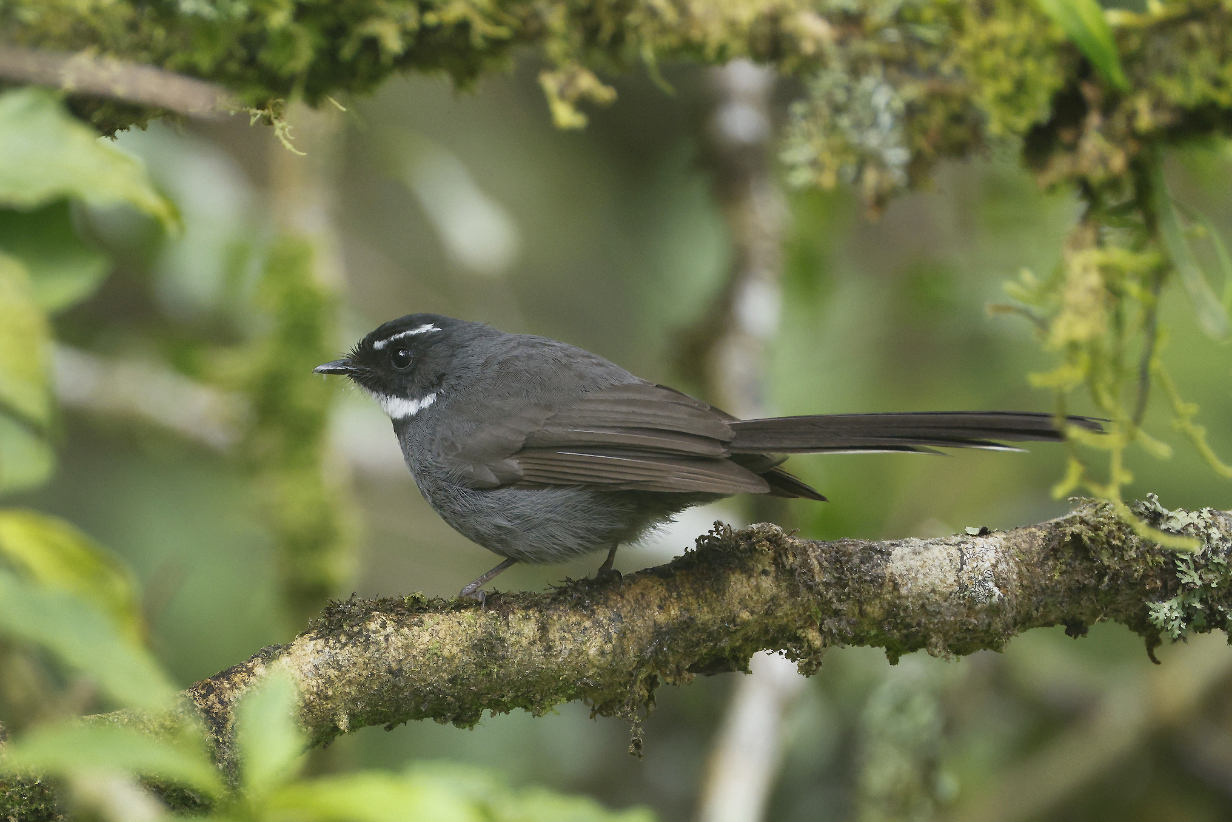
White-throated fantail
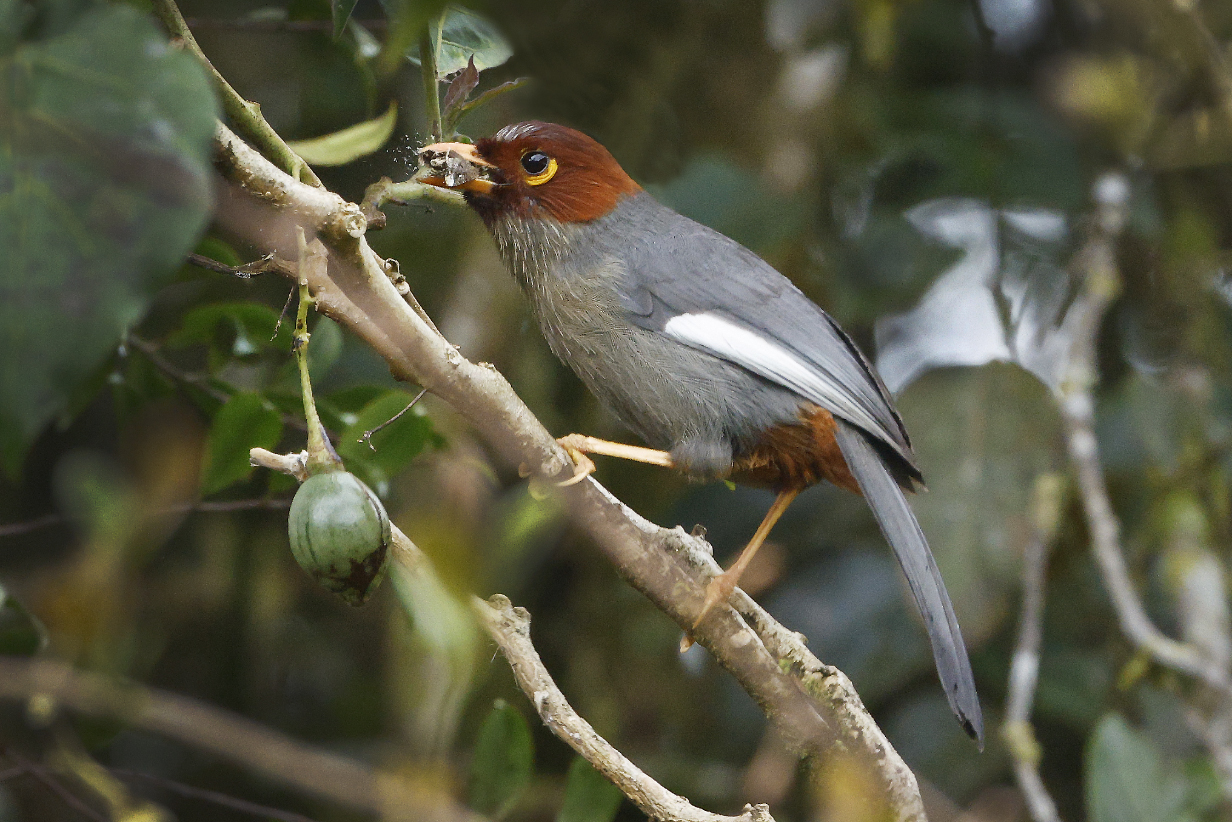
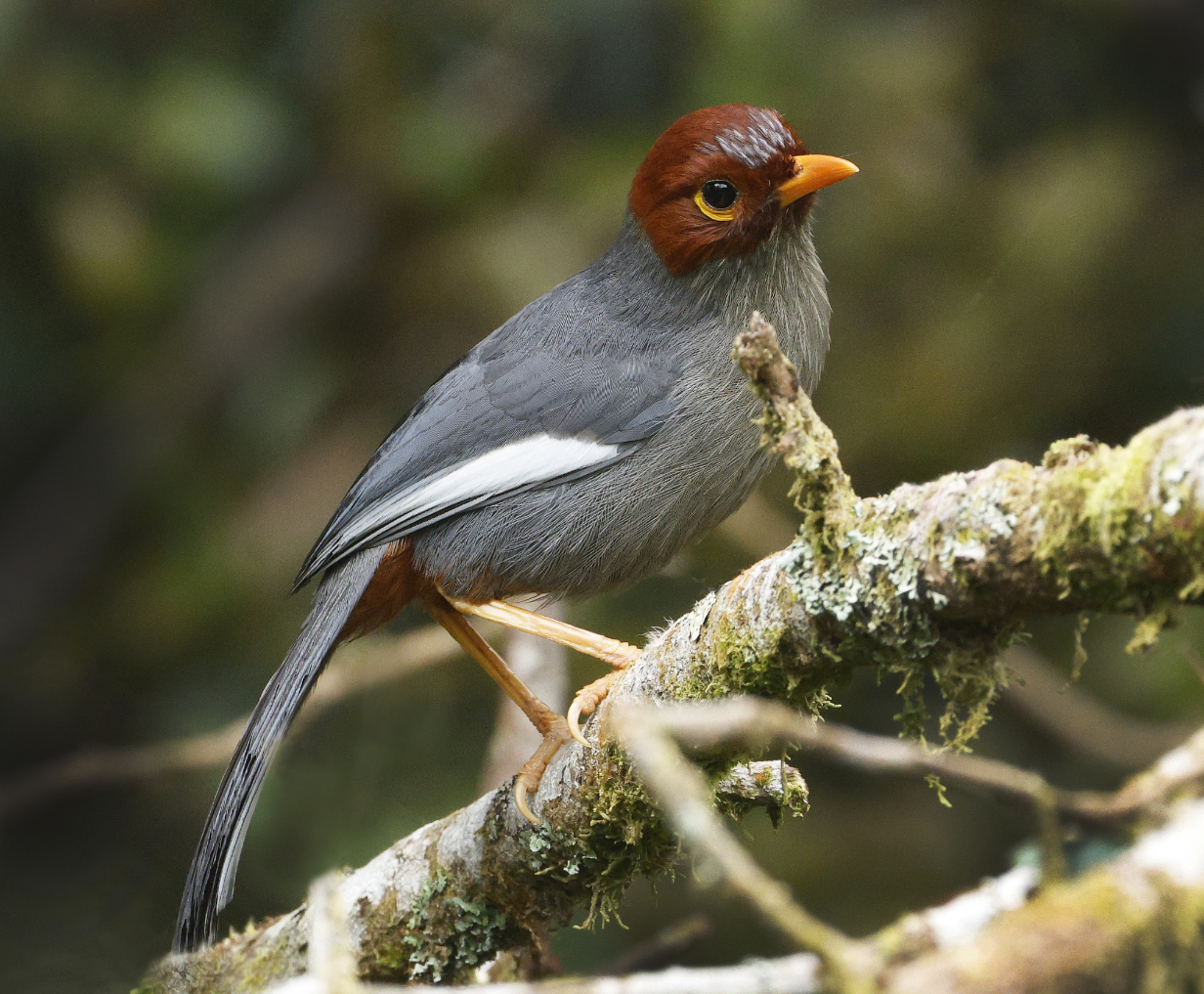
Chestnut-hooded laughingthrush (This was the next new bird after the leaf warbler, but this is not my life bird -- this one was photographed later. I love laughingthrushes, so seeing a new one is always a special occasion.)
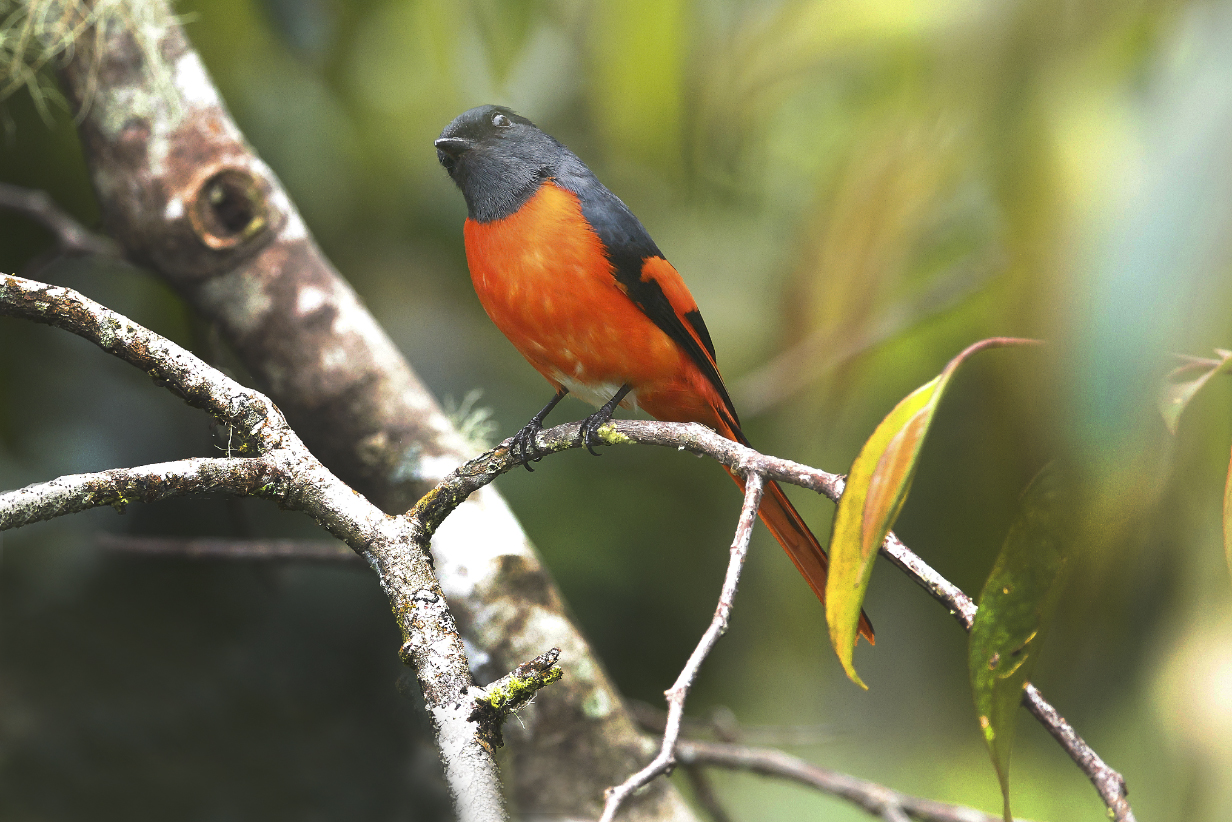
Gray-chinned minivet (male)
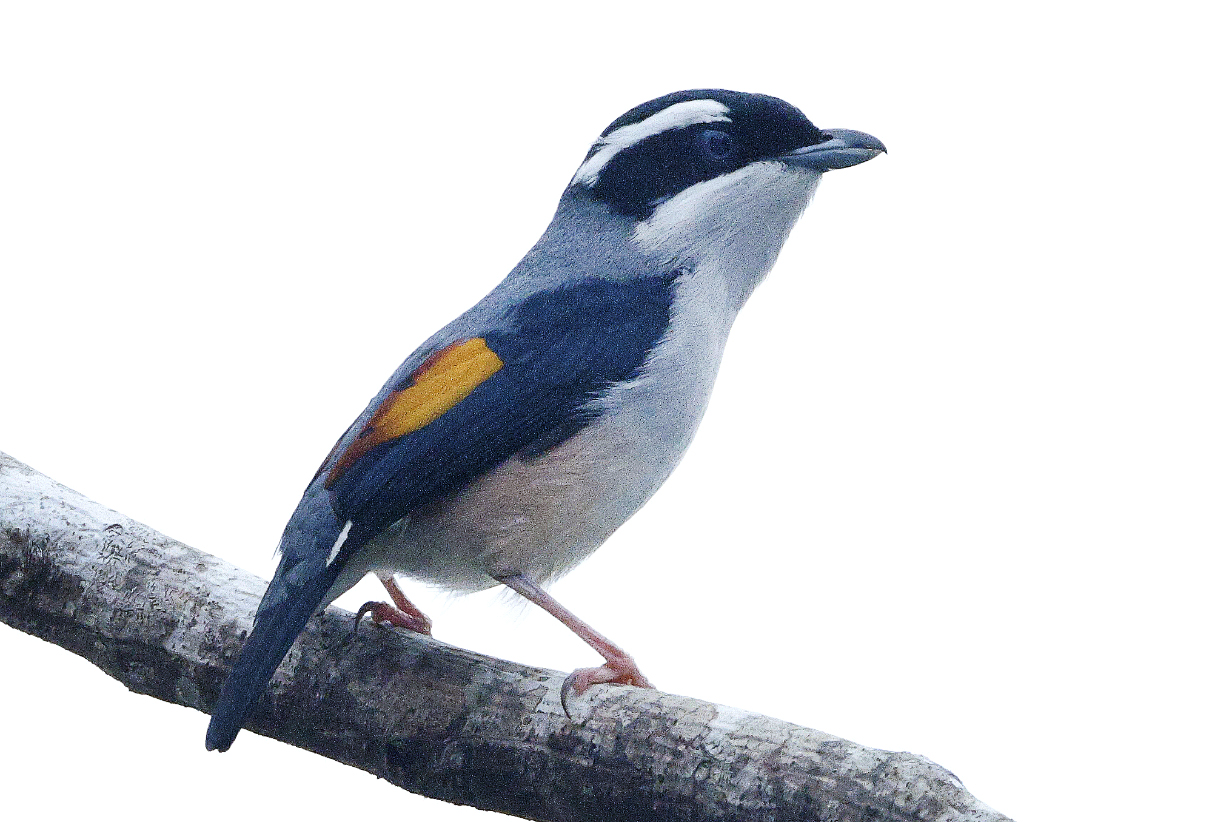
White-browed shrike-babbler (I got the Himalayan subspecies, Pteruthius aeralatus ripleyi, in India on 2006 December 21; this is the Bornean subspecies, Pteruthius aeralatus robinsoni. Classy bird but not new.)
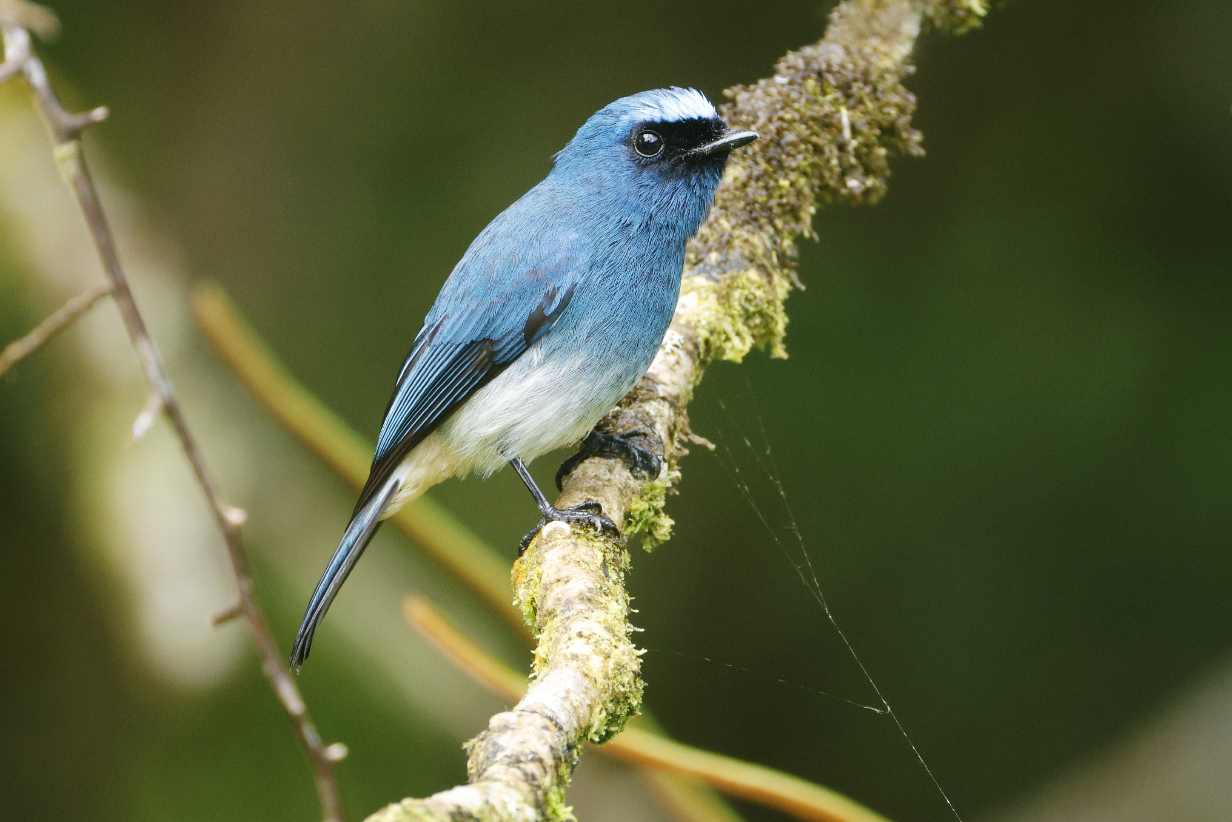
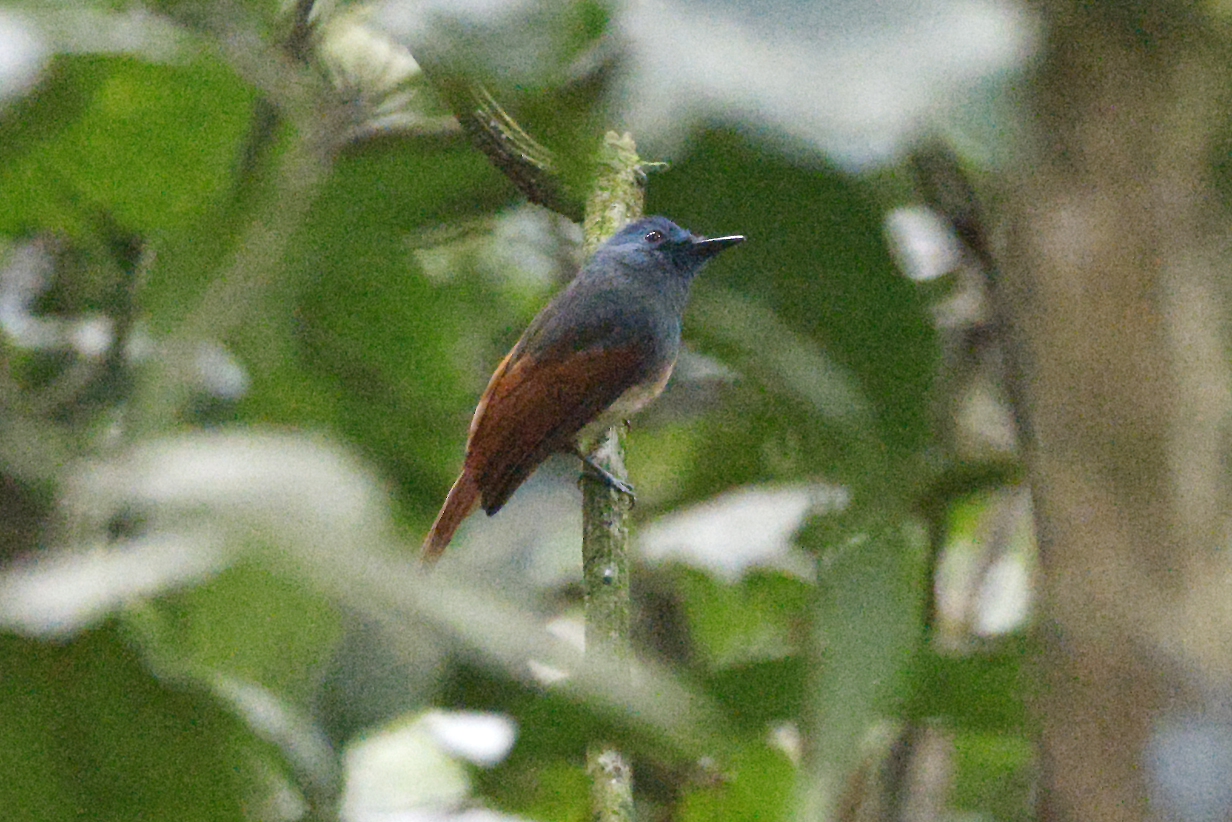
Indigo flycatcher (This is my life bird.)
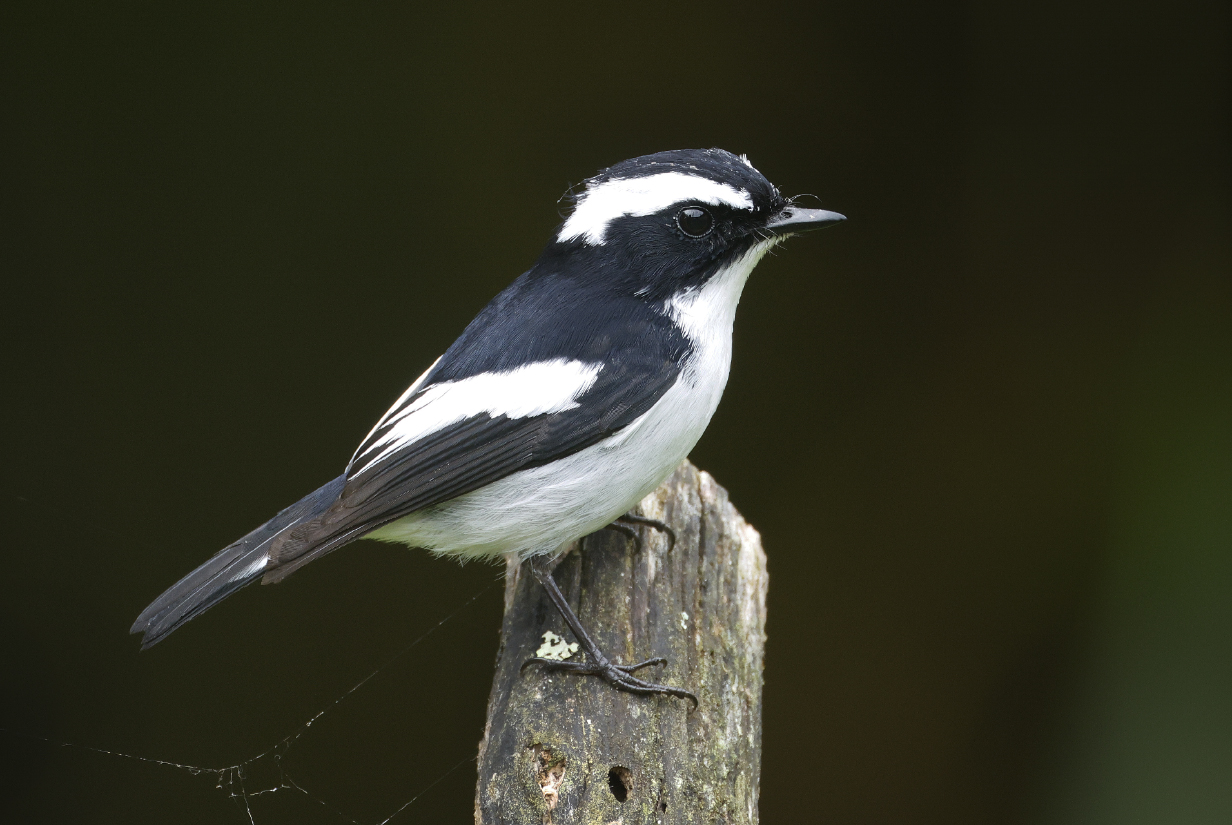
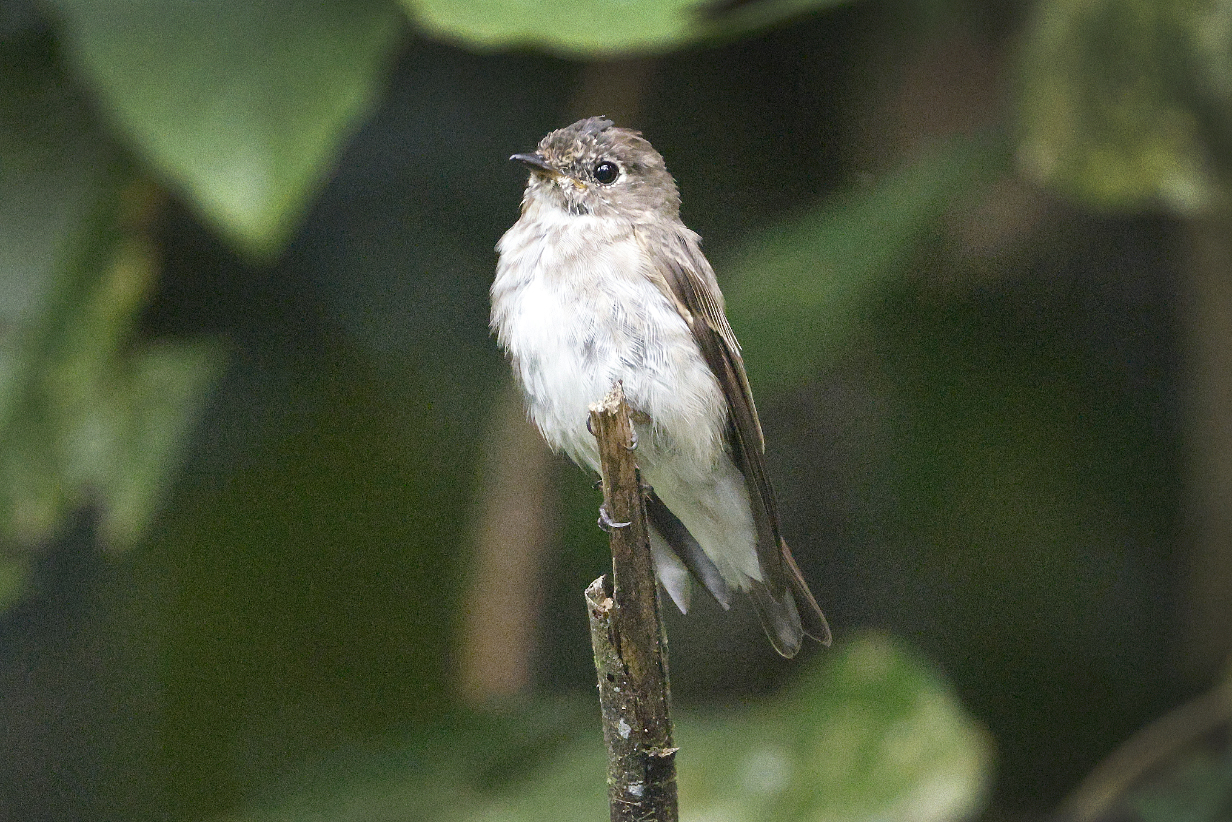
Little pied flycatcher
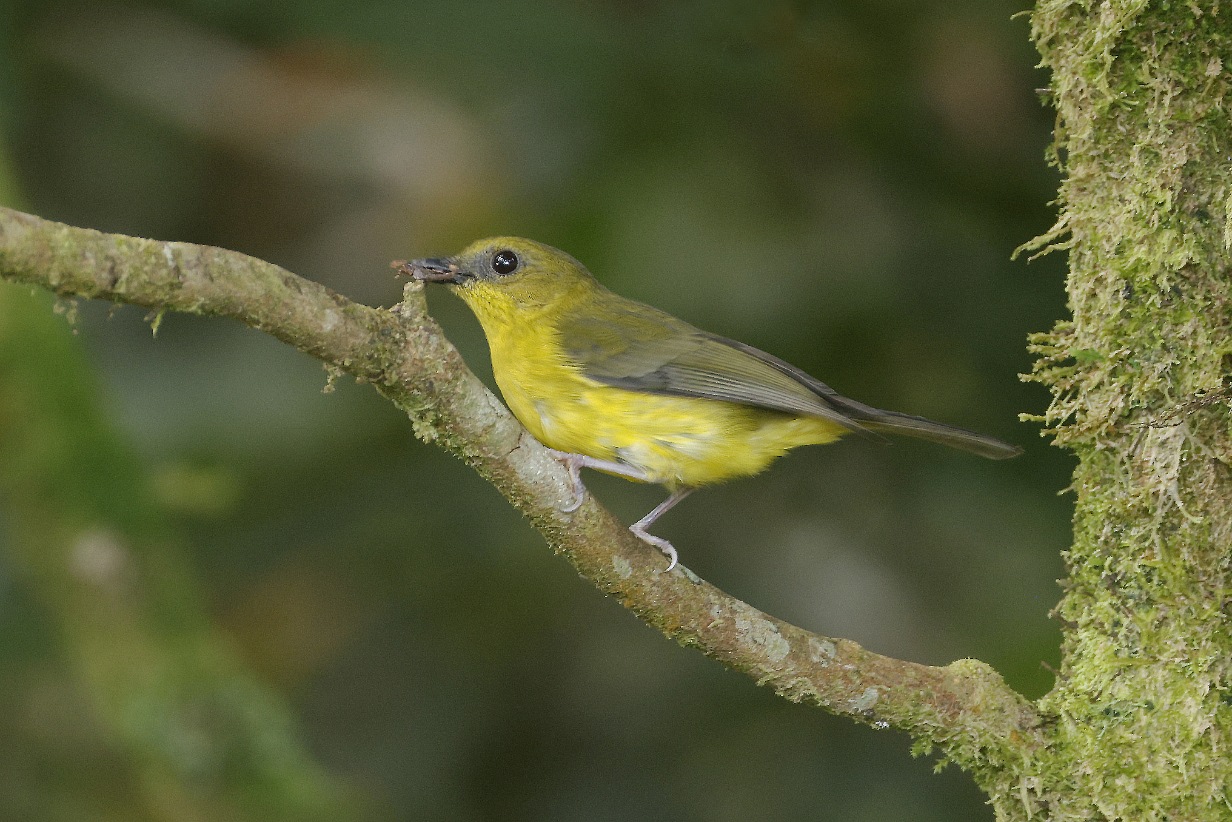
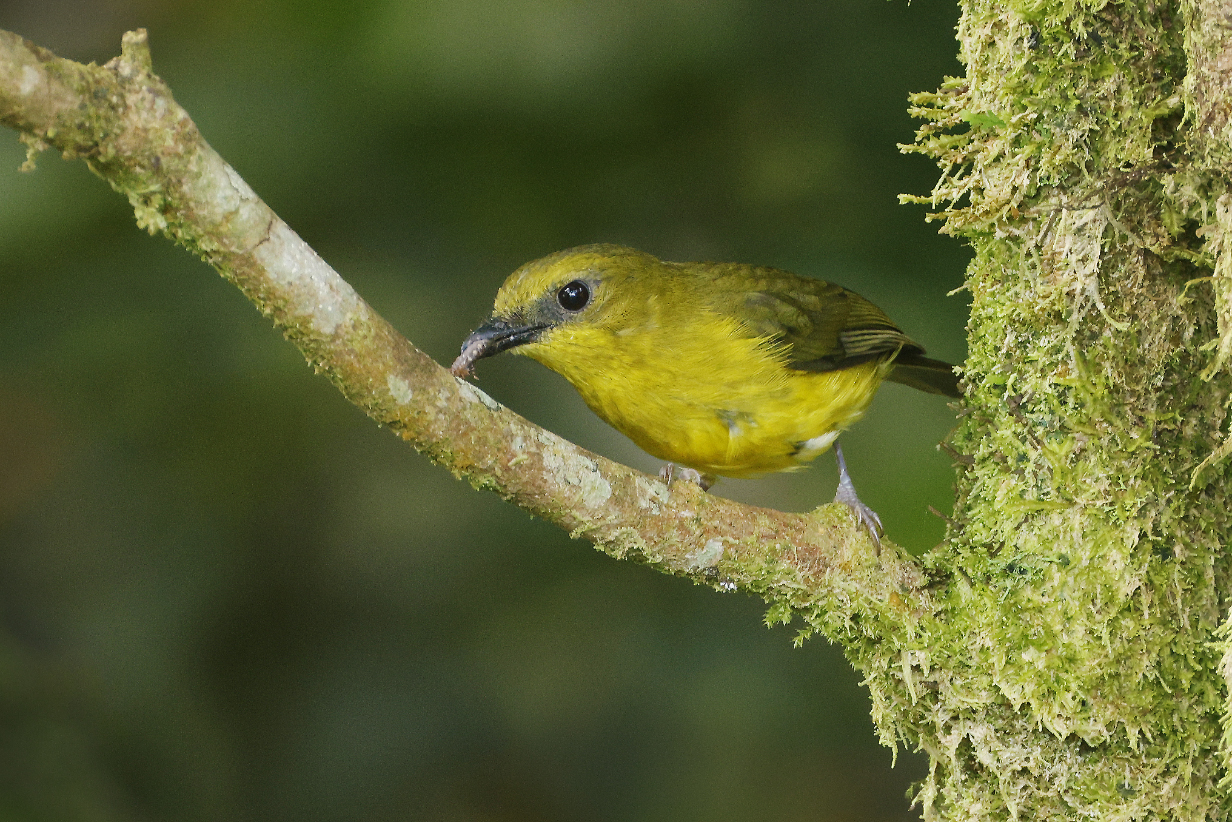
Bornean whistler (This is my life bird.)
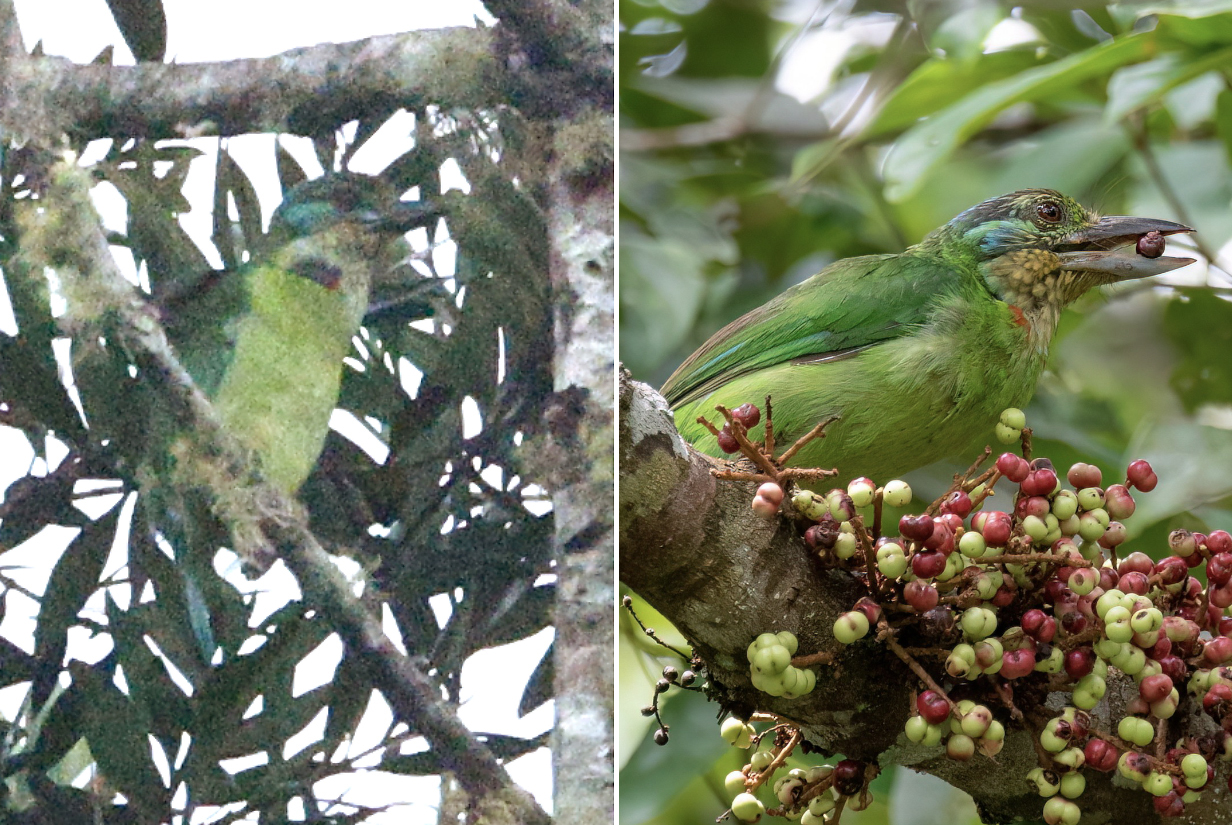
Mountain barbet ... in an exceedingly bad picture. For comparison, the right-hand panel shows a much better picture from ebird. This is my life bird.
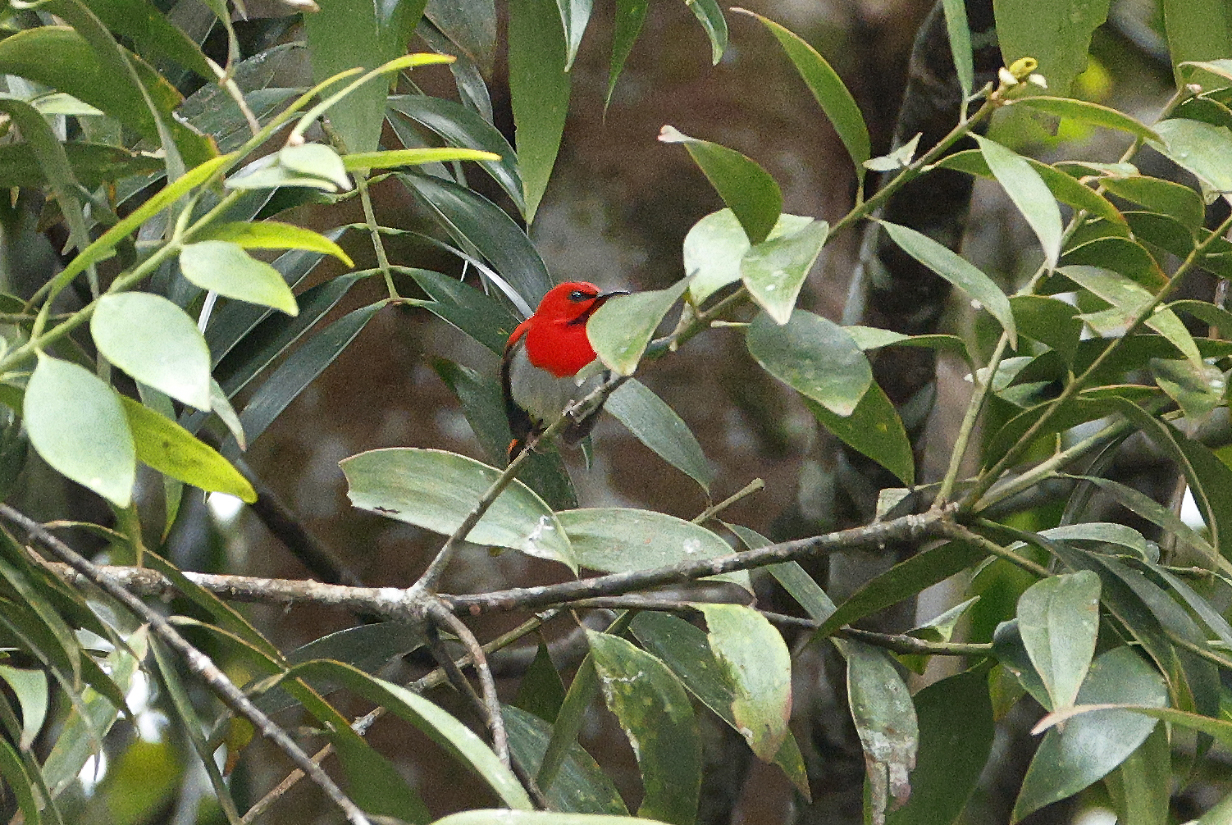
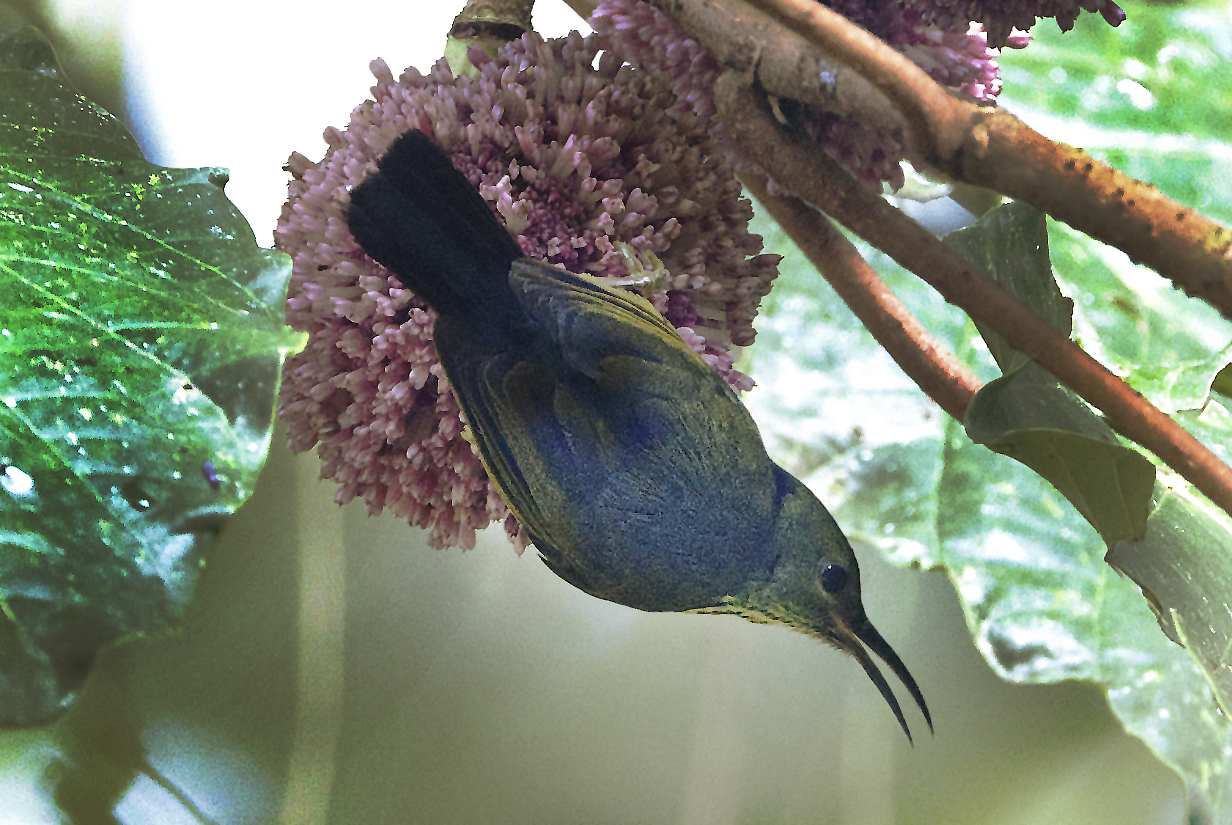
Temminck's sunbird (This is my life bird, in a lucky shot taken during a "split second" when he -- this is a male -- stood still.)
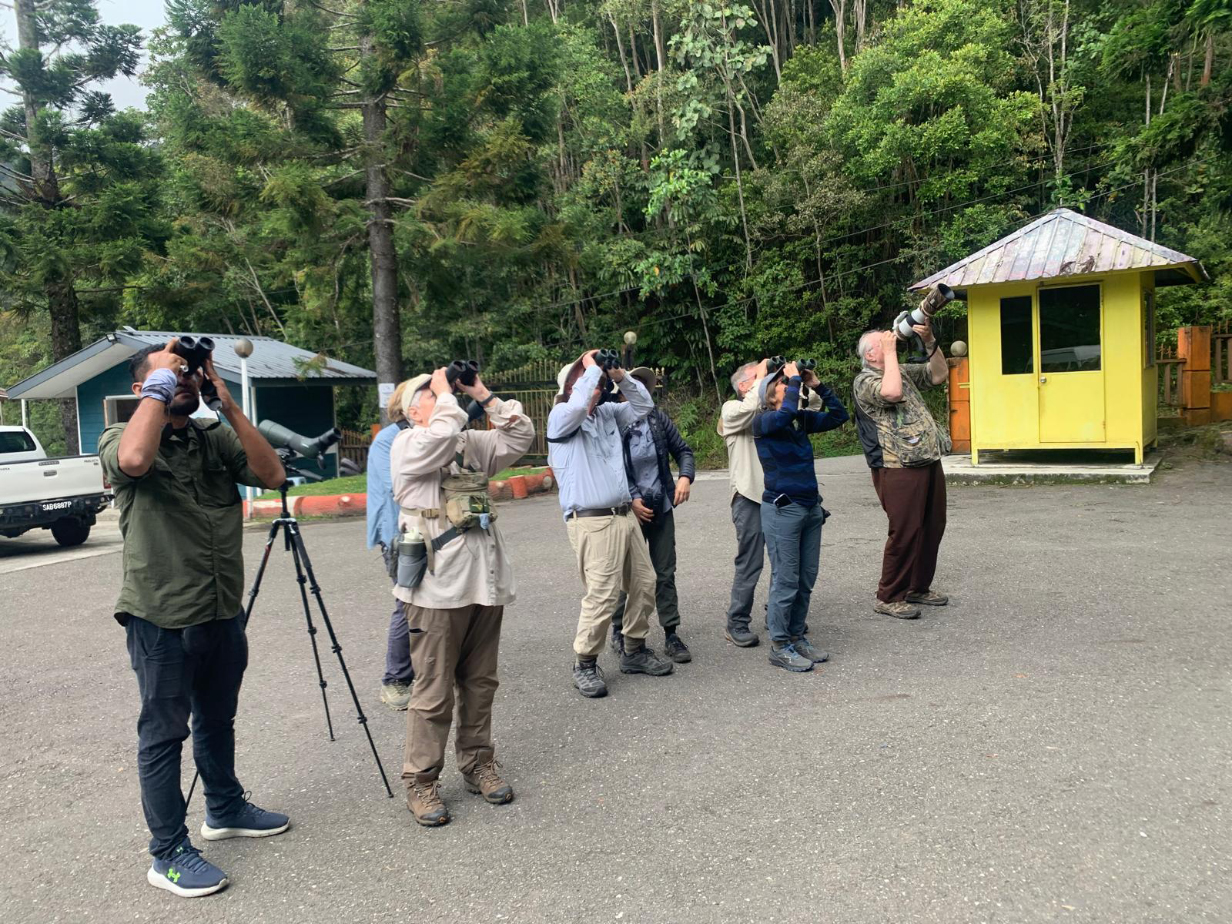
This is the moment when I photographed Temminck's sunbird: Thanks very much to VENT guide Scott Baker for taking this photo and for allowing me to use it.
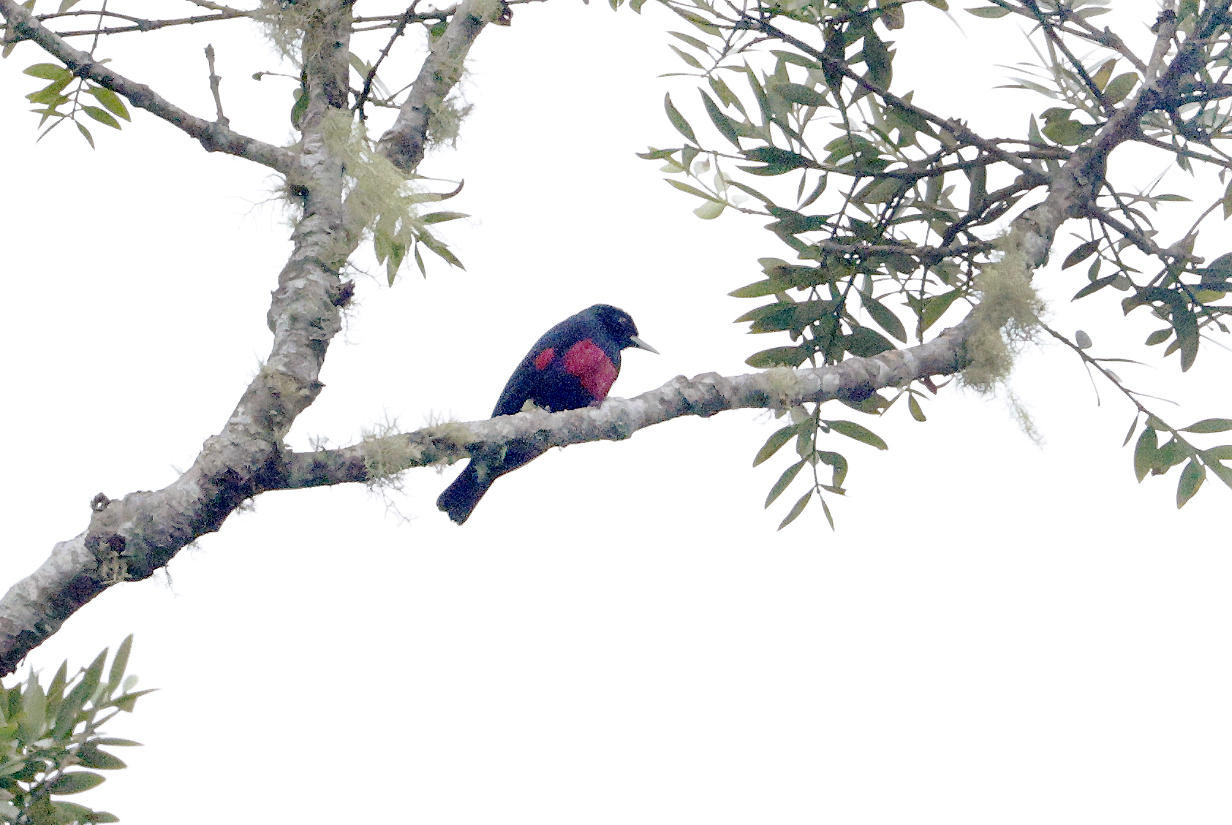
Black-and-crimson oriole -- far away! This is my life bird.
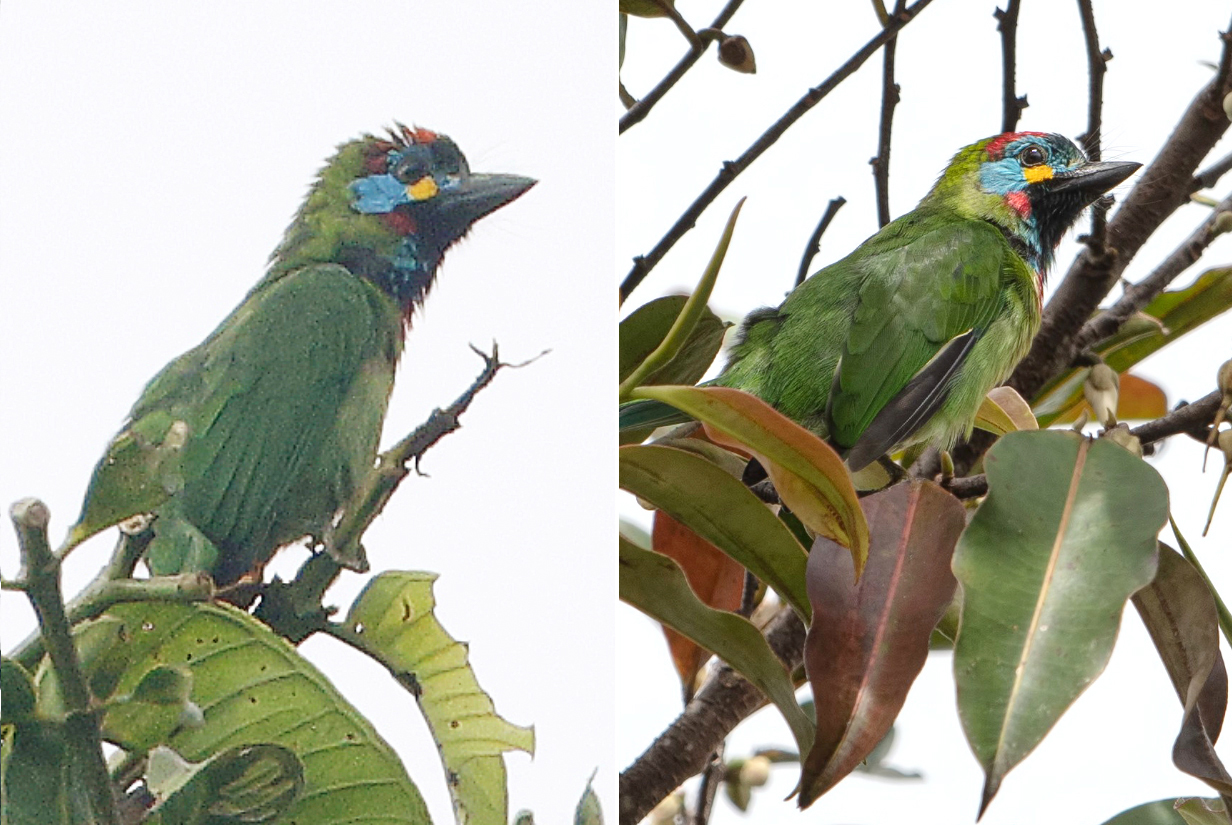
Bornean barbet ... also far away. For comparison, the right-hand panel shows a picture from ebird. This is my life bird.
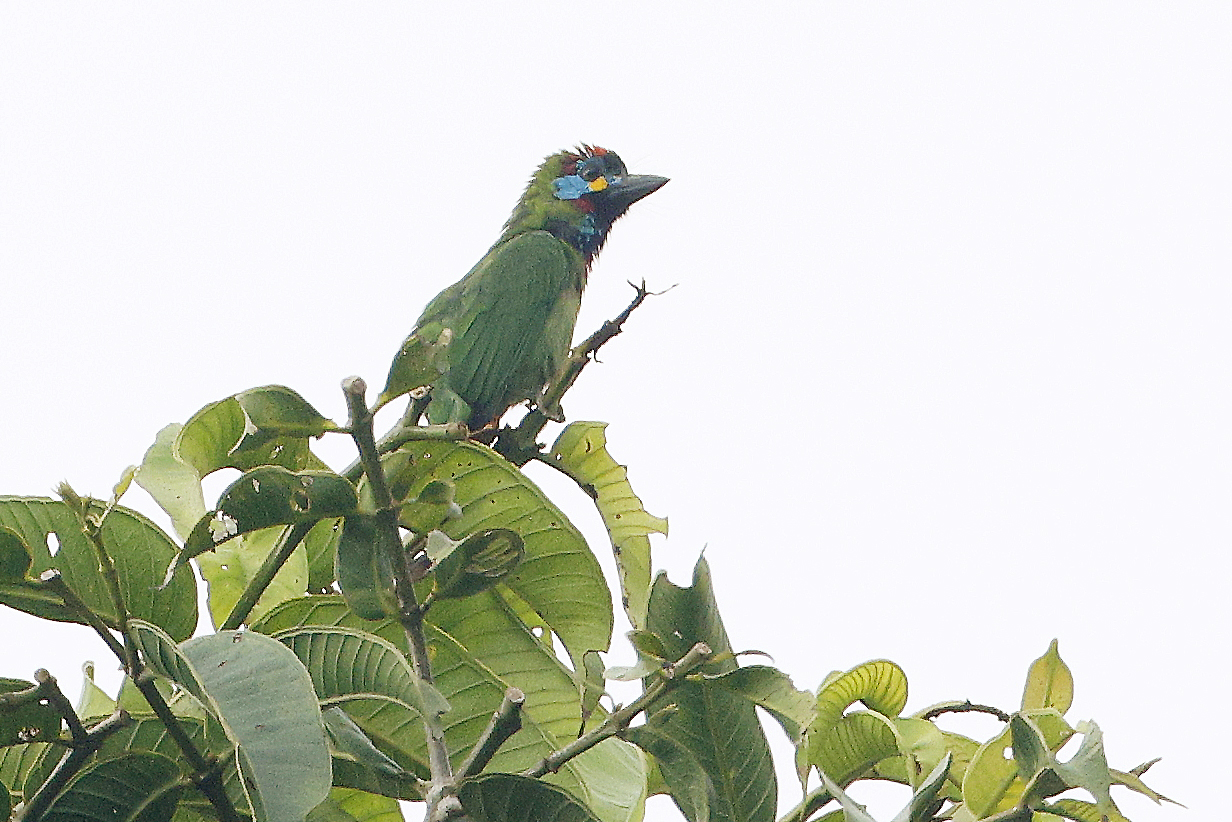
Nicer portrait of Bornean barbet (Barbets are reliable "eye candy", but on this trip, no barbet came close to me.)
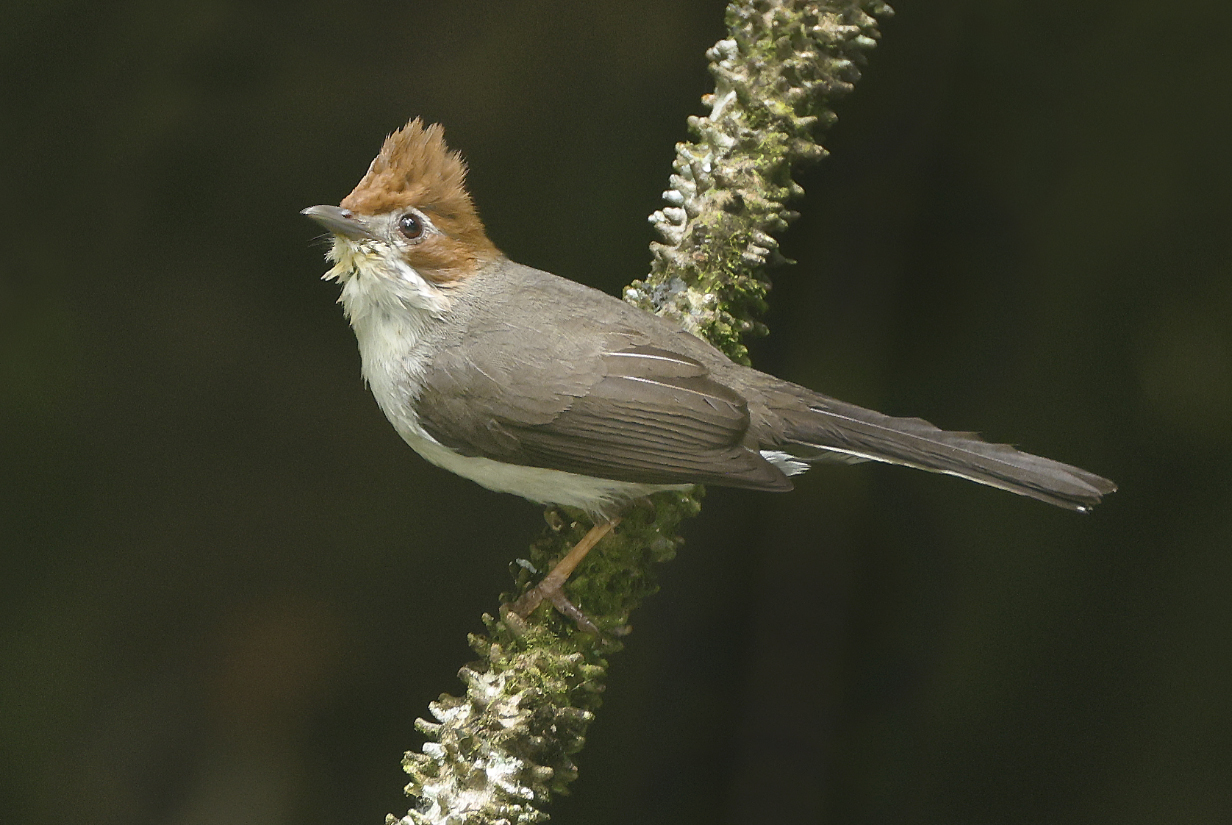
Chestnut-crested yuhina (This is my life bird. It reminds me of some of my favorite bird populations in the Himalayan foothills.)
This is the end of the morning of March 17. We spent much of the afternoon at "Hide 1" at Trusmadi. Here, we were exceptionally comfortable while a spectacular array of birds came close enough to be well seen and photographed.
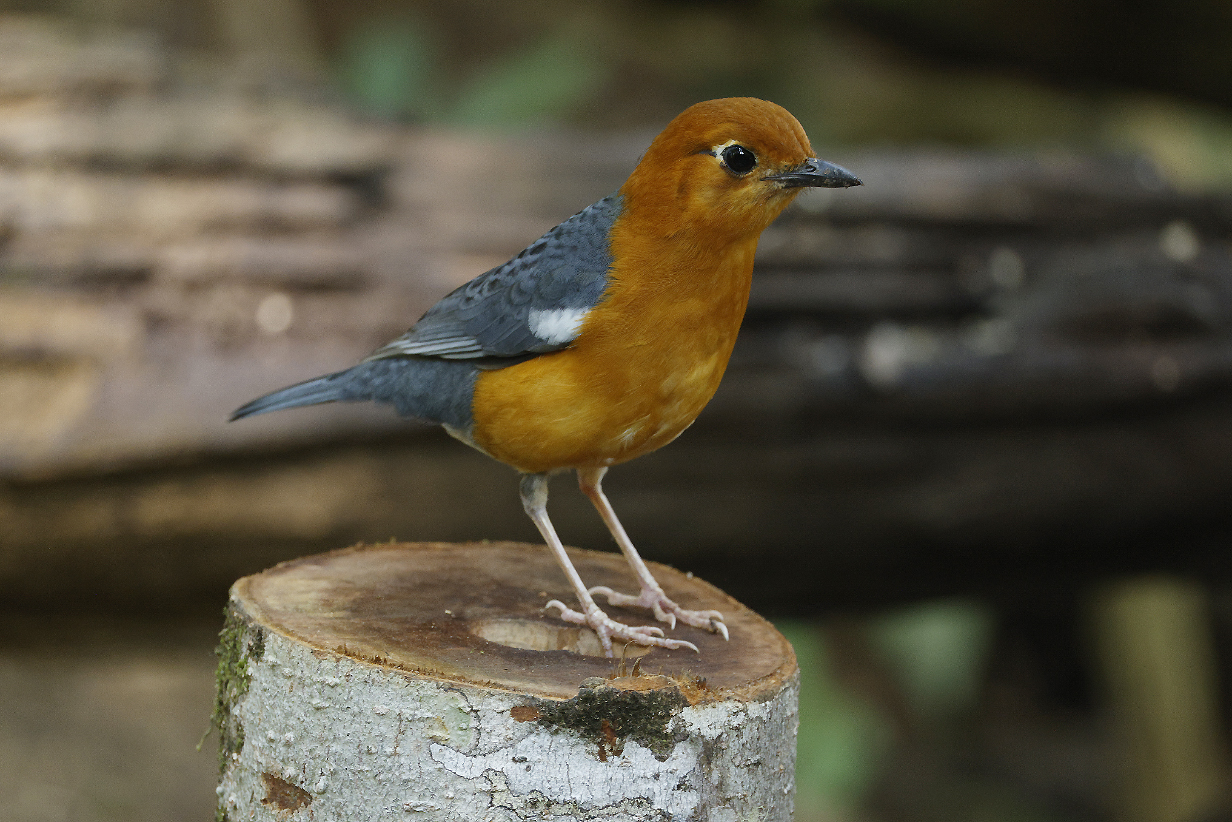
Orange-headed thrush is gorgeous and the most common bird at the hide.
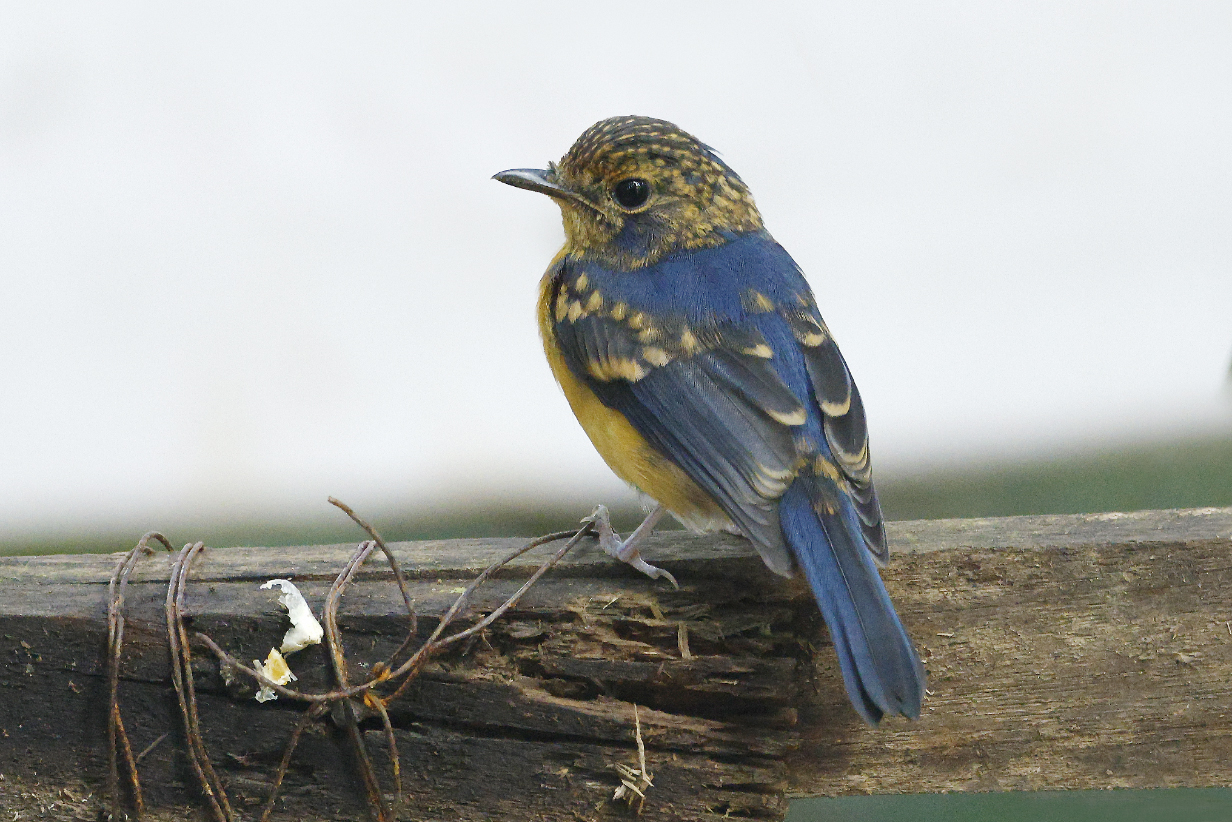
Dayak blue flycatcher (This juvenile male is my life bird.)
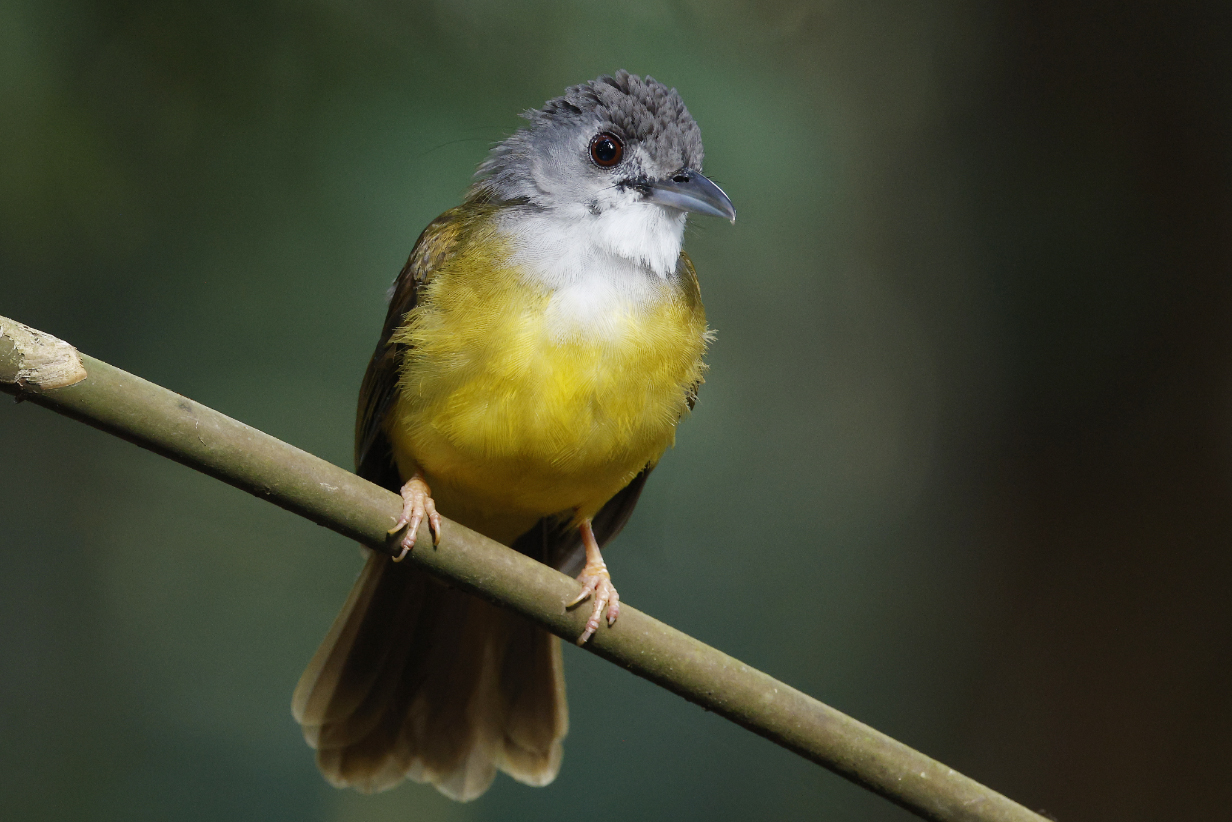
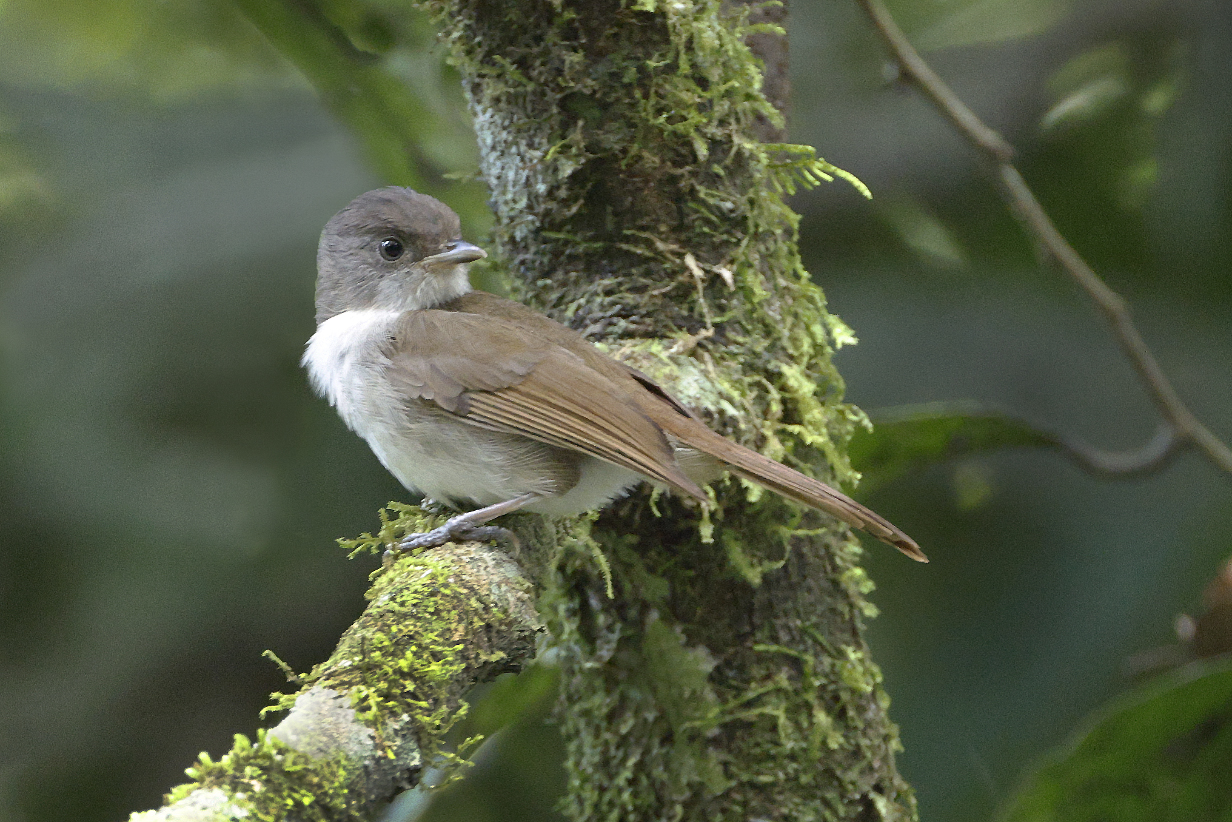
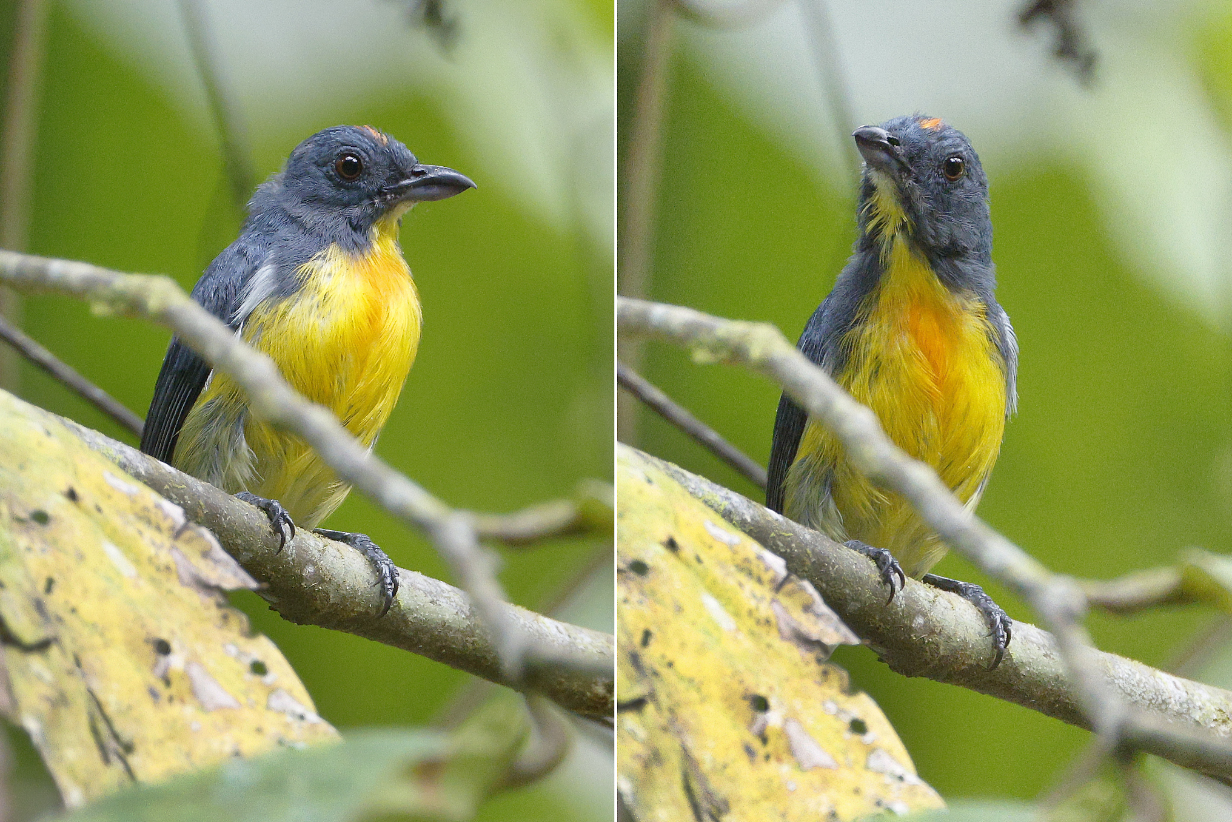
Yellow-bellied bulbul (This is my life bird.)
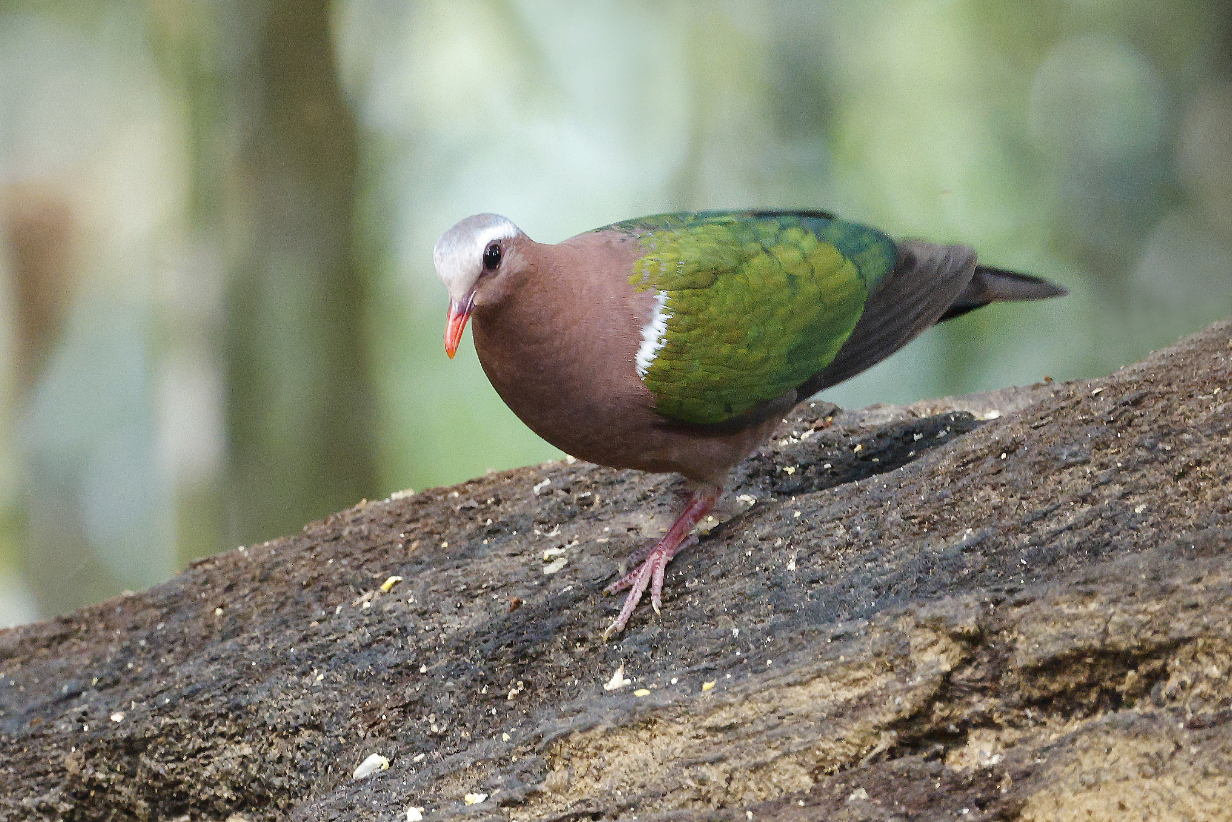
Asian emerald dove
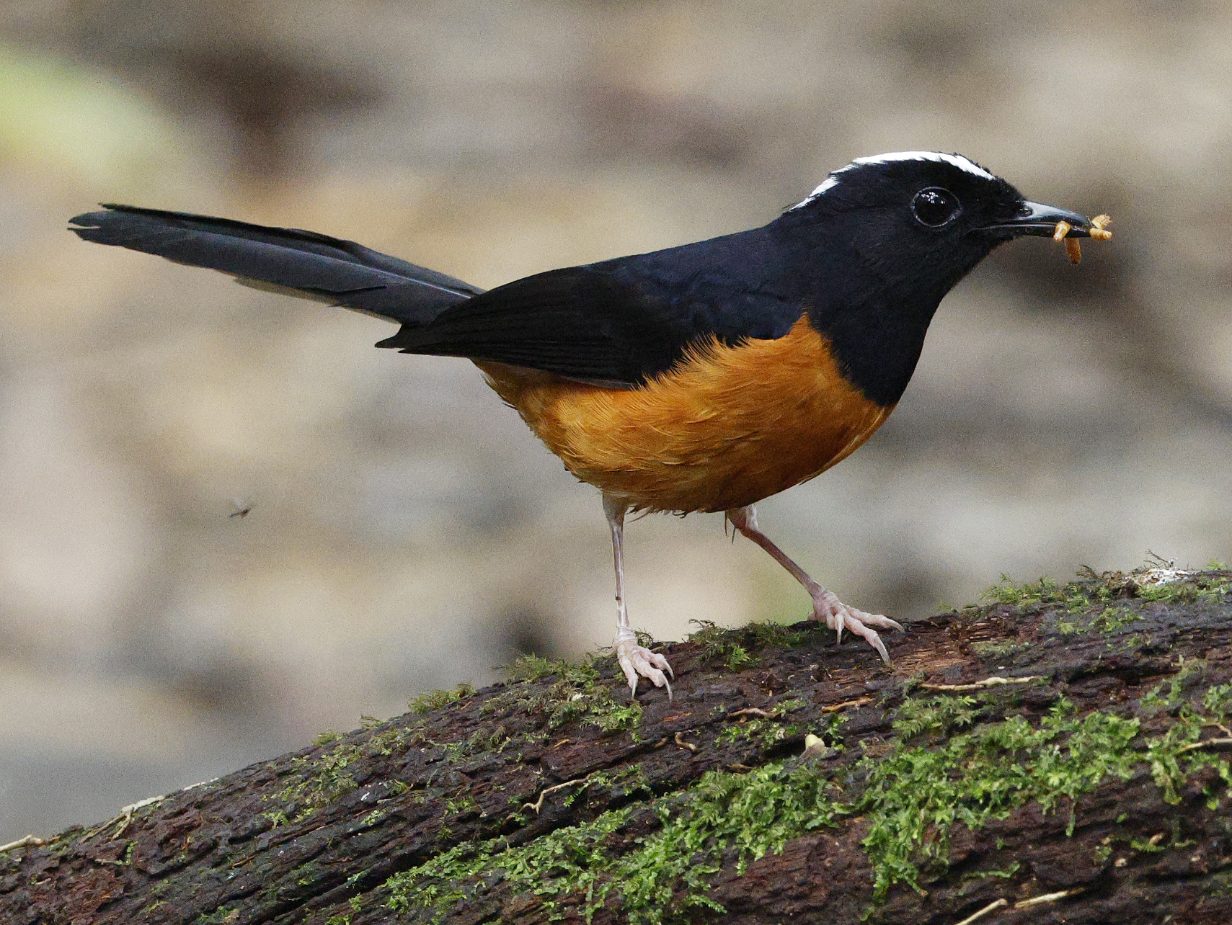
White-crowned shama (This is my life bird.)
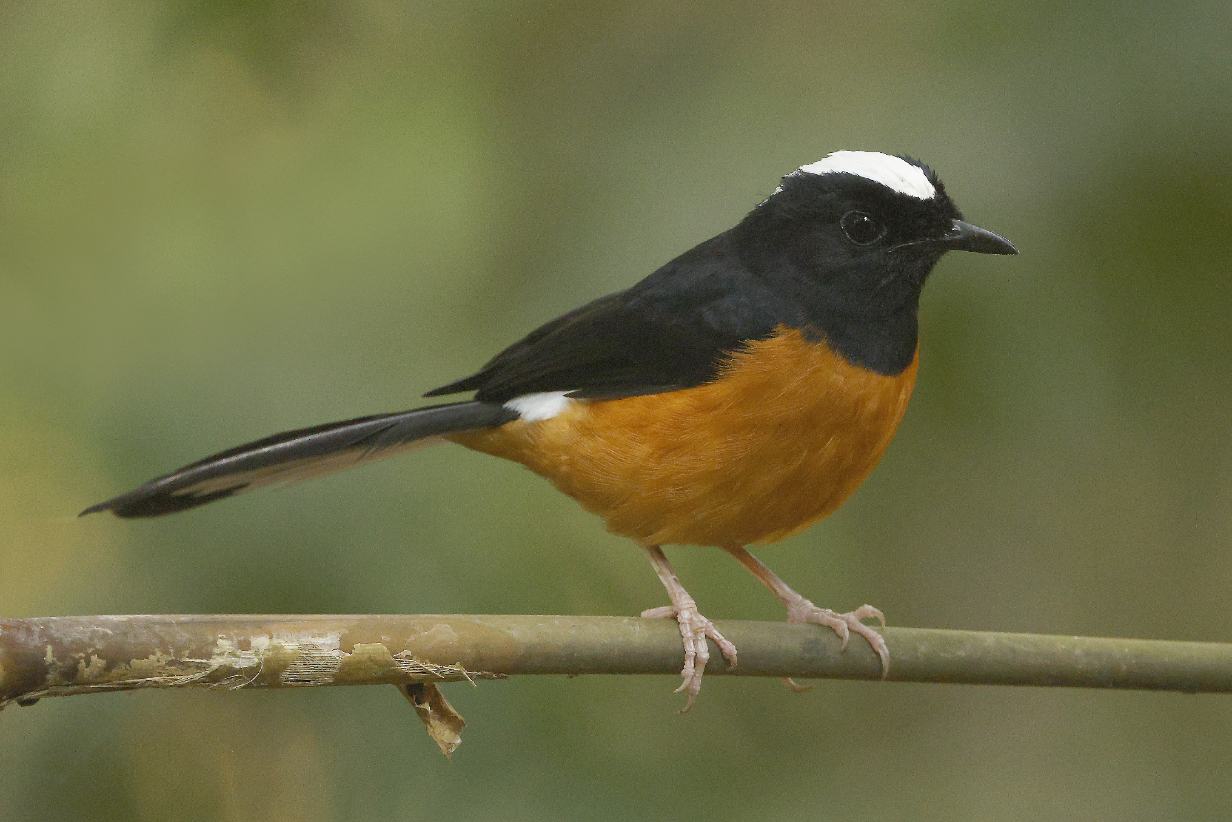
White-crowned shama
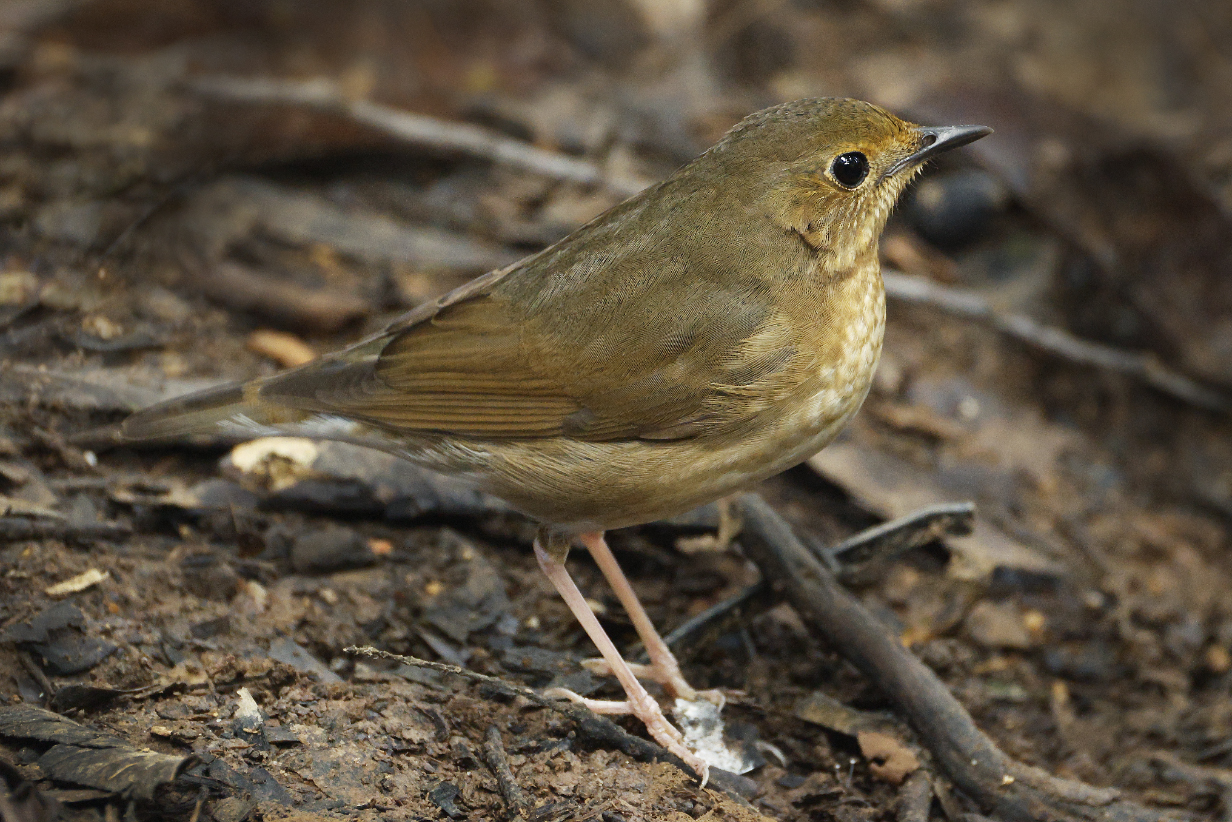
Siberian blue robin (female)
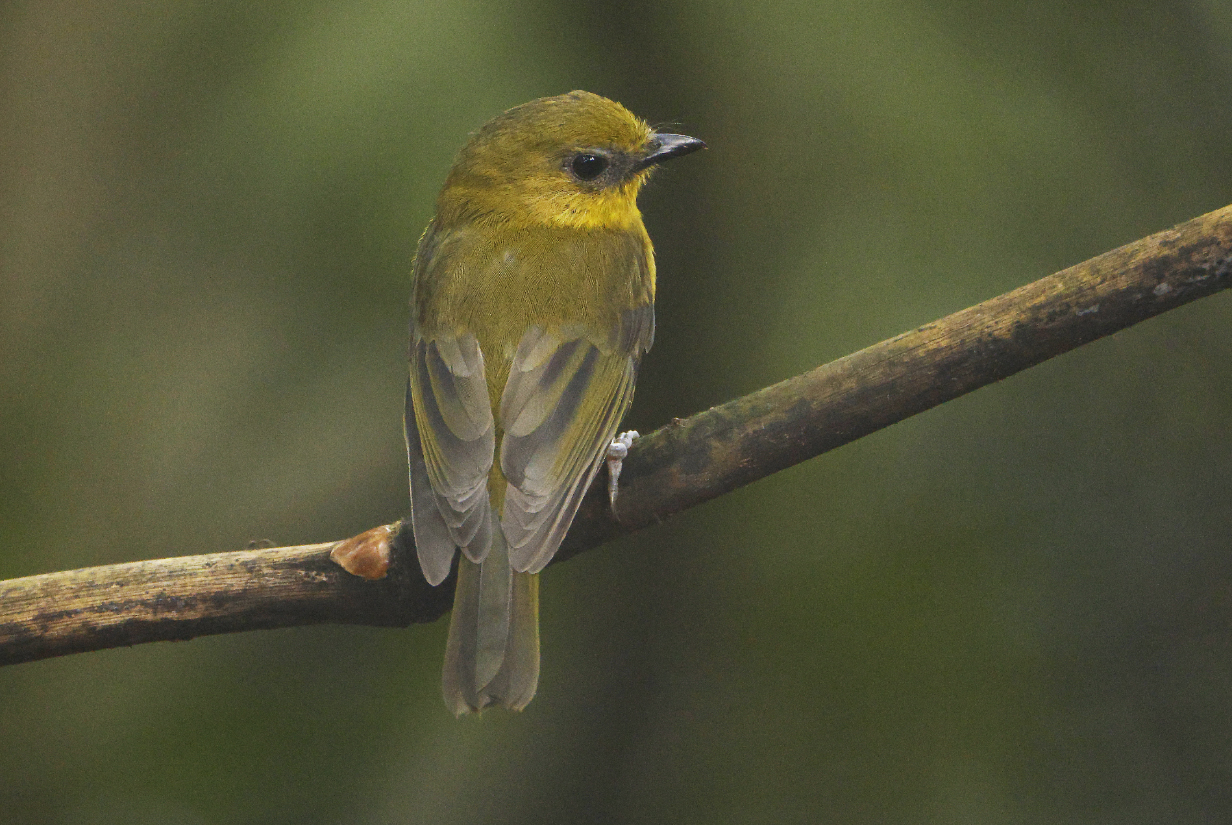
Bornean whistler
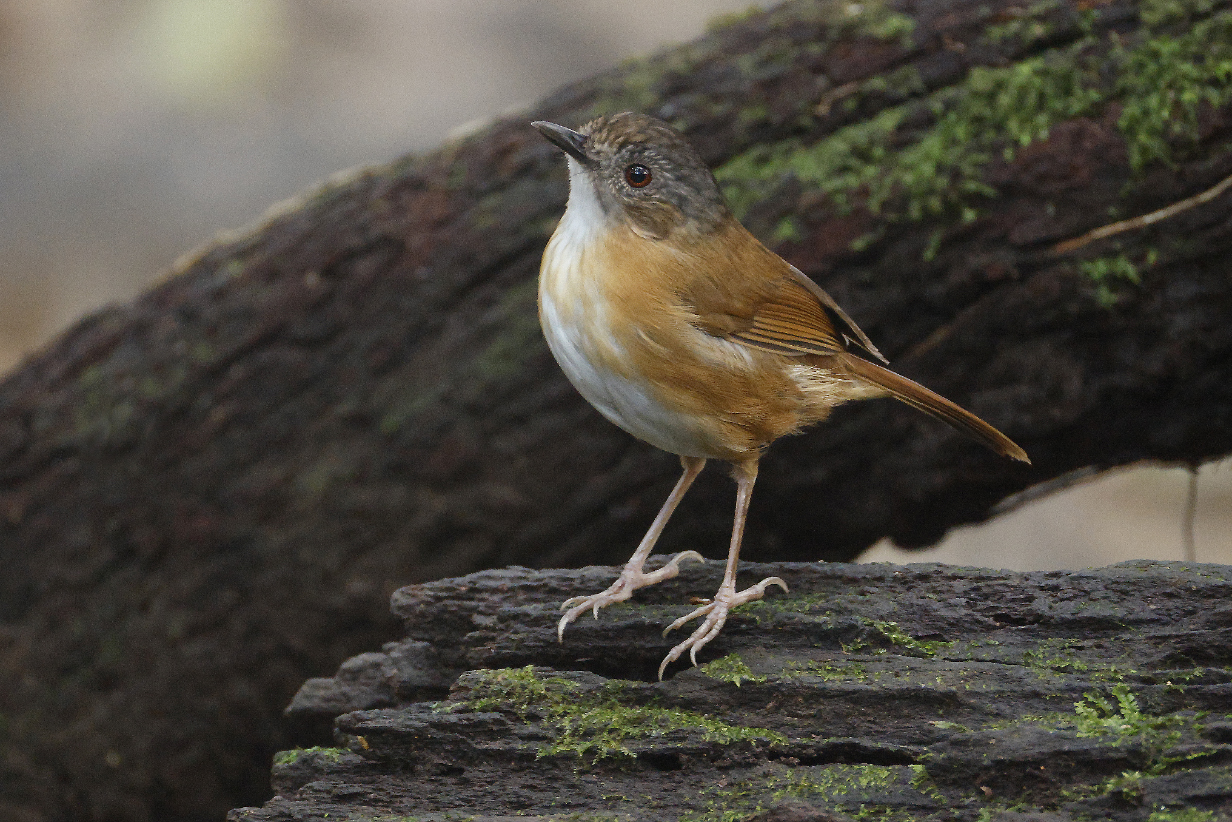
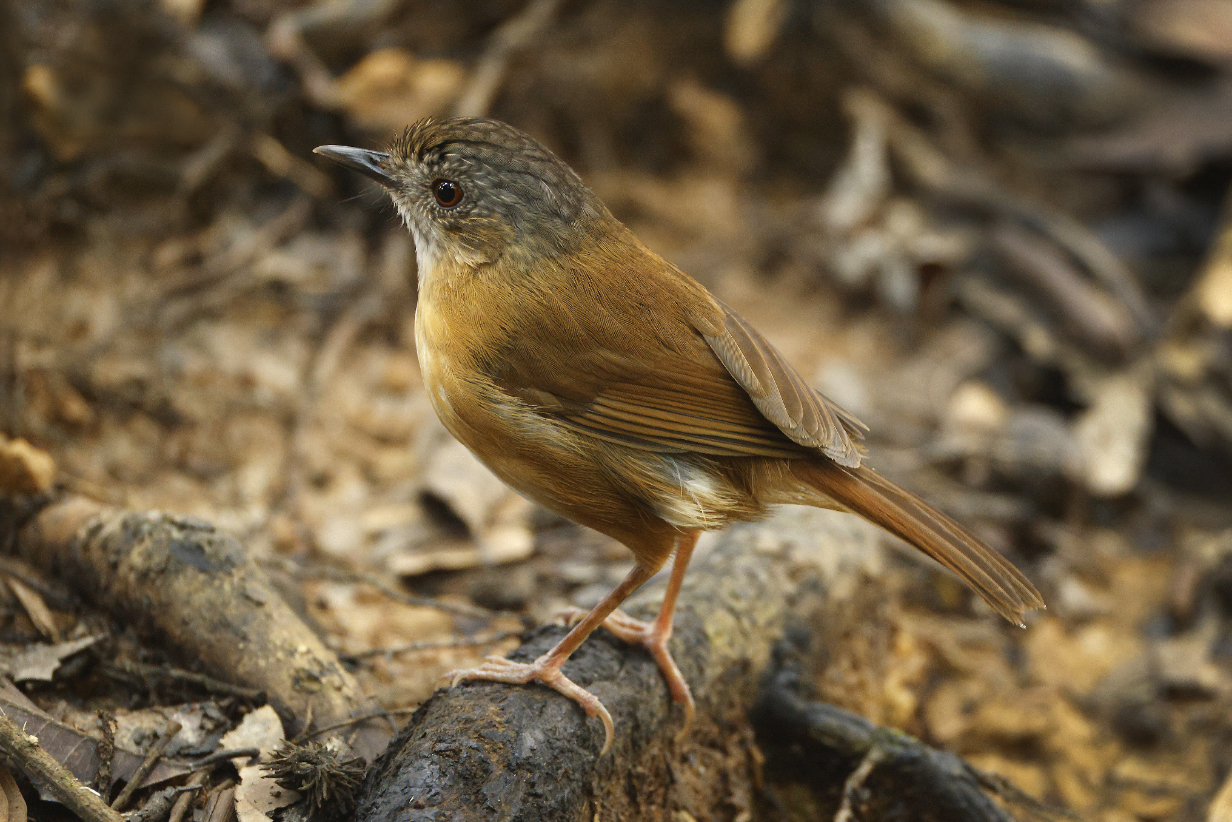
Temminck's babbler (This is my life bird.)
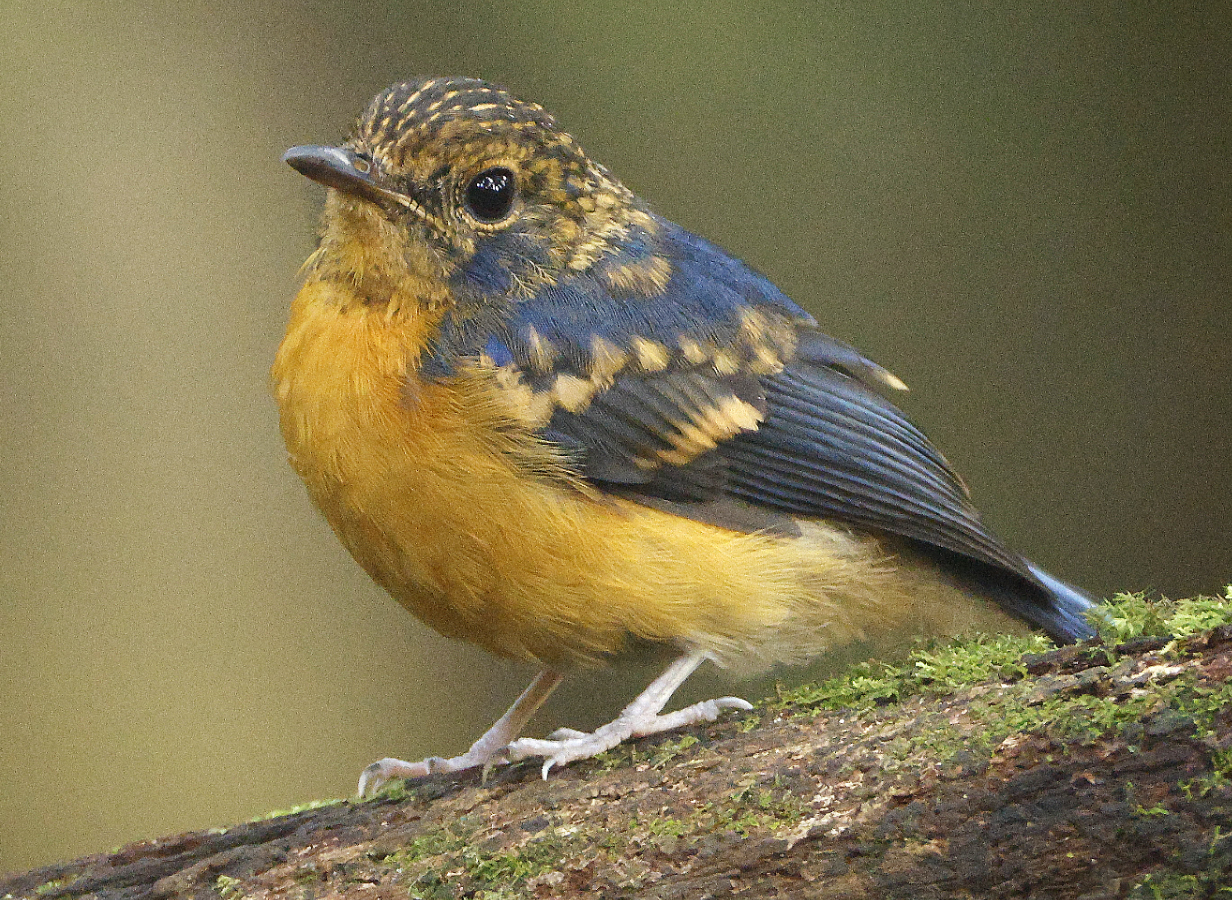
Dayak blue flycatcher is one of many birds that made multiple visits to the hide.
Birding in the highlands was the highlight of the trip. I got 14 new birds today -- best day of the tour. The new bird that is not illustrated here is Bornean banded pitta: a male ran by very quickly and did not get photographed. But I saw and photographed both the male and a female tomorrow.
March 18: Trusmadi Bird Station Hides 2 and 1; Drive to Kinabalu National Park
We started out at Hide 2 still in very early, very dark twilight:
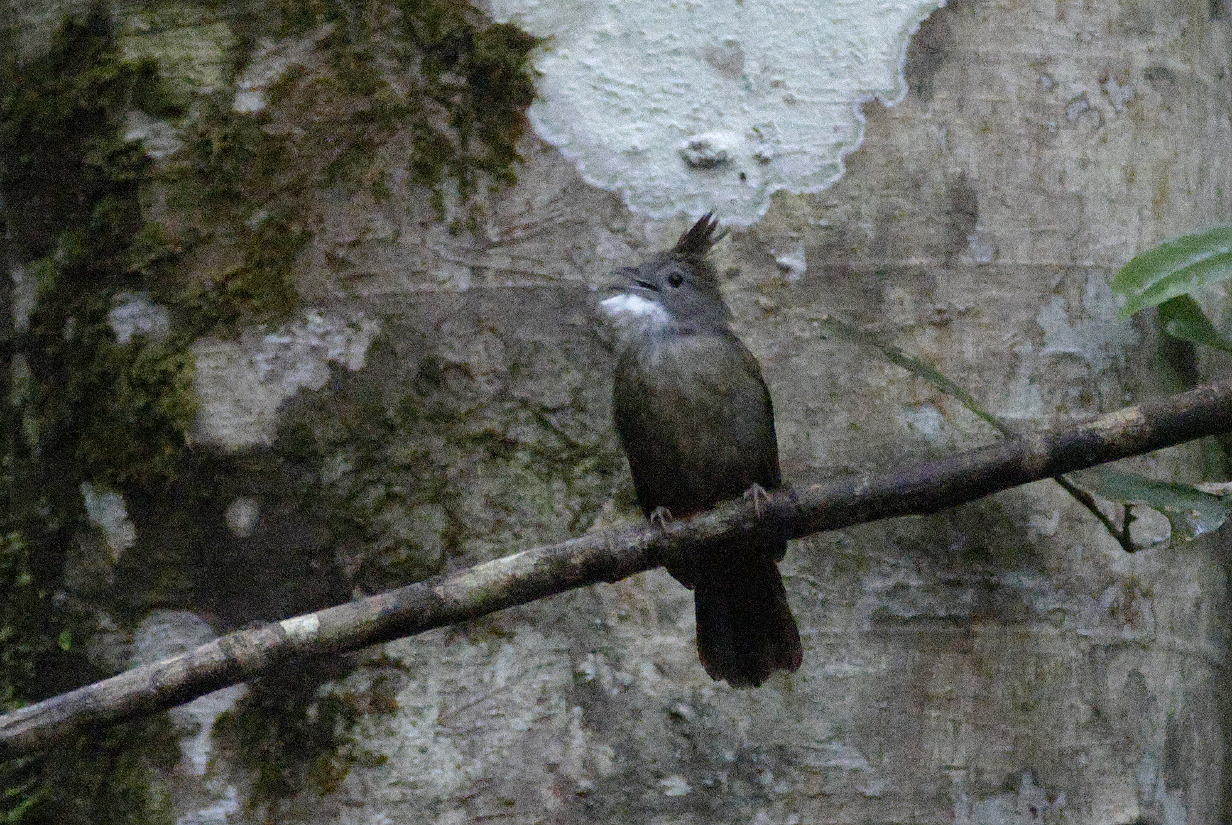
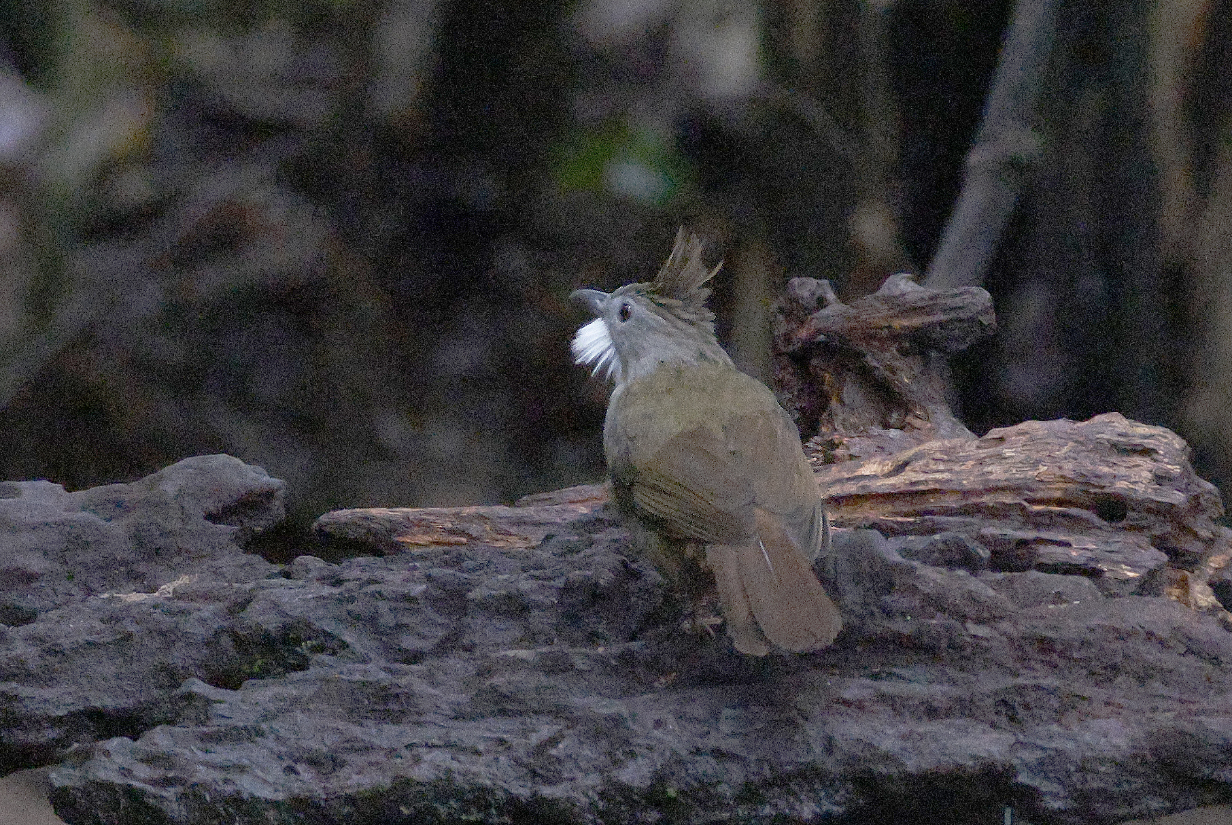
Penan bulbul deep in morning twilight (This is my life bird.)
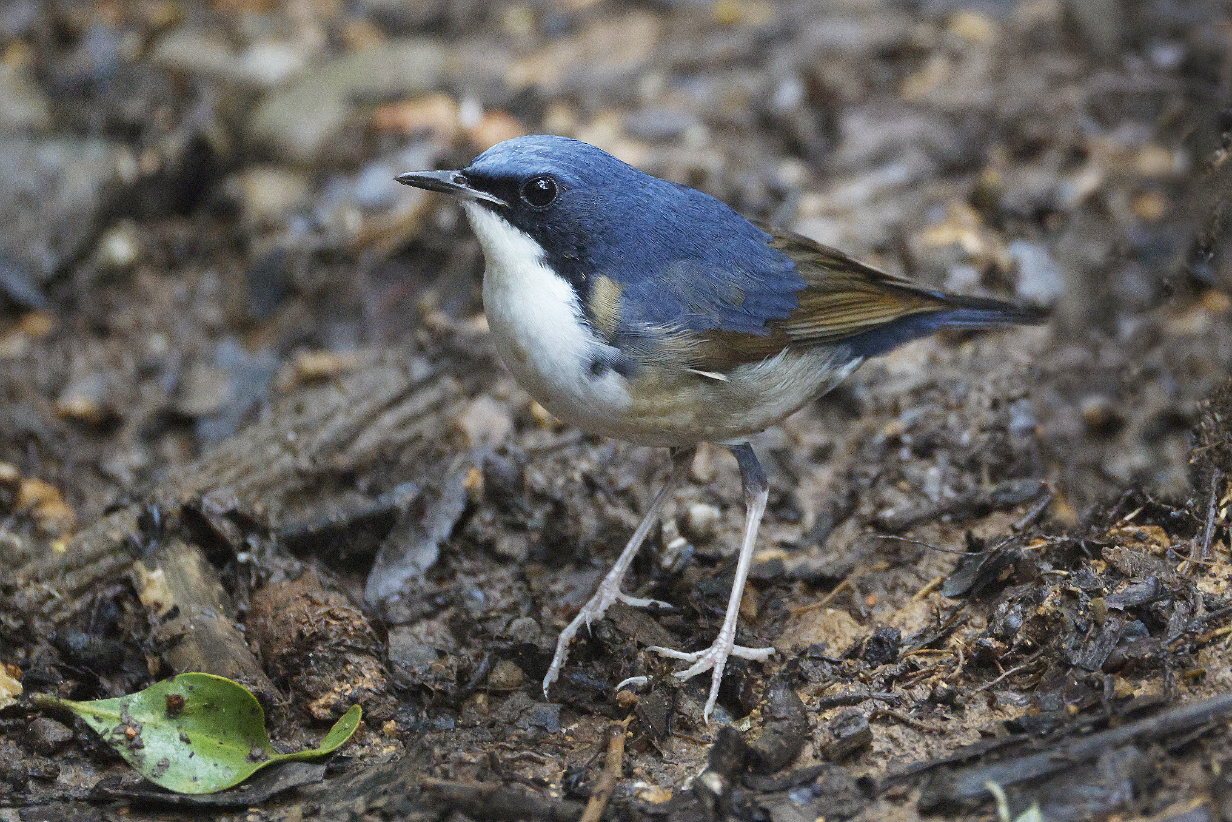
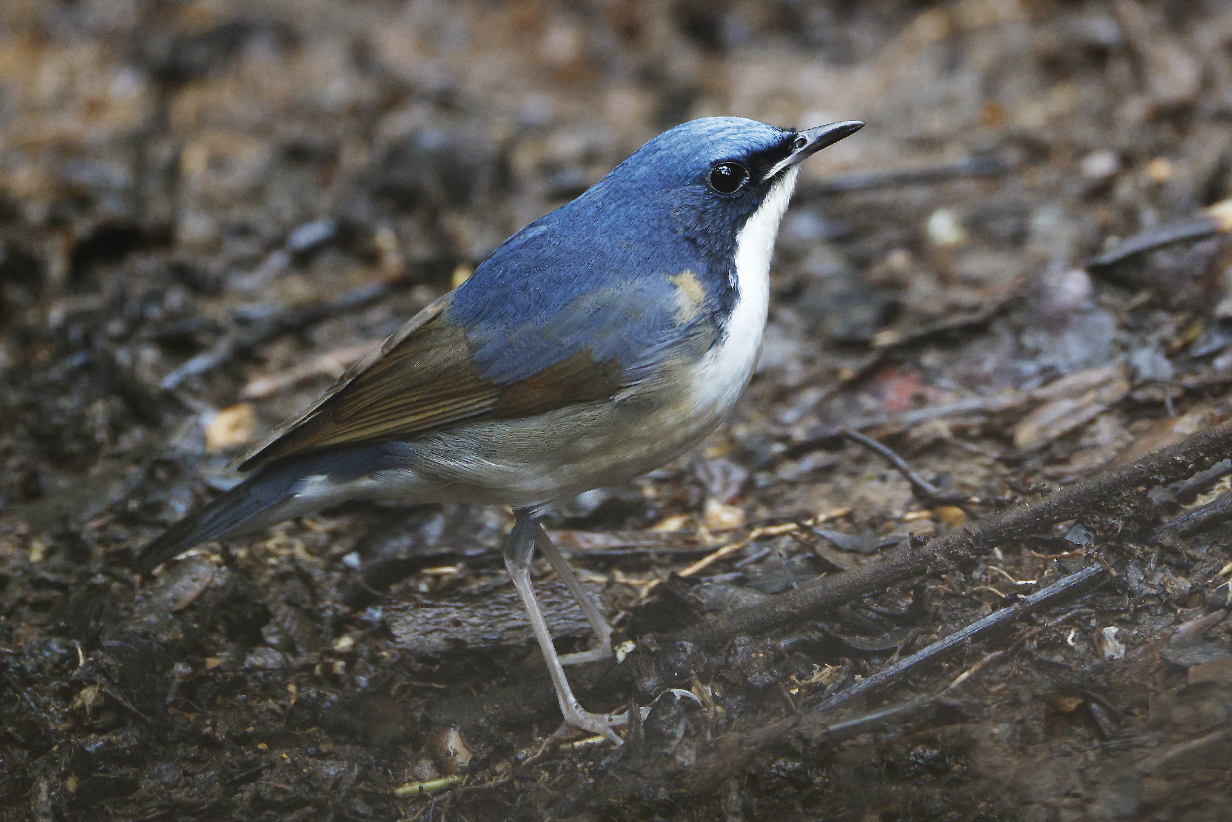
Siberian blue robin (male)
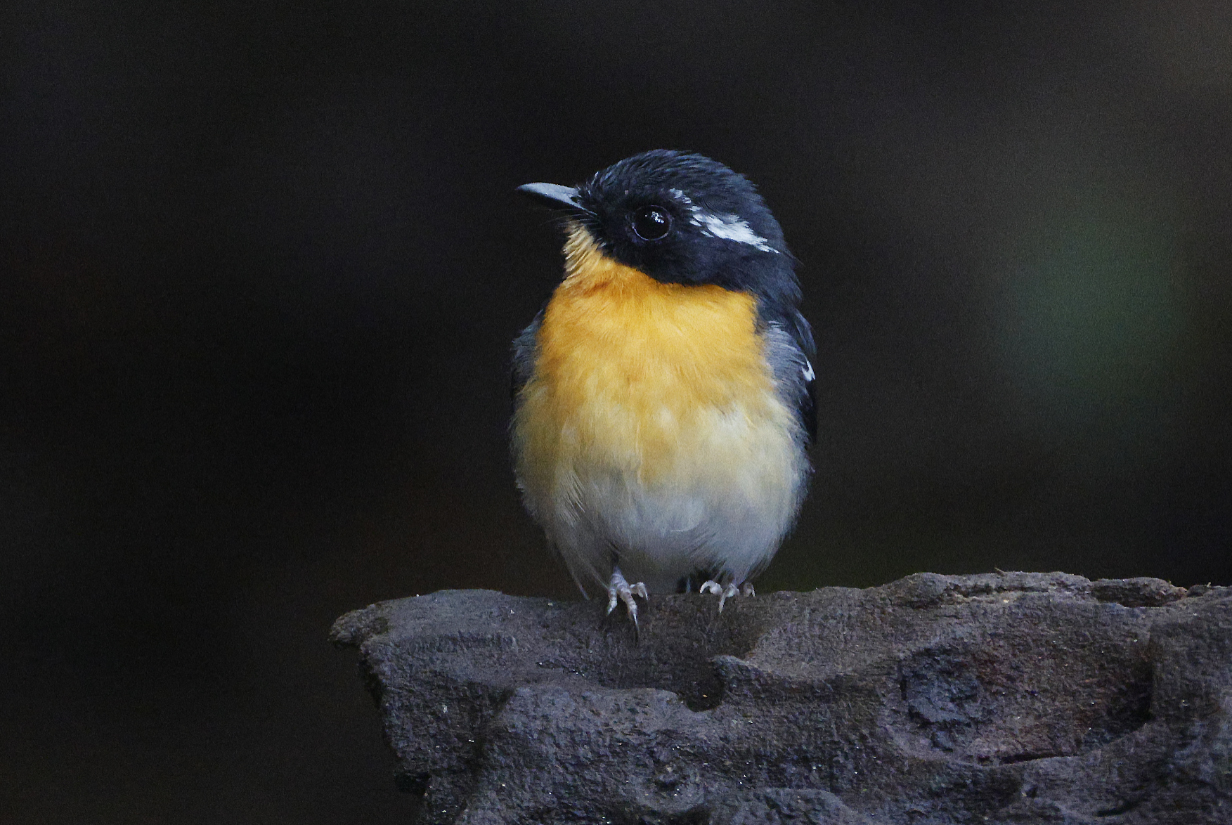
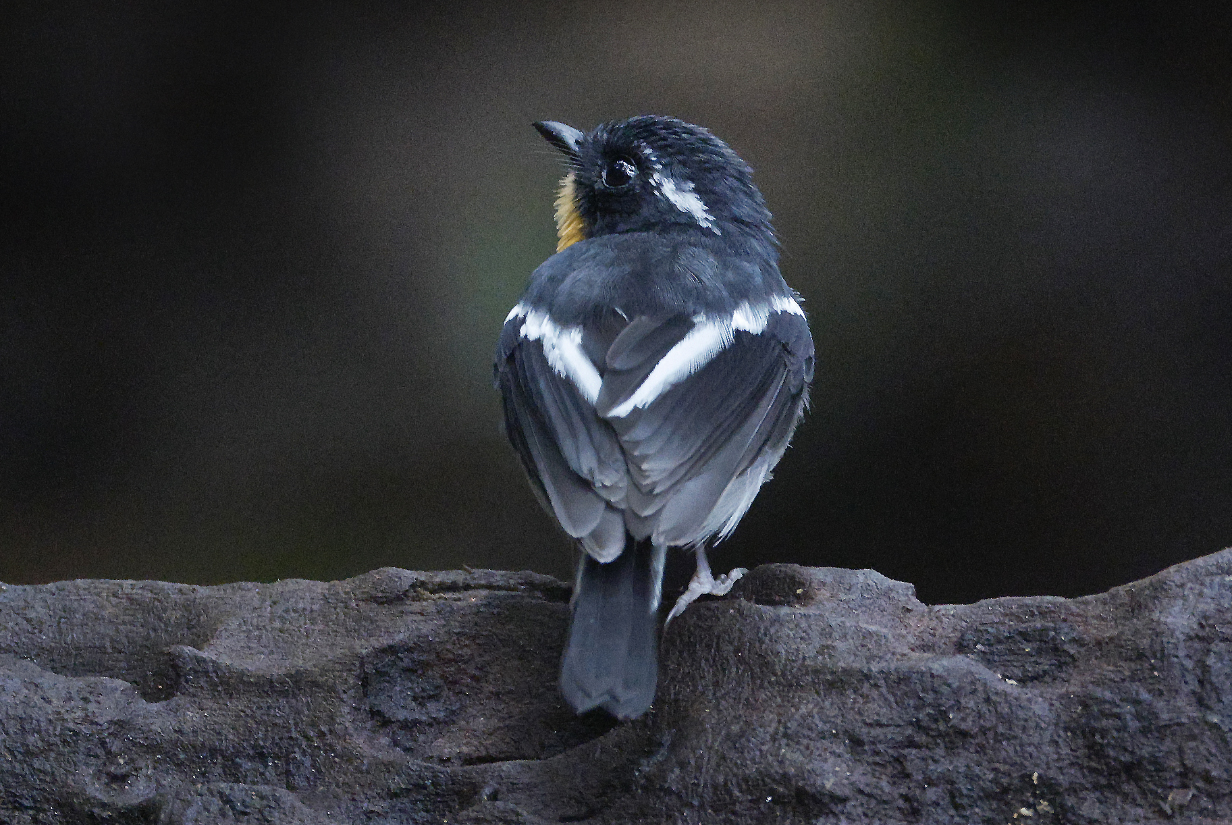
Rufous-chested flycatcher (This is my life bird.)
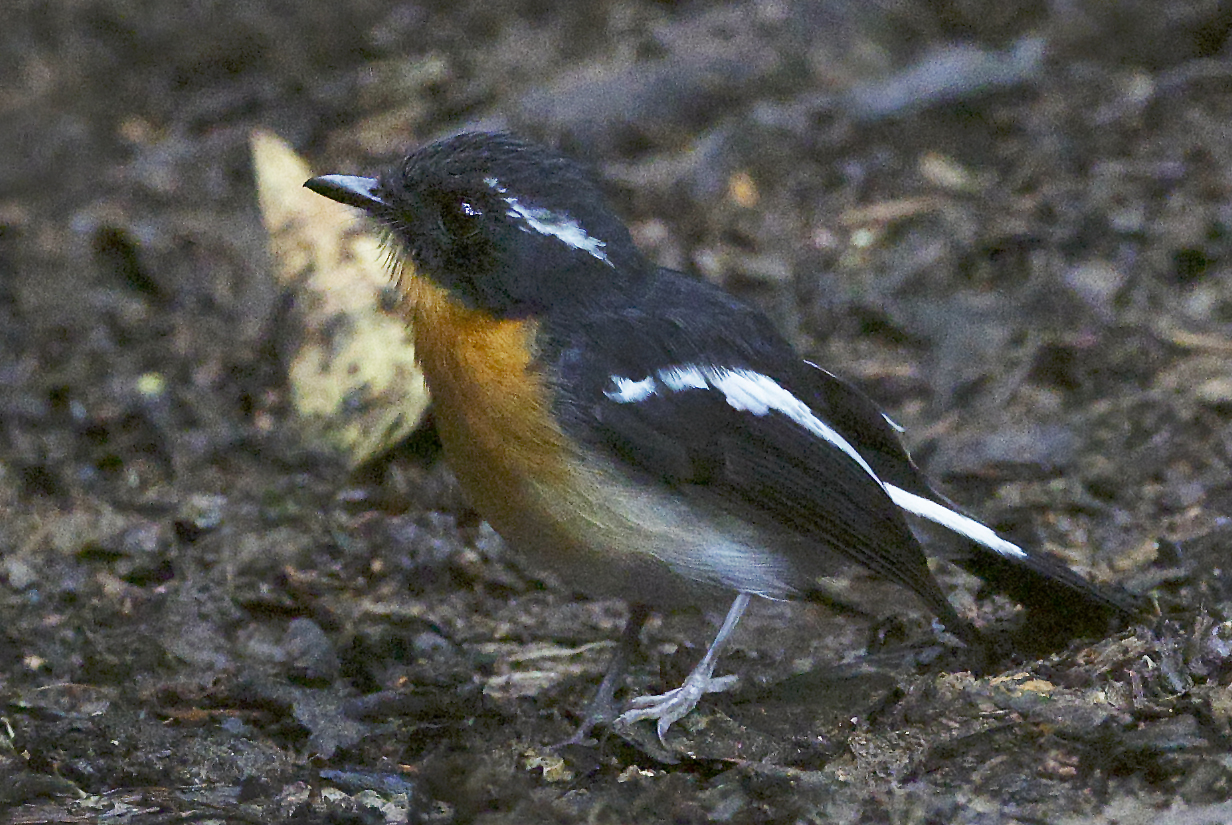
Rufous-chested flycatcher during a later visit to the hide
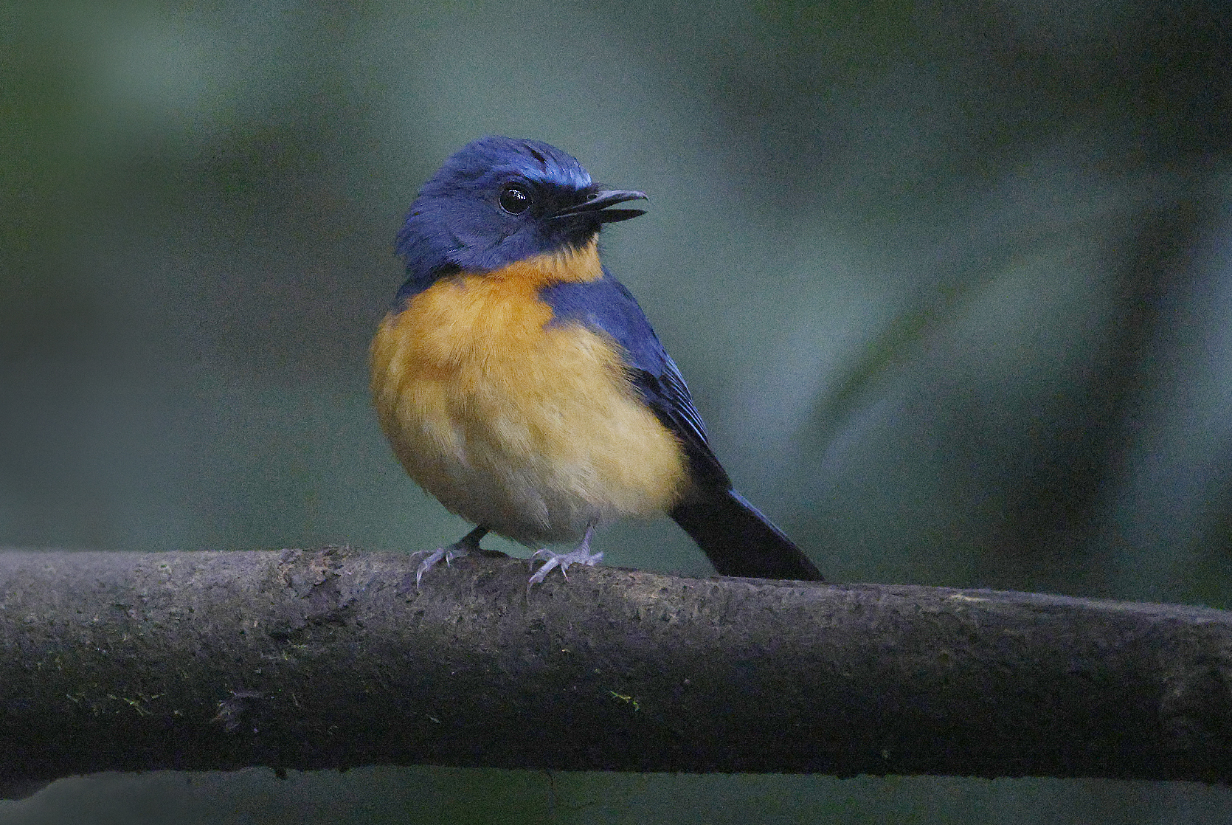
Dayak blue flycatcher (Today, a gorgeous adult male came to Hide 2.)
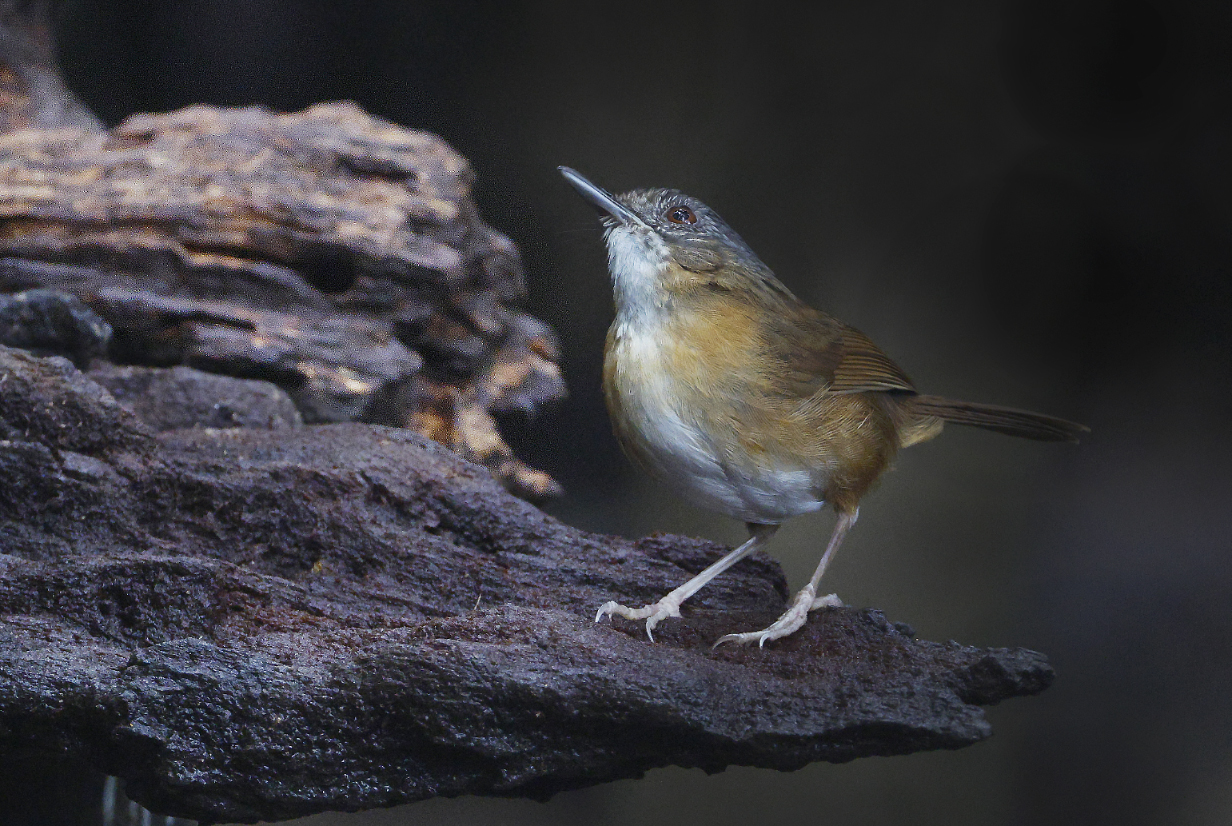
Temminck's babbler was once again a frequent visitor.
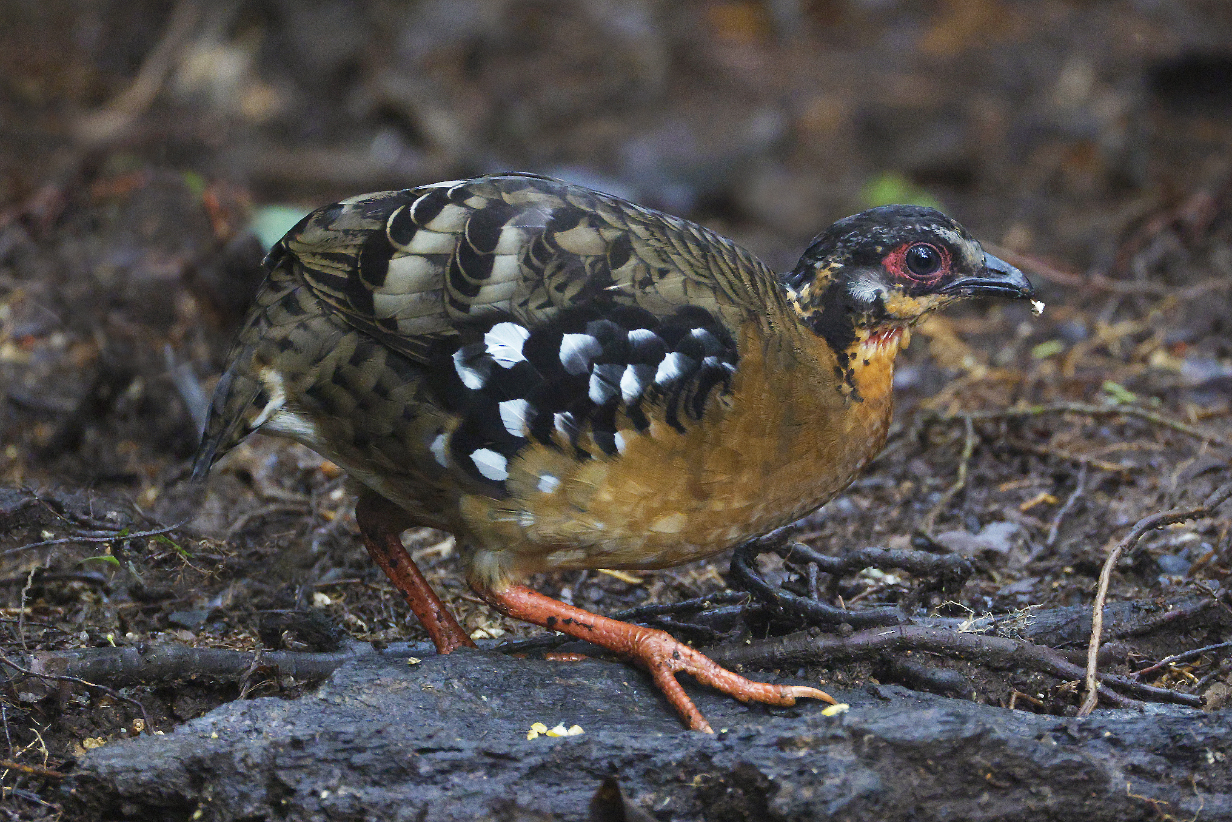
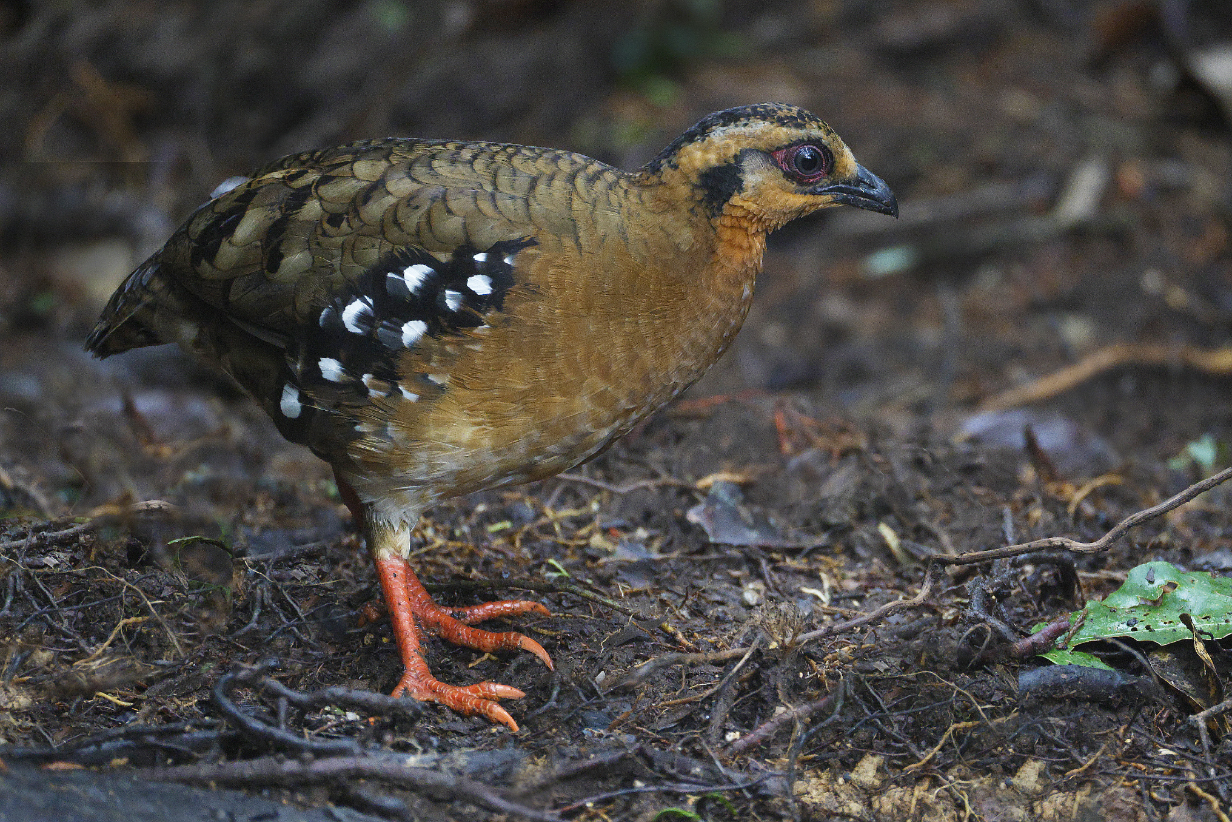
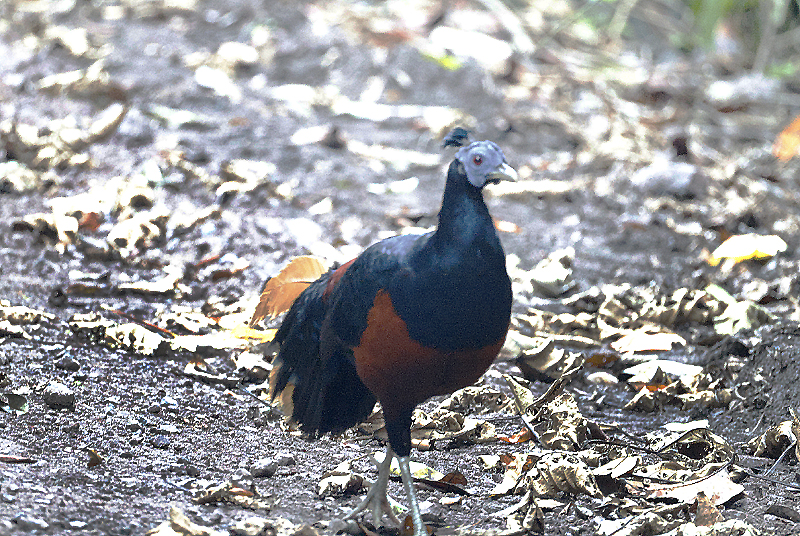
Red-breasted partridge (These are two of a small flock of my life birds.)
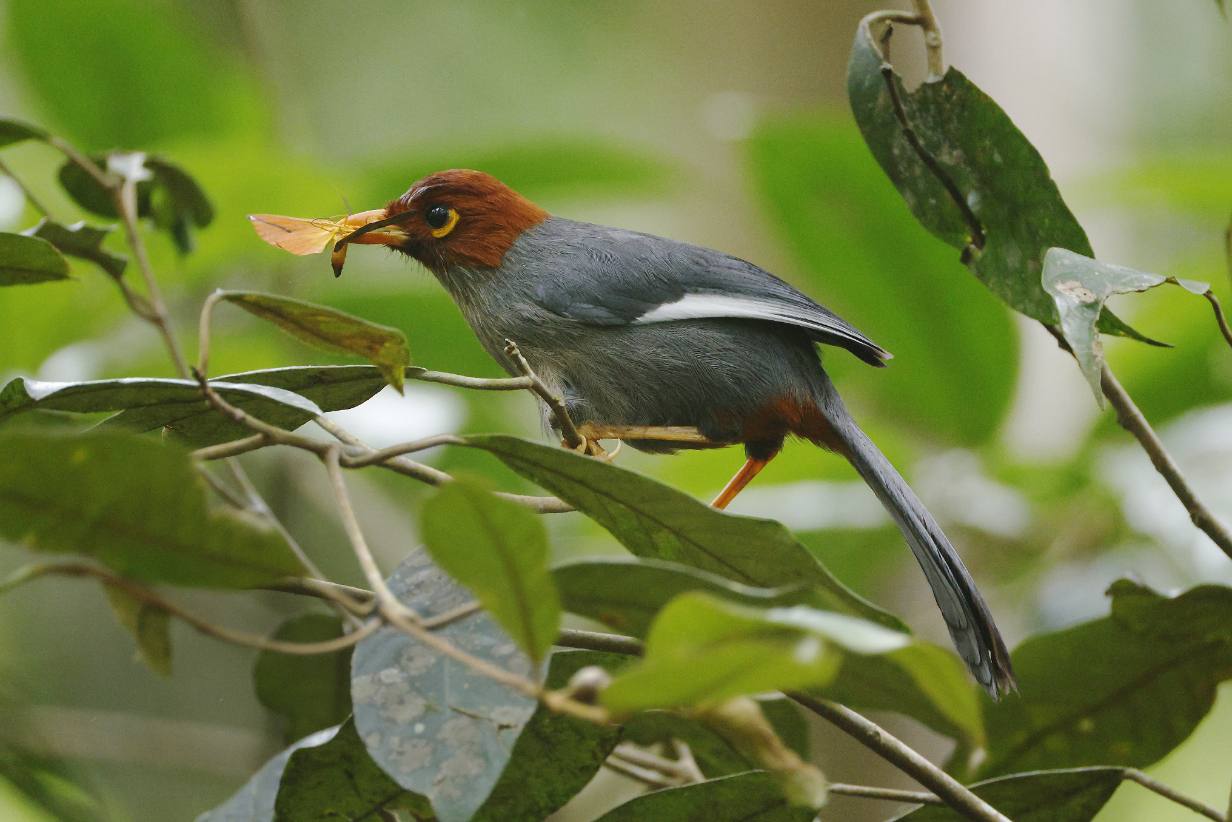
Chestnut-hooded laughingthrush
At this point, we gave up on Bulwer's pheasant -- an important "miss" -- and switched back to hide 1.
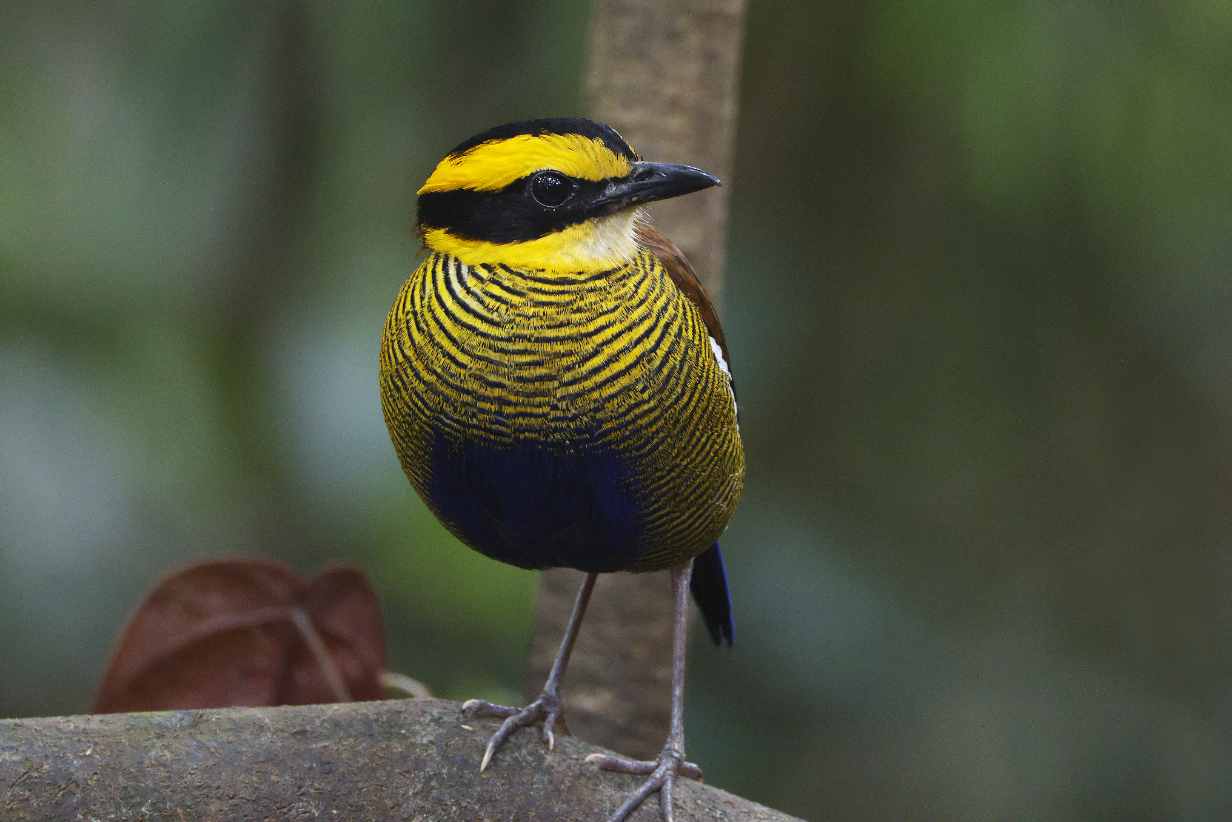
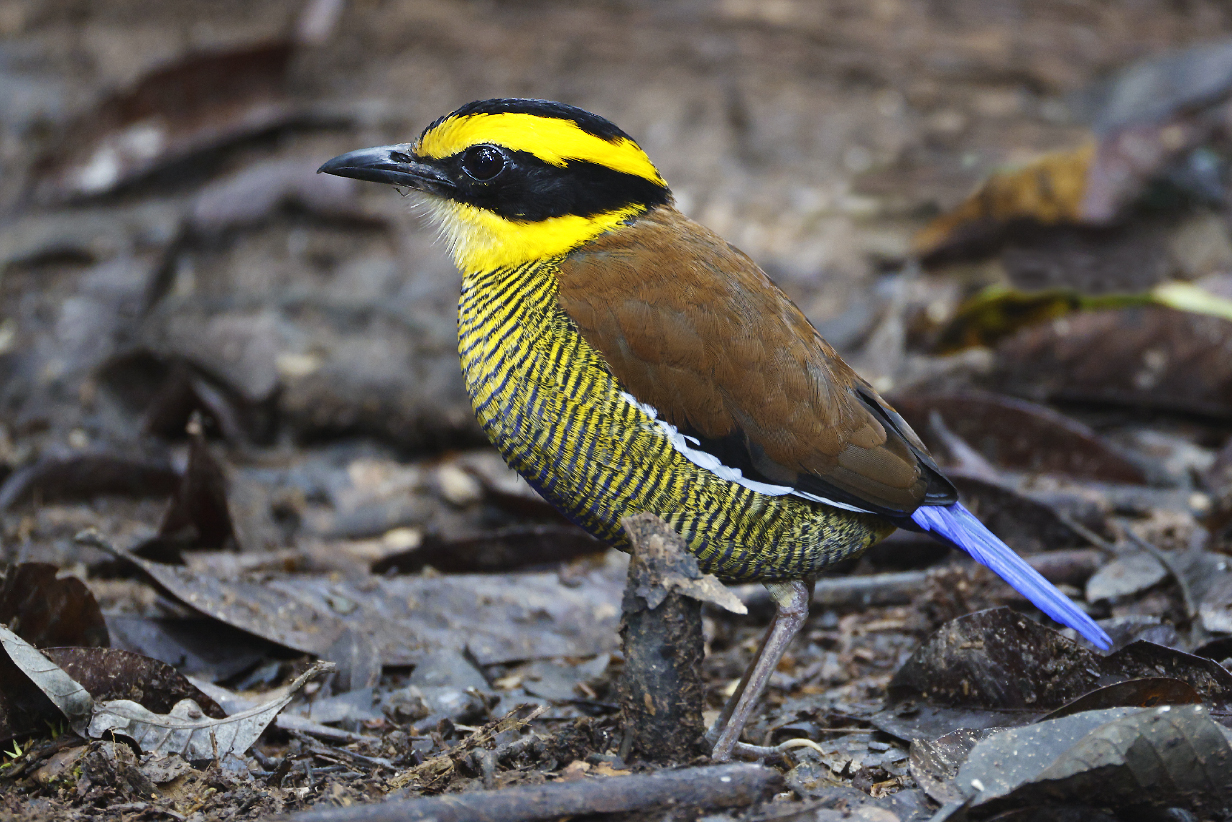
Bornean banded-pitta (male) Both male and female stayed for a long time and gave us superb looks.
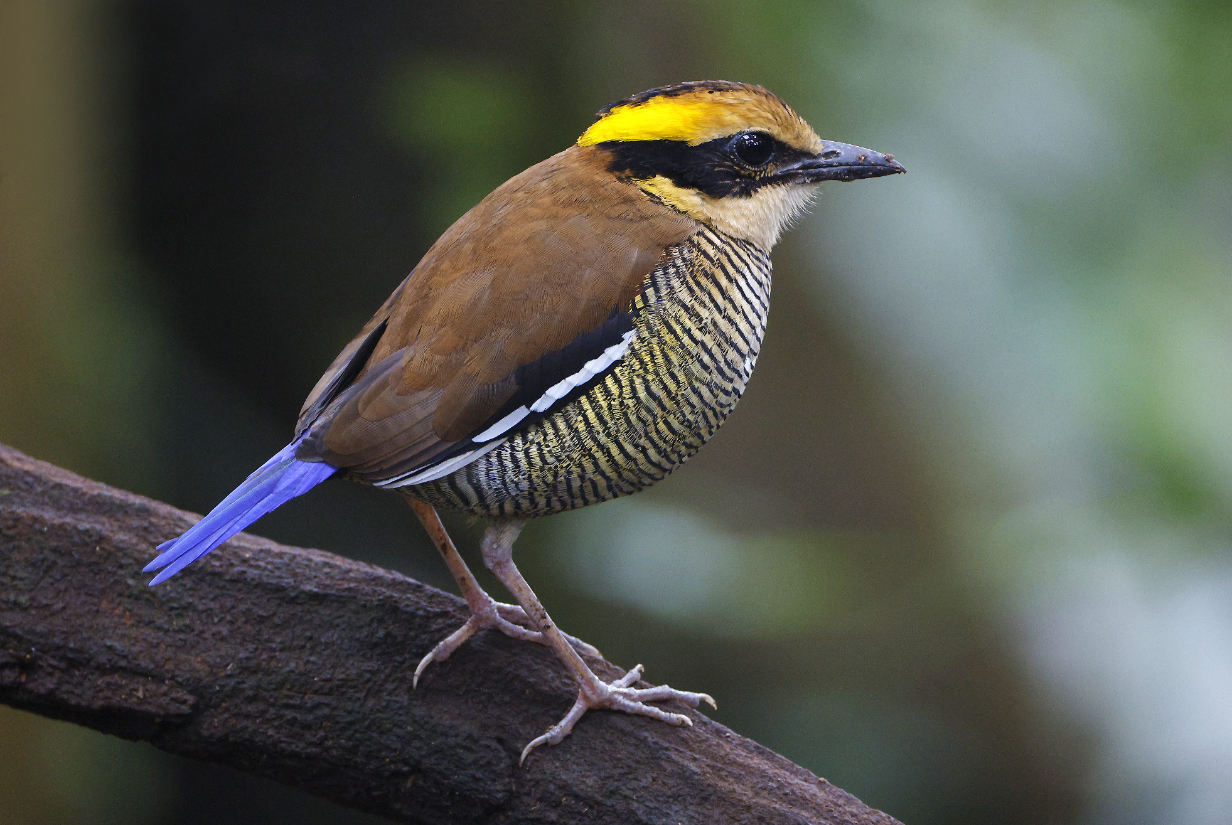
Bornean banded-pitta (female)
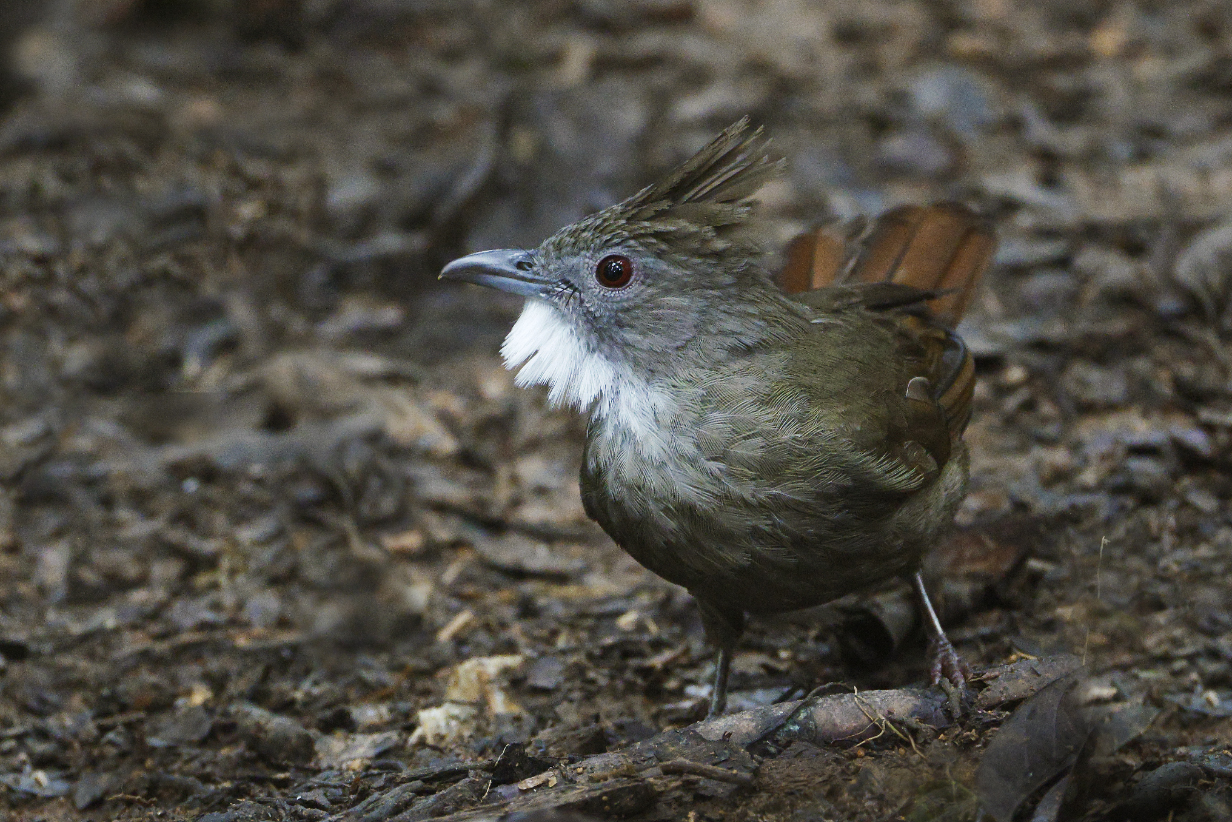
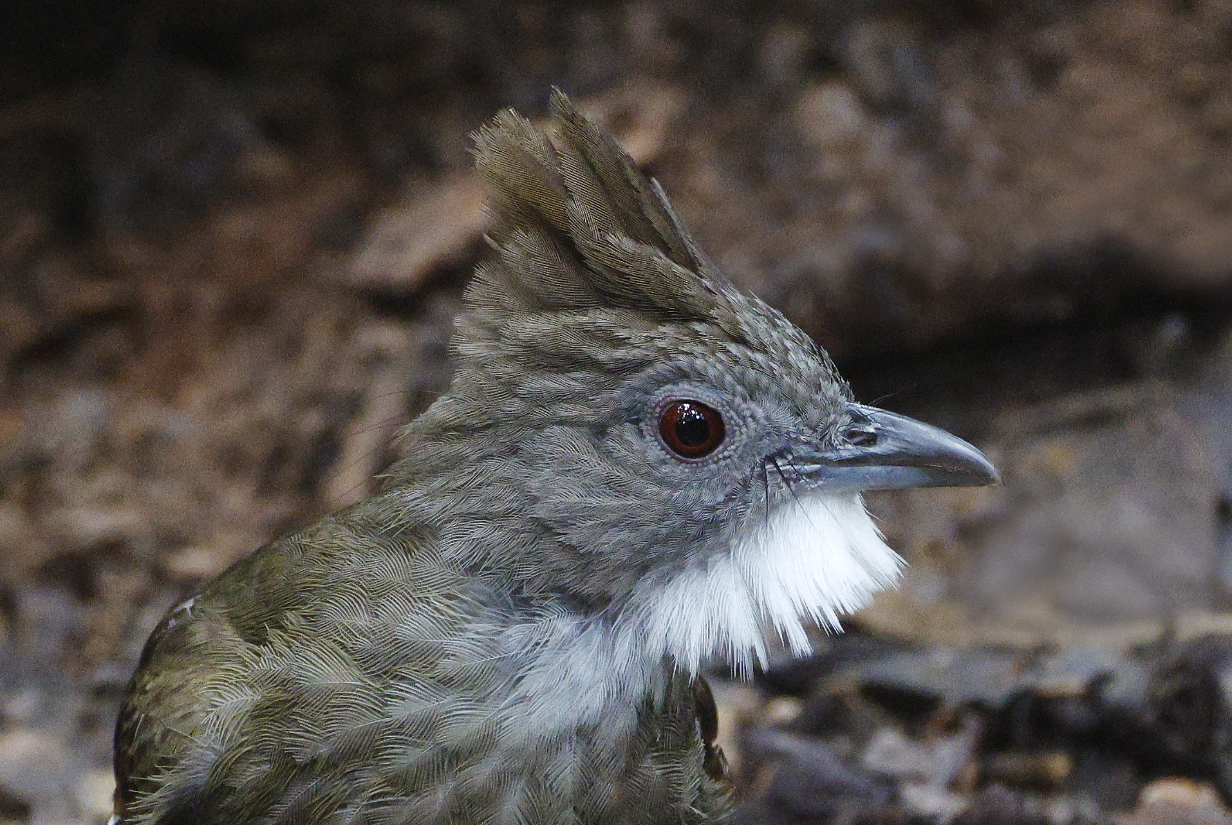
Penan bulbul, today in much better light. Cute.
After the drive to Mt. Kinabalu, we checked into our individual cabins there. Then:
Bornean whistling-thrush (This is my life bird. It is obnoxious that I did not do a better job on a bird that roamed across the front porch of my cabin. But I am used to thinking of whistling-thrushes as easy. When we were close to our cabins, we were preoccupied with seeing Fruithunter and Everett's thrush. Which is no excuse.
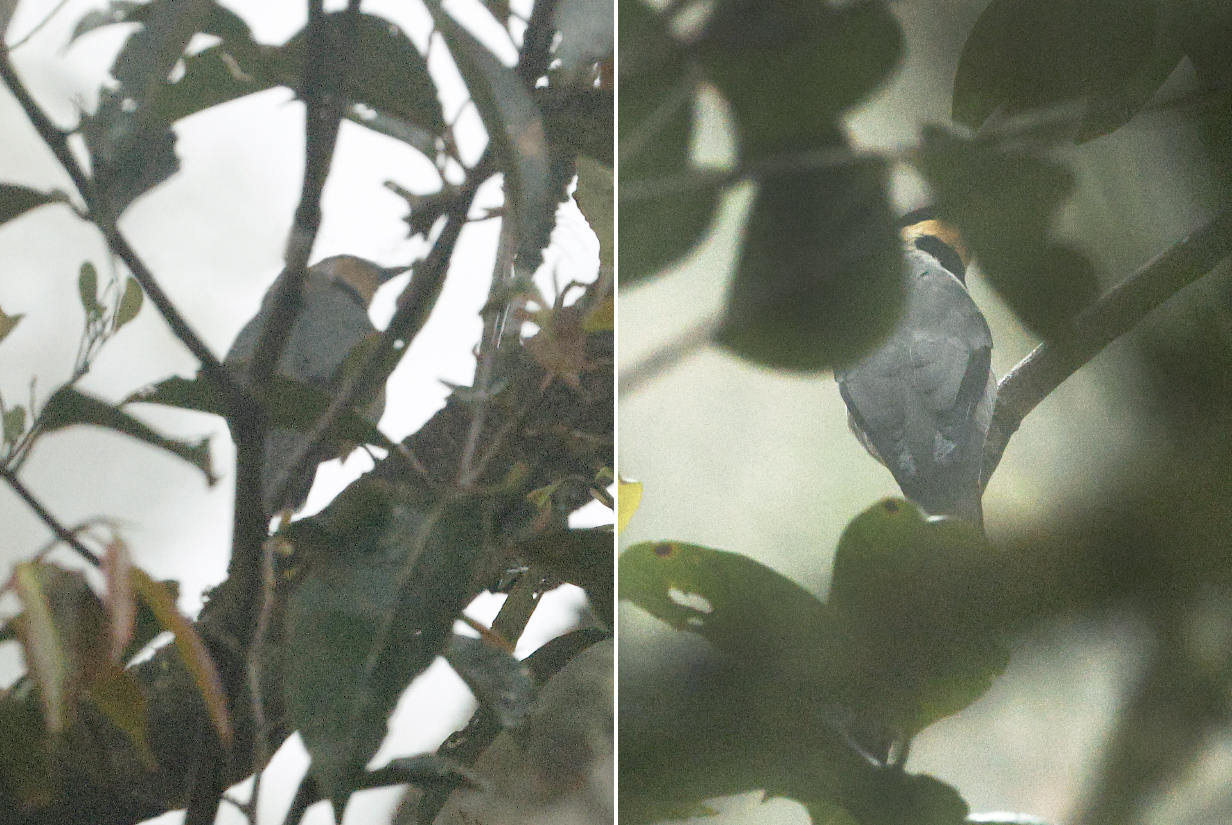
Despite several attempts to see Fruithunter, I never got more than these exceedingly bad views. It was always visible only through narrow lines of sight through thick bushes. With 9 people crowding around, I never managed a clear view. I take this as my life bird, although, of course, it is not satisfying. Birding can be like that.
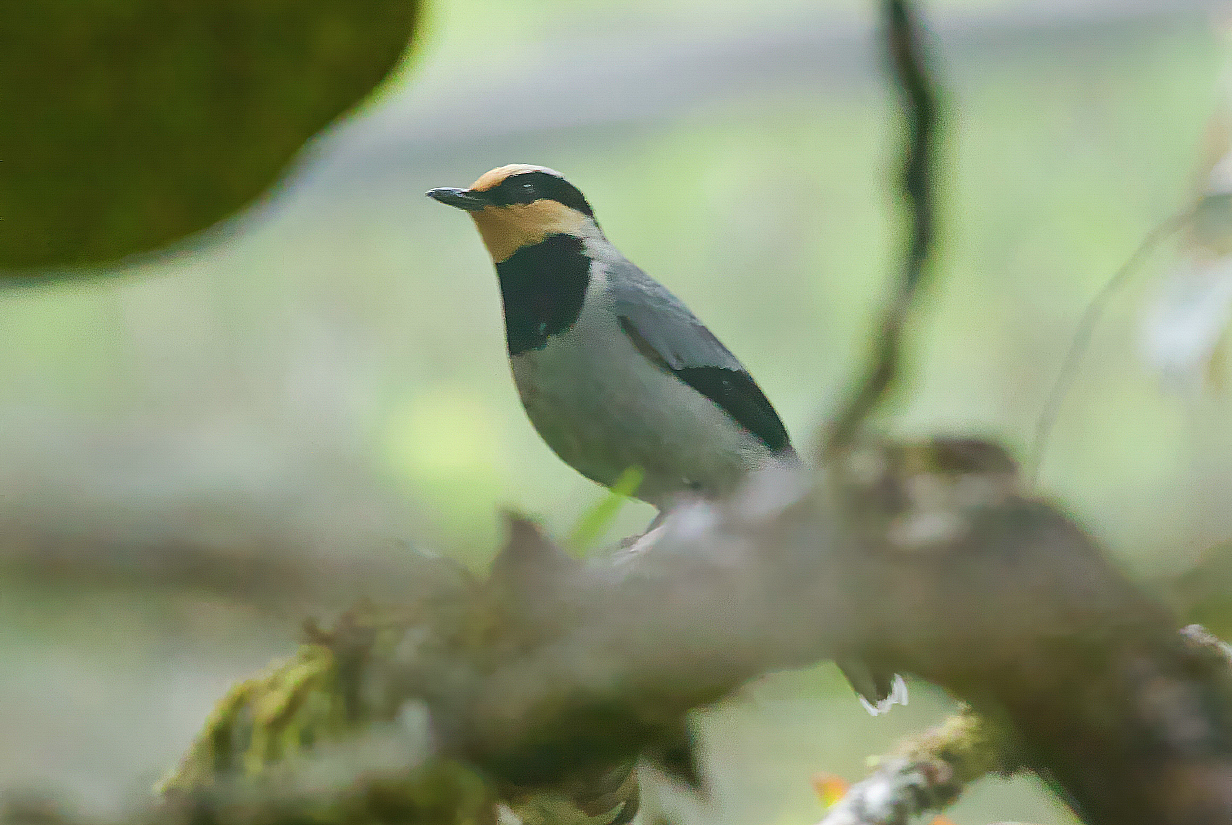
Happily, VENT guide Scott Baker got a clear view of Fruithunter. I am grateful to him for permission to reproduce his picture. It shows what I saw and what I missed, and it cements in my mind what the bird really looks like.
March 19: Kinabalu National Park, Poring Hot Spring, Rafflesia Garden
Mount Kinabalu is the highest mountain in Malaysia, with a height of 4,095 meters = 13,435 ft. It is Earth's third-highest peak on an island, after Puncak Jaya (Indonesian) or Carstensz Pyramid (English) on New Guinea (4,884 m = 16,024 ft) and Mauna Kea, Hawaii (4207 m = 13,802 ft). According to Wikipedia, it consists of relatively young granite intruded into strongly folded, older igneous rock. The granite cooled and hardened only about 10 million years ago. Paraphrasing Wikipedia further: During the Pleistocene Epoch ~ 100,000 years ago, the mountain was covered with sheets of ice and glaciers. They scoured the surface into the complicated shapes that we see today. Isostatic adjustment after the weight of the glaciers was removed has the result that the mountain still gains ~ 5 mm = 0.2 inches of height per year. Mt. Kinabalu is known worldwide for its biodiversity, one happy result of which is that almost every bird that I saw today was new.
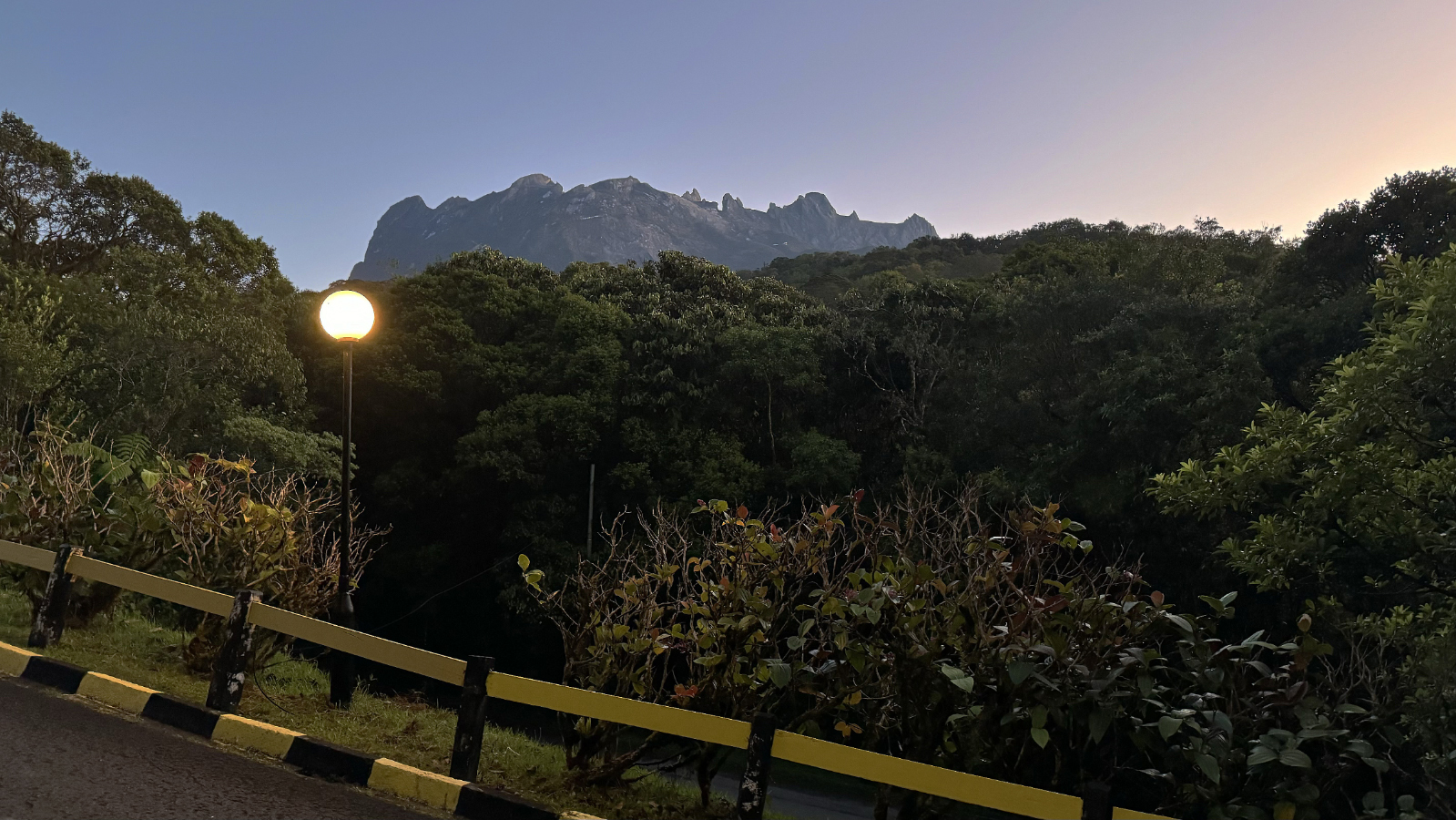
We were driven part way up the mountain in deep early-morning twilight and walked the road, birding. It was a very successful morning:
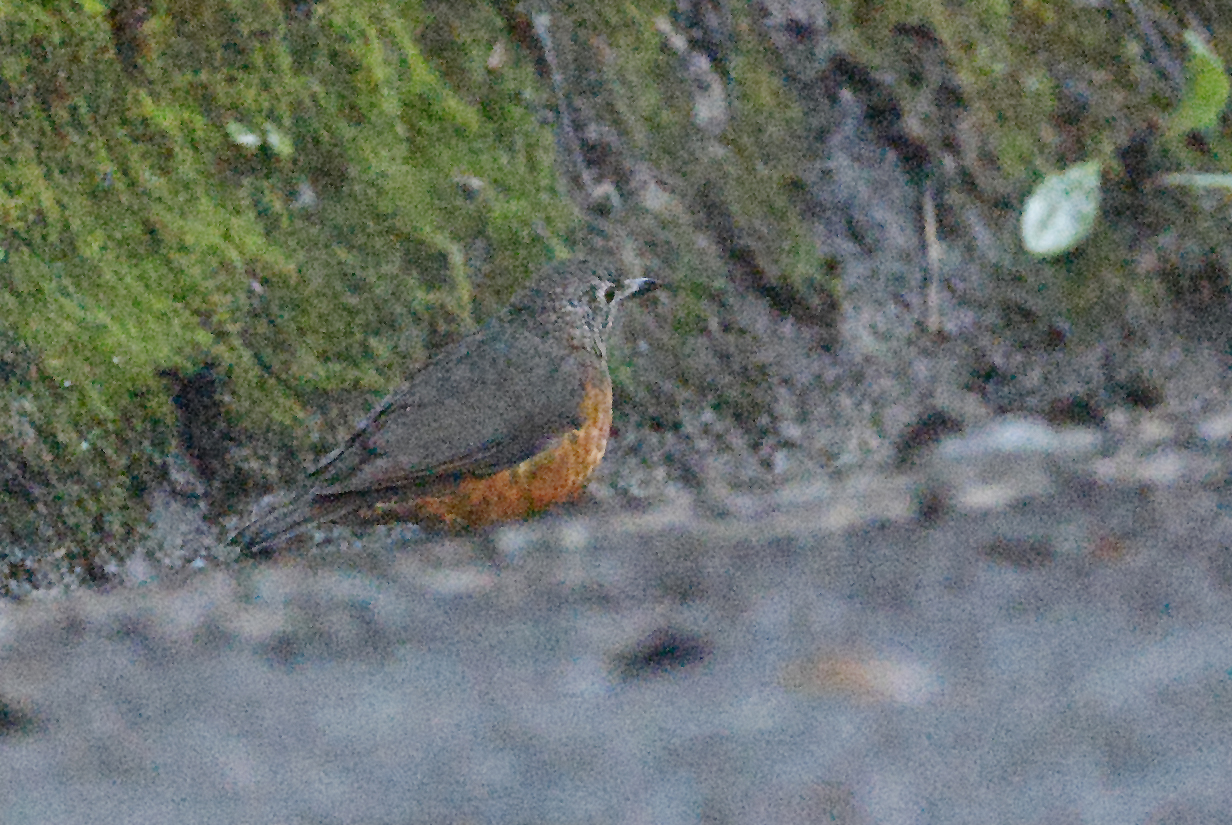
Today's first target was the very rare and shy Everett's thrush (Zoothera everetti), roadside near our cabins. We got it immediately but in deep twilight: This is a 1/100-second exposure with 800 mm lens at f/9 and shot at 51,200 ISO! It is enormously noisy but something of a triumph. Of course, this is my life bird. The next day, I got a better picture in better light, posted below.
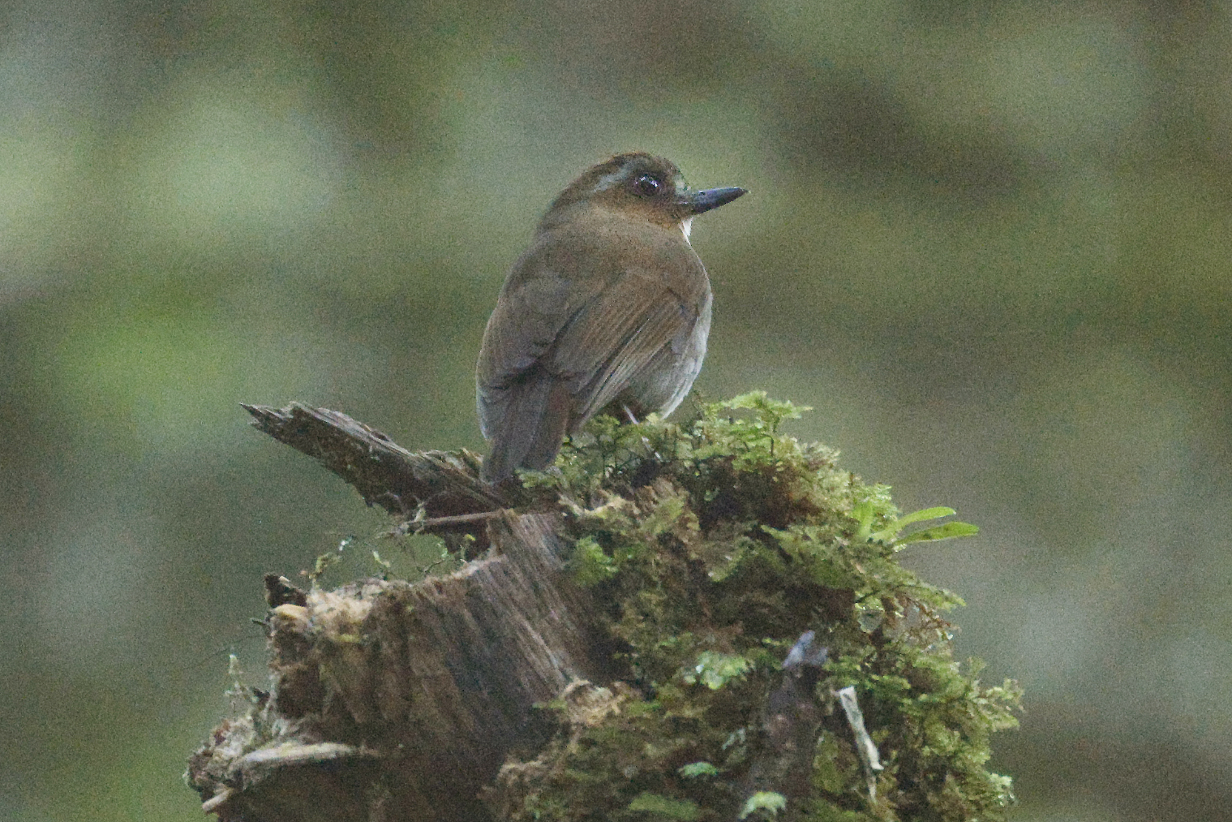
Eyebrowed jungle flycatcher (This is my life bird.)
Bornean stubtail (This is my life bird. I loved Asian stubtail, and I love this bird, too. It was one of my favourites of the trip.)
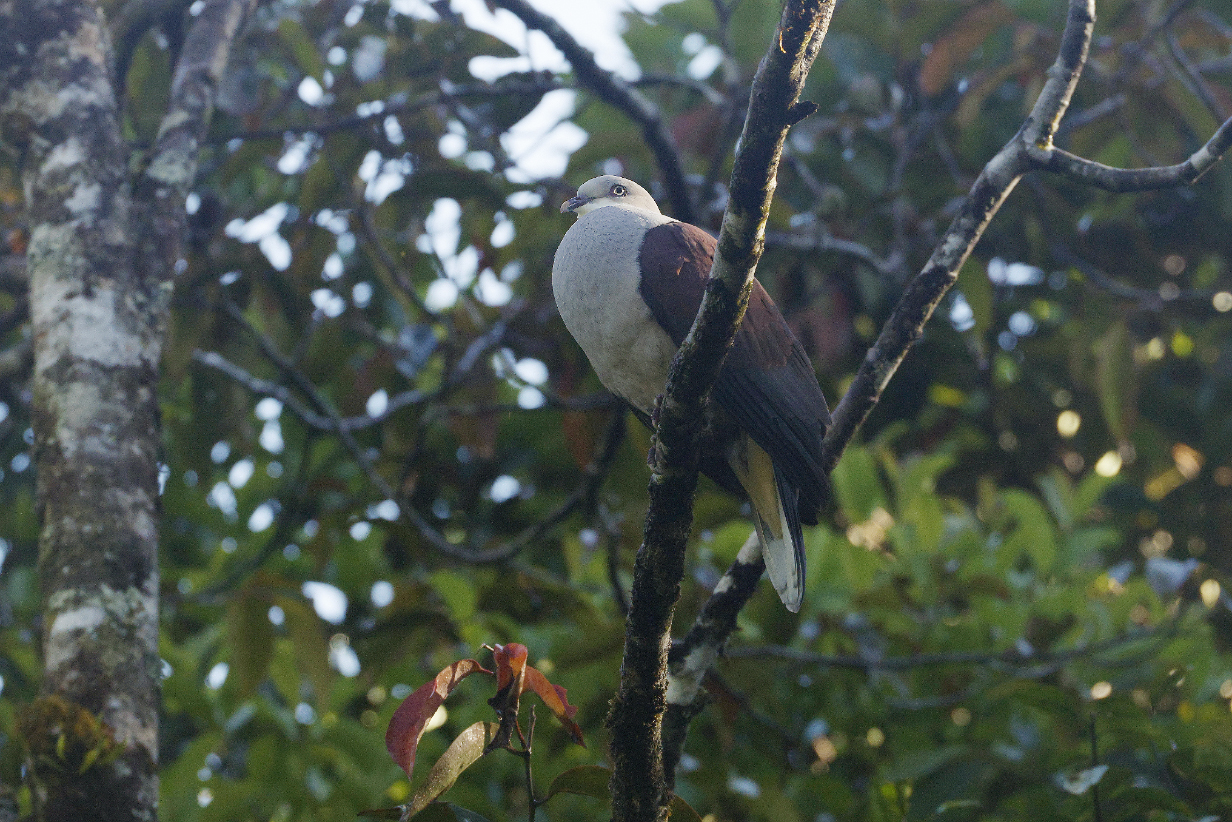
Mountain imperial pigeon. This was the only bird that I saw today that was not new either today or yesterday (we saw Fruithunter badly again, today).
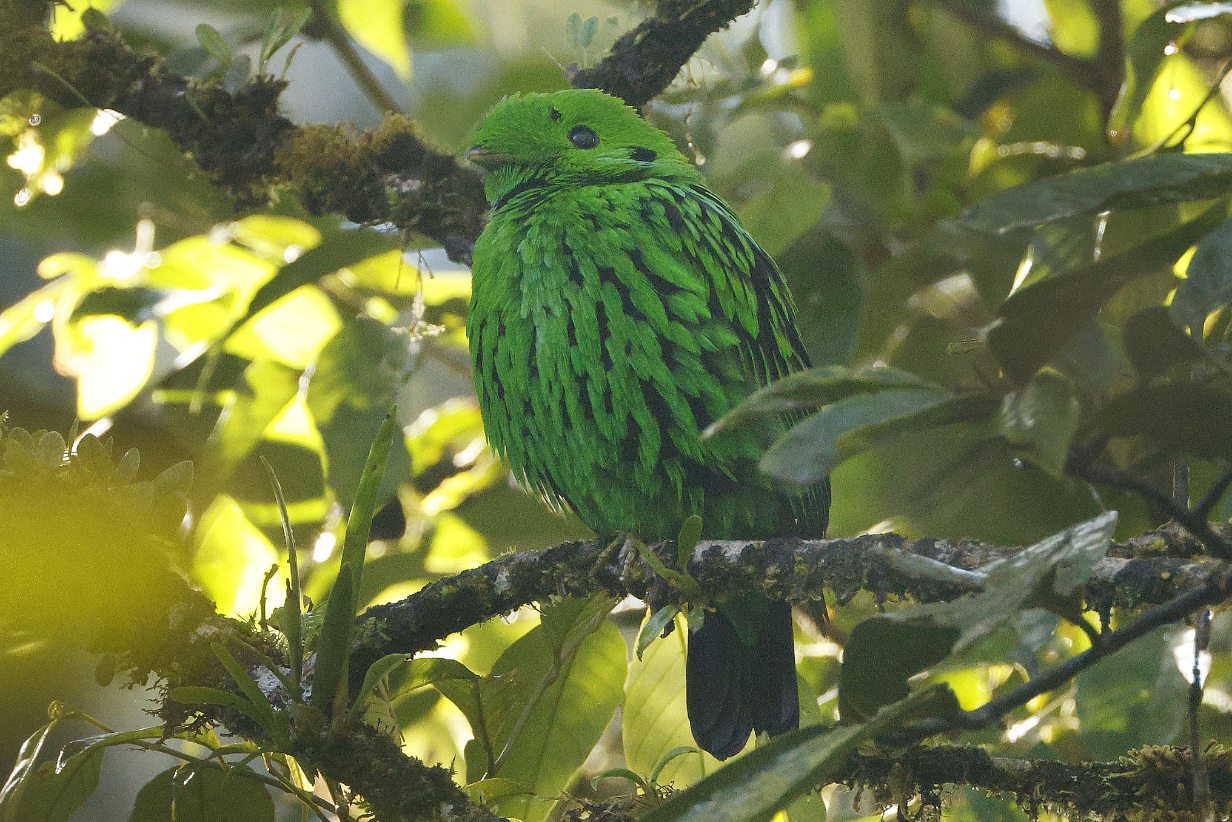
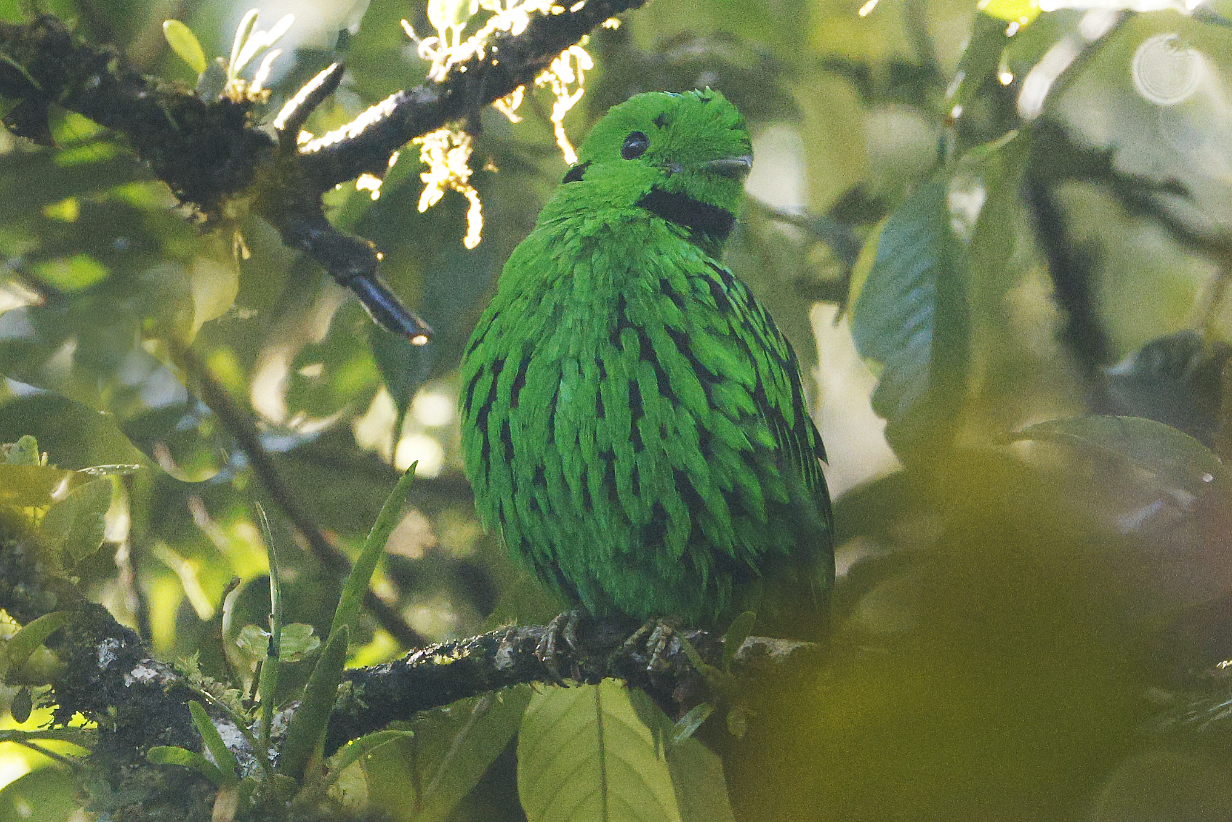
Whitehead's broadbill was one of the principal (and rare) targets of this trip, and we saw it very well. Twice. This was the first time, and so this is my life bird. It is a male, based on the black markings on his face and the prominence of the green tuft above his bill.
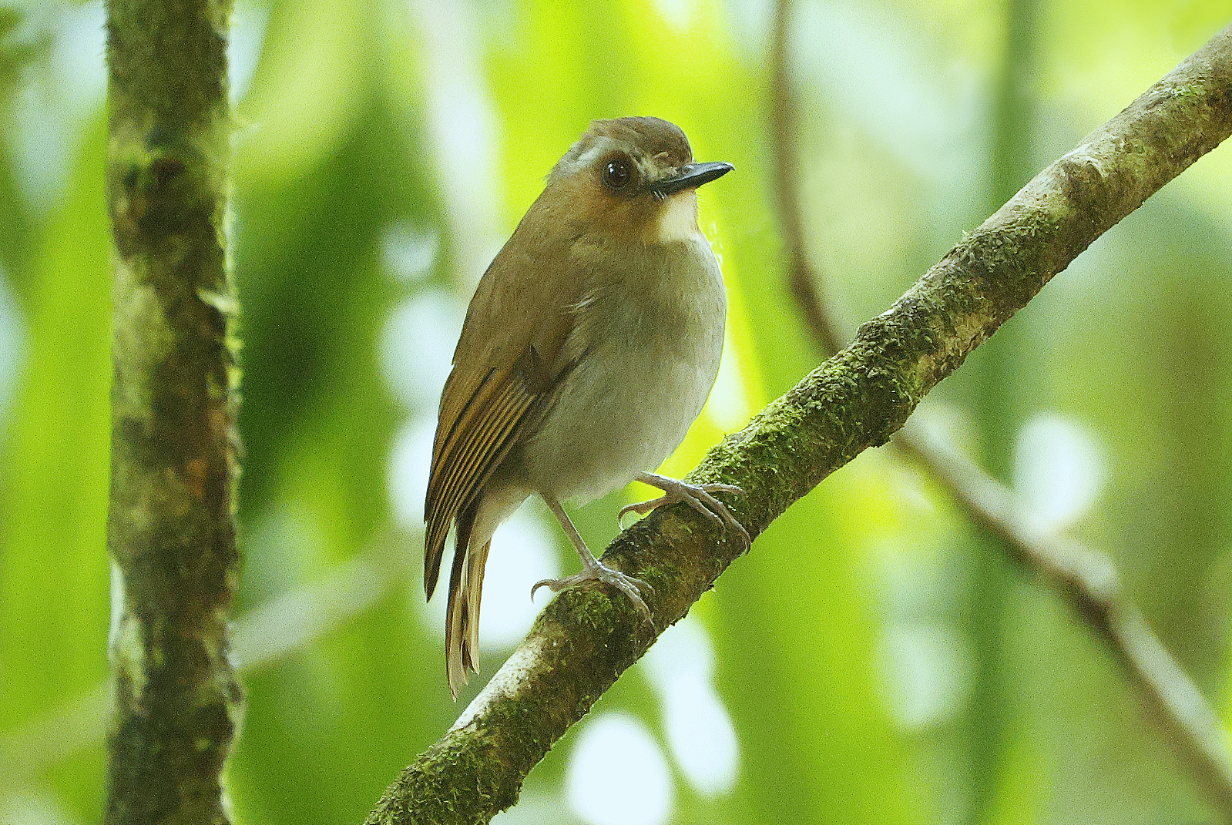
Eyebrowed jungle flycatcher, later, in better light
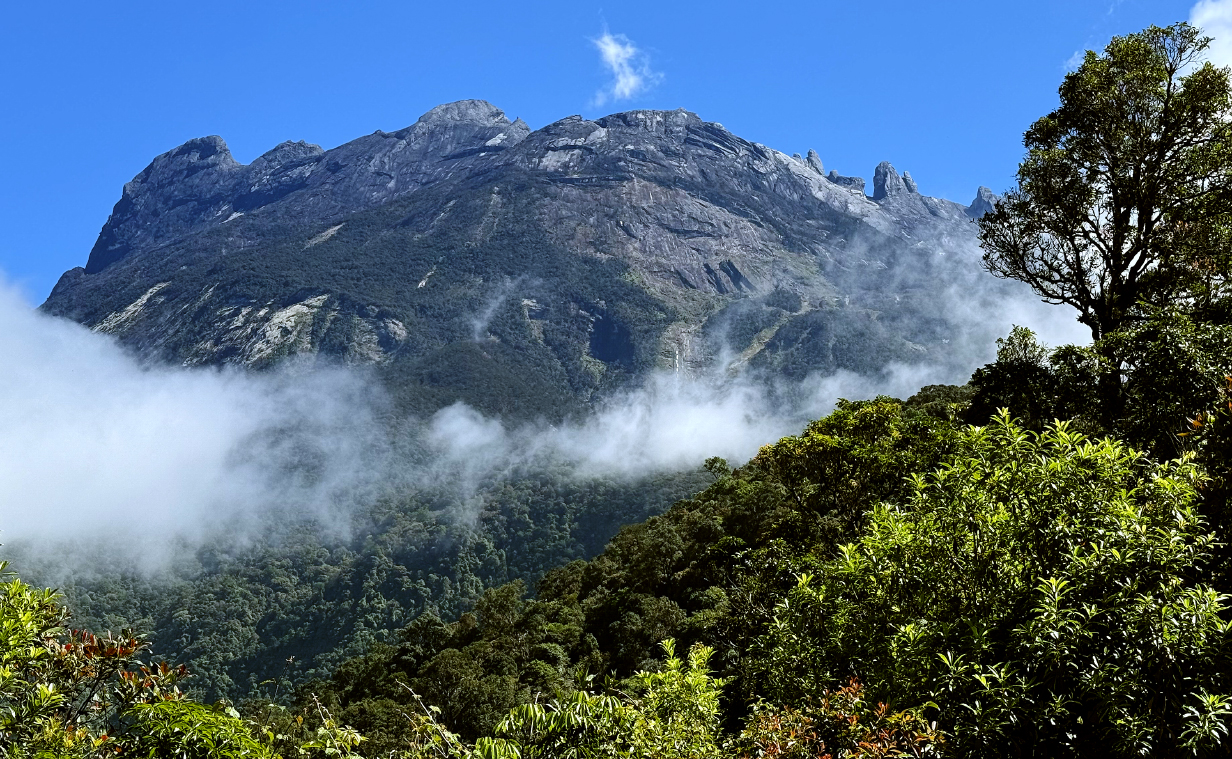
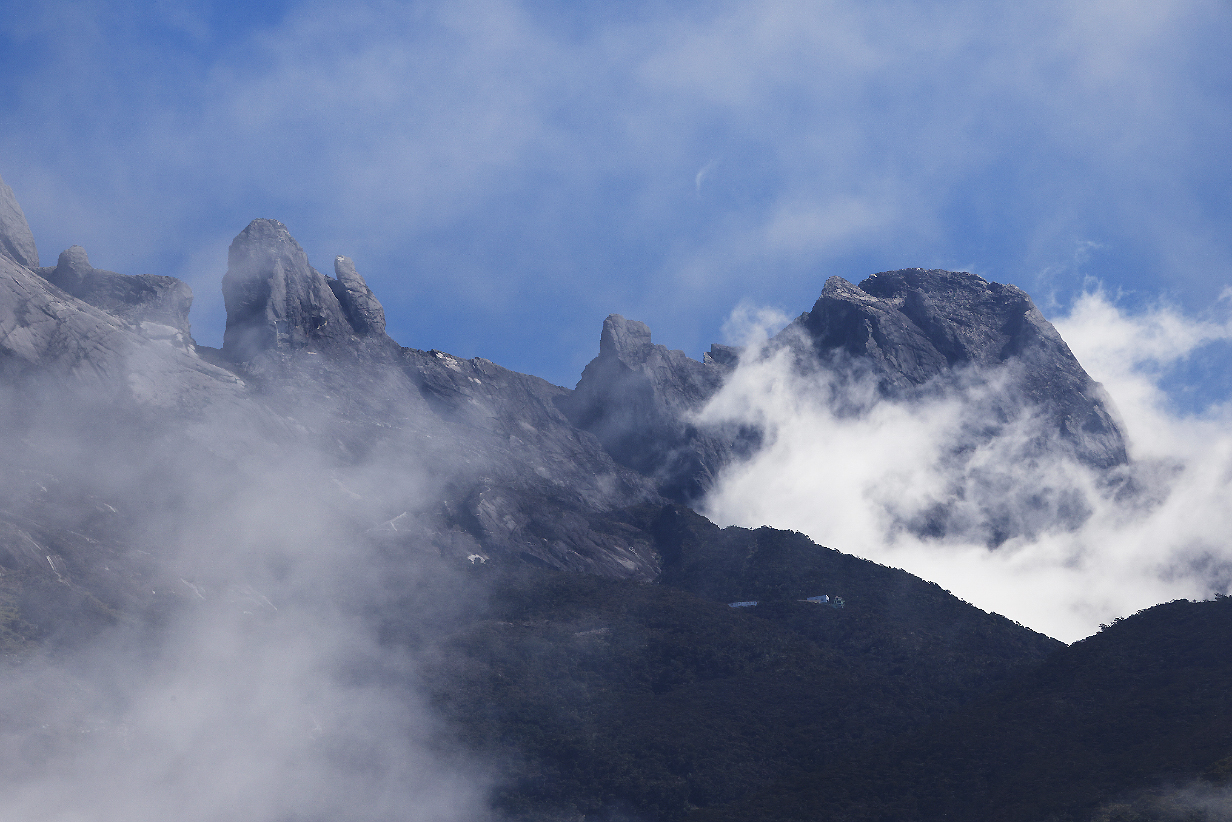
Mt. Kinabalu summit detail -- two more views before we left for the Rafflesia garden and Poring Hot Spring.
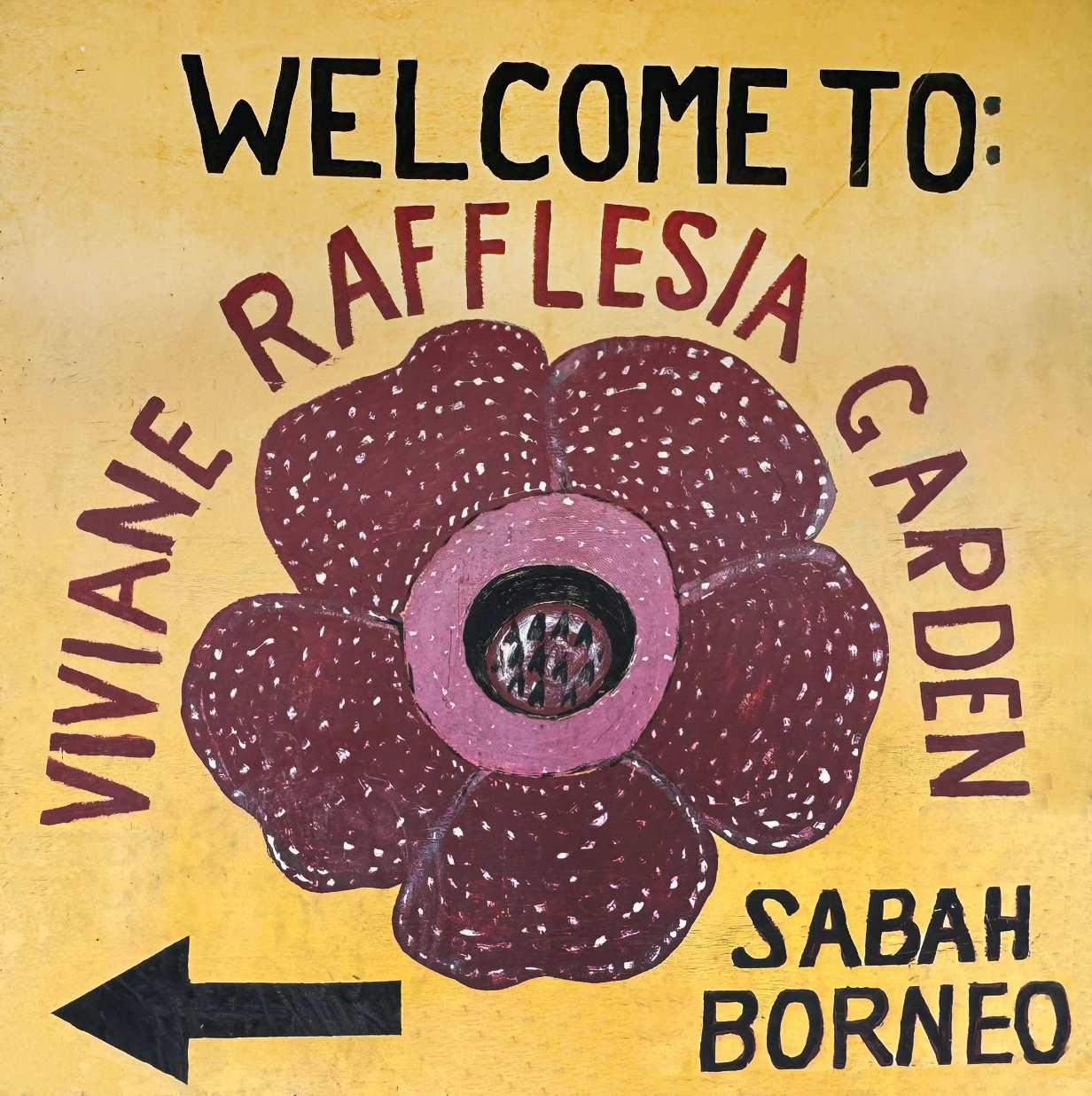
One of the highlights of our trip was a visit to Rafflesia Gardens, where a blooming Rafflesia keithii was on display. I had heard of this flower for years -- the genus includes the world's biggest flower, Rafflesia arnoldii. According to Wikipedia: "The single largest [Rafflesia arnoldii] measured was 1.14 m = 3 feet 9 inches in width." The species that we saw, Rafflesia keithii, looks almost identical and is only a little smaller.
The genus was discovered in 1822 by the founder of Singapore, Sir Stamford Raffles. (That's a widespread name in the region: when I go to Singapore, I stay at the justly famous Raffles Hotel.) Quoting Science, "As plants go, Rafflesia is an oddball genus. Parasites of tropical vines, the 20 or so species lack roots, stems, or leaves. Usually they live quietly inside the tissues of their hosts. Only when it is time to reproduce sexually do they produce flowers. And what flowers they are! Up to 1 meter wide and 7 kilograms in mass, they emit foul odors to attract pollinating carrion flies. Then, in a few days, they collapse to a black pulp. They are among the strangest things found on the Southeast Asian rainforest floor."
First, the flowers. Then more detail:
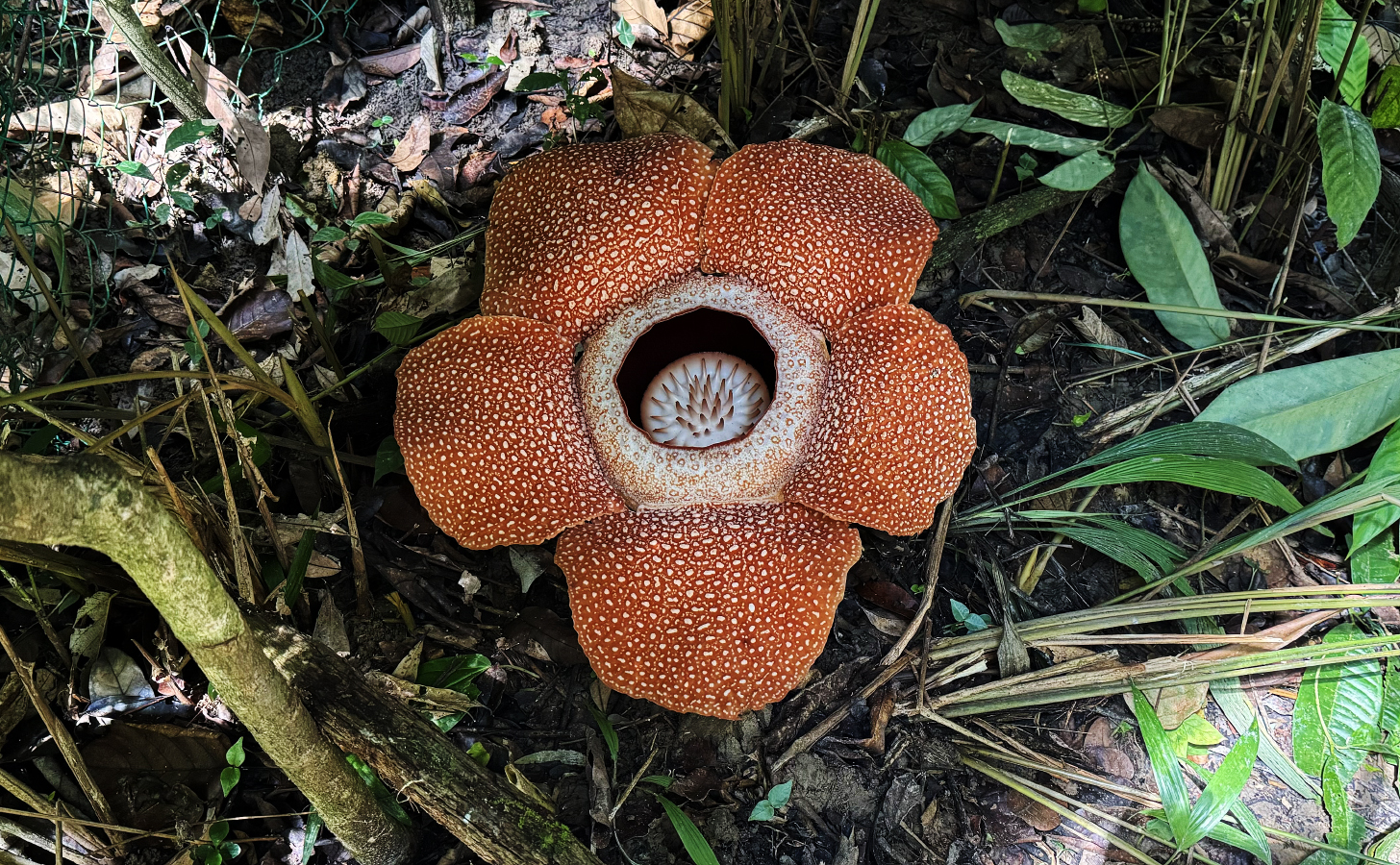
Rafflesia keithii flower in the prime of its bloom
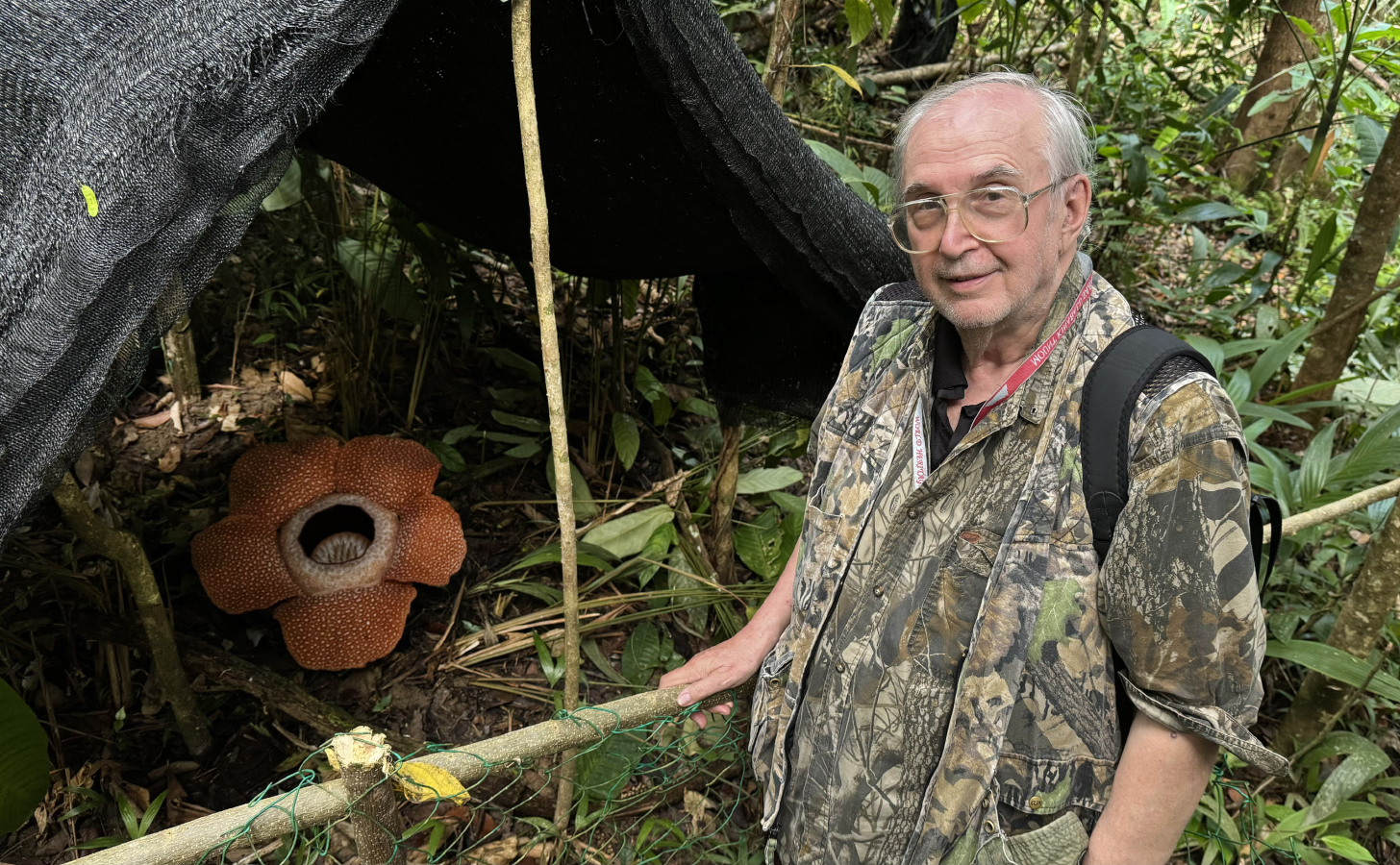
Standing next to Rafflesia keithii -- and rather closer to the camera than is the flower -- emphasizes just how big it is. This flower is 78 cm = 31 inches in diameter. Rafflesia flowers are said to smell like rotting meat in order to attract pollinating flies -- and there were indeed flies around -- but I could smell nothing from where I stood.
Quoting Wikipedia, "Although Rafflesia is a vascular plant, it lacks any observable leaves, stems or even roots, and does not have chlorophyll. It lives as a holoparasite on vines of the genus Tetrastigma, most commonly T. angustifolium. Similar to fungi, individuals grow as a mass of thread-like strands of tissue completely embedded within and in intimate contact with surrounding host cells from which nutrients and water are obtained. It can only be seen outside the host plant when it is ready to reproduce; the only part of Rafflesia that is identifiable as distinctly plant-like are the flowers."
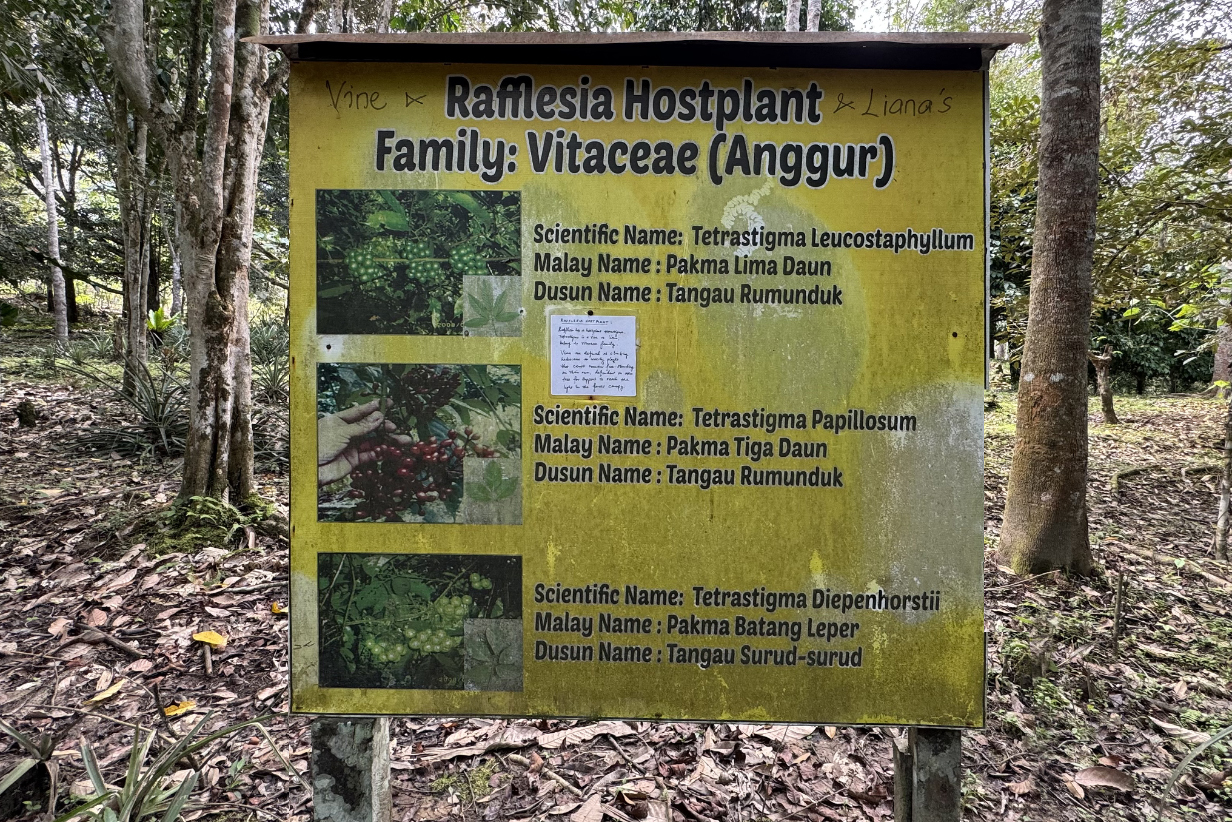
Which explains this sign ... and also the reason why no visible plant seemed to be associated with the flower that we saw.
What a wonderfully counterintuitive quirk of evolution! I cannot imagine why it happened. I suspect that unexplainable accidents happen more often than we think in evolution, and then we marvel at the few that, against all odds, succeed.
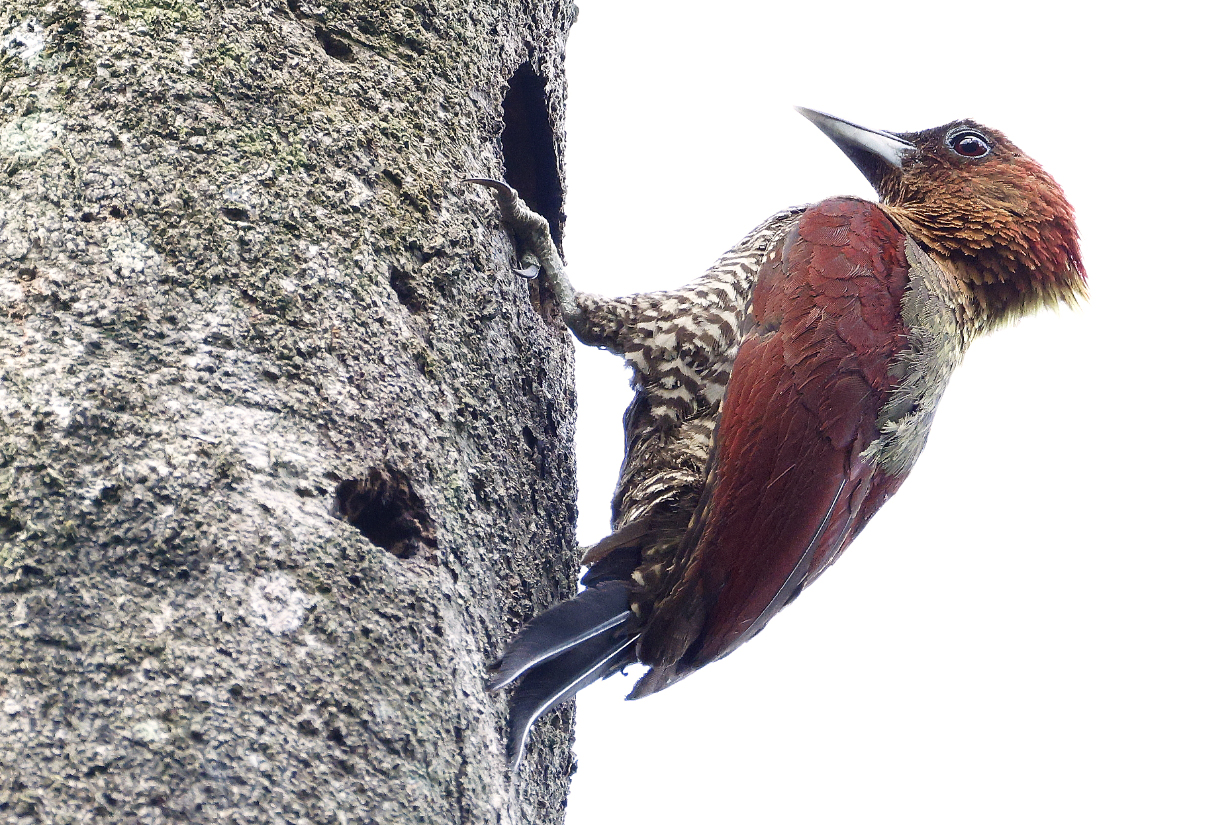
Banded woodpecker at Rafflesia Gardens (This is my life bird.)
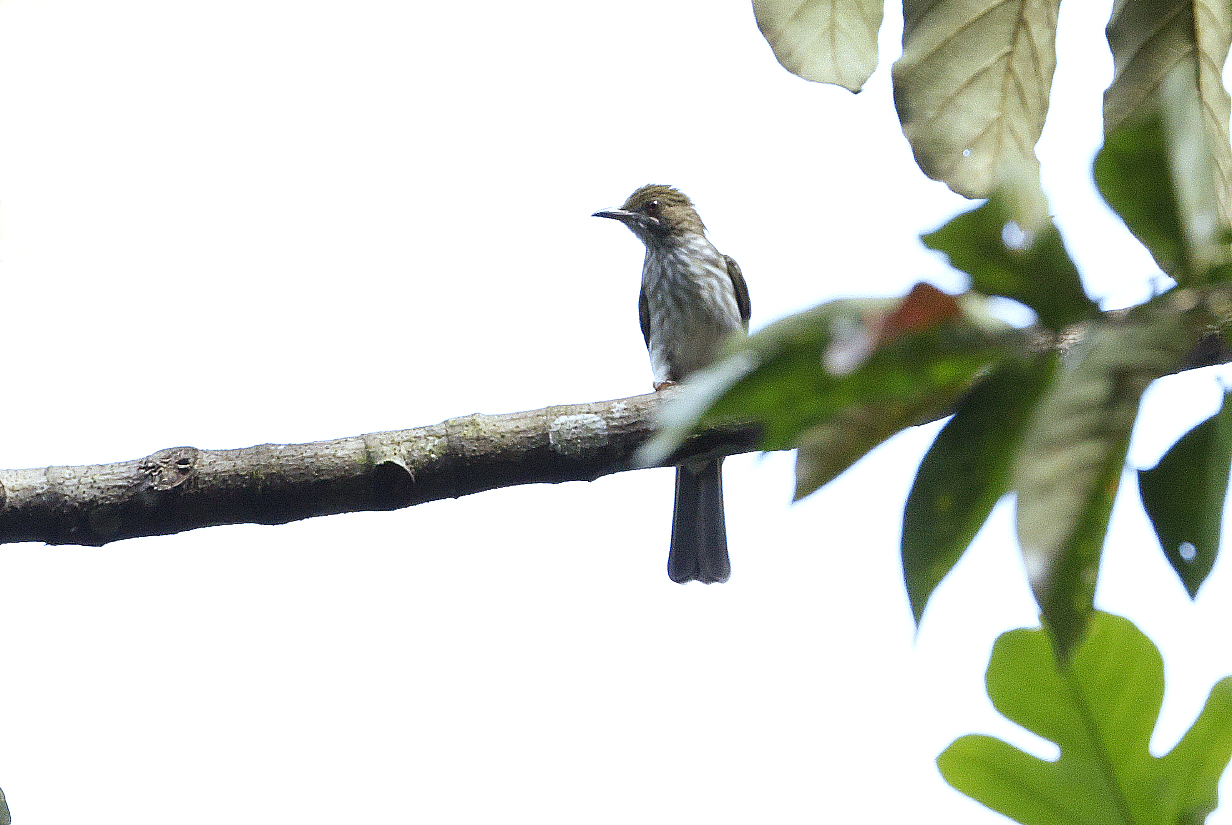
Streaked bulbul (This is my life bird, at Poring Hot Springs)
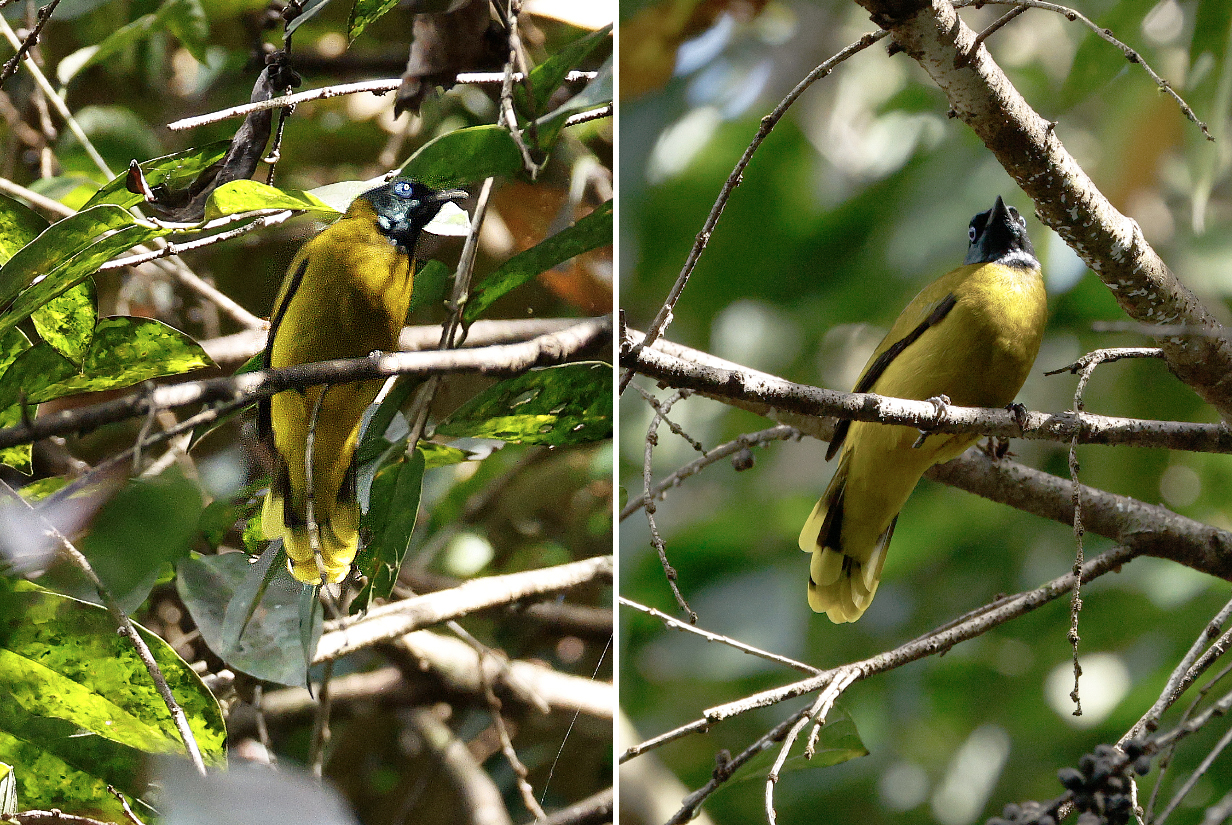
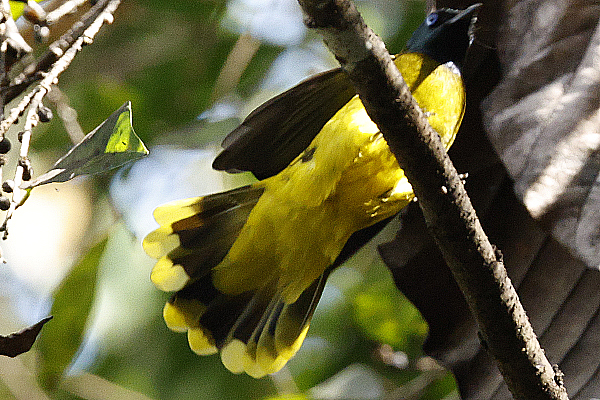
Black-headed bulbul, in a very poor picure that barely shows the startlingly "sapphire" eyes (ebird's description). This is my life bird. It was still at Poring Springs, but I remember nothing about the occasion, even though Poring Springs has an important canopy walk. I suspect that I was exceedingly tired, given my lack of memory and poor pictures.
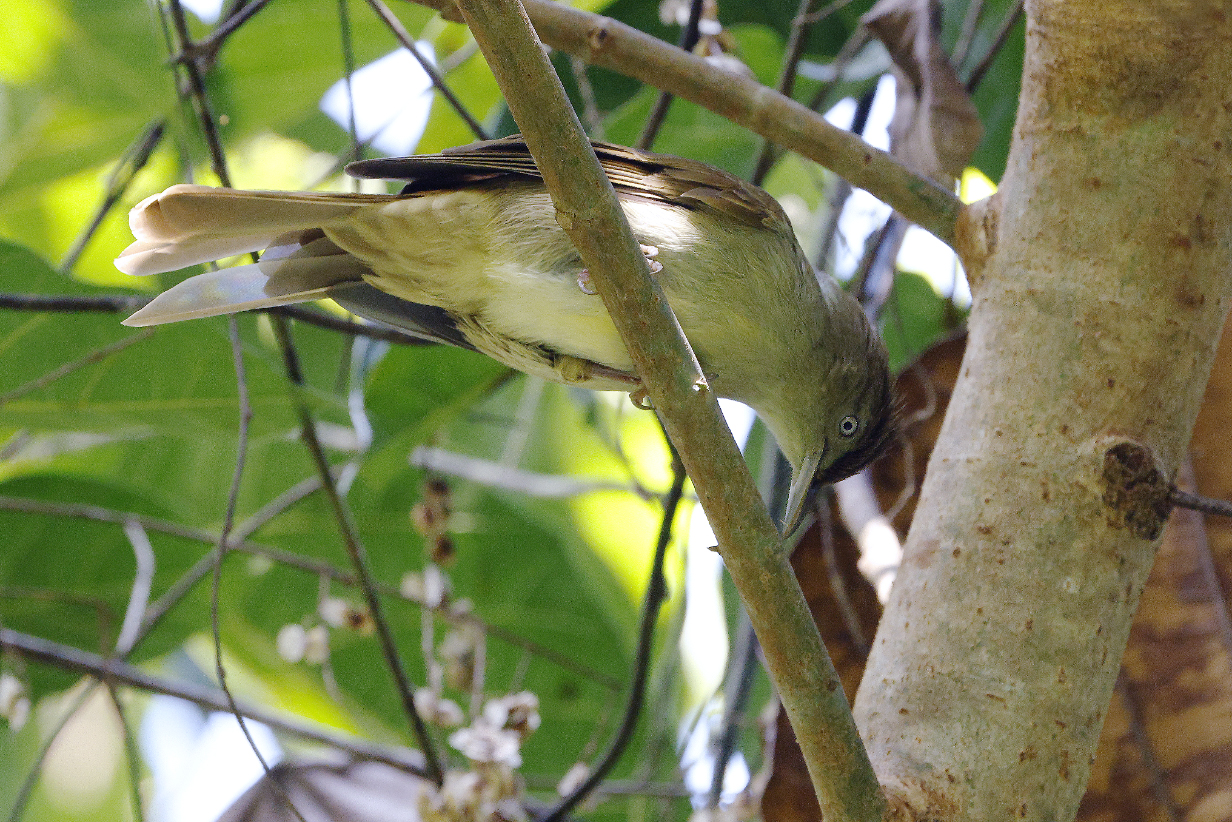
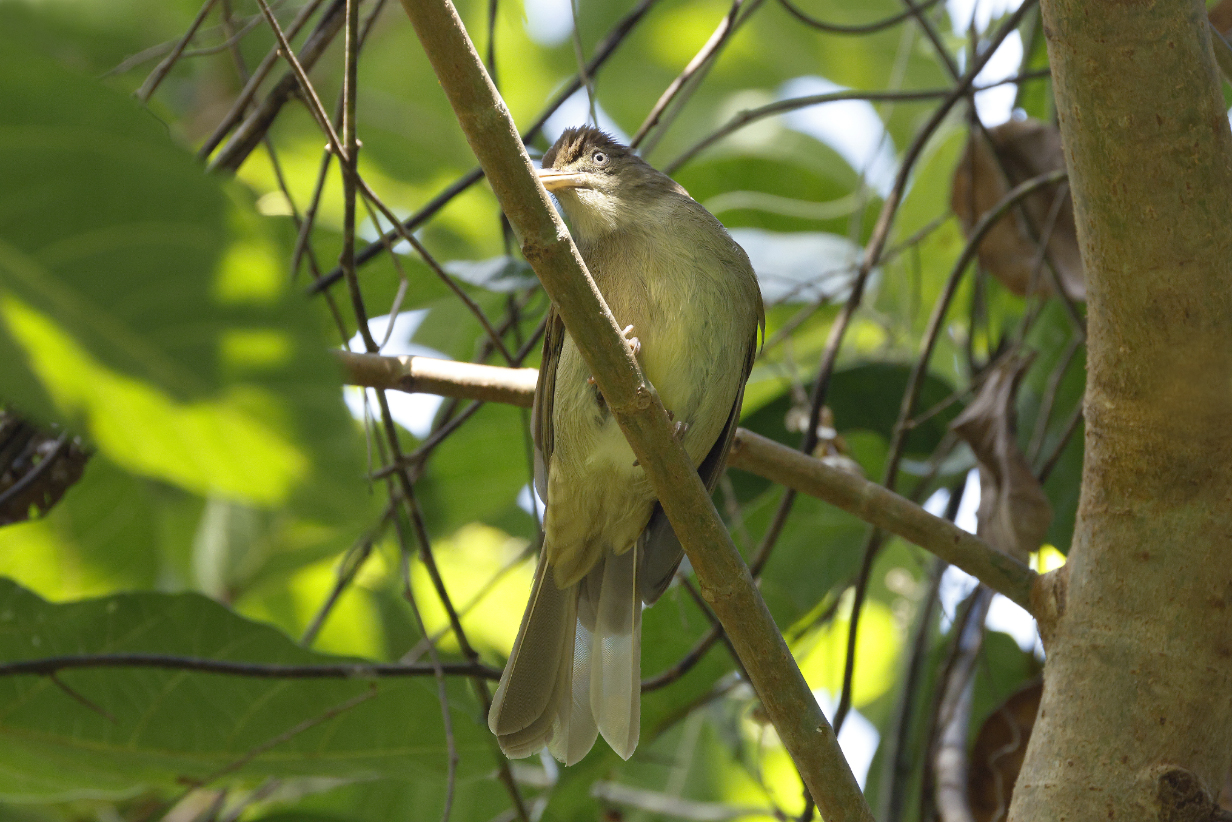
Charlotte's bulbul (This is my life bird.)
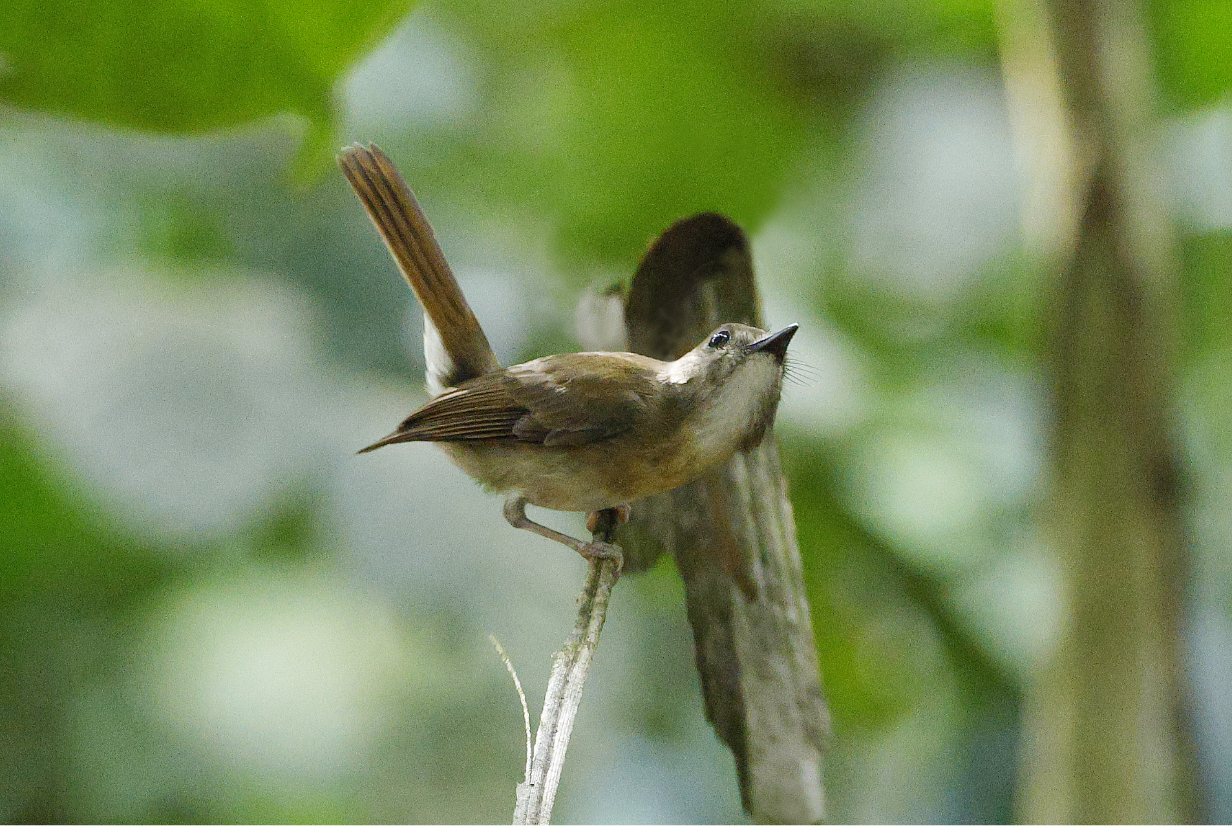
Fulvous-chested jungle flycatcher (This is my life bird.)
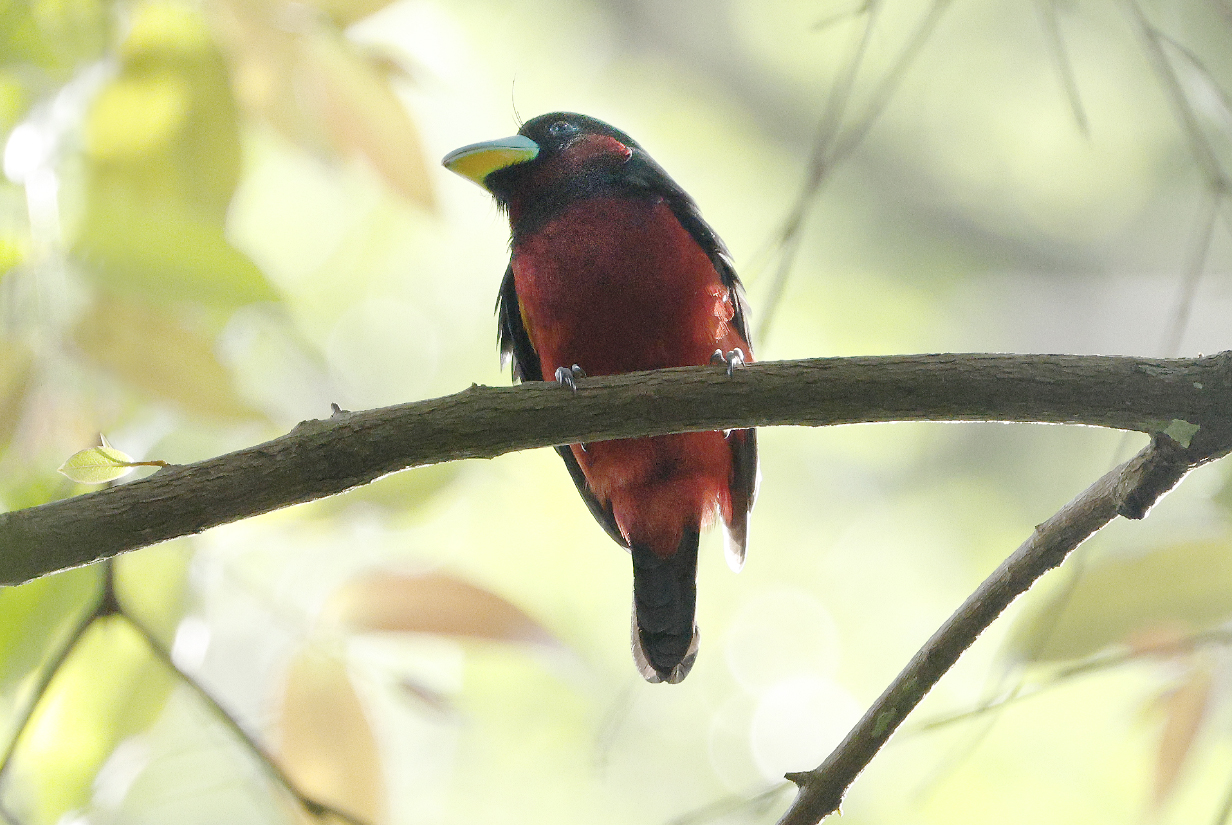
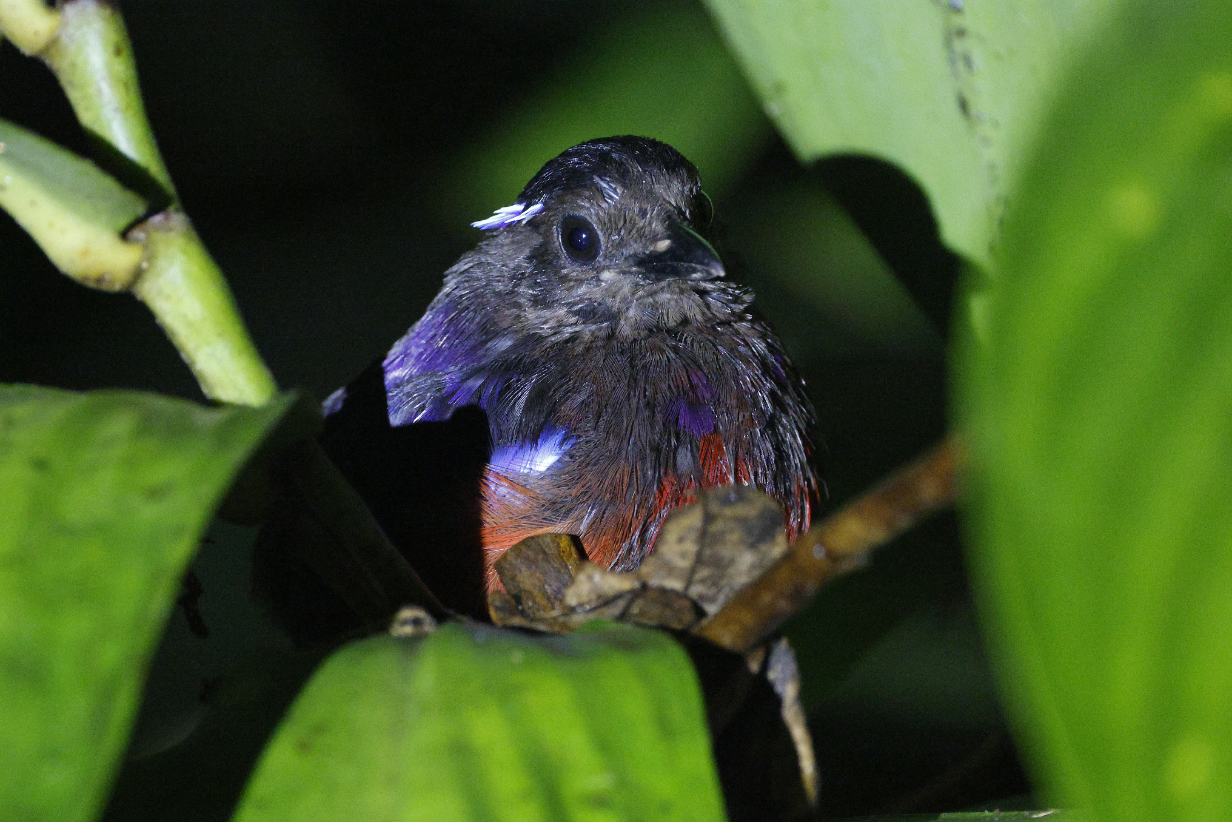
Black-and-red broadbill (This is my life bird, unfortunately backlit.)
I got 11 new birds today -- second-best day of the trip. The new bird that is not shown here is Mountain serpent-eagle, which flew overhead and did not get photographed.
March 20: Kinabalu National Park
The weather was perfect today -- sunny and calm. Partly for this reason, Kinabalu National Park devoted extra effort to the large number of people who came to climb the mountain. We were driven as far up as the road is open; climbers gathered there to set off up the trail to the summit. We birded the upstairs view point at the way station building there and then down the road toward the lodge and park entrance. Even though the weather was wonderfully comfortable, birding was not easy. This is consistent with our common experience that birds are most active when it is cool, at least partly cloudy, and even intermittently rainy. Remarkable throughout this trip was the fact that our birding did not get interrupted even once by serious rain -- the few showers were well timed at night or when we were "off duty". That was convenient but not entirely good for birding. The effect was especially noticeable later in the trip, in the Danum Valley rain forest, where drought undoubtedly made birding less effective than is normal during VENT tours. Today, however, was a pleasure ... even if it was not especially birdy. And the scenery was wonderful.
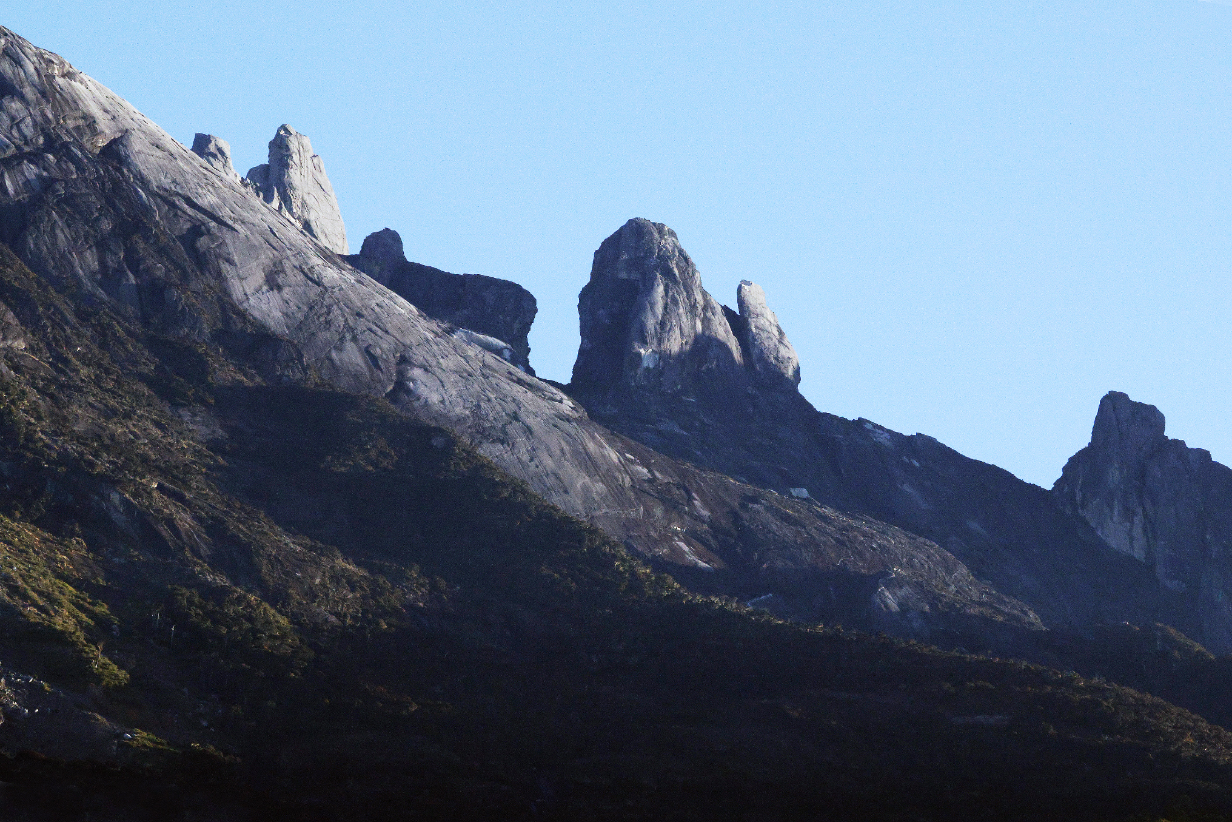
Glacier-carved crags near the summit of Mt. Kinabalu in early morning sunlight, from the road's high point at the Timpohon Gate (approximately 1,866 meters = 6122 feet elevation).
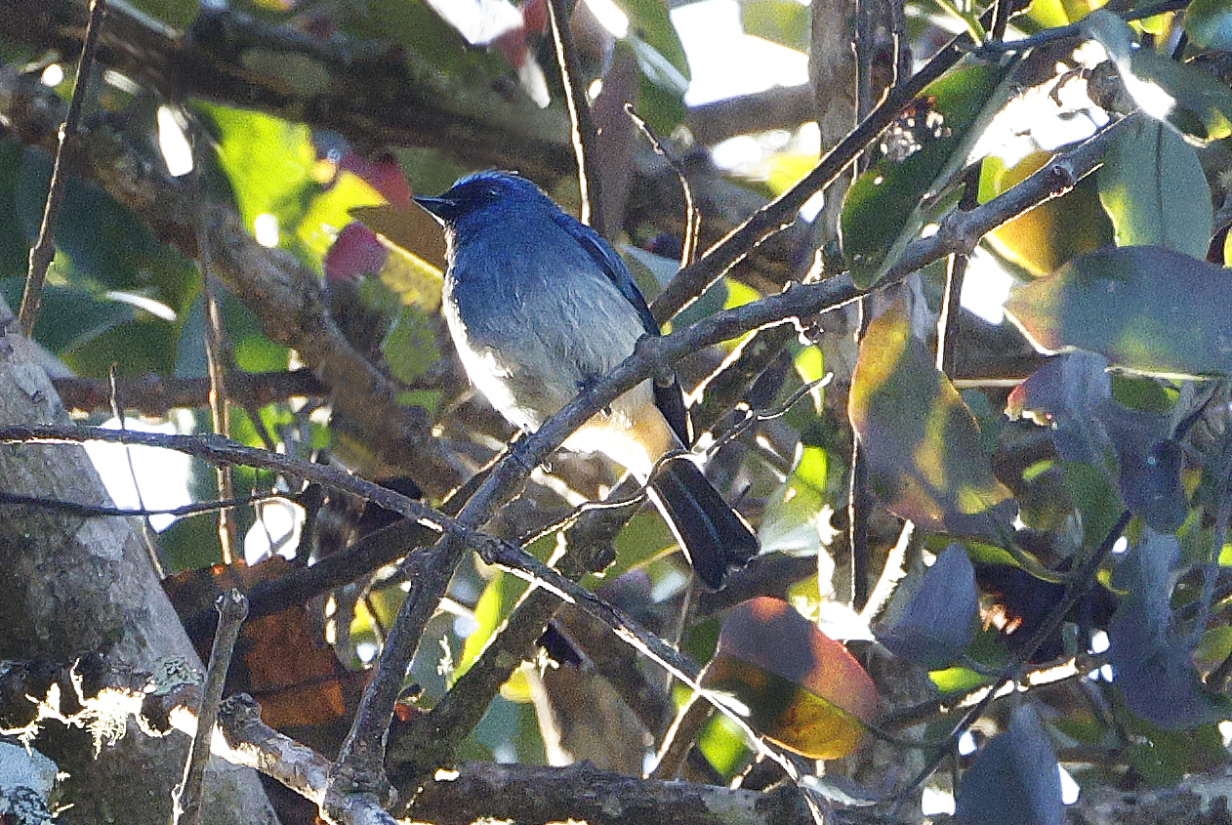
Indigo flycatcher
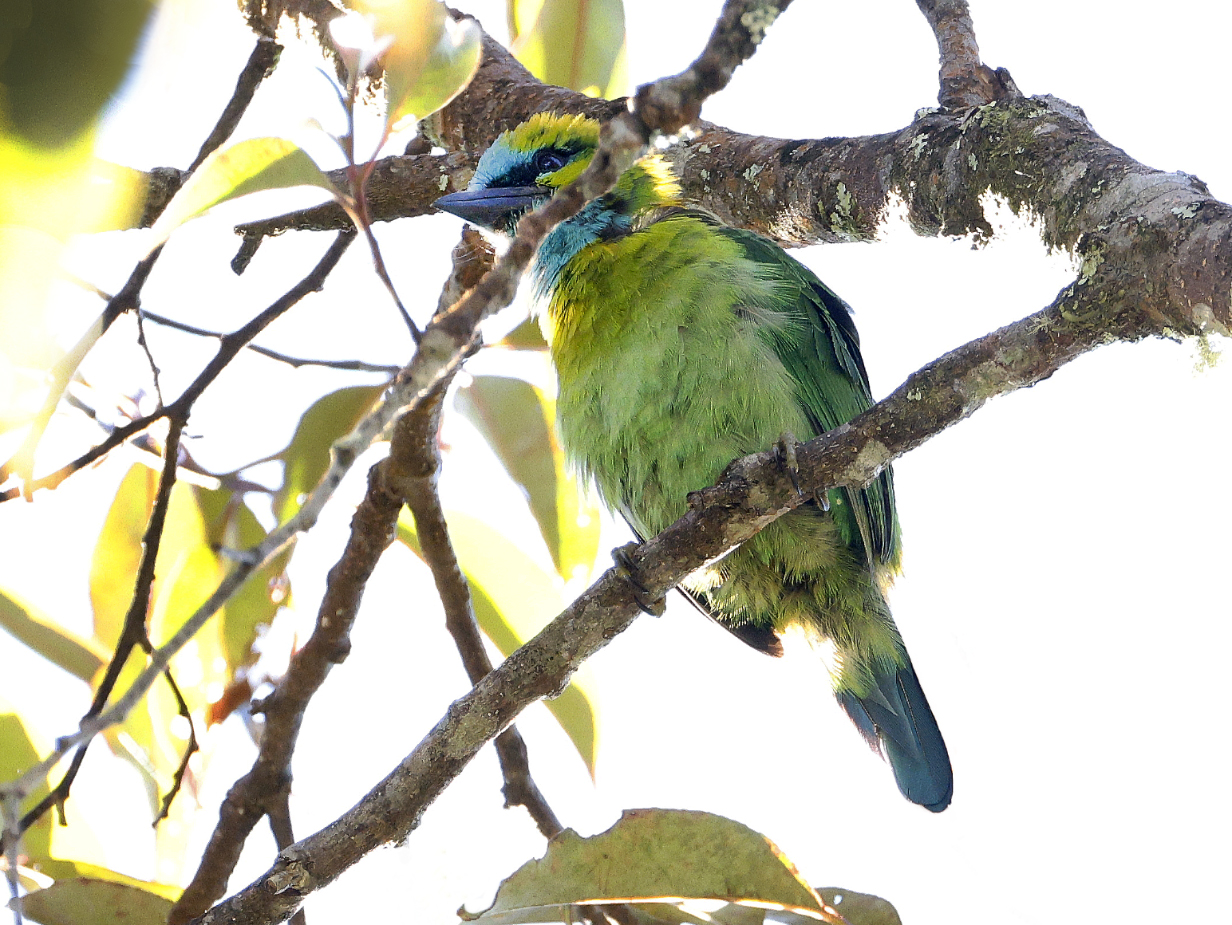
Golden-naped barbet (This is my life bird, as usual -- for barbets during this trip -- not conveniently positioned.)
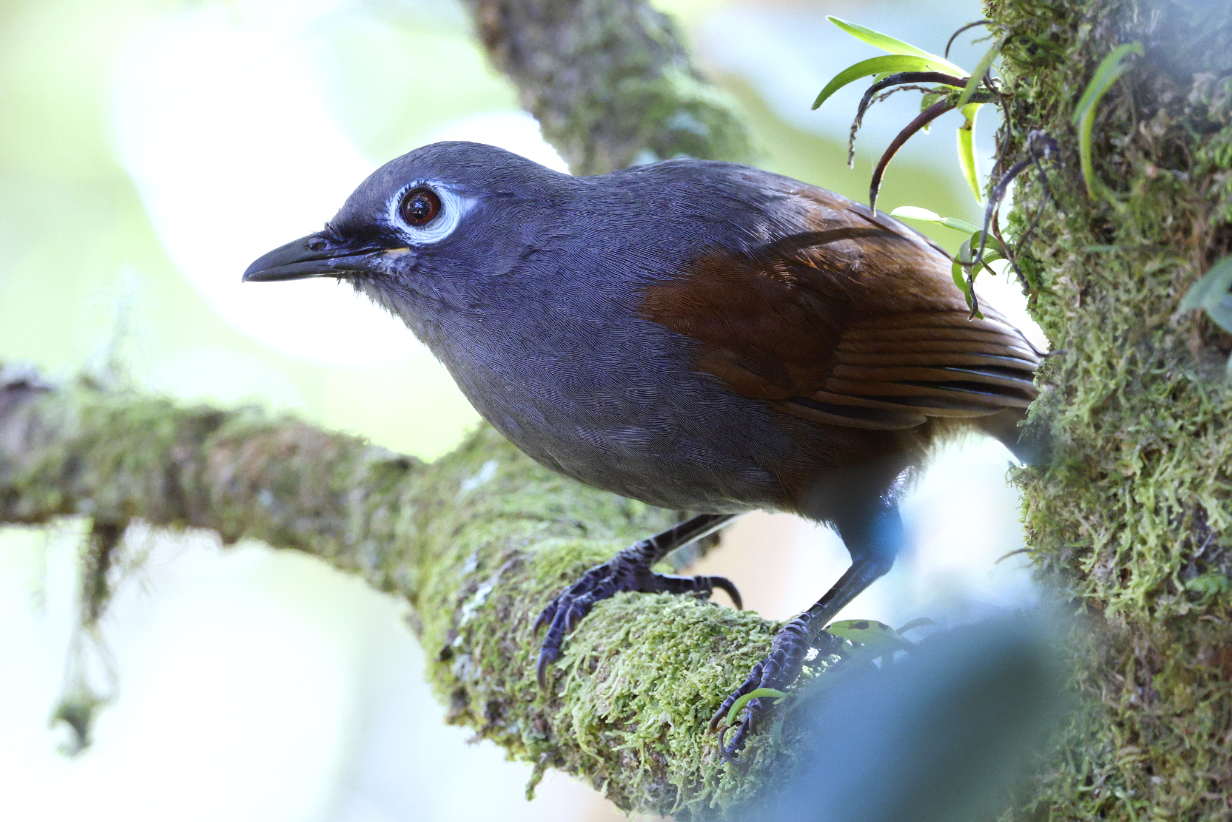
Sunda laughingthrush (This is my life bird -- substantially more shy than Chestnut-hooded.)
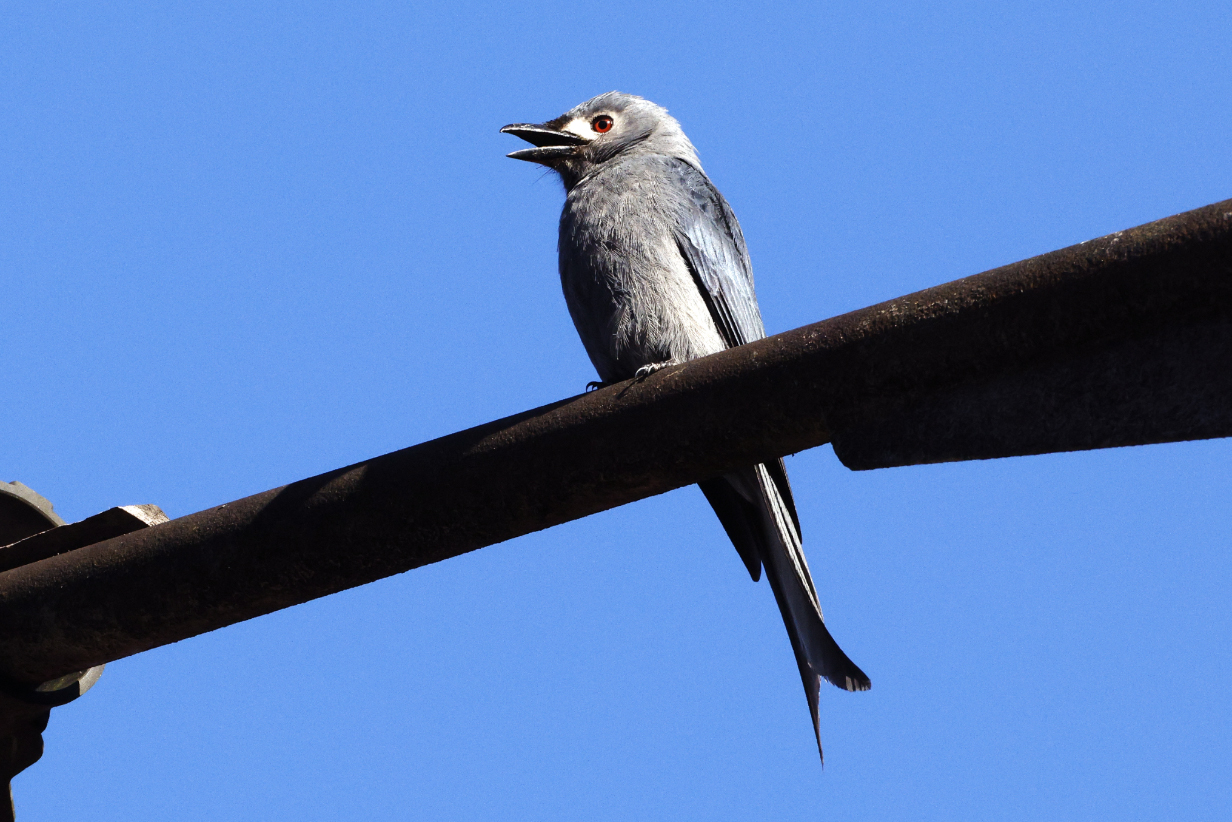
Ashy drongo (This is Dicrurus leucophaeus stigmatops, intermediate between the darkest forms and the white-cheeked form in, e. g., Thailand. It is not new -- I have seen a different subspecies in India.)
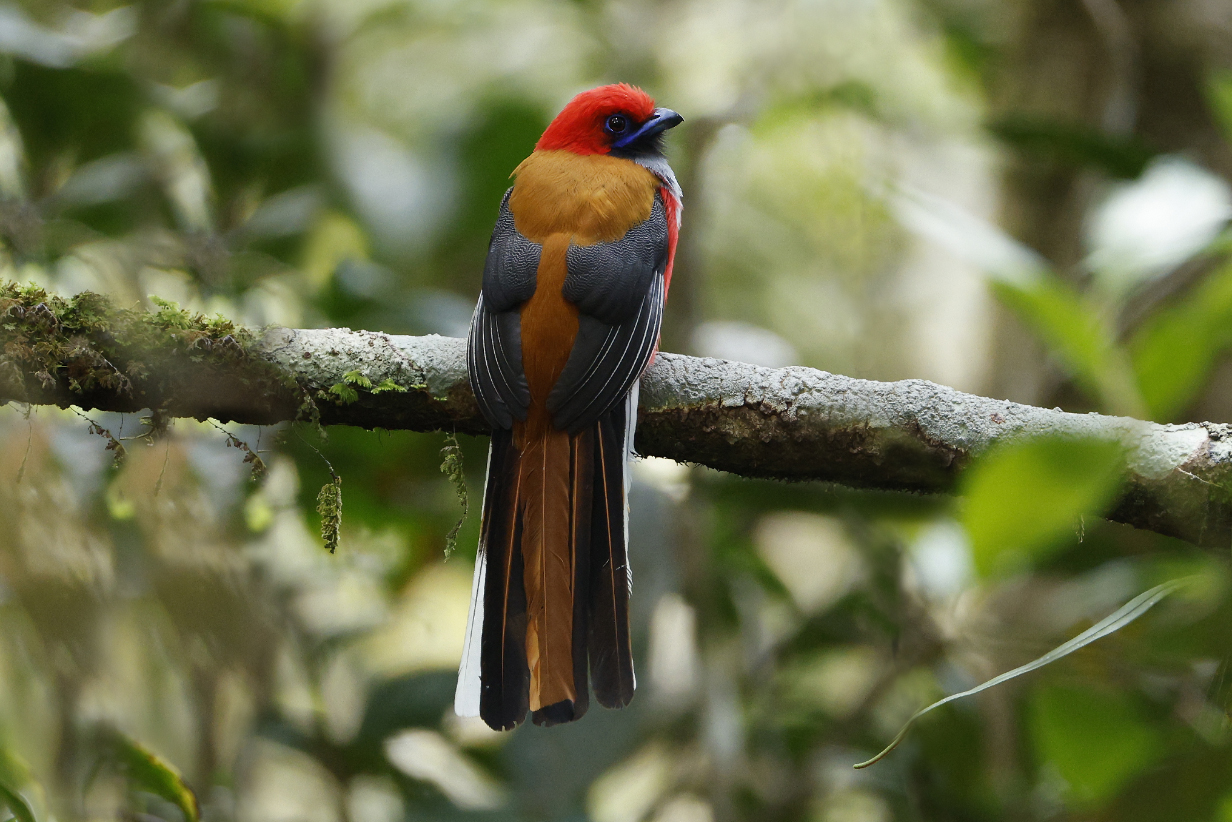
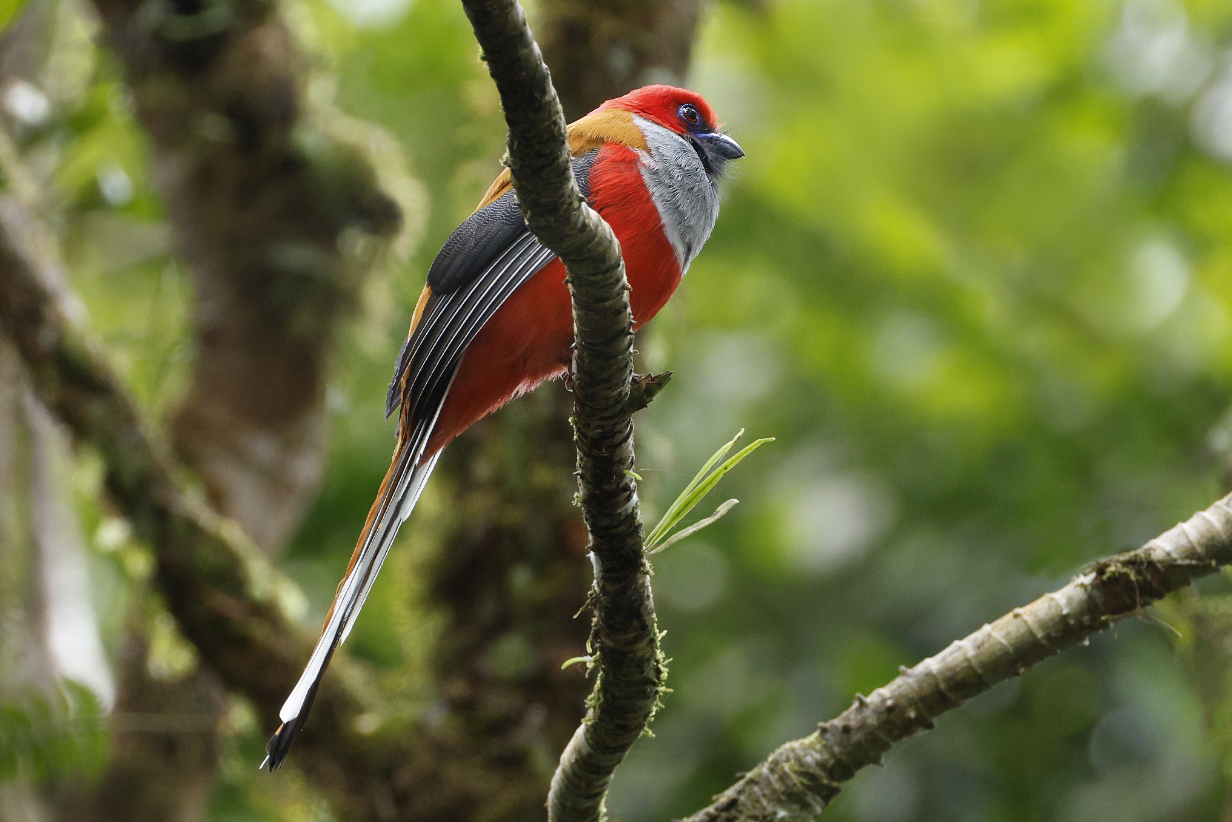
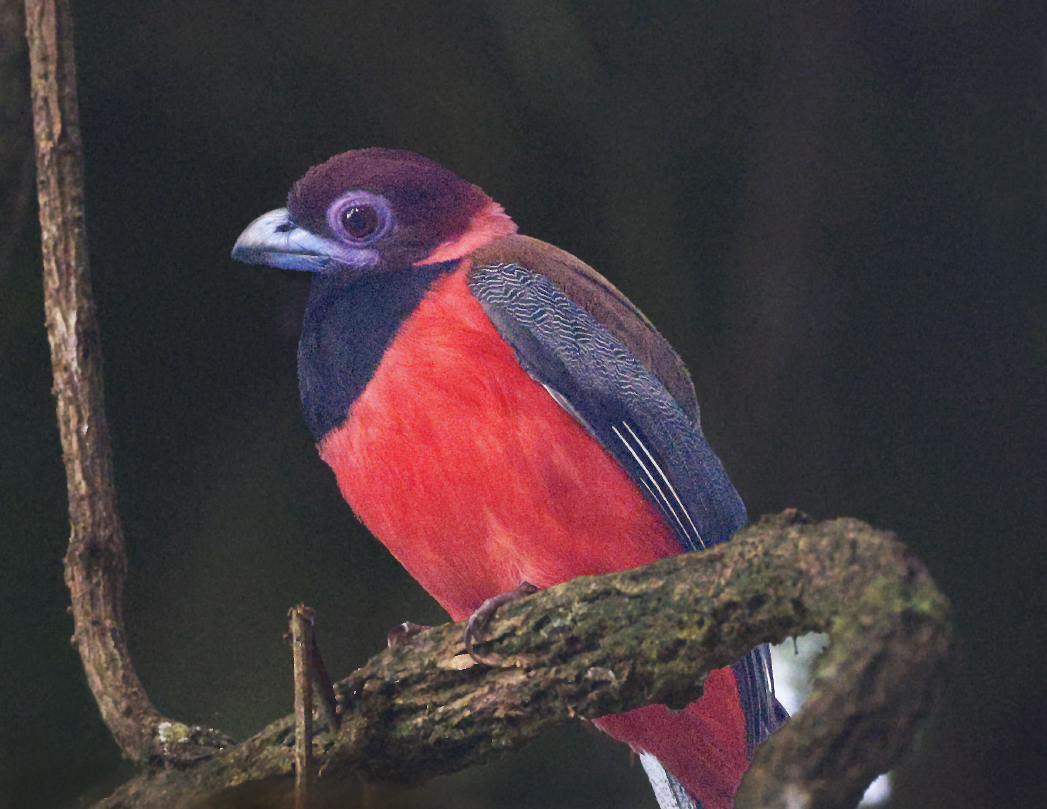
Whitehead's trogon (This is my life bird.)
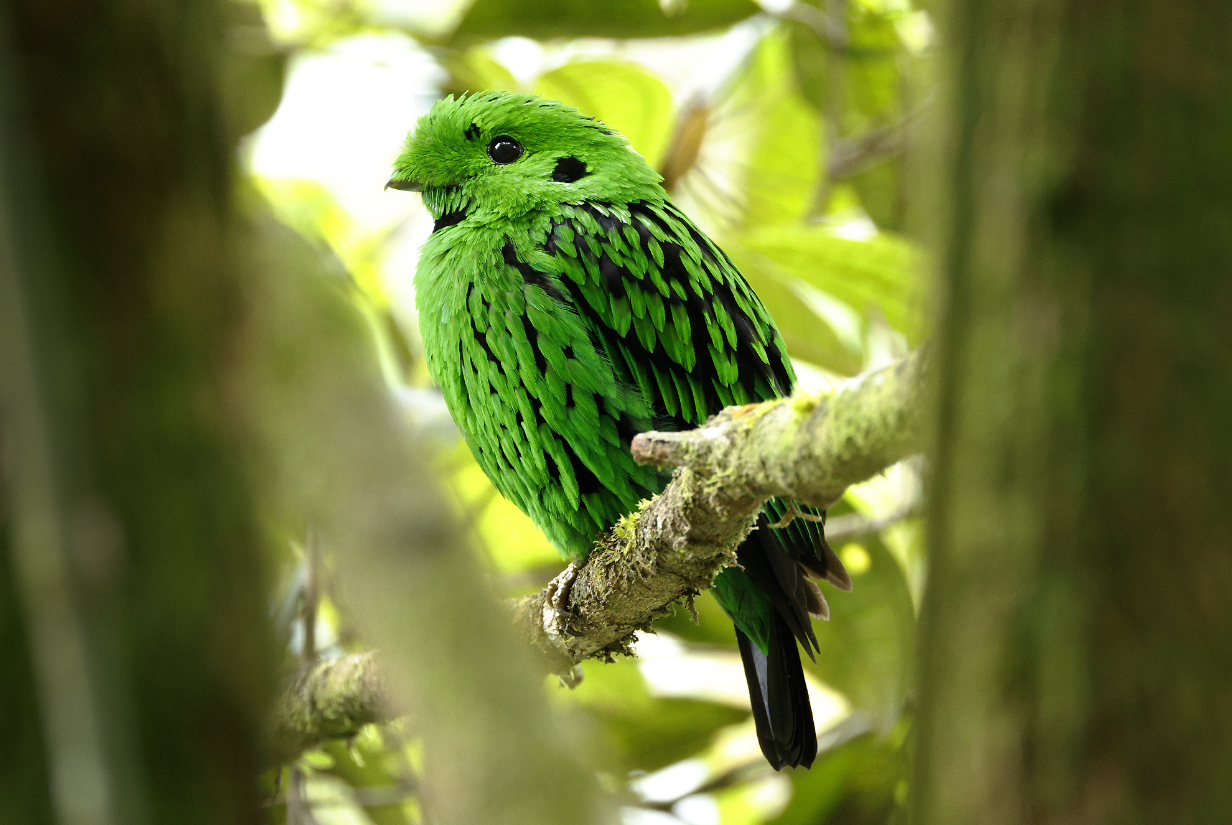
Whitehead's broadbill -- probably the same bird -- was seen again, even better, today. This shows two different crops of my best picture. Wonderful bird!
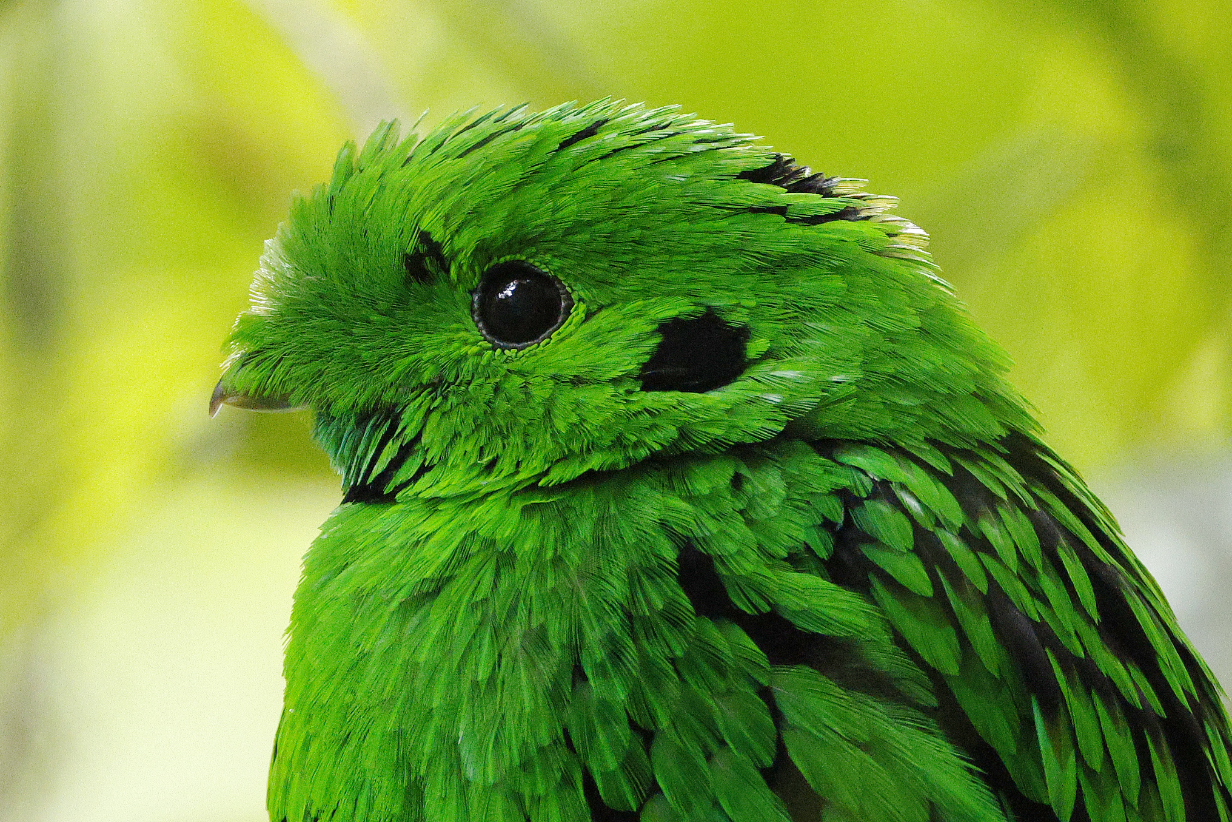
Whitehead's broadbill portrait
We also got brief and distant looks at Whitehead's spiderhunter, completing a well known and eagerly sought-out trio of life birds ... but my views and pictures of the spiderhunter are too poor to be included here. As always: spiderhunters rarely stop moving and are hard to see. In contrast, the trogon and broadbill perched for us conveniently.
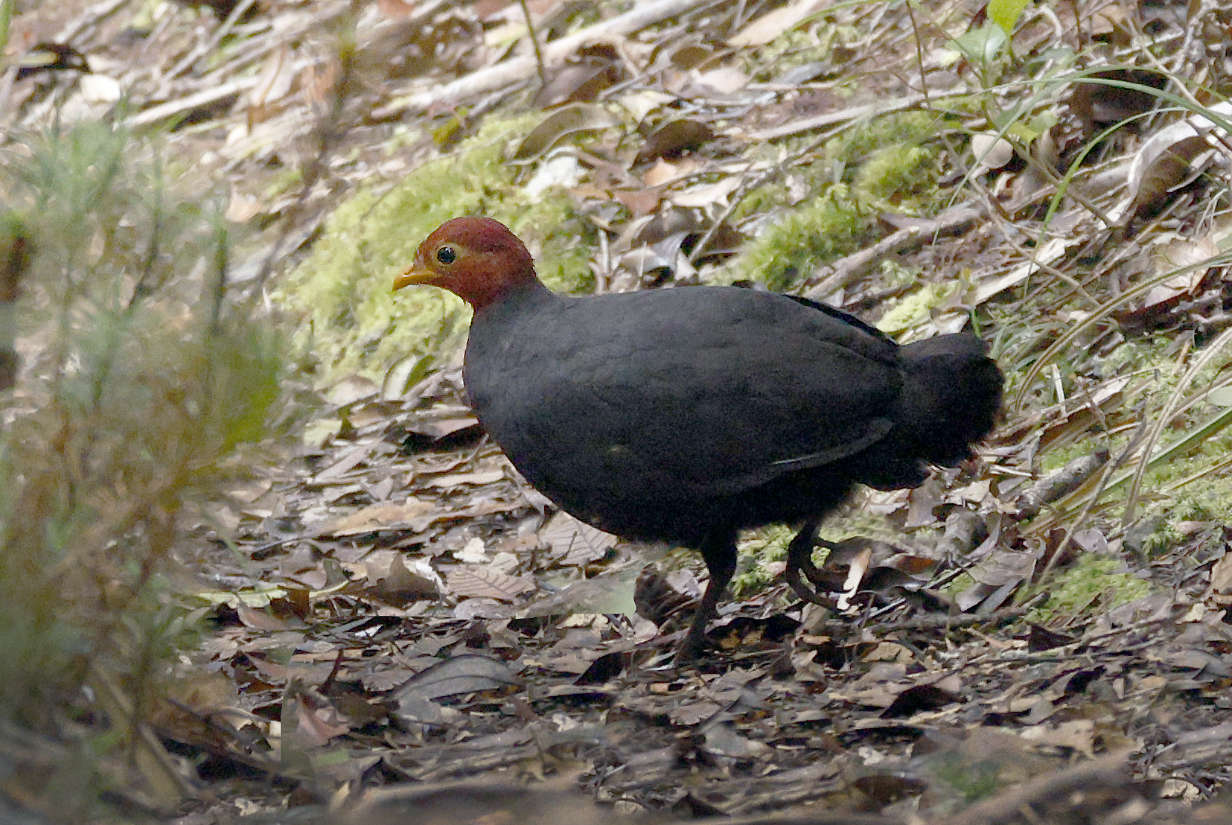
Crimson-headed partridge (This female is my life bird.)
Late in the afternoon, we went to the local botanical gardens, in part to see pitcher plants and in part because it is a "hot spot" for Pygmy heleia.
We saw pitcher plants sporadically during our walks on jungle trails. The ones at he botanical gardens are, of course, superb specimens:
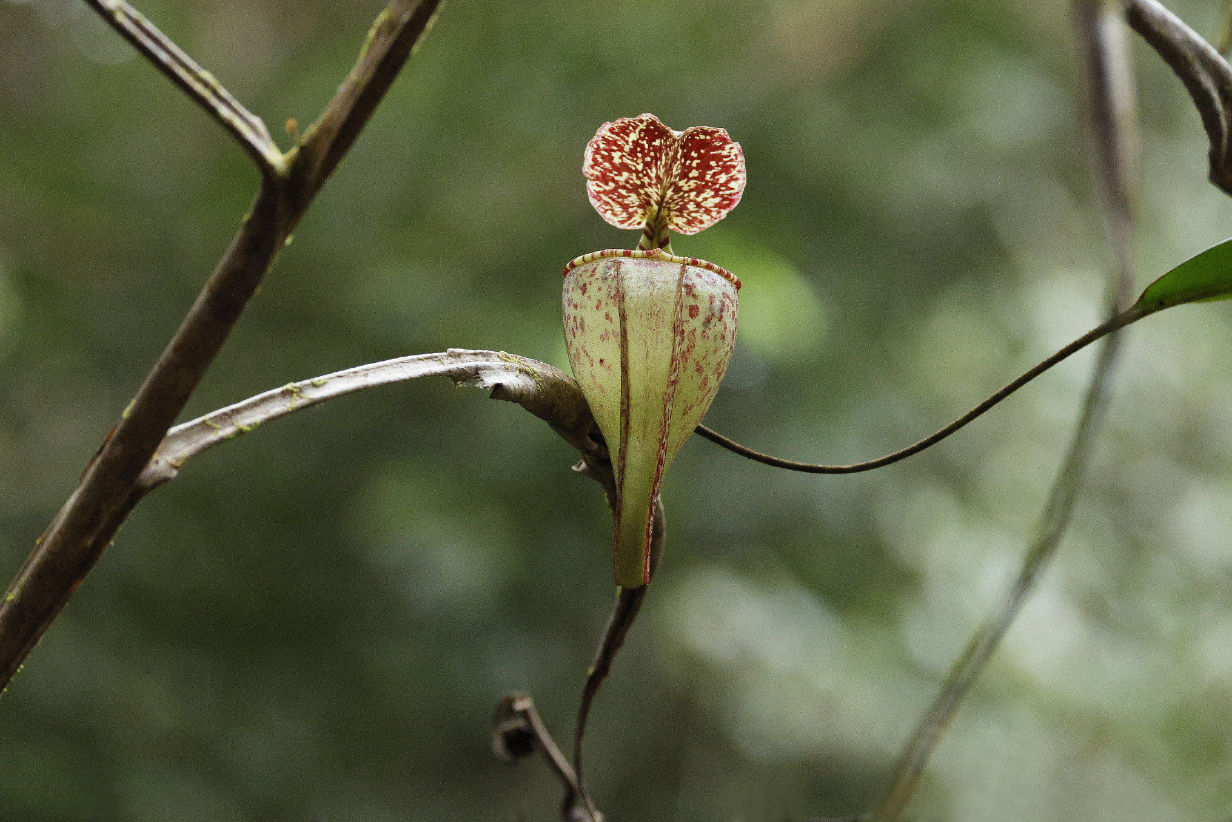
Carnivorous pitcher plant Nepenthes rafflesiana -- that Raffles name again! Note that the pitchers are modified leaves, not flowers. This is obvious when you look at the plants closely. Paraphrasing Wikipedia, "All Nepenthes are passive carnivores with no moving parts, unlike their distant cousins the Venus flytrap. Nepenthes rafflesiana kills by luring its prey into its pitchers, whose peristomes secrete a sweet-tasting nectar. Once the insect is inside, it finds that the walls of the pitcher are too slippery to be climbed and it drowns. Digestive enzymes in the pitcher's liquid break down the prey and release soluble nutrients, which are absorbed by the plant through the walls of the pitcher. The carnivorous nature of Nepenthes is a consequence of living in nutrient-poor soils: Since the main method of nutrient absorption in most plants -- the root -- is insufficient in these soils, the plants evolved other ways to get nutrients. All Nepenthes are dioecious, meaning that an individual plant has only male or female characteristics." The same is true of Rafflesia keithii, above. We never knew -- you can't tell by looking at them -- whether the plants that we saw were male or female.
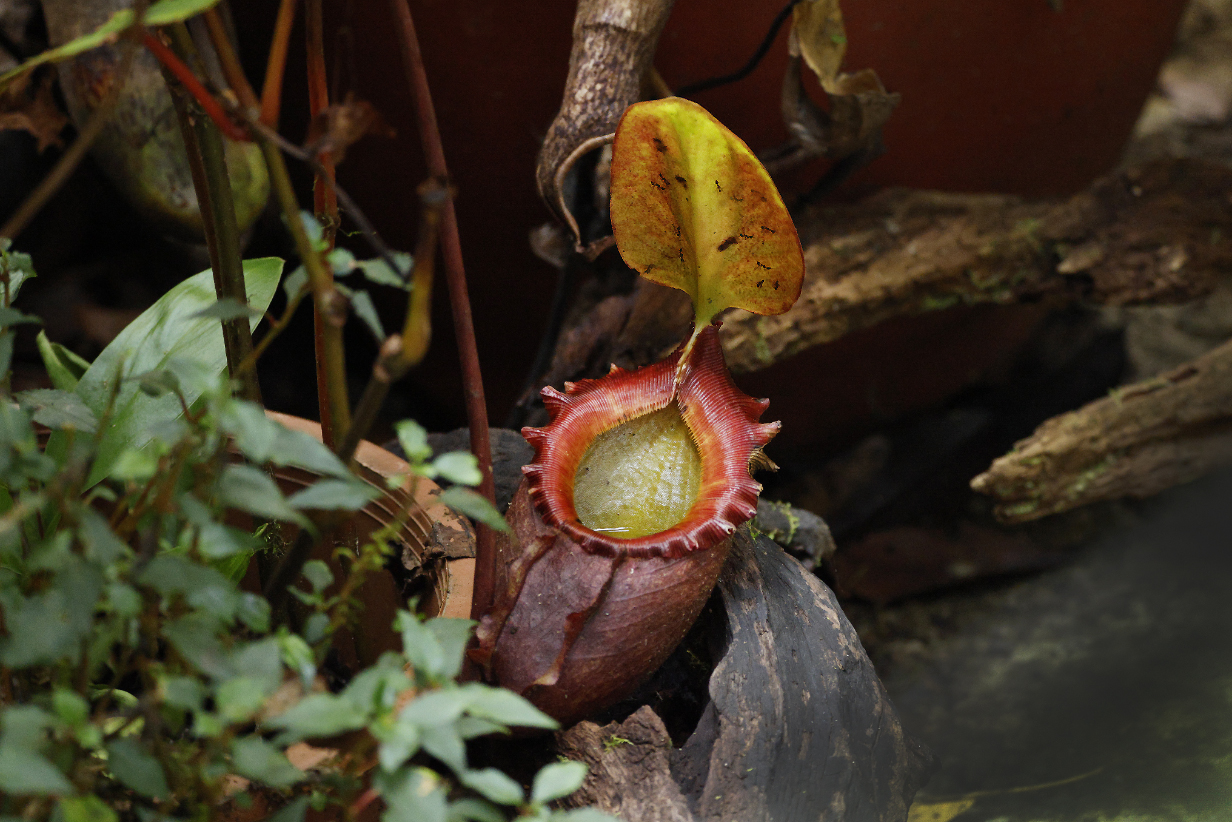
Carnivorous pitcher plant Nepenthes rajah, the most remarkable and beautiful species that we saw at the botanical gardens. According to Wikipedia, "it is endemic to Mount Kinabalu and neighbouring Mount Tambuyukon in Sabah, Malaysian Borneo. Nepenthes rajah grows particularly in areas of seeping ground water where the soil is loose and permanently moist. The species has an altitudinal range of 1,500–-2,650 m (4,920–-8,690 ft) above sea level. Due to its localised distribution, it is classified as endangered."
Quoting further, its "urn-shaped traps can grow up to 41 cm (16 inches) high and 20 cm (7.9 inches) wide. [This specimen was much smaller.] Nepenthes rajah can trap mammals as large as rats; it occasionally traps frogs, lizards, and even birds. But insects and especially ants are its staple prey." Several ants are visible on the lid of the above pitcher.
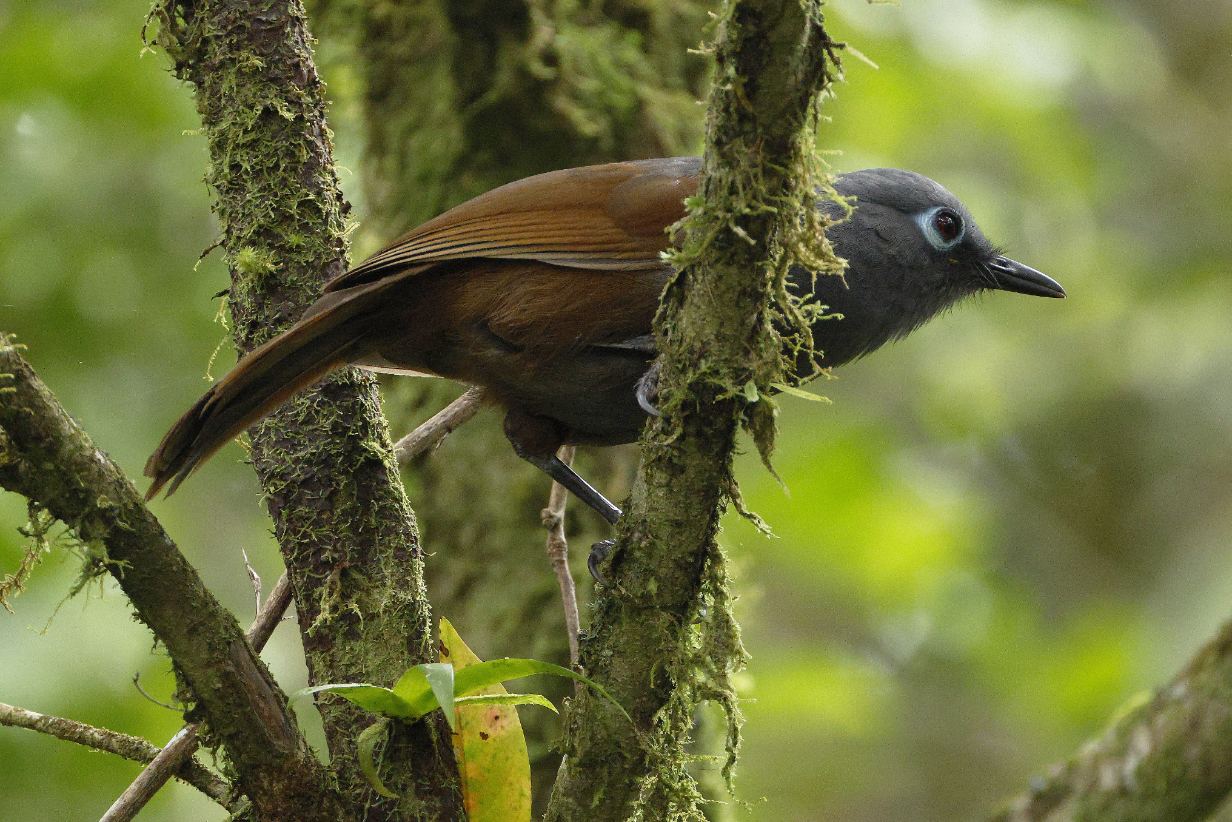
Sunda laughingthrush -- better view
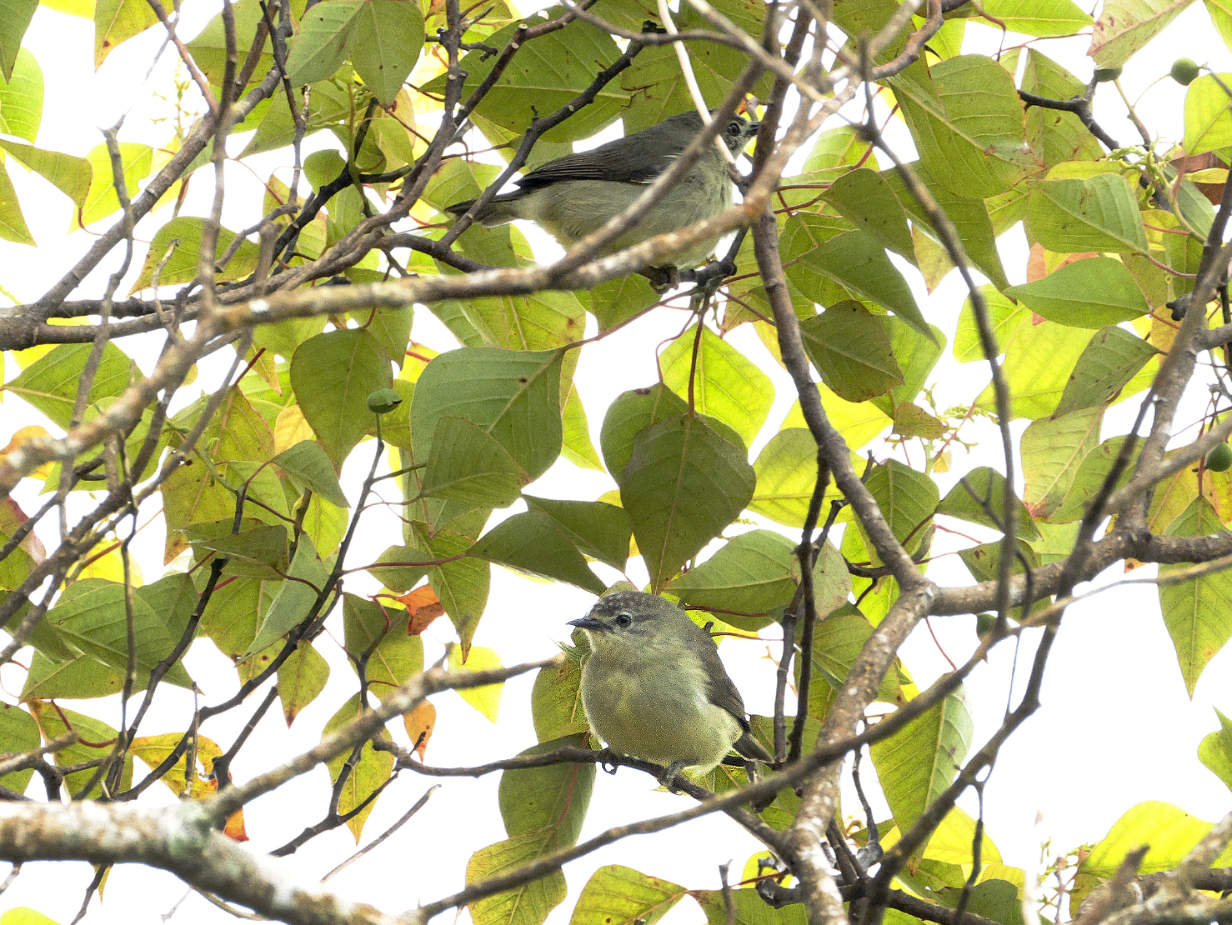
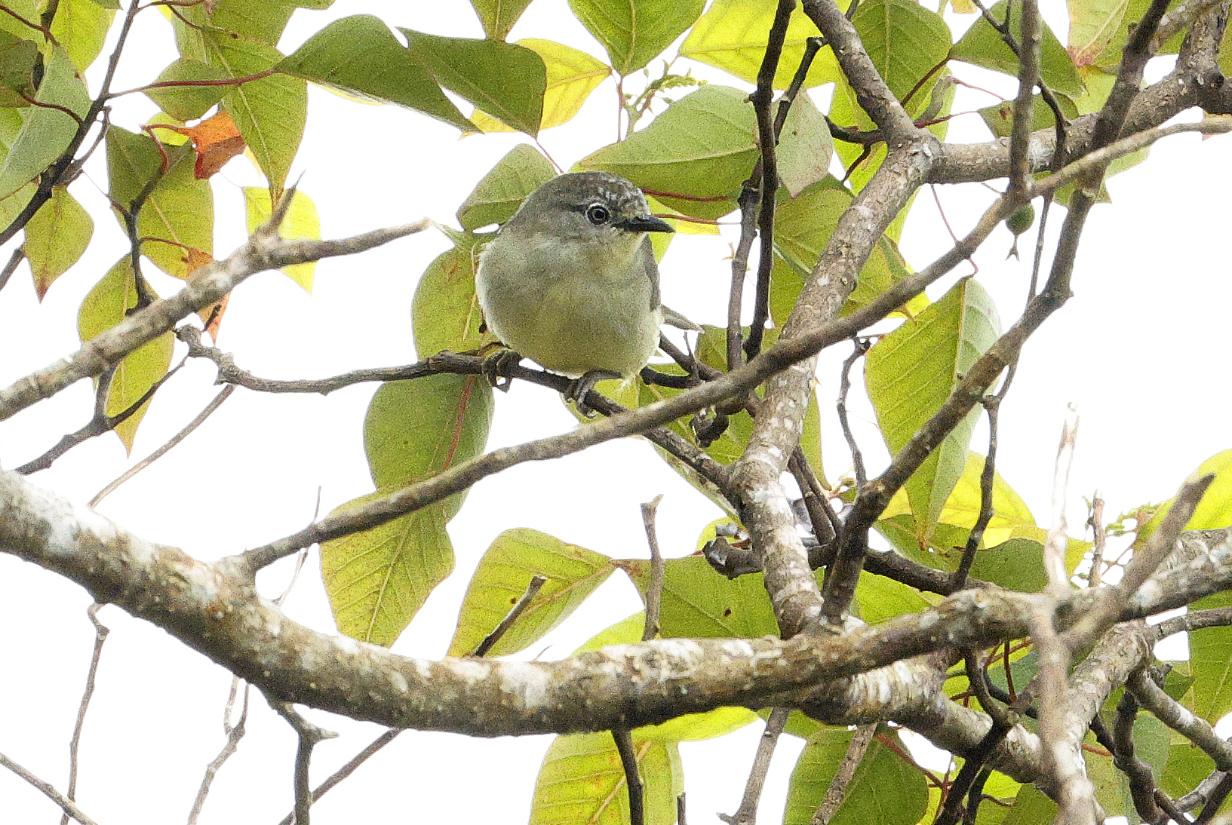
Pygmy heleia, a kind of Bornean white-eye. Ebird calls it a "tiny hyperactive ping-pong ball of a bird." Right on!
March 21: AM at Kinabalu National Park; PM Drive to Sandakan and Sepilok
Today began with early-morning birding at Kinabalu, after which we had a roughly 5-hour drive to Sepilok and its Rain Forest Discovery Center.
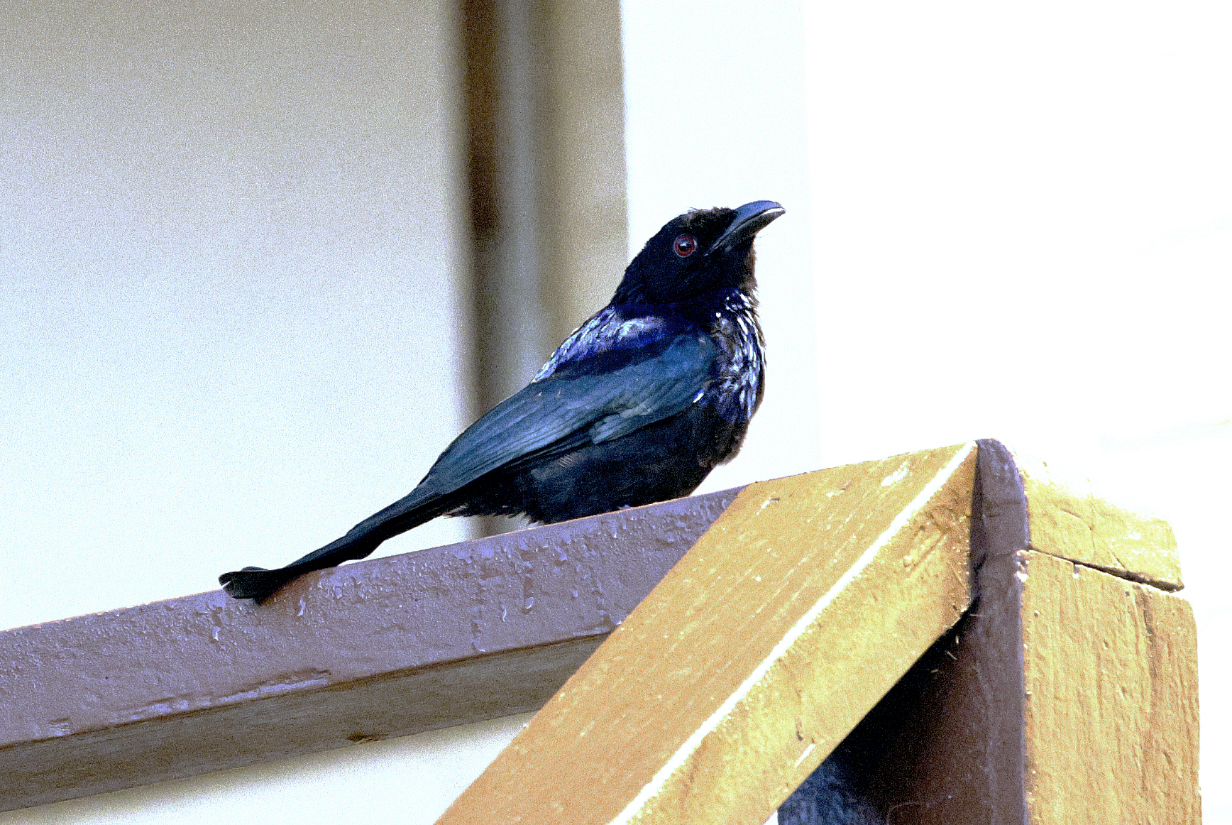
Hair-crested drongo on the porch of my cabin in early morning twilight. Colors are not quite right, but this pictures is included to remind me of what the bird looks like.
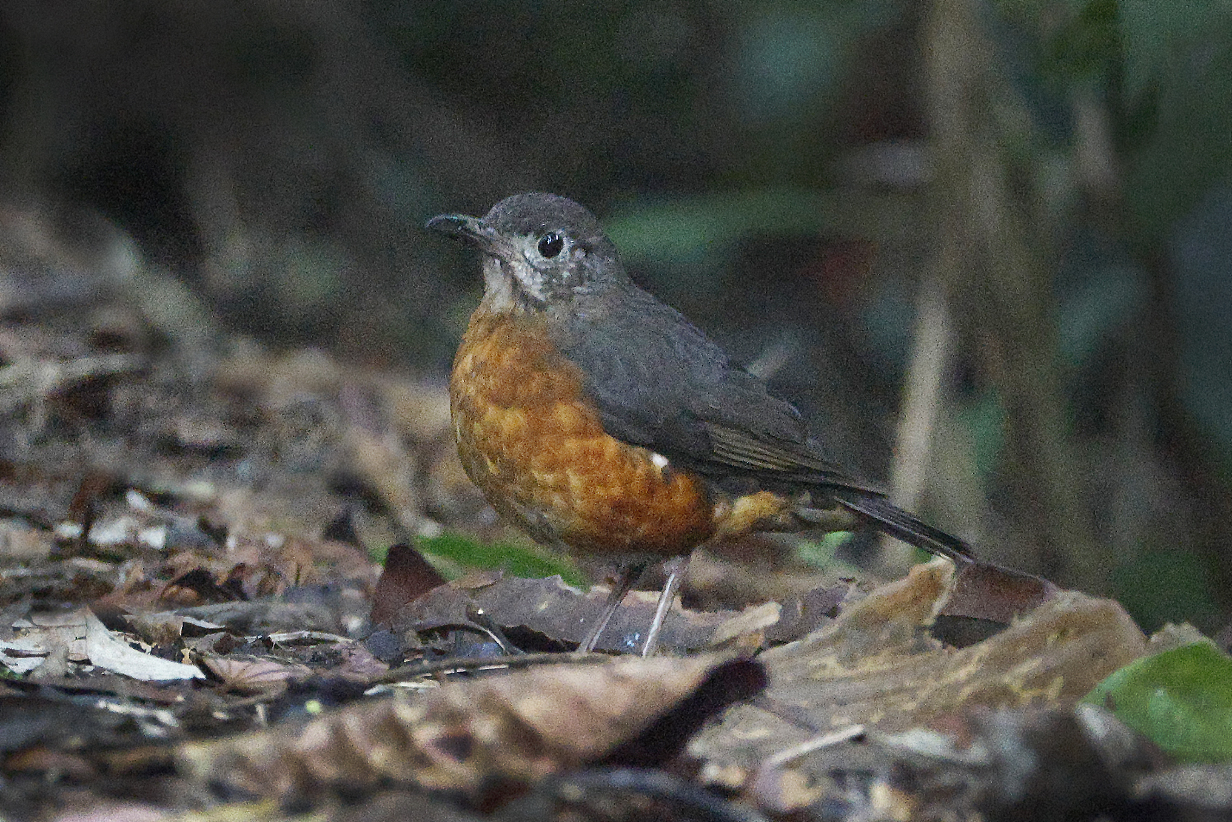
Today, we "lucked out" and got good views of Everett's thrush in better lighting than the almost-dark twilight look that we got on the first day at Kinabalu.
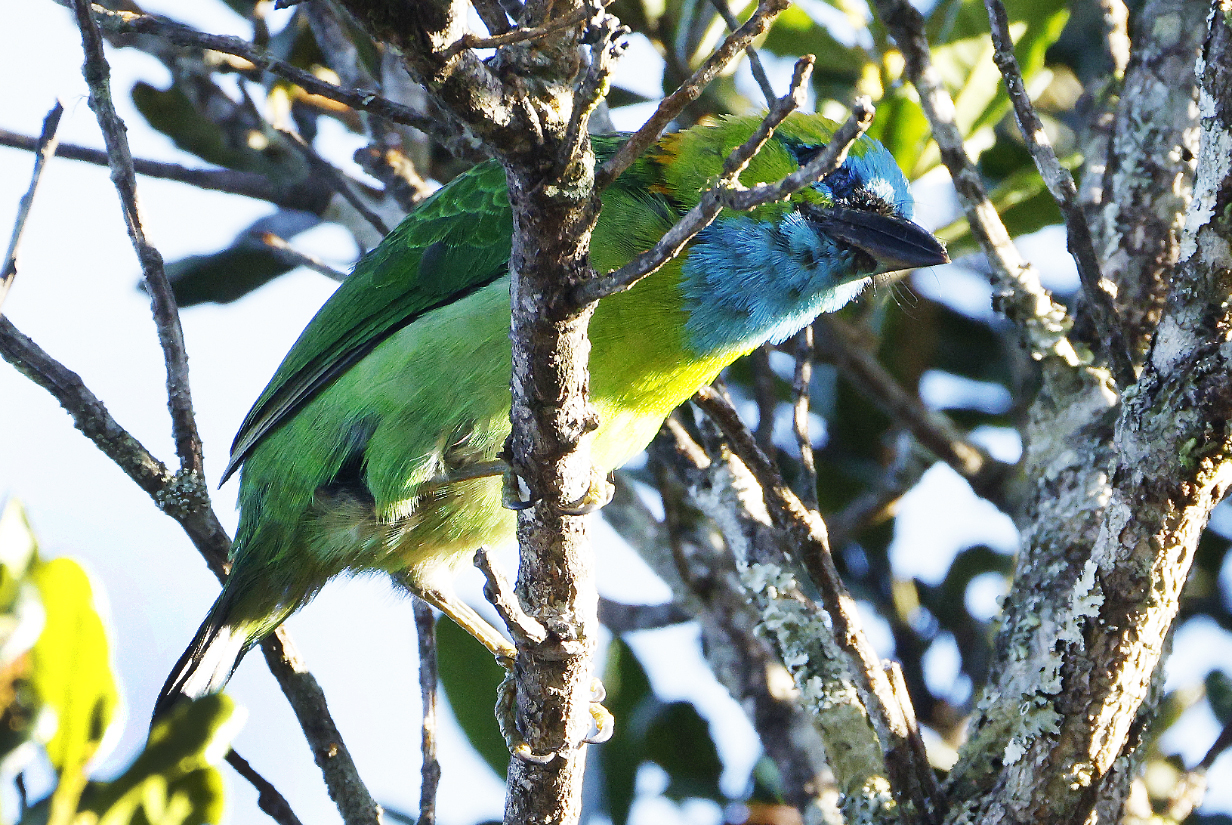
Golden-naped barbet -- not exactly a wonderful pose, but closer than usual for a barbet, during this trip
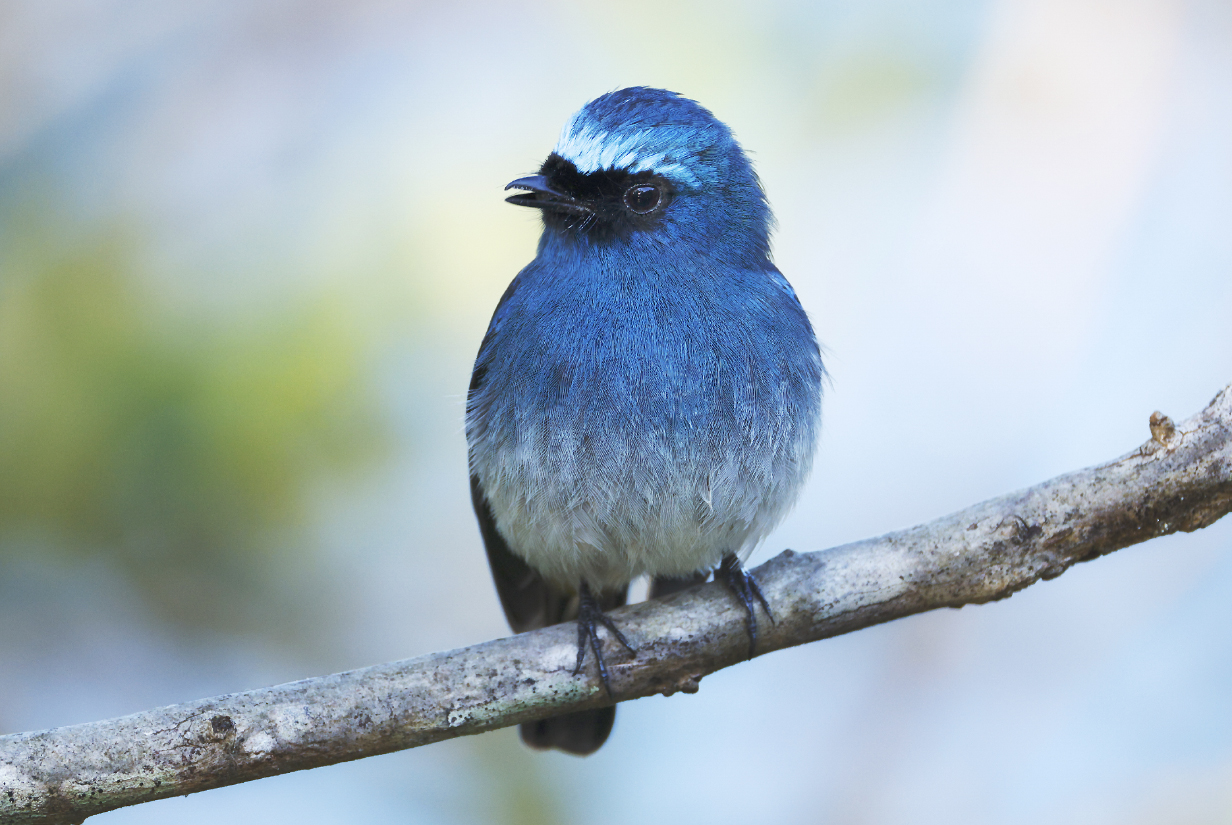
Indigo flycatcher came very close!
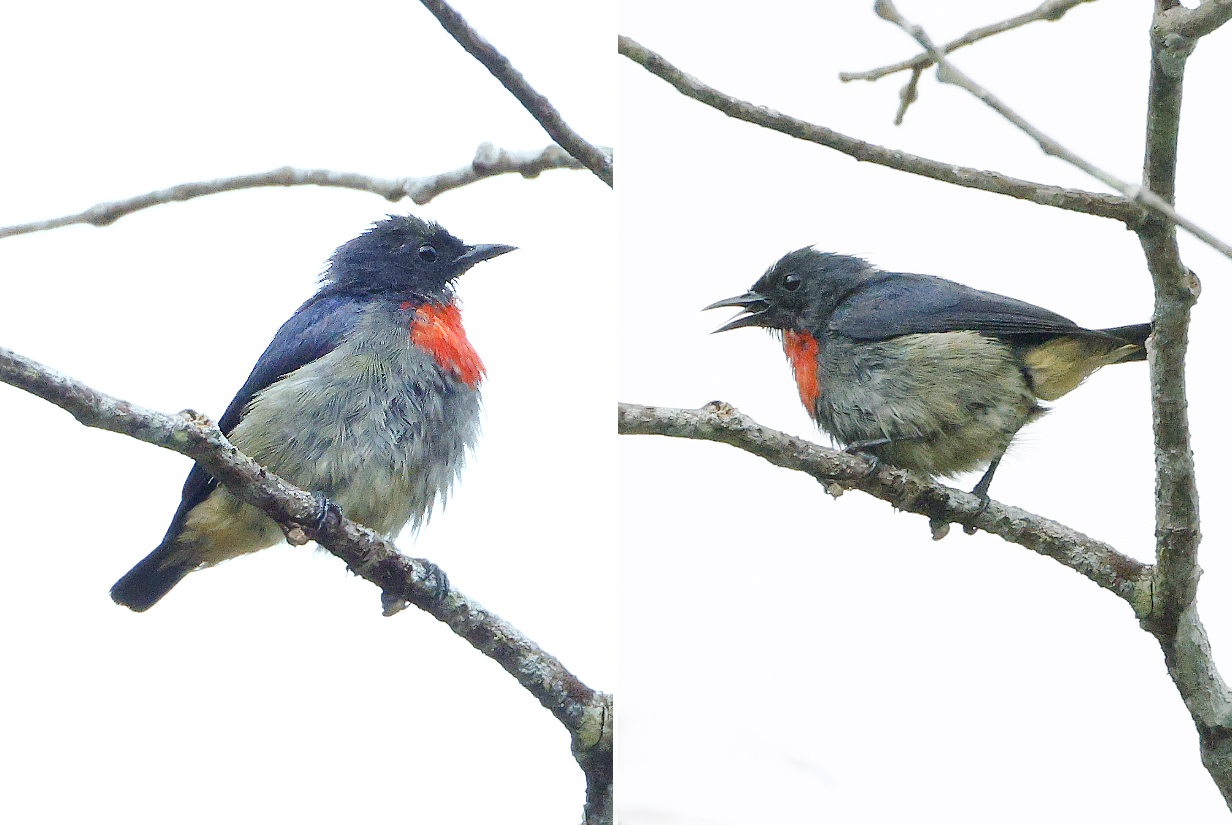
Black-sided flowerpecker (This is my life bird.)
After this, we took the long drive to Sepilok Nature Lodge.
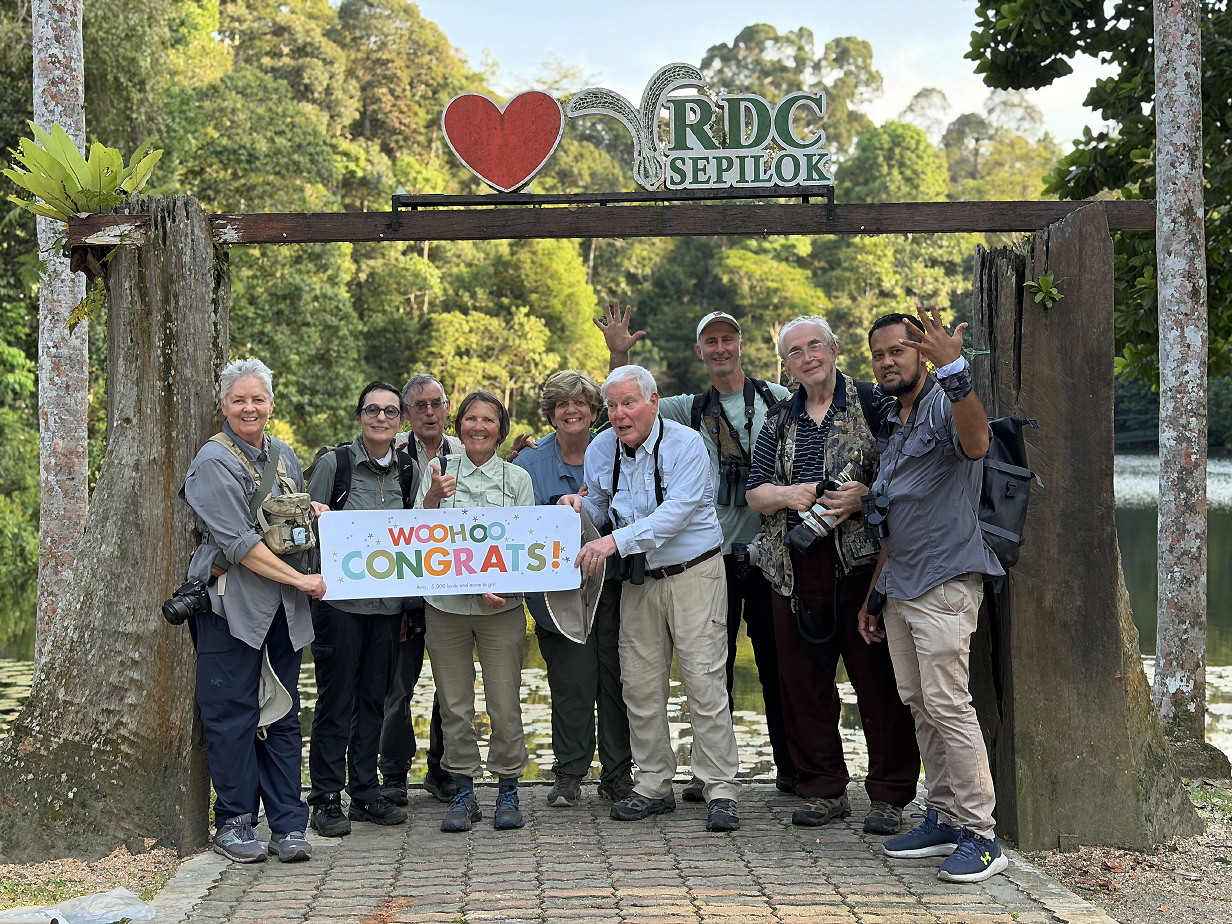
Several days ago, tour participant Ms. Amy Sheldon (in green shirt behind "HOO") achieved her lifetime goal of getting her 5000th life bird, Yellow-bellied warbler. This is a very significant milestone that required many years of dedication. We celebrated at Sepilok. Warmest congratulations to Amy and thanks to Scott Baker and Hazwan Suban for this picture.
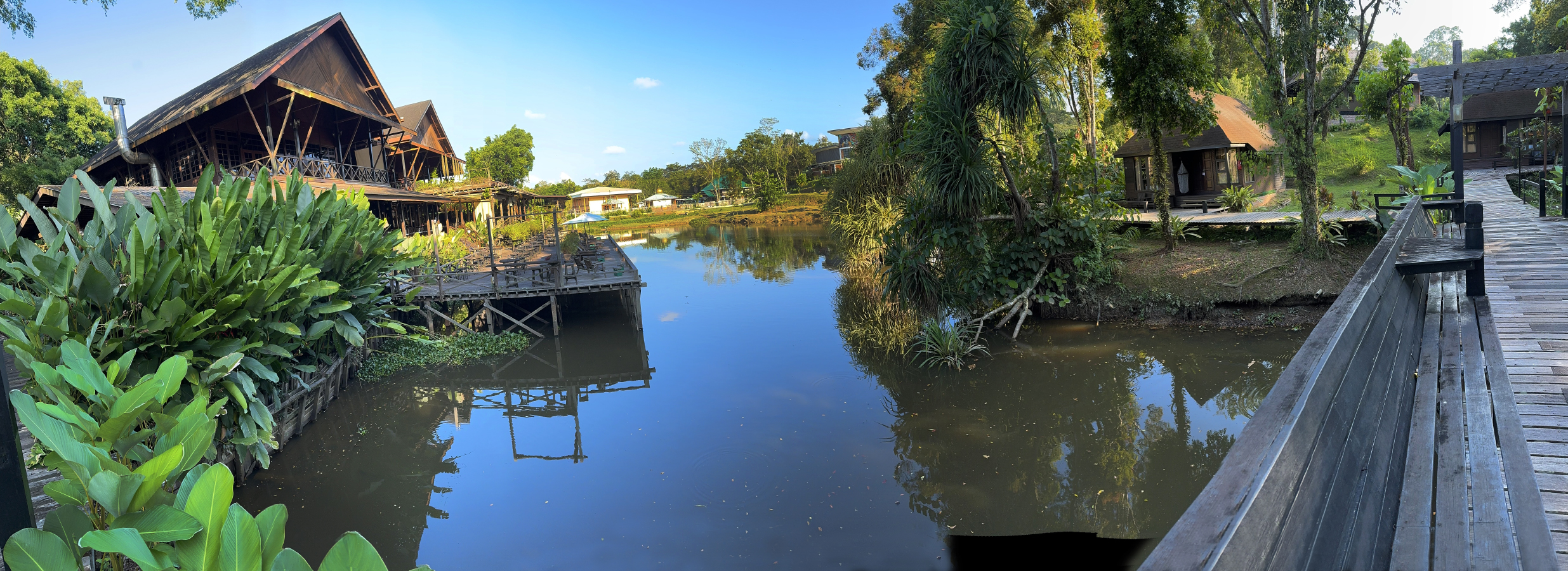
Sepilok Nature Lodge was one of the best lodges at which we stayed -- beautiful, comfortable, and convenient. This picture shows the back of the restaurant area at left, fronted with a viewing platform over the water. I am standing on a bridge to the lodge's cabins, at right. VENT folks -- and especially guide Scott Baker -- did me the huge favor of arranging my lodging to minimize the need for long walks (and, at other places, many stairs) to get from my room to public areas such as the restaurant and to places from which we took vehicles to birding sites. My cabin is the one at right in this panorama, facing the restaurant area across the water. Scroll right to see the whole panorama.
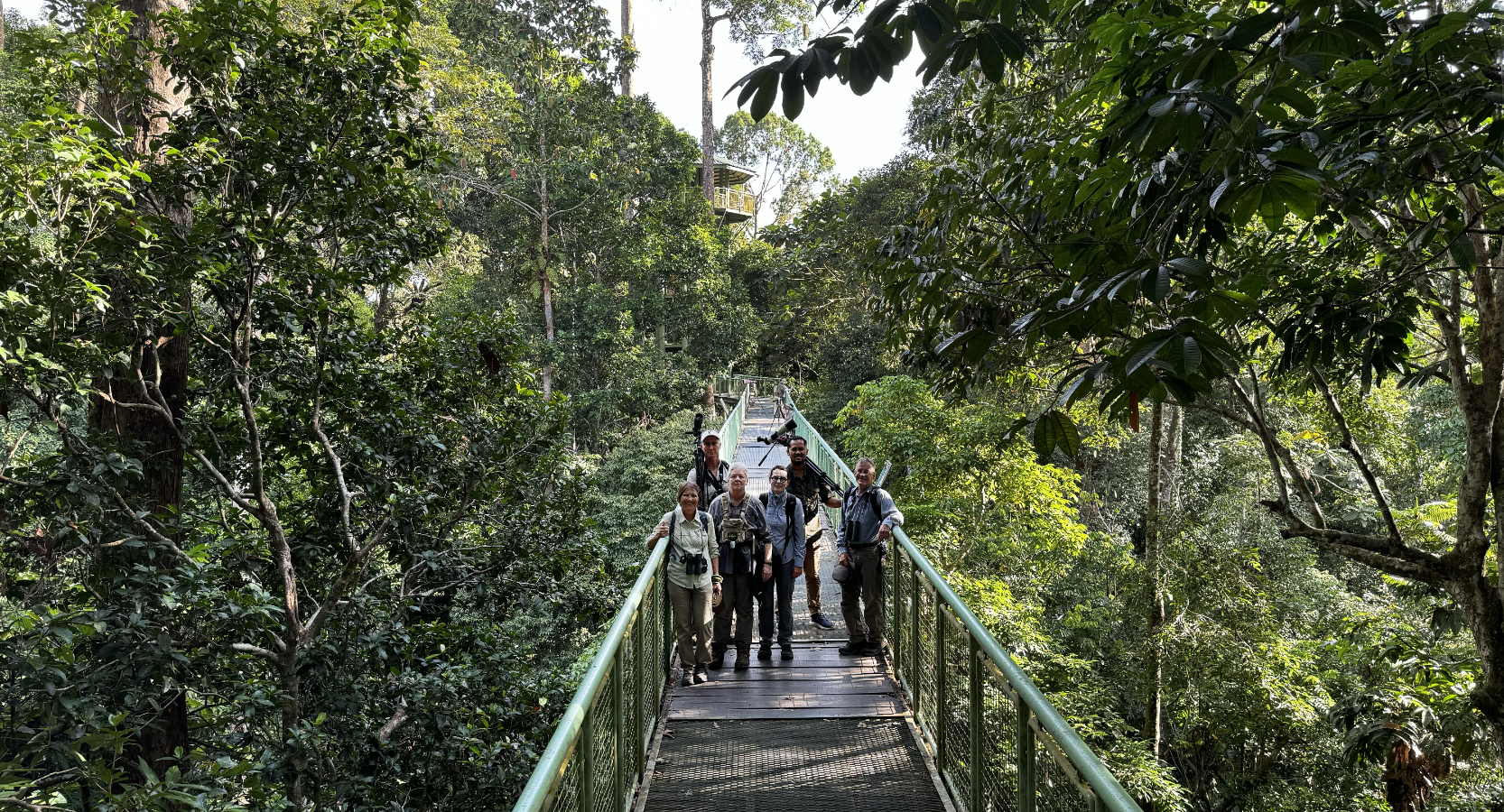
The canopy walkway at the Sepilok Rain Forest Discovery Center is superbly constructed -- by far the best that I have seen anywhere. The next picture better shows the sturdy construction. This picture shows, in the background, one of the canopy towers that takes you right to the top of the forest. We climbed one of these only once, getting lots of good birds and Wallace's hawk-eagle on its nest. This picture shows many of our VENT group. In the second row, at left with white cap, is VENT guide Scott Baker. At right with scope is superb local guide Hazwan Suban.
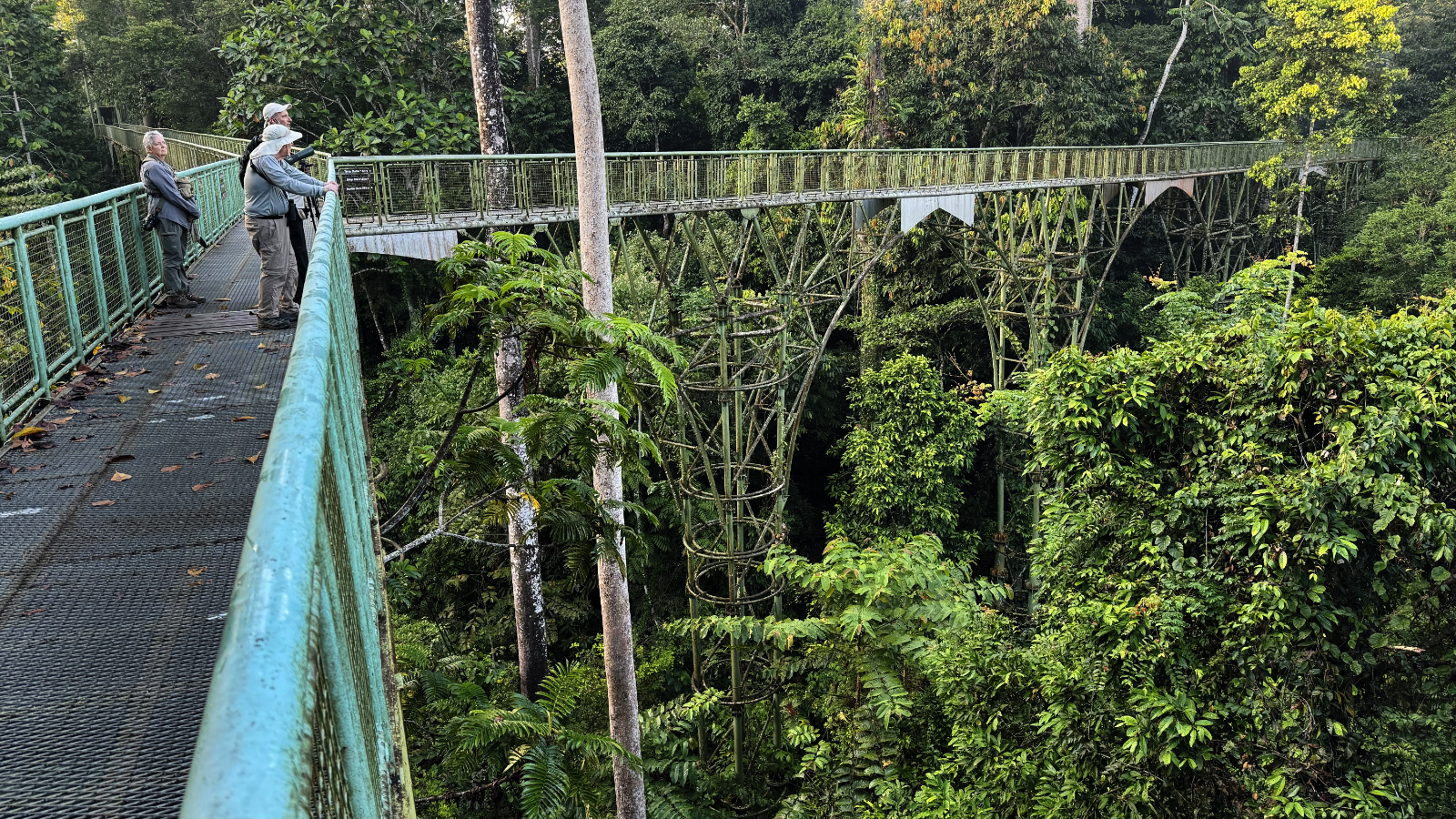
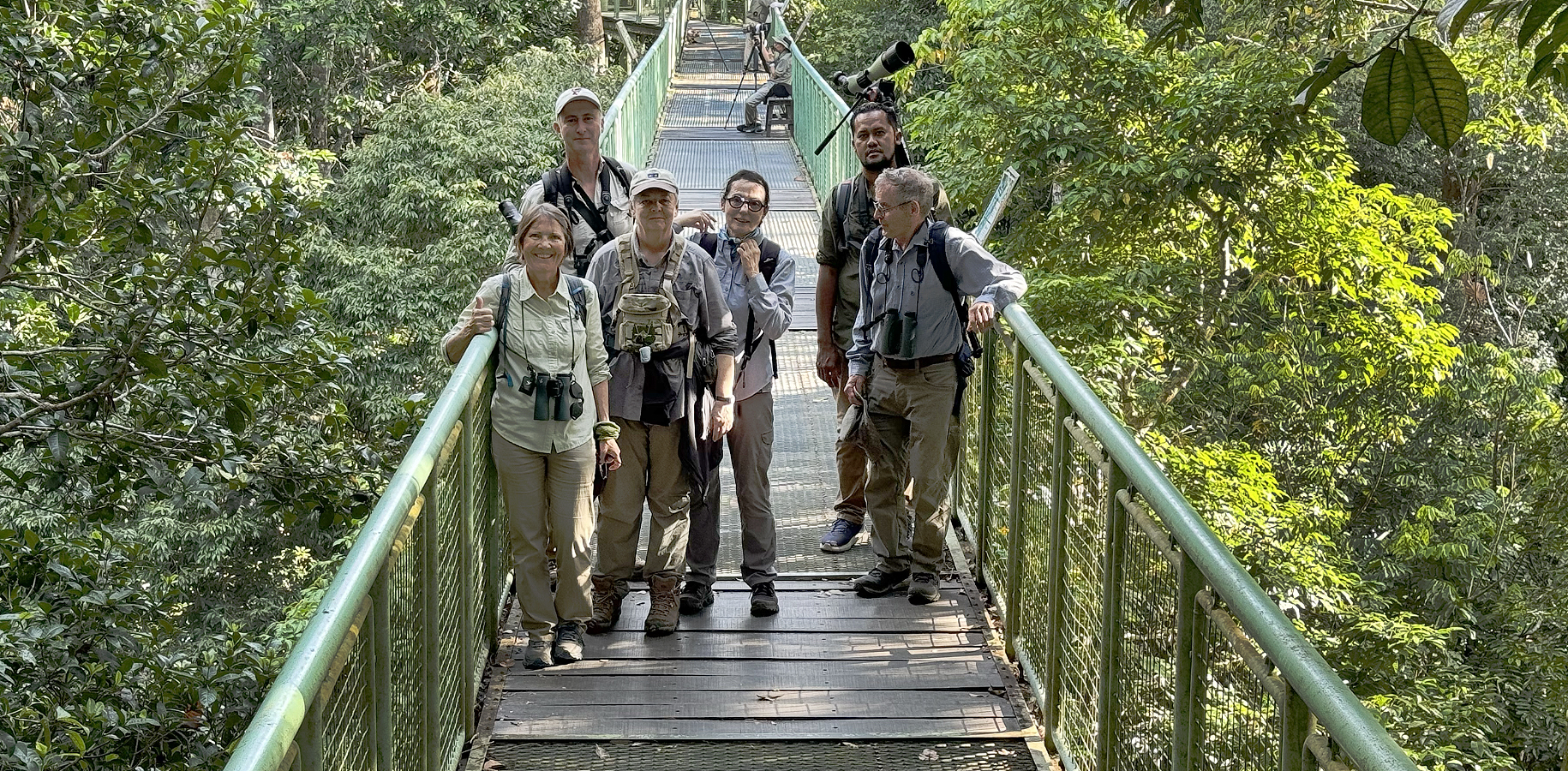
Canopy walkway at Rain Forest Discovery Center. We saw the Violet cuckoo (below) from about half way along the right-hand part of the walkway and the Barred eagle-owl (just below) from roughly where the right-hand walkway disappears into foliage at right. Our descent to forest-floor trails is farther still to the right, out of sight in this picture. We spent a lot of our time roughly along the part of the walkway shown here. Note the remarkably sturdy construction: Unlike most canopy walkways, this one felt very solid and barely quivered with 9 people walking along it. It was a huge pleasure to look at birds nearly horizontally, without having to strain our necks to look almost straight upward.
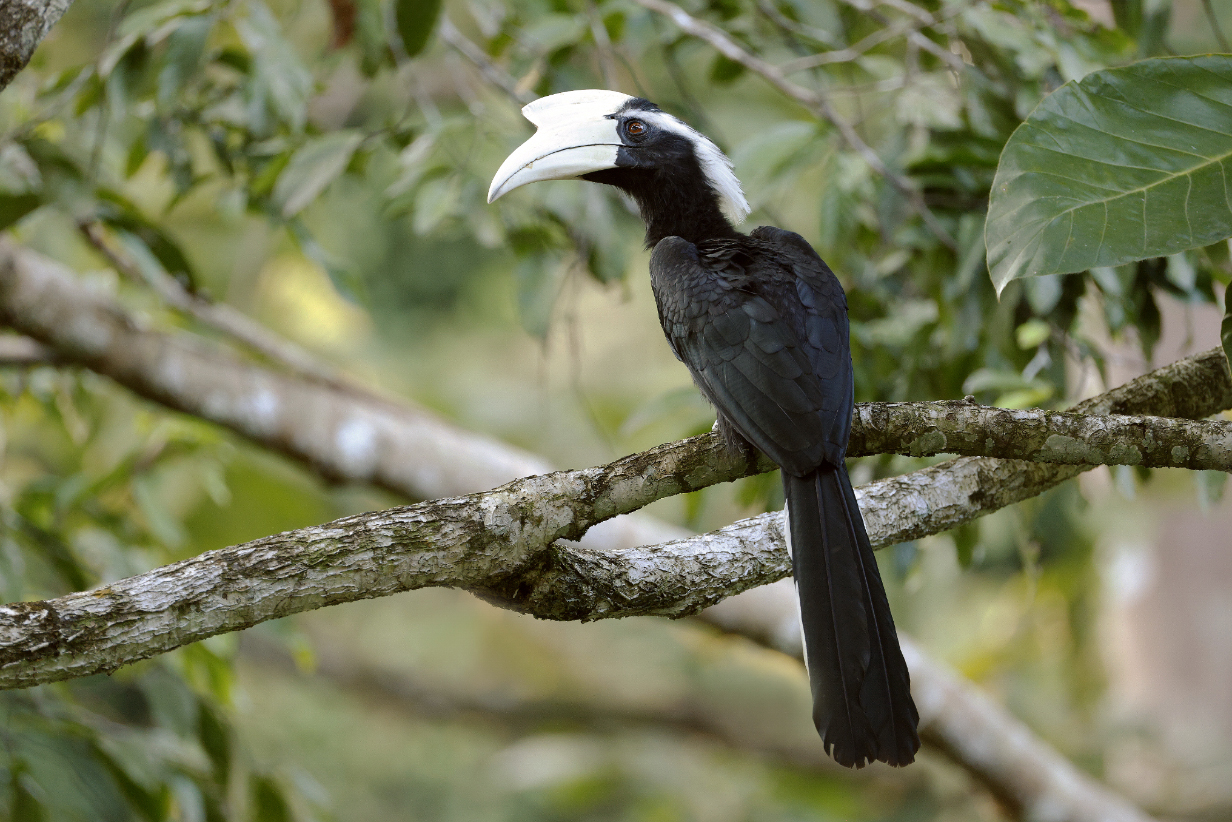
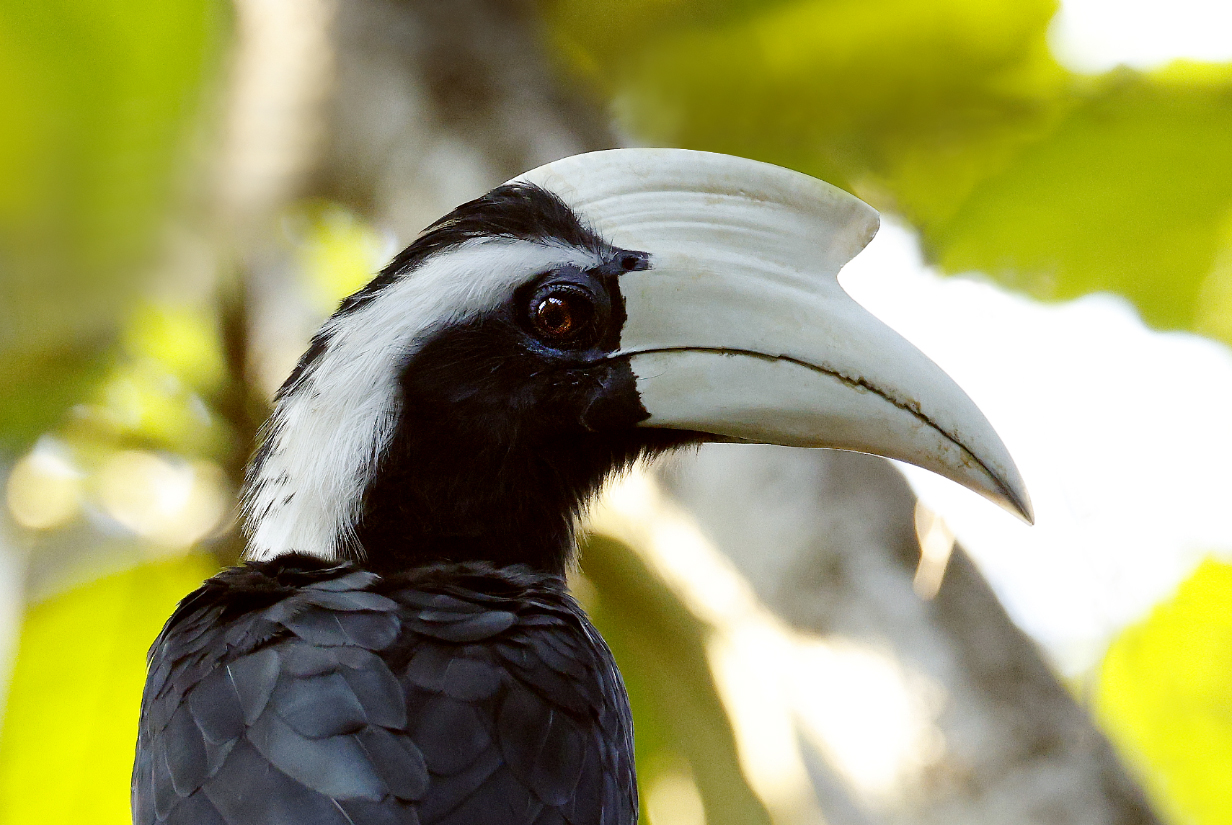
Black hornbill (This is my life bird.)
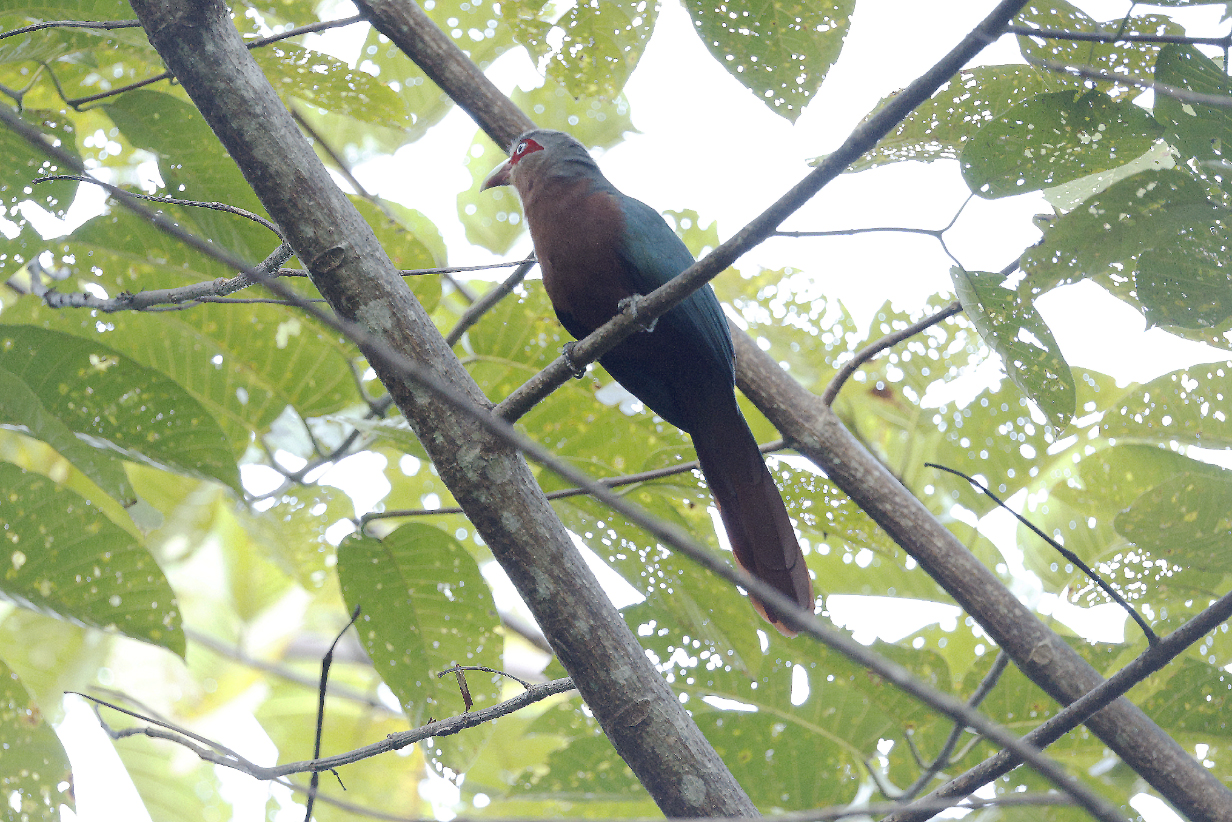
Chestnut-breasted malkoha (This is my life bird -- not very good picture of a gorgeous bird.)
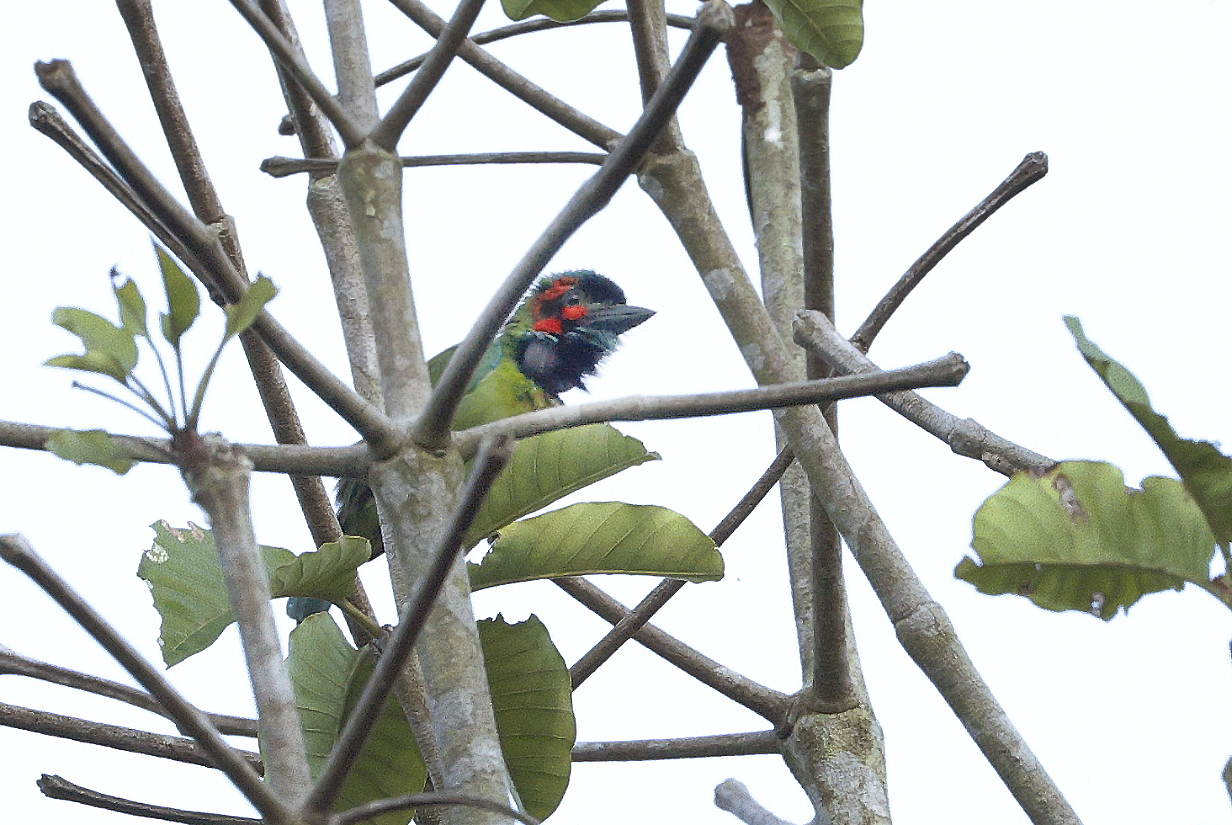
Black-eared barbet (This is my life bird ... far away, as were all barbets during this trip)
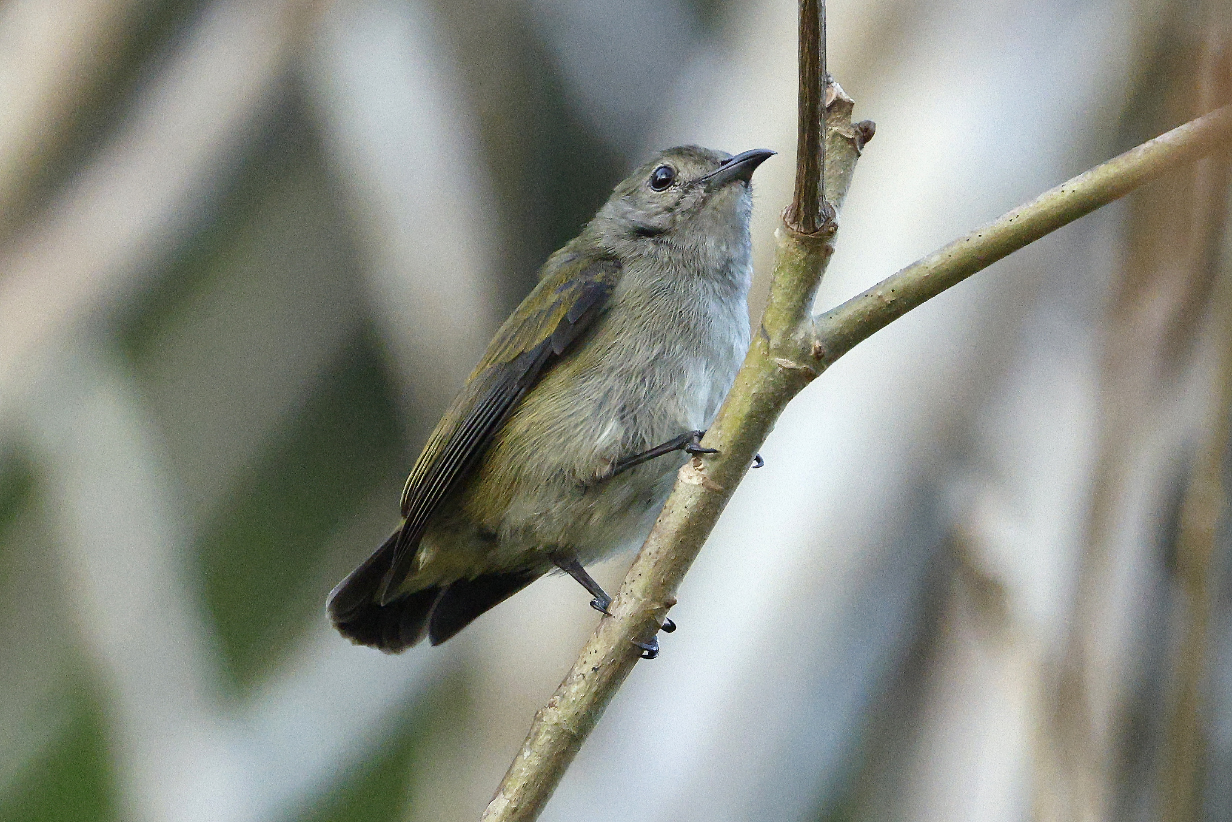
Plain flowerpecker (This is my life bird.)
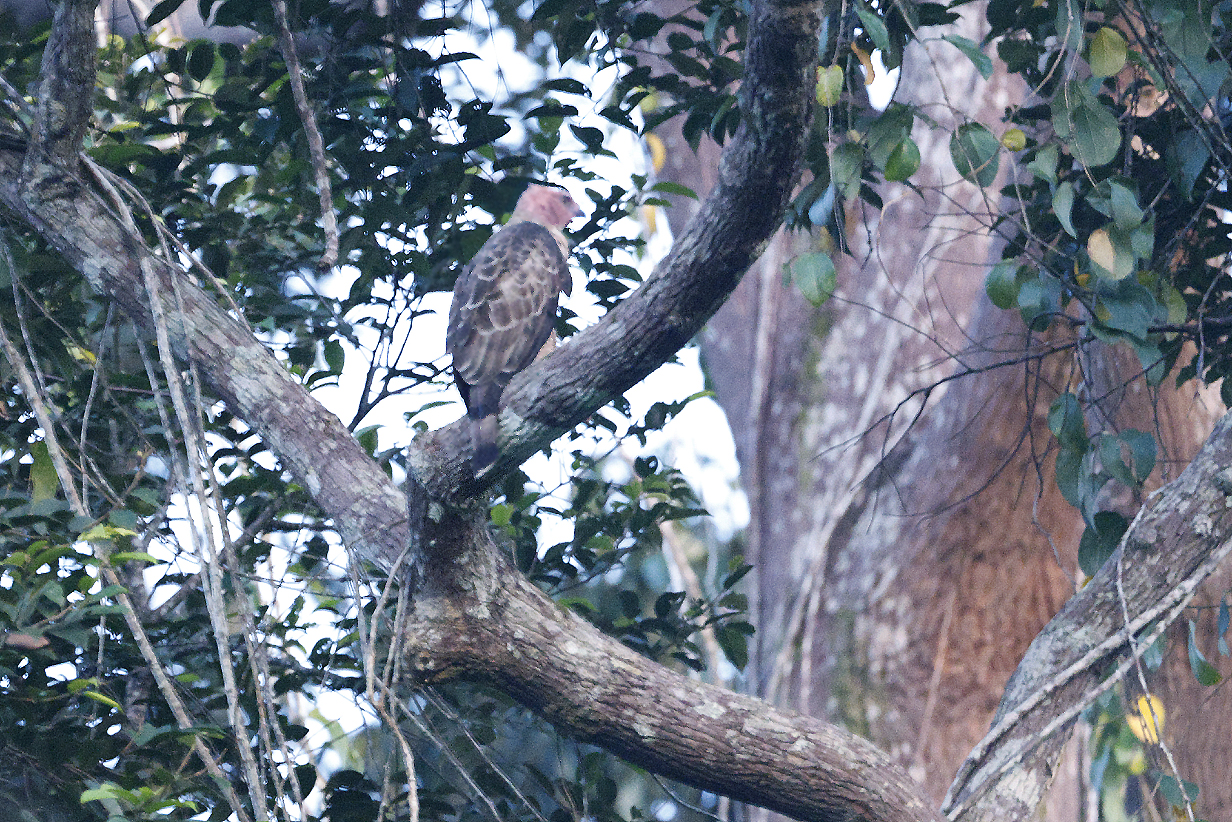
Wallace's hawk-eagle (This is my life bird, poorly photographed in twilight. We saw it much better on a nest, two days later, from one of the canopy towers.)
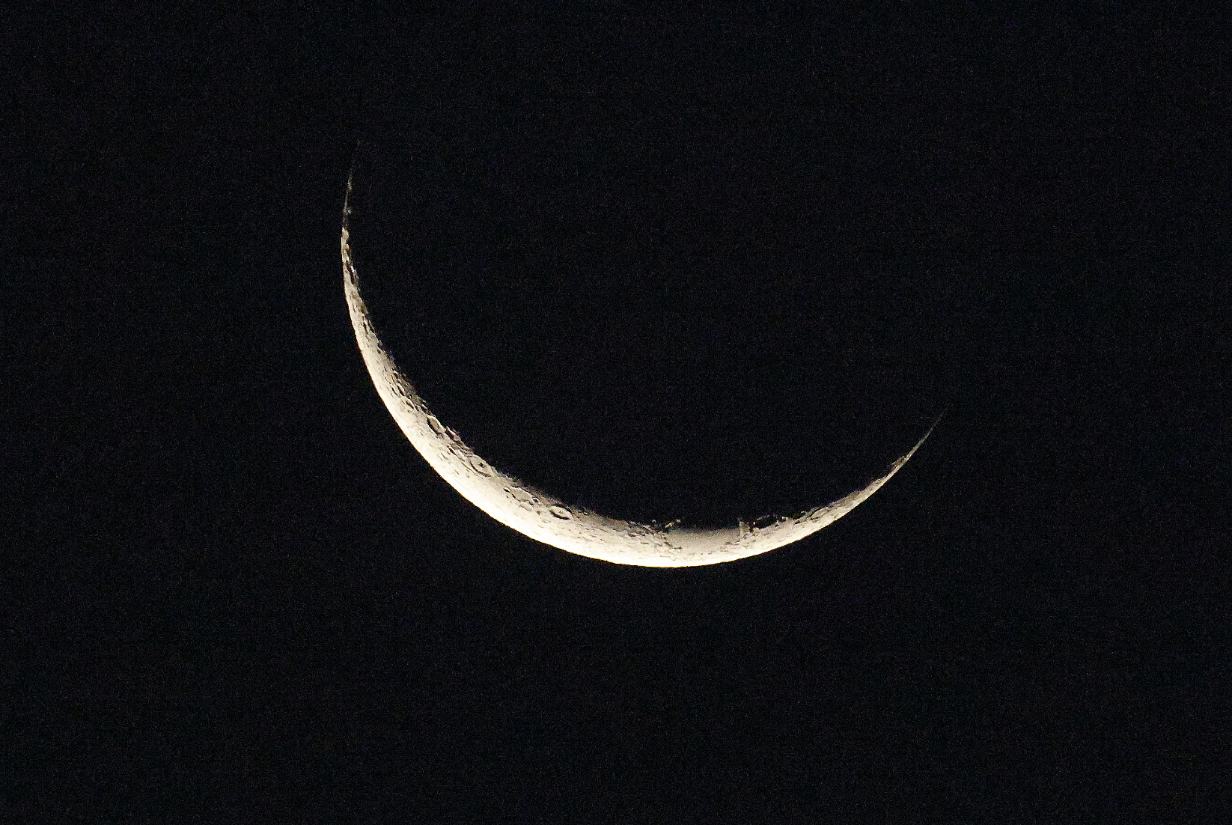
Crescent moon, photographed at 742 mm focal length as an experiment, near the start of night birding. This is a hand-held, 1/400 second exposure at f/11 and ISO 20,000.
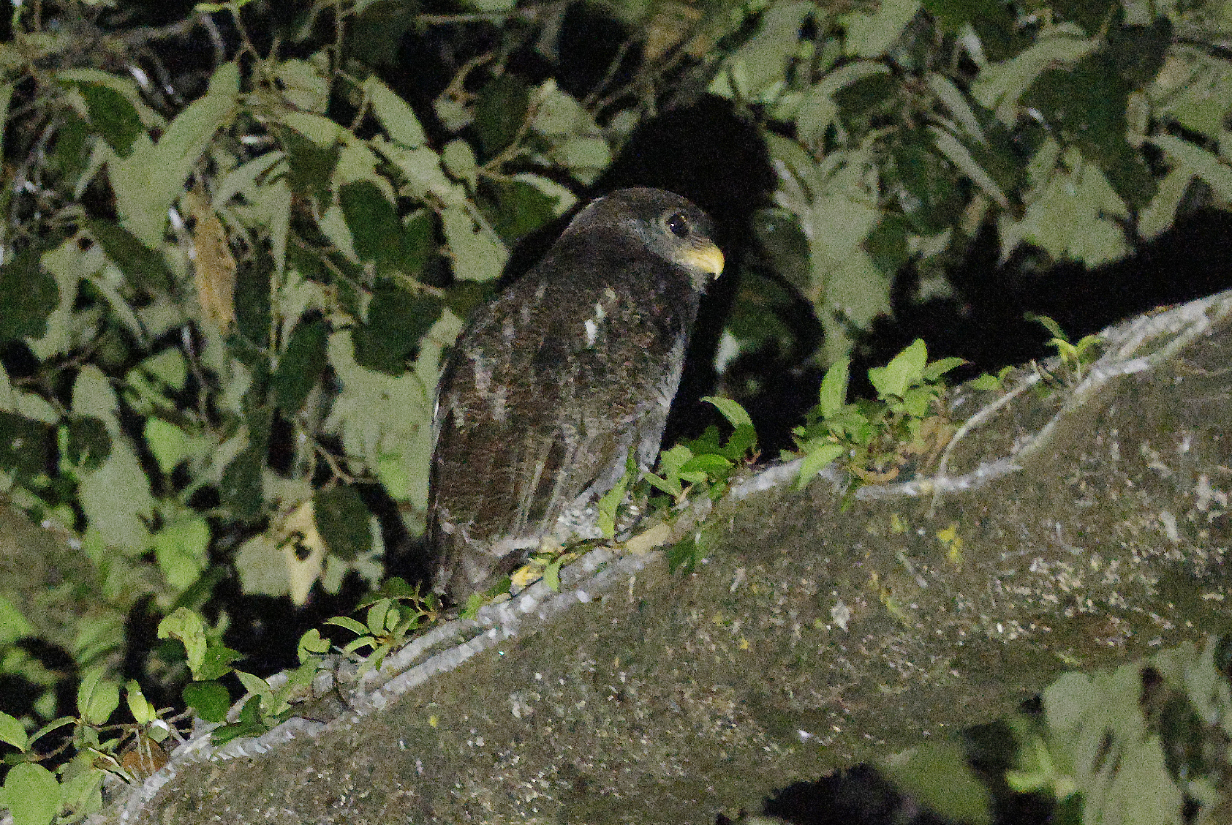
Barred eagle-owl during night birding from the canopy walk at Rain Forest Discovery Center. The bird has huge ear tufts, but they are completely invisible here from the side. This as a 1/50 second exposure at 800 mm focal length, f/9, and ISO 20,000. Image stabilization works! Of course, ISO 20,000 produces a very noisy image, fixed here as well as I could manage.
March 22: Sepilok Rain Forest Discovery Center
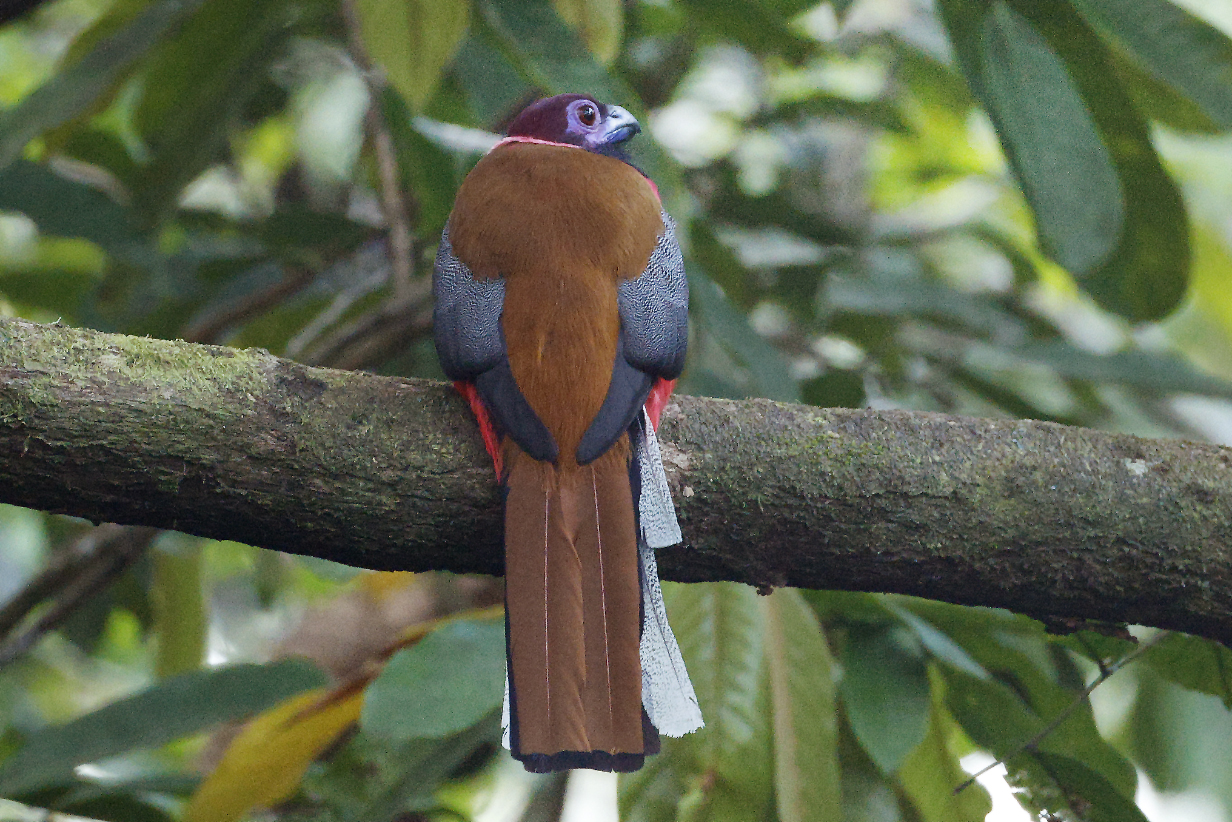
Diard's trogon (This is my life bird.)
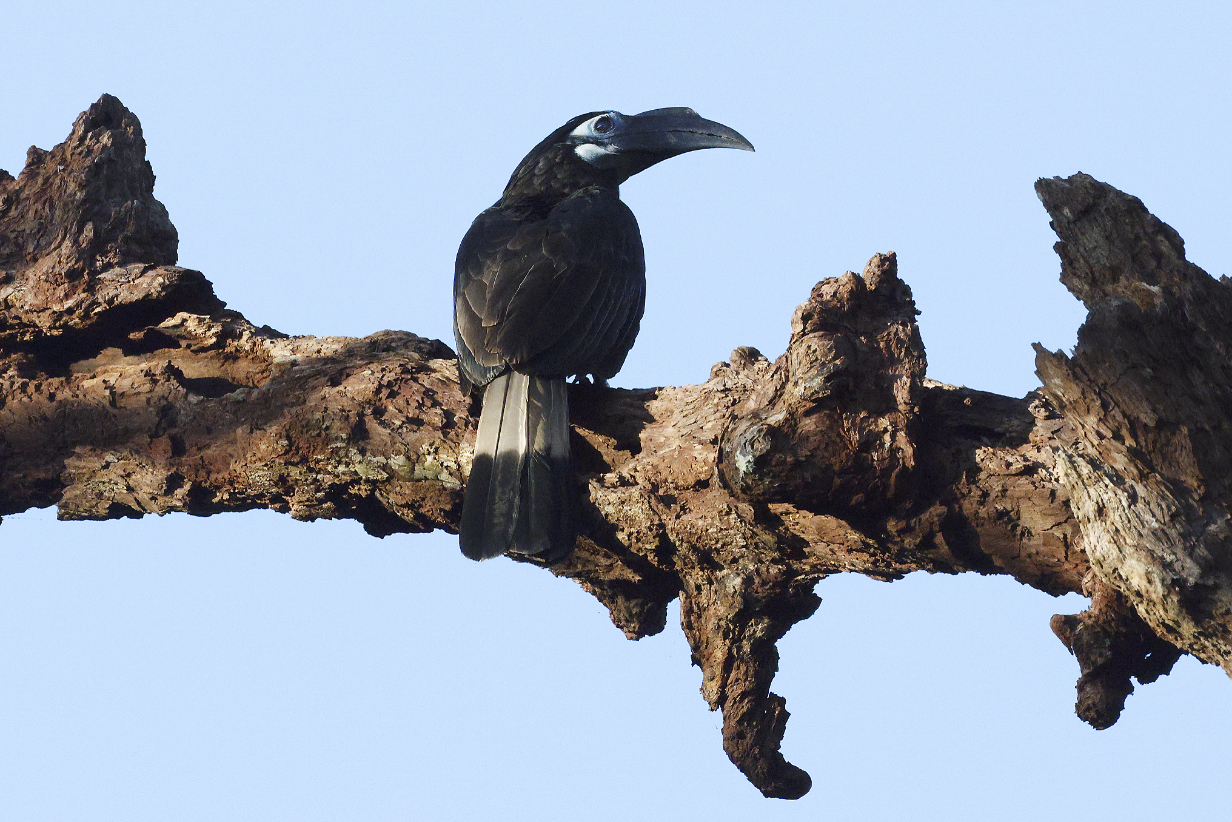
Bushy-crested hornbill (This is my life bird.)
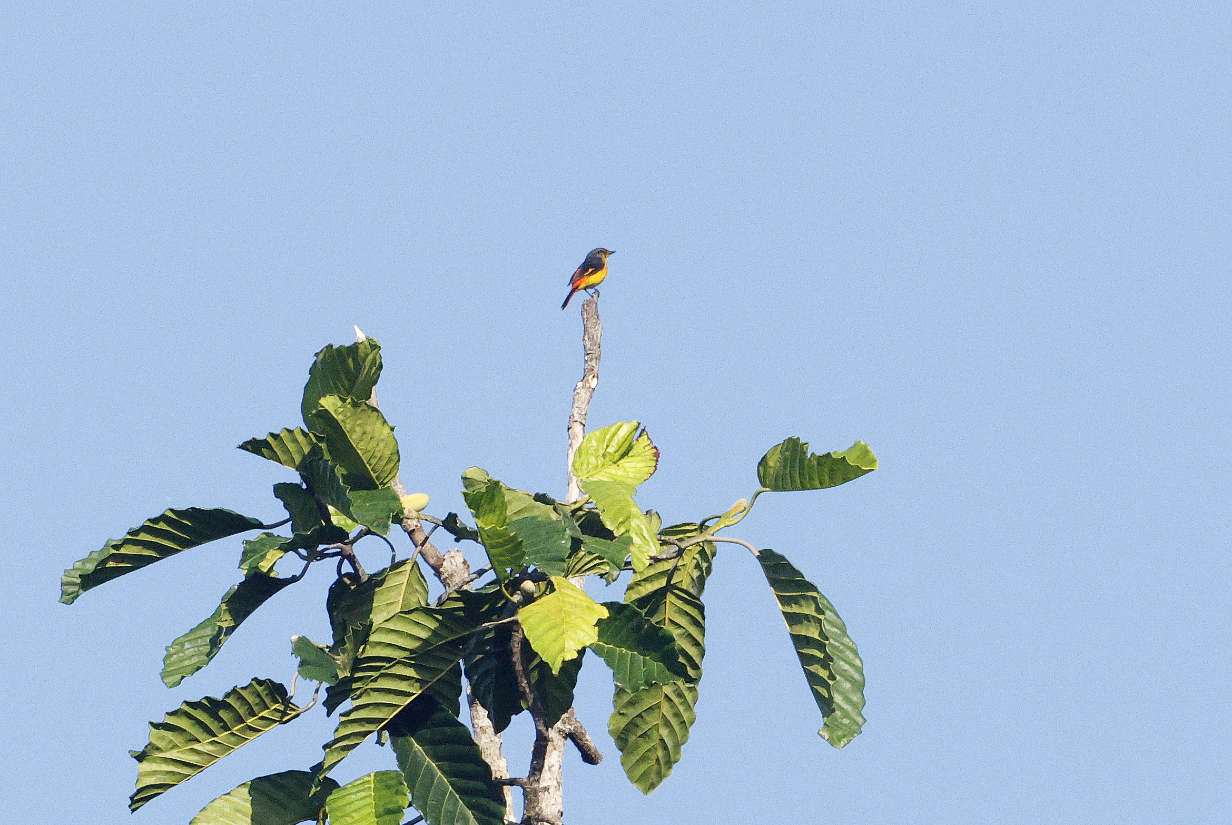
Fiery minivet (This female is far, far away ... but she is my life bird.)
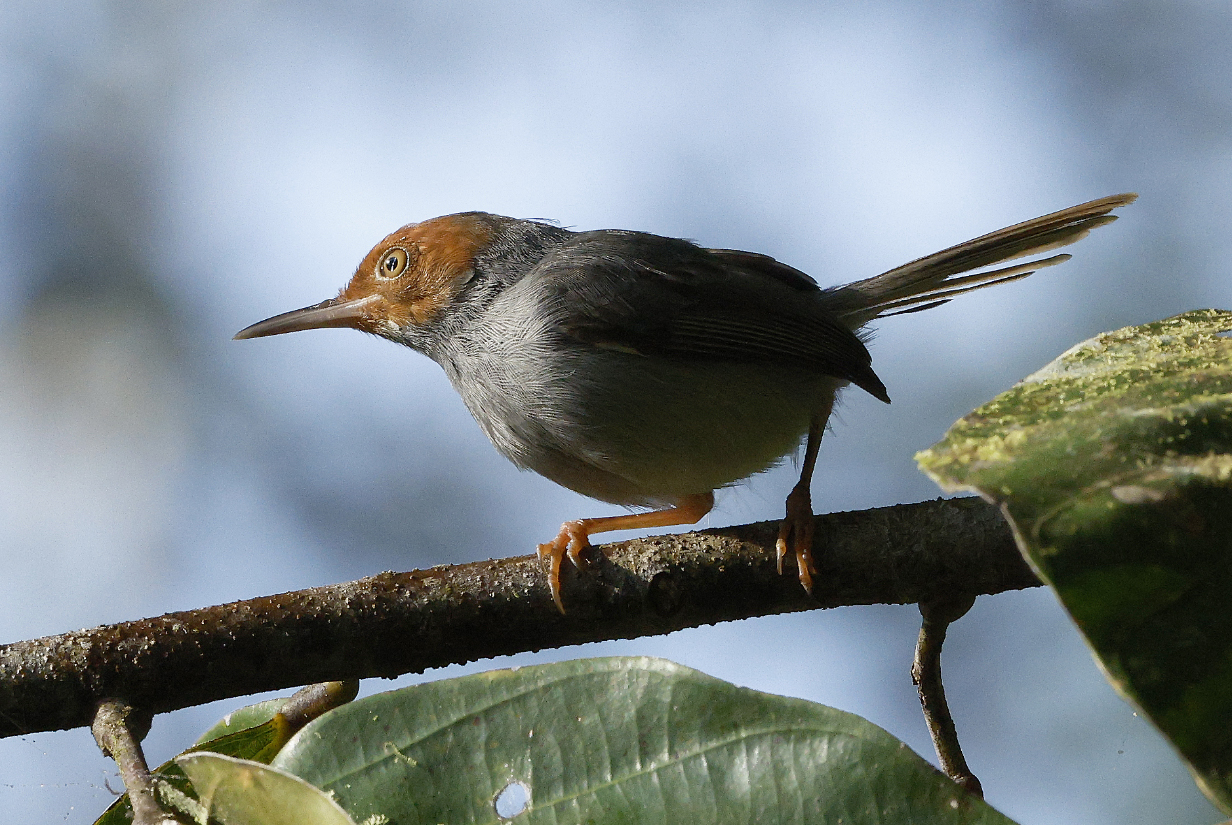
Ashy tailorbird
Rhinoceros hornbill harassed by a Greater racket-tailed drongo. The size of the hornbill is emphasized by the fact that the drongo is a big bird whose main body (excluding the rackets) is almost as big as an American crow. I was exceedingly lucky to capture this chase! This is my life bird.
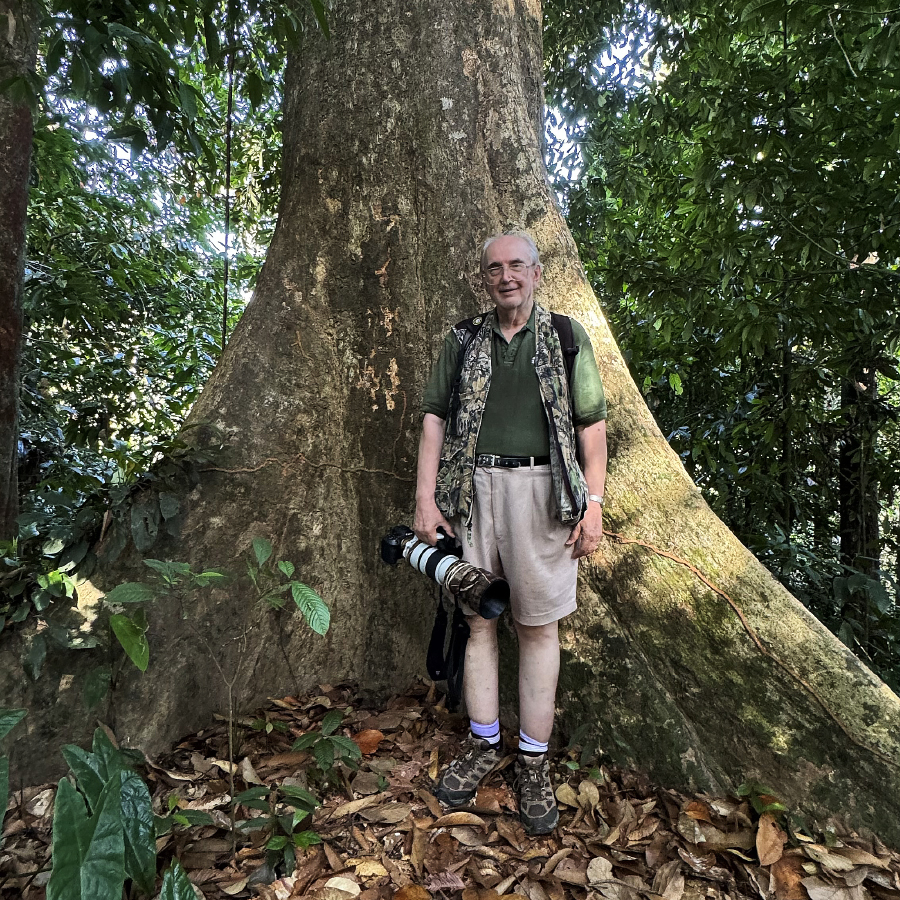
Eventually, we also birded forest-floor trails. I always like giant trees with buttressed root systems -- they often become the forest's emergent trees. Also, we got some superb birds from ground-level trails:
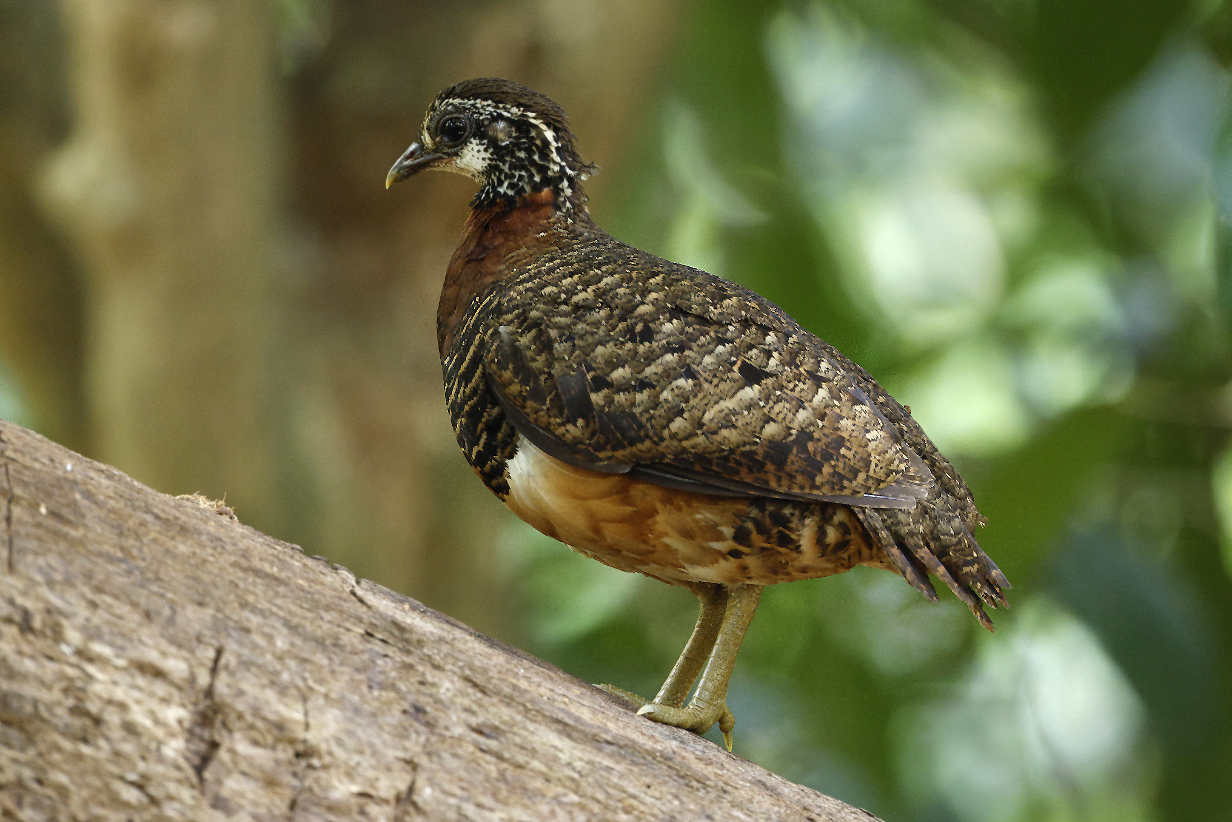
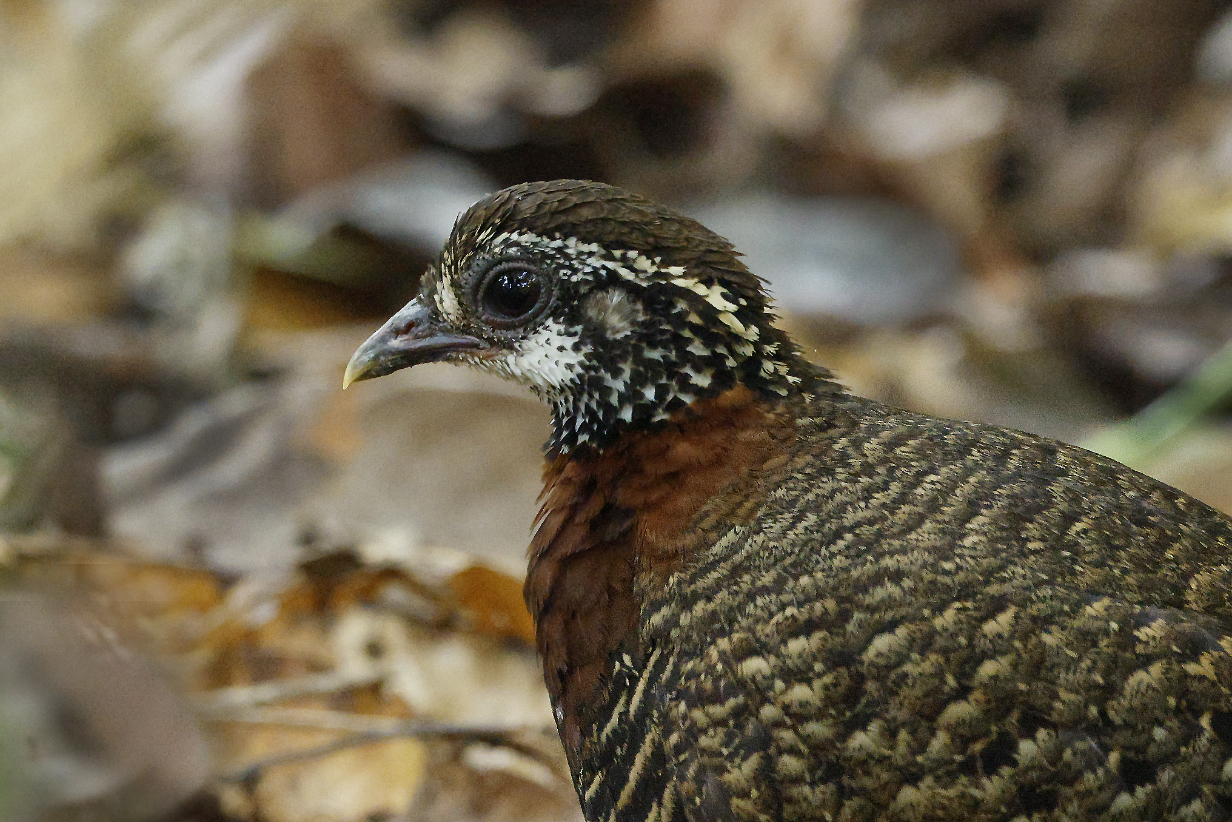
Sabah partridge (This is my life bird. It was surprisingly undisturbed by us, coming to within about 10 feet of us. We stood very still, but we and the bird were in plain view of each other.)
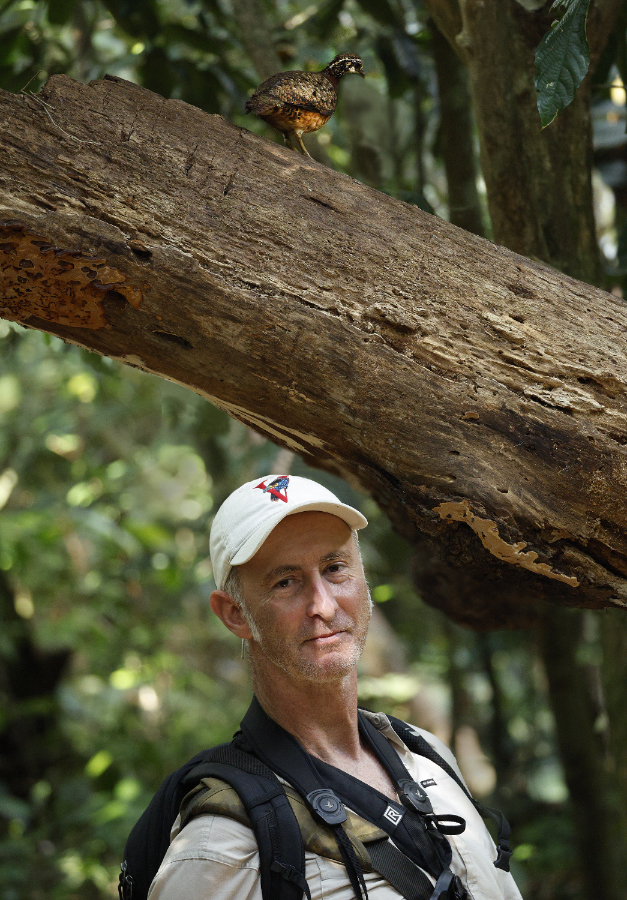
VENT guide Scott Baker with Sabah partridge. It gives some idea of how remarkably close and visible to each other the bird allowed us to get.
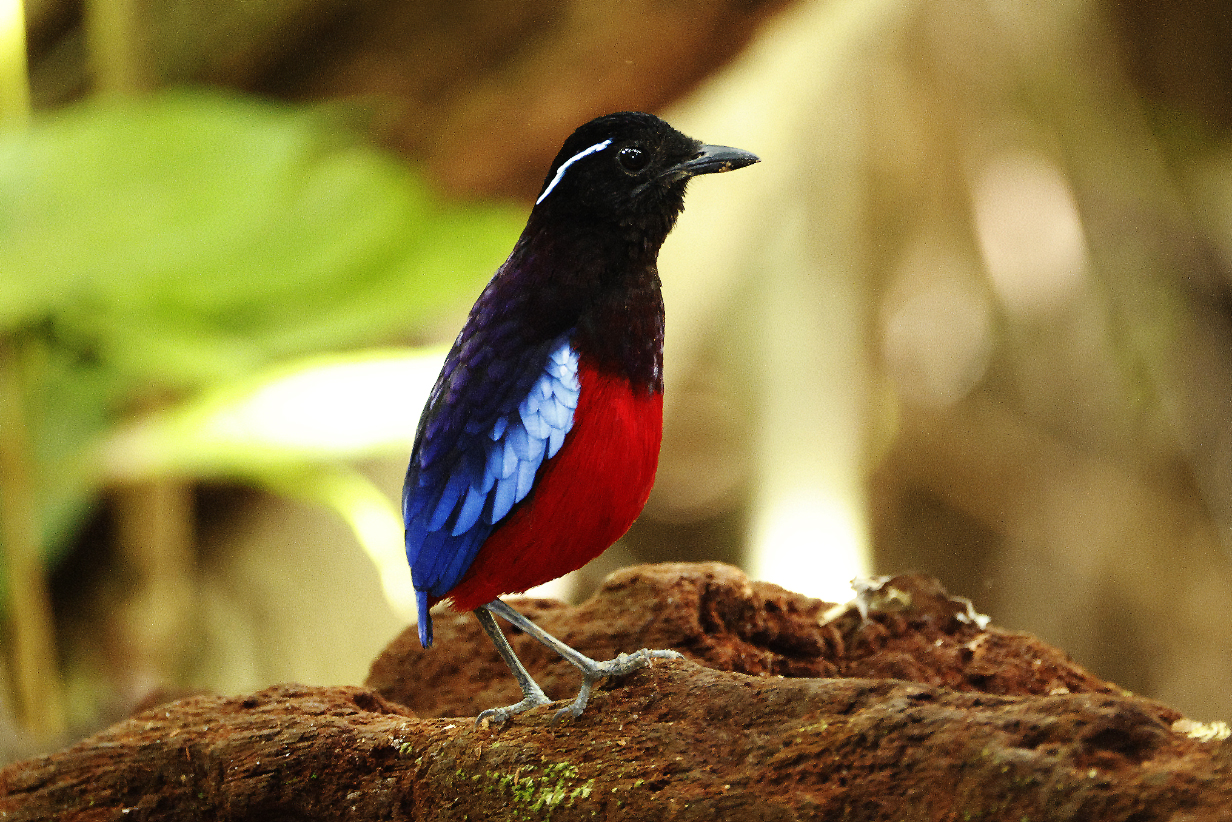
Black-crowned pitta (This is my life bird. Pittas are strange -- often, they are shy and almost impossibly hard to find. Other times, they virtually ignore us, stand out in the open, and -- in this case -- gently whistle for many minutes. I suspect that this was a mating call. Anyway, we enjoyed prolonged, superb views of a wonderfully beautiful bird. The bird's color is so intense that I had to reduce the color saturation by ~ 12 % to keep these pictures from looking too garish.)
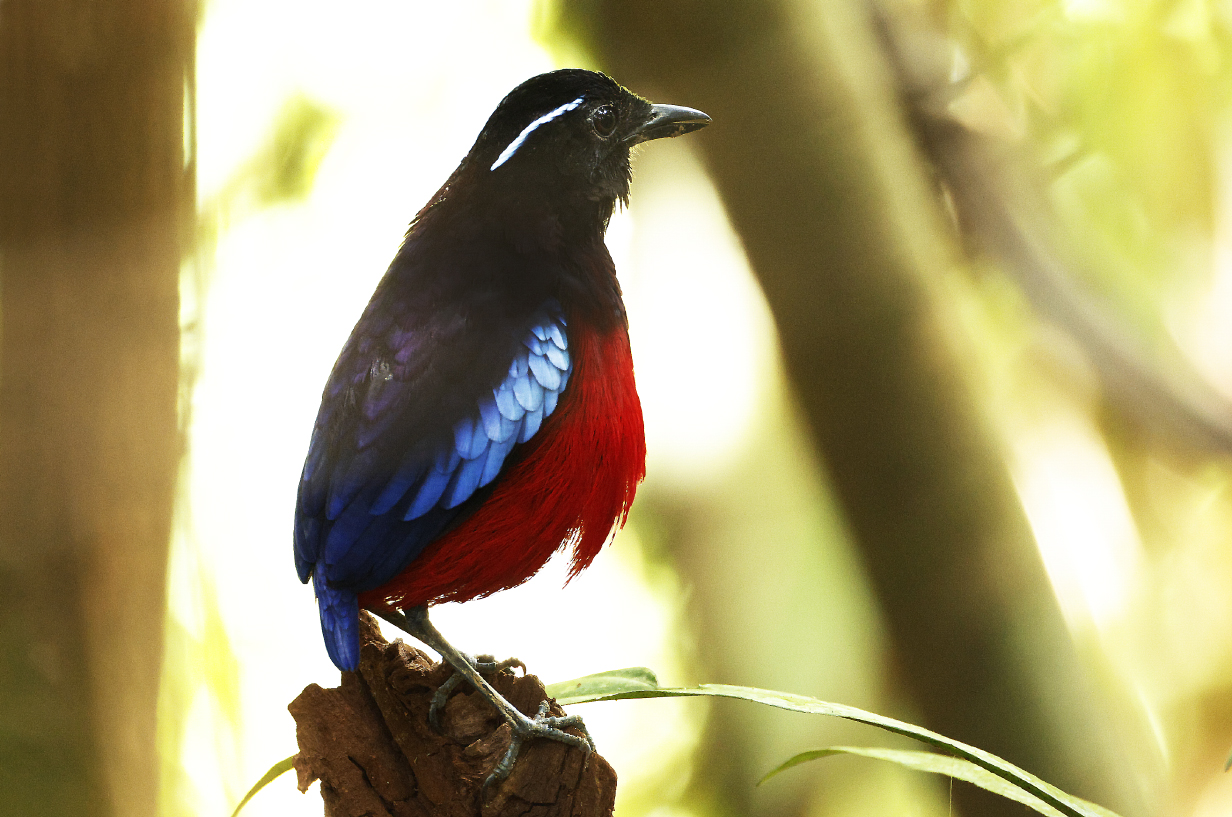
Black-crowned pitta (A long whistle requires taking a DEEP breath.)
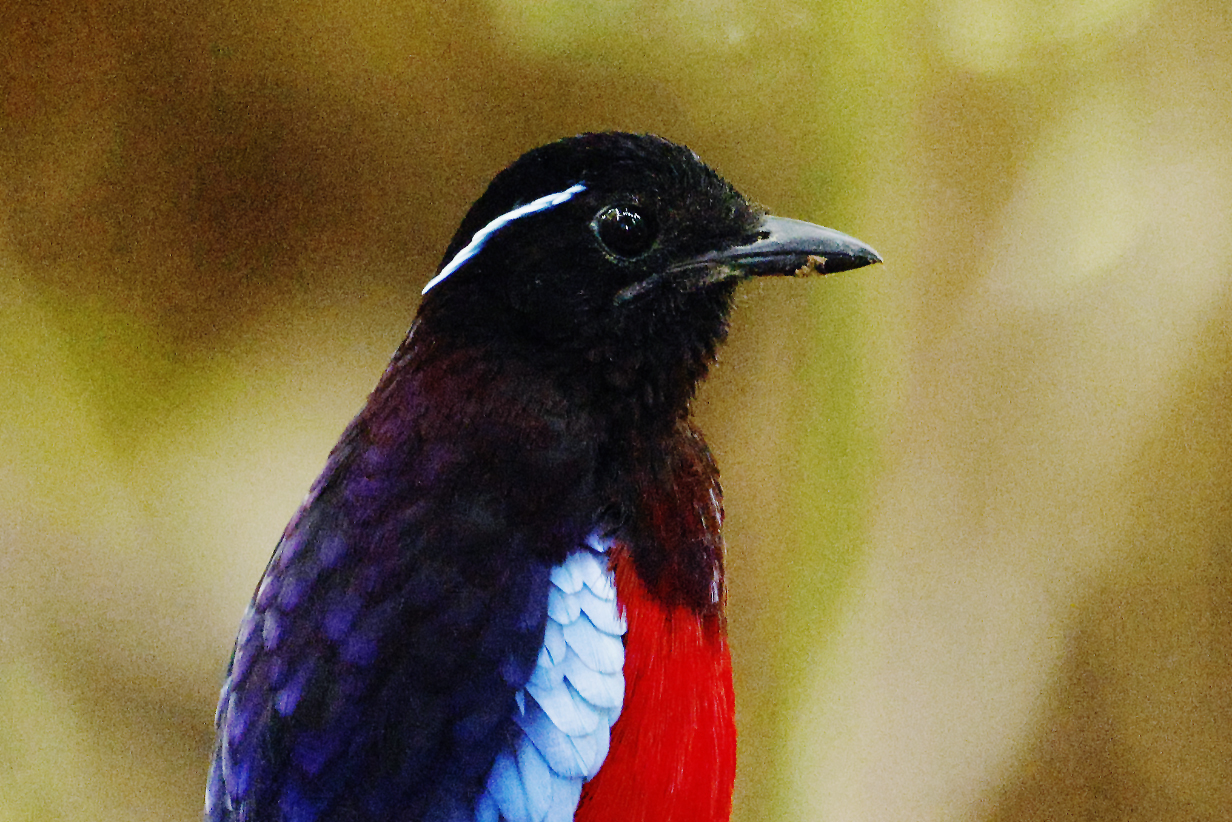
Black-crowned pitta (I can't resist adding one more portrait. If I had chosen 4 trip birds, this would have been the 4th bird.)
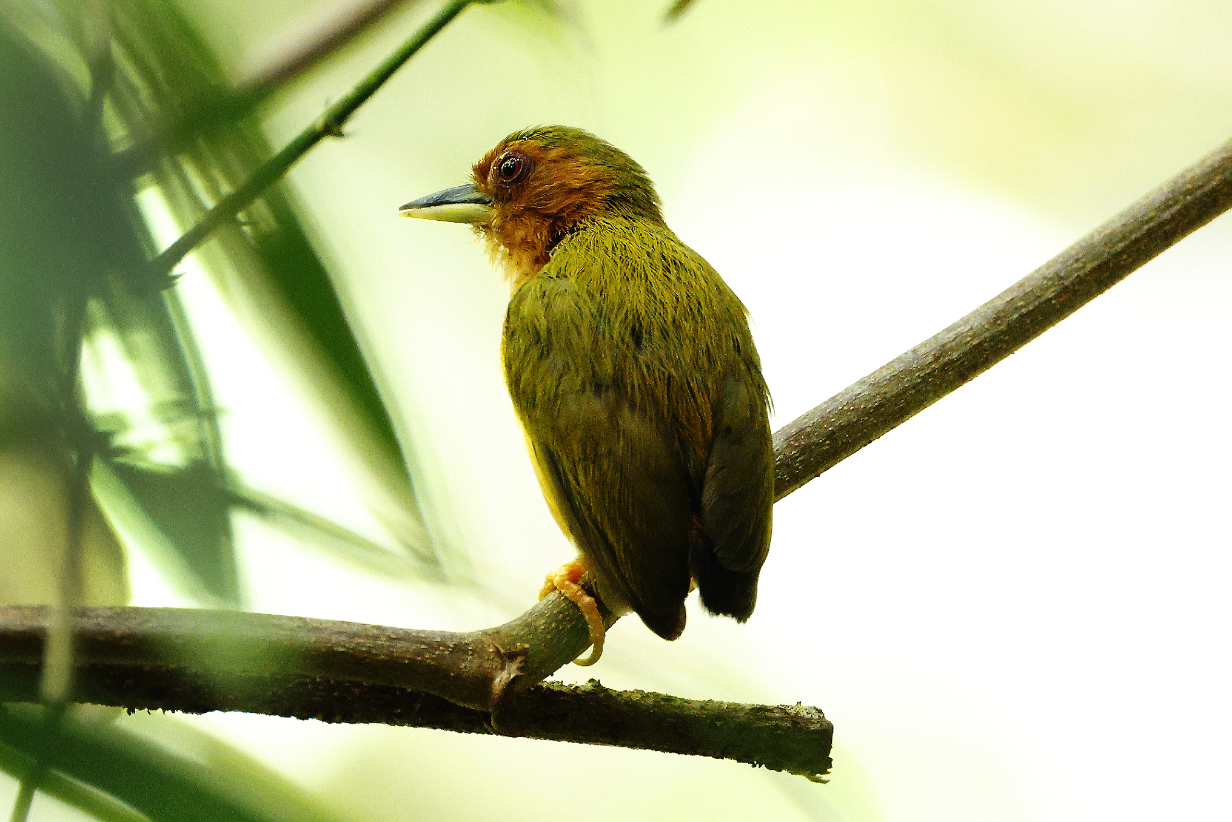
Rufous piculet (This is my life bird. Any day when you get a piculet is a "red letter day".)
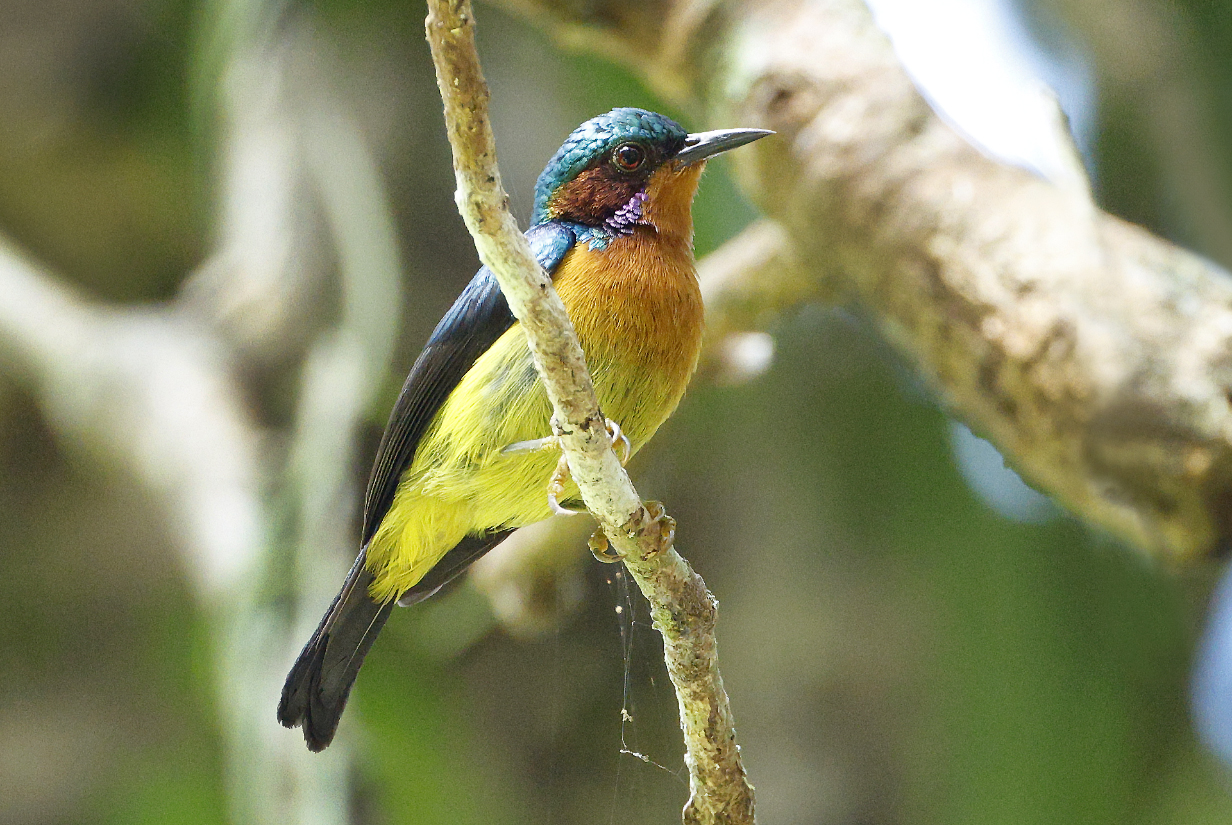
Ruby-cheeked sunbird seen at the Sepilok Orangutan Rehabilitation Center.
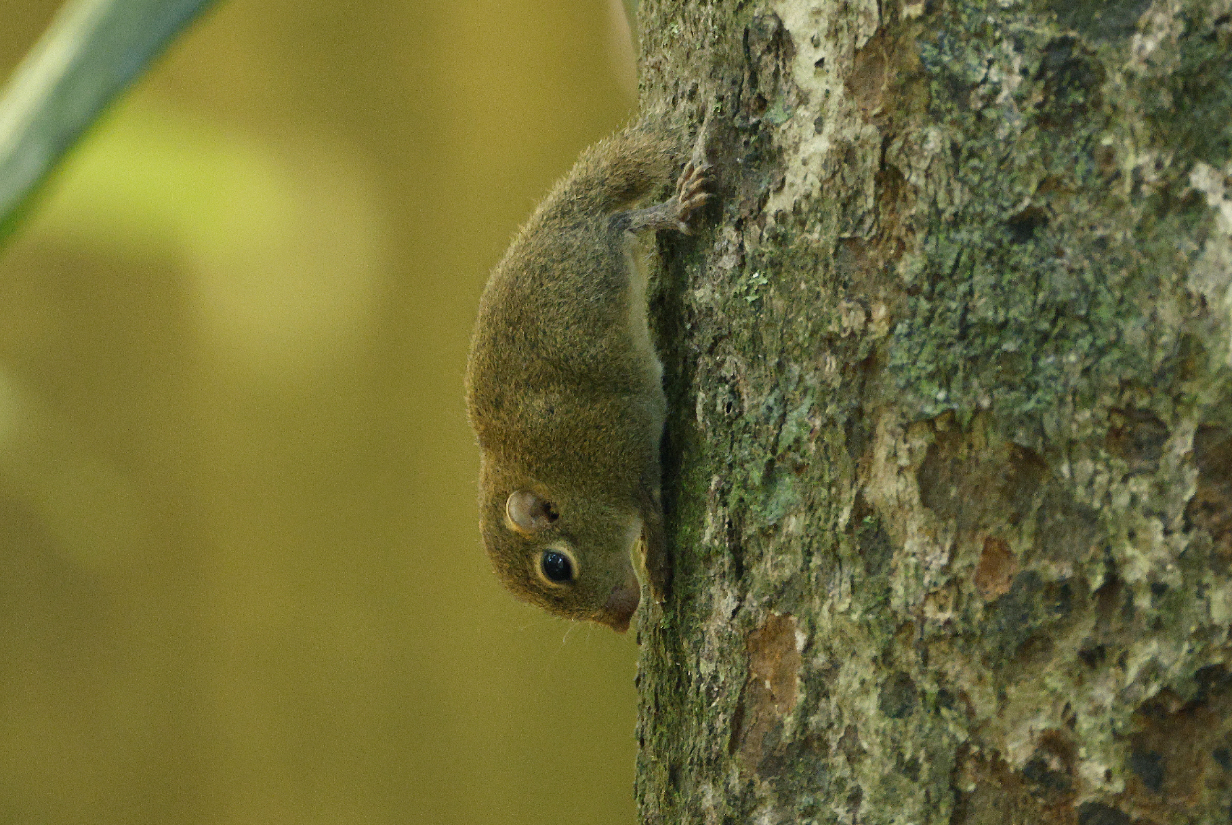
Least pygmy squirrel -- tiny, cute, and very elusive. We were lucky to see it. Web sites on squirrels note that it is lighter than a AAA battery.
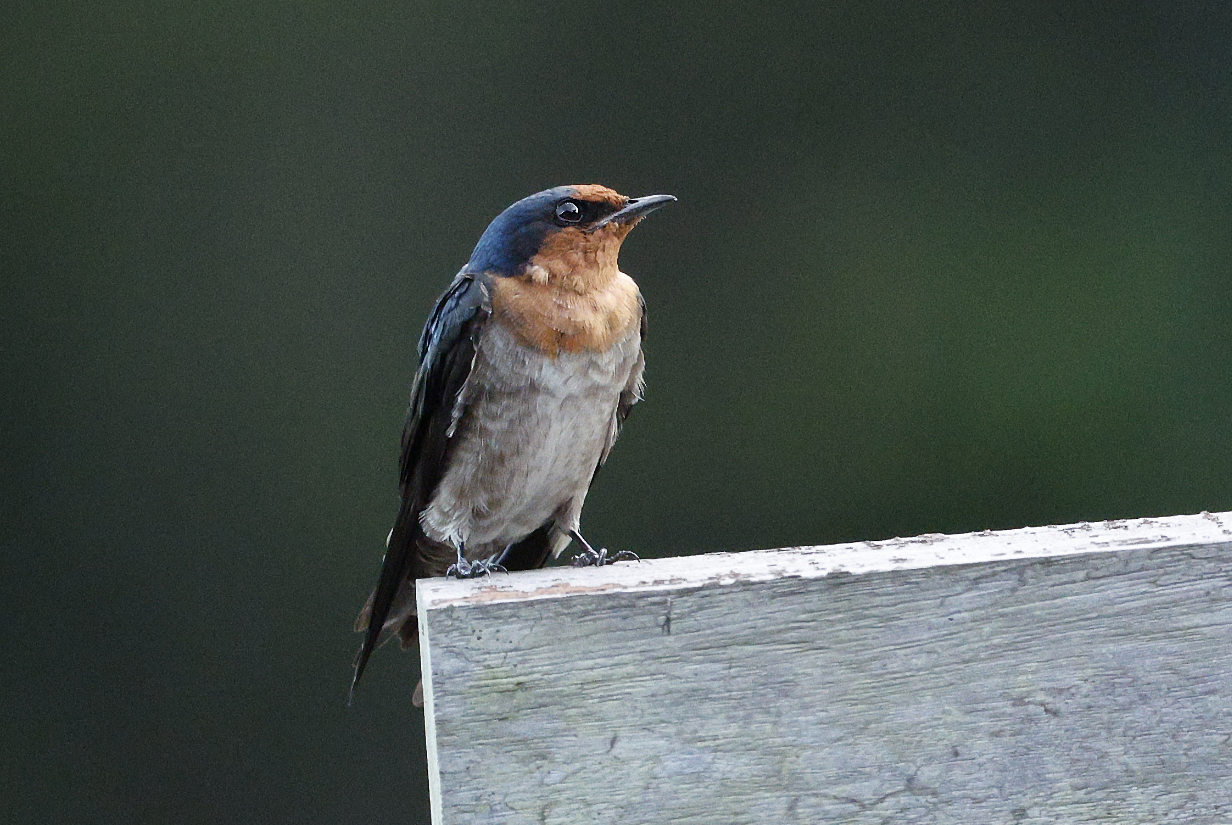
Pacific swallow in the evening, back at the lodge, as seen from the restaurant.
Orangutans
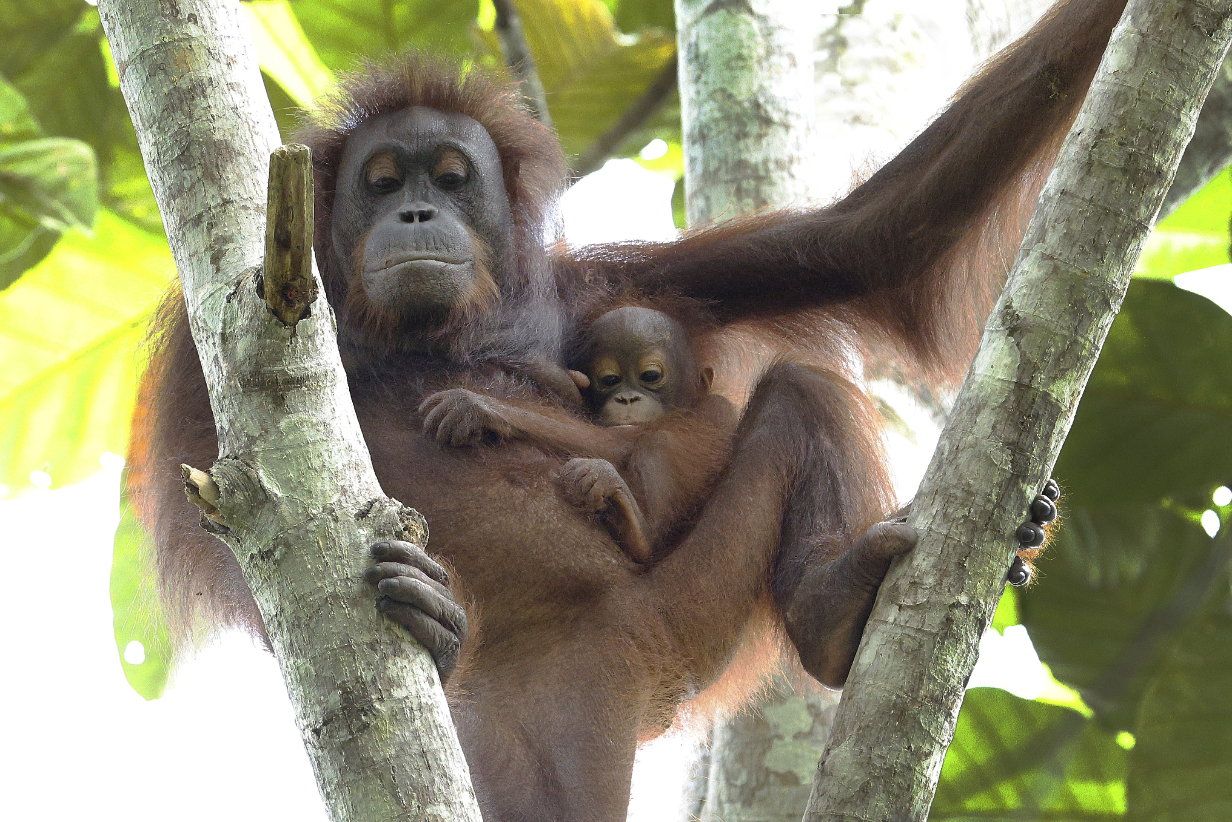
Orangutan mother and child
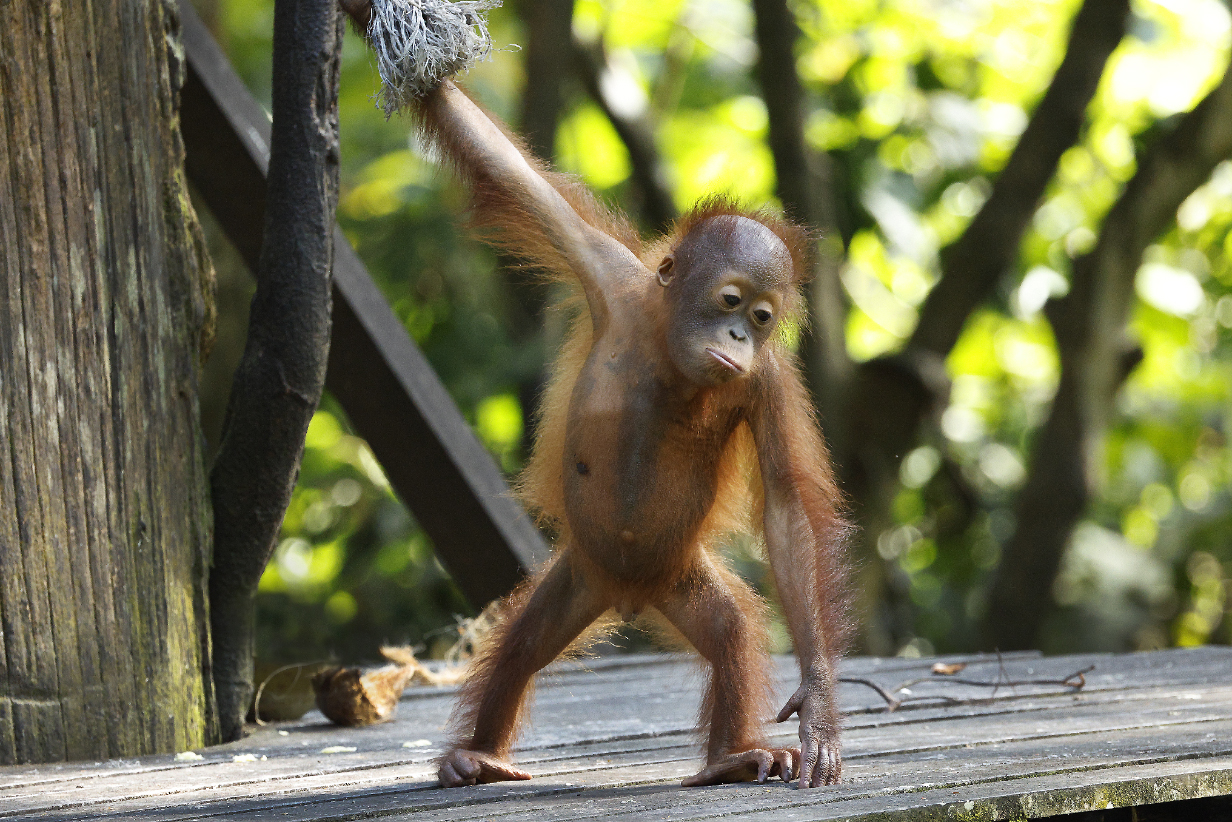
Iconic to any trip to Borneo are orangutans. In contrast to many monkeys, they are -- to me -- universally lovable. They live life slowly and gently, perhaps in part because of their low-energy diets. They seem wholly free of aggression and nastiness. They take devoted care to their offspring for 8 -- 12 years. Unlike our image of ourselves and of other apes and monkeys, slowness does not imply stupidity: they are subtly very capable of jungle life. And they have to put up with aggression and competition from us. Year after year, they are pushed into smaller and more fragile oases of wildness on an island that more and more is dominated by palm oil plantations. We saw orangutans occasionally "in the wild"; e. g., from the canopy walkway at Sepilok Rain Forest Discovery Center. But this afternoon, we also visited the orangutan sanctuary that's connected with that center:
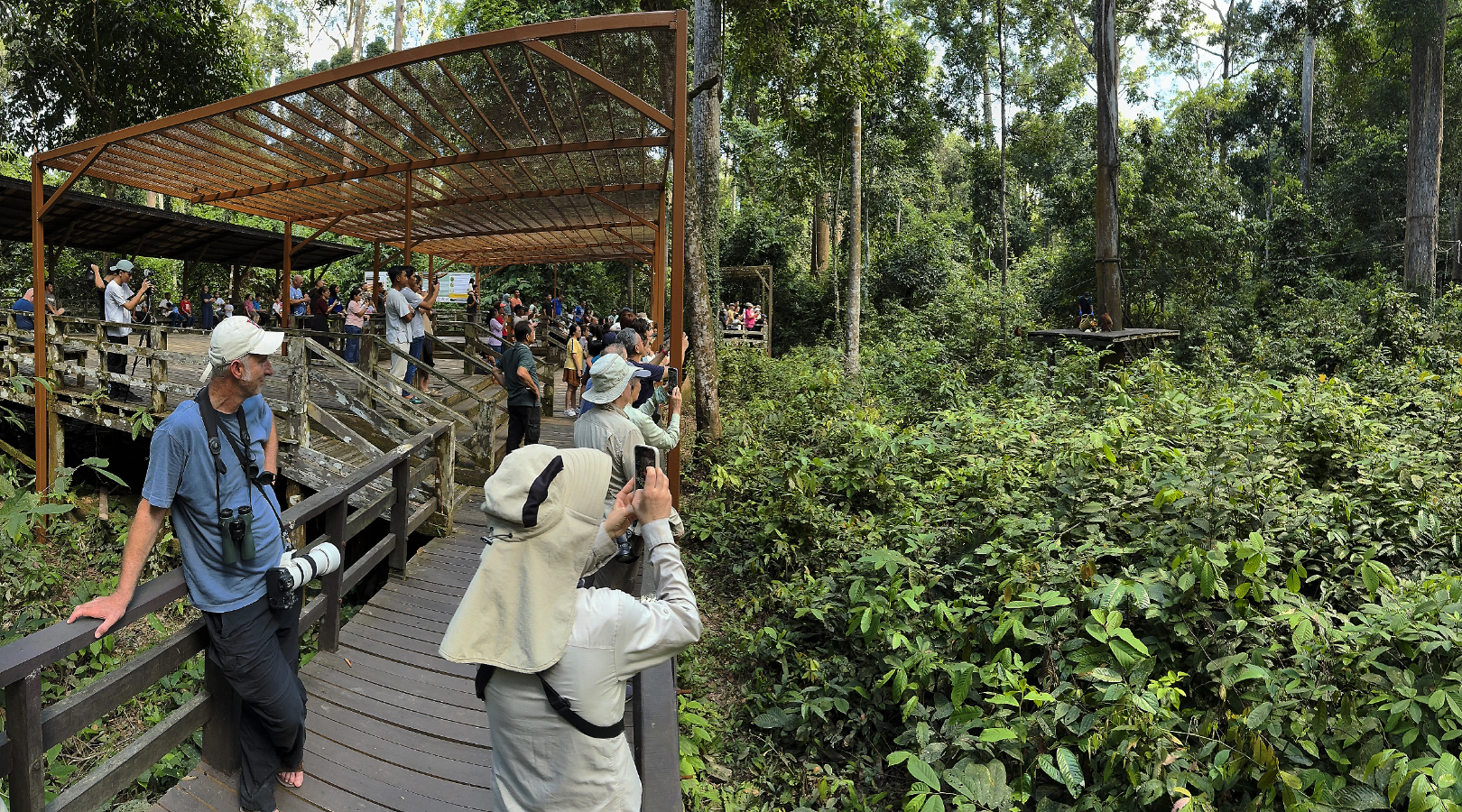
Orangutan feeding area (at right) and viewing pavilion
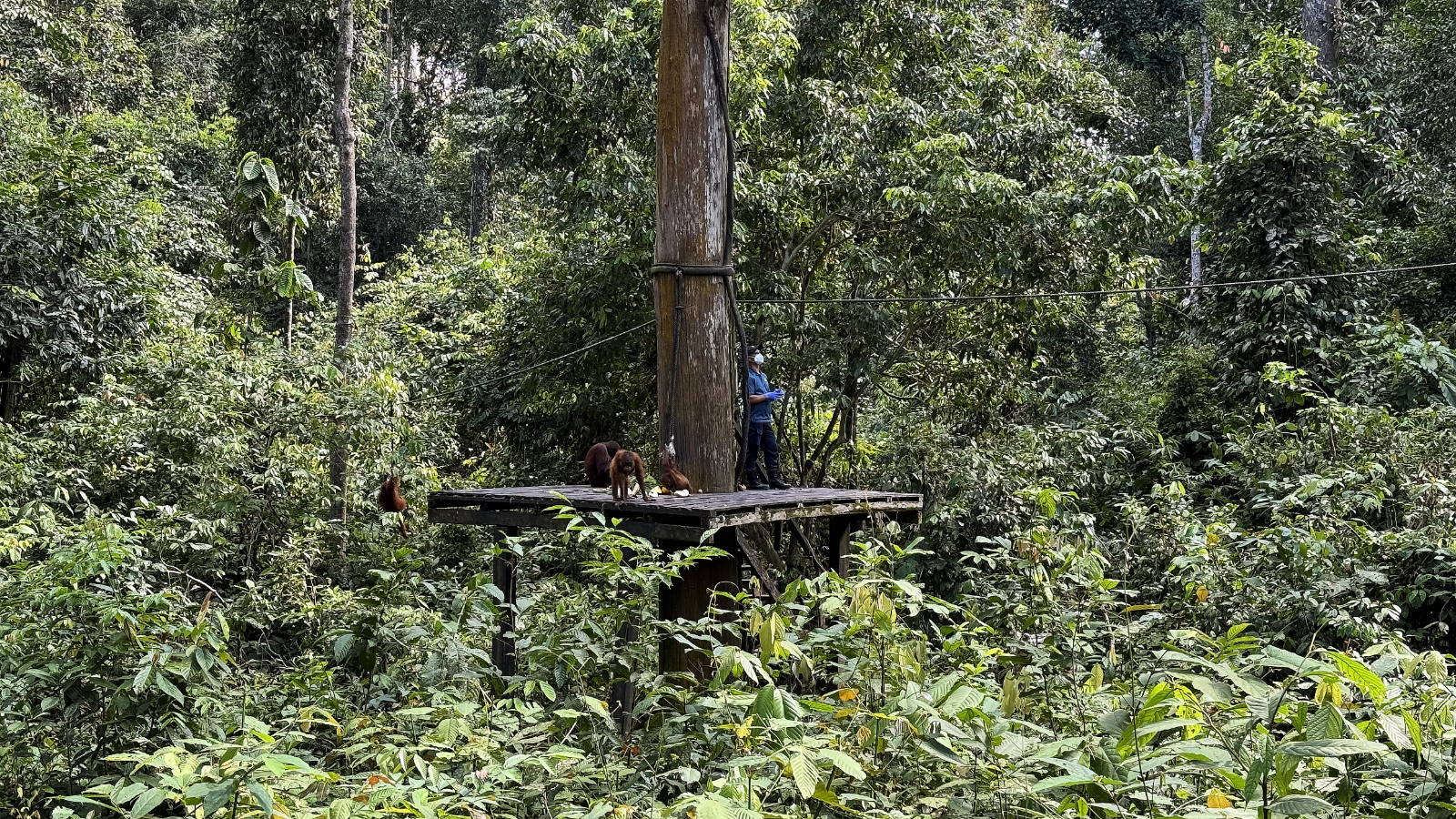
Feeding area (The Sepilok Orangutan Rehabilitation Center helps to prepare orphaned and injured orangutans for eventual release back into the wild. It also provides a facility to educate people and to raise public awareness of this endearing ape relative that just wants a quiet life in forests that more and more are targets of human greed.)
Orangutans on the feeding platform
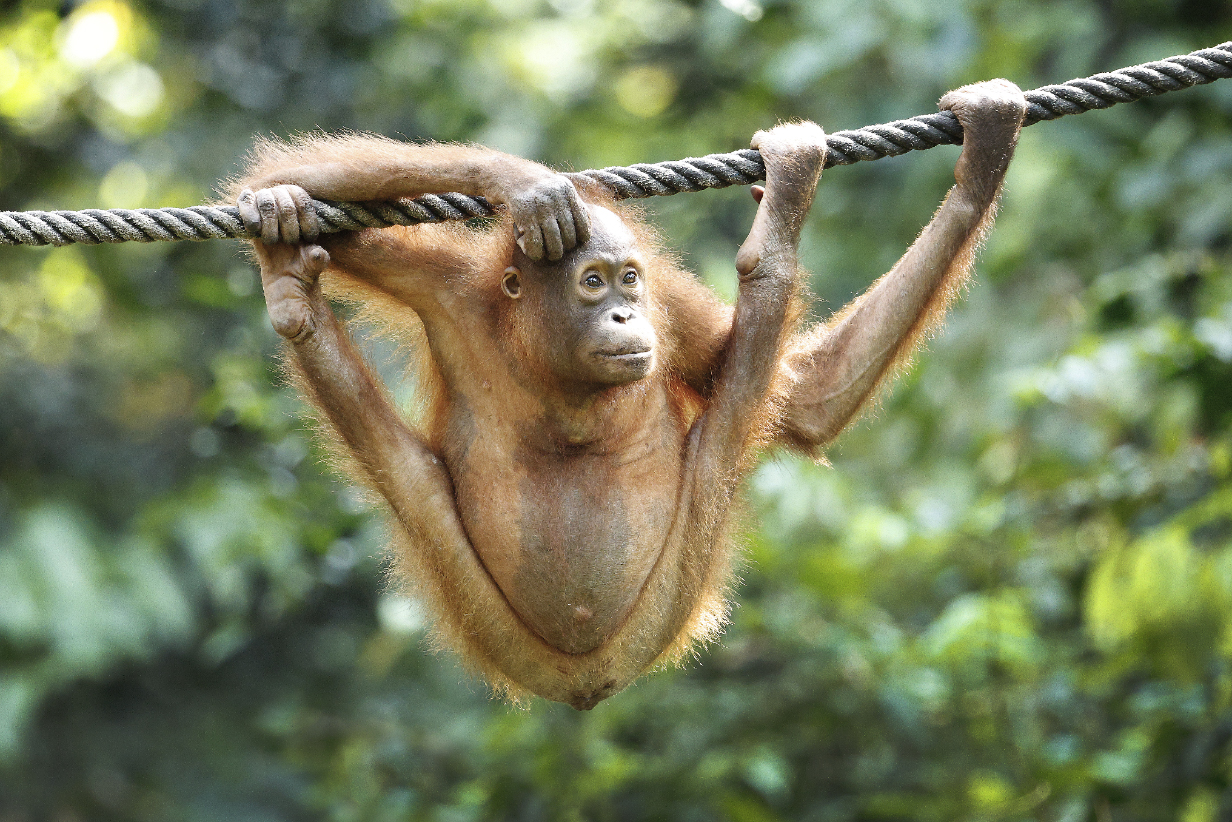
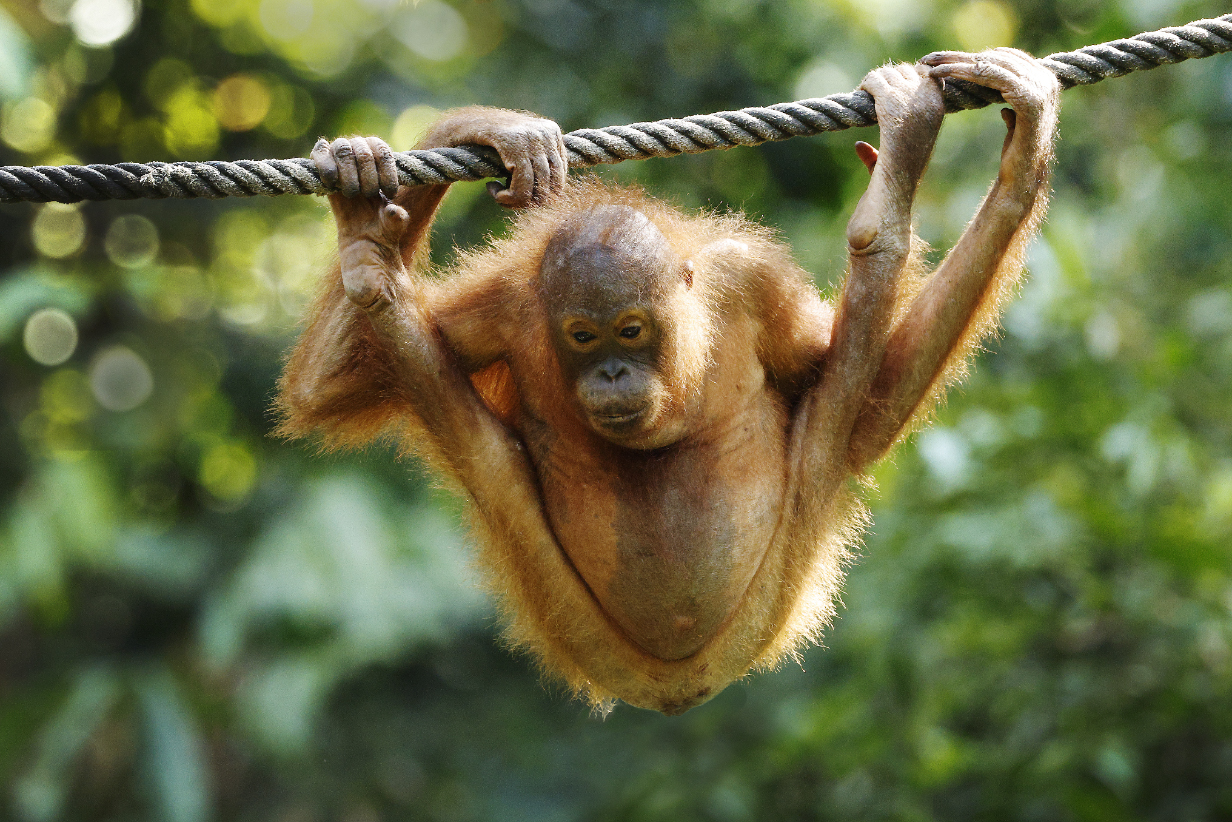
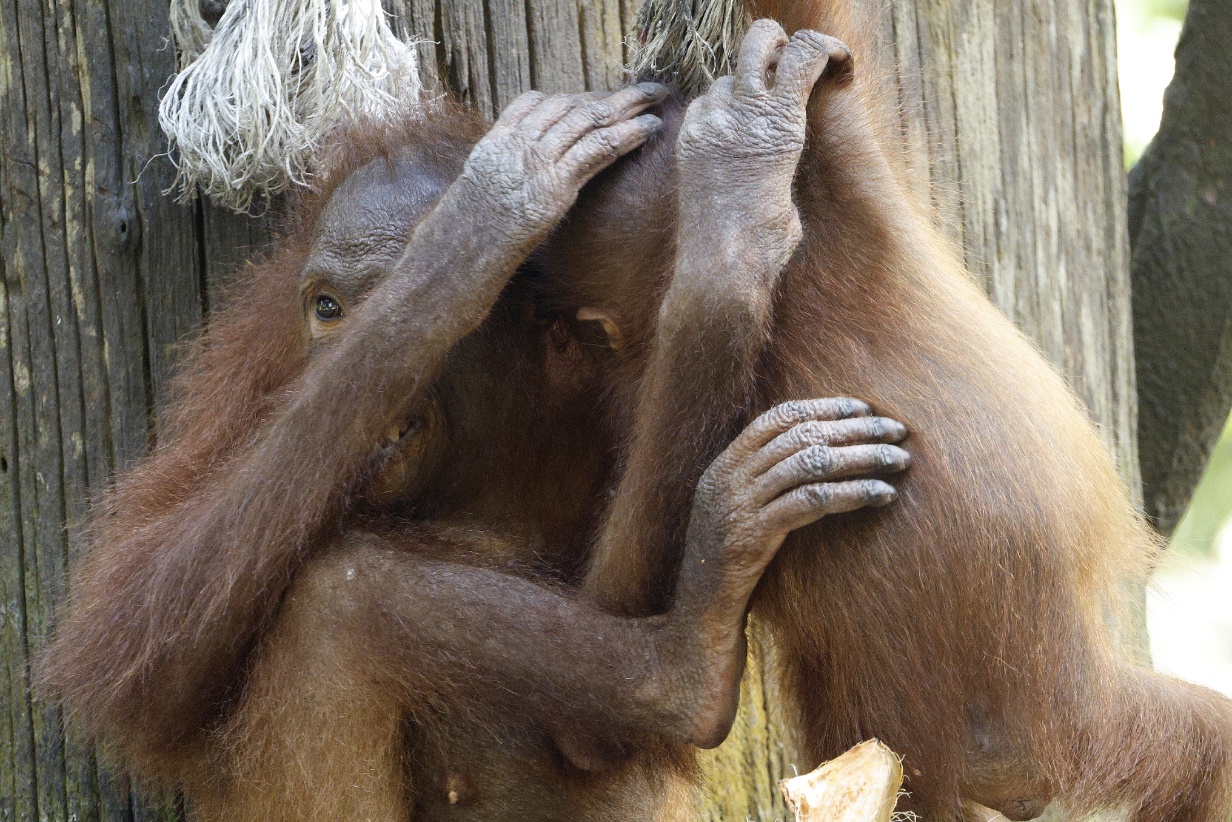
Studies in orangutan gymnastics: You can never have too many hands.
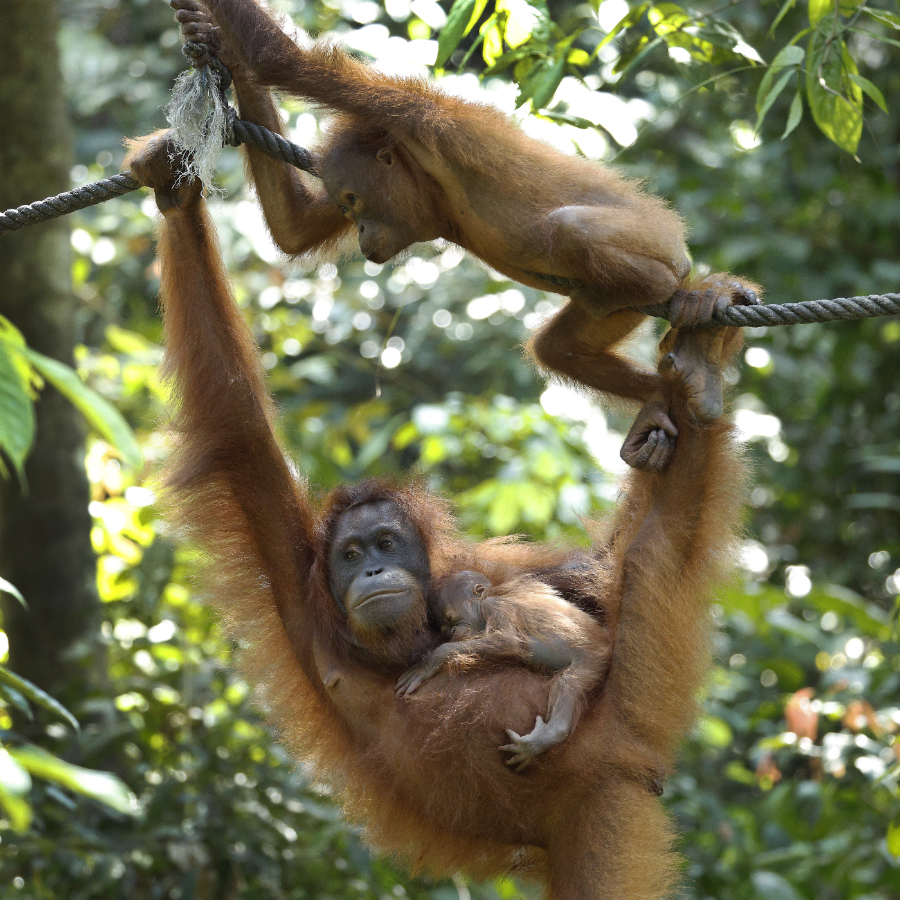
Mothers play too ... and babies learn to hang on tight.
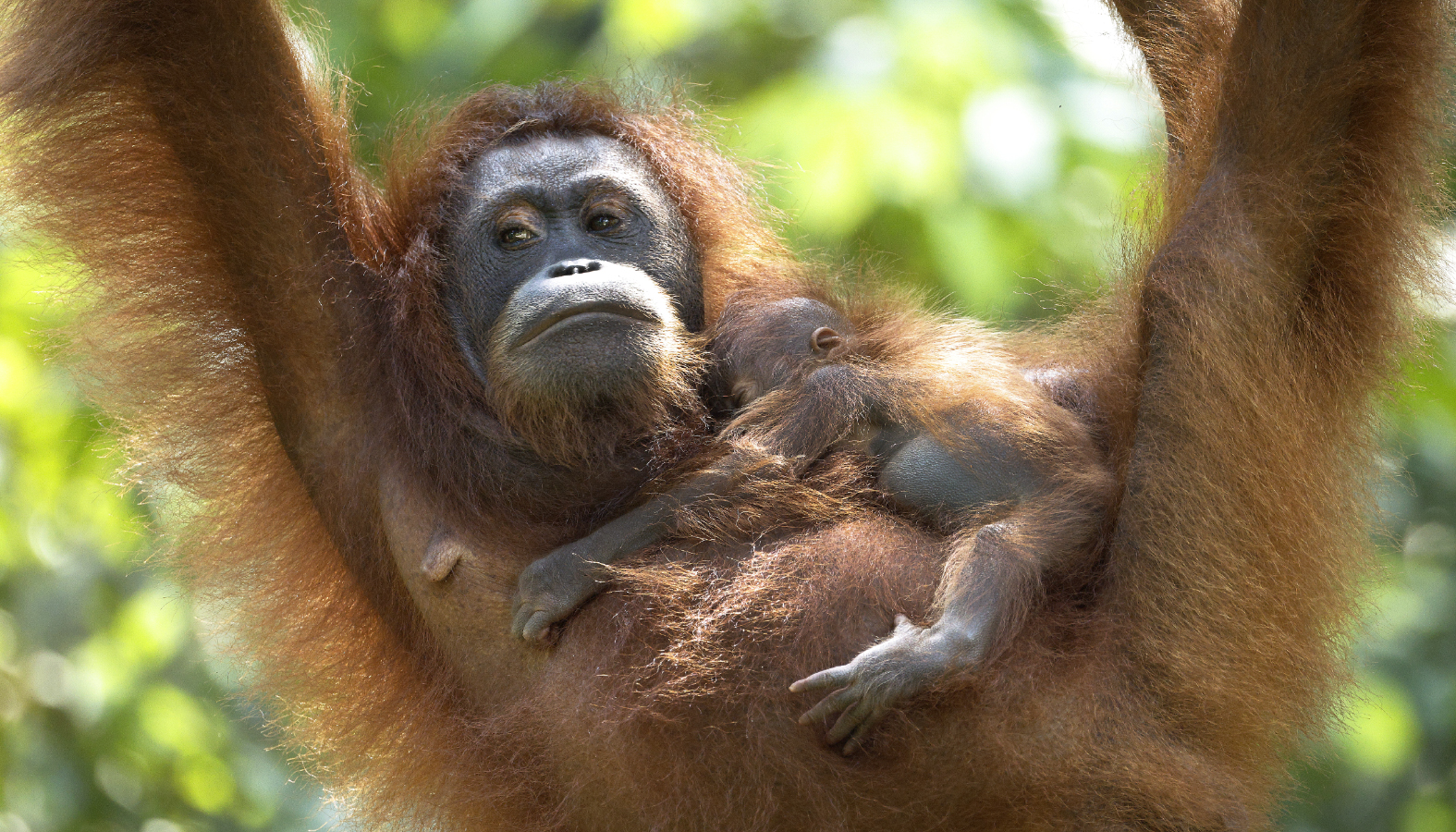
It's a close bond for many years.
Wistful afterthoughts: We, too, could stand to learn some kindness.
Seeing oranguans was a highlight of the trip.
March 23: Sepilok Rain Forest Discovery Center
Today, in the morning, we again birded the canopy walkway and trails.
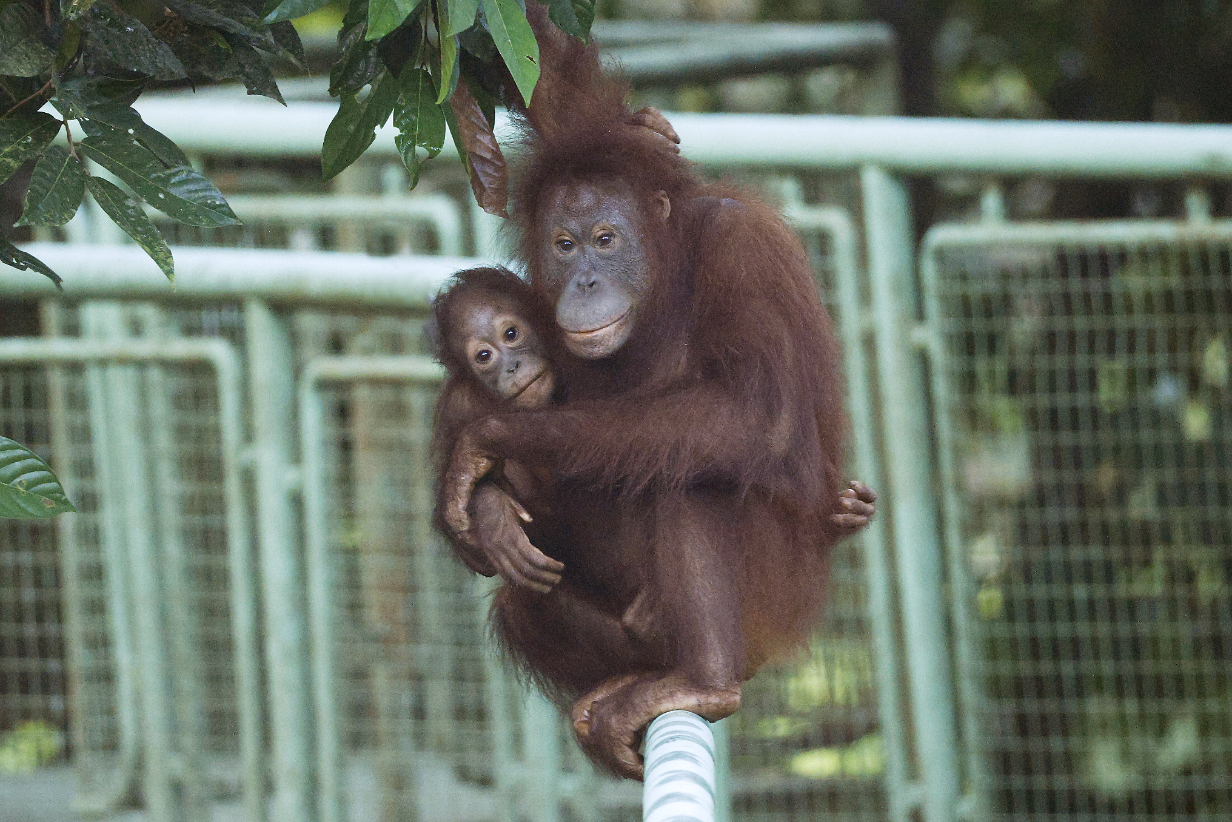
And we again saw orangutans "in the wild" (so to speak) ... although the Discovery Center forest is a nature reserve.
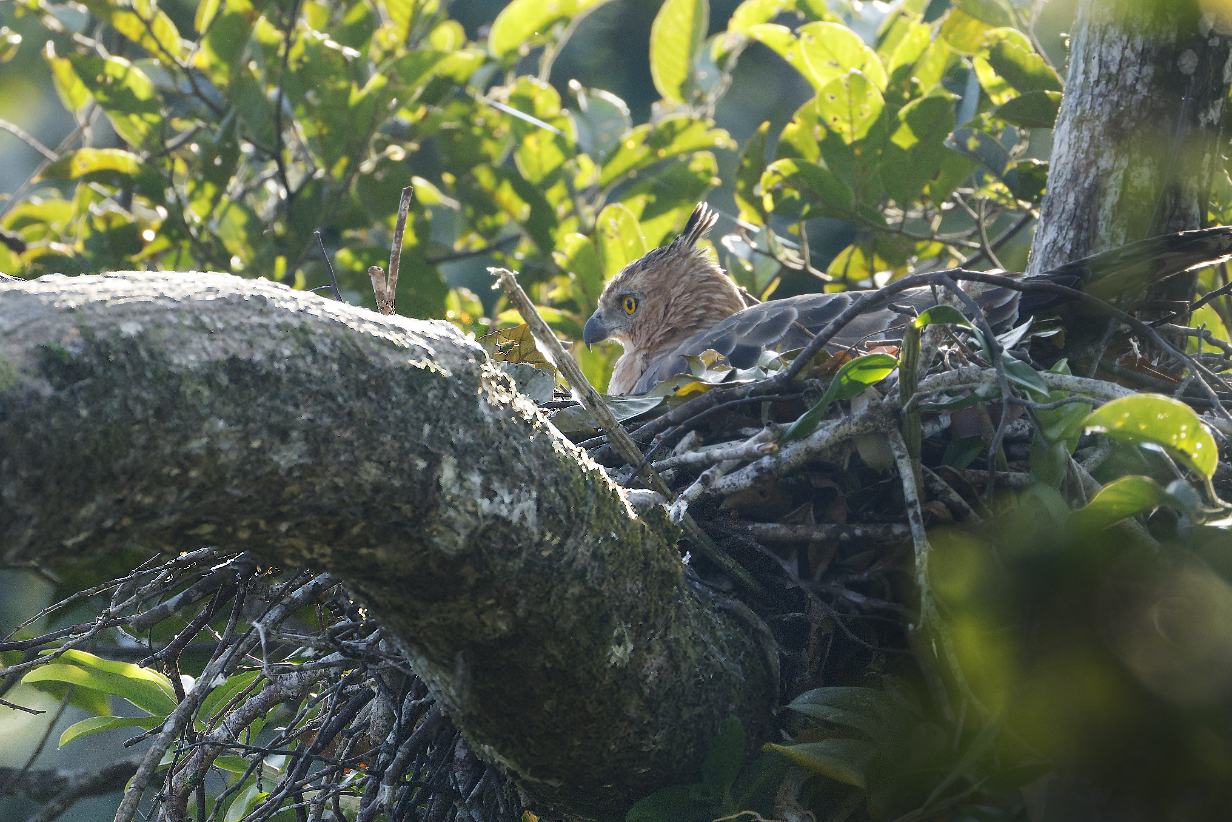
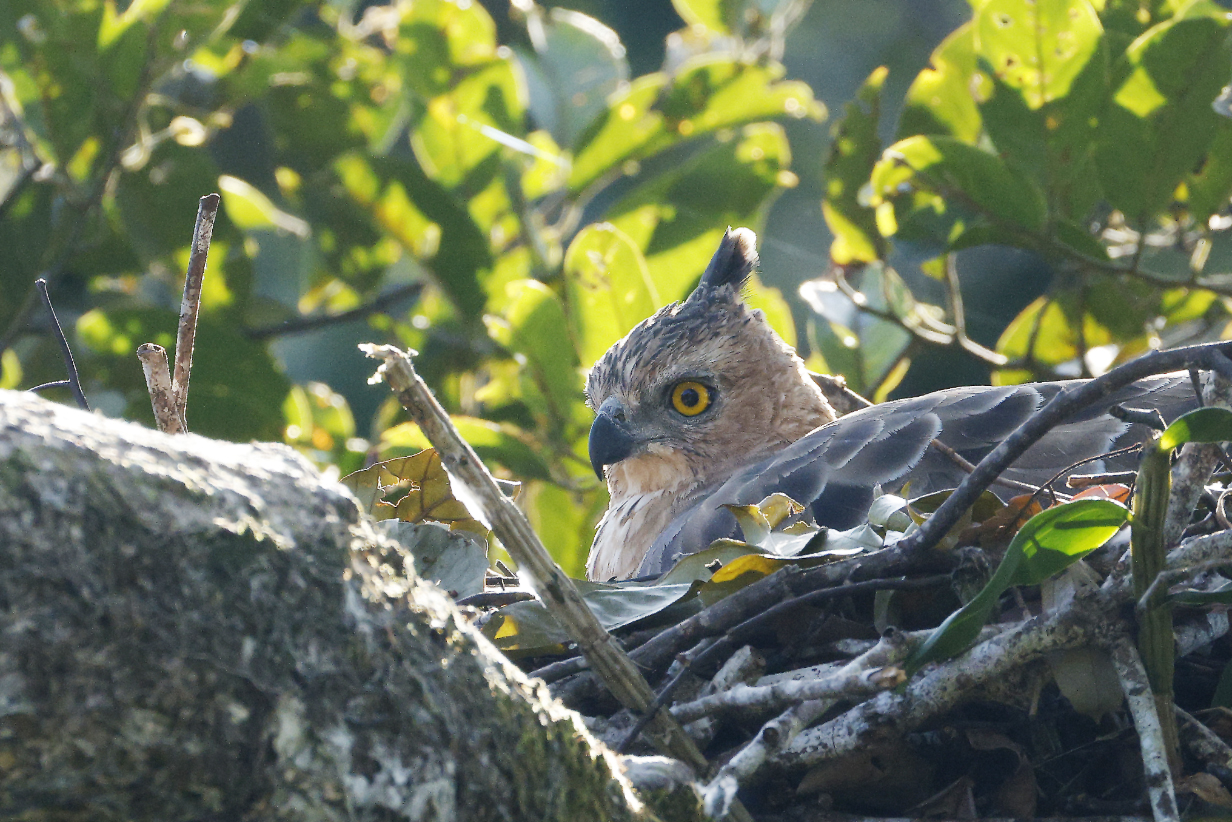
Today, we climbed up to the top of one of the observing towers along the canopy walkway. This was superb -- we saw a lot from there that we could never see from the walkway itself. An example is this Wallace's hawk-eagle, this time much better seen, sitting on a nest.
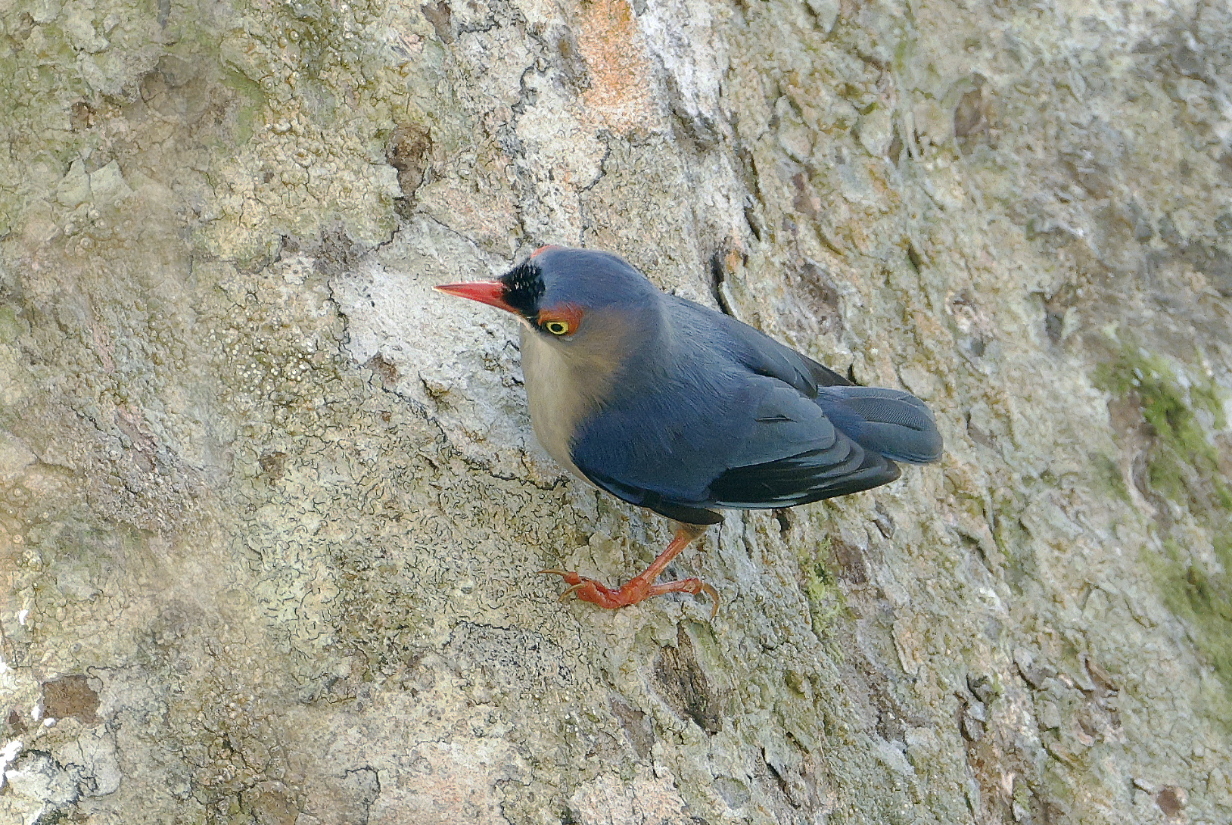
Velvet-fronted nuthatch (This is my life bird.)
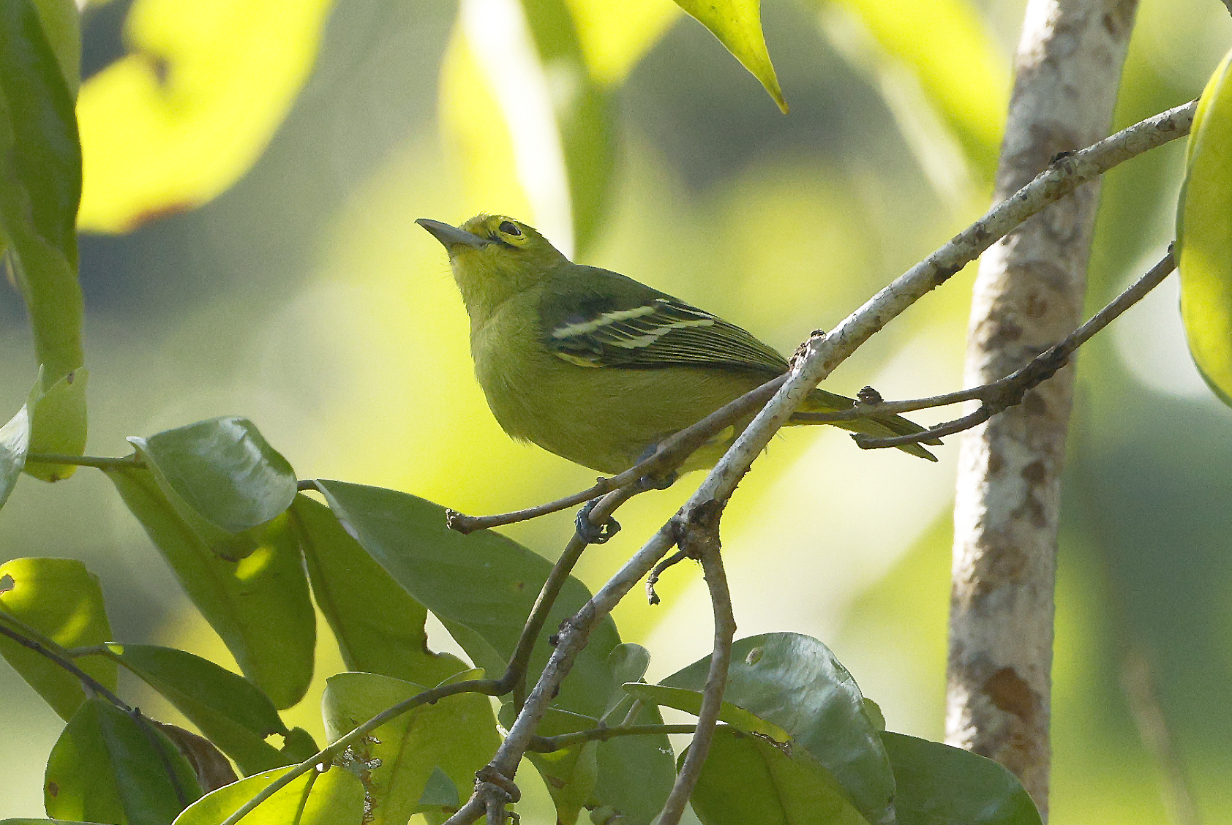
Green iora (This is my life bird.)
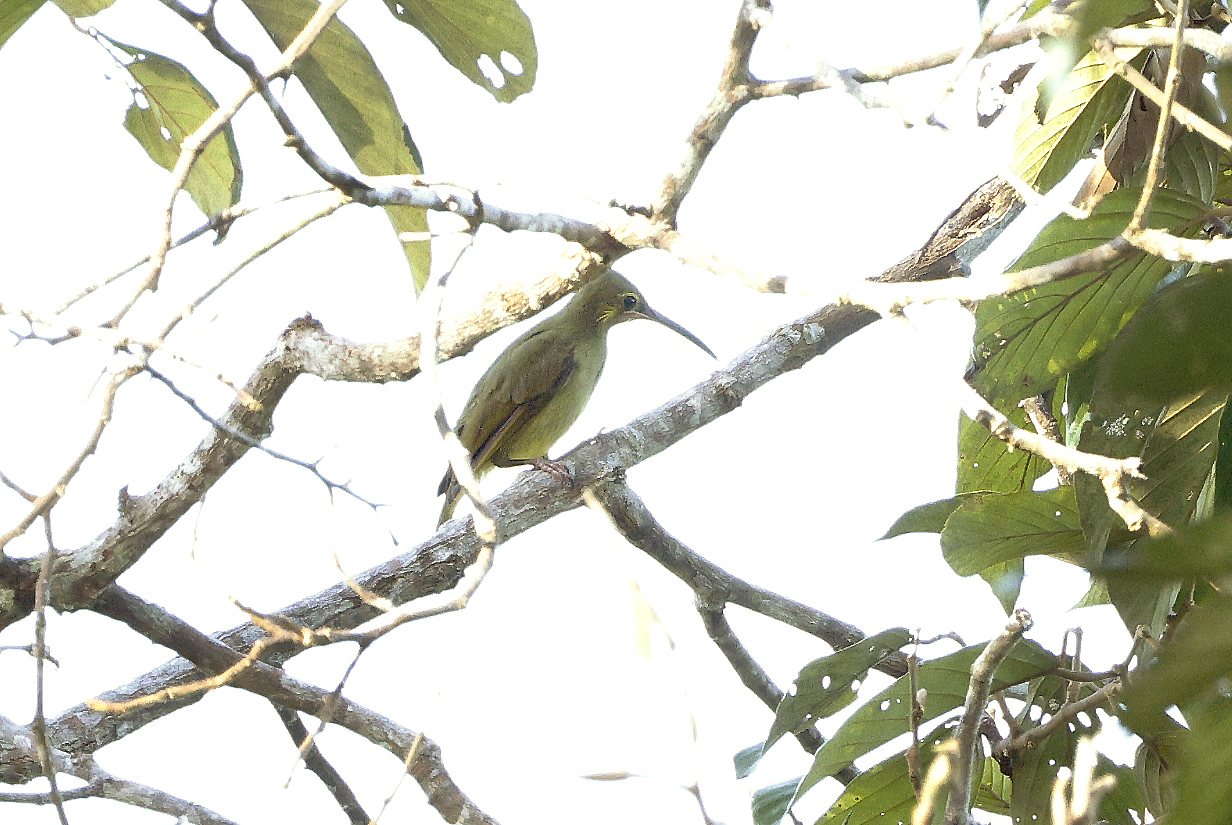
Yellow-eared spiderhunter (This is my life bird. And this picture is testament to the power of Canon's 200-800 mm telephoto lens: the bird was very far away. Hazwan Suban was able to identify the bird only when he saw the "yellow ears" in this picture as displayed on the camera's viewing screen.)
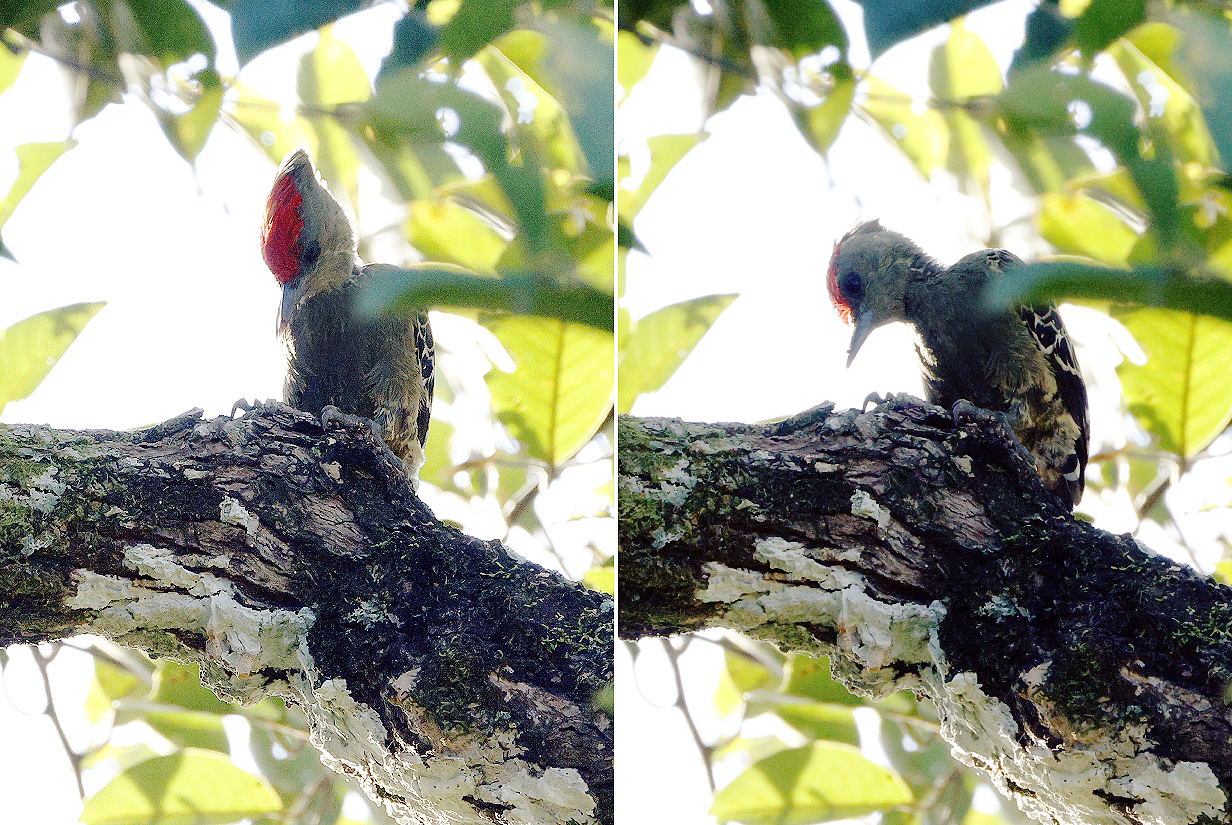
Gray-and-buff woodpecker (This is my life bird ... upsun, unfortunately.)
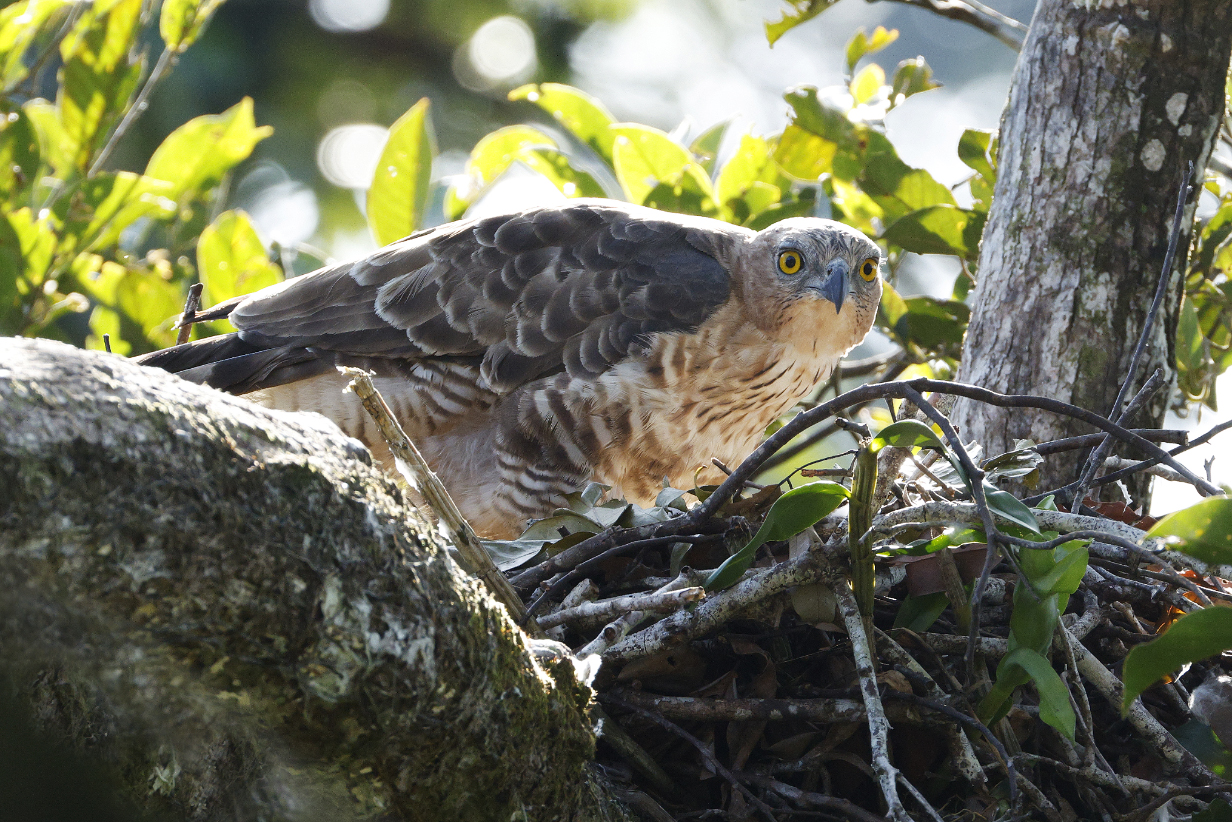
Wallace's hawk-eagle was standing on her nest when we came down from the tower back toward the canopy walkway.
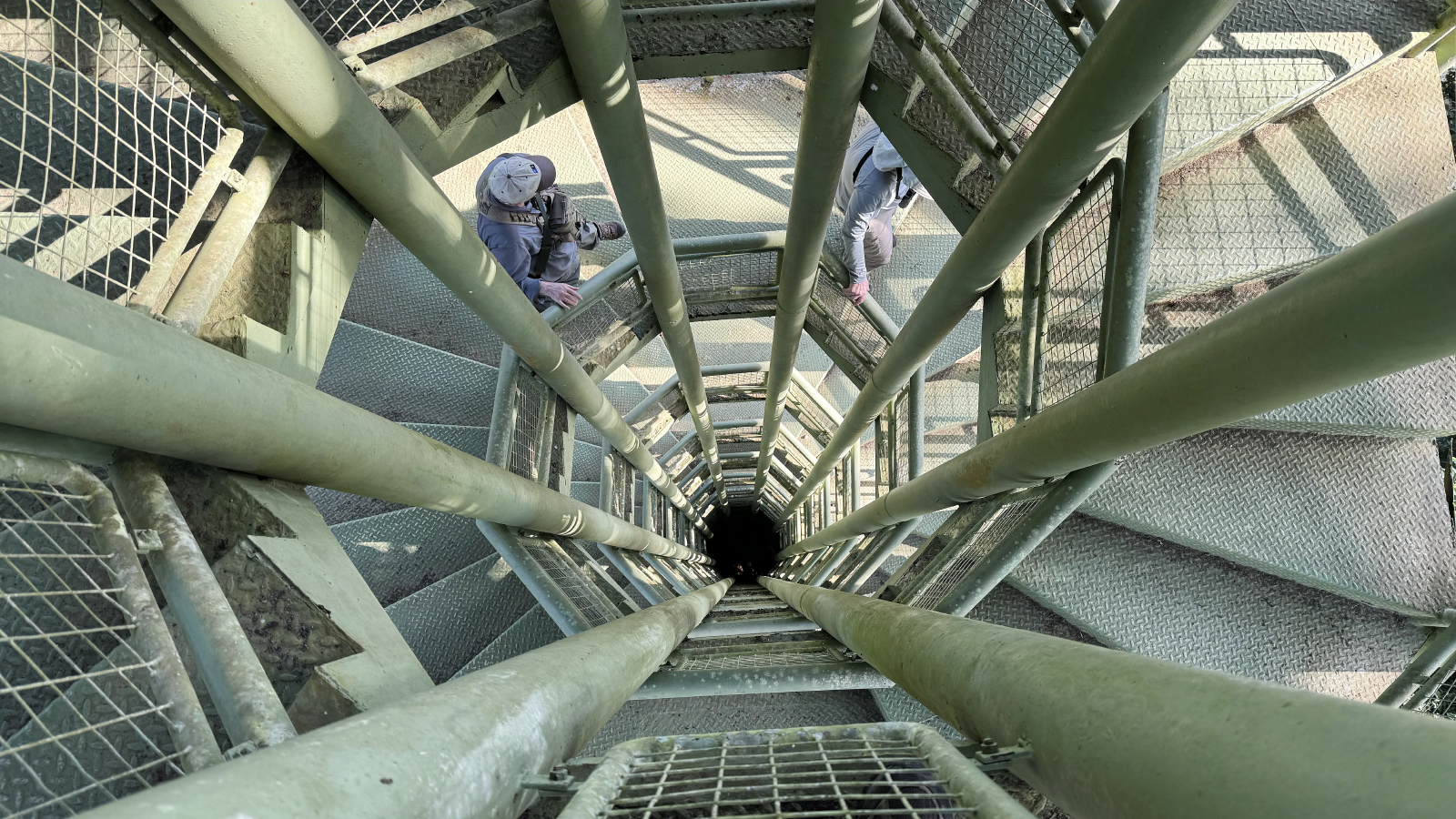
This view of the spiral staircase from the treetop tower level past the canopy walkway and down to the ground emphasizes that the whole structure is superbly well built.
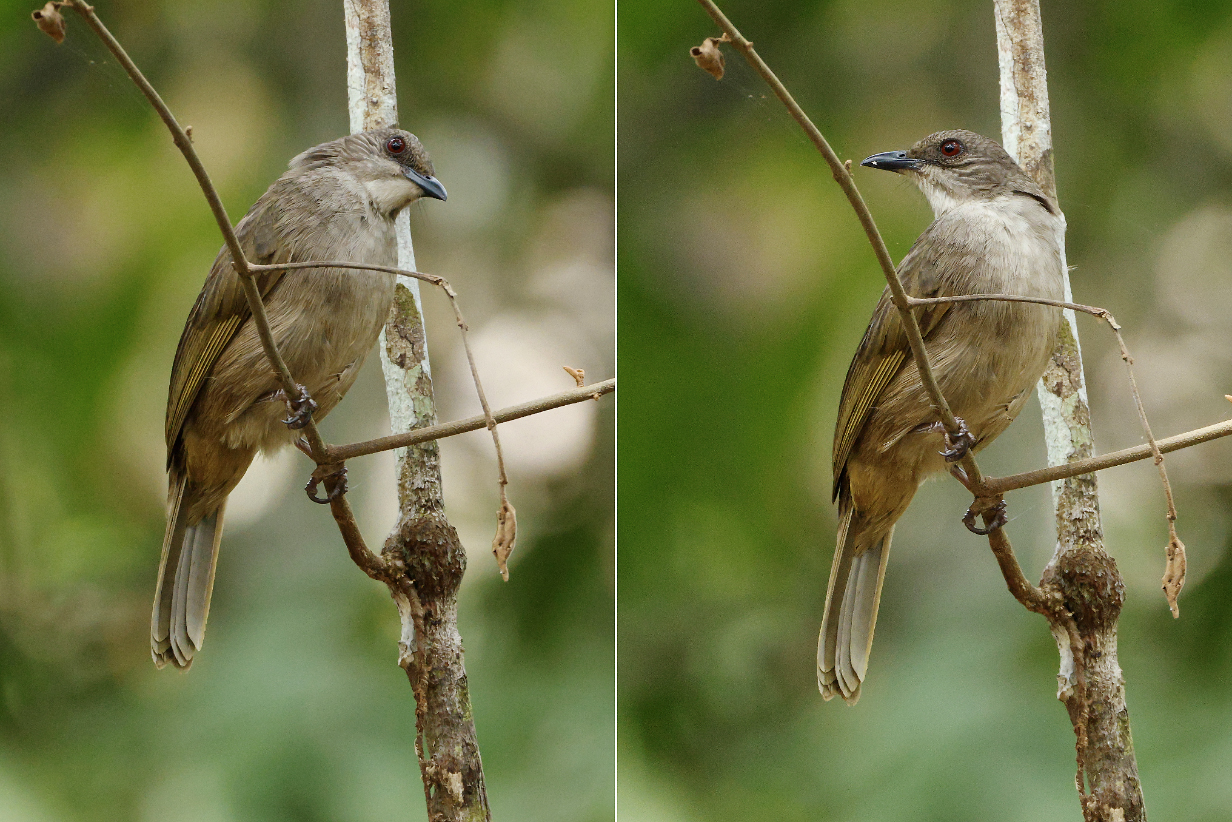
Olive-winged bulbul (I got this bird in Singapore, last July.)
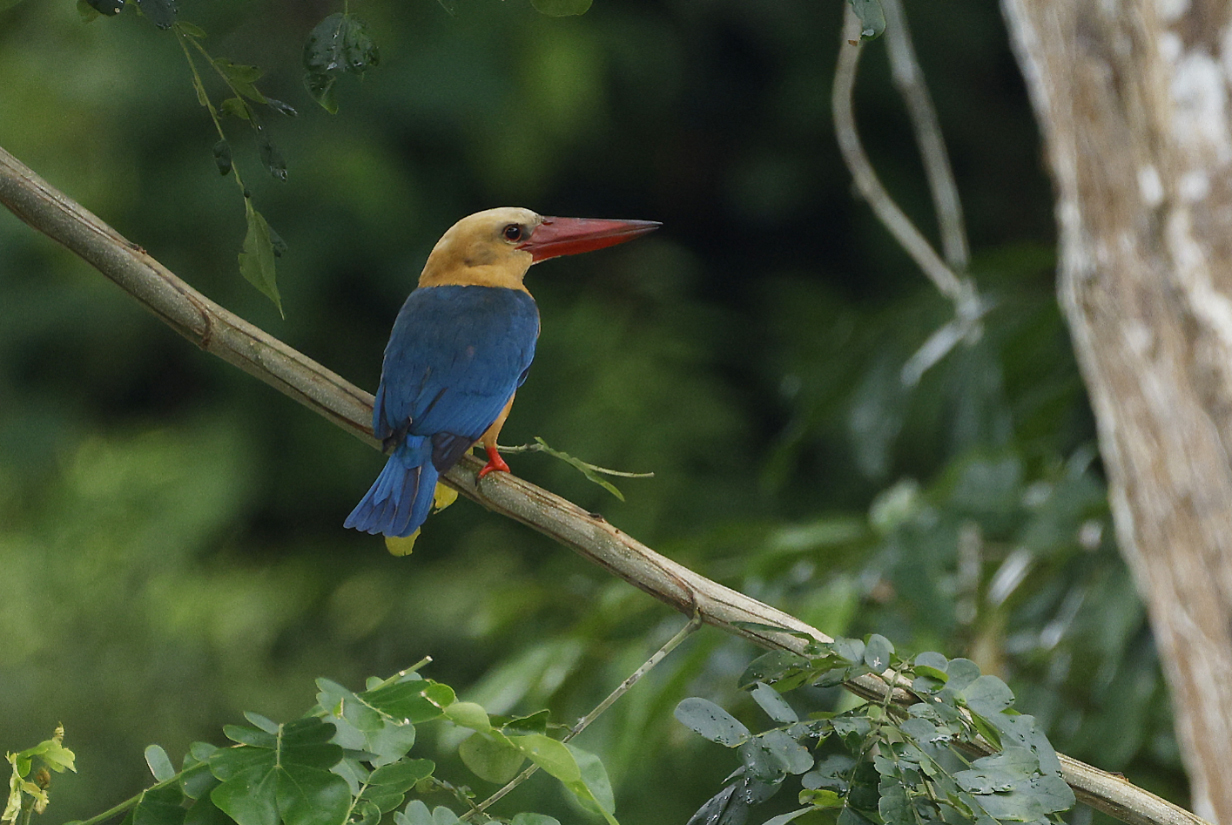
Stork-billed kingfisher (This is an old friend, first seen long ago in India and many times since then.)
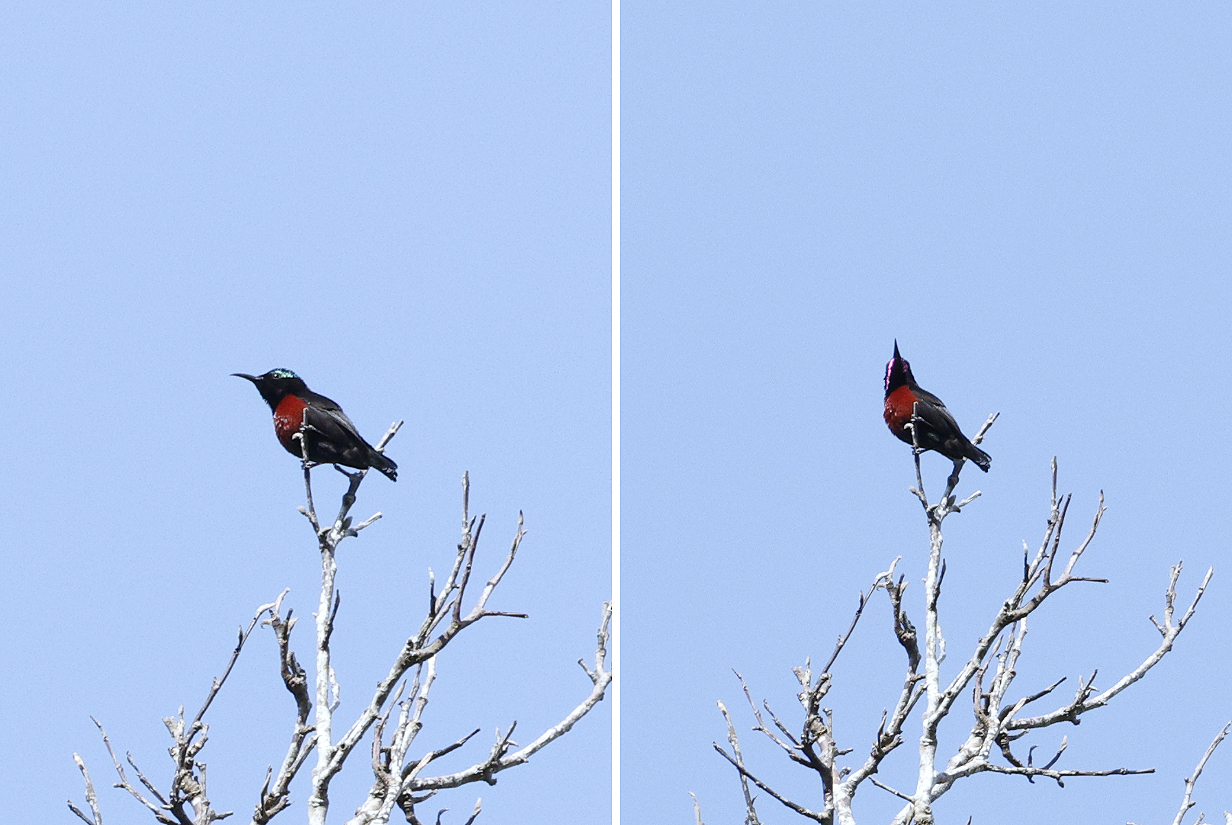
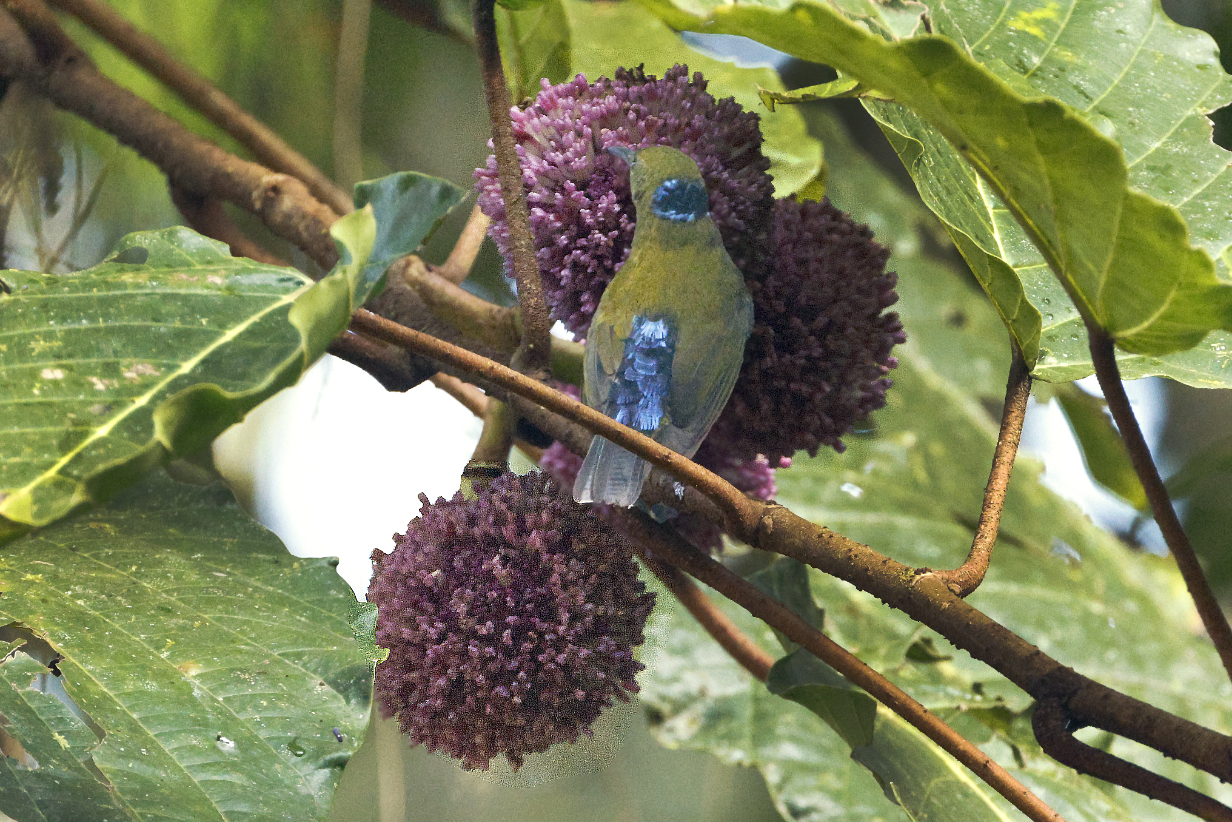
Van Hasselt's sunbird (This bird was new yesterday, but then, I saw it only in a guide's scope. Today, even my best view of the trip was from far away. The bird has a gorgeously green cap and nape, pink throat, and red belly, but irridescent colors are visible only in fortuitous -- not the present -- lighting.)
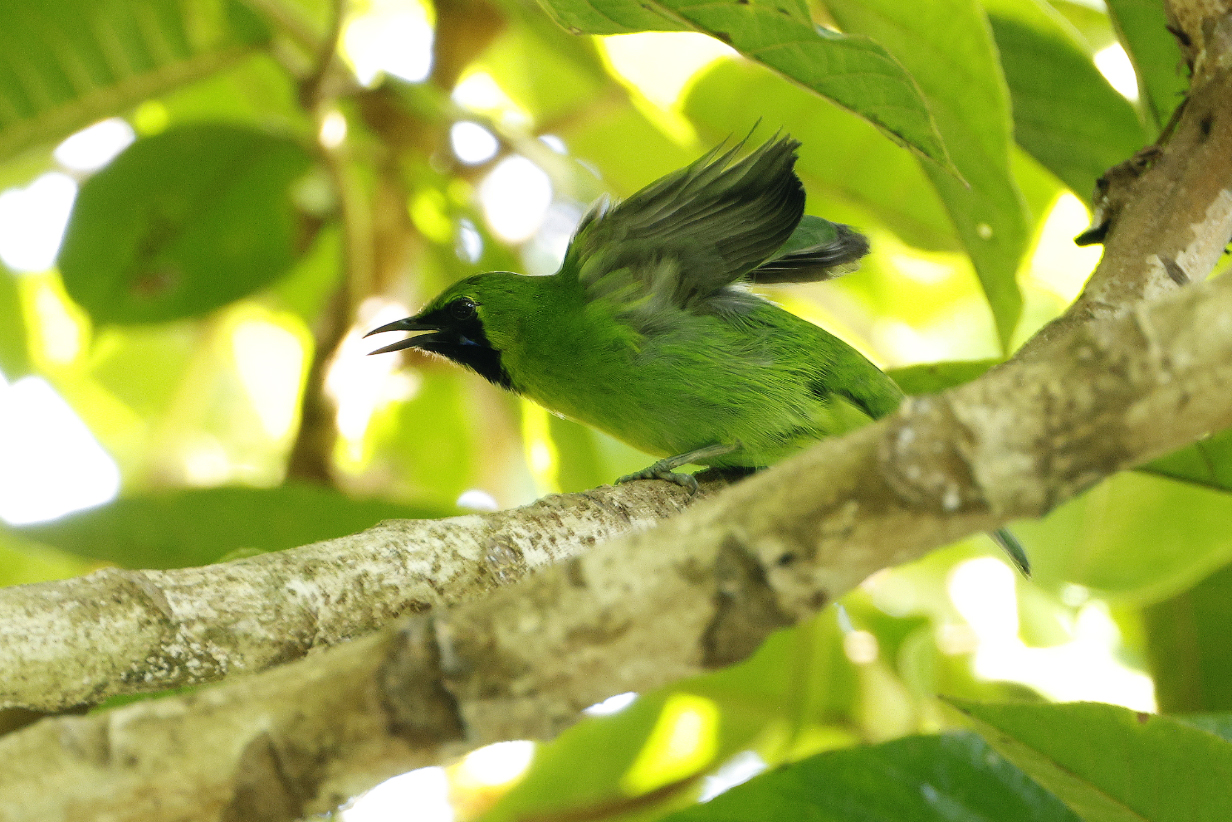
Lesser green leafbird (This is my life bird, in a lucky shot -- leafbirds are notoriously hard to catch, even for a good view, let alone for a picture.)
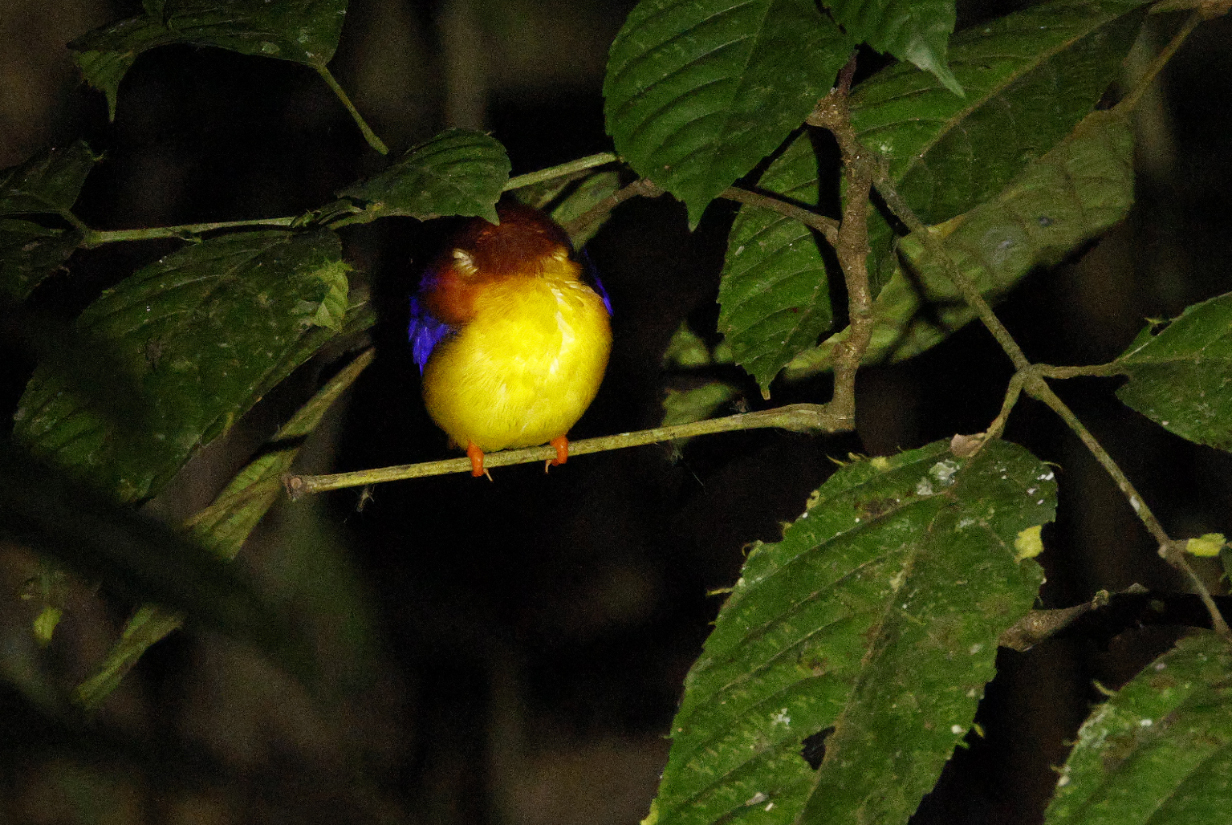
Rufous-backed dwarf kingfisher, asleep during our night outing (This is my life bird.)
VENT guide Scott Baker measured how far he walked today. Based on this and our understanding of which parts of Scott's walks I walked, too, we conclude that I walked very close to 5.1 miles today. I am pretty sure that this is farther than I have ever walked before in one day. I was correspondingly tired ... but it was a good day for birds. And ultimately, the exercise was good for me.
March 24 AM: Sepilok Rain Forest Discovery Center; PM: Drive to Hornbill Lodge
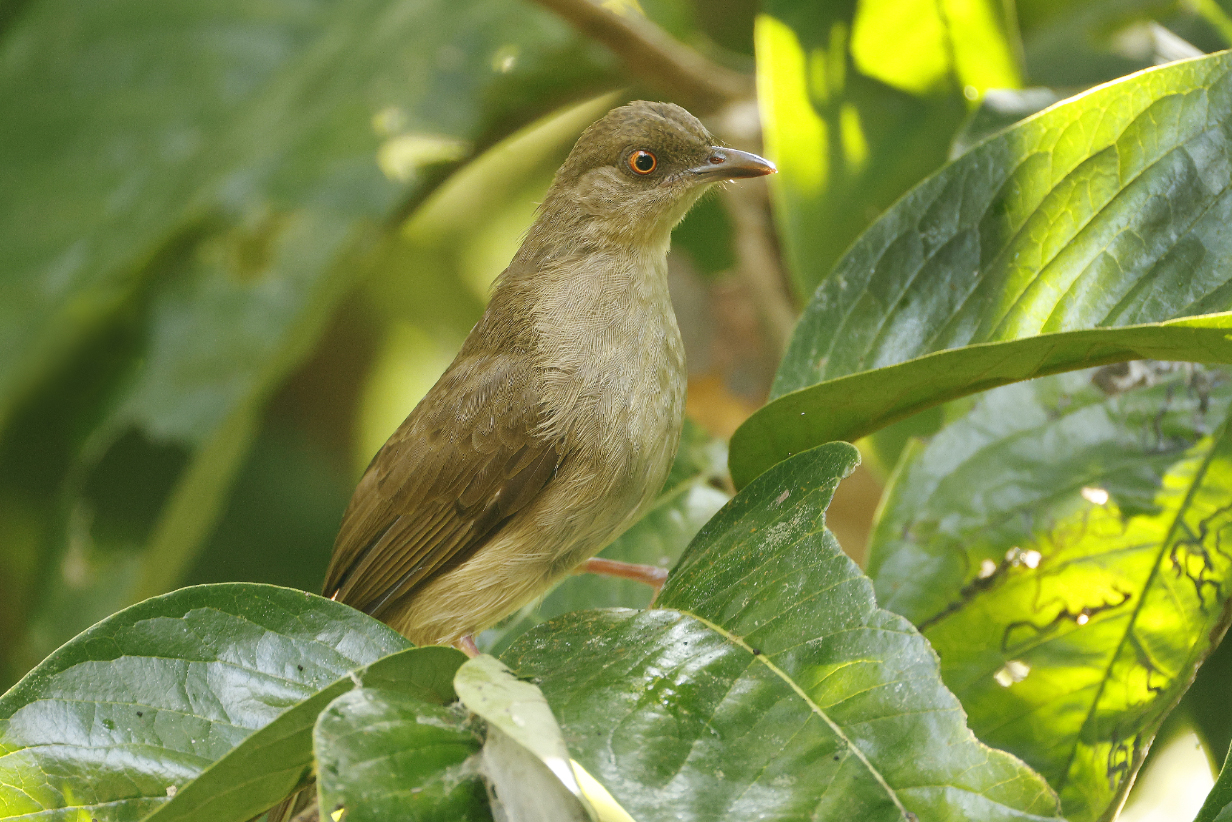
Cream-vented bulbul (This -- my life bird -- is the red-eyed morph of a bird that, in other places, has a white eye. I found it while resting alone; the rest of the group took a long walk along forest trails at Sepilok.)
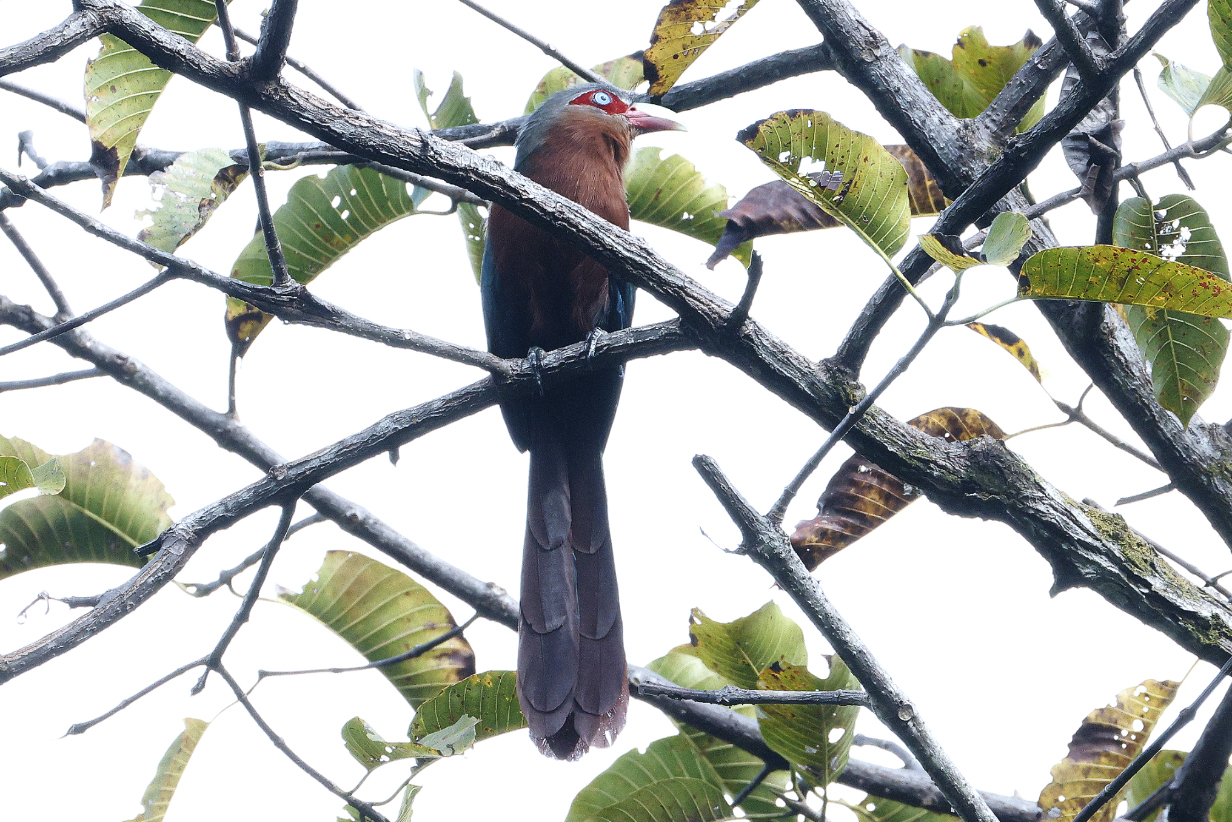
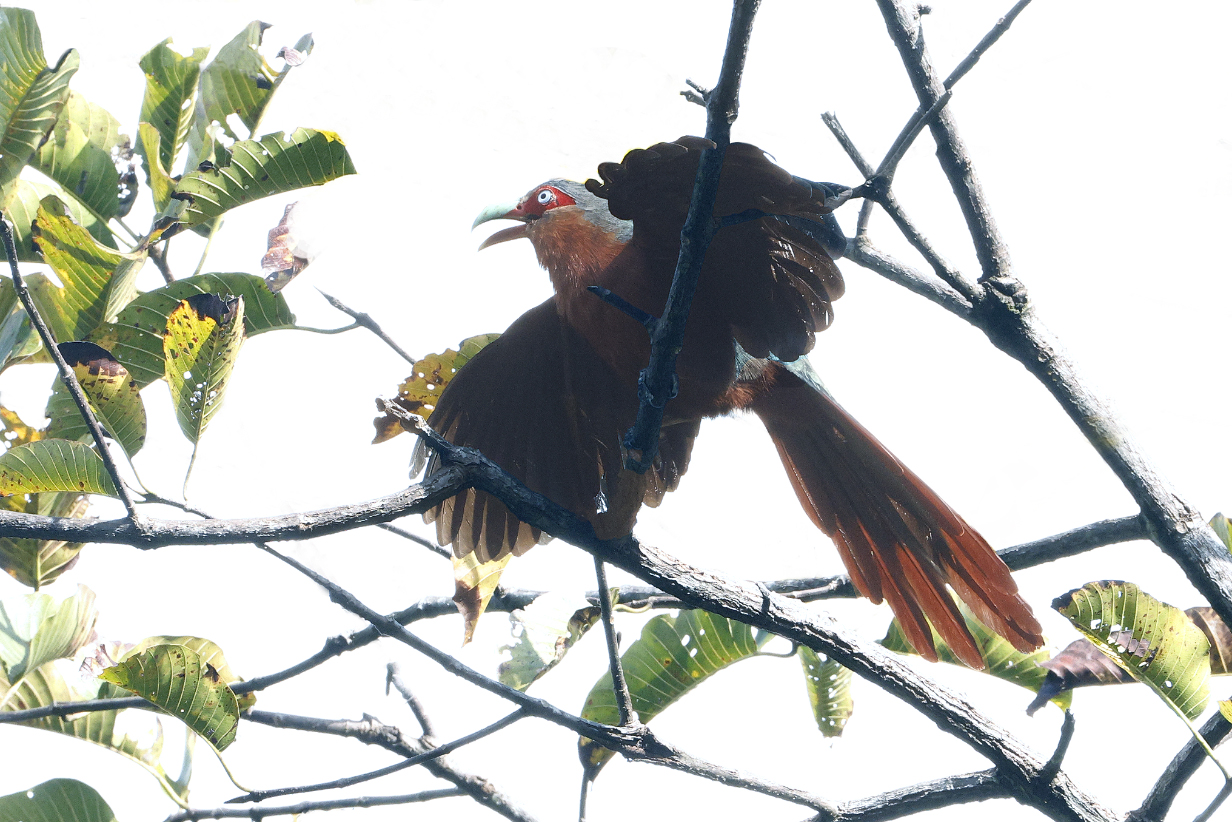
Chestnut-breasted malkoha (finally a good look)
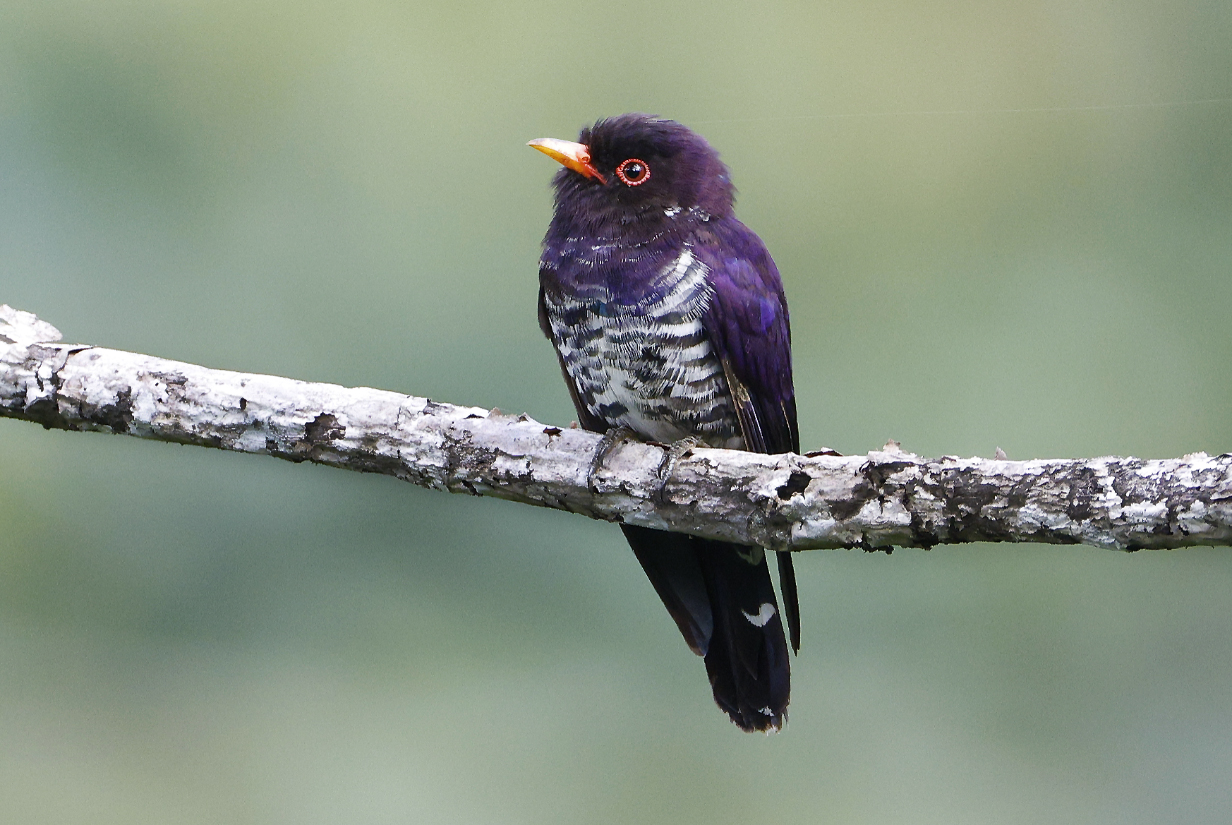
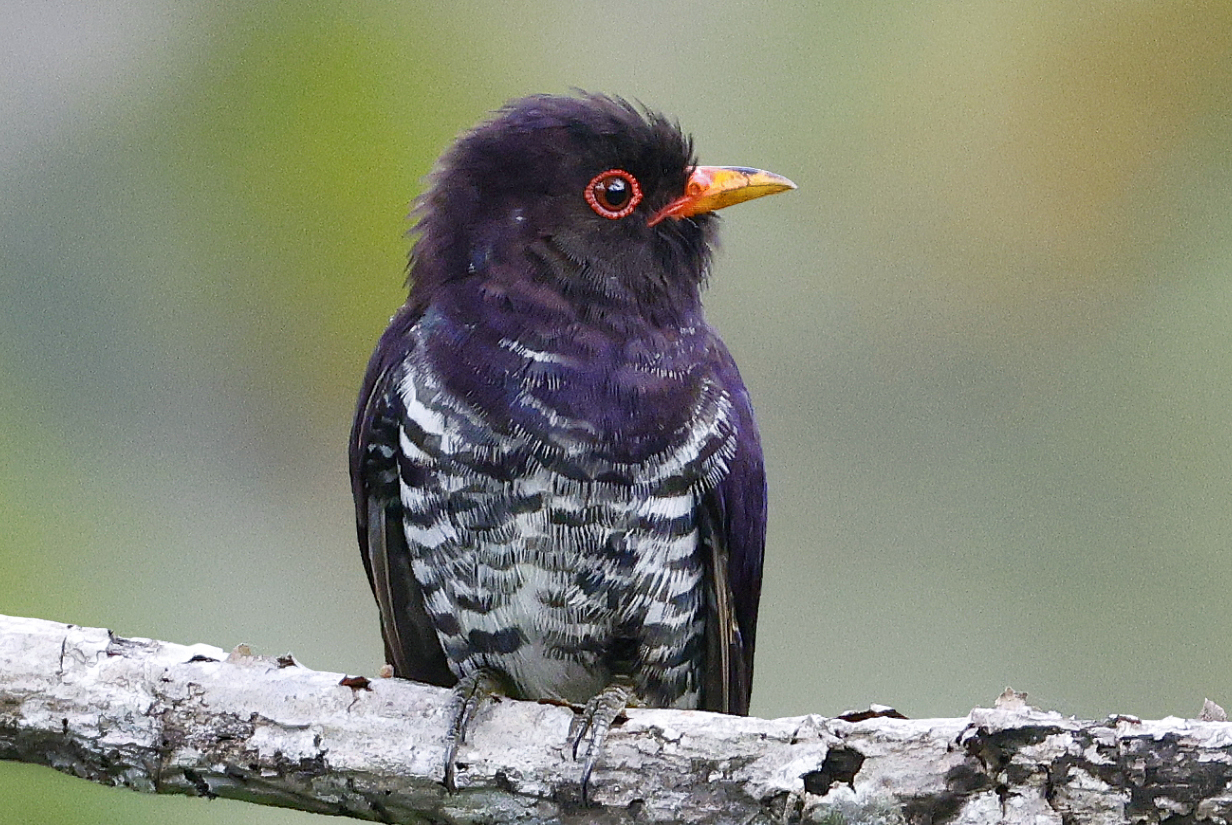
Violet cuckoo from the canopy walk (Cuckoos are hard, so this good look was very welcome.)
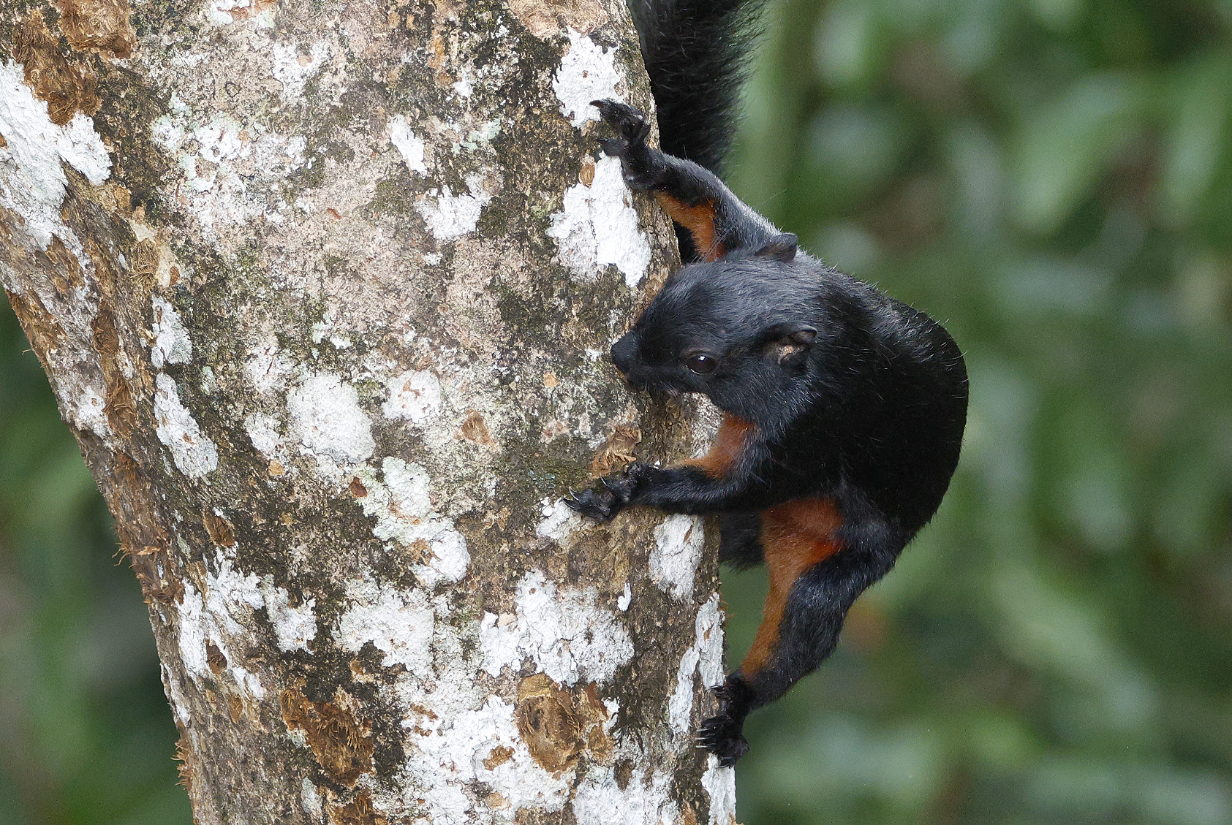
Prevost's squirrel (We saw many mammals during the trip. I mostly did not concentrate on them ... but this squirrel is particularly handsome.)
After this, we were driven to Hornbill Lodge on the Kinabatangan River. We checked into our cabins there, and had the first of 4 boat rides in the afternoon.
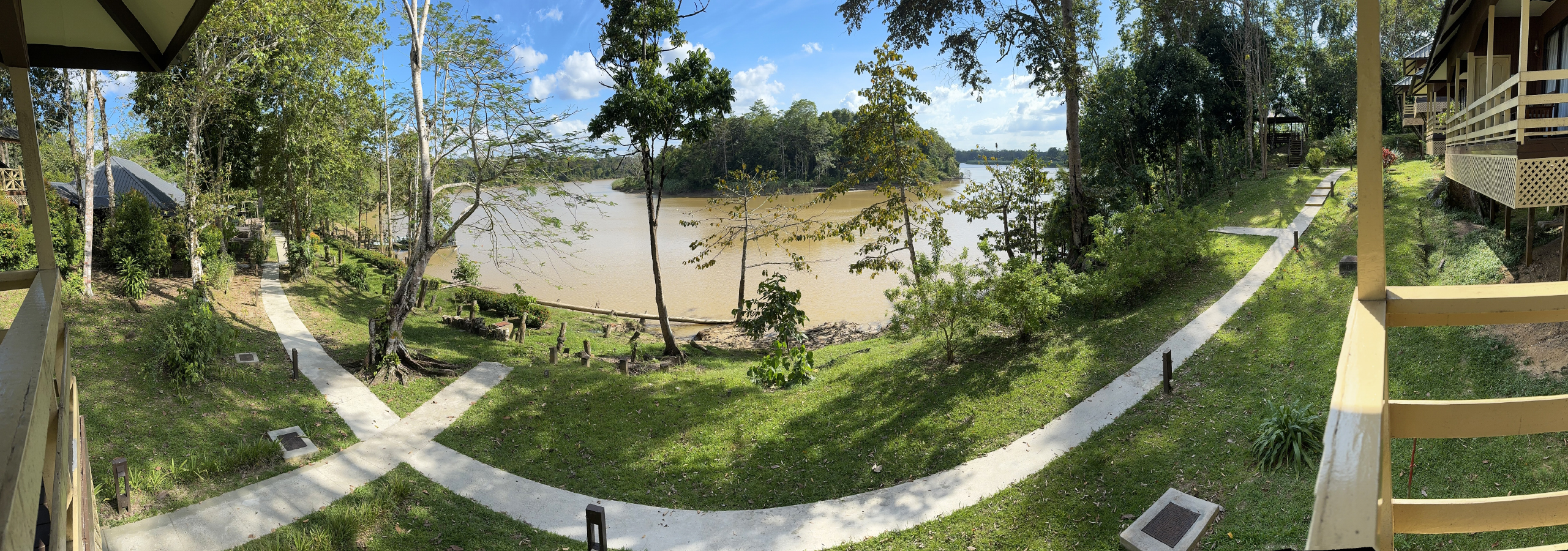
I was very happy to have a cabin with a panoramic view of the Kinabatangan River shown in this 180-degree panorama (scroll right to see it all). VENT folks were very good to me in giving me this cabin with a conveniently short walk to the public areas. The restaurant is just out of view at extreme left. The boat dock is partially obscured by trees, also at left. Other cabins are up and to my right.
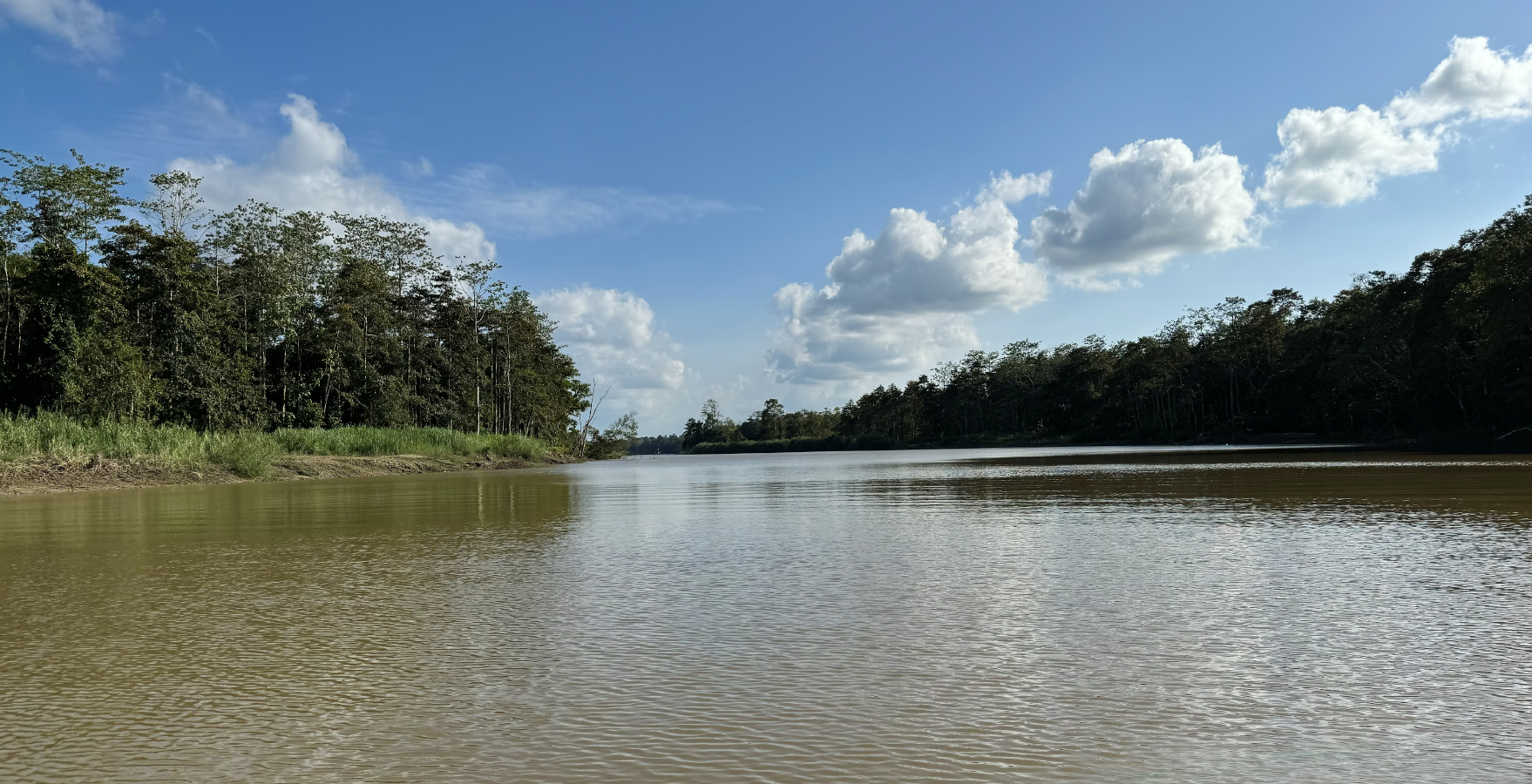
It was wonderfully relaxing and peaceful to take our first boat ride on the Kinabatangan River after lunch on March 24th.
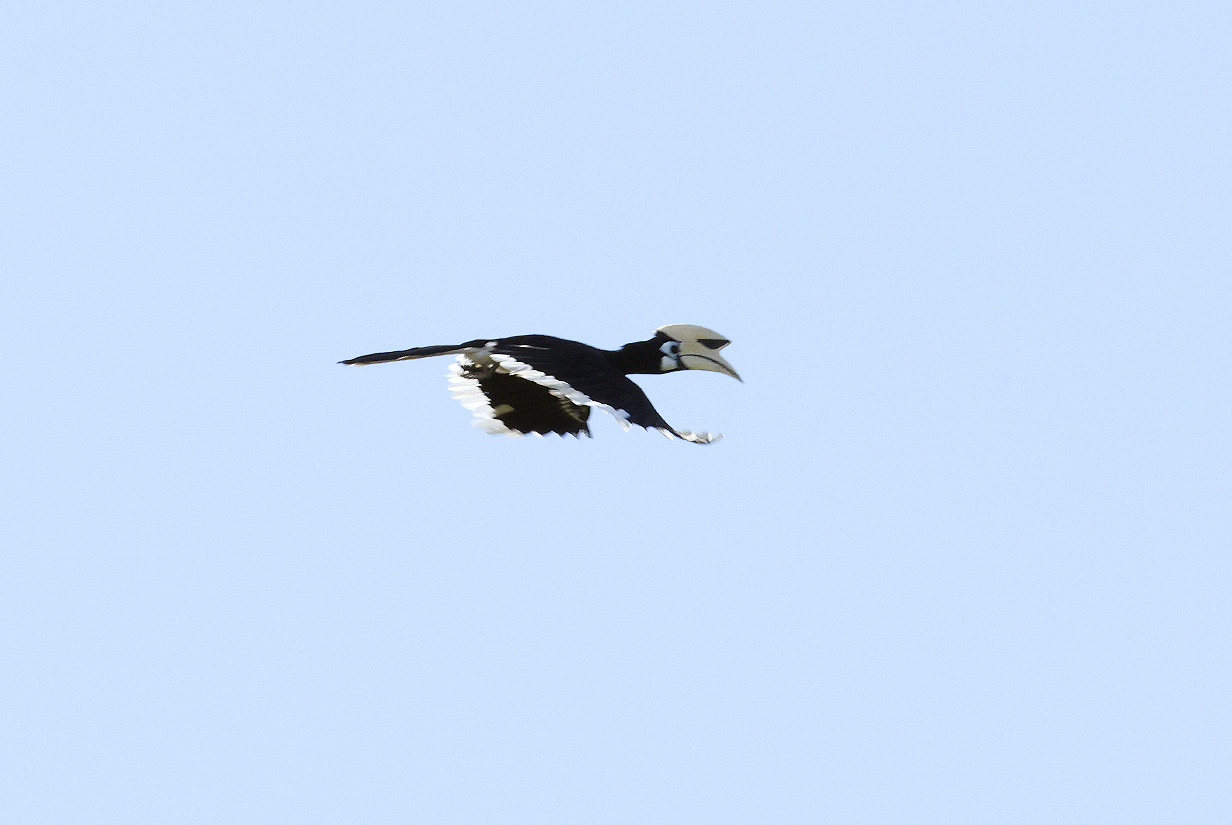
Hurried, not very good picture of an Oriental pied hornbill flyover during our first boat ride
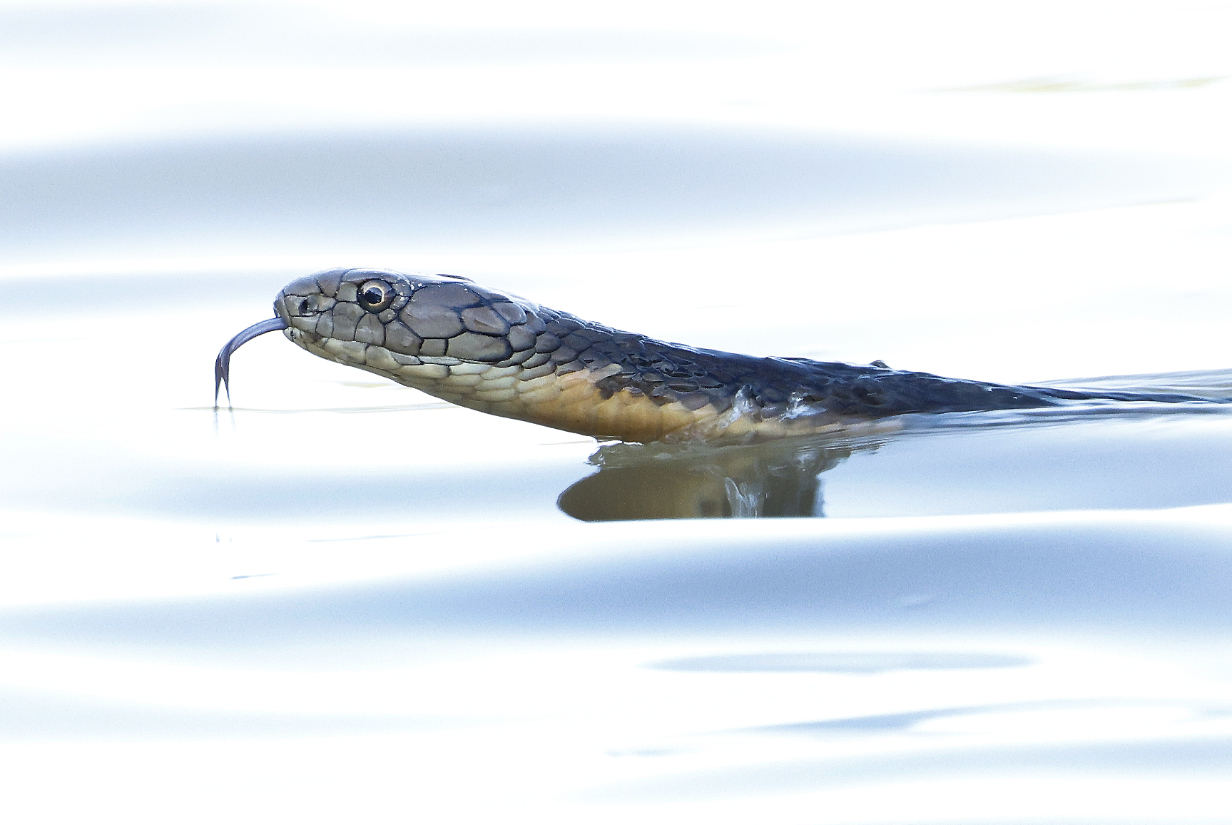
King cobra
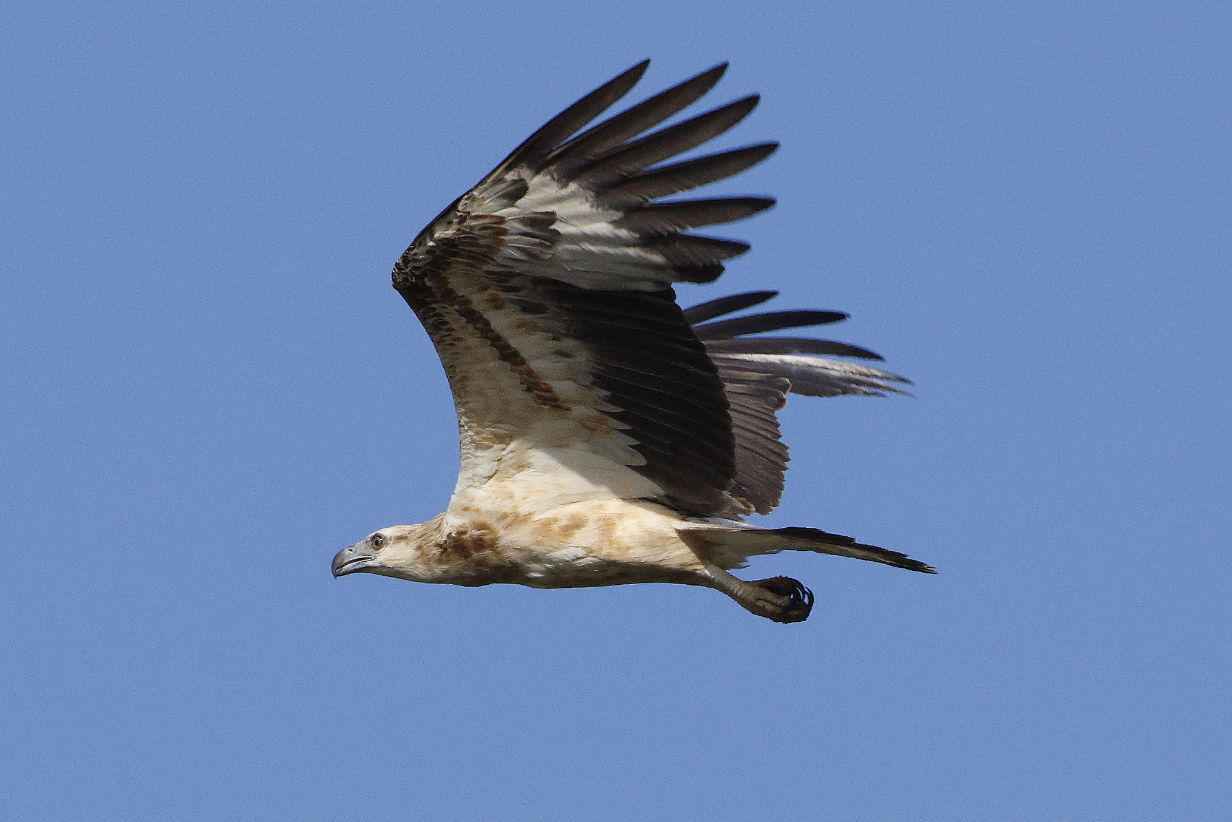
Immature White-bellied sea eagle (Thanks to Scott Baker for the ID.)
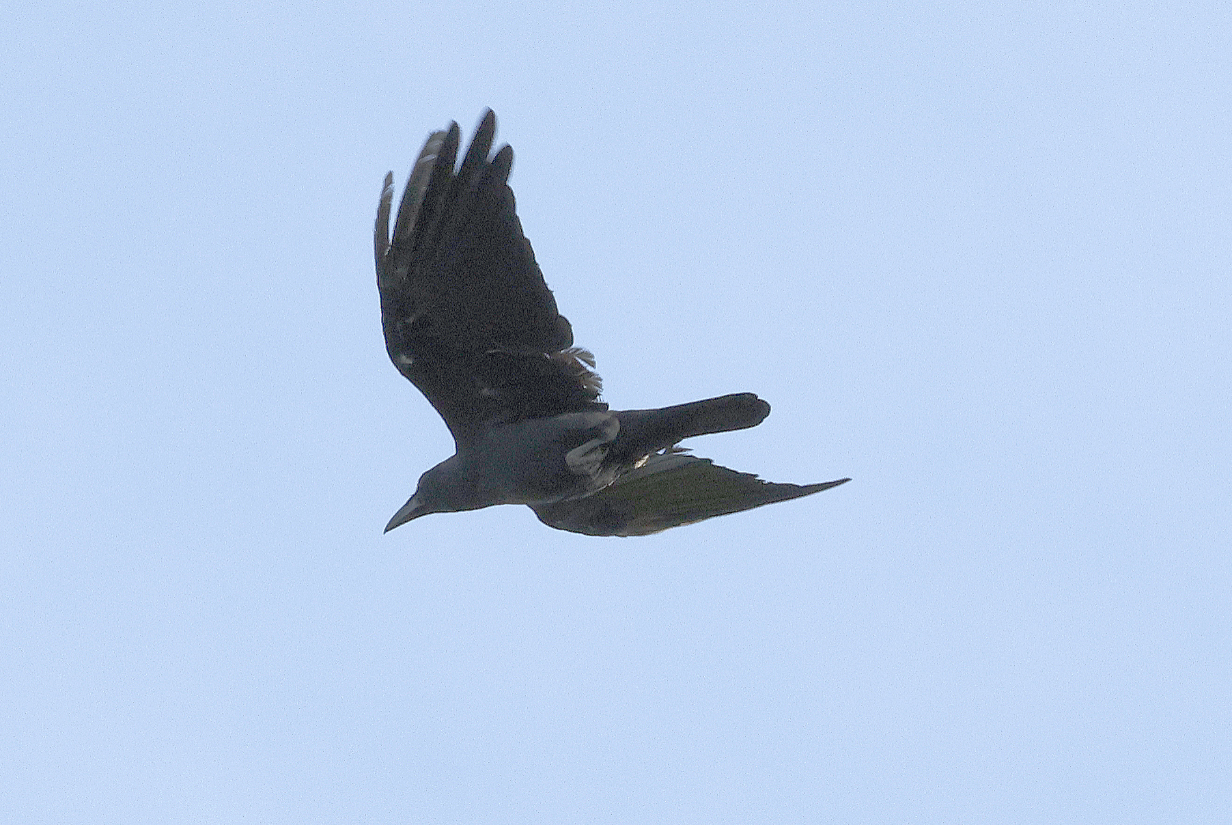
Sunda crow (This is my life bird.)
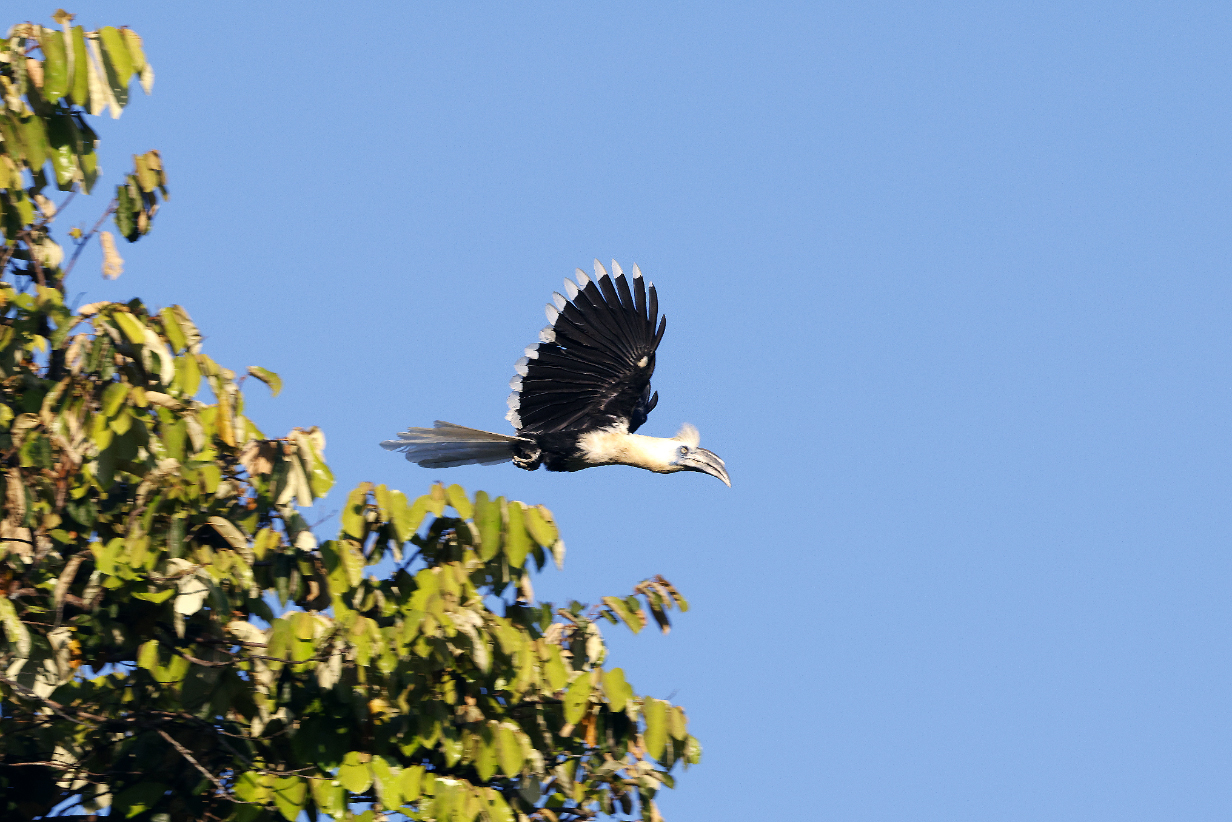
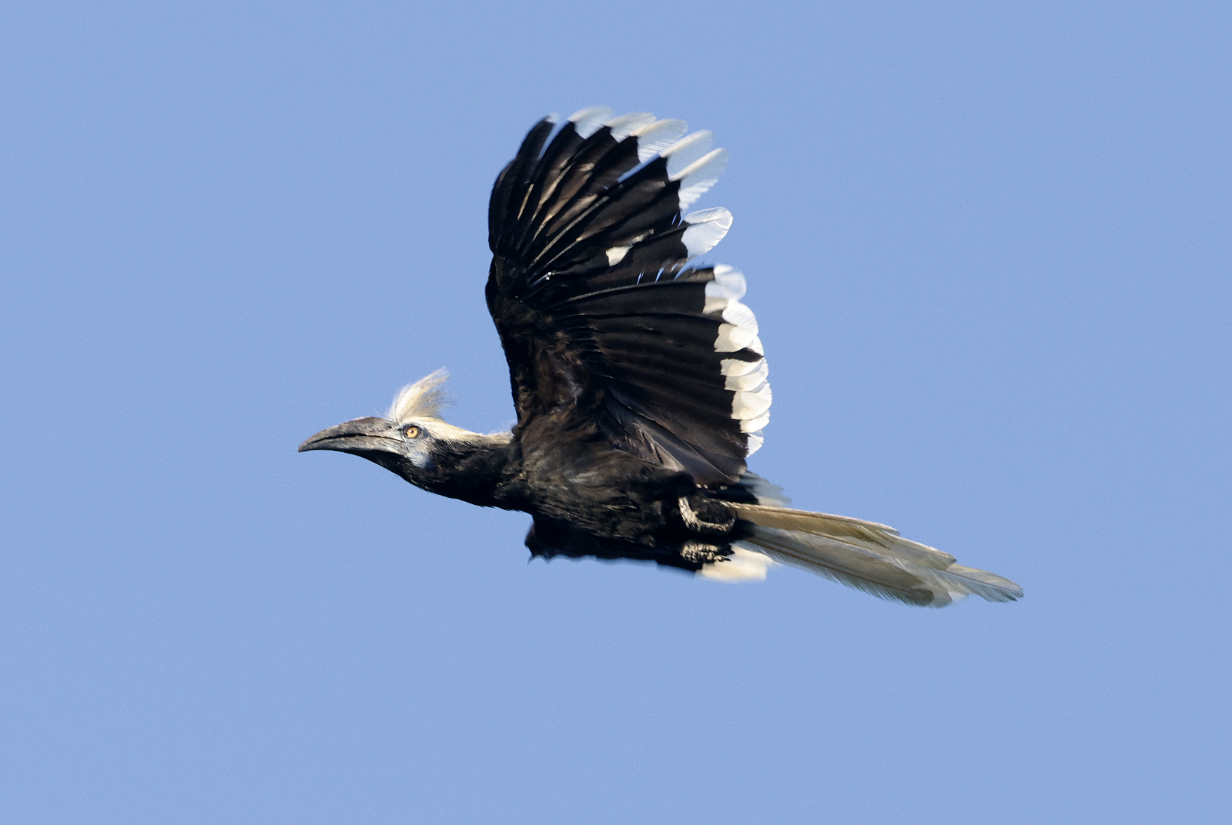
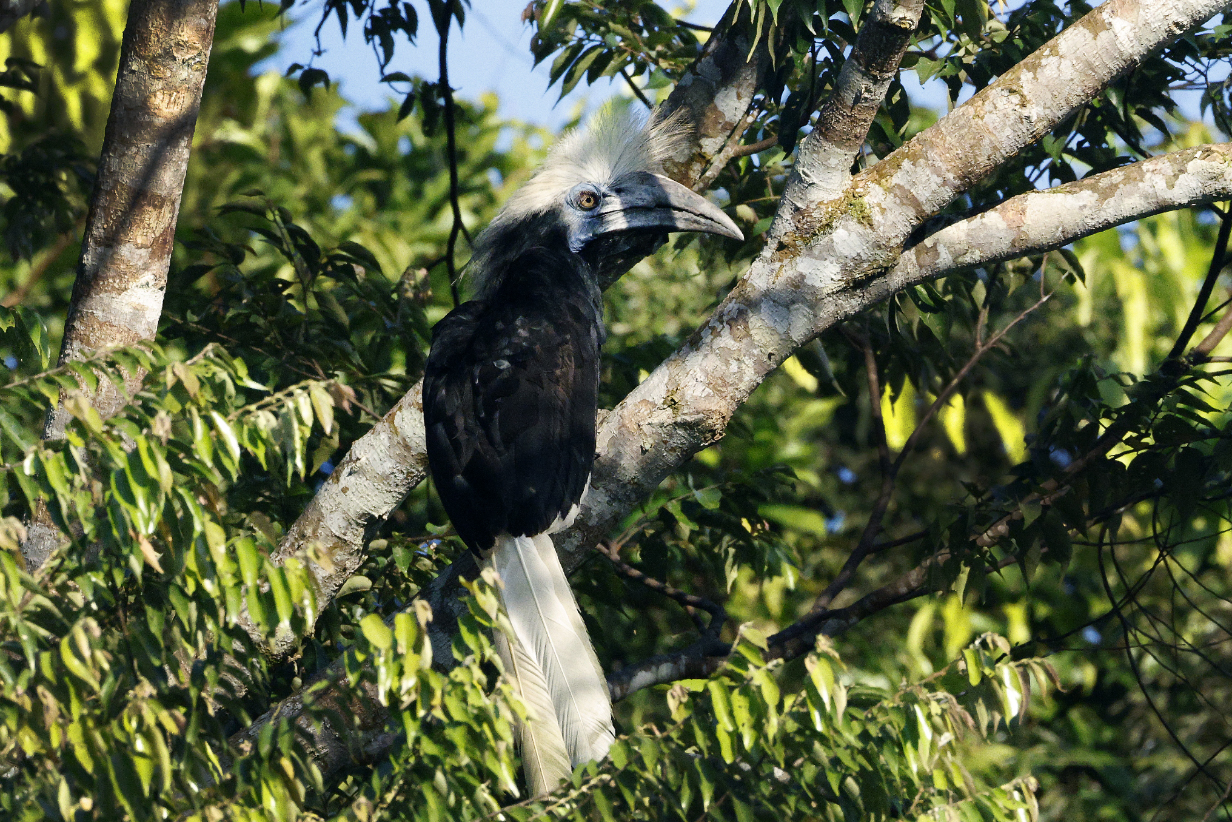
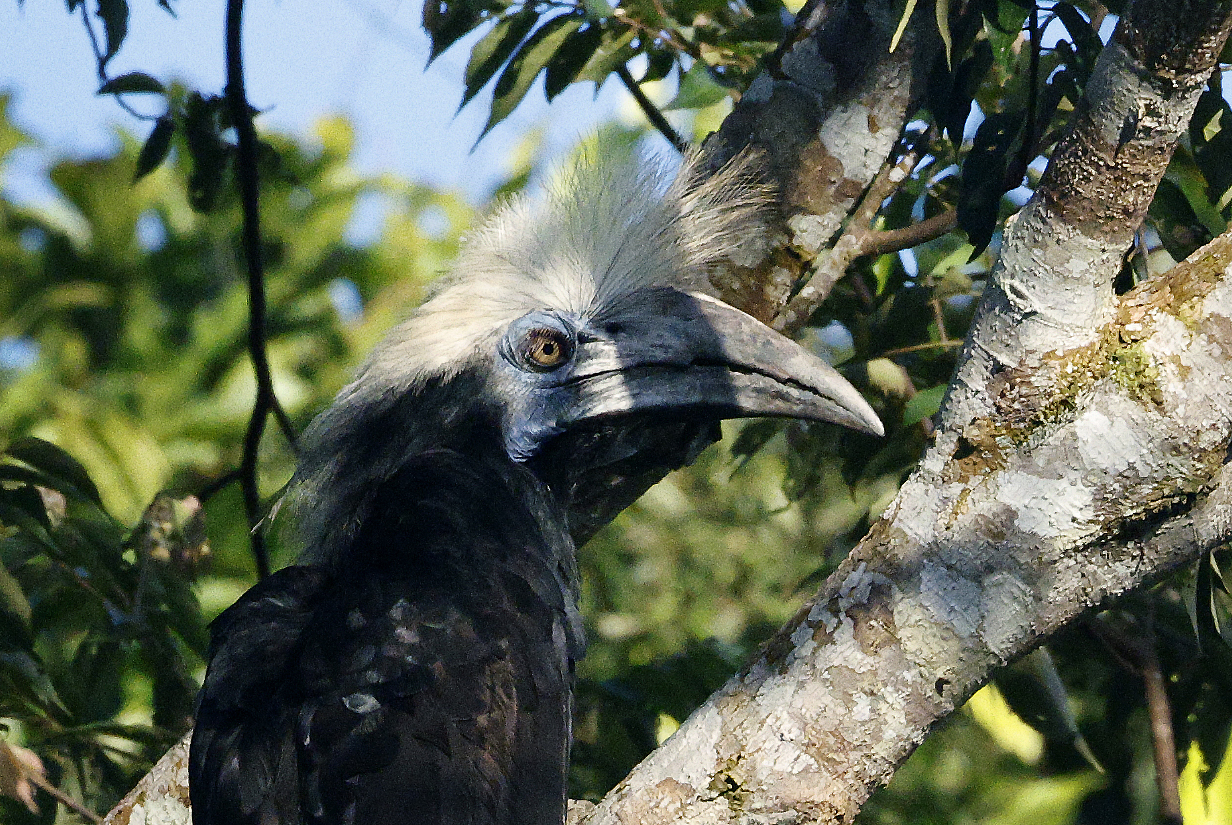
White-crowned hornbill (These are my life birds.)
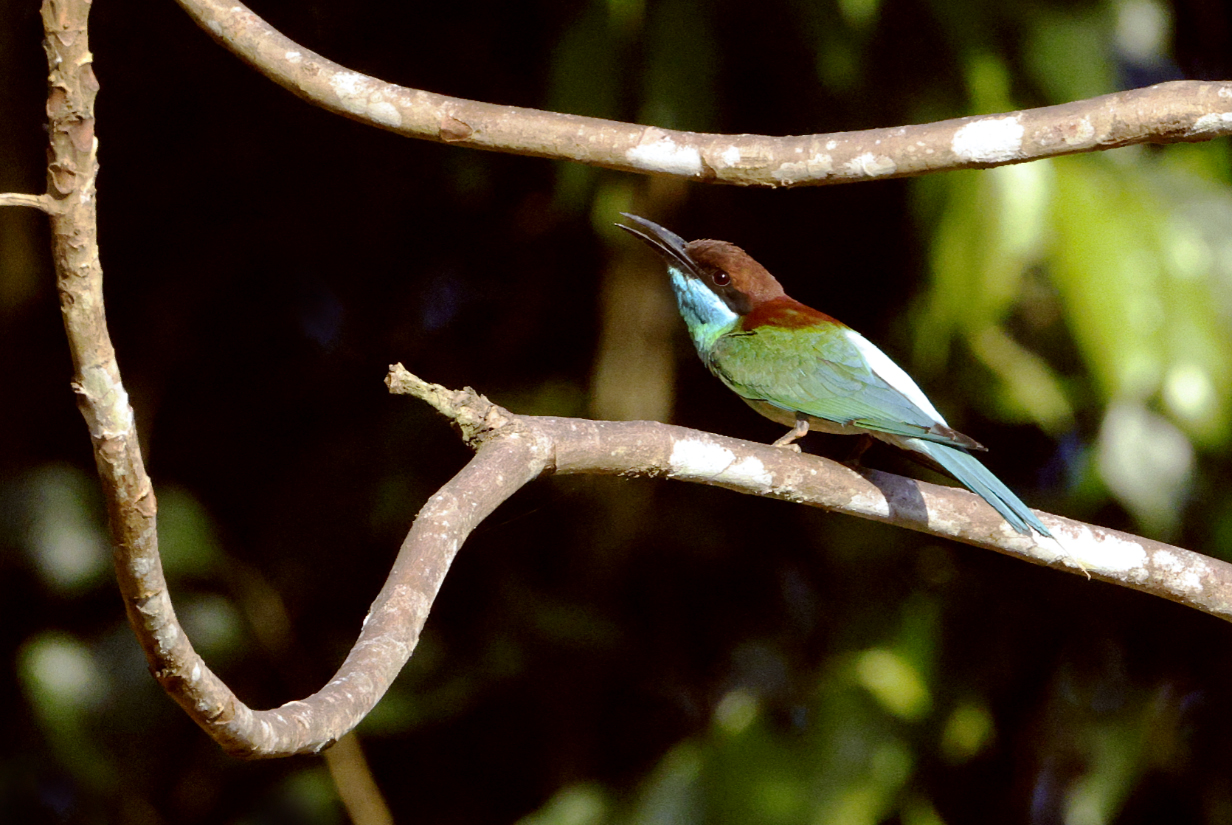
Blue-throated bee-eater
March 25: Two Kinabatangan River Boat Rides
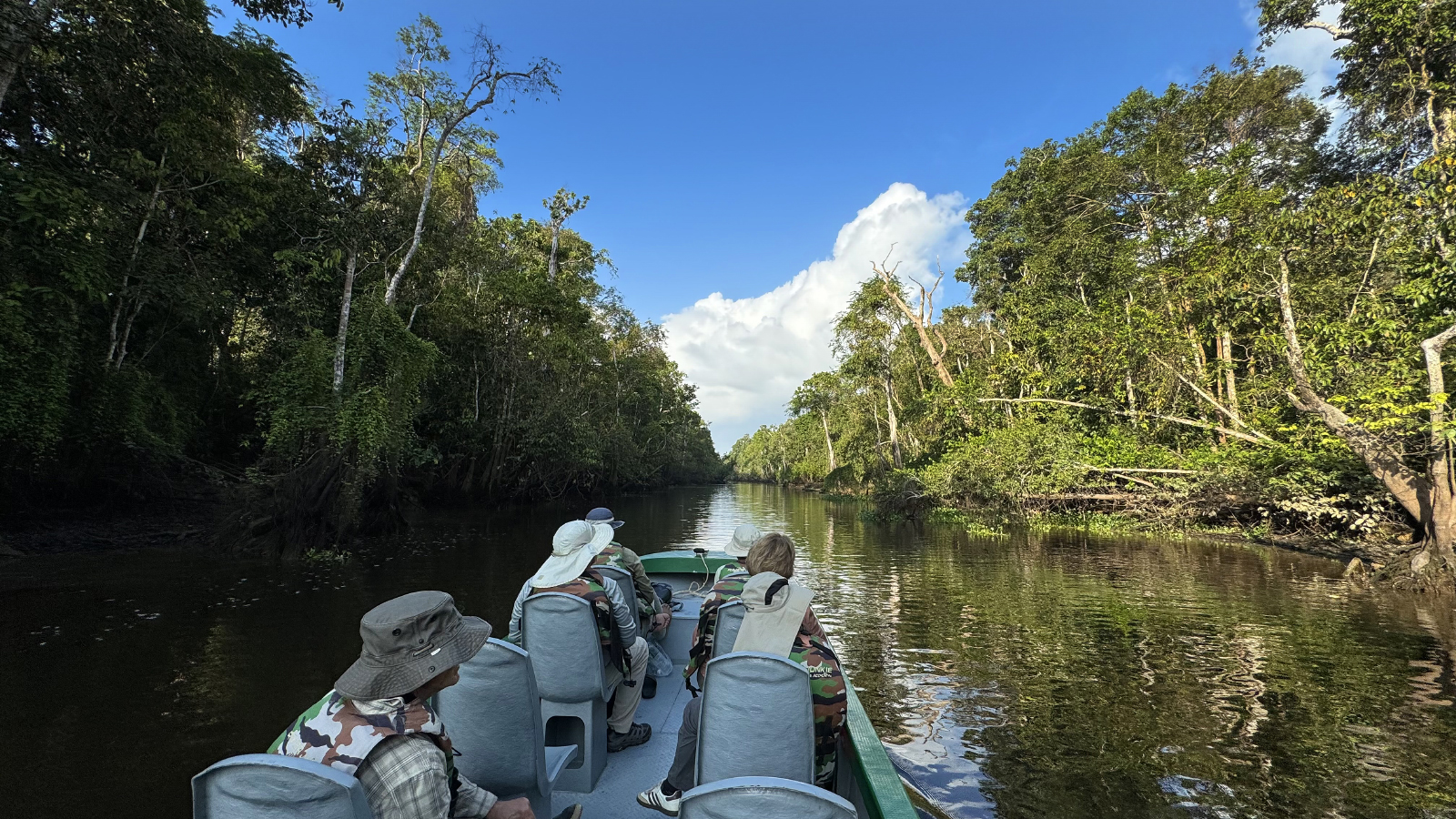
Today's morning boat ride was up the Menanggul River, a tributary of the Kinabatangan River very roughly 1/2 hour downstream from our lodge. Birding by boat is peaceful and easy -- the views are lovely, the physical comfort is welcome, and having chairs with backs means that I can lean back and even look almost straight upward when necessary. But it isn't usually necessary: an advantage is that birds tend to be out in the open -- if we see them at all -- and visible at comfortable angles. Sometimes they are far away; an advantage of boat birding is that you can get birds that are far away. But the boat also acts as a "hide", so sometimes (most notably in our Kimberley, Australia, trip, not so nuch here) you can get very close. Anyway, the boat rides were the most congenial birding of the trip, if not always the most productive in endemic new species.
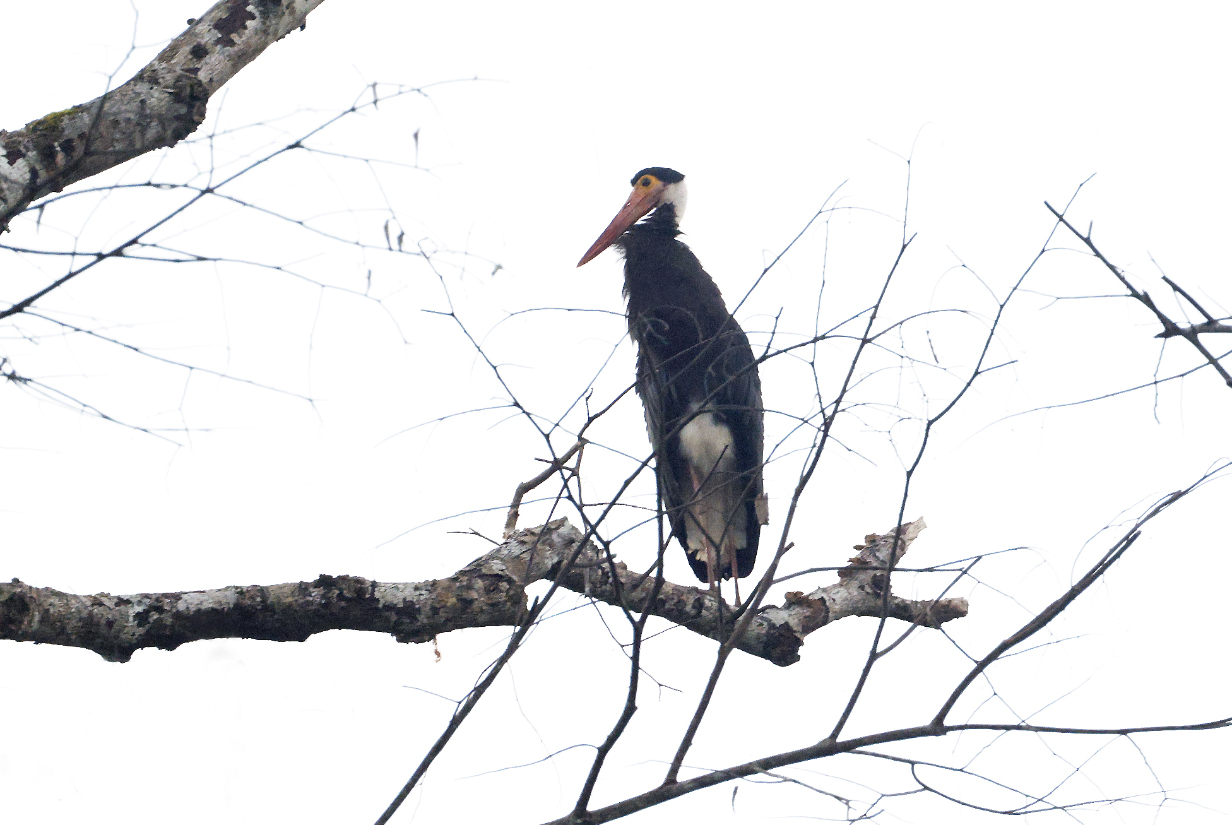
Storm's stork (This is my life bird.)
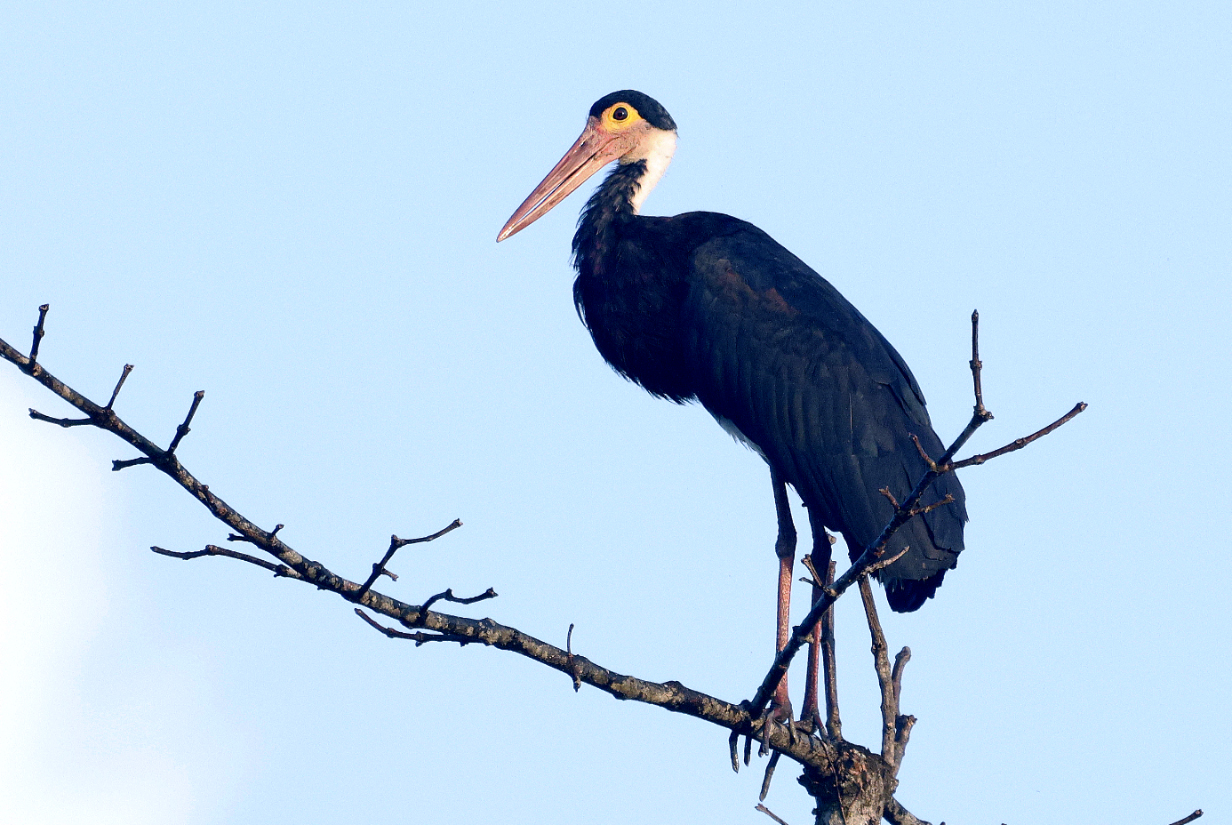
Storm's stork (Later, we got a better look at a different bird.)
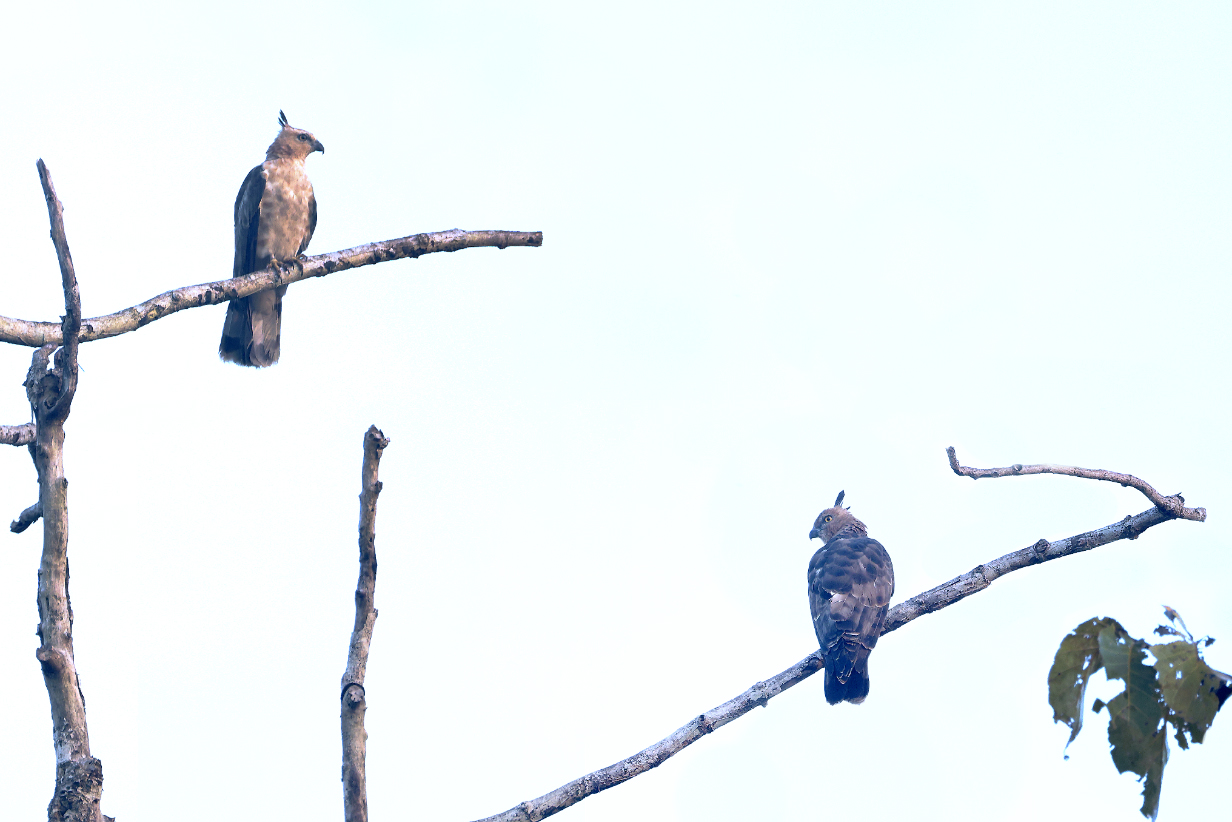
Jerdon's baza (Identifying these birds required some discussion. Often, Jerdon's baza has a very barred chest. But there are pictures on ebird where the bird looks just like the ones here, noticeably one from Singapore. Jerdon's baza is not new for me, but it was a good sighting.
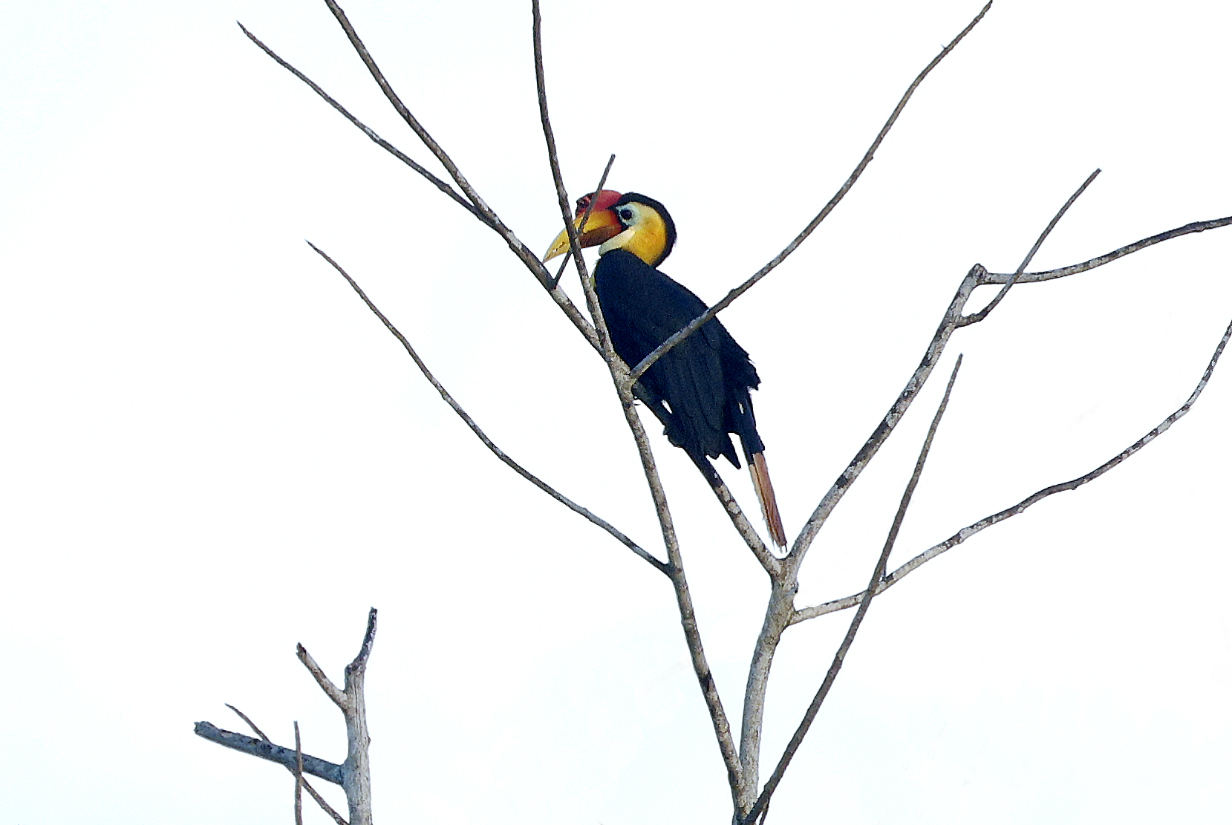
Wrinkled hornbill (This is my life bird ... and again, one that it would have been nice to see better)
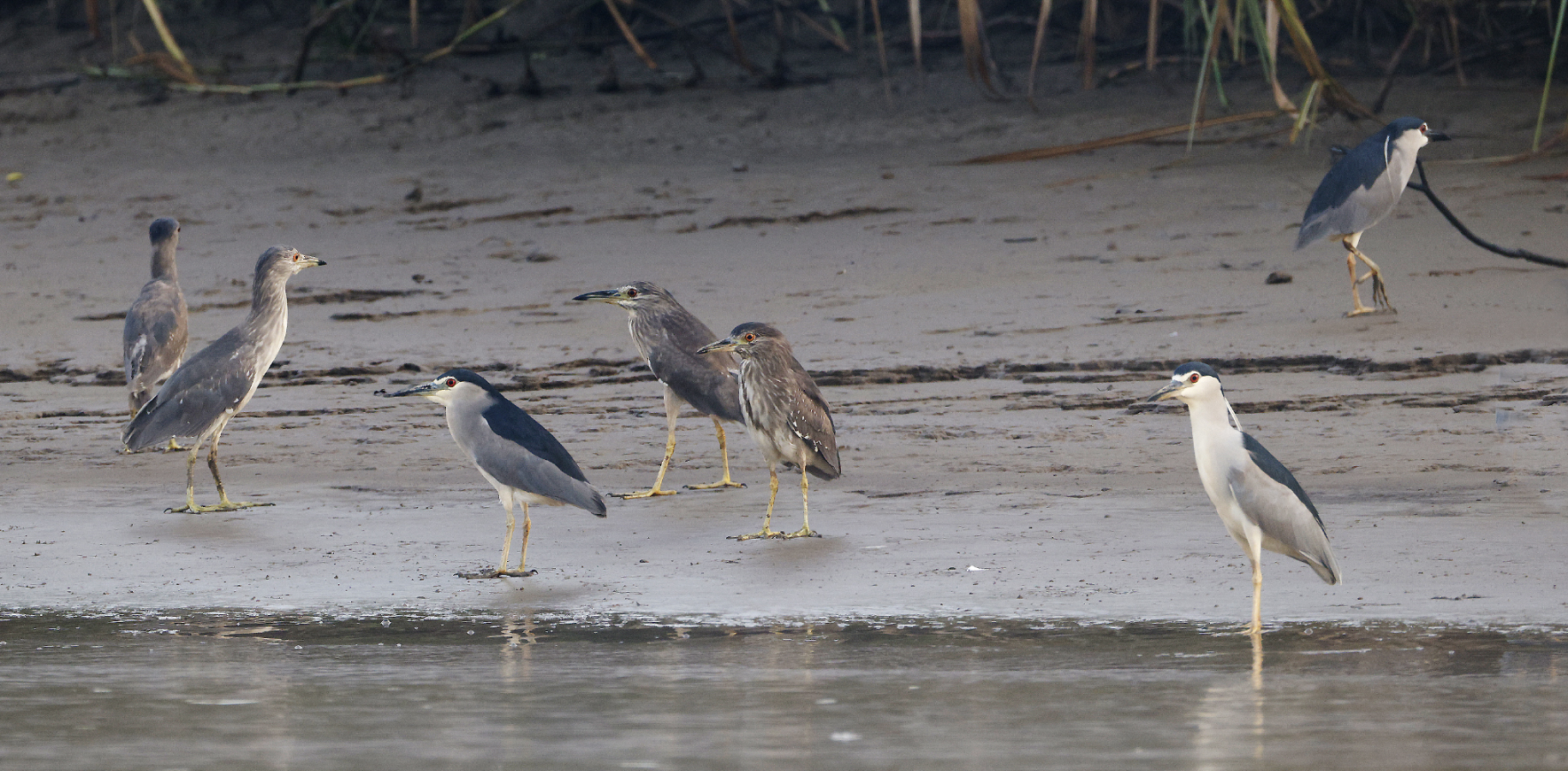
Black-crowned night herons (Scott Baker counted 31 birds in this group of adults and juveniles.)
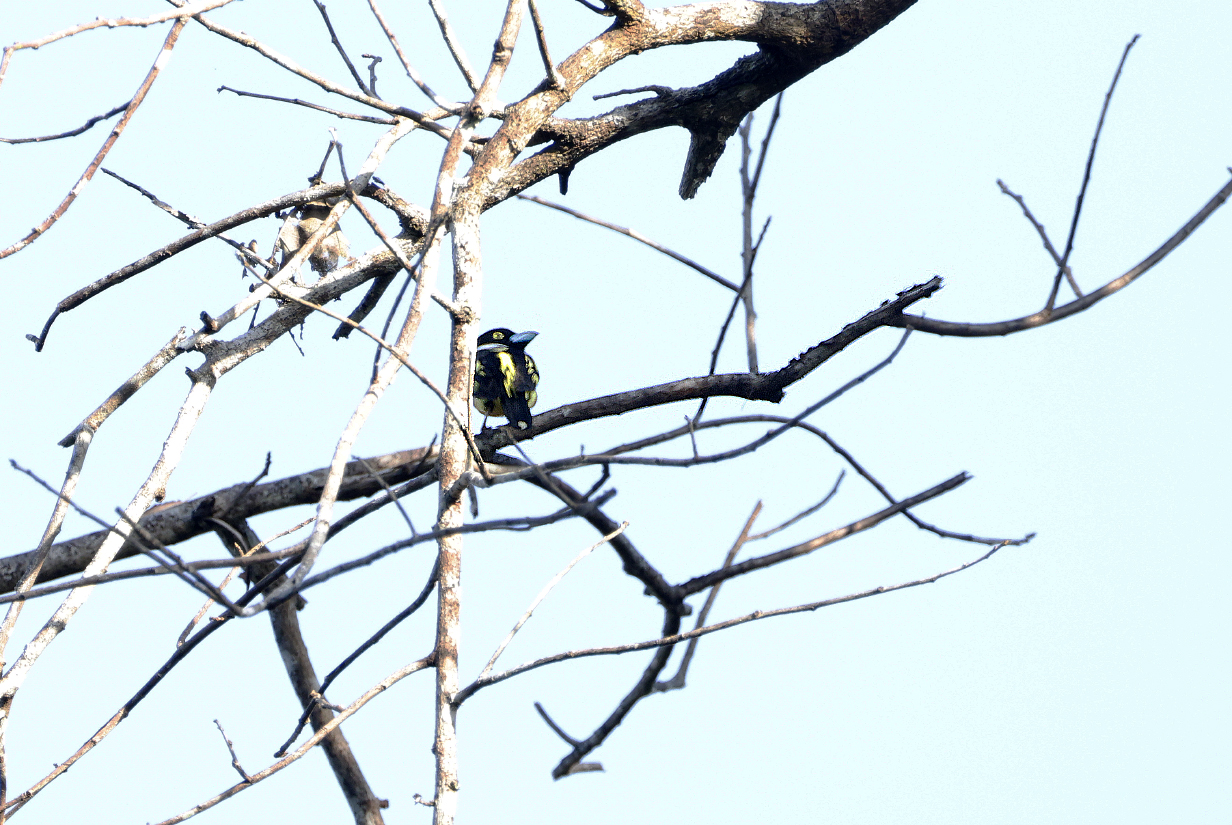
Black-and-yellow broadbill (This is one of the worst pictures of the trip, included only to record that I got my life bird.)
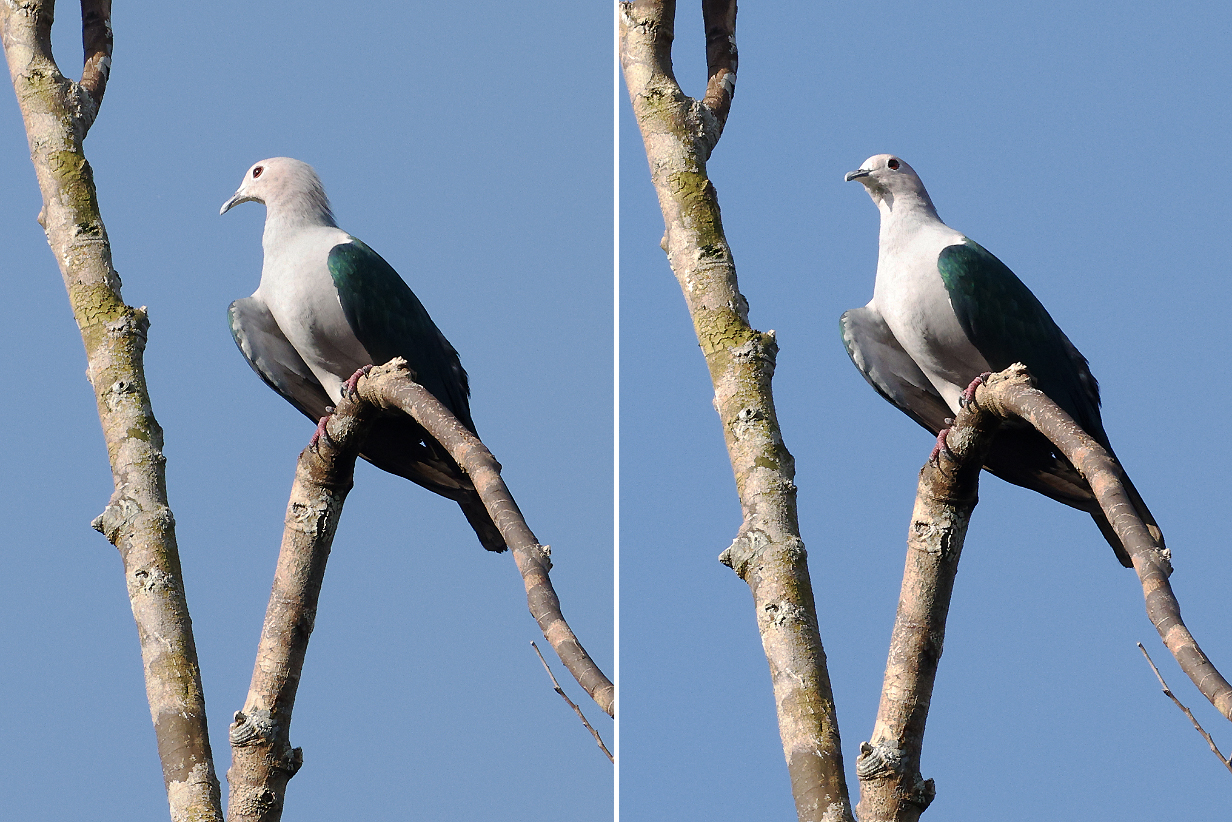
Green imperial pigeon
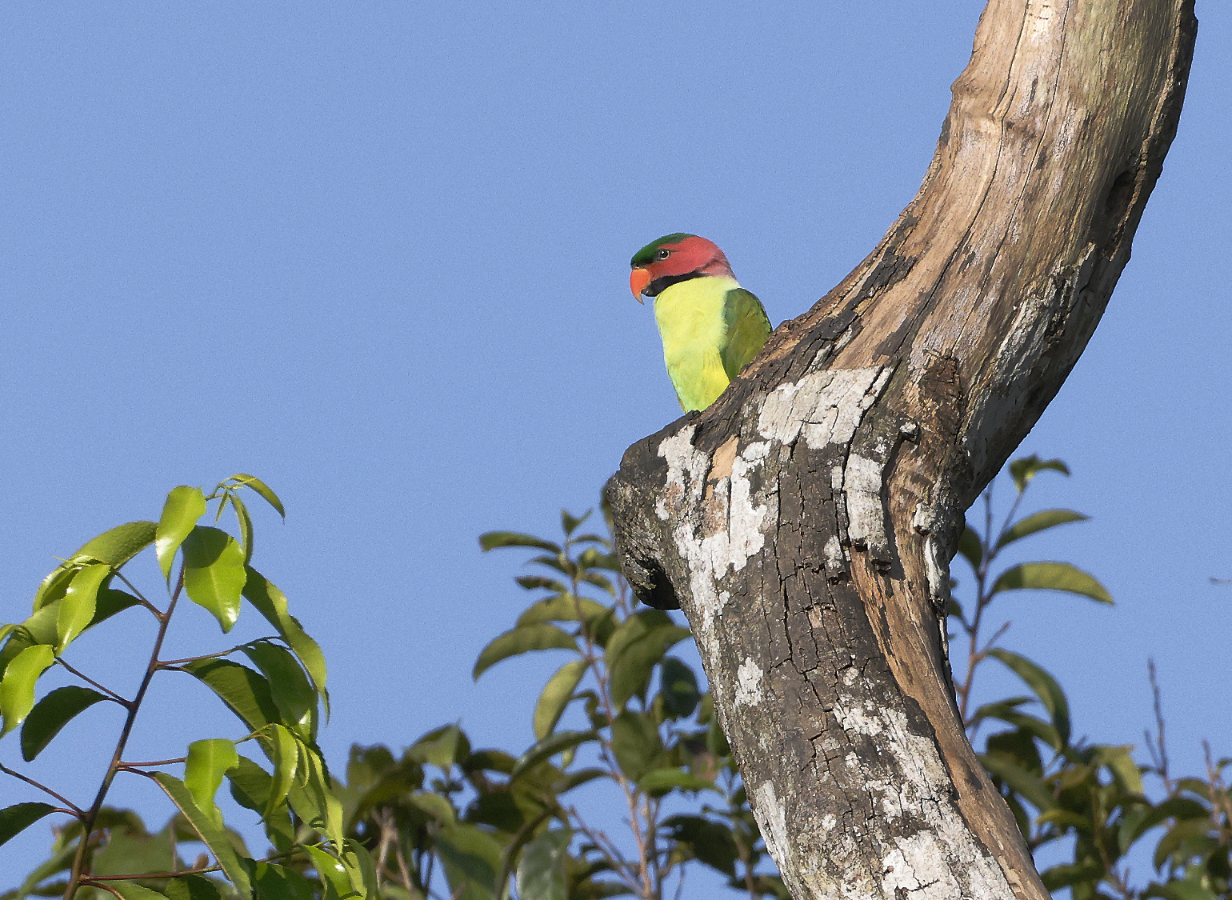
Long-tailed parakeet -- not especially close, but seen in wonderful weather
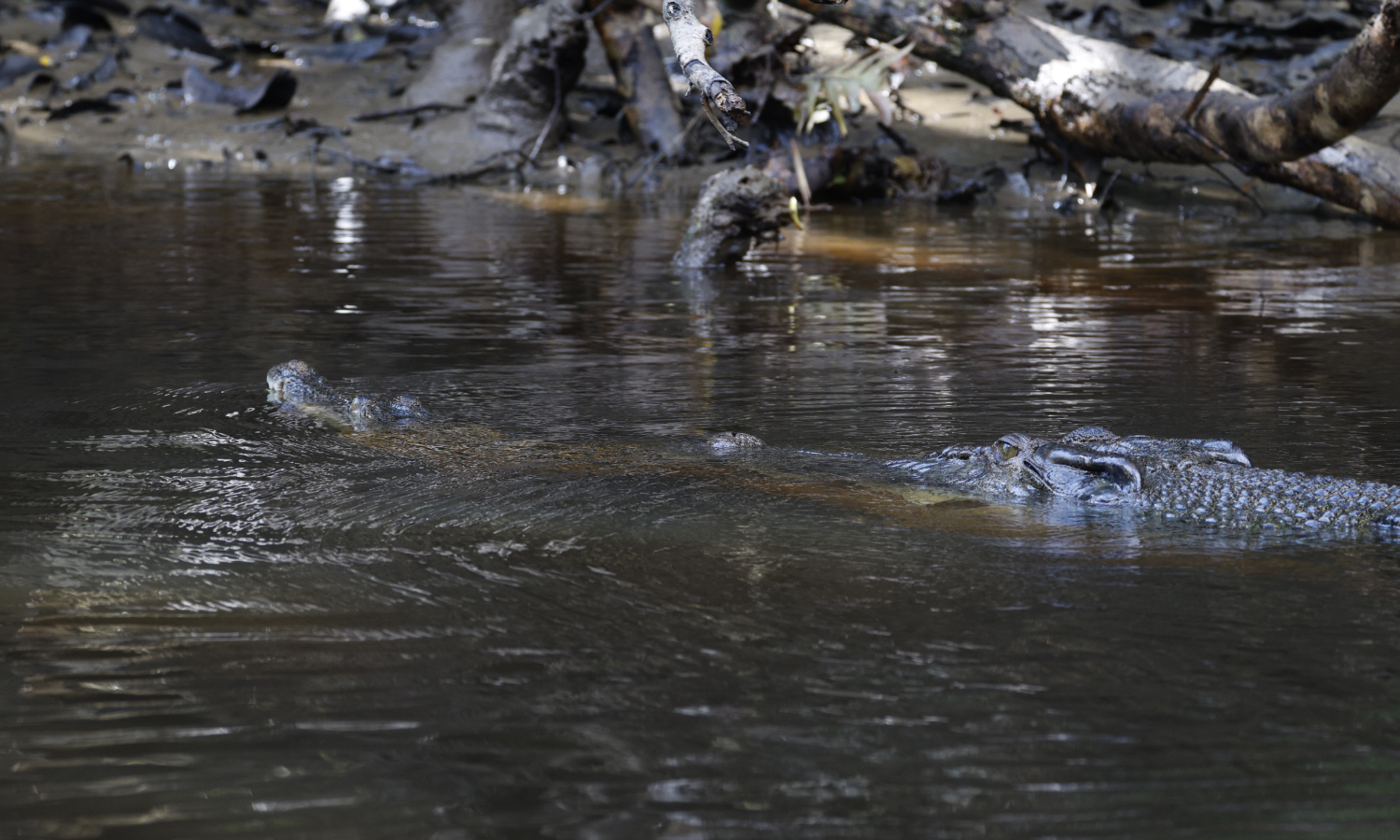
What happened next was the supreme drama of the trip. Our first view is shown here ... when we did not quite understand yet what was happening. It looks like a big crocodile is chasing a smaller one. In fact, as we see in the next picture, the big croc already has the back half of the smaller one locked in its jaws.
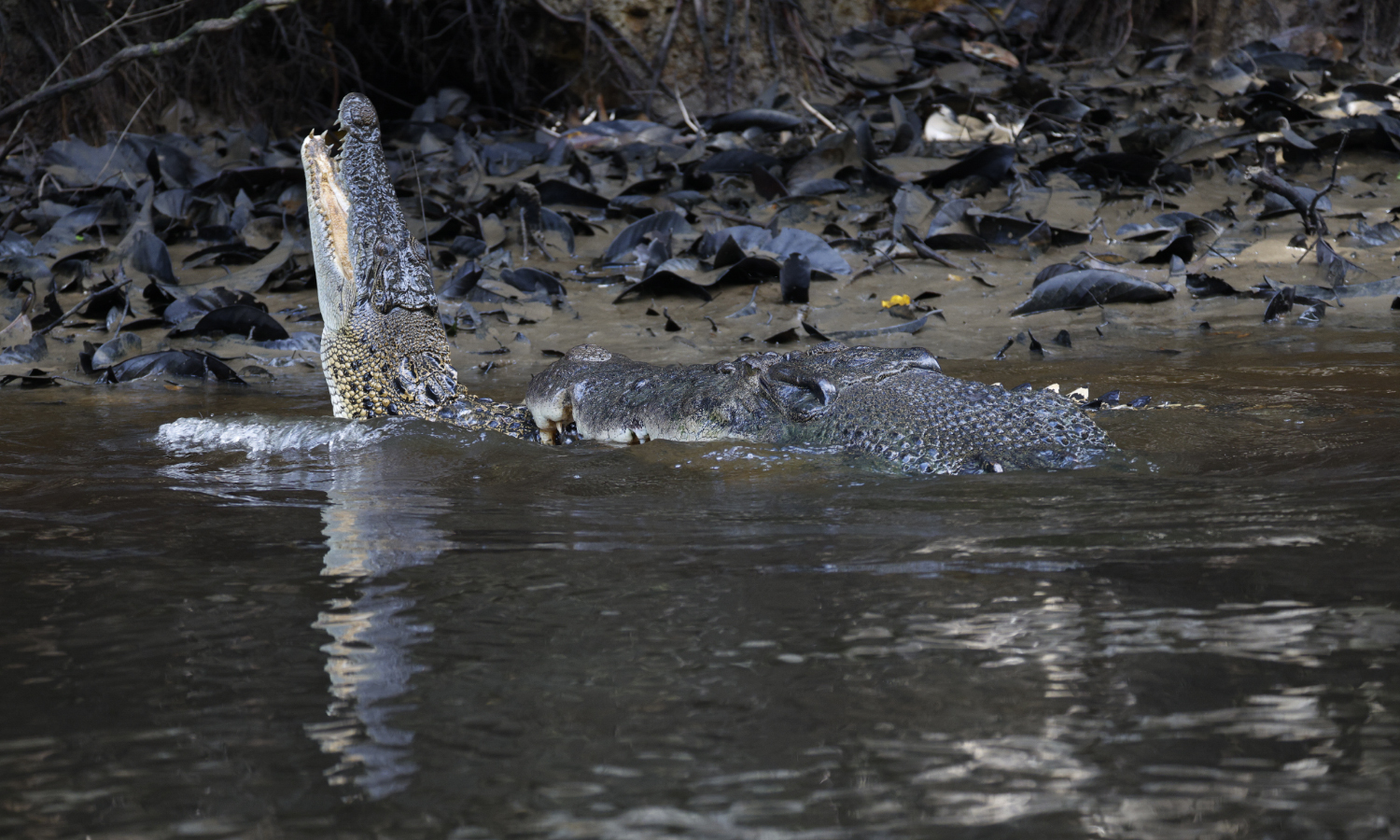
As the big croc pushed them both toward shore, it became clear that it had essentially swallowed the back half of the smaller crocodile. A mighty struggle was in progress.
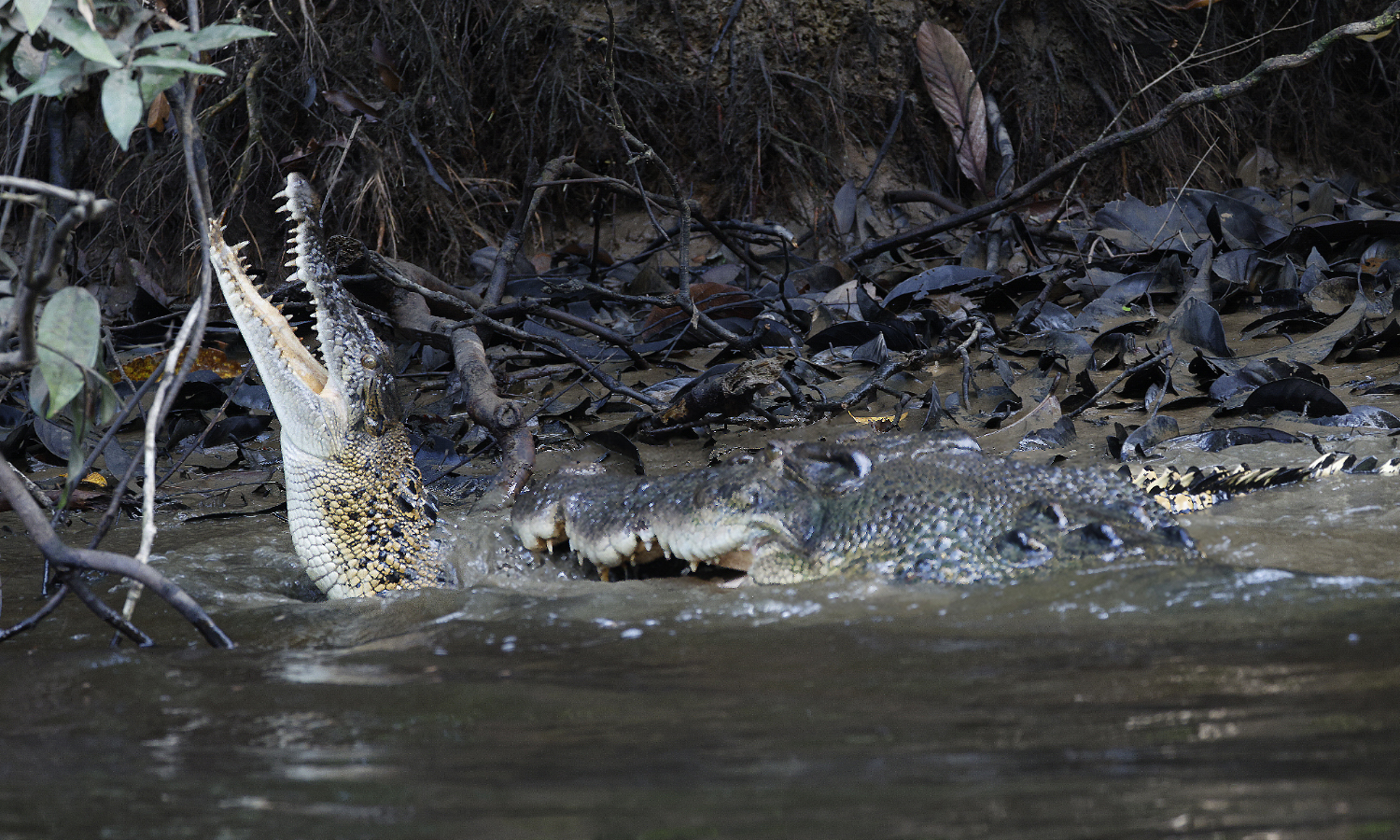
The smaller croc fought back as well as it could. Several times, it twisted its body backward 180 degrees and bit the "lip" of the bigger croc in its sharp teeth, hanging on tenaciously. This is shown in the movies that follow:
I tried to capture the battle with in-camera video. Three such videos are shown here, here, and here. The videos are not very good -- (1) it is hard to hold the camera and 800 mm lens steady in a rocking boat; (2) the camera does not know where to focus along the line of sight when there are interving branches, and (3) I don't know what's going to happen, so I have to be lucky to catch moments of action. Because of (2), focus fails several times. I do not have good video editing software to (e. g.) remove out-of-focus bits. Anyway, I kept videoing through several vicious shakes by the big croc of the smaller one until it slowly slipped back into deeper water, finishing with a last thrashing before both of them vanished. Given that crocs can stay underwater for a long time, we did not wait to see the end game. In truth, it is hard to feel optimistic for the smaller croc. Although it struggled mightily for as long as we watched this unique and spectacular drama.
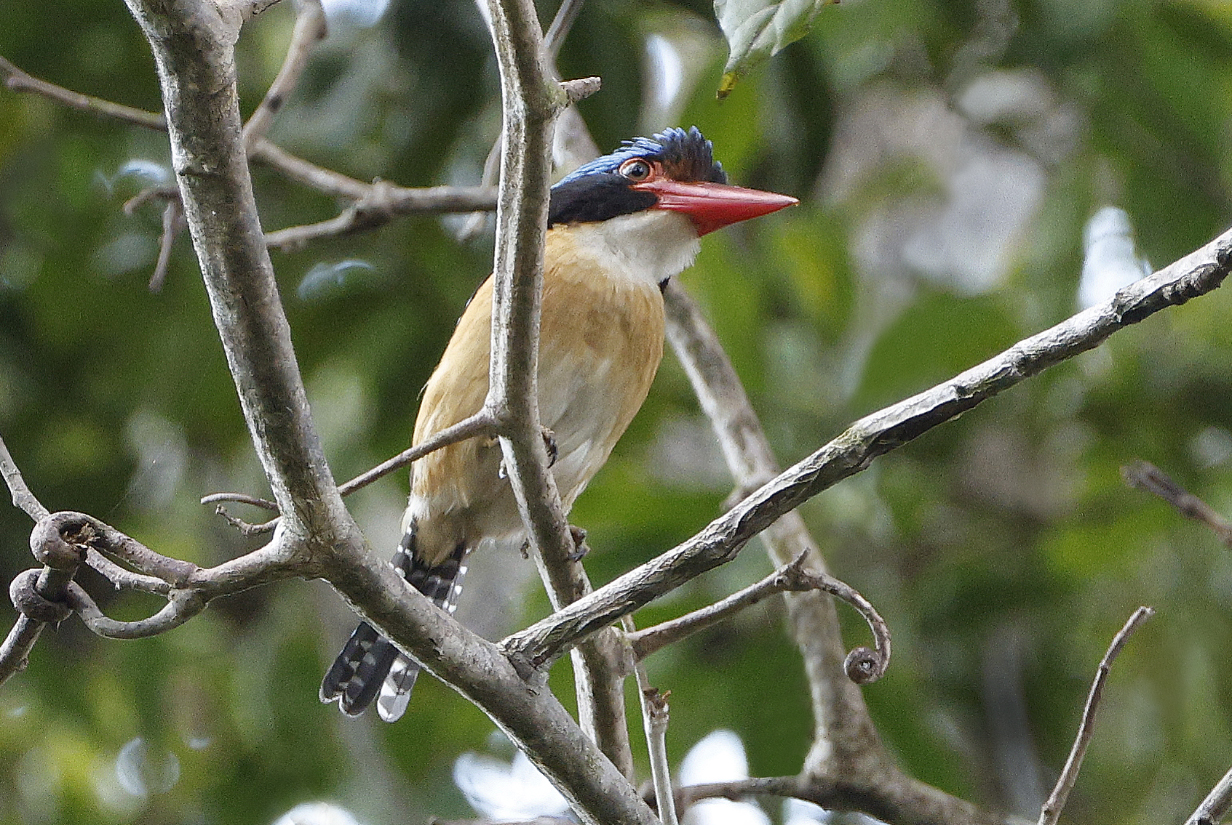
Banded kingfisher (This is my life bird, but our view and this picture do not remotely do justice to this spectacular bird. The back of his neck is red, like his forehead, here, and his back and tail are strongly banded blue, black, and white.)
March 25 PM: Bornean Pygmy Elephants Crossing the Kinabatangan River
This afternoon, we took a long boat ride downstream to see Bornean pygmy elephants, who were reported to be crossing the river. These elephants are rare: the world population is estimated to be ~ 1500 individuals. The canonical suggestion is that they are a Bornean endemic subspecies, Elephas maximus borneensis, of the Asian elephant, genetically isolated from the rest of Asia by sea level rises ~ 300,000 years ago. This is not universally accepted; there is some possibility of interbreeding with other Asian elephants, e. g., captive elephants presented to the Sultan of Sulu in 1750 by the East India Company and later set free in northern Borneo.
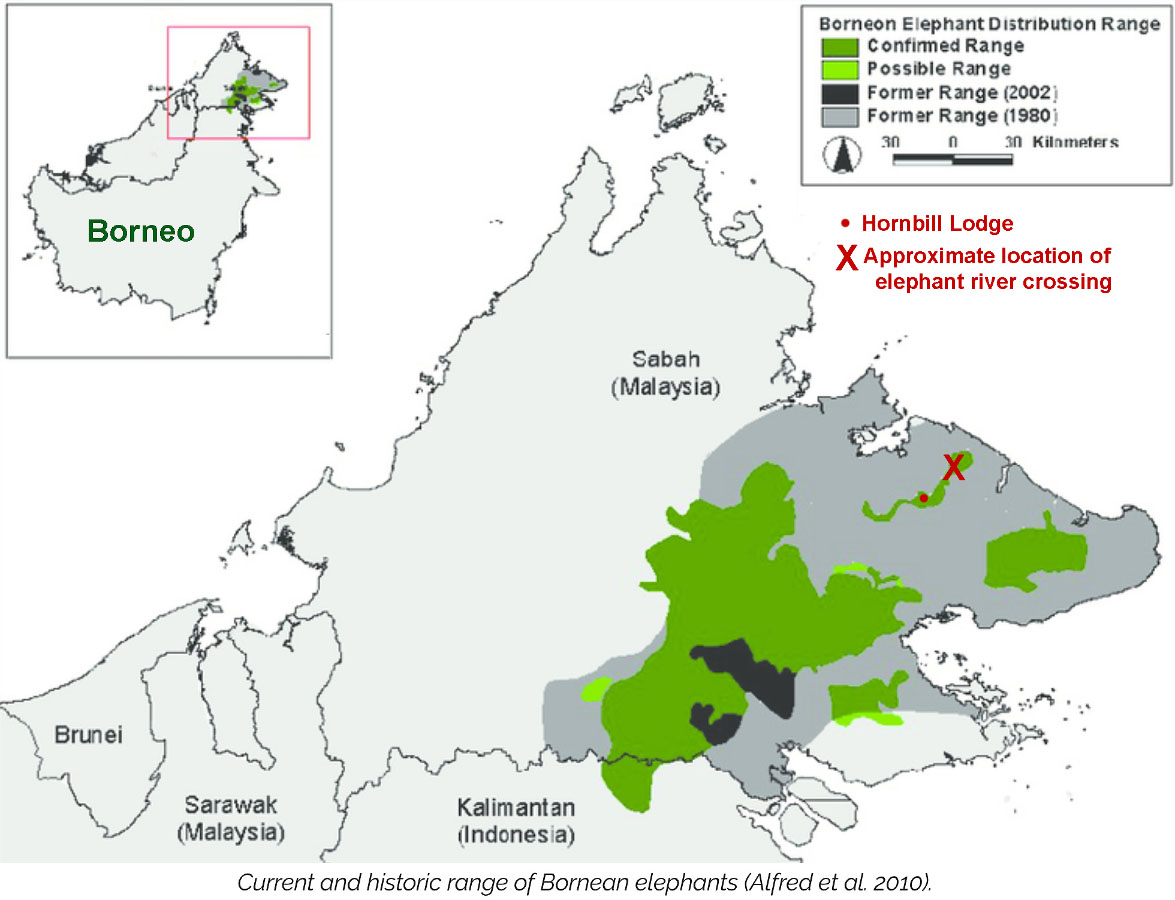
This map from Global Conservation shows the approximate range of Bornean elephant. I have added the location of Hornbill Lodge (fairly accurately) and the approximate location of where we saw elephants crossing the river (less accurately, based on how long we sailed).
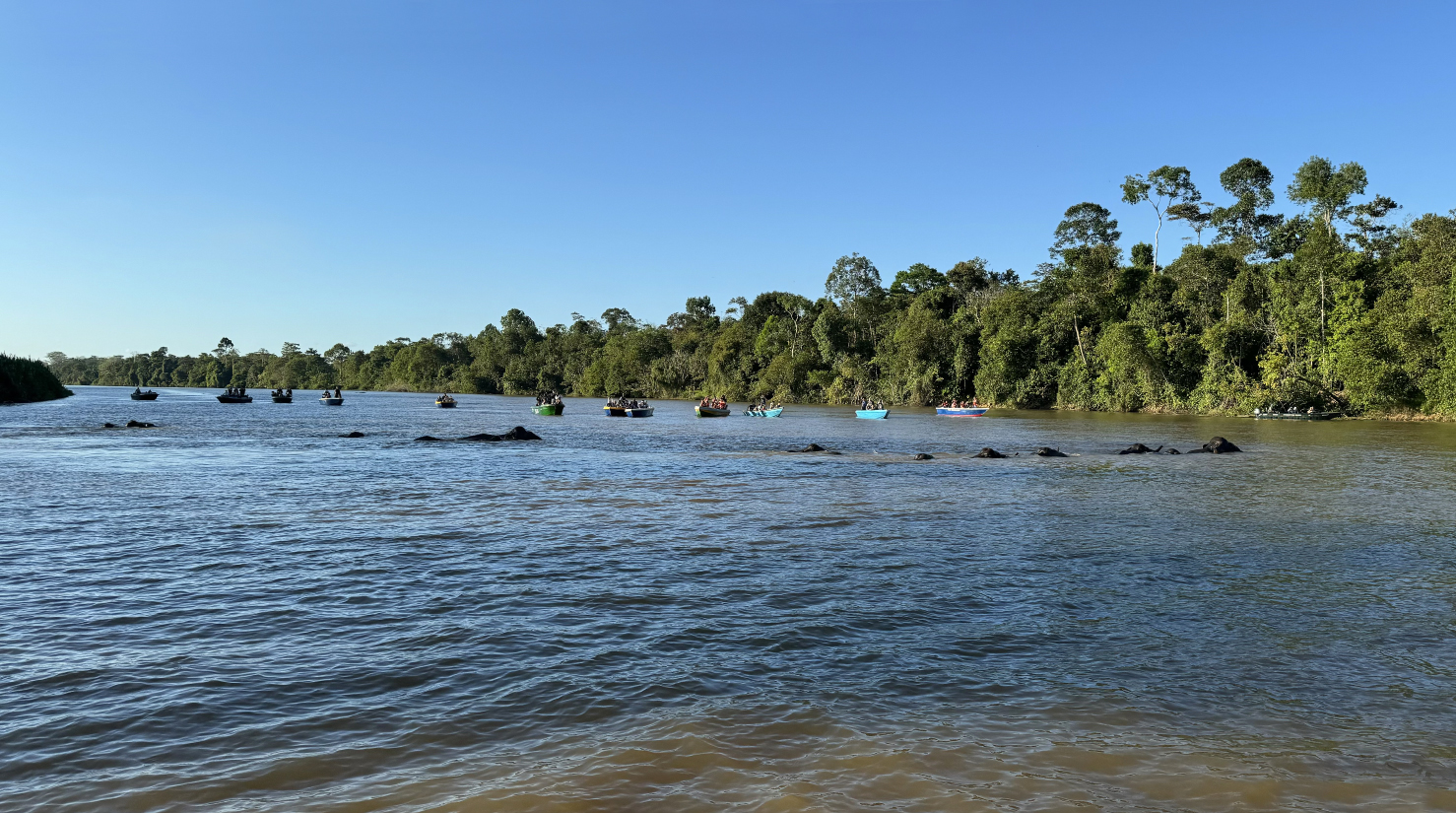
We found the elephants based on radio reports from other lodges. It was a long and, for me, uncomfortably strenuous (cold and windy) roughly 2-hour ride downstream, running about as fast as the motor boat could comfortably sustain. This was the view when we arrived. Elephants were swimming across the river, surrounded downstream and (including us) upstream by boats from many lodges. It was a "feeding frenzy" of tourists much like the ones that we have experienced at tiger lodges in India and as I expect to experience in East Africa later this year. For me, it felt distasteful. I have to admit: I feared that our presence harassed animals that are intrinsically shy, that avoid people, and that were already stressed by the need to cross a river, presumably at least in part because habitats shrink as our human presence expands. Swimming across a river is not especially hard for them. But crocodiles must be a threat to youngsters. Anyway, I felt uncomfortable about our presence. A few tour participants felt likewise. Still, a vote by all of us would resoundingly have favored our opportunity to see these iconic elephants: in the end-of-trip vote to determine the most valued experiences, the elephant crossing scored very high. I would have preferred not to add to the elephant's evident distress -- see below. But all those other boats would still have been there. Perhaps only I would have preferred to see more new birds.
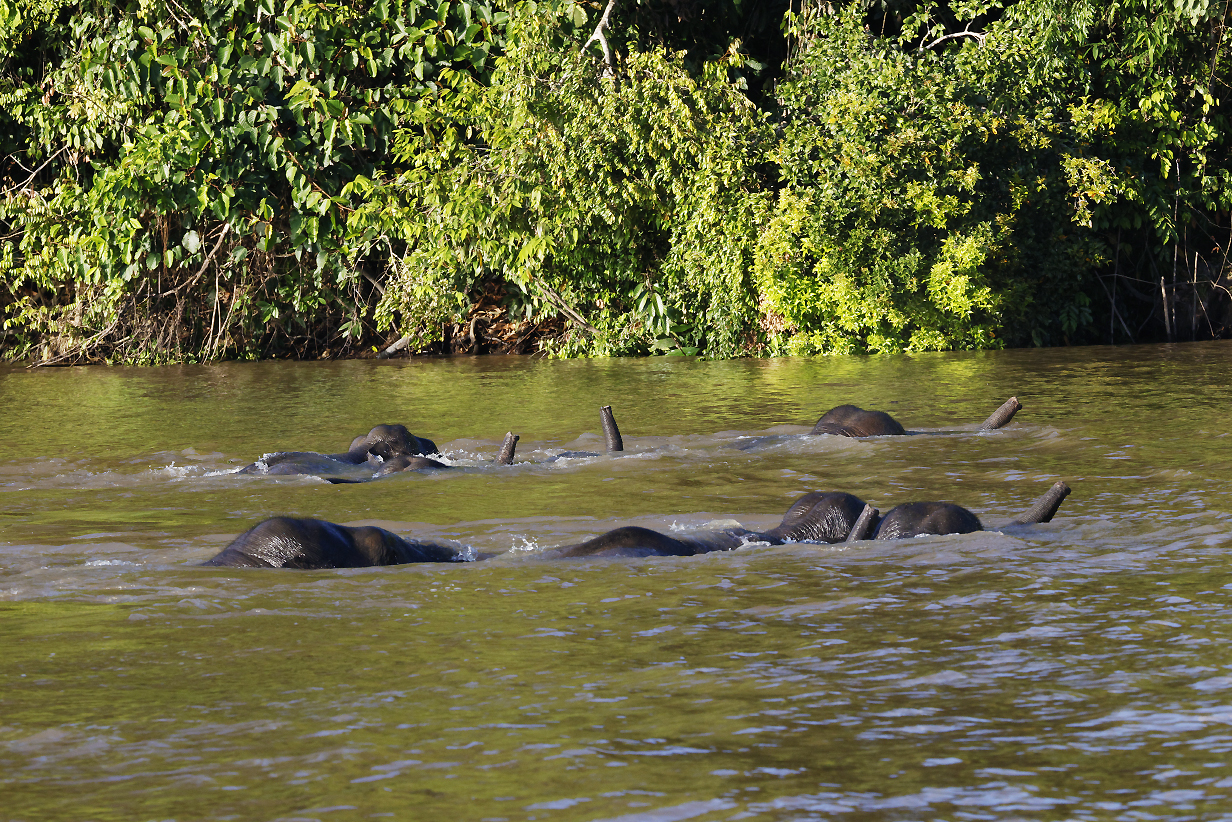
Elephants approaching the far shore, snorkels up
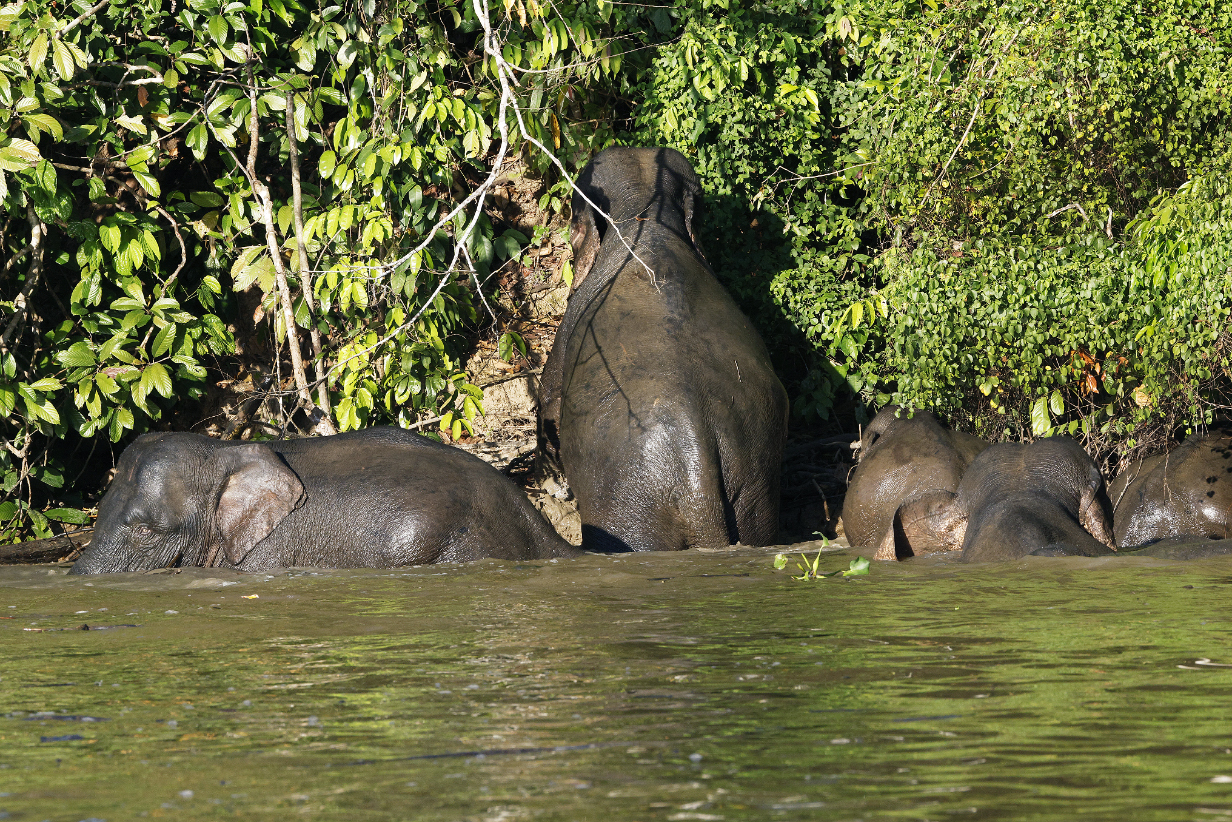
Some elephants were lucky enough to arrive where the far shore was nearly flat and easy to access. But others faced a steep and difficult climb or (below) impenetrable tangles. No histrionics were visible. But signs seemed clear that some elephants were in distress.
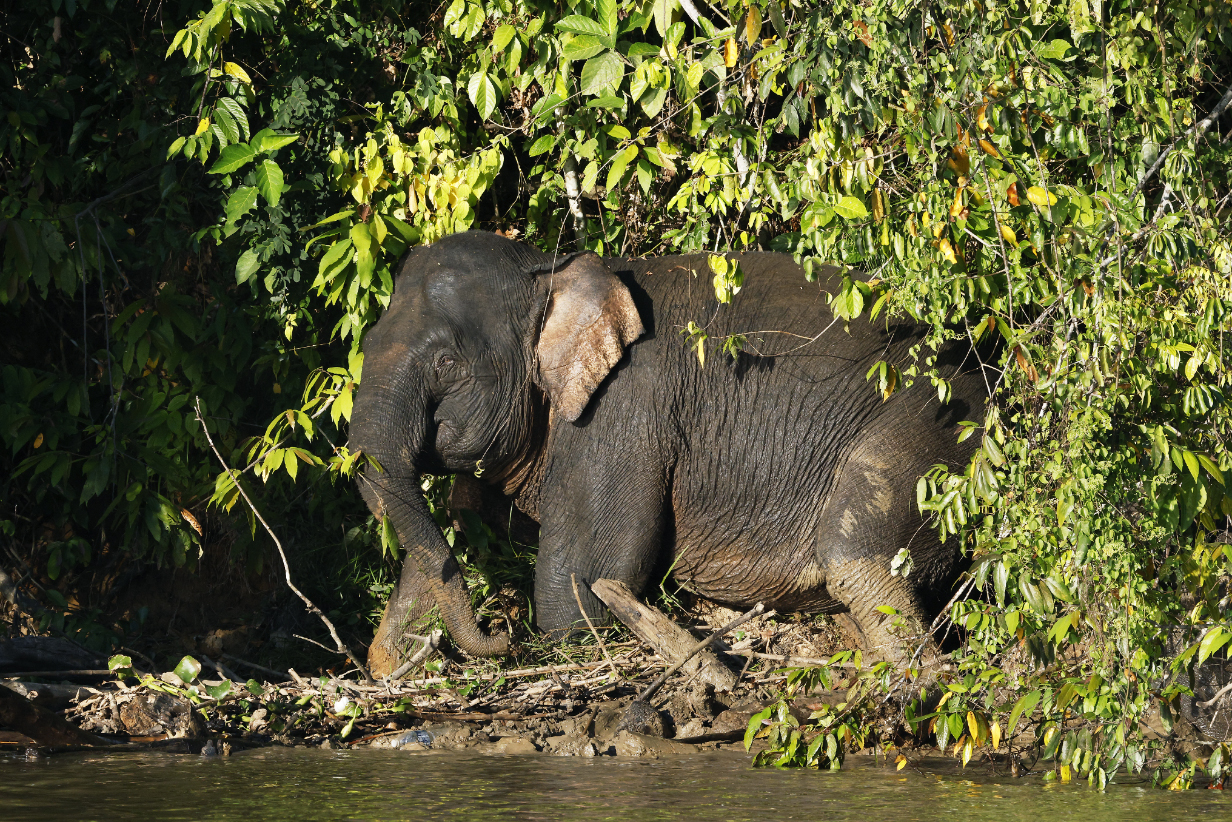
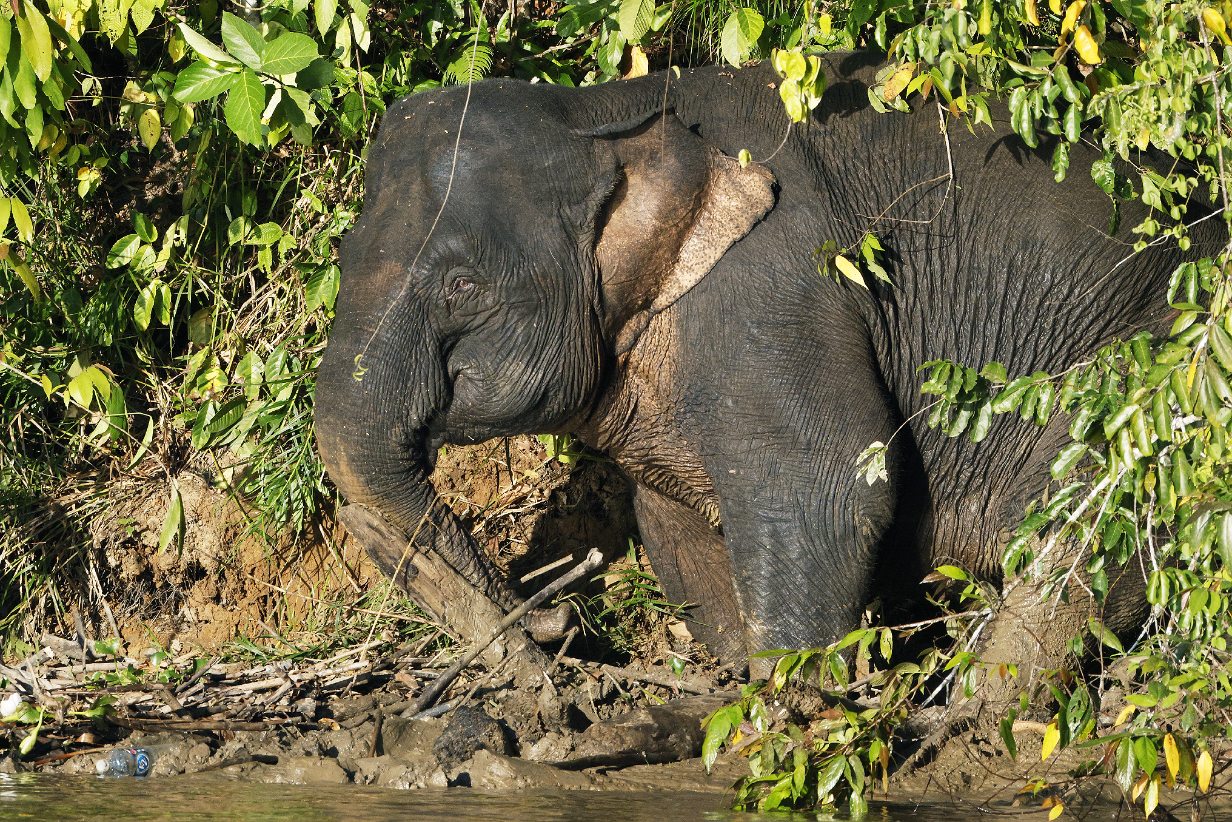
This elephant briefly got tangled up in bushes. She struggled visibly but managed to get loose and disappeared into the trees. I should not overmagnify these problems -- today should not have been an enormous threat. But it can't have been easy, either. Crossing that Kinabatangan River must at some level have been a formidable decision.
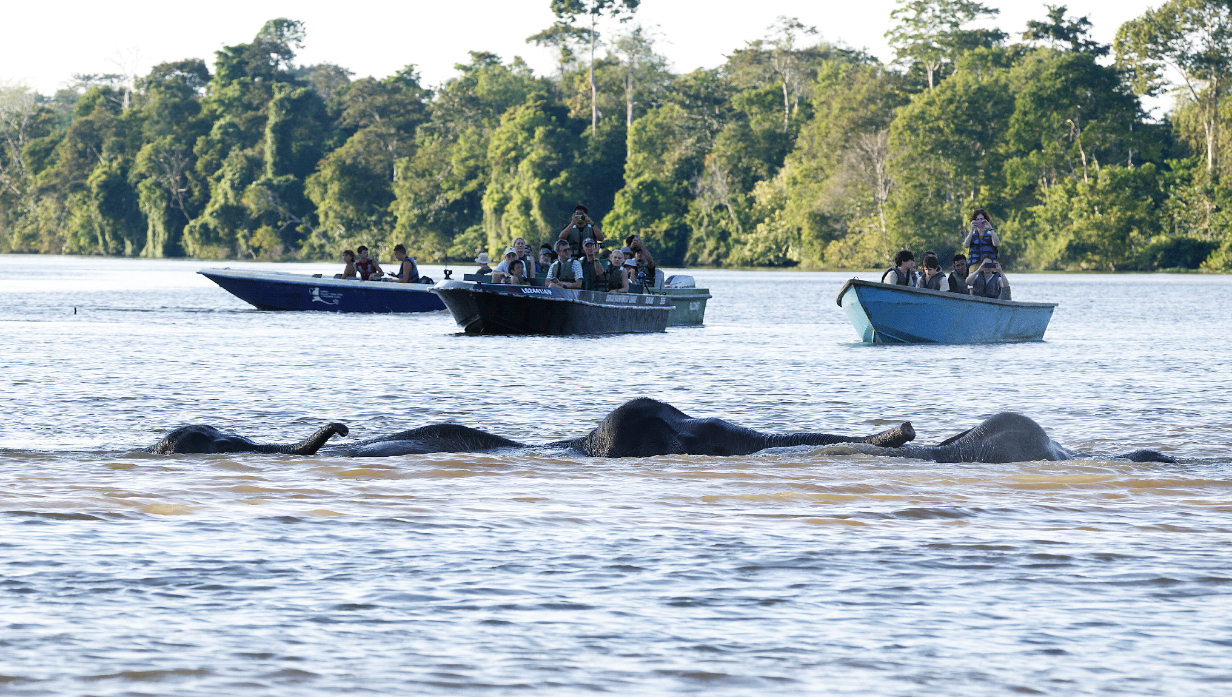
And people continued to crowd around as further groups of elephants crossed the river.
Meanwhile, we left -- we had a long ride back to our lodge in order to get there before dark and before dinner time.
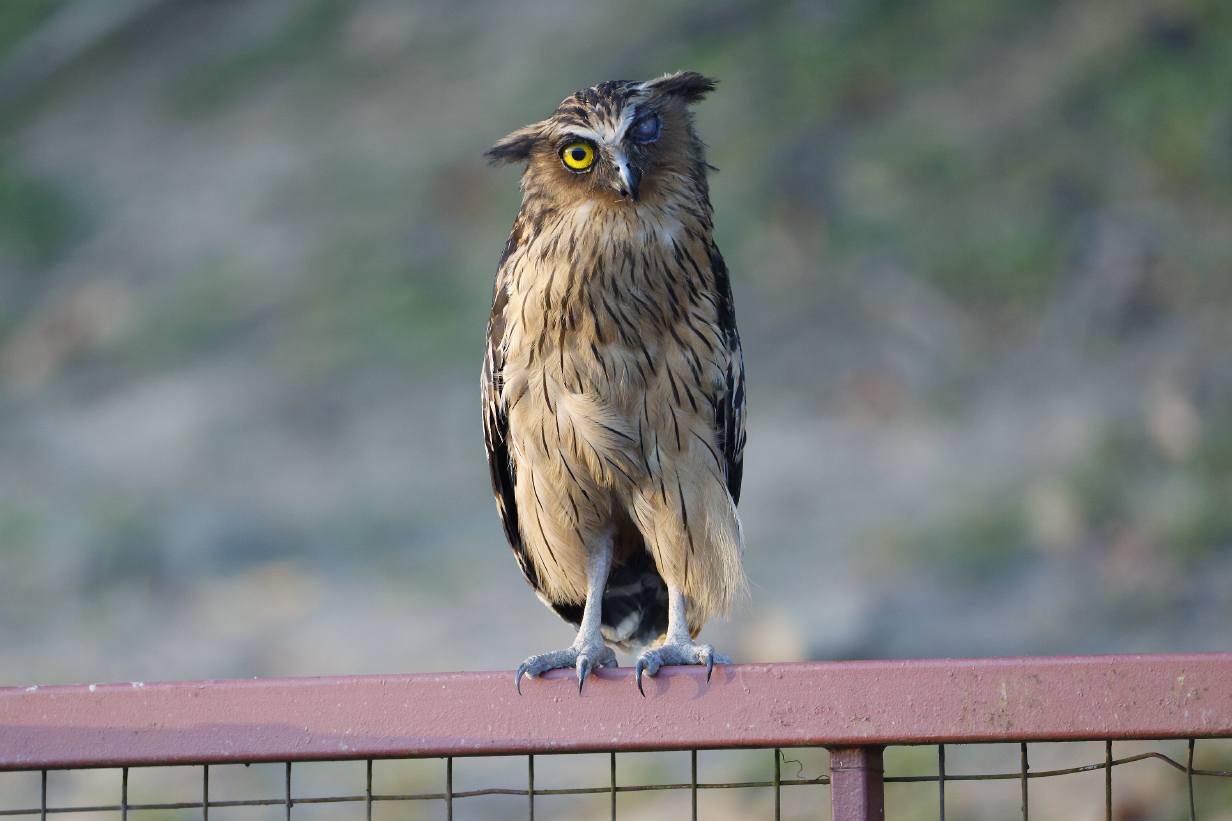
Buffy fish-owl (This species was new in Singapore, last year.)
March 26 AM: Kinabatangan River Boat Ride
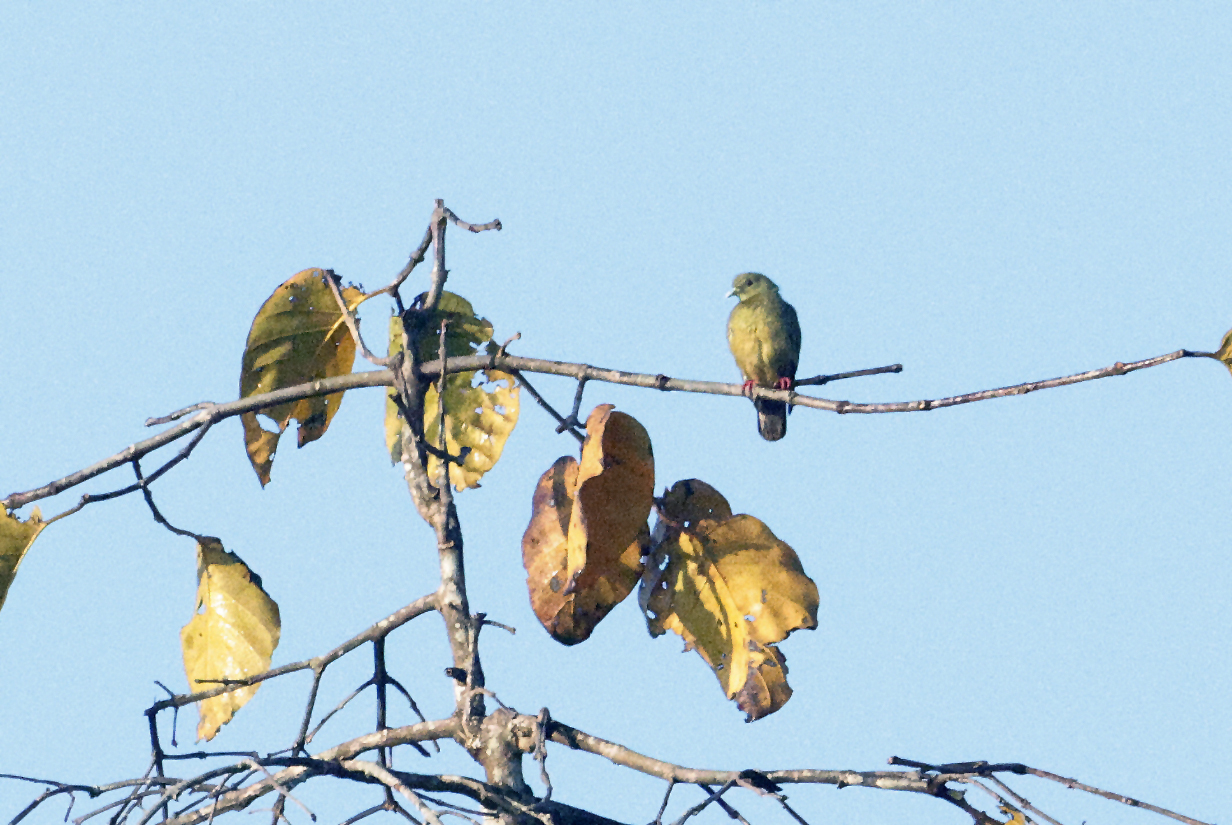
Little green-pigeon (This female -- very far away -- is my life bird.)
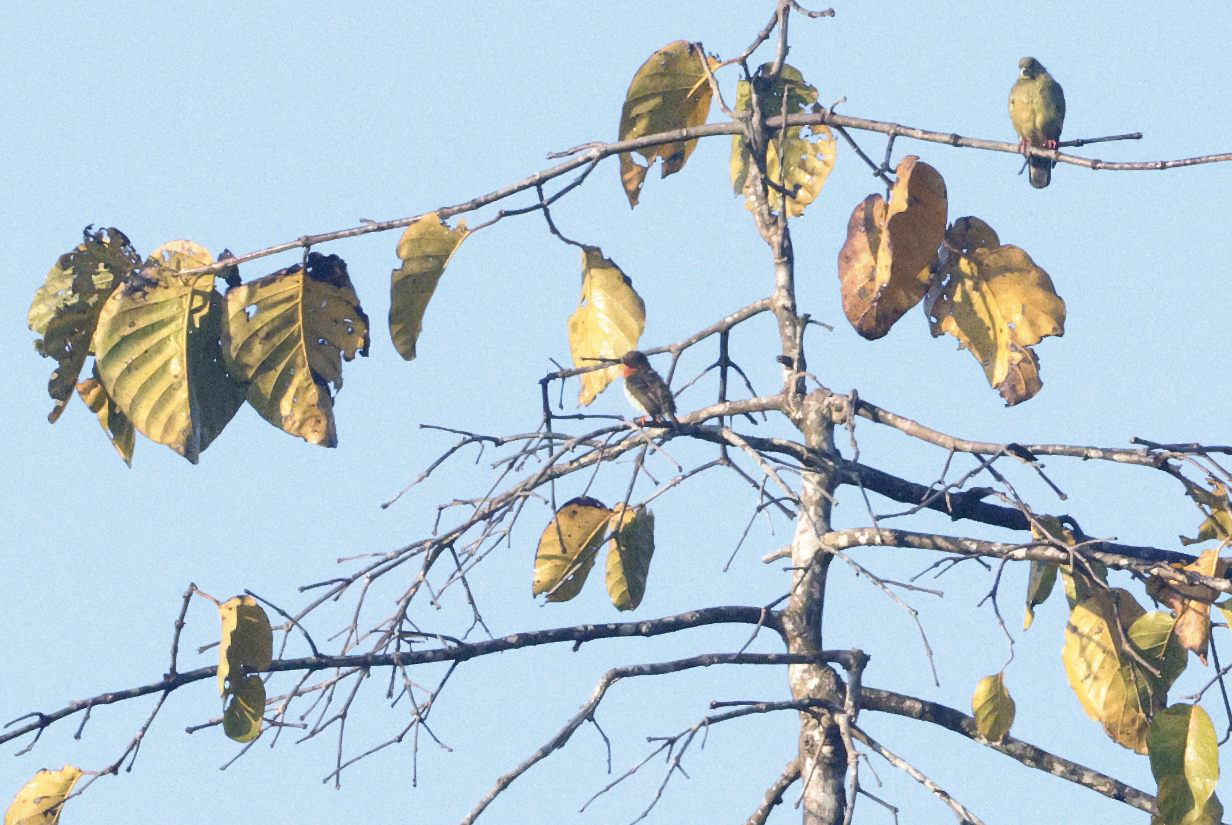
Brown barbet in the same tree as Little green-pigeon at top-right (This is my life bird, seen better in a guide's scope. Main features are brown back, white belly, and red throat: these are actually visible in this very bad picture. The bill is big and chunky and confused here with a background branch. As I noted above: while birding from a boat, we often got life birds very far away.)
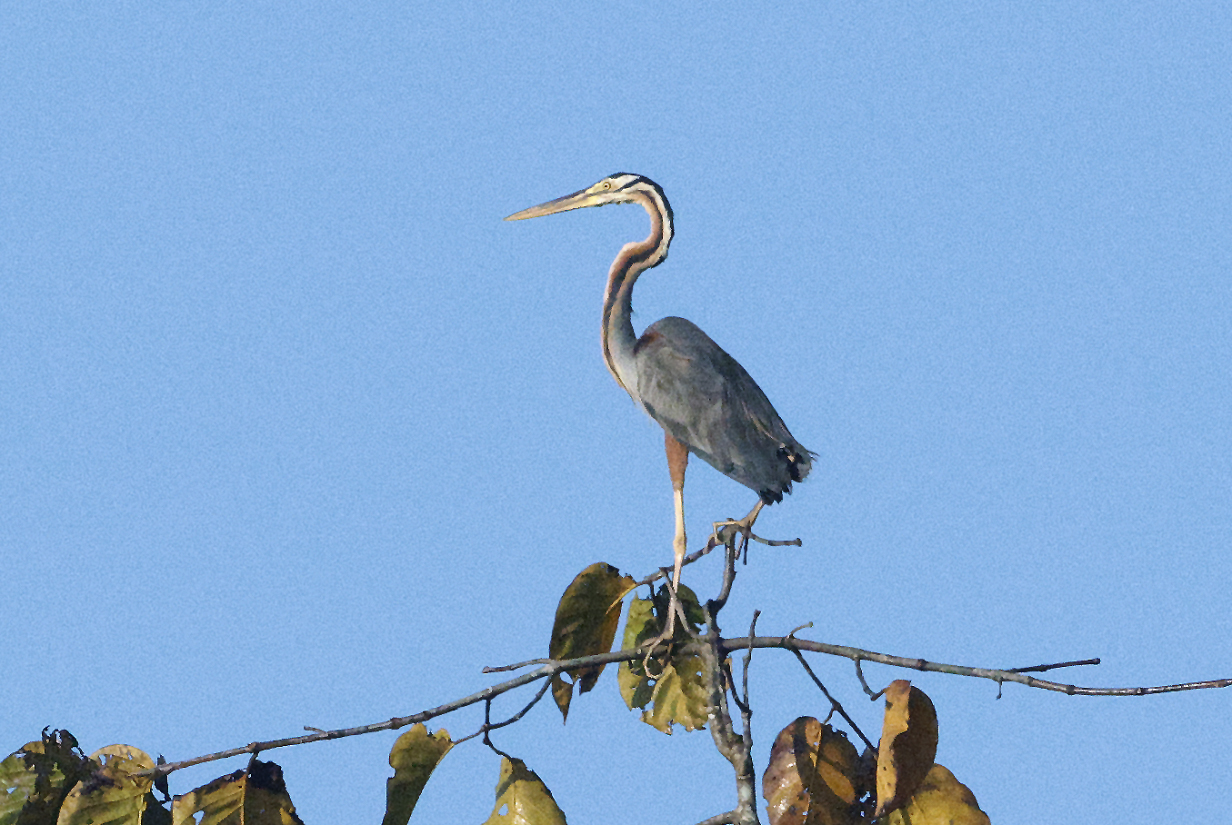
Purple heron (I don't normally include a well known bird that is this far away, but I wanted to see how well the Canon R5 Mark II camera and 200-800 mm lens used at 800 mm do in the circumstances of the above two new birds. Answer: it is far from ideal ... but not too bad.)
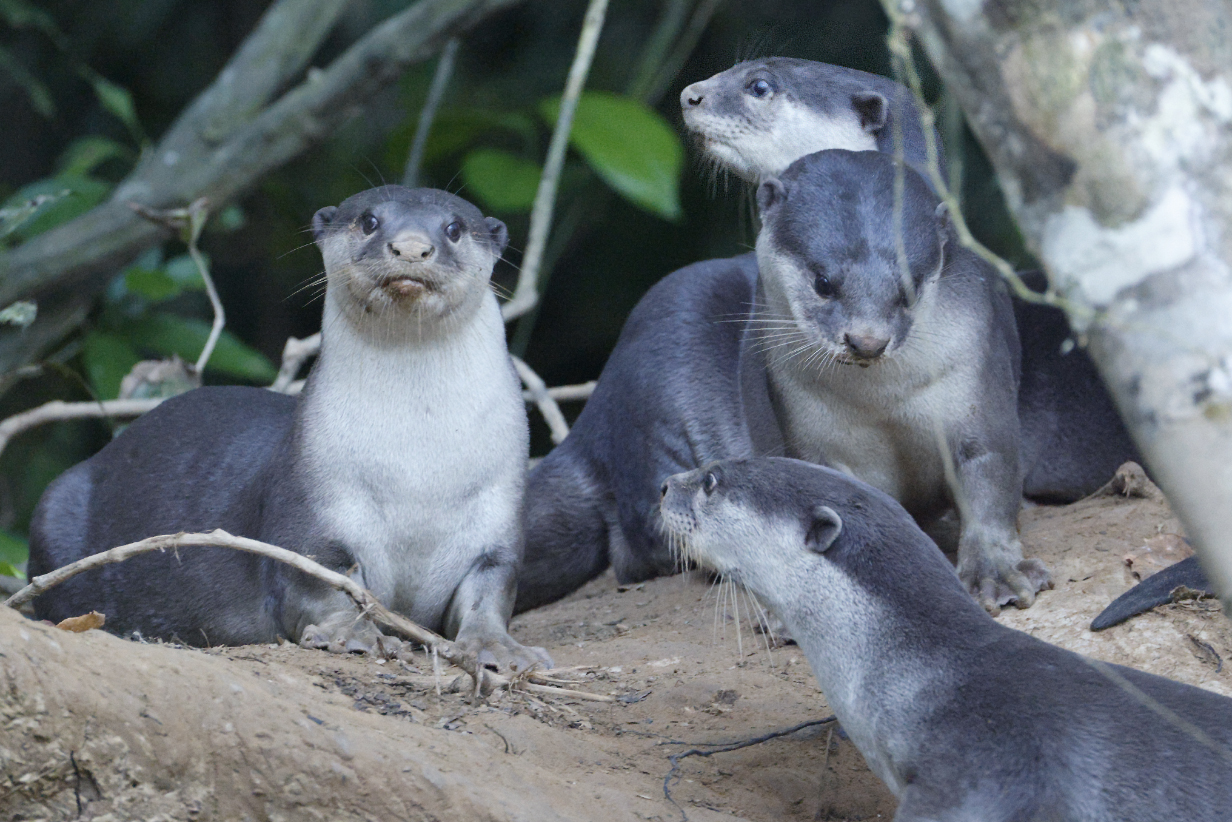
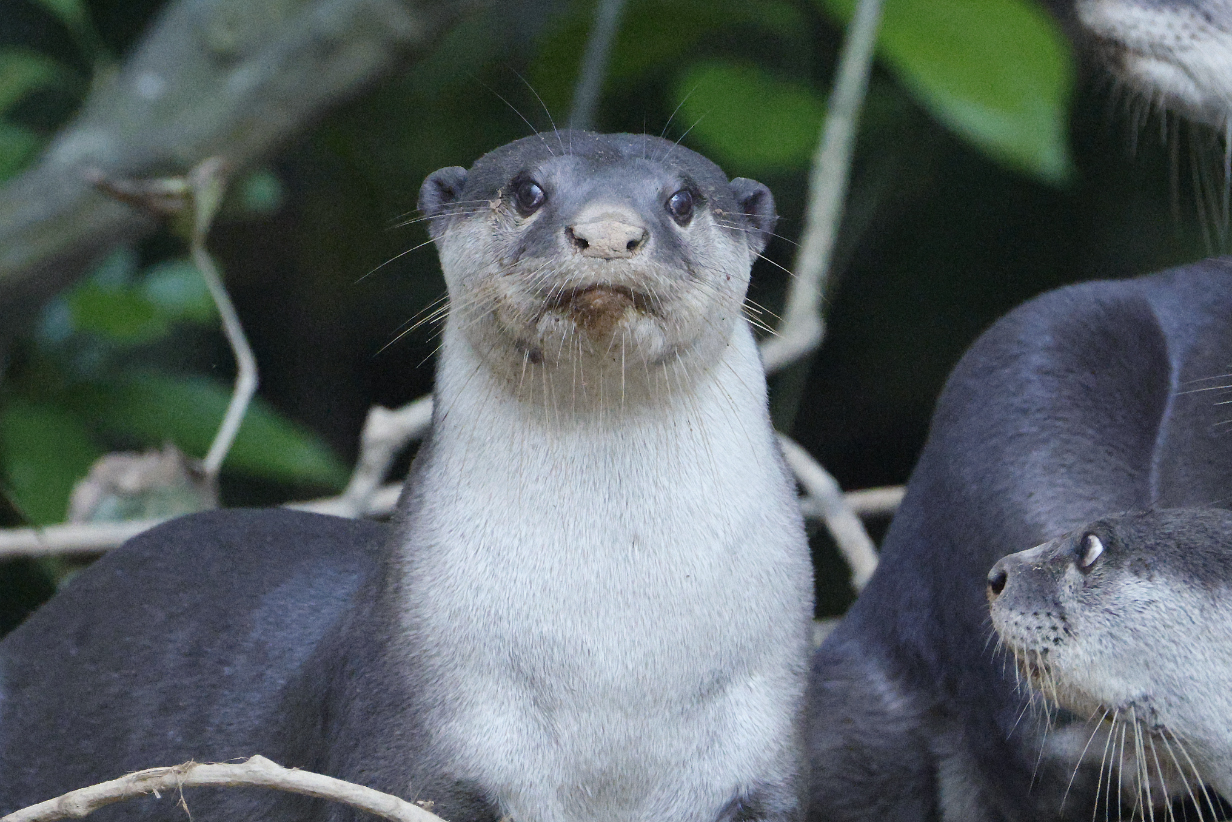
Next we "lucked out" and spotted a "romp" of Smooth-coated otters (Lutrogale perspicillata) -- probably an extended family -- just emerging from a burrowed den. I may anthropomorphise ... but one of them looked distinctly like a leader and the expression on its face looked distinctly like "Yikes!". More and more otters emerged and quickly created an air of busy chaos.
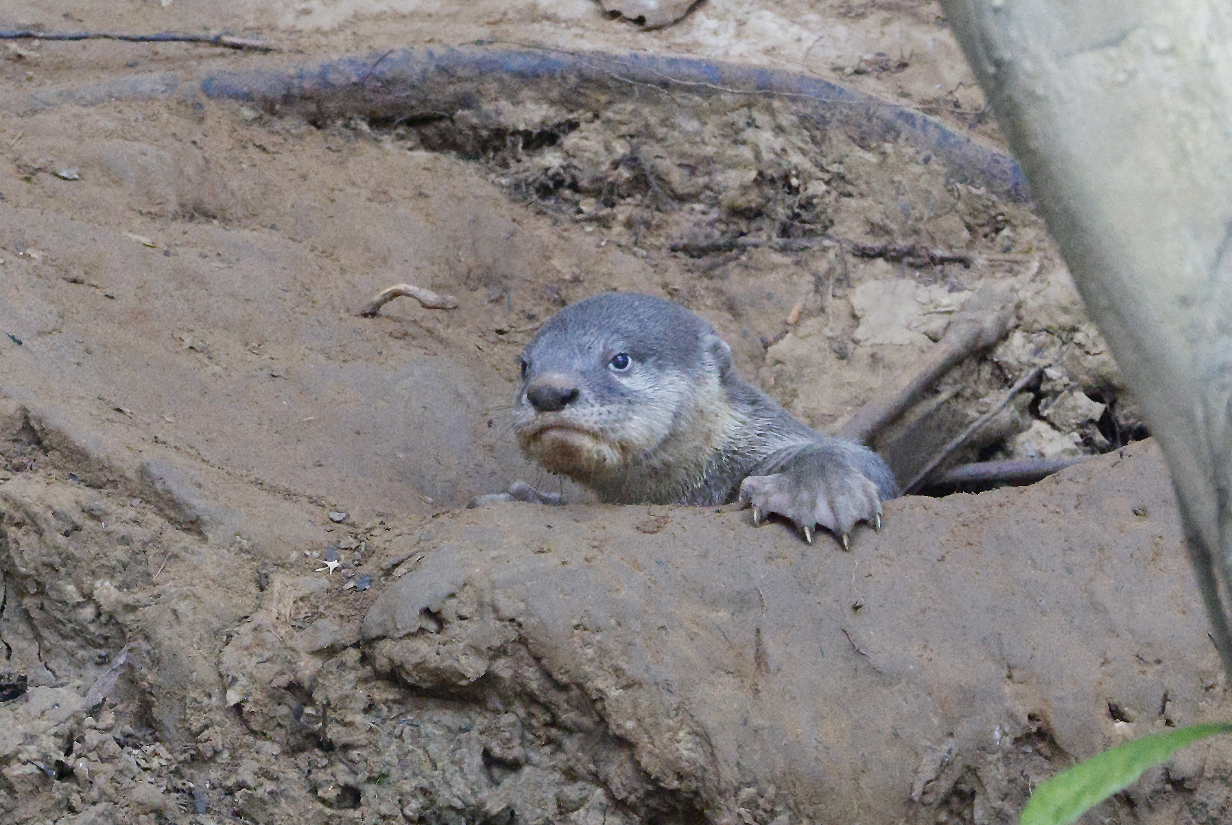
As soon as young otters appeared, the adults started to carry them off. It was difficult for me, at least, not to feel like we intruded on their comfortable lives and gave them the feeling that danger had suddenly appeared and that it was time to move the kiddies to a safer place. I found out later that a few of us had that feeling, whereas others thought that we had had no important impact. In any case, this was another highly valued animal encounter on this trip, rich with remarkable experiences.
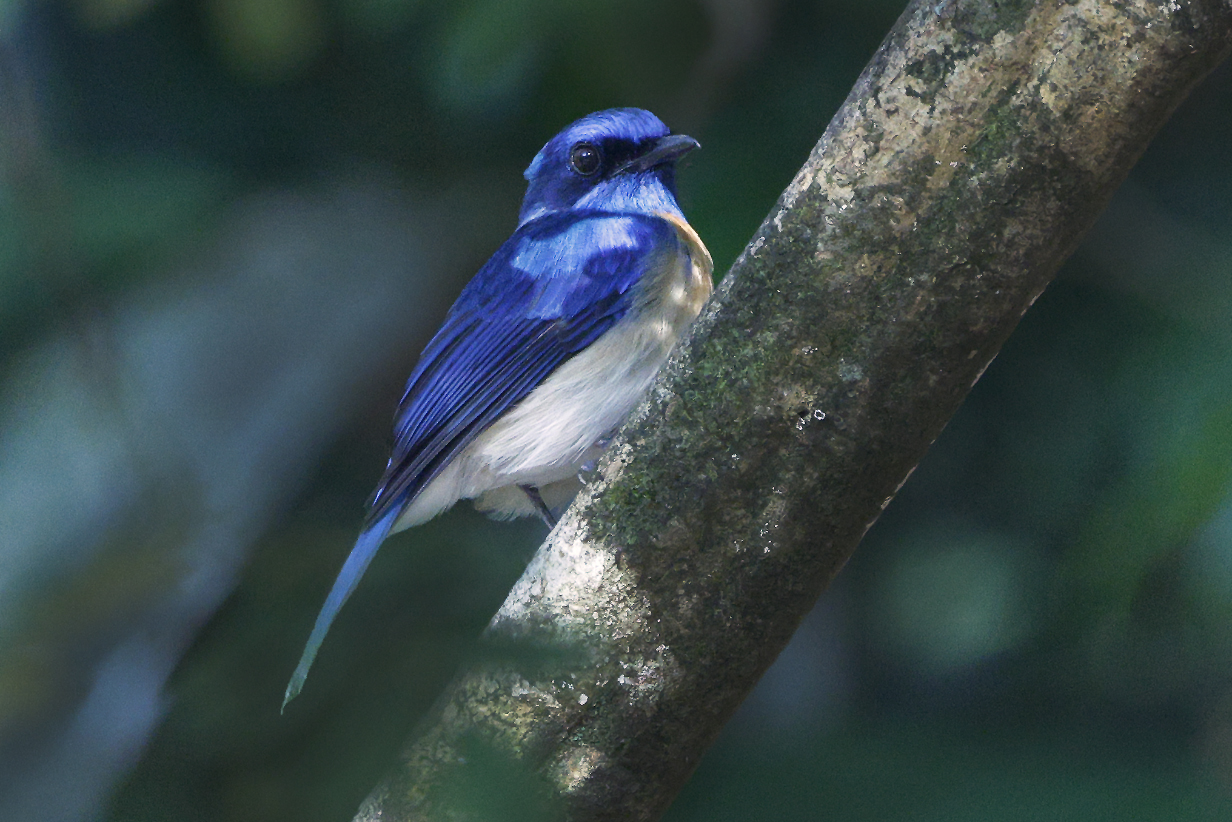
Malayan blue flycatcher (This is my life bird on the shore of the Tenegang River, another tributary of the Kinabatangan River.)
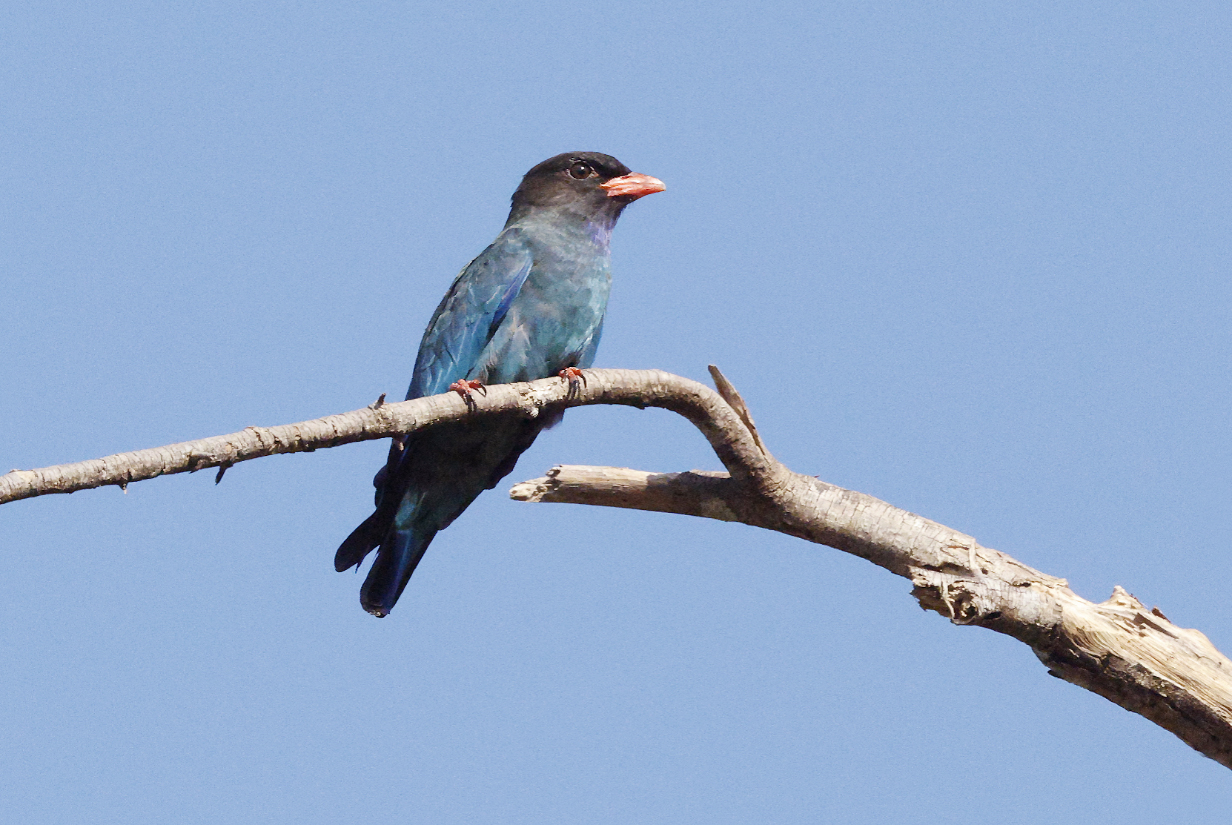
Dollarbird (This is an old friend, seen two decades ago during our first trips to Australia, when we were new to birding. But this is the first time that I got a reasonably good picture.)
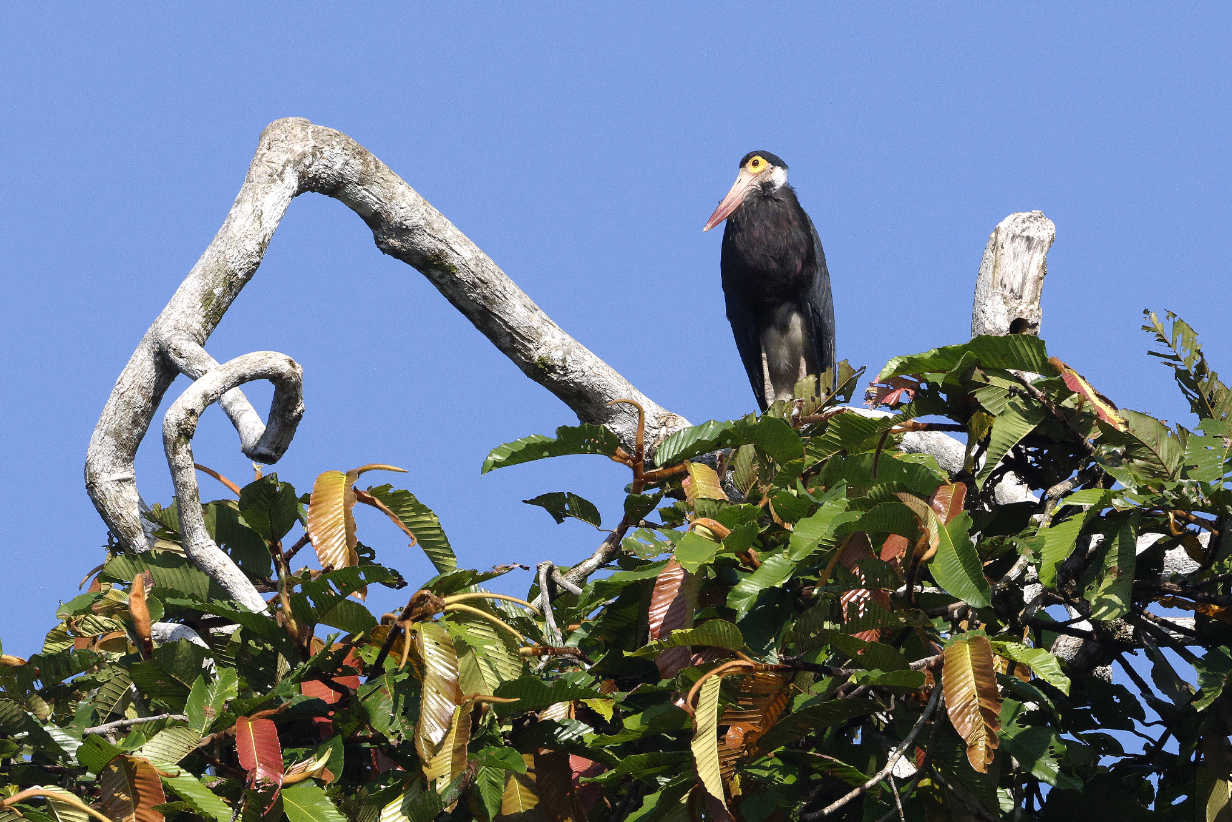
Storm's stork on another perfect day
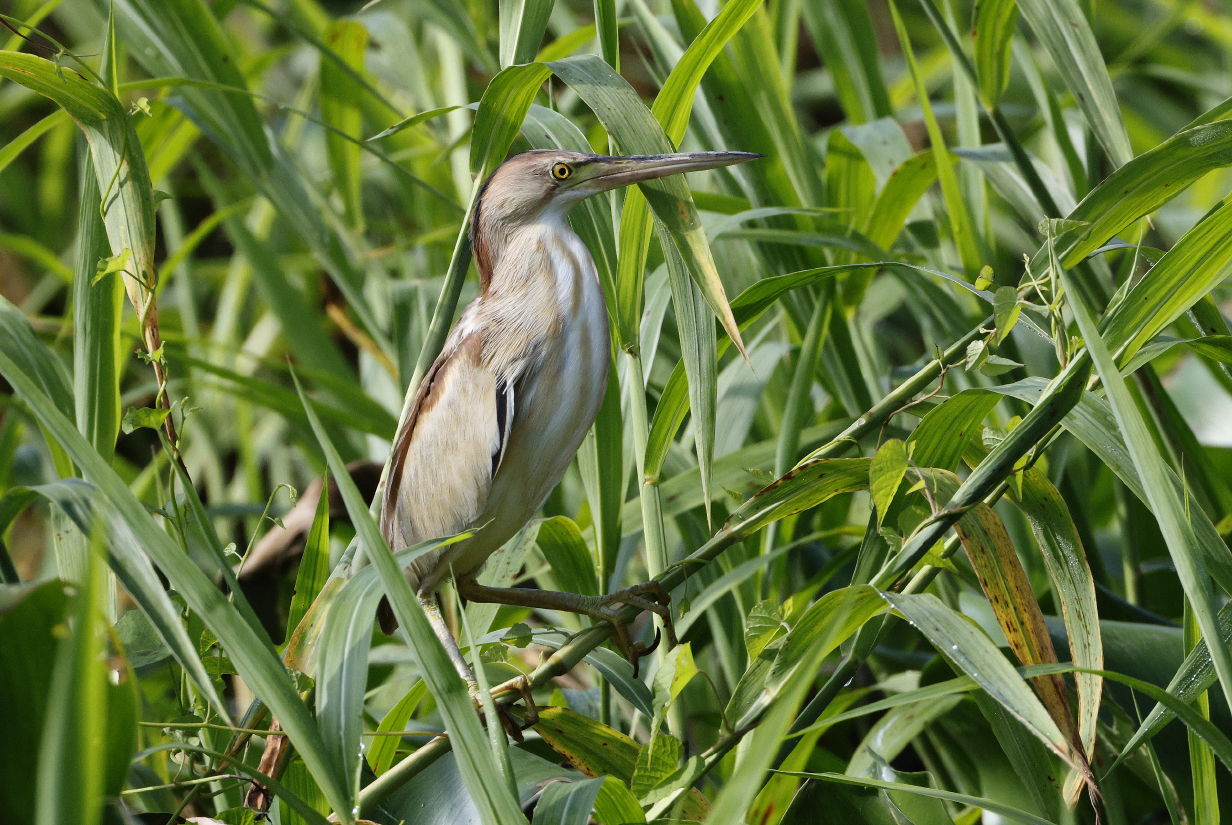
Yellow bittern
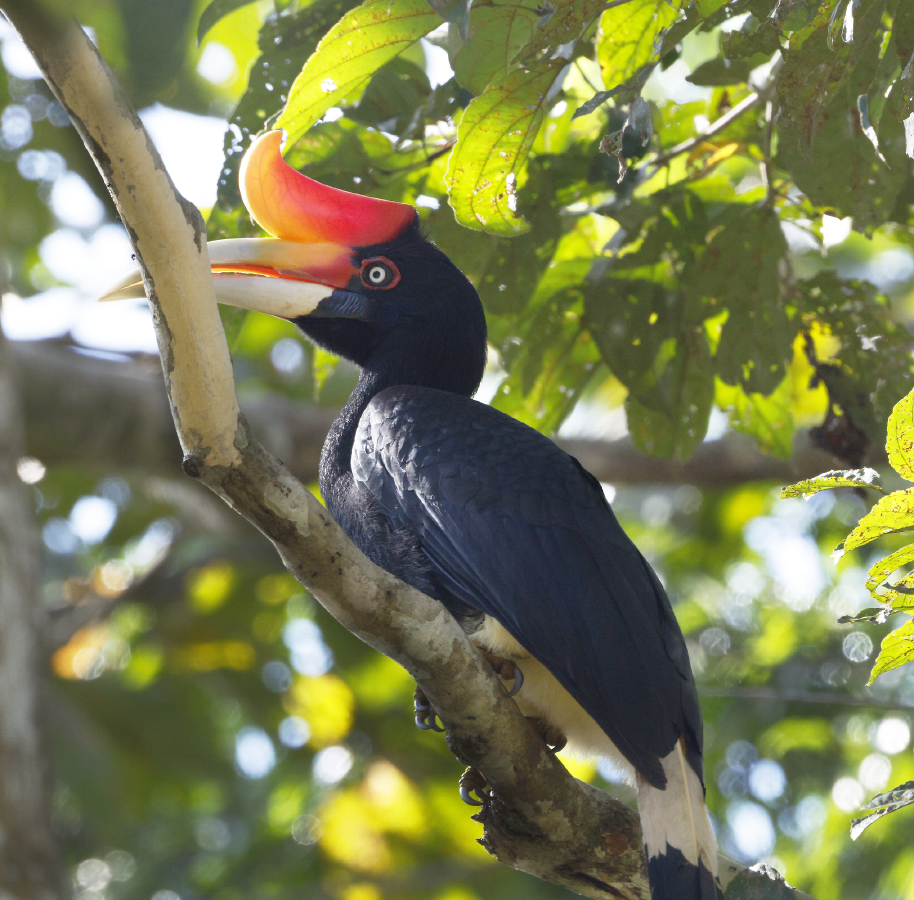
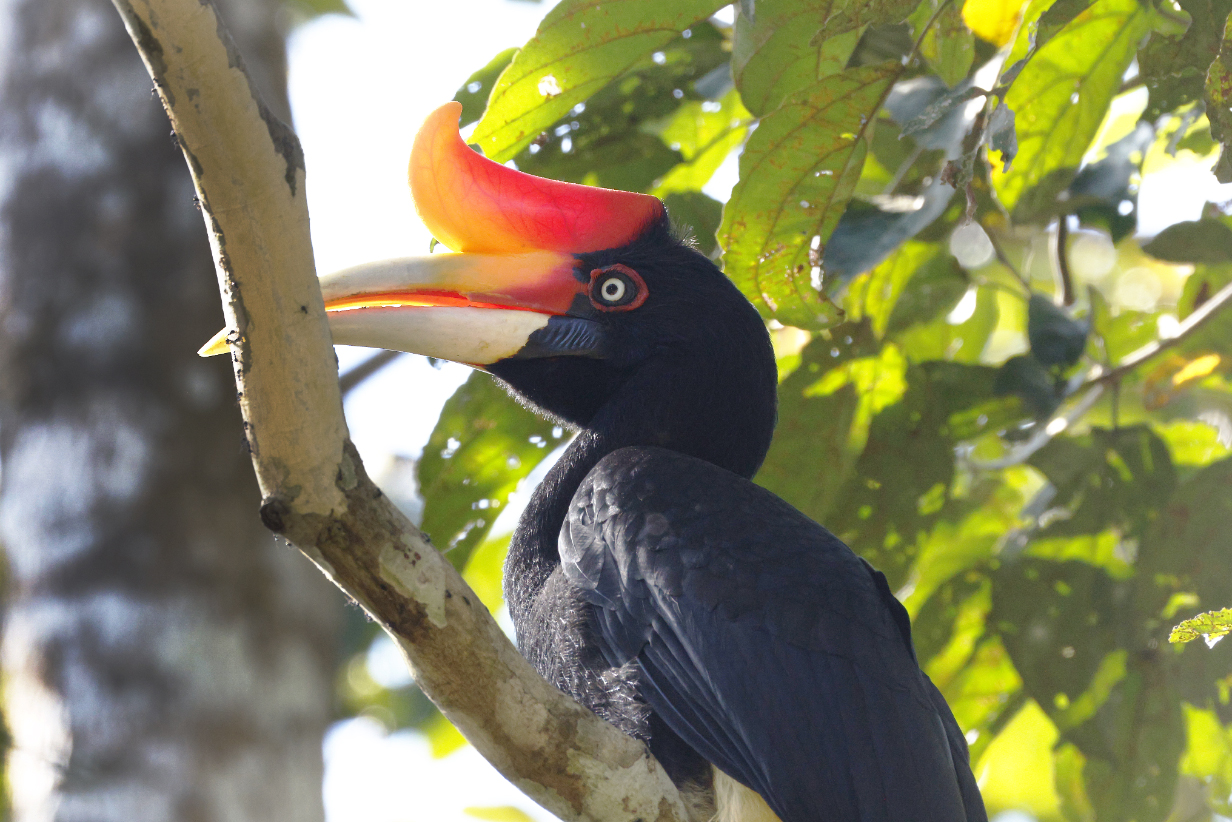
Rhinoceros hornbill
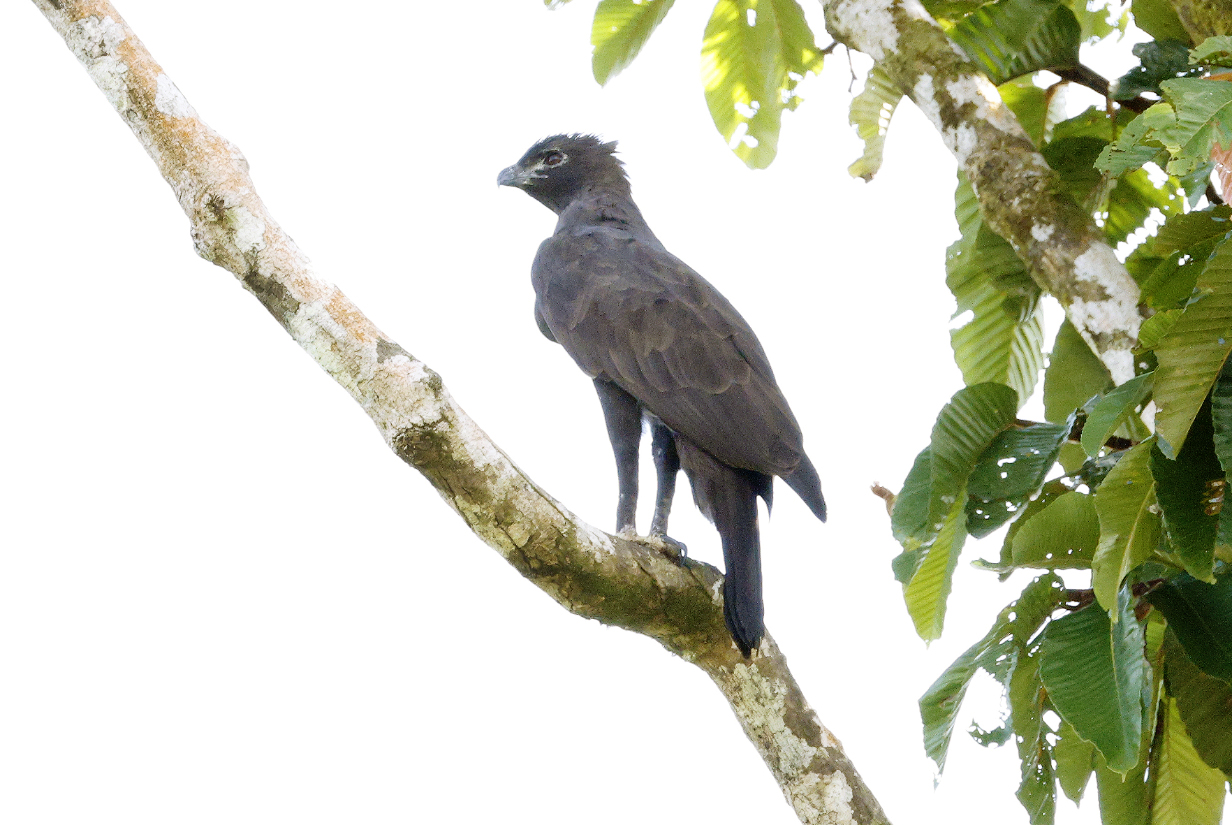
Changeable hawk-eagle
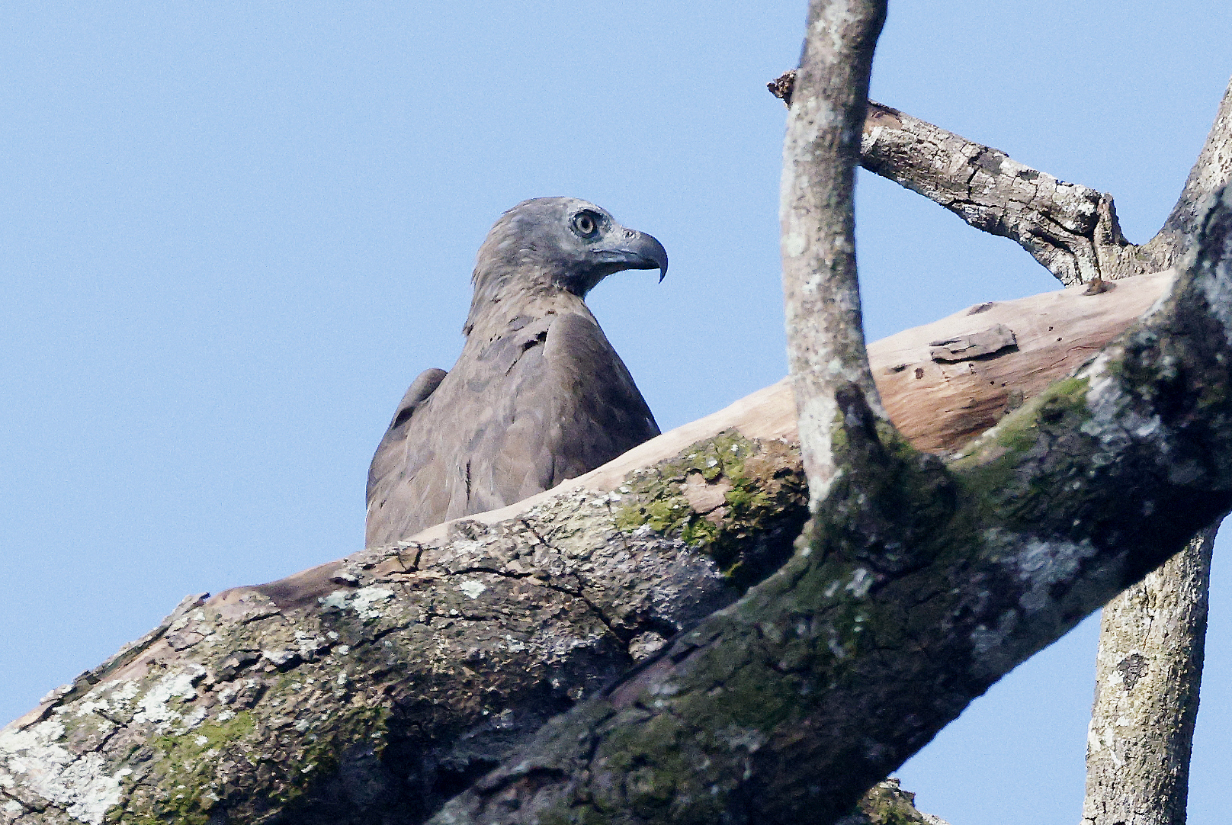
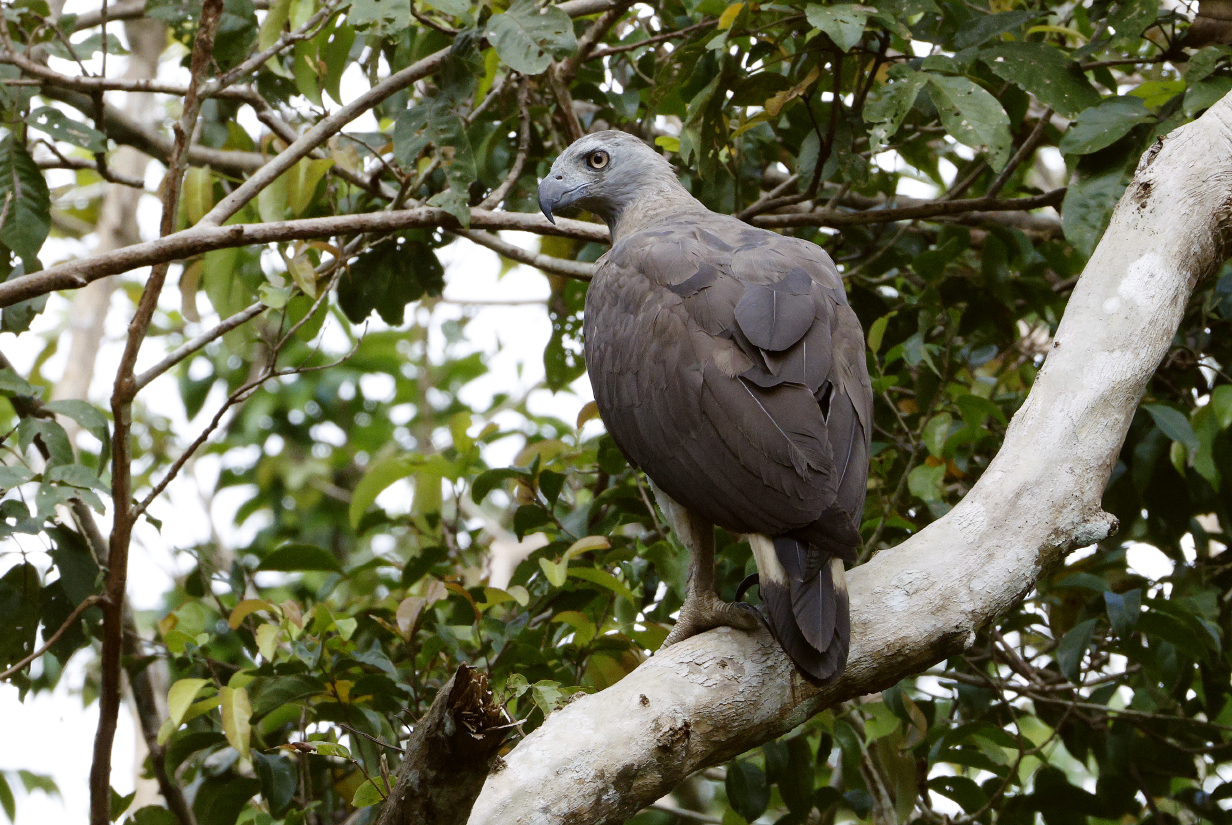
Gray-headed fish-eagle
March 26 PM: Gomantong Caves Forest Reserve
"Sir David Attenborough [who celebrated his 100th birthday yesterday, May 8, 2026, as I write this] famously filmed at the Gomantong Caves in Borneo for his documentary series Conquest of the Skies (2014) and later revisited them for 60 Years in the Wild. He dangled 250 feet up on a rope to film a million bats emerging from the cave. The crew documented the massive, pungent, and "not for the faint-hearted" environment teeming with millions of bats, swiflets, and massive piles of guano filled with cockroaches" (quoted from Google AI). I have seen this program many times and often wished I could visit the cave. Today, that wish was fulfilled. At 12 years younger than Attenborough during his first visit, I was substantially less adventurous. And, of course, I did not have support from a massive crew. But I managed with some difficulty to negotiate the steep stairway into the top of the cave as it is open to the public and to see the bats and swiftlets. And the wildlife on the mountain of guano ... and on the stairway and its railings. I survived the pungent environment with not much trouble. Truth is: I love caves, and it was superb to see this varietal.
This visit was also exceptionally important for birding: There are 4 SE Asian species of swiftlet that we saw almost daily but that mostly cannot be distinguished in flight -- or, probably, in the hand -- based on morphology. They can be distinguished only via the differences in their nests. One species is relatively easy: I had gotten Plume-toed swiftlet based on morphology, in flight, thanks to experienced guides. I had recorded White-nest swiftlet as seen, again based on a guide (not on this trip), perhaps confident enough because of where (I don't remember where) we were. But it would probably be fair to regard that ID with some doubt. Today, I saw and photographed all 4 species on clearly identifyable, different nests. So now I have all 4 species with no further uncertainty.
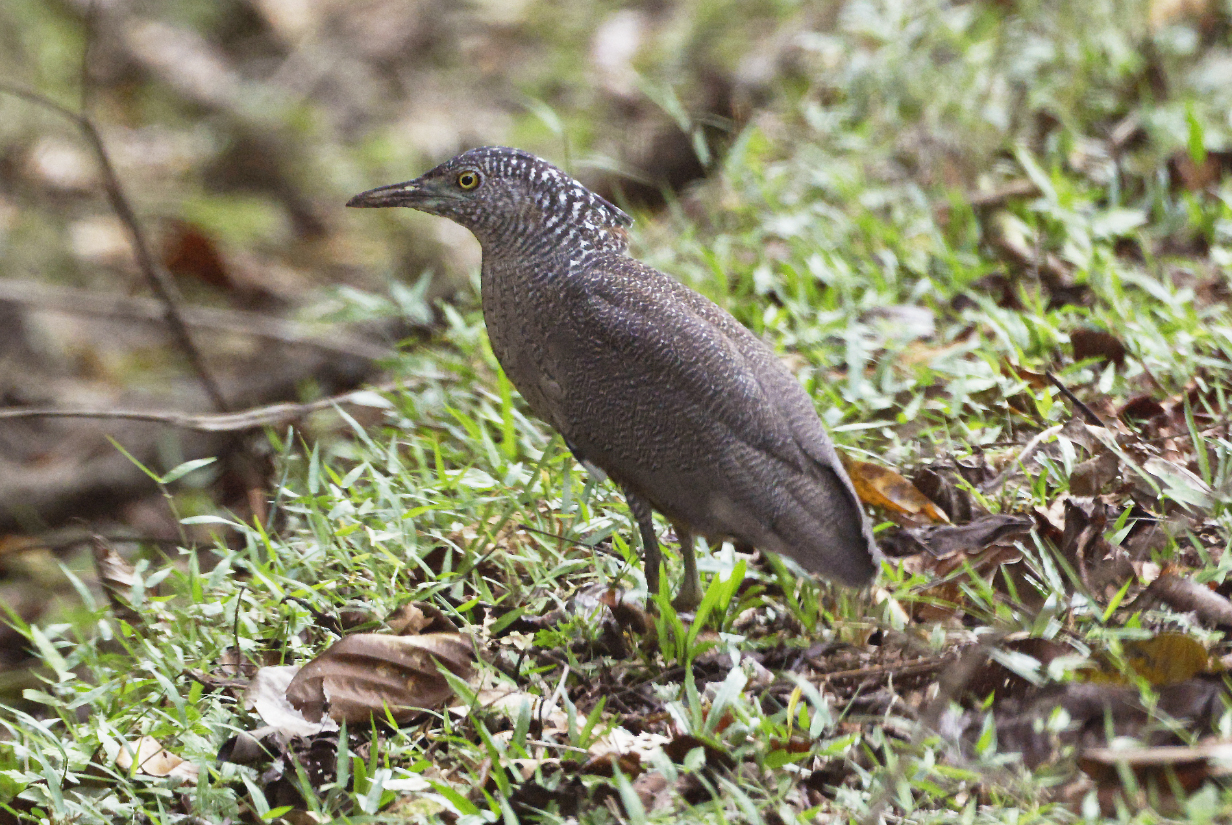
Malayan night heron (This juvenile is my life bird, seen near the entrance to the Gomantong Reserve. As with all night herons, adults look more handsome; in this case, mainly orange and blue-black.)
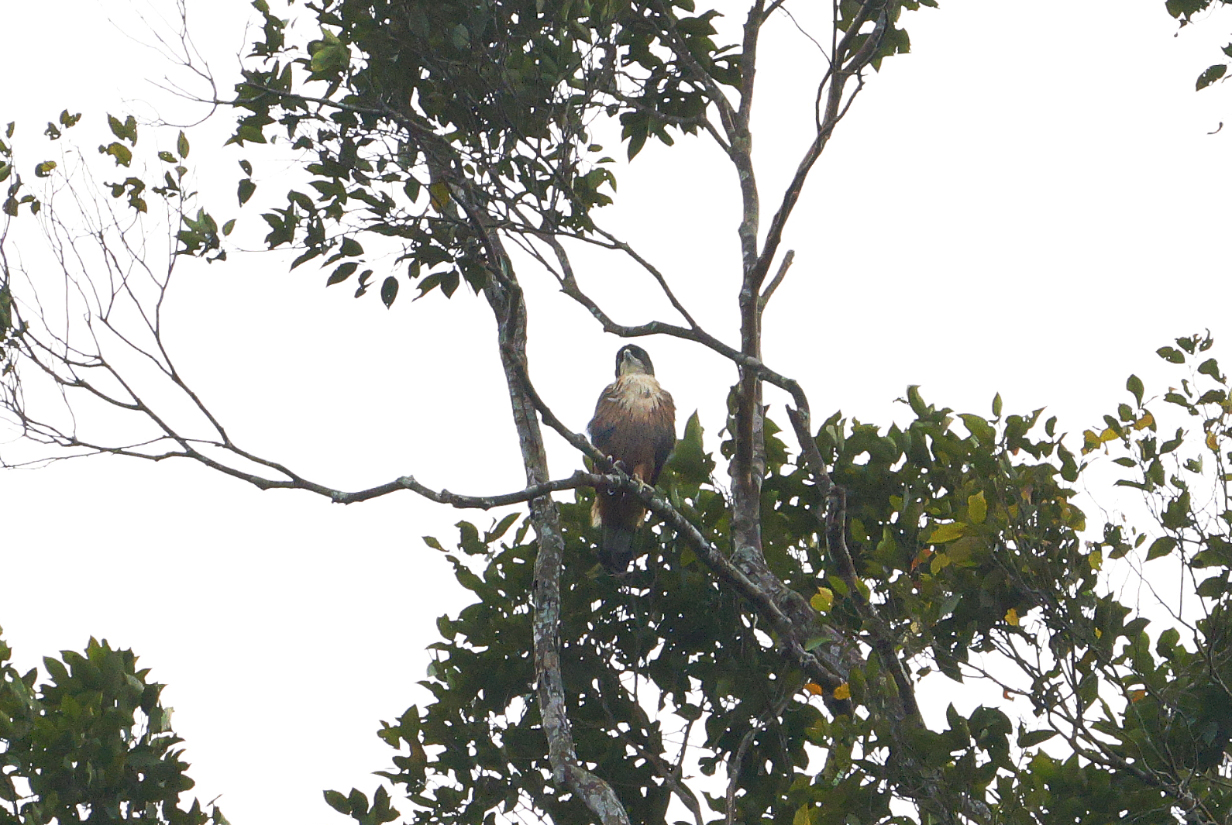
Rufous-bellied eagle (This is my life bird, photographed after the cave excursion while we were waiting for it to get dark enough so that the bats would emerge.)
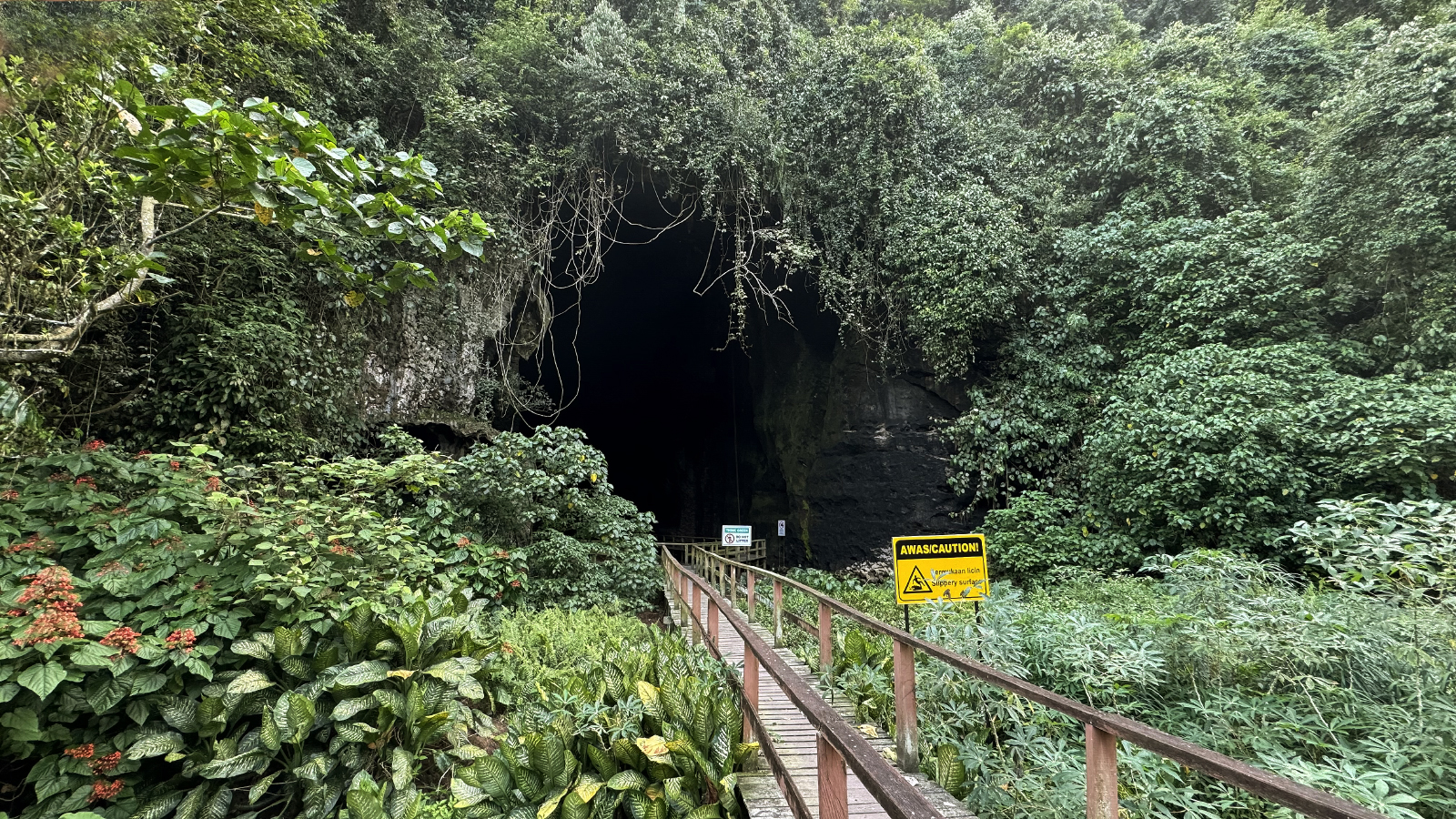
This is the entrance to the cave's public viewing area. The mountain is probably riddled with caves, possibly with many entrances that we never saw, and with a collapsed open roof that we will get to, below. And it is huge. This entrance is relatively small, and it is not the one that is mostly used by swiftlets and bats.
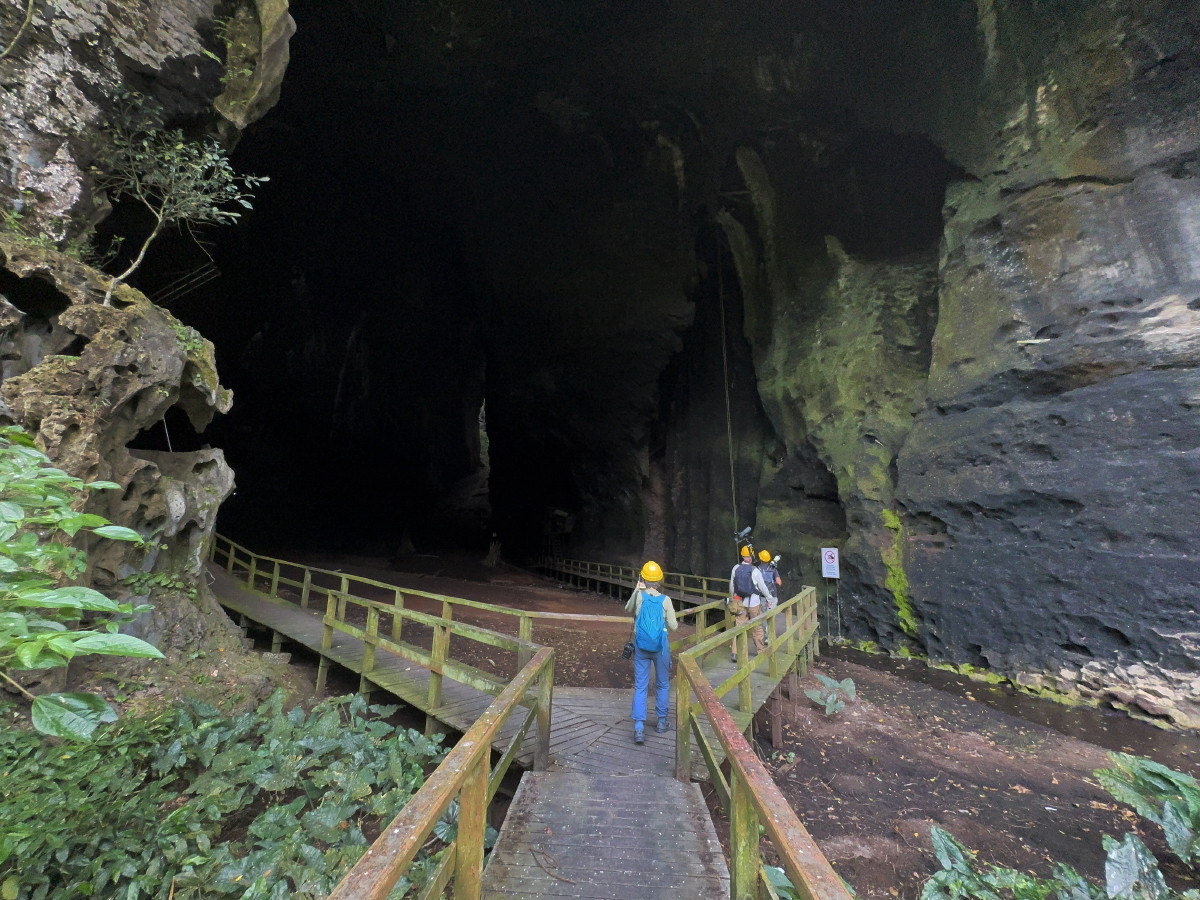
At the entrance, the wooden walkway splits in two, the two parts being the outside end of a loop through the heart of the cave.
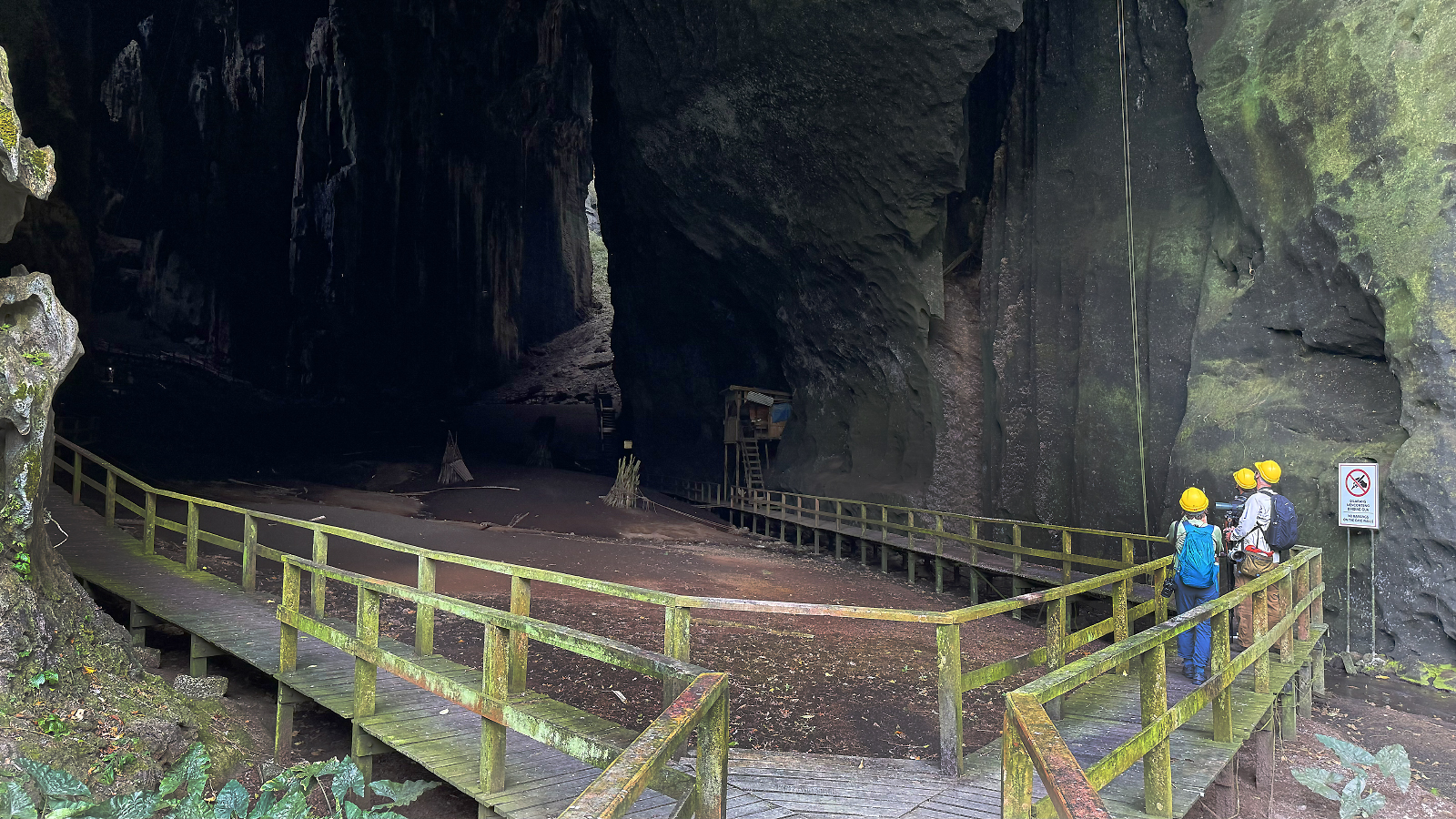
We took the right-hand side of the loop. Here, you can see the main challenge in walking the loop: there are many stairways up, and the stairs are high enough to be somewhat difficult without the help of a hand on the railing. And the railing got exceedingly nasty deep intside the cave, covered in guano and wildlife. Still, the reek of guano was not bad enough to be difficult; there was no obnoxious rain of guano at this late time of day (we wore helmets anyway), and the excursion was entirely manageable. It was a thoroughly weird mixture of distaste and wonder ...
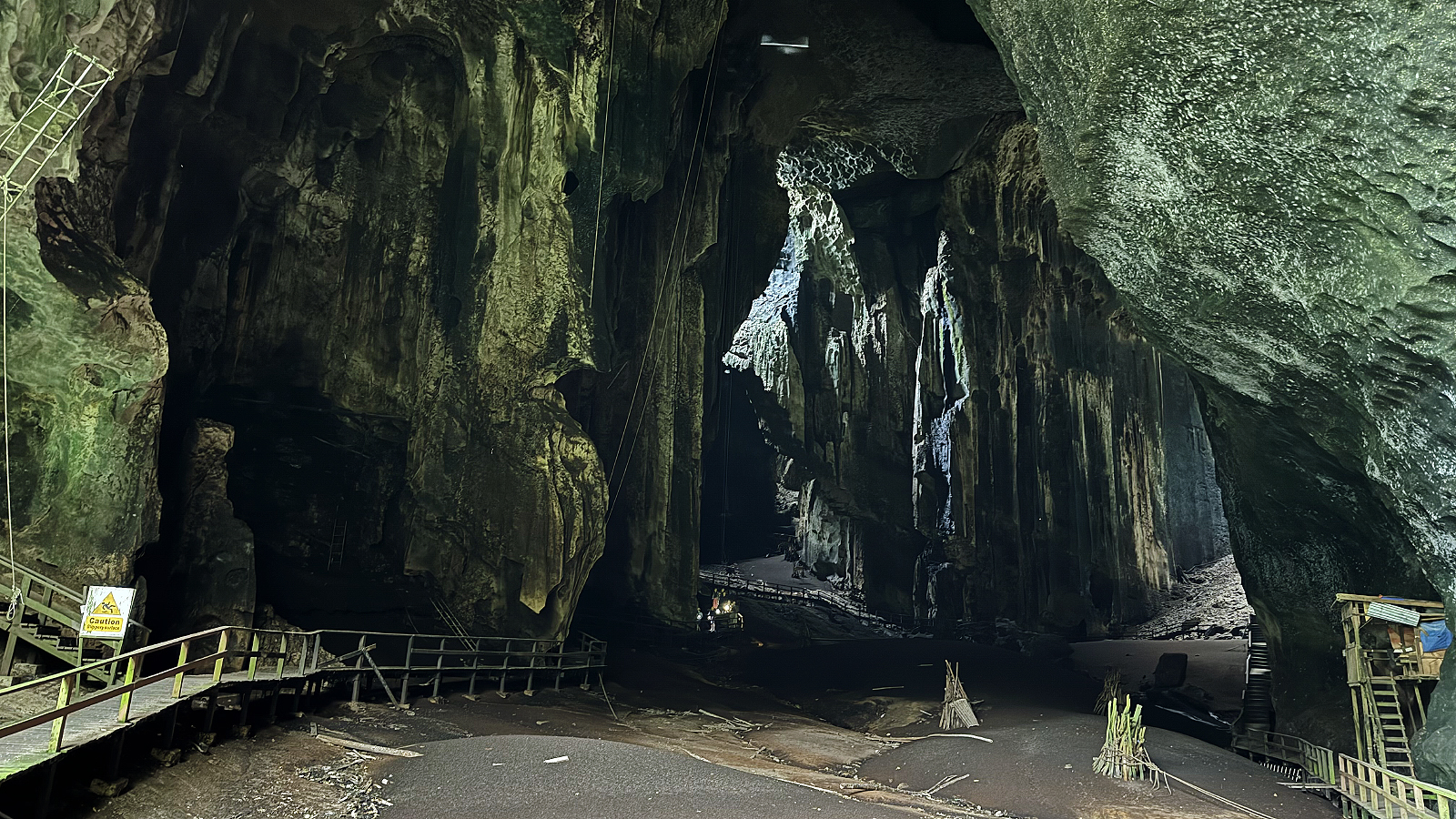
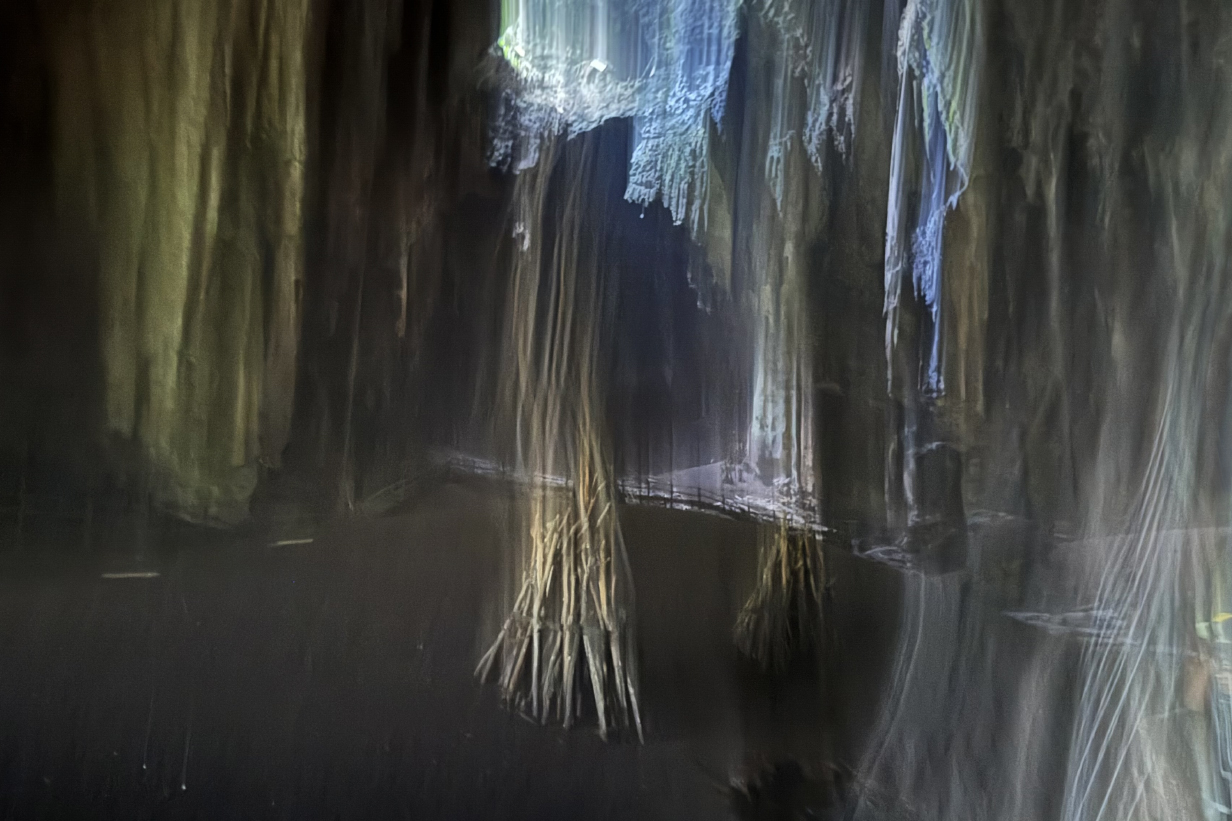
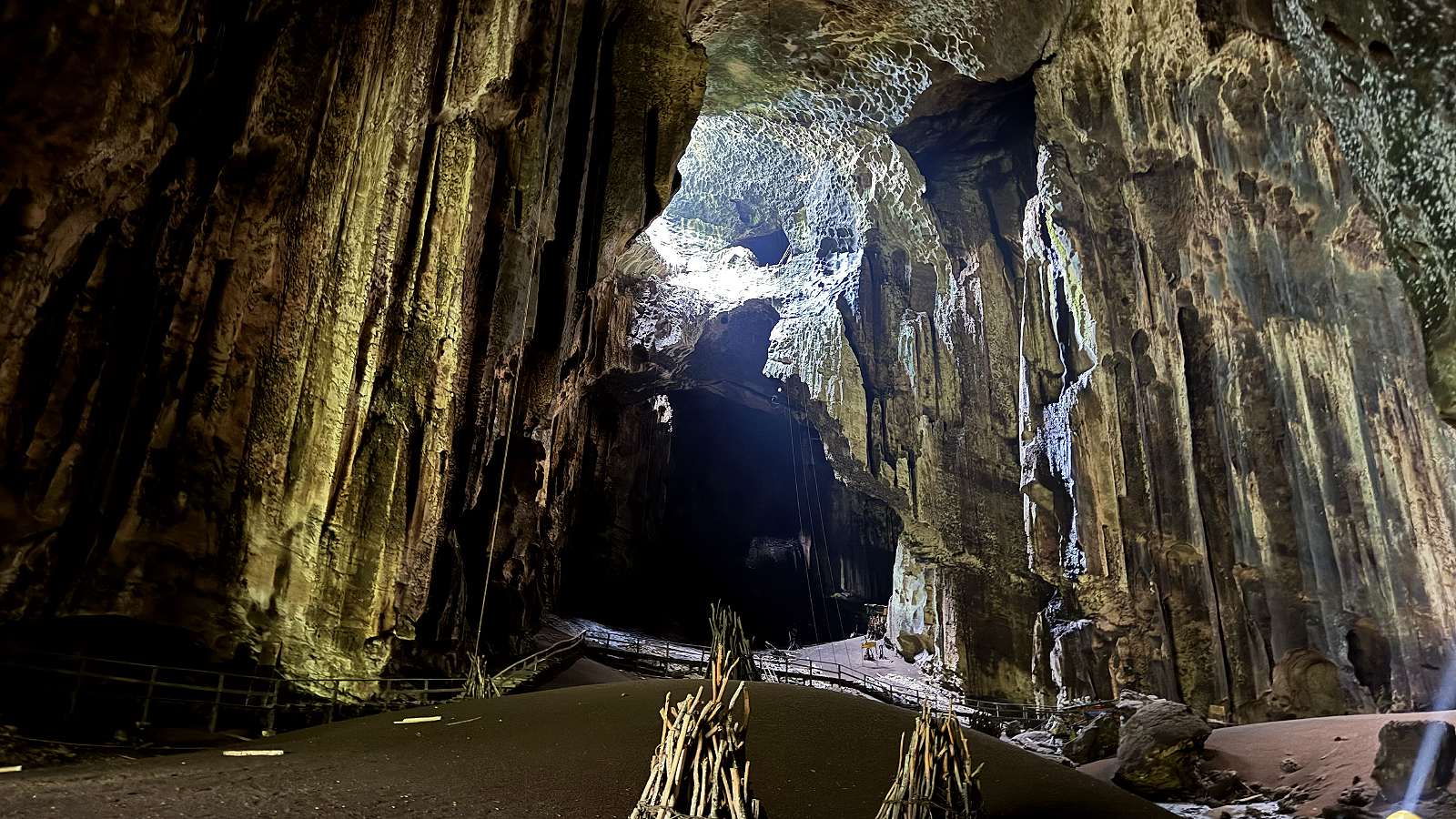
This part of the cave is only a few hundred feet below the current ground level, above: it is not dominated by ornate flowstone features. We took the right-hand side of the loop to the top under the collapsed roof of the cave -- that's were bats and swiftlets mostly enter and exit. And then we returned the same way. Here, the stairs from the previous picture are at bottom-right. You can see the lower slopes of the mountain of guano in the distance.
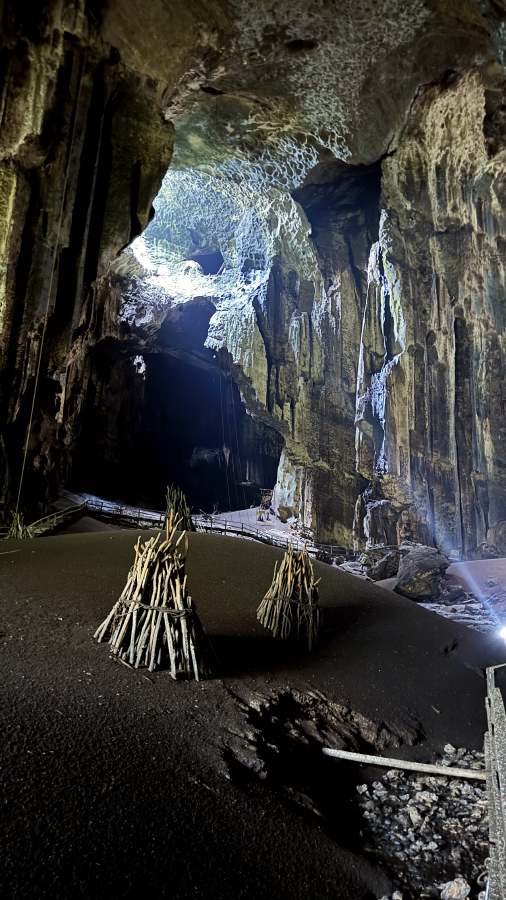
Vertical panorama of the cave from about half way up the walk to the top, here seen under the open roof, whose illumination of the interior dominates the upper half of this picture. The floor of the cave is the mountain of guano, crawling with wildlife. The long ropes are remnants of the season (not now) of the harvesting of swiftlet nests for the restaurant trade. I do not know what the piles of sticks are; they are likely to be associated with that harvest.
A hint of the thoroughly nasty walkway railing is at bottom-right.
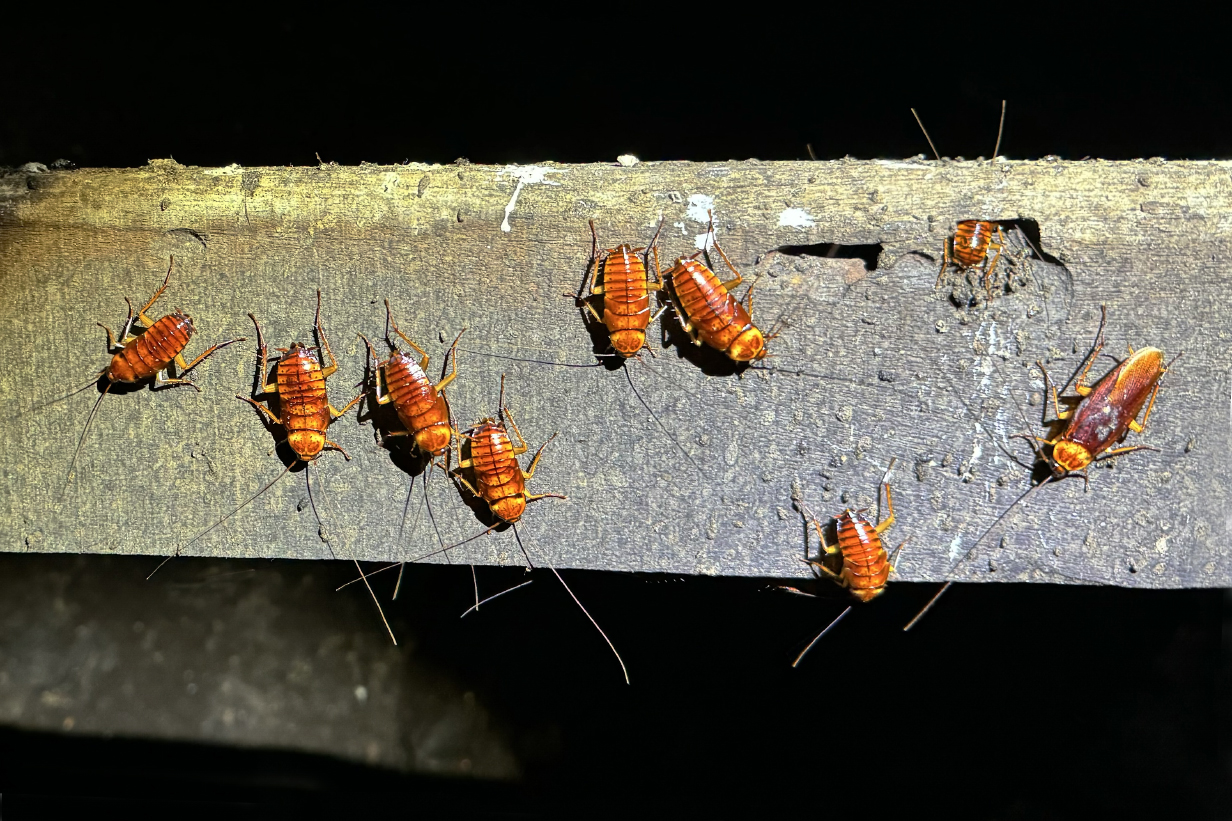
Cockroaches on the railing of the cave walkway. I debated with myself about whether to include this picture or to continue to be coy and refer to "wildlife". I decided to do justice to the real world and acknowledge it all. I hate cockroaches with an abiding passion. But you have to respect a creature that has survived in more or less its modern form for ~ 150 million years, through multiple global extinction events. "Roachoid" ancestors have been around for more than 300 million years. That is, they thrived on and outlived the supercontinent Pangaea. Roaches have changed hardly at all during the time that Pangaea broke up and the continents wandered slowly to their present positions. Ice ages scarcely matter -- they were momentary events that hardly affected cockroaches. They are among the most successful critters that have ever lived. Here in this cave, they dominate the wildlife on the guano mountain. And they make it hard to depend even a little on the walkway railing. You watch very carefully where you dare to put a finger. Even there, the guano dominates. And at the end of the tour, you wash your hands very, VERY carefully.
Before the tour, there was some talk and vague warnings that we might be overcome by guano fumes and feel dangerously woozy. Didn't happen. Some tour participants did not enjoy the creepy environment. But I love caves, and the wonder of this famous place -- and especially the definitiveness of swiftlet IDs -- dominated over the undeniable trickyness of the walk. So this tour was a fundamental highlight of the trip.
The again shows the top of the part of the cave that's open to the public. We turned around at the highest point of the walkway. At bottom-right is visible a tiny part of a beam of light that's being used to illuminate patches of swiftlet nests on the cave ceiling. Different swiftlet species have colonized different patches of the roof, as shown below. Bats nest everywhere, somtimes among the swiftlets and in other places in dense clusters. This web site concentrates first on the caving experience and then focuses on the 4 swiftlet species.
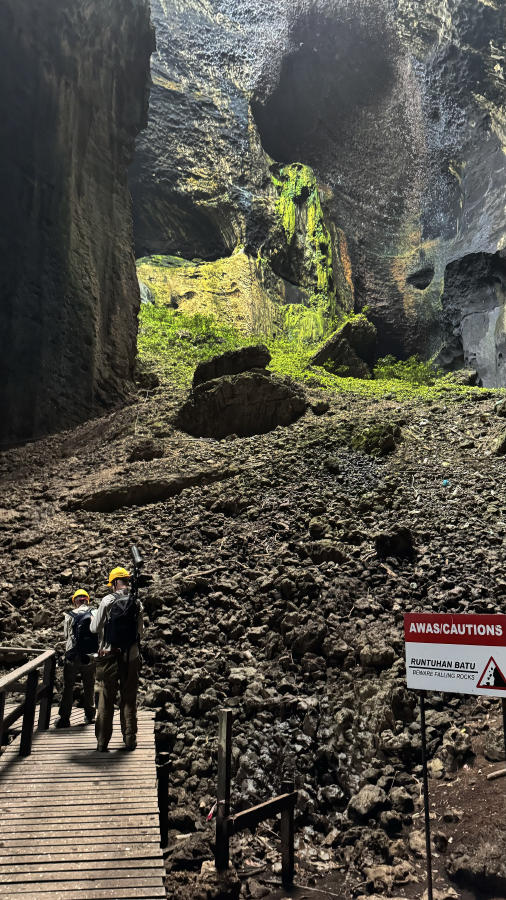
Approaching the top of the walkway, this mostly shows the rubble pile left of what used to be the roof of the cave that has collapsed to make the opening through which most bats and swiftlets enter and exit. It is a common phenomenon that cave ceilings collapse and produce skylights. This one is very big.
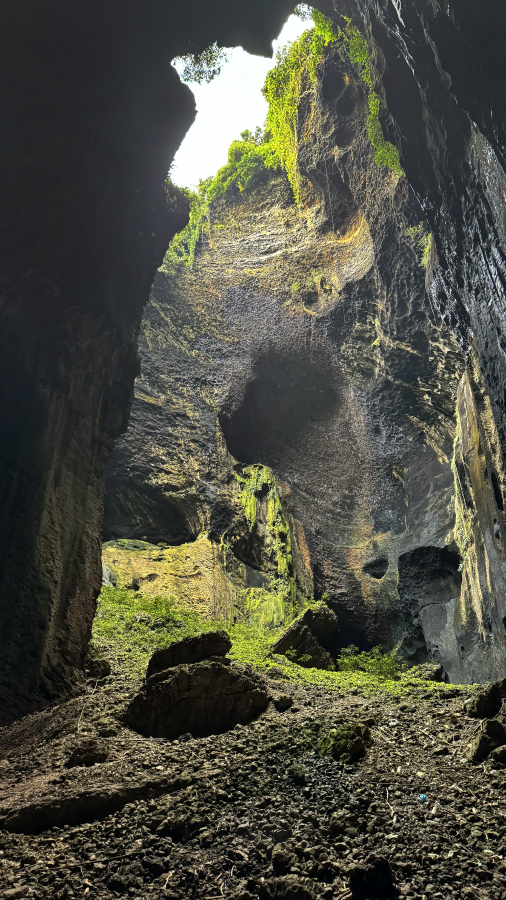
Skylight produced by the collapse of the roof of the cave. The strongest tour participants climbed a steep staircase outside the cave to watch the emergence of the bats from above the top of the skylight. I and several others stayed near the cave entrance and watched from there.
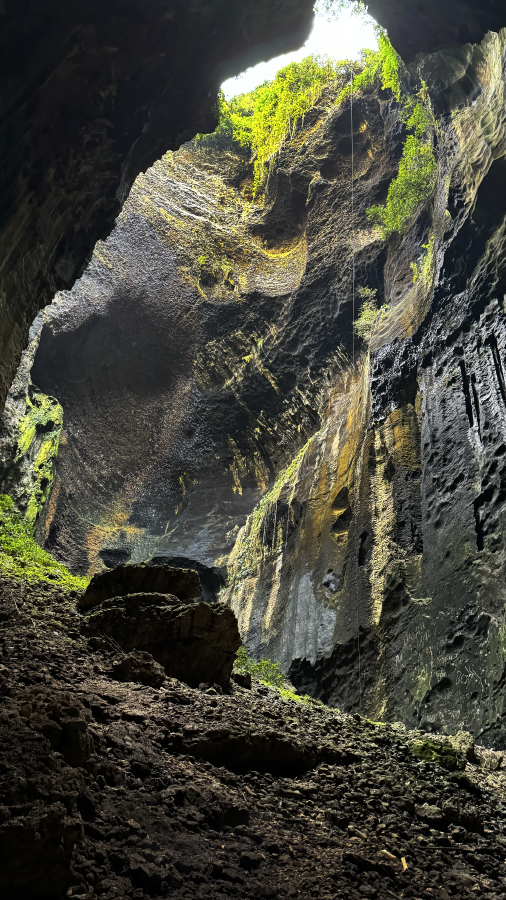
Another view of the cave skylight from roughly where we turned around on our walk.
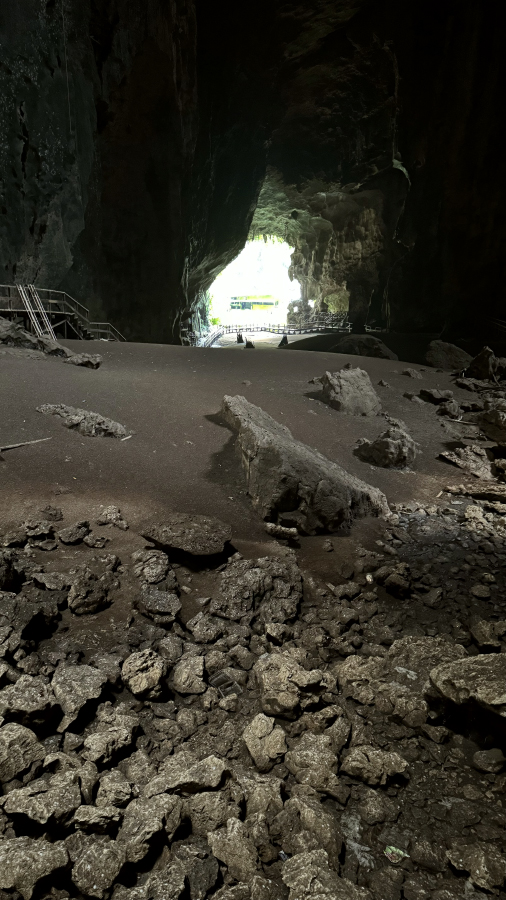
Looking back to the cave entrance from our high point on the boardwalk. The smooth brown hill is the mountain of guano. The rocks are debris from the collapsed ceiling. It is interesting that the rubble is not partly covered by guano. I am not sure whether it is washed off by rain ... or whether rocks still sometimes fall ... or something else. But notice that there are no erosion rivulets in the guano. So I suspect that rocks still sometimes fall.
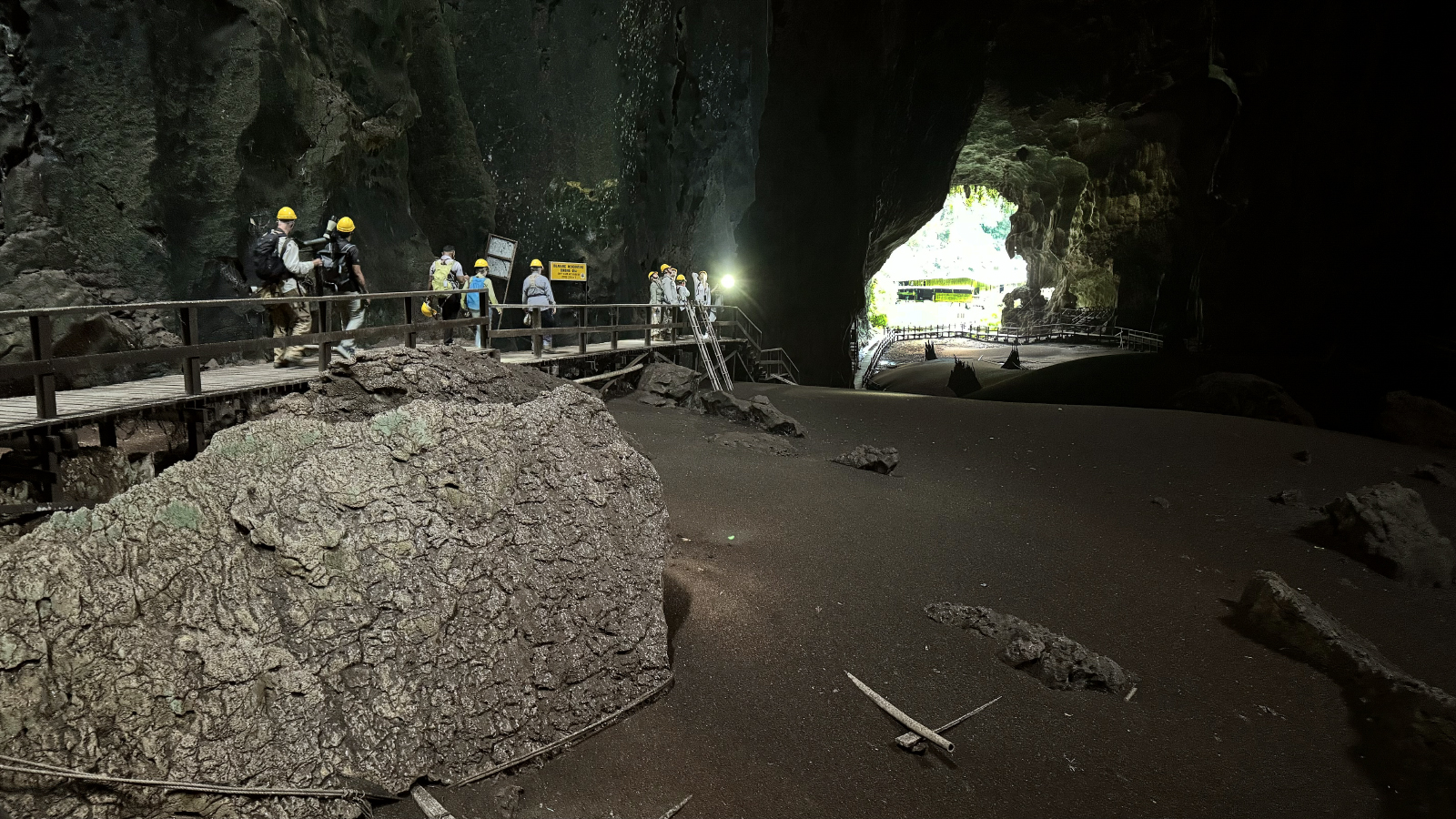
Approaching the entrance on the way out. Guides are still illuminating the ceiling so that we can see bats and swiftlets.
March 26 at Gomantong Cave: Four Species of Swiftlet
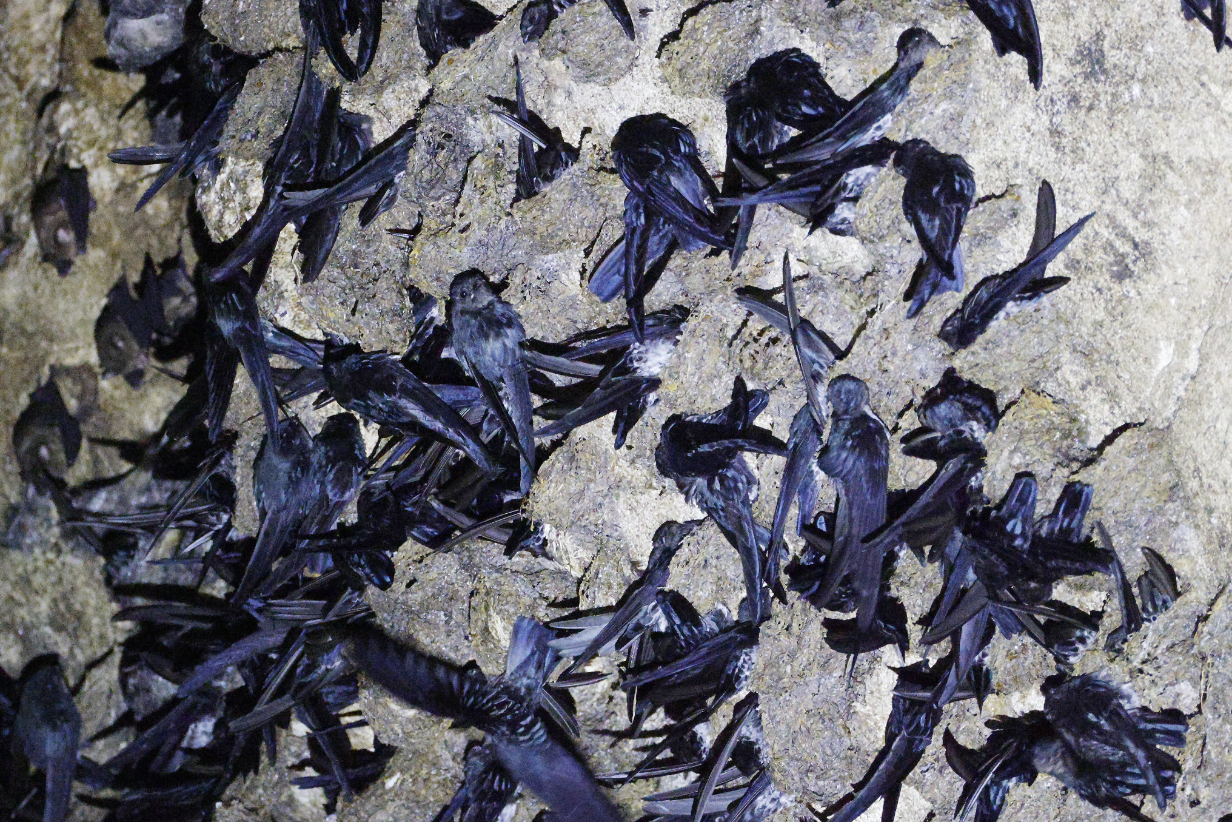
Plume-toed swiftlets were not new -- they are widespread and recognizably different from the other 3 species in having glossy-blue-black backs and speckled breasts. In Gomantong Cave, they nest nearest the entrance and in dense clusters, often with many birds overlapping. Because most swiftlets of all 4 species tend to sit with backs outward, it is hard to see a bird with a recognizable face or with its belly showing. The bird just left of center here shows its face moderately well: a better crop is next:
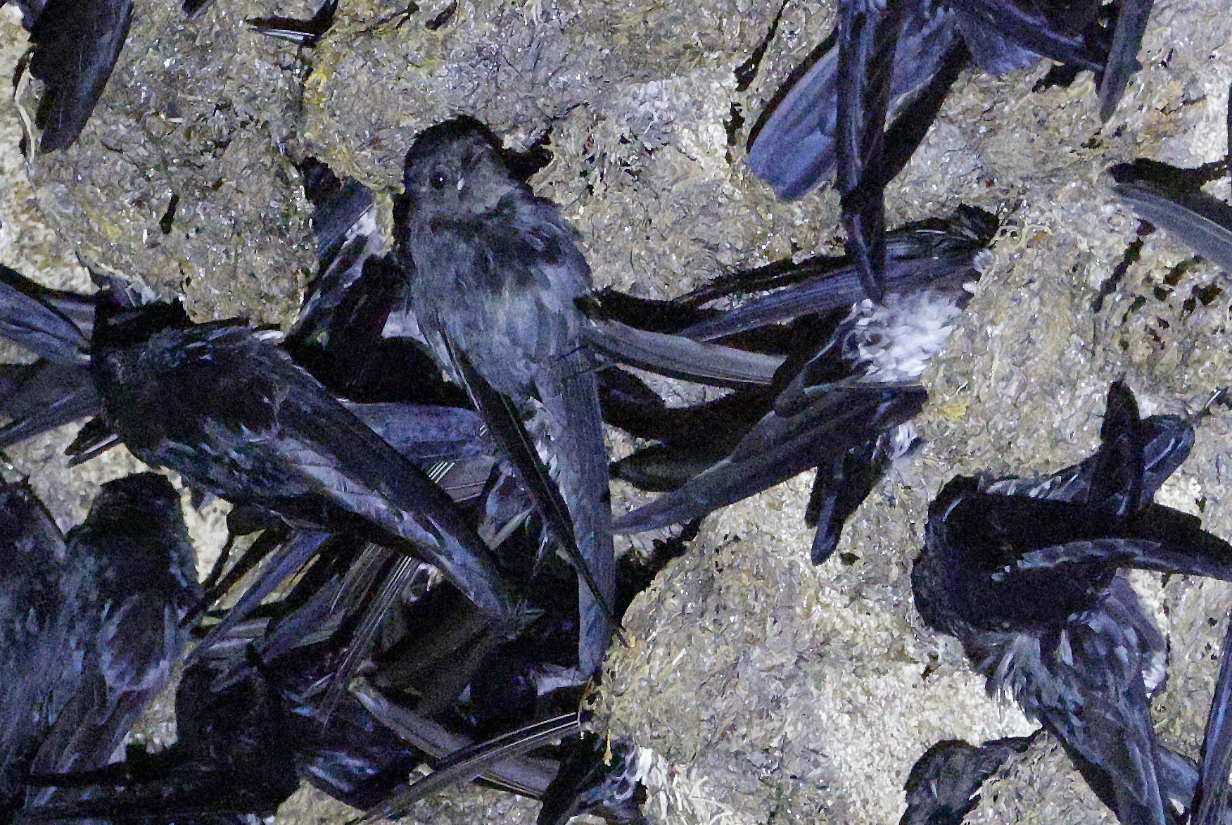
And enlarged crop of the above picture shows this bird's face. Also, the bird to its right shows a little of the speckled belly of Plume-toed swiftlet.
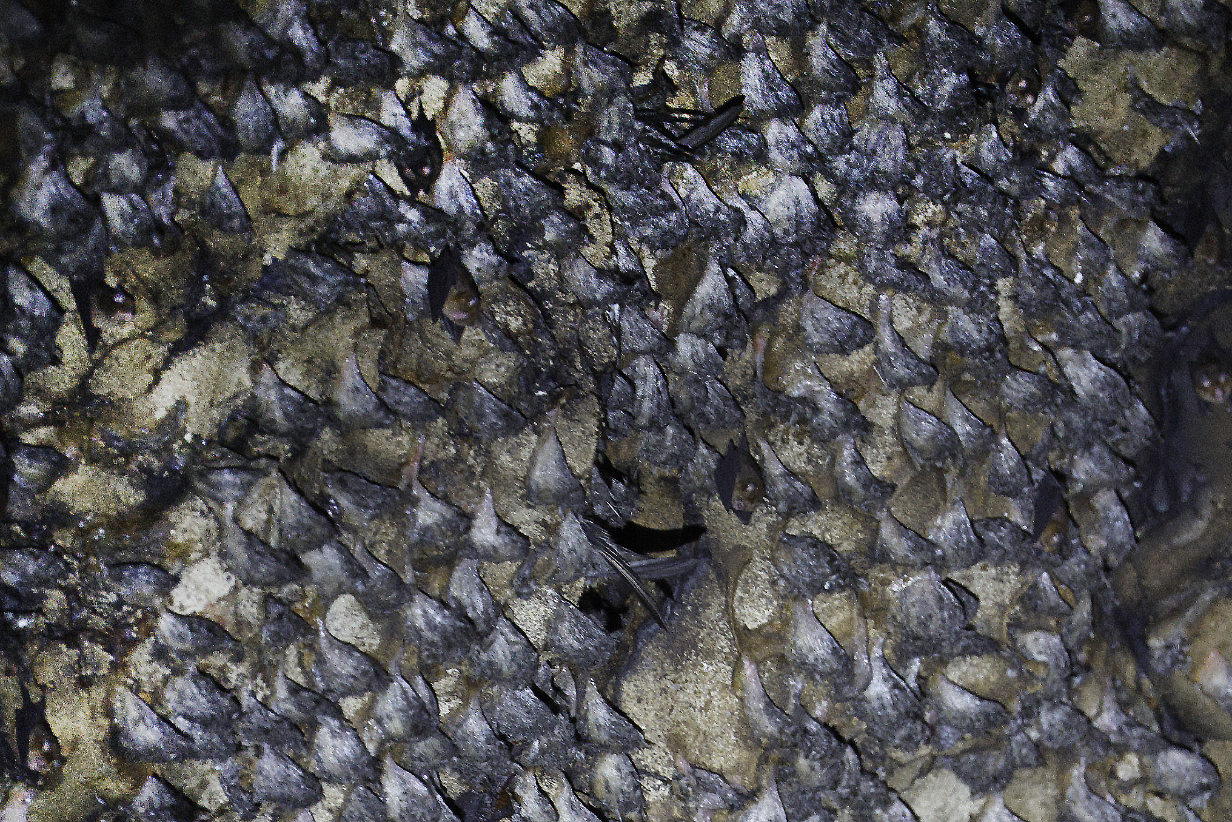
Black-nest swiftlets were the next ones that we ... sort of ... saw, a little farther into the cave. Whereas most Plume-toed swiftlets appeared to be at nests, almost no Black-nest swiftlets were home. Their nests are by far the closest-packed of those of the 4 species, with adjoining nests essentially touching. But only two birds appear to be home, here, and only their wings are visible. I have to take these as my life birds, although they are certainly the worst-seen of the swiftlet species. Ebird shows that you can be successful, although you can't tell how long it took to "luck out". We had very limited time.
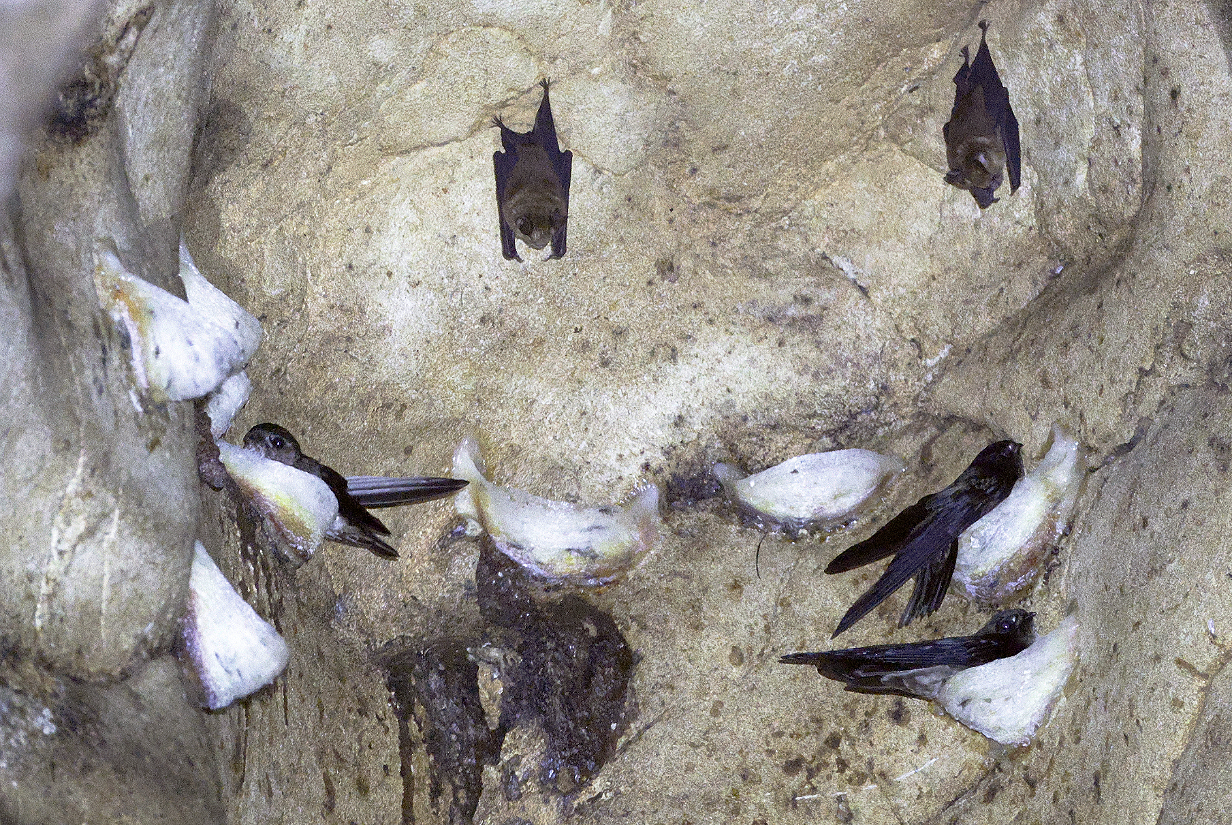
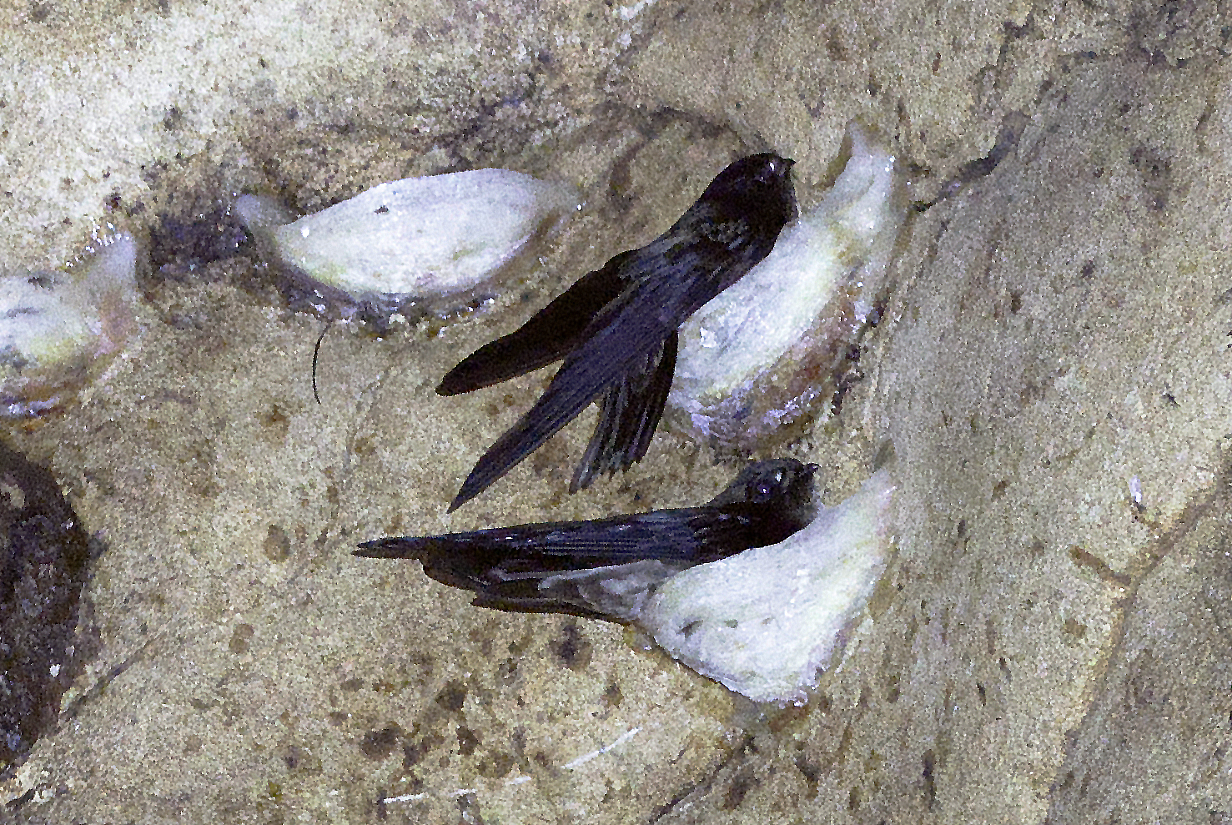
White-nest (also informally called Edible-nest) swiftlets were the easiest to see and to photograph -- their nests are clearly white; about half of the nests were occupied, and the birds were much more visible than were the other 3 species. These are now more definitively my life birds. Note also that bats nest all over the roof of the cave, often among swiftlets.
Unfortunately for these birds, their nests -- made of solidified saliva -- are used to make bird's nest soup, a much valued delicacy of Chinese cuisine. Wiki AI says that a pound of bird's nests costs $ 900 -- $ 2300; higher-quality, cleaned, and ready-to-eat nests cost substantially more. So there is a vigorous trade in nests. They are harvested -- eagerly and with obvious difficulty -- from Gomantong and many other caves. Birds then try to rebuild. Making the first nest of the season generally takes ~ 30 days; replacement nests can take a few weeks longer.
Some swifts (e. g., Great Dusky swift) nest behind waterfalls (in that case, Iguazu Falls, Argentina). I don't blame them.
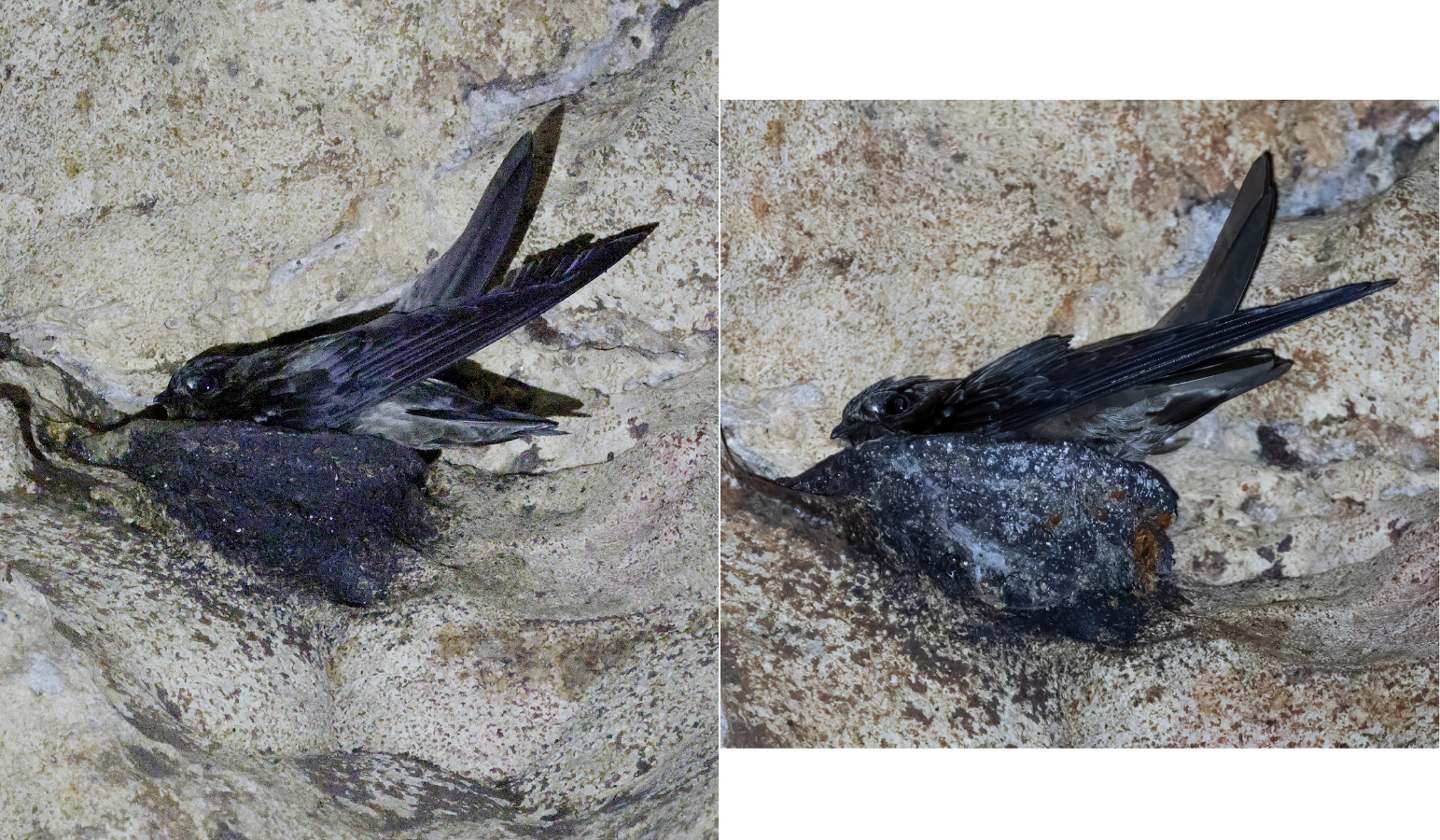
Mossy-nest swiftlet (The bird at left is my life bird. Mossy-nest swiftlets were the last of the 4 species identified by the guides, farthest into the cave. Their nests were not as clustered as those of the other swiftlets. The picture on the right is from ebird with ID and provenance "Mossy-nest Swiftlet Aerodramus salangana, Ayuwat Jearwattanakanok, 20 June 2025, Gomantong Cave & forest reserve, Sabah, Malaysia". Look closely at the background: These are the same bird, photographed 9 months apart! This is totally an accident: I did not see it until I was writing this caption. No wonder the birds look astonishingly similar. A closer look shows that the bird has now made a new nest an inch or two lower down than last year's nest.)
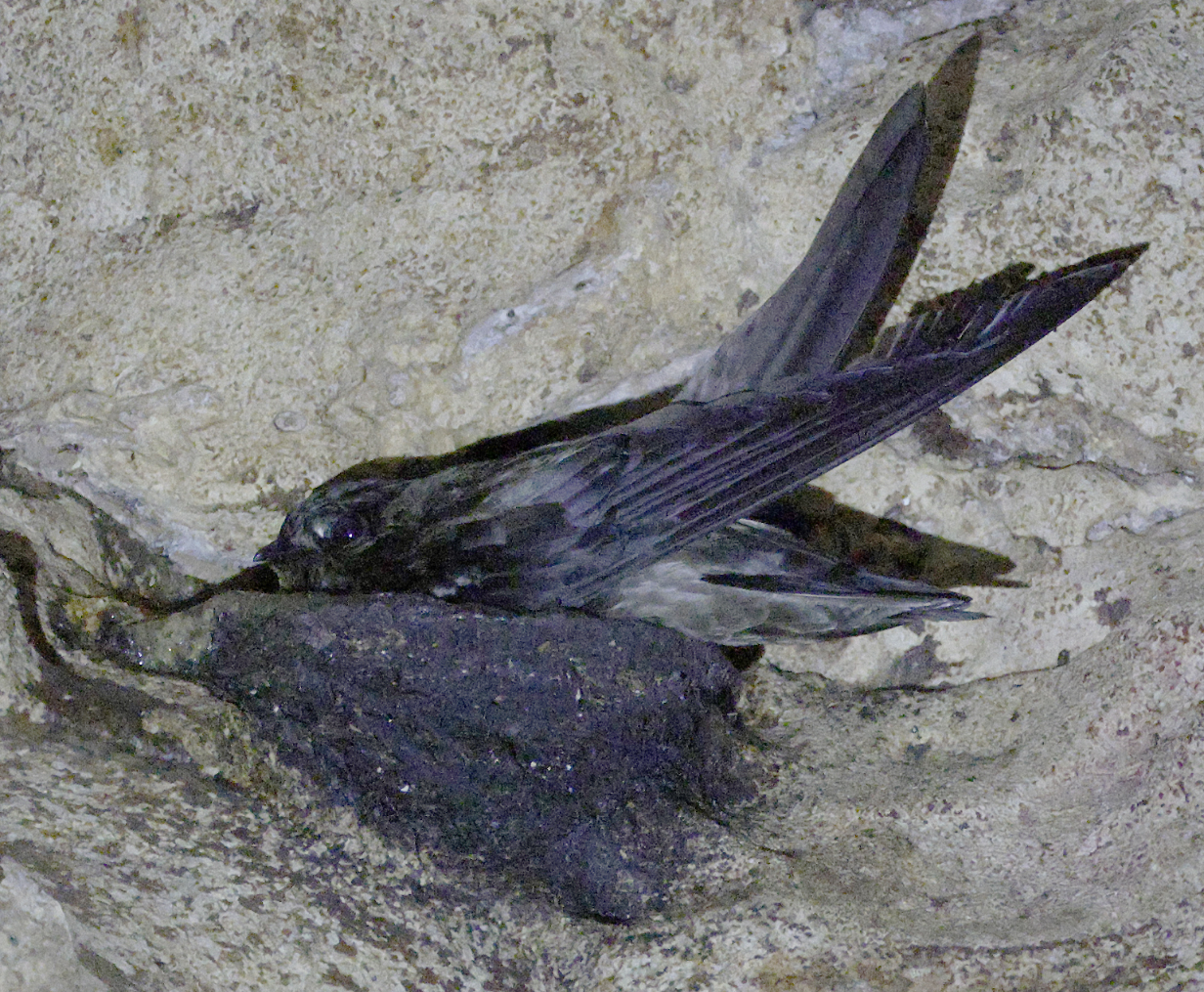
Mossy-nest swiftlet in a better crop of the picture of my life bird, above
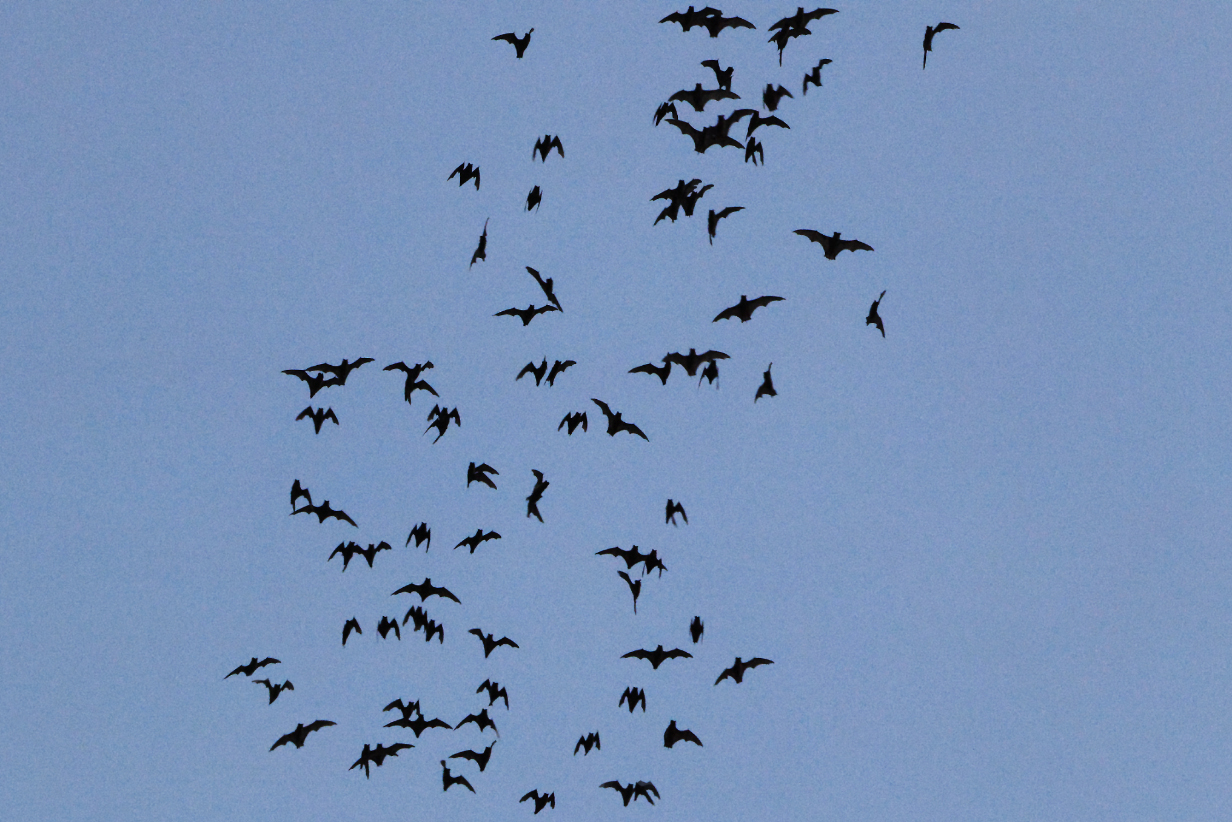
After touring the cave, the strong members of our group climbed up to a viewpoint above the skylight, where they could see the nightly bat exodus close up and get spectacular views of Wallace's hawk-eagle hunting bats for dinner. The rest of us waited outside the cave entrance for twilight to deepen enough for the bats to fly. We were lucky that the stream -- remarkably narrow, given that they could fly in all directions -- was directly above us. This picture shows < 1 second worth of mainly Wrinkle-lipped free-tailed bats (Chaerephon plicatus) flying directly over our heads. Based on the number of bats in a typical picture, the time (< 1 second) taken to fly through a camera frame, and a guess that this exodus might take 1-2 hours, I estimated that roughly a million bats headed out to feed. This agrees with Google AI's estimate that there are ~ 2 million bats in the colony.
This not very good movie gives you some feeling of what the flight was like. Particularly interesting was this: Even from our position far below the flight path, we could hear the distinct rushing sound of many wings beating. I did not expect this!
March 27: Day-long Drive to Lahad Datu and Danum Valley
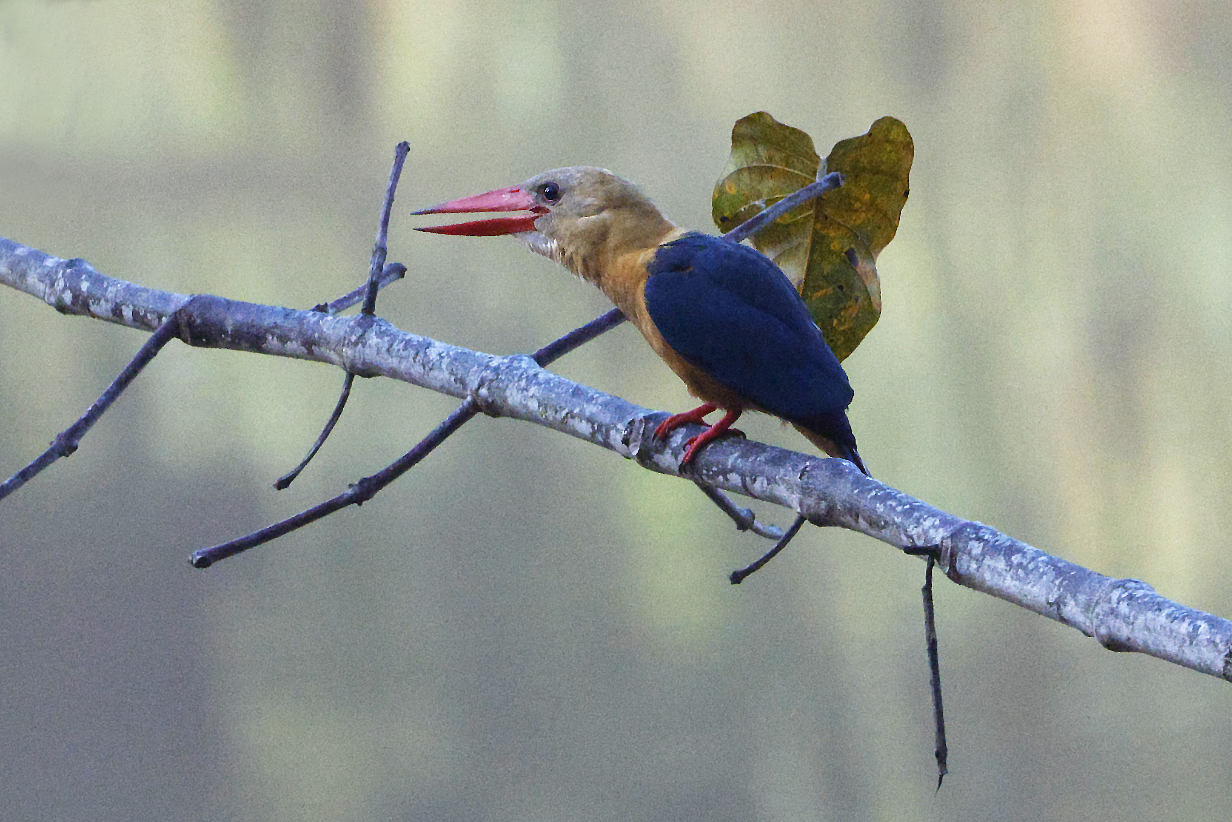
Stork-billed kingfisher -- a last look in deep twilight from my deck before we left on the day-long drive, first to the town of Lahad Datu for lunch and then, via Danum Valley Reserve's vehicles, the rest of the way to Danum valley.
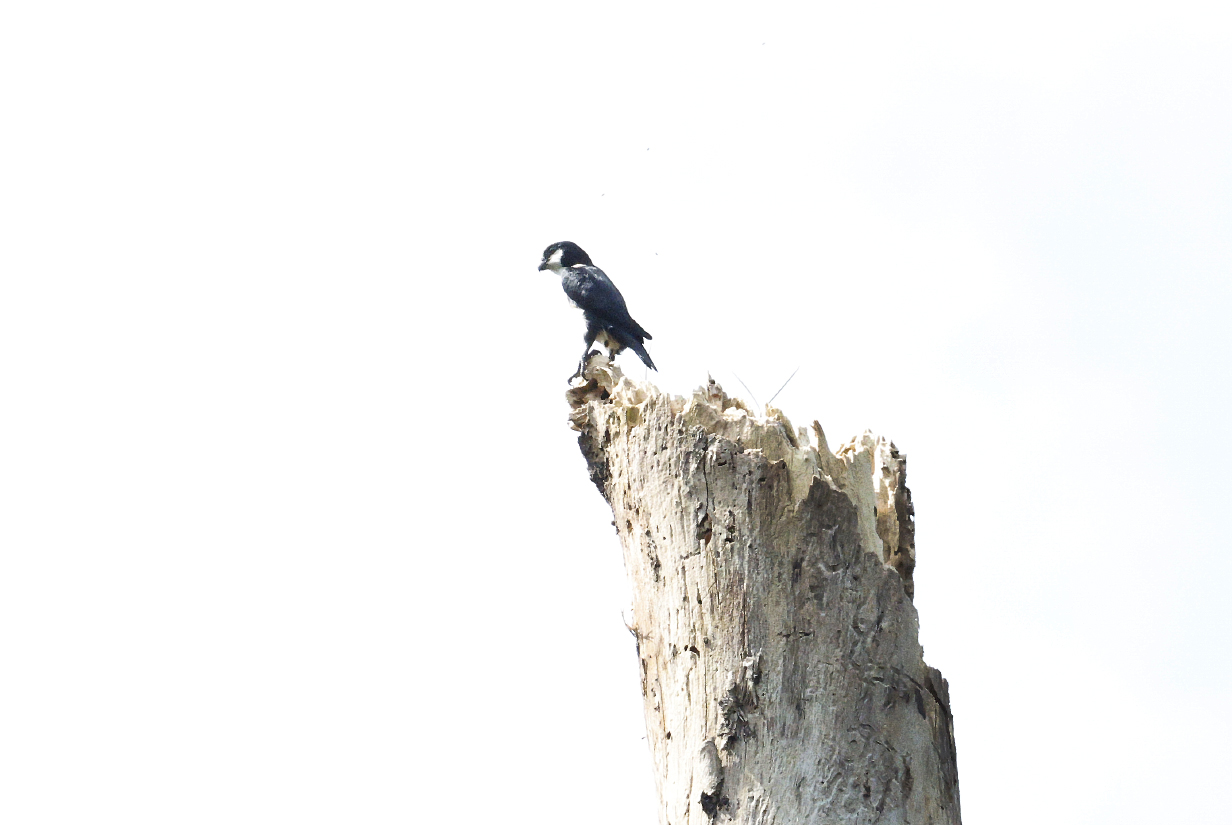
White fronted falconet (This male is my life bird -- far away but well spotted!)
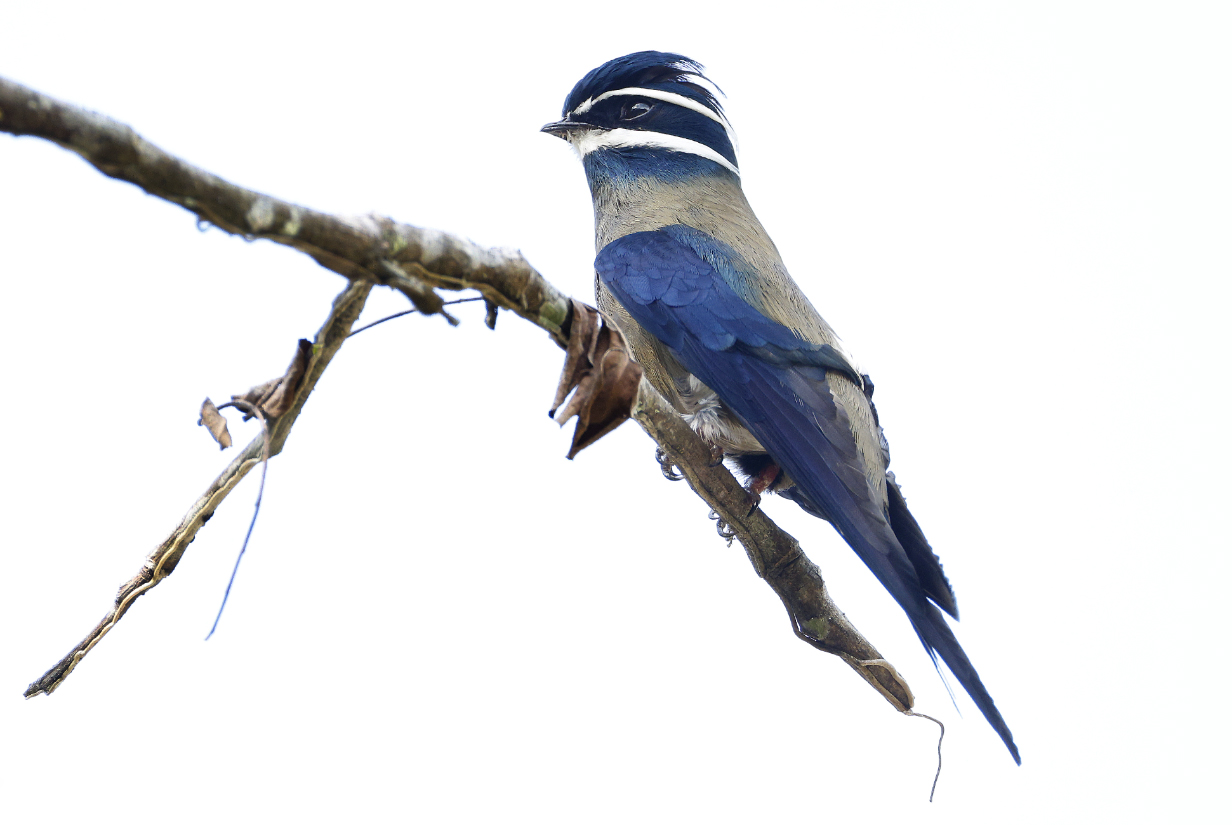
Whiskered treeswift during the drive to Danum Valley (This female is my life bird.)
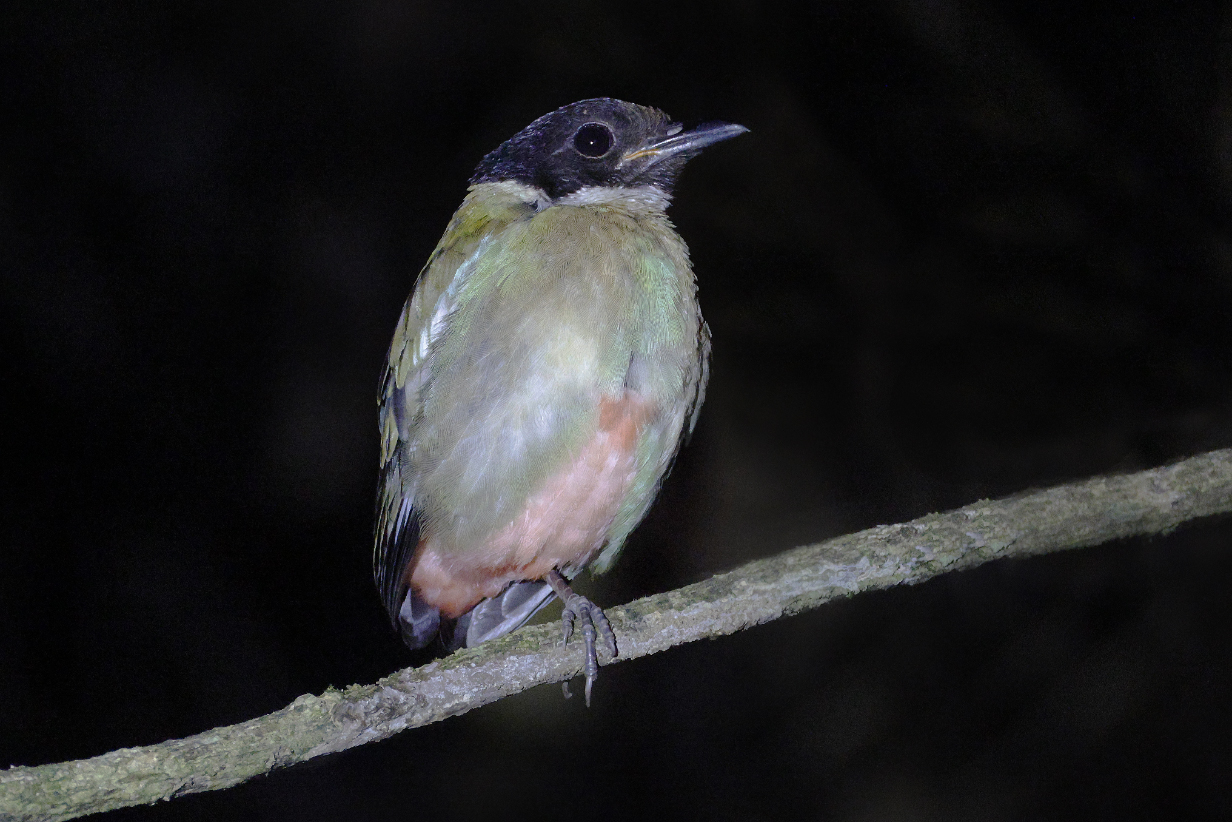
Western hooded pitta, seen during night birding at Danum valley. This juvenile already has an essentially black head and is just getting his green breast, red belly, and blue streak along its shoulders.
Let me add: Modern LED illumination is wonderfully bright and daylight-colored: I have not tweaked the color balance of this picture. Isamu Akasaki, Hiroshi Amano, and Shuji Nakamura deservedly won the 2014 Nobel Prize in Physics for inventing such light sources. Night birders are among the many people who should be grateful to them.
March 28: Danum Valley Rain Forest
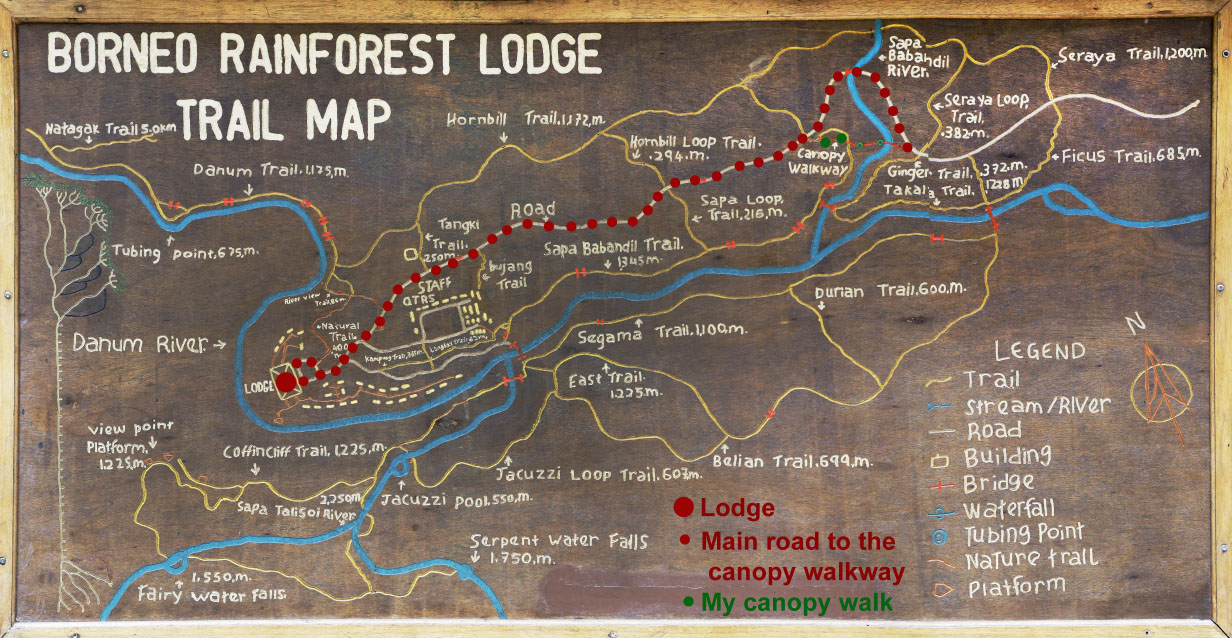
Map of the central area of the Borneo Rain Forest Lodge. Location of the lodge is shown by the big red filled circle. Smaller red filled circles trace the main road that we birded every day, usually on foot out to the far end of the canopy walkway. I did the canopy walkway on the second day from the end nearest the lodge to the second tower (green filled circles). We -- the whole group, including me -- also birded the two river views nearest the lodge and a few of the small trails near the lodge (not marked, because I don't know which ones). The strongest members of the team did the whole canopy walk and several longer trails, including one to get Great argus and Bornean bristlebird, i. e. two of the most important birds of the itinerary that I missed. The night drives followed the main road past the right-hand edge of this map to the entrance of the Lodge's part of the larger rain forest reserve.
Today, we birded the main road of the Danum Valley Borneo Rainforest Lodge to roughly the canopy walkway. I and a few others had help from the lodge's vehicles so that we did not have to walk all the way back. The Little spiderhunter pictures were taken from that vehicle.
Bornean crested fireback (This male is my life bird -- the first bird that we saw today, briefly and in deep twilight. Shot at crazy high ISO sensitivity and in a huge hurry, this is a very poor picture. But we did get to see the bird again, remarkably: during our last night-birding outing on March 30th. I got a better picture then. See below.)
Dark-sided Flycatcher (The species name, Muscicapa sibirica, is indicative of the fact that the bird breeds in northern Asia. We first saw it near Beijing, China, in August 2012.)
Rufous-winged philentoma (This is my life bird. It was still very dark -- this picture was shot at only 400 mm focal length, and it is very noisy.)
Diard's trogon (male)
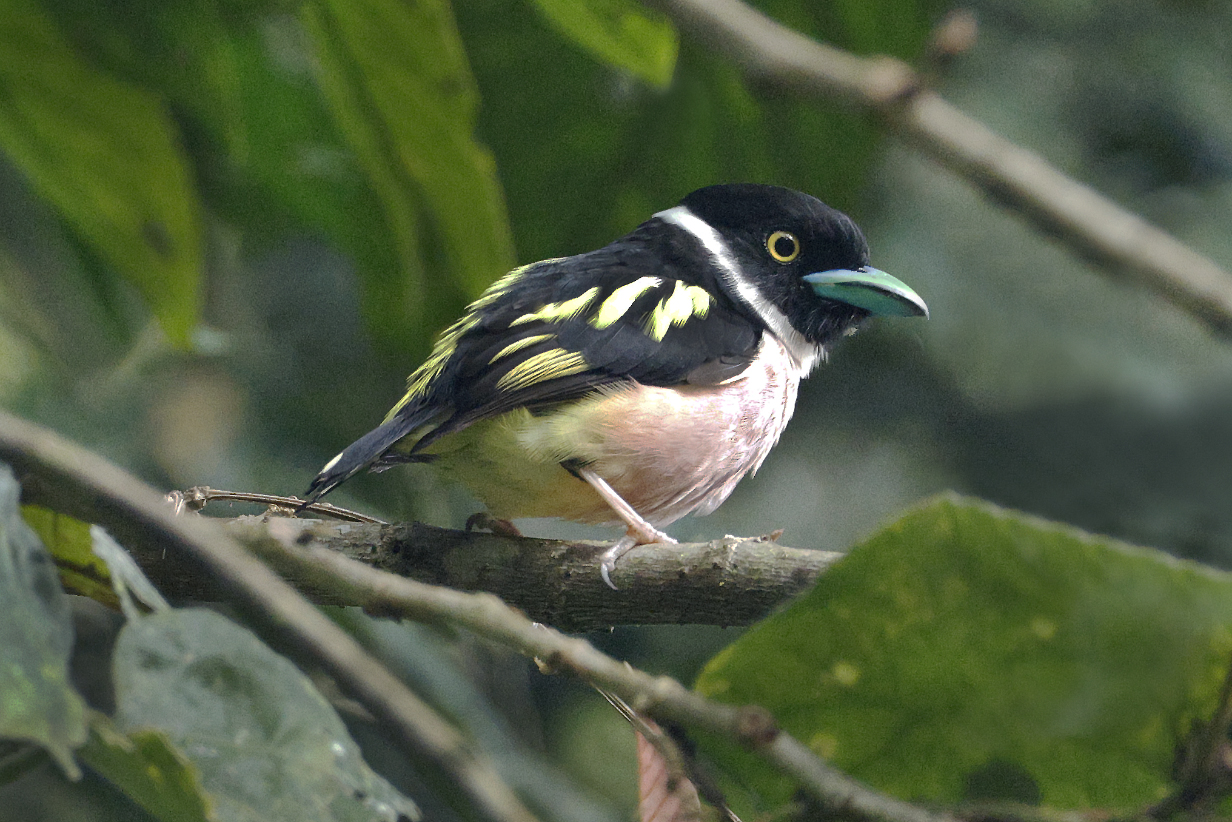
Black-and-yellow broadbill -- a good look, this time!
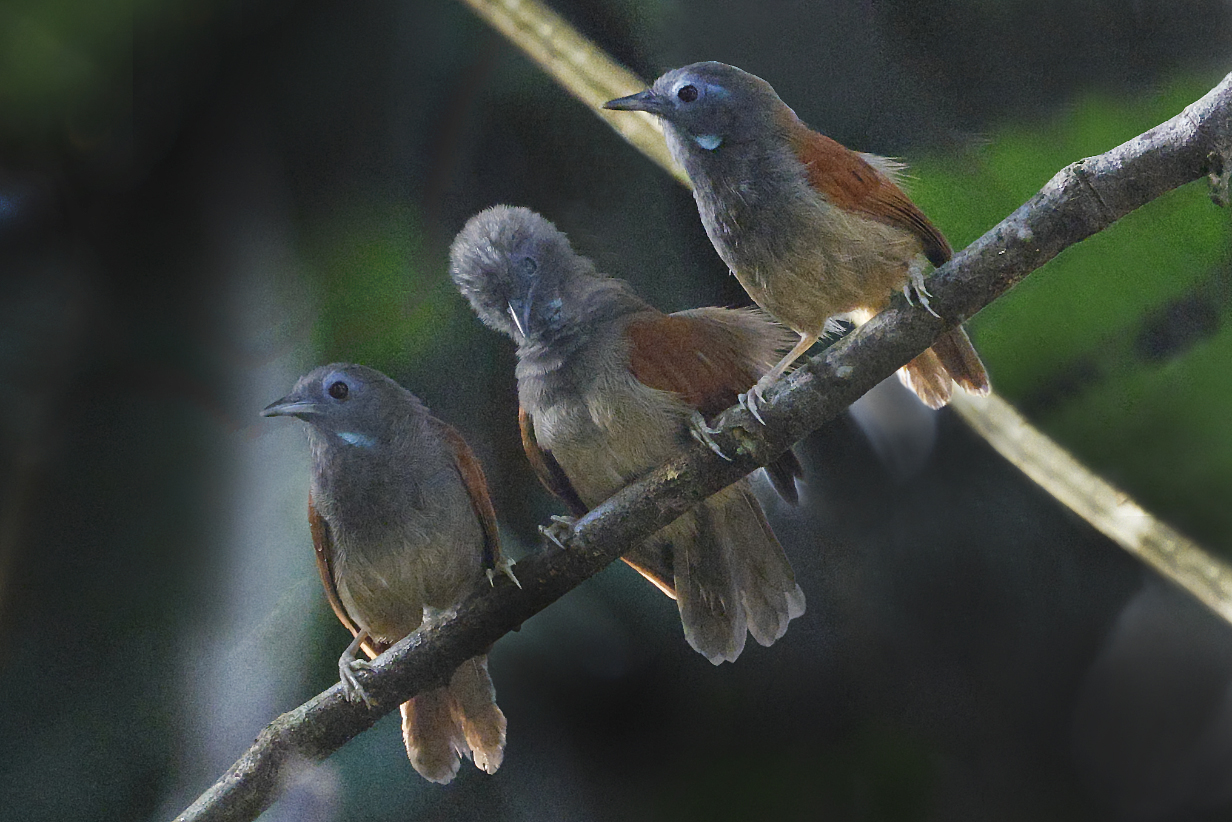
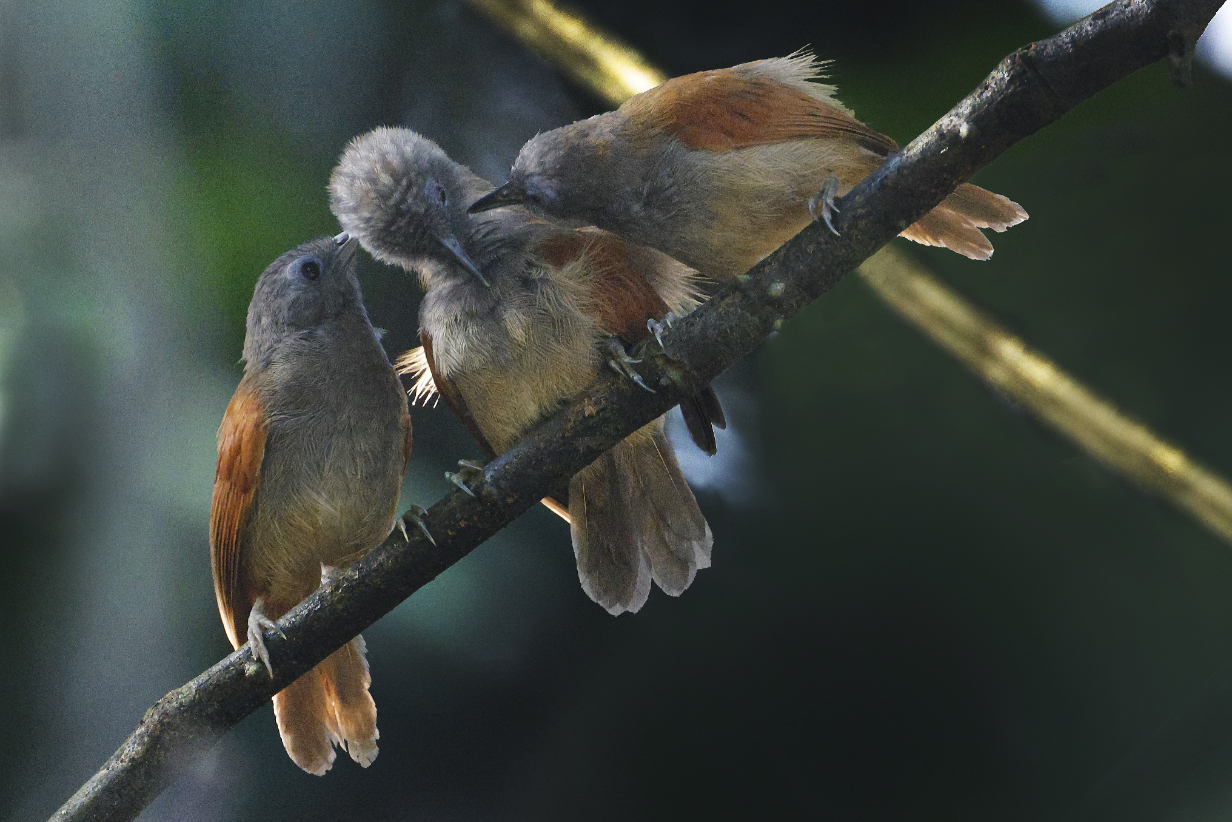
Gray-hooded babbler (These are my life birds -- very cute.)
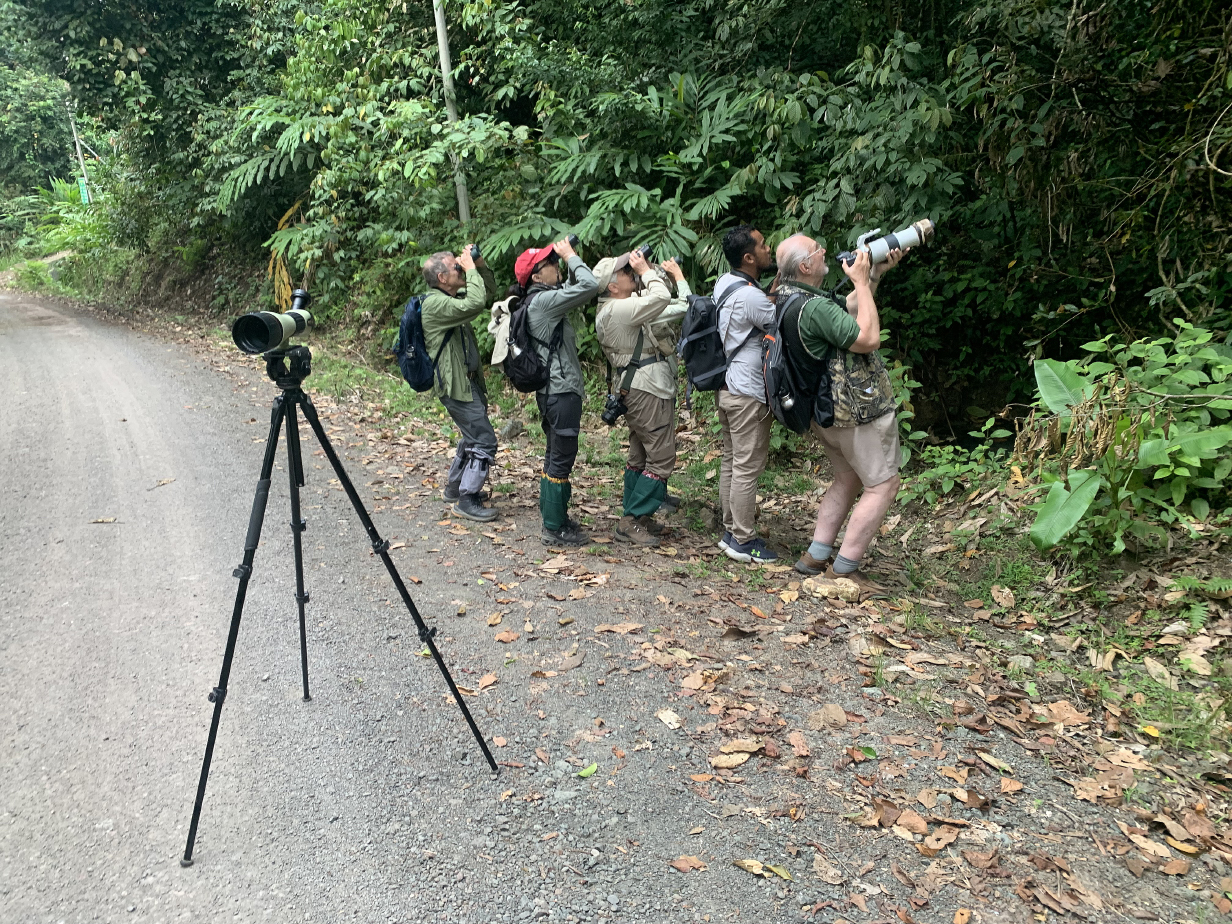
Birding from the lodge's main road, roughly half way to the canopy walkway as shown by the longitude and latitude recorded via GPS. Many thanks to Scott Baker for this picture, taken some time during the first two whole days at Danum Valley.
Purple-naped spiderhunter (This is my life bird.)
Purple-naped spiderhunter (The irridescent patches stand out dramatically from better angles.)
Yellow-breasted flowerpecker (This is my life bird. I got a better picture on March 30th.)
Whiskered treeswift (female)
Brown fulvetta (This is my life bird, another relative of the many fulvettas we saw in the Himalayan foothills.)
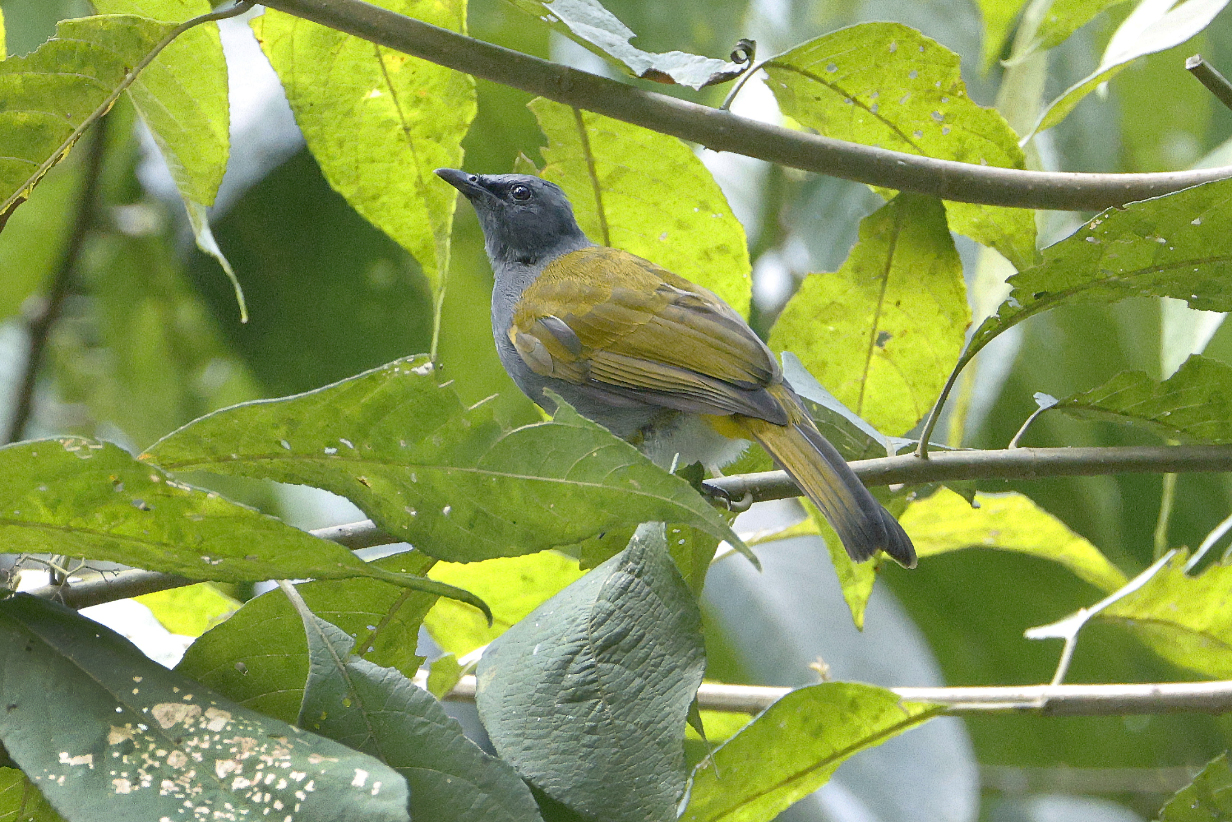
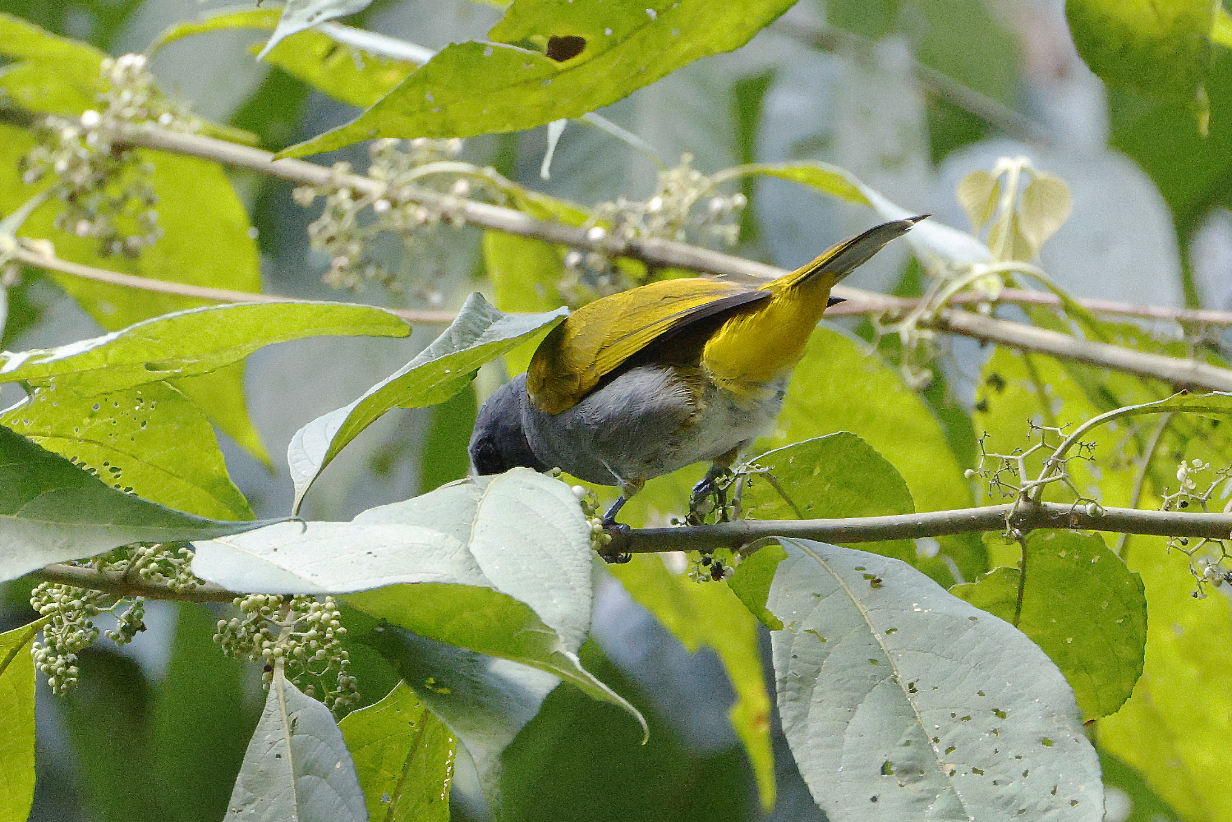
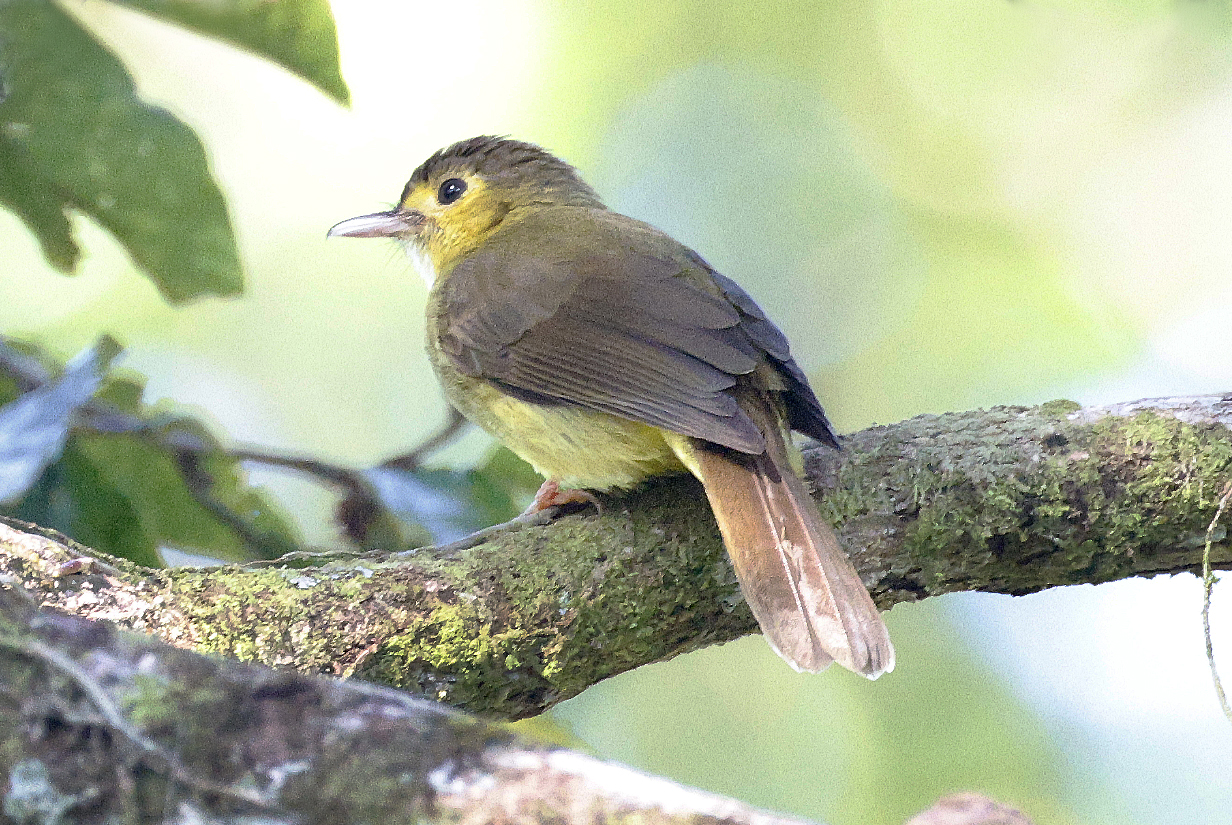
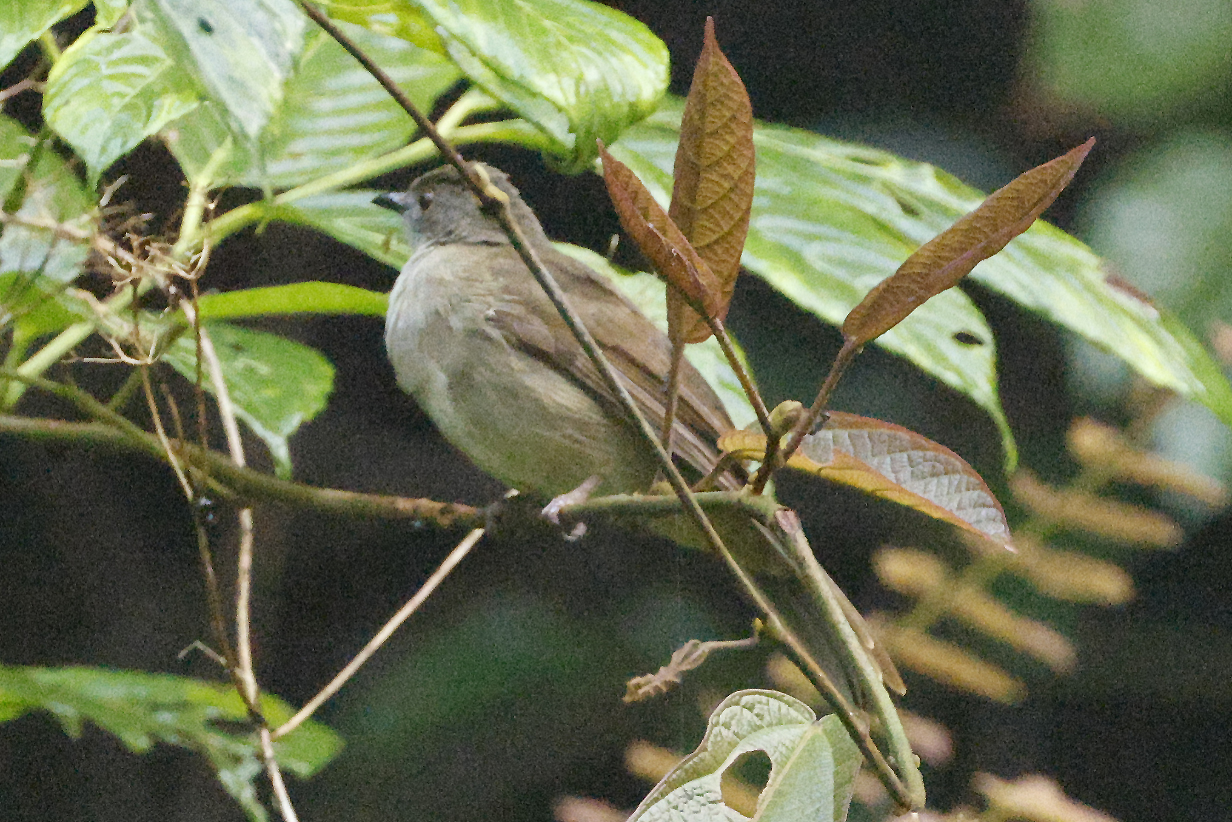
Gray-bellied bulbul (This is my life bird.)
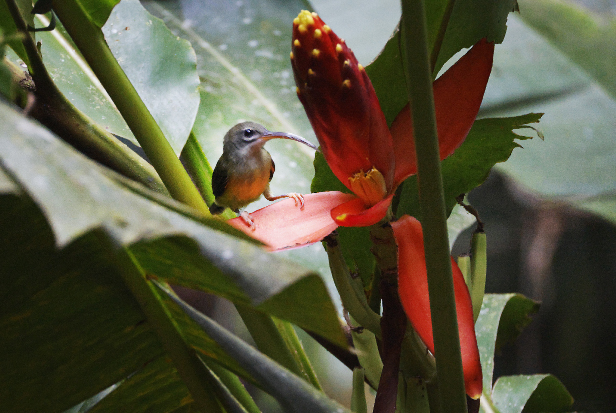
Little spiderhunter was one of my "nemesis birds" for many years. Mary got it on our 2018 trip to Arunachal Pradesh, India. I did not get it until our 2023 trip. But I never saw it well and I never got good pictures. Here in the Danum valley, we lucked out several times. It likes ginger flowers, so we had a "magnet" that attracted it to a predictable and easily visible place.
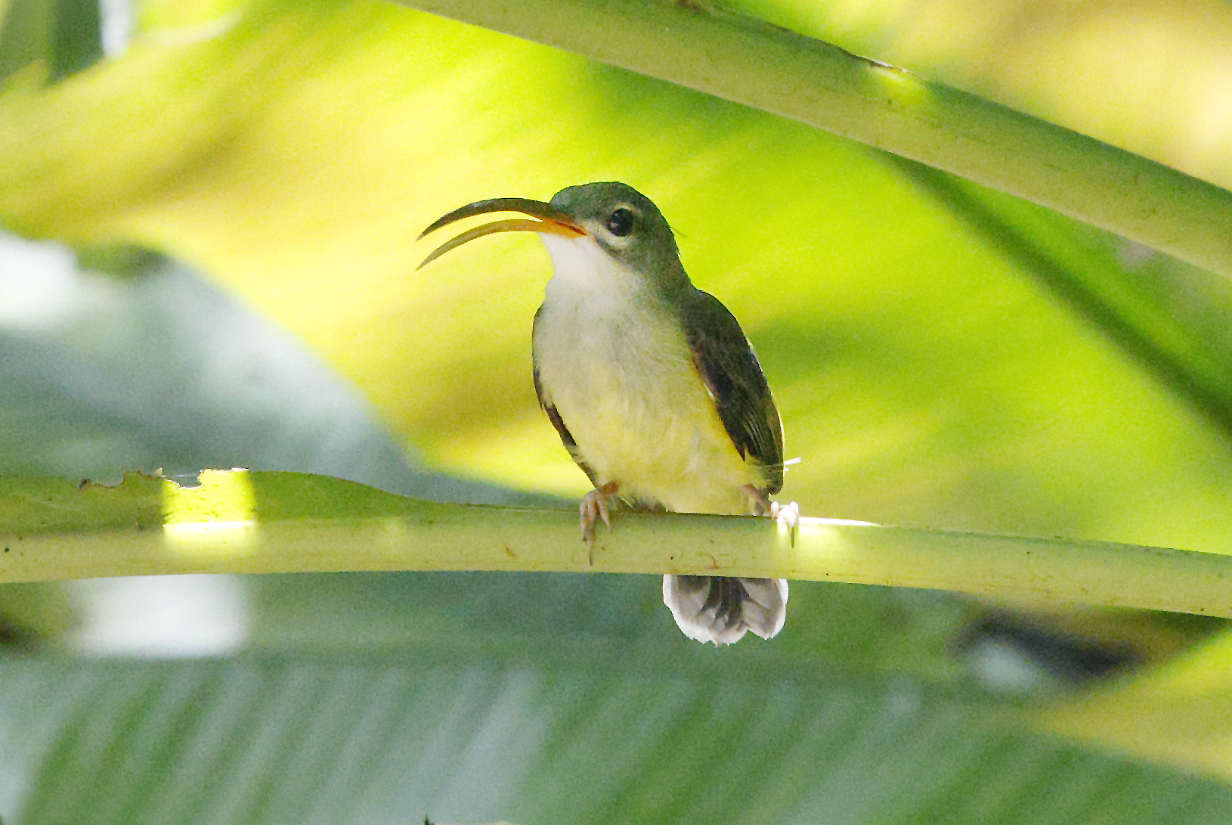
Little spiderhunter -- better
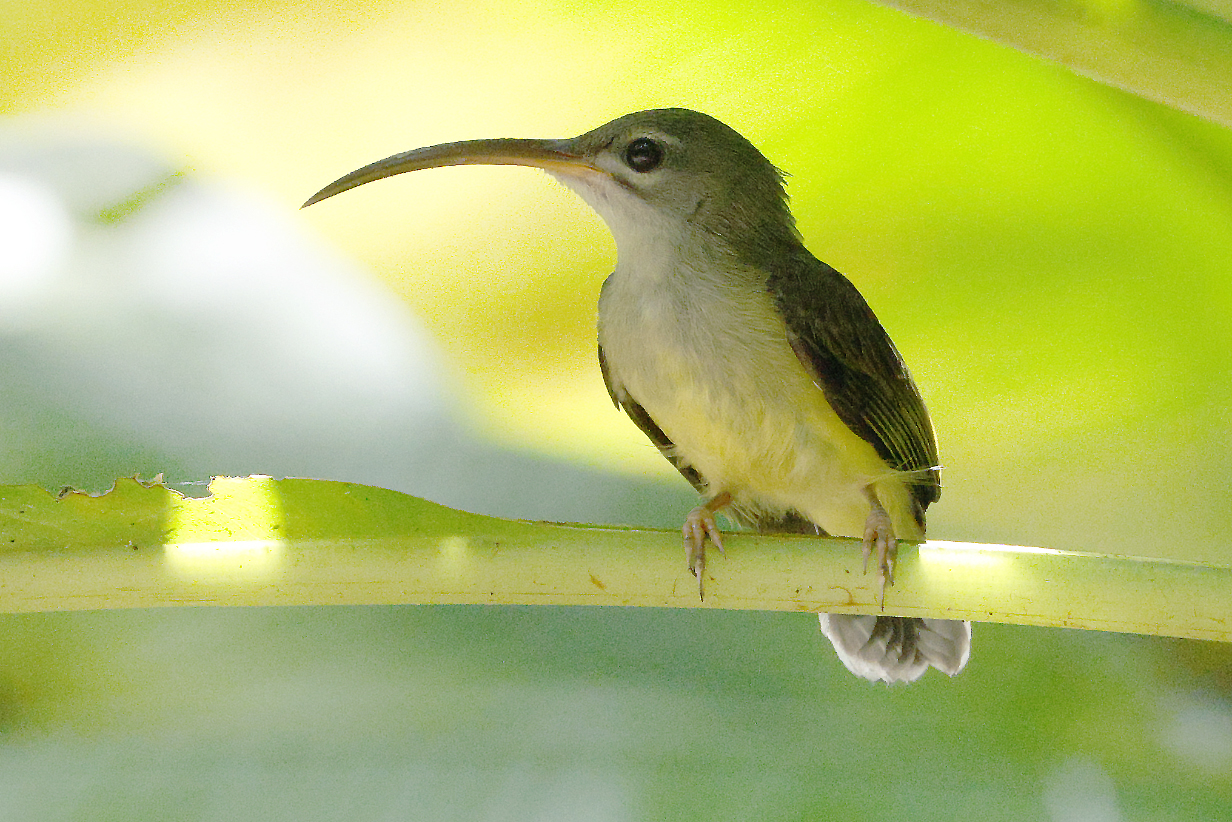
Little spiderhunter (Finally a shot that's reasonably worthy of such a great bird. The lighting could be better, but I am happy to have broken the jinx. I love these birds with spectacularly long and specialized bills, whether it is Little Spiderhunter in SE Asia or Akiapola'au in Hawaii or Sword-billed hummingbird in Ecuador. Superb!)
March 29: Danum Valley Rain Forest
This morning and afternoon, we again birded the main road on foot. In the afternoon, I got a ride back to the lodge from the canopy walkway. We had a brief torrential rain, ironically while I was in my shower; this was the only substantial rain during the day while we were in the Danum Valley. Drought in the area favored comfortable birding, but I had the feeling that we saw less than normal because the forest was more subdued than is normal for what is, after all, a "rain forest". In the evening, we had a night drive out to the main entrance of the lodge area.
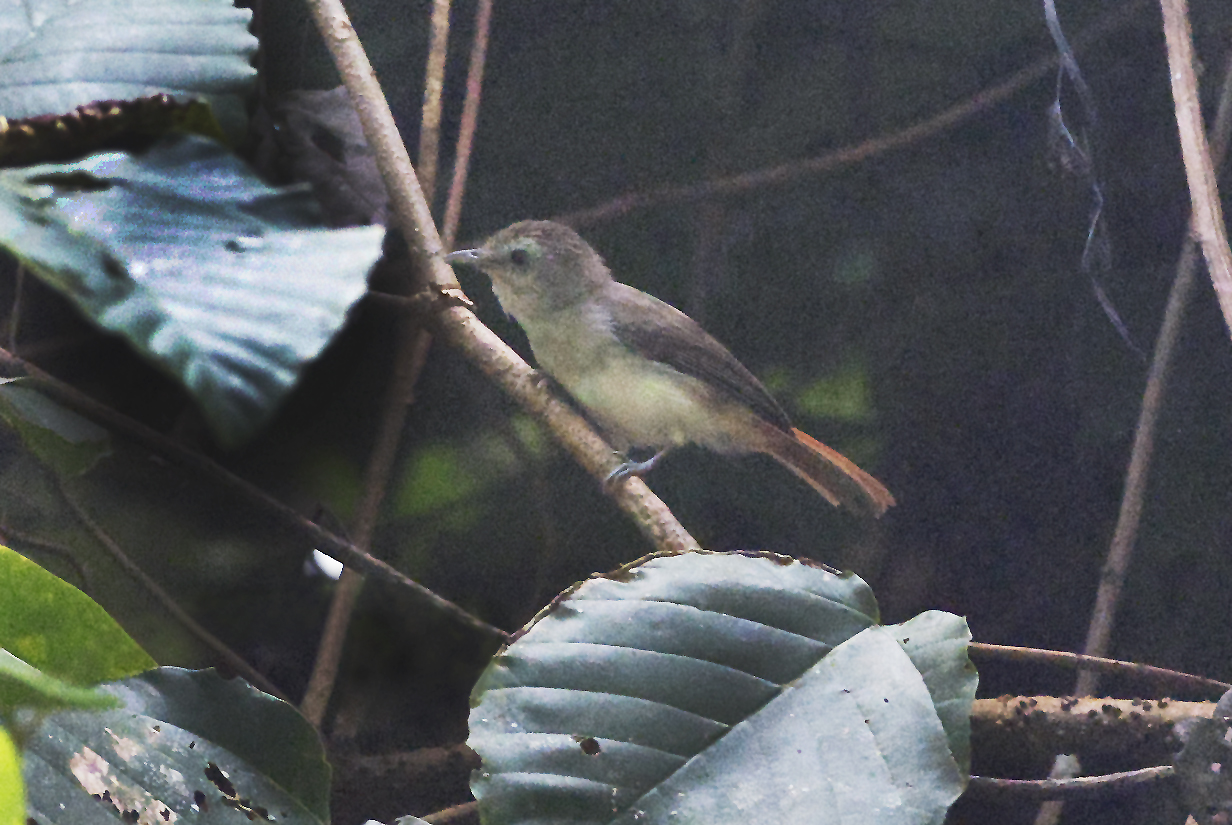
Sooty-capped babbler (This is my life bird. It is very dark when you bird low down in the rain forest and early in the morning; as a result, pictures at the start of the day, emphatically, and to only a modestly lesser extent later in the day have a lot of digital noise.)
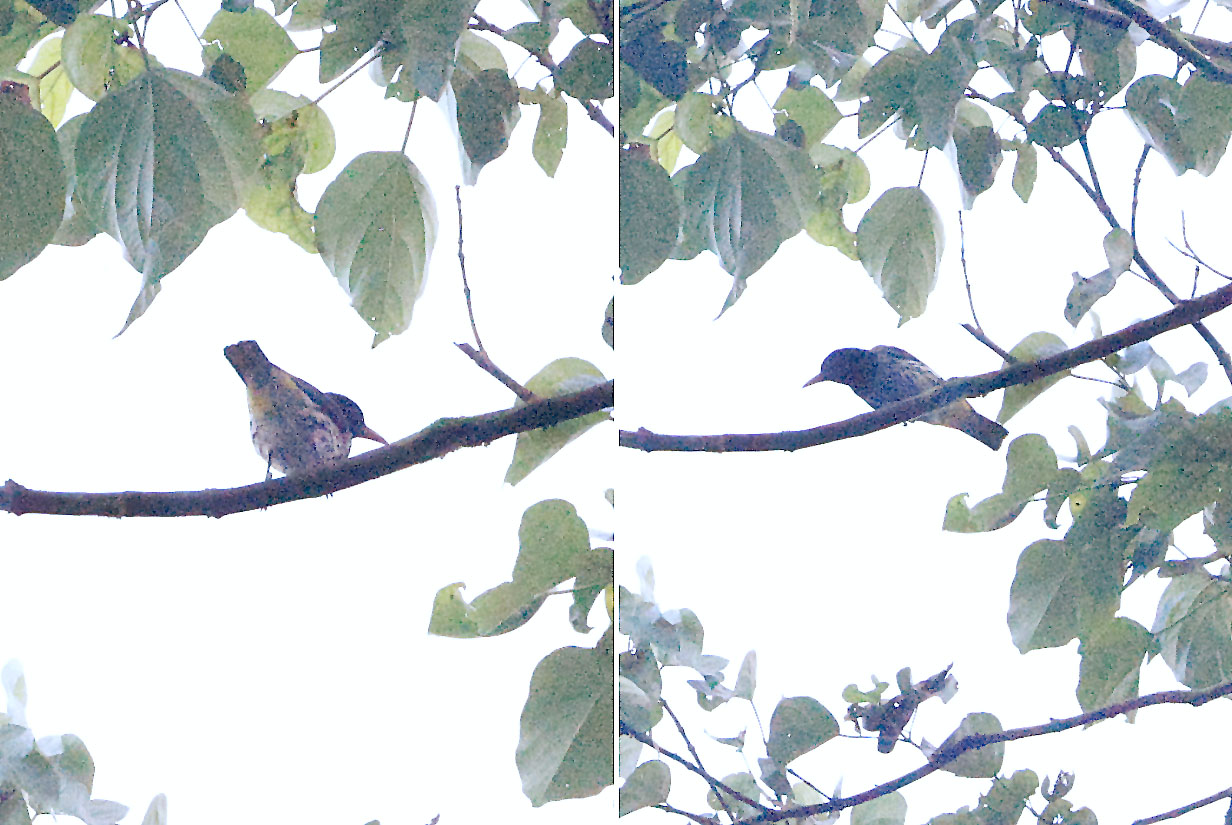
Ventriloquial oriole (This is my life bird in two of the worst pictures of the trip. It was a frustrating time: birds were -- as here -- high and far away or low, obscured by leaves, and dark. Walking for many hours was tiring, cumulatively so at Danum Valley. These pictures show -- albeit not well -- most of the defining features of the bird: the red bill, white streaked breast, and yellow vent area. They do not show the yellow upper back. Other people saw the bird several times during our time at Danum Valley. This was my only look.)
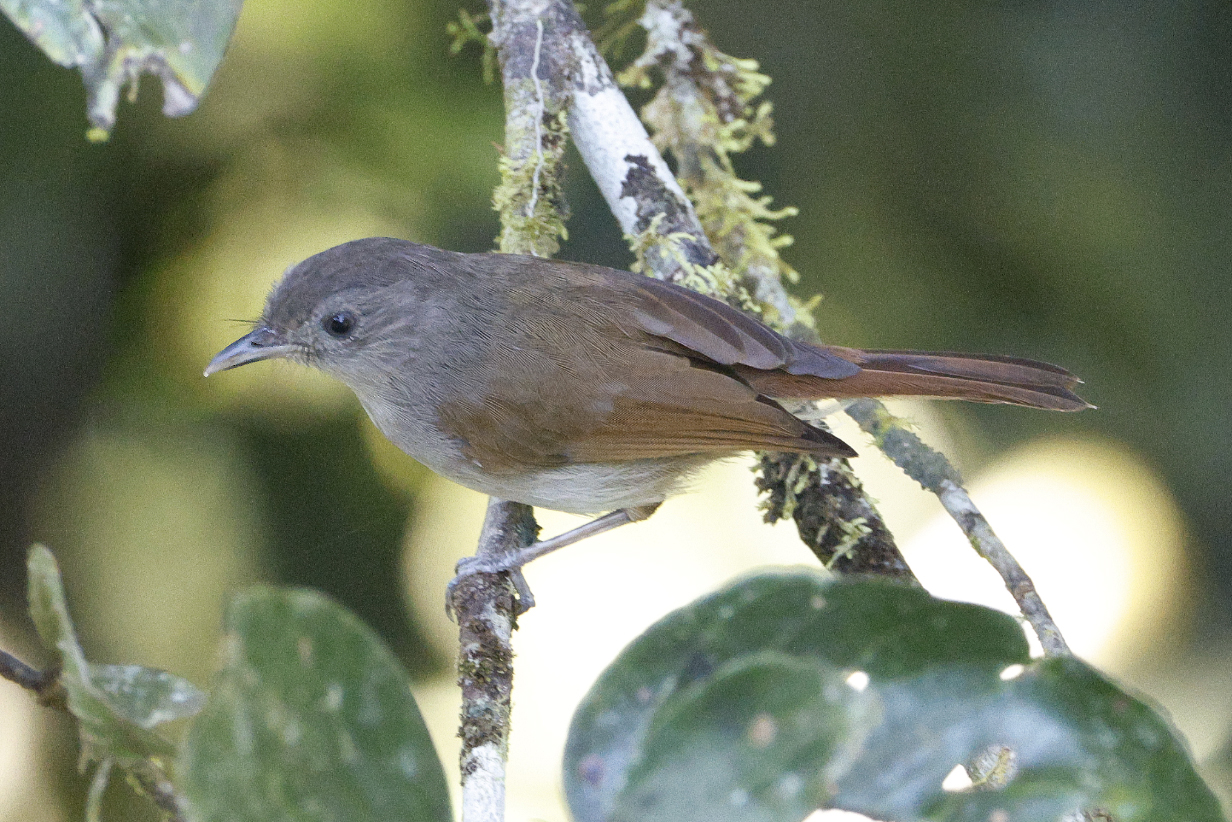
Brown fulvetta from the canopy walkway. Unlike the one at Sepilok, this canopy walkway is (entirely safe but) much shakier when people walk on it. I have trouble with heights under these circumstances. But I managed to get as far as the second platform, well up and much closer to the action. As always when I was able to get high up, birding was much improved.
Hairy-backed bulbul (This is my life bird, from the canopy walkway platform.)
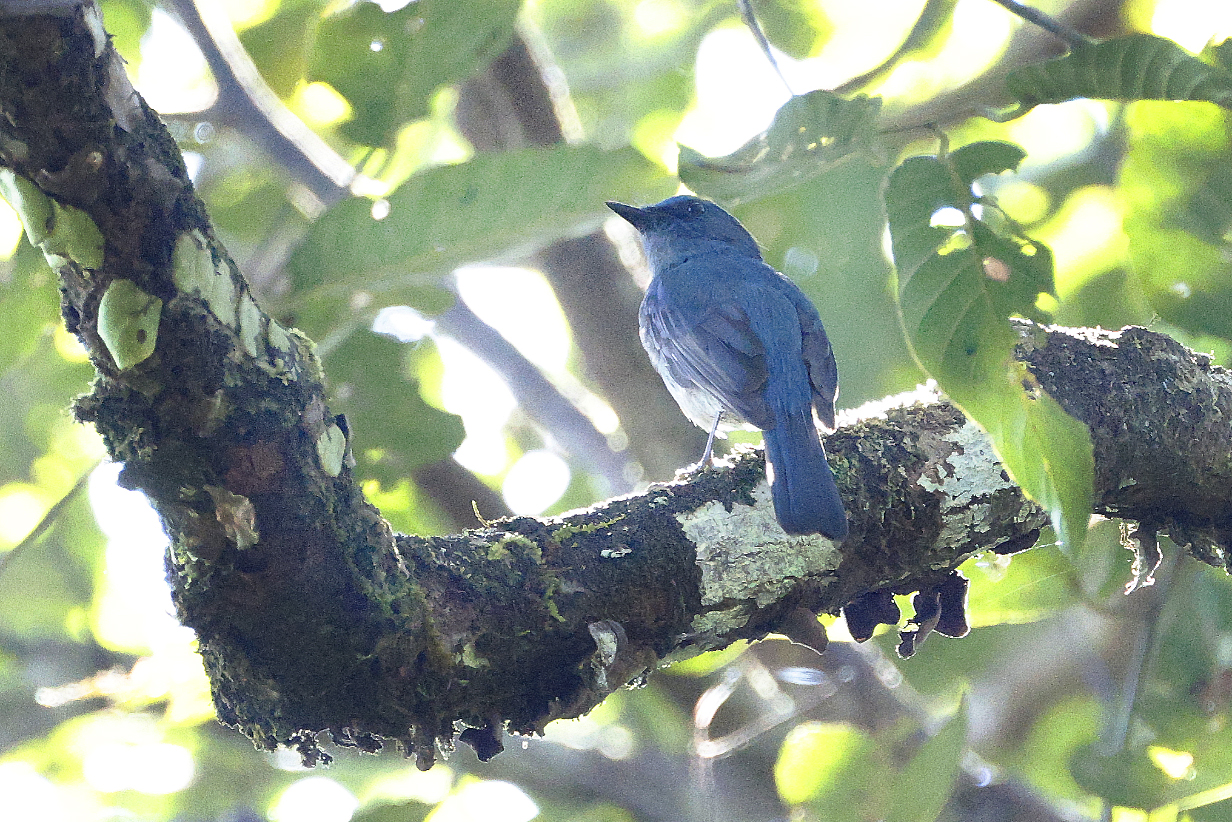
Pale blue flycatcher (This is my life bird, from the canopy walkway platform.)
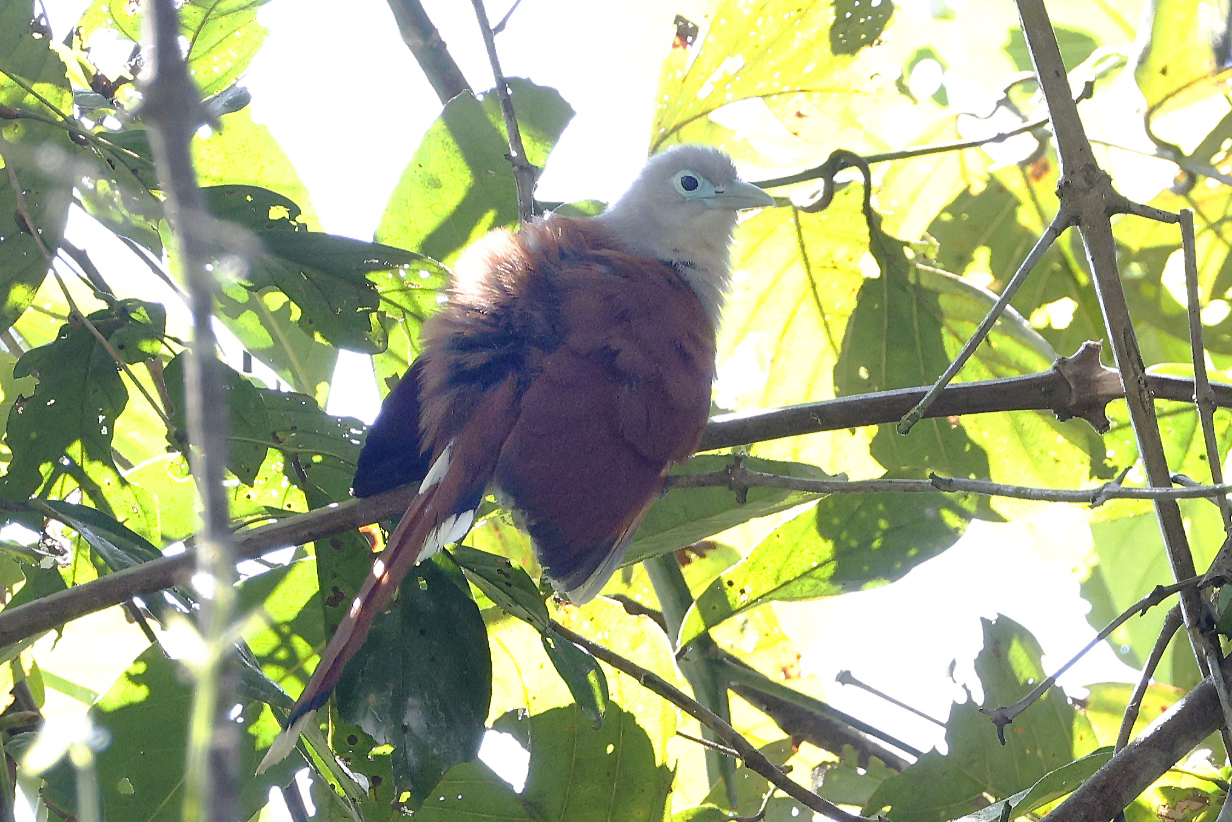
Raffles malkoha (This female is my life bird, from the canopy walkway platform. Looking decidedly unkempt.)
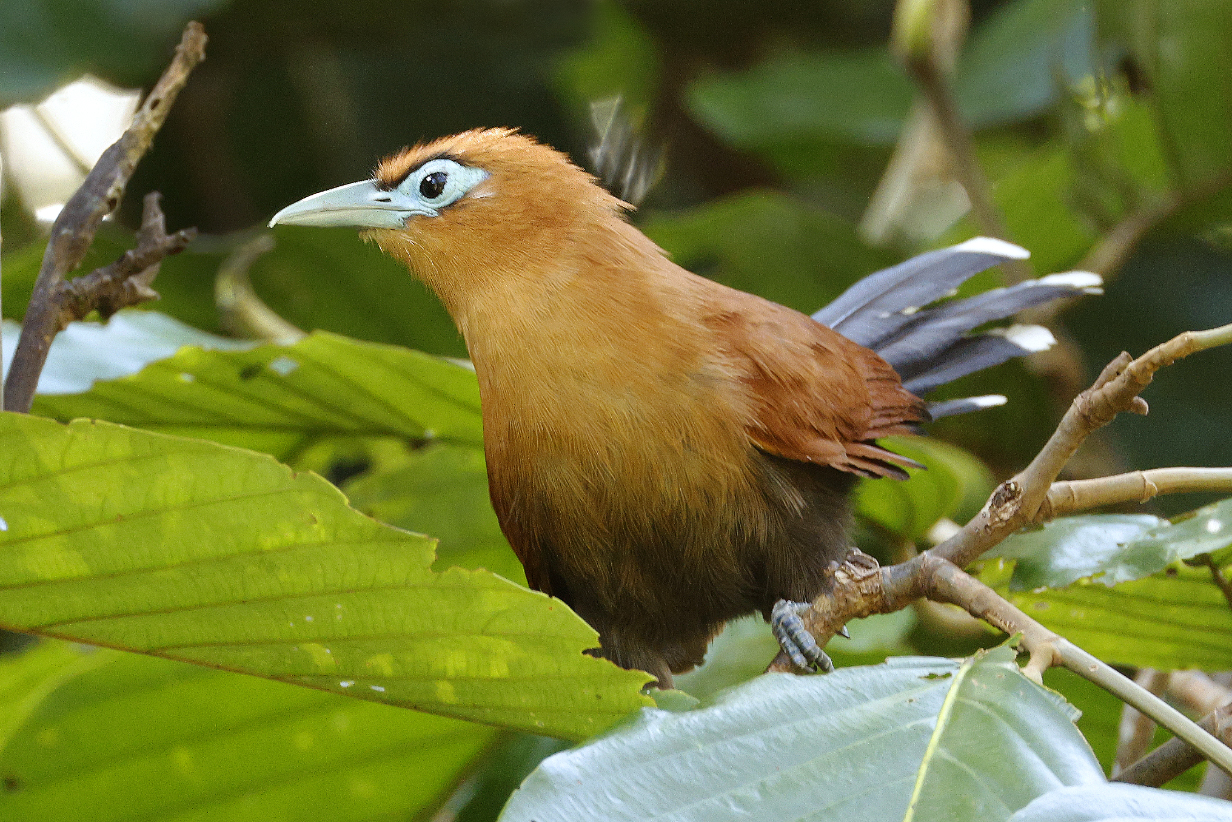
Raffles malkoha (This is a male, from the canopy walkway platform. Looking spiffy.)
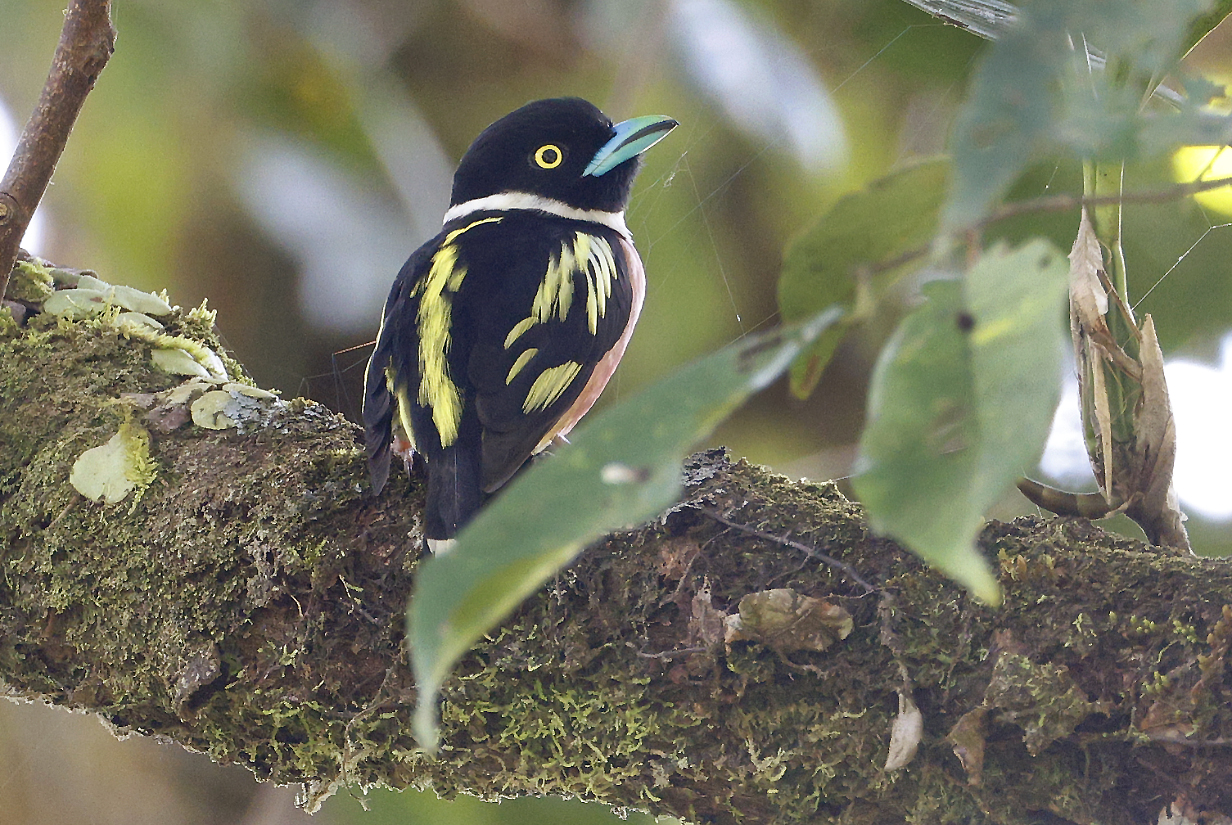
Black-and-yellow broadbill from the canopy walkway platform.
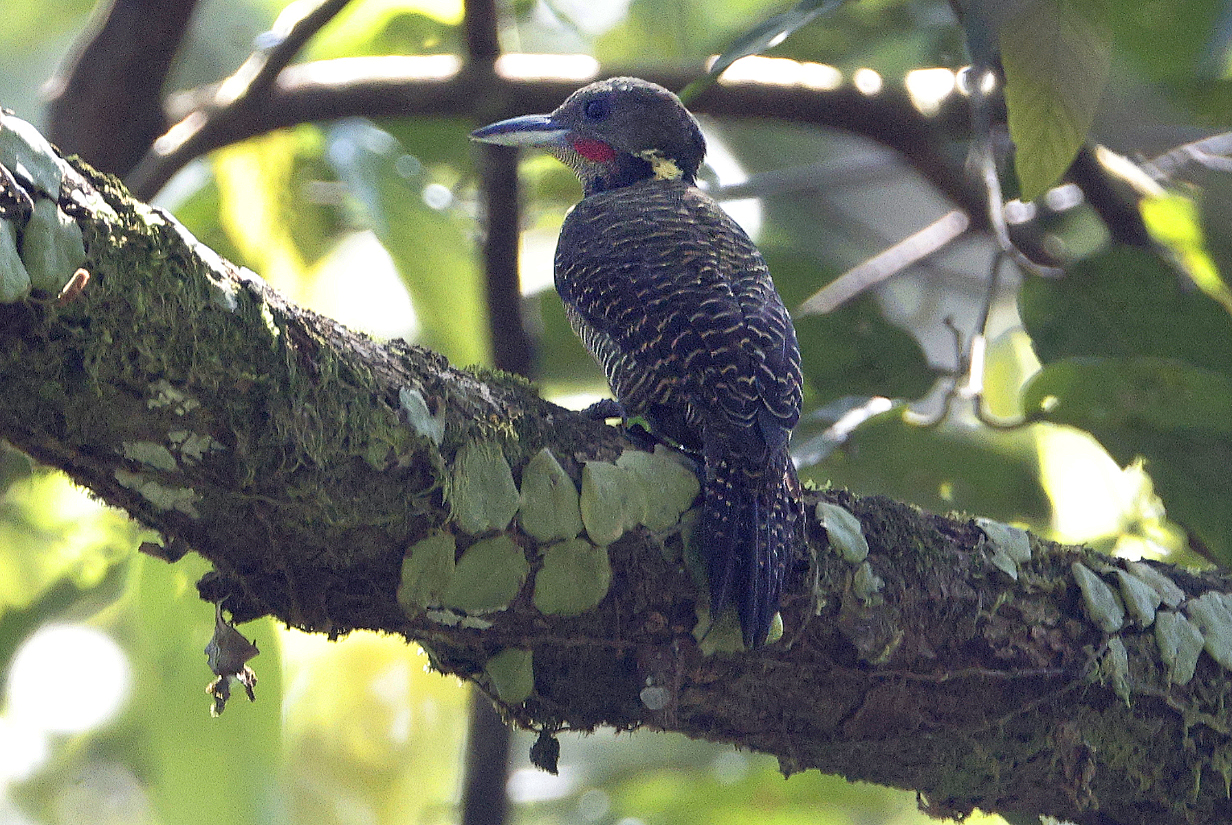
Buff-necked woodpecker (This is my life bird, from the canopy walkway platform.)
Yellow-rumped flowerpecker
Black-crowned pitta during night drive
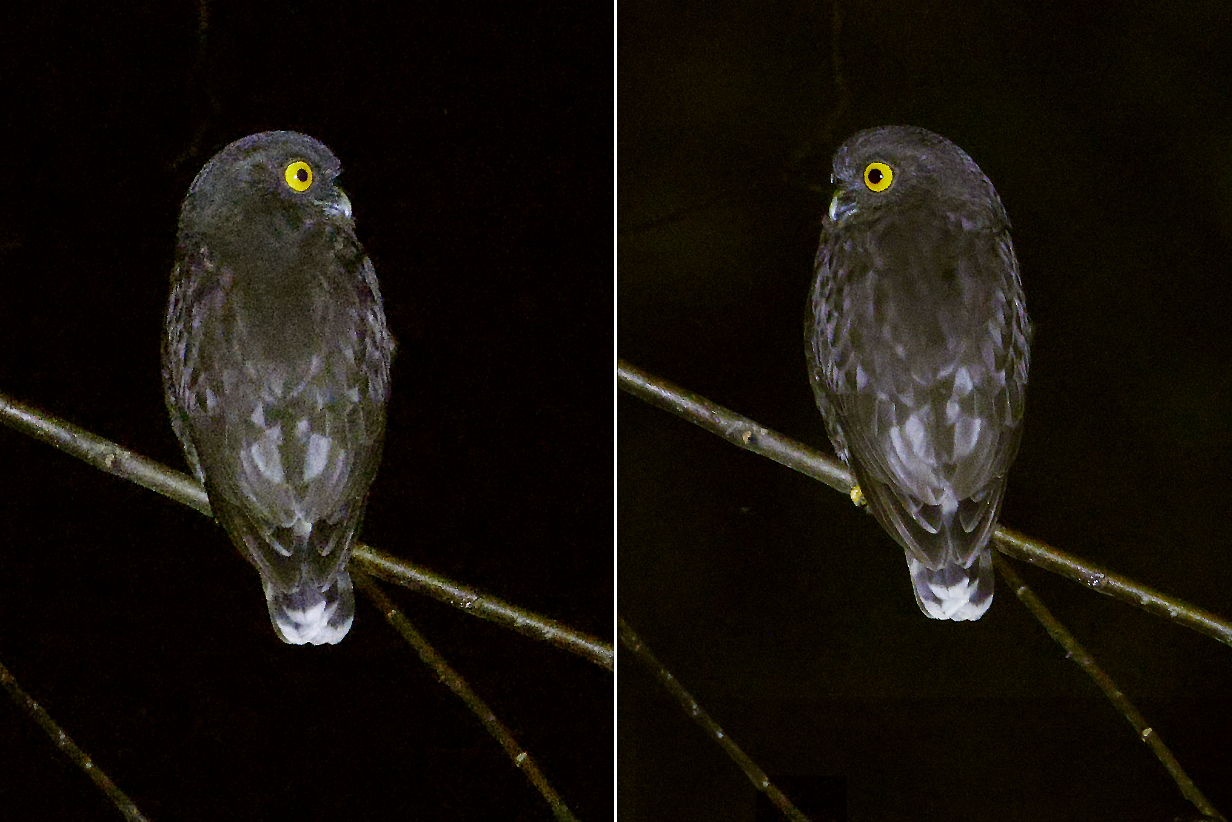
Brown boobook during night drive (Both pictures were taken at 742 mm focal length and with auto white balance -- the color of LED illumination is sufficiently like daylight. Both pictures were identically tweaked to make the color balance slightly redder. The left picture was taken with ISO 32,000, 1/125 second exposure at f/9, 2.33 stops underexposed. It was taken in a hurry: you are never sure whether the bird will fly or whether the illuminators will stop. With more time to think, the right exposure was taken at ISO 8000, 1/40 second exposure at f/9, also 2.33 stops underexposed. Note that the hand-held illumination is likely to be different for the two pictures. In principle, the left exposure might be sharper but with more digital noise. The right picture certainly has less digital noise. It may be sharper as a result -- that was the intention -- but you are crazy dependent on image stabilization when you shoot 1/40 second at 742 mm focal length. In the end, there is not much difference in quality. This switch from a full-speed-ahead rush to more thoughtful parameters dominates a lot of bird photography, especially during night-time, subject-illuminated photography.)
March 30: Danum Valley Rain Forest
Today was frustrating. Birding was quiet and I was cumulatively tired. I saw little. I gave up on the morning walk at 08:45 and got a ride back to the lodge to rest. Birding in the afternoon was slightly better but still slow. Drought in a rain forest is superficially helpful, because I cannot bird in rain, but I suspect that birds are subdued and hard to find.
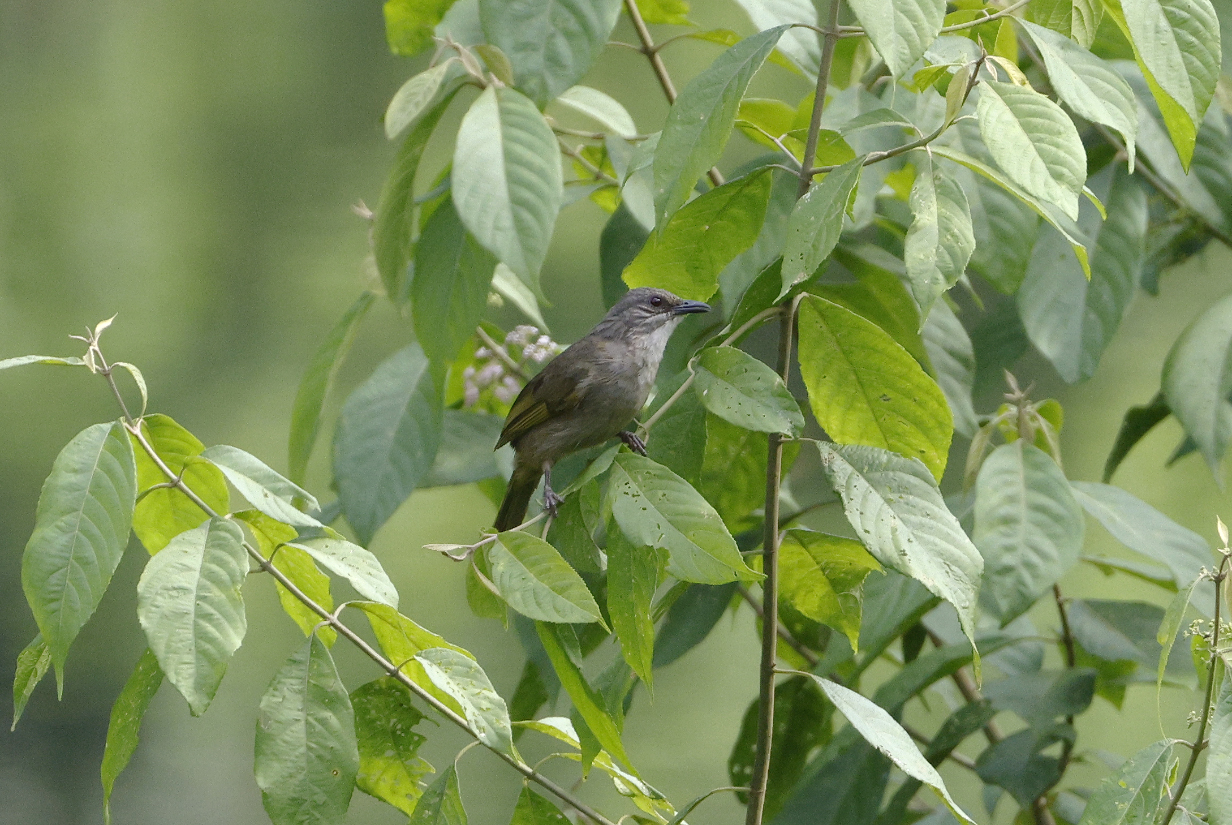
Spectacled bulbul was my only life bird of the morning. There is hint of the orange eye-ring in the original picture.
Olive-winged bulbul, also seen from the Sepilok canopy walkway on March 23 and in Singapore in 2025
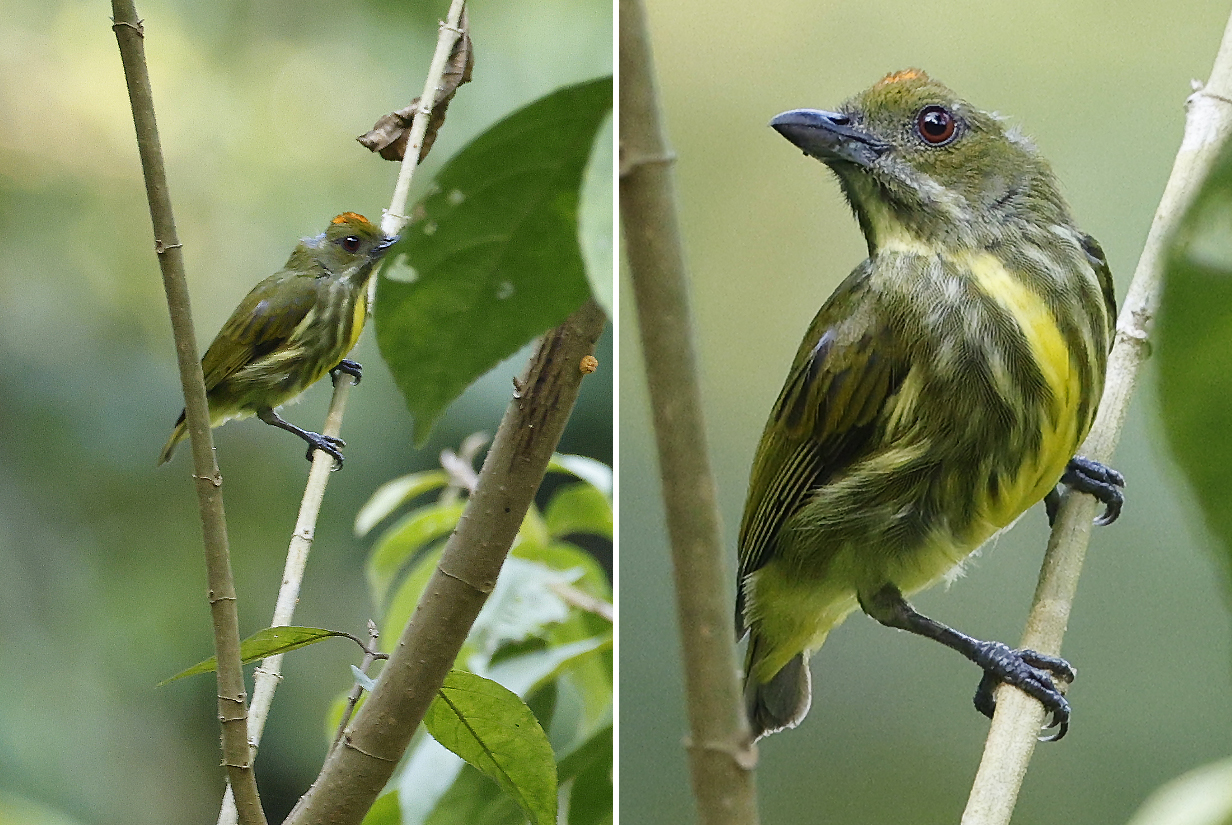
Yellow-breasted flowerpecker (I got my life bird on March 28.)
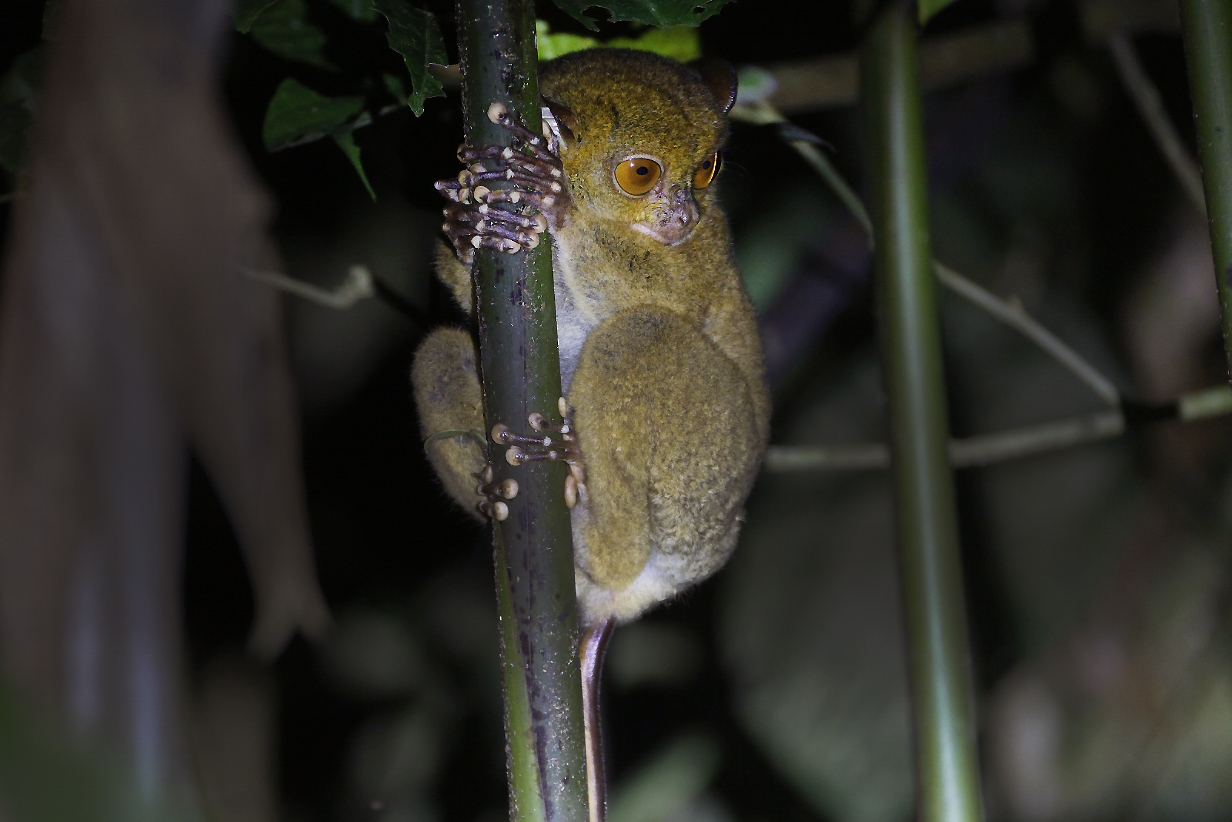
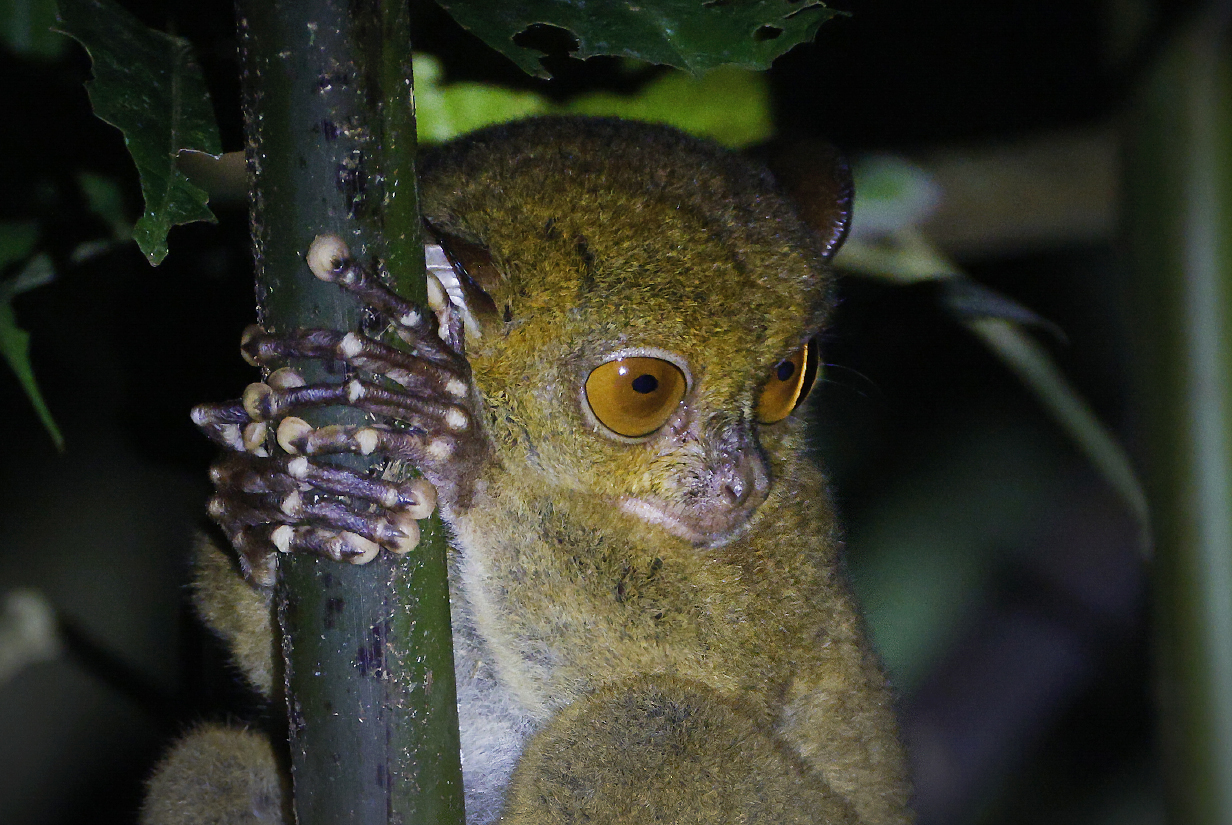
Horsefield's tarsier (Cephalopachus bancanus borneanus) during our night drive. Paraphrasing Wikipedia, Horsefield's tarsier is nocturnal, sleeping alone during the day. It is carniverous and eats mainly arthropods such as beetles, grasshoppers, katydids, crickets, butterflies, moths, cockroaches, praying mantis, ants, phasmids, cicadas, dragonflies, freshwater crabs, and spiders. It can eat small vertebrates such as flying frogs, bats, and snakes, even venomous snakes. Has also been found to eat birds, including spiderhunters, warblers, kingfishers, and pittas, while they are sleeping at night. This was an especially important and much appreciated sighting.
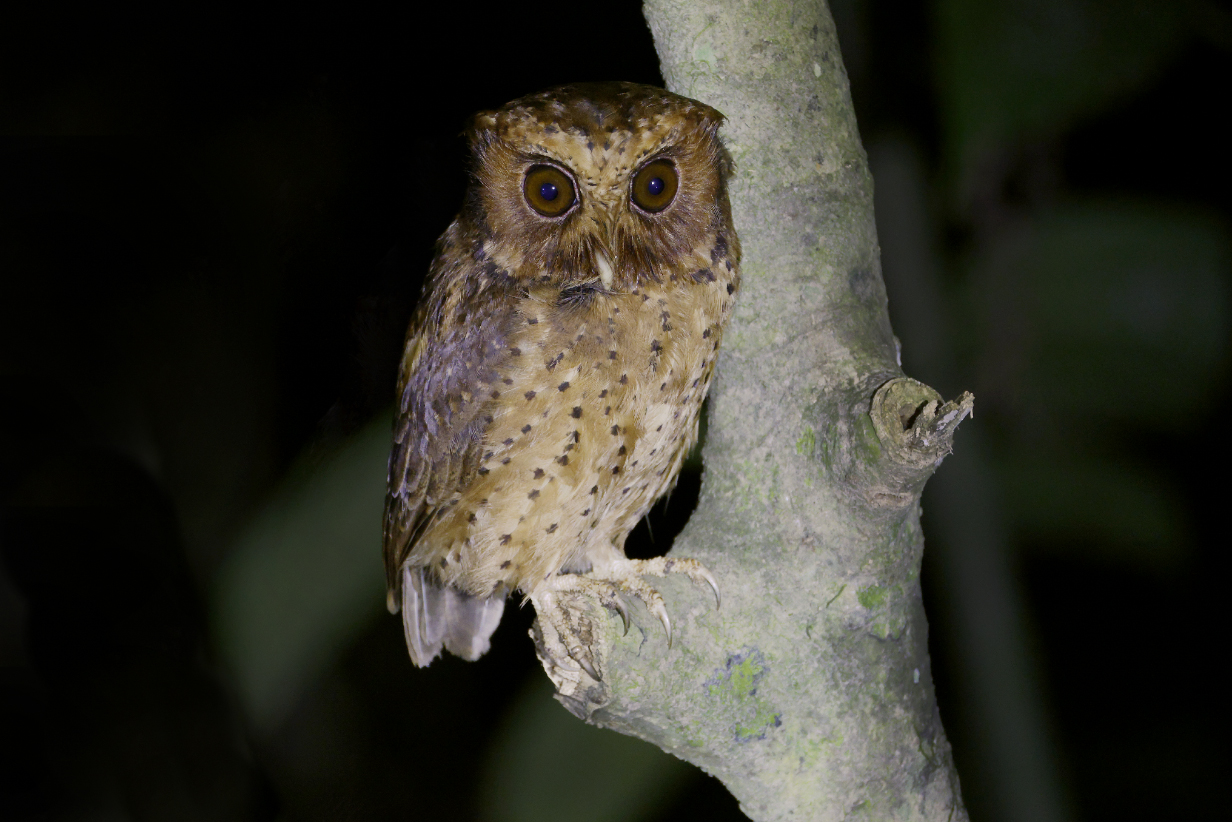
Reddish scops owl (This is my life bird -- excellent!)
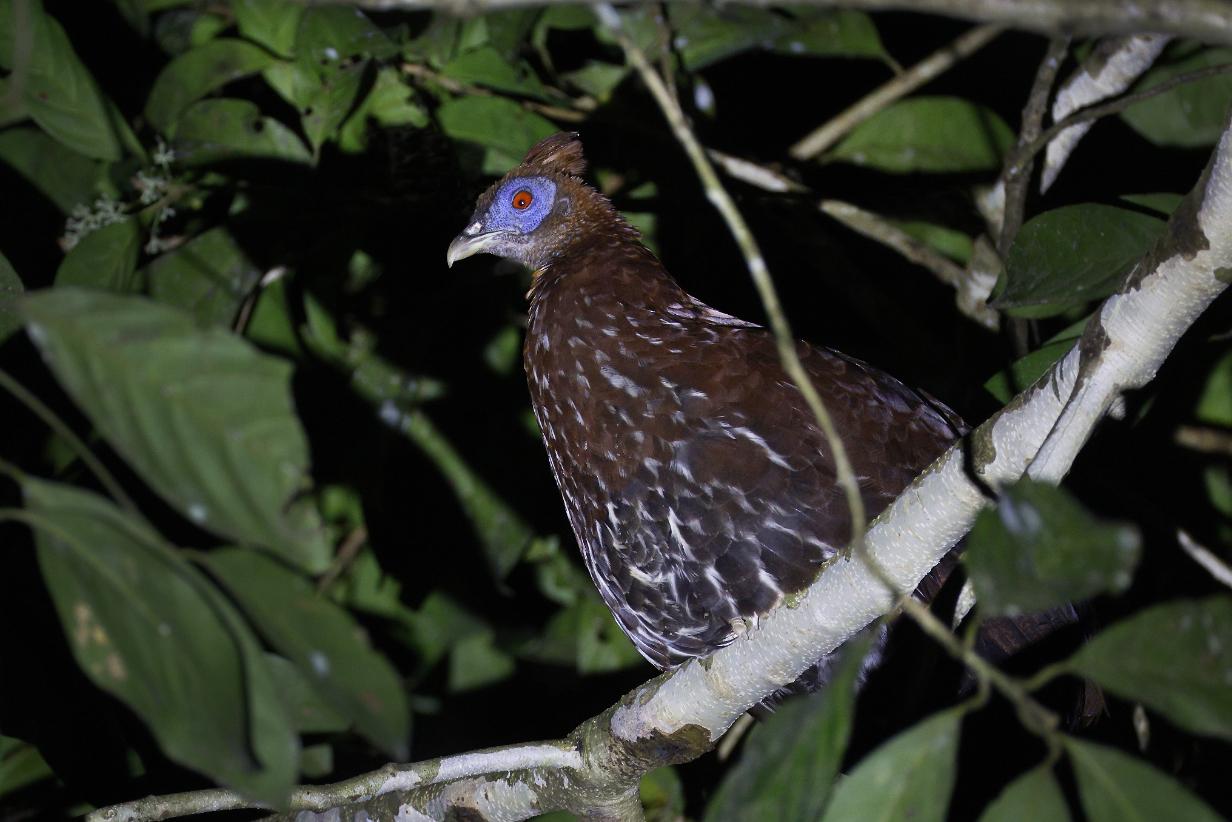
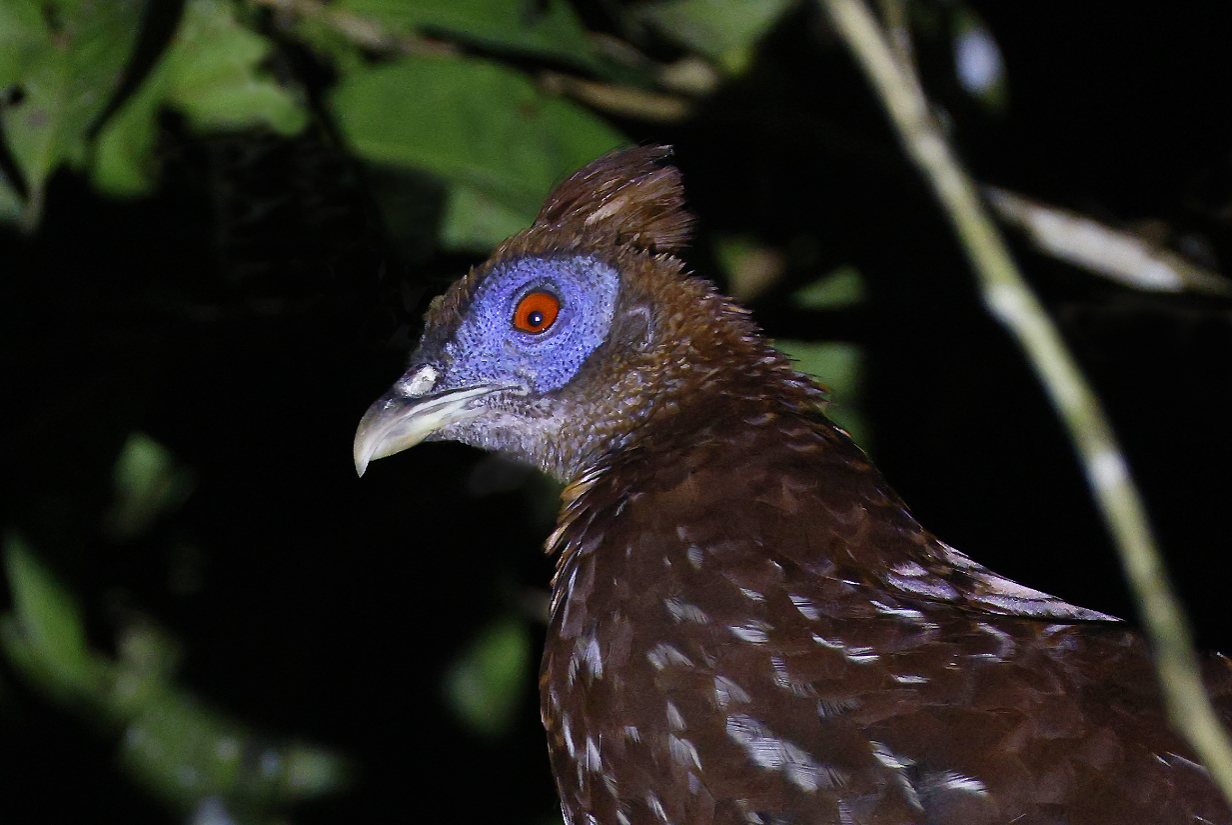
Bornean crested fireback -- spectacular last spotting by local guide Hazwan Suban -- almost straight upward -- ending the last night drive on the last birding day of the Borneo tour.
March 31: Drive to Lahad Datu and Flight to Kota Kinabalu: Tour Farewell Dinner
I tried the AM bird walk but recorded no important sightings. There followed a several-hour drive back to Lahad Datu from which we flew routinely to Kota Kinabalu. In the evening, we had a warm and friendly farewell dinner. Ours was the most congenial group of people with whom I have had the privilege to bird on any group tour. We enjoyed an extraordinarily rich array of experiences together. And it was good to crash in the luxury of the Shangri-La Hotel.
April 1: Flights from Kota Kinabalu via Kuala Lumpur to Singapore
Malaysia Airlines was fine in the air but less than ideal on the ground. Eventually, I got to Raffles Hotel in Singapore and very much enjoyed immersion in true luxury.
April 3 - 8: Birding Singapore
After a day of rest, I birded for 6 days in Singapore, again guided by Mr. Kim Seng Lim, who wrote the book on The Birds of Singapore. As in 2025, birding with him was a privilege.
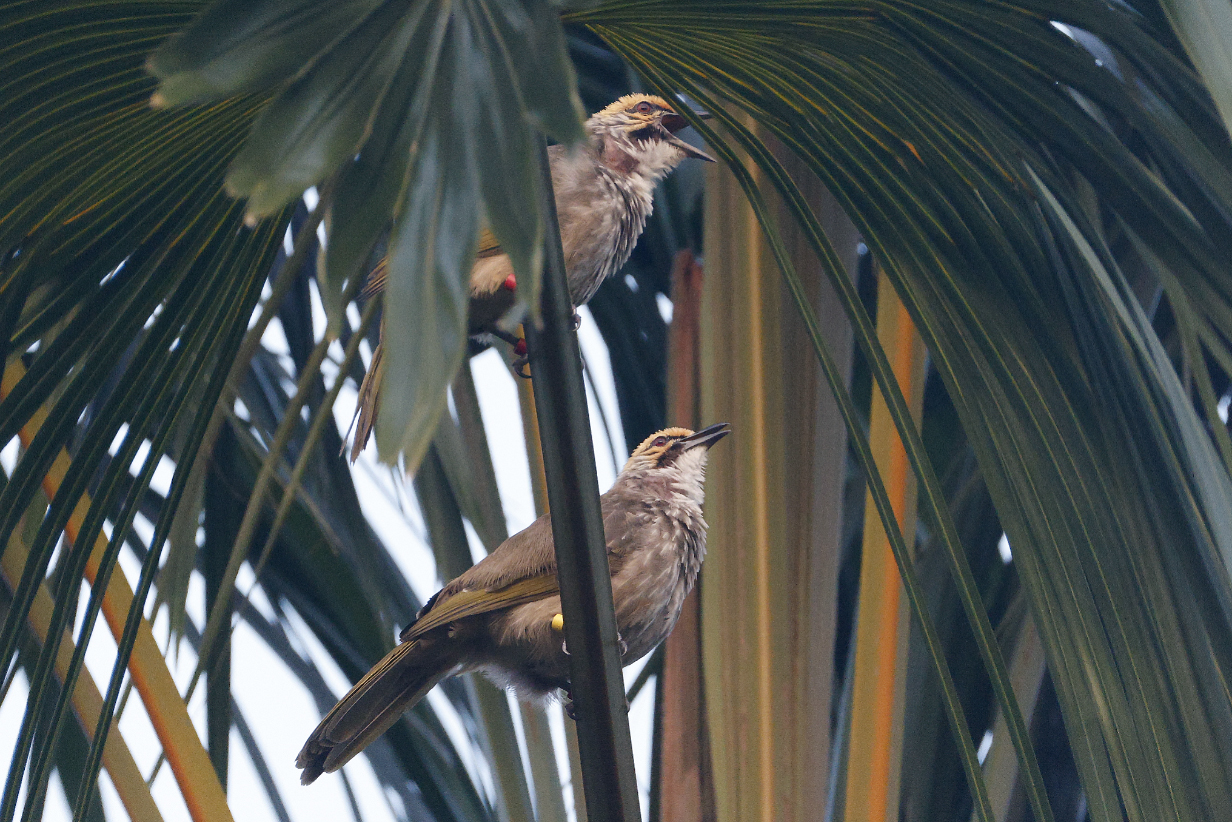
Straw-headed bulbul was difficult in Borneo but characteristically easy in Singapore, here at Dairy Farm Nature Park.
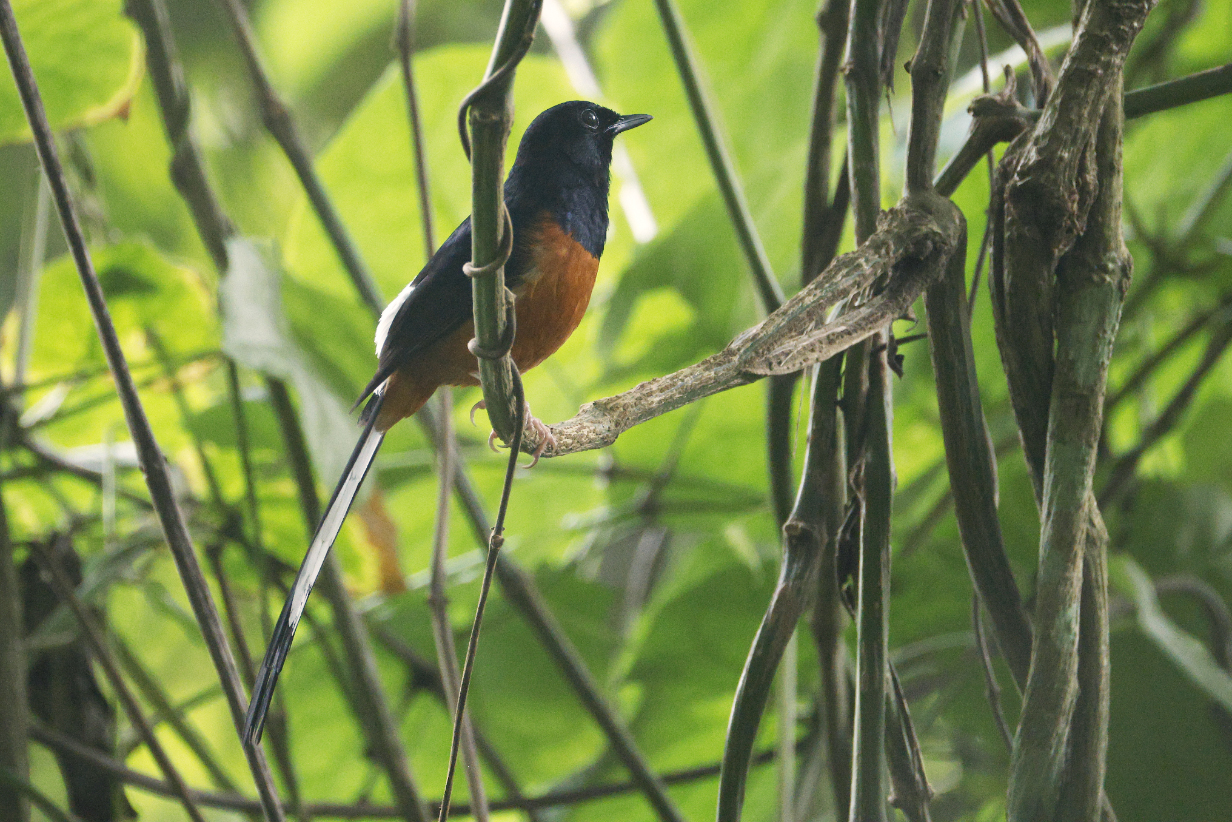
White-rumped shama (an old friend from Hawaii, India, and last time in Singapore)
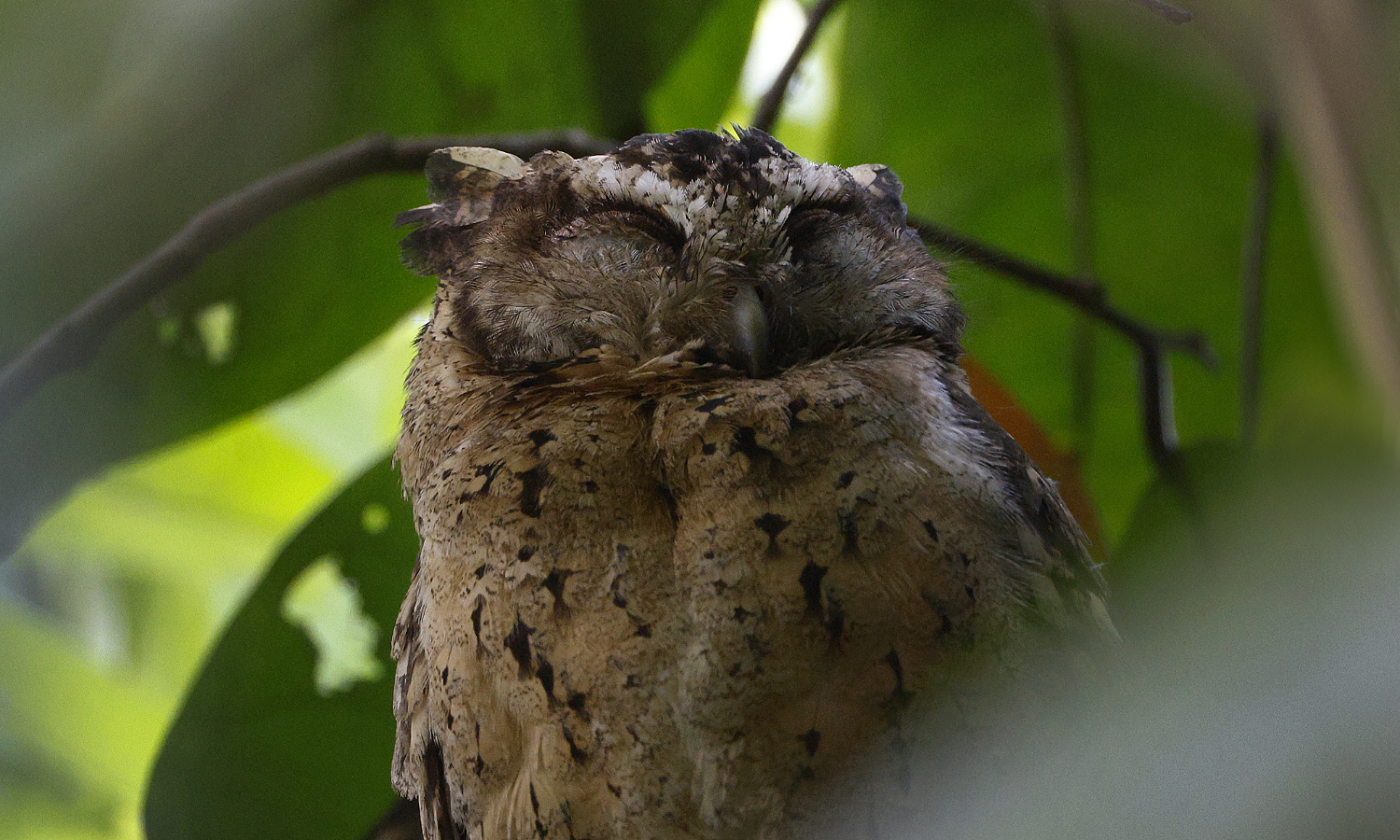
Collared scops owl (seen also in India)
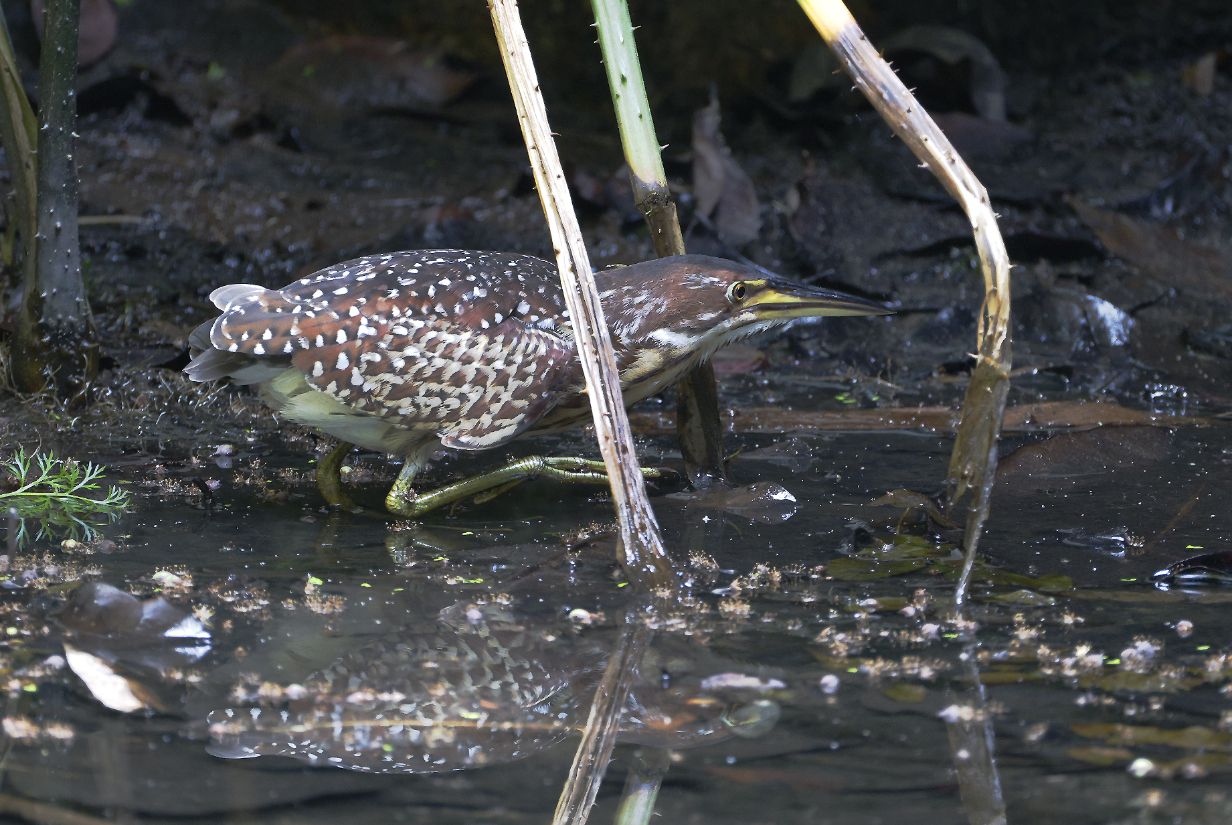
Schrenck's bittern at Sungei Buloh Wetland Reserve (This juvenile is my life bird.)
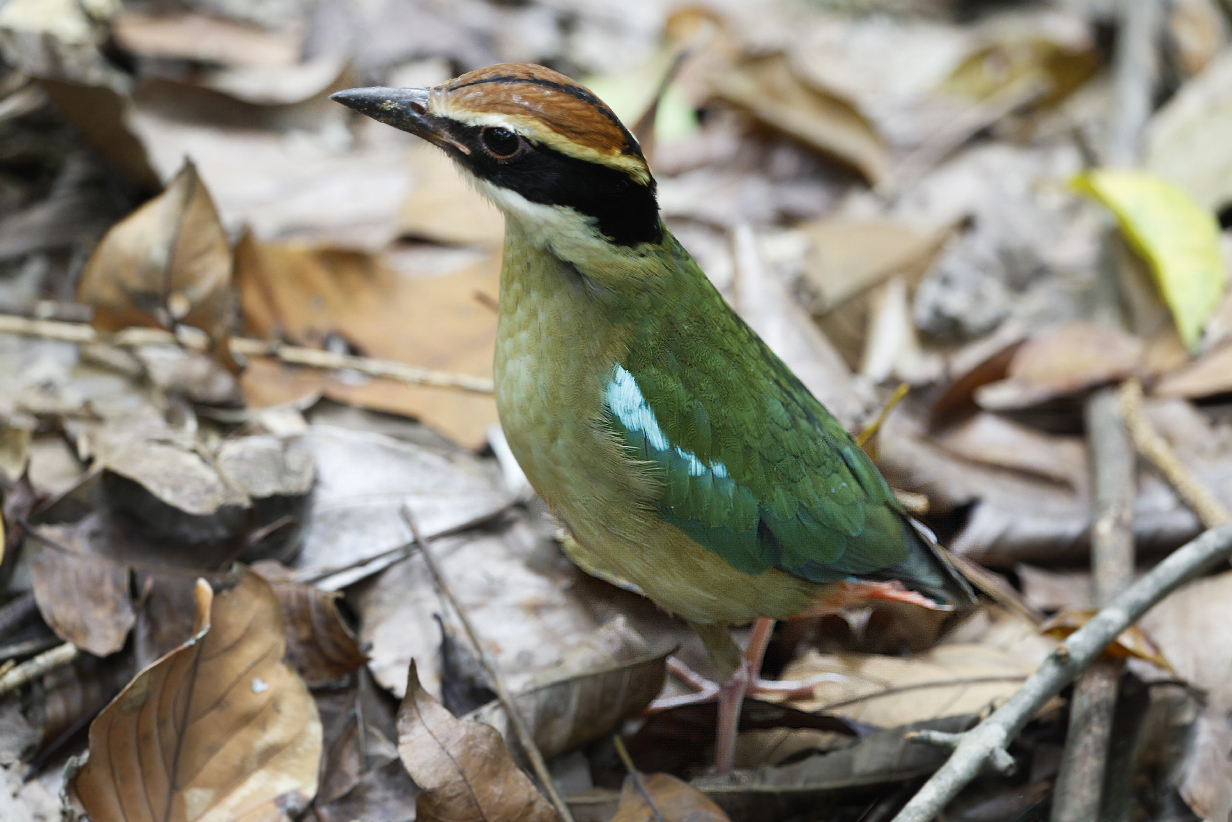
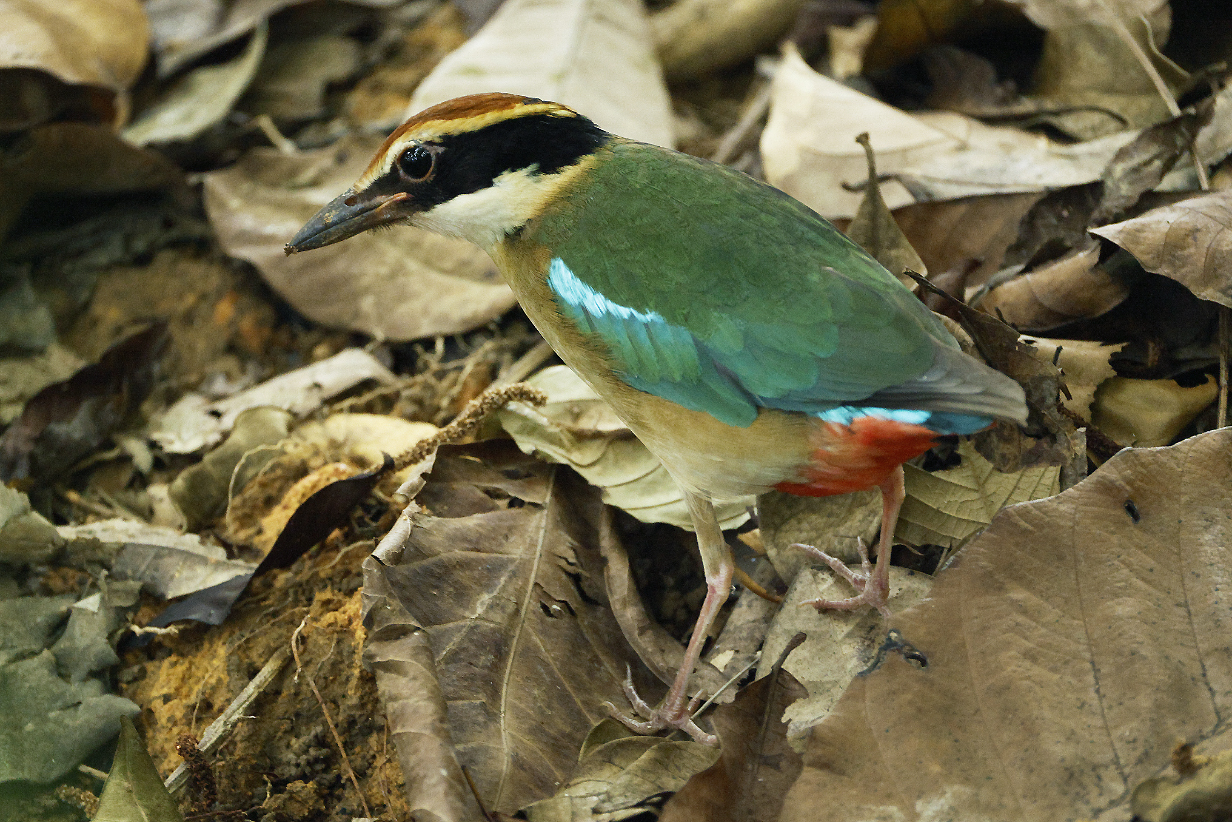
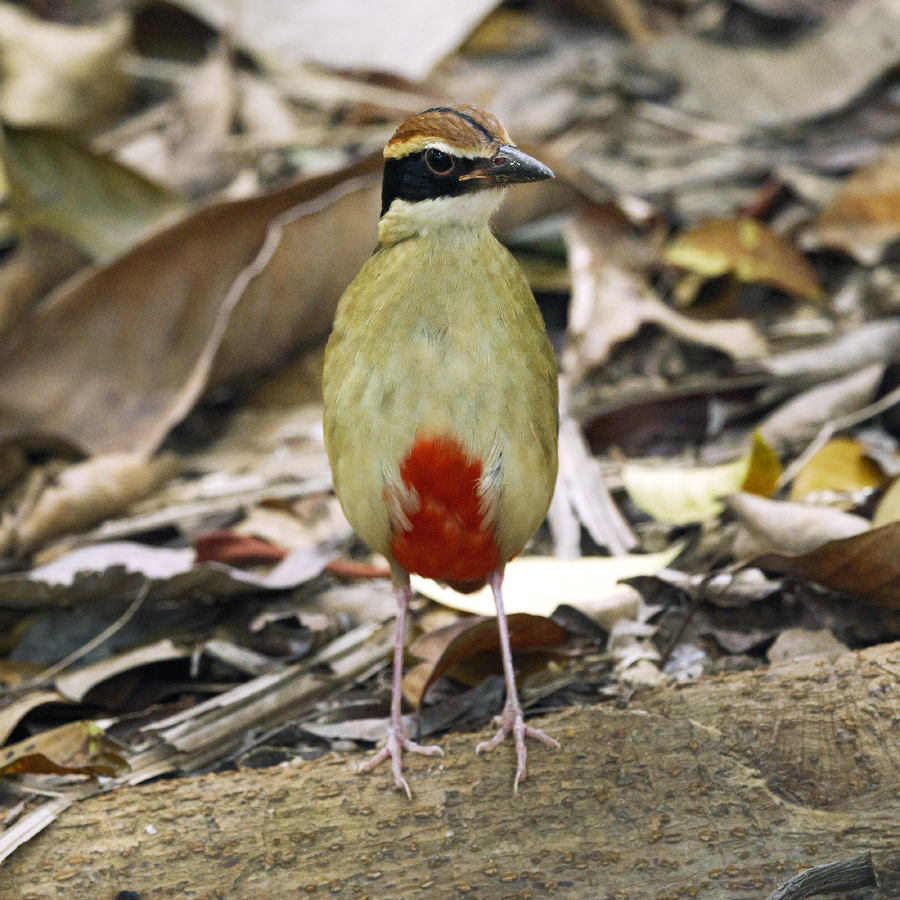
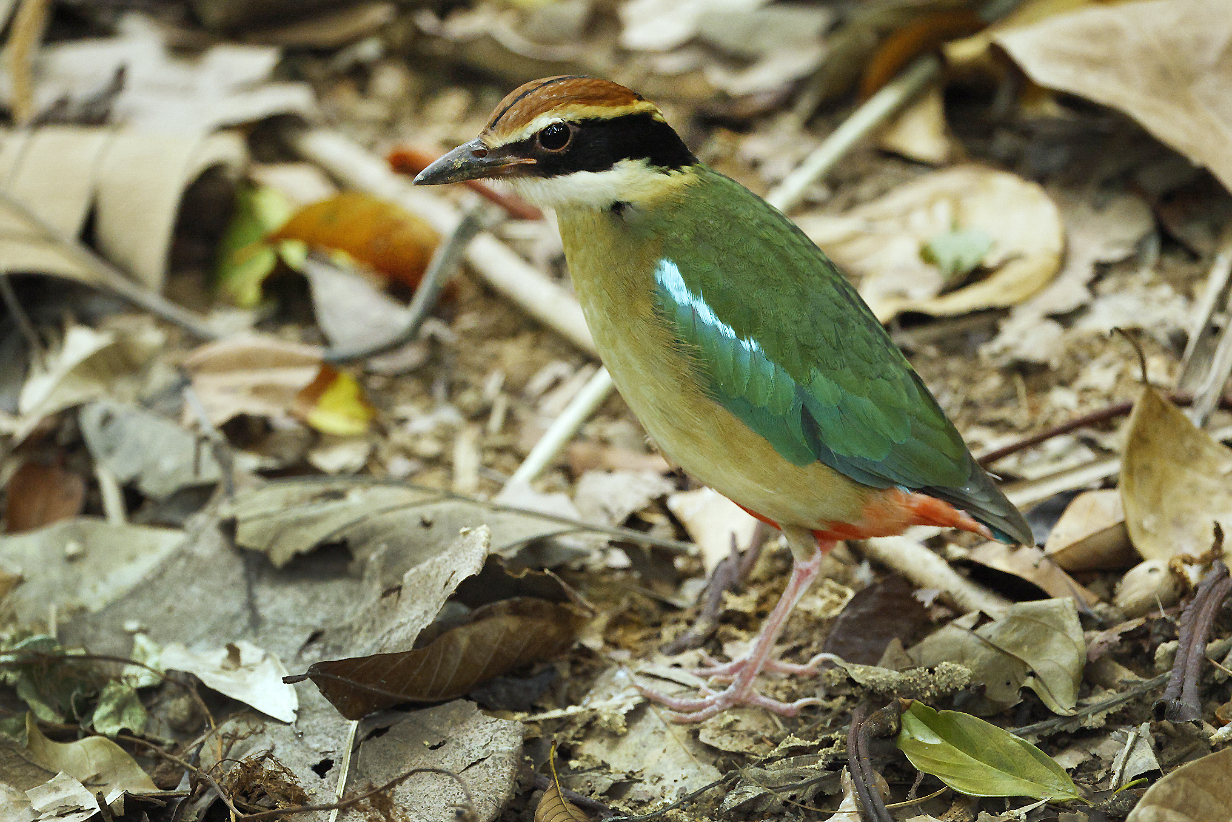
Fairy pitta (This is my life bird, in the Botanical Gardens. The bird foraged in the leaf litter, more or less at our feet, ignoring the presence of more than a dozen eager spectators, birders, and photographers.)
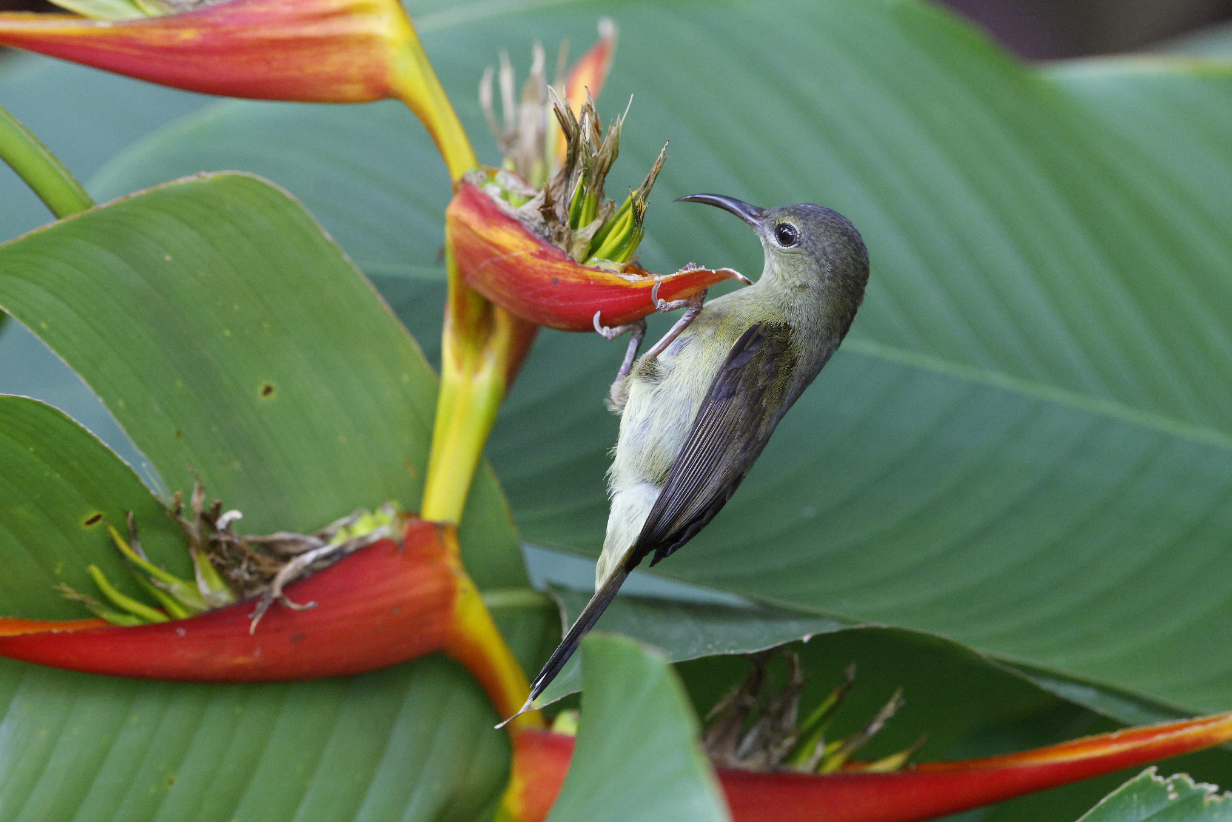
Crimson sunbird female in the Singapore Botanical Gardens
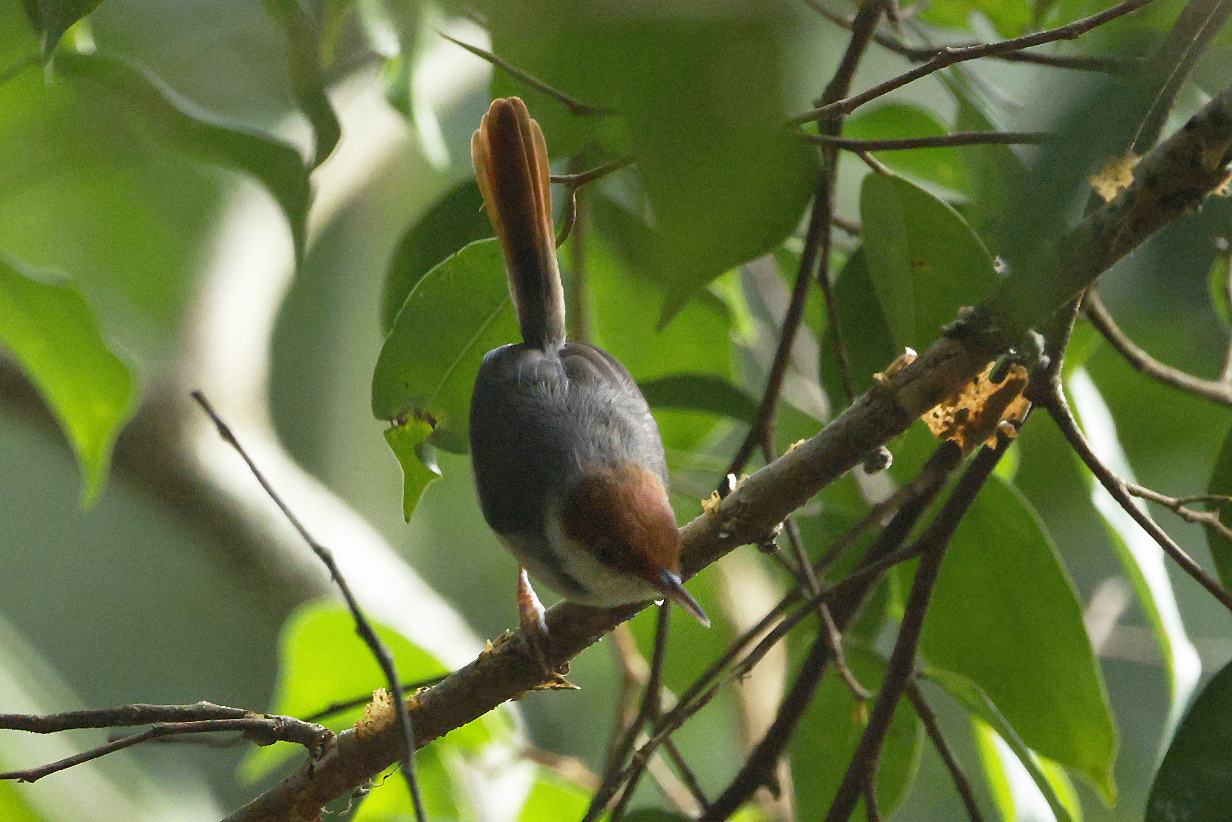
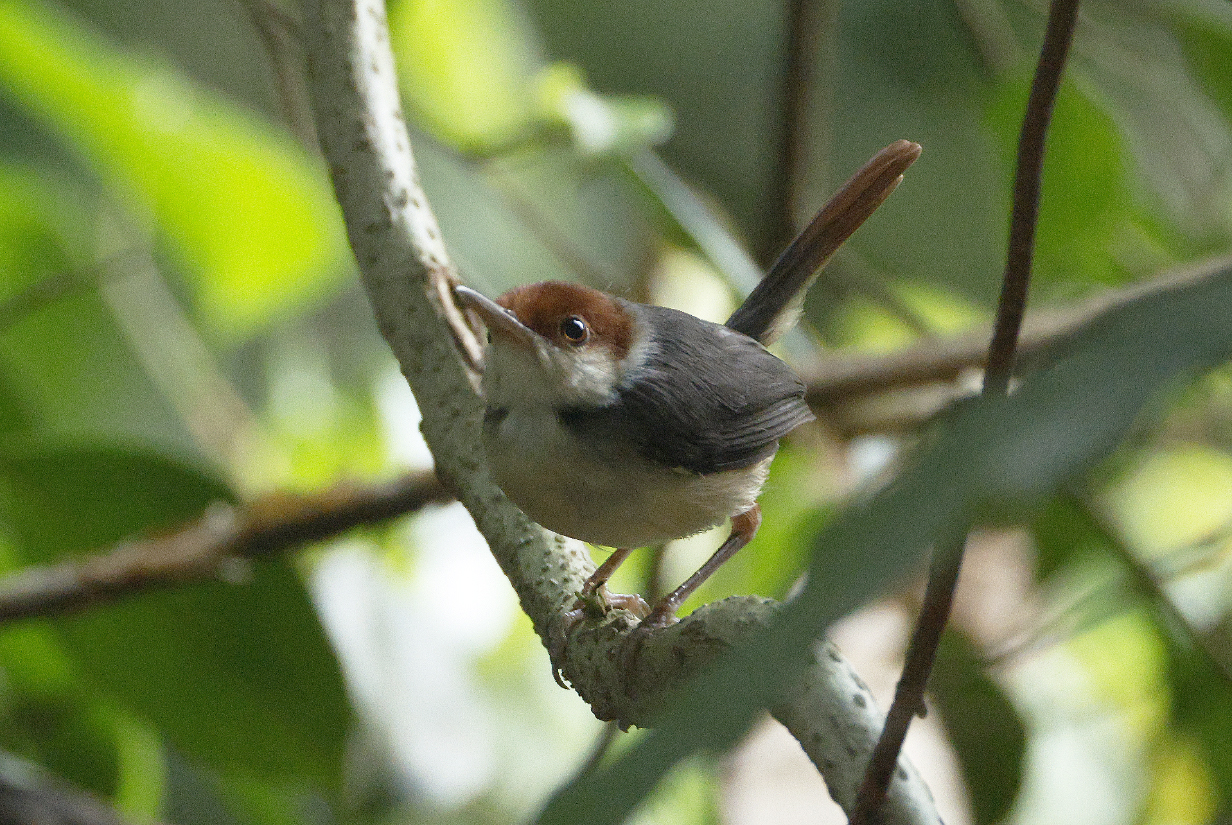
Rufous-tailed tailorbird (This is my life bird, at Windsor Nature Park.)
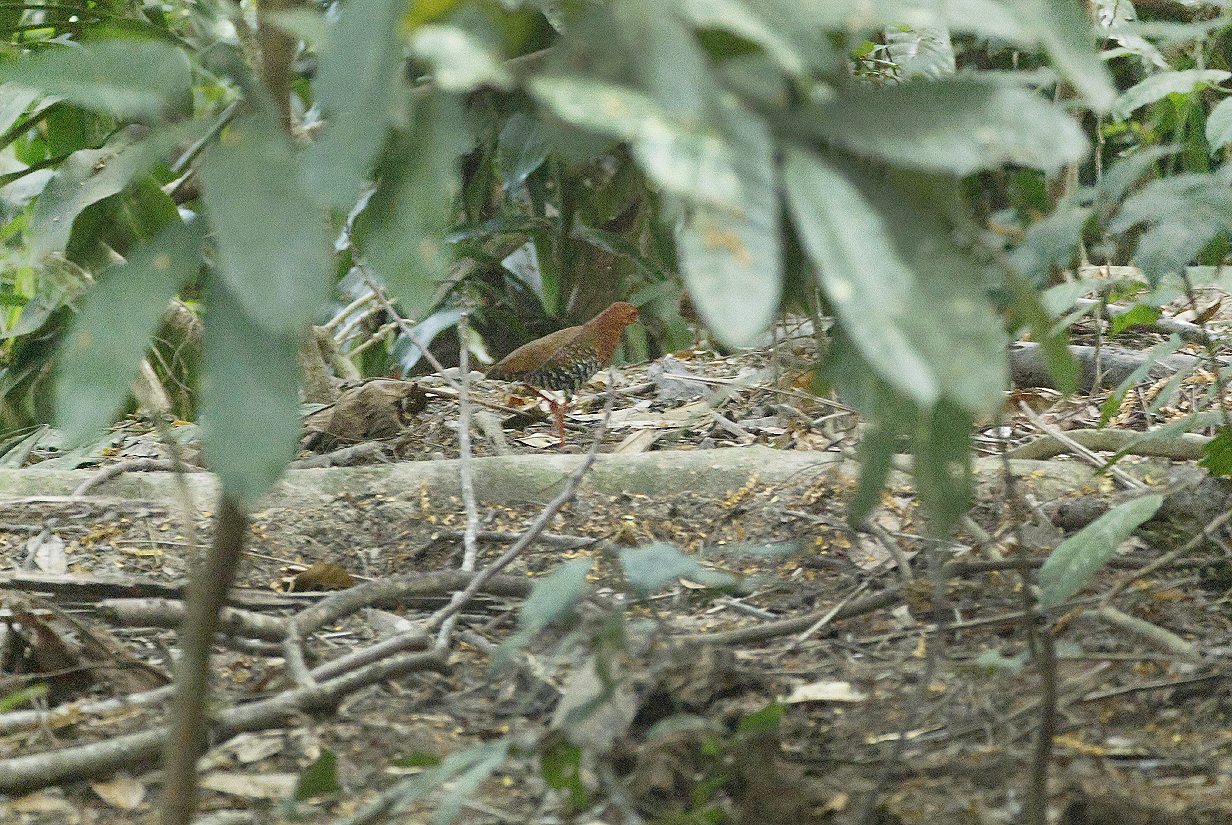
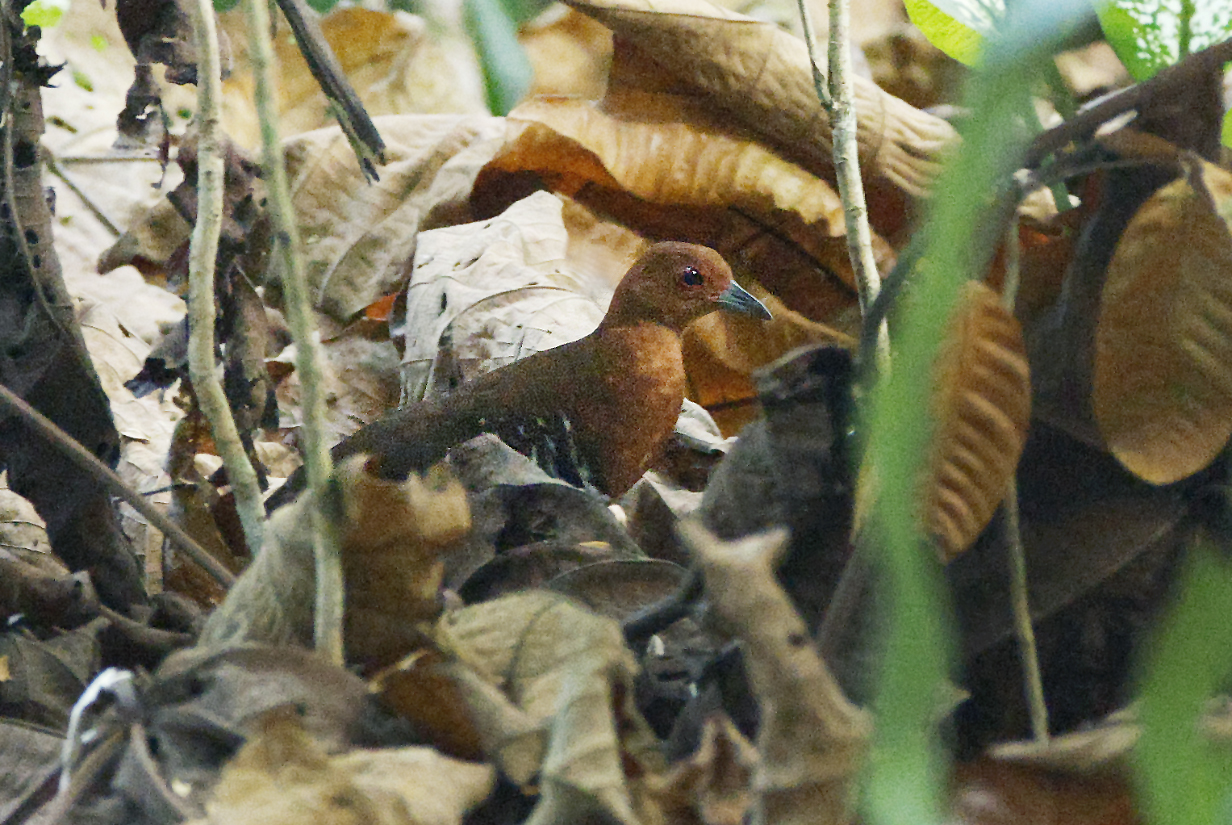
Red-legged crake (This is my life bird. It is exceptionally elusive and required finesse guiding for me to get even these poor and brief looks.)
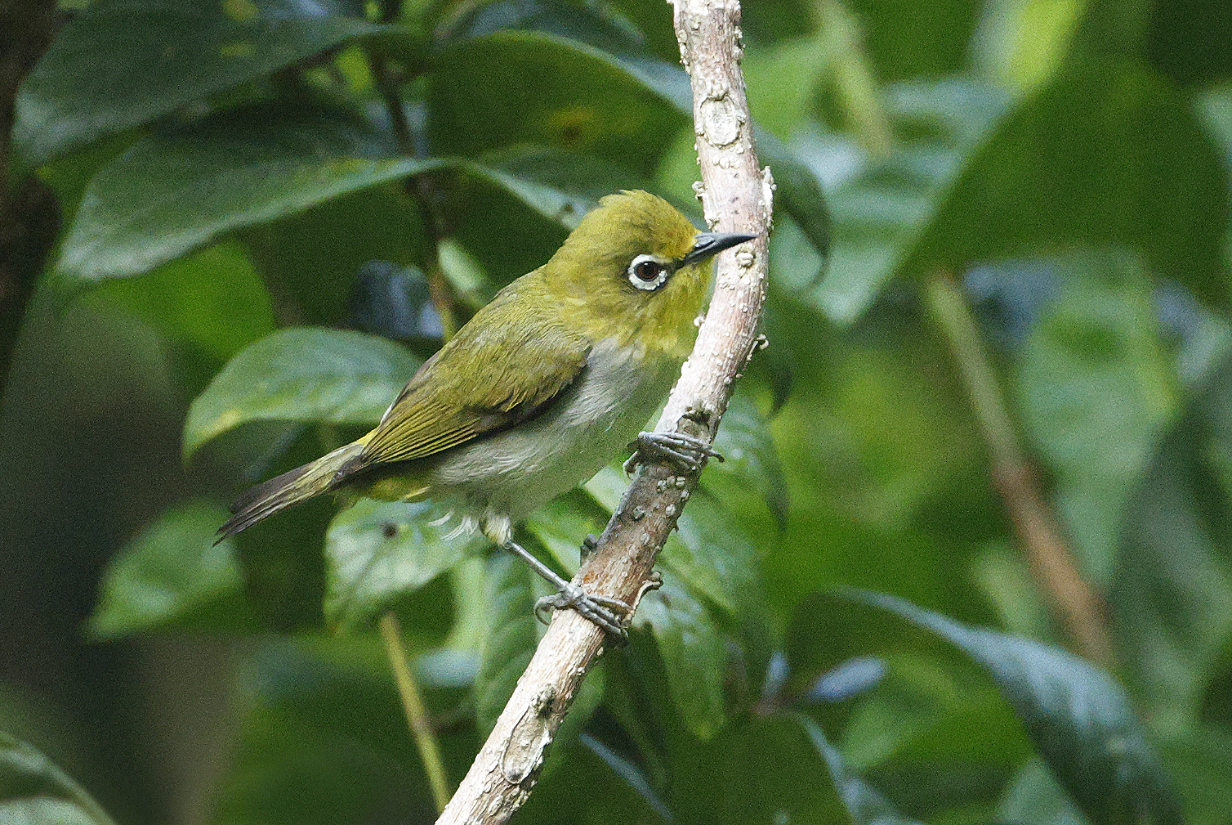
Swinhoe's white-eye
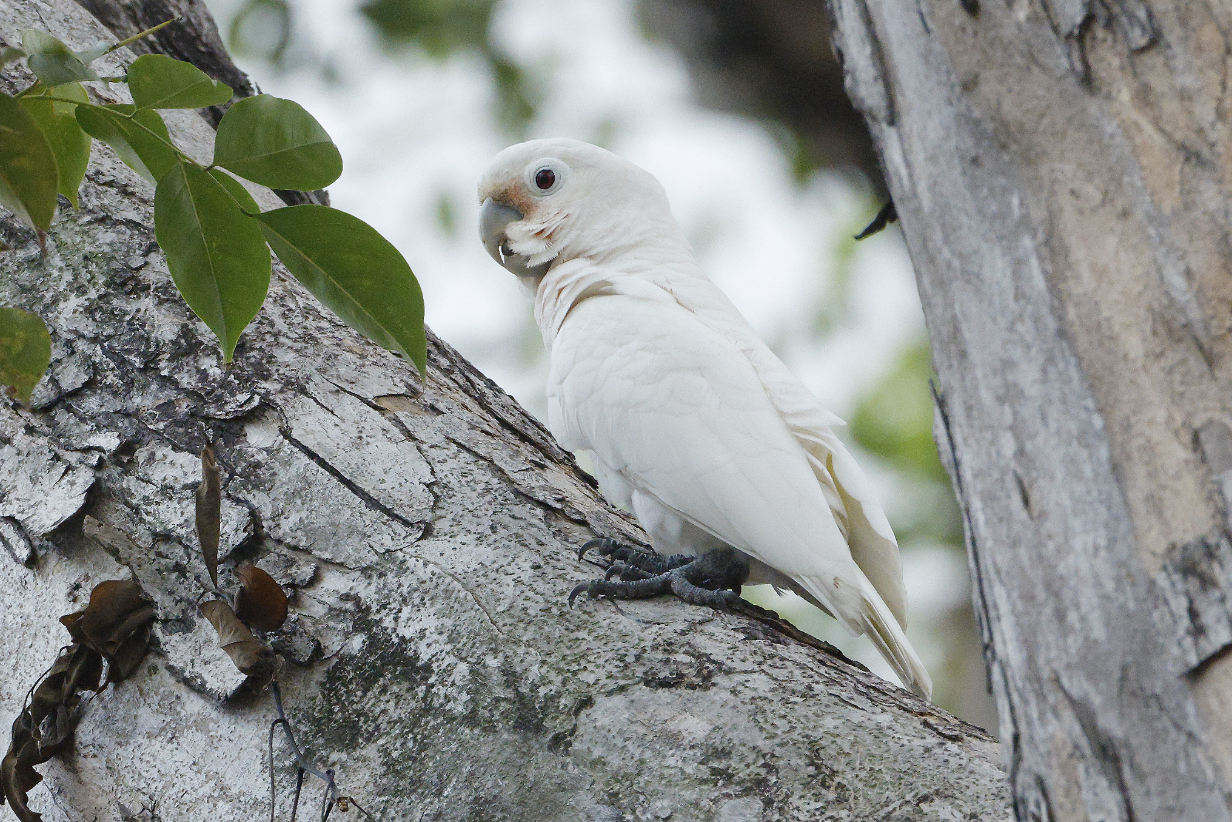
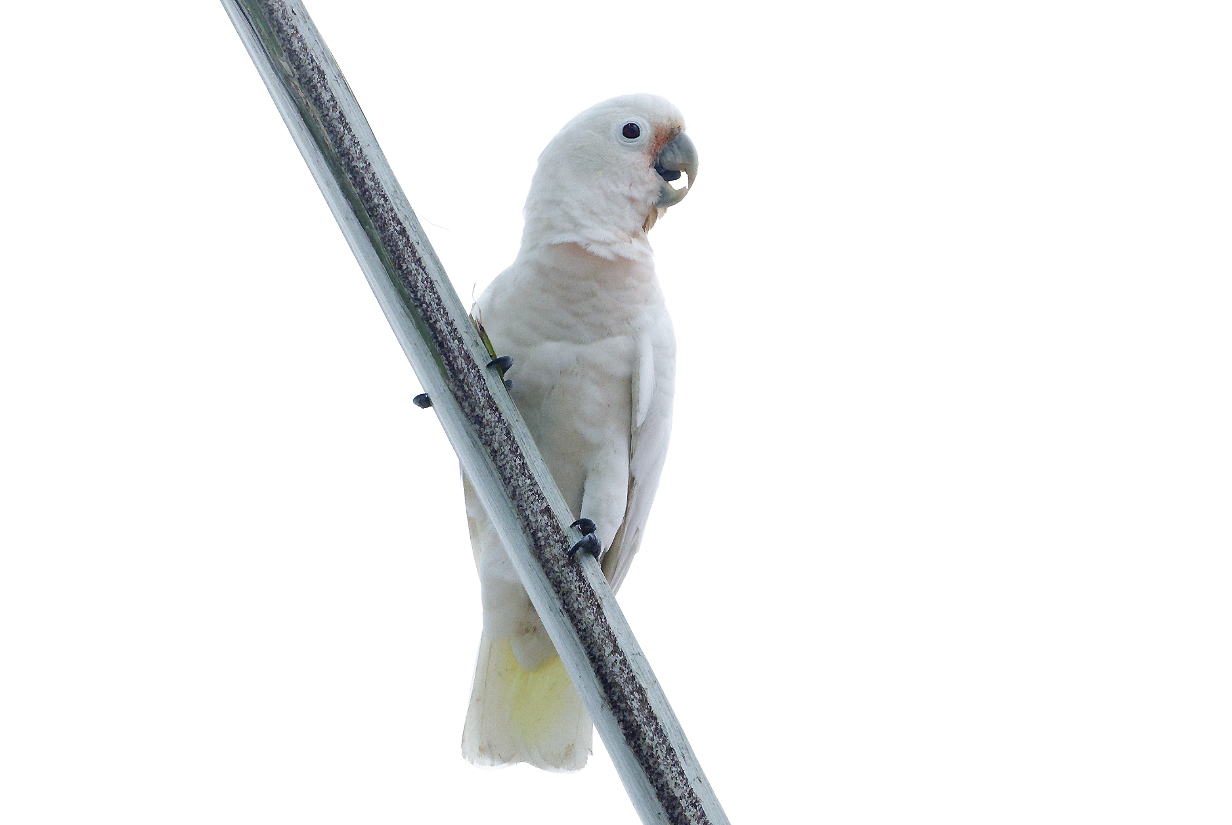
Tanimbar corella -- much better looks than in 2025
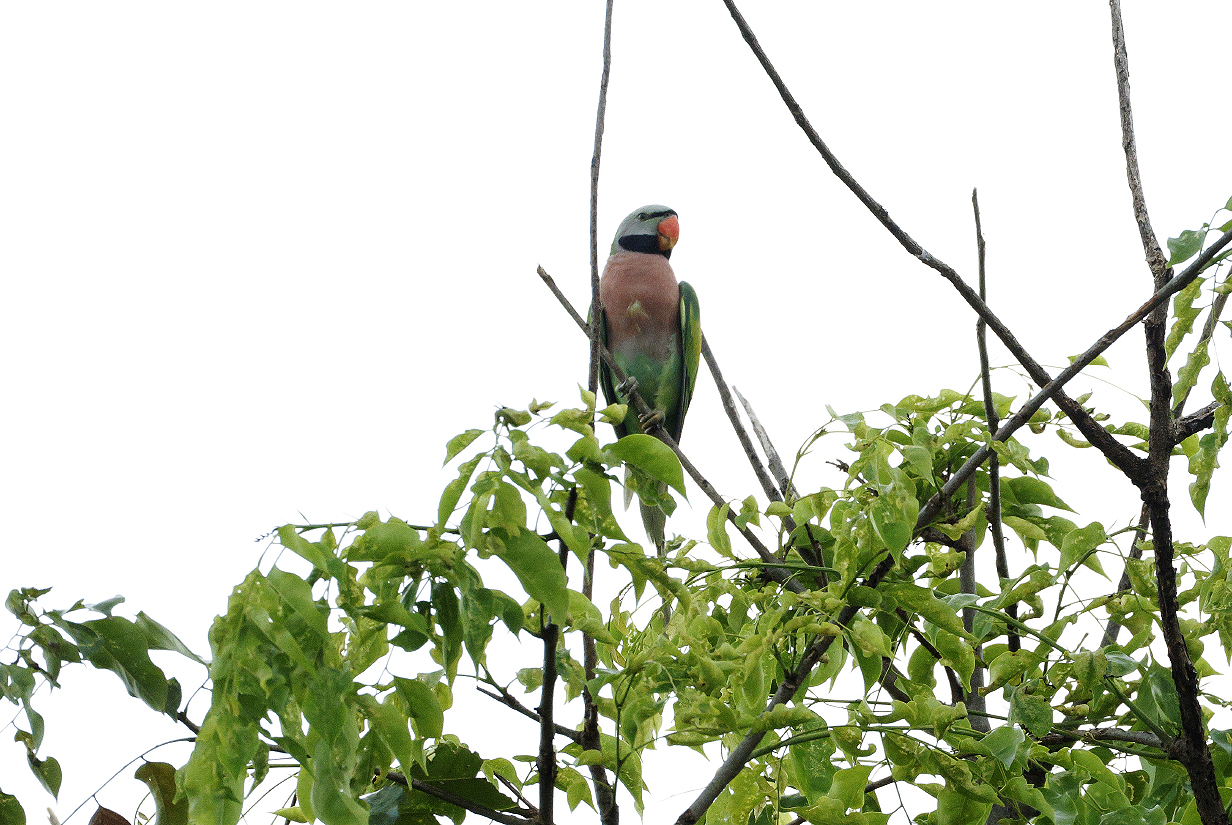
Red-breasted parakeet at Changi Village
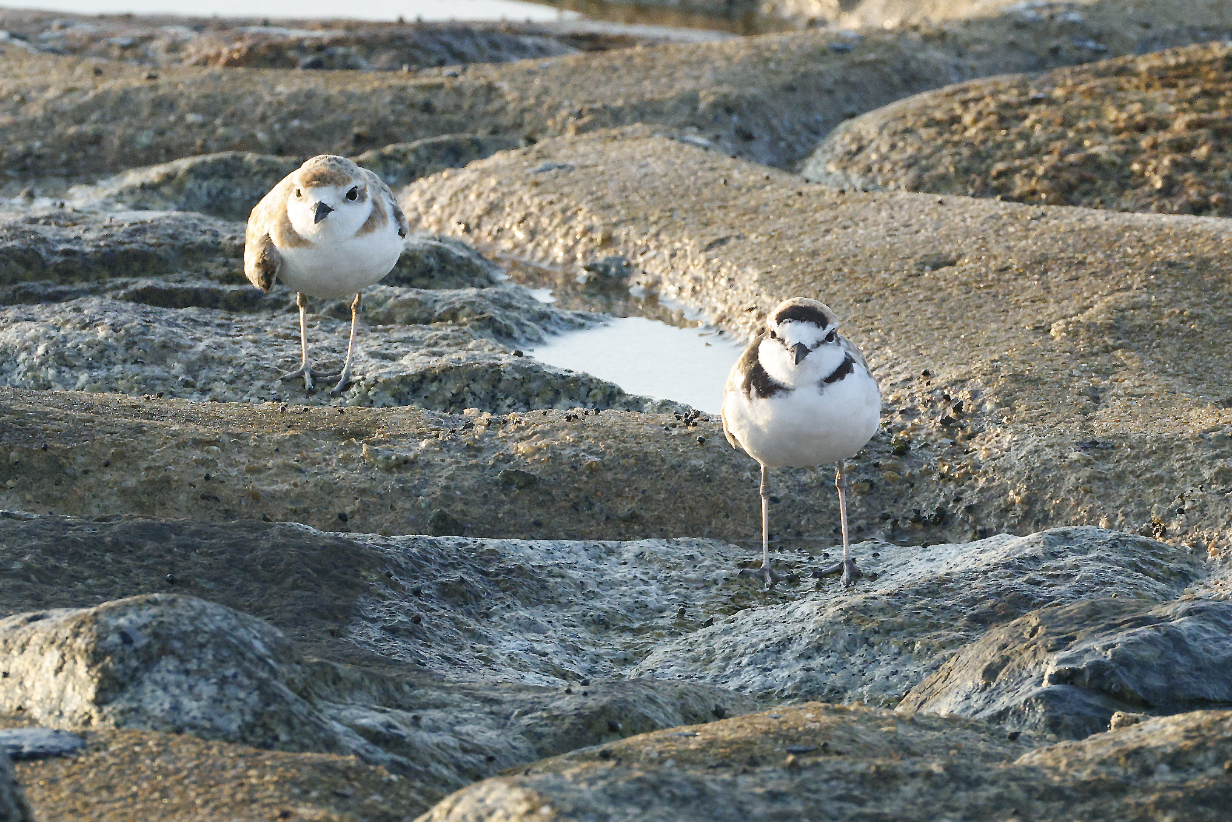
Malaysian plovers (female and male, at Marina East, Gardens by the Bay, in early morning sunlight)
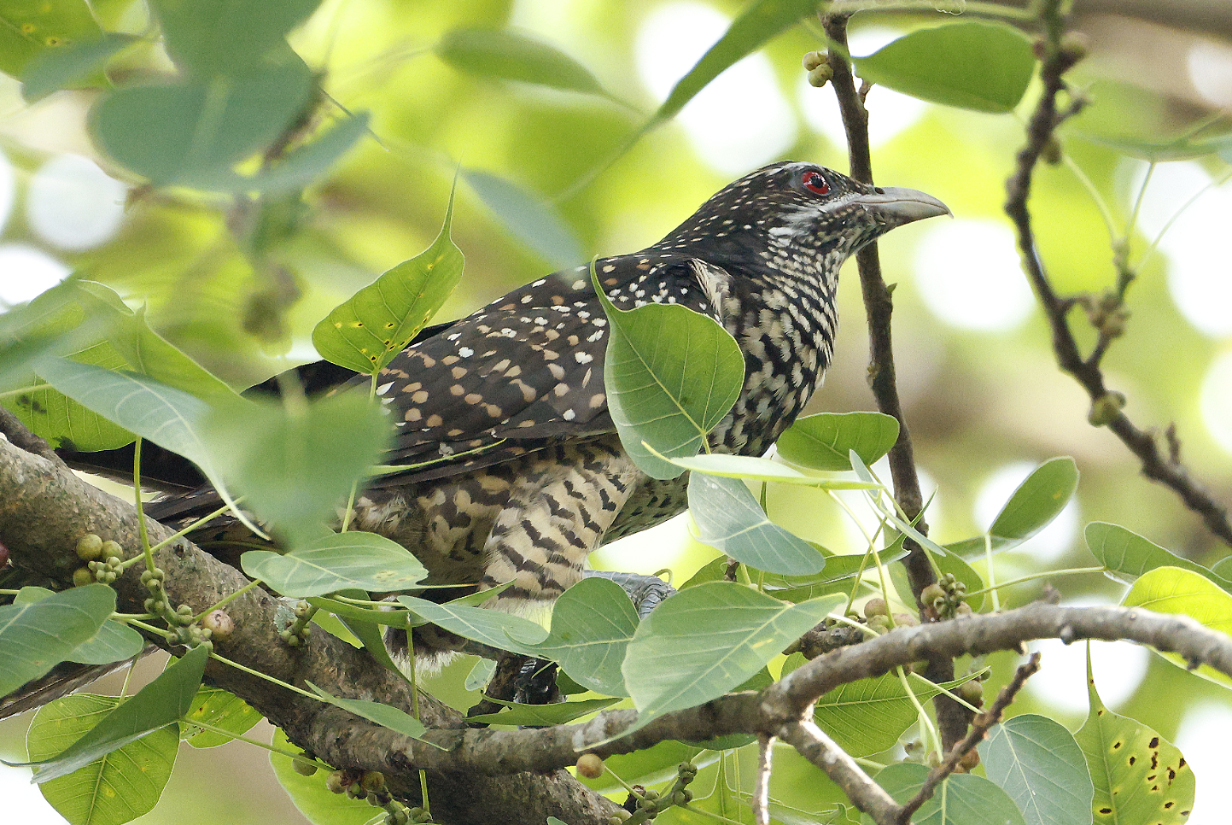
Asian Koel (female)
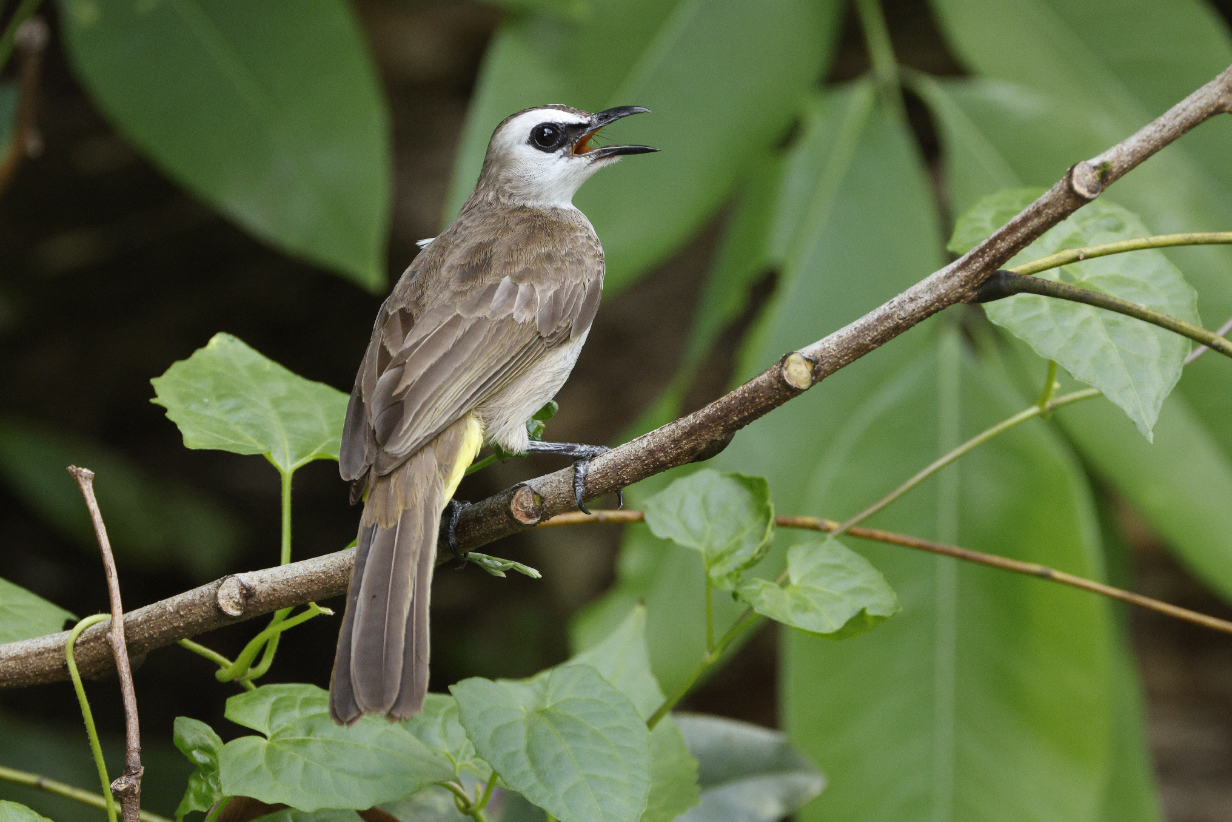
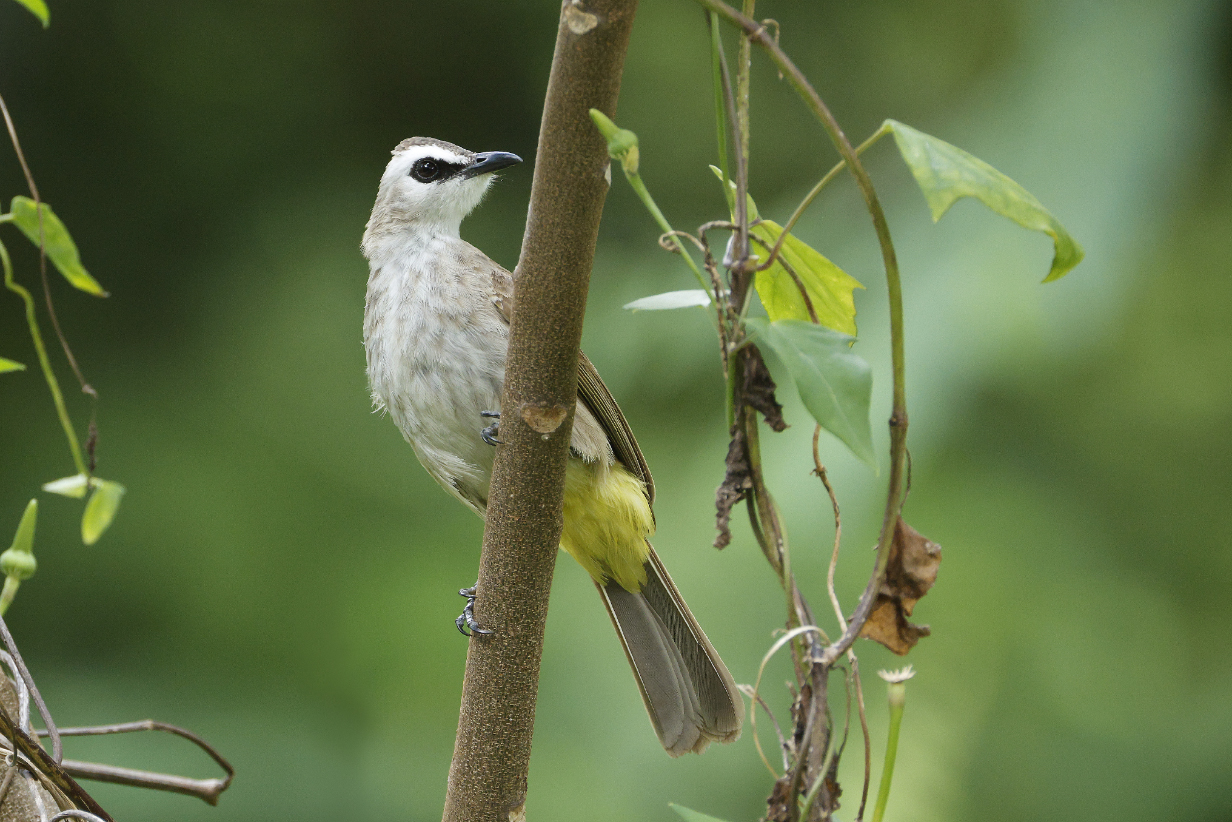
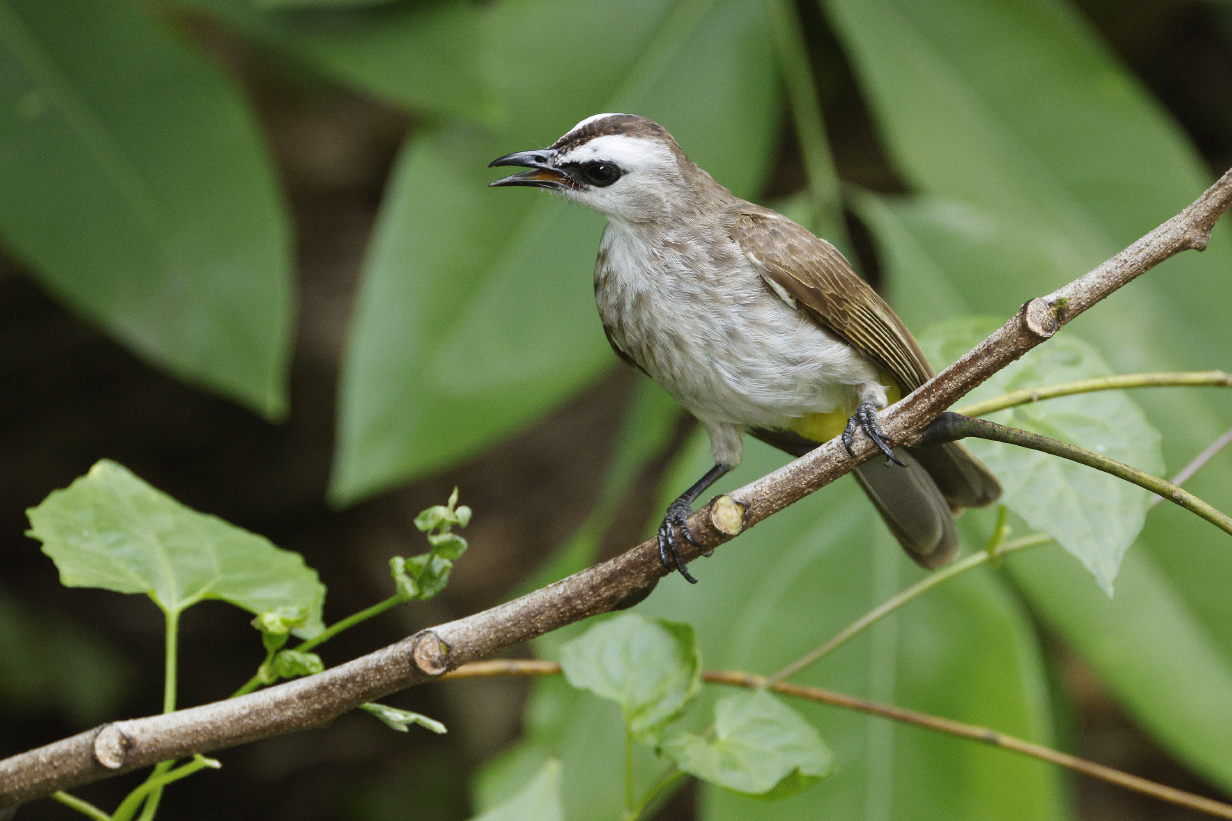
Yellow-vented bulbul (handsome bird)
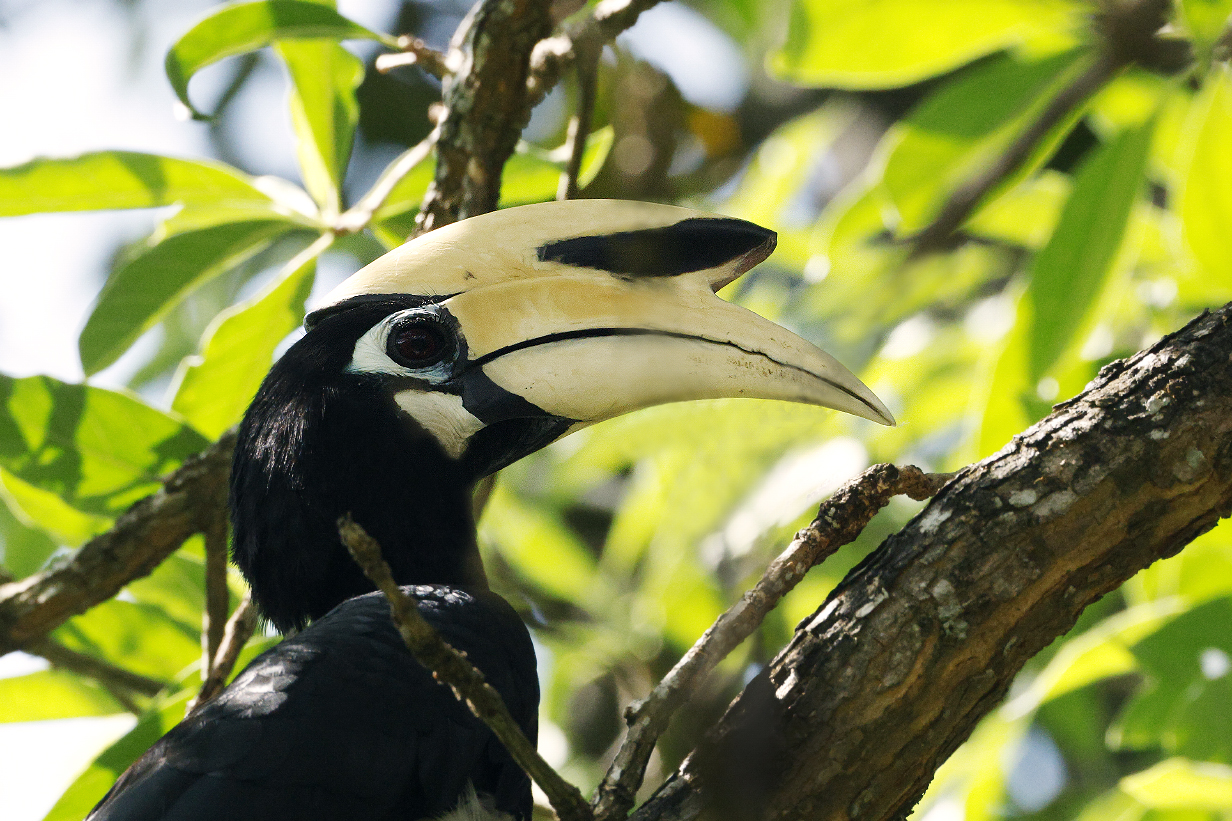
Oriental pied hornbill (Full disclosure: I used Photoshop to remove 2 thin branches that crossed the bill of the bird.)
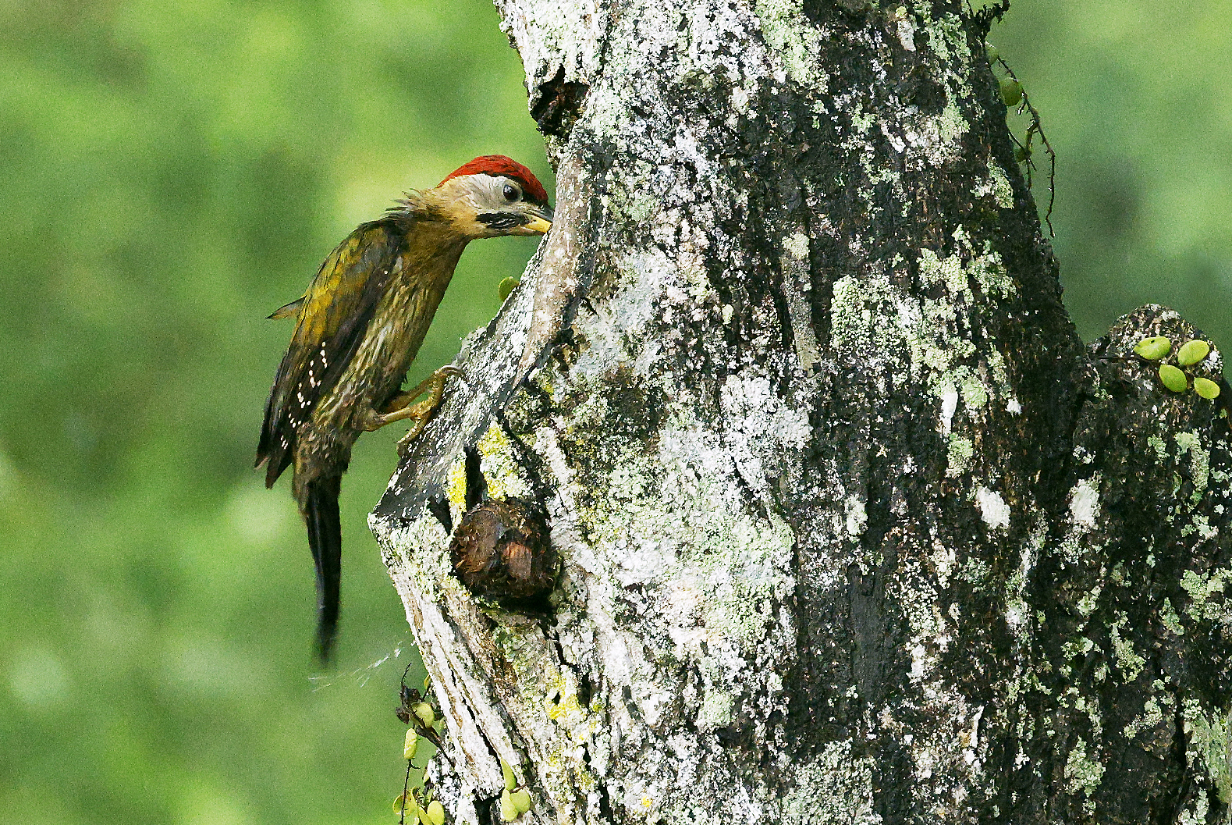
Laced woodpecker (This is my life bird. At Lorong Halus Wetland. In rain.)
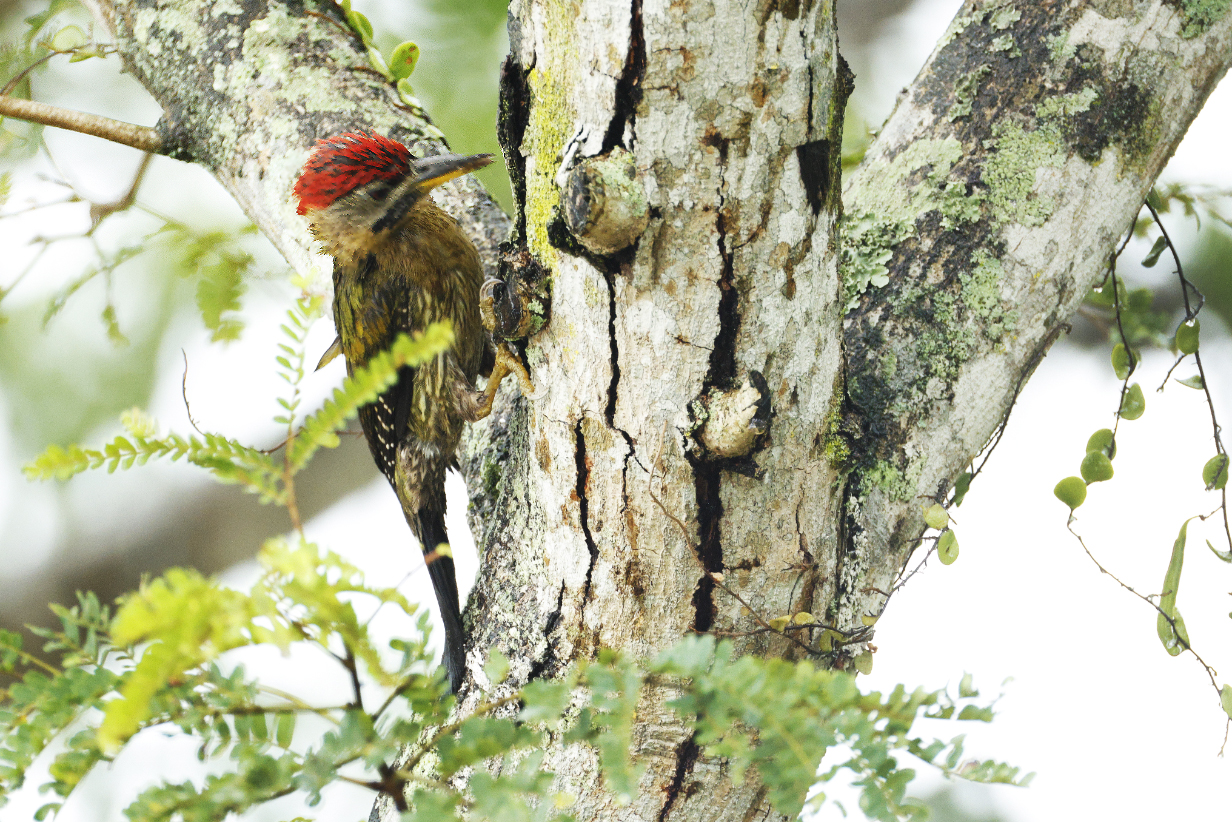
Laced woodpecker (This is another, not very good picture of the same bird.)
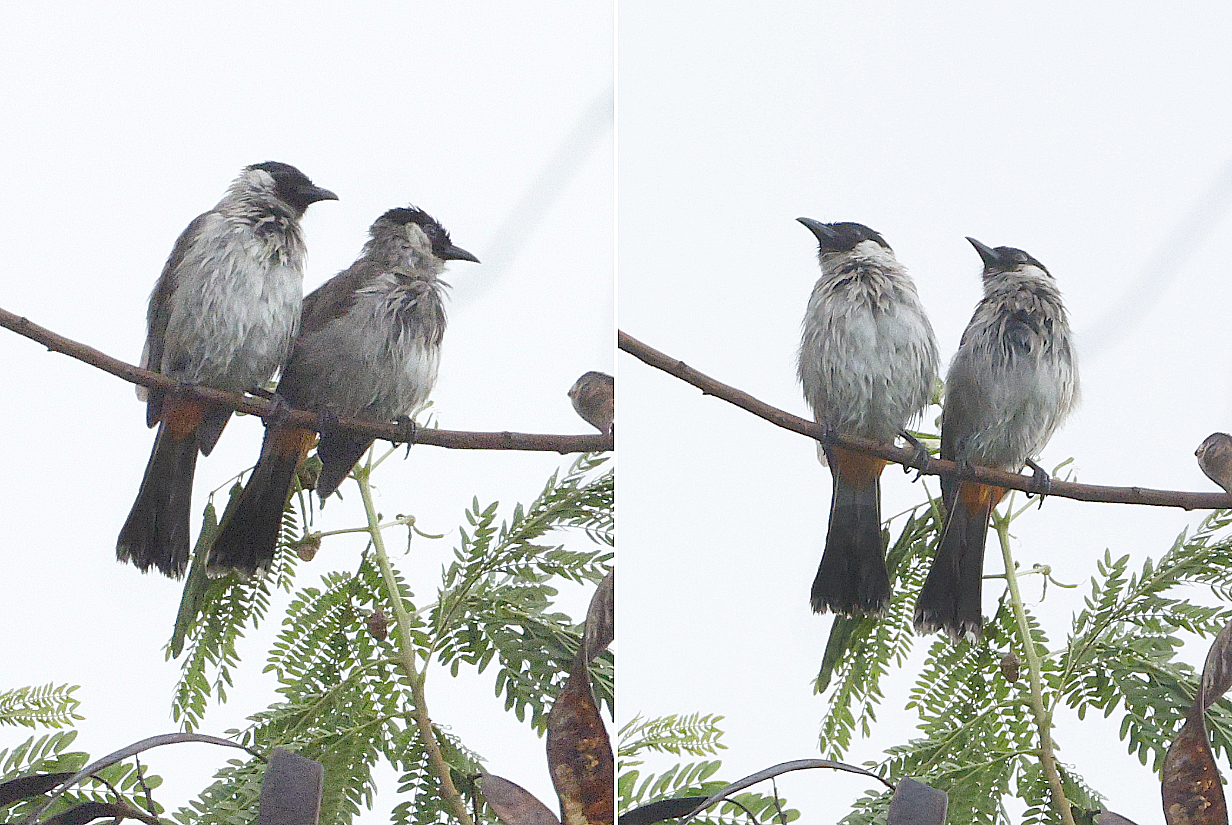
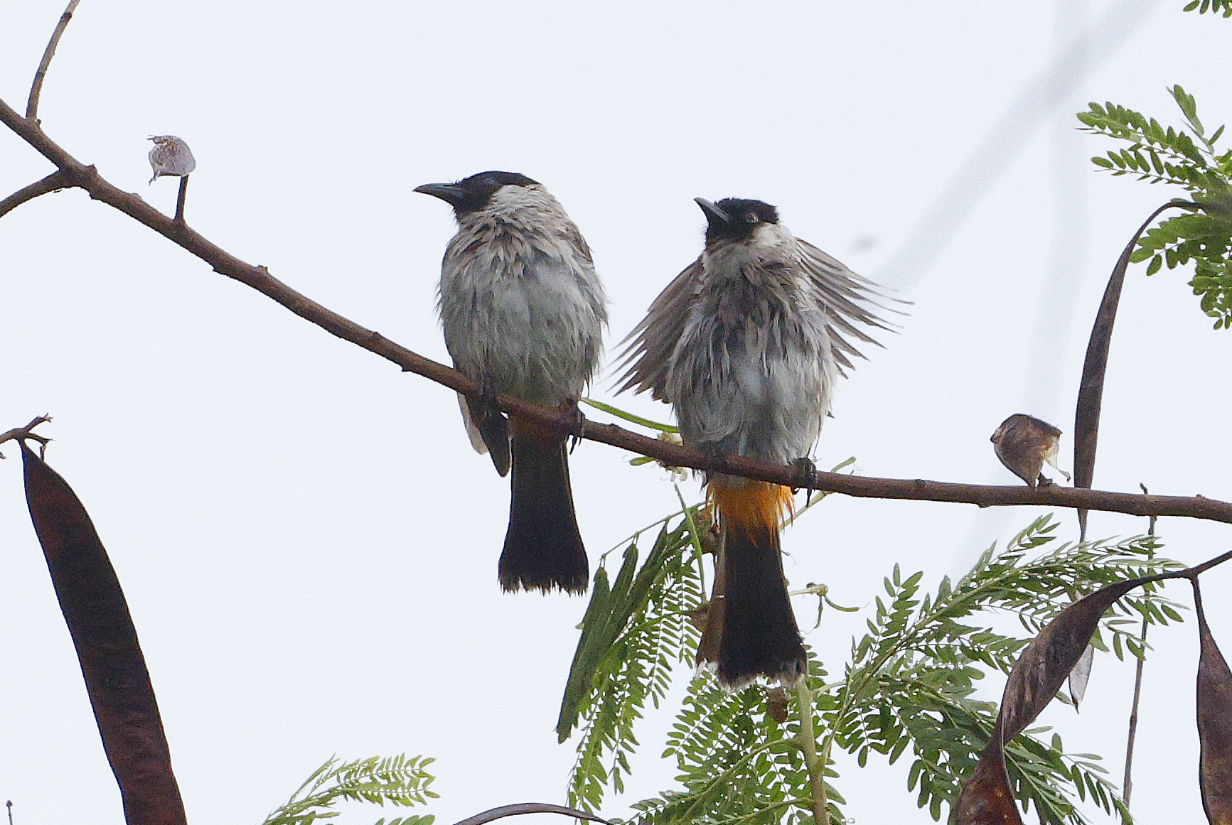
Sooty-headed bulbul (These are my life birds, still at Lorong Halus Wetland -- the last ones of the trip. Turns out that I got 100 new species during the Borneo-Singapore trip. Sooty-headed bulbul is my 4500th species.)
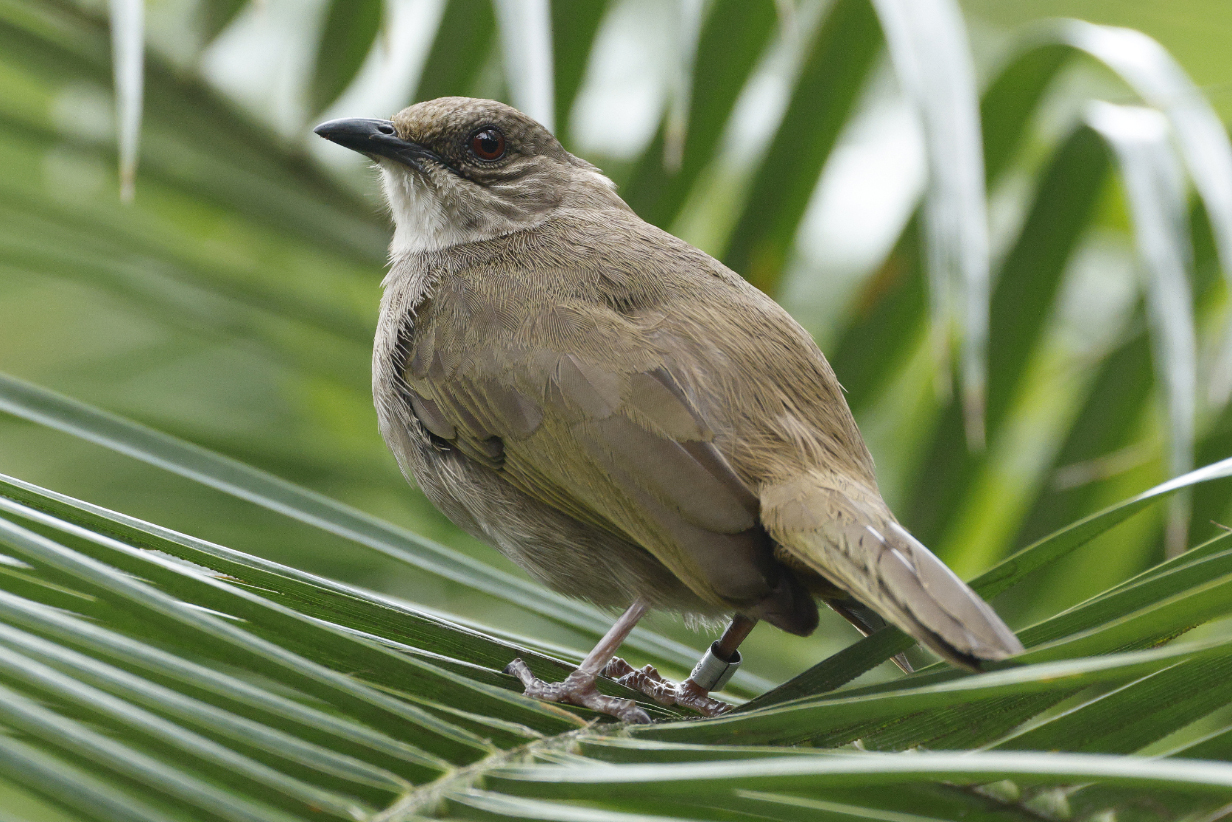
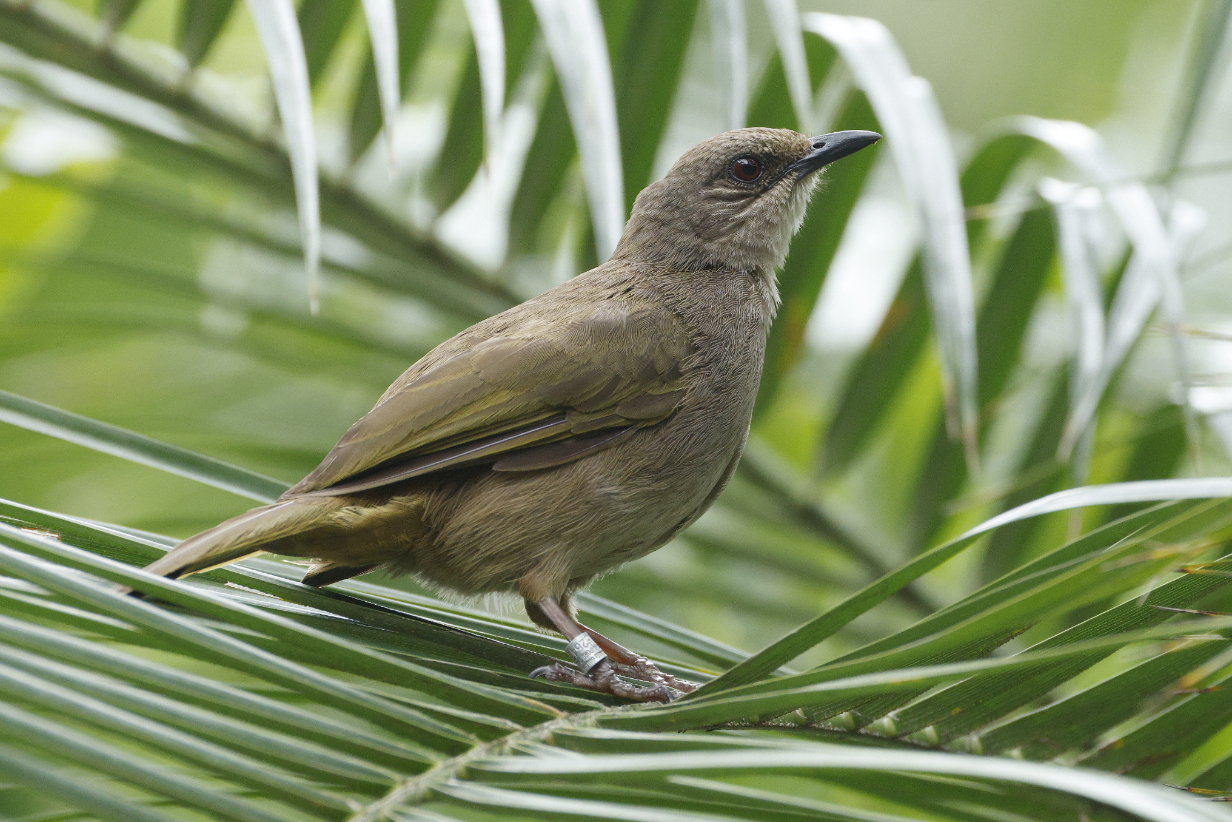
Olive-winged bulbul
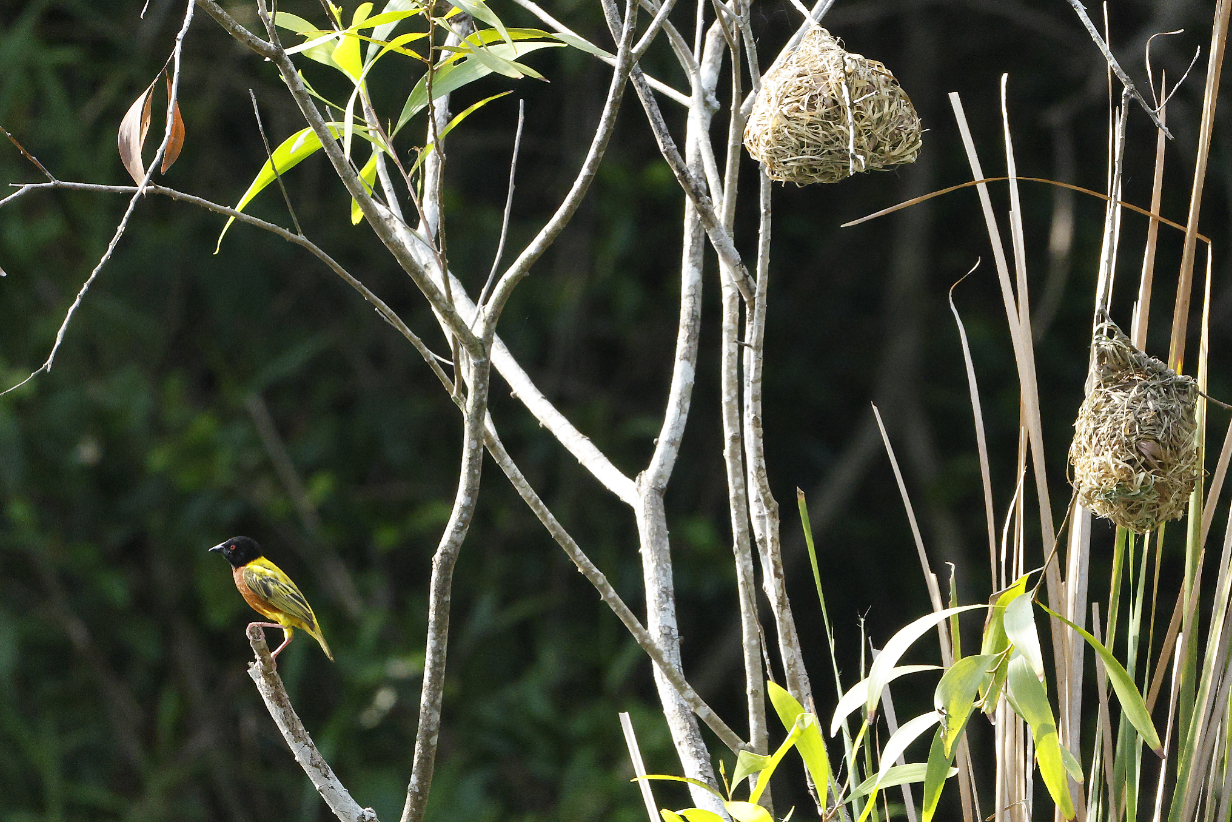
Golden-backed weaver (Native to Kenya and Tanzania but very well established here; it was new for me in 2025.)
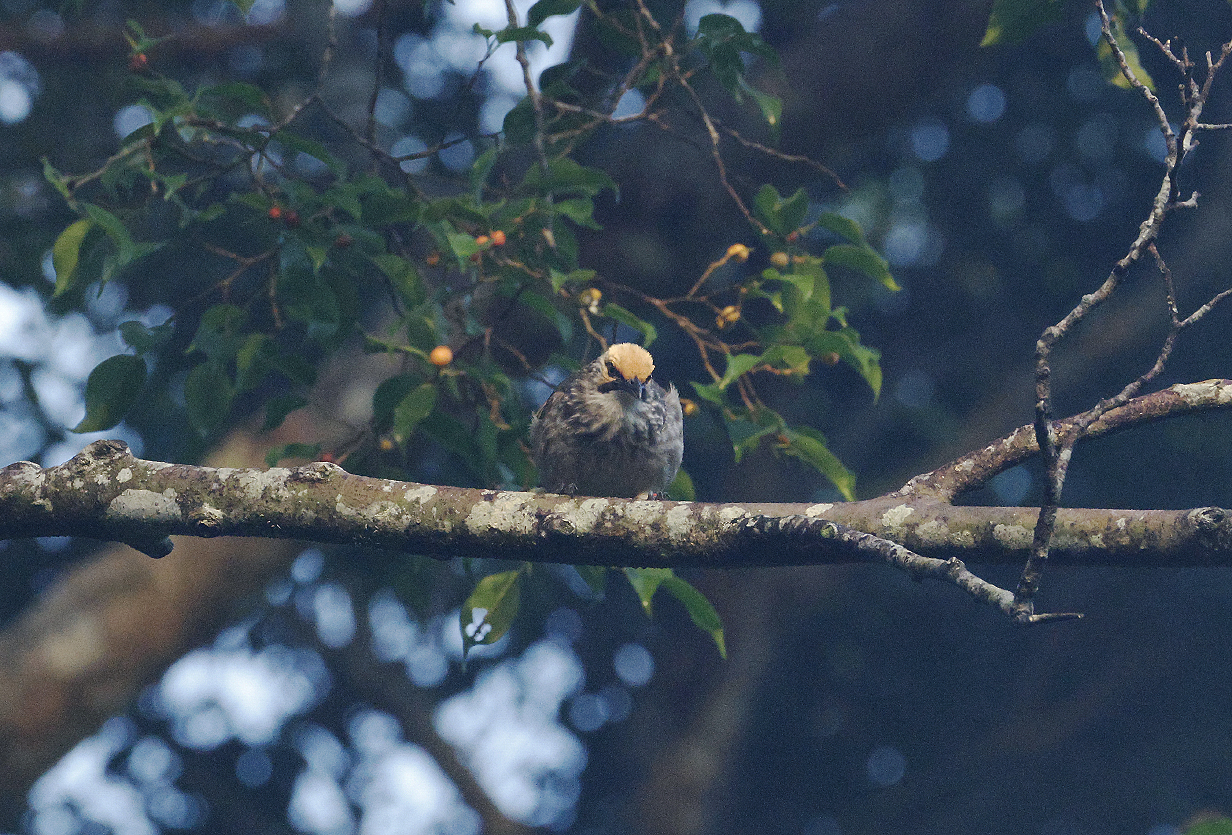
It seems appropriate to end the Singapore section of this web site the way I started it, with Straw-headed bulbul.
Our bird pictures from around the world follow standard ecozones approximately but not exactly:
Birds from the USA and Canada: our house, Hornsby Bend and greater Austin, Texas, California, Hawaii, Canada,
Neotropic birds from Central America and the Caribbean: Honduras, Costa Rica, Panama, Trinidad and Tobago
Neotropic birds from South America: Ecuador, Ecuador 2017, Brazil.
Western palearctic birds: Europe: Germany, Finland, Norway, Europe: United Kingdom, Europe: Spain, the Canary Islands, Europe: Lesbos, Greece, Israel
Eastern palearctic birds: China
Birds from Africa: The Gambia, South Africa
Indo-Malayan birds from India: North-west (Delhi, Uttar Pradesh, Uttarakhand) India: North-east (Assam, Arunachal Pradesh, Meghalaya) India: Central (Maharashtra, Madhya Pradesh)
Birds from Australia, New Zealand.
For our 2014 December trip to India, see this travelog.
For our 2016 May-June trip to India, see this travelog.
For our 2017 April trip to High Island, Texas, see this web site.
For our 2018 March trip to India, see this travelog.
For our 2018 May trip to China, see this travelog.
For our 2018 October trip from Munich to Budapest, Hungary see this travelog.
For our 2018 November trip to China, see this travelog.
For our 2019 April trip to High Island, Texas, see this web site.
For our 2019 July trip to China, see this travelog.
For our 2021 April trip to High Island, Texas, see this web site.
For the 2021 August 3 & 4 migration of Purple martins through Austin, see this web site.
For our 2021 December trip to Ecuador, see this web site.
For our 2022 January-February trip to Peru, see this web site.
For our 2022 July/August trip to Australia and Papua New Guinea, see this web site.
For our 2022 September trip to Bolivia, see this web site.
For our 2022 November-December pre-trip to Argentina (before our Antarctic cruise), see this web site.
For our 2022 November-December cruise to Antarctica, see this web site.
For our 2023 January birding in Chile, see this web site.
For our 2023 January-March cruise from Chile to Antarctica and around South America to Miami, FL, see this web site.
For our 2023 March-April birding in south Florida (after the Seabourn cruise), see this web site.
For our 2023 November-December birding to Sri Lanka, the Andaman Islands, and South India, see this web site.
For John's 2024 February-March birding in Colombia, see this web site.
For our 2024 May-June cruise from Iceland to Jan Mayen Island to and around the Svalbard Archipelago, see this web site.
For our 2024 June 25-30 stay in Paris, see this web site.
For our 2025 April 21 - May 3 trip to High Island, Texas, see this web site.
For our 2025 July vacation and birding in Singapore, see this web site.
For our 2025 August birding in north-west Australia, see this web site.
For our 2025 August-October Seabourn cruise from Australia to Chile, see this web site.
For our 2026 January-February trip to New Zealand and 3rd cruise to Antarctica, see this web site.
For my 2026 March-April trip to Borneo and Singapore, see the present web site.
For my 2026 August trip to Kenya, see this web site.